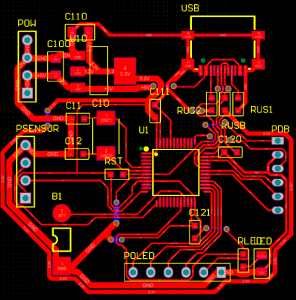
Drone communication is the backbone of unmanned aerial vehicle operations, enabling real-time control, telemetry, and payload data exchange between drones, controllers, and ground stations. This article explores how PCB design directly influences drone communication performance, signal integrity, and reliability across various applications including drone to drone communication and communication links for maritime drones.
What are the most common obstacles manufacturers face when designing reliable drone communication modules?
- Signal interference from poorly routed RF traces causing data packet loss during critical missions.
- Thermal management failures leading to communication module shutdowns in high-power transmission scenarios.
- Electromagnetic compatibility issues disrupting drone connectivity when multiple systems operate simultaneously.
- Miniaturization constraints forcing compromises on antenna placement and ground plane optimization.
- Data transmission security vulnerabilities due to inadequate PCB shielding and encryption circuit integration.
To address these challenges, specialized PCBA manufacturers implement targeted design strategies that ensure optimal drone communication system performance.
- Controlled impedance routing maintains signal integrity across drone communication protocols with minimal reflection.
- Strategic thermal via placement dissipates heat from power amplifiers without compromising RF performance.
- Multi-layer ground planes provide EMI shielding essential for adaptive drone communication in noisy environments.
- HDI technology enables compact layouts while preserving antenna clearance and RF trace isolation.
- Integrated security circuits embed encryption modules directly into the PCB for enhanced drone data transmission security.
EBest Circuit (Best Technology) specializes in high-frequency PCB and PCBA manufacturing for mission-critical communication drone applications. With ISO-certified production facilities and expertise in RF circuit PCB design, we deliver reliable solutions for companies supplying secure communications for tactical drones worldwide. Pls feel free to contact us at sales@bestpcbs.com for custom drone communication module development.
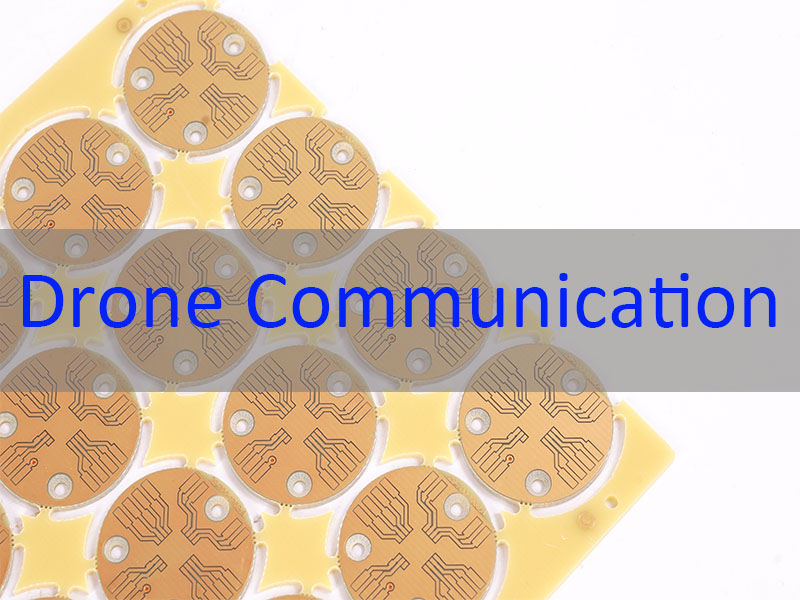
What Is a Drone Communication Module and How Is It Designed?
A drone communication module integrates RF transceivers, antennas, processors, and power management circuits onto a single PCB platform. PCB design determines everything from frequency stability to interference resistance in drone protocol implementation.
| Design Element | Function | Impact on Communication |
|---|---|---|
| RF Trace Geometry | Controls impedance matching | Reduces signal reflection and loss |
| Ground Plane Layout | Provides reference and shielding | Minimizes EMI and crosstalk |
| Antenna Feed Point | Connects RF circuit to radiator | Optimizes radiation efficiency |
| Power Distribution | Delivers stable voltage to RF ICs | Prevents modulation distortion |
| Thermal Management | Dissipates PA heat | Maintains consistent output power |
Effective module design requires careful stack-up planning where signal layers are sandwiched between ground planes. For drone to drone communication systems, PCB designers must account for multipath effects by optimizing antenna diversity through proper feed line separation. The choice of substrate material—typically Rogers or FR-4 with controlled dielectric constant—directly affects phase stability and insertion loss across operating frequencies.
How Do Drones Communicate with a Controller?
Drones maintain drone connectivity through dedicated communication links operating on standardized frequencies like 2.4GHz or 5.8GHz. PCB design impacts link budget calculations through trace losses, connector insertion loss, and antenna matching network efficiency.
Key communication pathways include:
- Uplink commands transmitted from controller to flight controller via PWM or serial protocols.
- Downlink telemetry sending battery status, GPS coordinates, and sensor data.
- Video streaming requiring high-bandwidth drone data transmission for FPV applications.
- Return-to-home signals ensuring failsafe operation when primary links degrade.
PCB layout considerations focus on isolating high-speed digital lines from sensitive RF circuits. Ground plane splits must be avoided under RF traces to prevent impedance discontinuities. For maritime drones, corrosion-resistant surface finishes and conformal coating protect communication circuits from salt spray exposure.
How Are Drones Used for Communication?
Beyond remote control, drones serve as airborne communication relays extending network coverage. Communication drones create temporary cellular networks or mesh networks using drone to drone communication protocols.
Applications include:
- Emergency response establishing connectivity in disaster zones.
- Military operations deploying tactical communication nodes.
- Infrastructure inspection transmitting HD video over long distances.
- Agricultural monitoring collecting sensor data across vast fields.
PCB design for relay drones emphasizes power efficiency and thermal dissipation since these platforms operate continuously. Multi-band support requires careful filtering to prevent intermodulation distortion between simultaneous drone communication methods.
How Could Drone Technology Impact Media and Communication?
Drone technology revolutionizes media production through aerial cinematography and live broadcasting. High-quality drone communication enables real-time 4K video transmission with low latency.
PCB design influences:
- Video encoding efficiency through optimized processor placement and memory interface routing.
- Transmission range by minimizing noise figure in RF front-end circuits.
- Battery life via power-saving circuit architectures and efficient DC-DC conversion.
The integration of AI processing on-board requires PCBs that support high-speed interfaces while maintaining signal integrity for both control and payload data streams.
How Does PCB Design Impact Drone Communication Performance and Signal Integrity?
PCB design fundamentally determines drone communication performance through several critical mechanisms:
- Impedance Control: Maintaining 50Ω characteristic impedance across RF traces prevents signal reflections. Formula:
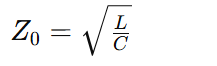
where L is inductance and C is capacitance per unit length.
- Crosstalk Reduction: Spacing RF traces >3× width apart minimizes coupling. Guard traces with ground vias further isolate sensitive signals.
- Return Path Continuity: Ensuring uninterrupted ground reference beneath RF lines prevents common-mode noise pickup.
- Phase Stability: Using low-loss materials (Df < 0.002) maintains consistent phase response across temperature variations.
- Antenna Integration: Proper feed point design and ground plane clearance optimize radiation patterns for directional or omnidirectional coverage.
These factors collectively determine bit error rate (BER) and packet success rate in commercial drone communication protocols.
What Are the Key PCBA Assembly Challenges in Drone Communication Modules?
Manufacturing drone communication modules presents unique assembly hurdles:
| Challenge | Root Cause | Solution |
|---|---|---|
| Fine-pitch RF IC placement | Component tolerances ±25μm | Automated optical alignment |
| BGA voiding under RF shields | Solder paste volume control | X-ray inspection and stencil optimization |
| Antenna tuning sensitivity | PCB thickness variation | Controlled impedance manufacturing |
| Thermal stress on connectors | CTE mismatch | Selective soldering and underfill |
| EMI shield grounding | Incomplete solder joints | Conductive epoxy and compression mounting |
Assembly processes must maintain tight tolerances for RF performance. Reflow profiles require precise temperature control to prevent component shift. For secure communications for tactical drones, additional steps include tamper-evident coatings and secure programming of encryption keys during assembly.
Why Choose EBest Circuit (Best Technology) for Drone Communication PCB/PCBA?
EBest Circuit delivers specialized expertise in high-frequency PCB fabrication and assembly for drone communication systems.
Our capabilities include:
- RF-specific materials including Rogers 4350B, 5880, and FR-4 with controlled dielectric constant.
- Precision impedance control with ±5% tolerance for critical RF traces.
- Advanced HDI technology supporting micro-vias and buried vias for compact designs.
- Comprehensive testing including TDR, vector network analysis, and flying probe testing.
- Quick-turn prototyping with 24-hour turnaround for urgent development cycles.

We understand the unique demands of adaptive drone communication and work closely with clients to optimize PCB layouts for their specific drone communication protocols. Our engineering team provides DFM feedback to improve yield and performance before mass production.
In conclusion, drone communication remains essential for safe and effective UAV operations, with PCB design serving as the foundation for reliable signal transmission and reception. This article has demonstrated how strategic PCB layout choices impact everything from basic controller links to sophisticated drone to drone communication networks. EBest Circuit (Best Technology) combines RF expertise with precision manufacturing to deliver superior drone communication modules for commercial and tactical applications. pls feel free to contact our engineering team at sales@bestpcbs.com to discuss your next drone communication system project.
FAQs About Drone Communication
How do drones communicate with their controllers?
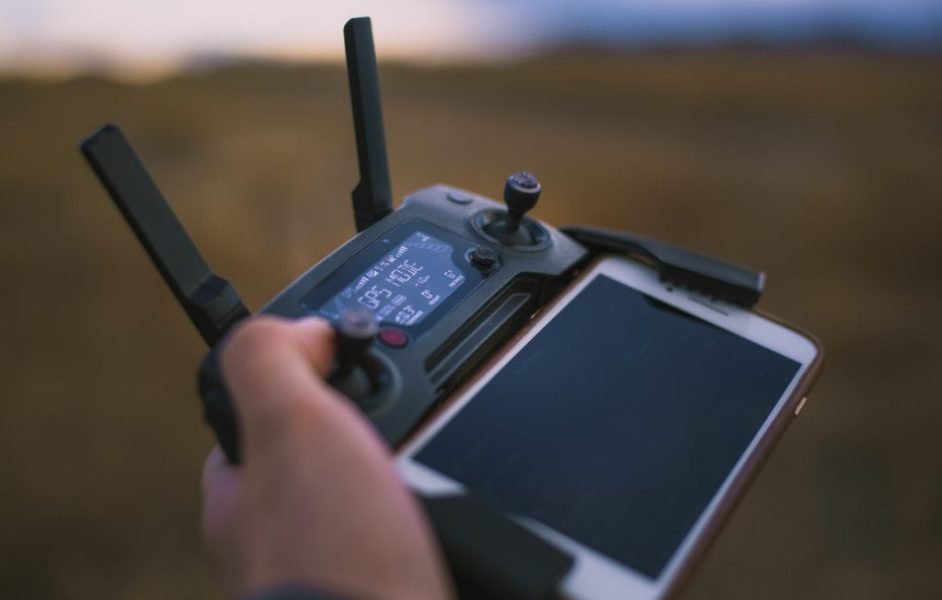
Drones primarily use radio frequency (RF) signals to communicate with a handheld remote or ground station. The controller acts as a transmitter, converting your physical inputs (joystick movements) into digital data packets. These packets are sent wirelessly to the drone’s onboard receiver, which translates them into specific flight commands for the motors. Modern systems often use dual-link technology, where one signal controls the flight (Uplink) and another sends a live video feed and flight data back to the pilot (Downlink).
What frequency bands are most commonly used for drones?
Most consumer and professional drones operate on the 2.4 GHz and 5.8 GHz bands.
- 2.4 GHz: Known for its longer range and better ability to penetrate obstacles like trees or thin walls, though it is often crowded with Wi-Fi and Bluetooth signals.
- 5.8 GHz: Offers higher bandwidth for high-definition video streaming and is generally less congested, but it has a shorter effective range and is more easily blocked by physical barriers.Advanced industrial drones may also utilize 900 MHz for long-distance penetration or 4G/5G cellular networks for nearly unlimited range in areas with mobile coverage.
What happens if a drone loses its communication signal?
When the link between the controller and the drone is severed—a state known as “signal loss”—most modern drones trigger an automated Fail-Safe protocol. The most common response is Return-to-Home (RTH), where the drone uses GPS coordinates to fly back to its takeoff point and land. Other fail-safe options include “Hover,” where the drone stays in place waiting for the signal to reconnect, or “Land,” where it descends immediately to the ground to prevent drifting.
Can drones communicate with each other?
Yes, this is typically referred to as Drone Swarming or M2M (Machine-to-Machine) communication. In a swarm, drones use localized mesh networks—often via Wi-Fi, Bluetooth, or specialized RF protocols—to share real-time data such as position, speed, and heading. This allows multiple aircraft to coordinate movements, avoid collisions with one another, and perform complex tasks as a single synchronized unit without requiring individual pilot input for every drone.