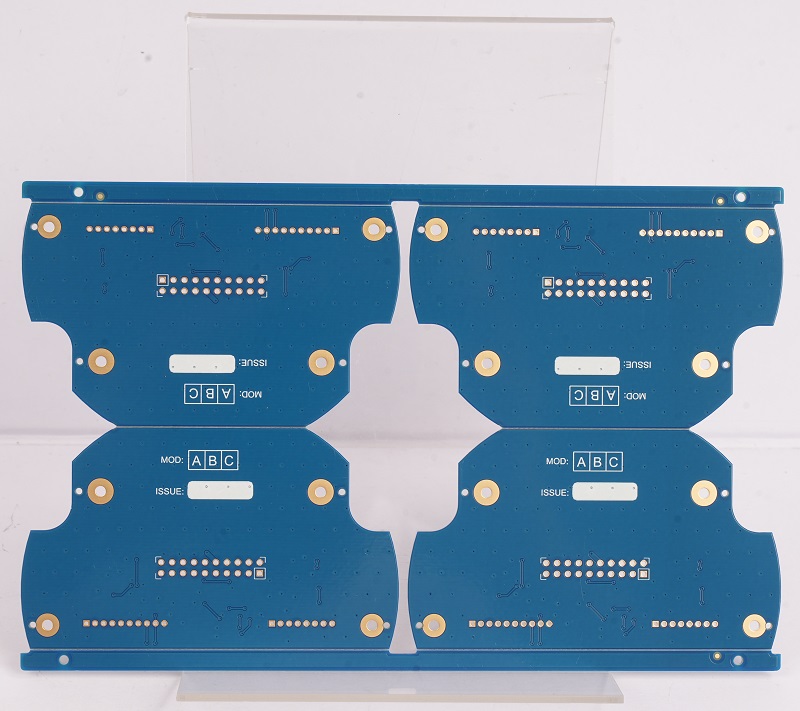
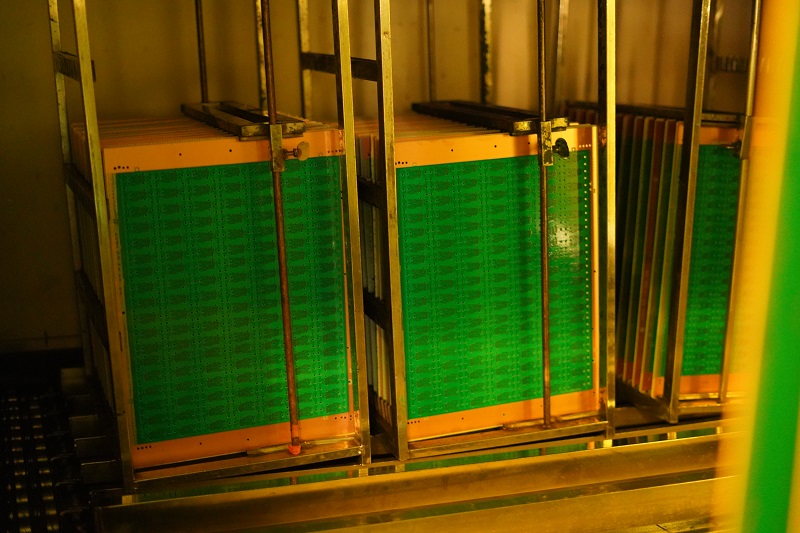
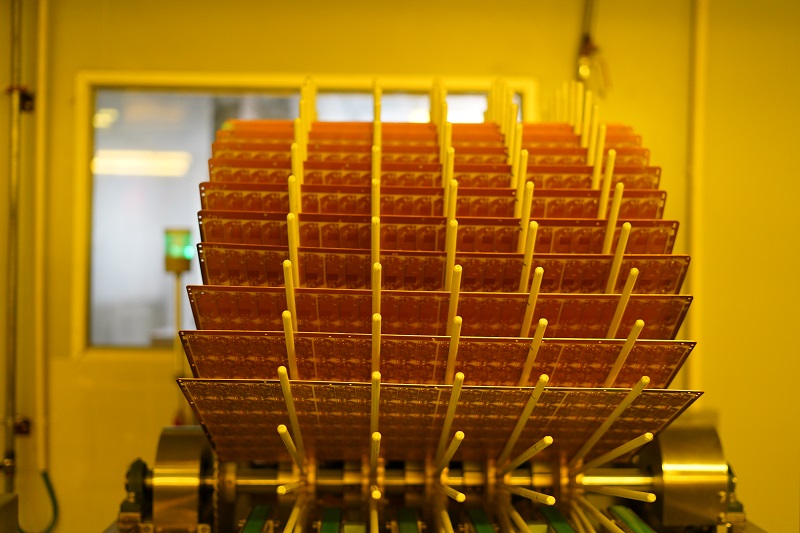
PCB manufacturing PCB manufacturing
Home > Blog

PCB Manufacturer List, Top PCB Manufacturers In USA

April 8th, 2025

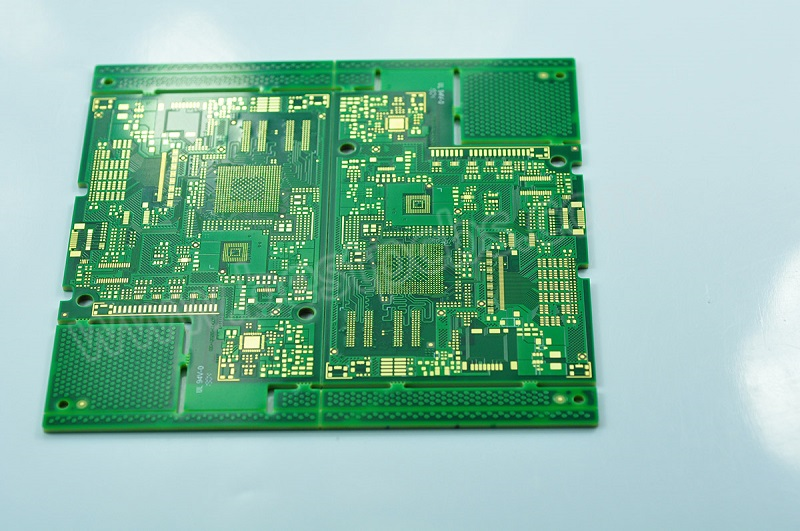
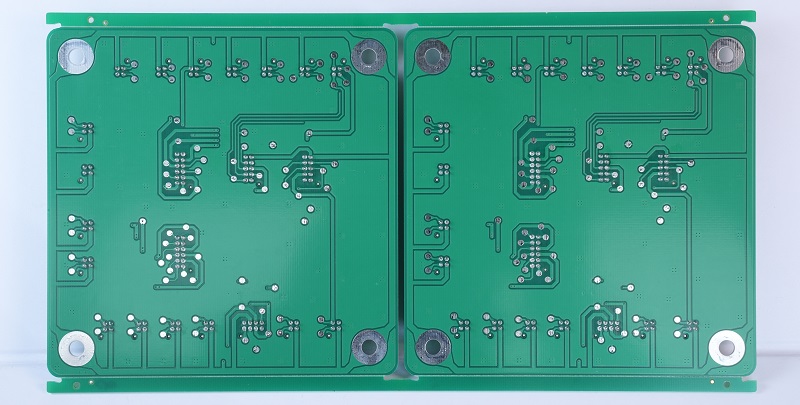
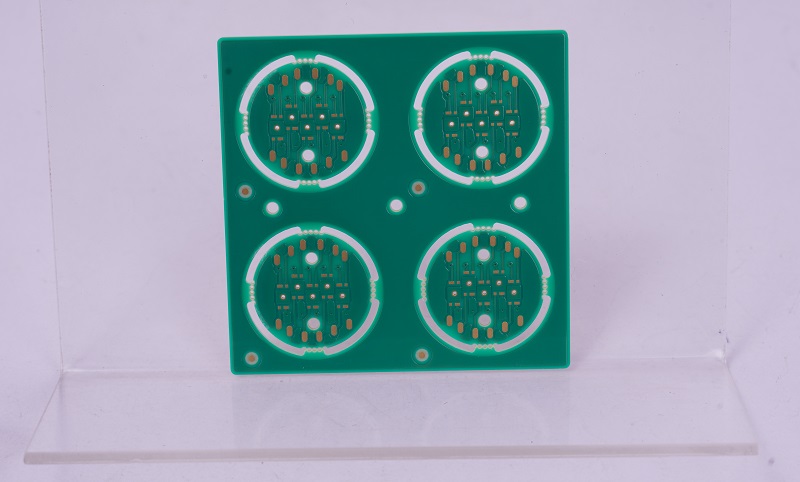
PCB manufacturer list is one of the most searched terms today, especially as industries rely more on electronics. From consumer devices to space technology, printed circuit boards are everywhere. With so many options across the globe, choosing the right one can be a task. In this guide, we’ll walk you through the top players, country-wise manufacturers, and expert tips to pick the best PCB partner. This article lists some PCB manufacturers for your reference.

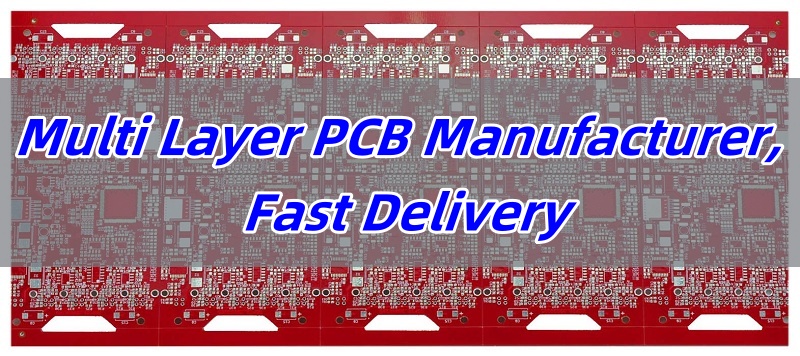
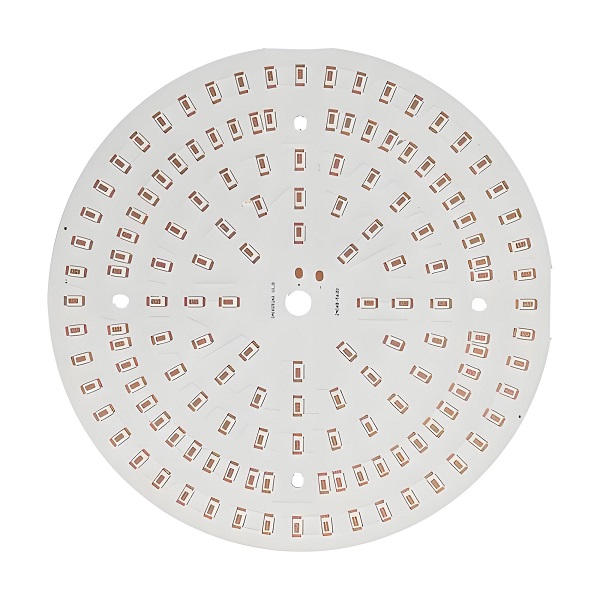
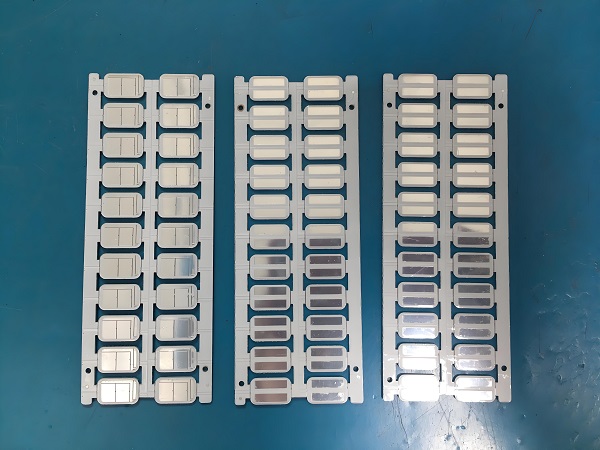
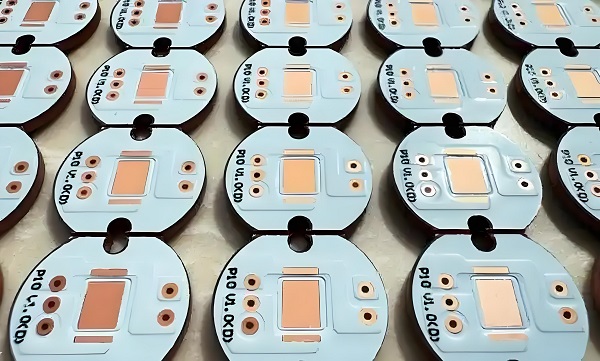
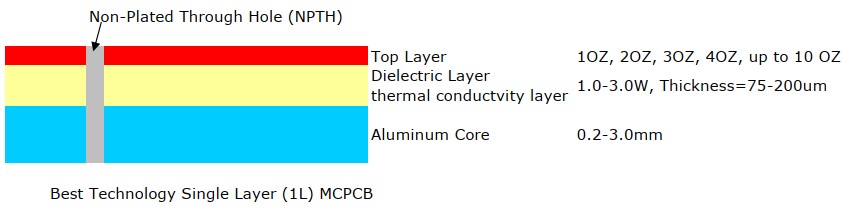
EBest Circuit (Best Technology) is a reliable PCB manufacturer specializing in FR4 PCB, rigid-flex PCB, ceramic PCB, MCPCB, HDI PCB, heavy copper PCB, and PCBA since 2006. Every PCB product listed above from EBest Circuit (Best Technology) is fully customizable. Our delivery time is about 3 weeks without compromising quality. For inquiries related to PCB design, PCB prototyping, or PCB assembly, please do not hesitate to contact us at sales@bestpcbs.com. Our team is here to provide expert support.

PCB Manufacturer List, Top PCB Manufacturers In USA

Who is the largest PCB manufacturer in the world?

Let’s start with the big question. The top PCB manufacturers in the world dominate the market through innovation, quality, and scale. Below is the list of the top 10 PCB manufacturers in the world:

  • EBest Circuit (Best Technology) (China) – Offers high-frequency and communication printed circuit boards.
PCB Manufacturer List
  • Zhen Ding Tech (Taiwan, China) – Known for its robust production volume and client base, including Apple.
  • Unimicron (Taiwan, China) – High-end HDI PCBs and flexible boards are its core.
  • Nippon Mektron (Japan) – Famous for its flexible PCB dominance.
  • TTM Technologies (USA) – Strong in aerospace and military segments.
  • Tripod Technology (Taiwan, China) – Mid-to-high volume PCB production.
  • Compeq Manufacturing (Taiwan, China) – Key supplier for laptops and servers.
  • Ibiden (Japan) – Trusted by global automotive and industrial clients.
  • Daeduck Electronics (South Korea) – Focuses on HDI and rigid-flex.
  • AT&S (Austria) – Known for high-tech boards used in mobile and medical devices.

These companies have shaped the PCB market with constant upgrades and smart investments. Many of them serve Tier 1 clients and provide strong global support.

Top PCB Manufacturers in USA

When it comes to quality and trust, the top PCB manufacturers in USA bring a solid lineup. Especially for critical industries like defense and aerospace, American companies remain reliable. Let’s check out the list of top 5 PCB manufacturers in the USA:

  • TTM Technologies – One of the top names globally, with wide capabilities from RF to multilayer PCBs.
  • Sanmina Corporation – Offers both design and manufacturing under one roof.
  • Advanced Circuits – Great for prototyping and low-volume orders.
  • Benchmark Electronics – Serves multiple industries with solid engineering support.
  • APCT – Fast turnaround and focused on advanced technology PCBs.

These manufacturers are well-known for quality assurance, certified production, and excellent customer service.

List of PCB Manufacturers in India

India has become a growing hub for electronics. The PCB manufacturing listed companies in India are expanding to meet local and global demand. Let’s highlight some of the top ones:

  • AT&S India (subsidiary of Austria’s AT&S): AT&S India is part of the well-known Austrian PCB giant. With a high-tech facility in Nanjangud, Karnataka, the company focuses on advanced IC substrates and high-end multilayer PCBs. They serve global clients in automotive and medical sectors and are steadily growing their manufacturing base in India.
  • Genus Electrotech: Genus Electrotech operates one of the largest vertically integrated PCB units in India. Located in Gandhinagar, Gujarat, they manufacture both single-sided and double-sided PCBs. Their facility also supports full box-build services, making them a one-stop solution for electronics brands.
  • Shogini Technoarts: Based in Pune, Shogini Technoarts has been active in PCB manufacturing since the early 1970s. They specialize in single and double-sided boards, and they serve automotive and industrial electronics sectors. Their consistent product quality keeps them on the radar for many long-term clients.
  • CIPSA-TEC India: CIPSA-TEC India is a part of Spain’s CIPSA Group. With its plant in Bengaluru, the company produces high-quality multilayer PCBs, especially for industrial applications. They focus heavily on sustainability and precise engineering, keeping their production aligned with international standards.
  • Meena Circuits Pvt Ltd: Located in Gujarat, Meena Circuits is known for rapid prototyping and small-to-medium volume PCB manufacturing. They offer a variety of board types, from basic to complex, and are growing in sectors like lighting, industrial control, and consumer electronics.

Most of these manufacturers cater to automotive, lighting, defense, and telecom industries. They’ve steadily improved their equipment and processes to match global standards.

China PCB Manufacturer List

When we talk about scale and cost-effectiveness, China leads the PCB manufacturer list. The country hosts some of the biggest names and factories with advanced automation.

    • EBest Circuit (Best Technology): EBest Circuit (Best Technology) is a well-known name in high-precision PCBs, especially for communication, computing, and automotive electronics. Located in Shenzhen, EBest Circuit (Best Technology) focuses on multilayer and HDI boards. Its continuous investment in R&D helps meet fast-evolving market needs.
    Top PCB Manufacturers In USA
    • Kinwong: Kinwong is among China’s top PCB exporters. With multiple plants across the country, they offer single-sided, double-sided, multilayer, and flexible PCBs. Their strong focus on eco-friendly manufacturing and stable delivery times make them a reliable global partner.
    • Aoshikang: Aoshikang, based in Jiangxi, delivers high-quality PCBs for consumer electronics, telecom, and automotive industries. The company is known for its robust quality control, extensive production capacity, and consistent upgrades to automation.
    • Suntak Technology: Suntak operates several smart factories in South China. Their strength lies in producing rigid PCBs and HDI boards in large volumes. Serving both domestic and global markets, they focus on high efficiency, fast turnaround, and international certifications.
    • Wus Printed Circuits: Wus is one of the largest PCB makers in China, specializing in automotive, telecom, and server board production. With decades of experience and cutting-edge facilities, Wus serves global tech leaders and holds key certifications like IATF 16949 and ISO 14001.

    These companies not only supply domestically but also ship to Europe and North America. Many have certifications like ISO, UL, and IATF.

    Military-Grade PCB Manufacturer

    For mission-critical devices, military-grade PCBs must pass strict tests. These aren’t just about reliability—they’re about life safety. Let’s explore a few reliable military-grade PCB manufacturers:

    • EBest Circuit (Best Technology) (China) – Offers military-level boards without MOQ requirement.
    PCB Manufacturer List
      • TTM Technologies (USA) – Strong presence in defense.
      • Sanmina (USA) – Compliant with ITAR and MIL-SPEC.
      • Advanced Circuits (USA) – Known for Class 3 PCB production.

      These manufacturers follow IPC standards and often offer full traceability and controlled materials.

      PCB Manufacturing Equipment List

      If you’re wondering what’s inside a PCB factory, here’s a list of common equipment:

      • Drilling machines
      • Etching lines
      • AOI (Automated Optical Inspection)
      • Solder mask printing machines
      • Pick-and-place machines
      • Wave and reflow soldering machines
      • Flying probe testers

      The better the PCB manufacturing equipment, the more consistent the quality. That’s why top-tier factories invest heavily in automation.

      How do I find the manufacturer of a circuit board?

      1). If you have a PCB in hand and wonder where it was made. With a bit of digging, you can usually track down the PCB manufacturer connected to a certain product. Here’s how to trace it:

        • Check the silkscreen: Often, the manufacturer’s code or logo is printed directly on the board.
        • Use barcode scanners: Some PCBs include QR codes or barcodes that link to supplier info.
        • Check Gerber files: If you have design files, the filename or comments may include the factory name.
        • Look up part numbers: ICs or connectors may have manufacturer codes that hint at the PCB origin.
        • Ask the assembler: If you got the board through an EMS company, they might know.

        2). If you don’t have a PCB in hand but need to ‌produce custom circuit boards‌, you can search for manufacturers through the following channels:

        Online B2B Platforms‌

        • alibaba.com: A global supplier platform supporting customized orders.
        • 1688.com‌: Ideal for domestic procurement in China, offering transparent pricing (requires screening for high-quality manufacturers).
        • ‌HQEW.com‌: A hub for electronic components and PCB suppliers.

        Industry Trade Shows‌

        • CPCA SHOW‌ (China International Electronic Circuit Exhibition)
        • ‌NEPCON China‌ (South China International Electronics Production Equipment & Microelectronics Exhibition)
        • ‌India Electronics Trade Fair (IETF)‌
        • ‌Electronica India‌ (Munich Electronics Expo India Branch)

        Industry Associations and Directories‌

        • ‌China‌: The ‌China Printed Circuit Association (CPCA)‌’s official website provides a directory of member companies.
        • ‌India‌: The ‌India Electronics and Semiconductor Association (IESA)‌ offers access to local PCB manufacturers.

        ‌Directly Contact Known Manufacturers‌

        • Refer to the manufacturers listed earlier (e.g., ‌EBest Circuit (Best Technology)) for direct inquiries. EBest Circuit (Best Technology): Specialize in PCB prototyping and small-batch production with cost-effective solutions.

        How to choose a PCB manufacturer?

        Picking the right manufacturer affects cost, quality, and delivery. Here are some simple steps:

          • Define your needs: Do you need rigid, flex, or HDI? Low or high volume?
          • Review capabilities: Check if they offer multilayer, metal core, or special finishes.
          • Request certifications: ISO 9001, UL, IPC, or IATF show reliability.
          • Check reviews and ratings: Past customer experiences can save you from poor service.
          • Compare pricing and lead times: Don’t choose only by price. Service and consistency matter more.
          • Ask about after-sales support: Good support can fix problems faster.

          Choose a PCB supplier that listens, explains clearly, and helps improve your design if needed.

          PCB Manufacturer List, Top PCB Manufacturers In USA

          In conclusion, as electronics grow, the PCB manufacturer list keeps expanding. From top global players to trusted regional PCB factories, there’s no shortage of options. Each manufacturer brings something unique—some focus on speed, others on precision or industry certifications.

          If you’re looking for a reliable partner, EBest Circuit (Best Technology) offers more than 18 years of experience in PCB manufacturing and turnkey PCB assembly. We serve global customers with quick service, high quality PCBs, and expert engineering support. Whether it’s a PCB prototype or a complex, multi-layer PCB order, we are ready to help.

          For any new projects, just don’t hesitate to reach out to us via sales@bestpcbs.com, we are pleased to turn your design into a real-world PCB product backed by quality, support, and fast lead times.

          LED PCB Assembly, LED PCB Assembly Manufacturers

          April 8th, 2025

          Are you find a LED PCB assembly solution? How do you find a good quality LED PCB assembly factory? This blog breaks down the essentials: assembly machines, assembly processes and cost, and how to select a reliable LED PCB manufacturer.

          Best technology, we focus on LED PCB assembly over 18 years. We can achieve LED PCB fast assembly (48-72hours fast delivery) by our stable electronics supply chains and our four SMT full-automatic production lines. So we are able to ensure consistency in luminous efficiency at fast assembly. Then all the LED PCB we assembled will be full inspected before and after assembly to reduce reworking cost. If you have any request for LED PCB, please feel free to contact us. sales@bestpcbs.com

          What Is LED PCB Assembly?

          LED PCB assembly refers to the process of mounting LED components onto printed circuit boards (PCBs) to create functional lighting systems or electronic devices. This process combines surface-mount technology (SMT) with precision soldering to ensure reliable electrical connections. Key elements include PCB material selection (e.g., aluminum or flexible substrates), component placement accuracy, and thermal management solutions. Manufacturers specialize in this field offer end-to-end services, from design to mass production, catering to applications like LED lighting, automotive displays, and consumer electronics.

          What Is LED PCB Assembly?

          What Are the Advantages of HASL Lead-free for LED PCBA?

          • Environmental Compliance: Complies with the RoHS directive, eliminates lead pollution, meets global environmental regulations, and is suitable for markets with strict environmental requirements such as consumer electronics.
          • High Reliability: Withstands thermal cycling from -55°C to 100°C, suitable for LED applications; the tin layer prevents copper oxidation, enhancing long-term stability; good wettability in the first reflow, resulting in high soldering quality.
          • Significant Cost-Effectiveness: Lower cost than Electroless Nickel Immersion Gold (ENIG), suitable for medium-budget projects; mature process, suitable for mass production, reducing unit costs; long shelf life (stable for one year under moisture-proof conditions), reducing storage and rework risks.
          • Processing Convenience: Compatible with single/double-sided and multilayer boards (1-26 layers), meeting complex design requirements; short production cycle (12-20 days), suitable for quick delivery; solder joint defects can be repaired with hot air, reducing scrap rates.
          • Long-Term Technical Advantages: Mature technology, high stability, suitable for the LED industry’s needs; reliability can be enhanced by adding a nickel layer or optimizing solder paste formulations.
          What Are the Advantages of HASL Lead-free for LED PCBA?

          What Assembly Machine Is Used in the LED PCBs Assembly Process?

          • Pick-and-place machine
          • Reflow oven(Nitrogen reflow is optional, it is very stable but the cost of this kind of assembly machine is much higher than normal reflow oven)
          • Solder paste printer
          • SPI inspection machine
          • AOI inspection machine
          • X-Ray inspection machine
          • Conformal coating machine
          • Functional testing equipment

          What Are 5050 LED PCB Assembly Process Steps?

          Here’s a streamlined list of the 5050 LED PCB assembly process steps:

          1. Incoming inspection of LED/materials

          • Use a two-dimensional measuring instrument and a film thickness tester to check the appearance size of the LED bracket, the thickness of the electroplating layer, and the oxidation phenomenon ‌.
          • Verify the specifications of the 5050 LED (package size 5.0×5.0×1.6mm, polarity identification) and the IC model (such as SK6812) ‌.

          2. Baking materials

          • Unopened LEDs need to check the air tightness of the packaging, and complete the soldering within 24 hours after opening; if moisture is absorbed, it needs to be baked at 60℃ for 24 hours ‌.
          • Pre-bake the PCB board (120℃/2H) to remove moisture ‌.

          3. Pick and Place & Solder paste printing

          • Use a laser steel mesh to print SAC305 lead-free solder paste, with a thickness control of ±10ÎŒm ‌
          • Clean the steel mesh regularly to avoid clogging and uneven printing ‌.

          4. SPI Inspection

          • Use 3D optical detection of solder paste volume, coverage area, and offset to ensure printing quality.

          5. SMT( Surface Mounted Technology)

          • IC (such as WS2812B) and small resistors and capacitors are mounted first, and 5050 LED is mounted last.
          • Check that the polarity mark (cathode/anode) is aligned with the PCB silk screen.

          6. Reflow soldering

          • Preheating (150–180℃/60–90s) → Constant temperature (180–220℃/60–120s) → Reflow peak (240–260℃/10–30s) → Cooling (slope ≀4℃/s).

          7. Post-furnace inspection ‌

          • Visually check for offset, tombstone, and cold soldering.
          • Use an anti-static soldering iron (temperature ≀260℃/time ≀3 seconds) for manual correction.

          8. AOI (Automatic Optical Inspection) ‌& X-Ray inspection(Optional) ‌

          • AOI: Scan solder joint integrity, LED polarity, and component missing, and mark defective products for repair.
          • X-Ray: Detect pores or cracks in hidden solder joints (such as LED heat sink pads) to ensure heat dissipation performance.

          9. Post-soldering & Cleaning

          • Limited to rework scenarios, soldering iron temperature ≀300℃, avoid touching the LED colloid.
          • Wipe with isopropyl alcohol (IPA) or low-residue solvent, and disable ultrasonic cleaning (to prevent damage to LED colloid).

          10. Testing & Conformal coating ‌

          • Electrical test: 5V drive current (60mA/LED), RGB color consistency.
          • Signal test: verify address control protocol (such as PWM dimming).
          • Conformal coating: Spray acrylic or silicone conformal coating, and enhance moisture and sulfur corrosion resistance after curing. ‌

          11. Box Building Assembly &  Packaging and shipment ‌

          • Assemble the LED PCB with the heat sink and the housing to ensure that the contact surface is flat. ‌
          • Packaging with vacuum moisture-proof bag/bubble bag/custom blister box, and marking the outer box with shockproof/sulfur-proof logo.

          How to Choose A High Quality LED PCB Assembly Manufacturer?

          Here are some ways of how to choose a high quality LED PCB assembly manufacturer:

          • Certified Quality Assurance-The manufacturer holds international certifications like ISO 9001, ISO 14001, and UL, ensuring their quality management system and products meet global standards.
          • Advanced Technical Capabilities-They possess state-of-the-art equipment and technology, such as AOI machines and X-ray detection, enabling precise and high-quality production. They can also handle special processes like HDI boards and rigid-flex boards.
          • Rigorous Quality Control-A comprehensive quality control process is in place, covering incoming material inspection, in-process inspection, and final product testing. Reliability tests ensure the PCB’s stability and durability.
          • Flexible Production Capacity-The manufacturer can handle both small and large orders, adapting to different complexities and changes in demand, ensuring timely delivery.
          • Excellent Customer Service-They provide responsive communication, prompt technical support, and engineering assistance, such as DFM analysis, to help optimize your design and ensure a smooth production process.

          How Can I Get Cheap LED PCB Assembly Quotes?

          To get cheap LED PCB assembly quotes, follow these steps:

          • Compare Multiple Manufacturers: Contact several manufacturers to compare prices and services.
          • Provide Detailed Specifications: Clearly outline your PCB requirements, including layer count, material, and components.
          • Optimize Your Design: Simplify your PCB design to reduce costs.
          • Order in Bulk: Larger orders often qualify for volume discounts.
          • Build Long-Term Relationships with one supplier: Negotiate better rates by committing to repeat business.
          How Can I Get Cheap LED PCB Assembly Quotes?

          How Much Does LED PCB Assembly Cost?

          Here is a LED PCB Assembly pricelist:

          • Setup fee: Around $200 ‌
          • Placement cost: Around $0.01-$0.05 per component ‌
          • Standard LEDs (e.g., 5050 RGB): Around $0.10-$5 per unit ‌
          • Specialty LEDs (e.g., SK6812): Around $0.50-$5 per unit ‌
          • Solder Paste Stencil‌:Around $100 ‌
          • AOI Testing: Around $50-$100 per batch ‌
          • Functional testing: Around $100 per batch ‌
          • Conformal Coating‌: Around $1-$10 per board ‌
          • Packaging‌: Around $3-$7 per unit
          How Much Does LED PCB Assembly Cost?

          Note‌: Prices assume mid-range specifications and bulk orders. For exact quotes, please provide BOM and Gerber files with EBest Circuit (Best Technology).

          What Are Differences Between Aluminum and Flex LED PCB Assembly?

          Here are the main differences between Aluminum and Flex LED PCB Assembly:

          1. Material and Structure
            Aluminum PCB: Uses an aluminum base for heat dissipation, suitable for high-power LEDs.
            Flex PCB: Made of flexible materials, allowing bending and complex shapes.
          2. Thermal Performance
            Aluminum PCB: Excellent heat dissipation, ideal for high-temperature applications.
            Flex PCB: Limited heat dissipation, suitable for low-power applications.
          3. Applications
            Aluminum PCB: Commonly used in high-power LED lighting and power modules.
            Flex PCB: Suitable for irregular or complex spaces, such as automotive lighting and wearables.
          4. Cost
            Aluminum PCB: Generally more cost-effective for mass production.
            Flex PCB: Higher cost due to specialized materials and manufacturing.
          5. Manufacturing Complexity
            Aluminum PCB: Simpler manufacturing process.
            Flex PCB: Requires specialized equipment and techniques for complex designs.

          In conclusion, that’s all about LED PCB assembly and how to select a good quality LED PCB supplier. If you have any issues about LED PCB, welcome to leave a message below this blog.

          How Do You Discharge a Capacitor with a Multimeter?

          April 8th, 2025

          How do you discharge a capacitor with a multimeter? You don’t directly use a multimeter to discharge capacitor. But it helps you check if the capacitor is safe after discharging. Always use the right method—resistor, discharge tool, or careful shorting—for the actual discharge step. Then, use your meter to confirm.

          At EBest Circuit (Best Technology), we’re not just about making PCBs—we help make your job safer and easier. We’ve spent over 18 years building boards that last. From simple single-sided layouts to complex multilayer boards with embedded capacitors, we’ve seen it all. In today’s guide, we’ll walk you through how to discharge a capacitor using a multimeter. We’ll also share tips on safely discharging AC capacitors, how to handle them on circuit boards, and the proper use of a capacitor discharge tool. If you’re looking for a simple and safe method, you’re in the right place.

          How Do You Discharge a Capacitor with a Multimeter?

          What is a Capacitor in a Circuit Board?

          First of all, let’s know the definition of capacitor. A capacitor in a circuit board is like a small energy storage tank. It’s used to store electrical energy and release it when needed. On a circuit board, engineers use capacitors to stabilize voltage, reduce electrical noise, and smooth power supply fluctuations. For example, in audio systems, capacitors help remove unwanted signals so sound remains clean. In computers, they keep memory stable when power dips. Whether in large industrial machines or small wearable gadgets, capacitors play a quiet but essential role in reliable performance.

          A capacitor stores extra electrical energy and delivers it when there’s a drop or loss in power. This backup helps devices run smoothly. But before working with any capacitor—especially when installing it in a new device—discharging it is a must for your safety.

          Why Discharging a Capacitor Matters?

          Capacitors can hold a charge long after power is turned off. This stored energy may not seem dangerous, but it can cause shocks, damage tools, or even ruin components. Therefore, discharging a capacitor is important because it removes any leftover electrical charge. Even when a device is turned off, the capacitor can still hold a charge. This charge can be strong enough to cause a shock or damage nearby parts. Let’s say you’re replacing a power supply board—if the capacitor isn’t discharged, you could get a sharp zap or even fry the replacement parts. Discharging keeps you, your tools, and your components safe.

          What Happens If You Don’t Discharge a Capacitor?

          If a capacitor stays charged, it can deliver a quick jolt. This can hurt. It might even surprise you enough to drop your tools. In some cases, it may spark or cause short circuits. Worse, it could damage sensitive components nearby. Ignoring this step puts your safety and your equipment at risk. It’s a small step that makes a big difference.

          How to Check an AC Capacitor with a Multimeter?

          Start by turning off the power. Wait for the system to cool if needed. Then, discharge the capacitor using a safe method (we’ll cover that soon). Once that’s done, set your multimeter to the capacitance setting. It usually looks like two parallel lines.

          Next, remove the wires from the capacitor terminals. Connect your meter leads to each terminal. The reading should match the label on the capacitor. If it shows a much lower value or nothing at all, the part might be bad.

          If your meter doesn’t have a capacitance setting, you can still check it. Set it to resistance (ohms). A good capacitor will show a quick jump in numbers, then settle back down. A bad one may read open (no change) or shorted (zero).

          How Do You Discharge a Capacitor with a Multimeter?

          How Do You Safely Discharge a Capacitor?

          There are three common ways to discharge capacitor.

          1. Use a Resistor

          This is one of the safest methods. Get a resistor between 5k to 20k ohms and rated at 5 watts or more. Hold the resistor leads with insulated clips or pliers. Touch one lead to the positive terminal, and the other to the negative. Hold it for a few seconds. The stored energy will bleed off slowly. This way is easy and safe for DIY projects.

          2. Use a Capacitor Discharge Tool

          A capacitor discharge tool is a safer version of the resistor method. It’s built with proper insulation, clips, and a discharge resistor inside. Some versions even have an LED indicator to show when the voltage is gone. If you work with capacitors often, this tool is worth having. It’s faster and safer than makeshift methods. Its schematic shows as below:

          How Do You Discharge a Capacitor with a Multimeter?

          When the switch S1 is on and S2 is off, the capacitor is charged.
          When S1 is off and S2 is on, the capacitor discharges to the LED.

          3. Use a Screwdriver (Only for Low-Voltage Circuits)

          Only use this method on capacitors below 50V. Use a screwdriver with an insulated handle. Touch both terminals at the same time. You might see a small spark. Wait a few seconds, then check again. It’s simple but risky—avoid using it on high-voltage parts.

          What Is the Process of Discharging a Capacitor with a Multimeter?

          First, check if your multimeter has a built-in discharge function. Most don’t. But some digital models made for electronics might.

          If not, you’ll need to discharge the capacitor before using the multimeter. Here’s how:

          1. Turn off and unplug the device.
          2. Use a capacitor discharge tool or resistor as explained above.
          3. After discharging, use the multimeter to check the voltage across the terminals.
          4. Set the meter to DC volts if it’s an electrolytic capacitor.
          5. If the reading is near zero, it’s safe to handle or test further.
          How Do You Discharge a Capacitor with a Multimeter?

          Multimeters are not designed to remove charge. Their job is to measure. Forcing a multimeter to discharge can damage it. Always use the right tool for the job.

          How Long Does It Take to Discharge a Capacitor?

          The time varies depending on the capacitor’s size and the method used. Small capacitors may discharge in under a second. Larger ones can take several seconds or more. Using a proper resistor makes it slower but safer. A fast discharge can cause sparks or damage.

          For example, using a 10k ohm resistor on a 470uF capacitor may take around 5–10 seconds. If you’re using a capacitor discharge tool with a visual indicator, you’ll know when it’s done. Always wait a bit longer than you think you need. Safety first.

          What Happens After a Capacitor Is Discharged?

          Once a capacitor is fully discharged, the voltage across its terminals drops to zero or close to it. That means it’s safe to touch or work on. You can test it, replace it, or solder it without the risk of shock.

          Discharging doesn’t harm the capacitor. It only removes stored energy. In fact, this step protects both the capacitor and everything around it. It’s just like emptying a water bottle before cleaning it—simple, safe, and smart.

          How to Check if a Capacitor Is Discharged?

          The best way is to use a multimeter. Set it to DC voltage. Touch the leads to each terminal. Check the radings. If the reading is under 1 volt, the capacitor is discharged. If it shows higher, wait or try discharging again.

          How Do You Discharge a Capacitor with a Multimeter?

          Some people also use a discharge tool with an LED. When the light goes off, it means the charge is gone. This is quick and useful, especially in tight spaces or when working with multiple parts.

          Another trick is to short the terminals with a resistor and listen. If you hear a faint pop or see a spark, it was still charged. If nothing happens, it’s likely safe.

          Do I Need to Discharge a New Capacitor Before Installing?

          Most new capacitors come with no charge. They haven’t been connected to power, so they’re usually safe. But if the part has been tested, returned, or used before, it might still hold a small charge.

          To be safe, check it with your multimeter. If there’s any voltage, discharge it. It takes only a few seconds and adds an extra layer of safety.

          Even in a factory, charged capacitors can slip through if they were tested. So, it’s good practice to check every time, even if the part is new. Better to be safe than sorry.

          Final Thoughts

          If you’re regularly dealing with circuit boards or electronic repairs, investing in a capacitor discharge tool and a reliable multimeter can make your job easier and safer. Plus, learning how to measure capacitance can help spot failing parts before they cause bigger problems.

          Need help sourcing safe, high-quality components? Our team at EBest Circuit (Best Technology) offers expert solutions for all types of PCBs, including ones with advanced capacitor layouts. With over 18 years in the industry, we know how to match the right part to your design. From testing tips to full production runs, we’ve got you covered.

          Whether you need help with one board or thousands, we’re ready. Partner with us for quality that lasts. With EBest Circuit (Best Technology), your circuit is in good hands. Get reach with us for more information about PCB repair or PCB manufacturing!

          Keyboard LED PCB, DIY Mechanical Keyboard PCB LED Design

          April 7th, 2025

          Would you like to know how to DIY a keyboard LED PCB? This blog covers everything from DIY PCB layouts and RGB effects to polarity checks and troubleshooting, ensuring a seamless path from prototype to production.

          EBest Circuit (Best Technology) specializes in keyboard LED PCB solutions, delivering strict IP protection (NDA agreements and encrypted R&D processes), proven 8×16 RGB matrix technology (refresh rates ≄200Hz, current control within ±5%), and modular designs. Our aluminum substrates and QMK/VIA-compatible firmware ensure thermal stability and ultra-low latency (<3ms), while high-reflectivity materials reduce power consumption by 15-20%. Supported by a 24/7 multi-engineer team offering free design technical support, integrated DFM analysis, and EMC testing, we promise one-time prototyping success. If you have any request in keyboard LED PCB, please feel free to contact us: sales@bestpcbs.com

          What Is A Keyboard LED PCB?

          A Keyboard LED PCB is a specialized printed circuit board designed for mechanical keyboards, integrating both signal transmission and LED backlight control. Typically constructed with a metal core, such as aluminum, it efficiently dissipates heat generated by prolonged LED use while ensuring durability. Conductive copper traces on the board connect mechanical switches to LEDs, enabling real-time input signaling and customizable RGB lighting effects via embedded microcontrollers. Advanced designs may support multi-layer layouts for complex RGB configurations, software-driven light customization, and thermal management through materials like aluminum substrates.

          What Is A Keyboard LED PCB?

          What Is the Best LED Controller for Keyboard PCB?

          • Compatibility: Works with your keyboard’s hardware and software.
          • Programmability: Supports multiple programming languages and libraries for complex effects.
          • Processing Power: Enough power to smoothly control multiple LEDs.
          • Power Efficiency: Efficient power usage to extend battery life.
          • Community Support: Active community for help and resources.
          What is the Best LED Controller for Keyboard PCB?

          How to Design a DIY Mechanical Keyboard LED PCB?

          Here are steps for DIY mechanical keyboard LED PCB:

          ‌1. Confirm Switch and LED Requirements‌

          • Switch Compatibility‌: Select mechanical switch type (e.g., Cherry MX) and verify footprint dimensions. Design a switch matrix (rows/columns) with N-key rollover using 1N4148 diodes. Assign rows/columns to MCU GPIO pins (e.g., ATmega32U4).
          • LED System‌: For single-color LEDs, calculate resistor values by subtracting the LED forward voltage from the power supply voltage and dividing by the desired current. For RGB LEDs (WS2812B), chain data lines (DIN→DOUT) with 0.1”F decoupling capacitors per LED and a 220Ω resistor on the data line. Ensure total LED power consumption stays below 500mA for USB compliance.

          ‌2. Power Circuit Design

          • ‌Voltage Regulation‌: Integrate a 5V to 3.3V LDO (e.g., AP2112K-3.3V) for MCU power. Include a 10”F bulk capacitor at the USB input and 100nF decoupling capacitors near each IC.
          • ‌Protection‌: Add a 500mA PTC fuse on the VBUS line to prevent overcurrent damage.

          ‌3. PCB Layer Stack-up and Routing

          • ‌2-Layer Design‌: Route switch rows/columns on the top layer and dedicate the bottom layer to ground. For RGB-heavy designs, use a 4-layer stack with dedicated power/ground planes.
          • ‌Signal Isolation‌: Route switch matrix traces perpendicular to RGB data lines to minimize interference. Keep RGB data traces under 30cm and use 0.2mm trace width with 0.1mm spacing for impedance control (~50–60Ω).

          ‌4. Thermal Management‌

          • ‌Aluminum-Core PCB‌: 1.6mm aluminum substrates (e.g., Bergquist MP-06503) for high-power LED setups. Place thermal vias (0.3mm drill, 0.6mm pad) under LEDs to transfer heat to the core.
          • ‌Mounting‌: Secure LEDs with thermal adhesive (e.g., Arctic Silver) for improved heat dissipation.

          ‌5. Component Placement

          • ‌Switches‌: Align to a 19.05mm grid (ANSI/ISO standard). Include hot-swap sockets if required.
          • ‌LEDs‌: Position 2.5mm below switch stems for uniform backlighting. Avoid placing LEDs near mounting screws or plate cutouts.
          • ‌MCU and USB‌: Place the MCU close to the USB connector. Add ESD protection (e.g., USBLC6-2SC6) on the USB data lines.

          ‌6. Firmware Configuration‌

          • ‌Matrix Mapping‌: Define row/column GPIO assignments in firmware. Assign the RGB data pin (e.g., RGB_DI_PIN = GP16).
          • ‌LED Control‌: Implement libraries like Fast LED for animations. Apply gamma correction to ensure color accuracy.

          ‌7. Prototype Assembly and Testing‌

          • ‌Fabrication‌: Order prototypes with ENIG finish and impedance-controlled traces. Specify 0.5oz copper for cost efficiency.
          • Functional Tests‌: Measure USB current draw at max brightness; ensure it stays below 500mA.
          • Thermal Validation‌: Use a thermal camera to check LED temperatures (<60°C under sustained use).

          How to Avoid Keyboard LED Polarity Issues?

          • Align LED orientation‌ with the PCB’s polarity symbols (e.g., anode/cathode markers like “+/-” labels or silkscreen arrows)‌.
          • Verify PCB polarity markings‌ using clear indicators (e.g., asymmetrical footprints or “+” labels) to prevent reversed installation‌.
          • Test LEDs before soldering‌ by placing them loosely on the PCB and powering the board to confirm functionality‌.
          • Ensure correct wiring alignment‌ for power (VCC), ground (GND), and data lines (DIN/DOUT) to match the LED pinout‌.
          • Use a multimeter‌ to check continuity between LED pins and PCB pads for proper polarity alignment‌.
          • Select PCBs with reverse-protection features‌ like polarity diodes or reverse-voltage-tolerant LEDs (e.g., WS2813)‌.
          • Follow manufacturer pinout guides‌ from datasheets to confirm LED and PCB specifications (e.g., WS2812B pin 1 = VCC)‌.
          • Inspect solder joints‌ to fix misaligned pins or accidental bridges that short-circuit connections‌.
          • Label custom PCBs‌ with polarity symbols or color-coded silkscreen layers (e.g., red for VCC, black for GND)‌.
          • Update firmware settings‌ (e.g., QMK) to align GPIO pin configurations with the PCB’s electrical polarity‌.
          How to Avoid Keyboard LED Polarity Issues?

          How to Achieve RGB LED Effects on Keyboard PCB?

          Here are steps to how to achieve RGB LED effects on keyboard PCB:

          ‌1. Hardware Design‌

          • Use a PCB that supports RGB LEDs (such as aluminum substrates for heat dissipation), and the pad size is suitable for 5050 LEDs (5mmx5mm).
          • Choose addressable RGB LEDs (such as WS2812B) or ordinary RGB LEDs with driver circuits (such as MOSFET+PWM).
          • Integrate a microcontroller (such as STM32F103) to manage signals and protocols (IÂČC/SPI).

          2. Welding and Assembly‌

          • The soldering iron temperature is <350°C to solder the LED to avoid damage.
          • A series current limiting resistor (such as 0805 68Ω) prevents overcurrent.

          ‌3. Firmware Programming‌

          • Use Arduino or QMK to program dynamic effects such as breathing and rainbow.
          • Control brightness and RGB color mixing (0-255) through PWM dimming.

          4. Software Configuration‌

          • Use Open RGB to customize single-key lighting effects and synchronize system themes.
          • Program macros or SDK to achieve dynamic responses (such as key-triggered lighting effects).

          5. Test Optimization‌

          • Use a multimeter to check the circuit and AOI to detect the quality of solder joints.
          • Optimize code to reduce delays and ensure smooth lighting effects.

          How to Choose the Best Keyboard LED PCB Design Service?

          • IP Protection‌: Ensure providers enforce strict NDAs. Like EBest Circuit (Best Technology), we have encrypted storage and physically isolated R&D environments to safeguard firmware code and LED matrix control logic.
          • Transparent Process‌: Prioritize modular designs (e.g., detachable LED driver layers) supported by real-time collaboration tools and standardized Gerber/BOM files for seamless production handoffs.
          • High-Density Expertise‌: Prioritize vendors with proven success in 8×16 RGB matrices, resolving ghosting/thermal issues, and delivering ≄200Hz refresh rates with ±5% current accuracy.
          • Signal & Thermal Performance‌: Verify PWM interference analysis in keyboard LED matrix layouts and thermal solutions (aluminum substrates, optimized copper layers) to prevent overheating.
          • Customization & Efficiency‌: Demand QMK-compatible firmware for low-latency effects (<3ms) and high-reflectivity materials (≄85%) to minimize power consumption in backlit designs.
          How to Choose the Best Keyboard LED PCB Design Service?

          Why is My Keyboard LED PCB Not Working?

          • Insufficient Power‌: If USB power exceeds limits (e.g., 1A for 50 LEDs), use an external power supply or reduce the number of LEDs.
          • Voltage Drop‌: Measure voltage at the LED endpoints. If below 4.5V (for 5V LEDs), thicken power traces or add external 5V power injection.‌
          • Broken Connections or Cold Solder Joints‌: Ensure the data line (DIN) is sequentially soldered. Re-solder loose joints.
          • Short Circuits‌: Check for accidental solder bridges or debris between pins/traces.‌
          • Incorrect Pin Mapping‌: Verify the GPIO pin assigned to the data line in firmware (e.g., QMK) matches the PCB design.
          • Missing Drivers‌: Install libraries like Fast LED or update MCU firmware to support LED protocols (e.g., WS2812B).‌
          • Burned LEDs/MCU‌: Test components individually and replace faulty ones.
          • Broken PCB Traces‌: Check for broken traces in high-current areas (e.g., power lines) with a multimeter.

          Can You Build a Keyboard LED Only PCB?

          Yes, you can build a keyboard PCB solely for LEDs, but it requires designing a dedicated circuit for power delivery and control signals. Focus on high-current traces (≄1A) to handle multiple LEDs, integrate voltage regulation (3.3V/5V), and support addressable protocols (e.g., WS2812B) with proper data-line routing. Ensure physical spacing avoids interference between LEDs and omit switch footprints. Pair it with a compatible controller (e.g., RP2040) for firmware-driven effects. This setup suits decorative lighting or auxiliary backlighting but lacks switch functionality.

          Protoboard vs Breadboard: What are the Differences Between them?

          April 7th, 2025

          What is a Protoboard?

          A protoboard is a basic circuit board used to build and test circuits. It’s also known as a perforated board or perfboard. Unlike breadboards, protoboards need soldering to hold the components. Small holes in a regular grid allow you to place electronic parts wherever you need them. These holes have copper pads or strips to create connections.

          Most protoboards are made from phenolic or fiberglass materials. You use wires or solder bridges to link components. This layout is semi-permanent. Once soldered, parts stay in place unless you manually remove them.

          Protoboard vs Breadboard: What are the Differences Between them?

          Types of Protoboard

          Choosing the right protoboard depends on your circuit’s complexity, size, and durability needs. There are three main types commonly used in the industry:

          1. Basic Perforated Protoboard (No Copper Tracks)

          This is the simplest form of protoboard. It contains only holes arranged in a grid, with no copper pads or tracks. You must manually create all connections using wires or by soldering small jumper wires between components.

          2. Stripboard (With Continuous Copper Tracks)

          In this version, copper tracks run along rows of holes. These continuous strips form horizontal electrical connections. It saves time because you don’t need to solder as many individual jumpers. However, you may need to break some tracks to isolate sections. This is often done using a drill bit or knife.

          3. Dot Matrix Protoboard (With Isolated Copper Pads)

          This type has individual copper pads around each hole, but they’re not connected to each other. You should connect pads manually using wires or solder bridges. It provides better design control than a stripboard and is ideal for compact or complex layouts.

          Protoboard vs Breadboard: What are the Differences Between them?

          Why Use a Protoboard?

          A protoboard is the middle step between a breadboard and a full custom PCB. It’s perfect for making small production prototypes. Once you’re sure the circuit works, the protoboard helps create a more stable version for long-term use.

          It offers solid mechanical strength because components are soldered. That’s helpful if you move the board often. You also avoid the loose wires problem that breadboards face. For professional work, protoboards can mimic the actual final board setup better than breadboards.

          What is a Breadboard?

          A breadboard is a reusable board used to test circuit designs without soldering. It’s great for beginners, students, and engineers trying new ideas. The name of the breadboard can be traced back to the era of vacuum tube circuits. When the circuit components were mostly large, and people usually connected them by screws and nails on a piece of wood used for cutting the packet, and later the size of the circuit components became smaller and smaller, but the name of the breadboard remained.

          Protoboard vs Breadboard: What are the Differences Between them?

          Most breadboards have two power rails on each side. The center area has a grid of holes where you plug in your chips, resistors, or capacitors. You can create and adjust circuits within minutes. That’s why it’s so widely used in electronics labs and classrooms.

          Why Do We Need Breadboards?

          Breadboards are the easiest way to try out new circuits. They let you experiment fast without permanent changes. If something doesn’t work, just pull the wire and try again. This helps reduce time and waste.

          They are cost-effective, reusable, and user-friendly. No special tools are needed. Just plug and play. It’s ideal for students learning the basics of electronics. Also, when you’re unsure about a circuit design, the breadboard gives a way to test it before moving forward.

          Protoboard vs Breadboard Pros and Cons

          Breadboard Pros:

          • No soldering needed
          • Fast setup
          • Easy to reuse
          • Great for learning
          • Perfect for quick fixes

          Breadboard Cons:

          • Loose connections possible
          • Poor for high-frequency signals
          • Can’t handle high current
          • Not durable for long-term use

          Protoboard Pros:

          • ‌Fast design verification
          • Handles higher currents
          • More stable connections
          • Closer to a real PCB layout
          • Reduce the cost and risk of mass production

          Protoboard Cons:

          • Requires soldering
          • Hard to change once built
          • Takes more time to design
          • Not reusable

          Breadboards suit fast testing. Protoboards suit semi-final builds or field-ready prototypes before mass production, so it is a bridge between breadboard and PCB.

          Protoboard vs Breadboard Cost

          In general, breadboards are cheaper if you reuse them. A medium-size breadboard may cost just a few dollars and last for years if handled well. No soldering means it can be used over and over again.

          Protoboards are cheaper per unit if you build a permanent prototype. But they can’t be reused after soldering. Some types, like fiberglass protoboards with complex design, they are a bit more expensive. Still, they offer better strength and longer service life. Over time, protoboards become more cost-effective when your goal is a finished design. For simple learning or trials, breadboards are the go-to.

          What Is the Difference Between Protoboard vs. Breadboard?

          FeatureBreadboardProtoboard
          Soldering NeededNoYes
          ReusabilityHighLow
          StrengthLowHigh
          CostLower (if reused)Moderate
          Best UseLearning & quick testsPermanent prototypes
          Current CapacityLowMedium to High
          Circuit StabilityLowerHigher
          ChangeabilityEasyHard after soldering
          Lifespan per circuitTemporarySemi-permanent
          Error CorrectionEasyDifficult

          Both have advantages. Breadboards win in learning environments. Protoboards win in performance-critical situations.

          When to Use Protoboard or Breadboard?

          Use breadboards when you’re:

          • You’re testing a brand-new design
          • The project is in an early idea phase
          • You’re working on a school or training assignment
          • You want to reuse parts later
          • You’re building a low-power, low-speed circuit

          Use protoboards when:

          • You’ve finalized the circuit design
          • You need to test the design in a real environment
          • The circuit needs to stay assembled for long
          • You need stronger electrical contacts
          • You’re preparing for PCB production
          Protoboard vs Breadboard: What are the Differences Between them?

          Quick Turn PCBs from EBest Circuit (Best Technology)

          Once your prototype works on a breadboard or protoboard, it’s time to go professional. That’s where EBest Circuit (Best Technology) comes in. We totally understand what you want. With over 18 years of PCB manufacturing experience, we turn your final idea into a real, fully functional board.

          We specialize in:

          • Rapid prototyping
          • DFM & DFA analysis support
          • Small-batch and mass production
          • High-quality material selection
          • Fast lead times (1-3days for prototype, 3-7days for mass production)

          Whether you’re working with rigid PCB, flexible PCB, aluminum PCB, metal core PCB or ceramic boards, we deliver precision. Our team understands the challenges between idea and product. That’s why we support each stage with reliable service and fast delivery. And when you’re ready to go one step further, EBest Circuit (Best Technology) is always ready to support your quick-turn PCB needs with unmatched precision and care.

          RF PCB Manufacturer, RF PCB Manufacturing​

          April 7th, 2025

          RF PCB manufacturer is a term often searched by engineers and businesses looking for high-quality, high-frequency printed circuit boards. In today’s fast-paced tech world, signal strength, low loss, and stable performance are non-negotiable. Whether you are creating 5G devices or aerospace modules, having the right partner in RF PCB fabrication is crucial. Let’s explore what goes into this process, how materials matter, and why the manufacturer you choose make a difference.

          EBest Circuit (Best Technology) is one of the leading RF PCB manufacturers in China, specializing in RF PCB fabrication, RF PCB design, and multilayer RF PCB manufacturing. EBest Circuit (Best Technology) used high-quality RF PCB materials, such as Rogers RO4350, RO4003, and PTFE (DuPont Teflon). We believe quality is the first. If you are looking for a reliable RF PCB manufacturer, just don’t hesitate to choose EBest Circuit (Best Technology) as your partner. Feel free to contact us at sales@bestpcbs.com.

          RF PCB Manufacturer, RF PCB Manufacturing​

          What is RF PCB Manufacturing?

          RF PCB manufacturing refers to the process of building circuit boards that handle high-frequency signals. Unlike standard boards, these work at frequencies from hundreds of MHz to several GHz. Every step, from design to final assembly, must reduce signal loss, noise, and interference. This makes the process more specialized compared to regular PCB production.

          The job of an RF PCB manufacturer is to build boards that transmit data with speed and clarity. These boards are used in wireless communication, radar, satellite, and medical systems. The RF signal paths need careful design, tight control of dimensions, and excellent copper surface finishes.

          What Are the RF PCB Material?

          Material choice is a critical factor. Good materials reduce signal loss and support stable signal transmission. Common materials used by experienced RF PCB manufacturers include:

          • Rogers 4350B: Offers low dielectric loss and stable performance.
          • Taconic RF-35: Preferred for its cost-effectiveness and stable frequency behavior.
          • Teflon (PTFE): Great for very high-frequency applications but harder to process.
          • FR4 (for mixed designs): Sometimes used with other high-end substrates in hybrid boards.

          Choosing the right RF PCB material ensures high signal integrity, low insertion loss, and better impedance control. A reliable RF circuit board manufacturer will offer a variety of materials based on your project’s frequency range and power levels.

          How is a PCB Manufactured?

          While every PCB shares some basic steps, RF PCB fabrication includes extra precision:

          • Design & Layout: Engineers define the RF path, stackup, and signal traces.
          • Material Preparation: Boards are prepared using selected RF PCB materials.
          • Lamination: Layers are pressed under heat and pressure.
          • Drilling: High-precision equipment drills clean and accurate holes.
          • Plating: Holes and surface areas are plated with copper.
          • Imaging: Photolithography transfers the circuit image onto copper.
          • Etching: Removes unwanted copper, leaving only the designed circuit.
          • Surface Finish: ENIG or silver is applied for better conductivity.
          • Inspection: AOI, X-ray, and other tests ensure the board meets specs.

          Every step affects the RF performance, especially in multilayer RF PCB manufacturing.

          RF PCB Manufacturer

          What Makes a Reliable RF PCB Manufacturer Stand Out?

          Finding the right partner is more than just checking price. A reliable RF PCB manufacturer offers:

          • Experience with high-frequency designs
          • Strong control over materials and processes
          • Advanced equipment for small trace width and spacing
          • Quick turnaround and flexible volumes
          • Full-service PCB express and assembly support
          • Consistent quality and long-term reliability

          Top-tier RF PCB manufacturers also provide help with design tweaks, stackup consulting, and thermal management suggestions. These extras help avoid problems before they occur.

          Where to Find an Experienced RF PCB Manufacturer in China?

          China is a hub for circuit board manufacturing companies, but not all can handle RF PCB boards. Below is the sourcing Strategies‌:

          • ‌Industry Networks‌: Engage with trade platforms like ‌Global Sources‌ or ‌Alibaba‌ (filter for RF PCB specialists with verified reviews).
          • ‌Trade Shows‌: Attend ‌China Electronics Fair (CEF)‌ or ‌HK Electronics Fair‌ to meet manufacturers and review RF-focused innovations.
          • Focus on the technology-driven areas known for RF PCB excellence: Shenzhen renowned for its leadership in electronics research, development, and manufacturing. The city hosts a concentration of specialized manufacturers with deep expertise in processing advanced high-frequency materials such as ‌Rogers, Taconic, and PTFE‌, making it a prime destination for cutting-edge RF PCB production.

          Finally, look for companies that:

          • Specialize in RF and microwave PCB board manufacture
          • Have a history of international projects
          • Offer quick response and English-speaking support
          • Follow IPC and ISO quality standards

          EBest Circuit (Best Technology) is a professional RF printed circuit board manufacturer. With more than 18 years of focus in this niche, we offer design support, fabrication, and PCB assembly services all under one roof.

          How to Choose RF PCB Manufacturers?

          Selecting an RF PCB manufacturer requires a checklist. Here are key things to consider:

          • Materials: Can they source and work with high-frequency materials?
          • Design Review: Do they offer suggestions on improving performance?
          • Stacking and Stackup Options: Can they handle complex PCB stacking?
          • Equipment: Do they use laser direct imaging (LDI) and high-accuracy drilling?
          • Testing: Are they doing RF-specific tests like impedance or insertion loss?
          • Customization: Can they support MMCX, SMA, or other RF PCB connectors?

          Avoid working with companies that don’t provide complete transparency. Ask questions, request RF PCB prototypes, and check their certifications.

          RF PCB Manufacturing​

          Why Should You Choose EBest Circuit (Best Technology) as Your RF PCB Manufacturer?

          EBest Circuit (Best Technology) is not just another RF PCB manufacturer in China. Here’s why they are a strong choice:

          • Specialized in high-frequency PCB fabrication for 18+ years: EBest Circuit (Best Technology) has provided high-quality RF PCB products continually since 2006. The max panel size in EBest Circuit (Best Technology) supports up to 600*500mm (23.62″*19.68″). The turnaround time for samples is 7-9 days, and mass production orders take approximately 8 days.
          • In-house support for RF PCB design and material selection: The RF PCB fabrication process and other manufacturing processes are more complex than FR4, so need unique handling methods and experienced workers. EBest Circuit (Best Technology) has a strong R&D team to optimize RF PCB design and a professional procurement team to control the supply chain material costs without compromising the material quality.
          • Flexible options including rigid PCB, multilayer RF boards, and hybrid stack-ups: EBest Circuit (Best Technology) provides manufacturing and sale service of various types of RF printed circuit boards and assembly. All our RF PCB products are fully customizable to meet your exact design and application requirements. The technical expertise in EBest Circuit (Best Technology) covers advanced materials like Rogers and PTFE, with strict adherence to IPC and ISO standards for precision and reliability.
          • Advanced testing methods ensure your board performs as expected: EBest Circuit (Best Technology) is a direct RF PCB manufacturer. We have SMT factories in China and Vietnam respectively. ISO quality standard was applied to each step from RF PCB raw material purchasing, RF PCB production, inspection, and packing, to sales and marketing. Using the latest technology and high-tech production equipment, EBest Circuit (Best Technology) continuously improves the production process, test and measurement technology, and optimizes the quality management system.
          • Reliable delivery with express PCB service for urgent orders: EBest Circuit (Best Technology) prioritizes customer satisfaction above all. We are committed to providing more efficient service to customers and going to be one of the most reliable partners in China. Should you require urgent order coordination, please communicate directly with our team. EBest Circuit (Best Technology) will try every means to suit your needs.
          • Expertise in RF connectors, including MMCX and SMA mounting: We are able to manufacture the RF PCB with RF PCB connectors according to the design files of the customers. Technical support like material selection, impedance calculation, high-frequency testing, impedance testing, and VNA (Vector Network Analyzer) verification will be provided.

          EBest Circuit (Best Technology) caters to a global clientele of over 1,700 customers spanning more than 40 countries. Customers come back not just because of quality, but because EBest Circuit (Best Technology) helps reduce design risk, cut lead times, and simplify complex builds.

          RF PCB Manufacturer

          In conclusion, working with the right RF PCB manufacturer makes a difference from the very start. From choosing the best materials to building boards that can handle today’s demanding signal speeds, it takes knowledge and precision. Whether you are in telecom, aerospace, automotive radar, or defense, a reliable RF PCB partner saves time, cost, and headaches.

          EBest Circuit (Best Technology) offers the full package like design support, quality production, and fast delivery. For your next RF project, we are a manufacturer you can trust. Our goal is to provide customers defect defect-free RF PCB products fully consistent with their requirements to ensure each part presented to customers has top excellent quality. With strong service and deep expertise, your ideas can move from RF PCB concept to reality without quality compromise. For more about RF PCB fabrication or to request a fast quote, pls feel free to contact our sales engineer team at sales@bestpcbs.com.
          What is Battery Eliminator Circuit? How Does it Works?

          April 5th, 2025

          What Is a Battery Eliminator Circuit?

          A battery eliminator circuit can be short for BEC, it is a circuit that replaces batteries to provide power. Battery eliminator circuits were originally used in applications where the mains was converted to battery power. They are now used in battery-driven applications where high and low power are required, and can be used to save battery demand. For example, when the motor requires 12V and the control board requires 5V, a 12V to 5V battery eliminator circuit is required, and only one set of 12V batteries is required.

          Early commercial battery eliminators were produced by Edward Rogers in 1925 as a supplement to his line of “battery-free” radio receivers. Another early battery eliminator manufacturer was Galvin Manufacturing Company (later known as Motorola), which was founded on September 25, 1928 by Paul Galvin and his brother Joseph E. Galvin to build battery eliminators for radio receivers installed in cars.

          BECs are also used in some motorcycles and all-terrain vehicles to reduce the use of batteries in order to reduce the weight of the load. The part that originally required the battery is replaced by a large-capacity capacitor, which can be used to reduce the pulse fluctuations produced by the alternator.

          What is Battery Eliminator Circuit? How Does it Works?

          Why Is a Battery Eliminator Circuit Important?

          Many electronic circuits require different voltage levels to function correctly. For example, in an RC aircraft or drone, the motor runs on a high-voltage battery pack, but the flight controller, servos, and receiver need a much lower voltage (usually 5V or 6V). Without a BEC, a separate battery would be required for the receiver and servos, adding extra weight and complexity. A BEC solves this issue by stepping down the voltage and supplying consistent power to these essential components.

          In addition to this, intercell static electricity is a common phenomenon in electronics, which can produce a transient high voltage in electronic devices, resulting in damage to batteries and devices. And the static electricity between batteries may cause problems such as short circuit, leakage, and overheating of batteries, or even fire and explosion. The battery eliminator circuit connects the electrostatic charge between the battery and the ground through the grounding principle, so that the charge is lost, so as to protect the safety of the battery and equipment.

          Types of Battery Eliminator Circuits

          There are two main types of BECs in the electronics, each with distinct advantages and applications:

          1. Linear BEC

            A linear battery eliminator circuit uses a linear voltage regulator to reduce voltage. It is commonly used in remote-controlled (RC) models, especially as part of an electronic speed controller (ESC). This circuit allows the RC model to operate with a single battery pack that powers both the motor and control electronics, eliminating the need for a separate battery for the receiver and servos.

            A BEC within the linear regulator often includes a low-voltage cutoff function to prevent excessive battery discharge, which could lead to system failure. It is typically installed according to the manufacturer’s recommendations, and the regulated voltage is optimized for the RC receiver.

            2. Series BEC (SBEC)

            A series battery eliminator circuit is a design that uses a basic series switching regulator to provide a stable DC voltage output. It is commonly used in 9V DC applications, with a maximum current not exceeding 100mA. This circuit includes components such as a transformer, filter capacitor, and push-pull rectifier, which help step down the voltage and provide isolation protection.

            When unloaded, the circuit outputs approximately 18V DC, and under full load, the voltage drops to around 12V DC. Additionally, it features an output buffer amplifier, which enhances current gain and voltage regulation.

            Battery Eliminator Circuit Diagram

            A BEC battery eliminator circuit consists of several key components that regulate voltage and maintain stability. A basic battery eliminator circuit diagram includes:

            • Voltage Regulator – The core component that steps down voltage.
            • Capacitors – Stabilize the output voltage and filter noise.
            • Diodes – Provide reverse polarity protection to prevent damage.
            • Input and Output Terminals – Allow connection to a power source and the electronics that need power.

            Below is a series circuit diagram of the battery eliminator circuit, which can be used as a replacement for the 9VPP3 battery. The circuit given here can be used to power any device powered by a 9V battery. Transformer T1 reduces the supply voltage and bridge D1 performs rectification. Capacitor C1 is a filter. The ICLM317T is a voltage regulator. If the values of R1, R2, and R3 are selected, the output voltage of IC1 will be stable at 9 volts.

            Battery Eliminator Circuit Diagram

            What Does a Battery Eliminator Circuit Do?

            A battery eliminator circuit provides a stable and regulated power supply to electronic components that would otherwise require a separate battery. It ensures that these components receive the correct voltage level, preventing damage due to overvoltage or undervoltage. The mainly functions of a BEC including:

            • Voltage Regulation – Converts high voltage from the main power source into a stable lower voltage for sensitive electronics.
            • Weight Reduction – Eliminates the need for extra batteries, making devices lighter and more efficient.
            • Power Management – Protects components from voltage fluctuations and power surges.
            • Improved Efficiency – Reduces power wastage and enhances performance in drones, RC models, and embedded systems.

            For example, in an RC car, the motor may run on a 7.4V or 11.1V battery pack, but the receiver and servos require only 5V or 6V.

            How Does a Battery Eliminator Circuit Work?

            A battery eliminator circuit works by taking power from a high-voltage source, regulating it, and supplying a stable output voltage. The working principle varies based on whether it is a linear BEC or a switching BEC.

            A linear BEC operates like a traditional voltage regulator, reducing voltage by converting excess energy into heat. For instance, if a 12V input is required to provide 5V output, the extra 7V is dissipated as heat. This method is simple but inefficient for high-power applications since it generates excess heat.

            While different with linear BEC, a series BEC (also known as SBEC or UBEC) uses a high-frequency switching regulator to convert voltage without significant heat loss. Instead of dissipating excess voltage, it switches the power on and off rapidly, storing and releasing energy efficiently.

            How Does a Battery Eliminator Circuit Work?

            Battery Eliminator Circuit Uses

            A BEC is used in various applications where a stable power source is needed. Some of the most common uses include:

            • RC Vehicles and Drones – Powers receivers, servos, and electronic speed controllers (ESCs).
            • FPV Systems – Supplies steady voltage for cameras, video transmitters, and OSD modules.
            • Embedded Systems – Provides regulated power to microcontrollers, sensors, and digital circuits.
            • Power Tools – Eliminates the need for disposable batteries in low-voltage applications.
            • Testing and Prototyping – Used in laboratories and research to power circuits with precise voltage levels.

            What Is the Difference Between BEC and UBEC?

            A BEC and UBEC (Universal Battery Eliminator Circuit) serve the same function but differ in design and efficiency.

            FeatureBECUBEC
            TypeCan be linear or switchingAlways a switching regulator
            EfficiencyLower for linear BECsHigher efficiency
            Heat Generation  Higher in linear BECsMinimal due to switching technology
            Current HandlingLimitedCan handle higher currents
            Ideal UseLow-power applicationsHigh-power RC and drone systems

            A UBEC is a more advanced version of a BEC, commonly used in RC drones, FPV systems, and high-current applications where power efficiency is crucial.

            BEC in FPV Drone Flight Controllers

            In FPV (First-Person View) drones, a battery eliminator circuit drone is used to maintain stable voltage levels across different electronic components. Flight controllers, video transmitters, and cameras all require a reliable power source to function properly. Without a BEC, these components would need separate batteries, adding unnecessary weight and complexity to the drone.

            Drones typically use high-voltage LiPo (Lithium Polymer) batteries, often rated at 3S (11.1V), 4S (14.8V), or even higher. However, many essential components operate at lower voltages, such as 5V or 9V. A BEC steps down the voltage from the main battery and ensures that all connected components receive the correct power level. By integrating BEC into a FPV drone, it functions:

            • Stable Flight Controller Operation

            The flight controller (FC) is the central processing unit of the drone, managing stabilization, motor control, and sensor inputs. A BEC prevents voltage fluctuations, ensuring smooth operation and reducing the risk of crashes due to power instability.

            • Reliable Power for FPV Cameras

            FPV cameras require a steady voltage to avoid video signal noise or sudden blackouts. A BEC eliminates power spikes, which could interfere with video transmission and affect flight visibility.

            • Consistent Power to Video Transmitters (VTX)

            The video transmitter (VTX) sends live footage from the drone to the FPV goggles or monitor. Inconsistent power can cause signal drops, static, or overheating. A BEC delivers a clean, regulated voltage, improving video signal stability.

            • Prevents Overheating and Component Damage

            Directly connecting a high-voltage battery to low-voltage components can cause overheating and failure. A BEC protects these parts, extending their lifespan and reducing the chance of mid-flight failures.

            Many modern flight controllers include an integrated BEC, simplifying power distribution. However, for higher power demands, external switching BECs (UBECs) provide better efficiency and handle larger current loads without overheating.

            At EBest Circuit (Best Technology), we provide drone printed circuit boards with battery eliminator circuits. We have passed AS9100D certifications, and set a specialized QA system according to AS9100D, build up procedure to aim specifically at the prevention of problems and the elimination of root causes, provides complete traceability of material and detailed processing history for all products manufactured. If you are interested in the manufacturing of drone PCB with BECs, you are welcome to touch us for more details.

            PCB Manufacturing Factory, PCB Manufacturing Plant

            April 3rd, 2025

            A PCB manufacturing factory is the heart of modern electronics, transforming design concepts into fully functional circuit boards. Every electronic device, from smartphones to industrial machines, relies on PCBs to operate efficiently. The demand for high-quality circuit boards is growing rapidly, making it essential to understand how these factories work.

            As a well-equipped PCB manufacturing factory, EBest Circuit (Best Technology) follows precise steps, from raw material selection to final testing, ensuring that each board meets industry standards. Advanced machinery and strict quality control measures give us an access to provide reliable printed circuit boards to global market. Our PCB manufacturing facility is located in Shenzhen, and we would be delighted to welcome you for a visit to discuss your PCB needs. If any questions, just feel free to let us know via sales@bestpcbs.com.

            PCB Manufacturing Factory, PCB Manufacturing Plant

            What Does a PCB Manufacturing Factory Do?

            A PCB manufacturing factory is responsible for turning design files into functional circuit boards. It handles multiple stages, including material selection, layering, drilling, plating, and final testing. Each step must meet strict accuracy and reliability standards. Factories use automation to enhance efficiency and minimize errors, ensuring customers receive high-performance PCBs.

            The process begins with designing the PCB layout using specialized software. Once the design is finalized, the factory selects the appropriate materials based on the application’s requirements. The manufacturing process involves layering copper sheets, etching circuits, and adding protective coatings. After production, PCBs undergo multiple testing phases to detect any defects before shipping to customers.

            What Advanced Technologies Are Used in a PCB Fabrication Factory?

            A PCB fabrication factory relies on cutting-edge machinery to produce precise and durable circuit boards. Laser drilling, automatic optical inspection (AOI), and advanced plating techniques improve board quality. Many factories use high-speed pick-and-place machines for component assembly. These technologies help achieve finer traces, better signal integrity, and improved thermal management, essential for modern electronic devices.

            To improve efficiency, factories also implement AI-driven quality checks. These systems detect defects faster than manual inspections, reducing errors and improving production speed. Innovations like additive manufacturing and 3D printing are also making their way into PCB fabrication, enabling faster PCB prototyping and lower material waste.

            PCB Manufacturing Factory

            How Does a PCB Manufacturing Factory Handle Custom Orders?

            Customization is a key service in a PCB manufacturing factory. Customers often need boards with unique layouts, special materials, or specific layer counts. Factories use flexible production lines to adapt to different designs. Engineers review files for manufacturability, ensuring compatibility with production capabilities. Custom prototypes go through rigorous testing before full-scale production begins, reducing errors and improving efficiency.

            Customers can specify various parameters, including board thickness, copper weight, and surface finishes. Advanced factories also offer quick-turn prototyping services, allowing businesses to test their designs before mass production. EBest Circuit (Best Technology) specialized in FR4 PCBs, metal core PCBs, ceramic PCBs, and PCB assembly. All of our PCBs can be customized according to your specific needs. Partnering with EBest Circuit (Best Technology) ensures a seamless customization process with minimal delays.

            How Does a PCB Manufacturing Plant Maintain Quality Control?

            A PCB manufacturing plant follows strict quality control measures at every stage. Automated testing systems check for defects in circuitry, while X-ray inspection ensures proper solder connections. Factories also conduct thermal stress tests to evaluate board durability. Well-established factories comply with international standards, preventing failures and ensuring reliable performance in real-world applications.

            One of the most important aspects of quality control is electrical testing. Flying probe testers and in-circuit testers verify that each PCB functions as intended. Additionally, manufacturers perform micro-section analysis to examine internal layers, ensuring there are no hidden defects. By maintaining high-quality standards, factories reduce failure rates and increase customer satisfaction.

            PCB Manufacturing Plant

            How Do PCB Making Factories Ensure Fast Turnaround?

            Speed matters in a PCB making factory. To shorten production time, factories streamline workflows and use automated processes. Quick-turn prototyping services allow customers to receive samples in a few days. Efficient logistics and supply chain management also help reduce lead times. With optimized operations, factories can deliver large production runs without delays.

            Factories implement lean manufacturing techniques to eliminate bottlenecks in production. Real-time tracking systems help monitor progress, ensuring orders stay on schedule. EBest Circuit (Best Technology) is implementing 2-3 weeks delivery time for our customers. We have rich experience in handling standard PCB and non-standard PCB projects. Any new inquiry will be replied within 12 hours by our professional engineers. And we believe quality first, quantity second. We are commitment to provide the fast turnaround PCB service without compromising the quality.

            What Certifications Should a PCB Manufacturing Company Have?

            A trusted PCB manufacturing company holds industry certifications that prove its commitment to quality. EBest Circuit (Best Technology) possessed certifications like ISO 9001, ISO 13485, AS9100D, IATF16949 and IPC standards ensure that manufacturing processes meet global requirements. Besides, all PCBs in EBest Circuit (Best Technology) are in compliance with RoHS and UL standards guarantees that products are environmentally friendly and safe for use in various industries.

            To sum up, manufacturers that produce automotive PCBs must comply with IATF 16949, which sets strict quality standards for vehicle electronics. Aerospace and defense industries require AS9100 certification. Choosing a factory with the right certifications ensures that the final product meets safety, reliability, and environmental standards.

            PCB Manufacturing Factory

            How to Choose the Best PCB Manufacturing Factory for Your Needs?

            Finding the right PCB manufacturing factory depends on factors such as expertise, technology, and production capacity. Consider a factory’s track record, customer reviews, and ability to handle complex designs. Check if they offer prototyping services, fast turnaround, and consistent quality. Partnering with an experienced manufacturer ensures a smooth production process and high-quality PCBs.

            Before making a decision, request samples or visit the PCB manufacturing factory if possible. Discuss PCB project requirements with the PCB factory’s engineers to ensure they can meet your PCB specifications. A reliable PCB manufacturer will provide transparent pricing, technical support, and flexible solutions to match your needs.

            EBest Circuit (Best Technology) is a direct PCB manufacturing factory, we support PCB manufacturing and PCB assembly. In our SMT factory in Shenzhen, there are 2 YAMAHA production lines and 2 JUKI production lines, a totally of 4 production lines. In Vietnam, EBest Circuit (Best Technology) also has a SMT factory. If you have any SMT needs, just don’t hesitate to provide our team with a BOM list, pick and place file, and silkscreen diagram. EBest Circuit (Best Technology) provides you with on-time and quick turn-out service.

            PCB Manufacturing Plant

            In conclusion, a PCB manufacturing factory is the backbone of the electronics industry, turning concepts into reliable circuit boards. With advanced technologies, strict quality control, and fast production, these factories help businesses bring innovative products to market. Choosing the right partner ensures efficiency, quality, and long-term success. Whether you need standard boards or complex custom designs, EBest Circuit (Best Technology) could provide professional PCB manufacturing services for you. Reach out to us via sales@bestpcbs.com for more information.

            Power LED PCB, High Power LED PCB Board Design

            April 3rd, 2025

            Are you interested in power LED PCB and how to design a high power LED PCB board? Let’s learn more about types, advantages of power LED PCB and how to design high power LED PCB for better dissipation through this blog.

            EBest Circuit (Best Technology), we focus on power LED PCB design service over 18 years. And we deliver high-performance Power LED PCBs with ‌free technical support‌, ‌multi-engineer collaboration‌, and ‌cost-saving DFM analysis‌ to optimize designs and reduce production cost. Rigorous ‌in-house EMC testing‌ ensures compliance (FCC/CE), while ‌rapid prototyping‌ (<7 days) and ‌ISO 9001/RoHS/UL-certified manufacturing‌ guarantee reliability. Leverage our expertise in thermal management, custom substrates (aluminum/ceramic), and eco-friendly practices to cut costs and accelerate your project. If you have any request for power LED PCB, please contact us: sales@bestpcbs.com
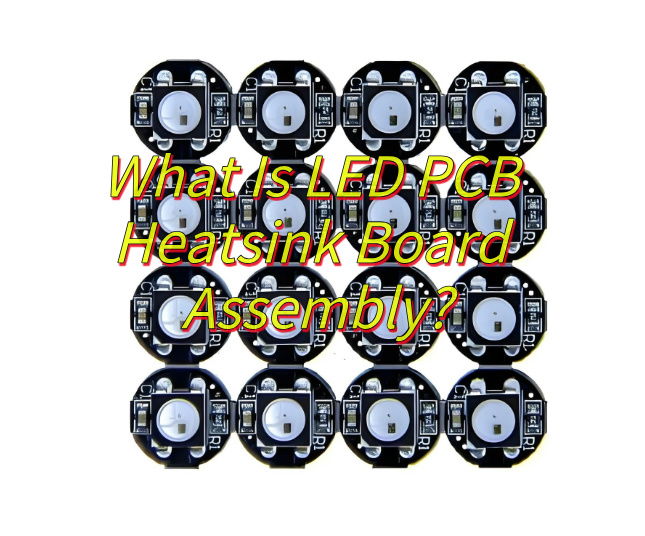
            What Is Power LED PCB?

            Power LED PCB is a printed circuit board designed for high power LEDs.(like high power 3535 LED PCB and high power 5050 LED PCB)​. It uses a metal substrate (such as aluminum) and a special thermal conductive structure to achieve efficient heat dissipation. It ensures stable transmission of large currents by widening copper foil routing and optimizing pad layout. It is widely used in high-intensity solid-state lighting systems such as industrial lighting and car lights.

            What Is Power LED PCB?

            What Are Types of Power LED PCB?

            Types of Power LED PCBs:

            • ‌Metal-Core PCB (MCPCB)-‌Aluminum or copper substrates with insulated thermal layers for high-power LED lighting such as streetlights and automotive headlights, like power LED aluminum PCB.

            • ‌Heavy Copper PCB-‌Thick copper traces (≄3 oz/ftÂČ) for high-current applications like LED driver circuits and industrial power modules.
            • ‌Multi-Layer PCB‌-4+ conductive layers with thermal vias and EMI shielding for LED displays, automotive electronics.
            • ‌High-Frequency PCB-‌Low-loss materials (e.g., PTFE) for stable signal transmission in 5G/RF lighting and radar systems.
            • ‌Rigid-Flex PCB-Hybrid design combining rigid stability and flexible routing for automotive lighting.
            What Are Types of Power LED PCB?

            What Are Advantages of LED Power PCB?

            Advantages of LED Power PCBs‌

            • Efficient thermal management ensures optimal heat dissipation, prolonging LED lifespan.
            • High energy efficiency with minimal power loss due to low-resistance circuitry.
            • Compact design enables integration into space-constrained applications.
            • Enhanced durability with robust materials resistant to vibration, moisture, and temperature fluctuations.
            • Precise current regulation improves LED performance and brightness consistency.
            • Eco-friendly operation with low power consumption and reduced carbon footprint.
            • Customizable layouts support complex circuit designs for diverse LED applications.
            • Cost-effective production through scalable manufacturing and reduced maintenance needs.

            Why Choose Aluminum for Power LED PCB?

            Reasons for why choose aluminum for power LED:

            • ‌Efficient Heat Dissipation‌: High thermal conductivity prevents overheating, extending LED lifespan.
            • ‌Durability‌: Resists thermal stress, vibration, and maintains precise dimensions.
            • ‌Electrical Reliability‌: Handles higher currents, blocks interference, and ensures insulation.
            • ‌Cost-Saving‌: Recyclable material, reduces heatsink needs, and lowers bulk production costs.
            • ‌Custom Design‌: Adapts to complex shapes and multi-color LED configurations.
            Why Choose Aluminum for Power LED PCB?

            How to Design 3W Power LED PCBs for Brightness?

            This is how to make 3w power LED PCB design for brightness:

            1.Thermal-Centric Substrate Design‌

            • Use ‌2.0mm aluminum MCPCB‌ with dielectric layer thermal conductivity ≄3.0 W/mK‌.
            • Design ‌star-shaped LED placement‌ (4 LEDs total) with 8mm spacing to isolate heat sources‌.

            2.Constant-Current Circuit Implementation‌

            • Integrate ‌buck driver‌ (e.g., TI LM3409) set to 700mA ±2% with feedback resistors (0.7Ω/1%)‌.
            • Add ‌PWM dimming circuit‌ (100–1k Hz) using MOSFET and microcontroller (e.g., STM32) for brightness adjustment‌.

            3.Copper Layout Optimization‌

            • Apply ‌3W rule‌: Trace spacing ≄3× trace width (e.g., 2mm traces with 6mm spacing)‌.
            • Use ‌2oz copper thickness‌ for power traces and widen ground planes to reduce resistance‌.

            4.Thermal Management Execution‌

            • Drill ‌thermal vias‌ (0.4mm diameter) under LED pads, filled with conductive epoxy (≄4 W/mK)‌.
            • Attach ‌extruded aluminum heatsink‌ (30×30×15mm) using thermal tape (3.5 W/mK)‌.

            5.Optical Enhancement‌

            • Apply ‌98% reflective white solder mask‌ around LEDs and use 45° angled sidewalls to maximize light output‌.
            • Embed ‌diffuser layer‌ (PC material) in the final assembly to homogenize brightness‌.

            6.Prototyping & Testing

            • Measure luminous flux with ‌integrating sphere‌, calibrate PWM duty cycle to achieve ±3% brightness uniformity‌.

            7. EMI/EMC Compliance‌

            • Add ‌π-type filters‌ (10”F ceramic + 10”H inductor) at driver input/output to suppress noise‌.
            • Test radiated emissions per FCC Part 15B using near-field probes‌.

            8.Production Readiness‌

            • Generate ‌Gerber files‌ with 0.2mm solder mask dam and 0.15mm solder paste stencil‌.
            • Validate assembly process with ‌3D STEP model‌ to check component clearance‌.

            How to Balance Current in High Power LED PCB Layouts?

            To balance current in high power LED PCB layouts:

            Symmetrical Star-Shaped Routing‌

            • Arrange LEDs in a radial pattern with equal-length traces radiating from a central power node. This minimizes impedance differences between parallel branches, ensuring even current distribution.
            • Use identical trace widths and spacing for all parallel paths to eliminate resistance variations.

            Thick Copper Layers (≄3 oz/ftÂČ)

            • Increase copper thickness to reduce resistive losses in high-current paths. For example, 3 oz/ftÂČ copper handles up to 6A/mm trace width (vs. 3A/mm for 1 oz/ftÂČ).
            • Prioritize short, direct traces to minimize voltage drops.

            Thermal Symmetry‌

            • Align PCB thermal management structures (e.g., heat sinks, thermal vias) symmetrically around LEDs to maintain uniform junction temperatures.
            • Avoid placing high-power components near PCB edges, which can create thermal gradients.

            Parameter Matching‌

            • Use LEDs from the same production batch to minimize forward voltage and current tolerance variations (ideally <2% mismatch).
            • Group LEDs with similar electrical characteristics into parallel clusters.

            Low-Impedance Grounding‌

            • Design a solid ground plane beneath power traces to stabilize return paths and reduce EMI-induced current fluctuations.
            • Place decoupling capacitors near LED nodes to suppress transient noise.

            Active Current Regulation‌

            • Integrate current-sharing resistors (e.g., 0.1Ω–0.5Ω) in series with each LED branch to compensate for minor mismatches.
            • For precision control, use dedicated LED driver ICs with built-in current balancing (e.g., TLC5916, LT3763).

            How to Route High Power LED PCB Lines Cheaply?

            To route high power LED PCB lines cheaply:

            • Prioritize single/double-layer PCB designs with 2oz copper thickness for current capacity, using FR4 substrates instead of metal-core boards. Integrate 12–24 thermal vias (0.3mm diameter) per LED and attach extruded aluminum heatsinks (cost ≀$0.10/cmÂČ) for thermal management.
            • Follow the 3W spacing rule: Maintain ≄3× trace width between conductors (e.g., 0.6mm spacing for 0.2mm traces) to reduce interference. Add 1mm isolation zones for critical signals like clocks or high-speed lines.
            • Cluster components (LEDs, drivers, capacitors) within 15mm radius: Use star topology for power routing (<30mm trace length) and implement solid ground planes with multi-point connections (impedance below 5mΩ).
            • Match trace widths to current loads using PCB current calculators. Use tapered traces to minimize current spikes and avoid excessive temperature rise.
            • Simplify driver circuits: Use linear ICs (e.g., AMC7135) with 1% current-limiting resistors for <2A applications. For >2A, adopt discrete MOSFET solutions to cut costs by 40% compared to integrated ICs.
            How to Route High Power LED PCB Lines Cheaply?

            Can Multi-Layer Designs Solve High Power LED PCB Overheating?

            Yes, multi-layer design can effectively alleviate the overheating issue of high power LED PCBs. By embedding a thick copper layer (≄2 oz) as a heat dissipation layer and combining vertical thermal vias (0.3–0.5mm) to quickly guide heat to the radiator, the symmetrical stacking structure and high temperature substrate (such as aluminum baseboard) can disperse thermal stress. In conjunction with active cooling measures (such as thermal interface materials), it is possible to control the junction temperature within a safe range (<85°C). However, it is necessary to plan the thermal path and electrical isolation reasonably to avoid thermal coupling failure.

            In conclusion, that’s all about power LED PCB and how to design a high power LED PCB board for better dissipation. If you have any other issues for power LED PCB and high power LED PCB, welcome to leave a message below this blog.

            LED Star PCB, LED Star PCB Board Manufacturer

            April 3rd, 2025

            Are you looking for a competitive LED Star PCB manufacturer? Let’s explore more about LED star PCB’s advantage and application as well as how to select a trusted LED star PCB board manufacturer.

            As a trusted LED Star PCB manufacturer with full ISO/UL/CE certifications, EBest Circuit (Best Technology) have scalable SMT production lines, and rigorous IQC-FQC quality protocols validated through thermal/vibration/aging tests. Our vertically integrated supply chain ensures flexible MOQs with affordable price, stable lead times, and end-to-end logistics support from compliant export packaging to freight optimization. And we also support customized LED star PCB, such as material, dimension and color customization. If you have any request for LED star PCBs, please contact us: sales@bestpcbs.com

            What Is LED Star PCB?

            LED Star PCB is a specialized printed circuit board designed for high-density LED installations, featuring a star-shaped layout that optimizes thermal management and light distribution. This configuration allows multiple LEDs to be arranged in a radial pattern, enhancing heat dissipation through increased surface area and airflow efficiency. The board typically incorporates advanced materials like aluminum or ceramic substrates to further improve thermal conductivity, making it ideal for high-power LED applications. Its modular design enables flexible customization in terms of LED quantity, color (including red LED star PCB and other RGB LED star PCB options), and dimensions, catering to diverse lighting needs such as decorative lighting, stage effects, and industrial illumination.

            What Is LED Star PCB?

            What Are Advantages of Star LED PCB?

            Star LED PCB Advantages:

            • Enhanced Thermal Management – Radial layout improves heat dissipation efficiency
            • Uniform Light Distribution – Symmetrical LED arrangement eliminates dark spots
            • Space Optimization – Compact star design maximizes LED density
            • Customization Flexibility – Adaptable LED count, color combinations, and dimensions
            • Advanced Material Construction – Aluminum/ceramic substrates ensure durability
            • Versatile Applications – Suitable for decorative, architectural, and stage lighting
            • Easy Installation – Modular design simplifies assembly and maintenance

            What Are Application of LED Star PCB?  

            LED Star PCB Applications:

            • Decorative Lighting – Commercial spaces, art installations, residential accents
            • Stage Lighting – Concert venues, theater productions, dynamic color effects
            • Architectural Lighting – Building facades, landscape illumination, bridge lighting
            • Industrial Lighting – Warehouses, factories, task lighting solutions
            • Automotive Lighting – Custom vehicle lighting, interior/exterior car modifications
            • Special Effects Equipment – Laser shows, holographic projections, interactive displays
            • Smart Lighting Systems – Integrated IoT solutions, programmable lighting control

            Why Star PCBs Work Best for Power LED Heat Dissipation?

            Here are reasons why star PCBs work best for power LED heat dissipation:

            • Radial arms disperse heat from center, eliminating hotspots.
            • Extended copper traces maximize surface area for ambient cooling.
            • Aluminum/copper bases (2-4 W/m·K) outperform FR4 in thermal transfer.
            • Short thermal paths (<5°C/W) ensure stable temperatures under load.
            • Thick copper (≄3 oz/ftÂČ) supports high-power applications.
            • Compact/symmetrical design adapts to space-constrained or high-cooling systems.
            Why Star PCBs Work Best for Power LED Heat Dissipation?

            How to Choose a Reliable LED Star PCB Board Manufacturer?

            This is how to choose a reliable LED star PCB board manufacturer:

            • Verify Core Competencies – Check ISO/UL/CE certifications, factory scale, and SMT line capacity to ensure quality standards and production capability
            • Evaluate Quality Systems – Assess IQC/IPQC/FQC processes and request sample testing (thermal cycling, vibration, aging) to validate reliability
            • Analyze Supply Chain – Investigate component sourcing, MOQ policies, and lead times to ensure stable production and timely delivery
            • Review Customization Track Record – Examine case studies of similar projects and R&D team expertise to confirm design flexibility
            • Compare Total Cost Structure – Analyze pricing transparency, material specifications, and hidden costs while balancing MOQ requirements
            • Assess Logistics & Support – Confirm export packaging compliance, freight partnerships, and after-sales policies (warranty/technical support)
            • Evaluate Long-Term Viability – Investigate financial stability, cultural alignment, and sustainability practices for sustainable partnerships
            • Check Risk Mitigation – Verify crisis response plans, insurance coverage, and alternative supply options to ensure business continuity
            How to Choose a Reliable LED Star PCB Board Manufacturer?

            How to Reduce the Production Cost of LED Star PCB?

            Here are some methods about how to reduce the production cost of Star LED PCB:

            • Standardize Component Specifications-Unify LED packaging formats to minimize redundant layers and blind/buried via designs, reducing material waste and processing complexity.
            • Cost-Effective Material Selection-Adopt high-performance FR4 substrates while optimizing copper foil thickness to balance thermal/electrical performance with material cost reliability.
            • Streamlined Manufacturing Process-Utilize DFM (Design for Manufacturing) tools to validate layouts, eliminating precision alignment requirements and complex solder mask processes for improved yields and reduced costs.
            • Automated Production & Stencil Optimization-Implement automated placement equipment to lower labor costs, paired with optimized stencil apertures that minimize solder paste waste.
            • Centralized Procurement & Supplier Collaboration-Partner with manufacturers supporting small-batch prototyping and mass production, leveraging long-term agreements or BOM substitution strategies to reduce component expenses.
            • Early-Stage Design Validation-Require suppliers to provide thermal distribution and signal integrity simulation reports to prevent costly rework in later stages.
            • Modular Design for Maintainability-Implement replaceable sub-modules to reduce repair costs and extend product lifecycles.
            • Dynamic Dimming Algorithm & Driver IC Optimization-Reduce LED counts or adopt cost-effective driver ICs, combining PWM compensation strategies to maintain performance-cost balance.

            How to Achieve Multi-color Synchronous Control with RGB LED star PCB?

            To achieve multi-color synchronous control with RGB LED star PCB:

            • Use I2C driver chips (e.g., IS31FL3236A) combined with STM32F103 MCU‌, supporting 36-channel PWM control to achieve 256-level brightness mixing for 12 groups of RGB LED star PCBs.
            • Wired synchronization‌: Cascade driver chips via I2C/SPI buses with timing synchronization error <1ÎŒs; ‌Wireless synchronization‌: ESP32-C3 Mesh network synchronizes 100+ nodes with transmission delay <5ms.
            • HSV-CIE1931 color space conversion algorithm‌ ensures multi-board color difference <±3%; ‌DMA-driven real-time PWM duty cycle updates‌ eliminate cascaded brightness deviations.
            • Symmetrical star-shaped wiring design‌: ±2mm wire length difference between LEDs and MCU to reduce phase mismatch; ‌Layered stack structure‌ (thickness ≀1.6mm) integrates LED arrays on top layer and driver circuits on the bottom.
            • Logic analyzer verifies I2C clock skew‌ (<50ns); ‌Infrared light meter validates brightness uniformity‌ (<5% fluctuation).

            Can LED Star PCB Dimensions be customized?

            Yes, LED Star PCB dimensions can be fully customized (e.g., diameter 50-200mm). EBest Circuit (Best Technology)‌ also supports color customization through RGB channel configuration, driver chip selection, and dynamic dimming algorithms. Material customization, size adjustments and color control (including multi-color synchronization) are tailored to meet specific application requirements, such as stage lighting or automotive ambient systems. If you want to get a quote for customized LED star PCB, please feel free to leave a message below this blog.