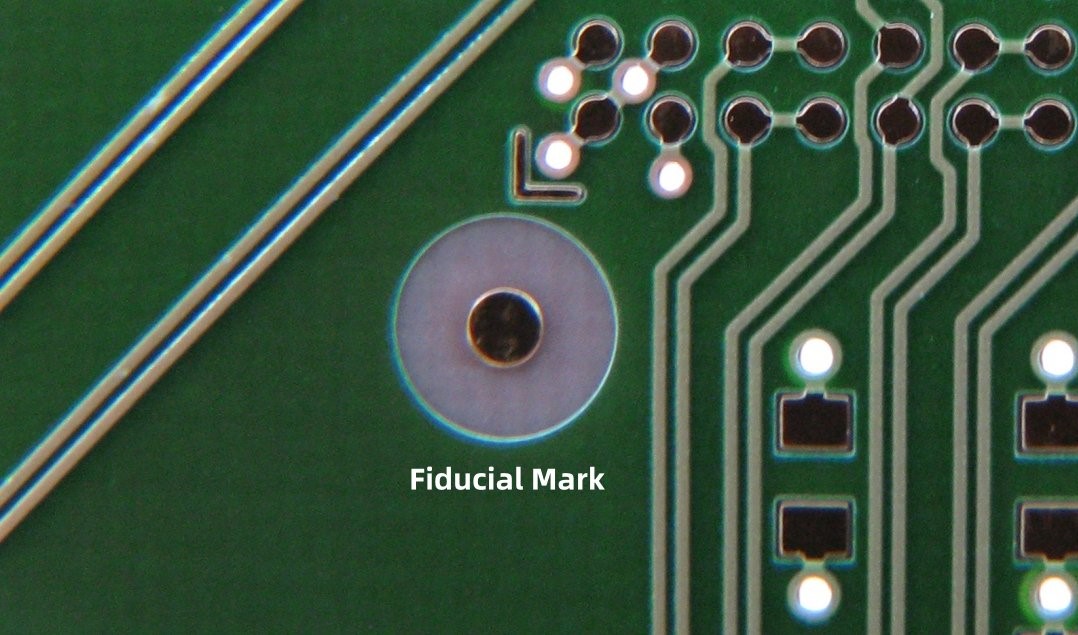
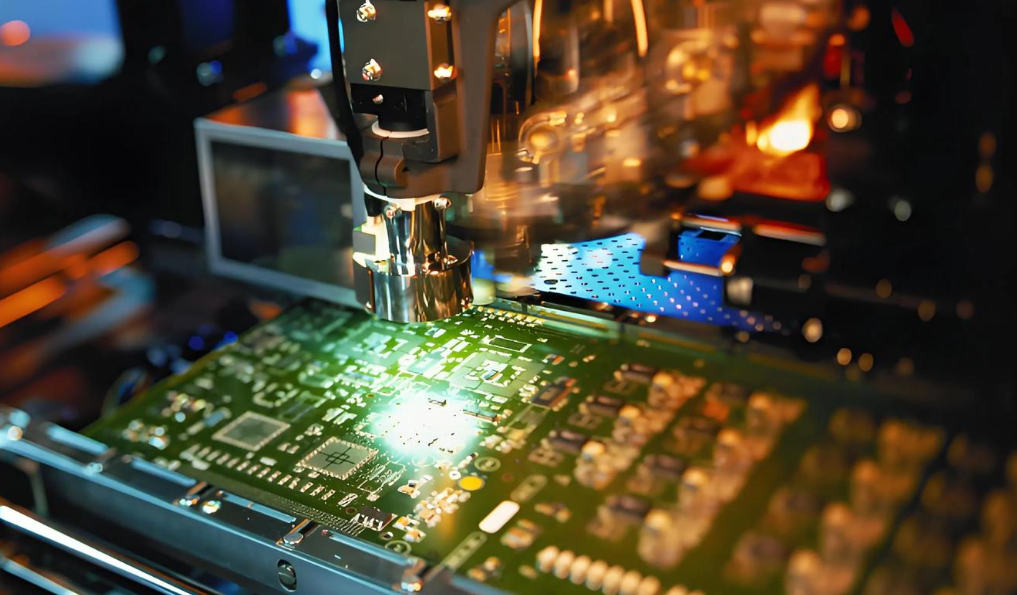
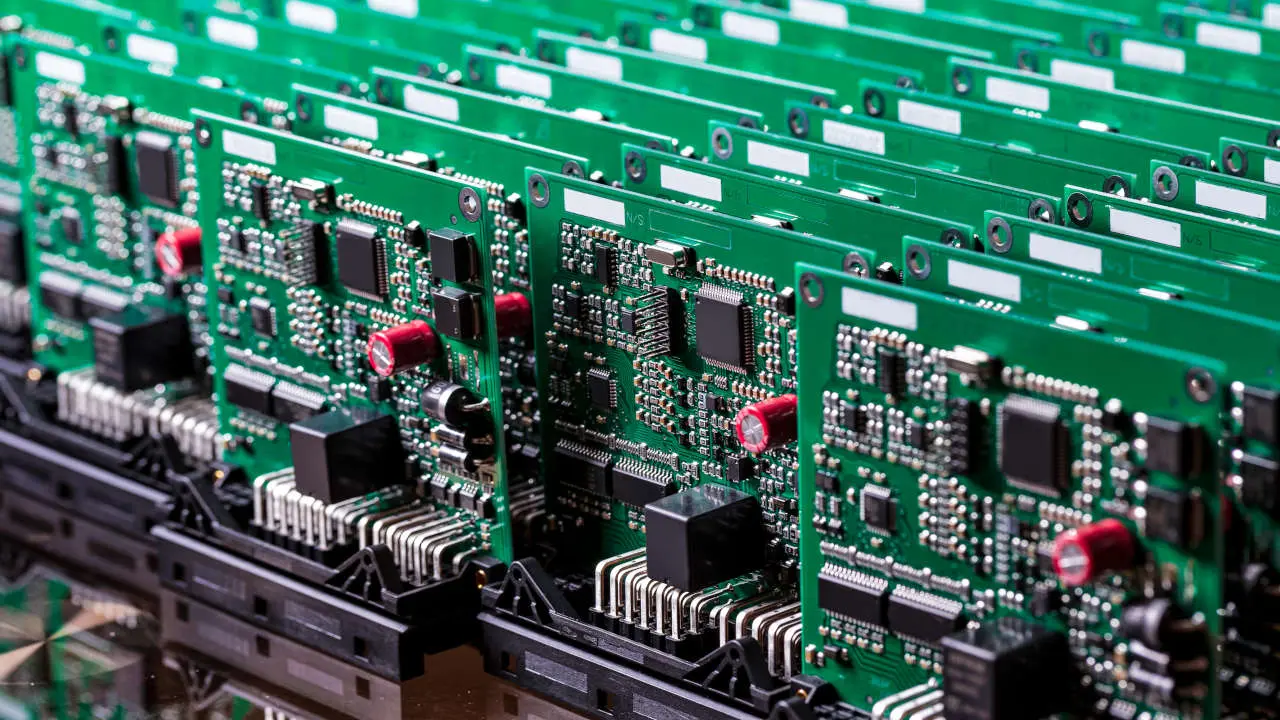
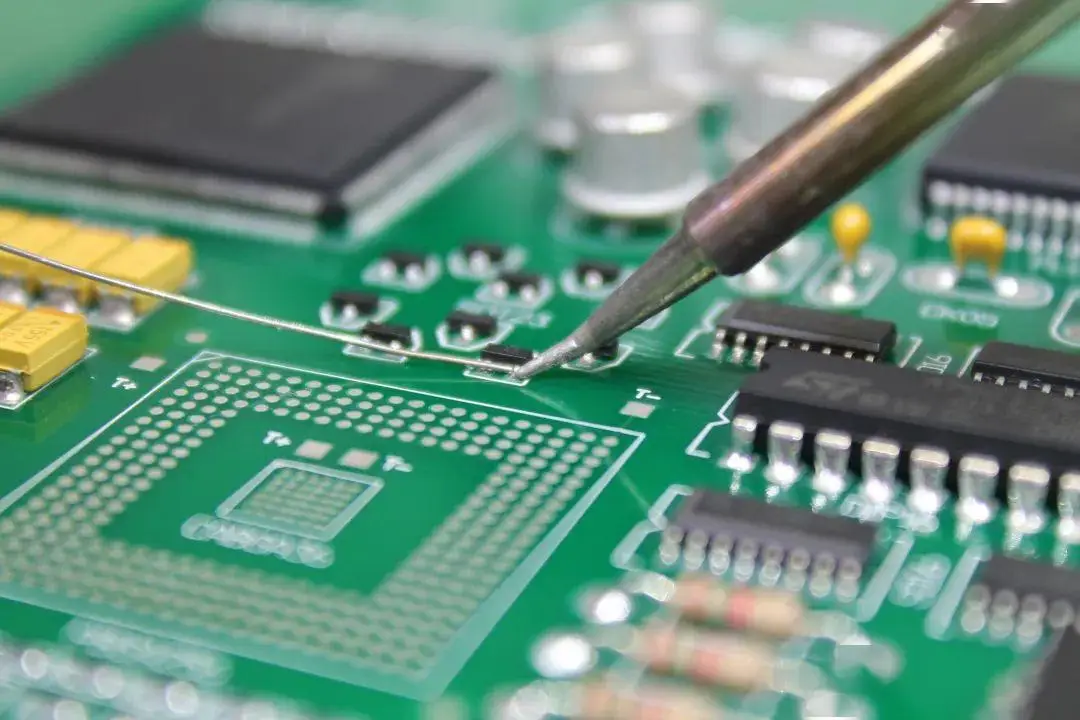
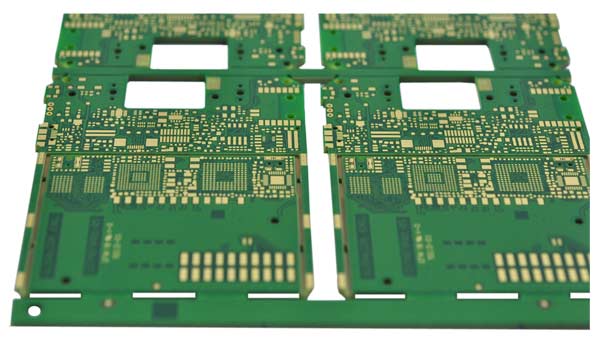
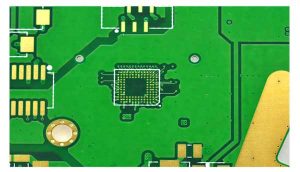
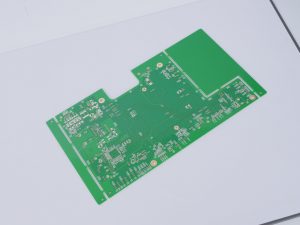
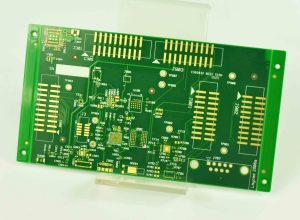
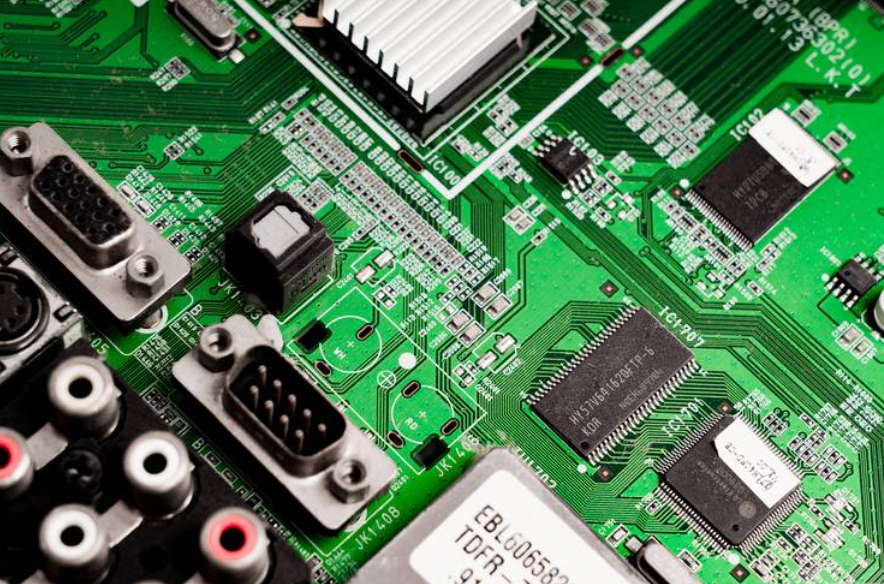
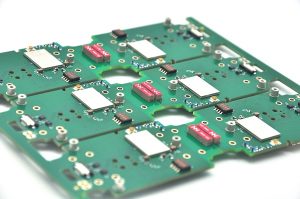
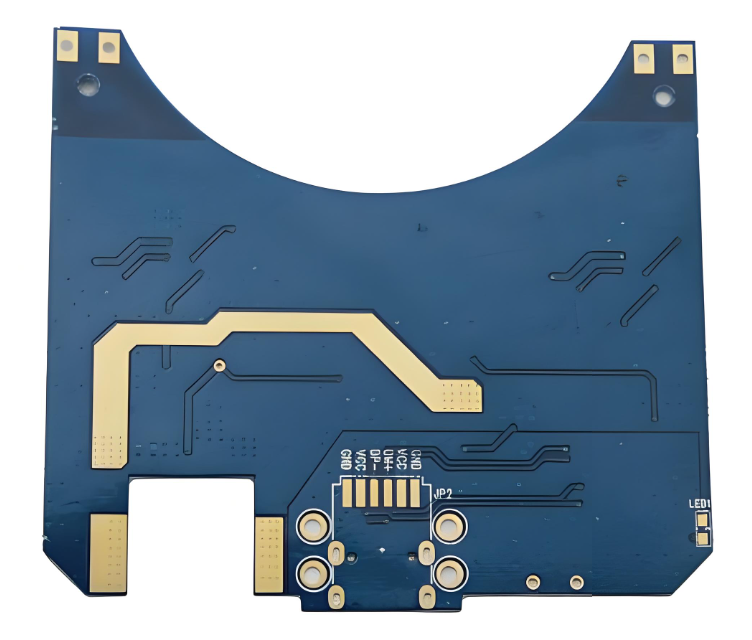
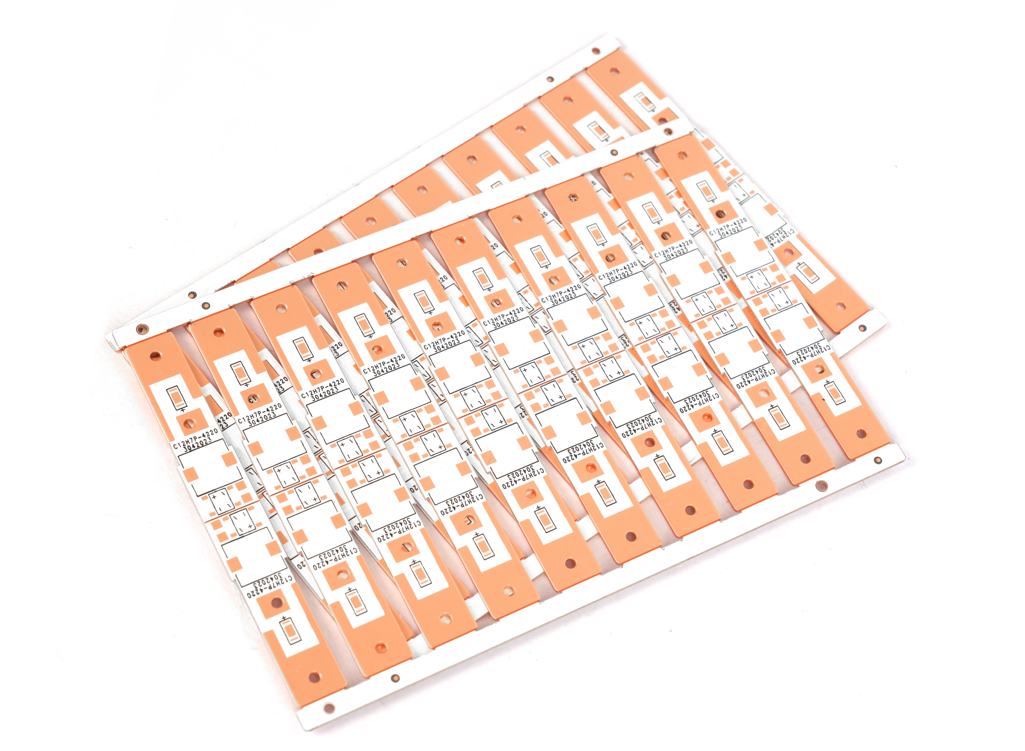
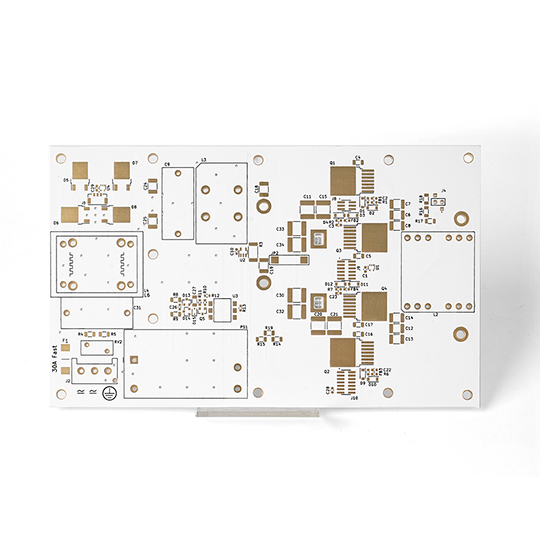
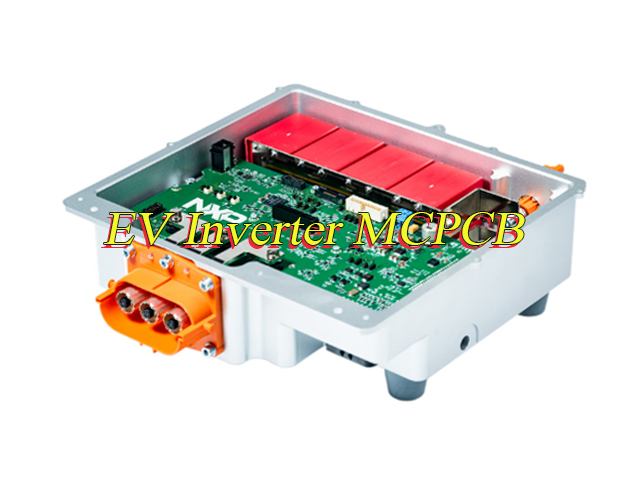
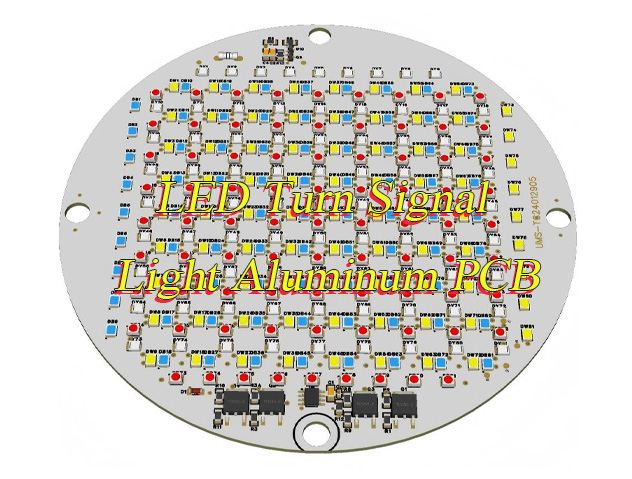
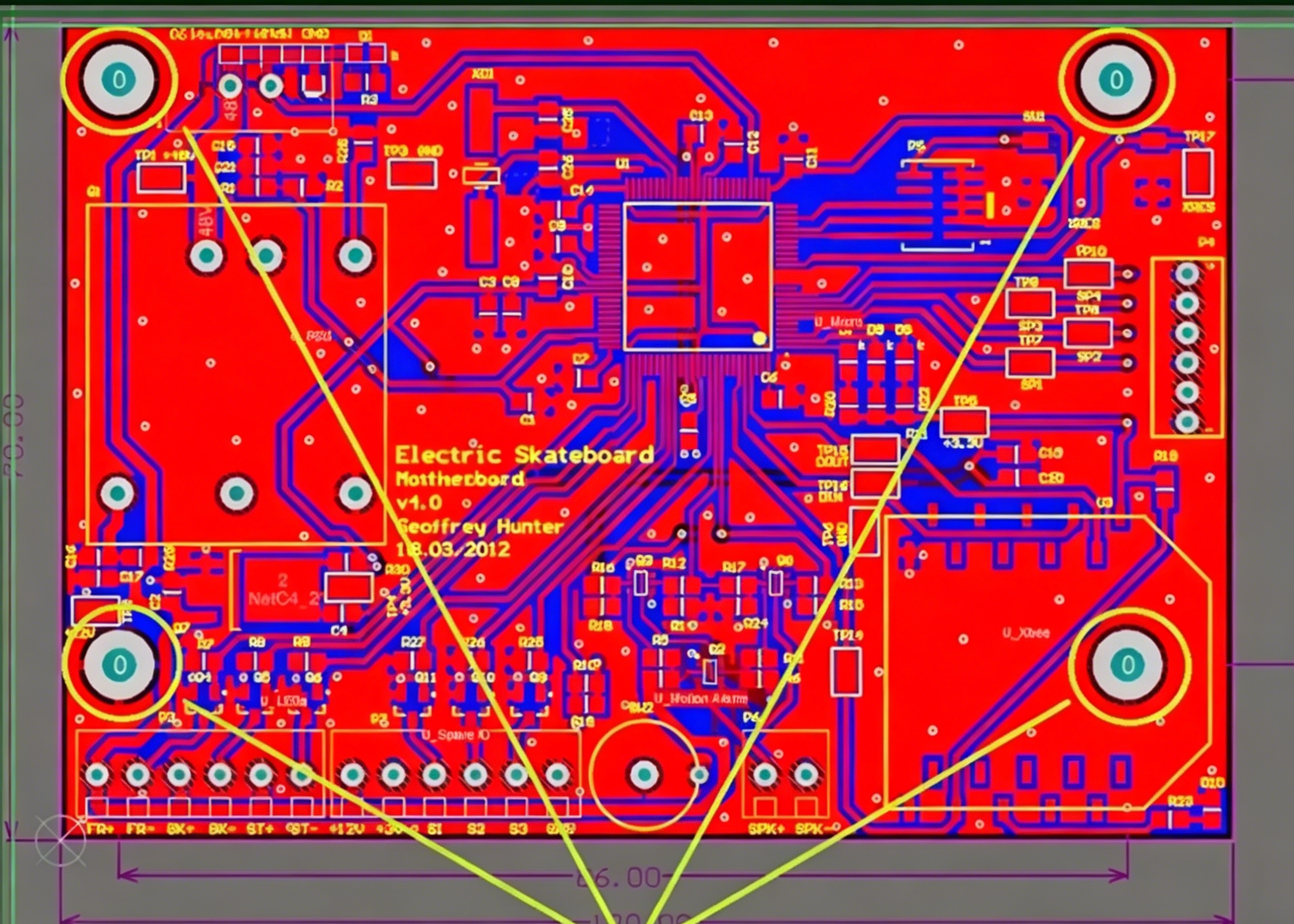
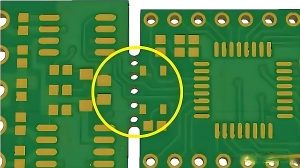
Do you know why even the most advanced SMT assembly lines rely on small copper dots calledfiducial marks PCB? For any PCB undergoing automated assembly, fiducial markers are not optional, they are the foundation of precision, reducing defects, speeding up production, and ensuring your design meets strict manufacturing standards.
This guide breaks down everything you need to know aboutfiducial marks PCB, from their purpose and design rules to placement strategies and manufacturing preparation, to help you create reliable, assembly-ready PCBs.
Are Fiducial Marks Necessary For PCB?
Fiducial marks are essential for all PCBs using automated SMT assembly, and they are highly recommended for any design that requires precise component placement. Even with modern manufacturing technology, fiducials remain non-negotiable because they solve critical alignment challenges that alternative methods cannot address.
Without fiducials, assembly machines struggle to compensate for board stretch, rotation, or minor misalignment, leading to misplaced components, solder bridges, tombstoning, and high rejection rates. For through-hole-only boards or manual assembly, fiducials are not required, but they are still useful for future automation or inspection.
What is The Purpose Of Fiducial Marks On PCB?
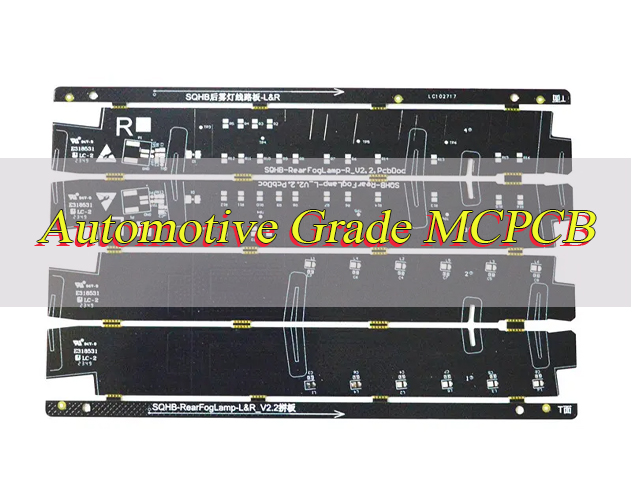
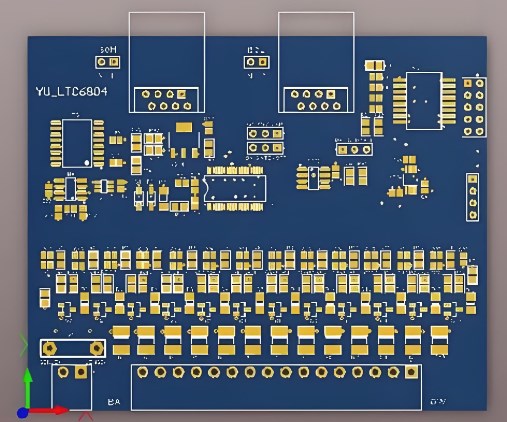
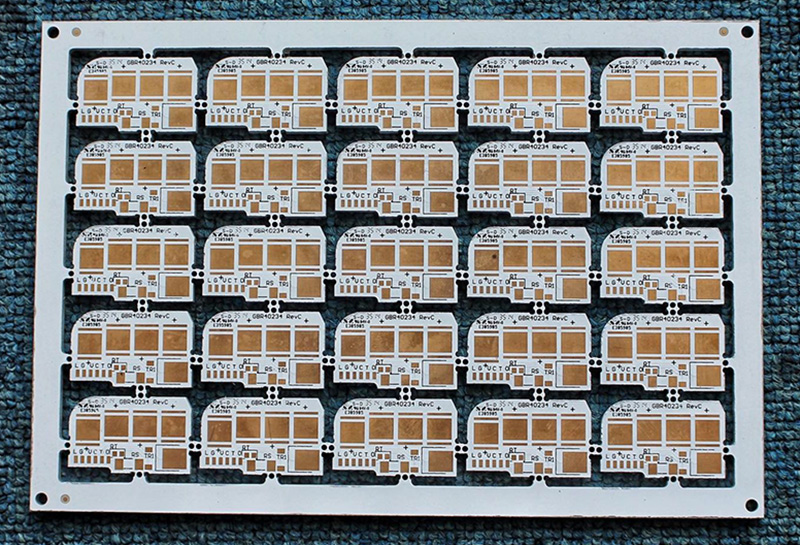
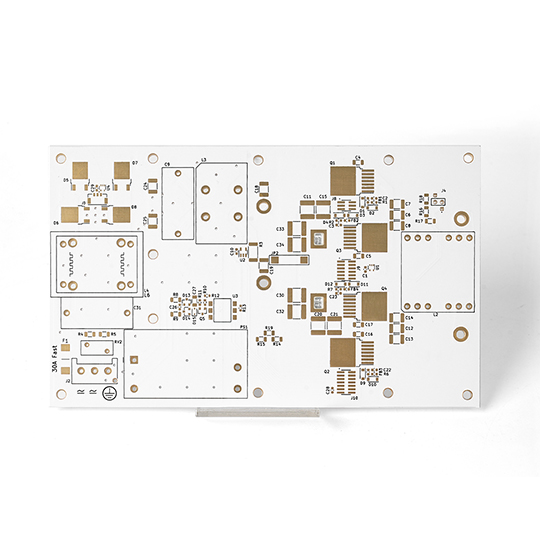
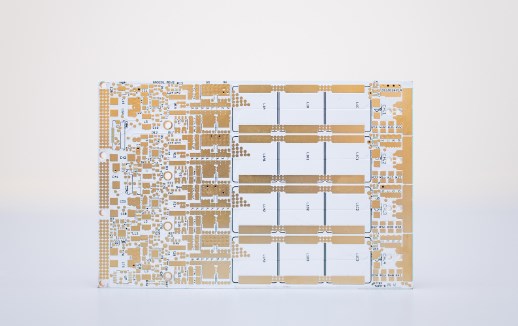
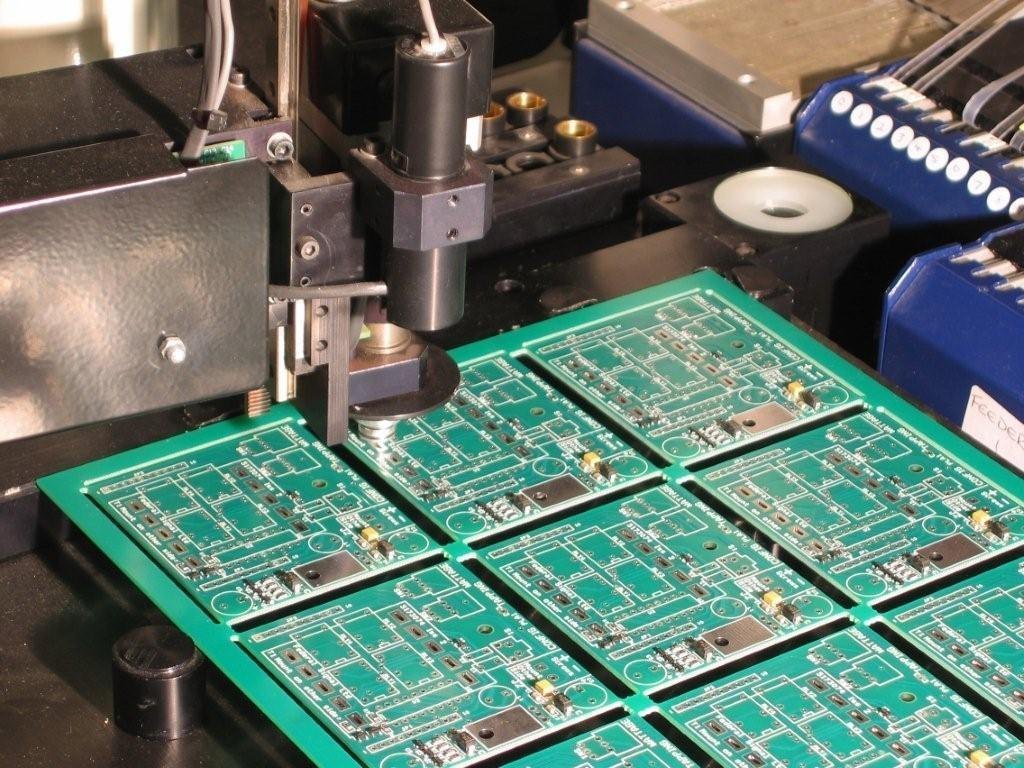
Fiducial marks are high-contrast, exposed copper reference points that act as a GPS for SMT machines, enabling precise alignment and calibration. Their core purpose is to provide a consistent, accurate reference for automated equipment, with three key functions:
Board Alignment & Orientation: Vision cameras scan fiducials to calculate the PCB’s exact X/Y position, rotation angle, and scale (compensating for board stretch/shrinkage).
Component Placement Precision: For fine-pitch parts (BGAs, QFPs, 01005 components), fiducials ensure placement accuracy down to 0.05mm, eliminating errors from manufacturing tolerances.
Quality Control: AOI and SPI systems use fiducials to verify component placement and solder paste application, reducing false rejects and ensuring consistent quality.
Where To Place Fiducials On A PCB?
Fiducial placement directly impacts assembly accuracy, follow these rules for optimal results:
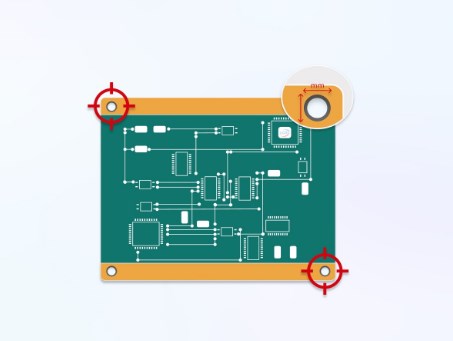
Global Fiducials: Use 3 asymmetric marks in an L-shape (e.g., lower-left, upper-left, upper-right corners). Avoid symmetric layouts (all four corners) to prevent 180° orientation confusion.
Edge Clearance: Maintain a minimum 5mm distance from the board edge to avoid obstruction by conveyor rails or clamping fixtures.
Clearance Zone: Keep a 2–3mm radius around each fiducial completely free of traces, vias, silkscreen, or other copper features to ensure unobstructed vision recognition.
Local Fiducials: For components with ≤0.5mm pitch (BGAs, QFPs), place 2 diagonal fiducials 1–3mm from the component’s corners.
Double-Sided Boards: Add fiducials on both top and bottom layers (offset to avoid light interference).
How Do You Design A Good Fiducial Marker For PCB?
A well-designed fiducial ensures reliable machine vision detection and consistent assembly. Follow these design principles:
Shape: Solid circle (preferred) for maximum rotational symmetry and recognition reliability. Avoid crosses, squares, or complex shapes unless verified with your assembler.
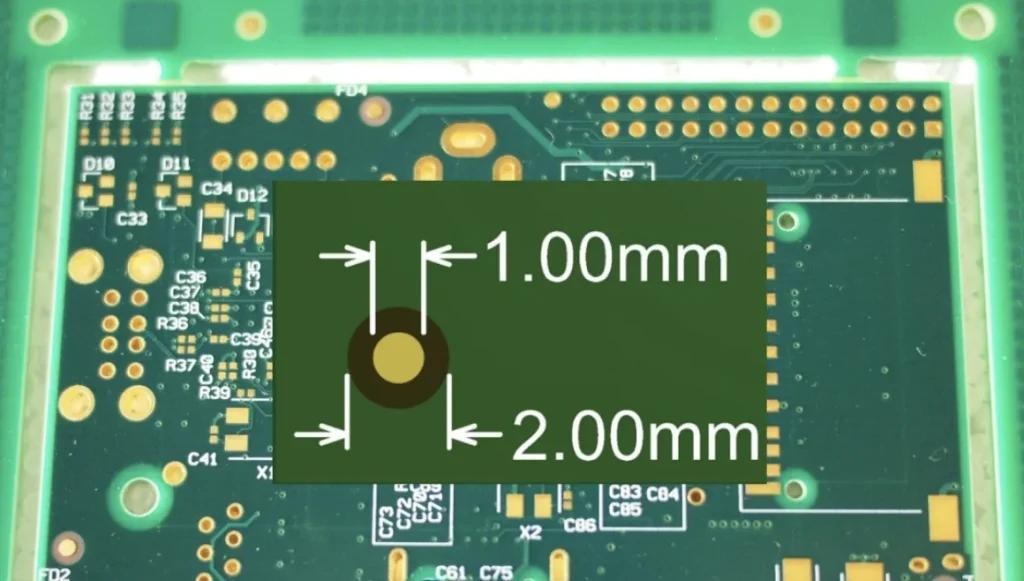
Size: Standard copper diameter is 1.0mm (range: 0.8–1.5mm). Use 1.5–2.0mm for large boards or panels.
Solder Mask Opening: Concentric opening 2.0mm (for 1.0mm copper) to create high contrast between exposed copper and solder mask.
Surface Finish: Use ENIG (gold plating) or HASL (tin plating) for high reflectivity and oxidation resistance. Bare copper is acceptable but requires anti-oxidation coating.
Consistency: All fiducials on the same board must be identical in size (±25µm tolerance).
How To Add Fiducial In PCB Design?
Adding fiducials is straightforward in all major EDA tools (Altium Designer, KiCad, Eagle). Follow this step-by-step process:
Step 1: Select Layer: Choose the copper layer (Top/Bottom Layer) where fiducials will be placed. Step 2: Create Pad: Add a non-plated SMD pad with your chosen diameter (1.0mm standard). Step 3: Solder Mask Opening: Draw a concentric circle on the solder mask layer (Top/Bottom Solder Mask) with a diameter twice the copper pad. Step 4: Place Fiducials: Position 3 global fiducials in an L-shape, 5mm from board edges. Add local fiducials near fine-pitch components. Step 5: Clearance Zone: Ensure 2–3mm radius around each fiducial is free of traces, vias, or silkscreen. Step 6: Label & Verify: Label fiducials (FID1, FID2) and run DRC to check for violations. Step 7: Export Files: Include fiducials in Gerber/ODB++ and pick-and-place data.
What is The Standard Fiducial Size For PCB?
The standard fiducial size follows IPC-7351 and SMEMA guidelines:
Global Fiducials: 1.0mm copper diameter (most common) with 2.0mm solder mask opening.
Local Fiducials: 1.0mm copper diameter (same as global).
Large Boards/Panels: 1.5–2.0mm copper diameter for improved visibility.
HDI/High-Density Designs: 0.8mm copper diameter (confirm with assembler).
In electronics and manufacturing, EMS most commonly stands for Electronics Manufacturing Services. These are companies that provide end-to-end solutions including PCB fabrication, component sourcing, PCB assembly, testing, and full product integration.
At the same time, EMS can also represent other meanings such as Emergency Medical Services or Energy Management System. However, in engineering and industrial environments, EMS almost always refers to electronics production services.
Understanding this distinction is critical, especially for engineers, product designers, and procurement teams evaluating manufacturing partners.
What Does EMS Mean in Electronics Manufacturing?
In electronics manufacturing, EMS refers to companies that provide comprehensive production services for electronic products, covering everything from PCB fabrication to final product assembly.
An EMS provider acts as a one-stop manufacturing partner. Instead of working with multiple vendors, companies can rely on a single EMS partner to manage the entire production lifecycle.
This model is widely adopted in industries such as automotive electronics, industrial control systems, medical devices, and consumer electronics.
What Does E.M.S Stand for in Electronics and Manufacturing?
What Services Are Included in Electronics Manufacturing Services?
Electronics Manufacturing Services include a wide range of production and supply chain capabilities designed to bring electronic products from concept to reality.
A complete EMS offering typically covers the following:
Service Type
Description
Output
PCB Fabrication
Manufacturing bare circuit boards
PCB boards
PCB Assembly
SMT, DIP, BGA assembly
PCBA boards
Component Sourcing
Procurement and BOM optimization
Qualified components
Testing & Inspection
AOI, ICT, X-ray, functional test
Test reports
Box Build
Final product assembly
Finished products
From an engineering perspective, EMS reduces complexity by integrating all manufacturing steps into a single controlled workflow.
This significantly improves communication efficiency, reduces lead time, and ensures better quality consistency.
How Does EMS Work in the PCB and PCBA Process?
EMS providers follow a structured workflow to ensure high reliability and manufacturability of electronic products. The process typically begins with design evaluation and ends with final product delivery.
The standard EMS workflow includes:
Design Review (DFM/DFA)
PCB Fabrication
Component Sourcing
PCB Assembly (SMT/THT)
Testing & Quality Control
Final Assembly (Box Build)
Packaging & Delivery
This integrated approach ensures traceability, quality control, and production efficiency.
Is EMS the Same as OEM?
No, EMS is not the same as OEM. EMS (Electronics Manufacturing Services) focuses on manufacturing and assembly, while OEM (Original Equipment Manufacturer) owns the product design, branding, and market distribution.
In simple terms, EMS builds the product, while OEM owns and sells the product.
This distinction is critical in electronics manufacturing because it defines responsibilities, intellectual property ownership, and supply chain structure.
Key differences between EMS and OEM:
Aspect
EMS
OEM
Core Role
Manufacturing service provider
Product owner and brand
Design Ownership
No
Yes
Manufacturing
Yes
Sometimes outsourced
Brand Control
No
Yes
Revenue Model
Service-based
Product-based
From an engineering perspective, EMS providers are responsible for executing production with high precision, while OEMs focus on product development, innovation, and market strategy.
In most modern electronics supply chains, OEM companies rely heavily on EMS partners to handle PCB fabrication, PCB assembly, and full product manufacturing.
For example, a hardware startup may design a PCB and product architecture (OEM role), then partner with an EMS provider to manufacture and assemble the product at scale.
EMS, OEM, and ODM are often confused, but they serve very different roles in the electronics supply chain. Understanding the differences is critical for selecting the right manufacturing strategy.
Type
Role
Design Ownership
Manufacturing
EMS
Service provider
No
Yes
OEM
Brand owner
Yes
Sometimes
ODM
Design + manufacturing
Yes
Yes
Key takeaway:
EMS manufactures your design
OEM owns the product
ODM designs and produces products
For most engineering-driven projects, EMS is the preferred choice because it allows companies to maintain control over their designs while outsourcing production.
Why Do Engineers and Companies Use EMS Providers?
Companies use EMS providers to improve efficiency, reduce costs, and access advanced manufacturing capabilities without investing in their own production facilities. From an engineering perspective, EMS offers several practical advantages:
Faster time-to-market
Reduced supply chain complexity
Access to advanced manufacturing technologies
Scalable production from prototype to mass production
EMS providers also help optimize BOM costs and improve production yield through engineering support.
When Should You Choose EMS Instead of PCB-Only Suppliers?
You should choose an EMS provider when your project involves more than just PCB fabrication. If your product requires assembly, testing, or full system integration, EMS is the more efficient choice.
Typical scenarios where EMS is preferred:
Complex multi-component assemblies
High-reliability products (medical, automotive)
Need for full product manufacturing
Limited internal manufacturing capability
PCB-only suppliers are suitable for simple board production, but EMS providers deliver a complete solution.
Why Choose EBest Circuit (Best Technology) as Your EMS Partner?
EBest Circuit (Best Technology) provides a complete EMS solution designed for engineers who need reliability, flexibility, and fast turnaround.
1. What does E.M.S. Stand for in the Medical Field?
In a healthcare context, E.M.S. stands for Emergency Medical Services. It refers to the system that provides emergency medical care, including paramedics, emergency medical technicians (EMTs), and the ambulances or equipment used to stabilize and transport patients to a hospital.
2. Does E.M.S. have a Meaning in Shipping and Logistics?
Yes. In the world of global shipping, E.M.S. stands for Express Mail Service. It is an international expedited mail delivery service offered by postal administrations that are members of the Universal Postal Union (UPU), designed to provide faster delivery across borders.
3. What is an E.M.S. in Environmental Management?
In an organizational or corporate context, E.M.S. stands for Environmental Management System. This is a set of processes and practices that enable an organization to reduce its environmental impact and increase its operating efficiency, often following the ISO 14001 standard.
4. What does E.M.S. Mean in Fitness and Muscle Recovery?
In the fitness industry, E.M.S. stands for Electrical Muscle Stimulation. This technology uses electrical impulses to elicit muscle contractions. It is frequently used in physical therapy for rehabilitation and by athletes for muscle strengthening or recovery.
5. What is the E.M.S. in a Vehicle’s Engine?
In automotive engineering, E.M.S. stands for Engine Management System. This is a high-tech “brain” (usually an Electronic Control Unit) that controls the fuel injection, ignition timing, and idle speed to ensure the engine operates at peak efficiency and performance.
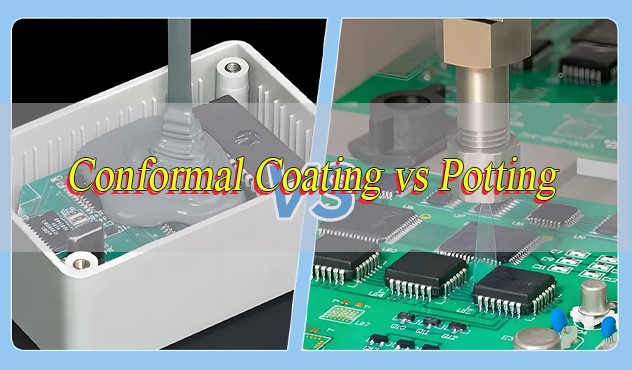
When it comes to protecting your PCB from environmental hazards, mechanical stress and premature failure you’re likely weighing conformal coating vs potting but which one delivers the right balance of protection, cost and practicality for your project? As an electronics engineer with over a decade of experience designing and testing PCB protection solutions I’ve seen firsthand how the wrong choice leads to costly field failures, missed deadlines and frustrated clients.
In this guide I’ll break down conformal coating vs potting in simple straightforward terms, comparing their processes, materials, protection levels, repairability and cost so you can make an informed decision that aligns with your project’s unique needs. We’ll cover everything from application steps to real-world use cases and common mistakes to avoid, ensuring you get the most value from your PCB protection investment.
What Are Conformal Coating and Potting and Why Do PCBs Need Them?
PCBs are the backbone of nearly every electronic device from consumer gadgets to industrial machinery but they are delicate and susceptible to damage from moisture, dust, chemicals, vibration and temperature extremes. Without proper protection these threats cause corrosion, short circuits, solder joint failures and component damage, leading to reduced product lifespan, increased warranty claims and safety hazards.
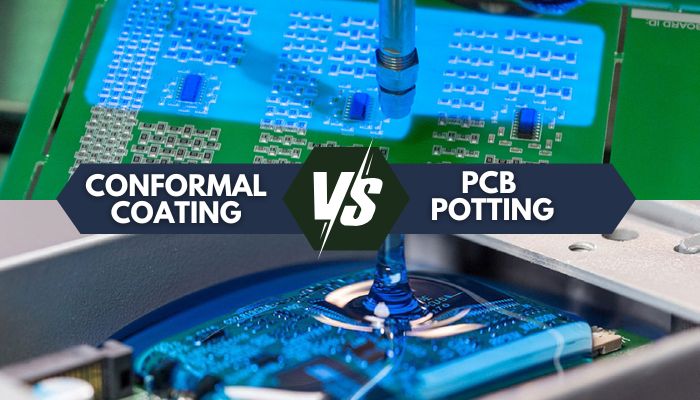
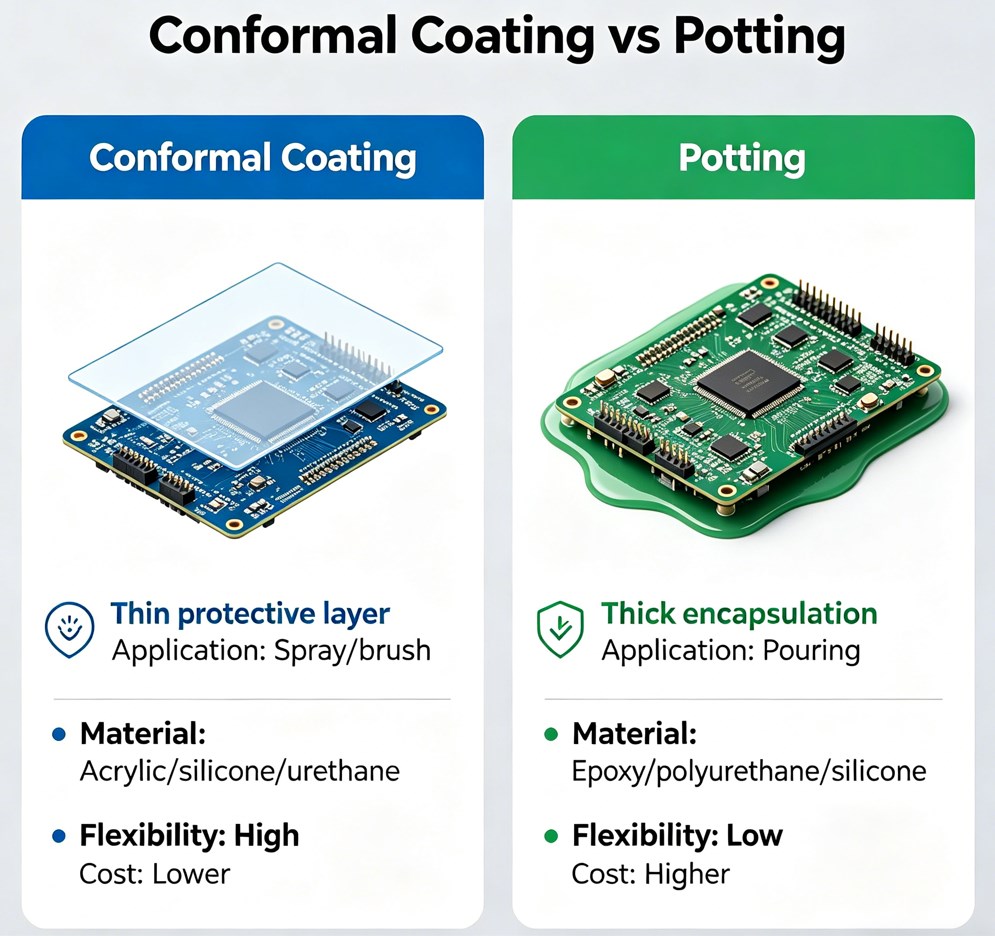
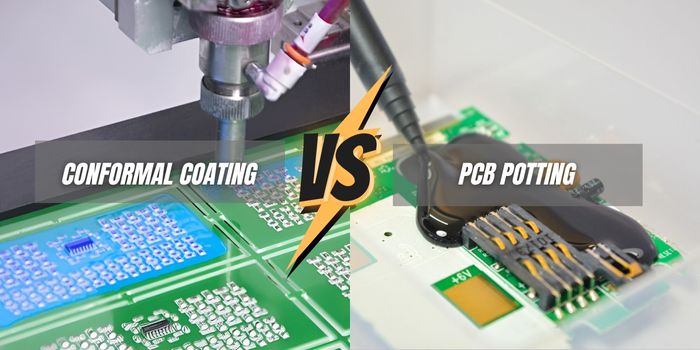
Conformal coating and potting are the two most common PCB protection methods each designed to shield boards but with distinct approaches. Conformal coating is a thin protective film applied directly to the PCB surface, conforming to component shapes to create a barrier against contaminants.
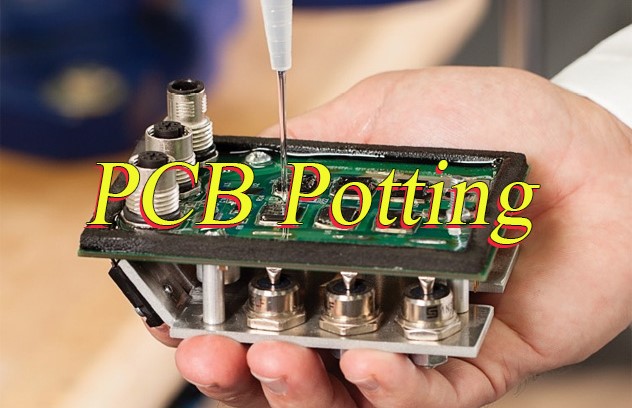
Potting involves completely encapsulating the PCB in a thick solid resin, forming an impenetrable shield against harsh conditions. Both methods are critical for ensuring PCB reliability, but choosing the right one depends on your application’s environment, size, weight and budget constraints.
How Do Conformal Coating and Potting Differ in Application Process?
The application processes for conformal coating and potting are fundamentally different, with distinct steps, equipment and preparation requirements. Conformal coating is a simpler, faster process ideal for high-volume production, while potting is more labor-intensive and suited for applications requiring maximum protection.
Below is a detailed comparison of their application processes to help you understand what each entails.
Process Step
Conformal Coating
Potting
Prep Work
Clean the PCB with isopropyl alcohol to remove flux residue dust and oils. Mask areas that should not be coated such as connectors test points and gold fingers using tape or liquid masking agents.
Thoroughly clean and dry the PCB to remove all contaminants. Place the PCB in a mold or housing that fits its size and shape ensuring all components are properly positioned.
Application Method
Common methods include spraying dipping brushing or selective automated coating. Spraying is ideal for large volumes while brushing works for small batches or touch-ups.
Mix two-part resin (epoxy polyurethane or silicone) per manufacturer instructions. Pour or inject the resin into the mold covering the PCB completely without air bubbles.
Curing
Cures at room temperature (24-48 hours) or with heat (60-80°C for 30-60 minutes) depending on the material. UV-curable coatings cure in seconds with UV light for faster production.
Requires longer curing time (24-72 hours at room temperature) or heat curing (80-100°C for 1-2 hours). The mold must remain undisturbed during curing to avoid defects.
Post-Application
Remove masking materials. Inspect for coverage gaps bubbles or uneven coating using a magnifying glass or microscope. Touch up any missed areas as needed.
Remove the PCB from the mold once fully cured. Trim excess resin and inspect for voids cracks or incomplete encapsulation. No touch-ups are possible without damaging the potting.
Which Offers Better Environmental Protection: Conformal Coating vs Potting?
Environmental protection is the primary goal of both conformal coating and potting, but their effectiveness varies significantly based on the threat level. Potting provides superior environmental protection as it completely encapsulates the PCB, creating an impenetrable barrier against moisture, dust, chemicals and extreme temperatures.
Conformal coating offers good protection for moderate environments but cannot match potting’s resistance to harsh conditions. The table below breaks down their performance against common environmental threats to help you determine which is right for your application.
Environmental Threat
Conformal Coating
Potting
Winner
Moisture/Humidity
Blocks light moisture and humidity but may fail if the coating is cracked or uneven. Not suitable for submersion or high-humidity industrial environments.
Completely seals the PCB preventing any moisture ingress even in submersion (IP67/IP68 ratings) or high-humidity conditions.
Potting
Dust/Particulates
Covers the PCB surface blocking dust and debris but may not seal gaps between components where particles can accumulate.
Encases the entire PCB leaving no gaps for dust or particulates to enter providing complete protection.
Potting
Chemicals/Solvents
Resistant to mild chemicals but may degrade when exposed to harsh solvents (e.g. industrial cleaners oils).
Highly resistant to harsh chemicals solvents and oils depending on the resin type (epoxy offers the best chemical resistance).
Potting
Temperature Extremes
Performs well in moderate temperatures (40°C to 125°C) with silicone coatings offering wider ranges (60°C to 200°C).
Handles extreme temperatures (50°C to 200°C) with silicone potting compounds providing the best thermal stability for high-heat applications.
Potting
Why Is Repairability a Key Consideration Between Conformal Coating and Potting?
Repairability is a critical factor when choosing between conformal coating and potting because it directly impactsmaintenance costs and project timelines. Conformal coating is easily repairable, making it ideal for projects where PCBs may need troubleshooting or component replacement.
Potting is nearly impossible to repair without destroying the PCB, as the solid resin cannot be removed without damaging components. For example, if a component fails on a conformal coated PCB, you can simply strip the coating from the affected area, repair or replace the component, and reapply the coating.
On a potted PCB, you would need to break open the resin, which often damages surrounding components, rendering the entire board useless. This makesrepairability a non-negotiable consideration for projects with long lifespans or high maintenance requirements, such as consumer electronics or medical devices.
How Do Conformal Coating and Potting Impact PCB Weight and Size?
PCB weight and size are critical for compact applications such as wearables, consumer electronics and aerospace devices, andconformal coating and potting have vastly different impacts on both. Conformal coating adds minimal weight and size as it is a thin layer (25-250 microns) that conforms to the PCB’s shape.
It adds less than 5% to the PCB’s total weight and no noticeable bulk, making it ideal for small, lightweight designs. Potting adds significant weight and size because it requires a thick resin layer (1-15mm+) and often a mold or housing to contain the resin.
It can increase the PCB’s weight by 50-200% and double its size depending on the resin thickness and mold design. The table below summarizes their impact on weight and size for quick reference.
Factor
Conformal Coating
Potting
Layer Thickness
25-250 microns (thin film)
1-15mm+ (thick solid resin)
Weight Impact
Adds <5% of PCB weight
Adds 50-200% of PCB weight
Size Impact
No noticeable bulk; maintains PCB’s original footprint
Increases size by 50-100%; requires additional space for mold/housing
Applications where size/weight are not critical (industrial machinery outdoor sensors)
Which Is More Cost-Effective for My Project: Conformal Coating vs Potting?
Cost-effectiveness depends on your project’s volume, protection needs and long-term maintenance. Conformal coating is more cost-effective for most projects, especially high-volume production, with lower material, labor and maintenance costs due to its thin layers, fast application and easy repairability.
Potting is more expensive upfront (higher resin, labor and mold costs) and long-term (failed PCBs must be replaced). Potting is worth the cost for small-batch or maximum-protection projects; conformal coating is better forhigh-volume or cost-sensitive ones.
High; thick resin layers and mold materials add cost
Labor Cost
Low; fast application (automated options available for high volume)
High; labor-intensive mixing pouring and curing steps
Maintenance Cost
Low; easy repairability reduces replacement costs
High; failed PCBs must be replaced entirely
Total Cost (High Volume)
Significantly lower (30-50% less than potting)
Higher due to material and labor expenses
What Materials Are Used for Conformal Coating vs Potting and How Do They Compare?
Both conformal coating and potting use similar resin materials but they are formulated differently to suit their respective applications. Thekey materials for each method and their performance characteristics are critical to choosing the right protection.
Below is a detailed comparison of the most common materials used for conformal coating vs potting.
Material Type
Conformal Coating Use
Potting Use
Key Characteristics
Acrylic
Most common; used for general-purpose protection
Rare; only for low-stress applications
Low cost easy to apply easy to repair. Poor chemical resistance; not suitable for harsh environments.
Silicone
Used for high-temperature or flexible applications
Common; used for high-temperature or vibration-prone applications
Excellent temperature range (60°C to 200°C) flexible. Good moisture resistance; lower mechanical strength.
Polyurethane
Used for chemical or moisture-prone applications
Common; used for general-purpose potting
Good chemical and moisture resistance. Flexible; moderate temperature range (40°C to 125°C).
Epoxy
Rare; used for high-strength applications
Most common; used for maximum protection
High mechanical strength excellent chemical resistance. Rigid; poor repairability; temperature range (40°C to 150°C).
When Should I Choose Conformal Coating Over Potting for My PCB?
Choose conformal coating over potting in the following scenarios, where its unique advantages align with your project needs:
Compact size and lightweight design: Ideal for wearables, smartwatches, portable consumer electronics, or drone flight control boards. Conformal coating adds minimal bulk and weight (less than 5% of the PCB’s total weight), maintaining the PCB’s original footprint without compromising protection for moderate environments.
High-volume production and cost-effectiveness: Suitable for mass-produced consumer electronics, basic household appliances, or low-cost IoT devices. Conformal coating has lower material and labor costs, with faster application times (including automated spraying options) that support large-scale manufacturing without sacrificing quality or efficiency.
Repairability as a priority: Perfect for medical devices (like portable heart rate monitors), telecommunications equipment, or any PCB that may need troubleshooting, component replacement, or maintenance after installation. Conformal coating can be easily stripped from specific areas, repaired, and reapplied without damaging the board or surrounding components.
Post-installation component access: For PCBs with test points, connectors, gold fingers, or USB ports. Conformal coating can be precisely masked in these areas to keep them accessible for testing, calibration, or connection, while still protecting the rest of the PCB from light moisture and dust.
Moderate environmental conditions: Suitable for indoor electronics, office equipment, or devices not exposed to harsh chemicals, submersion, or extreme vibration. Conformal coating provides adequate protection against light moisture, dust, and moderate temperature fluctuations (40°C to 125°C) for these applications.
Flexible or vibration-prone PCBs: Ideal for automotive electronic control units (ECUs), portable medical devices, or industrial automation sensors. Flexible conformal coatings (like silicone-based options) can withstand temperature changes and mechanical stress without cracking, ensuring long-term reliability.
Fast-turnaround protection: Perfect for prototype PCBs, small-batch production runs, or emergency repairs. Conformal coating cures quickly—UV-curable options cure in seconds, while standard coatings cure in 24-48 hours—allowing for faster project completion compared to potting’s 24-72 hour curing time.
Low- to medium-voltage PCBs: Suitable for consumer electronics, basic IoT sensors, or small power supplies. Conformal coating provides sufficient electrical insulation for these applications without the added cost and bulk of potting.
Strict size constraints: Ideal for aerospace components (where weight and space are critical), compact wearables, or miniaturized medical devices. Conformal coating’s thin layer (25-250 microns) ensures it does not add noticeable bulk, making it ideal for space-limited designs.
Post-protection visual inspection: For applications where visual inspection of the PCB is necessary, such as quality control checks or troubleshooting. Most conformal coatings are transparent or translucent, allowing you to visually inspect components, solder joints, and traces without removing the protective layer.
When Is Potting a Better Choice Than Conformal Coating for Harsh Environments?
Choose potting over conformal coating in harsh environments or scenarios where maximum protection is non-negotiable, including the following:
Submersion or high humidity: For outdoor sensors, subsea instrumentation, marine electronics, or devices used in damp industrial settings. Potting provides an impenetrable seal that meets IP67 or IP68 ratings, preventing any moisture ingress that could cause corrosion, short circuits, or component failure.
Harsh chemicals, solvents, or oils: Ideal for factory machinery, chemical processing equipment, or automotive under-hood components. Potting resins—especially epoxy—offer superior chemical resistance that conformal coating cannot match, protecting the PCB from degradation, swelling, or breakdown caused by exposure to harsh substances.
Extreme vibration or mechanical stress: Suitable for automotive engine components, heavy industrial machinery, construction equipment, or aerospace devices. The thick solid resin of potting absorbs vibration, stabilizes components, and reinforces solder joints, reducing the risk of mechanical damage and premature failure.
High-temperature environments: Perfect for aerospace components, industrial heaters, power electronics, or devices operating near heat sources. Silicone potting compounds handle extreme temperatures (50°C to 200°C) and provide better thermal stability than most conformal coatings, ensuring consistent performance even in prolonged high-heat conditions.
Tamper resistance required: For military electronics, security devices, proprietary equipment, or medical devices with sensitive circuitry. Potting encases the entire PCB in a solid resin barrier, making it difficult to access, modify, reverse engineer, or tamper with, protecting intellectual property and ensuring device integrity.
Heavy dust or particulate matter: Ideal for construction site sensors, mining equipment, or outdoor industrial controls. Potting completely seals the PCB, leaving no gaps for dust or particulates to enter, preventing clogging, short circuits, or component wear caused by debris accumulation.
High-voltage applications: Suitable for power supplies, industrial transformers, or high-voltage control systems. Potting provides superior electrical insulation and arc suppression compared to conformal coating, preventing arcing between components and reducing the risk of electrical failures or safety hazards.
Long-term outdoor use: Perfect for outdoor lighting controls, agricultural sensors, or remote monitoring devices. Potting’s durable resin barrier resists UV radiation, weathering, and environmental degradation, ensuring the PCB maintains reliability for 10-20 years or longer, even in unprotected outdoor settings.
FAQ: Common Questions About Conformal Coating vs Potting
Q1: Which provides better thermal management: conformal coating or potting?
A1: Potting is better, especially with thermally conductive resins. Its thick layer dissipates heat more effectively than thin conformal coating. Silicone potting is optimal for thermal management; conformal coating has limited heat dissipation, unsuitable for high-heat components.
Q2: What common mistakes should I avoid when choosing between them?
A2: Avoid choosing potting for compact/repairable applications and conformal coating for harsh environments. Don’t skip surface preparation or overlook resin-component compatibility.
Q3: Can I use both conformal coating and potting?
A3: Yes, for enhanced protection in extreme environments (e.g., coat first, then pot). It’s common in aerospace/military but adds cost, weight and complexity.
Q4: Is potting better for high-voltage PCBs?
A4: Yes. Potting offers superior electrical insulation and arc suppression, critical for high-voltage use. Conformal coating is only suitable for low to medium-voltage PCBs.
Q5: How long do they last on a PCB?
A5: Conformal coating lasts 5-10 years (acrylic 5-7 years, silicone/polyurethane 7-10 years). Potting lasts 10-20+ years. Proper prep and material selection extend lifespan.
If you’re designing a PCB, you may wonder: which is better for your project, a 0 ohm resistor, a jumper, or a wire? This guide breaks down everything you need to know about 0 ohm resistors, their specs, functions, and how they compare to jumpers and wires. You’ll learn how to choose, test, and use 0 ohm resistors effectively so you can make the right choice for your PCB. Keep reading to solve all your doubts.
What Is A 0 Ohm Resistor?
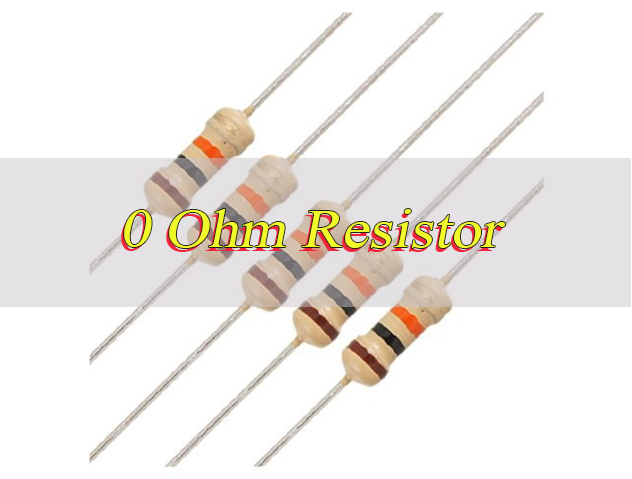
A 0 ohm resistor (or zero ohm resistor) is a passive electronic component that acts as a jumper or conductor in a standard resistor package. It is essentially a wire link packaged like a regular resistor, designed to connect traces on a printed circuit board without the need for separate jumpers or wires.
Contrary to its name, it does not have true 0 ohm resistance. Instead, it has a very low resistance, typically between 0.01 ohms and 0.1 ohms, depending on the manufacturer and package size. This low resistance lets it conduct current almost as efficiently as a wire, while retaining the form factor of a resistor, making it compatible with standard PCB assembly processes.
0 ohm resistors come in standard packages like 0402, 0603, 0805, and 1206. They integrate easily into PCB layouts using automated pick-and-place machines and are widely used in PCB design to simplify routing, enable design flexibility, and facilitate testing or modification.
What Is The Resistance Of A 0 Ohm Resistor?
A 0 ohm resistor does not have exactly 0 ohms of resistance. While it is often referred to as a zero ohm resistor, true zero resistance is not physically possible, and these components have a very low actual resistance instead.
Its actual resistance, called typical or nominal resistance, ranges from 0.01 ohms to 0.1 ohms, with most manufacturers specifying a maximum resistance of 0.1 ohms. This small resistance originates from the material used, usually a thin metal film or carbon film, and the physical size of the resistor itself.
For practical PCB use, this resistance is negligible and does not significantly affect current flow or voltage drops.Always check the datasheet for the exact resistance value, as it varies slightly by brand and package type.
What Does A 0 Ohm Resistor Do?
A 0 ohm resistor serves three main functions in PCB design, all simplifying circuit design and assembly.
First, it acts as a jumper or conductor. It connects two PCB points without needing a separate wire or jumper.
Second, it provides design flexibility. If you’re unsure about a connection for testing, different configurations, or future modifications, insert a zero ohm resistor temporarily. You can remove it later if needed.
Third, it facilitates automated assembly. Since 0 ohm resistors use standard resistor packages, they work with the same pick-and-place machines as other resistors. This eliminates manual jumper installation.
Additionally, 0 ohm resistors can break ground loops, isolate circuits, or mark test points on a PCB.
Why 0 Ohm Resistor Is Used In PCB?
0 ohm resistors are a staple in PCB design for practical reasons jumpers and wires cannot match.
They simplify PCB routing. When two components need connection but their pads are not adjacent, a 0 ohm resistor bridges the gap. No complex wire routing or vias are needed.
They support automated manufacturing. Manual jumpers take time to install and are prone to errors. 0 ohm resistors fit seamlessly into automated pick-and-place and soldering processes.
They enable design flexibility. Engineers use 0 ohm resistors to create modular PCBs. Different sections can be connected or disconnected by adding or removing the resistor.
They improve PCB reliability. 0 ohm resistors are less likely to come loose than jumpers. Their standard package protects the connection from damage during handling or operation.
What Is The Color Code For A 0 Ohm Resistor?
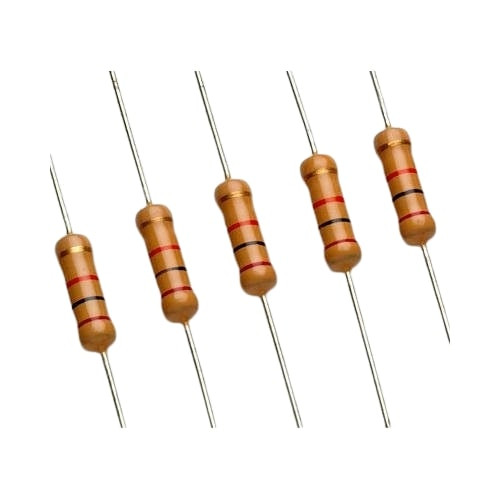
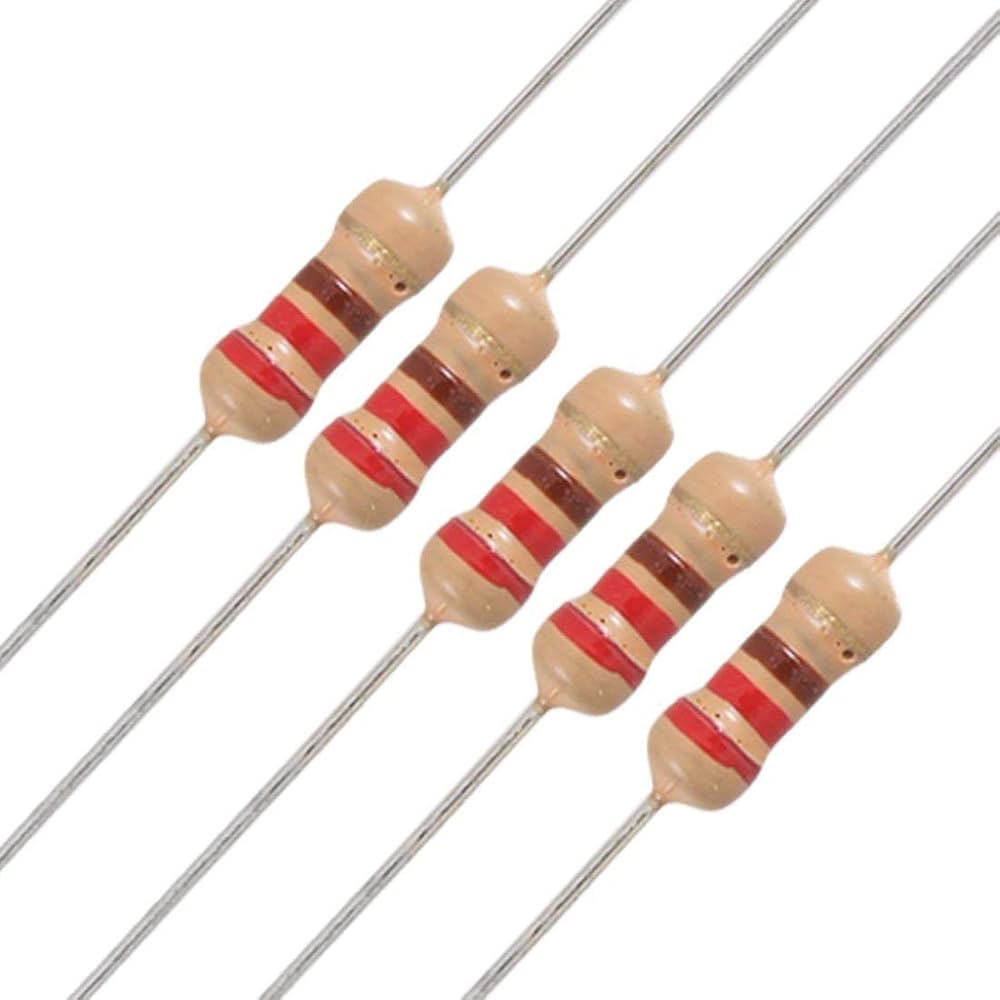
0 ohm resistors have a simple color code, easy to identify even for beginners, and it differs significantly from standard resistors that use multiple color bands to indicate resistance values. Axial-lead through-hole 0 ohm resistors, in particular, are generally marked with a single black band. This black band serves as the symbol for 0 ohms in resistor color coding, as black is universally used to represent the digit 0 in resistor color marking systems.
While the single black band is the most common marking for 0 ohm resistors, some may have two black bands, though this is less prevalent. For four-band 0 ohm resistors, the first three bands are black to signify 0 ohms. The fourth band is used for indicating tolerance and can be gold, silver, or omitted entirely, depending on the manufacturer’s specifications. Gold typically indicates a ±5% tolerance and silver a ±10% tolerance, consistent with standard resistor color code conventions.
This simplified color code design makes it easy to distinguish 0 ohm resistors from other components on a PCB, which is critical for efficient assembly and troubleshooting. It is worth noting that surface-mount 0 ohm resistors are often marked with one or multiple “0” instead of color bands. The color code, however, remains the standard for through-hole types, ensuring consistency in identification across different resistor formats.
How Much Current Can A 0 Ohm Resistor Handle?
A 0 ohm resistor’s current-carrying capacity is not fixed and depends on three key factors: its package size, the material it is made of, and the ambient temperature of the operating environment. These factors work together to determine how much current the resistor can safely conduct without experiencing failure.
Package size is a primary determinant of current capacity, with smaller packages handling less current and larger packages accommodating more. For instance, a 0402 0 ohm resistor typically handles 0.5A to 1A, a 0603 package handles 1A to 2A, and a 1206 package can handle 2A to 3A. It is important to check the 0 ohm resistor datasheet for the exact current rating, as values can vary slightly by manufacturer.
Exceeding the specified current rating can lead to serious issues, including the resistor overheating, melting, or failing entirely, which can damage the entire PCB. For high-current circuits, it is crucial to choose a zero ohm resistor with a current rating that exceeds the circuit’s maximum current to ensure safe and reliable operation.
0 Ohm Resistor Datasheet Specification
A 0 ohm resistor’s datasheet has critical specifications every PCB engineer should review before selection. Below is a detailed table of key datasheet specifications for easy reference:
Specification Type
Typical Value/Description
Notes
Typical Resistance
0.01 ohms – 0.1 ohms
Actual resistance varies slightly by manufacturer and package size
Maximum Resistance
0.1 ohms (most manufacturers)
Critical for ensuring minimal voltage drop in circuits
Current Rating
0.5A – 3A (varies by package size)
0402: 0.5A-1A; 0603:1A-2A; 1206:2A-3A; check datasheet for exact values
Voltage Rating
25V – 100V
Depends on resistor material and package design
Operating Temperature Range
-55°C to 155°C
Temperature above 70°C may require current derating
Package Size
0402, 0603, 0805, 1206 (common)
Larger packages have higher current-carrying capacity
Material
Metal film, carbon film, or thick film
Affects resistance consistency and temperature stability
Essential for proper installation and long-term performance
Always refer to the datasheet to ensure compatibility with your PCB’s operating conditions. Ignoring specs can lead to component failure and PCB malfunctions.
How To Test 0 Ohm Resistor?
Testing a zero ohm resistor is straightforward with a multimeter, and the process differs slightly for on-PCB and off-PCB testing. Below are the detailed, step-by-step test steps, along with result judgment and key notes:
Prepare tools and confirm safety: Use a digital multimeter (ensure it is calibrated to avoid inaccurate readings). If testing on a PCB, turn off the circuit power and disconnect the power source to prevent short circuits or false readings caused by residual voltage.
Set the multimeter correctly: Switch the multimeter to resistance mode (marked with Ω), and select the lowest resistance range (usually 200Ω). This range ensures high precision for measuring the low resistance of 0 ohm resistors, which is critical for accurate judgment.
Perform the test operation: For off-PCB testing, touch the two probes of the multimeter firmly to the two leads of the 0 ohm resistor. For on-PCB testing, touch the probes to the two pads of the resistor on the PCB, avoiding contact with adjacent components to prevent interference.
Judge test results: A normal 0 ohm resistor will show a reading between 0.01 ohms and 0.1 ohms, which aligns with its nominal low resistance. A reading higher than 10 ohms indicates the resistor is faulty or damaged. A reading of “OL” (open loop) means the resistor is open and cannot conduct current, requiring replacement.
Post-test notes: After testing, turn off the multimeter and restore the circuit connection (if on-PCB testing). Regular testing of 0 ohm resistors in key circuits helps detect potential failures early and avoid damage to the entire PCB.
Difference Between 0 Ohm Resistor VS Jumper: Which Is Better?
Choosing between a zero ohm resistor and a jumper depends on your PCB’s design, manufacturing process, and requirements. Below is a detailed comparison table to help you decide:
Feature
0 Ohm Resistor
Jumper
Form Factor
Standard resistor package (0402, 0603, etc.), fits PCB pads
Small wire loop or pin header, requires dedicated jumper pads
Automated Assembly
Compatible with pick-and-place machines, no manual labor needed
Requires manual installation, slow and prone to errors
Design Flexibility
Easily removable/replaceable for circuit modifications or testing
Permanent once installed; difficult to remove without damaging the PCB
Current Capacity
Limited by package size (0.5A–3A)
Higher current capacity (depends on wire gauge)
Reliability
High; soldered securely to PCB, less likely to come loose
Low; prone to loosening or breaking due to vibration or handling
Low-volume projects, manual assembly, high-current applications where space is not an issue
Difference Between 0 Ohm Resistor VS Wire: Which Is Better?
A zero ohm resistor and a wire both conduct current, but they differ in form factor, usability, and reliability. Below is a detailed comparison table to help you choose the right option for your PCB:
Feature
0 Ohm Resistor
Wire
Form Factor
Compact, standard resistor package; fits neatly on PCB pads
Flexible or rigid wire; requires space for routing, may cause clutter
Automated Assembly
Fully compatible with pick-and-place and soldering machines
Requires manual routing and soldering; not suitable for automated lines
PCB Routing
Simplifies routing; bridges gaps between non-adjacent pads without vias
Requires complex routing; may block other components or create short circuits
Modification
Easily removed or replaced for circuit changes or testing
Difficult to modify; cutting or re-soldering may damage the PCB
Resistance
Low (0.01–0.1 ohms); consistent across temperature changes
Very low (depends on length and gauge); increases with length
Best For
Compact PCBs, automated manufacturing, modular designs, test points
High-current applications, large PCBs, temporary connections during prototyping
How To Choose The Right 0 Ohm Resistor for Your PCB Project?
Choosing the right 0 ohm resistor requires considering five core, evidence-based factors to ensure compatibility, reliability, and optimal performance for your PCB project. Below are the detailed, concise guidelines:
Select the appropriate package size: Choose based on your PCB’s space constraints and current requirements. Compact PCBs are ideal for 0402 packages, while 0603 and 0805 suit general-purpose designs. For high-current scenarios, 1206 packages are preferred as they offer higher current-carrying capacity. Ensure the package fits existing PCB pads to avoid assembly issues.
Verify the current rating: The current rating must exceed the maximum current of your circuit to prevent overheating, melting, or resistor failure. Typical ratings vary by package: 0402 (0.5A–1A), 0603 (1A–2A), 1206 (2A–3A). Always check the manufacturer’s datasheet for exact values, as material and ambient temperature also affect current capacity.
Confirm the resistance value: Aim for a nominal resistance of 0.01–0.1 ohms, the standard range for 0 ohm resistors. This low resistance ensures negligible voltage drop and does not interfere with circuit performance. Exact values vary slightly by brand and package, so cross-check the datasheet to avoid selecting components with excessive resistance.
Match to your application scenario: Align the resistor with your PCB’s manufacturing and functional needs. Use 0 ohm resistors for automated assembly, modular designs, or temporary connections for testing. Opt for jumpers or wires instead for low-volume manual assembly or high-current applications where space is not limited.
Choose a reputable manufacturer and review the datasheet: Select reliable manufacturers to ensure consistent performance and quality, as low-quality 0 ohm resistors may have unstable resistance or poor durability. Always review the datasheet to confirm key specs (voltage rating, operating temperature, material) and ensure compatibility with your PCB’s operating environment.
FAQs About Zero Ohm Resistor
Q1: Is there voltage across a 0 ohm resistor?
A1: No, there is no significant voltage across a 0 ohm resistor. 0 ohm resistors have very low resistance, so the voltage drop is negligible. For example, 1A through a 0.1 ohm 0 ohm resistor creates a 0.1V drop, too small to affect most circuits.
Q2: Can you jump a 0 ohm resistor?
A2: Yes, you can jump a 0 ohm resistor, but it is unnecessary. A 0 ohm resistor already acts as a jumper. If it is faulty, you can temporarily jump it with a wire to test the circuit before replacement.
Q3: Can a wire be considered a 0 ohm resistor?
A3: No, a wire cannot be considered a 0 ohm resistor. Wires lack the standard resistor package and specs. 0 ohm resistors are designed for PCB assembly and modularity, while wires are not.
Q4: Can you replace a zero-ohm resistor with a wire?
A4: Yes, you can replace a zero-ohm resistor with a wire in most cases. Both conduct current with low resistance, so the circuit works the same. This removes modification flexibility and compatibility with automated assembly.
Q5: Is a 0 ohm resistor a short?
A5: No, a 0 ohm resistor is not a short circuit. A short has zero resistance, while a 0 ohm resistor has 0.01–0.1 ohms. This small resistance prevents infinite current flow, making it safe for circuits.
Q6: Is 0 ohms good continuity?
A6: Yes, 0 ohms or very low resistance indicates good continuity. Continuity tests check for complete circuits. A 0 ohm reading means the path is unobstructed and current flows freely.
Q7: Is 0 ohms open or closed?
A7: 0 ohms indicates a closed circuit. A closed circuit allows current flow. An open circuit shows “OL” on a multimeter, meaning no current can flow.
Q8: Is a 0 ohm resistor a fuse?
A8: No, a 0 ohm resistor is not a fuse. Fuses break to protect circuits from overcurrent. 0 ohm resistors conduct current and fail when overloaded but do not act as protective fuses.
What makes automotive grade MCPCB the most reliable solution for high heat high vibration vehicle electronics, and why should you choose EBest as your long term manufacturing partner? This guide covers core performance, certifications, design rules, real world applications, common pain points, and ordering support for automotive grade MCPCB all backed by EBest’s 20+ years of one stop PCB experience, strict quality systems, and fast delivery to keep your automotive projects on track.
Why Choose EBest as Your Top Source for Automotive Grade MCPCB?
When you sourceautomotive grade MCPCB, you need consistent quality, on time delivery, full supply chain stability, and responsive technical support. EBest delivers automotive grade MCPCB with industry leading thermal conductivity, full automotive qualification, stable mass production yield, and expedited prototyping to meet tight project timelines.
Key specifications include wide operating temperature range, high thermal conductivity dielectric, reinforced mechanical structure, and full compliance with automotive standards.
We provide full life cycle support from prototype design to mass production, with stable material supply and professional technical team to ensure your project runs smoothly. Trust EBest for your next automotive grade MCPCB order and experience reliable performance from prototype to mass production.
What Certifications Back EBest Automotive Grade MCPCB Quality?
EBest holds complete authoritative certifications to ensure every automotive grade MCPCB meets global automotive safety and quality standards. Each certification brings real value to your project and reduces compliance risks.
IATF 16949: Full process control, fully traceable production, eliminates hidden quality risks for automotive series production.
ISO 9001:2015: Stable quality management system ensures consistent performance in every batch.
ISO 13485:2016: High reliability control standard suitable for safety critical automotive electronics.
AS9100D: Aerospace level stability to withstand extreme temperature, vibration, and harsh environments.
REACH: Full environmental compliance meeting EU market requirements.
RoHS: Restriction of hazardous substances, safe for automotive assembly and usage.
UL: Safety certification for high power and high voltage automotive circuits.
What Are the Biggest Challenges with Automotive Grade MCPCB and How to Fix Them?
In actual automotive research and development and mass production, automotive grade MCPCBoften faces multiple pain points that affect performance, yield and delivery. EBest provides targeted solutions for each core challenge to ensure stable application in harsh vehicle environments.
Pain Point 1: Insufficient heat dissipation leads to component overheating and early failure. EBest’s Solution: Use high thermal conductivity dielectric layers and optimized thermal paths to rapidly dissipate heat and maintain stable component temperatures.
Pain Point 2: Solder joint cracking or board delamination under high vibration and thermal cycling. EBest’s Solution: Adopt automotive grade base materials and reinforced structural design to enhance mechanical strength and reliability.
Pain Point 3: Low production yield caused by poor design for manufacturing (DFM). EBest’s Solution: Provide free DFM review and design optimization before production to improve manufacturability and batch consistency.
Pain Point 4: Inconsistent quality and lack of traceability in mass production. EBest’s Solution: Implement IATF 16949 process control and full material traceability to ensure stable quality in every batch.
Pain Point 5: Long lead times that delay automotive project development and launch. EBest’s Solution: Offer rapid prototyping and expedited production lines, with urgent orders shipped within 24 hours.
Pain Point 6: Failure to meet automotive industry certifications and customer audit requirements. EBest’s Solution: Maintain full certifications including IATF 16949, UL, RoHS, and REACH for direct compliance with automotive standards.
Pain Point 7: Unstable performance in extreme high low temperature under hood environments. EBest’s Solution: Use wide temperature range materials and strict reliability testing to ensure stable operation from -40°C to +150°C.
What Is Automotive Grade MCPCB and How Does It Work?
Automotive grade MCPCB is a metal core printed circuit board built specifically for harsh vehicle environments. It uses a three layer structure copper circuit, high thermal dielectric, and metal base plate. This structure quickly pulls heat from power components to lower operating temperatures and extend service life. Unlike standard PCBs, automotive grade MCPCB withstands extreme temperatures, vibration, and thermal cycling without failure, making it the preferred core component for high power and high reliability automotive electronics.
How Does Automotive Grade MCPCB Improve Thermal Performance?
Thermal performance is the core advantage of automotive grade MCPCB, directly addressing the high heat demands of automotive systems. By optimizing material selection and structural design, it achieves efficient heat transfer and stable operation in extreme environments.
Uses high thermal conductivity dielectric layers to speed up heat transfer
Metal base (aluminum/copper) provides large area heat dissipation
Optimized thermal via design enhances vertical heat conduction
Low thermal resistance reduces component junction temperature
Wide operating temperature range (-40°C to +150°C) maintains stability
Stable material properties prevent thermal degradation over long service life
What Are the Applications of Automotive Grade MCPCB?
Automotive grade MCPCB is tailored to meet the reliability and thermal needs of diverse automotive systems, covering both traditional and new energy vehicle modules. It excels in scenarios requiring high heat dissipation, mechanical stability, and long term durability, and is widely used in core systems that determine vehicle safety and performance.
Automotive LED lighting (headlamps, daytime running lights, taillights)
EV power systems (inverters, converters, on board chargers)
Battery Management Systems (BMS) for electric and hybrid vehicles
Engine control units (ECU) and under hood control modules
ADAS sensors, radar, and camera processing modules
Automotive infotainment and display driver circuits
Motor control and power distribution modules
How to Design a Durable Automotive Grade MCPCB?
Designing a reliable automotive grade MCPCB requires balancing thermal performance, mechanical strength, and manufacturability, with strict adherence to automotive industry standards. Key design principles focus on adapting to extreme environments and ensuring consistent mass production yield. Correct design can directly improve product life, reduce failure rate and lower overall cost.
Select aluminum or copper core based on thermal and weight requirements.
Use symmetric layer stack up to reduce warpage and mechanical stress.
Add thermal vias properly to improve heat dissipation efficiency.
Follow automotive DFM rules to ensure stable production yield.
Optimize copper layout and trace design for high current and heat.
Choose suitable surface finishing for high reliability and solderability.
Reserve sufficient clearance for high voltage automotive circuits.
How Is Automotive Grade MCPCB Tested for Reliability?
Reliability testing is essential to verify that automotive grade MCPCB can withstand long term use in vehicle environments. EBest conducts a full set of tests to ensure each board meets automotive quality requirements. All test items are formulated according to automotive standards to simulate real road and temperature conditions.
Temperature cycling test: Withstands rapid high low temperature changes
Vibration and shock test: Simulates real world vehicle driving conditions
High temperature storage test: Validates long term durability at 150°C
Dielectric strength test: Verifies electrical safety and insulation stability
Thermal shock test: Checks resistance to extreme temperature swings
Solderability test: Confirms good assembly performance in SMT lines
How Is EBest Automotive Grade MCPCB Manufactured?
EBest’s automotive grade MCPCB manufacturing process follows IATF 16949 standards, with strict control over every step to ensure quality and traceability. From material selection to final inspection, each step is designed to meet automotive reliability requirements. The whole production line is equipped with precision equipment and standardized operating procedures.
Raw material inspection using certified automotive grade materials.
Precision metal core surface treatment for strong bonding.
High pressure and high temperature dielectric lamination.
Accurate circuit imaging, etching, and plating processes.
Controlled drilling, routing, and surface finishing.
Full electrical, thermal, and reliability performance testing.
IATF 16949 compliant packaging and traceable shipment.
How to Choose the Right Metal Core for Your Automotive Grade MCPCB?
The selection of metal core directly determines thermal performance, weight and application efficiency of automotive grade MCPCB. It is necessary to select appropriate materials according to actual application scenarios and power requirements.
H2: How to Choose the Right Metal Core for Your Automotive Grade MCPCB?
Selecting the proper metal core is critical for thermal performance, reliability, and stability in harsh automotive environments.
Aluminum core offers balanced thermal performance, light weight, and strong cost efficiency for most standard automotive applications.
Copper core provides ultra-high thermal conductivity to handle extreme heat in high-power vehicle systems.
Choose aluminum core for automotive lighting, sensors, and low-to-medium power control modules.
Choose copper core for EV inverters, on-board chargers, and high-heat battery management systems.
Aluminum core supports easier machining and better dimensional stability during mass production.
Copper core delivers superior heat spreading for long-term durability under continuous high loads.
Match the metal core to your operating temperature, power density, and installation space requirements.
Real Automotive Case: How Automotive Grade MCPCB Solved LED Overheating?
Automotive LED lighting products often face overheating issues, which lead to lumen decay and shortened lifespan. EBest’s automotive grade MCPCB provides a targeted solution to this problem, with proven results in mass production. The case comes from a well-known automotive lighting manufacturer facing serious performance problems.
Customer problem: LED headlight lumen decay, short lifespan, and overheating failures
Solution: EBest high thermal automotive grade MCPCB with optimized thermal vias
Thermal improvement: Junction temperature reduced by more than 35°C
Reliability result: Passed all automotive vibration and temperature cycling tests
Final outcome: Stable mass production, extended service life, and customer approval
FAQ About Automotive Grade MCPCB
Q1: What temperature range does automotive grade MCPCB support? A1: Automotive grade MCPCB typically operates from -40°C to +150°C for harsh vehicle environments.
Q2: Is automotive grade MCPCB compatible with standard SMT assembly? A2: Yes, it works with standard SMT and soldering processes with adjusted thermal profiles.
Q3: How fast can you deliver automotive grade MCPCB prototypes? A3: We offer rapid prototyping in 3 to 5 days and urgent 24 hour shipment for qualified orders.
Q4: Does EBest automotive grade MCPCB meet IATF 16949? A4: Yes, all our automotive boards are produced under IATF 16949 with full traceability.
Q5: Can you customize automotive grade MCPCB thickness and structure? A5: We fully customize core thickness, layer count, and layout to match your design.
Q6: How is automotive grade MCPCB different from standard MCPCB? A6: It uses stricter materials, processes, and certifications to withstand extreme automotive conditions.
Q7: Do you provide design support for automotive grade MCPCB? A7: We offer free DFM reviews and thermal optimization to improve your design.
How to Order Automotive Grade MCPCB from EBest Quickly?
Ordering automotive grade MCPCB from EBest is straightforward and supported. We provide a simple and efficient ordering process to save your time and speed up project progress. Send your Gerber files and project requirements for review. Get a free DFM check and formal quotation. Confirm prototype or mass production and start manufacturing. Receive on time delivery with full quality documentation.
Order Your High Reliability Automotive Grade MCPCB Today
EBest delivers professional automotive grade MCPCB with fast prototyping, stable mass production, and full automotive certifications. We support urgent orders, batch projects, and custom designs with dedicated service. Get in touch now to lock in your lead time and secure your supply. Our business email is sales@bestpcbs.com, looking forward to your email!
Are you struggling with maintaining, testing or wiring your arcade PCB? Clear, actionable steps for every critical arcade PCB task are available here. These easy-to-follow tips align with industry best practices to ensure reliability and safety, covering identification, power, testing, cleaning and usage. Let’s start with the basics.
What is an Arcade PCB?
An arcade PCB (Printed Circuit Board) is the core component of any arcade machine, acting as its “brain” and “heart.” It contains all essential parts for game operation, including CPU, RAM, graphics and audio chips, ROM chips (for game software), voltage regulators, and connectors for controls, displays, and power.
Unlike standard PCBs, arcade PCBs are custom-made for specific games, with circuitry tailored to each game’s unique gameplay, graphics, and sound. Without a functional PCB, an arcade cabinet is non-operational, as all game logic, visuals, and audio depend on it.
Arcade PCBs come in different form factors, single-board (classic games) and multi-board (complex modern arcades), and vary by era, with older 8-bit/16-bit models having simpler components than modern ones with multi-core processors. Regardless of type, their core purpose is to turn electronic signals into an interactive arcade gaming experience.
How to Identify Arcade PCB?
Identifying an arcade PCB is straightforward once you know what to look for start with the most visible features, then move to component details. The first step is to check for labels or silk-screened text on the board itself; most manufacturers print the game title, model number, or manufacturer name directly on the PCB (usually near the edge or center). If no label exists, focus on the components and form factor.
Use this table to compare key identifying features of common arcade PCB types, making it easy to distinguish between models:
PCB Type
Key Identifying Features
Common Examples
Single-Board Classic
Small to medium size (6-12 inches), 8-16 ROM chips, silk-screened game title, edge connector for power/controls
Pac-Man, Space Invaders, Donkey Kong
Multi-Board System
Multiple connected PCBs (CPU, graphics, sound), larger size, more components, separate power connectors for each board
Street Fighter II, Mortal Kombat, Tekken
Modern Arcade PCB
Slim design, fewer physical components (integrated chips), USB or HDMI connectors, compatibility with modern displays
Newer fighting games, racing arcades, retro console ports
Bootleg PCB
No brand labeling, mismatched components, poor soldering, generic silk-screen text
Unlicensed copies of classic games
Additional tips: Count the IC chips (integrated circuits) with 8 or more pins this can help narrow down the game type. Check for a notch or arrow on the PCB, which indicates the orientation of components like ROM chips. If you’re still unsure, take clear photos of the board (both sides) and compare the component layout to known arcade PCB databases or repair guides.
How Much Voltage Does Arcade PCB Need?
Most arcade PCBs require three primary DC voltages to operate, with +5V being the most critical. The exact voltage requirements vary slightly by PCB model, but the standard ranges are consistent across most arcade machines. You must match the voltage supply to the PCB’s specifications too much voltage will fry components, while too little will cause the game to malfunction or not start at all.
Here’s the breakdown of standard arcade PCB voltage requirements, organized by importance:
+5V DC: This is the primary voltage for the PCB’s core components (CPU, RAM, ROM chips, logic circuits). 90% of arcade PCBs use +5V as their main power source, with a tolerance of ±0.2V (so 4.8V to 5.2V is acceptable). A stable +5V supply is non-negotiable fluctuations will cause game crashes, glitches, or permanent component damage.
+12V DC: Used for audio amplifiers, coin door lights, LED strips, and some auxiliary components. Most PCBs draw minimal current from +12V, but it’s still required for full functionality (especially sound). The tolerance here is ±0.5V (11.5V to 12.5V).
-5V DC: Less common in modern arcade PCBs, but essential for sound circuits in older games (1980s and early 1990s). If your PCB has a dedicated sound chip (e.g., YM2612), it may require -5V with a tolerance of ±0.2V (-5.2V to -4.8V). Newer PCBs often omit -5V, as their sound circuits are powered by +5V or +12V.
Amperage is just as important as voltage. Most arcade PCBs require a power supply that can deliver 2-5 amps (A) at +5V, 1-2A at +12V, and 0.5A or less at -5V (if needed). Always check the PCB’s silk-screen or the game manual for exact amperage requirements using a power supply with insufficient amperage will cause voltage drops and system failures.
How to Check Arcade PCB Voltage?
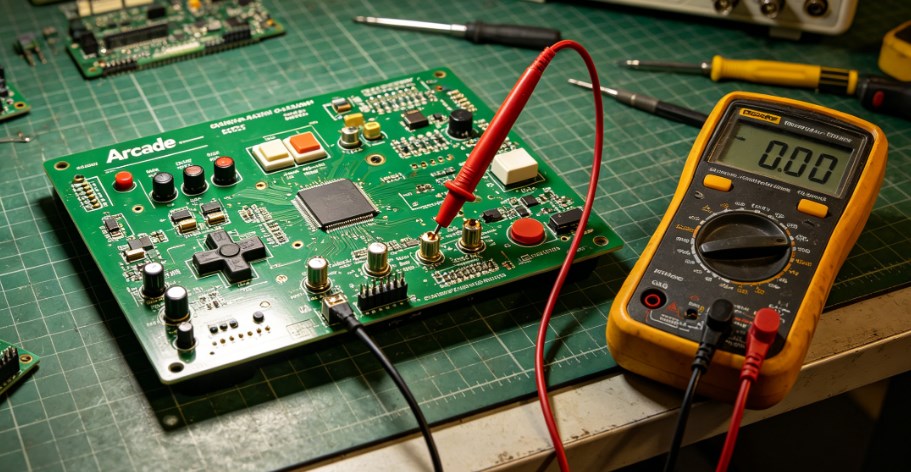
Checking arcade PCB voltage is a simple process that requires a digital multimeter no advanced tools needed. The goal is to verify that the PCB is receiving stable, correct voltage from the power supply, which helps diagnose issues like game crashes, no power, or glitches. Follow these steps exactly to avoid damaging the PCB or multimeter:
1. Prepare the tools: Get a digital multimeter, and set it to DC voltage mode (look for the “V⎓” symbol). Set the range to 20V (this covers all standard arcade voltages, so you won’t need to adjust it). Ensure the multimeter’s batteries are working test it by touching the two probes together; it should read 0V.
2. Power off the arcade machine: Unplug the power cord from the wall outlet to avoid electric shock. Wait 30 seconds to allow capacitors to discharge this prevents residual voltage from interfering with the test.
3. Locate the power connector on the PCB: The power connector is usually a small plastic block with pins labeled “+5V,” “+12V,” “-5V,” and “GND” (ground). If the labels are missing, refer to the PCB’s silk-screen or game manual to identify the pins.
4. Power on the machine: Plug the power cord back in and turn on the arcade machine. Do not touch any components on the PCB while it’s powered on static electricity or accidental contact can damage sensitive chips.
5. Test the voltage: Hold the multimeter’s black probe (negative) firmly against the GND pin. Use the red probe (positive) to touch the +5V pin first. The multimeter should read between 4.8V and 5.2V. Repeat for the +12V pin (11.5V to 12.5V) and -5V pin (-4.8V to -5.2V, if present).
6. Interpret the results: If the voltage is within the acceptable range, the power supply is working correctly. If it’s too high or too low, the power supply is faulty and needs to be replaced. If the voltage fluctuates (e.g., jumps from 4.5V to 5.5V), the power supply is unstable and should be replaced immediately to prevent PCB damage.
Pro tip: Test the voltage at both the power supply connector and the PCB’s power pins. If the voltage is correct at the power supply but incorrect at the PCB, there’s a loose wire or damaged connector that needs to be fixed.
How to Hook Up Arcade PCB?
Hooking up an arcade PCB is a step-by-step process that requires connecting power, controls (joysticks, buttons), display, and sound. The key is to match the PCB’s connectors to the corresponding components in the arcade cabinet misconnections will cause malfunctions or damage. Follow these steps for a safe, successful setup:
1. Prepare the cabinet: Ensure the arcade cabinet is powered off and unplugged. Remove the back panel to access the interior. Clear any dust or debris from the cabinet to avoid short circuits.
2. Mount the PCB: Use screws to secure the PCB to the cabinet’s mounting bracket. Ensure the PCB is level and not touching any metal components (this prevents short circuits). Use standoffs if needed to elevate the PCB slightly.
3. Connect the power supply: Plug the power supply’s connector into the PCB’s power port. Match the pins carefully most power connectors are keyed (have a notch) to prevent reverse insertion, but double-check the labels (+5V, +12V, -5V, GND) to be sure. Do not force the connector if it doesn’t fit, it’s oriented incorrectly.
4. Connect controls: The PCB has a dedicated connector for joysticks and buttons (often called a “control harness”). Plug the control harness into the PCB’s control port. Each button and joystick direction is wired to a specific pin refer to the PCB’s manual to ensure the harness is connected correctly. Test the controls by pressing buttons and moving the joystick; if they don’t respond, check the wiring.
5. Connect the display: Most arcade PCBs use a VGA, HDMI, or RGB connector for the display. Plug the display cable into the PCB’s display port and the other end into the arcade’s monitor. Ensure the display is set to the correct resolution (most classic PCBs use 4:3 aspect ratio).
6. Connect sound: Plug the speaker wires into the PCB’s audio port (labeled “AUDIO OUT” or “SPEAKER”). If the PCB has separate left and right audio channels, connect each wire to the corresponding speaker.
7. Test the setup: Plug in the power cord and turn on the arcade machine. The game should boot up, and all controls, display, and sound should work. If there’s no power, check the power supply and connections. If the game boots but controls don’t work, recheck the control harness.
Pro tip: Take photos of the original PCB’s connections before removing it (if replacing an old PCB). This makes it easy to match the wiring to the new PCB.
How to Connect Speakers to Arcade PCB?
Connecting speakers to an arcade PCB is simple, but you must match the speaker’s impedance (ohms) to the PCB’s audio output to avoid damaging the sound chip. Most arcade PCBs work with 8-ohm or 4-ohm speakers check the PCB’s silk-screen or manual for the exact impedance requirement. Follow these steps to connect speakers correctly:
1. Gather the tools: You’ll need speakers (matching the PCB’s impedance), speaker wire (18-22 gauge), wire strippers, and electrical tape (or heat shrink tubing).
2. Prepare the speaker wire: Cut two lengths of speaker wire (long enough to reach from the PCB to the speakers). Strip 1/4 inch of insulation from each end of the wire to expose the copper strands. Twist the strands together to prevent fraying.
3. Locate the PCB’s audio port: The audio port is usually labeled “AUDIO OUT,” “SPEAKER,” “LEFT,” or “RIGHT.” Most PCBs have two terminals (positive and negative) for each speaker look for “+” and “-” labels.
4. Connect the wire to the PCB: Attach one end of the speaker wire to the PCB’s positive terminal (+) and the other end to the negative terminal (-). Use electrical tape to secure the wires to the terminals this prevents them from coming loose.
5. Connect the wire to the speaker: Attach the other end of the wire to the speaker’s positive and negative terminals (match “+” to “+” and “-” to “-”). Again, secure the wires with electrical tape or heat shrink tubing.
6. Test the sound: Turn on the arcade machine and play a game. The sound should be clear and free of distortion. If there’s no sound, check the wire connections (ensure they’re secure and matched correctly) or test the speakers with another device to confirm they’re working.
Note: If the PCB has a built-in audio amplifier, you can connect speakers directly. If not, you’ll need an external amplifier between the PCB and speakers connect the PCB’s audio output to the amplifier, then the amplifier to the speakers.
How to Test Arcade PCB?
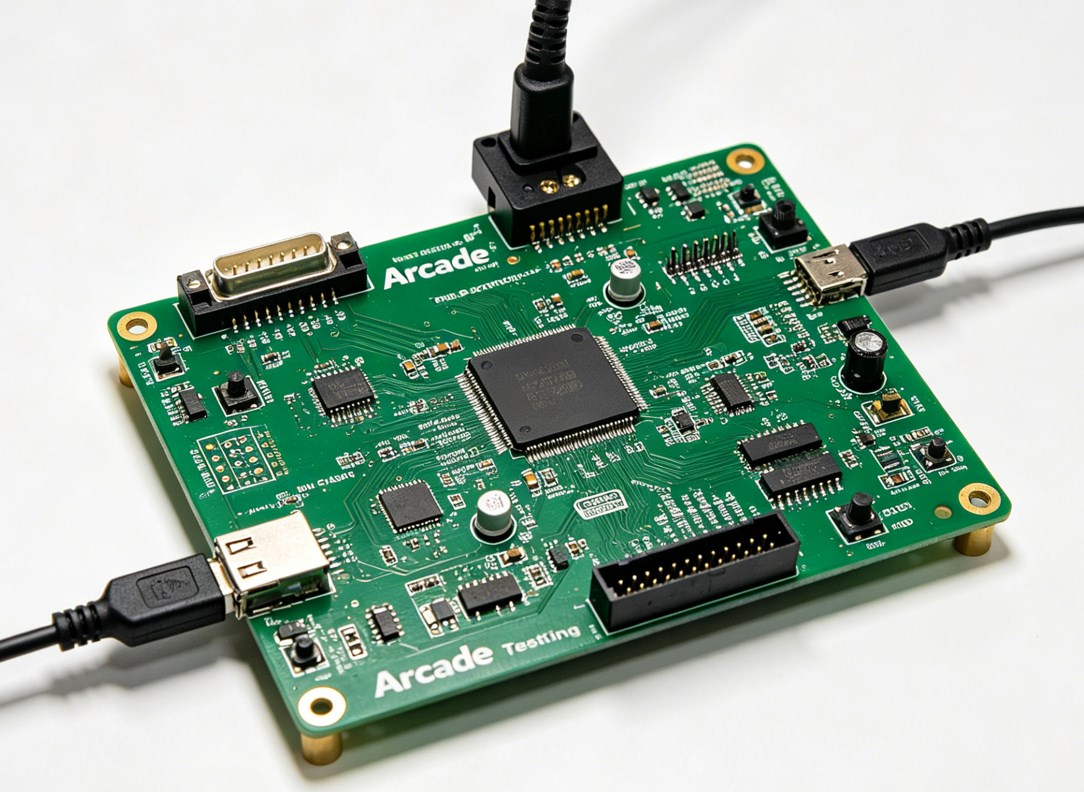
Testing an arcade PCB ensures it’s functional before installing it in a cabinet, saving you time and frustration. The test covers power, graphics, sound, and controls, and requires a few basic tools: a power supply (matching the PCB’s voltage), a display (monitor or TV), speakers, and a control harness (joystick and buttons). Follow these steps to test the PCB thoroughly:
1. Set up the test bench: Place the PCB on a non-conductive surface (e.g., a wooden table) to prevent short circuits. Connect the power supply to the PCB’s power port ensure the voltage and amperage match the PCB’s requirements.
2. Connect the display: Plug the display cable into the PCB’s display port and turn on the display. Set the display to the correct input (e.g., VGA, HDMI).
3. Connect speakers: Attach speakers to the PCB’s audio port (as outlined in the previous section).
4. Connect controls: Plug the control harness (joystick and buttons) into the PCB’s control port.
5. Power on the PCB: Turn on the power supply. The PCB should power up within 2-3 seconds, and the display should show the game’s title screen or boot sequence.
6. Test graphics: Check for clear, distortion-free visuals. Look for glitches, missing sprites, or color issues these indicate a faulty graphics chip or ROM.
7. Test sound: Play the game and listen for clear audio. Check for static, distortion, or missing sound effects this could mean a faulty sound chip or speaker connection.
8. Test controls: Press all buttons and move the joystick in all directions. Ensure each input is registered in the game (e.g., the character moves when the joystick is pushed, buttons trigger actions).
9. Test stability: Let the game run for 10-15 minutes. If it crashes, freezes, or resets, there’s a problem with the power supply, overheating, or a faulty component (e.g., a bad ROM chip).
If the PCB fails any test: Check the power supply voltage (as outlined earlier), inspect for loose components or damaged traces, and test the ROM chips (see the next section). For more complex issues, use a multimeter to check for continuity in the PCB’s traces.
How to Use an Arcade PCB?
Using an arcade PCB is simple once it’s properly hooked up, but there are a few key steps to ensure optimal performance and longevity. Whether you’re using a classic or modern PCB, follow these guidelines to get the most out of your arcade machine:
1. Power on correctly: Always turn on the arcade machine’s power supply first, then the display. This prevents voltage spikes from damaging the PCB’s components. When turning off, reverse the order: turn off the display first, then the power supply.
2. Monitor temperature: Arcade PCBs generate heat during operation, especially older models. Ensure the cabinet has proper ventilation (e.g., fans, vents) to prevent overheating. Avoid placing the cabinet in direct sunlight or near heat sources (e.g., radiators).
3. Handle with care: Never touch the PCB’s components while it’s powered on. If you need to adjust connections or inspect the board, turn off the power and unplug the machine first. Use an anti-static wristband to prevent static discharge, which can destroy sensitive chips.
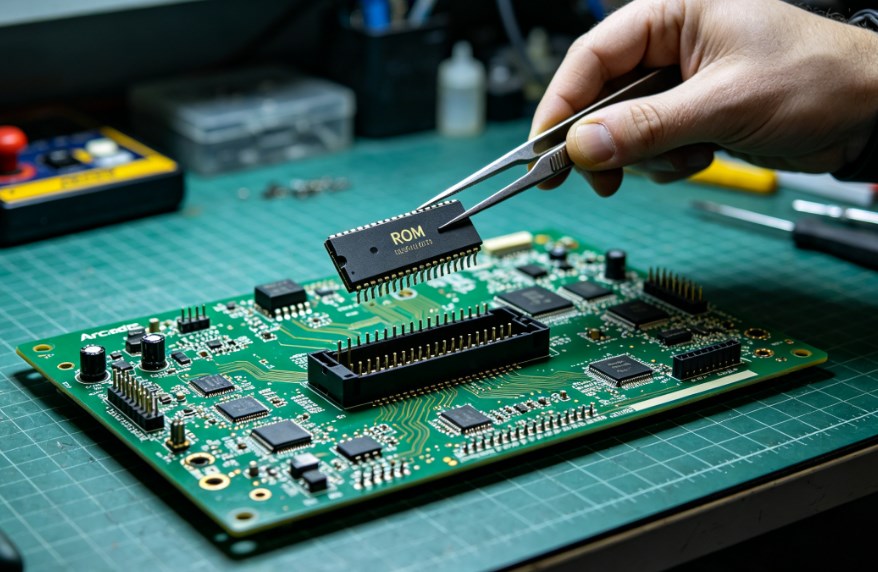
4. Load games correctly: For PCBs with removable ROM chips, ensure the chips are seated properly (see the next section) before powering on. If the game doesn’t load, check the ROM chips for damage or misalignment.
5. Perform regular checks: Every 1-2 months, power off the machine, unplug it, and inspect the PCB for dust, loose components, or corrosion. Clean the PCB (as outlined below) to prevent dust buildup, which can cause short circuits.
6. Troubleshoot minor issues: If the game glitches or freezes, power off the machine, wait 30 seconds, then power it back on. This often resolves temporary issues caused by voltage fluctuations or overheating. If the problem persists, check the power supply and connections.
Pro tip: For vintage PCBs, avoid leaving the machine on for extended periods (e.g., 8+ hours) to reduce wear on components. Modern PCBs are more durable but still benefit from occasional breaks to prevent overheating.
How to Clean Arcade PCB?
Cleaning an arcade PCB is critical for preventing malfunctions dust, dirt, and corrosion can cause short circuits, poor connections, and component failure. The process is simple but requires care to avoid damaging sensitive components. Use only the right tools and cleaning solutions to ensure safety and effectiveness:
1. Prepare the tools: You’ll need high-purity isopropyl alcohol (IPA, 90% or higher) or anhydrous ethanol (99% or higher), anti-static wristband, soft-bristled brush (e.g., an old toothbrush), lint-free cloths (or coffee filters), and a small container for the cleaning solution. Avoid low-purity alcohol as it contains too much water and can cause corrosion.
2. Power off and disconnect: Unplug the arcade machine and remove the PCB from the cabinet. Put on the anti-static wristband to prevent static discharge. Place the PCB on a non-conductive surface.
3. Remove loose dust: Use the soft-bristled brush to gently sweep away loose dust and debris from the PCB’s surface and components. Be careful not to bend any pins or damage small components (e.g., capacitors).
4. Clean with alcohol: Pour a small amount of IPA or ethanol into the container. Dip the lint-free cloth or a cotton swab into the solution (don’t soak it just dampen it). Gently wipe the PCB’s surface, focusing on areas with visible dirt, grease, or corrosion. For hard-to-reach areas (e.g., between components), use a cotton swab.
5. Clean connectors and pins: Use a cotton swab dampened with alcohol to clean the PCB’s edge connector and component pins. This removes oxidation and dirt that can cause poor connections.
6. Dry the PCB: Allow the PCB to air dry in a well-ventilated area for at least 30 minutes (or overnight for best results). Do not use a hair dryer or heat source this can damage components. Ensure the PCB is completely dry before reconnecting it to the power supply.
7. Reassemble: Once dry, reattach the PCB to the cabinet and reconnect all cables. Power on the machine to confirm it’s working correctly.
Note: Avoid using water, harsh chemicals, or abrasive materials (e.g., paper towels) as these can damage the PCB’s solder mask and components. For heavy corrosion, use a specialized electronic cleaner (ensure it’s compatible with PCBs) and a small brush to gently remove the corrosion.
How to Remove ROM Chips from Arcade PCB?
ROM chips (Read-Only Memory) store the game’s software, and removing them may be necessary for repairs, upgrades, or replacement. The process requires care to avoid damaging the ROM chip or the PCB’s socket. Follow these steps to safely remove ROM chips:
1. Prepare the tools: You’ll need an EPROM puller (preferred) or a small flathead screwdriver, anti-static wristband, and a clean, dry surface to place the ROM chips.
2. Power off and disconnect: Unplug the arcade machine and remove the PCB from the cabinet. Put on the anti-static wristband to prevent static discharge.
3. Locate the ROM chips: ROM chips are rectangular integrated circuits (ICs) with 16-40 pins, usually seated in a socket on the PCB. They are often labeled with the game’s title or a part number.
4. Identify the notch: Each ROM chip has a small notch on one end, which indicates pin 1. The PCB’s socket will also have a notch or arrow to match the chip’s orientation note this before removing the chip to ensure correct reinstallation.
5. Remove the chip: If using an EPROM puller, clamp the puller around the edges of the ROM chip (avoid touching the pins) and gently pull straight up. If using a screwdriver, insert the flathead between the chip and the socket (on one side) and gently twist to lift the chip slightly. Move the screwdriver to the other side and repeat until the chip is loose, then pull it straight up. Do not pry too hard this can damage the socket or the chip’s pins.
6. Store the chip: Place the removed ROM chip on an anti-static mat or in an anti-static bag. Label the chip with the game title and its position on the PCB (e.g., “ROM 1”) to avoid confusion if you’re reinstalling it later.
Pro tips: Remove one ROM chip at a time to avoid mixing them up. If the chip is stuck, gently rock it back and forth (without bending the pins) to loosen it. Never remove or insert ROM chips while the PCB is powered on this will fry the chip and possibly the PCB.
FAQs About Arcade PCB Board
Q1: Why won’t my arcade PCB power on even with the correct voltage?
A1: Common issues: loose power connections, faulty power supply, damaged power connector. Check connections, test power supply with a multimeter, clean or replace damaged connector; replace faulty voltage regulator if needed.
Q2: How do I know if my arcade PCB’s ROM chips are bad?
A2: Signs: game crashes, missing graphics, distorted sound, blank screen. Check ROM seating first; test with an EPROM programmer if issues persist. Replace bad ROM chips matching the game’s model and part number.
Q3: Can I use a different power supply for my arcade PCB?
A3: Only if it matches voltage (±tolerance), amperage (≥ requirement) and polarity. Reverse polarity will damage components; check power supply specs first.
Q4: How often should I clean my arcade PCB?
A4: Every 3-6 months (2-3 months in dusty areas). Clean immediately if corrosion, grease or dirt is present; power off and unplug before cleaning.
Q5: Can I repair a broken trace on my arcade PCB?
A5: Yes. Locate the break with a multimeter (continuity mode),clean the area, solder a 22-24 gauge copper wire across the break, and test after cooling.
Q6: What’s the difference between a bootleg arcade PCB and an original one?
A6: Original: official manufacture, high-quality components, clear labeling, proper soldering, reliable. Bootleg: unlicensed, cheap components, poor soldering, no branding, prone to glitches and failure.
Q7: How do I prevent static damage to my arcade PCB?
A7: Wear an anti-static wristband, hold PCB by edges, store in anti-static bag, work on non-conductive surfaces, avoid static-generating materials and clothing.
What is lead free solder materialand why is it essential for modern electronic projects? This guide covers its composition, properties, common alloys, and comparisons with leaded solder to help you make informed choices for your project.
What is Lead Free Solder Material?
Lead free solder material is a tin based alloy designed to replace traditional leaded solder, containing no added lead to meet global environmental and safety standards. It is used to join metal components in electronics plumbing and jewelry creating strong reliable connections while eliminating the health and environmental risks associated with lead exposure.
Unlike leaded solder which relies on lead to lower melting points and improve workability, lead free solder uses alternative alloying elements to achieve similar or better performance. It is mandatory in most commercial electronics due to regulations like RoHS and the Safe Drinking Water Act which restrict lead use to protect workers consumers and the environment.
Simply put, lead free solder is a safer, compliant, and increasingly standard choice for modern electronic assembly.
What is Lead Free Solder Made of?
Lead free solder is primarily composed of tin as the base metal since tin is non toxic, has good ductility, and bonds well with most electronic components. To optimize its performance manufacturers add small amounts of other alloying elements each serving a specific purpose.
The most common additives are silver, copper, and bismuth, though antimony, nickel, and indium are used in specialized formulations. Silver improves wetting ability mechanical strength and electrical conductivity making solder joints more durable.
Copper lowers the melting point, forms a stable intermetallic compound with tin, and reduces erosion of copper pads on circuit boards. Bismuth significantly lowers the melting temperature which is critical for soldering heat sensitive components.
These elements work together to address the limitations of pure tin, which is too brittle and has a high melting point for practical electronic use. Every additive is carefully measured to balance performance cost and compliance with safety standards.
What are the Lead Free Solder Composition Percentages of Common Alloys?
The composition of lead free solder varies by alloy, each tailored to specific applications. Below are the most common lead free solder alloys used in electronics along with their exact composition percentages. These alloys are industry standard and widely available for both commercial and hobbyist use.
Alloy Name
Tin (Sn) Percentage
Alloying Elements Percentage
Primary Application
SAC305
96.5%
3.0% Silver (Ag), 0.5% Copper (Cu)
General purpose electronics, automotive electronics, consumer devices
SAC405
95.5%
4.0% Silver (Ag), 0.5% Copper (Cu)
High reliability applications, aerospace and medical devices
Heat sensitive components, low temperature soldering
Sn-Ag 3.5
96.5%
3.5% Silver (Ag)
Precision electronics, high frequency circuits
Lead Free Solder Melting Temperature Chart
Melting temperature is a critical property of lead free solder, as it determines the soldering temperature required to form a strong joint. Unlike leaded solder which often has a single eutectic melting point many lead free alloys have a melting range (liquidus and solidus temperature). Below is a clear chart of common lead free alloys, their melting ranges, and key notes to help you select the right solder for your project.
Alloy Name
Solidus Temperature (°C)
Liquidus Temperature (°C)
Soldering Temperature (°C)
Key Notes
SAC305
217
221
240-260
Most common general purpose alloy, narrow melting range
SAC405
216
220
245-265
Higher silver content for improved strength and reliability
Sn-Cu 0.7
227
227
250-270
Eutectic alloy, cost effective but lower wetting ability
Sn-Bi 42/58
138
138
150-170
Lowest melting point, ideal for heat sensitive components
Sn-Ag 3.5
221
221
240-260
High conductivity, suitable for precision electronics
What are the Material Properties of Lead-Free Solder?
Lead free solder has distinct material properties that make it suitable for modern electronics, balancing safety, performance, and compliance. The key properties are as follows:
Mechanical property: Higher tensile strength than leaded solder, good ductility, and stronger resistance to thermal cycling and mechanical wear.
Electrical property: Slightly lower conductivity than leaded solder, with silver-rich alloys having better conductivity for precision use.
Thermal property: Higher melting point, better thermal conductivity, and slightly higher thermal expansion than circuit boards.
Wetting property: Lower wetting ability than leaded solder, requiring active flux and clean surfaces for good bonding.
What are the Main Differences between Leaded vs Lead-Free Solder?
Understanding the differences between leaded and lead free solder is critical for choosing the right material for your project. While leaded solder was once the industry standard lead free options have replaced it in most commercial applications due to safety and regulatory requirements. Below is a comprehensive comparison table highlighting the key differences between the two.
Property
Leaded Solder (Sn-Pb 63/37)
Lead Free Solder (SAC305 as Reference)
Composition
63% Tin 37% Lead
96.5% Tin 3.0% Silver 0.5% Copper
Melting Temperature
183°C (eutectic)
217-221°C
Toxicity
Highly toxic contains lead which causes neurological damage and environmental pollution
Non toxic no lead though some alloying elements may have low toxicity in large doses
Electrical Conductivity
High resistivity 12.6 μΩ·cm
Moderate resistivity 14.2 μΩ·cm
Mechanical Strength
Good tensile strength 25 MPa lower fatigue resistance
High tensile strength 32 MPa better fatigue resistance
Wetting Ability
Excellent easy to spread with minimal flux
Moderate requires active flux and clean surfaces
Cost
Low cost lead is inexpensive
Higher cost due to silver and copper additions
Regulatory Compliance
Non compliant with RoHS Safe Drinking Water Act and most global regulations
Compliant with all major environmental and safety regulations
Workability
Easy to work with lower soldering temperature smooth flow
Requires higher soldering temperature more precise technique
Between Lead and Lead Free Solder, What is the More Aggressive Material?
Lead free solder is generally more aggressive than leaded solder, especially when it comes to eroding copper and stainless steel surfaces. Aggressiveness refers to the rate at which the solder dissolves the base metal (like copper pads on circuit boards) during soldering and long term use.
Studies show that common lead free alloys like SAC305 and Sn-Cu 0.7 have higher copper erosion rates than traditional Sn-Pb solder. SAC305 is the most aggressive among tested alloys while Sn-Cu 0.7 with added nickel (0.05%) is the least aggressive even less so than Sn-Pb.
The addition of phosphorus to lead free alloys further increases their aggressiveness, accelerating copper erosion. This aggressiveness can lead to thinner copper pads over time reducing the lifespan of circuit boards.
To mitigate this, use nickel stabilized lead free alloys, ensure proper soldering temperatures, and avoid excessive heating times.
What are the Acceleration Factors for Lead Free Solder Materials?
Acceleration factors are variables that speed up the degradation of lead free solder joints, helping predict their long term reliability without waiting for real world testing. The key acceleration factors for lead free solder materials are thermal cycling temperature range maximum temperature cycle time and humidity.
Thermal cycling, which involves repeated heating and cooling, is the most significant factor as it causes stress in solder joints due to differences in thermal expansion. A wider temperature range and higher maximum temperature increase stress accelerating fatigue.
Cycle time also matters—shorter cycles increase the frequency of stress, leading to faster degradation. Humidity can cause corrosion especially in high temperature environments reducing joint strength over time.
These factors are used in accelerated testing models to predict solder joint lifetime with an error margin of less than 6% when calibrated with experimental data.
How to Choose the Right Lead Free Solder Material for Your Electronic Project?
Choosing the right lead free solder material depends on four key factors: your project’s application, temperature requirements, cost constraints, and regulatory needs. Below are the key steps to make the right choice, presented in a clear, itemized format:
General purpose electronics: Smartphones, laptops and automotive electronics are suitable for SAC305, which well balances reliable performance and reasonable cost for daily use.
High-reliability applications: Aerospace and medical devices need SAC405, as its higher silver content enhances joint strength and stability for long-term use.
Heat-sensitive components: Sensors and LEDs should use Sn-Bi 42/58, whose low melting point (138℃) can avoid damaging fragile electronic parts during soldering.
Cost-sensitive projects: Low-volume basic electronics can choose Sn-Cu 0.7, the most affordable lead-free option that meets basic soldering needs.
Soldering equipment check: Ensure your soldering equipment can reach the required temperature of the selected alloy, as different alloys have different soldering temperature requirements.
Regulatory compliance: Verify the manufacturer’s certification to ensure RoHS compliance for commercial products, which is mandatory for products sold in most global markets.
Alloy testing: Test the selected alloy with your components to ensure good wetting and joint strength, which helps avoid poor connections and ensures project reliability.
FAQs About Lead Free Solder Material
Q1: Is lead free solder really lead free?
A1: Yes, lead free solder is really lead free in accordance with global standards. It contains no added lead and has a maximum lead impurity level of 0.1% (1000ppm) to comply with RoHS and other regulations. This trace amount is negligible and does not pose health or environmental risks. Some older or low quality solders may have higher lead levels so always check the manufacturer’s certification to ensure compliance.
Q2: Is 63/37 solder lead free?
A2: No, 63/37 solder is not lead free. It is a traditional leaded solder composed of 63% tin and 37% lead by weight. It is non compliant with RoHS and other environmental regulations and should not be used in commercial electronics or applications where lead exposure is a concern.
Q3: Is 50/50 solder lead free?
A3: No, 50/50 solder is not lead free. It is a leaded solder with a composition of 50% tin and 50% lead. It contains toxic lead and is not compliant with environmental regulations, so it should be avoided in modern electronic projects that require RoHS compliance.
Q4: How can I tell if my solder is lead free?
A4: You can tell if your solder is lead free by checking three key things: packaging certification, physical appearance, and melting temperature. Lead free solder packaging will have RoHS certification marks or state lead free on the label. It is usually brighter and shinier than leaded solder, which has a dull gray appearance. Lead free solder melts at 217°C or higher while leaded solder melts at 183°C. You can also use a lead test kit to detect lead content in unlabeled solder.
Q5: Is lead-free solder still toxic?
A5: No, lead free solder is not toxic. It eliminates the most harmful component, lead, which causes neurological damage and environmental pollution. The alloying elements (silver, copper, bismuth) are non toxic in normal use. However, you should still use proper ventilation when soldering as flux fumes can be irritating. Avoid ingesting or inhaling solder particles and wash your hands after handling to ensure safety.
Looking for high-performance, reliable automotive MCPCB design that excels in heat dissipation, extreme environments, and long-term durability? This guide covers everything you need to know about automotive-grade MCPCB design, thermal best practices, reliability solutions, and how to get the most stable and high-quality products for your automotive electronic applications.
EBest provides high-performance automotive MCPCB design with excellent thermal conductivity, full automotive certifications, and extreme environment adaptability for reliable vehicle electronics.
Why Choose EBest for Your Automotive MCPCB Design Needs?
We deliver fully customized automotive MCPCB design solutions tailored to the strict requirements of the automotive industry, focusing on thermal efficiency, structural stability, and long‑term performance for critical vehicle electronics. Every design is optimized to eliminate overheating risks, improve component lifespan, and ensure stable operation under harsh conditions.
We provide end‑to‑end engineering support throughout the entire design and validation process, including professional thermal simulation, DFM analysis, reliability testing, and structural optimization. Our technical team works closely with you to resolve design challenges, reduce development cycles, and ensure your project meets all automotive quality standards.
We maintain a stable, automotive‑grade supply chain and robust quality control system, ensuring consistent material quality, strict production standards, and reliable delivery for both prototype development and large‑scale applications. Our solutions are built to reduce failure risks and enhance the overall performance of your automotive electronic systems.
Our Certifications & Quality System for Automotive MCPCB Design
IATF 16949: Full process control for automotive manufacturing, eliminating quality risks
ISO 9001:2015: Universal quality management system ensuring consistent product quality
ISO 13485:2016: High‑reliability control suitable for critical electronic components
AS9100D: Stringent aerospace‑grade quality standards for maximum stability
REACH & RoHS: Environmental compliance meeting global regulatory standards
UL: Safety certification for high‑stability electronic applications
These certifications ensure every automotive MCPCB design from EBest meets strict automotive safety, reliability, and compliance standards.
What Are the Pain Points in Automotive MCPCB Design?
Pain Point 1: Poor heat dissipation leading to component overheating Our Solution: Optimized thermal stack‑up, high‑conductivity substrates, and professional thermal via design for efficient heat transfer.
Pain Point 2: Insufficient reliability under thermal cycling and vibration Our Solution: Automotive‑grade materials, reinforced structural design, and strict reliability testing to resist extreme conditions.
Pain Point 3: Design for Manufacturing (DfM) issues causing low production yield Our Solution: Pre‑production DfM review, standardized design guidelines, and production‑friendly layout optimization.
Pain Point 4: Inconsistent material quality affecting long‑term performance Our Solution: Certified automotive‑grade raw materials and full batch traceability for consistent quality.
Pain Point 5: Long lead times delaying project development Our Solution: Rapid design validation, streamlined production lines, and fast prototype services.
Pain Point 6: Non‑compliance with automotive industry standards Our Solution: Full adherence to IATF 16949 and global automotive regulations with complete certification support.
How Does Thermal Management Impact Automotive MCPCB Performance?
Effective thermal management is the foundation of stable and long‑lasting automotive MCPCB design in vehicle electronics. Without proper heat control, power components such as LEDs, drivers, and control modules will overheat, leading to performance degradation, shortened lifespan, and even sudden failures.
High thermal conductivity in MCPCB designs quickly transfers heat away from heat‑generating components, maintaining safe operating temperatures even under continuous high loads. This directly improves the stability, efficiency, and durability of automotive electronic systems.
Our automotive MCPCB design integrates advanced thermal management strategies, including optimized dielectric layers, heavy copper layouts, and strategic thermal vias, to maximize heat dissipation and ensure reliable performance in real‑world driving conditions.
What Materials Are Best for Automotive MCPCB Design?
Material Type
Key Benefits
Ideal Applications
Aluminum Core Substrate
Lightweight, cost‑effective, good thermal conductivity
High current carrying capacity, improved heat spread
Power distribution, motor control units
How to Ensure Reliability in Automotive MCPCB Design?
Reliability is non‑negotiable in Automotive MCPCB design due to the harsh conditions of vehicle operation, including extreme temperatures, vibration, humidity, and thermal shock. Poor reliability can lead to system failures and safety risks.
Our design process includes comprehensive thermal cycling testing, vibration simulation, humidity resistance testing, and service life evaluation to validate performance before mass production. We only use qualified automotive‑grade materials to ensure stability.
EBest’s integrated design and quality system ensures every automotive MCPCB maintains consistent performance over long lifecycles, even in the most demanding under‑hood and on‑board environments.
What Is DFM in Automotive MCPCB Design and Why Does It Matter?
Design for Manufacturing (DfM) is a critical process in Automotive MCPCB design that optimizes layouts, structures, and dimensions for stable, high‑yield production. It bridges design theory and real‑world manufacturing capabilities.
Without effective DFM analysis, designs may face issues such as difficult assembly, low production yield, structural defects, and increased failure rates. This leads to delays, rework, and higher long‑term costs.
Our engineering team provides professional DfM reviews at the early design stage, optimizing trace widths, clearances, component placement, and thermal structures. This ensures smooth production, consistent quality, and high reliability for every project.
How to Optimize Thermal Conductivity in Automotive MCPCB Design?
Thermal conductivity optimization is central to high‑performance automotive MCPCB design. The goal is to create a fast, efficient heat path from power components to the heat sink and surrounding environment.
Key methods include selecting high‑thermal‑conductivity metal core substrates, using thin, high‑performance dielectric layers, adding thermal vias, and increasing copper thickness for better heat spreading. Each parameter is customized based on power load and environment.
Our engineering team uses professional thermal simulation tools to design the best thermal solution for your specific application, ensuring maximum heat dissipation and stable operating temperatures.
What Are Real‑World Applications of Automotive MCPCB Design?
Automotive MCPCB design is widely used in core automotive electronic systems, including LED headlights and taillights, electric vehicle powertrain modules, battery management systems (BMS), engine control units, and ADAS sensors.
In a real‑world case, our customized automotive MCPCB design solved severe overheating problems in automotive LED headlights. The original design suffered from heat buildup and rapid lumen depreciation.
After implementing our thermal‑optimized MCPCB solution, the operating temperature dropped significantly, service life improved by 200%, and the product passed rigorous thermal cycling and vibration tests required by automotive manufacturers.
How Does Extreme Environment Affect Automotive MCPCB Design?
Automotive electronics operate in extremely harsh environments, including high and low temperatures, rapid temperature changes, strong vibration, humidity, and chemical exposure. These conditions directly determine the requirements for automotive MCPCB design.
Standard electronic components cannot withstand these stresses, leading to cracking, delamination, performance loss, or sudden failure. Automotive MCPCBs must be specially designed to resist these challenges.
EBest’s automotive MCPCB design uses rugged materials, reinforced structures, and stress‑relief layouts to maintain performance and structural integrity in extreme environments, ensuring long‑term reliability.
Frequently Asked Questions About Automotive MCPCB Design
Q1: What thermal conductivity range is ideal for automotive MCPCB? A1: Thermal conductivity from 2.0 W/m·K to 10.0 W/m·K is commonly used for automotive applications, based on power requirements, heat load, and operating environment.
Q2: How long does automotive MCPCB prototype take? A2: Rapid prototypes can be completed and shipped within 24–48 hours to support urgent development schedules and project validation.
Q3: Are EBest automotive MCPCBs compatible with lead‑free assembly? A3: Yes, all our designs fully support lead‑free SMT assembly and reflow processes, meeting global automotive production requirements.
Q4: Can you handle heavy copper in automotive MCPCB design? A4: Yes, we support heavy copper designs for high‑current automotive power applications, including EV systems and power distribution modules.
Q5: Do you provide design support for automotive MCPCB projects? A5: Our expert engineering team offers full design, simulation, DFM support, and reliability testing for every automotive MCPCB project.
Q6: What industries use your automotive MCPCB solutions? A6: Our products serve automotive lighting, EV powertrain, BMS, infotainment, ADAS systems, and other critical vehicle electronic applications.
Get Your Automotive MCPCB Design from EBest Today
EBest delivers professional Automotive MCPCB design with rapid prototyping, dedicated engineering support, and automotive‑grade quality you can trust.
We prioritize urgent orders and offer exclusive support for both prototype and mass production projects, ensuring fast turnaround and consistent high quality.
Contact us now to discuss your project: sales@bestpcbs.com — EBest is your reliable automotive MCPCB partner.
What are PCB mounting holesand how do you design them correctly? These essential structural components secure your PCB to enclosures. Getting their design right avoids reworks and ensures durability. This guide breaks down everything you need to know about PCB mounting holes, including sizes, placement and tool usage.
What Are Mounting Holes in PCB?
Mounting holes on PCB (also called mounting holes pcb) are non-conductive or conductive holes drilled into the PCB substrate for mechanical fastening. Unlike vias used for electrical connections between PCB layers, mounting holes primarily serve a structural purpose. They allow screws, bolts, or standoffs to secure the PCB to a chassis or enclosure.
There are two main types of mounting holes in PCB: Non-plated through holes (NPTH) for pure mechanical fastening and Plated through holes (PTH) that can double as grounding points.
Every PCB design requires carefully planned mounting holes. This includes consumer electronics and industrial control boards. Proper planning keeps the board stable during operation and prevents component damage or signal interference.
What Size Are PCB Mounting Holes?
PCB mounting hole size is determined by the fastener (screw/bolt) you plan to use. A general rule applies: the hole diameter should be 0.1–0.2mm larger than the fastener’s nominal diameter. This accounts for manufacturing tolerances and ensures easy assembly.
Using the wrong size causes problems. A too-small hole makes installation impossible, while a too-large hole leads to PCB wobble. Below is a detailed PCB mounting hole size chart for the most common fastener sizes.
Fastener Size (Metric)
Recommended PCB Mounting Hole Size (mm)
Recommended Pad Diameter (mm) (for Plated Holes)
Common Application
M2
2.1–2.2
4.0–4.5
Small consumer electronics (wearables, smartphones)
M2.5
2.6–2.7
4.5–5.0
Tablets, small IoT devices
M3
3.1–3.2
5.0–6.0
Industrial PCBs, Arduino boards, power supplies
M4
4.2–4.3
6.5–7.0
Large industrial boards, automotive PCBs
M5
5.2–5.3
8.0–8.5
Heavy-duty equipment, industrial control panels
For non-standard fasteners, calculate the PCB mounting hole size by adding 0.1–0.2mm to the fastener’s diameter. A 1.5mm screw requires a 1.6–1.7mm mounting hole.
Confirm your PCB manufacturer’s capabilities. Many factories have a minimum hole size limit, typically 0.8mm for mechanical drilling.
What Is the Spacing for PCB Mounting Holes?
PCB mounting hole spacing refers to the distance between the centers of two mounting holes. It must match the fastener spacing of your enclosure or bracket.
Maintain consistent spacing between all holes when using multiple fasteners. This ensures even weight distribution across the PCB.
Ensure a minimum edge distance of 1.5–2mm between the hole edge and the PCB edge to prevent board cracking.
Keep a 3mm minimum distance between mounting holes and components or high-speed traces to avoid interference.
For rectangular PCBs, space holes symmetrically along the board’s edges. For circular PCBs, space holes evenly around the circumference, such as three holes spaced 120° apart.
Use a ruler or design software to measure spacing accurately. Even a 0.1mm error can cause misalignment.
Where to Place Mounting Holes on PCB?
Knowing where to place mounting holes ensures PCB stability and avoids component damage. The golden rule is to place holes symmetrically around the PCB’s center of mass for even weight distribution.
Follow these 5 key guidelines for proper placement:
Prioritize corner placement: Place mounting holes near the four corners of rectangular PCBs. This provides the best stability and prevents board flexing. Small PCBs (less than 50mm x 50mm) can use 2–3 holes instead of four.
Avoid component interference: Keep holes 3mm away from surface-mount components, through-hole components and high-speed traces. This prevents damage during installation and avoids signal interference.
Align with mechanical structures: Match hole positions to the enclosure’s fastener points. Use mechanical design files to confirm spacing and coordinates for a secure fit.
Add extra holes for heavy components: If your PCB has heavy components like transformers, add additional mounting holes near these components to support their weight.
Maintain edge clearance: Keep holes 1.5–2mm away from the PCB edge to prevent the board from cracking during drilling or assembly.
A standard Arduino PCB provides a practical example. Its four mounting holes are placed near the corners, aligned with standard brackets to keep the board stable while leaving space for components.
Should PCB Mounting Holes Be Grounded?
PCB mounting holes do not need grounding in all cases. The decision depends on your application and electromagnetic interference (EMI) requirements.
Use plated through holes (PTH) if you need to ground mounting holes. These connect to the PCB’s ground plane and the enclosure via a conductive fastener, creating a Faraday cage to block external noise.
Use non-plated through holes (NPTH) for pure mechanical fastening. These do not connect to the ground net and avoid accidental short circuits.
Never connect grounded mounting holes to power nets. Always run a design rule check (DRC) to confirm correct ground connections.
How to Drill Mounting Holes in PCB?
Drilling mounting holes requires precision to avoid board or component damage. Follow these sequential steps:
Mark hole positions accurately: Use your PCB design file to print a template or mark positions directly on the PCB with a marker. Confirm coordinates match the enclosure’s fastener points.
Secure the PCB firmly: Clamp the PCB to a flat surface. Place a piece of scrap wood under the PCB to protect the drill bit and prevent board splintering.
Select the correct drill bit: Use a carbide-tipped drill bit matching your desired hole size. Use a micro drill bit for holes smaller than 1mm and a standard twist drill bit for larger holes.
Set the correct drilling speed: Use a drill press set to 10,000–15,000 RPM for FR-4 PCBs. Too slow a speed can bind the bit, while too fast can overheat the board.
Deburr holes after drilling: Use a deburring tool or sandpaper to remove sharp edges. This prevents wire or component damage during assembly.
Follow mass production guidelines: For large-scale production, provide manufacturers with a detailed drill file (e.g., Gerber file) to ensure consistent hole placement and size.
How to Make Mounting Holes in Common PCB Design Tools?
Creating mounting holes in popular PCB design tools is simple. Below are step-by-step guides for common tools, covering altium pcb mounting holes, kicad pcb mounting holes, cadence pcb designer mounting holes, solidworks pcb mounting holes, and ultiboard pcb mounting holes.
Altium PCB (Altium PCB Mounting Holes)
Open your PCB design.
Go to “Place” and select “Pad” or use the shortcut P + P.
In pad properties, set “Layer” to “Multi-Layer” for plated holes or “Mechanical 1” for non-plated holes.
Set “Hole Size” to your desired diameter.
For plated holes, set “Pad Size” to 1.5–2x the hole size.
Place the pad at your desired position and repeat for additional holes.
For non-plated holes, set the pad’s “Net” to“No Net” to avoid DRC errors.
KiCad (KiCad PCB Mounting Holes)
Open the PCB Editor.
Go to “Place” and select “Pad” or use the shortcut P.
In the pad dialog, select “Through Hole” as the type.
Enter the hole size and pad size (1.5x the hole size for plated holes).
Uncheck “Plated” for non-plated holes.
Place the pad at the desired coordinates and repeat for other holes.
Use the “Measure” tool to confirm spacing and edge clearance.
Open your PCB design in Allegro (Cadence’s PCB tool).
Go to “Place” and select “Pad” or use the shortcut P.
In the pad editor, set “Hole Type” to “Through” and enter the hole size.
Set “Pad Stack” to “Plated” for grounded holes or “Non-Plated” for mechanical-only holes.
Set the pad diameter to 1.5–2x the hole size.
Place the pad using the “Grid” tool for precision and repeat as needed.
Connect plated holes to the ground net if required.
SolidWorks PCB (SolidWorks PCB Mounting Holes)
Open your SolidWorks PCB design.
Go to “PCB” and select “Place” then “Pad”.
In pad properties, set “Layer” to “Multi-Layer” and enter the hole size.
Set “Plated” to “Yes” for plated holes or “No” for non-plated holes.
Place the pad at the desired position, aligning with your mechanical assembly.
Use “Smart Dimension” to set spacing between holes and edge clearance.
Ultiboard (Ultiboard PCB Mounting Holes)
Open your Ultiboard project.
Go to “Place” and select “Pad” or use the shortcut P.
In pad properties, set “Hole Size” to your desired diameter.
Set “Plated” to “True” for plated holes or “False” for non-plated holes.
Set the pad diameter to 1.5x the hole size.
Place the pad using the “Snap to Grid” feature for accuracy.
Save your design and run a DRC to check for errors.
How to Use Vias with PCB Mounting Holes Properly?
PCB mounting holes with vias improve grounding and mechanical strength. Vias are small conductive holes that connect the mounting hole’s pad to inner ground planes.
Follow these steps to use vias with mounting holes:
Choose the right via size: Use 0.3–0.5mm vias, compatible with most PCB manufacturers.
Place vias symmetrically: Add 4–6 vias around the mounting hole’s pad, spaced evenly at 90° intervals.
Connect vias to the ground net: Ensure all vias link to the PCB’s ground plane, not power nets.
Maintain clearance: Keep vias 0.5mm away from the mounting hole edge to prevent drill bit damage.
Vias with mounting holes are ideal for high-noise environments like industrial or automotive applications. They reduce EMI and distribute mechanical stress to prevent board cracking.
FAQs About PCB Mounting Holes
Q1: What is the standard PCB mounting hole size for M3 screws? A1: The standard PCB mounting hole size for M3 screws is 3.1–3.2mm. This size accounts for manufacturing tolerances and ensures a secure fit. Plated holes should use a 5.0–6.0mm pad diameter.
Q2: Where to place mounting holes on PCB for maximum stability? A2: Place mounting holes symmetrically near the PCB’s four corners. This distributes weight evenly and prevents flexing. Smaller PCBs can use 2–3 holes near the center of mass.
Q3: Should consumer electronics PCB mounting holes be grounded? A3: Grounding is unnecessary for low-EMI consumer devices like basic wearables. Use non-plated holes (NPTH) for mechanical fastening. Ground plated holes (PTH) only for high-EMI devices like smartphones or IoT modules.
Q4: How to drill PCB mounting holes without damaging components? A4: Mark positions accurately, secure the PCB firmly, use a carbide-tipped drill bit, and drill at 10,000–15,000 RPM. Deburr holes after drilling and cover soldered components to avoid debris damage.
Q5: Can I use vias with PCB mounting holes for better grounding? A5: Yes. Add 4–6 small vias (0.3–0.5mm) around the mounting hole’s pad and connect them to the ground plane. This improves grounding and reduces EMI.
Q6: What is the minimum PCB mounting hole spacing? A6: The minimum center-to-center spacing is 5mm for standard FR-4 PCBs. Larger holes (≥3mm) require 8–10mm spacing to maintain mechanical strength. Edge-to-hole distance should be at least 1.5mm.
Q7: How to make mounting holes in KiCad PCB Designer? A7: Open the PCB Editor, go to “Place” then “Pad”, select “Through Hole”, enter the hole and pad size, uncheck “Plated” for NPTH, and place the pad at the desired position. Use the “Measure” tool to confirm spacing.
Learning how to desolder a circuit board starts with choosing a removal method that suits the component. Through-hole parts usually need solder extraction from plated holes, while surface-mount parts need all their solder connections released before lifting. In both cases, controlled heat, suitable flux, and minimal mechanical force help preserve the copper pads and traces.
Start with a simple component on a practice board. Secure the PCB, identify every soldered connection, and check that the part moves freely before removing it. For dense assemblies, hidden-pad packages, or valuable boards, the right rework equipment and inspection plan become especially important.
What Tools Do You Need to Desolder a Circuit Board?
A temperature-controlled soldering station, suitable solder-removal tool, compatible flux, board holder, and magnification form a practical starting kit. Choose the tip and extraction method around the joint size and board construction.
A very fine tip is not always the best choice. A connector mounting tab or ground-connected pin can draw heat away quickly. A suitably sized chisel tip often transfers heat more effectively than a needle tip, helping the solder melt without prolonged contact.
Tool
Main use
What to check
Temperature-controlled soldering station
Heating accessible solder joints
Tip size, tip condition, and thermal recovery
Manual desoldering pump
Extracting molten solder from accessible through-hole joints
Nozzle condition, access, and suction
Powered desoldering tool
Clearing multiple through-hole pins
Nozzle fit, vacuum path, filters, and maintenance
Solder wick
Removing bridges and residual solder from pads
Braid width, flux compatibility, and condition
Hot-air rework station
Heating multiple surface-mount connections together
Nozzle, airflow, component limits, and thermal profile
Heated tweezers
Removing suitable two-terminal SMD parts
Tip alignment and contact with both terminations
PCB holder and magnification
Supporting the assembly and inspecting connections
Stable support and access to both board sides
Fume extraction and eye protection
Managing fumes and solder splashes
Extraction position and clear visibility
Keep a heat-resistant tool stand nearby. For static-sensitive electronics, use an appropriate ESD-controlled workstation.
Cleaning materials also belong in the kit, but select them for the flux and assembly. A solvent suitable for one board may affect another board’s coating, markings, adhesives, or plastic parts.
What Should You Check Before Heating the PCB?
Disconnect power, remove accessible batteries, and confirm that stored electrical energy has been safely discharged before handling the assembly. Power supplies, flash circuits, motor drives, and similar equipment can retain hazardous energy after unplugging. These assemblies require qualified handling.
Next, photograph the component and surrounding area. Record polarity, pin 1, connector orientation, and any existing damage. A clear image makes replacement and later inspection easier.
Check the following before choosing a technique:
Package and connections: Identify through-hole leads, surface-mount terminals, exposed pads, shield tabs, and mechanical anchors.
Board construction: Look for multilayer copper, large ground areas, metal substrates, or other features that increase heat demand.
Removal purpose: Decide whether the component must survive or whether preserving the PCB takes priority.
Available documentation: Review the component drawing, assembly information, and applicable rework instructions.
Some parts have adhesive beneath their bodies or solder connections hidden from view. A component that remains attached after visible joints are released may still have another attachment point.
Confirm the complete attachment before applying lifting force. This is especially important with shielded connectors, QFN devices, and packages with exposed thermal pads.
What Temperature Should You Use for Desoldering?
Choose the tool setting according to the solder alloy, joint size, thermal mass, equipment, and component limits. A single temperature range cannot describe every board, and a fixed contact time cannot guarantee pad protection.
The station display shows a tool setting. It does not directly tell you the temperature inside a plated hole or beneath a component. A small tip touching a heavy ground joint may transfer heat poorly even when its displayed temperature is high.
For hot-air rework, measure the thermal profile at the component and relevant solder joints. The nozzle setting is not the joint temperature. Check the package rework limits before selecting preheat, airflow, peak temperature, and heating duration.
For accessible hand-tool work, assess heat transfer in this order:
Check the tip surface. It should accept solder and make effective contact.
Match the tip to the joint. Use enough contact area to transfer heat without touching neighboring features.
Apply compatible flux. This helps remove oxides and supports wetting.
Observe solder flow. The joint must be molten where separation or extraction needs to occur.
Reassess unsuccessful attempts. Change the setup instead of repeating long heating cycles.
Flux helps solder wet clean metal surfaces. Ordinary flux does not lower the solder alloy’s melting point. Low-melting removal alloys are separate products with their own compatibility and cleanup requirements.
If a joint repeatedly resists melting, investigate the copper mass, tool performance, solder condition, and need for controlled preheating.
Which tip temperatures suit each removal method?
For heated-nozzle vacuum removal, a small-joint starting range is 320–360°C, while larger joints may need 370–400°C. For compatible high-temperature, no-clean lead-free braid, the iron range is 650–750°F, approximately 343–399°C, at the iron. Select the range for the removal method and verify heat transfer on the actual joint.
Removal process
Tip / iron temperature
Heating or release check
Small accessible joint; heated vacuum nozzle
320–360°C (608–680°F)
Check for release after about 2–3 s with a suitable heated nozzle; confirm molten solder and a free lead before suction.
Larger joint; heated vacuum nozzle
370–400°C (698–752°F)
No universal dwell time. Verify melting through the connection; reassess heat transfer if release fails.
Exposed-pad cleanup with compatible lead-free no-clean braid
Approx. 343–399°C (650–750°F)
Remove braid and iron together when solder uptake stops, while the joint is still molten.
Use these temperatures only with equipment, consumables, and joint conditions that support the relevant process. The vacuum examples do not establish a universal leaded-versus-lead-free setting, and the braid range does not apply to every flux system. None is a hot-air nozzle setting or a measured solder-joint temperature.
How many seconds should the tip contact the joint?
With a suitable heated vacuum nozzle, check the lead for release after about 2–3 seconds of heating. This is a process-specific inspection interval, not a guaranteed maximum safe contact time. Validate the temperature and release-check interval together for the actual tool, joint and assembly before routine use.
If the lead remains held, do not pull it or repeat identical heating cycles. Remove the tool and reassess nozzle contact, copper mass, flux, and extraction performance. Follow the assembly’s thermal limits before another attempt. Wick cleanup and hot-air removal need their own release criteria; a 2–3 second nozzle check cannot be transferred to a QFN, BGA, or connector heating cycle.
What are the melting temperatures of common solder alloys?
Solidus marks the beginning of melting; liquidus marks complete melting. Use the liquidus to interpret joint release, not as an iron setpoint.
Solder alloy
Solidus (°C)
Liquidus (°C)
Sn63Pb37
183
183
Sn60Pb40
183
190
SAC305 / Sn96.5Ag3Cu0.5
217
220
Sn99.3Cu0.7
227
227
For example, Sn60Pb40 can be partly molten between 183°C and 190°C. A SAC305 joint needs to pass its approximately 220°C liquidus to become fully molten, but this does not justify setting a hot-air station to 220°C and assuming the hidden joints reach that temperature. Mixed or unknown alloys require separate assessment.
How Do You Desolder Through-Hole Components?
Through-hole removal requires releasing each lead from the solder inside its plated hole. A clean-looking surface alone does not prove that the lead is free.
For a simple resistor or similar accessible component, a soldering iron and manual pump may be sufficient. Multi-pin headers and connections to heavy copper often benefit from a powered desoldering tool.
Follow this sequence:
Support the PCB. Position the target joints for comfortable access while keeping the board stable.
Apply compatible flux. Place it at the joint rather than coating unrelated areas.
Prepare the extraction tool. Prime a manual pump or check the powered tool’s nozzle and vacuum path.
Heat the connection. Bring the solder around the lead into a molten state before extraction.
Remove the molten solder. Position the nozzle close enough to collect it effectively.
Inspect the lead and hole. Check for solder remaining around the lead or on the opposite board side.
Repeat only where needed. Correct poor heat transfer or extraction before another attempt.
Lift the released component. Use minimal force once every lead and attachment is free.
Before applying vacuum, confirm that solder has melted through the connection, not just on the visible surface. Internal copper planes can draw heat away from the plated hole even when the surface solder appears liquid.
A small amount of fresh, compatible solder can sometimes improve thermal contact with an oxidized or partly emptied joint. Confirm alloy compatibility when the assembly has controlled material requirements.
Keep drills and sharp probes out of plated holes during routine solder removal. Mechanical scraping can damage the copper barrel. Restore solder flow and use an appropriate extraction method instead.
How Do You Use Solder Wick Without Lifting Pads?
Solder wick draws molten solder into copper braid by capillary action. It works well for bridges and accessible residual solder, particularly when preparing surface pads after removal.
Choose a braid width suited to the pad or solder area. Excessively wide braid adds thermal mass and can heat neighboring features. Saturated braid has limited capacity, so advance to a fresh section as needed.
Use this sequence:
Place a fresh section of suitable braid over the solder.
Apply the soldering tip to the braid so heat reaches the joint beneath it.
Allow the molten solder to enter the braid with light contact.
Remove the iron and braid together while the solder remains molten.
Inspect the pad before making another pass.
Lift the braid and iron together while the solder is molten. If the braid sticks, reheat the connection before lifting; do not pull cold braid away from the pad.
Let heat and capillary action do the work. Heavy pressure, scrubbing, and pulling cold braid place unnecessary stress on the copper.
The goal is a usable pad surface for the next assembly step. Repeatedly chasing a perfectly bare copper appearance adds heat exposure without necessarily improving the repair.
Which braid width fits the solder area?
Choose braid approximately as wide as, or slightly wider than, the exposed connection without touching adjacent features. Common nominal braid widths include:
Nominal braid width
Approx. inch size
1.5 mm
0.060 in
2.0 mm
0.080 in
2.8 mm
0.110 in
These are braid dimensions, not required pad widths. Match the tip contact area to the braid and joint. Move to a fresh section once the braid fills instead of adding pressure or extending contact to compensate.
How Do You Desolder SMD Components With a Soldering Iron?
Small two-terminal SMD components can be removed with suitable hand tools when both solder joints can remain molten during removal. Heated tweezers provide a useful option because they heat both terminations together.
The important point is the condition of both connections at the moment the part moves. Lifting one end while the other end remains soldered transfers force into the remaining pad and component termination.
For suitable two-terminal parts:
Apply compatible flux to both terminations.
Choose tips that make controlled contact with the joints.
Heat both connections using heated tweezers or another suitable simultaneous-heating method.
Lift the component gently once it is fully released.
Prepare and inspect the pads after removal.
A single iron may suit some accessible packages and operator techniques. If both joints cannot be kept molten reliably, change the removal method.
For three-terminal devices and larger packages, inspect the footprint carefully. Some devices include a large soldered tab beneath or beside the body. Heating only the small visible leads leaves that connection attached.
Practice on a scrap board before working on a valuable assembly. Larger, accessible components make it easier to observe solder flow and learn how little force a fully released part requires.
How Do You Remove ICs and Hidden-Pad Components?
Select the removal process around the package connections. SOIC and QFP devices have visible perimeter leads, while QFN and BGA packages include solder joints beneath the body.
For visible-lead ICs, suitable hot-air equipment can heat the connections together. Some specialist removal methods use a compatible low-melting alloy, followed by thorough removal of that alloy before replacement.
Removing solder from visible leads does not prove that the entire package is released. An exposed thermal pad, concealed joint, adhesive, or underfill may still hold it in place.
A controlled IC removal process should address:
Package identification and orientation.
Moisture sensitivity and handling requirements.
Nozzle size and access around the component.
Board support and any required underside heating.
Temperature measurement at relevant locations.
Protection of nearby parts.
A lifting method that applies minimal force after release.
Hidden-joint packages require a process that heats the underside connections sufficiently while respecting the limits of the package and surrounding assembly.
Stop if the component resists lifting. Recheck the attachment and heating process before continuing. Increasing force can turn a replaceable component problem into damaged pads or broken internal connections.
For dense, underfilled, or high-value assemblies, professional rework offers better control over removal, replacement, and verification.
How Do You Desolder an HDMI Port or Large Connector?
An HDMI port can combine fine signal contacts, large shield anchors, plastic insulation, and connections to substantial ground copper. The exact construction varies, so inspect the connector drawing and both sides of the board first.
Signal pins and mechanical anchors need separate attention. Fine contacts may release while the shield tabs remain firmly attached, or the reverse.
A practical removal plan is:
Identify every attachment. Locate signal contacts, shield tabs, locating features, and any adhesive.
Inspect surrounding parts. Check nearby plastic components, small passives, and cables.
Choose the heating approach. Consider the connector’s thermal mass and whether controlled preheating is required.
Release the connections. Use equipment suited to the fine contacts and larger anchors.
Confirm full release. Lift only when every attachment permits removal with minimal force.
Inspect the footprint. Check signal pads, anchor holes, traces, and nearby components.
Avoid levering the connector against the PCB. A loose-looking housing may still be attached by one contact or a concealed shield connection.
After removal, evaluate any damaged signal path before choosing a repair. HDMI uses high-speed differential connections, so a jumper that restores DC continuity may still alter signal behavior. Repair planning must consider geometry, electrical performance, mechanical strength, and access for inspection.
What Common Mistakes Cause Desoldering Damage?
The most consequential mistakes involve moving a component before release, repeating ineffective heating, or overlooking part of the attachment.
Pulling while one joint remains solid: Transfers removal force into pads and traces. Confirm every connection is released.
Choosing a tiny tip for heavy copper: Limits heat transfer and encourages long contact. Match tip area and tool capacity to the joint.
Repeating unsuccessful heating cycles: Adds cumulative thermal exposure. Reassess the tool, contact, extraction, and board mass.
Pulling braid after it cools: Can pull copper away with the braid. Reheat and release it while molten.
Clearing holes with a drill: Can cut or remove plated copper. Use controlled heating and solder extraction.
Tapping the PCB to throw off solder: Scatters hot metal and stresses the assembly. Collect solder with a suitable removal tool.
Ignoring shield tabs or thermal pads: Leaves the component mechanically attached. Inspect the complete footprint.
Cleaning every flux with the same solvent: May leave residue or affect assembly materials. Follow the flux and material compatibility guidance.
Another common error is treating the highest available temperature as the quickest solution. Effective heat transfer comes from the whole setup: tool capacity, tip contact, joint condition, and board construction.
Stop and reassess when the process stops working. A change in equipment or technique is usually more useful than another identical heating attempt.
How Should You Inspect and Test the Board After Desoldering?
Allow the assembly to cool sufficiently for handling, then inspect the removal area under magnification. Compare it with the photographs taken before work.
Check both sides of the board where accessible:
Pads: Look for lifting, peeling, missing copper, or movement.
Traces: Inspect for scratches, breaks, and separation near pad edges.
Plated holes: Check for obstruction and visible barrel damage.
Laminate: Look for blistering, charring, or separation.
Residue and debris: Locate solder balls, bridges, braid fragments, and cleaning residue.
Clean according to the flux manufacturer’s guidance and the assembly’s compatibility requirements. Isopropyl alcohol suits some residues, while other materials require a different process. Keep solvent away from ignition sources and allow the assembly to dry fully.
Before power-up, perform relevant electrical checks. These may include continuity along the affected net, checks for unintended connections between neighboring pads, and comparison of power-rail resistance with expected behavior. Low resistance alone does not establish a fault on every circuit.
Inspection after removal and verification after replacement are separate steps. Once the replacement is fitted, confirm orientation, solder-joint condition, and suitable functional performance. Hidden-joint packages may require additional inspection methods.
For production assemblies, record the board revision, component location, work performed, inspection result, and test outcome. This creates a useful reference if the same issue appears again.
When Should You Use Professional PCB Rework?
Professional rework is appropriate when successful removal depends on controlled thermal profiling, hidden-joint inspection, specialized pad repair, or verification beyond basic bench testing.
Consider it for BGA and QFN packages, fine-pitch connectors, multilayer boards with heavy copper, moisture-sensitive components, underfilled devices, and assemblies with existing pad or barrel damage.
The decision also depends on board value and application. A practice board offers room to learn. A medical, automotive, or other reliability-sensitive assembly needs a documented process and acceptance criteria suited to its use.
Where pad repair is permitted, evaluate the original connection, required current, mechanical loading, spacing, and signal function before selecting a repair method. A successful continuity reading alone does not establish that the repair is suitable for service.
If a PCB assembly project involves component replacement, assembly defects, or recurring soldering problems, contact EBest Circuit at sales@bestpcbs.com. Send clear photographs, the board revision, component reference and part number, quantities, and fault details so our engineering team can review the project requirements and available support.
FAQ About Circuit Board Desoldering
Q1: Does old solder have a higher melting point than fresh solder? A1: Age alone does not define an alloy’s melting point, although oxidation and joint condition can make effective heating and wetting more difficult.
Q2: Can I mix leaded and lead-free solder during removal? A2: Mixing alloys changes the joint composition, so use a method compatible with the assembly’s material, compliance, and reliability requirements.
Q3: Should I cut a faulty component’s leads before removing it? A3: Cutting accessible leads can simplify removal when the component is being discarded, provided the cutting action places no damaging load on the PCB.
Q4: Can conformal coating stay in place during desoldering? A4: Coating around the work area generally requires controlled local removal using a method suited to its chemistry and the underlying assembly.
Q5: Can a removed component be reused? A5: Reuse depends on the component’s condition, thermal history, handling requirements, and the acceptance rules for the application.
Q6: Should a PCB be baked before rework? A6: Baking depends on moisture exposure, component requirements, and the permitted temperature limits of the complete assembly.
Q7: Does solder wick expire? A7: Solder wick has product-specific storage and shelf-life requirements because oxidation and flux condition affect its performance.
This website uses cookies to enhance your experience, remember your preferences, and help us understand how visitors use our site. You can accept all cookies, reject non-essential cookies, or manage your settings.
This website uses cookies to improve your experience while you navigate through the website. Out of these cookies, the cookies that are categorized as necessary are stored on your browser as they are essential for the working of basic functionalities of the website. We also use third-party cookies that help us analyze and understand how you use this website. These cookies will be stored in your browser only with your consent. You also have the option to opt-out of these cookies. But opting out of some of these cookies may have an effect on your browsing experience.
Necessary cookies are absolutely essential for the website to function properly. These cookies ensure basic functionalities and security features of the website, anonymously.
Cookie
Duration
Description
cookielawinfo-checkbox-analytics
11 months
This cookie is set by GDPR Cookie Consent plugin. The cookie is used to store the user consent for the cookies in the category "Analytics".
cookielawinfo-checkbox-functional
11 months
The cookie is set by GDPR cookie consent to record the user consent for the cookies in the category "Functional".
cookielawinfo-checkbox-necessary
11 months
This cookie is set by GDPR Cookie Consent plugin. The cookies is used to store the user consent for the cookies in the category "Necessary".
cookielawinfo-checkbox-others
11 months
This cookie is set by GDPR Cookie Consent plugin. The cookie is used to store the user consent for the cookies in the category "Other.
cookielawinfo-checkbox-performance
11 months
This cookie is set by GDPR Cookie Consent plugin. The cookie is used to store the user consent for the cookies in the category "Performance".
viewed_cookie_policy
11 months
The cookie is set by the GDPR Cookie Consent plugin and is used to store whether or not user has consented to the use of cookies. It does not store any personal data.
Functional cookies help to perform certain functionalities like sharing the content of the website on social media platforms, collect feedbacks, and other third-party features.
Performance cookies are used to understand and analyze the key performance indexes of the website which helps in delivering a better user experience for the visitors.
Analytical cookies are used to understand how visitors interact with the website. These cookies help provide information on metrics the number of visitors, bounce rate, traffic source, etc.
Advertisement cookies are used to provide visitors with relevant ads and marketing campaigns. These cookies track visitors across websites and collect information to provide customized ads.