What is lead free solder material and why is it essential for modern electronic projects? This guide covers its composition, properties, common alloys, and comparisons with leaded solder to help you make informed choices for your project.
What is Lead Free Solder Material?
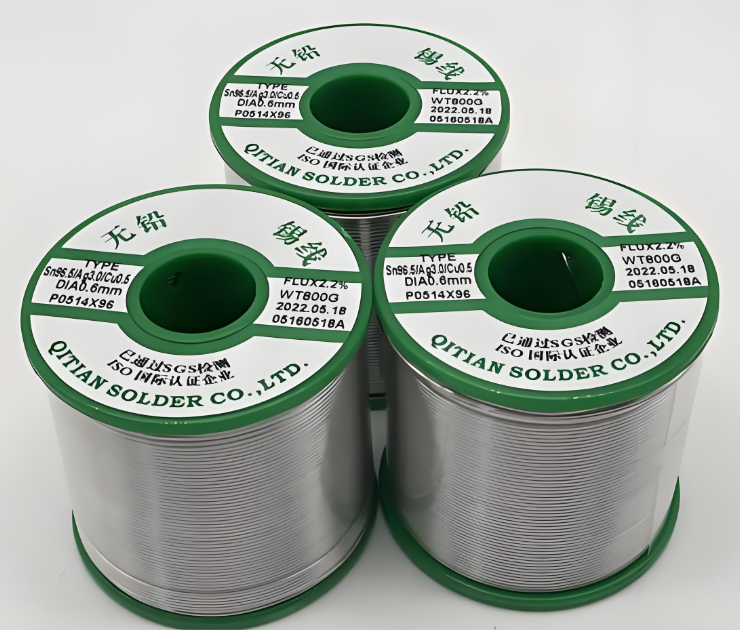
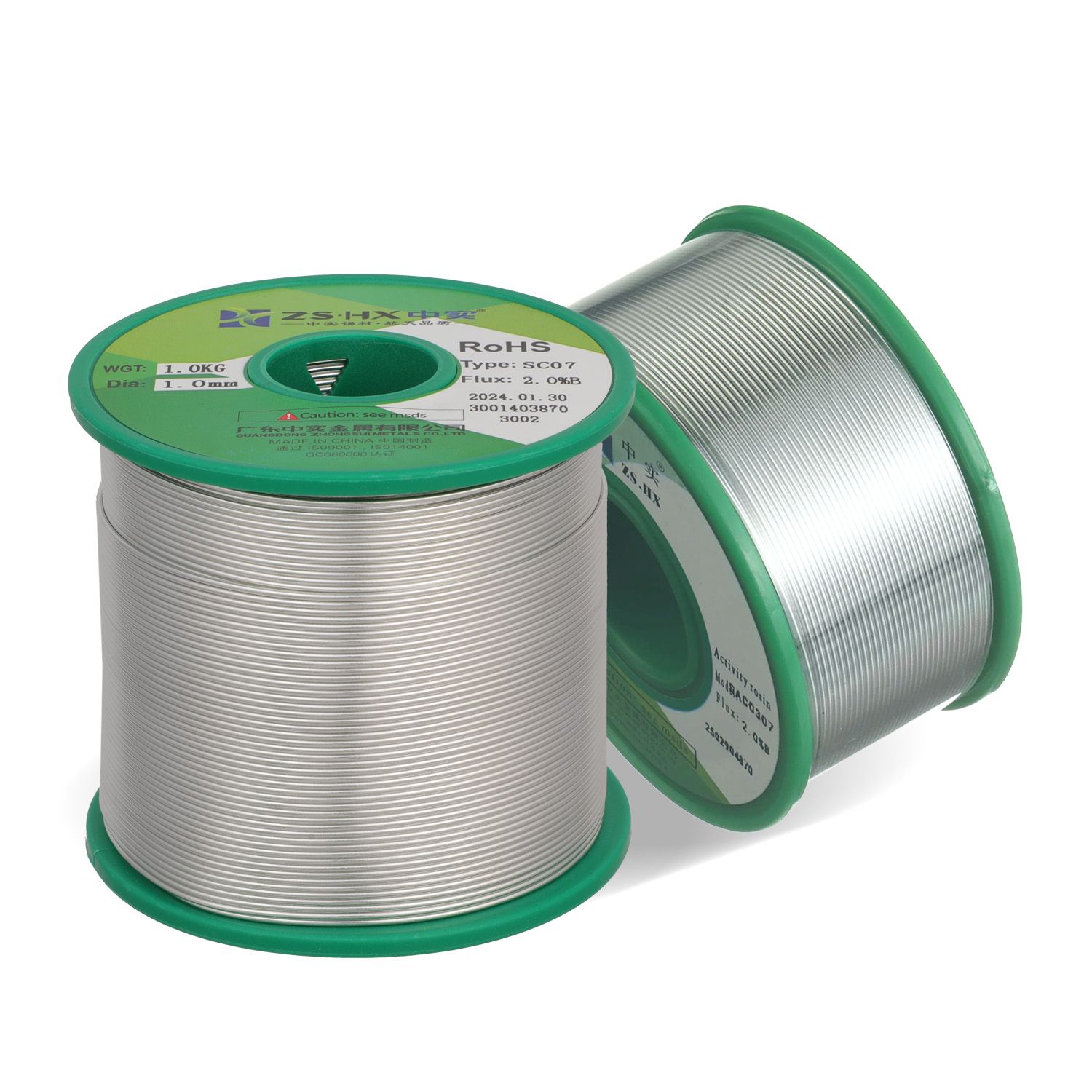
Lead free solder material is a tin based alloy designed to replace traditional leaded solder, containing no added lead to meet global environmental and safety standards. It is used to join metal components in electronics plumbing and jewelry creating strong reliable connections while eliminating the health and environmental risks associated with lead exposure.
Unlike leaded solder which relies on lead to lower melting points and improve workability, lead free solder uses alternative alloying elements to achieve similar or better performance. It is mandatory in most commercial electronics due to regulations like RoHS and the Safe Drinking Water Act which restrict lead use to protect workers consumers and the environment.
Simply put, lead free solder is a safer, compliant, and increasingly standard choice for modern electronic assembly.
What is Lead Free Solder Made of?
Lead free solder is primarily composed of tin as the base metal since tin is non toxic, has good ductility, and bonds well with most electronic components. To optimize its performance manufacturers add small amounts of other alloying elements each serving a specific purpose.
The most common additives are silver, copper, and bismuth, though antimony, nickel, and indium are used in specialized formulations. Silver improves wetting ability mechanical strength and electrical conductivity making solder joints more durable.
Copper lowers the melting point, forms a stable intermetallic compound with tin, and reduces erosion of copper pads on circuit boards. Bismuth significantly lowers the melting temperature which is critical for soldering heat sensitive components.
These elements work together to address the limitations of pure tin, which is too brittle and has a high melting point for practical electronic use. Every additive is carefully measured to balance performance cost and compliance with safety standards.
What are the Lead Free Solder Composition Percentages of Common Alloys?
The composition of lead free solder varies by alloy, each tailored to specific applications. Below are the most common lead free solder alloys used in electronics along with their exact composition percentages. These alloys are industry standard and widely available for both commercial and hobbyist use.
| Alloy Name | Tin (Sn) Percentage | Alloying Elements Percentage | Primary Application |
| SAC305 | 96.5% | 3.0% Silver (Ag), 0.5% Copper (Cu) | General purpose electronics, automotive electronics, consumer devices |
| SAC405 | 95.5% | 4.0% Silver (Ag), 0.5% Copper (Cu) | High reliability applications, aerospace and medical devices |
| Sn-Cu 0.7 | 99.3% | 0.7% Copper (Cu) | Cost sensitive projects, low volume assembly, basic electronics |
| Sn-Bi 42/58 | 42% | 58% Bismuth (Bi) | Heat sensitive components, low temperature soldering |
| Sn-Ag 3.5 | 96.5% | 3.5% Silver (Ag) | Precision electronics, high frequency circuits |
Lead Free Solder Melting Temperature Chart
Melting temperature is a critical property of lead free solder, as it determines the soldering temperature required to form a strong joint. Unlike leaded solder which often has a single eutectic melting point many lead free alloys have a melting range (liquidus and solidus temperature). Below is a clear chart of common lead free alloys, their melting ranges, and key notes to help you select the right solder for your project.
| Alloy Name | Solidus Temperature (°C) | Liquidus Temperature (°C) | Soldering Temperature (°C) | Key Notes |
| SAC305 | 217 | 221 | 240-260 | Most common general purpose alloy, narrow melting range |
| SAC405 | 216 | 220 | 245-265 | Higher silver content for improved strength and reliability |
| Sn-Cu 0.7 | 227 | 227 | 250-270 | Eutectic alloy, cost effective but lower wetting ability |
| Sn-Bi 42/58 | 138 | 138 | 150-170 | Lowest melting point, ideal for heat sensitive components |
| Sn-Ag 3.5 | 221 | 221 | 240-260 | High conductivity, suitable for precision electronics |
What are the Material Properties of Lead-Free Solder?
Lead free solder has distinct material properties that make it suitable for modern electronics, balancing safety, performance, and compliance. The key properties are as follows:
- Mechanical property: Higher tensile strength than leaded solder, good ductility, and stronger resistance to thermal cycling and mechanical wear.
- Electrical property: Slightly lower conductivity than leaded solder, with silver-rich alloys having better conductivity for precision use.
- Thermal property: Higher melting point, better thermal conductivity, and slightly higher thermal expansion than circuit boards.
- Wetting property: Lower wetting ability than leaded solder, requiring active flux and clean surfaces for good bonding.
What are the Main Differences between Leaded vs Lead-Free Solder?
Understanding the differences between leaded and lead free solder is critical for choosing the right material for your project. While leaded solder was once the industry standard lead free options have replaced it in most commercial applications due to safety and regulatory requirements. Below is a comprehensive comparison table highlighting the key differences between the two.
| Property | Leaded Solder (Sn-Pb 63/37) | Lead Free Solder (SAC305 as Reference) |
| Composition | 63% Tin 37% Lead | 96.5% Tin 3.0% Silver 0.5% Copper |
| Melting Temperature | 183°C (eutectic) | 217-221°C |
| Toxicity | Highly toxic contains lead which causes neurological damage and environmental pollution | Non toxic no lead though some alloying elements may have low toxicity in large doses |
| Electrical Conductivity | High resistivity 12.6 μΩ·cm | Moderate resistivity 14.2 μΩ·cm |
| Mechanical Strength | Good tensile strength 25 MPa lower fatigue resistance | High tensile strength 32 MPa better fatigue resistance |
| Wetting Ability | Excellent easy to spread with minimal flux | Moderate requires active flux and clean surfaces |
| Cost | Low cost lead is inexpensive | Higher cost due to silver and copper additions |
| Regulatory Compliance | Non compliant with RoHS Safe Drinking Water Act and most global regulations | Compliant with all major environmental and safety regulations |
| Workability | Easy to work with lower soldering temperature smooth flow | Requires higher soldering temperature more precise technique |
Between Lead and Lead Free Solder, What is the More Aggressive Material?
Lead free solder is generally more aggressive than leaded solder, especially when it comes to eroding copper and stainless steel surfaces. Aggressiveness refers to the rate at which the solder dissolves the base metal (like copper pads on circuit boards) during soldering and long term use.
Studies show that common lead free alloys like SAC305 and Sn-Cu 0.7 have higher copper erosion rates than traditional Sn-Pb solder. SAC305 is the most aggressive among tested alloys while Sn-Cu 0.7 with added nickel (0.05%) is the least aggressive even less so than Sn-Pb.
The addition of phosphorus to lead free alloys further increases their aggressiveness, accelerating copper erosion. This aggressiveness can lead to thinner copper pads over time reducing the lifespan of circuit boards.
To mitigate this, use nickel stabilized lead free alloys, ensure proper soldering temperatures, and avoid excessive heating times.
What are the Acceleration Factors for Lead Free Solder Materials?
Acceleration factors are variables that speed up the degradation of lead free solder joints, helping predict their long term reliability without waiting for real world testing. The key acceleration factors for lead free solder materials are thermal cycling temperature range maximum temperature cycle time and humidity.
Thermal cycling, which involves repeated heating and cooling, is the most significant factor as it causes stress in solder joints due to differences in thermal expansion. A wider temperature range and higher maximum temperature increase stress accelerating fatigue.
Cycle time also matters—shorter cycles increase the frequency of stress, leading to faster degradation. Humidity can cause corrosion especially in high temperature environments reducing joint strength over time.
These factors are used in accelerated testing models to predict solder joint lifetime with an error margin of less than 6% when calibrated with experimental data.
How to Choose the Right Lead Free Solder Material for Your Electronic Project?
Choosing the right lead free solder material depends on four key factors: your project’s application, temperature requirements, cost constraints, and regulatory needs. Below are the key steps to make the right choice, presented in a clear, itemized format:
- General purpose electronics: Smartphones, laptops and automotive electronics are suitable for SAC305, which well balances reliable performance and reasonable cost for daily use.
- High-reliability applications: Aerospace and medical devices need SAC405, as its higher silver content enhances joint strength and stability for long-term use.
- Heat-sensitive components: Sensors and LEDs should use Sn-Bi 42/58, whose low melting point (138℃) can avoid damaging fragile electronic parts during soldering.
- Cost-sensitive projects: Low-volume basic electronics can choose Sn-Cu 0.7, the most affordable lead-free option that meets basic soldering needs.
- Soldering equipment check: Ensure your soldering equipment can reach the required temperature of the selected alloy, as different alloys have different soldering temperature requirements.
- Regulatory compliance: Verify the manufacturer’s certification to ensure RoHS compliance for commercial products, which is mandatory for products sold in most global markets.
- Alloy testing: Test the selected alloy with your components to ensure good wetting and joint strength, which helps avoid poor connections and ensures project reliability.
FAQs About Lead Free Solder Material
Q1: Is lead free solder really lead free?
A1: Yes, lead free solder is really lead free in accordance with global standards. It contains no added lead and has a maximum lead impurity level of 0.1% (1000ppm) to comply with RoHS and other regulations. This trace amount is negligible and does not pose health or environmental risks. Some older or low quality solders may have higher lead levels so always check the manufacturer’s certification to ensure compliance.
Q2: Is 63/37 solder lead free?
A2: No, 63/37 solder is not lead free. It is a traditional leaded solder composed of 63% tin and 37% lead by weight. It is non compliant with RoHS and other environmental regulations and should not be used in commercial electronics or applications where lead exposure is a concern.
Q3: Is 50/50 solder lead free?
A3: No, 50/50 solder is not lead free. It is a leaded solder with a composition of 50% tin and 50% lead. It contains toxic lead and is not compliant with environmental regulations, so it should be avoided in modern electronic projects that require RoHS compliance.
Q4: How can I tell if my solder is lead free?
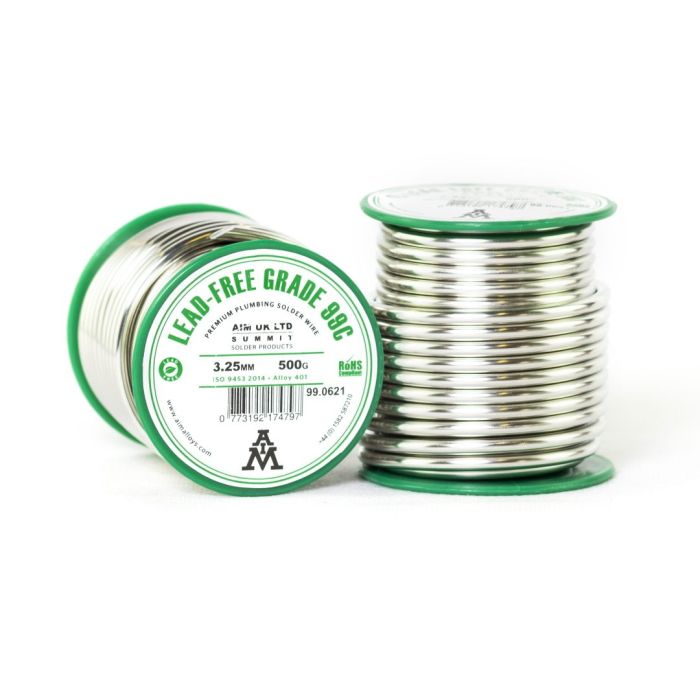
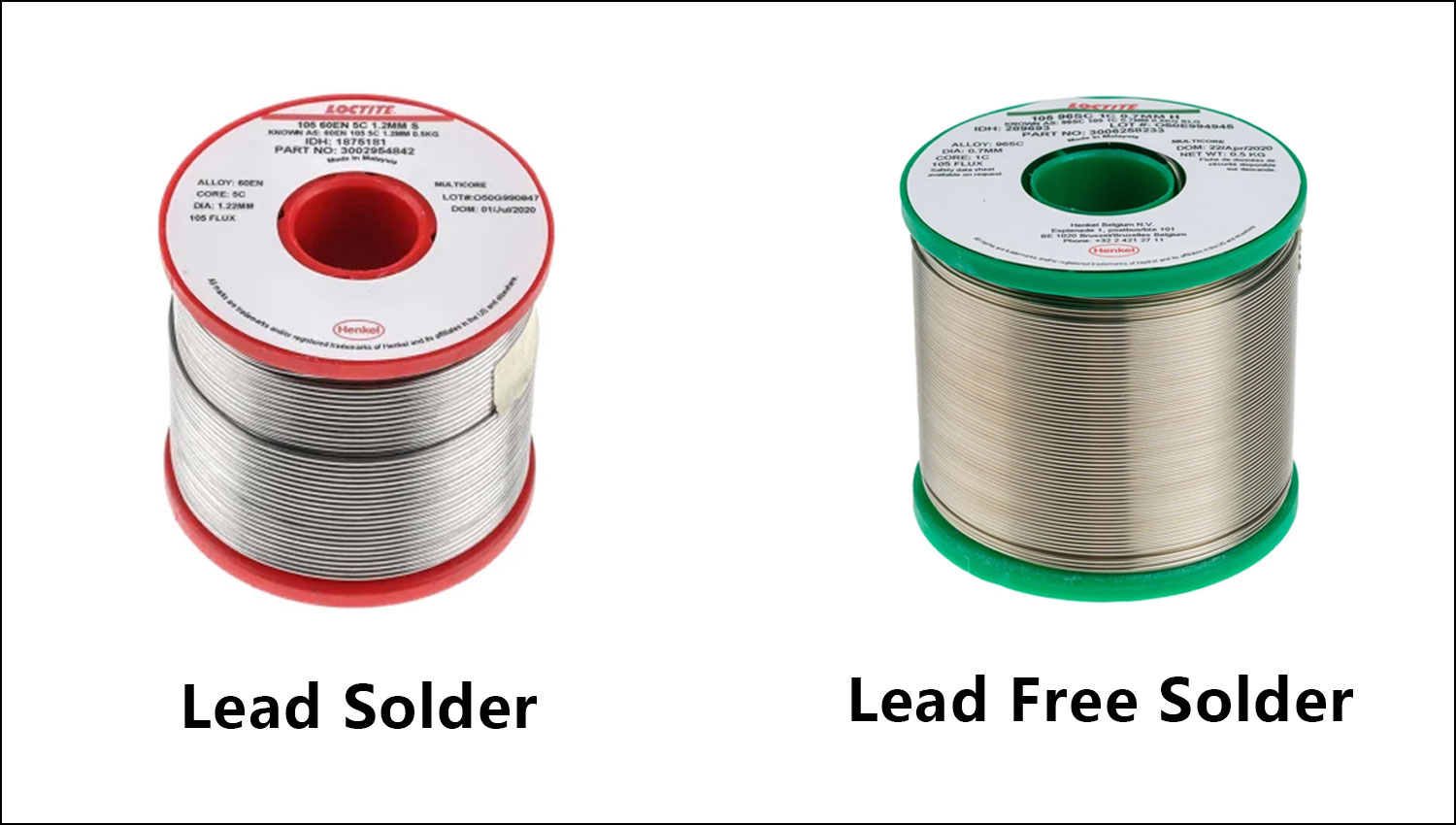
A4: You can tell if your solder is lead free by checking three key things: packaging certification, physical appearance, and melting temperature. Lead free solder packaging will have RoHS certification marks or state lead free on the label. It is usually brighter and shinier than leaded solder, which has a dull gray appearance. Lead free solder melts at 217°C or higher while leaded solder melts at 183°C. You can also use a lead test kit to detect lead content in unlabeled solder.
Q5: Is lead-free solder still toxic?
A5: No, lead free solder is not toxic. It eliminates the most harmful component, lead, which causes neurological damage and environmental pollution. The alloying elements (silver, copper, bismuth) are non toxic in normal use. However, you should still use proper ventilation when soldering as flux fumes can be irritating. Avoid ingesting or inhaling solder particles and wash your hands after handling to ensure safety.