What Is KB-6160A FR-4 Copper Clad Laminate?
KB-6160A FR-4 copper clad laminate is a widely used PCB base material composed of woven glass fiber reinforced epoxy resin, laminated with copper foil on one or both sides. It belongs to the standard FR-4 family, designed for general-purpose printed circuit board fabrication.
From an engineering standpoint, KB-6160A is positioned as a cost-effective and reliable substrate suitable for multilayer and double-sided PCB designs where ultra-high frequency performance is not required.
This material is commonly selected in projects that demand:
- Stable electrical insulation
- Moderate thermal resistance
- Consistent mechanical strength
- Compatibility with standard PCB processes
For most PCB manufacturers, including high-volume production environments, KB-6160A serves as a baseline laminate option for consumer and industrial electronics.
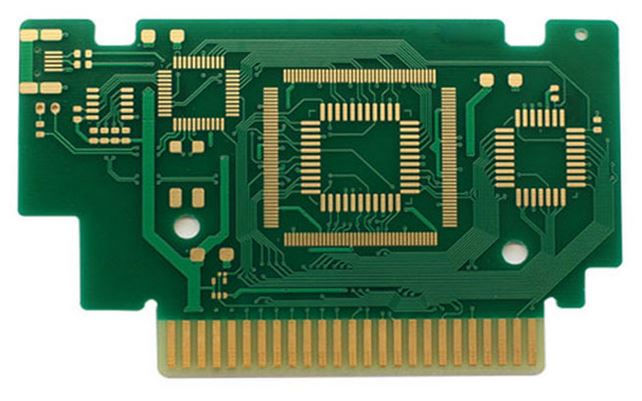
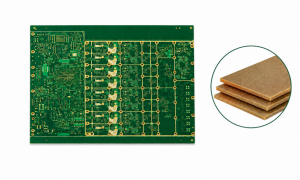
KB-6160A FR-4 Copper Clad Laminates
What Does FR-4 Mean in KB-6160A Material?
FR-4 stands for Flame Retardant Grade 4, a classification defined by flame resistance and material composition.
The structure of KB-6160A FR-4 laminate includes:
- Glass fiber cloth: mechanical reinforcement
- Epoxy resin system: electrical insulation and bonding
- Copper foil layers: circuit formation
Key characteristics of FR-4 materials like KB-6160A include self-extinguishing behavior under flame exposure, good dielectric stability across a broad frequency range, and high dimensional stability during thermal cycling.
Compared with lower-grade laminates, FR-4 provides a balanced electrical and mechanical profile, making it the industry standard for PCB substrates.
KB-6160A Datasheet Overview
Below is an expanded datasheet-style overview for KB-6160A FR-4 copper clad laminate. These values are typical reference ranges for PCB material evaluation. Final specifications should be confirmed with the original supplier datasheet before production.
General Material Properties
| Parameter | Typical Value | Test Method | Notes |
|---|---|---|---|
| Base Material | Glass Fiber + Epoxy Resin | – | Standard FR-4 composite structure |
| Resin System | Epoxy Resin | – | Commonly used in general-purpose PCB laminates |
| Material Type | Copper Clad Laminate | – | Used as the base material for rigid PCB fabrication |
| Flammability Rating | UL 94V-0 | UL 94 | Self-extinguishing flame-retardant performance |
| Typical Color | Yellowish / Light Green | Visual | Color may vary depending on supplier and production batch |
Thermal Properties
| Parameter | Typical Value | Unit | Notes |
|---|---|---|---|
| Glass Transition Temperature (Tg) | 130-140 | °C | Standard Tg FR-4 range |
| Decomposition Temperature (Td) | >300 | °C | Measured by TGA at 5% weight loss |
| Z-axis CTE Below Tg | 50-70 | ppm/°C | Affects plated through-hole reliability |
| Z-axis CTE Above Tg | 250-300 | ppm/°C | Expansion increases rapidly above Tg |
| Thermal Conductivity | 0.25-0.35 | W/m·K | Typical level for standard FR-4 materials |
| Time to Delamination T260 | 60-120 | minutes | Indicates resistance to thermal stress |
| Time to Delamination T288 | 10-20 | minutes | Important for lead-free soldering evaluation |
Electrical Properties
| Parameter | Typical Value | Unit | Test Condition |
|---|---|---|---|
| Dielectric Constant (Dk) | 4.2-4.6 | – | At 1 MHz |
| Dielectric Constant (Dk) | About 4.0 | – | At 1 GHz, approximate reference |
| Dissipation Factor (Df) | 0.015-0.020 | – | At 1 MHz |
| Volume Resistivity | ≥107 | MΩ·cm | Dry condition |
| Surface Resistivity | ≥106 | MΩ | Standard insulation reference |
| Dielectric Breakdown Strength | ≥40 | kV/mm | High insulation resistance between conductive layers |
Mechanical Properties
| Parameter | Typical Value | Unit | Notes |
|---|---|---|---|
| Flexural Strength, Lengthwise | ≥400 | MPa | Shows board rigidity along the glass fiber direction |
| Flexural Strength, Crosswise | ≥300 | MPa | Direction-dependent mechanical strength |
| Peel Strength, 1 oz Copper | ≥1.0 | N/mm | Indicates copper adhesion to laminate |
| Density | About 1.85 | g/cm³ | Typical density of FR-4 laminate |
| Water Absorption | 0.10-0.20 | % | Low moisture absorption helps maintain insulation stability |
Copper Foil Specifications
| Parameter | Options | Notes |
|---|---|---|
| Copper Weight | 0.5 oz, 1 oz, 2 oz | Common copper thickness options for standard PCB fabrication |
| Heavy Copper Option | Up to 3 oz, custom | Used for higher-current power boards when supported by supplier |
| Copper Type | ED Copper | Electrodeposited copper is commonly used for rigid PCBs |
| Copper Surface | Medium roughness | Surface roughness can influence high-speed signal loss |
Thickness and Construction Options
| Parameter | Typical Range | Notes |
|---|---|---|
| Core Thickness | 0.1 mm – 2.0 mm | Used for inner layers and double-sided PCB construction |
| Finished PCB Thickness | 0.4 mm – 3.2 mm | Depends on stack-up, copper weight, and layer count |
| Common Prepreg Styles | 7628, 2116, 1080 | Used for bonding multilayer PCB structures |
| Layer Count Compatibility | 1-12 layers typical | Higher layer counts may require tighter process control |
Processing and Fabrication Characteristics
| Parameter | Performance | Notes |
|---|---|---|
| Drillability | Good | Suitable for standard mechanical drilling |
| Plating Adhesion | Good | Supports reliable plated through holes and vias |
| Etching Performance | Stable | Supports clean trace definition in general PCB designs |
| CAF Resistance | Moderate | Suitable for general applications with proper design spacing |
| Solder Resistance | Good | Compatible with standard soldering and lead-free reflow processes |
Environmental and Reliability Performance
| Parameter | Typical Performance | Notes |
|---|---|---|
| Moisture Resistance | Good | Maintains insulation performance in normal humidity conditions |
| Thermal Shock Resistance | Moderate | Depends on board thickness, via structure, and copper distribution |
| Chemical Resistance | Good | Compatible with standard PCB wet processes |
| Long-Term Reliability | Stable | Suitable for mass-production consumer and industrial electronics |
Design-Related Parameters
| Parameter | Typical Value | Design Impact |
|---|---|---|
| Impedance Stability | Moderate | Suitable for controlled impedance designs with proper stack-up control |
| Signal Loss | Medium | Acceptable for many low-to-mid frequency circuits |
| Recommended Operating Frequency | Below 1-2 GHz | Higher frequencies may need low-loss materials |
| Z-axis Expansion Risk | Higher above Tg | Important for via reliability during thermal cycling |
| Suitable PCB Types | Digital, power, control, consumer electronics | Best suited for general-purpose rigid PCB applications |
Engineering Insight
From a PCB design and manufacturing perspective, KB-6160A provides predictable dielectric behavior, reliable mechanical strength, and cost-effective process compatibility. It is a practical FR-4 laminate choice for standard rigid PCB projects that do not require advanced high-frequency or high-temperature material performance.
Engineers should still evaluate signal speed, thermal cycling, via structure, copper thickness, and operating environment before confirming KB-6160A for production. For RF, microwave, high-speed, or high-reliability automotive designs, high Tg FR-4 or low-loss laminate may be a better option.
How KB-6160A Compares to Other FR-4 Materials?
Selecting the right laminate often comes down to performance, reliability, cost, and availability. KB-6160A is usually chosen when the design needs proven FR-4 performance without the additional cost of specialty laminates.
| Material Type | Dielectric Constant | Tg | Cost Level | Typical Application |
|---|---|---|---|---|
| KB-6160A | 4.2 to 4.6 | About 135°C | Low | General electronics |
| High Tg FR-4 | 4.0 to 4.5 | 170°C to 180°C | Medium | Automotive and industrial electronics |
| Rogers RO4350B | About 3.5 | Above 280°C | High | RF and microwave circuits |
| PTFE Material | About 2.2 | Above 300°C | Very high | High-frequency RF applications |
Engineering Insight
- KB-6160A is ideal when cost control and manufacturability are priorities.
- High Tg FR-4 is preferred for higher thermal stress environments.
- Rogers and PTFE materials are selected when high-frequency signal integrity is critical.
What Are the Typical Applications of KB-6160A Laminates?
Due to its balanced performance, KB-6160A is used across multiple PCB application areas. These applications usually require reliable insulation, standard copper circuitry, and stable mechanical strength.
- Consumer electronics
- Home appliance control boards
- Industrial control systems
- Power supply and converter circuits
- LED driver PCBs
- Communication devices for non-RF critical sections
These applications share a common requirement: reliable performance without excessive material cost. This makes KB-6160A a practical choice for many standard PCB projects.
Why Choose KB-6160A for PCB Manufacturing?
From a manufacturing perspective, KB-6160A offers several advantages for PCB fabrication and assembly.
Cost Efficiency
KB-6160A is more affordable than many high-performance laminates, making it suitable for mass production and cost-sensitive PCB projects.
Process Compatibility
It works well with standard PCB fabrication processes, including drilling, copper plating, imaging, etching, solder mask application, and surface finishing.
Supply Chain Stability
As a common FR-4 laminate type, KB-6160A is generally easier to source than specialty materials. This helps reduce lead time pressure during PCB production planning.
Reliable Electrical Performance
The material offers consistent dielectric behavior for many low-to-mid frequency circuits. This supports predictable circuit operation in general electronics.
For OEMs and EMS providers, these advantages can support lower production risk, better yield, and more stable manufacturing schedules.
How Is KB-6160A Copper Clad Laminate Used in PCB Fabrication?
KB-6160A copper clad laminate is processed through conventional PCB manufacturing steps. Its compatibility with standard fabrication lines makes it suitable for double-sided and multilayer PCB production.
Typical Process Flow
- Material Cutting: laminate sheets are cut into production panels.
- Drilling: through holes and vias are formed according to the PCB design.
- Copper Plating: hole walls are metallized to create electrical connections.
- Imaging and Etching: circuit patterns are transferred and unwanted copper is removed.
- Solder Mask Application: the board surface is protected from oxidation and solder bridging.
- Surface Finish: common options include HASL, ENIG, OSP, immersion silver, and immersion tin.
- Final Testing: electrical testing and visual inspection confirm board quality.
Because KB-6160A integrates smoothly into this workflow, it helps reduce process complexity and supports consistent production output.
Design Considerations When Using KB-6160A
Although KB-6160A is widely used, engineers should evaluate several design factors before selecting it for a PCB project.
Signal Integrity
KB-6160A is suitable for many general digital and analog circuits. For very high-speed or GHz-level signals, a lower-loss laminate may provide better impedance stability and reduced signal attenuation.
Thermal Management
This material can support moderate thermal loads. For power circuits, engineers may use wider copper traces, copper pours, thermal vias, and proper component spacing to improve heat spreading.
Layer Stack-Up
KB-6160A can be used in multilayer PCB stack-ups. Proper prepreg selection, dielectric thickness control, and copper balance are important for dimensional stability and lamination quality.
Reliability
For standard operating environments, KB-6160A performs reliably. For harsh temperature cycling, automotive electronics, or high-power systems, high Tg FR-4 or other advanced materials may be considered.
KB-6160A vs High-Frequency Materials: When Not to Use It?
KB-6160A is versatile, but it is not designed for every application. Engineers should avoid using it in circuits where dielectric loss, impedance precision, and frequency stability are major design requirements.
Applications That May Require Other Materials
- RF circuits above 2 GHz to 3 GHz
- Microwave communication boards
- 5G antenna modules
- Radar boards
- Very high-speed digital interfaces
Main Reasons
- Higher dielectric loss compared with RF laminates
- Less stable impedance at high frequency
- Greater signal attenuation in demanding RF designs
In these cases, materials such as Rogers, PTFE, or other low-loss laminates can provide stronger performance for high-frequency PCB applications.
FAQs About KB-6160A FR-4 Copper Clad Laminates
Is KB-6160A suitable for high-speed PCB design?
KB-6160A can handle moderate-speed signals, but it is not optimized for high-speed or RF designs. Engineers working with GHz-level signals usually select low-loss laminates instead.
What is the Tg value of KB-6160A?
The Tg value is typically around 130°C to 140°C, which places it in the standard FR-4 category. This makes it suitable for many general-purpose PCB applications.
Can KB-6160A be used in multilayer PCBs?
Yes, KB-6160A can be used in multilayer PCBs. It is commonly applied in standard 4-layer to 12-layer designs where cost, availability, and reliable fabrication performance need to be balanced.
What copper thickness options are available?
KB-6160A laminates are commonly available with copper thickness from 0.5 oz to 2 oz. The final selection depends on current-carrying requirements, thermal needs, and fabrication capability.
How does KB-6160A compare to standard FR-4?
KB-6160A belongs to the standard FR-4 laminate family. Its performance is aligned with general-purpose PCB material expectations, including electrical insulation, flame resistance, mechanical strength, and process compatibility.
Conclusion: Is KB-6160A the Right Choice for Your PCB Project?
KB-6160A FR-4 copper clad laminate remains a practical and efficient material choice for a wide range of PCB applications. It offers a strong balance between electrical performance, mechanical reliability, manufacturing compatibility, and cost control.
For engineers designing consumer electronics, industrial control boards, power supply circuits, or standard multilayer PCBs, KB-6160A can provide predictable results without unnecessary material complexity.
For high-frequency, high-temperature, or high-reliability applications, engineers may need to compare KB-6160A with high Tg FR-4, Rogers, PTFE, or other specialty PCB materials before finalizing the stack-up.
Need Help with KB-6160A PCB Manufacturing?
At EBest Circuit, we provide PCB fabrication, PCBA assembly, DFM analysis, material selection support, and stack-up recommendations for different engineering projects.
Our team supports FR-4 PCB manufacturing, multilayer PCB fabrication, component sourcing, assembly, testing, and box-build integration. If you are evaluating KB-6160A or other PCB laminates for your next project, we can help review your design and recommend a practical manufacturing solution.
Contact us at sales@bestpcbs.com for PCB manufacturing support.