





RO4350B PCB material is one of the most widely used laminates for high-frequency circuit design, especially in RF, microwave, and high-speed digital applications. As signal frequencies continue to increase in modern electronics—such as 5G communication, automotive radar, and satellite systems—the limitations of standard FR4 materials become more evident. Engineers increasingly require materials that can maintain low signal loss, stable dielectric performance, and reliable thermal behavior.
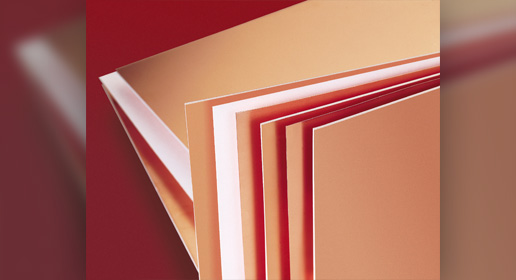
Rogers RO4350B PCB Laminate
What Is RO4350B PCB Material?
RO4350B PCB material is a hydrocarbon ceramic-filled laminate developed by Rogers Corporation, specifically engineered for high-frequency and RF circuit applications.
Unlike standard FR4 materials, RO4350B is designed to deliver:
- Low dielectric loss for minimal signal attenuation
- Stable dielectric constant (Dk) across wide frequency ranges
- High thermal reliability under lead-free assembly
- FR4-compatible processing, reducing manufacturing complexity
This combination allows engineers to design RF, microwave, and high-speed PCBs with predictable electrical performance while maintaining scalable production.
RO4350B Datasheet Overview
| Category | Property | RO4350B Typical Value | Engineering Meaning |
| Thermal | Tg (DSC/TMA) | >280 °C | Excellent thermal stability, lead‑free safe |
| Td (5% weight loss) | ≥390 °C | High thermal decomposition resistance | |
| T260 | >30 min | Strong resistance to delamination | |
| T288 | >15 min | Withstands high‑temp reflow | |
| CTE (X/Y) | 10–12 ppm/°C | Matches copper, minimal warpage | |
| CTE (Z‑axis, <Tg) | 32 ppm/°C | Improves PTH reliability | |
| Thermal Conductivity | 0.69 W/m·K | Better heat dissipation than standard FR‑4 | |
| Electrical | Dielectric Constant (10 GHz) | 3.48 ±0.05 | Design Dk = 3.66 for impedance |
| Dissipation Factor (10 GHz) | 0.0037 | Ultra‑low signal loss | |
| Volume Resistivity | 1.2×10¹⁰ MΩ·cm | High insulation stability | |
| Surface Resistivity | 4.2×10⁹ MΩ | Low leakage risk | |
| Dielectric Strength | ≥30 kV/mm | Good insulation performance | |
| Mechanical | Flexural Strength | ≥250 MPa | Good rigidity |
| Peel Strength | ≥1.0 N/mm | Reliable copper adhesion | |
| Young’s Modulus | ~18 GPa | Structural stability | |
| Moisture & Reliability | Water Absorption | ≤0.06% | Stable in humid environments |
| CAF Resistance | Very Good | Safe for dense multilayer RF boards | |
| Flammability | UL 94 V‑0 | High safety standard | |
| Process | Lead‑Free Compatible | Yes | Standard SMT assembly |
| Max Layer Count | Up to 20–30 layers | Works for multilayer RF/HDI | |
| Compatible Prepreg | RO4450B | Optimized multilayer bonding |
Key Features of RO4350B PCB Material
1. Excellent High‑Frequency Electrical Performance
Stable Dk 3.48 ±0.05 and ultra‑low Df minimize insertion loss and phase shift, supporting precise impedance control for antennas, filters, and high‑speed lines up to 77 GHz and beyond.
2. Outstanding Thermal Reliability
Tg >280 °C and high Td ensure stability during multiple lead‑free reflows. Low CTE in X/Y/Z axes reduces thermal stress, greatly improving via and board reliability under thermal cycling.
3. Easy Processing Like FR‑4
Unlike PTFE materials, RO4350B uses standard drilling, plating, and lamination. It supports mixed stackups with FR‑4, cutting cost while keeping RF performance.
4. Low Moisture & High Environmental Stability
Water absorption ≤0.06% maintains consistent electrical properties in high humidity. V‑0 rating and robust mechanical strength suit automotive, industrial, and aerospace environments.
5. Versatile Multilayer Compatibility
Paired with RO4450B prepreg for multilayer RF boards. Supports hybrid designs: RO4350B for RF layers, FR‑4 for digital/power layers to balance performance and BOM cost.
What Is the Dielectric Constant of RO4350B?
The RO4350B dielectric constant is:
- 3.48 ± 0.05 at 10 GHz
- ~3.66 for design calculations
This value remains stable from MHz to tens of GHz, which is critical for impedance-controlled RF designs.
Why This Matters
A stable Dk enables:
- Accurate 50Ω transmission line design
- Reliable RF matching networks
- Consistent signal timing and phase control
In contrast, FR4 materials show significant variation with frequency, which leads to impedance drift.
Applications of RO4350B PCB Material
- 5G base stations, antennas, microwave filters
- Automotive radar (24 GHz / 77 GHz ADAS)
- RF power amplifiers, couplers, dividers
- Satellite communications, aerospace radar
- High‑speed backplanes and interconnects
- WLAN, RFID, point‑to‑point radio
- Test & measurement instrumentation
RO4350B vs RO4003C vs FR‑4
| Property | RO4350B | RO4003C | Standard FR‑4 |
| Dk @10 GHz | 3.48 | 3.38 | ~4.4 |
| Df @10 GHz | 0.0037 | 0.0027 | 0.020–0.030 |
| Tg | >280 °C | >280 °C | 130–150 °C |
| Thermal Conductivity | 0.69 | 0.64 | ~0.25 |
| FR‑4 Process Compatibility | Yes | Yes | N/A |
| Flame Retardant | V‑0 | Non‑V‑0 | V‑0 |
| Max Frequency | Up to 77 GHz+ | Up to 40 GHz | ~3 GHz |
| Cost | Medium | Medium‑High | Low |
| Best For | General RF, 5G, automotive radar | Ultra‑low‑loss RF | Low‑speed digital |
How to Choose RO4350B for Your PCB Design?
Choose RO4350B if:
- Your design involves RF, microwave, or high‑speed signals >3 GHz
- You need stable impedance and low insertion loss
- You want FR‑4‑like processing but better performance
- Applications: automotive radar, 5G, aerospace, test instruments
- You need V‑0 flame retardant for commercial/industrial use
Consider alternatives if:
- Extreme low loss → RO4003C
- Pure cost priority → FR‑4 / S1000H
- Non‑RF low‑speed digital → standard high‑Tg FR‑4
Frequently Asked Questions
1. What is the difference between RO4350B and FR-4?
While both can be processed using standard fabrication methods, they differ significantly in electrical performance. RO4350B is a hydrocarbon/ceramic laminate designed for high-frequency applications (up to 77 GHz), offering a stable dielectric constant (Dk) and much lower signal loss (Loss Tangent of 0.0037) compared to FR-4 (Loss Tangent of ~0.015–0.025). FR-4 typically struggles with signal integrity above 2–3 GHz, whereas RO4350B maintains its properties into the millimeter-wave range.
2. Is RO4350B compatible with standard lead-free soldering?
Yes. RO4350B has a high glass transition temperature (Tg > 280°C) and a decomposition temperature (Td) of 390°C. This makes it fully compatible with automated assembly and lead-free reflow soldering processes, which typically peak around 260°C. Its low Z-axis coefficient of thermal expansion (32 ppm/°C) also ensures that plated through-holes (PTH) remain reliable during thermal cycling.
3. What is the Dielectric Constant (Dk) of Rogers 4350B?
The standard design Dielectric Constant for RO4350B is 3.48 ± 0.05 at 10 GHz. This value is exceptionally stable across a wide frequency range, which is critical for designing controlled impedance transmission lines and wideband matching networks.
Note: For very thin materials (e.g., 0.004″), the Dk specification may shift slightly to 3.36.
4. How does RO4350B compare to RO4003C?
Both belong to the Rogers 4000 series, but the primary difference is the flame retardancy rating. RO4350B is UL 94 V-0 rated, making it the industry standard for commercial and active devices where fire safety certification is required. RO4003C is not UL 94 V-0 rated, though it offers a slightly lower loss tangent (0.0027) and a slightly lower Dk (3.38), making it preferable for specific passive applications where every fraction of a decibel counts.
5. Does RO4350B require special plasma etching for through-hole plating?
No. Unlike PTFE-based materials (like the Rogers 5000 or 6000 series), RO4350B is a thermoset hydrocarbon laminate. This means it can be processed using standard epoxy/glass (FR-4) techniques. It does not require specialized via preparation, such as sodium naphthenate or plasma etching, which significantly reduces manufacturing costs and lead times.
Get RO4350B PCB Support
If your project involves RF or high-speed PCB design, selecting the right material is critical.
We’re happy to support you with:
- Stack-up design
- RF PCB optimization
- Fast PCB & PCBA production
Feel free to reach out — your project will be supported by engineers who understand real RF challenges.
You may also like
Tags: ro4350b, ro4350b datasheet, ro4350b pcb, rogers ro4350b