PCB manufacturing PCB manufacturing
Home > Blog

Quick Thermally Conductive PCB From Prototypes

August 28th, 2025

A thermally conductive PCB is at the heart of heat control in modern electronics. In this blog, we primarily discuss about the definition, material, applications of thermally conductive PCB, and where to get quick thermally conductive PCB from prototypes.

Have you suffered from these bad headaches?

  • Have you experienced terrible thermal management problems?
  • Have you faced complexity in material selection and process?
  • Have you struggled with balancing quick prototyping and mass production?
  • Have you worried about the deficiency of the thermal management solution?

There are some optimal ways of dealing with the above issues.

  • Applying MCPCB thermal management solutions, which conduct heat from the circuit boards to the heat sinks.
  • Using thermally conductive dielectric materials to improve the thermal management capability of PCBs.
  • Optimizing quick prototype and fabrication. Employing a rapid prototype development process to shorten development cycles, reduce design changes, and manufacturing complexity via modular design.
  • Improving thermal management design. For example, using a thermal analysis tool to do thermal management design, and follow thermal management design rules to improve thermal management efficiency ultimately.

EBest Circuit (Best Technology) is one of the best PCB manufacturers in China, providing thermally conductive PCB, IMS PCB, aluminium core PCB, busbar PCB, heavy copper PCB, HDI PCB, ceramic PCB, and more. If you want to inquire about any PCB or PCBA, just write an email to us at sales@bestpcbs.com.

Quick Thermally Conductive PCB From Prototypes

What does thermally conductive PCB mean?

The design aim of thermally conductive PCB is conducting heat from components to keep stable circuit. Thermally conductive PCB is different from common PCB. It uses high thermal conductivity rate PCB material or metal core. Heat is conducted away through copper layers, thermally conductive vias, or the metal substrate. This design if of benefit to reduce temperature of chips and extend the lifespan of devices.

What does thermally conductive PCB mean?

Is FR4 thermal conductivity?

FR4 thermal conductivity is low. Generally, it is only around 0.3 W/m路K. For low power device, FR4 is a good choice. However, in high power LED, automobile module or RF circuit, FR4 is not able to dissipate heat effectively. That is why designers move toward metal core boards, ceramics, or other high thermal conductivity PCB material. Many customers will meet some issues since they still use FR4 even in high heat loading situation. EBest Circuit (Best Technology) helps by suggesting better materials during the early design stage.

What’s the most high thermal conductivity PCB material?

Among all options, copper thermal conductivity is the highest at nearly 400 W/m路K. However, copper PCBs are heavy and costly. Aluminum is more cost efficient, and features good thermal conductivity, lighter weight. Ceramics such as aluminum nitride are also popular for their stability and high thermal conductivity PCB material values. It is good to know that engineers will select suitable materials based on costs, weights, and the applications.

What does thermally conductive tape do for metal core PCB manufacturer?

Thermally conductive tape is widely used with metal core PCB manufacturer solutions. It is able to bond components or heat sinks to the boards鈥 surface. This brings benefits of improving contact and reducing heat resistance. This small process gives boards the benefit of passing heat dissipation testing, and with the benefit of cost efficiency. It is crucial to note that many customers have delayed projects since their heat dissipation testing is failed. EBest Circuit (Best Technology) makes use well of thermally conductive tape, and you will enjoy benefits of short lead time and improved stability.

What is the relation: thermally conductive PCB, PCB thermal resistance?

The link between thermally conductive PCB and PCB thermal resistance is direct. PCB thermal resistance refers to the transferring efficiency of heat between layers. The lower PCB thermal resistance, the sooner heat dissipation. Thermally conductive PCB can reduce hot spots, which promotes the benefits of stability, and the higher power density. Hence, during prototyping, PCB thermal resistance parameter is key element that customers pay highly attention to.

How to use a PCB thermal conductivity calculator when selecting thermal conductivity PCB material?

A PCB thermal conductivity calculator helps predict how heat flows through materials. Input thickness, copper area, material types and other parameters by engineers, then the tools will present the result. In this way, the mistakes will be reduced. However, it is common to know that customers don鈥檛 have time to do the double checking. By using calculators, EBest Circuit (Best Technology)鈥檚 engineers help save time and reduce risk by providing guidance early.

Why is a thermally conductive gap filler important for high thermal conductivity PCB material?

Thermally conductive gap filler bridges air gaps between parts and board. Air will isolate the heat transferring. But gap filler is able to conduct heat efficiently. For high thermal conductivity PCB material, the gap filler keeps the surface contact smooth and efficient. Otherwise, even the copper or ceramic boards, the effect will be largely lessened. This is significant for power electronics and LEDs particularly.

What are the applications of thermally conductive PCB?

The applications include LED lighting, electrical automobile, 5G equipment, satellite modules and the industrial drives. In these applications, heat is the most terrible enemy of performance. Thermally conductive PCB manages heat in the circumstance that it does not increase large heat sinks. Since it reduces the weight, which is useful and essential to the aerospace and automobile. And customers hope to get prototypes quickly in general. EBest Circuit (Best Technology) can meet this kind of demands via flexible prototyping service.

Where to get quick thermally conductive PCB from prototypes?

It is a bottleneck problem for finding a suitable supplier. Since various company has the issue of seriously delayed delivery time or the hopeless quality control. EBest Circuit (Best Technology) provides a faster path. We promise the traceability via applying MES system. Besides, we offer a full quality guarantee. Our factory is fully compatible with ISO 9001, ISO 13485, IATF 16949, AS9100D, UL, REACH, and RoHS standards. Our company is to fully dedicate ourselves to do DFM analysis, review the thermal design problem during prototyping, so that customers get not only our rapid prototypes but also our professional and workable solutions. In this way, we can accelerate the market entry time and reduce the rework costs in the meanwhile.

Where to get quick thermally conductive PCB from prototypes?

In a nutshell, for the electronic products, heat dissipation is indispensable. Every process decides the final performance, from material selection to the prototype delivery. We know some customers often suffers the headaches for the overheating or long delivery time. EBest Circuit (Best Technology) solves customers鈥 headaches through quick thermally conductive PCB prototyping, professional technical support, and strict quality management. For those seeking a trusted thermally conductive PCB partner, EBest Circuit (Best Technology) is ready to help. A warm welcome to contact us via sales@bestpcbs.com for our highly professional supports.

Copper Busbar Selection Guide| Copper Busbar PCB Supplier

August 25th, 2025

How do I choose copper busbar? Let鈥檚 explore material, application, function, , difference between tin plated copper bus bar, selection guide and lifespan for copper busbar.

Are you troubled with these issues?

  • Is your busbar overheating and shutting down?
  • Is poor-quality copper causing resistance spikes?
  • Are supplier delivery delays disrupting your production schedule?

EBest Circuit (Best Technology) can provide service and solution:

  • High-Conductivity, Low-Loss Busbar Customization: Made with 99.99% electrolytic copper, achieving 8% lower energy loss.
  • Flexible Production Service: Supports custom thickness cutting (5mm-50mm), with daily production capacity exceeding 300 tons.
  • Intelligent Selection Support: Free current-carrying/temperature rise simulation reports provided to precisely match project requirements.

Welcome to contact us if you have any request for copper busbar: sales@bestpcbs.com.

What is Copper Busbar?

A Copper Busbar is a thick conductive strip integrated into a printed circuit board, typically made of highly conductive materials such as copper or aluminum, specifically designed for efficient power distribution and carrying high currents. Its core design breaks away from the traditional PCB reliance on etching copper traces, instead directly achieving circuit connections by embedding thick copper or aluminum strips (up to millimeter-level thickness), significantly enhancing current carrying capacity and conductivity efficiency.

What is Copper Busbar?

Copper Busbar Material Specification

ParameterSpecification
MaterialPure copper (>99.90% Cu) (Soft Copper)
Oxygen Content鈮80ppm (Standard Cu) / 鈮10ppm (High-purity Copper)
Surface TreatmentTin/Chrome/Hot-dip Galvanized (Tin-plated)
Dimensional RangeWidth:15-400mm
Thickness:1-80mm
Length:100-1000mm (Chrome-plated)
Mechanical PropertiesTensile Strength:200-250MPa
Elongation:15-45%
Hardness:HB鈮65 (Galvanized)
Electrical Conductivity>56m/s (Room Temperature) (Standard Cu)

How Do I Select Copper Busbar?

Here’s a selection guide about copper busbar:

1. Define Current Requirements

    • Calculate the maximum system current and select a busbar with sufficient cross-sectional area (current density for copper busbars typically 鈮4A/mm虏).
    • Formula: Cross-sectional area (mm虏) = Current (A) / Current density (A/mm虏).

    2. Select Material Type

    • Pure copper: Prioritize T1/T2 electrolytic copper (Cu 鈮99.9%) for high-conductivity scenarios (e.g., precision instruments).
    • Copper alloy: Choose copper-chromium (high-temperature resistance), copper-zirconium (creep resistance), or copper-nickel (corrosion resistance) based on needs.

    3. Consider Environmental Adaptability

    • Humid/corrosive environments: Prioritize for tin-plated (anti-oxidation) or nickel-plated (acid/alkali resistance) busbars.
    • High-temperature scenarios: Select silver-plated (softening temperature up to 300掳C) or copper-chromium alloy.
    • Radiation/nuclear environments: Use radiation-resistant materials (e.g., special coatings).

    4. Verify Mechanical Connection

    • Check if screw holes, slots, or custom designs are needed to ensure compatibility with devices (e.g., PCBs, switchgear).
    • Prioritize pre-drilled or customizable busbars for simplified installation.

    5. Assess Thermal Needs

    • For high-current applications, choose thick copper busbars (leveraging copper鈥檚 high thermal conductivity).
    • For compact devices, opt for copper-aluminum composite busbars (35% lighter, similar thermal performance to pure copper).

    6. Match Installation Space

    • Measure available space in the device and select busbars with appropriate dimensions (length, width, thickness) to avoid layout conflicts.

    7. Validate Standards & Certifications

    • Ensure busbars comply with international standards (e.g., IEC 60228, UL 758) for safety and reliability.

    8. Balance Cost & Performance

    • For general use, select T2/T3 copper busbars (cost-effective). For demanding scenarios, prioritize alloy or plated busbars (performance-first).
    • Choose suppliers with ISO 9001 quality certificates to ensure consistent quality. (Like EBest Circuit (Best Technology))
    How Do I Select Copper Bus Bar?

    What is a Busbar Copper Used for?

    • Power Distribution: Connects generators, transformers, switchgear, and other equipment to form main circuits, enabling efficient power transmission and distribution.
    • Mechanical Connection: Acts as a rigid conductor with screw holes/slots to directly secure components, simplifying assembly.
    • High Current Carrying Capacity: Suitable for industrial power supplies, electric furnaces, rail transit, and other scenarios requiring 100s to 1,000s of amperes (A).
    • Thermal Management: Leverages copper鈥檚 high thermal conductivity to assist heat dissipation in devices like inverters and LED lighting, enhancing system stability.
    • Special Environment Adaptation: Corrosion-resistant coatings like nickel-plated for chemical or coastal facilities; radiation-resistant materials for nuclear equipment.
    • Compact Design: Replaces traditional cables to reduce wiring space, ideal for high-density devices such as data centers and photovoltaic (PV) inverters.
    • Composite Function Integration: Copper-aluminum composite structures reduce weight for new energy vehicle battery connections.

    When to Use Busbar Copper?

    Power Systems

    • Main wiring of substations (connecting transformers & HV switchgear).
    • UPS distribution in data centers.
    • LV switchgear internal connections for industrial plants.

    Renewable Energy

      • PV array convergence (connecting modules & inverters).
      • Wind turbine tower cable replacement.
      • Inter-module connections in battery energy storage systems.

      Rail Transportation

        • DC busbar systems for metro traction substations.
        • High-speed train rooftop HV equipment interconnection.
        • Railway signaling power distribution networks.

        Industrial Equipment

          • Motor Control Center (MCC) main incoming lines.
          • Power transmission for electric arc/medium frequency furnaces.
          • Power distribution units in automated production lines.

          Building Infrastructure

            • Vertical busway power supply for commercial complexes.
            • Backup power circuits for hospital operating rooms.
            • Hybrid lighting/power systems in airport terminals.

            Special Environments

              • Radiation-resistant power distribution in nuclear containment buildings.
              • Marine propulsion systems for high-salinity environments.
              • Explosion-proof electrical installations in chemical plants.

              Tin Plated Copper Bus Bar vs Copper Bus Bar

              CharacteristicTin-Plated CopperBare Copper
              Corrosion ResistanceExcellent (especially marine/humid environments)Standard (requires protective coatings)
              Electrical ConductivityComparable to pure copper (98% IACS)100% IACS Conductivity
              ApplicationsMarine equipment, appliance grounding, switchboard neutral linesGeneral industrial power distribution
              CostHigher (approx. 楼8,200/ton)Lower
              WeldabilityEasier to weld (standard soldering)Requires professional welding techniques (brazing/welding)
              Typical DimensionsCommon 300脳40脳5mm, etc.Wider size range available (thickness 1-80mm)

              What Is the Life Expectancy of a Copper Busbar?

              Copper busbars typically exhibit a service life of 20鈥50 years, contingent upon material quality, operating environment, and load conditions. Premium pure copper or alloyed busbars maintain long-term stability in dry, low-corrosion environments. Conversely, exposure to humid/corrosive atmospheres or persistent overcurrent loads may degrade performance due to oxidation, creep deformation, or thermal stress. Implementing protective coatings ( such as silver plating) or strength-enhanced alloys ( such as CuCr or CuZr) significantly extends longevity. Under standard industrial maintenance, decades of reliable operation are consistently achievable.

              Why Choose EBest Circuit (Best Technology) as Copper Busbar PCB Supplier?

              Reasons why choose us as copper busbar PCB supplier:

              • Certified Reliability: Full certifications (ISO/UL/IPC/RoHS/REACH) ensure global compliance, reducing clients’ regulatory risks by 40%.
              • High-Current Performance: 20A/mm虏 current density (33% higher than industry average) cuts copper usage by 30%, saving space/material costs.
              • Strict Quality Inspection: 99.7% defect detection rate + 12-parameter testing minimizes post-installation failures (<0.3%).
              • Free DFM Support: Avoid design errors in advance and reduce production costs by 15%.
              • 24 Hours Rapid Prototyping: accelerate project kickoff by 50%, enabling faster market entry.
              • Turnkey Solution: Providing one-stop service from copper busbar design to assembly, saving customers time and production costs.
              • Transparent Pricing: 12% cost advantage via optimized copper utilization, with all-inclusive quotes (no hidden fees).
              • Long-Term Durability: Uniform copper plating (鈮15% thickness variation) enables 20+ years of reliable operation in extreme temperatures.

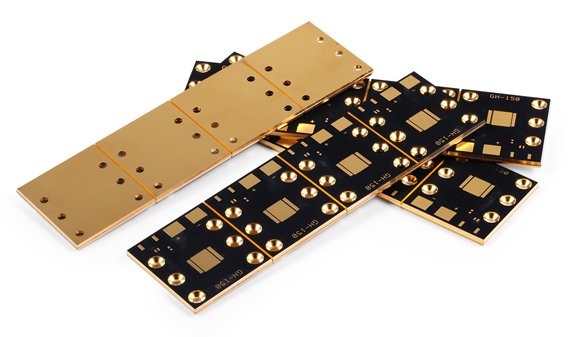
              Here is a photo of copper busbar PCB we made before:

              Why Choose EBest Circuit (Best Technology) as Copper Busbar PCB Supplier?

              Welcome to contact us if you have any inquiry for copper busbar PCB: sales@bestpcbs.com.

              What is PCB copper core? Copper metal core PCB

              August 25th, 2025

              PCB copper core stands out among other PCB types due to its high thermal and power capabilities. These boards are designed to operate in harsh environments, offering exceptional durability and reliability.

              What is PCB copper core? Copper metal core PCB

              Maybe you have these worries and concerns:

              • Can the copper thickness and thermal conductivity of copper core PCBs be precisely tailored to meet specific requirements?
              • How can I avoid delamination and oxidation of the copper core? How can I resolve issues if they arise?
              • Can I guarantee sample or batch delivery?
              • Are there any industry examples? Can I receive a 24-hour response to after-sales technical questions?

              BEST Technology can solve your problem:

              • We support custom copper thicknesses from 0.5-10 ounces, and precisely match power requirements through zoned thermal design.
              • We utilize vacuum lamination and an anti-oxidation coating (such as OSP or immersion gold) to ensure interlayer bonding strength 鈮1.8N/mm虏 and pass 1000 cycles of -40掳C to 125掳C temperature cycling testing without delamination. We offer free rework or replacement for delamination and oxidation issues within the warranty period, with a 48-hour response and solution.
              • Single- and double-sided boards: 24-48 hours, multi-layer boards: 3-5 days. Batch delivery: Regular orders: 7-10 days, expedited orders: within 3 days.
              • This material has been widely used in new energy vehicle BMS systems (10oz copper thickness), industrial inverters (8oz multilayer boards), and 5G base station power modules (6oz copper core). We provide 24-hour remote support to ensure rapid resolution of technical issues.

              What is a copper core PCB?

              Copper core PCB is a type of printed circuit board with a solid copper layer at its core. Unlike traditional PCBs, where copper is only part of the circuit paths, the core itself is copper. This provides superior thermal conductivity, allowing heat to be efficiently managed in high-power applications.

              The copper core acts as a heat spreader. It moves heat away from sensitive components. This prevents overheating and maintains long-term performance. These boards are widely used in LED lighting, automotive electronics, industrial equipment, and power electronics.

              Using a copper core also improves the mechanical stability of the board. Components remain securely in place even under heat stress. The copper鈥檚 high conductivity ensures that both electrical performance and heat dissipation are optimal.

              Why Use a Copper Core PCB?

              Modern electronics often produce significant heat, which can reduce efficiency and shorten the life of components. Copper core PCBs solve this problem efficiently.

              Here鈥檚 why they are used:

              • High thermal conductivity: Copper efficiently transfers heat away from components, keeping devices cooler.
              • Durability: They withstand thermal cycling better than standard FR4 boards.
              • Compact design: Designers can place components closer together without worrying about overheating.
              • Energy efficiency: Reduced heat buildup enhances performance and reduces energy loss.

              In short, using a copper core PCB increases reliability, extends device life, and supports high-power applications where traditional PCBs would fail.

              How is a Copper Metal Core PCB Made?

              The manufacturing of a copper metal core PCB differs from standard PCB production. It requires precision and advanced techniques.

              What is PCB copper core? Copper metal core PCB

              Step-by-step process:

              • Copper sheet selection: High-purity copper sheets are chosen for the core. Purity ensures consistent thermal conductivity.
              • Insulation layer application: An insulating dielectric layer is added to separate the copper core from the circuit traces.
              • Copper layering: Copper foil is laminated on both sides of the dielectric layer. This creates the circuit paths.
              • Etching: The unwanted copper is chemically removed to form the desired circuit design.
              • Surface finish: Methods like HASL, ENIG, or immersion silver are applied to protect the copper and improve solderability.
              • Testing and inspection: Each board is rigorously tested for electrical continuity, thermal performance, and mechanical stability.

              This process ensures that copper core PCBs perform well under high thermal and electrical stress.

              Do PCBs Have Copper?

              Yes, copper is a standard material in all PCBs. It forms the conductive pathways that carry electricity. Standard FR4 PCBs use copper only in traces and pads.

              Copper core PCBs are different. The copper is in the core, not just the circuit layers. This gives them superior heat conduction. Components stay cooler, even under heavy loads.

              Copper鈥檚 excellent electrical and thermal conductivity ensures stable performance. Devices work reliably for years without overheating.

              What Type of Copper is Used in PCB?

              The type of copper affects both thermal and electrical performance. In copper core PCBs, BEST Technology typically use:

              • High-purity electrolytic copper: Provides consistent conductivity and low resistance.
              • Oxygen-free copper (OFC): Reduces oxidation and ensures long-term stability.
              • Rolled annealed copper: Offers flexibility and mechanical strength for assembly.
              What is PCB copper core? Copper metal core PCB

              Choosing the right copper type ensures high thermal conductivity, strong mechanical support, and stable electrical performance. This is especially important in LEDs, automotive electronics, and industrial equipment.

              The Types of Copper-Based PCB

              Copper-based PCBs can vary depending on the application. The main types include:

              • Single-layer copper core PCB: Features one conductive layer. Often used in simple LED modules or low-power devices.
              • Double-layer copper core PCB: Has copper on both sides. This design supports more complex routing while maintaining heat management.
              • Multilayer copper core PCB: Includes multiple circuit layers with a central copper core. Ideal for high-power, dense electronics.
              • Flexible copper core PCB: Thin copper sheets with flexible substrates allow heat dissipation and adaptable design.

              Each type is tailored for specific needs. LEDs often use single or double-layer boards. Industrial and automotive applications prefer multilayer copper core PCBs.

              Is Copper Core or Aluminum Core Better?

              Both copper and aluminum core PCBs are designed to manage heat efficiently. However, copper offers several advantages.

              Advantages of copper core:

              • Higher thermal conductivity.
              • Better electrical performance.
              • Greater long-term reliability.

              Advantages of aluminum core:

              • Lower cost.
              • Lightweight construction.
              • Suitable for moderate heat applications.

              While aluminum cores are cost-effective, copper core PCBs outperform them in thermal management, reliability, and longevity. This makes copper the preferred choice for high-power and high-reliability electronics.

              Copper Core vs Aluminum Core 鈥 Thermal Conductivity

              Thermal conductivity determines how efficiently a material transfers heat. This is critical in electronics design.

              • Copper core PCB: Typically 300鈥400 W/m路K.
              • Aluminum core PCB: Typically 1-30 W/m路K.
              What is PCB copper core? Copper metal core PCB

              Copper conducts heat several times faster than aluminum. This keeps components cooler and prevents hotspots. Electronics run efficiently and last longer when heat is managed properly.

              Conclusion:

              PCB copper core ensures excellent thermal conductivity. Components stay cool, even under high power or prolonged use. Copper core PCBs are durable, reliable, and suitable for compact designs. Compared to aluminum, they provide higher conductivity, better performance, and longer lifespan.

              These boards are widely used in LED lighting, automotive electronics, industrial equipment, and power modules. Choosing a copper core PCB improves efficiency, safety, and product reliability.

              For more information or inquiries, contact sales@bestpcbs.com

              Reliable Quality BYD Automotive LED Aluminum Substrate

              August 22nd, 2025

              BYD automotive LED aluminum substrate is a specially designed metal-core printed circuit board used in automotive LED lighting, providing excellent heat dissipation, mechanical stability, and reliable electrical performance. In this blog, you will find some significant information about the definition, features, types, materials, functions, working principle, manufacturing process, main applications, and cases about BYD automotive LED aluminum substrate.

              Have you ever complained about these headaches before?

              • Troublesome thermal dissipation problem?
              • Worrying about deficits of manufacturing and design?
              • Bothersome material and process problem?
              • Difficult reliability and lifespan problem?

              Here are the efficient solutions EBest Circuit (Best Technology) provides to solve the above issues for your reference.

              • Adjust heat dissipation design: EBest Circuit (Best Technology) makes use of the high conductivity rate of the aluminum substrate and applies heat dissipation structure, such as heat sinks, to boost efficiency.
              • Employ strict manufacturing and quality control: We adopt cutting-edge manufacturing processes to ensure the stable performance of the products. Besides, we strictly control material selection and process parameters to ensure every PCB is fully compatible with the standards.
              • Enhance inspection and verification: We exploit innovative inspection equipment and methods to ensure the stable PCB performance.
              • Boost the customer support and cooperation: We present quick prototype design, small batch manufacturing, turnkey assembly, quick delivery and other services to meet customers’ requirements.

              EBest Circuit (Best Technology) has precious experience to provide sensible, tailored solutions of BYD automotive LED aluminum substrate. Our metal core PCBs and services include prototype to PCBA. If you need high quality and reliable aluminum LED board substrate, a warm welcome to contact us at sales@bestpcbs.com.

              What is BYD Automotive LED Aluminum Substrate?

              In short, it is a metal-based printed circuit board used in BYD vehicle lighting. It adopts an aluminum substrate to boost heat dissipation and mechanical strength. And the copper layer is isolated via the insulated layer, to ensure the LED current is well distributed. The structure supports high lumen density, meanwhile, keeps junction temperature low, ensuring the long-term stability of the brightness and colors.

              In comparison with traditional FR4, the aluminum substrate conducts heat faster, which allows LEDs to be placed in high density for a compact space. Besides, the metal base improves rigidity and vibration tolerance. It adapts to the heat shock of the vehicle and the vibration of roads during driving.

              What are the features of BYD Automotive LED Aluminum Substrate?

              • Excellent thermal dissipation: Low heat resistance keeps low LED junction temperature, stable lumen and color, and long lifespan.
              • Safe electricity: A highly insulated layer ensures electrical pressure loading capability, and the single-sided layouts meet the distance and the creepage requirements.
              • Mechanical strength: aluminum substrate features of warp resistance and shock resistance, which are beneficial for mounting of lenses and brackets.
              • Stable manufacturing: Clean copper layer, good solder paste, and finally, the low rework rate.
              • Cost efficiency: It reduces layers and processes for single-layer layouts, and the tools are simple; finally, the yield rate is high.

              What are the Types of BYD Automotive LED Aluminum Substrate?

              Here are the types of BYD automotive LED aluminum substrates.

              • Single-sided aluminum substrate: The most common choice for lamps and DRL strips.  
              • Boosted insulated IMS: The Insulated layer thickness or the breakdown pressure will be higher.
              • High-thermal IMS: Dielectric engineered for lower thermal resistance, which is good for compact spaces and high flux.
              • Hybrid boards: The LED area uses aluminum, and the control circuit area uses FR4.
              • Rigid-flex circuit boards: Adopt an aluminum substrate for segments, connected with Flex cables, suitable for bended lighting strips.

              What materials are used in an LED single-sided aluminum substrate?

              • First, the aluminum base in 1.0鈥2.0 mm thickness with 5052 or 1060 grades is often used.
              • Second, the thermal conductivity insulated layer is 75鈥150碌m.
              • Third, copper foil in 35鈥105 碌m.
              • The solder paste protective layer and white surface coating will improve the optical gain.
              • Finally, it is worth mentioning that the surface treatments are OSP or ENIG.

              It is helpful to note that it needs to consider the thermal conductivity, insulation, and cost when doing the material selection.

              What are the functions of aluminum substrate backed single layers boards for the LED lighting industry?

              The main functions include thermal dissipation, electrical conductivity, and the mechanical structure support (which includes lenses and the bracket).

              • Thermal dissipation: It is through the aluminum base and aluminum layer to realize fast thermal transmission.
              • Electricity conductivity: The copper foil circuit is used in current transmission.
              • Mechanical support: It provides a rigid structure to LED modules, lenses, and the heat sinks, particularly for automobile applications.

              In an automobile, these functions take center stage. Single-layer boards are a practical foundation in applications.

              How does an aluminum LED board substrate work in BYD automotive lighting?

              It is important to understand the core mechanism that enhances thermal dissipation efficiency and operational stability.

              First, there is the separated structure design, which is an aluminum core, an insulated layer, and a copper foil circuit layer.

              • Aluminum core, such as 6061 aluminum alloy, offers mechanical support, which high thermal conductivity is up to 200鈥235W/m路K. It is beneficial to conduct heat away where LED chips are generated.
              • Besides, it is through an insulation layer to ensure the electrical isolation, meanwhile to keep the heat conductivity, with a heat conductivity coefficient of 1鈥3W/m路K.
              • Finally, the copper foil circuit layer is through etching to form the circuit, which connects the LED chips and the drive circuit.

              Optimizing the thermal dissipation route is essential.

              • Heat passes layer by layer: LED chips 鈫 insulation layer 鈫 aluminum substrate 鈫 heat sinks.
              • Compared to traditional FR4, heat resistance is reduced by over 50%.

              Automobile-grade strengthened designs are also notable.

              • The structure resists corrosion in moisture and salt spray environments and withstands vibration, with the aluminum core providing a 1.0 mm rigid layer.

              Finally, it is worthy to note of the integration benefits.

              • The single-layer deisgn simplifies the assembly, and reduce the material of the heat sinks and interface, reducing weight and costs.

              This design helps to maintain the lifespan over 50,000 hours even if in high temperature, high moisture situations.

              What is the manufacturing process of BYD Automotive LED Aluminum Substrate?

              1.  Data review: It is significant to check the stackup and IPC standards.

              2. Material prep: Aluminum base cutting and deburring. Copper-laminate and dielectric selection based on thermal and voltage targets.

              3. The dry film explosion: Transferring copper circuit pattern.

              4. Etching: Controlling the line width precision.

              5. Drilling: Including mounting holes and optical alignment holes.

              6. Surface treatment: OSP or ENIG.

              7. Coating: Proceed Solder paste and white coating

              8. V-cut/route: Panels prepared for smooth depaneling at the SMT line.

              9. Reliability inspection: pressure resistance, heat shock, solderability, and the smooth level.

              10. QA: Finalize the QA and packing

              What are the main applications of aluminum LED board substrate in BYD LED lighting?

              The core applications are as follows:

              • Headlamps and DRLs: High flux LED arrays with precise optics. It avoids the lumen depreciation since the high heat conductivity of the aluminum substrate conducts the LED chips鈥 heat quickly.
              • Fog lamps: Compact housings with strong heat paths. Good for wet and cold cycles.
              • Power and control modules: For example, the electrical adjust device or controlling device is for power transferring, such as a DC / AC inverter. Aluminum has a high current loading capability up to 4500V pressure resistance, and has low heat resistance, which largely improves the reliability.
              • The Taillights/Interior lighting: It meets the thinner and lighter-weight needs via the high density assembly of the SMT process.

              It is important to note that the heat conductivity rate of the aluminum substrate boards is of over 6.7 times that of the FR4. Hence, it will be a good fit for high-power LED lighting.

              Case about BYD Automotive LED Aluminum Substrate

              Here is a condensed case from a recent platform lamp refresh for our customer.

              We proposed a single-sided aluminum substrate with a high-thermal dielectric. A thin thermal pad bridged the back to the cast housing. Junction temperature dropped by 16鈥22 掳C in the worst case.

              It has the key wins that it has less heat at the LED. Cleaner color over life. Higher yield at SMT. And no tooling changes. That is one of the true solutions of a well-built aluminum LED board. Here are some of our parameters and corresponding PCB pictures for your reference.

              • Layer: 2 Layer (Single Sided Aluminum PCB)
              • Material: FR-4+AL聽 base pressed, 1.6 mm, 2 oz/2 oz, 100 渭m insulated layer, 3 W/(m路K)
              • Solder Mask: White
              • Silk Screen: None
              • Surface Treatment: OSP (Organic Solderability Preservative)
              • Workmanship: FR-4+AL base pressed, CNC routing, aluminum back groove
              • Application: Automotive LED lighting, industrial control
              Case about BYD Automotive LED Aluminum Substrate
              Case about BYD Automotive LED Aluminum Substrate

              Why choose EBest Circuit (Best Technology) for aluminum substrate LED manufacturing?

               EBest Circuit (Best Technology) focuses on the high quality aluminum substrate LED manufacturing and the assembly service to a highly competitive market.

              • Quick Quote: Our engineers reply the inquiry with 4 hours. We will confirm the stackup and process, and will give the rational solution with the specific quote.
              • Quick delivery time: We will evaluate the delivery time in advance and will update the manufacturing schedule. We promise 2 鈥 3 weeks delivery time no matter how complicated the boards are.
              • Optimized design: Our engineers will improve insulation, aluminum material, and the thermal dissipation design.
              • Comprehensive quality system: Our factory is full compatible with ISO 9001, ISO 13485, IATF 16949, AS9100D, UL, REACH, and RoHS standards. We will meet your requirements of automobile, medical, and aerospace grade requirement. You can enjoy our full technical support.

              In conclusion, BYD automotive LED aluminum substrate features reliable heat dissipation and optical stability, which could meet the stable lighting and the lasting brightness requirement of BYD automobile. If you would like to find a reliable manufacturer to tackle the pain points of material procurement, engineering, lead time, or LED PCB performance, just feel free to get in touch with us at sales@bestpcbs.com, and we will ensure your project runs smoothly.

              Aluminum PCB Etching, Aluminum Base PCB Manufacturer

              August 22nd, 2025

              What is aluminum PCB etching? Let鈥檚 explore its principle, application, etching process, technical parameter, common problems and solutions, differences between copper PCB etching.

              Are you troubled with these problems?

              • Why does aluminum PCB etching yield stay stuck at 80%?
              • How to eliminate copper burrs after etching?
              • Is there a permanent fix for thin aluminum warping?

              EBest Circuit (Best Technology) can provide service and solution:

              • Molecular Reconstruction Etchant鈥: 95%+ yield stability.
              • Micro-Etch + Polish Hybrid Process鈥: Ra鈮0.8渭m surface finish.
              • Low-Temp Tension-Control Etching鈥: <0.5% warpage in 0.2mm plates.

              Welcome to contact us if you have any inquiry for aluminum PCB etching: sales@bestpcbs.com.

              What is Aluminum PCB Etching?

              Aluminum PCB etching is a manufacturing process that removes excess copper foil from aluminum based circuit boards using chemical solutions (e.g., acidic copper chloride), forming desired conductive traces while maintaining structural integrity. Unlike traditional FR4 etching, aluminum substrate etching requires strict control of temperature, pressure, and etch rate to minimize side erosion (鈮15%) and ensure line width/space accuracy (鈮0.2mm), especially for high-power applications like motor control boards.

              What is Aluminum PCB Etching?

              Principle of Aluminum PCB Etching

              Chemical Dissolution Mechanism

              • Acidic copper chloride solution selectively attacks exposed copper foil (unmasked areas) while leaving patterned traces intact.
              • Aluminum substrate acts as a rigid base, requiring etchant compatibility to prevent substrate corrosion.

              Parameter Precision Control

              • Temperature: Maintained at 50-60鈩 (卤2鈩 tolerance) to balance reaction speed and side erosion.
              • Pressure: 1.5-2.5kg/cm虏 spray pressure ensures uniform solution contact without over-agitation.

              Side Erosion Mitigation

              • Etchant flow direction and mask alignment minimize lateral copper dissolution (鈮15% side etch rate).
              • Critical for 0.2mm+ trace/space accuracy in high-current designs (e.g., motor control PCBs).

              Material-Specific Adaptation

              • Unlike FR4, aluminum substrates demand slower etch rates (3-5渭m/min) to avoid thermal stress-induced warping.
              • Post-etch neutralization prevents aluminum-copper galvanic corrosion.

              Quality Verification

              • Line width/space measured via optical microscopy (卤0.02mm tolerance).
              • Cross-section analysis confirms trace profile integrity (90掳 sidewalls).

              When to Use Aluminum PCB Etching?

              • High-Power Electronics: Motor controllers, inverters, power supplies (>50A current).
              • LED Lighting Systems: High-brightness LED modules, automotive headlights.
              • Automotive ECU/Powertrain: Engine control units, battery management systems.
              • RF & High-Frequency Applications: 5G base station amplifiers, RF power modules.
              • Industrial Control Equipment: PLC modules, servo drive systems.
              When to Use Aluminum PCB Etching?

              What is Process of Aluminum PCB Etching?

              1. Surface Preparation

              • Clean aluminum substrate using alkaline solution to remove oil/oxides.
              • Apply micro-etching (e.g., sulfuric acid) to roughen surface for better photoresist adhesion.

              2. Photoresist Coating

              • Dry-film or liquid photoresist applied via roller coating or spray.
              • Thickness controlled at 20-30渭m to withstand etching without undercutting.

              3. Exposure & Development

              • UV exposure through circuit pattern mask (e.g., 365nm wavelength).
              • Alkaline developer (e.g., 0.8-1.2% Na2CO3) dissolves unexposed photoresist, revealing copper areas to be etched.

              4. Etching Stage

              • Acidic copper chloride (CuCl鈧 + HCl) solution sprayed at 50-60鈩.
              • Parameters: 1.5-2.5kg/cm虏 pressure, 3-5渭m/min etch rate.

              5. Photoresist Stripping

              • Alkaline stripper (e.g., 3-5% NaOH) removes residual photoresist at 40-50鈩.
              • Ultrasonic cleaning ensures no organic residues remain.

              6. Post-Etch Processing

              • Acid neutralization (e.g., 5% H鈧係O鈧) to prevent aluminum-copper galvanic corrosion.
              • Dry baking (120-150鈩) removes moisture and improves trace adhesion.

              7. Quality Inspection

              • Optical microscopy checks line width/space (卤0.02mm tolerance).
              • Cross-section analysis verifies 90掳 trace sidewalls and zero substrate undercut.
              What is Process of Aluminum PCB Etching?

              Aluminum PCB Etching Technical Parameter

              Parameter CategorySpecification
              Etching Rate1.2-1.8 渭m/min (alkaline etching)
              0.8-1.5 渭m/min (acidic etching)
              Temperature Control45卤2掳C (alkaline)
              30卤2掳C (acidic)
              Solution Concentration   NaOH: 15-25% (alkaline) CuSO鈧: 180-220 g/L (acidic)
              Spray Pressure        1.5-2.5 bar (uniform distribution)
              Conveyor Speed1.5-3.0 m/min (adjustable per thickness)
              Copper Thickness Range0.5-3.0 oz (17-105 渭m)
              Line Width Tolerance卤10% (design vs. actual)
              Waste TreatmentNeutralization (pH 6-8)
              Heavy metal precipitation (Cu <0.5 ppm post-treatment)
              Safety RequirementsEmergency showers
              Ventilation (鈮12 ACH)PPE: Acid-resistant gloves/goggles

              Common Problems & Solutions in Aluminum PCB Etching Processes

              Excessive Side Etching (Jagged Edges/Impedance Instability)

              Symptoms: Copper trace sidewalls show burrs, line width deviation >0.03mm.

              Solutions:

              • Add 5-10% glycerol additive to enhance vertical dissolution.
              • Adjust spray pressure to 1.8-2.2kg/cm虏 (reduce turbulent flow impact)
              • Implement pulsating etching: 3-second spray / 0.5-second pause cycles.

              Aluminum Surface Corrosion (White Spots/Pitting)

              Symptoms: Aluminum substrate shows >0.1mm deep etch pits.

              Solutions:

              • Maintain real-time pH control at 8.5卤0.3
              • Use dual-layer liquid photoresist (5渭m epoxy base layer)
              • Post-etching citric acid neutralization (3% concentration, 45s immersion)

              Fine Line Breakage (锛0.2mm Trace Fractures)

              Symptoms: Micro-trace discontinuities in high-frequency circuits

              Solutions:

              • Use 18渭m ultra-low profile copper foil (RTF copper).
              • Optimize pre-bake: 110鈩兠30min stress relief.
              • Slow etching to 2渭m/min precision control.

              Uneven Etching (Copper Thickness Variation)

              Symptoms: >10% copper thickness variation across panel

              Solutions:

              • Install rotating rack (2-3rpm continuous rotation).
              • Optimize nozzle layout with honeycomb matrix (50mm spacing).
              • Real-time beta-ray thickness monitoring (3 points per panel).

              Residual Copper Slag (Micro-Short Risks)

              Symptoms: <50渭m copper particles between traces

              Solutions:

              • Add ultrasonic cleaning (40kHz, 60鈩 deionized water).
              • High-pressure water jet rinse (8MPa, 45掳 angle).
              • Add 0.5g/L EDTA disodium salt chelating agent.
              Common Problems & Solutions in Aluminum PCB Etching Processes

              Differences between Aluminum PCB vs Copper PCB Etching

              Comparison DimensionAluminum PCB EtchingCopper PCB Etching  
              Material PropertiesGood thermal conductivity but soft; requires corrosion protection.Excellent conductivity/thermal performance; prone to oxidation.
              Etchant CompositionAcidic mixed solution (prevents over-etching)Acidic copper chloride solution.
              Temperature ControlLow temperature (50-60鈩 to prevent deformation)Medium temperature (50-55鈩 for uniformity)
              Spray Pressure        Low pressure (1.5-2.5kg/cm虏 to reduce side etching)Medium pressure (2-3bar for coverage)
              Side Etch ControlRequires additives + pulsating etchingAdjustable via process parameters
              ApplicationsHigh-power/high-heat scenarios (LED, automotive electronics)Consumer electronics/communication devices

              Why Choose EBest Circuit (Best Technology) as Aluminum Base PCB Manufacturer?

              Reasons why choose us as aluminum base PCB manufacturer:

              • 19 Years of Aluminum Substrate R&D Expertise: Specialized in high-power aluminum PCB development since 2006, with over 500 global client projects delivered across industrial lighting, automotive electronics, and communication equipment.
              • Dual-Certification Quality System: ISO 9001/IATF 16949 dual certification, compliant with medical (ISO 13485) and automotive standards. 100% AOI inspection ensures zero tolerance for solder bridges, misalignment, or copper residues.
              • Industry-Leading Etching Precision: Utilizes pulsating etching process (3-second spray / 0.5-second pause) with 5-10% glycerol additive, achieving 鈮15% side etch rate and 卤0.02mm line width accuracy, supporting 0.15mm ultra-fine circuit processing.
              • Thermal Management Innovation: Proprietary heat dissipation design reduces device operating temperature by 30%, paired with 3W/m路K high-thermal-conductivity aluminum substrates for stable performance in high-temperature environments.
              • 24-Hour Rapid Prototyping: Direct import of Altium/PADS design files, coupled with in-house etching lines, enables 24-hour prototype delivery and 48-hour shipment, accelerating time-to-market.
              • Free DFM Design Optimization: Engineering team pre-reviews thermal via layouts and trace spacing, proactively mitigating etching defects and reducing rework costs by over 40%, especially for complex multilayer designs.
              • Eco-Friendly & Cost-Effective Solutions: Lead-free etching processes and 25% recycled aluminum content meet RoHS/REACH standards while offering budget-friendly options for mass production, balancing performance and affordability.

              Welcome to contact us if you have any inquiry for aluminum base PCB: sales@bestpcbs.com.

              LED double-sided aluminum substrate, LED substrates

              August 22nd, 2025

              LED double-sided aluminum substrate is a high thermal conductivity circuit board with copper wiring on both sides of the aluminum substrate. LEDs are soldered on one side and drive or control circuits are carried on the other side. The aluminum core in the middle dissipates heat quickly, allowing high-power lamp beads to operate stably in a smaller space. It has been widely used in automotive headlights, street lights and high-density backlight modules.

              LED double-sided aluminum substrate, LED substrates

              Are you curious about EBest Circuit (Best Technology)鈥檚 LED double-sided aluminum substrate?

              • Will double-sided wiring lead to short circuits or signal distortion due to inaccurate interconnections?
              • Is heat dissipation balanced on both sides, preventing localized overheating that could affect the life of the lamp?
              • Will the copper foil easily peel off after repeated soldering?
              • Does the cost of double-sided processing justify the performance improvement?

              EBest Circuit (Best Technology)鈥檚 LED double-sided aluminum substrate can answer these questions.

              • Using high-precision drilling and alignment processes, interconnect holes are precisely positioned, providing reliable insulation and preventing short circuits or signal issues.
              • The double-sided aluminum base design, with its symmetrical heat dissipation path, ensures even heat conduction, reduces localized overheating, and extends the life of the lamp.
              • The copper foil and aluminum base are tightly bonded through a high-temperature pressing process, resistant to soldering heat shock and maintaining stable adhesion after repeated soldering.
              • The double-sided design increases circuit density and heat dissipation efficiency. Process costs are optimized through large-scale production, and the performance improvements far outweigh the cost increases.

              What is double sided aluminum PCB?

              Double-sided aluminum PCB is a printed circuit board with aluminum as its base material, featuring copper layers on both sides. It includes an insulating dielectric layer between the copper and aluminum base. This design enables routing on both sides, unlike single-sided boards that only allow traces on one side.

              Because aluminum offers excellent heat dissipation, these boards are widely used in high-power LED lighting. They prevent overheating, which can damage LEDs or reduce their lifespan.

              With two conductive layers, double-sided boards also allow more complex circuits, making them ideal for advanced LED assemblies.

              Types of double-sided aluminum PCB

              Double-sided aluminum PCBs come in different forms, depending on application needs. The most common types include:

              • Standard Double-Sided Aluminum PCB: These have two copper layers and a dielectric layer between the aluminum base. They are simple yet effective for medium-power applications.
              • Hybrid Double-Sided PCB: This type of substrate combines the benefits of two different materials, such as aluminum and ceramic, to provide improved thermal conductivity and electrical performance.
              • Flexible Double-Sided PCB: This type of substrate is made of a flexible material and has a layer of aluminum on both sides. It is commonly used in applications where flexibility is required, such as in wearable electronics.
              • High-frequency double-sided aluminum PCB: This type of substrate is designed for high-frequency applications and has a low dielectric constant, which helps to reduce signal loss.

              Each type serves a specific purpose. Choosing the right one depends on thermal requirements, circuit complexity, and mechanical needs.

              How does a double-sided aluminum PCB differ from a single-sided one?

              Single-sided aluminum PCB has one copper layer for circuit routing, limiting its complexity. A double-sided board, on the other hand, has two copper layers, allowing for denser component placement and more advanced designs.

              Another major difference is thermal management. Both provide excellent heat dissipation thanks to the aluminum base, but double-sided boards handle higher power loads better. This is crucial for high-brightness LED systems where heat can build up quickly.

              LED double-sided aluminum substrate, LED substrates

              Lastly, cost and assembly differ. Double-sided boards may cost slightly more.

              What materials are used in LED double-sided aluminum substrates?

              LED double-sided aluminum substrate typically consists of:

              • Aluminum Base Layer: Provides structural strength and excellent thermal conductivity.
              • Dielectric Layer: Acts as an insulator between the aluminum base and copper layer while offering high thermal performance.
              • Copper Foil: Present on both sides for circuit routing. Thickness varies depending on current requirements.
              • Solder Mask: Protects the copper from oxidation and prevents short circuits.
              • Silkscreen Layer: Used for labeling components and guiding assembly.

              Some boards may also include surface finishes like ENIG (Electroless Nickel Immersion Gold) for better solderability and corrosion resistance.

              What are the advantages of using double-sided LED substrates over FR4?

              Compared to FR4 boards, double-sided aluminum substrates have multiple advantages:

              • Superior Heat Dissipation: Aluminum conducts heat away from LEDs quickly, reducing thermal stress.
              • Enhanced Durability: Aluminum-based boards are more resistant to mechanical stress than FR4.
              • Better Power Handling: Perfect for high-power LED applications where FR4 cannot manage heat efficiently.
              • Longer LED Lifespan: Lower operating temperatures mean LEDs last longer, reducing replacement costs.
              • Compact Design: Double-sided routing allows smaller, more efficient layouts.

              While FR4 is common in electronics, it cannot match aluminum substrates for thermal and structural performance in LED systems.

              What thickness options are available for double-sided LED aluminum boards?

              Thickness plays a vital role in thermal performance and strength. Typical options include:

              • Aluminum Base Thickness: 1.0 mm, 1.2 mm, 1.5 mm, and 2.0 mm.
              • Copper Thickness: Usually 1 oz (35 渭m), 2 oz (70 渭m), or even higher for high-current applications.
              • Dielectric Layer: Often between 75 渭m and 150 渭m, depending on thermal needs.
              LED double-sided aluminum substrate, LED substrates

              Choosing the right thickness ensures proper heat dissipation without adding unnecessary weight.

              Where is the double-sided aluminum substrate used?

              Double-sided aluminum substrates are versatile. Common applications include:

              • LED Lighting Systems: Indoor, outdoor, and industrial lighting where thermal management is critical.
              • Automotive Lighting: Headlights, tail lamps, and dashboard lighting.
              • Consumer Electronics: Devices that require compact yet heat-resistant boards.
              • Medical Devices: Surgical lights and diagnostic equipment that must stay cool for safety.
              • Power Electronics: High-power converters and power supplies where heat is a major concern.

              The ability to handle high power and maintain stability under heat makes these substrates essential for advanced applications.

              How is a double-sided aluminum PCB manufactured?

              The manufacturing process involves several precise steps:

              • Aluminum Base Preparation: The base is cleaned and treated to improve adhesion.
              • Dielectric Layer Application: A thermally conductive but electrically insulating layer is added.
              • Copper Foil Lamination: Copper is laminated on both sides under heat and pressure.
              • Circuit Patterning: Copper layers are etched to create circuit paths.
              • Drilling and Plating: Holes are drilled and plated to connect layers.
              • Surface Finish: ENIG, HASL, or other finishes are applied for better solderability.
              • Solder Mask and Silkscreen: Applied for protection and labeling.
              • Testing: Each board undergoes electrical and thermal testing to ensure quality.

              Precision is key to achieving tight tolerances and long-lasting performance.

              What are the applications of double-sided aluminum PCB?

              These boards power a wide range of industries:

              • LED Lighting: Streetlights, floodlights, and smart lighting solutions.
              • Displays and Signage: High-brightness displays that run for long hours.
              • Telecommunication Equipment: Devices where heat control is essential for reliability.
              • Aerospace and Defense: Applications requiring extreme durability and stability.
              • Renewable Energy: Solar inverters and power control systems that demand high thermal performance.
              LED double-sided aluminum substrate, LED substrates

              Wherever heat and reliability matter, double-sided aluminum PCBs are the go-to solution.

              Conclusion:

              Double-sided aluminum substrates for LEDs are able to handle high power, dissipate heat efficiently, and support compact designs without compromising performance. Their advantages over FR4 make them the best choice for demanding applications.

              If you need custom LED aluminum substrates for your projects, EBest Circuit (Best Technology) is here to help. We provide premium-quality aluminum PCBs, strict quality control, and fast delivery. Contact us today at sales@bestpcbs.com

              6oz Aluminum PCB for Electronic Control Board

              August 22nd, 2025

              Why choose 6oz aluminum PCB for electronic control board? Let鈥檚 explore benefits, applications, technical spec, thermal management, production processes for 6oz aluminum PCB.

              Are you troubled with these problems?

              • Overheating causing frequent failures and high repair costs?
              • Poor PCB thermal performance limiting product upgrades?
              • Small-batch orders struggling with slow delivery and inventory risks?

              EBest Circuit (Best Technology) can provide services and solutions:

              • High-Efficiency Thermal Management: Significantly extending device lifespan.
              • Rapid Prototyping: 48 hours rapid prototyping and flexible support for small-batch orders.
              • Cost Optimization: Integrated thermal design reduces overall system costs by 25%.

              Welcome to contact us if you have any inquiry for aluminum PCB: sales@bestpcbs.com.

              Why Choose 6oz Aluminum PCB for Electronic Control Board?

              Reasons why choose 6oz aluminum PCB for electronic control board:

              • Heat Dissipation Powerhouse: Thermal conductivity >2.0W/m路K. Reduces component temperatures by 40% vs. FR4.
              • High Current Performance: 6oz copper (0.17mm) handles high power loads. Minimizes voltage drop in motor drives/power modules.
              • Lightweight & Durable: Aluminum alloy (6063/5052) balances strength and weight. Withstands vibration/industrial environments.
              • EMI Shielding: Reduces high-frequency noise in RF/5G circuits. Improves signal integrity with grounding design.
              • Cost-Efficient Design: Eliminates heatsinks/fans. Enables compact layouts for space-constrained boards.
              • Rugged Reliability: Passes extreme thermal cycling (-40掳C~125掳C). Surface finishes (ENIG) resist corrosion.
              • Scalable Production: Consistent copper thickness for high yields. Customizable layers for diverse control board needs.
              Why Choose 6oz Aluminum PCB for Electronic Control Board?

              Applications of 6oz Aluminum PCB for EV Electronic Control Board

              • Motor Controller (MCU) Power Module鈥
              • On-Board Charger (OBC) DC-DC Conversion Circuit鈥
              • Battery Management System (BMS) Main Board鈥
              • Inverter Power Unit鈥
              • PDU (Power Distribution Unit) Busbar鈥
              • VCU (Vehicle Control Unit) Power Module鈥
              • Thermal-Sensitive Sensor Interface Board鈥
              • Fast Charger Power Module鈥

              6oz Aluminum PCB for Electronic Control Board Design Specification

              Parameter CategorySpecifications/Details
              Substrate Material6063/5052 Aluminum Alloy (High Thermal Conductivity, Corrosion-Resistant)
              Copper Thickness6oz (鈮0.17mm, 卤10% Tolerance)
              Thermal Conductivity鈮2.0W/m路K (Aluminum Substrate Layer)
              Thermal ResistanceSoldering Temperature: 260掳C/10s No Delamination; Thermal Cycling: 3 Cycles (-40掳C~125掳C) No Cracks
              Mechanical PropertiesTensile Strength 鈮200MPa; Bend Radius 鈮1.5脳Board Thickness (Non-Plated Side)
              Surface FinishENIG (Au Thickness 0.05~0.1渭m), OSP (Antioxidant)
              Insulation LayerEpoxy/Polyimide (Thickness 50~150渭m, Dielectric Strength 鈮500V)
              Min Trace Width/Space0.15mm/0.15mm (Requires Electroplating Process)

              6oz Aluminum PCB for Electronic Control Board Thermal Management

              1. Material Selection Criteria

              • Base Material: 6oz (170渭m) copper-clad aluminum PCB with thermal conductivity 鈮3W/m路K.
              • Dielectric Layer: Thermal resistance 鈮1.2掳C路cm虏/W, withstand voltage 鈮500V.
              • Surface Treatment: Anodized finish 鈮5渭m, surface roughness Ra0.8-1.6渭m.

              2. Thermal Source Layout

              • Maintain 鈮30% copper coverage in high-power zones.
              • Keep 鈮5mm spacing between MOSFET/IGBT components.
              • Position temperature-sensitive parts (capacitors) 鈮10mm from heat sources.

              3. Thermal Path Design

              • Thermal via arrays under critical components (0.5mm diameter, 1mm pitch).
              • Via filling with thermal conductive paste (鈮5W/m路K).
              • Direct contact pressure 鈮20N/cm虏 between PCB and housing.

              4. Cooling System Configuration

              Passive Cooling:

              • Fin thickness 鈮1.5mm, height 鈮20mm.
              • Thermal grease thickness 0.1-0.3mm at interface.

              Active Cooling:

              • Add axial fan when power density >5W/cm虏
              • Airflow 鈮3CFM/W, noise <35dB(A)

              5. Process Control

              • Soldering: Peak temperature 245卤5掳C, reflow time 鈮90s.
              • Assembly: M3 stainless screws (1.2-1.5N路m torque), spring washers 鈮0.8mm.

              6. Performance Verification

              • Thermal resistance (junction-to-ambient) 鈮5掳C/W.
              • Temperature rise 鈮45掳C under full load.
              • Pass 1000 hours 85掳C/85% RH aging test.

              7. Achieved Results

              • 40%+ improvement in heat dissipation efficiency.
              • 25-35掳C reduction in component operating temperatures.
              • System MTBF 鈮50,000 hours.
              • Compliance with IEC 60068-2-78 damp heat standard.
              • 30%+ space reduction compared to traditional designs.
              6oz Aluminum PCB for Electronic Control Board Thermal Management

              6oz Electronic Control Aluminum PCB Manufacturing Processes

              1. Raw Material Preparation

              • Procure high-purity electrolytic copper foil (6oz, 210渭m thickness).
              • Select 5052 or 6061 series aluminum alloy substrate.
              • Prepare high-thermal-conductivity insulating dielectric layer (鈮8W/mK).

              2. Aluminum Substrate Pretreatment

              • Mechanically polish substrate surface to surface roughness Ra 鈮 0.2渭m.
              • Chemically clean to remove surface oxide layers and oil contamination.
              • Anodize to enhance surface insulation properties.

              3. Insulating Layer Coating

              • Apply thermal conductive adhesive uniformly using high-precision coating equipment.
              • Curing conditions: 150 卤5鈩 for 30 minutes.
              • Thickness tolerance controlled within 卤10渭m.

              4. Copper Foil Lamination

              • Hot-press composite 6oz copper foil with insulating layer.
              • Process parameters: pressure 15鈥20kg/cm虏, temperature 180鈥200鈩.
              • Ensure no bubbles or delamination defects.

              5. Pattern Transfer

              • Use LDI (Laser Direct Imaging) technology.
              • Special etching compensation design required for 6oz thick copper.
              • Minimum line width/spacing: 0.2mm/0.2mm.

              6. Etching Process

              • Adopt acidic copper chloride etching solution.
              • Strictly control side etching rate 鈮15%.
              • Post-etching copper thickness deviation within 卤10%.

              7. Drilling

              • Use tungsten carbide drills or laser drilling.
              • Hole diameter tolerance 卤0.05mm.
              • Hole wall roughness 鈮25渭m.

              8. Surface Finish

              • Optional processes: immersion gold/OSP/HASL.
              • Immersion gold thickness: 0.05鈥0.1渭m.
              • Nickel layer thickness: 3鈥5渭m.

              9. Solder Mask Printing

              • Apply high-thermal-conductivity solder mask ink.
              • Thickness: 20鈥30渭m.
              • Post-curing temperature resistance up to 150鈩.

              10. Contour Machining

              • CNC milling with contour tolerance 卤0.1mm.
              • V-cut depth controlled at 1/3 of board thickness.
              • Chamfering to eliminate burrs.

              11. Electrical Testing

              • 100% flying probe testing.
              • Insulation resistance 鈮1000M惟.
              • Withstand voltage test 鈮3kV/60s.

              12. Final Inspection

              • Visual inspection under 10x magnification.
              • Full dimensional inspection via CMM.
              • Thermal resistance test 鈮0.5鈩/W.

              13. Packaging & Shipping

              • Vacuum moisture-proof packaging.
              • Anti-scratch spacing between each piece.
              • Storage conditions: temperature 15鈥30鈩, humidity 鈮60%.

              How to Balance Cost and Quality of Electronic Control Aluminum PCB?

              1. Material Tiering Optimization

              • Critical Zones: Use 6oz copper foil + 6061 aluminum alloy (thermal conductivity 鈮200W/m路K) for high-heat components (e.g., IGBTs).
              • Non-Critical Zones: Deploy 4oz copper foil + 5052 aluminum alloy, reducing material costs by 15-20% while validating thermal distribution via simulation.

              2. Design Standardization & Modularization

              • Build a library of universal circuit modules (e.g., power conversion units), cutting custom design time by 30%.
              • Use DFM system to auto-check thermal expansion coefficient matching, reducing rework by 67%.

              3. Smart Manufacturing Upgrades

              • Deploy AI-powered visual inspection to monitor etching uniformity, boosting 6oz thick-copper board yield from 85% to 96%.
              • Adopt diamond-coated milling cutters for edge processing, reducing burr rate by 90% and improving soldering reliability.

              4. Supply Chain Vertical Integration

              • Sign long-term agreements with raw material suppliers to lock copper foil prices; use JIT warehousing to cut inventory costs by 10-15%.
              • Prioritize domestic high-thermal-conductivity insulation (e.g., ceramic-filled epoxy), shortening lead times to 鈮7 days.

              5. Differentiated Surface Finishing

              • Apply low-cost OSP (Organic Solderability Preservative) for non-soldering areas and ENIG for critical pads, reducing surface treatment costs by 40% while passing 500hrs 85鈩/85%RH tests.

              6. Life Cycle Cost Accounting

              • Optimize for high-thermal-conductivity insulation (鈮8W/m路K): Though 20% more expensive upfront, it reduces cooling components, cutting total life cycle costs by 8-12%.

              7. Green Manufacturing & Recycling

              • Establish scrap recycling system (70% recycled aluminum utilization), meeting EU 2025 e-waste recycling targets (鈮65%).
              • Replace traditional stamping with laser cutting, reducing waste rate from 22% to 8% while improving accuracy to 卤0.05mm.
              How to Balance Cost and Quality of Electronic Control Aluminum PCB?

              Our Electronic Control Aluminum PCB Case Studies

              At EBest Circuit (Best Technology), we specialize in electronic control aluminum PCB manufacturing for 19 years, providing a full service from design consultation to mass production. Our professional design team can customize designs based on your power device layout and heat dissipation requirements, ensuring your products meet stringent electrical performance and mechanical stability requirements. Here is a photo of electronic control board aluminum PCB we made before:

              Our Electronic Control Aluminum PCB Case Studies

              Why Choose EBest Circuit (Best Technology) as Aluminum PCB Manufacturer?

              Dual-Certification Quality Assurance

              • ISO 9001 (general quality) & IATF 16949 (automotive-grade) certified
              • Optional medical-grade ISO 13485 compliance

              Thermal Management Gradient

              • Economy: 3W/m路K aluminum PCB for low-power devices (e.g., security sensors)
              • Premium: 8W/m路K aluminum nitride substrate for high-power applications (e.g., 5G base stations)

              Supply Chain Efficiency

              • Direct sourcing reduces bulk procurement costs by 15%-20%
              • Flexible production scale from 50-unit prototypes to 10,000-unit mass production

              24-Hour Rapid Prototyping

              • Aluminum substrate samples delivered within 24 hours
              • Free DFM (Design for Manufacturability) optimization to mitigate thermal via placement risks

              Integrated One-Stop Service

              • PCB design, thermal simulation, and SMT assembly under one roof
              • Engineering support for thermal resistance calculation and temperature rise modeling

              Eco-Friendly Manufacturing

              • RoHS/REACH compliance with 95% recycled aluminum content
              • Lead-free process reduces carbon emissions by 25%

              High-Reliability Material System

              • Dielectric layer: 鈮500V withstand voltage, 鈮1.2掳C路cm虏/W thermal resistance
              • Anodized surface (5-8渭m thickness), passes 1,000hrs 85鈩/85%RH aging test

              Precision Fabrication Capability

              • Minimum trace width/spacing: 0.1mm
              • Laser drilling accuracy: 卤0.05mm
              • Layer alignment precision: 鈮0.03mm

                Welcome to contact us if you have any request for aluminum PCB: sales@bestpcbs.com.

                LED Wall Washer鈥 Aluminum PCB Manufacturer

                August 21st, 2025

                Why choose LED wall washer aluminum PCB? Let’s explore its benefits, technical parameter, thermal solution, design guide, selection guide through this blog.

                Are you troubled with these problems?

                • Poor heat dissipation leads to rapid light decay and short product lifespan?鈥
                • Outdoor environments cause PCB corrosion and oxidation?鈥
                • Heavy wall washer fixtures warp during installation?鈥

                EBest Circuit (Best Technology) can provide services and solutions:

                • Custom Thermal Design鈥 鈥 Optimize aluminum PCB thickness and copper layer layout for precise temperature control.
                • Environmental Testing鈥 鈥 Provide third-party certification for waterproofing, shock resistance, and outdoor durability.
                • Fast Prototyping鈥 鈥 24-hour turnaround for aluminum PCB samples, accelerating R&D cycles.

                Welcome to contact us if you have any inquiry for LED wall washer aluminum PCB: sales@bestpcbs.com.

                Why Choose LED Wall Washer Aluminum PCB?

                Reasons why choose LED wall washer aluminum PCB:

                • Efficient heat dissipation and stable operation: The aluminum base plate quickly dissipates heat, preventing LED damage from high temperatures, ensuring long-term stable operation at high power levels and significantly delaying lumen degradation.
                • Lower cost and high cost-effectiveness: Aluminum’s low cost and inherent heat dissipation eliminate the need for external heat sinks, significantly reducing material and assembly costs.
                • Lightweight and compact, saving space: High heat dissipation efficiency allows for a thinner and lighter luminaire, eliminating the need for additional heat sink components and enabling flexible installation in confined locations.
                • Increased lifespan and reduced maintenance: Temperature control extends LED lifespan to over 30,000 hours, reducing maintenance requirements for outdoor applications at high altitudes.
                • Weather-resistant and resistant to harsh environments: The aluminum base plate is impact- and vibration-resistant, and the die-cast housing achieves IP67 waterproofing, making it suitable for outdoor use in the sun and rain.
                • Environmentally friendly and recyclable, in line with current trends: Aluminum is non-toxic and 100% recyclable, with low energy consumption in production, meeting green manufacturing requirements.
                • Supporting high power density: Carrying high current density, it drives densely packed, high-brightness LEDs for uniform, powerful wall-washing lighting.
                Why Choose LED Wall Washer Aluminum PCB?

                LED Wall Washer Aluminum PCB Technical Parameter

                Parameter Category鈥鈥孴echnical SpecificationsDescription鈥
                Base Material鈥Aluminum alloy (5052/6061)Thickness: 1.0-3.2mm, with anodized surface treatment  
                Thermal ConductivityConductivity: 1.0-8.0 W/(m路K)Standard type (1.0-2.0) for medium-low power, high-conductivity (3.0-8.0) for high-power applications
                Insulation Layer鈥Thickness: 50-200渭mEpoxy resin with ceramic filler, slightly higher loss than FR-4
                Dielectric Constant: 4.5-5.0 (1GHz)
                Dielectric Strength: 鈮3 kV/mm
                鈥孴hermal ResistanceTotal thermal resistance: 0.8-3.0掳C/WDepends on copper foil area and insulation layer thickness
                Interface resistance: <0.5K/W (eutectic soldering)
                鈥孍lectrical ParametersOperating voltage: AC220V/DC24VSuitable for outdoor environments
                IP65 protection Operating temp: -40掳C to +60掳C
                鈥孧echanical PropertiesDimensional tolerance: 卤0.1mm (custom modules)Minimal impact from anodizing
                Surface roughness: Ra 0.2-0.8渭m
                鈥孭rocess StandardsCopper foil thickness: 35-70渭m  Compatible with SMT and reflow soldering
                Peel strength: 1.0-1.5 kgf/cm UL94 V0 flame retardancy

                How Aluminum PCB Enhances LED Wall Washer Light Efficiency?

                1. Superior Thermal Management for Optimal LED Operation

                • Heat Dissipation Efficiency: Aluminum PCBs (thermal conductivity 1-10 W/m路K) outperform FR4 (0.3 W/m路K) by 10x+, rapidly conducting 70% of LED-generated heat away from chips.
                • Temperature Control: Low thermal resistance (0.05鈥0.2 K/W) enables safe operation at >10W/chip, reducing junction temperature by 10鈥15掳C and minimizing light decay.

                2. Electrical Performance Optimization

                • Conductivity Advantage: Aluminum鈥檚 low impedance cuts power loss, improving system efficiency.
                • Light Output Boost: White-coated PCBs enhance reflection efficiency by 30%+, indirectly reducing energy consumption per lumen.

                3. High-Density Design Support

                • Compact Integration: Aluminum substrates allow higher LED density (e.g., 500+ LEDs/m虏) with uniform light distribution, ideal for large-scale illumination.
                • Mechanical Reliability: High bending strength prevents solder joint failures under vibration or thermal stress.

                4. Cost & Lifespan Benefits

                • Extended Lifetime: Thermal efficiency extends LED lifespan to 50,000+ hours (2鈥3x longer than standard solutions).
                • Simplified Design: Eliminates 40% of external heat sinks, reducing material costs and assembly complexity. Aluminum recycling aligns with sustainability goals.

                5. Real-World Application Advantages

                • High-Power Models: 48W wall washers leverage aluminum PCBs for compact IP66-rated designs, avoiding thermal failure.
                • Optical Optimization: Multi-layer structures (LED 鈫 phosphor 鈫 resin 鈫 reflective layer) maximize light extraction while efficiently managing internal heat.
                How Aluminum PCB Enhances LED Wall Washer Light Efficiency?

                Wall Wash Light Aluminum PCB Thermal Solution

                Copper Layer Thermal Design Optimization

                • Prioritize聽solid plane copper layers聽for maximum thermal conductivity (highest cost).
                • For cost-sensitive designs,聽grid patterns聽offer 80-90% thermal efficiency with ~10% cost reduction.
                • Avoid star/custom patterns unless required for EMC compliance (70-80% efficiency, unstable cost-benefit).

                Thermal Via Design Refinement

                • Thermal vias are critical for heat transfer from component pads to aluminum substrate. Optimize parameters (diameter, pitch, copper thickness) to minimize thermal resistance.
                • Parallel thermal resistance network modeling simplifies design and improves efficiency by 20-30%. Reducing via pitch and increasing quantity is effective but requires cost-balance with drilling.

                System Thermal Resistance Reduction

                • High-thermal-conductivity substrates: Use aluminum oxide (Al鈧侽鈧) substrates (22-24 W/mK), outperforming FR-4/ceramic alternatives.
                • Thin dielectric layers: Minimize thickness while meeting electrical insulation requirements (key to low thermal resistance).
                • Reduce non-thermal vias: Excessive standard vias increase thermal path length and resistance.

                Component Layout & Routing Strategies

                • Placement: Avoid hotspots by dispersing high-power components (LEDs, drivers). Position major heat sources near substrate edges or directly over thermal vias. Aim for uniform distribution.
                • Routing: Minimize long/thin copper traces to reduce resistive heating. Widen copper traces or increase thermal via contact area in critical paths (15-20% local thermal improvement).

                Integrated Thermal Enhancement Measures

                • Heat sinks: Most common passive solution, handling ~70% of total heat load. Cost-effective and easy to integrate into housing.
                • Forced air cooling: Adds ~85% efficiency in enclosed/high-power units but increases cost, noise, and complexity.
                • Thermal interface materials (TIMs): Thermal grease/pads fill micro-gaps, improving interfacial conductivity by ~30% at low cost.
                • Liquid cooling: ~95% efficiency but highly complex and costly. Reserved for extreme power densities or specialized applications.

                Convection Optimization

                • Component orientation: Align temperature-sensitive/heat-generating components with their long axis聽perpendicular to airflow聽in natural/forced convection.
                • Expose aluminum substrate: Directly expose large PCB aluminum areas to airflow where structurally feasible.
                • Airflow management: Arrange tall components聽parallel to airflow聽to reduce turbulence and avoid downstream thermal dead zones.

                Substrate Material Selection

                • Aluminum-based PCBs (MCPCBs): Preferred for wall washers due to excellent thermal performance, mechanical robustness, CTE matching (reduces solder joint fatigue), and recyclability. Thickness range: 0.4-6.0mm.
                • Alumina ceramic substrates: Suitable for high-temperature/high-reliability applications (350-1500掳C resistance) with good thermal conductivity.

                Thermal Simulation Utilization

                • Use聽finite element analysis (FEA)聽in design phase to predict temperature distribution and identify hotspots.
                • Simulation-driven optimization reduces post-development thermal issues by 20-30%, lowering risk and cost, especially for mass production.

                LED Wall Washer Aluminum PCB Color Consistency Design Guide

                1. LED Selection & Color Parameters

                • Color Tolerance (SDCM): Use SDCM 鈮5 LEDs to ensure batch consistency.
                • Color Rendering Index (CRI): Prioritize Ra 鈮80 LEDs (e.g., Lumileds LUXEON) for accurate color reproduction.
                • Dimmable Options: Support 1900K-5700K CCT ranges with SDCM 鈮5 across all settings.

                2. Aluminum PCB & Thermal Design

                • Material: High-thermal-conductivity 6063 aluminum (鈮200W/m路K) with anodized coating.
                • Layout: LED spacing 鈮20mm (adjust per power) to prevent localized overheating.
                • Wiring: 45掳 traces (width 鈮0.5mm, spacing 鈮0.3mm) to minimize current interference.

                3. Optical System Optimization

                • Mixing Distance: Short-distance lenses (鈮15mm) for RGBWY uniform blending.
                • Lens: Optical-grade PC/PMMA (transmittance 鈮92%) with recessed design (depth 鈮5mm).

                4. Environmental Adaptability

                • Protection: IP65/IP66 with silicone sealing (e.g., Dow Corning 7091).
                • Temperature: Operate from -20掳C to +60掳C without deformation.

                5. Production & Quality Control

                • Supplier Collaboration: Verify PCB color process (UV-resistant ink, reflection 鈮85%).
                • Inspection: Tighten tolerances (PCB size 卤0.1mm, pad alignment 卤0.05mm).
                • Soldering: Through-hole preferred; SMT requires epoxy reinforcement.

                6. Control System Compatibility

                • Dimming: DMX512 0-100% smooth control with 螖u’v’ 鈮0.005.
                • Driver: PF >0.9, ripple 鈮5% (e.g., PFC circuit design).

                7. Long-Term Reliability

                • Testing: 50,000-hour LM-80 validation, 螖u’v’ 鈮0.003 post-aging.
                • Coating: Acrylic varnish (50-80渭m) for UV/chemical resistance.
                LED Wall Washer Aluminum PCB Color Consistency Design Guide

                LED Wall Washer Aluminum PCB Selection Guide

                1. Thermal Performance Priority

                • Thermal Conductivity: 1.0-2.0 W/(m路K) for low-power (<50W) 鈮3.0 W/(m路K) for high-power (>50W).
                • Substrate Thickness: 1.0mm (lightweight) or 2.0-3.0mm (heavy-duty cooling).
                • Construction: 6061 aluminum base + ceramic-filled insulation for low thermal resistance.

                2. Electrical Safety Standards

                • Protection: IP65 dust/water resistance mandatory for outdoors.
                • Insulation: Dielectric strength 鈮3 kV/mm, copper foil adhesion 鈮1.0 kgf/cm.
                • Voltage: Match input (AC220V/DC24V) with driver compatibility.

                3. Optical Compatibility

                • Beam Angle: 120掳 standard lens requires PCB layout alignment.
                • Color Quality: High CRI (Ra>90) needs low-decay LEDs.
                • Efficacy: 鈮10 lm/W for white light; RGB requires independent control zones.

                4. Mechanical & Environmental Durability

                • Coating: Anodized + conformal coating (humidity/mold resistance 鈮lass 1).
                • Impact Resistance: Die-cast aluminum housing (IK10 certified).
                • Temperature Range: -40掳C to +60掳C operational certification.

                5. Cost & Supply Chain

                • Material Efficiency: Smart panel layout reduces waste by 23%.
                • Packaging: SMT-compatible reel packaging recommended.
                • Certifications: UL94 V0 flammability rating + RoHS compliance.
                LED Wall Washer Aluminum PCB Selection Guide

                Why Choose EBest Circuit (Best Technology) as Aluminum PCB Manufacturer?

                Reasons why choose us as LED wall washer aluminum PCB manufacturer:

                1. Premium Quality Assurance

                • Material Selection: Use 6063/6061 aluminum with thermal conductivity 鈮150W/m路K (3x higher than industry average).
                • Certifications: UL, RoHS, and IP65 compliance guaranteed for harsh outdoor environments.

                2. 19 Years of Industry Expertise

                  • Specialized Experience: Dedicated focus on LED lighting PCBs since 2005, with 500+ wall washer projects completed.

                  3. Cost-Effective Solutions

                  • Price Advantage: 15-20% lower than competitors via optimized production lines and bulk material procurement.
                  • Design Optimization: Free DFM reduces material waste by up to 25% without compromising performance.

                  4. Fast Delivery

                  • Lead Time: 24 hour rapid prototyping, 5-7 days for mass production (50% faster than industry standard).

                  5. Free DFM Support

                  • Pre-Production Analysis: Identify thermal bottlenecks, electrical risks, and assembly issues pre-manufacturing.
                  • Design Adjustments: Optimize LED layouts for 30% higher lumen density while maintaining thermal safety.

                  6. Stringent Quality Control

                  • Thermal cycling (-40掳C~+125掳C, 1000 cycles).
                  • 48-hour burn-in test for all batches.
                  • AOI/X-ray inspection for solder joint integrity.

                  7. Customization Capability

                  • Flexible Design: Support ultra-thin (0.8mm) to heavy-duty (3.2mm) substrates.
                  • Special Coatings: White solder mask for 95% reflectivity, anti-sulfur treatment for coastal areas.

                    Welcome to contact us if you have any request for LED wall washer aluminum PCB: sales@bestpcbs.com.

                    Copper Deposition PCB for HDI Board

                    August 21st, 2025

                    Why choose copper deposition PCB for HDI board? Let鈥檚 explore technical parameter, benefits, production process, optimization solutions for copper deposition PCB.

                    Are you troubled with these problems?

                    • How to ensure even copper deposition for HDI boards?
                    • How to prevent signal loss from excessive copper thickness?
                    • How does incomplete microvia filling affect PCB reliability?

                    EBest Circuit (Best Technology) can provide service and solution:

                    • Precision Thickness Control – Pulse plating ensures 卤5% copper thickness tolerance.
                    • Microvia Fill Technology – High-ductility copper eliminates voids, boosting yield by 15%.
                    • Eco-Friendly Additives – Cyanide-free plating reduces wastewater treatment costs, RoHS compliant.

                    Welcome to contact us if you have any request for copper deposition PCB: sales@bestpcbs.com.

                    What is Copper Deposition PCB?

                    Copper deposition PCB is a circuit board manufacturing technology that deposits a copper layer on the substrate surface through electrolytic or chemical methods. This technology is categorized into two main types: electroplated copper (which requires a conductive layer and is used for through-hole plating and surface thickening) and electroless copper (which does not require a conductive layer and is suitable for metallizing non-metallic substrates such as plastics).

                    This process directly impacts the PCB’s conductivity, signal transmission speed, and structural reliability. It is a core technology for achieving high-density interconnect (HDI), flexible circuits, and electromagnetic shielding. It is widely used in 5G communications, automotive electronics, and consumer electronics.

                    What is Copper Deposition PCB?

                    Copper Deposition PCB Technical Parameter

                    Parameter CategoryTechnical Specifications
                    Copper Layer ThicknessElectroless: 0.3鈥1渭m (0.01鈥0.03oz)
                    Electrolytic: 5鈥70渭m (1鈥3oz)
                    Thick Copper: Max 30oz (鈮1050渭m)
                    Plating UniformityHole wall copper thickness variation 鈮15%
                    Surface copper tolerance 卤10%
                    Current Carrying Capacity1oz (35渭m): 1.8A/mm虏
                    2oz (70渭m): 3.6A/mm虏
                    3oz (105渭m): 5.4A/mm虏
                    Surface RoughnessElectrolytic Foil: Ra 0.8鈥1.2渭m
                    Rolled Foil: Rz 鈮3渭m
                    Tensile StrengthElectrolytic Foil: 150鈥300MPa
                    Rolled Foil: Elongation 20鈥40%
                    Min Line Width/SpacingInner Layers: 0.05mm
                    Outer Layers: 0.065mm
                    Hole MetallizationMechanical Drill: 鈮0.15mm
                    Laser Drill: 鈮0.05mm
                    Aspect Ratio 鈮8:1

                    Why Choose Copper Deposition PCB for HDI Board?

                    Electrical Conductivity & Signal Integrity

                    • High Copper Conductivity: Minimal resistive losses (I虏R) reduce line heating.
                    • Microvia Direct Connections: Shorten signal path lengths by >30%, eliminating high-speed signal bottlenecks.

                    Thermal Management & Longevity

                    • Thermal Conductivity: Exceeds aluminum (380-400 W/m路K), ensuring efficient heat dissipation for high-power components.
                    • Thermal Stability: Low CTE (Coefficient of Thermal Expansion) minimizes solder joint fatigue under thermal cycling (-40掳C~+125掳C).

                    Space Efficiency & Component Density

                    • Laser-Drilled Microvias: Filled with copper, enabling board thickness reduction to 0.4mm (vs. standard 0.6mm).
                    • Copper-Pillar Interconnects: Replace traditional through-holes, achieving 30% higher component density.

                    Cost & Manufacturing Efficiency

                    • Layer Reduction: 6-layer HDI design achieves equivalent performance of 8-layer conventional boards.
                    • High Yield Rates: Mature electroless/electrolytic copper processes reduce rework (defect rate <0.2%).

                    Durability & Environmental Resistance

                    • Mechanical Robustness: Withstands 1.5m drop tests and 50G vibration loads (industrial/automotive grade).
                    • Humidity/Temperature Resistance: Maintains functionality in 95% RH and 85掳C environments (IEC 60068-2-30).

                    Design Flexibility

                    • Hybrid Architecture: Combines HDI zones (for 5G antennas/chip packaging) with conventional FR4 regions.
                    • Thick Copper Integration: Supports 10oz+ copper layers for high-current power modules (鈮200A).

                    How is Copper Deposited on HDI Board?

                    Copper Deposition Process for HDI Boards

                    1. Drilling

                    • Laser (CO鈧/UV) or mechanical drilling creates microvias (blind/buried holes) for interlayer connections. UV lasers achieve finer apertures (e.g., <25渭m) with minimal thermal damage.

                    2. Desmear & Cleaning

                    • Alkaline potassium permanganate treatment removes drilling residues, followed by cleaning to ensure contamination-free surfaces for metallization.

                    3. Chemical Roughening

                    • Micro-etching (sulfuric acid/hydrogen peroxide) roughens copper surfaces (2-3渭m depth) to enhance adhesion between the electroless copper layer and substrate.

                    4. Activation

                    • Colloidal palladium activation deposits catalytic particles on non-conductive via walls, replacing outdated sensitization methods for reliable adhesion and avoiding copper displacement issues.

                    5. Electroless Copper Plating

                    • A thin conductive layer (0.5-1渭m) is deposited via autocatalytic reduction (copper ions + formaldehyde reductant) to initiate conductivity on via walls.

                    6. Electroplating Copper Thickening

                    • Pulse electroplating adds 20-30渭m copper to fill vias and reinforce conductivity. Parameters: current density 2-3A/dm虏, copper concentration 28-32g/L, temperature controlled.

                    7. Pattern Transfer & Etching

                    • Photoresist coating, exposure, and development create circuit patterns. Wet/dry film etching removes excess copper, retaining designed traces.

                    8. Lamination & Stacking

                    • Prepreg layers and core boards are vacuum-laminated under high temperature (180-190掳C) and pressure (90-min curing) to form multilayer structures.

                    9. Surface Finish(Optional)

                    • OSP: Organic solderability preservative (cost-effective, oxidation-resistant).
                    • ENIG: Electroless nickel immersion gold (superior conductivity for high-frequency signals).
                    • Immersion Ag/Au: Enhanced solderability (Ag requires anti-tarnish measures).
                    • HASL: Hot air solder leveling (traditional, lower cost but less flatness).

                    10. Quality Inspection

                    • AOI, X-Ray (via filling check), electrical tests (continuity, impedance), and reliability trials (thermal stress, salt spray) ensure compliance.
                    How is Copper Deposited on HDI Board?

                    Copper Deposition Optimization for HDI Inner Layer Circuits

                    1. Plating Solution Formulation Optimization

                    • Adjust copper salt concentration and additive ratios (e.g., levelers, suppressors) to balance deposition rate and uniformity.
                    • Introduce chloride-based carriers to enhance throwing power and reduce void defects in via filling.

                    2. Substrate Surface Preparation

                    • Use plasma or chemical roughening to improve copper-substrate adhesion.
                    • Ensure strict cleaning (oxide/organic residue removal) to prevent discontinuous deposition or delamination.

                    3. Process Parameter Control

                    • Apply dynamic current density (pulsed plating) to optimize copper thickness distribution across hole walls and surfaces.
                    • Maintain temperature at 20鈥25掳C to avoid crystal structure defects from precipitate formation.

                    4. Equipment & Flow Design

                    • Upgrade plating tank agitation (jet + vibration systems) to minimize edge effects and thickness variation.
                    • Use high-purity titanium anode baskets with soluble anode membranes for ion balance maintenance.

                    5. Inline Monitoring & Feedback

                    • Deploy real-time resistivity sensors for automated additive replenishment based on solution composition.
                    • Integrate laser thickness gauges for closed-loop control, reducing post-plating grinding loss.

                    6. Sustainability & Cost Efficiency

                    • Develop low/cyanide-free plating systems to cut wastewater treatment costs.
                    • Optimize plating tank load (鈮80%) to minimize copper ball consumption and downtime.

                    7. Failure Mode Analysis

                    • Build defect databases (nodules, pinholes) using DOE to identify critical process windows.
                    • Regularly test ductility (鈮15%) and resistivity (鈮2.0渭惟路cm) for reliability assurance.

                    Long-Term Reliability of HDI Boards via Copper Deposition

                    1. Grain Structure Optimization

                    • Control copper grain size (<5渭m) and directional alignment to reduce grain boundary sliding under thermal stress.
                    • Use pulsed plating for denser grains, lowering fatigue crack initiation risk.

                    2. Additive Residue Management

                    • Monitor decomposition byproducts of organic additives (e.g., suppressors, brighteners) to prevent electrochemical migration.
                    • Apply activated carbon filtration for 鈮99.9% purity.

                    3. Thermal Stress Mitigation

                    • Add graded metal layers (e.g., Ni/Au) between copper and substrate to address CTE mismatch.
                    • Validate solder joint reliability via thermal cycling (-55掳C to 125掳C), targeting 螖Tg 鈮5掳C.

                    4. Environmental Resistance

                    • Limit porosity (<2 defects/cm虏) to block moisture-induced corrosion.
                    • Post-plate baking (150掳C/2h) removes residual moisture for humidity resistance.

                    5. Electromigration Prevention

                    • Optimize copper thickness uniformity (卤3渭m) to avoid high current density zones.
                    • Use Co/Pd alloy barriers to extend MTBF >20 years.

                    6. Dynamic Load Monitoring

                    • Embed fiber optic sensors for strain distribution tracking (resolution 鈮1渭蔚).
                    • Predict remaining lifespan via ML with <10% error margin.

                    7. Standards Compliance

                    • Meet IPC-6012DS: peel strength 鈮1.4N/mm, solderability at 260掳C/10s.
                    • Third-party testing (UL/CSA) confirms 鈮5% electrical degradation after 125掳C/1000h aging.

                      Our Copper Deposition HDI Board Case Studies

                      With 鈥19 years鈥 of specialized experience in copper deposition for HDI boards, we have successfully delivered 鈥宼housands of projects鈥 across industries. Our expertise spans from 鈥宲recision electroplating鈥 and 鈥宮icrovia filling鈥 to 鈥宖ull-turnkey solutions鈥, from design, prototyping, mass production, and assembly. Whether it’s 鈥5G base stations, automotive radar, or ultra-thin consumer electronics鈥, we ensure 鈥宧igh-reliability interconnects鈥 with consistent yield rates. Partner with us for 鈥宻calable, cost-optimized鈥 HDI manufacturing. Here is a photo of copper deposition HDI board we made before:

                      Our Copper Deposition HDI Board Case Studies

                      Why Choose EBest Circuit (Best Technology) as Copper Deposition PCB Manufacturer?

                      Reasons why choose us as copper deposition PCB manufacturer:

                      • 19-Year PCB Manufacturing Expertise: Proven track record in handling complex designs (e.g., HDI, RF, automotive) with 98.5% on-time delivery.
                      • Global Certifications: ISO 9001, ISO 13485, UL and RoHS compliance guarantee product safety and regulatory adherence.
                      • Cost Predictability: Transparent pricing model + bulk production optimization reduce hidden costs, achieving 15-20% cost savings under equivalent quality standards.
                      • Fast Turnaround: 72-hour delivery for standard orders, 24-hour rapid prototyping, cutting R&D cycles by over 30% to accelerate market entry.
                      • Strict Quality Inspection: Full-process AI visual inspection + 100% batch inspection ensure defect rates below 0.03%, minimizing post-sales repair costs.
                      • Design Optimization Empowerment: Free DFM (Design for Manufacturability) analysis identifies design risks upfront, reducing average re-spin iterations by 2 and saving 1 week of development time.
                      • Multi-Surface Finish Compatibility: Supports 8 surface treatment processes (HASL/ENIG/OSP/etc.), catering to automotive, medical, consumer electronics, and other high-reliability sectors.
                      • Supply Chain Synergy: One-stop service from raw material sourcing to final packaging, eliminating communication costs associated with managing 5+ suppliers.
                      • Eco-Compliant Manufacturing: Lead-free copper deposition process meets RoHS/REACH standards, simplifying global certification for clients.
                      • Expert Technical Support: 10+ years of industry experience with 24/7 engineer assistance, resolving technical challenges and enhancing product reliability.

                      Welcome to contact us if you have any request for copper deposition HDI board: sales@bestpcbs.com.

                      What is Copper Inlay PCB?

                      August 21st, 2025

                      Copper inlay PCB is a special circuit design method that significantly improves heat dissipation capability and current loading performance by inlaying copper in a PCB. This technology is widely used in power electronics, automobile electronics, and GaN devices, helping to tackle the difficult heat management problem of traditional PCBs in high-power and high-density environments.

                      Do you suffer from these headaches?

                      • Poor heat dissipation problem in traditional PCBs?
                      • High manufacturing difficulty and cost issues, such as easy to have alignment issues and material waste?
                      • The compatibility problem between design and manufacturing? For example, in design, there may be a compatibility problem between the inlay copper structure and the other parts of the PCBs, such as the layer alignment, hole diameter, and the edge treatment, which finally leads to the manufacturing difficulty increasing.
                      • Problems with the material selection and cost?

                      Here are some real solutions EBest Circuit (Best Technology) uses in customers’ projects.

                      • Optimizing design and manufacturing process: EBest Circuit (Best Technology) adopts high-precision manufacturing processes, such as laser etching or photolithography.
                      • Optimizing material selection: We use high-purity copper material to improve conductivity and mechanical performance. Besides, select a copper substrate or an aluminum substrate to improve thermal dissipation performance and reliability.
                      • Controlling costs and boosting manufacturing: EBest Circuit (Best Technology) optimizes design to reduce material waste and manufacturing complexity.
                      • Optimizing heat dissipation and thermal management: We employ a multilayer copper inlay structure to boost the thermal dissipation capability

                      EBest Circuit (Best Technology) provides copper inlay PCB design optimization, prototype, mass production, and assembly service. We have productive experience to tackle the thermal dissipation problem, manufacturing difficulty, and material selection issues. If you have any technical questions or doubts, a warm welcome to get in touch with us at sales@bestpcbs.com.

                      What is Copper Inlay PCB?

                      What is copper inlay PCB?

                      Copper inlay PCB integrates solid copper pieces into specific areas of a PCB. It benefits to improve conductivity capability and quick heat dissipation performance. In high current or high power applications, this design is more reliable than the design that purely make the thicker copper layer.

                      What is copper inlay PCB?

                      What is the relation: PCB inner layer copper thickness, copper inlay PCB?

                      The PCB inner layer copper thickness directly affects the board鈥檚 electrical and thermal behavior. It is good to know that if purely depending on copper thickness can鈥檛 meet demands in high power applications, then copper inlay PCB has a key role here. It boosts the copper thickness and quality in the part area, so as to improve the performance of the current load and heat dissipation.

                      AspectPCB Inner Layer Copper ThicknessCopper Inlay PCB
                      DefinitionStandard copper thickness used across PCB inner layersEmbedded solid copper blocks in selective PCB areas
                      Main RoleSupports current flow and basic thermal pathsHandles high current and localized heat dissipation
                      ApplicationGeneral PCB design, balanced power distributionHigh-power, high-density, or thermally stressed zones
                      Performance ImpactLimited by overall copper thicknessSignificantly boosts current and thermal capability

                      What is difference: copper inlay PCB, copper pour in PCB?

                      Copper inlay and copper pour are different strategies. Copper pour in PCB generally is for large area grounding or power distribution; however, copper inlay PCB is for the part area strengthening. The former one is limited to copper thickness, and its heat dissipation capability is limited. However, the latter one conducts heat directly via a solid copper block, and its effect is more significant.

                      AspectCopper Inlay PCBCopper Pour in PCB
                      MaterialSolid copper blocks inserted into PCB cavitiesLarge copper area formed by plating during PCB process
                      PurposeLocalized thermal control and high-current pathwaysPower planes, ground planes, signal return paths
                      PrecisionHighly targeted in selected PCB zonesSpread across wide board sections
                      Thermal EfficiencySuperior, due to direct copper mass and conductionLimited by copper thickness and plane size

                      Why do PCBs use copper inlay?

                      PCB using copper inlay to mainly tackle the problem of the heat dissipation bottleneck and the current overloading. As the device is getting smaller and smaller while the power is getting larger and larger, the traditional PCB copper layer is easy to overheat, leading to failure. Copper inlay technology provides a stable thermal path and the current route, which reduces the failure rate and extends the product lifespan radically.

                      How to inlay copper into PCB?

                      • The fabrication process includes copper block cutting 鈫 inlaying it into the PCB cavity 鈫 lamination bonding 鈫 common drilling, plating, and the etching process.

                      In this way, it not only ensures the bonding between the copper block and circuit boards but also ensures the surface smoothness and the overall heat conductivity effect. In actual production, it may need to adjust the process according to the specific parameters, such as copper block thickness and substrate types.

                      What is the Copper inlay PCB price?

                      Copper inlay PCB price depends on the board鈥檚 size, design complexity, and copper block quantity. Although the cost is higher than a common PCB, in high-power applications, it will reduce the repair and maintenance costs significantly due to the good heat dissipation. Hence, from the whole lifespan cost, it will be more cost-effective.

                      What are the advantages of GaN device thermal with copper inlay PCB in high-power applications?

                      A GaN device thermal with copper inlay PCB gives engineers a way to manage extreme heat and high currents. And it takes center stage in the high-power applications.

                      • The high efficiency of heat conductivity in the PCB minimizes the risk of GaN devices overheating, supporting consistent performance even under demanding conditions.
                      • Enhanced heat management ensures more stable high-frequency operation and improves switching performance, making the device suitable for rigorous tasks.
                      • The copper inlay PCB enables the device to handle higher current densities without performance loss or overheating.
                      • Keeping reliable operation in the compact design.
                      • Extending the lifespan of the device and reducing the heat stress.

                      How does PCB copper inlay improve heat dissipation?

                      PCB copper inlay offers a direct heat dissipation path for the key heating components. The specific performance is as follows:

                      • Rapidly conduct heat into the copper layer or heat sinks.
                      • Reduce the operation temperature of the key components.
                      • Reduce hotspots and protect the sensitive devices.
                      • Improve the integrated power efficiency and stability.
                      • Extend the operation lifespan of circuit boards.

                      In summary, copper inlay PCB is a workable solution to tackle the problem in the heat dissipation of the high-power and high heat density applications, and in the electrical performance. EBest Circuit (Best Technology) wins customers鈥 trust and repeat orders since our team not only ensures customers get reliable and high-performance circuit boards via our rigorous quality control and rapid lead time, but also provides high-quality solutions. If you have any new projects, just feel free to contact us for a free DFM analysis, quick prototype, full turnkey fabrication, assembly, and box build service at sales@bestpcbs.com.