PCB manufacturing PCB manufacturing
Home > Blog

How Does the Ceramic PCB Works in IGBT Modules?

January 19th, 2024

IGBT (Insulated Gate Bipolar Transistor) is a bipolar junction transistor (BJT) with a MOS gate, or we can say that an IGBT module is a combination of BJT and MOS module. Despite its small size, the IGBT chip can control the transmission of electrical energy. It can switch the current 100,000 times within 1 second under an ultra-high voltage of 650 million volts.

What is the Working Principle of IGBT?

IGBT combines the features of a transistor and a switching circuit, making it a new type of electronic component that can control current efficiency. Its structure allows it to achieve current control from turn on to off without generating excessive leakage current, as well as not affecting the operation of other circuits.

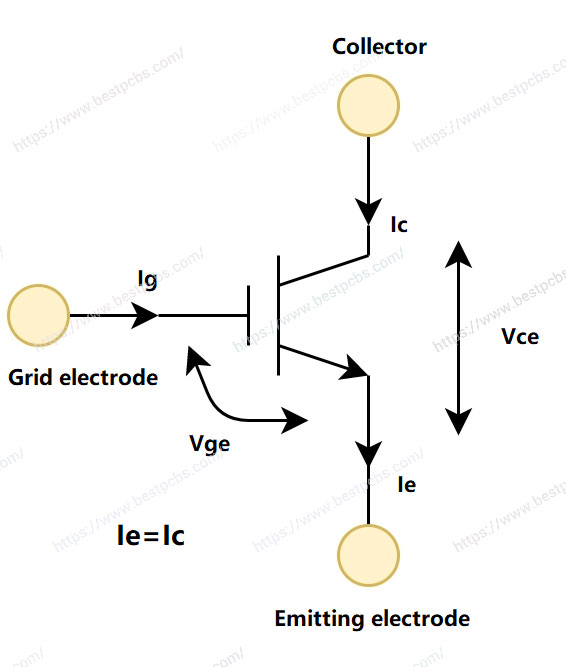
The working principle of IGBT modules including two parts – the current control of MOS gate and BJT transistor. When the voltage of MOS gate changes, it affects the conduction of the transistor, thus controlling the flow of current. When the BJT comes into play, it controls the flow of current, so that improve the working efficiency of the IGBT.

(Working_principle_of_IGBT)

How Does A Ceramic PCB Protect IGBT Modules from Overheat?

As you know, IGBT modules have been applied for many years in various industries such as automotive, industrial, aerospace, consumer electronics, and more. However, optimizing the thermal dissipation of IGBT packaging is crucial to enable the modules to operate at higher power conditions. If heat dissipation is improved, IGBT modules can be used in more advanced applications.

You might be wondering how much heat does an IGBT module generate during running? It’s equivalent to the heat produced by 100 electric furnaces. This substantial amount of heat must be dissipated immediately from the IGBT chip, that’s why the ceramic circuit board stands out.

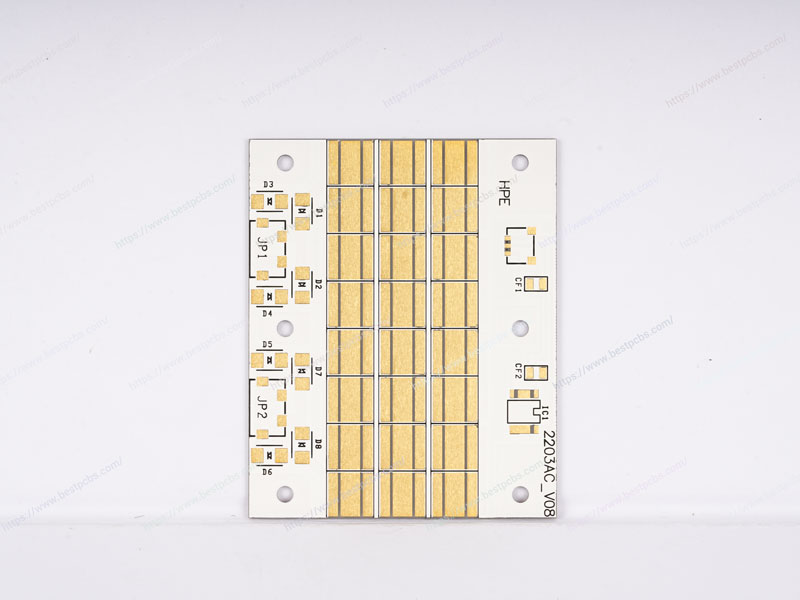
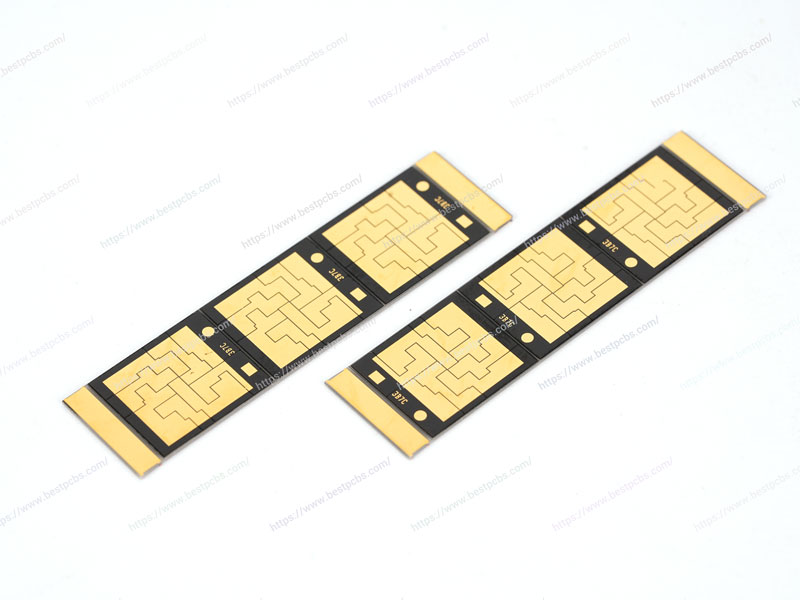
(Ceramic_pcb_with_DPC_technology)

In IGBT modules, ceramic PCBs are placed beneath the IGBT chip, or we can say the chip is assembled on the ceramic circuit board. The ceramic PCB connects and supports the chip, rapidly dissipating heat to the outer package. This method protects the chip from the adverse effects of heat.

Why ceramic PCBs Are Suitable for IGBT thermal dissipation?

Ceramic materials exhibit excellent thermal dissipation and electrical insulation properties. Unlike aluminum metal core PCBs, ceramic PCBs do not use insulation layers that hinder heat dissipation. In the manufacturing process of ceramic PCBs, copper foil is directly bonded to the ceramic substrate under high pressure and temperature (it depends on the different technology and different copper thickness). During PCB manufacturing, IGBT and other components are mounted on the circuit board through assembly technology.

Ceramic materials have extremely high insulation capabilities, enduring breakdown voltages up to 20KV/mm. At present, there are three ceramic materials that can be used for IGBT modules, they are 99% or 96% Alumina (Al₂O₃), Aluminum Nitride (AlN), and Silicon Nitride (Si₃N₄).

The thermal conductivity of alumina PCB is 15-35W/mK, aluminum nitride PCB is 170-230W/mK, and silicon nitride PCB is 80+W/mK. In contrast, aluminum core circuit boards only have a thermal conductivity of 1-12W/mK.

Applications of Ceramic PCBs in IGBT Packaging

Alumina PCBs are the most commonly used circuit boards in IGBT modules due to their lower cost. But if IGBT modules have higher power or precision requirements, AlN ceramic PCBs and Si3N4 PCBs are the most suitable choices. Because they have higher thermal dissipation and thermal expansion coefficients (CTE) close to semiconductors. Since different ceramic substrate has different features, the uses of ceramic PCB should depend on the specific requirements of IGBT modules.

In addition, with the development of Silicon Carbide (SiC) and Gallium Nitride (GaN) materials, they are starting to be used for IGBT chips due to their high-frequency, high-power, and high-temperature characteristics. Maybe in the future, aluminum nitride PCBs and silicon carbide PCBs will be increasingly applied to high-power IGBT modules in high-density three-dimensional packaging.

Common Properties of Using Ceramic Circuit Board

  • Excellent thermal conductivity and voltage resistance of ceramic substrates.
  • Copper trace layers has extremely high current-carrying capacity.
  • Strong adhesion and reliability between circuit layers and ceramic substrates.
  • Good soldering performance, suitable for wire bonding.
(Ceramic_PCB)

How to Solve the Overheat Issues in IGBT?

Though the ceramic PCB is good at heat dissipation, there still some overheat occasions happened if small power or long-time operation. Here we summarized some solutions for such issues.

1. Clean the heat sink to ensure tight contact between the IGBT and the heat sink.

2. Clean the fan, including the fan blades and lubricate the bearings if needed.

3. Clear the airflow path of the fan.

4. Replace with higher power IGBTs, ensuring the withstand voltage is not lower than the original IGBT’s value.

Above all are the information that we’d shared, welcome to contact us if you want to know more. EBest Circuit (Best Technology) is a historic company which has over 17 years PCB manufacturing experience, here you can enjoy the one-stop ODM & OEM service, one-to-one after sales, quick delivery and high-quality products.

What Are Differences of ENIG VS ENEPIG in PCB Manufacturing – Series 1

January 2nd, 2024

Surface treatment also called surface finishing, it is a protective layer that through coating a layer of metal organic material on the surface of printing circuit boards (PCBs). Apply a layer of surface treatment enable to protect pads from scratches and oxidation, as well as improve the solderability of components mounting. ENIG and ENEPIG are the two common high-reliable surface finishing types in the circuit board manufacturing, they are not only for FR4-PCB, but also available in ceramic PCB, flex circuits and rigid-flex PCB. Today, Best Team would like to sharing information about ENIG and ENEPIG, and explore the differences between them.

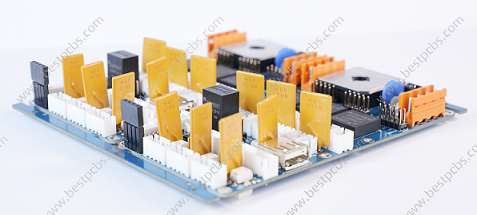
(Assembled_PCB)

How to Select the Right Surface Treatment for Your PCB?

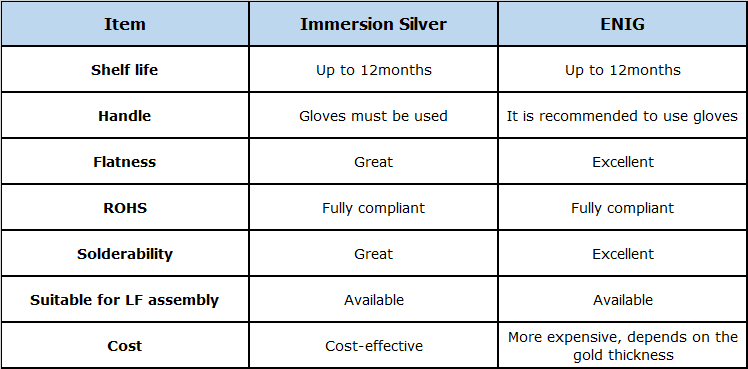
With the rapid development of electronics, there are various of PCB types that can be used in electronic devices, and at the same time, there are also increasingly more surface treatment technics available for selection. Until now, the common surface treatments are OSP, HASL, Immersion Silver, Gold Plating, ENIG and ENEPIG. Each of these surface treatments has its own advantages and disadvantages, so it is necessary to choose the most suitable one for a particular application. The selection of surface finish needs to take into account factors such as cost, application environment, fine-pitch components, the use of leaded or lead-free solder, operating frequency, shelf life, drop and impact resistance, volume and throughput, as well as thermal resistance.

With PCBs trending towards micro-vias and finer traces, and the drawbacks of HASL and OSP, such as flatness and flux elimination issues, becoming more pronounced, the demand for surface treatments like ENIG continues to grow. In addition, black pad is a major weakness of ENIG while ENEPIG enable to solve it very well, making it a preferred choice for those PCBs need to wire bonding.

What is the ENIG Surface Treatment?

ENIG, its full name is Electroless Nickel Immersion Gold, is also known as chemical gold or immersion gold in the electronics industry. This type of surface treatment provides two metal layers—gold and nickel—that manufacturers deposit them on the surface of PCB pads sequentially. This surface finish is a selective surface finish, meaning that certain specific pads may have ENIG surface finish, while others may have different types, such as OSP, HASL, or immersion tin. Here are the main processes of the ENIG coating:

  • Copper activation

In this step, manufacturers will active the copper layer through cleaning process, this way can help to remove the dust and oxides residual on the surface, but also remove any gases or air trapped in the perforations (holes) of the PCB by wetting the surface. Next, micro-etching the PCB surface using substances like hydrogen peroxide or sulfuric acid.

  • Electroless nickel

This process is to coat a layer of nickel on the active copper layer by electroplating. The nickel layer serves as a protective layer or inhibitor, which prevent the copper reactive with other elements.

  • Immersion gold

Immersion gold is the last step of whole ENIG process, immersing the PCB into a mixture, oxidizing the nickel surface, generating nickel ions, and then reducing gold from the mixture. The reduced gold forms a metallic coating to protect the nickel surface. This is the whole process of coating ENIG surface treatment.

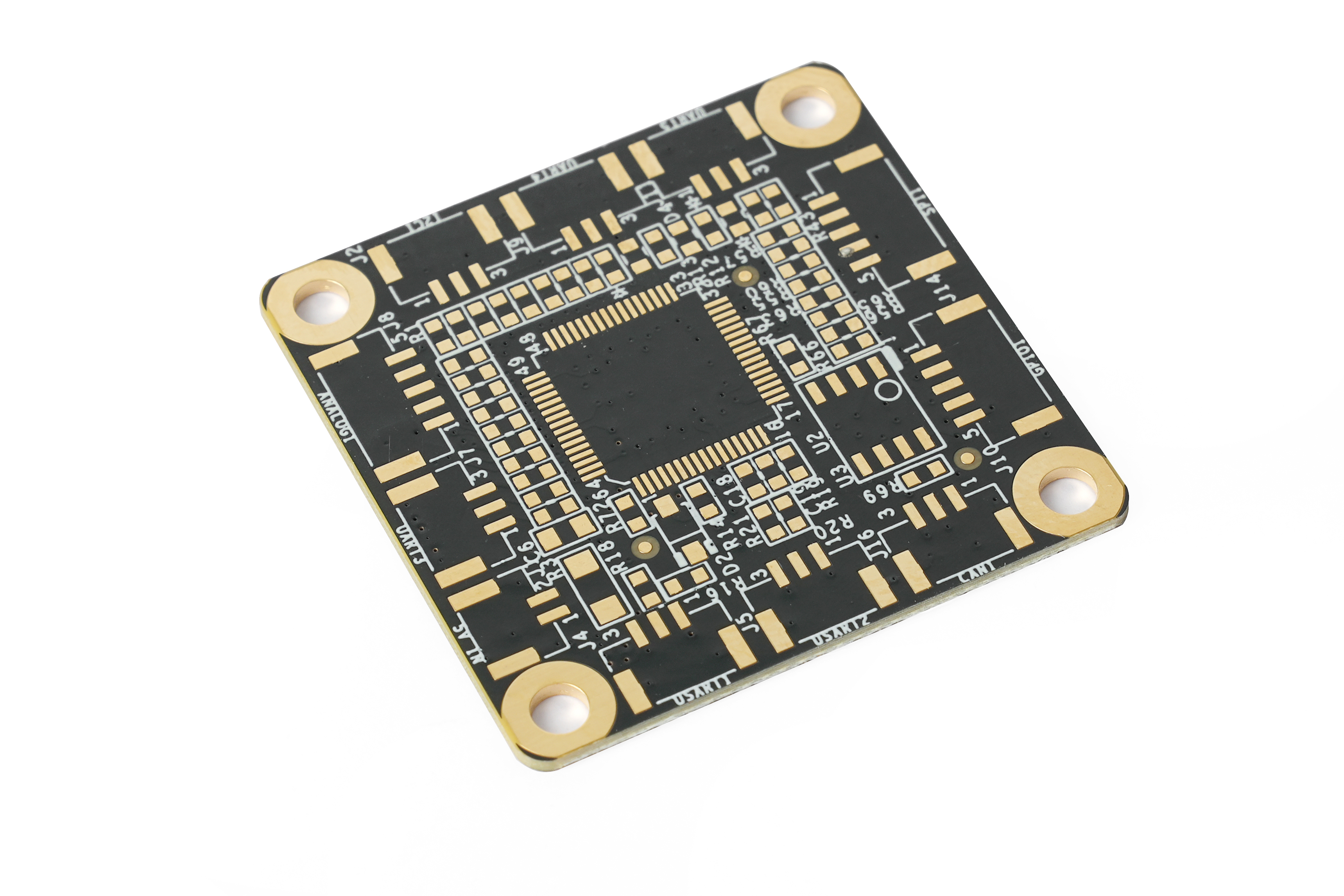
(PCB_with_ENIG_surface_treatment)

Advantages of ENIG

  • Surface flatness – good for fine-pitch and small size components like BGA.
  • Suitable for press-fit components since it provides a reliable connection for electrical testing.
  • Suitable for wire bonding and gold-fingers connectors.
  • Cost-effective compared with ENEPIG

Disadvantages of ENIG

  • Black pad issues.
  • Varied coating thickness because of the uncontrolled nickel plated and immersion gold.
  • Poor wettability during PCB assembly.

All in all, ENIG is a good option if you want to mount fine-pitch components on the PCB surface or if you are considering its use in plug-and-pull devices such as WIFI interfaces. In our next blog, we will introduce ENEPIG surface treatment, including its pros & cons and the differences between ENIG and ENEPIG. Pay attention to our news or contact us directly if you want to know more.

What Is the Role of Electronic Parts on the Circuit Boards?

December 19th, 2023

A circuit board is an independent part of modern electronic devices, equipped with various components that play different roles and functions on the board such as connecting, signal transmission, power distribution, and signal conversion. Theoretically speaking, electronic components are the fundamental units in the devices, and printed circuit board (PCB) serves as a carrier for mounting components, connecting them to completing the functions of electronic systems. Here, we will introduce some common circuit board components and their functions.

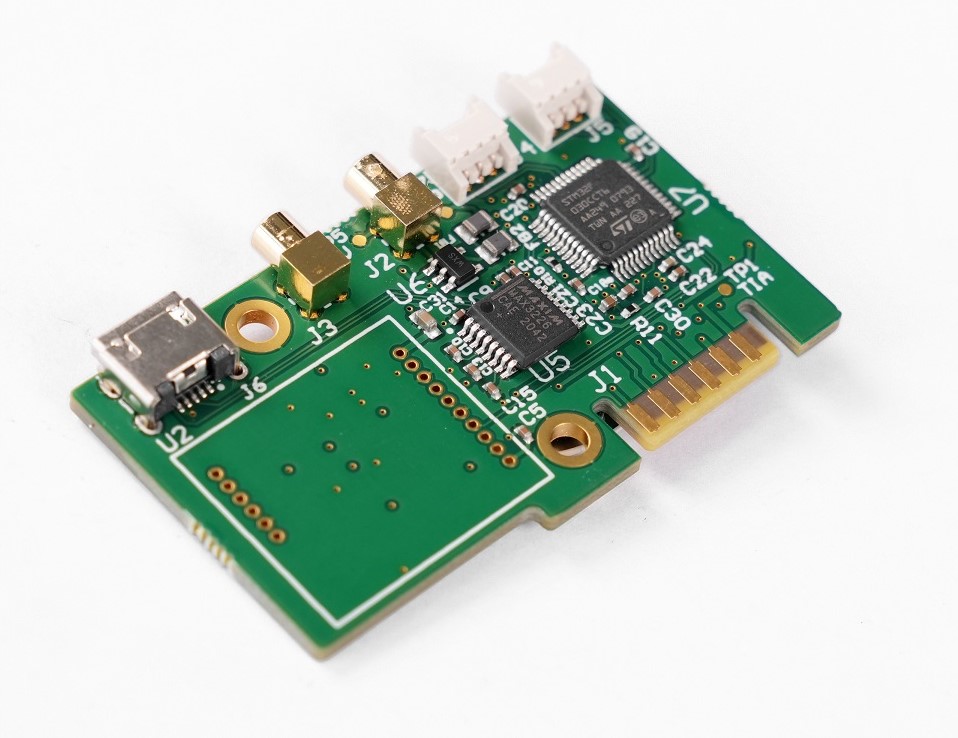
(A_PCB_with_components)

What Are Electronic Components?

Electronic components are fundamental building blocks used in the construction of electronic circuits and systems. These components manipulate electrical signals to perform specific functions in electronic devices. Based on their purpose and functionality, electronic components can be categorized into two major types: passive components and active components.

Passive electronic components mainly include resistors, capacitors, inductors, power filters, and so on. They do not have active operational functions such as amplification or signal control. Instead, passive components can only consume or store electrical energy. In electronic systems, their main roles include signal transmission, distribution, filtering, isolation, and other similar functions.

Active electronic components, on the other hand, include transistors, field-effect transistors (FETs), integrated circuits (ICs). Unlike passive components, active components have the ability to actively amplify, control, and manipulate signals related to current, voltage, frequency, and more. They play a crucial role in electronic systems, enabling active operations and functionalities.

(Components_on_a_pcb)

What Is the Functionality of Common Components on PCB?

On an assembled circuit board (PCBA), we can see various of components on its surface. Different components play its unique role and have different function. Here we will introduce the function of common components.

  • Resistor

A resistor is a component used to restrict the flow of electric current. Its purpose is to control the magnitude of current by adjusting its resistance value, ensuring appropriate current adjustment within the circuit.

  • Capacitor

The capacitor has the ability to store charge and release it when needed. Its function is to smooth power supply voltage, stabilize current, and in some cases, perform signal filtering to accomplish signal conditioning. Resistors and capacitors are two common types of electronic components.

  • Diode

Diode is a type of component with unidirectional conductivity. The uses of diode enable to allow current to flow in one direction while blocking reverse current. It is commonly used in power supplies, rectifiers, and other circuits.

  • Transistor

A transistor functions in amplification and switching in a printed circuit board. Its role is to amplify electronic signals, control the flow of current, and it is widely used in circuits such as amplifiers and logic gates.

  • Integrated Circuit (IC)

Integrated circuit is a very important components in those small size circuits, because it can integrate multiple functional circuits onto a single chip. That means it can save space if your design has limited space, enhance system performance and reliability of devices. Integrated circuits find widespread applications in areas such as computers, communication systems, and embedded systems.

  • Inductor

The working principle of inductor is similar to a capacitor, but the different is an inductor has the ability to store and release energy while capacitor is to store and release charge. Its main function is to accomplish energy conversion and distribution in a circuit. Inductors are commonly used in circuits for filtering, power supplies, and more.

  • Variable Resistor

A variable resistor allows for the adjustment of resistance and it always used for modifying circuit characteristics by changing the resistance value. Variable resistors are commonly used in circuits for functions like volume control, light intensity adjustment and some other devices that need to adjust the resistance.

  • Light Emitting Diode (LED)

LED chips is a component that we can see everywhere need to light up. It converts electrical energy into light energy. Its function includes emitting light for indicators, illumination, and it is widely used in circuits such as display screens and indicator lights.

  • Power Module

Power module is always designed to provide the electrical energy required by a circuit. Using power to stabilize output voltage and current, protecting the circuit from external power fluctuations.

  •  Sensor

A sensor can perceive physical quantities or signals in the surrounding environment and convert them into electrical signals. Its function is to enable interaction between the circuit and the external environment. Sensors find wide applications in areas such as automatic control, the Internet of Things (IoT), and more.

(PCBA)

In summary, the various components on a circuit board have their specific roles, work in conjunction with each other, and collectively achieve the functionality and objectives of the circuit. Understanding the functions of these components allows for a better grasp of the working principles of circuit boards, providing reference and guidance for the design and maintenance of electronic products.

However, for some reasons, inspect the components before PCB assembly is the main method that ensures the reliability of a PCBA. In our next post, we will share how to make the incoming inspection for electronic components, leave your messages if you are interested in it.

What is a E-Tester & how E-tester test PCB?

December 2nd, 2023

We often receive this question from customer” what is a E-Tester?” and” how to do E-Test for FR4 PCB?” Hereby I would like to share with you how to use E-Tester to test PCB.

EBest Circuit (Best Technology) in FR4 PCB circuit manufacturing filed since year 2006, we have more than 17 years experiences in PCB fabrication process. We can provide from the design to turn key service for our customer.

Let us come to today’s topic, now what is a E-Tester?

What is a E-tester?

E-Tester is tooling for test PCB during volume production. E-Tester was used to detect the electrical performance of PCB. It is the essential process to test the PCB by this tester before shipment.

As you may know that during PCB process flow, it might be caused some defects by external factors and this is unavoidable.

So, in order to reduce the loss before PCB goes to the next stage when it is assembled with components, Therefore, the E-Test plays important role in PCB quality control to segregate PCBs with defects from shipment to customers and that’s why most of customers require their PCB manufactures to do 100% E test before shipment.

(E_testers)

The E tester mainly checks the open/short circuit for FR4 PCB.

How to do E-test?

Firstly, set up the E-tester on the testing machine and up test datasheet on the computer. Put the board to the E-tester to test the open/short circuit for board and dielectric strength.

Shorts Test: Check to make sure that NO current flows between separate nets by measuring the amount resistance between them.

Opens Test: Check to make sure there is current flow from one “node” to the next for every net on the board.

(Tester_testing)

During the testing, test whether there is short circuit between different network routes of PCB; test whether the PCB network is open to each PAD, and whether the hole is open; Finally, Insulation strength test and the Impedance test.

If the trace open is found on the bare board, the failure location could be repaired or the bare board has to be scrapped. On the other hand, the cost will be increased when PCB goes to the next stage when it is assembled with components, mainly are the sorting cost, component cost and the assembly cost. The compensation ratio is 10 times or even more than the PCB cost and this damages PCB manufacturer’s profit. The worse case is when PCBA is installed onto the end product, the loss caused by defected PCB could be very painful, say up to thousand times of PCB cost. Therefore, the E-Test plays important role in PCB industry to segregate PCBs with defects from shipment to customers and that’s why most of customers require their PCB suppliers to do 100% E test before shipment.

If you want to know more about testing for FR4 PCB board, welcome to visited www.bestpcbs.com or email us, we are very happy to answer your question.

What is PCB Embedded Component Process?

November 22nd, 2023

The resistance and capacitance buried in multi layers PCB process is a process of burying resistors and capacitors inside the PCB board. Usually, the resistors and capacitors on the PCB are directly soldered on the board through mounting technology, while the buried resistor and capacitor process is to embed the resistors and capacitors into the internal layer of the PCB board.

This kind of printed circuit board consists of a first dielectric layer, a buried resistor, a circuit layer and a second dielectric layer in order from bottom to top. Among them, the part of the buried resistor without a circuit layer on the buried resistor is covered with a polymer isolation layer, and the surface of the polymer isolation layer is roughened, the surface roughness Rz is bigger than 0.01 ÎŒm, and the thickness of the polymer isolation layer at the corners is at least 0.1 ÎŒm.

The printed circuit board of the utility model covers a layer of polymer isolation layer on the surface of the buried resistor, thereby protecting the buried resistor from being attacked and corroded by chemical chemicals during subsequent wet processes such as browning and super-coarseness, and improving the efficiency of manufacturing buried resistors. Resistor plate process capabilities further promote the application of buried resistive plates to inner layer buried resistors.

The advantages of the buried resistor and buried capacitor process include:

1. Space saving:

Since the resistors and capacitors are embedded directly into the internal layers of the board, space on the PCB board can be saved, making the entire circuit board more compact.

2. Reduce circuit noise:

Embedding resistors and capacitors into the internal layers of the board can reduce the electromagnetic interference and noise of the circuit and improve the stability and anti-interference capabilities of the circuit.

3. Improve signal integrity:

The buried resistance and buried capacitance process can reduce the transmission delay and reflection loss of circuit signals and improve the integrity and reliability of signal transmission.

4. Reduce the thickness of the PCB:

However, the buried resistor and buried capacitor process is relatively complicated in terms of manufacturing and repair, because the resistors and capacitors cannot be directly observed and replaced. In addition, the buried resistance and buried capacitance process is usually used in high-end electronic products, and the cost is relatively high.

When it comes to high-density circuit design, PCB buried resistance and buried capacitance technology has become a very useful technology. In traditional PCB layout, resistors and capacitors are usually soldered on the PCB surface in the form of patches. However, this layout method causes the PCB board to take up more space and may cause noise and interference on the surface.

The buried resistance and buried capacitance process solves the above problems by embedding resistors and capacitors directly into the internal layer of the PCB board.

The following are the detailed steps of the PCB buried resistor and buried capacitor process:

1. Make the inner layer:

When making a PCB board, in addition to the conventional layers (such as outer layer and inner layer), it is also necessary to make a separate inner layer specifically for buried resistance and buried capacitance. These internal layers will contain areas for buried resistors and capacitors. The inner layers are usually made using the same techniques as regular PCB manufacturing, such as electroplating, etching, etc.

2. Resistor/capacitor footprint:

Resistors and capacitors are packaged in a special package in the buried resistor and capacitor process so that they can be embedded into the internal layer of the PCB. These packages are usually thinned to accommodate the thickness of the PCB board and have good thermal conductivity.

3. Buried resistor/capacitor:

In the process of making the inner layer, the buried resistor and capacitor process is completed by embedding resistors and capacitors into the inner layer of the PCB board. This can be achieved through a variety of methods, such as using special pressing techniques to embed resistors and capacitors between inner layers of material, or using laser technology to etch holes in the inner layer material and then fill them with resistors and capacitors.

4. Connection layer:

After completing the inner layer of the buried resistor and buried capacitor, connect it to other regular layers (such as the outer layer). This can be achieved through conventional PCB manufacturing techniques such as lamination, drilling, etc.

In general, the buried resistance and buried capacitance process is a highly integrated technology that embeds resistors and capacitors in the internal layer of the PCB board. It can save space, reduce noise, improve signal integrity, and make PCB boards thinner and lighter. However, due to the complexity, the buried resistor and buried capacitor process is usually used in high-end electronic products with higher performance requirements.

How Can I Reduce and Optimize the Cost of My PCB in A Best Way? – Series 2

October 28th, 2023

At our latest blog, may the readers have understood the factors that will affect the PCB price, or maybe one of your have put it into practice that get a price lower than your budget. However, people are always not satisfied by the existing situation. If this is bother you as well, keep reading since this time we are going to sharing some useful tips that enable to optimize your PCB price until to the best.

  • Reduce board complexity

It can be said that try to simplest your design/layout and make it easy to fabricate is the simplest way to reduce your PCB cost. The more complex and irregular the forms, the higher the cost. Just remember: for every circuit board, no need to maintain a fancy diagram to demonstrate its excellence, perform functionality correctly is enough.

  • Design it in right size and thickness

Design your board in right size doesn’t means make it smaller as possible. You must know, if your design is complex and layouts are density, that means maker need to spend more time to assemble them. Highly compact sizes are always expensive, don’t skimp when it counts. Otherwise, more money will be spent to afford what you saved.

And in theory, the more layers and thickness the board, the more cost that manufacturer spend. Numerous layers in the PCB will have an influence for holes and diameters. It is recommended that if thinner thickness is enough, then just do it. 

  • Shapes, holes and rings should be regularly

Normally, keep the PCB as square or rectangular shapes is cheaper than irregular shapes like pentagon.  And large holes and rings enable to smooth the production run and easy to create. For smaller holes and rings means the driller must be smaller and delicate control.

  • Consider volume and choose manufacturer

In our last blog, we emphasize manufacturers will set a minimum order quantity (MOQ), it is common in this industry. So, consider your volume and check multiple quantities before ordering can help to recognize which one is the most cost-effective.

During the evaluation period, talk to your suppliers as soon as possible, knowing more about the material specifications, technical and PCB tolerances. A wrong choice will lead to much time waste and some unnecessary cost. This is we call “trial and error cost”. Try to make all things are clear and correct before production.

  • Pick the best vias

There are totally three types of vias in PCB: though-hole, blind, buried. The through hole can be passed through the whole board, while blind vias is created from top or bottom side to the middle of the board without through to bottom or top side. Buried vias, just as its names, it is buried inside the boards and we can’t see it by naked eyes.

Obviously, through hole is cost performance than other two vias, try to use more instead of blind or buried vias enable to decrease your cost. In additionally, blind and buried vias are always necessary in HDI PCB and RF board, otherwise, you don’t usually use them.

  • Make sure all SMT components on the one side

Trying to make all the surface mounted (SMT) components on the one side of circuit board if possible. In this way, assembler can finish the SMT process in one-time, so that can save much manufacturing time and cost. But if the components are distributed on both sides, it is needed to assemble two times, that is top side first – bottom side second (or sometimes bottom first).

  • Select easily replaceable component parts

It is assumed that one of part on your circuit becomes obsolete, then you must search for replaceable part or update your design if you would like to continuedly use this board. As an extensive experienced PCB manufacturer, we strongly recommend that select components that has standard dimension, so that it is easy to match alternative one.

In addition, visit some manufacturer’s website carefully to see if any components are marked as “obsolete” or “not recommended for new designs” before finishing your design. This enables to avoid secondary update.

  • Follow manufacturer’s PCB fabricate standards

Understand and follow manufacturer’s fabricate standards can keep your unit PCB price in a relative lower cost. When designing a new project, please make sure to following below tips.

  1. Use standard stack-up with standard materials.
  2. Design 2-4 layers PCB if possible.
  3. Keep your minimum line width and spacing within the standard spacing.
  4. Avoid adding extra special requirements as much as possible.
  • Use SMT components as possible

Choose surface mounted (SMT) components instead of through hole (THT) component whenever possible. SMT and THT are almost treated as separated manufacturing processes. Hence, if all the THT components can be replaced by mounted parts, the THT process will be eliminated completely. It is not only decreasing the manufacturing cost, but also reducing delivery time. Of course, it is not always possible, but it’s worth trying.  

Whatever decisions you make, the best solution is to consult and discuss with your suppliers. They be always to give you the best one that can save your money and meet your requirements as well. Meanwhile, if you don’t believe the suppliers, you are welcome to reach us. We promise that we can give you a most favorable price and high-quality product.

The Differences Between Copper PCB and Heavy Copper PCB?

October 21st, 2023

With the fast development of digital era, printed circuit board (PCB) has won a huge market in the electronic industry. Nowadays, electronics can be found everywhere, I can say for each electronic products, you will find a PCB or several pcbs are inside. But not every PCB are the same, each printed circuit board plays its unique roles. When it comes to copper pcb, may someone will think about heavy copper pcb, or even think they are the same. But actually, they are totally different, totally from constructure and functions.

What is Copper PCB?

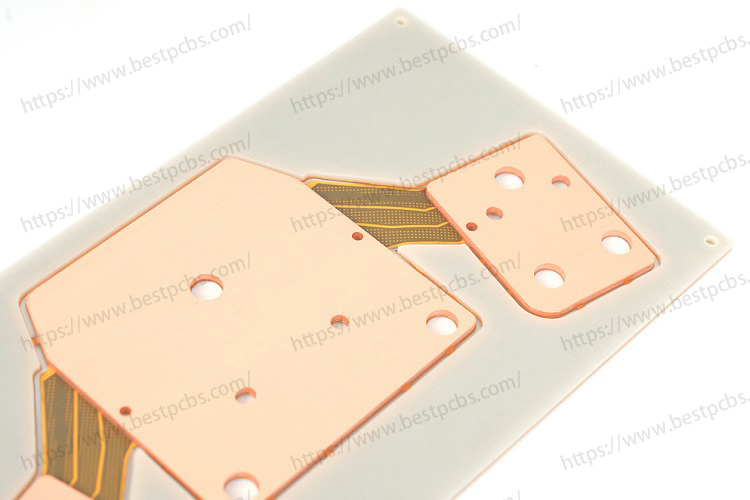
Copper PCB, also known as Copper Core PCB, Copper-based PCB or Copper Clad PCB, which is a type of metal core PCB (MCPCB) that uses copper core as the base substrate. Among all of the PCB types, copper clad pcb is well-known for its extreme high thermal conductivity, which enables to achieve to 401W/m.K, that’s why some people think it is the king of the metal core PCB.

(Copper_core_PCB)

Copper-based PCB consists of three layers: copper foil layer, dielectric layer and base copper layer. Copper foil layer is the electric layer, which is mainly used for components electric connection. Dielectric layer is made by insulation material, so it also called insulation layer. Though it is function as insulation, it has good heat transfer capacity. The base copper layer is the support stone for the whole PCB. Copper core PCB is commonly used in LED lighting and other applications where need good heat dissipation.

What is Heavy Copper PCB?

Heavy copper PCB doesn’t have a clear definition in IPC standard, it is a kind of special PCB just like HDI PCB and extra thin PCB. Generally, for copper thickness equal or exceed 3ounces will be default as heavy copper pcb. For those copper thickness ranges from 20~200ounces is classified as extreme heavy copper PCB.

(Heavy_copper_PCB)

The base substrate of heavy copper PCB can be FR4 material or aluminum, instead of copper base. This is a significant difference between copper pcb and heavy copper pcb. Heavy copper normally used for a various product but not limited to: high power distribution, bas bur, planar transformers, power convertors, and so on. Due to it enables to carry high current and provide high power, people also called it power supply PCB and high-power PCB.

Differences Between Copper PCB and Heavy Copper PCB?

Except the structural composition, there are still some other differences between the copper core circuit board and heavy copper board. Let’s dive into together.

Copper Thickness

Copper core PCBs typically have thinner copper traces, whereas Heavy Copper PCBs have significantly thicker copper layers. If the trace width is certain, increasing the copper thickness is equivalent to increasing the section area of the circuit, so that it can carry more current.

Current-Carrying Capacity

Copper-based circuit boards are suitable for low to medium current applications. In contrast, Heavy Copper PCBs have thicker copper layers, which enables to handle higher currents without overheating. That’s why it is recommended heavy copper circuit board for high power electronics and high-power applications such as electric car.

Heat Dissipation

Actually, both of them are good in heat dissipation capabilities. But due to the copper clad circuit board is made by copper base, while heavy copper printed circuit board uses epoxy resin or aluminum as the base material, copper core PCB is superior to heavy copper PCB in heat dissipation. So, if your application requires better heat transfer but no need to carry higher power, copper core board is the go-to-choice.

Cost Effective

Among the various metal core PCBs, copper core PCB is the most expensive since the copper core itself is expensive, around 6-7 times than the aluminum core PCB.

Heavy copper PCB also is expensive since it has complex manufacturing processes and thick copper layers. But its price mainly depends on how thick copper thickness it needs. So comprehensive consideration, heavy copper pcb is the most cost-effective.

Applications

Copper PCBs are well-suited for smaller consumer electronics, where cost is a significant factor, and heat generation is minimal.

Heavy Copper PCBs are used in power electronics, automotive applications, and industrial equipment, where high current handling and heat management are essential.

Choosing the Right PCB for Your Project

When choosing between Copper Core PCBs and Power Supply PCBs, consider the following factors:

  • Your project’s power requirements
  • Thermal management needs
  • Budget constraints
  • Durability and expected lifespan

By evaluating these aspects, you can make an informed decision on which type of PCB is the best fit for your project.

In summary, the choice between Copper PCBs and Heavy Copper PCBs depends on the specific requirements of your electronic project. Copper PCBs are suitable for low to medium current applications with minimal heat generation. On the other hand, Heavy Copper PCBs offer higher current-carrying capacity and superior heat dissipation, making them ideal for high-power applications. Assess your project’s needs carefully to determine which type of PCB will serve you best.

Do You Know Who Is the King Among the Metal Core PCBs?

October 14th, 2023

Have you ever encountered these problems: your LED beads overheat, lose brightness, and shorten their lifespan? Have you ever thought of using a better PCB material to solve these problems?

If you are considering this question and your answer is yes, then you must learn about thermal-electric separation copper PCB, the king of Metal Core PCB (MCPCB), which can make your LED lamps achieve unprecedented effects.

What is Metal Core PCB?

It is a type of printed circuit board that uses metal material as the heat dissipation layer, commonly used in LED and other high-power electronic products. There are many types of metal core PCB, among which the most common one is aluminum PCB, which has a thermal conductivity of about 1W, suitable for low-power LED lamps.

However, with the development of high-power electronic products and high-frequency PCBs, aluminum PCBs can no longer meet the requirements of heat dissipation and volume. Therefore, more and more products choose copper PCB, which has a thermal conductivity of up to 400W, 400 times that of aluminum PCB. But ordinary copper PCB also has a drawback, that is, its circuit layer and heat layer are on the same layer, which requires connecting the beads and the heat layer through an insulating thermal conductive material, which will reduce the thermal efficiency. To solve this problem, a more advanced copper PCB structure has emerged, called thermal-electric separation copper PCB or SinkPad PCB.

(Thermal_electric_separation_copper_pcb)

Introduction to Thermal-electric Separation Copper PCB

The feature of thermal-electric separation copper PCB is that its circuit layer and heat layer are on different layers so that the beads can directly contact the heat layer, achieving zero thermal resistance heat dissipation. This structure can greatly improve the luminous efficiency and lifespan of the beads, and reduce light decay and heating. Thermal-electric separation copper PCB is very suitable for single high-power beads, especially the COB package, which can make the lamp achieve better effects. In addition, thermal-electric separation copper PCB can also be made into different shapes and structures according to different design needs, such as copper protrusions, copper recesses, parallel heat dissipation, etc.

Below is the structure diagram of ordinary copper PCB and copper substrate bump thermoelectric separation as an example to give you a more intuitive understanding of the advantages of thermoelectric separation copper substrate processing technology.

(Diagram_structure_comprasion)

From the ordinary copper PCB diagram on the left, it can be seen that the heat dissipation needs to pass through the insulating and thermally conductive material (purple part in the picture), which is more convenient to process. However, after passing through the insulating and thermally conductive material, the thermal conductivity is not so good. This kind of suitable for low-power LED lights, which is enough.

If the heat dissipation requirements are very large on automotive LED lamp beads or high-frequency PCBs, both normal aluminum PCB and copper core PCB cannot meet the requirements. It is common to use thermoelectric separation of copper substrates. Because the circuit trace and thermal layer are on the different layers, the thermal layer part directly contacts the LED beads (as shown on the right side of the picture above) to achieve the best heat dissipation (zero thermal resistance) effect.

Besides, there are also many various surface treatment options for the thermal electric separation copper PCB, such as OSP, immersion gold, ENIG, immersion silver, silver plating, ENEPIG, etc. It can be carried out according to different needs, and the surface treatment layer and lifespan are reliable.

Who Can Make Thermal-electric Separation Copper PCB for You?

When you are considering to sample or order thermal-electric separation copper PCBs, it is recommended to choose EBest Circuit (Best Technology). Best team is a professional PCB manufacturer who specializes in PCB manufacturing for over 17 years of experience and provides excellent before and after-sales service. Now, EBest Circuit (Best Technology) highly recommends thermal-electric separation copper PCB for you, and the price is very favorable right now. And we promise that we will make satisfactory thermal-electric separation copper PCB for you with the fastest speed and the highest quality. This is what we are proud of.

If you have any questions or comments about thermal-electric separation copper PCB or more information about our company, please feel free to contact us or e-mail us at sales@bestpcbs.com. We will serve you wholeheartedly.

What Is Ceramic Metallization Technology? – Series 1

October 7th, 2023

Due to the different surface structures of ceramic susbtrates and metal materials, welding/soldering often cannot wet the ceramic surface or form a strong bond with it. Therefore, the joining of ceramics and metals is a special process, which called as metallization.

What Ceramic Metallization Technology Is?

Ceramic metallization refers to the process of firmly attaching a thin layer of metal film to the surface of a ceramic material to achieve a bond between the ceramic and metal. There are various methods for ceramic metallization, commonly including molybdenum-manganese (Mo-Mn) method, directly copper plate (DPC), directly bonded copper (DBC), active metal brazed (AMB) method and more.

Which Ceramics Can Be Used Metallization Technology?

At present, there are four common ceramic substrates that always used for metallization, they are BeO, Al2O3, AlN and Si3O4. But different ceramic has different characteristics, so its metallization method also is different.

  • BeO Ceramic

The most common method for metallizing BeO ceramics is the Mo-Mn method. This involves applying a paste-like mixture of pure metal powders (Mo, Mn) and metal oxides to the ceramic surface, followed by high-temperature heating in a furnace to form a metal layer.

  • Al2O3 Ceramic

The primary metallization methods for Al2O3 ceramics are DBC and DPC. This method involves placing a treated copper foil on the surface of Al2O3 ceramics, introducing an inert gas with a certain oxygen content, and then heating. During heating, the copper surface undergoes oxidation, and when the temperature reaches the eutectic liquid phase region, a eutectic liquid phase is formed, wetting both Al2O3 ceramics and copper, achieving a tight bond. In a chemical sense, the adhesion used by DBC is stronger than DPC since it has thicker copper.

  • AlN Ceramic

Common methods for AlN ceramics include DBC and Active Metal Brazing (AMB). DBC is similar to the method used for Al2O3 ceramics but requires pre-oxidation treatment of AlN ceramics since AlN is a non-oxide ceramic. AMB involves connecting AlN ceramics and copper foils using active metal brazing materials, often Ag-Cu-Ti alloys.

  • Si3N4 Ceramic

Si3N4 ceramics cannot be directly metallized using the direct copper plating method because they do not generate an oxide layer on the surface like AlN ceramics. Si3N4 ceramics are typically connected to metals using the AMB method, where chemical reactions between Si3N4 and active metals (Ti, Cr, V) form continuous nitride layers at the interface.

What is the Metallization Temperature?

During the metallization process, the sinter temperature should be controlled strictly. Normally, it can be divided into four ranges:

  • Ultra-High Temperature (Above 1600°C):

This temperature range is reserved for specific applications where extreme heat resistance is required.

  • High Temperature (1450°C to 1600°C):

High temperatures are essential to ensure that the glass phase spreads and migrates effectively, enabling a strong bond. However, excessively high temperatures can lead to reduced metallization strength.

  • Mid-Temperature (1300°C to 1450°C):

This range is chosen to balance the need for effective metallization with the preservation of material properties.

  • Low Temperature (Below 1300°C):

Lower temperatures are used when the primary concern is avoiding thermal stress on the materials involved.

Proper high sintering temperature is necessary, otherwise, the glass phase will not spread and migrate. But if the temperature is too high, the metallization strength will be poor. So, choose a suitable temperature is important to make sure the metallization effective.

This is all the information about metallization technology, in our next blog, we will delve into what factors will affect the metallization. If you are interested in metallization or other technologies about ceramic circuit boards, please leave your message and keep your eyes in EBest Circuit (Best Technology) website.

What Is The Difference Between Thin Film and Thick Film Ceramic PCBs?

September 25th, 2023

We know due to the rapid development of electronic devices, Ceramic circuit boards have gradually developed into an ideal packaging substrate for a new generation of integrated circuits and power electronic modules. Among them, thick film ceramic substrate and thin film ceramic PCB are the most popular ceramics that be used in package, because they are made by metallization process.

Why use film technology?

Compared with three-dimensional ceramic materials, film has relatively thin thickness and small size, it can be regarded as a two-dimensional structure. Thick film is made by printing process, the thick film can be made independently and the thickness is usually 10~25ÎŒm. Thin film is formed by the composition of the conductor materials and it was sputtering on the ceramic substrate directly. Normally the thickness of thin film is equal or less than 1ÎŒm. If the metallization thickness between 1ÎŒm to 10ÎŒm, then we called it as Directly Plated Copper (DPC) ceramic circuit board.

(ceramic_pcb_with_green_glass_glaze)

Thick Film Technology

Thick film technology is a method of direct deposition of slurry on substrate through screen printing technology, and sintering at high temperature to form conductive traces and electrodes. After the material is sinter at high temperature, it will form a strong adhesion film on the ceramic circuit board, and after repeated many times, it will form a multi-layer interconnected ceramic circuit board with resistor or capacitor. The thick film manufacturing process is more easier than thin film.

(Simply_process_for_thick_film_ceramic)

Thin Film Technology

Thin film ceramic PCB is a chip manufacture technology, which is the main method of metal film deposition in microelectronics fabrication. It was made through evaporation and PVD process firstly to deposited a 200-500nm copper layer as the seed layer. Then using electroplating process to increase the copper foil to required thickness. Finally through stripping and etching to generate the circuits. Thin film ceramic circuit is widely used in LED package fields because its fine traces, high accuracy and heat dissipation.

(Manufacturing_process_of_thin_film_ceramic)

Thin film and Thick film ceramic PCB comparison

In addition to the technology manufacturing difference, their performance and limitations also is different. Here we summarized in below table:

TechnologyThick FilmThin Film
Conductor thick10-25um<=1um
Manufacture processScreen printing, sinterPVD, DES
TCR(50-300) *10-6/C(0-50) *10-6/C
CostRelatively LowHigh for prototype
Line widthThicker line widthFine traces, suitable for RF
Bonding abilityNot suitable for bondingGood for wire bonding
ResistanceAvailableNeed mount resistors
Solder maskAvailableAvailable

Application difference between Thin film and Thick film ceramic PCB

The applications of thin film and thick film also are different because of their different features. Thick film ceramics are widely used in high power devices such as automotive field, power electronics, aerospace due to its ability to handle high current and voltage. Thick film enables to provide excellent thermal management and can dissipation heat effectively. Thin film ceramic PCBs trend to micro-electronics and RF devices because of its fine lines, low resistance, and high-frequency performance.

Each technology has its unique advantages and limitations, it needs to be properly used to make it suitable for different electronic devices and industries. Choose the right ceramic PCB substrate for laymen is a big challenge, so seeking for a reliable supplier is important. EBest Circuit (Best Technology) engaging ceramic circuit board manufacturing for over 10 years. And our core engineering team are deep in this industry for more than 20 years, we are so confident that we can provide the best solution for you. If you are interested in this, welcome to contact us at sales@bestpcbs.com.