PCB manufacturing PCB manufacturing
Home > Blog

4 Layer Aluminum PCB Design & Manufacturer, Over 19 Years

October 10th, 2025

What is 4 layer aluminum PCB? Let’s discover definition, benefits, applications, design spec and guideline, production process for 4L PCB together.

Are you troubled with these issues?

  • How does a 4-layer aluminum PCB eliminate thermal overload concerns in high-power LED/power modules?
  • How to achieve the perfect balance of high performance and low cost with aluminum substrates?
  • How to ensure rapid yet reliable prototyping and mass production with 4-layer aluminum PCBs?

As a 4 layer PCB manufacturer, EBest Circuit (Best Technology) can provide you services and solutions:

  • Thermal Breakthrough: 20 years of aluminum process expertise + micro-via thermal conduction patent, boosting thermal dissipation efficiency by 30%, solving FR4 thermal buildup issues.
  • Cost Breakthrough: Bulk procurement + intelligent production scheduling, reducing per-board costs by 15-20%, delivering unbeatable value in competitive markets.
  • Delivery Breakthrough: 24-hour rapid prototyping + 99.2% on-time delivery, turning time into tangible value.

Welcome to contact us if you have any request for 4 layer aluminum PCB: sales@bestpcbs.com.

What Does a 4 Layer Aluminum PCB Mean?

A 4 layer aluminum PCB is a printed circuit board composed of an aluminum alloy (such as 6061/5052) as the base material, forming a composite structure of “aluminum substrate layer – insulating and thermally conductive layer – multi-layer copper foil layers”.

Its core structure typically includes a 1.5-2.0mm thick aluminum substrate layer (providing mechanical support and efficient heat dissipation), a 30-100渭m thick alumina-filled epoxy resin insulating layer (thermal conductivity 1.5-8 W/m路K, combining electrical insulation and thermal conduction functions), and multi-layer copper foil layers (such as 2oz copper thickness heat dissipation layer, 1oz copper thickness signal/power layer).

What Does a 4 Layer Aluminum PCB Mean?

Why Choose 4-Layers Aluminum PCB Board?

Advantages of 4 layer aluminum PCB board:

  • Enhanced Heat Dissipation & Lifespan: High thermal conductivity (1-8W/m路K) with 4-layer structure reduces thermal resistance by over 50%, minimizing overheating risks for high-heat components like LEDs/power modules, extending product life by 30-50% and cutting maintenance costs.
  • Lightweight & Cost-Efficient: Aluminum is 1/3 the density of copper; 4-layer boards are 40-60% lighter than copper alternatives, with 1.0-1.6mm thickness maintaining strength. Lowers shipping costs by 20-35%, ideal for weight-sensitive applications like drones/automotive electronics.
  • Improved Reliability: Matched thermal expansion coefficient (CTE) with chips reduces solder joint cracking by 40%+ via fiber-reinforced layers, lowering failure rates and boosting end-user satisfaction.
  • EMI Shielding & Stability: Natural EMI shielding plus 4-layer ground plane design creates a Faraday cage effect (60-80dB shielding), minimizing signal interference and system errors, reducing debugging costs.
  • Cost & Eco-Friendly Benefits: Aluminum costs 1/3 of copper; optimized trace density cuts material use, supporting SMT automation. 20-30% lower BOM costs with 15% higher production efficiency. 100% recyclable, lead/halogen-free process meets RoHS, enhancing ESG compliance.
  • Robust Mechanical Performance: 250MPa+ bending strength with fiber reinforcement handles -40掳C~150掳C temperatures and high-vibration environments (e.g., industrial controls), reducing physical damage risks.

When to Use 4 Layer Aluminum PCB?

Applications of 4 Layer aluminum PCBs:

  • High-Power LED Lighting (e.g., stage lights, grow lights).
  • New Energy Vehicle Power Modules (motor controllers, on-board chargers).
  • 5G Base Station RF Power Amplifier Units.
  • Industrial Servo Drives.
  • Medical Imaging Equipment Thermal Management Modules (CT machines, ultrasound probes).
  • Aviation Electronics (airborne radars, satellite communication modules).
Why Choose 4-Layers Aluminum PCB Board?

4 Layer Aluminum PCB Design Specification

Design ParameterTypical Value/Range
Aluminum Core TypeThickness 1.0-3.0mm
Dielectric Layer Thermal Conductivity鈮1.5W/mK
Layer Stack SequenceTotal Thickness 1.6卤0.2mm
Copper Thickness SelectionOuter Layer: 1-3oz / Inner Layer: 0.5-2oz
Thermal Resistance CalculationR胃 < 2.5鈩/W
Thermal Via DesignHole Diameter 0.3mm / Pitch 1.5mm
Insulation Voltage Withstand鈮3kV(AC)
Characteristic Impedance Control卤10% Tolerance
Mounting Hole PositionM3/M4 Standard Hole Size
Warpage Control鈮0.5% of Board Thickness
Solder Mask OpeningOpening Size 鈮 Component Pad + 0.2mm
Surface FinishENIG 0.05-0.1渭m
Thermal Cycling TestNo Delamination/Cracking
Insulation Resistance鈮100M惟 (500VDC)

4 Layer Aluminum PCB Board Design Guide

A guide to 4 layer aluminum PCB design:

1. Aluminum Core Substrate Selection

  • Material Selection Rationale: 6061-T6 aluminum alloy (thermal conductivity: 167 W/mK, tensile strength: 310 MPa) is ideal for high-power applications; 5052 alloy offers superior corrosion resistance for humid environments. Compliance with ASTM B209 ensures material integrity, validated via salt spray testing (ASTM B117) for corrosion resistance.
  • Surface Treatment Parameters: Anodizing employs sulfuric acid electrolyte (150鈥200 g/L) at 15鈥20 V for 30鈥45 minutes. Oxide film thickness (15鈥20 渭m) is verified by eddy-current thickness gauge (卤2 渭m precision). Boiling water sealing ensures insulation resistance 鈮100 M惟 (500 VDC).
  • Flatness Control Standard: Three-point measurement mandates 鈮0.5% board thickness tolerance (e.g., 鈮0.008 mm for 1.6 mm boards), validated by laser profilometry with traceable DFMEA documentation.

2. Thermal Dielectric Layer Design

  • Material Performance Validation: Thermal conductivity 鈮1.5 W/mK is confirmed via laser flash analysis (ASTM E1461). Recommended composite: epoxy resin with 60鈥70% volume fraction of 5鈥15 渭m alumina filler. Glass transition temperature (Tg 鈮150掳C) and CTE (鈮25 ppm/掳C) are verified by DSC and TMA testing, respectively.
  • Lamination Process Control: Vacuum hot-pressing at 180鈥200掳C, 3鈥5 MPa for 90鈥120 minutes achieves thickness uniformity 鈮ぢ5% (X-ray thickness gauge). Adhesion strength 鈮0.8 kN/cm is validated by microsection analysis per IPC-TM-650.

3. Stack-Up Optimization

  • Symmetric Layer Design: “Aluminum base鈥揹ielectric鈥揷opper foil鈥揚P sheet鈥搃nner layer鈥揚P sheet鈥揷opper foil” symmetry ensures total thickness 1.6 卤0.2 mm. ANSYS thermal simulation confirms warpage 鈮0.5% board thickness.
  • Drilling Parameters: High-speed drilling uses 0.3 mm tungsten carbide bits at 50,000鈥60,000 rpm with 0.5鈥1.0 m/min feed rate. Hole wall roughness 鈮25 渭m is inspected optically; plasma desmear ensures cleanliness per IPC-6012.

4. Copper Thickness Allocation

  • Current Density Calculation: Outer layer 1鈥3 oz (35鈥105 渭m) follows J=I/(w脳t) with 鈮4 A/mm虏 current density. Inner layer 0.5鈥2 oz (17鈥70 渭m) utilizes pulse plating for localized thickness enhancement.
  • Trace Design Rules: Minimum trace/space meets manufacturing capability (e.g., 0.1 mm/0.1 mm). Etch factor 鈮2.5 is verified by metallographic microscopy. Differential pair impedance is controlled within 卤10% via Polar Si9000 calculations and TDR validation.

5. Thermal Management Solutions

  • Thermal Via Arrays: 0.3 mm via diameter/1.5 mm pitch design is thermally validated by R胃=螖T/P. Electroplated copper filling achieves 鈮95% fill rate, confirmed by cross-sectional analysis.
  • 3D Thermal Simulation: ANSYS Icepak models power density 鈮5 W/cm虏, ensuring critical components operate 鈮125掳C. Post-thermal cycling (-55掳C~125掳C, 1000 cycles) acoustic microscopy confirms no delamination/cracking.

6. Electrical Performance Assurance

  • Dielectric Withstanding Voltage: 鈮3 kV AC is ensured by dielectric thickness (鈮0.1 mm) and material selection. Hipot testing (3 kV AC, 1 min) confirms no breakdown. Insulation resistance 鈮100 M惟 (500 VDC) is validated by pressure cooking (85掳C/85% RH, 168 h).
  • Impedance Control: 卤10% tolerance for characteristic impedance is achieved via differential pair design and TDR verification.

7. Mechanical Enhancement Strategies

  • Warpage Mitigation: Symmetric stack-up and stress compensation limit warpage 鈮0.5% board thickness. M3/M4 mounting holes feature 鈮25 渭m plated wall thickness (X-ray inspection).
  • Solder Mask Design: Opening size 鈮 component pad +0.2 mm is optically measured. LPI solder mask ensures edge smoothness 鈮0.1 mm and 20鈥30 渭m thickness (film thickness gauge).

8. Surface Finish Selection

  • ENIG Parameters: 3鈥8 渭m nickel (XRF) and 0.05鈥0.1 渭m gold (SEM) layers withstand -40掳C~125掳C thermal shock (500 cycles) and solderability tests (288掳C, 3脳10 s).
  • Alternative Finishes: OSP suits lead-free soldering (鈮260掳C tolerance); immersion silver offers high conductivity (鈮2脳10鈦 S/cm) for RF applications. Selection balances cost and performance.

9. Reliability Verification System

  • Thermal Cycling Test: Post-1000-cycle (-55掳C~125掳C) inspection includes acoustic microscopy and electrical testing.
  • Thermal Stress Test: Solder dip (288掳C, 3脳10 s) followed by microsection analysis (鈮0.8 kN/cm adhesion) and dye penetration testing.

10. Manufacturing Process Control

  • Drilling Accuracy: X-ray drilling achieves 卤50 渭m positional accuracy. AOI covers defect detection (shorts/opens, mask defects) per IPC-A-600.
  • Lamination Monitoring: Real-time pressure (卤5%) and temperature (卤2掳C) control via sensors. Microsection and dye testing data are logged in MES for traceability.
4 Layer Aluminum PCB Board Design Guide

    How to Make a 4 Layer Aluminum Printed Circuit Board?

    4-Layer Aluminum PCB Manufacturing Process:

    1. Material Preparation & Substrate Pretreatment

    • Substrate Selection: Use 6061-T6/5052 aluminum alloy (thermal conductivity: 167/190 W/mK) with 1.0鈥3.0 mm thickness. Surface undergoes anodizing treatment (oxide film 15鈥20 渭m) and salt spray testing (ASTM B117) for corrosion resistance. Copper foil thickness follows design specifications (outer layer: 1鈥3 oz; inner layer: 0.5鈥2 oz) with flatness 鈮0.5% board thickness.
    • Cutting & Cleaning: Precision cutting to design dimensions followed by ultrasonic cleaning to remove contaminants. Protective film applied to aluminum surface to prevent scratches; gloves mandatory during handling.

    2. Inner Layer Core Board Fabrication

    • Pattern Transfer: Clean copper-clad laminate, apply photoresist, and transfer circuit patterns via UV exposure (15鈥20 mJ/cm虏 energy). Develop and cure photoresist to form protective layer.
    • Etching & Stripping: Alkaline etching (e.g., NaOH) removes unprotected copper; line width/spacing verified via metallographic microscopy (etch factor 鈮2.5). Photoresist stripped post-etching; circuit integrity checked for opens/shorts.

    3. Lamination Process

    • Stack-Up Structure: Symmetric “aluminum base鈥揹ielectric鈥揷opper foil鈥搃nner layer鈥揚P sheet” configuration ensures total thickness 1.6 卤0.2 mm. Dielectric layer uses high-thermal-conductivity epoxy resin with ceramic fillers (鈮1.5 W/mK); pre-lamination vacuum baking removes moisture.
    • Hot Pressing: Vacuum hot press at 180鈥200掳C/3鈥5 MPa for 90鈥120 minutes ensures PP sheet fusion. Post-lamination X-ray inspection verifies layer alignment (鈮ぢ50 渭m); warpage 鈮0.5% board thickness via laser measurement.

    4. Drilling & Hole Metallization

    • Drilling Parameters: Tungsten carbide drill bits (0.3 mm diameter) operate at 50,000鈥60,000 rpm with 0.5鈥1.0 m/min feed rate. Plasma desmear cleans hole walls (IPC-6012 compliant).
    • Copper Plating: Electroless copper + electroplating forms 25 渭m copper layer. TDR testing validates impedance control (卤10% tolerance); cross-section analysis confirms 鈮95% fill rate.

    5. Outer Layer Circuit Fabrication

    • Pattern Transfer: Positive photoresist process for outer layers; alkaline etching forms circuits. Tin stripping retains protective layer. AOI inspects line width/spacing compliance.
    • Surface Finish: ENIG (3鈥8 渭m nickel/0.05鈥0.1 渭m gold) verified by XRF/SEM. Alternatives include OSP (鈮260掳C heat resistance) or immersion silver (鈮2脳10鈦 S/cm conductivity) based on application requirements.

    6. Solder Mask & Legend Printing

    • Solder Mask Application: LPI solder mask applied via screen printing, pre-baked, exposed, and developed. Edge smoothness 鈮0.1 mm; thickness 20鈥30 渭m. Opening size 鈮 component pad +0.2 mm ensures solderability.
    • Legend Printing: Screen-printed component identifiers with clear, non-overlapping fonts. Cured for adhesion durability.

    7. Profiling & Cutting

    • V-Cut/Routing: V-Cut separates boards with burr height 鈮25 渭m. Precision routing ensures dimensional tolerance 鈮ぢ0.1 mm. Deburring performed post-cutting.

    8. Testing & Inspection

    • Electrical Testing: Flying probe tests verify connectivity; AOI detects shorts/opens; X-ray checks layer alignment. Insulation resistance 鈮100 M惟 (500 VDC); dielectric strength 鈮3 kV AC.
    • Reliability Testing: Thermal cycling (-55掳C~125掳C, 1000 cycles), thermal shock (288掳C solder dip 脳3), and vibration testing per IPC-6012. Acoustic microscopy confirms no delamination/cracking.

    9. Packaging & Shipment

    • Cleaning & Packaging: Ultrasonic cleaning removes residues; vacuum packaging prevents moisture ingress. Packaging includes product labels and quality reports (dimensional, electrical, reliability data).
    • Final Inspection: Full inspection by FQC and random checks by FQA ensure compliance with customer specifications and industry standards.
    How to Make a 4 Layer Aluminum Printed Circuit Board?

      Why Choose EBest Circuit (Best Technology) as 4 Layer Aluminum PCB Manufacturer?

      Reasons why choose us as 4 layer aluminum PCB manufacturer:

      • Cost Optimization Leadership: Leverage 19 years of process expertise and bulk procurement advantages to deliver cost-sensitive design solutions, reducing production costs by 15%-20% versus industry benchmarks while maintaining high performance.
      • Certification Compliance: Full spectrum of certifications including ISO 9001, IATF 16949 (automotive), medical-grade approvals, and RoHS compliance, enabling seamless market access across automotive, medical, and consumer sectors.
      • Free DFM Support: 19 years of aluminum PCB expertise identifies over 90% of early-stage manufacturability risks via free DFM analysis, reducing rework costs and time
      • Reliable Delivery Performance: Achieve 99.2% on-time delivery rate through intelligent production scheduling and end-to-end visibility, minimizing supply chain risks and inventory pressure.
      • Strict Quality Inspection: Implement 100% full-inspection with AOI/X-ray systems, achieving defect rates below 0.05% and exceeding industry standards for batch-to-batch consistency.
      • Integrated One-Stop Service: Streamline design-prototype-production-testing workflows, cutting client coordination efforts by 40% and enhancing project efficiency from concept to mass production.
      • Custom Technical Support: Provide specialized solutions for aluminum PCB thermal management and high-temperature reliability, including thermal simulation and impedance optimization.
      • Rapid Response Excellence: Support 24-hour rapid prototyping for urgent orders, cutting development cycles by 50% compared to industry norms and accelerating market entry.
      • Sustainable Manufacturing: Adopt eco-friendly processes and materials compliant with RoHS/REACH, supporting global market compliance and eco-certification goals.

      Our Multilayer Aluminum PCB Capabilities

      ParameterCapabilities
      Base MaterialAluminum Base
      Thermal Conductivity (Dielectric Layer)0.8 W/(m路K), 1.0 W/(m路K), 1.5 W/(m路K), 2.0 W/(m路K), 3.0 W/(m路K)
      Board Thickness0.5mm~3.0mm (0.02鈥硚0.12鈥)
      Copper Thickness0.5 OZ, 1.0 OZ, 2.0 OZ, 3.0 OZ, up to 10 OZ
      Outline ProcessingRouting, Punching, V-Cut
      Soldermask ColorWhite/Black/Blue/Green/Red Oil
      Legend/Silkscreen ColorBlack/White
      Surface FinishingImmersion Gold, HASL (Hot Air Solder Leveling), OSP (Organic Solderability Preservative)
      Max Panel Size600mm 脳 500mm (23.62鈥 脳 19.68鈥)
      Packing MethodVacuum Packaging/Plastic Bag Sealing
      Sample Lead Time (L/T)4~6 Days
      Mass Production Lead Time (MP)5~7 Days

      How to Get a Quote for Multilayer Aluminum PCB Project?

      Multilayer Aluminum PCB Project Quote Request:

      1. Board Specifications

      • Layer Count: 4-layer (specified as aluminum-core).
      • Dimensions: Exact PCB size (length 脳 width 脳 thickness).
      • Material Type: Aluminum substrate (e.g., Al5052, Al6061) + FR4/epoxy dielectric layers.
      • Surface Finish: ENIG, HASL, OSP, or other (specify for solderability/corrosion resistance).

      2. Technical Parameters

      • Minimum Trace Width/Spacing: Critical for manufacturing precision (e.g., 0.1mm/0.1mm).
      • Impedance Control: Required tolerance (e.g., 卤10% for RF/high-speed signals).
      • Thermal Management Features: Thermal via density, heat sink integration, or copper pour requirements.

      3. Production Details

      • Order Quantity: Prototype (1-100pcs) / Small batch (100-1000pcs) / Mass production (1000+ pcs).
      • Delivery Timeframe: Urgent (3-5 days) / Standard (7-10 days) / Economy (14+ days).
      • Special Requirements: Buried/blind vias, edge plating, conformal coating, or RoHS/REACH compliance.

      4. Design Files

      • Gerber RS-274X files + Drill drawings.
      • BOM (Bill of Materials) if applicable.
      • 3D STEP models for mechanical fit validation (optional but recommended).

      Welcome to submit your Gerber files to us for a quote now: sales@bestpcbs.com.

      One-Stop Solution for Reliable and Fast PCB Manufacturing Australia

      October 10th, 2025

      PCB manufacturing Australia聽plays a vital role in the country鈥檚 growing electronics market. This blog explores PCB manufacturing in Australia鈥檚 key cities, outlines the production process, discusses best practices for custom PCB projects, presents a case study, and highlights the advantages of partnering with EBest Circuit (Best Technology).

      When starting Australian PCB projects, have you ever encountered these common challenges?

      • Inconsistent Quality 鈥 Poor solder joints, uneven copper, or signal issues from supplier variability.
      • Unreliable Lead Times 鈥 Delays from imported materials or small-batch runs disrupt schedules.
      • Communication Gaps 鈥 Slow or unclear DFM feedback leads to repeated revisions.
      • Limited Production Flexibility 鈥 Scaling from prototypes to mass production can be difficult.
      • Material & Technical Challenges 鈥 Choosing the right substrate, copper thickness, and thermal management is critical for reliability.

      EBest Circuit (Best Technology) helps Australian clients overcome these issues with:

      • Strict Quality Control 鈥 ISO-certified processes ensure consistent and reliable PCBs.
      • Flexible Lead Times 鈥 Rapid prototyping and scalable mass production with efficient logistics.
      • Dedicated Engineering Support 鈥 Real-time DFM reviews and production updates minimize errors.
      • Scalable Production 鈥 From small batches to full-scale runs, meeting all project stages.
      • Material & Process Expertise 鈥 FR4, aluminum, or ceramic substrates optimized for thermal, electrical, and mechanical performance.

      EBest Circuit (Best Technology) has about 20 years of experience in dealing with PCB manufacturing and EMS PCBA projects in a rapidly growing market. Our valuable experience is a stepping-stone towards rational solutions for your PCB and PCB assembly Australia projects. If you need any PCB or PCBA specifications or would like to get more information about our company, pls contact us at sales@bestpcbs.com.

      PCB Manufacturing Australia

      What Are the Advantages of PCB Manufacturing Australia?

      PCB manufacturing Australia offers clear benefits for projects that demand traceability, reliability, and close collaboration. Below are the main advantages for your review.

      1. Superior quality and strict compliance

      • High standard quality control: Australian manufacturers run modern equipment and follow recognized quality systems such as ISO. Every board passes systematic inspection before shipment.
      • Environment and safety first: Local regulations enforce cleaner processes and careful material use. This matters most for medical, aerospace, and telecom applications where traceability is non-negotiable.
      • Pain point 鈫 Solution: Customers often worry about inconsistent quality. Local production reduces that risk because audits and corrective actions happen faster and more transparently.

      2. Seamless communication and faster iteration

      • Same time zone collaboration: Real-time meetings are easy. Engineers and buyers can resolve questions the same day.
      • Clear, actionable DFM feedback: Submitting Gerber files triggers immediate design checks and practical suggestions. Early fixes cut expensive rework later.
      • Pain point 鈫 Solution: Delayed feedback derails schedules. Local teams shorten review cycles and keep development on track.

      3. Supply-chain agility and tighter project control

      • Shorter lead times: Local logistics mean parts and boards move faster from production to deployment.
      • Small-batch and mixed production friendly: Australian suppliers handle prototypes and mid-volume runs without long wait times.
      • Pain point 鈫 Solution: Clients who face urgent field tests or rapid revisions benefit from quicker turnarounds and lower inventory risk.

      4. Strong suitability for high-reliability sectors

      • Traceability and documentation: Batch records, lot trace, and test reports are standard. That matters for regulated industries.
      • Material and process flexibility: Options for FR-4, metal core, and advanced substrates are available for thermal or mechanical demands.
      • Pain point 鈫 Solution: For projects where failure is costly, local manufacturing offers the documentation and control auditors expect.

      5. Best practice 鈥 combine local strengths with international scale

      • Hybrid strategy recommended: Use Australian manufacturers for prototypes, urgent runs, and regulated products. Shift to global partners for very large volumes to gain cost and capacity benefits.
      • How EBest Circuit (Best Technology) complements local makers: We provide scalable mass production, consistent global quality control, and fast delivery. This fills gaps when projects grow beyond local capacity.
      • Pain point 鈫 Solution: Customers often face a trade-off between local control and global scale. A blended supply approach keeps product quality high while lowering long-term costs.

      In summary, for teams that prize compliance, quick iteration, and predictable outcomes, PCB manufacturing Australia delivers tangible gains. Local manufacturers excel at quality, communication, and agility. When projects demand scale, partnering with an experienced international manufacturer such as EBest Circuit (Best Technology) provides cost efficiency and production elasticity 鈥 without sacrificing traceability or service.

      PCB Manufacturing Brisbane

      Brisbane has become a dynamic hub for industrial innovation and IoT development. The city鈥檚 engineering scene thrives on collaboration between startups, research groups, and manufacturing firms, driving strong demand for prototype and small-batch PCB production. Local facilities often emphasize design flexibility and quick delivery to support early-stage projects.

      • Circuit Solutions Brisbane 鈥 specializes in rapid prototyping and assembly support, helping research teams transition from layout to hardware validation.
      • PCB Fast Australia 鈥 focuses on low-volume manufacturing with precise impedance control, serving R&D labs and smart device developers.
      • Queensland Circuits 鈥 offers PCB assembly and functional testing for automation and industrial control systems.

      Many Brisbane clients begin their product journey locally but face challenges when scaling up. EBest Circuit (Best Technology) bridges that gap by providing engineering-backed manufacturing and high-quality multilayer PCB fabrication. With efficient prototyping and volume production under one roof, Brisbane innovators gain both agility and reliability for long-term development.

      PCB Manufacturing Melbourne

      Melbourne鈥檚 PCB manufacturing sector serves some of Australia鈥檚 most demanding industries鈥automotive electronics, medical equipment, and renewable energy systems. These fields prioritize material stability, heat management, and compliance with international standards. As a result, Melbourne-based PCB producers have developed strong capabilities in high-reliability design and multilayer technology.

      • PCB Design & Manufacturing Pty Ltd 鈥 specializes in complex circuit fabrication for automotive control units.
      • Epectec Melbourne 鈥 delivers end-to-end PCB design and testing services for industrial customers.
      • Circuitwise Electronics Manufacturing 鈥 focuses on medical-grade PCBs and operates under ISO-certified production environments.

      However, local facilities sometimes face extended lead times and limited capacity during high-demand periods. EBest Circuit (Best Technology) complements Melbourne鈥檚 advanced engineering strength with global-scale manufacturing, supporting large-volume runs without sacrificing precision. Our engineering team works closely with clients to optimize material choices, ensuring consistent results across every batch.

      PCB Manufacturing Sydney

      Sydney stands at the forefront of Australia鈥檚 technology innovation, where electronics design firms handle multiple product iterations at once. Rapid prototyping, cost control, and dependable supply are essential in this fast-paced environment. The city鈥檚 PCB manufacturers serve diverse sectors鈥攆rom communications and defense to consumer electronics鈥攔equiring quick response and consistent performance.

      • Altronics Sydney 鈥 provides PCB fabrication alongside electronic component sourcing for local developers.
      • GippsTech Electronics 鈥 supports complete prototype-to-production services, helping tech startups transition smoothly into scalable manufacturing.
      • Sydney Circuits 鈥 focuses on precision PCB assembly for defense and communication projects.

      Yet as project volumes grow, local workshops may struggle to maintain short turnaround times. EBest Circuit (Best Technology) supports Sydney鈥檚 fast-moving innovators with flexible production schedules, transparent process tracking, and MES-based traceability. Our coordinated engineering support helps reduce iteration cycles while maintaining consistent quality, giving Sydney designers confidence from concept to completion.

      PCB Manufacturing Perth

      Perth鈥檚 PCB market is deeply connected to mining automation, defense electronics, and power management systems鈥攊ndustries that demand robust and thermally stable circuit designs. Reliability under extreme conditions is key, so manufacturers here often work with thick-copper PCBs, aluminum substrates, and ceramic-based boards.

      • WA Electronics 鈥 produces heavy-copper PCBs for industrial controllers and mining applications.
      • Perth Circuits 鈥 focuses on energy and automation systems using advanced insulation materials.
      • PowerFab Australia 鈥 provides end-to-end support for high-current and ruggedized circuit assemblies.

      When projects move from pilot testing to large-scale implementation, many Perth clients seek consistent, cost-effective production partners. EBest Circuit (Best Technology) meets these needs with diverse material capabilities and strict quality management. Our experience in thick-copper, aluminum, and ceramic PCB manufacturing helps Perth industries achieve reliable performance even in harsh field environments.

      What Is the Manufacturing PCB Process?

      The manufacturing PCB process involves multiple stages that determine the precision and stability of the final product:

      • 1. Gerber file preparation: Customers provide accurate design data with clear layer definitions.
      • 2. Material selection: Choosing FR4, aluminum, or ceramic depending on heat and power needs.
      • 3. Imaging and etching: Conductive paths are transferred onto copper-clad laminates.
      • 4. Drilling and plating: Holes and vias are plated to ensure reliable connections.
      • 5. Solder mask and silkscreen: Protective coating and labeling improve assembly efficiency.
      • 6. Surface finish: Options like ENIG, HASL, or OSP enhance solderability and durability.
      • 7. Electrical testing: Each PCB is verified for shorts, opens, and impedance control.
      • 8. Packaging and delivery: Clean, anti-static packaging preserves quality during transport.

      Throughout this process, EBest Circuit (Best Technology) integrates MES data tracking to ensure every step meets IPC standards.

      What Are Considerations When Supporting Custom PCB Australia Projects?

      Developing custom PCB Australia projects requires more than just a good layout. It鈥檚 about bridging design creativity with manufacturing practicality. A well-structured process helps avoid delays, ensure accuracy, and reduce unnecessary costs.

      1. Align Design Intent with Manufacturability

      The first step is ensuring that your schematic and layout can be efficiently translated into production. Even minor oversights 鈥 such as incorrect copper thickness or misaligned drill holes 鈥 may affect circuit integrity. Early communication between designers and manufacturers helps prevent these issues and streamlines the transition from prototype to fabrication.

      2. Verify Critical Parameters Early

      Before moving to production, engineers should confirm key specifications such as:

      • Copper thickness and layer stack-up for current capacity and thermal balance.
      • Hole size tolerances to maintain component fit and electrical reliability.
      • Impedance control requirements for high-speed signal performance.

      Addressing these factors upfront ensures the final board behaves exactly as intended, especially in complex or multilayer designs.

      3. Resolve Communication Gaps During Production

      At EBest Circuit (Best Technology), we often notice that project challenges arise from unclear DFM feedback or missing technical confirmations. To counter this, we assign a dedicated project engineer for every custom order. This engineer:

      • Reviews Gerber files and validates stack-up feasibility.
      • Provides detailed DFM and impedance feedback.
      • Offers real-time production updates through our MES-controlled system.

      This hands-on coordination minimizes misunderstandings and helps customers stay informed throughout each production phase.

      4. Start Small Before Scaling Up

      Instead of moving directly into mass production, we encourage clients to begin with small batch validation runs. This phase is crucial for:

      • Verifying mechanical fit and component solderability.
      • Evaluating signal performance and thermal response.
      • Adjusting design details before full-scale rollout.

      By validating performance early, customers reduce both risk and cost, ensuring smoother large-volume production.

      5. Partner with a Reliable Manufacturing Team

      Supporting Australian custom PCB projects means combining local engineering expertise with global production strength.
      EBest Circuit (Best Technology) offers flexible order quantities, strict quality control, and transparent communication. Whether it鈥檚 FR4, aluminum, or ceramic substrate, our team helps you choose the right materials for long-term stability and performance.

      Case Study: Delivering the Custom PCB Australia Project at EBest Circuit (Best Technology)

      A leading Australian medical device manufacturer required high-reliability multilayer PCBs for their next-generation respiratory therapy equipment. These devices integrate complex signal processing, power management, and wireless communication modules, demanding strict thermal control, signal integrity, and consistent appearance.

      Board Specification:

      • Board Specification:鈥鈥 3L FR4 TG170 with embedded copper coin
      • Surface Finish:鈥鈥 Immersion Gold 2U”
      • Solder Mask:鈥鈥 Black with White Silkscreen
      • Inner Layer Copper:鈥鈥 1.6 oz
      • Outer Layer Copper:鈥鈥 2 oz
      • Board Thickness:鈥鈥 2.0MM 卤10%
      • Panel Size:鈥鈥 200 * 120MM/PCS

      This board design balances high-temperature stability (TG170), efficient heat dissipation (embedded copper coin), and aesthetic appearance (black solder mask with white silkscreen). The solution meets the strict reliability, traceability, and visual consistency requirements expected in medical-grade electronics.

      Why Choose EBest Circuit (Best Technology) for PCB Manufacturing Australia?

      Choosing the right PCB partner in Australia is more than comparing prices. It鈥檚 about finding a manufacturer that listens, communicates clearly, and supports your goals. EBest Circuit (Best Technology) combines the efficiency of China鈥檚 mature supply chain with the reliability Australian companies expect.

      • Quality Certifications: We鈥檙e certified under ISO 9001, ISO 13485, IATF 16949, and AS9100D, ensuring every step meets global standards.
      • Traceability & Support: Our MES system guarantees full traceability and transparency, while our technical support team provides responsive communication to avoid costly mistakes.
      • End-to-End Services: From PCB fabrication Australia to PCB assembly Australia, EBest Circuit (Best Technology) delivers complete turnkey solutions.

      We understand your pain points 鈥 delays, quality inconsistencies, and unclear communication 鈥 and turn them into a smooth and predictable process. That鈥檚 how we help you scale your innovation faster and smarter.

      This blog provides a comprehensive overview of PCB manufacturing across major Australian cities, explains the PCB production process, highlights key considerations for custom projects, showcases a real-world case study, and demonstrates why EBest Circuit (Best Technology) is a trusted partner. Ready to start your next PCB manufacturing Australia project?聽Pls send your Gerber files or inquiries to聽sales@bestpcbs.com聽today and experience professional聽PCB production Australia聽services built on trust and precision.

      12 Layer PCB Design & Manufacturer, Rapid Prototyping

      October 10th, 2025

      What is 12 Layer PCB? Let’s explore thickness, stackup configuration, design spec, design guide, lead time, cost for 12 layer PCB.

      Are you worried about these problems?

      • How to resolve the dual challenge of “signal layer crosstalk” and “EMI exceedance” in 12-layer PCB design?
      • During multi-layer PCB manufacturing, how to prevent “laminate misalignment” from causing shorts/opens and ensure first-pass yield?
      • When research cycle is compressed to 3 weeks, how to achieve the perfect balance of “rapid prototyping” and “quality control”?

      As a 12 layer PCB manufacturer, EBest Circuit (Best Technology) can provide you services and solutions:

      • Design Empowerment: Free DFM (Design for Manufacturing) analysis + signal integrity simulation, delivering optimized reports within 3 days to minimize design revisions and ensure first-time success.
      • Process Guarantee: Utilizing imported high-precision laminators with layer-to-layer alignment accuracy 鈮0.05mm, complemented by AI-powered visual inspection to eliminate “hidden cracks” and ensure robust quality.
      • Speed Advantage: Standard prototyping delivered in 5 days, with emergency orders supported by a “green channel” for 24-hour progress tracking.

      Welcome to contact us if you have any request for 12 layer PCB: sales@bestpcbs.com.

      What is 12 Layer PCB?

      A 12 layer PCB (12-Layer Printed Circuit Board) is a multilayer printed circuit board composed of 12 layers of conductive copper foil alternately laminated with insulating substrates. Its core design is realized through a precision laminated structure: typically incorporating multiple signal transmission layers, power layers, and ground layers. These layers are separated by ultra-thin insulating materials and vertically interconnected via vias formed through laser drilling and plating processes.

      This architecture significantly enhances circuit complexity and routing density within limited space, while dedicated layers enable high-speed signal shielding, power noise suppression, and electromagnetic compatibility (EMC) optimization. Primarily applied in high-performance, high-reliability, and complex-function domains (e.g., 5G base stations, AI servers, high-end industrial control equipment), it serves as a key technical solution balancing circuit integration and electrical performance.

      What is 12 Layer PCB?

      How Thick is a 12 Layer PCB?

      The actual thickness of a 12-layer PCB is typically between 1.5mm and 1.6mm, depending on the manufacturer’s process and design requirements. According to PCB standard thickness specifications, 12-layer boards can support thicknesses from 0.4mm to 4.5mm; however, in conventional high-performance scenarios, a tolerance control of 1.57mm 卤10% is often adopted to balance circuit integration and electrical performance.

      12 Layer PCB Stackup Configuration

      Standard High-Speed Design (8S2P2C)

      • Top(S1) – Prepreg – Inner(C1/GND) – Core – Inner(S2) – Prepreg – Inner(S3) – Core – Inner(PWR1) – Prepreg – Inner(S4) – Core – Inner(S5) – Prepreg – Inner(PWR2) – Core – Inner(S6) – Prepreg – Inner(C2/GND) – Bottom(S7)
      • Note: 8 signal layers + 2 power layers + 2 ground layers, symmetric structure, optimized for impedance control.

      Enhanced Power Integrity (6S4P2C)

      • S1 – PP – C1 – Core – S2 – PP – PWR1 – Core – PWR2 – PP – S3 – Core – S4 – PP – PWR3 – Core – PWR4 – PP – C2 – S5
      • Note: 6 signal layers + 4 power layers + 2 ground layers, suitable for multi-voltage domains and high-current scenarios.

      Ultra-Thin Dense Routing (8S4C)

      • S1 – PP – C1 – Core – S2/S3 (adjacent signal layers) – PP – C2 – Core – PWR1 – PP – C3 – Core – S4/S5 – PP – C4 – Core – S6 – PP – S7
      • Note: 8 signal layers + 4 ground layers, no dedicated power layers (power distributed via copper pour), thickness compressible to 1.2mm.
      12 Layer PCB Stackup Configuration

      12-Layers PCB Design Specification

      Technical ParameterStandard Value/Range
      Stackup Structure Type8S2P2C / 6S4P2C / 8S4C
      Single-Ended Signal Impedance50惟 卤8%
      Differential Pair Impedance85惟 / 100惟
      Interlayer Dielectric Thickness0.17mm – 0.2mm
      Copper Foil ThicknessInner layers: 1oz; Outer layers: 1-2oz
      Material SelectionFR-4 (General) / Megtron 6 / TU-872 SLK (High-Speed)
      Power IntegrityPower-Ground Plane Spacing 鈮10mil
      Thermal ManagementHigh-Thermal-Conductivity Substrate (e.g., Metal Core)
      Signal Integrity MeasuresDifferential Pair Length Matching / Impedance Control
      Manufacturing Process ConstraintsLine Width/Spacing Accuracy 卤0.01mm
      EMC/EMI DesignContinuous Ground Plane / Avoid Cross-Partition Routing

      How to Design a 12 Layer Printed Circuit Board?

      1. Layer Stackup Optimization

      • Principle: Adopt symmetric “Signal-Power-Ground” layer configuration with alternating signal, power, and ground planes.
      • Typical 12-Layer Stackup: Top layer (high-speed signals), GND1, PWR1, Signal Layer 2, GND2, PWR2, Signal Layer 3, PWR3, Signal Layer 4, GND3, PWR4, Bottom layer (low-speed signals).
      • PWR-GND Coupling: Maintain 鈮5mil spacing between PWR and GND layers to form parasitic capacitance, reducing power noise.
      • Signal-PWR Isolation: Avoid direct adjacency of signal layers to PWR layers to minimize crosstalk.

      Symmetry Requirements:

      • Physical symmetry: Uniform copper thickness and dielectric material consistency to prevent thermal warpage.
      • Electrical symmetry: Impedance matching (e.g., 50惟 single-ended, 100惟 differential) for consistent signal transmission.

      2. Signal Integrity (SI) Control

      Impedance & Routing:

      • Calculate trace width, spacing, and dielectric constant for strict impedance matching.
      • High-speed signals (e.g., PCIe 5.0, DDR5) use differential pairs with 3脳 trace width spacing and 鈮5mil length matching.

      Crosstalk Mitigation:

      • Maintain 鈮3脳 trace width spacing between signals; route perpendicularly on adjacent layers.
      • Shield critical signals (e.g., clocks) with ground planes or blind/buried vias.

      Return Path Optimization:

      • Ensure continuous ground planes beneath signal layers to avoid return path discontinuity.
      • Add stitching vias near high-frequency signal vias to reduce ground bounce.

      3. Power Distribution Network (PDN) Design

      • Power Isolation: Separate digital/analog domains using beads or capacitors; avoid power plane splits beneath high-speed signal layers.
      • Decoupling Strategy: Place low-ESR/ESL capacitors (e.g., 0.1渭F + 10渭F) within 100mil of chip power pins for rapid current response.
      • Ground Integrity: Maintain unbroken ground planes for low-impedance return paths; leverage PWR-GND proximity for capacitive noise suppression.
      • High-Current Paths: Use 鈮2oz copper for power traces to minimize resistance in high-current paths.

      4. Thermal Management

      • Passive Cooling: Deploy thermal vias (via arrays) and 鈮2oz copper to conduct heat from high-power components to inner/bottom layers.
      • Material Selection: Use high-thermal-conductivity substrates (e.g., aluminum, ceramic) to enhance heat dissipation.
      • Active Cooling: Integrate fans, liquid cooling, or heat sinks to limit temperature rise to 鈮20掳C at 40掳C ambient.
      • Simulation-Driven Design: Utilize tools like Ansys Icepak to predict hotspots and optimize component placement (e.g., center PCB for thermal channels).

      5. Manufacturing & Testing Standards

      Precision Fabrication:

      • Drill with 卤2mil tolerance; use vacuum lamination for layer alignment.
      • Ensure uniform copper plating (卤10%) to avoid impedance discontinuities.

      Quality Inspection:

      • Validate layer alignment via AOI/X-ray; perform electrical tests (impedance, PDN, eye diagram).
      • Use ENIG surface finish for test points (0.5mm pitch) to ensure 鈮95% ICT probe accessibility.
      • Environmental Compliance: Select materials with Tg 鈮170掳C and anti-humidity coatings for -40掳C~125掳C operation.

      6. System-Level Simulation & Pre-Validation

      • SI/PI Simulation: Pre-layout simulations (HyperLynx, SIwave) verify impedance matching, crosstalk, reflection, and eye diagram compliance (e.g., USB4.0 eye height 鈮600mV).
      • Thermal-Electrical Coupling: Perform Icepak-SIwave co-simulation to assess temperature effects on signal integrity.
      • EMC Pre-Compliance: Conduct near-field scanning and conducted emission tests to meet IEC 61000-4 standards.

      7. Reliability & Lifecycle Verification

      In-Circuit Testing:

      • ICT design with 0.5mm-pitch test points; flying probe tests verify continuity and solder joint integrity (鈮99.9% yield).

      Environmental Stress Testing:

      • Execute HAST, -40掳C~125掳C thermal cycling, vibration, and mechanical shock tests.
      • Accelerate aging via 125掳C/1000hr tests; use Arrhenius modeling for lifespan prediction.

      Traceability & Optimization:

      • Implement data linkage systems for design-test-production traceability and iterative optimization.
      How to Design a 12 Layer Printed Circuit Board?

      How Does 12 Layers PCB Cost?

      Prototype Stage (1-5 pieces) 鈥 $400鈥$1,100/銕

      • FR-4 Standard Material: $400鈥$600/銕 (baseline impedance)
      • Cost-Saving Tip: Use standard FR-4 instead of high-speed materials unless critical for signal integrity.
      • High-Speed Materials (Nelco N4000-13EPSI): $700鈥$1,100/銕
      • Premium Driver: +70% cost for ultra-low loss (Df 鈮0.002)

      Small Batch (50-500 pieces) 鈥 $240鈥$750/銕

      • Conventional Process: $240鈥$350/銕
      • Optimization: Reduce laser via density below 1,500/銕 to avoid +30% HDI surcharge.
      • HDI Technology: $450鈥$750/銕
      • Cost-Saving Tips: Optimize for staged HDI (e.g., 2+N+2) instead of any-layer HDI if density allows.

      Mass Production (1k+ pieces) 鈥 $150鈥$220/銕

      • Economies of Scale: Unit cost drops to $150鈥$220/銕 at 鈮96% yield
      • Leverage Tip: Negotiate volume-based material discounts with suppliers.
      • Process Efficiency: Automate panelization to minimize material waste.

      Below are Universal Cost-Reduction Strategies:

      Design Simplification:

      • Minimize layer count by consolidating power/ground planes (e.g., 8S4C config).
      • Use copper pour for power distribution instead of dedicated PWR layers.

      Material & Process Tradeoffs:

      • Substitute high-cost materials (e.g., Megtron 6) with FR-4 where possible.
      • Prefer through-hole over blind/buried vias unless critical for density.

      Manufacturing Optimization:

      • Implement DFM checks to catch design flaws early (reduces re-spin costs).
      • Batch similar orders to share setup/engineering costs.

      Supply Chain Management:

      • Partner with suppliers offering just-in-time delivery to reduce inventory costs.
      • Standardize PCB dimensions/tolerances for reusable tooling.
      How Does 12 Layers PCB Cost?

        What is Lead Time of 12L PCB?

        The lead time for 12-layer PCBs varies by production type and influencing factors: 12L PCB Prototyping typically completes expedited orders in 24-72 hours using advanced processes like HDI or blind/buried vias, while standard prototyping requires 3-5 days including design validation. For small orders production, small batches (e.g., 5-10銕) take 5-10 days, whereas larger orders extend to 2-3 weeks due to material procurement, multi-layer lamination, and rigorous quality checks (e.g., signal integrity, thermal stress, EMC testing). Design complexity, high-frequency material application, and cross-border logistics (e.g., air freight adding 3-5 days) further impact delivery timelines, necessitating tailored planning for each project phase.

        Why Choose EBest Circuit (Best Technology) as 12 Layer PCB Manufacturer?

        Reasons why choose us as 12 layer PCB manufacturer:

        • Cost Optimization Solution: Utilizing dynamic material cost modeling and tiered pricing systems to deliver 8-12% lower per-square-meter prices than industry averages. Supports design parameter fine-tuning to directly reduce your procurement budget, ensuring precise execution of cost-sensitive projects.
        • Rapid R&D Response: Activates a 24-hour green channel for urgent orders with full traceability from file receipt to sample delivery. Synchronizes R&D validation with mass production preparation to help you seize market opportunities ahead of competitors.
        • Supply Chain Reliability Assurance: Leverages intelligent production scheduling and multi-supplier collaboration to achieve a 99.2% on-time delivery rate. Historical data confirms over 99% of orders are completed early or on time, eliminating project delay risks.
        • Global Certifications Accelerating Market Access: Certifications including ISO 9001, IATF 16949, medical ISO 13485, and RoHS compliance cover multi-domain market access requirements, reducing your time and cost for secondary certifications.
        • Production Experience Database for Cost Reduction: Based on 19 years of million-scale production data, establishes a knowledge base of typical process errors. Provides pre-design preventive recommendations to reduce rework, averaging a 30% reduction in trial-and-error costs during the NPI phase.
        • Free DFM Design Support: Offers in-depth manufacturability analysis within 3 working days, proactively mitigating risks like laminate misalignment and impedance mismatch. Reduces revision cycles and accelerates product launch.
        • End-to-End One-Stop Collaboration: Integrates design optimization, prototyping, small-batch trial production, and mass production services. Dedicated project engineers ensure seamless coordination of design parameters, process selection, and cost control.
        • Eco-Friendly Material Substitution Solutions: Recommends optimized FR-4/high-speed material combinations based on performance needs, reducing material costs while maintaining signal integrity. Ensures compliance with EU RoHS and REACH standards.

        Welcome to contact us if you have any request for 12 Layer PCB: sales@bestpcbs.com.

        Top Taiwan PCB Manufacturer for Prototypes and Assembly

        October 9th, 2025

        Taiwan PCB manufacturer plays a key role in the global electronics ecosystem, known for precision engineering and strong collaboration with international partners. This blog explores how Taiwan PCB manufacturer drives innovation in electronics, displays, and computers, and how its collaboration with leading Chinese manufacturers like EBest Circuit (Best Technology) enhances global production efficiency and reliability.

        Even though Taiwan manufacturers excel in technology, you may face challenges such as:

        • High cost pressure: Prototyping and small-batch orders from top-tier Taiwan suppliers can strain your budget and slow innovation cycles.
        • Capacity bottlenecks: Urgent or flexible orders may be delayed due to fully booked production lines.
        • Communication efficiency: Cross-region collaboration can sometimes result in slower technical support or design feedback.
        • Limited attention to small orders: Low-volume projects may receive less engineering focus compared to large clients.
        • Supply chain concentration risks: Relying solely on Taiwan for production increases exposure to regional disruptions.

        As a Chinese PCB manufacturer specializing in PCB prototyping and SMT assembly, EBest Circuit (Best Technology) addresses these pain points with targeted solutions:

        • Cost-effective production: With China鈥檚 efficient supply chain, we ensure fast, high-quality PCB delivery for prototypes and small-batch runs, keeping costs under control.
        • Flexible capacity: Our agile production lines can accommodate urgent or medium-volume orders, ensuring timely project delivery.
        • Efficient communication: Dedicated bilingual engineers provide one-on-one support, rapid DFM feedback, and real-time project updates.
        • Equal support for small orders: High-complexity, low-volume projects receive full engineering resources, ensuring consistent quality.
        • Supply chain resilience: Serving as a secondary or primary partner enables a 鈥淭aiwan design 鈥 China manufacturing鈥 strategy, reducing risk and enhancing flexibility.

        As an established printed circuit board factory in China, EBest Circuit (Best Technology) excel in providing outstanding quality different PCB prototype manufacturing, such as BGA PCB manufacturing, double-sided PCB, ceramic multilayer PCB, aluminum base PCB, and PCBA. We maintain core edges by offering wide variety of printed circuit boards, small batch support without MOQ, free DFM analysis, fast quoting, complete QC system and strict test means. Just feel free to send us a message via the right side of our Contact Page, or send us an email at sales@bestpcbs.com.

        Taiwan PCB Manufacturer

        Taiwan PCB Manufacturer List

        As a backbone of Asia’s electronics industry, Taiwan’s PCB manufacturers are globally trusted for their precision and reliability in advanced HDI and multilayer board production.

        Companies such as Unimicron, Compeq Manufacturing, and Tripod Technology are at the forefront of Taiwan鈥檚 PCB industry.

        • Unimicron Technology Corp.
          Founded in 1990, Unimicron is a global leader specializing in HDI, rigid-flex, and substrate PCBs. The company supplies products for computers, smartphones, and automotive systems, operating advanced facilities that integrate surface treatment, micro-drilling, and plating technologies.
        • Compeq Manufacturing Co., Ltd.
          Established in 1973, Compeq focuses on high-layer-count boards, flexible PCBs, and RF applications. With strong R&D capabilities, Compeq cooperates with major semiconductor and communication device manufacturers, maintaining strict control over copper trace uniformity and dielectric performance.
        • Tripod Technology Corporation
          Tripod is known for its large-scale multilayer PCB production. It provides circuit boards to computing and automotive industries, with a strong emphasis on environmental sustainability and high-yield manufacturing processes.

        In essence, these manufacturers reflect Taiwan鈥檚 technical depth and production strength, adhering to rigorous testing standards that meet high-speed and lead-free assembly requirements. Their diverse capabilities enable global clients to identify ideal partners across sectors, while continuous investments in automation and inspection systems sustain the worldwide supply of reliable PCBs.

        Taiwan Electronics Manufacturing Companies

        Taiwan鈥檚 electronics manufacturing industry is globally recognized for its efficiency and scale. Its major EMS (Electronic Manufacturing Services) providers depend heavily on the precision and quality of locally produced PCBs. Together, they form an ecosystem that drives innovation across consumer electronics, computing, and communication devices.

        Leading electronics manufacturers such as Foxconn (Hon Hai Precision), Wistron Corporation, and Compal Electronics play essential roles in global product assembly and integration.

        • Foxconn Technology Group (Hon Hai Precision Industry Co., Ltd.)
          Foxconn is the world鈥檚 largest electronics manufacturer, assembling products for brands like Apple, Dell, and HP. The company relies on Taiwan鈥檚 PCB industry for high-performance boards used in smartphones, servers, and communication modules.
        • Wistron Corporation
          Wistron specializes in ICT (Information and Communication Technology) products and system integration. Its partnership with local PCB suppliers allows flexible customization for notebook and IoT device designs.
        • Compal Electronics Inc.
          Compal produces laptops, tablets, and smart devices for major global brands. By collaborating with Taiwan PCB suppliers, it achieves stable product yields and faster prototyping cycles.

        In brief, these EMS companies work hand-in-hand with PCB factories to improve design manufacturability and ensure smooth transitions from prototyping to volume production. The success of Taiwan鈥檚 electronics manufacturing sector is inseparable from its PCB foundation. With close coordination between OEMs, ODMs, and PCB suppliers, the industry continues to deliver reliable and competitive solutions to global clients.

        Taiwan Display Manufacturers

        Taiwan鈥檚 display manufacturing sector is another pillar of its electronics economy. Known for high-resolution panels and durable optical components, display companies rely on precise PCB technology to achieve accurate signal transmission and heat management.

        Key display manufacturers such as AU Optronics (AUO), Innolux Corporation, and Chunghwa Picture Tubes (CPT) represent the core of Taiwan鈥檚 display ecosystem.

        • AU Optronics Corporation (AUO)
          AUO is one of the world鈥檚 leading display panel producers. It uses fine-line and thermal-resistant PCBs to support LED backlight systems and power drivers in large-format displays.
        • Innolux Corporation
          Innolux provides TFT-LCD and AMOLED solutions for TVs, automotive screens, and portable devices. Its reliance on aluminum-based PCBs enhances heat dissipation in compact modules.
        • Chunghwa Picture Tubes Ltd. (CPT)
          Although smaller than AUO and Innolux, CPT focuses on specialized industrial displays and touch modules. It collaborates with local PCB makers to develop thin, high-signal boards for niche products.

        These display manufacturers continuously innovate their PCB integration to improve reliability, energy efficiency, and optical performance.

        Overall, the synergy between Taiwan鈥檚 display manufacturers and PCB suppliers keeps the island at the forefront of global display technology. By merging precision electronics with advanced materials, Taiwan continues to set new standards in visual performance and production excellence.

        What Computers Are Made in Taiwan?

        Taiwan has long been recognized as a hub for computer manufacturing, producing both consumer and industrial devices that are sold worldwide. The country鈥檚 PCB industry plays a crucial role in this ecosystem, ensuring that motherboards, graphic cards, and peripheral devices meet high standards of reliability and performance.

        Several well-known computer brands and ODMs operate in Taiwan, relying heavily on local PCB manufacturers to support their products:

        • ASUS
          ASUS designs laptops, desktops, and motherboards for gaming, professional, and consumer markets. Their reliance on precise multilayer PCBs allows high-speed data transfer, stable power distribution, and thermal efficiency in compact laptop designs.
        • Acer
          Acer produces a wide range of notebooks, desktops, and servers. Collaboration with Taiwan PCB suppliers enables Acer to implement advanced signal routing and power management features for both consumer electronics and business solutions.
        • MSI (Micro-Star International)
          MSI specializes in gaming laptops, graphics cards, and industrial PCs. High-quality PCBs are essential for handling complex circuits and high-frequency signals, ensuring performance under heavy computational loads.

        To wrap up, this close collaboration streamlines prototyping, enhances quality, and accelerates product launches, allowing Taiwanese computer makers to leverage advanced PCB technology to maintain a global competitive edge.

        The Role of Taiwan PCBs in Electronics, Displays, and Computers

        Across different industries, the role of PCBs remains the same 鈥 connection, signal integrity, and reliability. Taiwan PCBs have proven their strength in three main areas.

        • In electronics, PCBs ensure stable current flow for smartphones, routers, and automotive control systems.
        • In display modules, they help distribute power and manage temperature during continuous operation.
        • In computers, they carry complex multilayer circuits that handle high-speed data transmission.

        Taiwan鈥檚 experience shows how essential PCB manufacturing is for any electronic product. It also demonstrates the growing collaboration among Asian suppliers, especially with mainland China, where the speed and flexibility of production have become a new advantage.

        How China and Taiwan Strengthen the PCB Supply Chain

        The global PCB industry thrives on the combined strengths of Taiwan PCB Manufacturer and best PCB manufacturer in China, each playing complementary roles. Imagine manufacturing a high-end electronic product鈥攍ike a server or a smartphone鈥攁s constructing a skyscraper: Taiwan acts as the top-tier architect and supplier of critical materials, while China serves as the vast, highly efficient construction site capable of large-scale production.

        Taiwan鈥檚 Strengths: Design and Key Materials

        Taiwan excels in advanced technology and premium PCB materials. Leading manufacturers such as Unimicron, Zhen Ding Technology, and Tripod Technology focus on HDI boards, IC substrates, and high-frequency, high-speed PCBs. Their contribution ensures:

        • Handling complex designs: Advanced PCBs for demanding applications are reliably produced.
        • Maximizing performance: Products that require extreme precision and stability benefit from Taiwan鈥檚 technical depth.

        China鈥檚 Strengths: Manufacturing and Scale

        Mainland China complements Taiwan鈥檚 expertise with enormous production capacity, cost efficiency, and full-service manufacturing ecosystems. Advantages include:

        • Cost reduction: Large-scale production lowers unit cost, improving price competitiveness.
        • Speed and flexibility: From prototypes to volume orders, Chinese manufacturers deliver rapid turnaround.
        • One-stop production: Regions like the Yangtze River Delta and Pearl River Delta provide complete PCB-to-SMT solutions in a single supply chain.

        Among these Chinese manufacturers, EBest Circuit (Best Technology) represents a new generation of precision-driven PCB makers. By combining advanced engineering, flexible production capabilities, and a customer-focused MES tracking system, EBest Circuit (Best Technology) allows clients to leverage China鈥檚 manufacturing scale without sacrificing quality or technical expertise.

        Taiwan and China reinforce the PCB supply chain in three key ways:

        1. Technology-Led, Manufacturing-Focused:
          Taiwanese companies conduct cutting-edge R&D and pilot runs, while mass production takes place in China. With partners like EBest Circuit (Best Technology), customers can access advanced PCB technology at competitive costs and with fast delivery.
        2. Vertical Supply Chain Integration:
          Many Taiwan PCB manufacturers establish factories in China, bringing upstream suppliers like copper-clad laminates, chemicals, and equipment. EBest Circuit (Best Technology), operating within this ecosystem, ensures consistent quality and smooth coordination across all production stages.
        3. Talent and Knowledge Exchange:
          Cross-border collaboration encourages frequent movement of engineers and managers, spreading best practices across both regions. EBest Circuit (Best Technology) integrates these insights into its design and manufacturing processes, giving clients reliable results and modern engineering approaches.

        Understanding these dynamics helps you make strategic decisions:

        • Scenario A 鈥 High-Performance, Complex Boards: Opt for Taiwanese manufacturers or their Chinese branches. EBest Circuit (Best Technology) can provide technical support and engineering guidance for HDI, IC substrate, or high-frequency PCBs.
        • Scenario B 鈥 Cost-Effective, High-Volume Production: Chinese PCB suppliers like EBest Circuit (Best Technology) offer speed, efficiency, and pricing advantages for consumer electronics and IoT devices.
        • Scenario C 鈥 Balanced Approach: Companies that integrate Taiwan expertise within China鈥檚 manufacturing network鈥攕upported by EBest Circuit (Best Technology)鈥攄eliver both sufficient technology and competitive costs.

        Don鈥檛 rely on a single region. A flexible strategy鈥擟hina handling bulk production, Taiwan or Taiwanese-managed China factories focusing on R&D and high-end PCBs鈥攃ontrols costs while preserving access to advanced technology. With EBest Circuit (Best Technology) as a reliable manufacturing partner, clients can achieve both efficiency and innovation in their PCB supply chains.

        EBest Circuit (Best Technology) 鈥 Your Reliable PCB Partner in China

        As a professional PCB manufacturer and assembler in China, EBest Circuit (Best Technology) provides complete solutions for global customers.

        • Wide Product Offering: Our product range includes FR4 PCBs, metal core boards, ceramic substrates, and flexible circuits.
        • Rigorous Quality: Every order, from prototype to mass production, follows strict quality control under ISO 9001, ISO 13485, IATF 16949, and AS9100D certifications.
        • Advanced Tracking System: We integrate advanced MES systems for real-time tracking and maintain transparent production reports for every client.
        • Comprehensive Technical Support: Our engineers communicate directly with customers to review design files, offer DFM guidance, and ensure manufacturability.

        With a balanced combination of quality, speed, and competitive pricing, we have become a trusted partner for clients from electronics, automotive, medical, and aerospace industries. For global brands seeking consistent reliability and responsive service beyond Taiwan, EBest Circuit (Best Technology) is a dependable manufacturing partner from China.

        Cases of Collaboration with Taiwan Clients by EBest Circuit (Best Technology)

        Over the past years, EBest Circuit (Best Technology) has supported multiple Taiwanese companies across electronics and display sectors. These collaborations highlight our flexibility and engineering depth.

        LED Display Industry: We provided aluminum-based PCBs with enhanced thermal conductivity for backlight modules, improving long-term brightness stability.

        PCB Specification (Metal Core PCB)鈥

        • Board Type:鈥鈥 Double-sided Aluminum Base (Aluminum Core PCB)锛
        • Finished Thickness:鈥鈥 1.6 mm 卤10%锛
        • Thermal Conductivity (Dielectric Layer):鈥鈥 1.0 W/m路K锛
        • Copper Thickness (Inner/Outer):鈥鈥 1 OZ (35 渭m)锛
        • Solder Mask Color:鈥鈥 White锛
        • Legend/Silkscreen Color:鈥鈥 Black锛
        • Surface Finish:鈥鈥 Electroless Nickel Immersion Gold (ENIG)锛
        • Panel Separation:鈥鈥 V-score (V-cut)锛
        • V-score Depth:鈥鈥 1/3 of board thickness from top and bottom (approx. 0.53mm each side)锛
        Cases of Collaboration with Taiwan Clients by EBest Circuit (Best Technology)

        Optoelectronic Devices: Ceramic PCBs were supplied for high-temperature sensor systems used in optical control applications.

        PCB Specification (AlN Ceramic Substrate)鈥

        • Material:鈥鈥 Aluminium Nitride (AlN)
        • Board Thickness:鈥鈥 0.50 mm
        • Panel Size:鈥鈥 109.2 mm 脳 54.5 mm
        • Top Layer Cu Thickness:鈥鈥 65 卤 15 渭m
        • Bottom Layer Final Cu Thickness:鈥鈥 200 卤 50 渭m
        • Top Side, 1st Layer:鈥鈥 Solder Dam, Steel shim thickness 500 +50/-0 渭m
        • Top Side, 2nd Layer:鈥鈥 Step Copper, thickness 200 +30/-0 渭m
        • Bottom Side Solder Mask:鈥鈥 Green
        • Surface Finish:鈥鈥 Electroless Nickel Electroless Palladium Immersion Gold (ENEPIG); Ni > 3.0 渭m, Pd > 0.05 渭m, Au > 0.05 渭m
        • Panelization:鈥鈥 1 Panel = 10 脳 5 array (50 pieces per panel)
        • Shipping:鈥鈥 Panels shipped with pre-scoring (V-cut)
        • Bow and Twist:鈥鈥 < 0.8 mm
        Cases of Collaboration with Taiwan Clients by EBest Circuit (Best Technology)

        Computer Peripherals: Rigid-flex PCBs were customized for compact mechanical structures, ensuring reliable signal transmission in small form factors.

        PCB Specification (Rigid-Flex PCB)鈥

        • Layer Count/Type:鈥鈥 6-Layer Rigid-Flex PCB锛
        • Board Thickness:鈥鈥 1.6 mm锛
        • Copper Weight:鈥鈥 1 OZ (35 渭m) finished锛
        • Base Material:鈥鈥 FR-4, Tg 170掳C锛
        • Surface Finish:鈥鈥 Electroless Nickel Immersion Gold (ENIG)锛
        • Solder Mask:鈥鈥 Green锛
        Cases of Collaboration with Taiwan Clients by EBest Circuit (Best Technology)

        In each project, our engineering team worked closely with the client鈥檚 design department, reviewing Gerber files, optimizing copper balance, and verifying impedance before production. This collaborative workflow reduced revisions and improved first-pass yield.

        Finally, Taiwan PCB Manufacturer sets a global benchmark in quality and innovation. Yet the real strength of Asia鈥檚 PCB ecosystem comes from collaboration 鈥 Taiwan鈥檚 design expertise and China鈥檚 manufacturing flexibility working side by side. EBest Circuit (Best Technology) supports clients from Taiwan and beyond with dependable PCB fabrication, fast assembly, and professional engineering support. Feel free to get in touch with us via sales@bestpcbs.com for any PCB or SMT assembly supports.

        HDI Rigid PCB for AI Hardware Accelerator

        October 9th, 2025

        Why choose HDI rigid PCB for AI hardware accelerator? Let’s discover benefits, applications, power integrity design, thermal solution, cost-performance balancing strategies for HDI rigid PCB for AI accelerator.

        Are you troubled with these problems?

        • How can high-frequency signal transmission in AI acceleration hardware avoid interference loss?
        • How does high-density HDI wiring solve heat dissipation challenges?
        • How can complex HDI designs shorten production cycles?

        As a HDI Rigid PCB Manufacturer, EBest Circuit (Best Technology) can provide you service and solutions:

        • Lossless signal transmission: 鈮50渭m line width/space + 6-layer blind and buried vias reduce signal loss by 30%, ensuring uncompromised computing power in high-frequency scenarios.
        • 3D heat dissipation architecture: A combination of thermal channels, metal base, and heat dissipation vias supports stable operation with a heat flux density of 鈮5W/cm虏.
        • Rapid mass production delivery: 48-hour rapid prototyping + 7-day mass production, with full process visualization, shortening AI hardware time-to-market.

        Welcome to contact us if you have any request for rigid HDI PCB: sales@bestpcbs.com.

        Why is HDI Rigid PCB Important for AI Hardware Accelerator?

        Benefits of HDI Rigid PCB in AI Hardware Accelerator:

        • High-Density Routing & Micro-Via Technology: HDI PCBs achieve high-density routing through microvias (diameter 鈮0.006 inches), blind/buried vias, and ultra-fine traces (<3 mils), reducing signal path length and latency. For example, in Transformer-based AI chips, data transmission latency decreases from 1ns to 0.7ns, with routing density increasing 5-fold.
        • Signal Integrity Optimization: Low-Dk/Df materials (e.g., M7, Rogers 4350B) combined with differential signal design ensure 10GHz signal insertion loss of only 0.5dB. Eye diagram opening improves by 20%, with bit error rates as low as 1e-15, meeting PCIe 5.0 specifications.
        • Thermal Management: Ultra-thin 0.1mm substrates paired with high-thermal-conductivity resins (1W/m路K) and nickel-gold plating (90W/m路K) shorten heat dissipation paths by 40%. This reduces junction temperature by 10掳C, lowers fan speeds by 20%, and decreases noise by 5dB.
        • Manufacturing Precision: UV laser drilling achieves 鈮3渭m positioning accuracy, while X-ray alignment systems control lamination deviations <5渭m. Layer-to-layer connectivity reaches 99.99%, and pad flatness is maintained below 1渭m, ensuring robust connections for high-reliability applications.
        • Cost Efficiency & Long-Term Value: Despite higher upfront costs, HDI鈥檚 integration density reduces power waste and enhances efficiency. For AI servers, HDI PCB value increases from $500 to $2,500, with margins improving by 15鈥20 percentage points. Total Cost of Ownership (TCO) decreases over the product lifecycle.
        • High-Speed Interface & High-Frequency Support: Low-Dk/Df substrates (e.g., Megtron 8, Tachyon 100G) minimize signal loss and improve electromagnetic compatibility for high-speed digital interfaces, enabling seamless integration with PCIe 5.0 and beyond.
        • Miniaturization & High Reliability: HDI鈥檚 compact form factor suits constrained devices like 5G base stations and smartphones, while withstanding harsh environments (-40掳C to 125掳C) for automotive and aerospace applications.
        • Advanced Manufacturing Innovations: Laser drilling, sequential lamination, and automated optical inspection (AOI) ensure precision for advanced HDI stages (e.g., 鈮4-layer), supporting future technologies like 3D ICs and chiplet-based designs.
        Why is HDI Rigid PCB Important for AI Hardware Accelerator?

        Applications of Rigid HDI PCB in AI Hardware Accelerator

        Applications of AI accelerator rigid HDI PCB:

        • AI Server GPU Accelerator Cards
        • Edge AI Accelerators
        • Autonomous Driving Platforms
        • Data Center Compute Modules
        • 5G Base Station Acceleration Modules
        • Aerospace Computing Units
        • Smart Security Cameras

        Signal Integrity Optimization in HDI Rigid PCB for High Frequency AI Accelerator

        Precise Impedance Control

        • For critical signal lines (e.g., clocks, data buses) in HDI rigid PCBs for high-frequency AI accelerators, use TDR (Time-Domain Reflectometry) simulation and real-world measurements to ensure single-ended line impedance is strictly controlled at 50卤5惟 and differential pair impedance at 100卤10惟. Prevent signal reflection exceeding 3% due to impedance mismatch.
        • During layer stack design with tools like Polar SI9000, specify parameters such as substrate thickness, copper foil thickness (鈮18渭m), dielectric layer Dk/Df values (e.g., Megtron 6: Dk=3.9卤0.05), and prioritize embedded capacitance/inductance technologies to minimize via counts.

        Crosstalk Suppression Strategy

        • Apply the “3W rule” (trace spacing 鈮3脳 trace width) for high-speed signal lines. Maintain differential pair inner spacing within 2脳 trace width and adjacent signal spacing 鈮5脳 trace width.
        • Deploy isolated ground planes in critical areas (e.g., around CPUs) and add grounding vias (spacing 鈮200mil) to form Faraday cages, limiting crosstalk noise to 鈮5% of signal amplitude. For signals above 10GHz, use shielded differential pairs (e.g., trace structures with ground shields).

        Power Integrity Optimization

        • Adopt a “power plane + decoupling capacitor” dual approach. Segment the main power plane into independent regions (e.g., AI chip core voltage 1.2V, I/O voltage 3.3V) and connect via 鈮50mil/200mil via arrays.
        • Place decoupling capacitors following the “proximity principle”: 0.1渭F/0.01渭F capacitor combinations 鈮5mm from chip pins. Use tools like Ansys SIWave for PDN (Power Distribution Network) analysis to determine capacitor quantities and values, ensuring power noise 鈮2% voltage ripple.

        Precision Layout and Routing

        • Follow “short and straight” principles for critical signal paths, avoid 90掳 bends (use 45掳 chamfers or arc transitions) and minimize via counts (鈮2 vias per trace).
        • For BGA packages, use “dog-bone routing” with blind/buried via technologies (e.g., HDI 2nd-order vias) to achieve smooth transitions from chip pins to PCB outer layers. Implement length matching (error 鈮50mil) and use serpentine routing for timing adjustment.

        Material and Process Selection

        • Prioritize low-loss substrates (e.g., Panasonic Megtron 7: Df鈮0.002) with thin dielectric layers (鈮3mil) to reduce signal delay.
        • For surface finishes, use ENIG (Electroless Nickel Immersion Gold) or OSP (Organic Solderability Preservative) to avoid HASL (Hot Air Solder Leveling)-induced surface roughness increasing signal loss.
        • For microvia filling, adopt high-reliability electroplating processes to ensure void-free via interiors and IST (Interconnect Stress Test) certification for reliability.
        Signal Integrity Optimization in HDI Rigid PCB for High Frequency AI Accelerator

          Efficient Power Integrity Design in HDI Rigid PCB for AI Accelerators

          1. Refined Modeling of Power Distribution Network (PDN)

          • Implementation Steps: Utilize 3D electromagnetic simulation tools (e.g., Ansys HFSS/SIwave) to construct a PDN model, focusing on simulating impedance characteristics at AI chip power pins. Target impedance should be controlled within 2%-5% of the target voltage (e.g., 鈮20m惟 for 1V power supply).
          • Critical Parameters: Determine via simulation the impact of power plane thickness (鈮1oz recommended), dielectric layer thickness (鈮0.1mm for HDI boards), and via dimensions (blind via diameter 鈮0.2mm) on impedance.
          • Validation Method: Measure impedance at key nodes using a network analyzer to ensure deviation from simulation results is <5%.

          2. Hierarchical Layout Strategy for Decoupling Capacitors

          • Near-Chip Layer: Deploy 0.1渭F鈥10渭F high-frequency decoupling capacitors (X7R material) within a 5mm radius of AI chip power pins, adhering to the “minimized loop area” wiring principle.
          • Intermediate Layer: Insert a 0.01渭F鈥0.1渭F capacitor layer between power and ground planes to form a “capacitor-plane sandwich” structure, reducing inter-plane resonance frequency.
          • Bottom Layer: Place large-capacity (鈮100渭F) low-frequency decoupling capacitors, using multiple parallel vias to minimize ESL (equivalent series inductance).
          • Execution Standard: Conduct PDN impedance scanning post-layout to ensure resonance peaks do not exceed 50惟 within the target frequency band (e.g., <1GHz).

          3. Collaborative Segmentation Design for Multi-Power Domains

          • Segmentation Principles: Divide power planes into “island” segments based on AI accelerator voltage domains (e.g., core 1.2V, I/O 3.3V), with adjacent domains spaced 鈮2mm apart and separated by 鈮20mil-wide ground plane isolation strips.
          • Via Bridging: Implement “cross-segment capacitor bridging” by placing 2鈥4 0.01渭F capacitors along segment boundaries to reduce cross-segment noise.
          • Simulation Verification: Validate signal integrity across segmentation boundaries via SI/PI co-simulation, ensuring crosstalk <5% of signal amplitude.

          4. HDI Microvia Power Plane Optimization

          • Blind/Buried Via Design: Use a hybrid “blind via + buried via” structure for interlayer power connections, minimizing via-induced plane segmentation. Recommended blind via diameter: 0.15鈥0.2mm, aspect ratio 鈮1:6.
          • Microvia Filling: Electroplate copper-filled microvias on high-frequency current paths to reduce via resistance (target 鈮0.5m惟).
          • Thermal Via Design: Add thermal via arrays (spacing 鈮1mm, diameter 0.3mm) beneath high-heat regions (e.g., under chips) to connect to bottom-layer thermal layers.

          5. Dynamic Power Noise Suppression System

          • Real-Time Monitoring: Integrate voltage sensors at AI chip power pins, using FPGA or dedicated chips for real-time voltage fluctuation monitoring.
          • Dynamic Compensation: Adjust decoupling capacitor array switching states or dynamically regulate supply voltage via LDO regulators (accuracy 卤1%) based on monitoring data.
          • Execution Case: Validate the dynamic compensation system on test boards to ensure voltage fluctuations <2% during load step changes (e.g., 1A/渭s).

          6. Material and Process Selection Specifications

          • Substrate Selection: Use low-loss HDI substrates (e.g., Panasonic M7N) with dielectric constant 鈮4.5 and loss tangent 鈮0.005.
          • Surface Treatment: Apply ENIG (electroless nickel gold) to power planes for low contact resistance; use OSP (organic solderability preservative) on ground planes for reliable conduction.
          • Manufacturing Control: Maintain layer-to-layer alignment accuracy 鈮ぢ50渭m during HDI board lamination to ensure microvia alignment with pads.

          7. Thermal Management and Heat Dissipation Co-Design

          • Thermal Layer Layout: Deploy a 鈮2oz copper thermal layer at the PCB bottom, connected via thermal vias (diameter 0.5mm, spacing 5mm) to power planes under chips.
          • Thermal Simulation Verification: Use thermal simulation tools (e.g., FloTHERM) to analyze heat dissipation paths, ensuring chip junction temperature <105掳C at 40掳C ambient.
          • Practical Testing: Perform infrared thermal imaging tests on prototypes to validate thermal path effectiveness.

          8. Standardized Verification and Debugging Process

          • Simulation Phase: Complete PDN impedance, signal integrity, and thermal simulation validations; generate and archive simulation reports.
          • Testing Phase: Measure power noise (bandwidth 鈮1GHz) using oscilloscopes to ensure peak-to-peak noise <50mV; scan EMI emissions with near-field probes to comply with FCC Class B standards.
          • Debugging Phase: Iteratively optimize issues identified during testing (e.g., adjust decoupling capacitor positions, add thermal vias) until all design requirements are met.

          Thermal Management Solutions for HDI Rigid PCB in AI Accelerator

          • High Thermal Conductivity Material Application: Utilize ceramic-filled epoxy substrates, aluminum-based composites, or metal-core materials (e.g., copper/aluminum) to achieve thermal conductivity of 5鈥10 W/(m路K). Integrate embedded copper heat blocks or graphene coatings to reduce thermal resistance between high-power chips (e.g., GPU/ASIC) and PCB, enabling efficient lateral heat diffusion in hotspots.
          • Multi-layer Thermal Channel Construction: Implement 20+ layer stack-up designs with dedicated thermal layers embedded between high-speed signal and power layers. Leverage blind/buried via technology to form vertical thermal pathways, paired with thermal via arrays (0.3mm diameter, 1mm pitch) to efficiently transfer heat from 300鈥500W high-power devices to metal backplates or liquid cooling systems, reducing thermal resistance by over 40%.
          • Layout Zoning & Airflow Optimization: Segment layout by power density, position high-power components (鈮50W, e.g., GPU/ASIC) at PCB edges/top, and thermally sensitive devices at cold air inlets. Optimize airflow paths via CFD simulation to prevent local hotspots and enhance convective cooling efficiency, ensuring unobstructed airflow paths.
          • Active Cooling System Integration: Deploy microchannel cold plates directly bonded to high-power chips with fluorinated fluid cooling for 130W/cm虏 heat flux dissipation. Immersion cooling enhances thermal conductivity by 10脳 for ultra-high-performance AI clusters. Integrate backside mini-fan arrays and heat pipes with PWM-controlled speed regulation to balance cooling and noise, maintaining operating temperatures 鈮85掳C.
          • Thermal Simulation & Reliability Validation: Use ANSYS Icepak or equivalent tools for thermal modeling to predict hotspot distribution and optimize layouts. Validate solder joint reliability via accelerated thermal cycling (-40掳C to 125掳C) and monitor thermal distribution in real-time via infrared thermography for stable AI inference operations.
          • EMI Shielding & Safety Protection: Maintain 鈮2mm clearance between cooling structures and high-speed traces (e.g., PCIe 5.0/DDR5) to avoid EMI. Use dielectric coolants (e.g., 3M Novec) to prevent electrical shorts. Incorporate temperature sensors and over-temperature protection circuits for automatic throttling or cooling mode switching during faults.
          • Advanced Process & Material Innovation: Employ HDI microvia technology (鈮0.1mm diameter) to enhance routing density. Adopt high-Tg substrates (Tg 鈮170掳C) for thermal stability. Apply phase-change materials or thermal interface materials (e.g., thermal grease) on PCB surfaces to reduce interfacial thermal resistance and improve overall cooling efficiency.
          Thermal Management Solutions for HDI Rigid PCB in AI Accelerator

            Cost-Performance Balancing Strategies for HDI Rigid PCB in AI Accelerators

            Material Selection & Cost Optimization

            • Prioritize low Dk/Df materials (e.g., MEGTRON 6, Rogers 4350B) to reduce dielectric loss by 25% for 鈮10Gbps signal integrity. Reduce copper thickness from 2oz to 1oz to cut material costs by 23% for modules with current density 鈮1A/mm虏. Standardize board thickness to 1.6mm to lower processing costs by 15% and enhance batch production efficiency.

            Symmetrical Stackup Design

            • Adopt an 8-layer symmetrical “signal-ground-power-signal” stackup with alternating power/ground planes to balance CTE and minimize warpage. Maintain signal-layer to reference-plane coupling distance within 卤0.05mm to reduce crosstalk by 15%.

            High-Speed Signal Path Optimization

            • Implement strict impedance control (85惟/100惟) for differential pairs with equal-length serpentine routing (鈮5mil error) for PCIe 5.0/6.0 signals. Use backdrilling to eliminate via stubs and reduce reflections. For HBM-AI chip interconnections, adopt TSV short-path design to limit latency to 鈮50ps.

            Power Integrity (PI) Enhancement

            • Deploy multi-layer power/ground plane stackups with zoned power islands for Vcore/Vmem rails. Place 0201-sized high-frequency decoupling capacitors (100nF+10nF) beneath BGA packages, paired with low-ESL/ESR capacitors to suppress power noise to 鈮5mV.

            Thermal Co-Design

            • Integrate high-thermal-conductivity substrates (>5W/m路K) with copper heat sinks and thermal via arrays to form 3D heat dissipation channels. For >300W AI core areas, embed liquid-cooling plates with TIM materials to boost thermal conductivity by 40%. Optimize thermal paths via simulation to eliminate hotspots.

            Manufacturing Cost Control

            • Maximize material utilization to >90% through panelization. Balance test coverage and cost by setting test point density to 0.8/cm虏. Enlarge solder mask openings by 0.1mm to improve soldering yield by 5% and reduce rework costs.

            HDI Structure Selection

            • Evaluate cost increments (40%-200%) for Type I/II/III HDI structures, prioritizing Type II for cost-performance balance. Avoid 鈮0.3mm special via designs; use laser microvia technology (3mil/3mil line/space) for high-density routing.

            Power Path Optimization

            • Utilize 鈮100mil wide copper traces for key power paths to limit current density to 鈮3A/mm虏. Deploy 鈮6 parallel vias to reduce power loop inductance and enhance current capacity. Position VRM modules near high-power regions to shorten power paths.

            AI-Driven Design Tools

            • Leverage AI algorithms for component placement (e.g., UCIe Chiplet modules) to minimize EMI and shorten signal paths by 20%. Use AI-based autorouting to reduce via count by 15% and lower crosstalk. Implement AI defect detection for early fault warning to prevent production losses.

            DFM Integration

            • Incorporate DFM validation during design to assess manufacturability parameters (line/space, via size, layer alignment). Ensure layer precision via AOI/X-Ray inspection to minimize rework. Collaborate with suppliers for material/process optimization and long-term cost reduction.
            Cost-Performance Balancing Strategies for HDI Rigid PCB in AI Accelerators

            Why Choose EBest Circuit (Best Technology) as HDI Rigid PCB Manufacturer?

            Reasons why choose us as HDI rigid PCB manufacturer:

            • Competitive Pricing with Value Optimization: Leveraging dynamic cost modeling and bulk procurement advantages, we offer 8%-15% lower quotes than industry averages. Combined with tailored design optimization, we help reduce material costs by over 20% during the design phase, delivering both cost efficiency and technical excellence.
            • 24-Hour Rapid Prototyping for Market Leadership: Our dedicated express channel delivers prototypes from design confirmation to sample in just 24 hours鈥60% faster than standard lead times. This accelerates product iteration and ensures you capture critical market windows without delay.
            • 99.2% On-Time Delivery: Powered by intelligent ERP systems and flexible capacity allocation, we achieve a 99.2% on-time delivery rate, far exceeding industry benchmarks. This minimizes production delays, reduces inventory risks, and safeguards your supply chain stability.
            • Strict Quality Control System: Triple-layer inspection (AOI + AI visual review + manual final check) ensures 100% batch inspection with defect rates below 0.03%. This exceeds industry standards, enhancing product reliability and reducing post-sale costs.
            • Global Compliance with Premier Certifications:Certified with ISO 9001, ISO 13485 (medical), IATF 16949 (automotive), and RoHS, we meet stringent global market requirements. This facilitates seamless entry into regulated markets like EU, North America, and beyond.
            • 19-Year Process Database for Risk Mitigation: Backed by 19 years of manufacturing data and a million-case error library, our intelligent alarm system predicts 98% of potential process risks. This reduces trial production rework and cuts hidden costs by over 30%.
            • Free DFM Analysis for Design Excellence: Complimentary Design for Manufacturability (DFM) reviews cover 20+ critical dimensions鈥攊ncluding trace width/spacing, impedance matching, and testability. This preempts 90% of manufacturing risks and shortens time-to-market by 2-4 weeks.
            • End-to-End One-Stop Solutions: From design consultation and engineering validation to mass production and global logistics, we provide a single-window service. This reduces supply chain coordination costs by over 30% and simplifies project management.

            Welcome to contact us if you have any inquiry for rigid HDI PCB: sales@bestpcbs.com.

            What is Teflon PCB? Rogers vs Teflon PCB

            October 9th, 2025

            What is Teflon PCB? Let’s explore its material composition, dielectric constant, properties and applications, cost and comparison with Rogers PCB through this blog.

            Are you troubled with these questions?

            • How to boost device performance when high-frequency signal loss is high?
            • How to ensure circuit stability when temperature swings cause deformation?
            • How to avoid risks from fluorinated materials under stricter environmental regulations?

            As a Teflon PCB manufacturer, EBest Circuit (Best Technology) can provide you service and solutions:

            • Customized Formulation Service: Tailor Teflon composite material ratios based on high-frequency/temperature-resistant/corrosion-resistant needs, reducing loss, enhancing mechanical strength, and resolving deformation challenges.
            • Process Adaptation Support Package: Provide Teflon processing parameter whitepapers with temperature/pressure/time control curves, optimizing processes to minimize defects like sintering bubbles and delamination, while improving production efficiency.
            • Eco-Compliance Certification System: Supply PFOA-free/low-fluorine Teflon PCB substrates with third-party test reports and recycling guidelines, enabling clients to pass RoHS/REACH audits swiftly and mitigate production risks.

            Welcome to contact us if you have any request for Teflon PCB: sales@bestpcbs.com.

            What is Teflon PCB?

            Teflon PCB (also called as PTFE PCB), which utilizes polytetrafluoroethylene (PTFE) as its substrate material, is a high-frequency circuit board renowned for its exceptional dielectric properties, high-temperature resistance, and chemical stability.

            Widely deployed in 5G communications, aerospace, and other high-frequency, high-speed application domains, its low dielectric constant (Dk) and low dissipation factor (Df) characteristics significantly minimize signal transmission losses, making it ideal for scenarios demanding superior signal integrity.

            However, compared to conventional FR4 materials, its manufacturing complexity and elevated costs stem from the inherent processing challenges of PTFE substrates, necessitating specialized techniques to ensure reliable production.

            What is Teflon PCB?

            What Material is Teflon PCB Made of?

            • Core Substrate: Polytetrafluoroethylene (PTFE, Teflon) dominates the structure, with molecular chain -(CF鈧-CF鈧)n- delivering ultra-low dielectric constant (2.1-2.6), extremely low dielectric loss (Df<0.001), and chemical inertness. Composite with glass fibers/ceramic fillers reinforces mechanical strength and thermal stability.
            • Conductive Layer: Copper foil serves as primary conductor, thickness graded by ounces (oz). Ultra-thin copper foil (<9渭m) requires carrier support; surface undergoes roughening/antioxidant treatment. Solder pads are plated with gold/nickel/tin for enhanced solderability and corrosion resistance.
            • Solder Mask & Coatings: PTFE-based coatings or high-temperature resin systems feature hydrophobic/oleophobic properties, temperature resistance >260掳C, and chemical corrosion resistance. Plasma activation/palladium catalysis addresses PTFE surface adhesion deficiencies.
            • Auxiliary Reinforcement: Thermosetting resin adhesives fill gaps to strengthen interlayer bonding; glass fibers/ceramic particles reduce thermal expansion coefficient (200-300 ppm/掳C) and minimize warpage; metal cores (aluminum/copper) amplify thermal dissipation.
            • Specialized Functional Layers: PTFE coatings grant extreme temperature resistance (short-term up to 390掳C), anti-adhesion, and corrosion resistance. Nanocomposite coatings integrate fluoropolymers with nanomaterials (e.g., SiO鈧) to optimize hydrophobicity and antimicrobial properties.

            What Is Dielectric Constant of Teflon PCB?

            According to Rogers RO4000™ series specifications, the dielectric constant (Dk) of Teflon PCB ranges from 2.0 to 10.2, with exact values determined by PTFE substrate formulation. Pure PTFE exhibits the lowest Dk (2.04 卤 0.04), while ceramic-filled modified variants (e.g., RO4350B™) can reach 3.48鈥10.2. Precise adjustment of filler ratios enables optimized impedance matching and signal integrity for 5G/millimeter-wave applications, ensuring minimal signal loss and phase distortion in high-frequency scenarios.

            What Is Dielectric Constant of Teflon PCB?

            What Are Properties of Teflon PCB Board?

            • Ultra-Low Dielectric Constant & Low Loss: Dielectric constant 鈮 2.1-3.5 (significantly lower than FR4’s 4.5), enabling faster signal transmission; loss tangent as low as 0.0002 (vs. FR4’s 0.02), ensuring excellent signal integrity and minimal energy loss.
            • Exceptional Thermal Stability & Temperature Resistance: Operable in a wide temperature range of -100掳C to +150掳C; low coefficient of thermal expansion (CTE) with strong resistance to thermal shock; thermal conductivity 鈮 0.8 W/m路K, superior to conventional materials for efficient heat dissipation.
            • Chemical Inertness & Corrosion Resistance: PTFE exhibits extreme chemical stability, resistant to acids, bases, solvents, and oxidizing agents; non-stick surface (low surface energy) prevents dust/oil adhesion, simplifying maintenance.
            • Superior Electrical Insulation & Anti-Interference: High insulation resistance (up to 600V+), effectively isolating high-voltage circuits; low dielectric loss reduces signal crosstalk and enhances circuit anti-interference capability.
            • Mechanical Properties & Structural Design Considerations: Rigid substrate with limited flexibility; requires attention to cold flow characteristics (plastic deformation under prolonged pressure); supports high-precision RF circuit layout with minimum trace width/spacing of 0.2mm.
            • Environmental Adaptability: UV-resistant and moisture-resistant (low moisture absorption), suitable for outdoor equipment, aerospace, and medical high-frequency devices.

            What Are Applications of PTFE Teflon PCB?

            • 5G/6G Communication Base Stations: High-frequency antenna modules, RF filters, and base station power amplifiers leverage low-loss properties for efficient GHz-band signal transmission.
            • Satellite & Spacecraft Systems: High-frequency circuit substrates for satellite payloads, space probe antenna substrates, and rocket engine high-temperature electronic modules.
            • Radar Systems: Military/civilian radar antennas and signal processing boards ensure precise microwave signal transmission and anti-interference capabilities.
            • Automotive Electronics: On-board millimeter-wave radar, ECU control boards, and engine high-temperature sensor circuits.
            • Medical Equipment: High-frequency surgical scalpel circuits, implantable medical electronics, and medical imaging device probe substrates.
            • Industrial Control: High-frequency power modules, industrial robot sensor circuits, and corrosion-resistant chemical instrumentation circuits.
            • Aerospace Applications: Aircraft engine coatings, satellite fuel system seals, and space environment electronic packaging.
            • Semiconductor Manufacturing: Wafer-handling robotic arm circuits, high-precision test equipment high-frequency modules, and anti-static workstations.
            • New Energy Sector: Photovoltaic inverter high-frequency circuits, wind power converter power modules, and energy storage battery management systems.
            • Defense & Military: Electronic warfare equipment, missile guidance systems, and shipborne communication device high-frequency circuits.
            What Are Applications of PTFE Teflon PCB?

            Which is Better? Rogers vs Teflon PCB

            1. Core Performance Comparison & Preferred Scenarios

            • Rogers PCB Preferred Scenarios: Ideal for high-frequency/precision applications (e.g., 5G base stations, millimeter-wave radar), high-reliability environments (aerospace, automotive electronics), and multi-layer/HDI designs. Benefits include stable dielectric constant (Dk 2.94鈥10.2), ultra-low loss factor (<0.002), robust mechanical strength, and exceptional signal integrity for long-term stability.
            • Teflon PCB Preferred Scenarios: Suited for extreme environments (chemical/aerospace corrosion resistance, high-power LED heat sinks), ultra-low-loss RF applications (microwave modules), leveraging extremely low Dk (2.0鈥2.2) and wide temperature tolerance (-196掳C to +260掳C) for reliable performance under harsh conditions.

            2. Cost & Production Feasibility

            • Rogers PCB: Higher material costs (5鈥10脳 FR4) but compatible with standard FR4 production lines (requires temperature control to prevent degradation), ideal for budget-rich projects prioritizing performance and efficiency.
            • Teflon PCB: Moderate material costs but complex processing (requires >300掳C high-pressure/high-temperature equipment and PFOA-free protocols), longer lead times, suitable for cost-insensitive industrial scenarios needing extreme durability.

            3. Environmental & Safety Compliance

            • Rogers PCB: Complies with RoHS/lead-free standards, low environmental risk in production, ideal for clients emphasizing sustainable supply chains.
            • Teflon PCB: Requires PFOA-free/low-fluorine substrates with third-party certifications, passes RoHS/REACH audits, but requires ventilation design for fluorine emissions during high-temperature decomposition (>400掳C).

            4. Supply Chain & After-Sales Support

            • Rogers PCB: Mature global supply chain with ample inventory and short lead times. Suppliers offer technical support (e.g., lamination optimization, impedance control guidance) and rapid after-sales response, ideal for fast-to-market and long-term maintenance needs.
            • Teflon PCB: Centralized supply chain with longer lead times for custom grades. Suppliers provide tailored services (e.g., material formulation adjustments, process training) but require regional coverage verification for after-sales support, suited to less elastic supply chain scenarios.

            5. Selection Decision Tips

            • Choose Rogers PCB for high-frequency/precision, long-term reliability, multi-layer/HDI needs, sufficient budget, and fast production/after-sales support (e.g., 5G infrastructure, radar systems, aerospace electronics).
            • Choose Teflon PCB for extreme temperature/corrosion resistance, ultra-low signal loss, flexible processing, acceptable longer lead times, and customization needs (e.g., microwave communications, chemical equipment, high-power LEDs).
            • Hybrid Solution Combine Rogers for core performance layers and Teflon for surface durability, requiring custom material integration to balance cost and performance.

              What is the Price of Teflon PCB?

              Based on Q3 2025 high-frequency PCB industry pricing data, Teflon PCB costs range from $50 to $500 per square foot, contingent on material specifications and process complexity. Entry-level ceramic-filled PTFE boards (e.g., RO4350B™) typically cost $50鈥$150, while premium pure PTFE high-frequency boards (RT/duroid 5880) reach $200鈥$350. Advanced multi-layer hybrid boards (PTFE + FR4) or 77GHz radar-specific designs, requiring laser drilling and other specialized processes, can exceed $500.

              What is the Price of Teflon PCB?

              Why Choose EBest Circuit (Best Technology) as Teflon PCB Manufacturer?

              Reasons why choose us as Teflon PCB manufacturer:

              • Enhanced Price Competitiveness: Through scaled procurement and process optimization, we offer Teflon PCB quotes 15%-20% below market average, paired with cost-sensitive design solutions to maximize budget efficiency and reduce project total costs by over 30%.
              • Pioneer in Rapid Prototyping: Urgent orders guaranteed with 24-hour rapid prototyping, 40% faster than industry average ideal for high-urgency sectors like 5G base stations and satellite communications, accelerating full-cycle development.
              • Gold-Standard Delivery Reliability: 99.2% on-time delivery rate backed by intelligent production scheduling and global logistics networks, ensuring precision project timelines for medical and aerospace applications, minimizing multi-million-dollar delay risks.
              • Precision Quality Control System: Full-process dual-mechanism inspection (visual detection + manual verification) reduces defect rates below 0.03%, exceeding industry standards. Every Teflon PCB undergoes rigorous certification compliance (ISO 9001, IATF 16949) for uncompromised reliability.
              • Global Certification Compliance: Medical-grade ISO 13485 for implantable devices, RoHS-compliant lead-free processes for EU standards, and IATF 16949 for automotive electronics, enabling seamless global market access with a single certification suite.
              • 19-Year Technical Mastery: Over 5 million Teflon PCBs produced, with expertise honed through national projects like “Tianwen-1” Mars mission and 5G infrastructure. Proprietary process databases and failure analysis models boost first-pass success rates by 40%.
              • Intelligent Error Prevention: Real-time defect prediction via production error databases, coupled with closed-loop improvement protocols, slashes rework costs by 50% and saves clients over $1M annually in maintenance expenses.
              • Complimentary DFM Optimization: Expert engineering teams provide free Design for Manufacturability analysis to preempt design pitfalls, optimize layouts, and reduce development cycles by 30%, avoiding costly late-stage redesigns.
              • End-to-End One-Stop Solution: From prototyping and material selection to volume manufacturing and testing, we deliver integrated solutions that cut client coordination costs by 50% and enhance project efficiency.
              • Extreme Environment Specialization: Custom Teflon PCB solutions for space, deep-sea, and high-temperature chemical environments, such as -260掳C cryogenic satellite components and corrosion-resistant industrial instrumentation, ensuring unmatched stability in “impossible” conditions to create competitive moats.

              Welcome to contact us if you have any request for Teflon PCB board: sales@bestpcbs.com.

              Where to Find Better Quality PCB Argentina?

              October 9th, 2025

              PCB Argentina聽plays a crucial role in the country鈥檚 fast-growing electronics industry. This blog mainly talks about the critical information what is PCB Argentina, and list some reliable PCB manufacturers in Argentina, then talks about the edges of Argentina PCB suppliers, and discusses the applications of PCB Argentina, and what you should consider when proceeding with custom PCB Argentina Projects.

              Do these challenges sound familiar?

              • Limited local capacity for high-end multi-layer or HDI boards, forcing you to source 6鈥12 layer designs abroad.
              • Inconsistent quality and lack of international certifications, resulting in higher scrap and rework.
              • Rising material and labor costs, making budgeting unpredictable.
              • Little visibility into production鈥攐nly receiving a 鈥渟hipped鈥 notice without real-time updates or test data.
              • Long lead times and customs delays, slowing prototype cycles and product launches.

              Below are some practical solutions to overcome these issues:

              • Partner with a manufacturer offering high-density, multi-layer, rigid-flex, and metal-core capabilities to source complex boards from a single, trusted supplier.
              • Choose a certified supplier (ISO鈥9001, ISO鈥13485, IATF鈥16949, AS9100) to ensure consistent, high-quality output.
              • Lock in costs with a stable bulk-material supply and transparent pricing to avoid unexpected price spikes.
              • Use an MES-based portal to monitor production milestones, inspection reports, and traceability data in real time.
              • Take advantage of fast-turn services and dedicated logistics (air freight, customs pre-clearance) to deliver prototypes in 2鈥3 days, dramatically reducing lead times.

              EBest Circuit (Best Technology) has established strong customer loyalty in Argentina.鈥 For nearly 20 years, we have delivered high-quality PCB products with 鈥宖ast customer service to markets including Argentina, North America, Israel, Germany, and other highly competitive regions. Backed by a 鈥宻easoned R&D team and engineers with over 10 years of experience, 鈥宎longside鈥 excellent management personnel, EBest Circuit (Best Technology) ensures 鈥宎 response within 12 hours鈥 to customers worldwide. We sincerely hope we could have the opportunity to support your PCB Argentina projects and warmly welcome you to contact us at 鈥sales@bestpcbs.com鈥 at any time.

              PCB Argentina

              What is PCB Argentina?

              The term 鈥PCB Argentina鈥 is more than just local printed circuit boards. It represents a modern procurement strategy鈥攍everaging global supply chains, particularly high-end manufacturing in China, to achieve the best balance of cost, quality, and delivery.

              By thinking globally, Argentine businesses can access advanced PCB technologies that are not always available locally, while still maintaining control over design and specifications.

              • 鈥淎rgentina鈥 represents your market, requirements, and on-the-ground needs.
              • 鈥淧CB鈥 represents the professional manufacturing capabilities of a trusted international partner.

              In essence, this combination ensures seamless collaboration: Spanish-speaking support, clear communication channels, and reliable logistics allow Argentine companies to benefit from world-class production without worrying about distance or language barriers. In essence, PCB Argentina is about finding a partner who can balance quality, cost, and delivery reliably.

              How to Find Manufacturers for Better Quality PCB Argentina?

              To locate trustworthy suppliers for better quality PCB Argentina, companies should follow a structured approach. Here are three key methods:

              1. Check certification and reliability:聽Always review if the manufacturer holds recognized certifications like ISO 9001, IATF 16949, or ISO 13485. These indicate that their production and inspection systems meet international standards.
              2. Evaluate production capabilities: Ask about layer counts, board thickness control, and testing capacity. A professional factory can produce both simple and complex boards consistently.
              3. Review service and delivery: Good manufacturers maintain transparent communication and can adjust schedules according to client demand. Fast feedback often reflects internal efficiency.

              In closing, using these three steps helps companies find not just cheaper suppliers but reliable partners who deliver lasting quality.

              Fabricante PCB Argentina

              The term聽fabricante PCB Argentina聽refers to PCB manufacturers serving Argentina鈥檚 domestic market. While local factories are limited in scale, they play an important role in rapid prototyping and small-batch production. Some key players contribute significantly to Argentina鈥檚 PCB ecosystem. Below are three notable manufacturers:

              1. Electrocomponentes S.A. 鈥 Located in Buenos Aires, this company provides small and medium PCB fabrication services. They specialize in prototype development and basic double-sided boards for industrial clients.
              2. PCBExpress Argentina 鈥 Known for quick turnaround times, PCBExpress focuses on short-run and express orders. They also provide design validation and assembly guidance for engineers.
              3. Servitron S.R.L.聽鈥 This manufacturer offers both PCB assembly and electronic integration services. They mainly serve communication and energy industries with moderate technical requirements.

              All in all,聽fabricante PCB Argentina聽companies provide valuable local support but are often limited in high-layer or high-frequency production. For more complex designs, many Argentine firms turn to international partners for advanced fabrication technology and larger production capacity.

              Printed Circuit Board Manufacturers in Buenos Aires

              As the economic and industrial hub, Buenos Aires houses several printed circuit board manufacturers and design studios. They act as the backbone of Argentina鈥檚 electronics innovation. Here are three notable names that operate actively in or around the capital:

              1. TEC-Circuitos 鈥 This firm focuses on the dise帽o de PCB Argentina process, offering professional layout and routing services. Their team supports universities and small businesses with functional prototypes.
              2. Cirnet Electronics 鈥 Based in Greater Buenos Aires, Cirnet produces single and double-sided boards. They are known for flexibility and serve clients in automation and security systems.
              3. PCBDesar 鈥 A local workshop offering impresion PCB Argentina and assembly support. PCBDesar emphasizes low-volume but customized services for start-ups and research teams.

              In summary, Buenos Aires manufacturers contribute to Argentina鈥檚 technology growth through design and innovation. However, due to limited high-end facilities, companies requiring multilayer or metal-core boards often partner with overseas producers to ensure quality consistency. This collaboration trend directly supports the search for better quality PCB Argentina options.

              What Are the Advantages of Fabricacion PCB Argentina?

              The fabricacion PCB Argentina industry offers several advantages for local businesses:

              1. Direct communication: Engineers can easily discuss design adjustments and obtain real-time feedback.
              2. Faster prototyping: Shorter logistics chains mean rapid sample delivery, which helps early testing and modification.
              3. Support for custom design: Many local workshops handle dise帽o PCB Argentina for unique applications.

              However, combining local design with overseas mass production has become the most efficient model. It provides high-level quality assurance and better cost control鈥攖wo core factors when searching for better PCB Argentina suppliers.

              Where Does the PCB Argentina Used In?

              PCB Argentina products are vital in various industries. They are used in:

              1. Automotive electronics:聽For control modules, lighting systems, and engine management.
              2. Renewable energy:聽Solar and wind power converters rely on strong heat-dissipating boards like aluminum PCBs.
              3. Consumer electronics: Placas PCB Argentina support household appliances, smart devices, and wearable tech.
              4. Industrial automation: Controllers and sensors depend on high-reliability boards for safety and stability.
              5. Power transformers: Specialized pcb transformadores Argentina manage voltage control and signal accuracy.

              To wrap up, each application has different performance requirements. Therefore, the ability to customize and maintain consistent quality becomes a decisive factor when choosing the right manufacturer.

              What Are the Considerations When Doing Custom PCB Argentina Projects?

              When starting聽custom PCB Argentina聽projects, several points require careful planning:

              1. Design precision: Accurate layout and clear Gerber files reduce communication errors.
              2. Material choice: Select the proper base material for heat management and durability.
              3. Testing procedure: Confirm the supplier performs impedance testing and AOI inspection.
              4. Delivery schedule: Balanced lead time ensures project stability without extra costs.

              Following these considerations helps businesses avoid costly rework and delays. It also prepares them for effective collaboration with global PCB partners.

              Why Argentina Clients Trust Chinese PCB Manufacturer EBest Circuit (Best Technology)?

              After reviewing the factors that influence聽custom PCB Argentina聽success, the final question is how to choose a long-term partner. As one of the best PCB and SMT PCBA manufacturer in China, EBest Circuit (Best Technology) is recognized for consistent quality, transparent service, and deep technical expertise.

              • Stable quality control: EBest Circuit (Best Technology) has a strict quality system certified under ISO 9001, ISO 13485 (medical), IATF 16949 (automotive), and AS9100D (aerospace).
              • Fast delivery: Our factory uses a well-organized MES tracking system to ensure every step is traceable. Customers also benefit from real-time production updates and comprehensive testing before shipment.
              • Full technical support: EBest Circuit (Best Technology)鈥檚 engineering team assists clients in DFM analysis, optimizing board stack-up, copper weight, impedance control, and others.
              • Custom PCB Argentina: EBest Circuit (Best Technology) has full product lines for special PCB Argentina projects such as metal-core PCBs, ceramic substrates, or flexible heating circuits. We provide custom solutions that meet high-performance requirements to the Argentine clients and clients from other regions. This not only improves reliability but also helps Argentine buyers reduce product failure rates and enhance global competitiveness.

              In a nutshell, Argentine clients trust EBest Circuit (Best Technology) because it delivers stable quality, fast and transparent production, full technical support, and customized high-performance PCB solutions that enhance reliability and competitiveness.

              In conclusion, this blog provides a comprehensive guide for Argentine businesses on sourcing high-quality PCBs, evaluating local and international manufacturers, understanding their advantages, and PCBs in different industry applications. For more information or inquiries about PCB Argentina, feel free to contact us at sales@bestpcbs.com to discuss anytime.

              How to Choose Low CTE PCB Material?

              October 8th, 2025

              Why choose low CTE PCB material? Let’s discover types, selection guide, benefits, applications, cost for low CTE PCB material.

              Are you troubled with these problems?

              • How to solve high maintenance costs caused by solder joint cracking under high temperatures?
              • How to reduce customer complaints about signal loss in 5G/800G high-frequency modules?
              • How to overcome long lead times and high costs of imported materials in global supply chains?

              As a low CTE PCB material supplier, EBest Circuit (Best Technology) can provide you service and solutions:

              • Precise CTE Matching: Offer gradient materials (2.7-3.4ppm/掳C) to eliminate thermal stress, extending solder joint life by 40% without premium pricing.
              • High-Frequency Performance Optimization: Low Df (鈮0.002) + stable Dk (鈮4.7) materials reduce 10GHz signal loss by 35%, ensuring stable performance for 5G/data centers.
              • Global Supply Chain Agility: Shorten lead times to 6-8 weeks with cost savings of 20% compared to imports, supporting flexible small-batch trials and rapid mass production.

              Welcome to contact us if you have any request for low CTE PCB material: sales@bestpcbs.com.

              What is Low CTE PCB Material?

              Low CTE PCB material (low coefficient of thermal expansion printed circuit board substrate) is a type of substrate constructed by combining special reinforcement materials (such as low-expansion glass fiber cloth or quartz fiber cloth) with modified resins (polymers such as BT and PPO). Its core characteristic is a significantly lower coefficient of thermal expansion (CTE) than conventional FR-4 substrate (typically 鈮5 ppm/掳C).

              This material is designed to match the thermal expansion characteristics of semiconductor chips (silicon CTE 鈮 2.5鈥3 ppm/掳C), preventing delamination, warping, or solder joint fracture caused by significant CTE differences between the substrate and chip during temperature fluctuations. It is primarily used in applications with stringent thermal reliability requirements, such as high-density integrated circuit packaging, AI accelerator cards, and 5G communication equipment.

              What is Low CTE PCB Material?

              Common Low CTE PCB Materials Types

              Glass Fabric-Based Low CTE Materials

              • Classification: Composed of low-expansion fiberglass cloth (e.g., 1080, 2116, 7628 types) and modified epoxy/BT/PPO resins, CTE 鈮5 ppm/掳C, high-temperature resistance (Tg 鈮170掳C), thermal decomposition temperature Td 鈮340掳C.
              • Features: Z-axis CTE 鈮60 ppm/掳C below Tg, 鈮300 ppm/掳C above Tg, matches silicon chip CTE (2.5鈥3 ppm/掳C), reduces via crack risk.
              • Advantages: 40% lower Z-axis expansion during high-Tg board soldering, 15% improved interlayer alignment accuracy for 20+ layer HDI boards, compatible with lead-free processes (T260 鈮30 min).
              • Applications: High-density IC packaging, 5G communication equipment, consumer electronics motherboards; server motherboards use Tg170掳C materials, automotive electronics select Tg 鈮180掳C for -40掳C鈥150掳C environments.

              Quartz Fabric-Reinforced Low CTE Substrates

              • Classification: Quartz fabric reinforcement with cyanate ester/PTFE resins, CTE as low as 2鈥3 ppm/掳C, high-temperature resistance (>300掳C), low dielectric loss (Df 鈮0.002).
              • Features: Nano-porous structure reduces dielectric constant (蔚 鈮2.5), thermal conductivity up to 170 W/(m路K), excellent corrosion resistance.
              • Advantages: Ultra-low thermal expansion for aerospace precision instruments, reduced signal attenuation in high-frequency RF modules, high-temperature corrosion resistance in automotive power systems.
              • Applications: Aerospace high-frequency RF modules, automotive power systems, precision medical electronics; localized reinforcement (e.g., BT resin) in 5G base stations reduces solder joint stress concentration.

              Composite-Based Low CTE Laminates

              • Classification: Dual-layer reinforced structures (e.g., CEM-1/CEM-3), CTE controlled at 6鈥8 ppm/掳C, balancing cost and performance with epoxy glass cloth/paper cores.
              • Characteristics: Tg 鈮150掳C, Td 鈮310掳C, passes 500-hour 85掳C/85%RH test, peel strength 鈮1.4 N/cm.
              • Advantages: 20鈥30% cost savings vs. premium materials, suitable for industrial controls, automotive electronics, mid-range consumer products; excellent CAF resistance.
              • Applications: Industrial control devices, automotive electronics, mid-range consumer products; metal-core boards enhance LED driver module thermal management.

              Metal-Core Low CTE Materials

              • Classification: Aluminum/copper/molybdenum substrates with insulating dielectrics (e.g., AlN), CTE close to chips (2.5鈥3 ppm/掳C), high thermal conductivity (>200 W/(m路K)).
              • Features: Aluminum substrates offer 1鈥3 W/(m路K), AlN ceramic substrates reach 170 W/(m路K); thermal conductivity drives PCB heat dissipation efficiency.
              • Advantages: Combines low thermal expansion with efficient heat dissipation, mechanical stress resistance; ideal for high-power devices (LED modules, power modules).
              • Applications: Power modules, LED packaging, automotive power systems; via arrays under chips reduce thermal resistance by 40%.

              Ceramic-Based Low CTE Substrates

              • Classification: Al鈧侽鈧/AlN/Si鈧僋鈧 ceramics bonded to copper foil via direct bonding or adhesive lamination, CTE 4鈥6 ppm/掳C, high-temperature resistance (>500掳C).
              • Features: Dielectric constant 蔚 鈮9.9, low loss (Df 鈮0.001), stable high-frequency signal transmission, corrosion resistance, long lifespan.
              • Advantages: Stable high-frequency signal transmission, corrosion resistance, long lifespan; suitable for RF modules, automotive power systems, aerospace electronics.
              • Applications: RF modules, automotive power systems, aerospace electronics; high-frequency materials (e.g., Rogers 4350B) in 5G base stations achieve T288 >30 min.

              Flexible Low CTE Substrates

              • Classification: Polyimide (PI) film with aramid fiber reinforcement, CTE 鈮15 ppm/掳C, bend resistance >10,000 cycles, Tg 鈮300掳C.
              • Features: Balances flexibility and thermal stability; chemical resistance, high design freedom.
              • Advantages: Suitable for wearables, flexible displays, automotive sensor harnesses; hybrid pressing balances cost and performance in flexible displays.
              • Applications: Wearables, flexible displays, automotive sensor harnesses; localized reinforcement reduces solder joint stress in BGA packaging areas.

              Specialty Resin Low CTE Materials

              • Classification: Modified PPO/PTFE/CE resins with optimized molecular structures to reduce CTE; suitable for high-frequency high-speed circuits.
              • Features: Dielectric constant 蔚 鈮3.5, low loss (Df 鈮0.002), high-temperature resistance (Tg 鈮200掳C), Td 鈮400掳C.
              • Advantages: Low loss at high frequencies, chemical resistance, high design freedom; suitable for microwave communication, high-speed circuits, medical electronics.
              • Applications: Microwave communication devices, high-speed circuits, medical electronics; PTFE-based substrates (e.g., Teflon) in 5G base stations achieve T288 >60 min.
              Common Low CTE PCB Materials Types

              How to Choose Low CTE PCB Material?

              Below is a selection guide to low CTE PCB material:

              1. Thermal-Mechanical Requirements for Application Scenarios

                • Automotive electronics require extreme temperature tolerance from -40掳C to 150掳C, prioritizing high-Tg FR-4 (Tg 鈮180掳C) or metal substrates (e.g., aluminum/copper) with CTE 鈮5ppm/掳C to match silicon chips.
                • 5G high-frequency modules demand Dk 鈮3.5, Df 鈮0.002, recommending Rogers 4350B (CTE 鈮5ppm/掳C) or quartz-fabric-reinforced substrates.
                • Aerospace applications require high-temperature (>300掳C) and corrosion resistance, favoring AlN ceramic substrates (CTE 鈮4ppm/掳C) or quartz-fiber composite materials.

                2. CTE Matching Between Substrate and Components

                  • Silicon chips exhibit CTE of 2.5鈥3ppm/掳C, requiring substrates with CTE 鈮5ppm/掳C (e.g., low-expansion fiberglass cloth) or metal-core boards (e.g., CMC, CTE 鈮6ppm/掳C).
                  • For BGA packaging, ceramic substrate CTE 鈮7ppm/掳C must differ by 鈮3ppm/掳C from plastic packaging to avoid solder joint fatigue; high-density packages use localized reinforcement (e.g., BT resin) to reduce stress concentration.
                  • Flexible circuits match substrate CTE with PI film (CTE 鈮15ppm/掳C), reducing overall CTE to 鈮12ppm/掳C via aramid fiber composites.

                  3. Stack-Up Design and Material Combination Optimization

                    • Symmetrical stack-up design with uniform copper thickness (e.g., 2oz rolled copper for power layers, 1oz electrolytic copper for signal layers) minimizes Z-axis warpage.
                    • Thin fiberglass cloth (e.g., 106/1080) combined with low-CTE prepregs achieves Z-axis CTE 鈮7ppm/掳C, suitable for AI accelerator multi-layer structures.
                    • Hybrid designs (e.g., fiberglass + quartz cloth) balance cost and performance, controlling CTE at 4鈥6ppm/掳C for industrial control equipment.

                    4. Thermal Management and Conductivity Synergy

                      • High-power devices (e.g., LED modules) require metal substrates (aluminum/copper/molybdenum) with thermal conductivity >200W/(m路K) or AlN ceramic substrates (170W/(m路K)).
                      • ANSYS thermal simulation optimizes heat dissipation paths, reducing thermal resistance by 40% via thermal via arrays to prevent CTE mismatch-induced hotspots.
                      • Phase-change materials (e.g., graphene heat sinks) enhance thermal conduction, ensuring temperature uniformity 鈮ぢ5掳C to reduce delamination risks from thermal stress.

                      5. Reliability Verification and Testing Standards

                        • Z-axis CTE measured via TMA per ASTM E831; temperature cycling (-40掳C~125掳C, 1000 cycles) assesses delamination risk; 85掳C/85% RH testing for 500 hours evaluates insulation performance.
                        • BGA solder joints require 鈮5% crack rate after 600 thermal cycles, monitored via X-ray non-destructive testing.
                        • Ceramic substrates pass cold-thermal shock testing (-55掳C~125掳C, 500 cycles) per MIL-STD-883 standards.

                        6. Cost-Performance Balancing Strategies

                          • Consumer electronics use standard FR-4 (Tg150掳C, 20% cost reduction); industrial equipment needs high-Tg FR-4 (Tg 鈮170掳C, 15% cost increase); high-frequency scenarios prefer modified epoxy/ceramic fills (30鈥50% cost increase).
                          • Avoid over-engineering (e.g., 2.4GHz signals need no high-frequency substrates); balance cost/performance via material combinations (e.g., fiberglass + PTFE).
                          • Standardized materials (e.g., IPC-4101) reduce procurement costs while ensuring performance consistency.

                          7. Process Compatibility and Manufacturing Feasibility

                            • PTFE substrates require sodium-naphthalene treatment for adhesion; metal substrates consider CTE matching and thermal design; drilling parameters adapt to material hardness (e.g., high-speed low-feed for ceramics).
                            • Lamination temperature profiles ensure full resin curing (Td 鈮340掳C) to avoid under-cure delamination or over-cure brittleness.
                            • Automated lines (laser drilling, plasma cleaning) enhance precision and reduce human error.

                            8. Standardized Testing and Supplier Collaboration

                              • CTE testing per IPC-TM-650 2.4.24 requires UL/ROHS compliance reports and batch data from suppliers.
                              • ANSYS thermal stress simulation and ADS signal integrity simulation optimize designs; joint prototyping (e.g., 10-panel tests) with substrate manufacturers ensures manufacturability.
                              • Long-term supplier partnerships ensure material stability and technical support, monitored via ISO 9001 audits.
                              How to Choose the Right Low CTE PCB Material?

                              Advantages of Low CTE PCB Material

                              • Enhanced Product Reliability, Reduced Failure Costs: Low CTE materials (2.7-3.4ppm/掳C, matching silicon chips at 3ppm/掳C) minimize solder joint fatigue and cracking from thermal cycling, lowering failure rates and reducing post-sale maintenance costs while improving product lifespan.
                              • Stable High-Frequency Signal Transmission: With low dielectric loss (Df 鈮 0.002) and stable dielectric constant (Dk 鈮 4.7), these materials ensure minimal signal loss in high-frequency scenarios (e.g., 5G, 800G switches), cutting 10GHz losses by up to 35% for precise signal integrity.
                              • Optimized Thermal Management, Extended Equipment Lifespan: Paired with high Tg (鈮250掳C), low CTE reduces via fracture risks in high-heat environments (e.g., AI servers, data centers), enhancing heat dissipation to lower operating temperatures and extend device reliability.
                              • Lower Supply Chain Risks & Procurement Costs: Domestic low CTE fiberglass (CTE=3.4ppm/掳C) is 20% cheaper than imports, with integrated local production cutting costs by 15%. Shorter lead times (6-8 weeks vs. 16-20 weeks) ease supply chain pressures, reducing procurement expenses for AI hardware.
                              • Reduced Hidden Quality Losses, Enhanced Brand Value: Minimized thermal mismatch issues (e.g., delamination) cut external costs (customer churn, acquisition expenses), boosting retention by 15% and strengthening brand reputation for long-term competitiveness.
                              • Enabling Miniaturization & High-Density Design: Isotropic low CTE materials (e.g., TLX series) with balanced X/Y/Z-axis expansion allow 3D high-frequency circuit processing. Low Z-axis CTE (e.g., 7ppm/掳C) supports compact millimeter-wave antenna integration (e.g., 128 units in 25mm虏), meeting AI/communication miniaturization needs.

                              Applications of Low CTE PCB Materials

                              • High-Density Integrated Circuit Packaging (e.g., CPU/GPU Packages)
                              • AI Accelerator Cards & High-Performance Computing Modules
                              • 5G Base Stations & Millimeter-Wave Antenna Modules
                              • Automotive Electronic Control Units (ECU) & Power Modules
                              • Aerospace Electronics & Satellite Communication Systems
                              • Industrial Control Equipment & Automation Systems
                              • Medical Electronic Devices (e.g., Ultrasound/CT Machines)
                              • Consumer Electronics Motherboards (e.g., Smartphones/Tablets)
                              • LED Lighting & Display Module Packaging
                              • RFID & Microwave Circuits
                              • Flexible Display Modules & Wearable Devices
                              • Electric Vehicle Battery Management Systems (BMS)
                              • High-Speed Digital Circuits & Server Motherboards
                              • Precision Instruments & Sensor Modules
                              • Backplanes & Connectors in Communication Equipment

                              Difference Between Low CTE PCB and High CTE PCB Material

                              Thermal Expansion Coefficient Differences

                              • Low CTE: CTE 鈮5 ppm/掳C (e.g., 1080-type fiberglass cloth substrate), thermal expansion 鈮12 渭m/m in -55掳C~125掳C range, matches silicon chip CTE (2.5-3 ppm/掳C). Example: Intel 14nm chip packaging uses low CTE material to improve solder joint thermal fatigue life by 30%, reducing delamination and solder fracture risks.
                              • High CTE: CTE 鈮15 ppm/掳C (e.g., standard FR-4 substrate), thermal expansion 鈮30 渭m/m in same range, causing interfacial stress concentration. Consumer electronics low-end motherboards often see 15% higher repair rates due to high CTE materials, with BGA solder joints prone to fatigue cracks and interlayer delamination.

                              Application Scenario Suitability

                              • Low CTE: Suitable for high-precision scenarios: 5G high-frequency modules (e.g., Huawei 5G base station uses Rogers 4350B with CTE 鈮5 ppm/掳C, reducing signal loss by 20%), aerospace RF modules (NASA Mars rover uses AlN ceramic substrate passing 300掳C thermal shock test), automotive power systems (Tesla Model 3 BMS uses high-Tg FR-4 passing -40掳C~150掳C 1000-cycle test), medical imaging devices (Siemens CT scanner uses quartz fabric substrate for image stability improvement).
                              • High CTE: Suitable for low-cost scenarios: consumer electronics low-end motherboards (e.g., Xiaomi entry-level phone uses standard FR-4, reducing cost by 20%), industrial control non-precision circuits (PLC uses CEM-3 substrate for basic functionality), LED lighting substrates (streetlight driver boards use high CTE materials passing 85掳C/85% RH 500-hour test).

                              Thermal Management Performance

                              • Low CTE: High thermal conductivity (>200 W/(m路K)) metal/ceramic substrates (e.g., aluminum substrate 2 W/(m路K), AlN ceramic 170 W/(m路K)), with 100渭m via arrays reducing thermal resistance by 40%, avoiding local hotspots causing CTE mismatch. Example: Nvidia AI accelerator card uses metal substrate to improve heat dissipation efficiency by 30%.
                              • High CTE: Low thermal conductivity (<1 W/(m路K)) organic substrates (e.g., standard FR-4 0.3 W/(m路K)), requiring additional heat sinks or fans for auxiliary cooling, increasing design complexity. Low-end LED driver boards need added heat sinks to pass thermal tests.

                              Manufacturing Process Requirements

                              • Low CTE: Requires precision lamination control (Tg 鈮170掳C, Td 鈮340掳C), laser drilling (e.g., 50渭m via accuracy 卤2渭m), plasma cleaning for adhesion enhancement. Example: Apple A-series chip packaging uses laser drilling to improve yield by 15%.
                              • High CTE: Standard FR-4 process suffices (Tg 130掳C, Td 300掳C), drilling parameters adapt to standard substrate hardness (e.g., 15000rpm for 3mm board thickness), reducing cost by 20-30%. Consumer electronics motherboards use standard process to improve production efficiency by 20%.

                              Reliability Verification Standards

                              • Low CTE: Requires ASTM E831 TMA for Z-axis CTE measurement, -40掳C~125掳C 1000-cycle test for delamination risk assessment, BGA solder joint 600-cycle thermal cycling crack rate 鈮5% (X-ray inspection), ceramic substrates pass MIL-STD-883 thermal shock test (-55掳C~125掳C 500 cycles).
                              • High CTE: Meets JEDEC standard for -40掳C~85掳C 500-cycle no severe degradation, consumer electronics standards allow controlled delamination/solder cracks. Low-end motherboards pass 500-cycle test for market compliance.

                              Cost and Performance Balance

                              • Low CTE: Material cost 30-50% higher (e.g., Rogers 4350B is 3x standard FR-4 price), but reduces repair costs (e.g., automotive electronics repair rate drops from 15% to 5%), extends product lifecycle (medical devices from 5 to 10 years).
                              • High CTE: Material cost lower (standard FR-4 at 10 RMB/m虏), suitable for cost-sensitive projects (e.g., consumer electronics entry-level products), but requires trade-offs in thermal-mechanical reliability (high CTE materials prone to delamination at high temperatures affecting stability).

                              Signal Integrity Impact

                              • Low CTE: Low dielectric loss (Df 鈮0.002, e.g., PTFE substrate), stable high-frequency high-speed signal transmission, reduces signal attenuation (e.g., 5G base station signal loss decreases by 20%), with 50惟卤5% impedance control for signal integrity.
                              • High CTE: Higher dielectric loss (Df 鈮0.01, e.g., standard FR-4), 10GHz signal attenuation increases by 30%, requiring additional shielding design (copper shield/absorbing materials), increasing design complexity and cost.
                              Difference Between Low CTE PCB and High CTE PCB Material

                              How Much Does Low CTE PCB Materials Cost?

                              Material TypeUnit Price Range (USD/銕)
                              Glass Fabric-Based Low CTE Materials40鈭100
                              Quartz Fabric-Reinforced Low CTE Substrates150鈭300
                              Composite-Based Low CTE Laminates80鈭180
                              Metal-Core Low CTE Materials100鈭500
                              Ceramic-Based Low CTE Substrates500鈭2,000
                              Flexible Low CTE Substrates100鈭300
                              Specialty Resin Low CTE Materials200鈭800

                              Why Choose EBest Circuit (Best Technology) as Low CTE PCB Material Supplier?

                              Reasons why choose us as low CTE PCB material supplier:

                              • Customized CTE Gradient Material Matching: Gradient low CTE materials (2.7-3.4ppm/掳C) precisely match chip-to-substrate thermal expansion coefficients, reducing solder joint fatigue cracking and extending product life.
                              • High-Frequency Signal Performance Optimization Package: Low Df (鈮0.002) + stable Dk (鈮4.7) material combinations reduce 10GHz signal loss by 35% in 5G/800G modules, enhancing transmission stability.
                              • Global Supply Chain Rapid Response: 6-8 week lead times cut waiting time by over 50% compared to imports, supporting agile small-batch trials and mass production for international AI hardware clients.
                              • Cost Optimization Solutions: 20% cost reduction via integrated domestic “fiber-to-fabric” production, avoiding import premiums and boosting project cost competitiveness.
                              • Thermal Management Co-Design Support: Combining high Tg (鈮250掳C) and low CTE properties, providing thermal stress simulation and heat dissipation optimization for AI servers/data centers.
                              • Multi-Scenario Material Adaptation Library: Full-spectrum material library for consumer electronics to industrial devices, enabling rapid selection and parameter validation to shorten R&D cycles.
                              • Eco-Compliance Solutions: RoHS/REACH-compliant and recyclable material options, helping clients meet global environmental regulations and enhance CSR reputation.
                              • Long-Term Strategic Partnership Support: Continuous technology iteration and capacity assurance, building stable, trust-based long-term collaborations to adapt to market changes.

                              Welcome to contact us if you need any help for low CTE PCB material: sales@bestpcbs.com.

                              Reliable Quality PCB Manufacturer Canada

                              October 8th, 2025

                              PCB manufacturer Canada聽plays a vital role in the global electronics industry. This blog provides an overview of PCB manufacturing in Canada, including top manufacturers, applications, and industry advantages, while highlighting EBest Circuit (Best Technology)鈥檚 expertise, processes, and fast-turn solutions for Canadian clients.

                              Do these issues sound familiar?

                              • Tight project deadlines 鈥 Local PCB suppliers may have limited capacity, making rapid prototyping and short-turn production difficult.
                              • High cost for prototype iterations 鈥 Small-batch boards can be expensive without guaranteed quality, slowing down development cycles.
                              • Limited access to specialized materials or multilayer boards 鈥 High-frequency, HDI, or metal-core PCBs are often hard to source locally.
                              • Quality and reliability concerns 鈥 Maintaining consistent electrical performance, thermal management, and interlayer reliability can be challenging.
                              • Cross-border logistics and communication delays 鈥 Overseas suppliers may introduce shipping delays and unclear project updates.

                              EBest Circuit (Best Technology), a China-based PCB and SMT factory, offers practical solutions for Canadian clients and other North American and global electronics companies:

                              • Fast prototyping & short lead times 鈥 24鈥72 hour rapid prototypes and 3鈥7 day small-batch production.
                              • Cost-effective small-batch PCB manufacturing 鈥 Automated and precise processes reduce prototype costs while maintaining high quality.
                              • Flexible materials & advanced processes 鈥 FR4, Rogers, metal-core, HDI, multilayer, thermal management layers, and custom surface finishes.
                              • Strict quality control & reliability assurance 鈥 AOI inspection, flying probe, impedance testing, and full electrical functional checks.
                              • Efficient international logistics & clear communication 鈥 Optimized shipping to Canada, transparent updates, and minimized customs or inventory delays.

                              EBest Circuit (Best Technology), a China-based PCB and SMT factory, offers practical solutions for Canadian clients and other international electronics companies. Our competitive edge lies in services that support multiple PCB products, offer small batch production, provide exceptional Quality, and ensure fast turnaround. If you have inquiries or questions, please contact us via +86-755-2909-1601 or sales@bestpcbs.com.

                              Reliable Quality PCB Manufacturer Canada

                              What are the advantages of PCB manufacturer Canada?

                              Canadian PCB manufacturers excel in delivering reliable, high-quality circuit boards that meet diverse engineering needs. Their strengths lie in advanced engineering, precise manufacturing, fast prototyping, flexible customization, and robust quality control. Choosing a PCB manufacturer in Canada means benefiting from local expertise, predictable lead times, and professional support that together reduce risk, accelerate development, and ensure consistent electrical performance across projects.
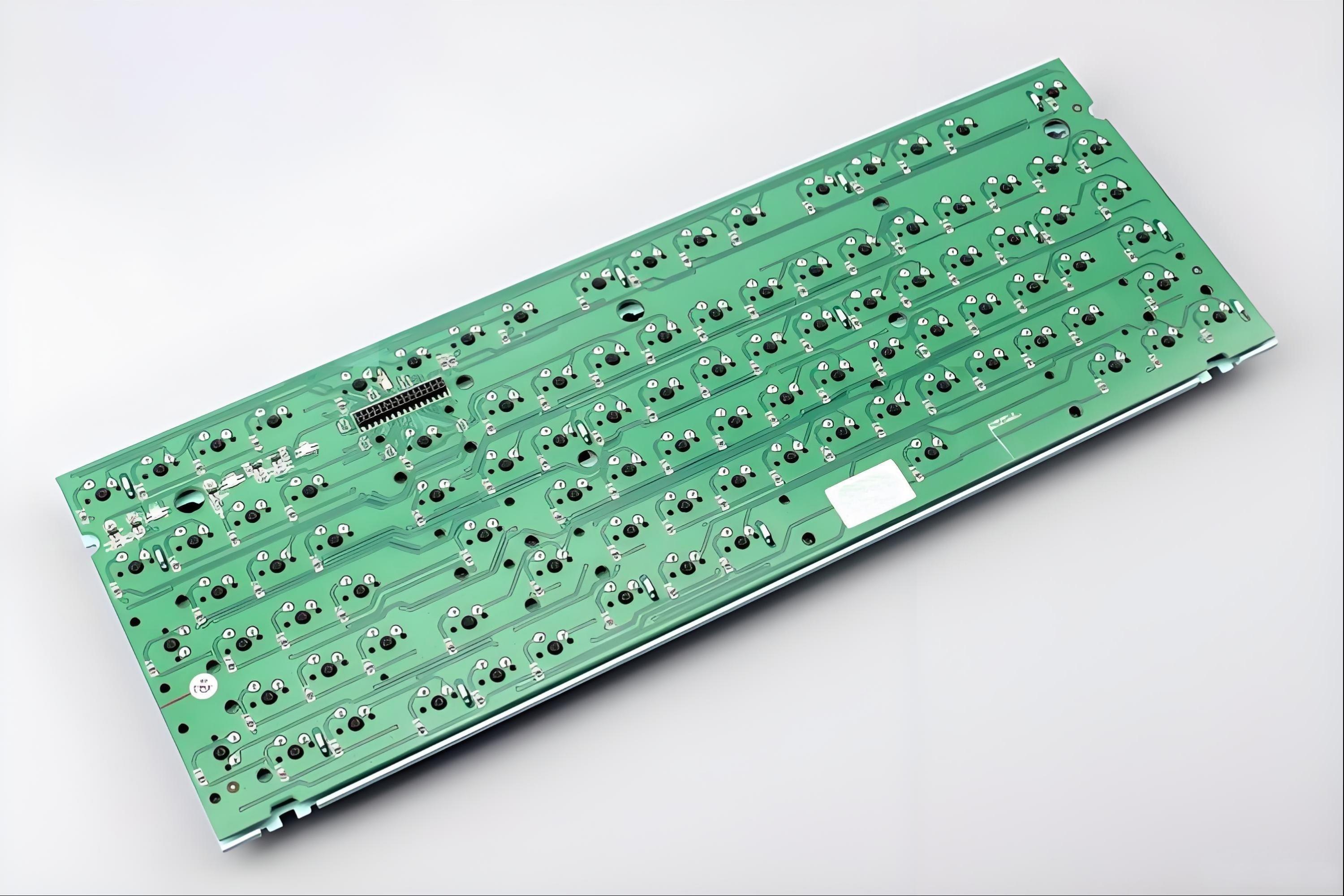
                              1. Advanced Engineering & Modern Manufacturing

                              Canadian PCB manufacturers stand out for technical expertise:

                              • High-precision production: Capable of high-layer rigid boards, HDI circuits, and flex-rigid designs with fine-line control and tight spacing.
                              • Modern equipment: Laser drilling, X-ray inspection, and AOI ensure every board meets design and reliability standards.
                              • Process monitoring: Real-time tracking and traceability minimize errors and rework, ensuring long-term electrical performance.

                              2. Rapid Prototyping & Short Lead Times

                              Speed is key for designers and engineers:

                              • Fast-turn prototyping: Move from design to finished boards in a few business days.
                              • Local collaboration: Engineers can review Gerber files, confirm stack-ups, and finalize finishes directly.
                              • Reduced delays: Avoids customs, shipping, and communication issues common with overseas suppliers.

                              3. Custom PCB Canada

                              Flexibility defines Canadian PCB services:

                              • Material choices: FR4, Rogers, metal-core, and ceramic substrates.
                              • Special processes: ENIG, OSP, immersion silver, controlled impedance routing, blind/buried vias, thermal management layers.
                              • Tailored solutions: Custom prototypes or full production runs optimized for performance and reliability, not just cost.

                              4. Reliable Supply Chain & Cost Efficiency

                              Local sourcing ensures stability and predictable costs:

                              • Domestic suppliers: Reduces shipping time, tariffs, and international risks.
                              • Agile logistics: Faster delivery, closer communication, and easier design adjustments.
                              • Competitive pricing: Small fabrication houses in Ontario and British Columbia offer strong cost-to-performance ratios while maintaining certifications.

                              5. Quality Control & Regulatory Compliance

                              Canadian PCB manufacturers maintain high standards:

                              • Certified processes: ISO 9001, IATF 16949, IPC-A-600.
                              • Comprehensive testing: Electrical tests, X-ray analysis, and cross-section inspections.
                              • Eco-friendly production: RoHS-compliant, lead-free, and environmentally safe processes.
                              • Traceability: MES systems track each board鈥檚 parameters and inspection records for full accountability.

                              6. Integration with Electronics Manufacturing Companies in Ontario

                              Canadian PCB makers are well-integrated into the local electronics ecosystem:

                              • End-to-end solutions: From PCB fabrication to assembly and final product integration.
                              • Smooth handoffs: Local EMS providers and PCB partners improve yield and reduce component loss.
                              • Value for SMBs: Vertical integration allows smaller companies to maintain control without managing multiple international vendors.

                              To sum up, choosing a PCB manufacturer Canada ensures stability, precision, and reliable partnership. Canadian suppliers provide fast prototyping, custom PCB solutions, and high-volume production with consistent quality. Their approach combines technical innovation with client trust, offering flexible, efficient, and cost-effective solutions for startups, design houses, and large-scale electronics companies.

                              When evaluating printed circuit board manufacturers in Canada, prioritize vendors with:

                              • Full in-house capabilities
                              • Solid local supply chains
                              • Proven international certifications

                              Top Printed Circuit Board Manufacturers in Canada

                              Canada has developed a mature and trusted PCB manufacturing ecosystem, with companies that emphasize engineering precision, dependable delivery, and strong after-sales support. These printed circuit board manufacturers in Canada serve global customers with advanced production capabilities and a culture of reliability.

                              1. Candor Industries (Toronto, Ontario)

                              • Candor Industries is well-known for its quick-turn and high-technology PCB services. They specialize in HDI boards, flex-rigid PCBs, and high-frequency RF designs. Their unique no-ammonia process and direct imaging systems enhance production accuracy while reducing environmental impact.

                              2. AP Circuits (Calgary, Alberta)

                              • AP Circuits is one of Canada鈥檚 most recognized quick-turn PCB fabricators, catering primarily to R&D teams and hobbyists. They support small-batch and prototype builds with lead times as short as 24 hours, helping designers validate concepts efficiently.

                              In summary, these manufacturers represent the core of Canada鈥檚 PCB industry strength鈥攊nnovation, flexibility, and commitment to dependable quality. Choosing a PCB manufacturer Canada like these ensures a partnership grounded in engineering trust and timely delivery.

                              Top PCB Manufacturing Ontario

                              Ontario remains Canada鈥檚 industrial hub for PCB manufacturing, home to both large-scale factories and specialized engineering firms. The province鈥檚 integrated supply chain and skilled workforce enable high-precision fabrication and fast turnaround times.

                              1. Circuits Central (Toronto, Ontario)

                              • Circuits Central offers full-turnkey PCB manufacturing and assembly services. From prototype development to final box-build, they serve industries such as automotive, aerospace, and medical electronics. Their advanced testing systems ensure that every PCB meets stringent quality requirements.

                              2. Epec Engineered Technologies (Milton, Ontario)

                              • Epec鈥檚 Ontario division focuses on custom PCB fabrication and cable assembly. Their facilities are equipped for microvia drilling, impedance-controlled designs, and multilayer builds. They are known for quick engineering response and supply chain reliability.

                              3. Corex Precision Electronics (Mississauga, Ontario)

                              • Corex specializes in high-density multilayer PCB manufacturing with a strong emphasis on process traceability and quality verification. Their automated inspection and lamination technologies guarantee consistent results for complex boards.

                              To conclude, Ontario鈥檚 PCB manufacturers stand out for their engineering depth, process accuracy, and collaborative approach. Partnering with an Ontario-based PCB producer means benefiting from shorter lead times, easier communication, and consistent quality鈥攁ll key elements of a reliable quality PCB manufacturer Canada.

                              Top Prototype PCB Manufacturing Canada

                              Prototyping plays a critical role in electronics innovation, and Canadian PCB manufacturers are recognized for their agility and reliability in this stage. They combine fast delivery, advanced DFM support, and tight process control, ensuring every prototype reflects production-level quality.

                              1. Bittele Electronics (Toronto, Ontario)

                              • Bittele offers one-stop prototype PCB manufacturing and assembly. Their engineers assist clients with Gerber review, BOM validation, and DFM optimization, reducing iteration time. With fast lead times and transparent pricing, they鈥檙e a popular choice for startups.

                              2. Tempo Systems (Montreal, Quebec)

                              • Tempo Systems focuses on rapid PCB fabrication for low-volume production and proof-of-concept projects. Their facilities use automated testing and direct imaging, ensuring high consistency even on complex multilayer boards.

                              3. Bay Area Circuits Canada (Vancouver, BC)

                              • As an extension of their U.S. operations, Bay Area Circuits provides prototype PCB services in Canada with access to advanced materials and quick logistics. Their high-frequency and rigid-flex expertise supports projects requiring tight signal integrity.

                              In a nutshell, through these leading prototype providers, PCB manufacturing in Canada has become a preferred option for designers worldwide who need speed, reliability, and precision. These companies show that Canadian manufacturers aren鈥檛 just service providers鈥攖hey鈥檙e long-term partners for innovation.

                              What is the PCB Manufacturing Process?

                              The PCB manufacturing process defines the foundation of reliable quality鈥攕omething every top PCB manufacturer in Canada values deeply. While Canadian producers emphasize quality assurance and process traceability, global partners like EBest Circuit (Best Technology) in China share the same commitment through world-class production standards.

                              Below is an overview of EBest Circuit (Best Technology)鈥檚 HDI PCB manufacturing process, which aligns with international quality systems and supports many Canadian clients with precision engineering and consistent reliability.

                              1. Key Process Considerations

                              Producing HDI PCBs involves multiple lamination cycles and microvia interconnections, where every micron matters. Our engineers focus on four major control points:

                              1. Line Width and Spacing Control: Precise imaging and etching maintain uniform line geometry for high-density routing.
                              2. Via Aspect Ratio: Proper plating parameters ensure consistent copper thickness inside microvias and through holes.
                              3. Laser Via Registration: Accurate alignment is vital for second-order or stacked microvias to ensure reliable interlayer connection.
                              4. Dimensional Stability: Material expansion and shrinkage during lamination are tightly managed to maintain alignment across layers.

                              2. Technical Capability Overview

                              Our HDI manufacturing capabilities are designed to meet both prototype and mass production demands.

                              • Second-Order HDI Capability:
                                • Sample Production: Line/space 鈮 3 mil
                                • Mass Production: Line/space 鈮 4 mil
                              • Line Width/Spacing vs. Copper Thickness:
                                • Base Copper (Before Lamination):
                                  • 18渭m (陆 oz): 3/3 mil
                                  • 35渭m (1 oz): 3.5/3.5 mil or 3/4 mil
                                • After Lamination (Finished Copper):
                                  • 5渭m (1/7 oz): 2/2 mil
                                  • 9渭m (1/4 oz): 3/3 mil
                                  • 12渭m (1/3 oz): 3.5/3.5 mil
                                  • 18渭m (陆 oz): 4.5/4.5 mil
                                  • 35渭m (1 oz): 5/5 mil

                              3. HDI PCB Manufacturing Process

                              The HDI production process includes two main lamination cycles: the first cycle builds inner layers and blind vias, and the second completes through holes and outer circuitry.

                              First Lamination Cycle (Inner Layers & Blind Vias):

                              • Material Cutting: Base laminate is cut to the required panel size.
                              • Inner Layer Imaging: Circuit patterns are transferred to the inner core.
                              • Inner Layer AOI: Automated optical inspection ensures perfect trace formation.
                              • Lamination: Inner cores are pressed into a solid multilayer stack.
                              • Copper Thinning: Controlled to a range of 7鈥9 渭m.
                              • Laser Drilling: Microvias (typically 4鈥5 mil) are formed for interlayer connection.
                              • Electroless Copper Deposition: Chemical copper coating ensures via conductivity.
                              • Copper Filling (Via Fill Plating): Vias are filled by electroplating; surface copper growth must stay 鈮 25 渭m.
                              • Copper Reduction: Adjusted as per customer thickness requirement.
                              • Inner Layer Imaging & AOI Recheck: Re-inspection confirms circuit integrity before outer lamination.

                              Second Lamination Cycle (Through Holes & Outer Layers):

                              • Lamination: The inner stack is laminated again with prepregs and outer copper foil.
                              • Copper Thinning: Surface copper is uniformly reduced.
                              • Drilling: Through holes are drilled and deburred.
                              • Copper Plating & Filling: Metallization ensures reliable through-hole conductivity.
                              • Outer Layer Imaging & Etching: Fine-line patterning defines final circuit geometry.
                              • Outer Layer AOI: Ensures pattern accuracy and no open/short defects.
                              • Solder Mask & Silkscreen: Green oil coating and legend printing for insulation and marking.
                              • Surface Finish (ENIG): Nickel-gold plating enhances solderability and oxidation resistance.
                              • Profile Routing: Boards are milled or routed to final dimensions.
                              • Electrical Test & Final Inspection: 100% testing ensures compliance with IPC standards and customer specs.

                              Through strict process control and precise multilayer alignment, EBest Circuit (Best Technology) delivers HDI boards with exceptional reliability and fine-line definition.

                              What are the Applications of PCB Board Manufacturing Canada

                              PCB board manufacturing Canada is widely applied across industries thanks to their versatility, high reliability, and ability to meet demanding technical requirements. From consumer electronics to aerospace systems, these PCBs support complex designs, miniaturization, and long-term performance. Below are the major application areas:

                              1. Consumer Electronics

                              PCB Board Manufacturing Canada plays a central role in devices like smartphones, tablets, wearables, and gaming consoles.

                              • High-density interconnect (HDI) technology enables slimmer form factors and optimized space usage.
                              • Advanced PCB designs support high-speed data transfer, display drivers, and compact power management circuits.
                              • Reliability and precision ensure consistent performance in devices subjected to daily handling and thermal cycling.

                              2. Automotive Electronics

                              Modern vehicles rely on Canadian PCBs for critical electronic systems:

                              • Infotainment systems, instrument clusters, ADAS modules, and lighting controls all utilize durable, high-temperature PCBs.
                              • Boards are designed for vibration resistance, long-term reliability, and compliance with automotive safety standards.
                              • Flexible multilayer designs allow integration of sensors and microcontrollers while maintaining compact layouts.

                              3. Medical Devices

                              In healthcare, PCB reliability is essential for patient safety and regulatory compliance:

                              • Devices like heart rate monitors, insulin pumps, and wearable health trackers use PCB circuits for precise signal processing.
                              • Low-noise layouts, robust materials, and adherence to medical certifications ensure accurate readings.
                              • HDI and flexible PCBs support miniaturized designs for portable and wearable medical instruments.

                              4. Industrial Automation

                              Printed circuits power PLCs, robotic controllers, sensor interfaces, and industrial power modules:

                              • High-current and high-voltage tolerance is critical for continuous operation on production lines.
                              • Boards are engineered to resist electromagnetic interference (EMI), temperature fluctuations, and mechanical stress.
                              • Layered designs and controlled impedance help maintain signal integrity in complex industrial environments.

                              5. IoT and Wearable Technology

                              The Internet of Things (IoT) and wearable devices rely on compact, energy-efficient PCBs:

                              • Smart home sensors, environmental monitoring nodes, and wearable health trackers benefit from printed circuit boards’ small size and flexible layouts.
                              • Flexible and lightweight boards reduce power consumption and accelerate time-to-market.
                              • Integration with microcontrollers and wireless modules enables seamless connectivity and data transmission.

                              6. Aerospace and Defense

                              PCB manufacturing in Canada is designed for the most demanding aerospace and defense applications:

                              • Satellites, aircraft instruments, radar, and communication modules utilize lightweight, high-reliability boards.
                              • PCBs withstand extreme temperatures, vibrations, and environmental stresses while minimizing weight.
                              • Multi-layer HDI designs optimize performance and ensure compliance with rigorous aerospace standards.

                              Ultimately, from consumer gadgets to mission-critical aerospace systems, PCB fabrication Canada demonstrates versatility, precision, and long-term reliability. Their advanced design and manufacturing capabilities allow engineers across industries to create innovative products with consistent quality, making them a preferred choice for both prototyping and full-scale production.

                              Top Electronics Manufacturing Companies in Ontario

                              Ontario is home to a thriving electronics ecosystem, with numerous end-product manufacturers that rely heavily on high-quality PCB manufacturing and assembly throughout their product development and mass production stages. These companies integrate PCB fabrication, assembly, and testing into their supply chains to ensure efficiency, traceability, and consistent product performance. Below are three leading electronics manufacturing companies headquartered or with major facilities in Ontario.

                              1. BlackBerry (Waterloo, Ontario)

                              BlackBerry鈥檚 headquarters in Waterloo spans approximately 479,000 square feet of R&D and operations space. While the company has transitioned from traditional smartphones, its current focus includes automotive safety systems, IoT devices, and embedded systems.

                              • BlackBerry products, such as in-vehicle infotainment systems and connected car modules, rely on high-reliability, low-power PCBs.
                              • Their demand for custom PCB Canada solutions and fast prototype PCB manufacturing Canada services is critical for rapid innovation and product validation.

                              2. Magna International (Aurora, Ontario)

                              Magna International, headquartered in Aurora, operates its Magna Electronics division, which specializes in automotive electronics, sensors, and vehicle networking systems.

                              • The company directly integrates multilayer and high-density PCBs to support electric vehicles, ADAS, and full vehicle electronics.
                              • Suppliers offering PCB manufacturing Ontario services, including custom PCB Canada and pcb manufacturing and assembly Canada, can enable Magna to meet stringent automotive standards such as AEC-Q100.

                              3. Bombardier (Ontario facilities: Toronto, Thunder Bay, Kingston)

                              Bombardier鈥檚 Ontario facilities produce aircraft and rail vehicles, where onboard avionics, control, and communication systems rely on complex, highly customized PCBs.

                              • In 2021鈥2022, Bombardier sourced nearly $900 million USD in components from local suppliers, reflecting strong PCB and electronic component demand.
                              • PCB suppliers capable of high-reliability board manufacturing, advanced testing, and customized layering or materials are particularly valuable for these applications.

                              All in all, BlackBerry, Magna International, and Bombardier represent Ontario鈥檚 core end-product sectors: consumer/automotive safety, automotive electronics, and aerospace/rail transit. Their extensive operations and technical requirements create significant demand for reliable, fast, and customizable PCB manufacturing in Canada.

                              PCB suppliers that can meet industry-specific standards, provide rapid prototyping, and offer flexible material and layer options stand to gain strong opportunities in the Ontario electronics market. By aligning with these key clients, suppliers can expand their footprint in one of Canada鈥檚 most advanced electronics manufacturing hubs.

                              Where Can I Find Fast PCB Manufacturing Services?

                              Electronic companies in Canada often face tight project deadlines and the challenge of sourcing reliable PCB manufacturing. Even when searching for a PCB manufacturer Canada, local options may have limited capacity for rapid prototyping or small-batch production.

                              Fast PCB manufacturing typically falls into three tiers:

                              • Rapid Prototyping: 24鈥72 hours for single boards or very small batches.
                              • Short-Run Production: 3鈥7 days for 10鈥100 boards, supporting iterative development.
                              • Accelerated Mass Production: 1鈥2 weeks for small to medium-volume runs, ensuring consistency and quality.

                              As a China-based PCB manufacturer and SMT factory, EBest Circuit (Best Technology) offers fast and reliable PCB services for Canadian clients:

                              • Prototype PCB Manufacturing Canada: Supporting single-sided, double-sided, and multilayer HDI boards.
                              • Advanced PCB Fabrication Process: Maintaining tight tolerances on layer registration, copper thickness, and dielectric performance.
                              • PCB Manufacturing and Assembly Canada: Including component placement, soldering, and functional testing for small batches or pilot runs.
                              • International Logistics Support: Efficient shipping to Canada with clear communication, minimizing customs delays and inventory risks.

                              How to Choose the Right Fast PCB Service?

                              Consider your project requirements:

                              • Rapid prototyping only 鈫 Choose a manufacturer that guarantees 24鈥72 hour turnaround.
                              • Small-batch development 鈫 Opt for a supplier offering both PCB fabrication and assembly services.
                              • Medium-volume or ongoing production 鈫 Focus on quality certifications, process traceability, and supply chain reliability.

                              In essence, even when searching for the best PCB manufacturer Canada, companies can benefit from partnering with EBest Circuit (Best Technology), a China PCB manufacturer serving Canadian customers. With fast delivery, precise manufacturing, and complete assembly capabilities, EBest Circuit (Best Technology) helps electronics companies accelerate product development, reduce iteration cycles, and achieve dependable performance.

                              In conclusion, this article explores the information of PCB manufacturer Canada, detailing leading companies, applications, and industry benefits, while showcasing EBest Circuit (Best Technology)鈥檚 specialized processes and rapid PCB solutions for Canadian customers. For Canadian companies seeking fast PCB manufacturing services, prototype PCB manufacturing Canada, or PCB manufacturing and assembly Canada, please reach us at聽sales@bestpcbs.com.

                              High Dielectric PCB Material Properties & Selection Guide

                              October 8th, 2025

                              Why choose high dielectric PCB material? Let’s discover its definition, material list and properties, benefits, selection guide, cost and recommend material supplier through this blog.

                              Are you troubled with these problems?

                              • Is high-frequency signal instability plaguing your designs? Could PCB dielectric constant fluctuations be causing impedance mismatch?
                              • Struggling with cost containment? Has the price surge of high-Dk materials disrupted your inventory planning?
                              • Is sample testing taking too long? Can you receive small-batch verification materials within 72 hours?

                              As a high dielectric PCB material supplier, EBest Circuit (Best Technology) can provide you service and solutions:

                              • Precise Dk/Df parameter matching: Full Rogers/Taconic inventory with 24-hour parameter traceability to eliminate design validation discrepancies.
                              • Price volatility buffer: Long-term agreements lock in costs, with off-season stock support and peak-season priority allocation.
                              • Sample readiness: 72-hour rapid slicing and delivery with batch-specific COA reports to accelerate design iterations.

                              Welcome to contact us if you have any inquiry for high dielectric PCB materials: sales@bestpcbs.com.

                              What is High Dielectric PCB Material?

                              High Dielectric PCB Material (High Dk PCB) refers to specialized substrate materials engineered for high-frequency circuit applications (typically >1 GHz), characterized by two core attributes: high dielectric constant (Dk > 10) to enable compact signal transmission structures, and low dielectric loss (Df < 0.01) to minimize signal attenuation.

                              These materials are typically formulated using polytetrafluoroethylene (PTFE)-ceramic composites, hydrocarbon resins, or modified epoxy resins, with ceramic powders (such as barium titanate) incorporated to enhance dielectric performance. Such materials are particularly suitable for applications requiring miniaturization and high-frequency stability, including millimeter-wave radar systems and 5G base stations, where both compact design and signal integrity are critical.

                              What is High Dielectric PCB Material?

                              High Dielectric Constant PCB Material List & Properties

                              Material ModelDielectric Constant (Dk)Dielectric Loss (Df)Thermal Conductivity [W/(m路K)]Thermal Stability (掳C)PropertiesApplication
                              Rogers 4350B3.48卤0.050.0037@10GHz0.69280Low loss, excellent high-frequency stability, glass fiber reinforced5G base station antennas, mmWave radar
                              Taconic RF-353.5卤0.050.0023@10GHz0.7260Ultra-low loss, PTFE substrate, ideal for high-frequency transmissionSatellite communications, RF front-end modules
                              Isola I-SPEED3.3-3.50.0025@10GHz0.45230Low-profile design, precise impedance control, suitable for multi-layer stackingHigh-speed server backplanes, optical modules
                              Nelco N4000-134.0卤0.20.012@10GHz0.35200Balanced high Dk and cost, suitable for mid-band applicationsAutomotive radar, consumer electronics
                              Mitsubishi M66.0卤0.50.015@10GHz0.3180High Dk enables miniaturization, but higher lossMiniaturized antennas, IoT devices
                              Arlon AD350A3.5卤0.10.0028@10GHz0.68290High-temperature PTFE material for extreme environmentsAerospace electronics, military equipment

                              Why Choose High Dielectric PCB Material for High Speed Applications?

                              Reasons why choose high dielectric PCB material for high speed applications:

                              • Signal Integrity Boost: Stable Dk minimizes phase distortion/impedance mismatch in 10GHz+ scenarios, preventing signal reflection-induced eye closure.
                              • Size Optimization: Enables shorter traces (位 鈭 1/鈭欴k) for compact designs like 5G mmWave arrays, reducing layer count and cost.
                              • Crosstalk/EMI Reduction: Enhanced field confinement reduces adjacent trace coupling, with low Df (<0.005) mitigating 77GHz automotive radar crosstalk.
                              • Thermal Stability: Ceramic-filled variants (e.g., MEGTRON6) maintain Dk stability <卤2% across -40掳C~125掳C, critical for base station reliability.
                              • High-Frequency Adaptability: Tunable Dk (2.2鈥10.4) supports 24GHz/60GHz radar and satellite comms, avoiding FR-4 resonance defects.
                              • Power Efficiency: Low Df reduces heat generation, improving PA efficiency for 56Gbps+ SerDes in data centers.
                              • Design Simplification: Stable Dk enables precise impedance calculations (e.g., 50惟 lines), cutting simulation-to-production cycles for optical modules.
                              Why Choose High Dielectric PCB Material for High Speed Applications?

                              How to Choose PCB Dielectric Materials for High Speed Applications?

                              High Dielectric PCB Material Selection Guide for High Speed Applications:

                              1. Electrical Performance Key Parameters

                              Dielectric Constant (Dk)

                              • Low Dk Priority: Signal speed is inversely proportional to Dk. High-frequency scenarios require Dk 鈮 3.5; millimeter-wave (e.g., 28GHz) applications recommend Dk 鈮 2.2 (e.g., Taconic TLY-5, Dk=2.2卤0.02@10GHz).
                              • Frequency Stability: Dk fluctuation 鈮5% across frequencies ensures impedance matching accuracy (e.g., Rogers RO4350B maintains Dk=3.48卤0.03 from 1-10GHz).

                              Loss Tangent (Df)

                              • Ultra-Low Df Dominates: Df directly determines signal attenuation. Millimeter-wave applications require Df 鈮 0.002 (PTFE substrate, Df=0.001); 5G base stations recommend Df 鈮 0.0035 to avoid 25Gbps+ signal degradation.
                              • Dispersion Control: Dk/Df variation 鈮5% at high frequencies minimizes signal distortion.

                              2. Thermal-Mechanical & Reliability Requirements

                              Thermal Performance

                              • High Glass Transition Temperature (Tg 鈮 220掳C): Compatible with lead-free soldering (e.g., RO4350B Tg=280掳C), preventing delamination.
                              • Low Coefficient of Thermal Expansion (CTE 鈮 15ppm/掳C): Matches copper foil to reduce thermal cycle stress (e.g., ceramic-filled PTFE CTE=12ppm/掳C).

                              Moisture Absorption & Thermal Conductivity

                              • Low Moisture Absorption (鈮0.01%): Moisture increases Dk/Df (FR4 Dk rises from 4.5 to 5.2 post-absorption); PTFE substrates absorb <0.01%.
                              • High Thermal Conductivity (鈮1W/m路K): Metal-core boards (e.g., aluminum) or thermal via arrays (via diameter 鈮0.3mm) enhance heat dissipation in high-power scenarios.

                              3. Scenario-Based Material Recommendations

                              Application ScenarioRecommended MaterialCore ParametersTypical Use Cases
                              5G Millimeter Wave (24-40GHz)Taconic TLY-5/RO3003Dk=2.2, Df=0.001, Tg=280掳CBase station antennas, radar
                              High-Speed Digital (25G+)Panasonic Megtron 7Dk=3.4, Df=0.002, CTE=13ppm400G Ethernet, AI servers
                              Satellite Communication (Ka/Ku-band)Ceramic-filled PTFEDk=2.1, Df=0.001, moisture absorption 0.01%Low-earth-orbit satellite payloads
                              Automotive Electronics (ADAS)Shengyi S7439 (Domestic)Dk=3.8, Df=0.004, Tg=200掳CDomain controllers, LiDAR
                              Consumer High-Frequency (5G Phones)Rogers RO4350BDk=3.48, Df=0.0037, process-friendly5G modules, WiFi 6 routers

                              4. Design Collaboration & Process Optimization

                              Impedance Control

                              • Simulation Verification: Use Polar SI9000 or ADS tools to calculate trace width/spacing based on material Dk, ensuring 50惟卤10% impedance matching.
                              • Differential Pair Design: Spacing tolerance 鈮5% reduces crosstalk; differential impedance targets 100惟卤10%.

                              Stack-Up & Thermal Management

                              • Hybrid Laminate: High-frequency signal layers use premium materials (e.g., RO4350B), while inner power/ground planes use FR4 to balance cost/performance.
                              • Thermal Solutions: Metal-core boards + high-frequency dielectric layers, paired with thermal vias (diameter 鈮0.3mm) for efficient heat dissipation.

                              Process Compatibility

                              • Copper Foil Selection: Very-low-profile (VLP) copper (roughness 鈮2渭m) for high-frequency signals minimizes skin-effect losses.
                              • Drilling & Plating: Laser-drilled microvias (鈮0.15mm) with electroplated fill avoid burrs and reflections; hole wall roughness 鈮20渭m.

                              5. Supply Chain & Cost Considerations

                              • Domestic Material Alternatives: Shengyi S7G series offers Df 鈮0.004 at 10GHz, 30% lower cost than imports, suitable for mid-high frequency applications.
                              • Lead Time Management: High-frequency substrates require 3-6 months advance procurement; RO4350B has stable inventory, while PTFE needs custom production (8-12 weeks).
                              • Environmental Compliance: RoHS and halogen-free compliance; 鈮20% recycled content aligns with sustainability trends (e.g., ISO 14001-certified materials).
                              How to Choose PCB Dielectric Materials for High Speed Applications?

                              How Much Does High Dielectric PCB Material Cost?

                              Material TypePrice Range (USD)Representative Model
                              Standard FR45-8IS410/IT180A
                              Modified Epoxy Resin15-25Nelco N4000-13
                              Ceramic Filled Substrate40-70Rogers RO4350B
                              PTFE High Frequency Material80-180Rogers RT/duroid 6002
                              Special Composite Material200-350Taconic RF-35A2 (Copper included)

                              Why Choose EBest Circuit (Best Technology) as High Dielectric PCB Material Supplier?

                              Reasons why choose us as high dielectric PCB material supplier:

                              • Material Performance Validation Package: Third-party certified dielectric/loss factor reports ensure precise parameter matching with design specs, eliminating guesswork in high-frequency PCB development.
                              • Eco-Compliance Solutions: RoHS/REACH dual-certified substrates enable seamless EU/NA market entry while boosting green brand value through regulatory compliance.
                              • Cost Optimization Algorithms: Proprietary stack-up design reduces BOM costs by 10-18% without compromising performance, maximizing profit margins.
                              • Failure Analysis Center: SEM/X-ray labs cut pilot production yield loss by 15% through root-cause diagnosis, minimizing trial costs.
                              • RF Application Database: 3000+ proven RF module designs provide turnkey reference from material selection to circuit layout, accelerating time-to-market.
                              • 24/7 Technical Support: 4h response/24h solution delivery by senior engineers resolves material application challenges, ensuring project continuity.
                              • Dielectric Constant Calibration: Precision tuning of dielectric properties for 5G/mmWave applications achieves 20% signal loss reduction, enhancing product competitiveness.
                              • Global Logistics Network: 48-hour rapid prototyping delivery supported by strategic inventory minimizes R&D cycle delays.
                              Why Choose EBest Circuit (Best Technology) as High Dielectric PCB Material Supplier?

                              How to Get a Quote for High Dielectric PCB Material?

                              High-Dielectric PCB Material Quotation Request Checklist

                              1. Basic Technical Parameters

                              • Dielectric Constant (Dk) Range: Specify exact range (e.g., Dk=3.0卤0.05)
                              • Loss Tangent (Df) Requirement: e.g., Df鈮0.003@10GHz
                              • Substrate Model: Include brand/model (e.g., Rogers RO4350B, Taconic RF-35)

                              2. Structural Design Files

                              • Laminate Structure Diagram: Indicate copper thickness (e.g., 1oz/2oz) and dielectric layer thickness (mm/mil)
                              • Stack-Up Scheme: For multi-layer boards, provide layer sequence (e.g., PP+Core combination)

                              3. Process Requirements

                              • Surface Finish: Specify ENIG, Immersion Silver, etc.
                              • Special Processes: Laser drilling, blind/buried vias, impedance control tolerance (e.g., 卤5%)

                              4. Quantity & Delivery

                              • Estimated Annual Volume: Phased quantities (e.g., initial order 100銕, subsequent monthly 50銕)
                              • Lead Time Requirement: Note urgency and acceptance of expedited fees

                              5. Certifications & Compliance

                              • Industry Certifications: UL Certification, IPC-4101 Standard, etc.
                              • Environmental Standards: RoHS/Halogen-free declaration

                              Welcome to contact us if you have any request for high Dk PCB material: sales@bestpcbs.com.