PCB manufacturing PCB manufacturing
Home > Blog

Ceramic Multilayer PCBs: Advantages and Disadvantages

January 6th, 2020

The primary advantage of ceramic multilayer PCBs lies in their thermal properties. The most significant of these is thermal conductivity, which outperforms traditional materials by a tremendous margin. In the table below, the most used board material, FR4, is compared with the ceramic multilayer board in a number of important categories.

ceramic pcb
ceramic pcb

MULTILAYER PCB MATERIAL COMPARISON

CeramicVersusFR4
28 – 280Thermal Conductivity (Wm-K)0.8 – 1.1
Component ComparableCoefficient of Thermal Expansion (CTE)Component Comparable
HighFrequency PerformanceLow – Mid
FragileHandlingEasy
LowAvailabilityHigh
Mid – HighCostLow – Mid

As shown above, ceramic multilayer PCBs have advantages and disadvantages as compared to FR4. However, the advantages point to a continued increase in the use of ceramic boards for high-speed and high-power applications that are criteria for more functionality in smaller packages.

ceramic pcb
ceramic pcb

EBest Circuit (Best Technology), the industry leader in fast, precision and high-quality PCB manufacturing, has a wide range of material options including to meet your design objectives. This includes accommodating the special process of using ceramic materials for your board if desired. We also strive to provide you with the best manufacturing experience.

EBest Circuit (Best Technology)’s Custom PCB Manufacturing Service

1.ISO-9001commitment to quality certifications.

2.Accurate quote in less than 1 day.

3.Performs entire turnkey process in as fast as 3 days.

4.Sources components from the most reputable suppliers in the industry to reduce procurement time.

5.Performs multiple automated inspections during assembly to ensure PCB quality for prototyping.

6.Provides support throughout the PCB manufacturing process, beginning with design.

7.Smooth transition from prototyping to production.

Do You Ever Know High Density Interconnect PCBs?

December 31st, 2019

HDI PCB (High Density Interconnector PCB), is a printed circuit board having a relatively high line distribution density using the micro-blind and buried hole technology.

It is a process that includes an inner layer line and an outer layer line, then uses a hole and a metallization in the hole to realize a joint function between the inner layers of each layer.

HDI PCB-1
HDI PCB-1

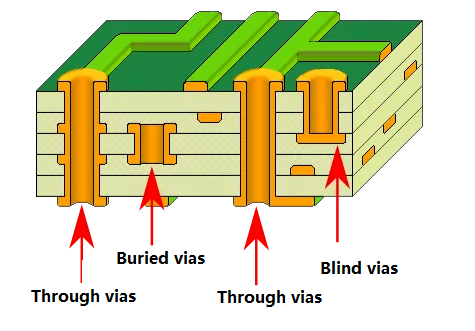
With the development of high-density, high-precision electronic products, the requirements of high-density and high precision are imposed on printed circuit boards. The most effective way to increase the density of pcb is to reduce the number of through holes, and to accurately set the blind holes and buried holes to achieve this requirement, thereby an HDI PCB came into being.

HDI PCBs are finding their way into a growing number of products:

Military communications devices and other strategic equipment

Aerospace – smaller space requirements and light weight are ideal for such applications

Computers and smartphones – phones and computers are taking full advantage of smaller profiles, reduced weight, and increased functionality, made possible through the integration of HDI circuits.

HDI PCB-2
HDI PCB-2

Medical equipment – diagnostic and monitoring equipment has become more reliable and expanded with technical features that aid medical teams with patient treatment, and all of this is powered by HDI PCBs and advanced software.

Benefits of HDI PCB

HDI PCB utilizes buried or blind vias, or a combination, and may also incorporate microvias with an incredibly small diameter. This facilitates the incorporation of more technology in less space, with fewer layers. Multi-layer HDI PCB are also in common use, with many layers being accommodated through various construction methods utilizing blind, buried, stacked, and staggered vias.

With smaller components and blind via in pad technology, components may be placed closer together, resulting in faster signal transmission rates while also reducing crossing delays and signal loss. These are key considerations that generate improved performance of HDI PCBs.

HDI PCBs are preferred for applications where space, performance, reliability, and weight are concerns. This makes them more suitable for nearly every application related to electronics, consumer products, computers, and aeronautics.

Multi-layer HDI PCB can provide strong interconnection of stacked vias, resulting in high levels of reliability, even in more extreme environments.

Considering this, do you ever think about choosing HDI PCB on your next project?

What You Have to Know About FR4 Material

December 24th, 2019

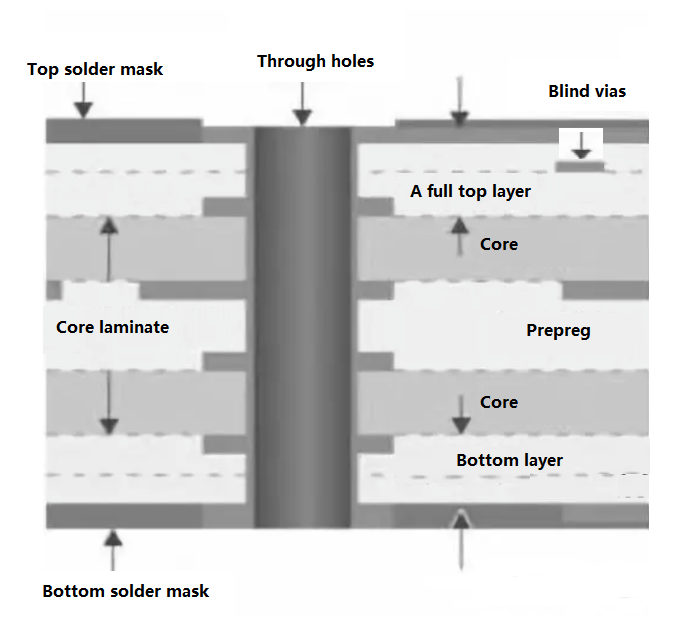
FR4 is the most common material grade that comprises fabricated PCB. FR indicates the material is flame retardant and the 4 indicates woven glass reinforced epoxy resin. Single or double-sided PCB structures consist of an FR4 core and top and bottom copper layers. Multi-layer boards have additional prepreg layers between the center core and top and bottom copper layers. Now, the core consists of a substrate with copper covering, also referred to as a copper clad laminate. The core, laminate, and prepreg may all be FR4 with the copper sheets between the signal and ground layers.

FR4 PCB
FR4 PCB

The properties of FR4 may vary slightly depending on the manufacturer; however, it generally has favorable strength and water resistance attributes that support its widespread usage as an insulator for many electrical applications. It serves the same purpose in PCBs, namely to isolate adjacent copper planes and provide overall bending and flexural strength for the structure. FR4 is a good general purpose material for PCB fabrication; however, alternative materials are available.

Alternative PCB Materials

Prior to the explosion of multilayer FR4 PCBs, there were many alternative board materials to FR4. These included FR2, CEM 1, and CEM 3, which were paper-based. However, the strength of FR4, especially for multilayer boards, was a major factor in separating it from alternatives to become the industry standard. Today, there are other materials that are used for single-sided, double-sided, non-plated through-hole (NPTH), and multilayer PCBs, in addition to FR4. These are compared in the table below:

FR4 Material VS Other Materials

The results above clearly indicate that FR4 is a good general purpose material as its parameters are mostly comparable to the other alternatives. It excels in structural integrity with a 2.0 N/mm copper adhesiveness and matches the alternatives in bending strength.

FR4 PCB
FR4 PCB

FR4 is the most widely-used material in PCB construction. Boards made from FR4 are strong, water resistant, and provide good insulation between copper layers that minimizes interference and supports good signal integrity. At EBest Circuit (Best Technology), the industry leader in fast, high-quality PCB prototype and PCB manufacturing, we are capable to meet your board material needs for any case. We will work with you to help you select the materials that will best implement your design intent.

Should you have any queries about FR4 material, contact us anytime, and our sales representative will give you a response at our soonest convenience.

Is Automated Assembly Always Better?

December 18th, 2019

As a matter of fact, PCB experts will always know the major benefits of automated assembly processes: reduced errors, increased output and consistent quality, however, is automation always better?

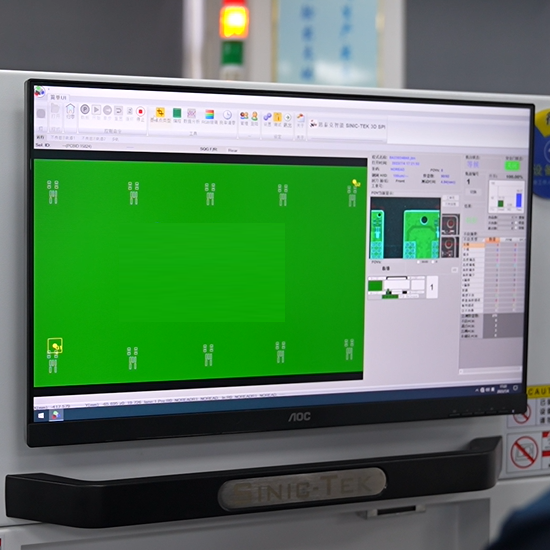
The usage of SMT line machines has become standard practice in PCB assembly and is thought to be more efficient; however, SMT machines are not appropriate for every job. Manual assembly is a better option for assembling boards in low quantities or low-volume orders using components with unique properties.

SMT Machine
SMT Machine
Manual Assembly
Manual Assembly

Volume Limits

Volume can be a determining factor of whether or not to assemble by hand. Orders of 10 or less boards, are often best assembled by hand- for reducing production time and faster turnaround.

Characteristics of Component Choices

The characteristics of chosen components should be taken into consideration before assembly. Careful and potentially time-consuming SMT calibration is required to minimize the risk of damage when using components with:

Heat sensitivity

Unusual shape and center of gravity

Inadequate packaging and/or documentation from the manufacturer

Therefore, low-volume orders using components with unique properties and insufficient packaging or documentation should be manually assembled by a skilled technician.

In general, it is best practice to manually assemble boards with a volume limit of 10 or less, simple technology, and when there are a few individual components per board.

SMT lines are preferred for large-volume assembly because they consistently produce quality PCBs and reduce the possibility of error associated with manual assembly. The key to ensuring quality of manual assembled boards is having a well-defined manual process, which is bound to passing through failsafe quality checks that hold hand and automated orders to the same standards.

Anyway, before starting your project, it is highly recommended that you should consult with your PCB service provider regarding your PCB assembly options.

How to Choose Professional PCB Prototype Assembler

December 10th, 2019

OEMs, especially those requiring only a few boards to be assembled, may want to outsource their Printed circuit boards to a professional PCB prototype assembler, rather than assemble the boards in-house. Instead of investing in expensive production equipment, they would prefer to obtain their product from a PCB prototype manufacturer, and have an expert assemble it, so that they have reliable PCBs. Fortunately, an eminent enterprise, EBest Circuit (Best Technology), provides expert solutions for both manufacturing and assembling PCBs.

Turnkey PCBA Services
Turnkey PCBA services


OEMs are experts in the products they manufacture, but may not be so knowledgeable about the PCBs and assemblies that make up their product. Therefore, some guidelines are necessary to enable them select the professional PCB prototype assembler most suited to their requirements.
Technical Expertise
It is very important to ensure the assembler has the necessary processes in place. For instance, if the OEM requires BGAs on their PCB, they must ensure the assembler is capable of BGA assembly and rework, and they have X-ray machines for verifying their assembly. As most PCBs use surface mount devices, the assembler should be familiar with them to the extent of using automated machinery for SMT assembly.
Working Closely
If the OEM is outsourcing for prototype manufacturing and assembly, it is important that the assembler be willing to work with them for fixing errors in the layout, mistakes in the BOM, and parts that do not match the footprints on the board. The OEM should be able to make the most of the existing board while resolving the problems with the assembler.
Objective of the Outsourcing
To be effective, OEMs must also set their objectives that they expect from the outsourcing partner. This is important, as the objectives may vary. For instance, some may be planning to outsource a single product, others may be shifting their growing volumes to a partner with a higher production capacity, while still others may be looking for reducing costs.
Request for Quotation

FR4 PCB Manufacturer
FR4 PCB Manufacturing


When the OEM sends an RFQ or request for quotation to a PCB prototype assembler, it is important they provide all the commercial and technical information the assembler would need. This holds true even when the OEM is looking for a potential PCB prototype manufacturer.
Management Aspects
To ensure smooth working with the prototype assembler, it will be advantageous to the OEM if they periodically audit their partner, making sure the team has as wide range skills as possible. If necessary, the OEM can transfer some of their skills and knowledge to their partner. A good management practice is to establish regular meetings to make sure activities move on schedule, and the relationship can be discussed at higher levels, while the OEM outlines their strategic plans for the future.
Conclusion
EBest Circuit (Best Technology), both a professional PCB prototype manufacturer and a PCB prototype assembler, can handle not only prototype jobs, but also take up regular production works and turnkey projects. It meets all the above criteria, has the necessary quality management systems in place, and has the necessary technology and expertise to handle the most complicated board assemblies.

Difference between A Double Sided MCPCB and a Double Layer MCPCB

November 25th, 2019

Metal core printed circuit boards(mcpcb) are suitable alternatives for FR4/CEM1-3 variants. These circuit boards use metal as a core base material and are differentiated on the basis of their construction. There are a few types such as single layer, double layer, double sided, and multi-layer PCBs. What are heavily used in advanced electronic circuits are the double layer and double sided metal core printed circuit boards. These two types arise confusion due to their similar names. What are the differences between both? What advantages do they offer? Now you can get the answer from the following description.

Definition of a Double Sided and Double Layer MCPCB:

The double sided MCPCB and double layered MCPCB have different layout, due to the positioning of a metal core:

In a double sided MCPCB, the metal core lies in the middle of two conductor layers. There is also a dielectric layer between the metal core and a copper layer. The metal core and conductors are connected to each other through Vias. The SMD can be populated at the bottom and top.

A double layer MCPCB has a metal core at the bottom, with two conductor layers on its top. In short, the conductor layers lie in same side of the metal core. Generally, metals like aluminum, copper, and iron alloys are used as metal cores. The dielectric layer lies between a copper layer, and the bottom metal core. The SMD can only be populated on the top.

Advantages of Double Sided MCPCB and Double Layer MCPCBs:

Both these variants offer the same benefits as other metal core PCBs. They are as follows:

Reliable Performance at High Temperatures: Many double sided CEM3 or FR4 PCBs with high power and density face difficulties in heat dissipation. The CEM3 or FR4 material have weak thermal conductivity, which means the electronic components are destroyed at high temperatures. However, double sided metal core circuit boards feature a metal core, which has an excellent inter-layer insulation and thermal conductivity. Both these factors contribute to its reliable performance at high temperature.

Excellent Thermal Expansibility: Thermal expansion and contraction is an important feature of all objects. The ability to contract with cold, and expand with heat is termed as coefficient of thermal expansion. Most FR4 PCBs have low CTE, which means they cannot effectively deal with issues of contraction and expansion. However, both double sided and double layer PCBs can effectively deal with thermal expansibility. Thus, they are in demand.

Applications of Double Sided MCPCB and Double Layer MCPCBs:

LED lights

Street and general lighting

Industrial controls

Power monitoring devices

Automotive

Amplifiers

Test equipment

The choice of the either type will depend on your application requirements. If you are still confused about the two types and their benefits for your application, you can always approach an industry expert or a reliable metal core pcbs manufacturer like EBest Circuit (Best Technology), which provides different types of MCPCBs in diverse specifications.

How to Choose a Professional PCB Assembly Company

November 18th, 2019

Hardware designers requiring turnkey PCB assembly services usually face tremendous obstacles for their need of prototyping and small batches. Large companies with huge inventory needs and long delivery horizons can wait for days or weeks for a proposal, while accepting large minimum quantity requirements. For them, delays associated with overseas manufacturing are no big deal. However, these conditions are simply unacceptable for small industries, engineers, makers, and entrepreneurs.

Best Practices of PCB Assembly Vendor

Selecting the professional PCB assembly company at the beginning determines the success of a project. Therefore, picking the right PCB assembly services provider becomes a highly important decision to be made. One must watch out for those offering very low prices, but subsequently are unable to provide the services, record of accomplishment, infrastructure, and technology to back up their promises. Rather, one must insist the PCB assembly services have the essential features, offer the services, and follow business practices such as:

Instant Quotations

Waiting for days or weeks and trading a bunch of emails only to find out the cost of a PCB assembly, is not only a waste of time, it is expensive. A vendor offering instant, online quotations is always preferable. In general, although all vendors will start by sending a quotation for the project, therefore, selecting one who gets the process off painlessly is advisable. Moreover, selecting the vendor who gives an estimate in terms of quantity offtake helps in determining capital needs and product prices.

Prototyping Requirements

Most customers, before placing their order, want to make sure their PCB works exactly as intended. This may require making a few iterations to perfect the design. So far, prototyping was a big challenge under the old manufacturing model. However, EBest Circuit (Best Technology) is willing to handle even a single quantity.

Minimum Order Requirements

Earlier, PCB assembly services were unable to accept production runs of small quantities. Older technology did not allow profitability in smaller numbers, which turned out to be a major challenge for everyone. However, use of modern technologies allows easy combination of small orders into larger ones, while switching from one task to another is no longer a major hurdle. Therefore, professional PCB assembly providers accept all types of order, regardless of quantity, and execute them at reasonable prices.

Seamless Manufacturing

With advancement in PCB assembly technologies, it is no longer necessary to track multiple vendors and suffer long lead times. A modern PCB assembly solution such as the EBest Circuit (Best Technology), offers a platform to resolve any assembly problems, online and from anywhere and takes over the sourcing, purchasing, and assembly of the components. With this approach, the product can be expected to be available in days.

Looking Beyond PCB Assembly

The PCB happens to be only the first step of the many for most inventions and products and PCB Assembly is an especially non-negligible process. Quality can only be assured by finding a reliable company.

Which kinds outline process can make PCB less burr?

August 12th, 2016

Generally there are two methods to do PCB outline, routing and punching.


Routing is suit for those simple boards with simple outline. But it is easy to cause burr on the edge. Also, if don’t make the tooling holes well, the boards may be easy moving while routing, which cause to the outline crooked.-


So, If you need the outline more precision and nice, the best way is to custom a tool for punching, in such way, the outline shape is very exact and no so much burr on the edge. It is used for those boards in big panel with small boards, special outline as well as high precision boards. Punching also can speed up the production lead time.  But for such way the cost is expensive than routing.

What’s the difference for FR1, FR2, FR3 and FR4 materials?

August 12th, 2016

FR1 is basically the same as FR2. FR1 has a higher TG of 130oC instead of 105oC for FR2. Some laminate manufacturers who produce FR1 may not produce FR2 since the cost and usage are similar and it is not cost effective for having both.

FR3 is also basically FR2. But instead of phenolic resin it uses an epoxy resin binder.


FR4 (FR = Flame Retardent )is a glass fiber epoxy laminate. It is the most commonly used PCB material. 1.60 mm (0.062inch). FR4 uses 8 layers glass fiber material. The maximum ambient temperature is between 120o and 130oC, depending on thickness.

In China FR4 is the most widely used PCB base material, next is FR1 then FR2. But FR1 and FR2 are usually used for 1-layer PCBs because they are not good for passing through holes. FR3 is not recommended to building multi-layer PCBs. FR4 is the best selection. FR4 is widely used because it is good to make from one- layer to multi-layer PCBs. With only FR4, PCB companies can make all kinds of PCBs, which leaves the management and quality control much easier, and eventually it can reduce the cost!


Form the analysis above it is obvious that FR4 is the best selection to make PCBs in market. Some materials may be cheaper but it can only be used to make one-layer boards, and the reliability of the boards made by these materials is not good. So they are only used for one-layer and very simple boards.

Can my PCB don’t make solder mask for both side?

August 12th, 2016

Of course PCB can make no solder mask on both side, just make sure the solder mask layer (GTS& GBS) on your Gerber file is empty, or let us know you don’t want to make solder mask while quoting or before production, then we won’t make solder mask on both side, just print the circuits as you want.