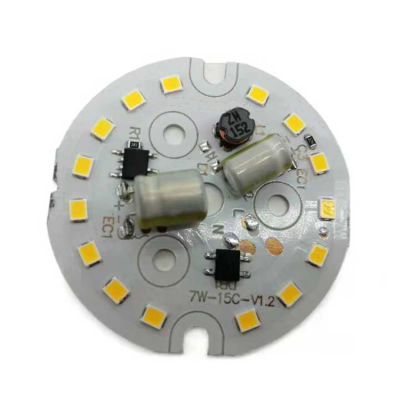
If we observe carefully, we will find that most of the high-quality surface light lamps in the market use COB light source, such as LED spotlights, Automotive, LED Backlight for LED TV, etc. What are the advantages of such choice?
Automotive
LED Backlight for LED TV
LED spotlights
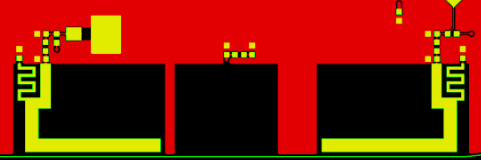
First of all, we need to how the COB differ from the common MCPCB. “Chip-On-Board” Metal Core PCB is a type of MCPCB used in thermoelectric separation application. By using COB, the micro-chip (also known as “die”) directly touch the metal core where the heat dissipate, and electrically interconnect the trace of circuit board (wire-bonding) so that power supply can be provided.
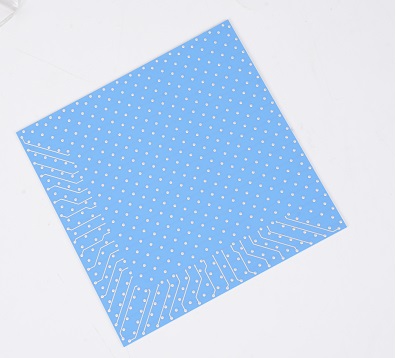
High thermal conductivity(137W/m.K), High insulation, High pressure resistance
High reflectivity: mirror aluminum≥98% (The reflectivity of Taiyo Soldermask used in common MCPCB is 75-80%, the highest is only 90%)
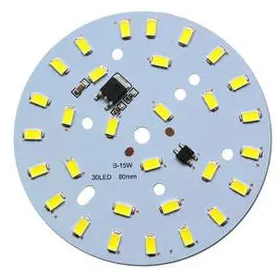
BAS15191
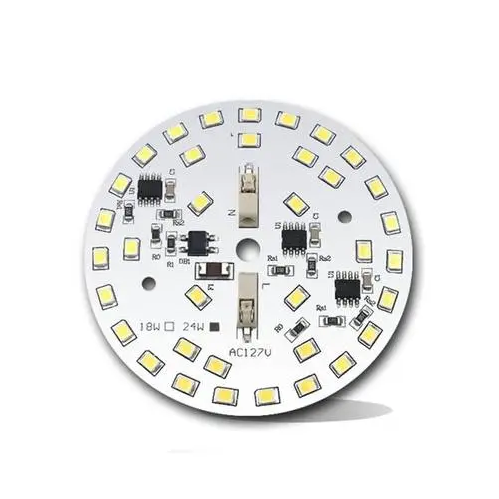
BAS15192
Since the COB is packaged directly on the MCPCB, it’s easy assembly for high powers LED, direct heat dissipation through the substrate can not only reduce the manufacturing process and cost of the bracket, but also have the advantage of reducing heat dissipation resistance. So the spotlight produced by COB technology will be lighter, more flexible and able to realize more possibilities on the stage.
If you are also interested in COB, please feel free to contact me, I’m looking forward to communicating more with you.
In recent years, there are more and more customers request to manufacture PCB with high Tg, in the following we would like to describe what is high Tg PCB.
fr4 170tg
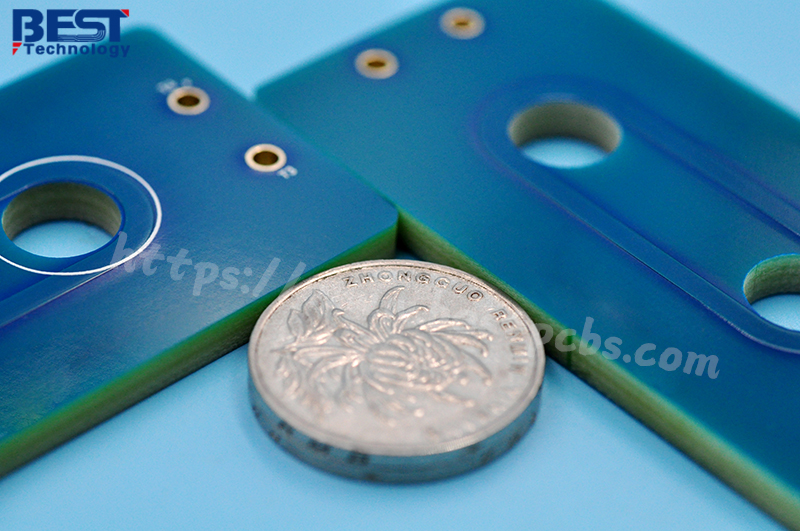
Normally high Tg refers to high heat resistance in PCB raw material, the standard Tg for copper clad laminate is between 130 – 140℃, High Tg is generally greater than 170℃, and middle Tg is generally greater than 150℃. Basically the printed circuit board with Tg≥170℃, we call high Tg PCB. As the rapid development of electric industry, especially for the computer as the representative of electronic products, developing toward the high performance, high multilayer requires PCB substrate material with higher heat resistance to ensure high reliability. On the other hand, as a result of development of SMT, CMT with high density pcb assembly technology, the PCB manufacturing with small hole size, fine lines and thin thickness are more and more inseparable from the support of high heat resistance.
fr4 170tg
If the Tg of PCB substrate is increased, the heat resistance, moisture resistance, chemical resistance and stability of printed circuit boards will be improved as well. The high Tg applicates more in the lead free pcb manufacturing process.
Therefore, the difference between general FR4 and high Tg FR4 is, in the hot state, especially in the heat absorption with moisture, the high Tg PCB substrate will perform better than general FR4 in the aspects of mechanical strength, dimensional stability, adhesiveness, water absorption and thermal decomposition.
EBest Circuit (Best Technology), a China- based assembly manufacturer will be exhibiting at electronica Munich2020 in Bavaria, Germany at booth No. 623(Hall B1) from November 10, 2020 to November 13, 2020(Western Time). Actually, we have participated in this exhibition for continuous 2 years. Here are some pictures for your reference.
pcb exhibition
pcb exhibition
pcb exhibition
pcb exhibition
At our exhibition booth, attendees will be able to learn more about our company for PCB manufacturing and PCB assembly technology.
For interested professionals, EBest Circuit (Best Technology) had on hand experts to offer detailed insights and experience on PCB assembly, covering PCB prototype and low/high-volume production. For more information on PCB assembly and fabrication, welcome to visit our booth.
You are warmly welcome to see how we can manage the components wastage and efficiency to help save your time, money and energy.
About electronica Munich:
Electronica is the international trade show for electronic components, systems and applications and shows the full range in all its diversity in width and depth as the world’s leading trade fair. It reflects the high degree of innovation throughout the industry. Exhibitors and users in the areas of systems, applications and technologies of electronics can receive the information of the latest innovations and developments in the fields of system peripherals, power engineering to printed circuit boards or EMS.
Welcome to visit us at Booth 623 from November 10, 2020 to November 13, 2020(Western Time).
Regarding HS code and duty rate of face masks in some major countries, we collected some information in main trade partners (US, Japan, EU, Korea, Taiwan, Australia, New Zealand) of China. This is aimed at the face masks such as personal protective masks without special function components, including medical face masks and disposable face masks. All of below information were published by the custom officially.
US:
According to Harmonized Tariff Schedule of the United States, HTSUS, the HS code of face masks in the US is 6307909889. And the duty rate imported from China is 7%. Regarding tariff imposed, according to announcement from the United States Trade Representative on March 12, 2020, the tariff is excluded for the face masks belonging to this HS code since September 1, 2019. Since then, all the face masks imported from China has been exempted from tariff. You can refer to the below chart for more information.
face mask tariff
Japan:
The HS code of face masks in Japan is 630790029. The duty rate imported from China is 4.7%. To learn more, see below:
face mask tariff
EU:
The duty paragraph for face masks imported from China in EU is 6307909899 and the duty rate is 6.3%. You can see below for more information:
face mask tariff
Korea:
The duty paragraph for face masks imported from China in Korea is 6307909000, and normally, the tariff is 10%. However, from March 18, 2020 to June 30, 2020, Korea has been suspending imposing tariff for face masks from China(0 tariff currently), see below for more information:
face mask tariff
Taiwan, China:
The HS code(also referred to as duty paragraph) of face masks imported from China mainland in Taiwan is 63079050.
And, the duty rate for face masks imported from China mainland is 7.5%. However, from February 27, 2020 to May 26, 2020, provisional tax rates (also referred to as“flexible tax rateâ€Âin Taiwan area) for face masks was carried out in Taiwan area, i.e. the tariff is zero. You can see below for more information:
face mask tariff
Australia:
The HS code of face masks imported from China in Australia is 63079099 and the duty rate is 5%. See below for more information:
face mask tariff
New Zealand:
The HS code of face masks imported from China in New Zealand is 63079028. Zero tariff is applied to the face masks imported from China according to “New free trade agreementâ€Â. See below for more information:
The abbreviations PWB and PCB are very common, especially in the field of electronics manufacturing. Therefore it is necessary to gain a clear understanding of the meaning of each one and the differences between the two. On this article, we will help our readers to distinguish PWB from PCB.
pcb vs pwb
PCB: Based on insulating substrate, it means a kind of products on which the wires are connected and components are printed from point to point on a dielectric substrate in a predetermined design. It is the English abbreviation of Printed Circuit Board.In a word, PCB stands for printed circuit board, where the width, side to side and multi-layer relationship(spacing) of conductor runs has or is designed to have a specific effect on circuit operation other than just a point to point connection.
PWB: Based on insulating substrate, it means a kind of products on which the wires are connected from point to point on a dielectric substrate in a predetermined design. However, there is no printed component on it. PWBs are the early name of the British, because at that time there were only circuit diagrams on the circuit board, but no printed components. So they belonged to the more primitive board. Under its effect, now many traditional British and some Hong Kong people still call the circuit board to be PWB, which is the English abbreviation of Printed Wire Board. In a word, PWB stands for printed wiring board, one of the first uses when the issue was only a point to point connection.
The PCBs are the boards already equipped with various components, however the PWB is just a designed substrate with no components.
pcb vs pwb
Moreover, PWB vs PCB greatly varies from one region to the other. For example, in the United States of America, the term Printed Circuit Board is more common in use while the use of the name PWB is more commonly used in Japan. In Japan, PWB is more preferred that PCB because it prevents confusion with another name, polychlorinated biphenyls, which refers to a particular poison available in Japan.
For your more information, in approximately 1999 the IPC Technical Activities Executive Committee made a mandate to only use the term PCB for all new document development because more often than not the printed circuitry design will have an impact on function.
If you are still confused or have any queries or comments about PCB, do not hesitate to contact us. Our sales team can give you a reply at our soonest convenience.
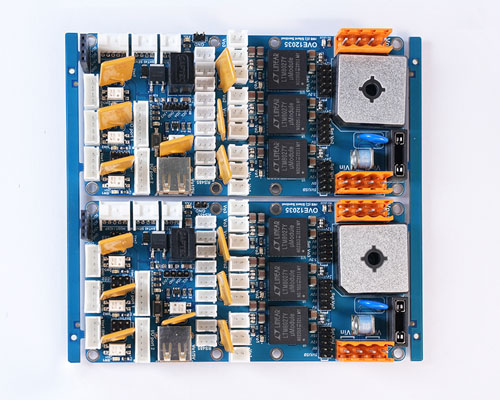
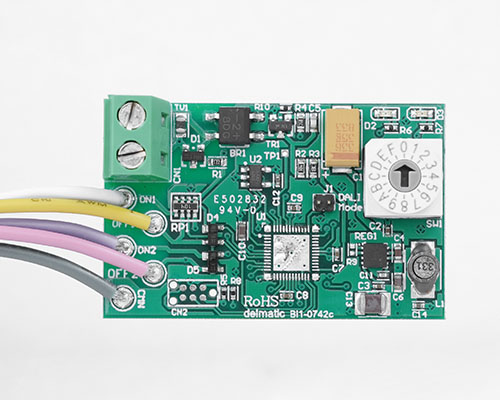
PCB is an indispensable part for any electronic equipment in small toys or computers., etc. The complex interconnection components include resistor, diode and capacitor, which help components work normally in series. In a sense, it is similar to the “brainâ€Â of the system. PCB assembly process must be of no any mistakes. Here are some points that need to be paid attention:
1.Supply chain management: In order to create high quality PCB, the first thing needing consideration is supply chain. For the availability, both quality and price are important, so is delivery time of components.
pcbassembly
2.PCB layout. The common question during manufacturing stage is pcb layout in minor differences. Even though various types of designs looks the same to outward seeming, the manufacturing processes are different. You need to ensure PCB layout is feasible during manufacturing process.
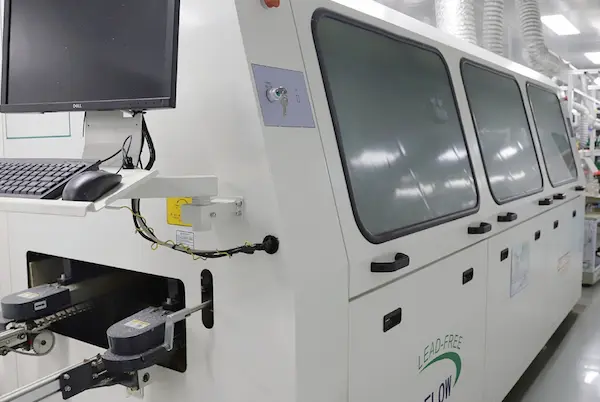
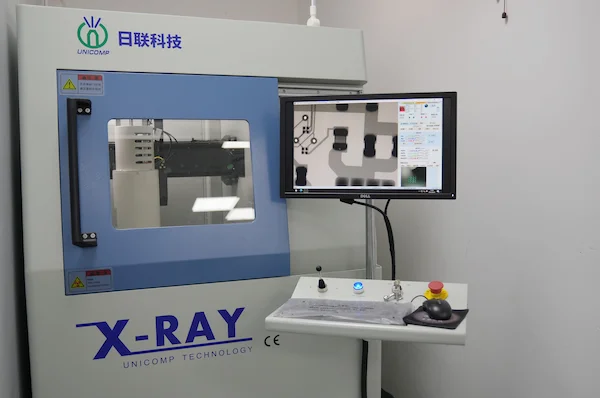
3.Test-test has to be conducted after PCB assembly. What needs to be done is to design test point. Some tests include:
Micro-section analysis-also referred to as cross section analysis. This test contributes to identifying components fault and thermal-mechanical faults.
pcbassembly
Solderability test. This test contributes to testing reliability of PCB solder pad, to ensure a firm surface and a reliable soldering point. It also contributes to confirming if storage will have an effect on solder components.
PCB pollution test-This can test many issues, such as corrosion and degradation. Scaling powder residue will result in pollution and thereby case components failure. Pollution analysis is famous for its accuracy and preciseness.
Optical microscope-This can test the issues relevant to PCB and soldering as well as overall pcb assembly. The process is famous for its speed, as it involves using high-power microscope to inspect incorrect structure.
If you’ve ever made a pie with your kids, you know that the thickness of your crust is important. Too thin, and the pie falls apart into a mess of filling. Too thick, and you might as well be chewing on a loaf of bread. Getting the thickness just right is what makes a pie worth eating.
Even though PCB substrate materials are non-conductive and do not carry current, the board material still affects the electrical performance. FR4 PCB substrate is widely used, and a thorough understanding of this material is very necessary.
FR4 PCB
FR4 Thickness Design Considerations
If you start your design process by choosing the correct board thickness, you will avoid to redesign later. A number of factors are influenced by the board thickness. Before you start designing your board, think about the following design issues:
Form factor and flexibility: Does your PCB have a strict form factor requirement? Thinner boards tend to be used in smaller devices and can flex more than a thicker board. A more flexible board may be unusable with a pick & place machine. Electrical connections in flexible boards can also break unless they have some mechanical support.
Components and connections: Will the device have any components that require the Printed Circuit Board to have a specific thickness? Components like USB edge connectors and some through-hole components require PCB in correct thickness. BGA connectors generally require thicker boards.
FR4 PCB
Impedance matching: Traces on adjacent layers in multi-layer boards form a capacitor, and the layer thickness and its dielectric constant determines the equivalent capacitance. Impedance matching is critical, and the capacitance must be taken into consideration when designing the board. This is especially true in HDI PCB.
High-speed devices: If you are working with a high-speed device, FR4 is always not the best option, and some other material should be used instead. FR4 PCB could be used in high-speed devices when the layers are coated with high-speed laminates. These laminates offer significantly improved electrical performance over standard FR4, and generally a combination of FR4 and a high-speed laminate may be preferable to an alternative material.
RF losses: FR4 tends to have higher losses than other PCB materials that are specialized for RF applications. Traces on FR4 will have larger attenuation at RF frequencies than other specialized materials for a given board thickness. The board thickness also changes the effective dielectric constant of the board, which then changes the required impedance matching in RF circuits.
Thermal and Reliability Considerations
All materials expand at higher temperatures, and the thermal expansion coefficient must be taken into consideration when choosing the board thickness. The thermal expansion coefficient of FR4 changes drastically above the material’s glass transition temperature (140℃). The board can become electrically and mechanically unstable when the board operates above the glass transition temperature.
The reliability of the trace materials, laminate materials, and solder joints on a PCB laminate are determined by the resistance to thermal cycling. When the thermal expansion coefficients of the different materials are mismatched, fatigue occurs after repeated thermal cycling. Copper plating in vias and solder balls are especially vulnerable to damage under thermal cycling.
This is a greater problem in thick FR4 PCB with high aspect ratio vias. Plating damage in through-hole vias, lifted pads, and cracked surface resin can occur under the stress caused by thermal cycling. A thicker board will have a larger expansion magnitude for a given via aspect ratio, resulting in more damage to the board and the electronic components. Thermal stresses can be huge when an FR4 PCB runs above the glass transition temperature.
Volumetric expansion is also critical in rigid-flex FR4 PCB. Thermoplastic adhesives with low glass transition temperatures and high Z-direction expansion coefficients can exhibit very large volume expansion at high temperature. Z-direction expansion in these situations can be as large as 500 ppm/Æ’.
Even though a thicker FR4 PCB has greater thermal mass and can dissipate more heat from electronic components, there is also the potential for more damage due to thermal expansion. Therefore, how to choose between a thick and thin FR4 PCB that satisfies all other requirements, the thinner board may be a better choice if the FR4 PCB will undergo thermal cycling frequently.
If you have any comments. queries or suggestions on this, welcome to contact us.
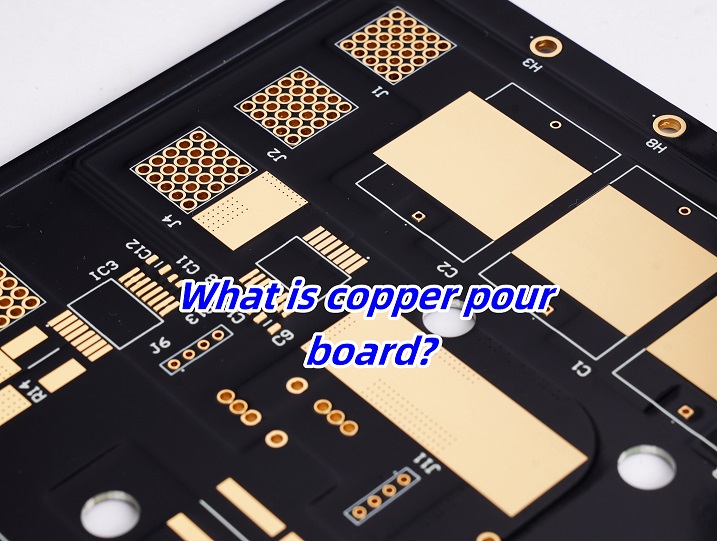
As a general rule, this thickness of copper foil for single-sided PCB and double-sided PCB is approx.35um(1.4mil). There is also another specification, which is 50um and 70um. The surface thickness of multilayers PCB is 35um(1oz(1.4mil)) generally, and the inner layer has a thickness of 17.5um(0.7mil). 70% of PCB uses the copper foil thickness of 35um. This is based on PCB purpose and signal voltage as well as current. In addition, for PCB requiring large current, copper thickness of 70um or 105um will be used, and 140um is also used in some cases.
heavy copper pcb
People often use OZ to represent copper thickness. 1OZ stands for the thickness of 1OZ copper covered on the area of 1 square feet evenly. I.e. approx. 1.4mil. The weight of unit area is used for representing the average thickness of copper foil. I.e. 1oz=28.35g/ FT2(FT2 stands for square feet, 1 square feet=0.09290304 square meter).
For heavy copper PCB, if the substrate has a thickness of 1 to 3mm, then the thickness of composite copper foil will be approx.35um. If the substrate has a thickness of less than 1mm, then the thickness of composite copper foil will be 18um. If the substrate has a thickness of above 5mm, then the thickness of composite copper foil will be 55um.
heavy copper pcb
The thickness of copper foil(wiring width) will influence current. Even though there is a formula to directly calculate the largest current loading capability of copper foil, things will get more complex when designing wiring. In this case, safety should be fully taken into consideration during design.
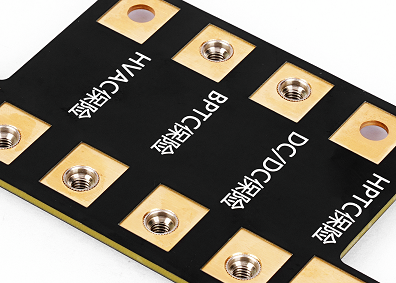
Copper foil will have different thickness, if there are different purposes. General 0.5OZ, 1OZ and 2OZ copper foil are most widely used for consumption and communication products. The thickness of copper foil above 3OZ belongs to heavy copper products, which are widely used for products with large current, such as high pressure products, and power supply board.
This is all about how to choose proper copper thickness during your project. Hope this is helpful to you. If you are still confused, please contact EBest Circuit (Best Technology). We have online customer services for 24 hours.
With the development of LED technology, LED power keeps increasing. This is closely related to heat dissipation. In order to resolve heat dissipation of LED with big power, aluminum-based copper-clad laminate is highly applied in led strip field.
Aluminum PCB(metal-based heat dissipation board) is a kind of unique metal-based copper-clad laminate. It has good head conductivity, electrical insulation and machining performance. Single-sided aluminum pcb consists of three layers of structures:circuit layer(copper foil), insulation layer and metal-based layer. Circuit layer requires large current-carrying capability, so we should use thick copper foil(generally 35um to 280um). The insulation layer for heat conduction is the core technology of aluminum pcb. It is general composed of special polymer filled with special ceramic. Small heat resistance, excellent viscoelasticity and anti-aging are all its advantages. And it is also able to bear mechanical and heat stress. Metal-based layer is the supporting component of aluminum pcb, and it needs to have high heat conductivity, so we generally use aluminum board, or copper board(which can provide higher conductivity). And it is suitable for regular machining such as drilling, punching and cutting. Techniques include gold plating, solder levelling, osp, ENIG, lead-free ROHS and so on.
single-layer-mcpcb-stackup
Aluminum pcb is commonly seen in LED products and has two sides(the front side and the reverse side). The white face is used to solder LED pin, and the other face presents natural color. It is generally painted with thermal conductivity paste and then contacted with heat conduction part. LED aluminum pcb is mainly used in power amplified mixed integrated circuits for STK series, motor cycles, automobile and electronics field.
There are many kinds of aluminum pcb for led tube, which varies based on the length and width of led tube. Aluminum pcb for led tube is popular with people due to its good quality, and durable and energy-saving features.
led strip
Aluminum pcb for led tube can save electricity as high as 70%. The light intensity of 12W Led tube is equal to 40w fluorescent tube. The service life of LED tube is is more than 10 times that of general fluorescent tube. It can be free of maintenance. Also, there is no need to change LED tube, barratter and starter frequently.
Generally, fluorescent tube has high temperature inside and needs to be used for more than 10 hours everyday in most cases. This problems are perfectly resolved by aluminum pcb for led tube.
If you have any queries, comments or suggestions on aluminum pcb for led, welcome to leave your message.
Confirm the processing method of the hole: Drilling and punching are used to process the holes of mcpcb multilayer. The feed degree and rotating speed of drilling is different from FR-4 PCB material. Adjustment needs to be made according to base material. Generally, we set the feed degree at 1-1.5 mil/rev, and the rotating speed at 20000-60000RPM. Punching requires specialized tooling to meet the needs of metal punching.
Outer Layer Drilling-the 2nd production process of mcpcb multilayer
Drilling of the inner layer core board should be carried out, according to the drilling parameters of FR-4 PCB. There should be enough vacuum degree and pressure foot, for keeping holes clean and removing debris. The number of drilling holes and wear condition should be well controlled.
Making Inner Layers-the 3rd production process of mcpcb multilayer
During the process, we use dry film(1.3-2.5 mil water solubility light induced corrosion resistant dry film), and wet film(wet film light induced corrosion resistant solvent).
Circuits Electro-Plating/Etching-the 4th production process of mcpcb multilayer
Circuits Electro-Plating: Acid copper plating and tin plating are suitable for double-sided core board.
Etching: During etching process, we need to adjust speed according to the thickness of copper foil. In order that core board can be etched smoothly, we can reduce pressure of etching spraying, or make towing plate.
After lamination, when epoxy resin is completely cured, and epoxy resin of board is removed, 2nd drilling should be carried out. This operation involves mechanical processing of metal-base composite material. This is a challenge to structure of mcpcb multillayer. Special attention should be paid during operation, especially location precision and quality of processing holes.
Making Soldermask-the 7th production process of mcpcb multilayer
There are 4 ways for making soldermask: liquid light induced corrosion resistant solvent; Thermosetting soldermaskï¼›UV curing soldermask; Dry film soldermask.
Surface Finishing-the 8th production process of mcpcb multilayer
In order to facilitate assembly of components, exposed copper foil surface must be treated, for enough solderability, good bonding power and comprehensive manufacturing performance. There are 4 ways for surface finishing: HASL, OSP, Sn and Ni/Au.
Packaging of mcpcb multilayer is important for reducing abrasion mark and wear. Using low-sulfur sheet for vacuum sealing is a good choice. Foam can also be used separately. The key is to isolate soldering flux from aluminum surface, in this way, we can eliminate galvanic electricity reaction between different metals.