PCB manufacturing PCB manufacturing
Home > Blog

What kind of MCPCB is suitable for your electronic project?

November 13th, 2021

If you need a Metal Core PCB for your project, there are some different types can be selected, the selection of the MCPCB type depends upon the type of application and project you are performing. This blog will provide you information about the metal based PCB, which will also illustrate the construction, uses and distinguishing features of the MCPCB boards, hope it can help you to choose the most appropriate MCPCB for your subsequent projects. 

Types of Metal Clad PCB 

There are many different types of the MCPCB depending upon the type of base material, currently the most common metal used for MCPCB manufacturers are Aluminum, Copper and steel alloy. The selection of the base material depends upon the type and nature of the electronic project.

1) Aluminium core PCB

Aluminium is a better material that we can use for the core of a board. The reason is that it has high heat transfer capability. Moreover, it also shows the heat dissipation capacity to the maximum extent. Aluminium is also relavitively cheaper as compared to the copper material. Therefore, it represents the cheaper and better manufacturing of the printed circuit boards.

2) Copper metal core PCB

Copper is the best material for the core of MCPCB, since this material shows the best heat transfer capability. Moreover, this material is also fit for the excellent heat dissipation during the process. These features save the PCBs from the thermal issues.

The copper core PCB shows the best thermal conductivity as compared to other PCBs. The normal value of the thermal conductivity for these PCBs is 2.0W/mk. However, we can get this value of thermal conductivity up to 12W/mk in the case of insulating layer. Therefore, these types of the PCBs have the tremendous use in the high-power LED lights.

3) Stainless steel PCB

Another important material that has an excessive use in the metal core PCBs is the Stainless steel PCB, which also can provide better capability of connectivity and high performance, and it’s more rigid than both aluminum and copper, but thermal conductivity is lower than them too. 

copper core & aluminum core pcb

Stack up of Metal core PCB

The stack up and construction of the MCPCB depends on the number of layers in the PCB. The PCB with the single layer, two layers and multiple layers have the different methods of stack and construction.

1) Single Layer Metal Core PCB

A single layer MCPCB consists of a metal base, Dielectric Layer, Copper Circuit Layer. The advantage is that it provides a better connection between components of the PCB, and it’s efficient at the heat dissipation in the high-power generator systems. These PCBs have the holes on the board for the mounting process of the electronic components. It can also have the screws around the chassis of the board for the arrangement of the components.

Single Layer Metal Core PCB
  • Two (Double) Layers MCPCB / Double Sided More Core PCB

In some cases, there’s not enough space on the single layer PCB for the mounting of enough electronic components. So we need to use the two layers conducting material to resolve this issue.

Regarding the MCPCBs with two layers of copper conductor, there are two basic types, one is Two (Double) layers MCPCB, the other one is Double Sided More Core PCB, which depends on your demand of the mounting of the electronic components, the components can be soldered on both sides on Double Sided More Core PCB.

If you would like to know more details of the differences between Double Sided MCPCB and Double/Two Layers MCPCB, welcome to click following link.

Double Sided More Core PCB

3) Multi Layers metal core PCB

The Multi Layers MCPCB have the more complex and integrated circuit/construction, which can be populated more components on the boards, put signal and ground layer into seperated layers, to achieve better performance in electrical performance. It’s best for heat transferring from electrical components to the chassis of the board. The use of these boards is tremendous in the digital and analogue devices.

Multi Layers metal core PCB

If you have any questions about MCPCB, welcome to contact EBest Circuit (Best Technology).

Ceramic PCB antennas for Bluetooth sports headset

November 11th, 2021

What is the function of the built-in ceramic antenna for the s Bluetooth sports headset?

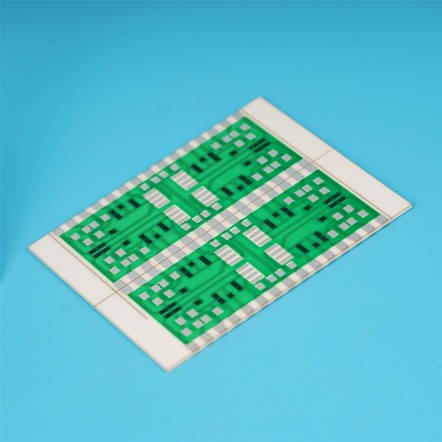
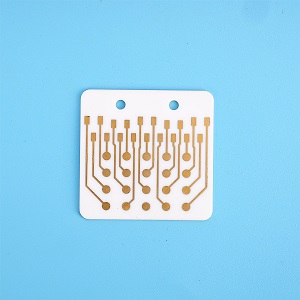
Ceramic antenna is another miniaturized antenna suitable for Bluetooth devices. The types of ceramic antennas are divided into block-shaped ceramic antennas and multilayer ceramic antennas. The block-shaped antenna is to use high temperature to sinter the whole ceramic body at one time, and then print the metal part of the antenna on the surface of the ceramic PCB.

Ceramic PCB for Bluetooth sports headset

The firing of multilayer antennas by low-temperature co-firing. The multilayer ceramic PCB are laminated and aligned and then sintered at high temperature. Therefore, the metal conductor of the antenna can be printed on each ceramic dielectric layer according to the design needed, which can reduce the size of the antenna size and then can achieve the purpose of hiding the antenna. Since the dielectric constant of the ceramic is higher than other PCB, so using ceramic antennas can effectively reduce the size of the antenna, it is very good for Bluetooth sports headset application. 

Ceramic PCB for Bluetooth sports headset

The material of the ceramic antenna is ceramic, and the weight is only 200g. Its frequency range is between 902MHz and 928MHz. In terms of dielectric loss, the ceramic medium has a smaller dielectric loss than the PCB, so it is in the low power consumption rate. The Bluetooth module is very suitable for it. The effect of the ceramic antenna is stronger than that of the on-board antenna. Generally, there are ANT access feet and ground feet, which are also very convenient to use.

Ceramic PCB for Bluetooth sports headset

The principle of ceramic antennas is divided into two parts: one is the transmitting antenna and the other is the receiving antenna.

  • Porcelain antenna transmitting antenna uses an electrode called “antenna” to turn the high-frequency electric field formed between the antenna and the ground into electromagnetic waves, which can be emitted and propagated to a distance.

Ceramic antenna Receiving antenna uses an electrode called an “antenna” to induce electromagnetic waves from the air into an electric field, generate high-frequency signal voltage, and send it to the receiver for signal processing.

Please feel free to contact sales@bestpcbs.com if you want to know more about ceramic PCB

A Brief introduction for different layers on Multilayer PCB

October 29th, 2021

When it comes to multilayer PCB, we know the multilayer PCB are consisted by many different layers. Do you know what’s the purpose for these layers?

Here I would like to give you a brief introduction for the functions of each layer on a Multilayer PCB design.

Mechanical layer: There may be one or several mechanical layers in a PCB depending on the design. There should be at least one mechanical layer as it shows the physical dimensions of the board. Generally, it used GM1, GM2 to name the file on the Gerber.

Solder paste layer: This is a material applied onto the PCB layers where components are mounted, mostly through soldering. It helps with the bonding of the solder with the component pin and improves the solder flow. PCB Assembly supplier will make stencil according to the solder paste layer on the Gerber.

Generally, it used GPS, GBS to name the file on the Gerber.

Solder mask layer: This layer is a mask or a protective coating applied onto the board to prevent damage and contamination. It is typically green in color; however, you can also choose other colors such as blue, black, white depending upon your requirements. Generally, it used GBS, GTS to name the file on the Gerber.

Ground planes and power planes: These are layers for copper, the ground and the power planes are connected to an onboard voltage point. Generally, it used GND, PWR to name the file on the Gerber.

Split planes: This is a modified version of power and ground planes; they are split in a manner that they can be connected to multiple voltage points or potentials.

Keep out layer: This layer is crucial as it defines the working boundary and keeps it separate from the outer mechanical layer. Generally, it used GKO to name the file on the Gerber.

Silkscreen layer: This is typically the text displayed on the boards through which you can identify components with their names. It is typically white in color when solder mask color is green, black, blue and red. But you can also choose other colors such depending upon your requirements. Generally it used GTO, GBO to name the file on the Gerber.

Routing layer: These layers help to interconnect the components. They can also be present on the top and bottom layers of the board.

Drilling Layer: This is the layer to show the drilling information of the PCB. Usually, it names DRL on the Gerber.

Once we understand the purpose of each layer for PCB, then understanding the construction of PCB becomes easy, no matter how complicated the board structure.

With over 15 years of PCB manufacturing experience, BEST Technology can meet different requests from customers no matter it is prototype or high-volume PCB.

Send us your request, let us to make the high-quality printed circuit boards for you.

Notes for cleaning PCBA

October 18th, 2021

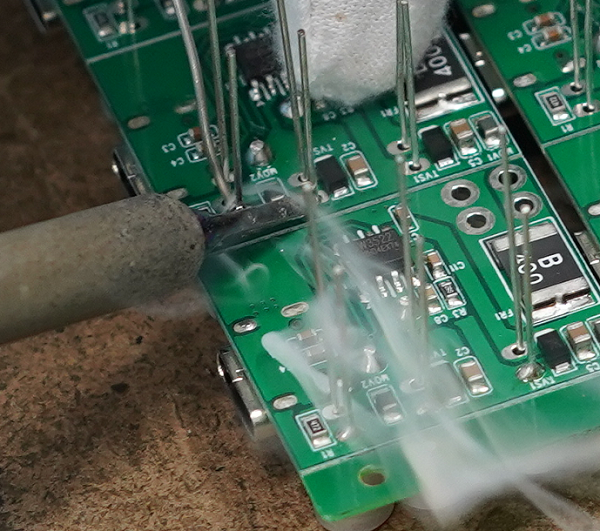
PCBA includes components assembly and DIP plug-in, in the whole process, there will be reflow soldering, wave soldering, manual soldering, due to the current Electronic products are getting smaller and smaller, and the size requirements of PCBA are getting smaller and smaller, but the requirements for quality (including product reliability and stability, etc.) are getting higher and higher. Many customers require PCBA boards with conformal coating to increase stability and reliability and ensure product quality and performance. But the PCBA board must be cleaned before with conformal coating.

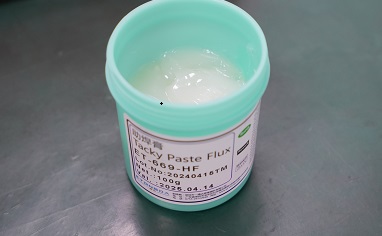
Because there will be a variety of flux residues on the soldered MCPCB board, some of which are acidic, soluble and corrosive, etc., if these residues are not cleaned, the coating will also cause very great damage to the product. In this blog I’d like to share some notes for cleaning PCBA.

  1. PCBA board after soldering, should be cleaned as soon as possible (flux residue will produce corrosion over time), cleaning residual flux and other pollutants on PCBA board.
Copper Core PCB
  • When cleaning the PCBA board, prevent the cleaning agent from intruding into the unsealed components to avoid damage to the components. After cleaning, it should be placed in the oven at about 30-50 degrees, baked for about half an hour, and then removed after drying PCBA board.
FR4 PCB
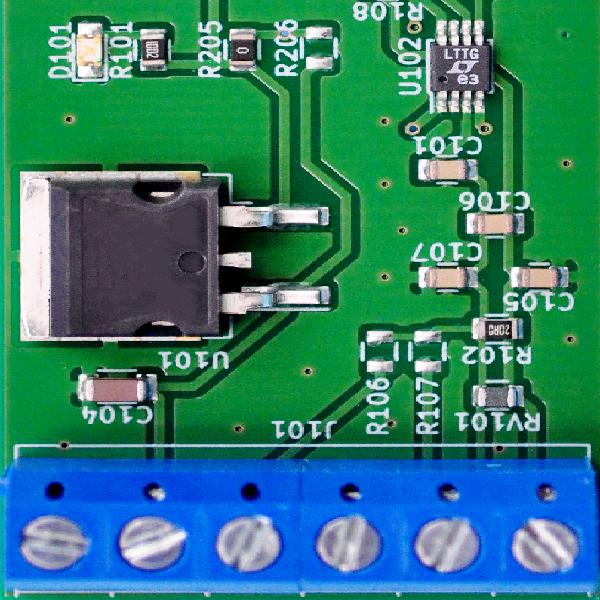
  • When cleaning the PCBA board, protect the components and labels on the board. Otherwise, the mounted and welded PCBA board will be wasted.
Aluminum Core PCB

Cleaning PCBA board affects the life and reliability of electronic products. Some of PCBA boards are not cleaned, which may lead to short circuit and leakage, leading to unqualified products and many failures, increasing the cost of recovery and maintenance, so it is not worth the loss to clean PCBA boards.

EBest Circuit (Best Technology) has our own SMT factory and can help our customers to buy the components at the same time. If you have any new inquiry of PCBA, welcome to send it to me then I can send you the quotation for comparison with your other suppliers.

About the “heat” problem in PCB & MCPCB

October 18th, 2021

For high-power products, the concept of “heat” is often mentioned, which is especially important in high-power products. It not only determines the service life of the product, but also relates to whether the product can work properly.

We will explain the “heat” problem in circuit board design from three aspects: the generation of heat, the impact of heat on the product and the “heat” in the system layout.

1. Heat generation:

Heat generation in a system takes several paths:

1) Power consumption of the component itself

2) Efficiency of power conversion devices

3) High frequency signal conversion heating

4) Power consumption of contact resistance and wire resistance during signal transmission

2. Impact of fever on products

The operating temperature of components is generally below 80 degree, and the operating temperature of commonly used capacitors and resistors is generally controlled below 50 degree. If the temperature of the system is not controlled, the following conditions may occur:

1) The temperature rise will cause the working parameters of components to change, resulting in the unstable working performance of the whole system.

2) Temperature rise will accelerate the aging of components, affecting the accuracy and life of components.

3) Temperature rise will cause circuit board deformation and poor connection of components.

General heat dissipation components arrangement

3. “Hot” considerations in system layout

1) Selection and layout of the chassis: choose materials with good thermal conductivity, such as aluminum alloy

2) Black heat absorbing material is coated inside the shell to enhance the function of radiation heat absorption

3) The shell is closely combined with the components with high calorific value to conduct heat dissipation

4) A large number of heating components should be placed at the edge of the plate to shorten the heat transfer path. Heat-resistant components should be kept away from light sources.

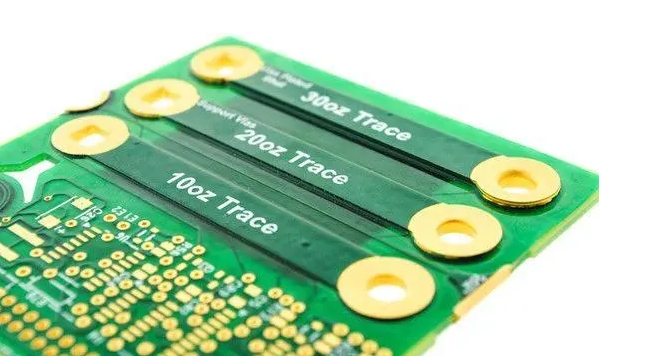
5) In the design process, the appropriate wire width and copper thickness should be selected, and the influence of wiring density on the current-carrying capacity should also be considered. Copper foil should be filled in the gap of the board surface as far as possible for heat conduction. The heat conduction hole can help effectively heat dissipation and reduce local temperature.

In the design of circuit board, how to effectively control the temperature of the system is a problem that must be considered.

The function of solder mask layer on the PCB Board.

September 20th, 2021

At last time, we shared a blog talking about Why most of the PCB boards are green?. Believe you’ve known the reasons for why most of solder mask colors are green.

Today, let’s share something about the function of solder mask on the Printed Circuits Boards.

The solder mask layer is designed mainly to prevent the PCB copper foil from being directly exposed to the air and play a role in protecting the PCB surface, which is also to prevent the area that should not be soldered from being soldered.

PCB Solder mask

As we know that almost all the PCB need to do the assembly, which need to go through the reflow soldering while the assembly, and solder mask plays an important role during control of the reflow soldering process.

Here is a summary for what solder mask roles played on the board:

(1) Prevent physical disconnection of conductor circuits on the circuits board;

(2) In the welding process, solder mask can prevent short circuit caused by bridging;

(3) solder mask can reduce copper pollution to the soldering trough;

(4) Print solder mask on the PCB can prevent insulation deterioration and corrosion caused by external environmental factors such as dust and moisture;

(5) Solder mask are with high insulation; it is possible to increase the density of the circuit.

Red solder mask

In terms of solder mask material, it must be used through liquid wet process or dry film lamination.

Dry film solder mask materials are supplied in a thickness of 0.07-0.1mm (0.03-0.04″), which can be suitable for some surface mount products, but this material is not suitable for PCBs with tighter pitches.

Why choose MCPCB rather than FR4 PCB for high power LED?

September 20th, 2021

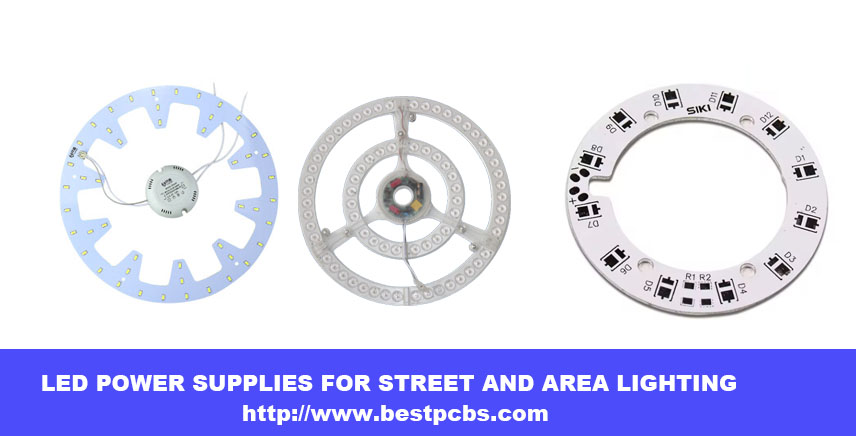
Compared to conventional LED, high-power LED consume more electricity and require higher currents, but the heat generated in the end cannot be dissipated in time through the ordinary FR4 CPB. And there will be some failures when the heat from a LED is not properly removed, the LED’s light output is reduced as well as degradation when the heat remains stagnant in the LED package.

So if the PCB requires fast cooling, it’s better to use a metal base rather than a traditional FR-4 substrate. The typical LED MCPCB is a single circuitry layer copper foil which is bonded to a layer of thermally conductive dielectric material which is bonded to a thicker layer of metal like Aluminium or Copper base, the purpose of a MCPCB is to efficiently remove the heat from all topical IC’s (not just LEDs). Following are the comparison between FR4 PCB and MCPCB for your reference.


1. Thermal Dissipation

FR4 has low thermal conductivity, typically around 0.3W/m.K, while MCPCB has higher thermal conductivity, ranging from 1.0-7.0W/m.K. MCPCB transfer heat 8 to 9 times faster than FR4 PCB, the dielectric layer must be very thin to create the shortest path from the heat source to the supporting metal plate, its thickness is normally between 0.003 and 0.006 inches.

As an example, consider that a test conducted on an MCPCB with integrated 1W LED showed how its temperature remained pretty close to the ambient temperature of 25°C, while the same power LED mounted on a FR-4 board reached a temperature 12°C higher than the ambient one.

2. Better Strength and Stability

Since high power LED chips are usually assembled directly on the PCB, these LEDs can create stability and reliability problems for the circuit. Without adopting the right technique, heat dissipation can hinder the performance of electronic devices that operate at high power. The use of metal PCBs in these applications effectively solves this problem. In addition to ensuring a high durability, aluminum is very light, and adds strength and resilience to the printed circuit board without causing an increase in weight.

3. Dimensional Stability

The size of a metallic printed circuit board remain more stable, as environmental conditions vary, than that of a PCB made with traditional materials, such as FR-4. Subjected to a heating process from 30°C to about 150°C, PCBs with metal layers (such as aluminum) have undergone a very small variation in size, ranging from 2.5% to 3.0%.

If you have other questions about MCPCB, welcome to contact us.

Why most of PCB boards are green?

August 24th, 2021

You may have found such a situation, most of the PCB boards are with green colors, while other colors are relatively rare to see, do you know why?

As we know that the Printed Circuits Board consists of Solder Mask Layer, Silk screen layer, solder PAD, Copper traces, surface finishing and other parts, etc.

Among them, the solder mask refers to the part of the PCB that is covered by oil. Since most PCB boards use green oil, the part of the green oil that can be seen on the board surface is the solder mask, which play an important role during the reflow soldering process.  

green solder mask

Then why are most of the PCB boards green? The main reasons are as follows:

  1. Green is less irritating to the eyes. We all know that green is good for the eyes and can resists fatigue. So when the PCB board with green solder mask, relative production and maintenance personnel are not prone to eye fatigue when staring at the PCB board for a long time, and it is less harmful to the eyes.

2. Cost for Green oil is lower. Since green is the mainstream in the production process, the purchase of natural green oil will be larger, and the purchase cost of green solder mask will be lower than other colors. At the same time, using the same color oil in mass production can also reduce the replacement cost.

  • When the board works on the SMT soldering process,  it needs to go through the process from Tinning, post soldering and final AOI inspection. These processes all need to be optically positioned and calibrated. The green background color is better for the recognition of the instrument.
PCBA AOI testing

Okay, now, do you understand why most of PCB boards are with green colors?

Though we know green is the most common one, but other colors such as red, yellow, blue, purple, black or some other colors are okay for us to make.

solder mask colors

If you have PCB board with a special color want to make, please contact us and we will try best effort to meet your request.

Advantages of Sink-pads Copper Substrate in the Field of LED Products

August 17th, 2021

For LED packaging, the cooling performance of the substrate will directly affect the relevant performance of the LED. Due to the low thermal conductivity of the insulation layer, the overall thermal conductivity is generally only 2~5W / (m K), which often causes high working temperature, stability and life decline of LED. Therefore, it is necessary to know the advantages of sinkpad copper substrate.

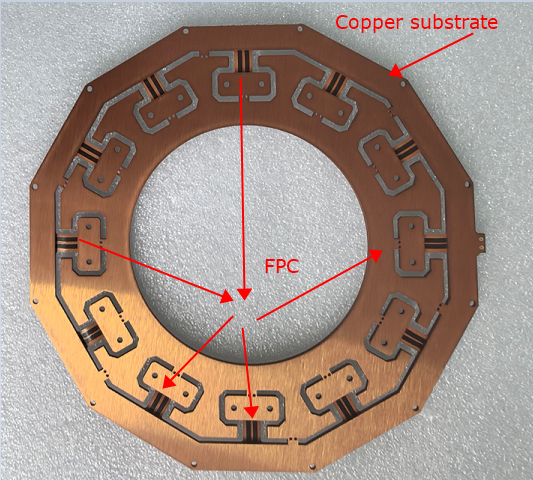
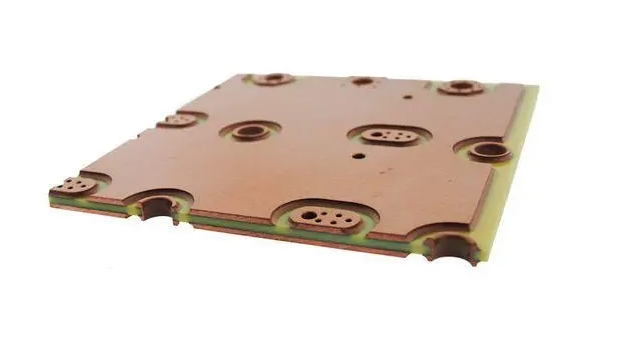
Doule sided sinkpad of copper board
  1. From the perspective of substrate, the application advantages of copper substrate in heat dissipation.

The copper substrate is used in the field of heat dissipation, mainly because the sinkpad copper substrate has the following advantages: high density, strong heat dissipation ability, the circuit part and the contact part of the products to achieve zero thermal resistance, can effectively extend the life of the products. Large power, strong thermal bearing capacity of copper substrate, according to the actual work requirements of tin spray, gold precipitation, silver plating and other effective treatment, to ensure the effectiveness of the surface treatment.

  • From the perspective of production process, the application advantages of thermal power separation copper substrate in module thermal resistance and chip temperature compared with ordinary copper substrate.

Different LED models and modules cause different thermoelectric effects. When using the common copper substrate, the junction temperature of LED chip is 72.41 Ăąâ€žÆ’. However, when using the sink-pad copper substrate link, the detection shows that: the junction temperature of LED chip is 48.72 Ăąâ€žÆ’. When using the common copper substrate, the thermal resistance of the module is 4.24 Ăąâ€žÆ’ /W. However, after the use of sink-pad copper substrate, the overall thermal resistance of the module was detected to be 2.13 Ăąâ€žÆ’ /W. Due to the different material properties, the thermal resistance of the module thermometer at the bottom of the substrate was different.  

  • From the perspective of heat dissipation theory, for the ordinary copper substrate, the diffusion path of the heat flow is the line layer (copper foil) ñ†’ thermal conductivity insulation layer copper base. The interface between metal and insulation has high thermal resistance and low thermal conductivity. In the sinkpad copper substrate, the convex platform and the base are actually a whole, and most of the heat will choose to spread through the metal, and only a small amount of heat is transmitted through the interface between the metal and the insulating layer, which greatly improves the thermal conductivity of the substrate.

According to the heat dissipation theory of LED, reducing the junction temperature of LED beads can effectively improve the light output efficiency of LED, enhance the performance stability of LED, and greatly extend the service life of LED module.  

Therefore, in LED products application, the choice of thermal separated copper substrate is the best choice.

single sided sinkpad of copper board

Baking Time & Temperature Standard of MCPCB

August 17th, 2021

After manufacturing the Metal Core PCB, there is a shelf life, once the shelf life has passed, we need to bake the bare board before assembling the components, otherwise the MCPCB is prone to burst when the SMT line is produced. There are industry specifications for both how long MCPCB can be stored and how long they can be baked.

MCPCB Control Standard

  1. Unpacking & Storage
  2. If the packing bag is sealed, and the manufacturing date is within 2 months, it can be directly used before assembly.
  3. The manufacturing date is within 2 months, and the unpacking date must be marked after unpacking.
  4. The manufacturing date is within 2 months, and it must be assembled and used within 5 days after unpacking.
  • Baking Time
  • If unpacked for more than 5 days within 2 months of the manufacturing date, bake at 120±5°C for 1 hour
  • Two months after the manufacturing date, baking at 120±5°C for 1 hour before assembly.
  • Two to Six months after the manufacturing date, baking at 120±5°C for 2 hours before assembly.
  • Six to Twelve months after the manufacturing date, baking at 120±5°C for 4 hours before assembly.
  • The MCPCB after baking must be used up within 5 days (put into IR REFLOW), and unused board must be baked for another hour before assembly.
  • Over half one year after the manufacturing date, bake at 120±5°C for 4 hours before assembly, and then send it to the production line to do HASL_LF before using.
Baking Machine

Preservation & Baking Standard for in different regions

The specific storage time and baking temperature of MCPCB are not only related to the production capacity and production process of manufacturer, but also have a great relationship with the region.

  1. For areas with heavier humidity, the MCPCB must be used up within 24 hours when exposed to the air, otherwise it is easy to oxidize. After normal opening, it is best to use it up in 8 hours.
  • For areas with a relatively dry climate, the preservation time of PCB will be longer, and the baking time can also be shorter. The baking temperature is generally 120±5°C, and the baking time is determined according to the specific situation.

The MCPCB with OSP or Gold Immersion has a shelf life of 6 months after packaging, and it is generally not recommended to bake for MCPCB with OSP.

PCB board with SMT

If you have other questions about MCPCB, welcome to contact us.