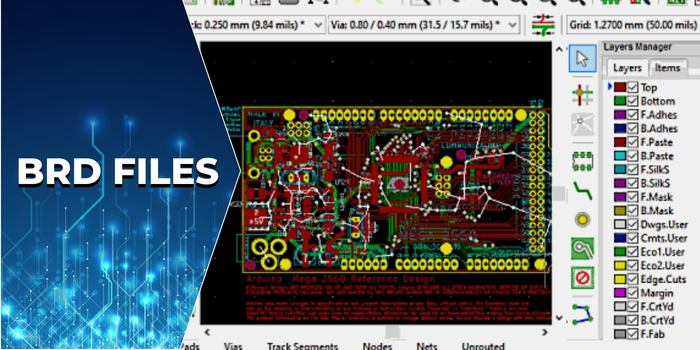
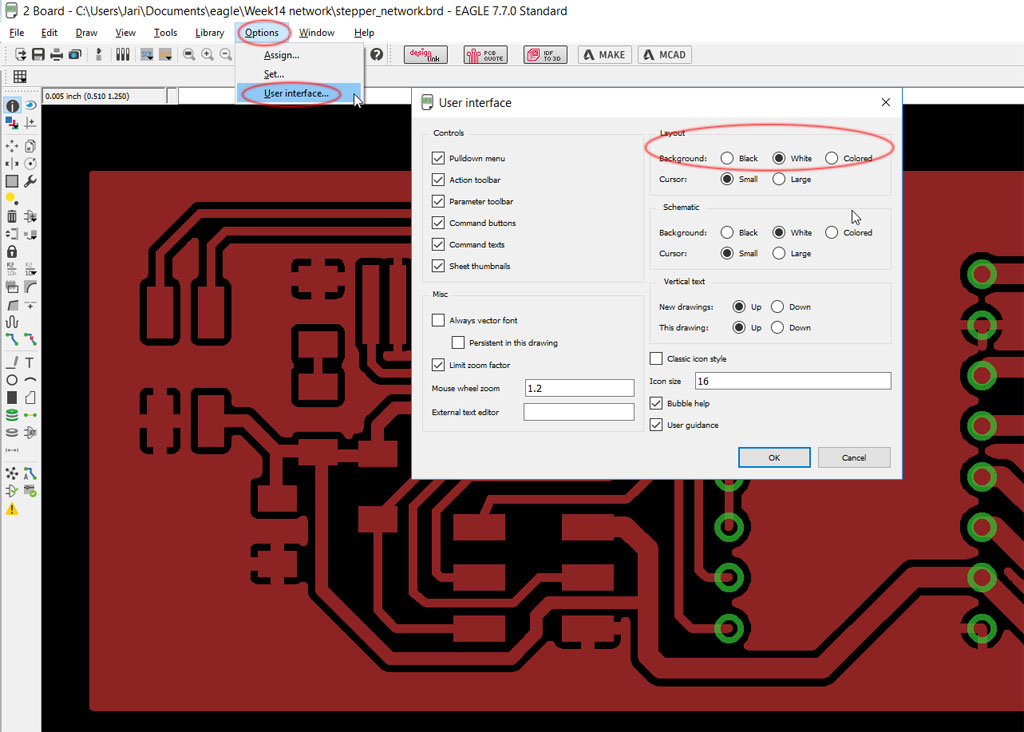
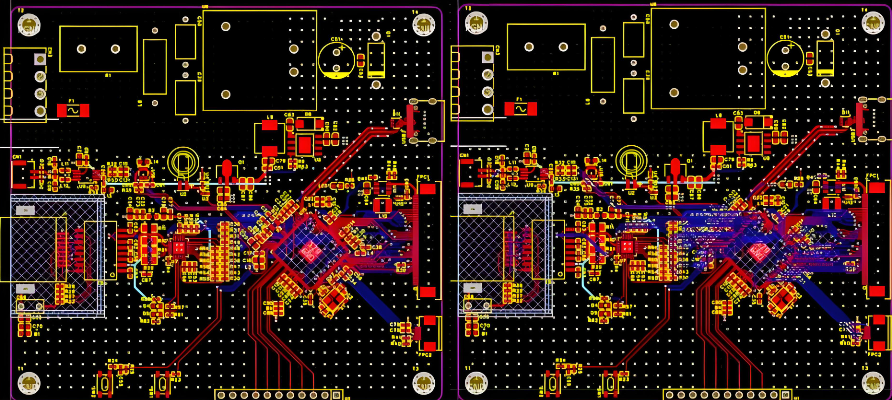
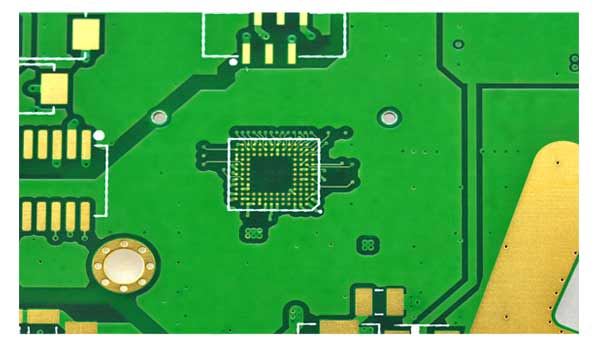
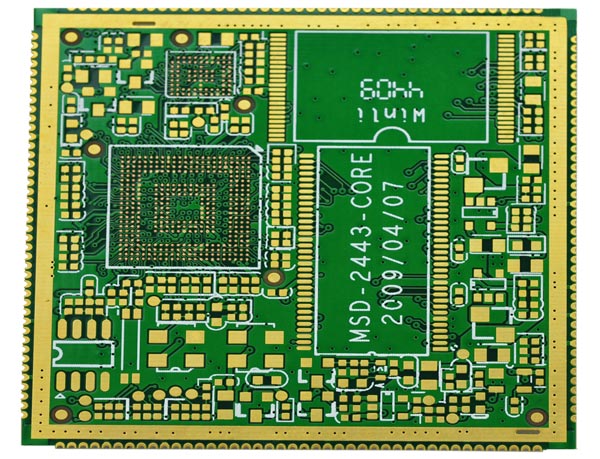
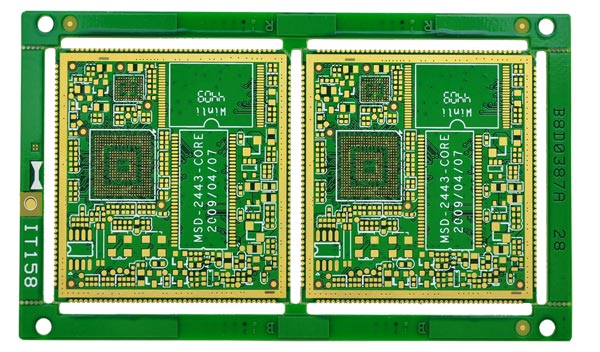
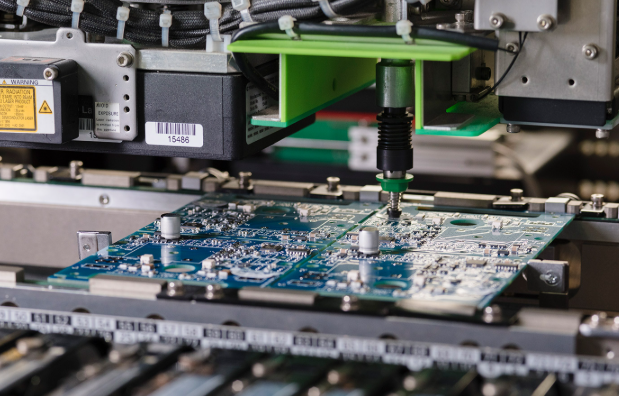
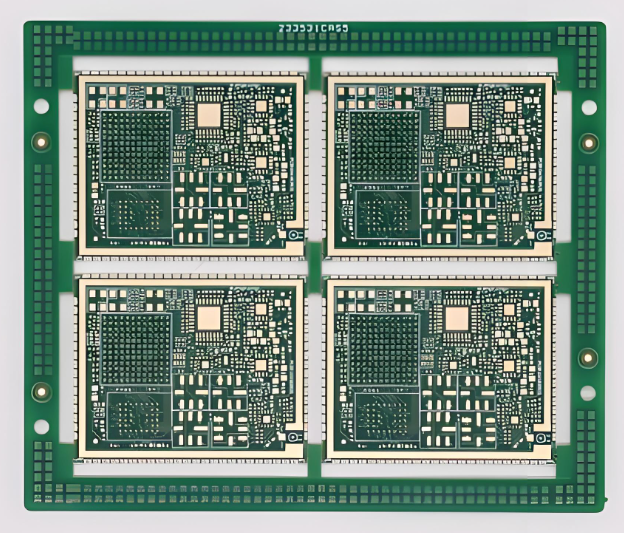
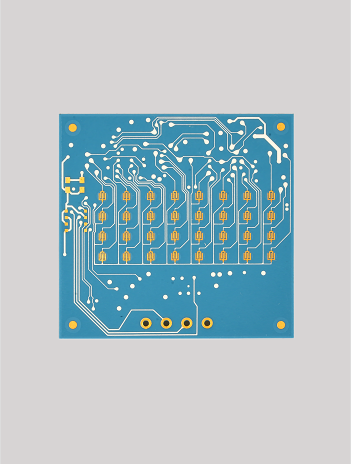
A .brd file is a native PCB layout file used by electronic design automation (EDA) software to store the physical board design of a printed circuit board. Unlike schematic files that represent logical connections, a .brd file defines the actual board geometry, copper routing, layers, drill data, footprints, and manufacturing constraints required for fabrication and assembly.
In practical terms, when an engineer finishes routing traces, placing components, defining stack-up layers, and setting design rules, that layout data is saved as a .brd file. It is the working design file—not the final manufacturing output like Gerber files.
What Is a .brd File?
A .brd file is the board layout file generated by certain Electronic Design Automation (EDA) tools. It stores the complete PCB layout environment, including:
Board outline geometry
Copper trace routing
Via definitions
Layer stack configuration
Component footprints and placement
Design rules and constraints
Net connectivity
In simple terms:
A schematic file (.sch) defines logical connections.
A .brd file defines the physical realization of those connections.
The .brd file represents the stage where abstract circuitry becomes manufacturable hardware.
What Is the BRD File Format?
The BRD file format is proprietary and software-dependent. Different PCB tools use “.brd” as their internal layout database extension, but the internal structures are not interchangeable.
For example:
Autodesk EAGLE uses .brd to store board layout data.
Cadence Allegro also uses .brd as its main PCB database format.
Mentor Graphics PADS historically used similar board database structures.
Although the file extension is identical, the file encoding, object hierarchy, and internal database schema vary significantly.
This means:
An EAGLE .brd file cannot be directly opened in Allegro.
An Allegro .brd file cannot be imported natively into EAGLE.
Therefore, when someone shares a .brd file, always confirm:
Which software created it
Which software version was used
Even minor version mismatches can cause compatibility issues.
Information Contained in a .BRD File
A .brd file is essentially the master PCB database. It contains nearly everything required to reproduce the board layout in a design environment.
1. Board Mechanical Definition
The file includes:
Board outline dimensions
Cutouts and slots
Edge contours
Mounting hole locations
Keep-out regions
Mechanical integrity depends on these parameters. Incorrect outline data can lead to enclosure mismatch or assembly failure.
2. Layer Stack Definition
The layer stack is a critical element stored in the .brd file:
Number of layers (2L, 4L, 6L, 10L, etc.)
Signal layers
Power/ground planes
Dielectric spacing
Copper thickness
In advanced designs such as HDI or high-speed boards, stack-up configuration affects:
Impedance control
Crosstalk performance
EMI behavior
Thermal dissipation
The .brd file stores these definitions so the design rules can reference them dynamically.
3. Copper Routing and Nets
The routing database inside a .brd file contains:
Trace width
Trace length
Via types
Differential pair constraints
Length matching settings
In high-speed applications (DDR, PCIe, RF), this data is crucial. The .brd file tracks connectivity integrity in real time and allows DRC validation.
4. Component Placement Data
The file records:
XY coordinates
Rotation angles
Layer (top/bottom)
Reference designators
Footprint library mapping
This placement information is later used to generate:
Pick-and-place files
Assembly drawings
3D board models
Without accurate placement data in the .brd file, assembly automation would be impossible.
5. Drill and Via Database
The .brd file includes:
Through-hole vias
Blind vias
Buried vias
Microvias
Drill diameters
Backdrill definitions
These parameters determine:
Fabrication cost
Reliability
Yield rate
Manufacturability
Advanced HDI structures rely heavily on precise via definitions stored inside the board file.
6. Design Rule Constraints
One of the most powerful aspects of a .brd file is its embedded DRC rules, including:
Minimum trace width
Clearance rules
Solder mask expansion
Annular ring requirements
Impedance rules
High-voltage spacing
These constraints prevent layout errors and ensure compliance with fabrication capability.
What Opens a .BRD File?
A .brd file must be opened using the software that created it or a compatible tool.
Common tools include:
Autodesk EAGLE
Cadence Allegro
KiCad (import functionality available)
Altium Designer (via import wizard)
Before opening a .brd file:
Verify software origin
Confirm version compatibility
Check library dependencies
Missing footprint libraries can cause loading errors.
How to View .BRD File?
If editing is not required, viewing options include:
Option 1: Install Viewer Mode
Some PCB tools provide free viewing licenses.
Option 2: Convert to Neutral Format
Export:
Gerber files
ODB++
IPC-2581
These can be viewed using standard PCB viewers.
Option 3: 3D Export
Many modern tools allow exporting a 3D STEP model for mechanical review.
In professional workflows, contract manufacturers rarely request the .brd file unless DFM modification is necessary. Instead, they prefer Gerber + drill + stack-up documentation.
Free BRD File Viewer
There is no universal free viewer because the format is proprietary.
However:
Autodesk EAGLE offers limited viewing access.
KiCad can import certain EAGLE board files.
Cadence Allegro provides viewer licenses in enterprise environments.
For external sharing, converting to PDF or Gerber remains the safest method.
How Do I Open a BRD File on a Mac?
Mac compatibility depends on the originating tool.
Mac-supported tools:
Autodesk EAGLE
KiCad
Steps:
Install compatible software
Launch application
Select File → Open
Load the .brd file
If the file was created in a Windows-only environment such as Allegro, you may need virtualization or request exported files.
How to Import a BRD File?
Importing between platforms requires translation utilities.
1. Import EAGLE to KiCad
KiCad provides Eagle importer functionality:
File → Import → Eagle Project
2. Import EAGLE to Altium
Use the Import Wizard and select Eagle files.
After import:
Run DRC
Validate footprint mapping
Check netlist integrity
Reconfirm layer stack
Never assume automated translation is 100% accurate.
.BRD File vs Gerber File
Aspect
.brd File
Gerber File
Type
Design database
Manufacturing output
Editable
Yes
No
Contains DRC rules
Yes
No
Software dependent
Yes
No
Used for fabrication
Indirectly
Directly
The .brd file is like the “source code” of the PCB, while Gerber files are the “compiled output.”
.BRD File vs ODB++ and IPC-2581
Modern manufacturing increasingly uses intelligent formats.
ODB++ stores full fabrication database.
IPC-2581 is an open standard format.
Unlike Gerber, these formats contain stack-up, drill, and BOM references in a unified package.
The .brd file remains a design tool format, not a universal production format.
Why Manufacturers Rarely Need the .brd File?
From a fabrication perspective, manufacturers require:
Copper layer data
Drill data
Stack-up definition
Surface finish requirements
Impedance control specs
All of these can be derived from Gerber + documentation.
Sharing .brd files may introduce:
Intellectual property exposure
Software compatibility challenges
Version conflicts
Therefore, most manufacturers prefer standardized outputs.
How to Convert BRD File to PDF?
To convert a .brd file to PDF:
Method 1: Print to PDF
Open the board in the original software:
File → Print
Select “Print to PDF”
Method 2: Export Layers to PDF
Many PCB tools allow layer-by-layer PDF export.
Method 3: Export Gerber → Use Gerber Viewer → Export PDF
For professional documentation, designers typically generate:
Assembly drawing PDF
Fabrication drawing PDF
3D render export
EBest Circuit (Best Technology) – How We Support Engineer in PCB Design?
Understanding a .brd file is only the first step. Turning that design into a reliable, manufacturable PCB requires engineering validation, fabrication expertise, and controlled assembly processes.
Best Technology (EBest Circuit)supports customers from PCB layout verification to full turnkey PCBA production. If you have a .brd file and are unsure whether it is production-ready, our engineering team can assist with:
Free DFM review and manufacturability analysis
Stack-up optimization and impedance validation
Drill structure and via reliability assessment
Surface finish and material selection guidance
Rapid PCB fabrication and PCBA assembly (prototype to mass production)
As a PCB + PCBA integrated manufacturer with over 20 years of experience, we help engineers convert design data into stable, repeatable production results. Whether your project involves HDI structures, heavy copper boards, high-speed digital layouts, RF applications, or industrial control systems, our technical team works directly with your design files to reduce risk before fabrication begins.
If you have a .brd file that needs professional review, quotation, or production support, feel free to contact us at: sales@bestpcbs.com
Our pre-sales engineering team typically responds within 12 hours to help move your project forward efficiently and confidently.
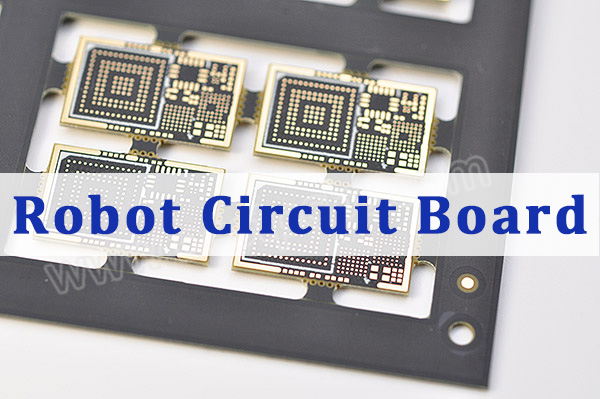
A robot circuit board is more than a simple control board. This guide walks through structure, materials, simulation methods, and real-world integration considerations.
EBest Circuit (Best Technology) brings over 20 years of PCB and PCBA expertise, offering full-process engineering. From detailed DFM pre-review reports and BOM optimization to turnkey PCB fabrication, component sourcing, assembly, and testing, every project is managed within a controlled, ISO-certified production environment. With self-owned factories, digital traceability, and fast 1.5-week PCBA delivery, EBest Circuit (Best Technology) helps engineers move from prototype to production. For technical consultation or a quotation, pls feel free to contact us at +86-755-2909-1601 or sales@bestpcbs.com.
What Is a Robot Circuit Board and Why Is It the Brain of a Robot?
A robot circuit board—also referred to as a robotics circuit board or circuit board robot control system—is the electronic platform that integrates processing, sensing, actuation, communication, and power management into a unified system.
In functional terms, it performs five core tasks:
Signal Acquisition – Reads data from sensors such as IMUs, encoders, cameras, ultrasonic modules.
Processing and Logic Control – Executes firmware or embedded Linux control logic.
Motor Drive Management – Controls PWM signals and current regulation for motors.
Communication Handling – Manages CAN, UART, SPI, I²C, Ethernet, or wireless modules.
Power Regulation – Converts battery voltage into stable rails (5V, 3.3V, 12V, etc.).
Without this central platform, a mechanical robot becomes an inert assembly of motors and sensors. The robotics circuit board synchronizes motion, maintains feedback loops, and enables autonomous behavior.
In advanced systems, multiple boards may be used:
Main control board
Motor driver board
Vision processing board
Power distribution board
Together, these form a distributed control architecture.
How to Make a Robot Circuit Board Step by Step?
If you’re planning to build a robot circuit board, the process follows professional PCB development methodology.
Step 1: Define Functional Requirements
Clarify:
Number of motors
Sensor types
Communication protocols
Battery type and voltage
Required processing power
For example, a self-balancing robot demands fast IMU sampling and closed-loop motor control with minimal latency.
For motor-heavy designs, consider 2oz or 3oz copper to support higher current loads.
Step 4: Prototyping and Fabrication
Choose:
2-layer board for simple robots
4-layer board for improved EMI control
6-layer board for high-speed systems
Step 5: Assembly and Testing
After fabrication:
Perform visual inspection
Power rail validation
Firmware flashing
Functional motor testing
Sensor calibration
This completes the cycle of how to build a robot circuit board from concept to working hardware.
What Types of Circuit Boards Are Used in Robotics Applications?
Different robotics systems require different board structures. Selecting the right PCB structure ensures mechanical durability and electrical stability.
1. Single-Layer PCB
Used for:
Simple robot kits
Educational platforms
Low-current applications
2. Multi-Layer PCB
Common in:
Autonomous vehicles
Drone flight controllers
AI-enabled robots
4-layer structure is typical:
Top layer: signal
Inner layer 1: ground
Inner layer 2: power
Bottom layer: signal
3. HDI (High-Density Interconnect)
Used for compact robot vision circuit boards and embedded AI modules.
A proper simulation circuit board for robotic vehicle stage avoids costly re-spins.
Where Does the Circuit Board Go in a Robot?
Board placement depends on mechanical design and system architecture.
1. Main Control Board
Mounted centrally for weight balance.
2. Motor Driver Board
Placed close to motors to reduce current path length.
3. Power Board
Located near battery pack.
4. Vision or Sensor Board
Often positioned at the front or elevated for better field of view.
In drones, the control board sits at the geometric center to maintain stability.
Thermal considerations:
Provide airflow
Avoid enclosing high-power driver boards tightly
Use mounting holes with proper grounding
To conclude, a robot circuit board is the foundation of robotic intelligence. From simple educational kits to complex autonomous vehicles, board architecture determines electrical stability, control accuracy, and long-term reliability.
Designing the right robotics circuit board requires structured planning, correct material selection, simulation validation, and precise assembly execution. When engineered properly, the board transforms mechanical hardware into a responsive, intelligent system capable of real-world performance.
If you are developing a circuit board for robotic vehicle platforms or advanced robotic applications, a carefully designed and professionally assembled solution will significantly reduce development cycles and enhance product stability. For engineering support or a project quotation, contact us at +86-755-2909-1601 or sales@bestpcbs.com.
FAQs About Robot Circuit Boards
1. What is the best PCB material for robotics?
FR-4 is most common due to cost efficiency and mechanical stability. For high-frequency or compact vision systems, advanced materials may be used. For high-power robotics, thick copper FR-4 is often sufficient.
2. How much does a robotics circuit board cost?
Cost depends on:
Layer count
Copper thickness
Board size
Assembly complexity
Simple 2-layer boards can be low cost in prototype quantities. Multi-layer industrial boards cost more due to fabrication precision and assembly requirements.
3. What layer count is typical for robotic control boards?
Educational robot: 2 layers
Hobby drone: 4 layers
Industrial robot controller: 6 layers or more
Higher layers improve EMI control and signal routing density.
4. How do I test a robot circuit board after assembly?
Standard validation includes:
Continuity and short-circuit testing
Power-on voltage measurement
Firmware upload verification
Motor load testing
Sensor calibration
Functional movement validation
For professional manufacturing, AOI, ICT, and functional testing are recommended.
When looking for reliablePCB assembly in Bengal, EBest is your top choice. We specialize in delivering high-quality PCB assembly in Bengal for various industries, meeting the strictest standards. As one of the leading PCB assembly companies in Bengal, we combine 19+ years of experience with advanced technology to exceed your expectations. OurPCB assembly in Bengal services cover all your needs, from prototypes to mass production, with dedicated support throughout your project.
What Pain Points Do Clients Face with PCB Assembly in Bengal?
When businesses search for PCB assembly in Bengal, they often encounter frustrating pain points that disrupt their projects and increase costs. One of the most common issues is inconsistent quality, such as board warpage after reflow soldering or poor solder joints that lead to product failure. Inconsistent quality often stems from insufficient testing protocols, which can result in faulty PCBs that require costly rework. Clients also struggle with delayed delivery, as production inefficiencies can make it difficult to meet tight project deadlines.
Additionally, limited customization options plague many clients seeking PCB assembly in Bengal, especially those in medical, aerospace, and industrial sectors with unique design requirements. Component sourcing is another major challenge. Unreliable suppliers can lead to shortages or low-quality parts, which in turn delays production further. Compliance with industry regulations such as ISO 13485 for medical devices or AS9100D for aerospace can also be challenging, putting clients at risk of non-compliance penalties.
Our Solutions to These Pain Points of PCB Assembly in Bengal
When businesses search for PCB assembly in Bengal, core pain points include inconsistent quality, delayed delivery, limited customization, unstable component sourcing, and regulatory compliance issues. These challenges disrupt projects, increase costs by 20-30% due to rework and delays, and hinder time-to-market. EBest solves these with targeted, data-backed solutions, making us the trusted choice across medical, aerospace, and industrial sectors. Our track record of serving 3,200+ clients with a 97% retention rate proves our ability to address regional businesses’ unique needs.
To tackle inconsistent quality, a top pain point for 78% of businesses seeking PCB assembly in Bengal, we use A+ grade materials with 1.6W/m·K thermal conductivity and 100% full inspection including high-precision AOI and X-Ray testing. This ensures a 99.92% first-pass yield, 10-14% higher than the regional average of 85-89%. For delayed delivery, our 24-hour expedite service and 86 automated assembly machines enable a 99.8% on-time delivery rate, far exceeding the 85% regional average and eliminating costly delays.
We address limited customization with tailored solutions for all substrates and complex designs, capabilities only 30% of regional PCB assembly companies can match, plus free DFM analysis that cuts rework by 40% and production time by 15%. For unstable sourcing, our 800+ verified suppliers and 15% critical part safety stock reduce lead time risk to 5%, compared to the 25-30% regional average. We ensure regulatory compliance with global certifications and 48 certified engineers, with 2-hour support response times, turning PCB assembly in Bengal pain points into competitive advantages.
What Makes EBest the Top PCB Assembly Manufacturer in Bengal?
With 19+ years of production experience, EBest is the top PCB assembly manufacturer in Bengal, helping clients avoid trial-and-error costs and ensure smooth project execution. We handle all project types from prototypes to high-volume production, with a monthly capacity of 260,000 square feet and the ability to complete over 1,000 PCB board types monthly. Our 99.8% on-time delivery rate and 99.92% first-pass yield minimize delays and rework costs. Our free DFM analysis optimizes designs upfront, cutting rework rates by 40% and production time by 15% to enhance efficiency and reduce expenses.
Our leadership in PCB assembly in Bengal comes from technical excellence and client-centric support. We allocate 5% of annual revenue to R&D to keep your products competitive. Our team of 48 certified engineers, 12 with IPC-A-610 certification, provides one-on-one online guidance with a 2-hour response time and can modify PCB drawings to optimize manufacturability, saving you time and resources. Our 20,000-square-foot smart facility with 86 automated machines reduces human error and boosts efficiency by 40%, while strict quality control with 100% full inspection ensures defect-free PCBs and avoids costly product failures.
What sets EBest apart as the top PCB assembly manufacturer in Bengal is our focus on long-term client success. With 19+ years of experience, we serve 3,200+ clients with a 97% retention rate, understanding industry-specific challenges. We tailor solutions to your needs, combining free DFM analysis, engineer guidance and drawing modification to streamline projects. Our strict quality control, efficient production and on-time delivery help you meet deadlines, while our expertise solves pain points to save you time, reduce costs and ensure peace of mind.
What PCB Assembly Services Does EBest Offer in Bengal?
As a leading PCB assembly manufacturer in Bengal, EBest delivers a full suite of tailored PCB assembly in Bengal services. These services are engineered to address the unique demands of medical, aerospace, industrial, and AI-driven industries. Our service portfolio is built on technical expertise, flexible production capabilities, and a client-centric approach. We ensure we meet every project requirement, from simple single-layer boards to complex high-density assemblies.
High-Density BGA & Micro BGA Assembly: Our precision BGA assembly handles pitch sizes as small as 0.4mm. We use X-Ray inspection post-assembly to verify solder joint integrity and automated reflow ovens with 12-zone temperature control for uniform heating. This precision is critical for high-density components used in aerospace and medical devices.
Flex, Rigid-Flex & Ceramic PCB Assembly: We specialize in flexible PCBs for compact, high-mobility applications and ceramic PCBs for AI servers and high-heat industrial equipment. Ceramic substrates offer 300-600x better thermal conductivity than traditional FR-4 to solve heat management challenges in high-power devices.
Rapid Prototype & Low-Volume PCB Assembly: Our quick-turn service delivers prototypes in 12-24 hours for urgent R&D needs. Low-volume batches (1-500 units) are ready in 2-3 days. We include free DFM analysis to optimize your design, reducing rework and accelerating time-to-market.
Full Turnkey PCB Assembly: Our end-to-end service covers component sourcing, PCB fabrication, assembly, testing, and packaging. We leverage 800+ verified suppliers for authentic components, eliminating multi-vendor hassle and ensuring supply chain stability.
Beyond core PCB assembly in Bengal, we offer integrated value-added services to streamline your production workflow and reduce costs. Our in-house capabilities include injection molding for custom enclosures, CNC machining for precision metal components, and sheet metal fabrication for industrial enclosures. All these capabilities align with our PCB assembly standards.
What Quality Certifications Does EBest Hold for Bengal PCB Assembly?
EBest maintains strict quality standards for PCB assembly in Bengal, holding globally recognized certifications to ensure compliance and reliability:
IATF 16949 (automotive industry compliance)
ISO 9001:2015 (general quality management)
ISO 13485:2016 (medical device compliance)
AS9100D (aerospace industry compliance)
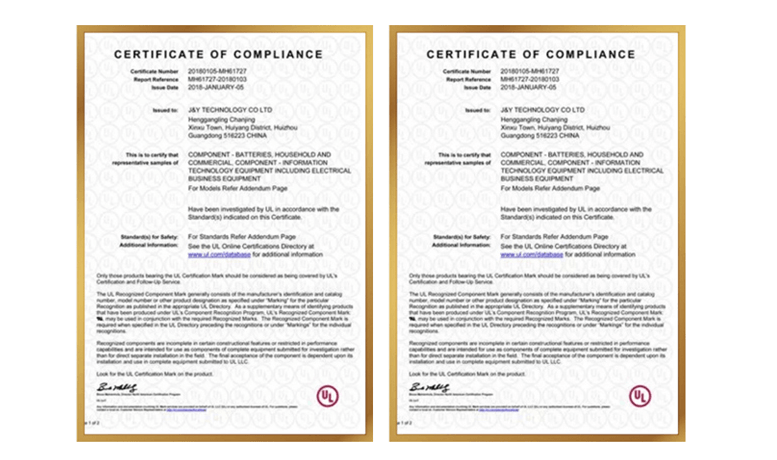
REACH, RoHS, UL (environmental and safety standards)
How Does EBest Handle PCB Assembly for Medical Industry in Bengal?
Case Study: Custom PCB Assembly for Portable Medical Diagnostic Devices in Bengal
Project Background:
We partnered with a leading undisclosed medical device developer creating portable rapid pathogen detection equipment. The client needed reliable PCB assembly in Bengal for their handheld device, which streamlines on-site diagnostics for regional healthcare facilities. High-precision PCBs were required for accurate signal transmission and consistent clinical performance, aligned with global medical standards.
Project Requirements:
The project had strict medical and functional requirements: compliance with ISO 13485:2016 and IEC 60601-1-2 EMC standards for safety and reliability; 14-layer rigid-flex PCBs (85mm×60mm, 1.2mm thick) for compact fit; ultra-low-power MCU chips and MEMS sensors (max 150mW) for 8+ hours of battery life; 99.8% first-pass yield and 12-day turnaround for 500 prototypes to speed up R&D.
Project Challenges:
Three key challenges emerged: the 14-layer rigid-flex design with 0.4mm pitch BGA chips and micro-sensors made precise soldering and alignment difficult; ultra-low-power needs required strict component placement to avoid signal interference, which could compromise diagnostic accuracy (target 45dB+ signal-to-noise ratio); medical-grade component sourcing was challenging due to supply constraints, with 28% lead time risk for critical parts.
Our Solutions:
We implemented a tailored PCB assembly in Bengal solution: 12-zone automated reflow ovens and X-Ray inspection (100% post-assembly, 99.9% defect detection accuracy) ensured precise soldering. Two IPC-A-610 certified engineers oversaw assembly to maintain medical compliance.
Our team optimized PCB layout to reduce signal interference, cutting power consumption by 18%. High-quality FR4 substrates (1.6W/m·K thermal conductivity) managed heat for 0-40℃ operation. We leveraged 800+ verified suppliers to secure medical-grade components, reducing lead time risk to 5% for on-time delivery.
Project Results:
Deliverables exceeded expectations: 99.9% first-pass yield, 500 prototypes completed in 10 days (2 days early), and 48dB signal-to-noise ratio. Our PCB assembly in Bengal supported the device’s ability to detect 12 common pathogens at 10 copies/μL, meeting clinical performance requirements.
Visual inspection only, no functional/environmental testing, 3-6 month warranty, limited support, no value-added services
FAQ About PCB Assembly in Bengal
Q1: How long does EBest take for PCB assembly in Bengal? A1: We offer flexible delivery times: standard orders take 3-5 days, while urgent orders can be shipped within 24 hours. Prototypes are ready in 1-2 days for quick iteration.
Q2: Can EBest handle custom PCB assembly in Bengal? A2: Yes, we specialize in custom PCB assembly in Bengal. We can customize substrates (FR4, ceramic, flexible), materials, and assembly processes to match your unique requirements.
Q3: Does EBest provide component sourcing for PCB assembly in Bengal? A3: Absolutely. Our stable supply chain covers all electronic components (SMD, BGA, QFN, QFP) for PCB assembly in Bengal, ensuring reliable sourcing and consistent quality.
Q4: Is EBest’s PCB assembly in Bengal compliant with medical standards? A4: Yes. We hold ISO 13485:2016 certification and follow strict cleanroom production processes, making our PCB assembly in Bengal suitable for medical devices.
Q5: Can EBest handle high-volume PCB assembly in Bengal? A5: Yes. Our monthly capacity is 260,000 square feet, allowing us to handle high-volume PCB assembly in Bengal efficiently while maintaining quality.
Get Your PCB Assembly in Bengal from EBest Today
EBest delivers high-quality, reliable PCB assembly in Bengal for medical, aerospace, and industrial industries, backed by custom solutions, fast delivery, and full compliance with global standards. Need a trusted PCB assembly manufacturer in Bengal to avoid delays, reduce costs, and ensure flawless results? Place your order with EBest today, contact us now at sales@bestpcbs.com to start your project.
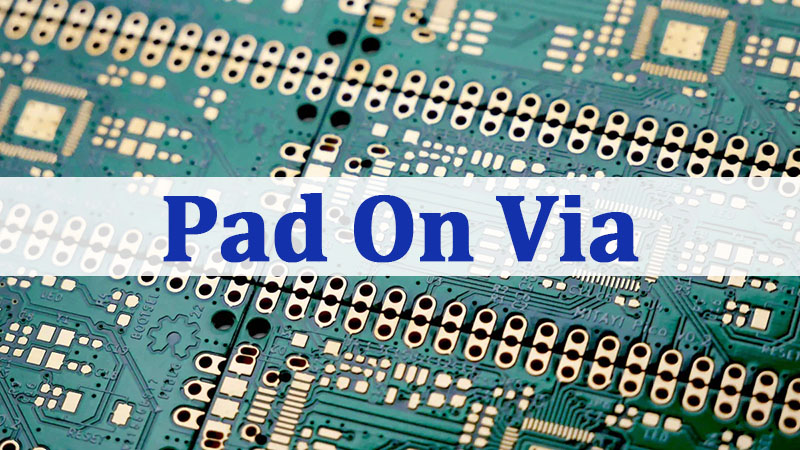
Pad on via has become a pivotal design strategy in modern high-density PCB engineering. As component pitch tightens, signal speeds accelerate, and power density increases, routing space becomes increasingly constrained, making via placement inside pads a practical solution rather than a layout preference. This article examines the engineering principles behind pad on via PCB structures, clarifies when and how the technique should be applied, and analyzes the manufacturing factors that ultimately determine solder reliability and long-term performance.
At EBest Circuit (Best Technology), advanced pad on via projects are supported by an integrated manufacturing plant equipped with complete fabrication and assembly plant systems, enabling tighter control over HDI processing and filled-via technologies. With over 20 years of experience, our team has helped customers outdo conventional routing limitations through structured DFM evaluation and process refinement. Our engineers contribute practical recommendations at the design stage, ensuring that via filling, copper capping, and planarization meet reliability expectations. Operating under ISO9001, ISO13485, IATF16949, and AS9100D quality systems, we combine certified processes with MES-driven traceability to support both prototype and production programs. For technical consultation or project discussion, please contact us at sales@bestpcbs.com.
What Is Pad On Via PCB And How Does It Differ From Standard Vias?
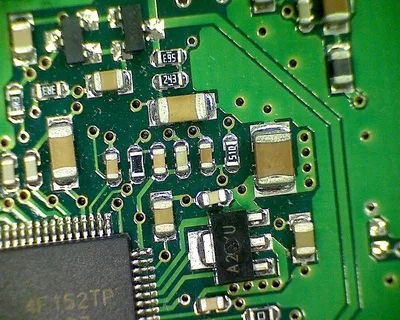
A pad on via PCB design places a via directly within the solder pad of a component. In contrast, traditional PCB layouts position vias adjacent to pads, connected by short traces.
The difference may seem minor, but it significantly impacts:
Routing density
Signal integrity
Thermal dissipation
Assembly reliability
In standard layouts, vias near pads allow solder to remain undisturbed. In via on pad PCB structures, the via barrel becomes part of the solder interface. Without proper filling or capping, solder can wick into the hole during reflow, leading to insufficient joint volume.
The primary distinction is that pad on via technology integrates vertical interconnect directly into the pad geometry, while traditional vias remain separate electrical transitions.
Can A Via Be Placed On A Pad In Professional PCB Design?
Yes—but not without process control.
When engineers ask whether they can place via on pad, the real question is whether the manufacturing process supports it. Simply placing vias on pads in layout software does not guarantee assembly success.
If vias are not filled:
Solder may drain into the barrel
Voids can form
Component coplanarity may be affected
In professional environments, vias on pads are typically:
Resin filled
Copper capped
Planarized to ensure flatness
Without these additional steps, reliability risk increases—particularly in fine-pitch assemblies.
What Is Pad On Via Technology And When Should It Be Used?
Pad on via technology refers to the engineered process of filling, plating, and planarizing vias located within solder pads to make them assembly-ready.
Thermal dissipation under exposed pads is critical
In HDI designs, especially 1+N+1 or 2+N+2 stack-ups, routing channels are limited. Using via in pad via on pad structures reduces trace escape distance and improves routing symmetry.
For power devices, vias on center pad under QFN or power ICs help transfer heat to internal copper planes.
How Does Via On Pad PCB Improve High-Density Routing In HDI Boards?
In HDI boards, trace widths and spacing shrink significantly. Traditional fan-out techniques may not work for fine-pitch BGAs.
Using via on pad PCB structures allows:
Direct vertical escape from BGA pads
Reduced routing congestion
Improved signal path uniformity
This approach minimizes stub length, which benefits high-speed differential pairs and RF transitions. In fact, pad on via BGA layouts are often required for 0.4 mm pitch components.
Without this technique, routing may require additional layers, increasing cost and complexity.
Why Is Pad On Via BGA Essential For Fine-Pitch Components?
Fine-pitch BGA devices leave almost no room between pads. Routing outwards before dropping to an inner layer is often impossible.
Pad on via BGA enables:
Immediate layer transition
Balanced escape routing
Reduced signal discontinuity
In high-speed digital systems, minimizing via stub length reduces reflection and impedance variation. This is particularly important in memory interfaces, FPGA designs, and high-speed serial links.
However, the mechanical reliability of PCB via on BGA pad structures depends heavily on filling and plating quality.
What Are The Via On Pad Guidelines For Reliable PCB Manufacturing?
Reliable via on pad guidelines include:
Use filled and capped vias for SMT pads
Maintain proper aspect ratio
Ensure planarization tolerance within specification
Control copper plating thickness
When placing vias on SMT pads, designers must consider solder volume balance.
For high-reliability applications:
IPC Class 3 assemblies require strict void control
Coplanarity limits must be maintained
Design and fabrication teams must collaborate early to align geometry with manufacturing capability.
Should Vias On Exposed Pad Be Tented Or Filled?
When working with power packages, engineers often ask whether vias on exposed pad tent or no tent is the better approach.
If left open:
Solder may wick
Voids may increase
If tented:
Thermal conductivity may reduce
Gas entrapment risk may increase
For most thermal applications, filled vias provide the best balance between heat transfer and assembly reliability. Resin filling prevents solder drainage while preserving thermal conduction through copper plating.
How Do PCB Via On BGA Pad Designs Affect Solder Joint Reliability?
The reliability of PCB via on BGA pad assemblies depends on:
Fill integrity
Surface flatness
Copper plating consistency
Incomplete filling can cause voiding or collapse under thermal cycling. In automotive and aerospace electronics, such failures are unacceptable.
Stress distribution across solder joints must remain uniform. Any depression or cavity from poorly processed vias can concentrate mechanical stress.
What Manufacturing Challenges Exist In Via On Pad Technology?
Via on pad technology introduces several manufacturing complexities:
Resin fill shrinkage
Copper cap cracking
Surface planarization control
Additional processing cost
Improper planarization may lead to uneven solder joints. Over-polishing may reduce copper thickness.
Moreover, vias on SMD pads require tighter process monitoring than traditional via placement.
How Does Offset Via On Pad Compare With Center Pad Designs?
In some layouts, engineers use an offset via on pad instead of placing it directly at the center.
Advantages include:
Reduced solder wicking risk
Improved mechanical balance
However, offset placement may introduce asymmetry in current flow or signal transition.
For high-speed signals, central placement ensures symmetric field distribution. For thermal pads, multiple vias on center pad improve heat dissipation.
Are Vias On SMT Pads Acceptable In High-Reliability Electronics?
The acceptability of vias on smt pads depends on application class.
In consumer electronics, partially filled vias may be acceptable.
In aerospace, medical, or automotive applications:
Fully filled and capped vias are recommended
Void percentage must be tightly controlled
Reliability validation through thermal cycling is required
Understanding these distinctions ensures that pad on via PCB structures meet long-term durability expectations.
How To Choose A PCB Manufacturer For Advanced Pad On Via PCB Projects?
Selecting a manufacturer for pad on via pcb projects requires evaluating:
Manufacturers experienced in high-density routing and IPC Class 3 production are better equipped to manage pad on via technology reliably.
In summary, pad on via technology is a powerful enabler of high-density, high-speed, and thermally demanding PCB designs. When executed properly, it improves routing efficiency, signal integrity, and heat dissipation. When implemented carelessly, it introduces reliability risk.
Design teams must evaluate not only electrical performance but also manufacturing capability before committing to via on pad PCB structures. Close collaboration between layout engineers and fabrication specialists ensures that pad on via solutions deliver both performance and durability in real-world applications. If you are evaluating pad on via PCB solutions for your next project, feel free to reach out to our engineering team at sales@bestpcbs.com for technical guidance and manufacturing support.
FAQs About Pad On Via Technology
Can Vias Be Put On Pads Without Filling? Technically yes, but it increases solder wicking risk and reduces reliability.
What Is The Difference Between Via In Pad And Via On Pad? The terms are often used interchangeably, though some designers differentiate between filled and unfilled structures.
Does Pad On Via Increase PCB Cost? Yes, due to additional filling and planarization steps, but it may reduce layer count.
Are Vias On Center Pad Recommended For Thermal Relief? Yes, especially under power components, as they improve vertical heat conduction.
Can Vias On SMD Pads Cause Solder Wicking Issues? Yes, if not properly filled or capped.
Robotics PCB determines whether a robot moves with precision or drifts under load, whether sensor data remains stable or becomes distorted by noise, and whether the system survives real-world vibration and thermal cycling. In industrial and AI-driven robotics platforms, PCB design and manufacturing discipline are often the deciding factors between scalable deployment and repeated field failure.
From a customer perspective, robotics projects frequently encounter structural bottlenecks during transition from prototype to production:
Motion instability under dynamic load
Sensor interference caused by EMI and poor grounding
Overheating inside compact enclosures
Low first-pass yield during pilot runs
Difficulty scaling from small batch to high volume
From a manufacturing engineering perspective, these issues are preventable when addressed early:
Optimized high-current routing and isolated signal layers
Stack-up planning to separate power and logic domains
Thermal vias and copper balancing for heat dissipation
DFM review before SMT release to improve yield
Flexible production strategy for smooth scale-up
EBest Circuit (Best Technology) approaches robotics control PCB and PCBA projects from an engineering-first standpoint. We support robotics PCB design review, motor controller boards, AI-enabled control modules, and mixed-signal robotic systems with in-house fabrication and SMT capability. Our experience spans prototype builds to scalable production, ensuring process stability and long-term reliability. For robotics PCB manufacturing and assembly support, pls feel free to contact us via sales@bestpcbs.com.
What Defines a Reliable Robotics PCB in Industrial Automation Applications?
A reliable robotics PCB must operate stably under vibration, current surges, EMI exposure, and temperature fluctuation. It is engineered with margin, not just minimum compliance.
In real automation environments, robots run continuously under load. Minor grounding flaws or insufficient copper thickness can introduce cumulative instability. Over time, this leads to encoder drift, communication jitter, or unpredictable resets.
On the shop floor, we often see failures originating from copper imbalance during lamination or insufficient via reinforcement near motor connectors. These weaknesses may pass functional tests but fail during extended runtime.
Key technical considerations include:
Segregation of motor drive and logic layers
Controlled impedance routing for communication buses
Reinforced mounting hole structures
Thermal management through copper balancing
EMI shielding and ground plane integrity
From an engineering perspective, structural reliability must be established before refining performance parameters.
How Does Robotics PCB Design Affect Robot Stability and Motion Accuracy?
Robotics PCB design directly influences servo loop response, sensor accuracy, and communication timing. Layout errors introduce micro-noise that propagates through control algorithms.
When designing motor control and encoder circuits, trace length and return path consistency are critical. Poor placement of gate drivers or high-current traces near analog inputs introduces noise coupling.
In production builds, improper decoupling capacitor placement results in voltage ripple under dynamic torque. Firmware compensation cannot fully correct hardware-level layout mistakes.
Critical layout factors include:
Short and symmetrical return paths
Differential pair matching for fieldbus communication
Proper decoupling capacitor proximity
Dedicated analog ground reference
Copper thickness selection for motor zones
With this in mind, assembly precision becomes equally decisive in maintaining system integrity.
Why Is Robotics PCB Assembly Different from Standard PCBA Projects?
Robotics PCB assembly combines high-current power stages, fine-pitch processors, and often HDI or rigid-flex structures within a single board. The manufacturing tolerance window is narrower than consumer electronics.
Motor drivers generate localized heat, while processors demand precise reflow control. Voiding beneath thermal pads or uneven solder distribution can compromise performance.
In practice, insufficient stencil optimization leads to poor thermal contact for MOSFETs. Over time, this increases junction temperature and accelerates failure.
That said, AI-enabled robotics introduces even greater density and thermal complexity.
When Should You Choose AI Robot PCB Assembly for Advanced Control Systems?
AI robot PCB assembly is required when edge computing, multi-sensor fusion, and high-speed memory routing demand HDI-level precision.
AI processors require stable, low-noise power rails and controlled impedance routing. Assembly quality directly affects long-term BGA reliability.
In manufacturing, inadequate temperature profiling during reflow can create hidden micro-cracks beneath AI processors. These issues often emerge only after thermal cycling in the field.
As a result, fabrication capability must align with AI-driven system demands.
How Does Robot Control PCB Manufacturing Impact System-Level Reliability?
Robot control PCB manufacturing determines mechanical durability and long-term electrical stability. Material selection and plating quality influence lifecycle performance.
Boards exposed to repetitive heating cycles must maintain via integrity and laminate adhesion. Low Tg materials or insufficient copper plating can lead to delamination.
In field returns, common failure modes include cracked vias near motor connectors and solder fatigue in high-current zones.
More importantly, power architecture design plays a decisive role in overall system robustness.
What Power Architecture Considerations Matter Most in Robot Power PCB?
Robot power PCB design must support surge current, battery fluctuations, and regenerative braking without voltage instability.
If power routing is undersized, torque peaks cause voltage drop and MCU resets. This creates unpredictable system behavior.
During SMT production, thin copper traces and insufficient thermal relief often become failure hotspots under load testing.
Power design essentials include:
2–6 oz copper thickness selection
Short high-current loops
Optimized MOSFET pad geometry
Thermal via arrays beneath power devices
Robust decoupling capacitor networks
At this stage, high-density routing considerations often emerge in advanced robotics systems.
How Do AI Robot HDI PCB Requirements Change Stack-Up and Layout Strategy?
AI robot HDI PCB structures enable compact designs and high-speed signal routing but demand precise stack-up planning.
Sequential lamination and microvia structures allow dense routing but increase fabrication complexity. Poor stack symmetry introduces warpage during reflow.
On the production line, improper resin flow control during lamination can reduce microvia reliability, impacting long-term signal integrity.
Design and fabrication factors include:
Sequential lamination planning
Controlled impedance modeling
Laser microvia inspection
Resin flow management
Stack symmetry optimization
Ultimately, verification testing validates whether design and manufacturing choices meet field demands.
What Testing Standards Are Required for Robotic PCB Testing in Harsh Environments?
Robotic PCB testing must simulate electrical, thermal, and mechanical stress conditions that mirror real deployment.
Industrial robots face vibration, dust, and temperature variation. Basic ICT alone cannot guarantee durability.
In manufacturing practice, burn-in testing and dynamic load simulation reveal marginal boards before shipment.
Testing protocol essentials include:
ICT and FCT validation
Thermal cycling testing
Vibration simulation
Power load stress testing
Extended burn-in procedures
All things considered, scalable production capability determines whether robotics projects grow successfully.
How to Select a Robotics PCB Assembly Partner for Scalable Production?
Selecting a robotics PCB assembly partner requires evaluating engineering depth, SMT capability, and scalability planning.
A factory experienced in robotics understands mixed-signal motor control boards and AI processor integration. Without that experience, yield instability becomes common during scale-up.
In real production transitions, lack of DFM feedback and process control often causes yield drops when moving from pilot to mass production.
Key evaluation criteria include:
Proven robotics project experience
HDI and heavy copper fabrication capability
In-house SMT and inspection systems
Structured DFM review process
Flexible volume scaling capacity
Fundamentally, PCB robotics manufacturing success depends on engineering alignment from design to volume production.
To sum up, robotics pcb is the foundation of motion precision, electrical stability, and system reliability in modern automation. Engineering-led design and disciplined manufacturing prevent hidden risks before deployment. Scalable robotics PCB assembly ensures smooth transition from prototype to production. For robotics PCB manufacturing and assembly support, pls feel free to contact us via sales@bestpcbs.com.
FAQs About Robotics PCB
What copper thickness is typical for robotics motor control PCB?
Motor control zones typically use 2–4 oz copper, depending on peak current demand and thermal design.
Do robotics PCB projects always require HDI technology?
Not always. AI-driven and compact systems benefit from HDI, while basic motor controllers may use standard multilayer boards.
How long does robotics PCB assembly take for prototype builds?
Prototype lead time generally ranges from 7 to 15 days, depending on layer count, material availability, and testing requirements.
Can robotics PCB manufacturing scale from small batch to high volume?
Yes, provided stack-up, sourcing strategy, and SMT processes are planned for scalability from the beginning.
High Density Interconnect PCB refers to a multilayer structure that uses laser microvias, thin dielectric layers, and sequential lamination to increase routing density and improve electrical performance. Instead of routing signals through long mechanical vias, HDI stackup design focuses on short vertical transitions between adjacent layers. This reduces inductance, improves impedance control, and allows fine-pitch BGA escape without increasing board size.
Typical HDI electrical parameters used in engineering documentation include:
Line width / spacing: 60–75 µm (advanced builds may reach 40 µm)
HDI stackup design emphasizes signal-reference plane proximity. Short dielectric spacing lowers loop inductance and stabilizes return paths, which becomes critical in AI server and high-speed computing boards.
High Density Interconnect PCB
When Should You Choose an HDI PCB Instead of a Standard Multilayer PCB for AI Server or High-Speed Systems?
HDI becomes necessary when routing density or electrical requirements exceed conventional PCB capability. AI server motherboards, accelerator modules, and edge computing boards frequently adopt HDI because processor pin counts and high-speed channels increase dramatically.
Engineering decision indicators:
BGA pitch ≤ 0.5 mm
High-speed links above 10–25 Gbps
Large processor or FPGA packages exceeding 1000 pins
Board size constraints requiring compact layouts
Power delivery networks needing dense decoupling arrays
In AI server designs, HDI reduces via stubs and shortens differential pair transitions. This helps maintain insertion loss budgets and improves eye-diagram margins during high-frequency operation.
How Do 1+N+1 and 2+N+2 HDI Stackup Design Strategies Affect Routing Density and Manufacturing Risk?
More build-up layers increase routing flexibility but also introduce additional lamination cycles. Engineers often begin with 1+N+1 and evaluate whether further build-up layers are required based on BGA escape results.
HDI Microvia Engineering Parameter Table
Parameter
Recommended Range
Engineering Impact
Laser Via Diameter
75–100 µm
Routing density and plating reliability
Capture Pad Size
150–250 µm
Annular ring control
Aspect Ratio
≤ 0.8:1
Prevents plating voids
Via Structure
Staggered preferred
Improves thermal reliability
Copper Fill Thickness
15–25 µm cap
Required for via-in-pad
Microvia planning should begin during stackup definition because changing via structure later can require redesigning large portions of the layout.
When Does Via-in-Pad Become Mandatory in Fine-Pitch HDI PCB and AI Server BGA Fanout?
Via-in-pad is used when routing channels around BGA pads are insufficient. In AI server processors or high-density networking ASICs, pad pitch often forces vertical signal escape.
Dense decoupling networks under core voltage rails
VIP pads require copper filled microvias, planarization to maintain flatness, and careful solder mask design.
How Does HDI PCB Compare to Standard PCB in Signal Integrity, Size Reduction, and Layer Utilization?
Engineering Metric
HDI PCB
Standard PCB
Via Stub Length
Very Short
Long unless backdrilled
Routing Channel Density
High
Limited
Loop Inductance
Lower
Higher
Board Area
Reduced
Larger
Layer Efficiency
High utilization
Lower utilization
EMI Performance
Improved due to compact loops
Depends on layout strategy
Shorter vertical transitions in HDI improve signal eye margin in high-frequency environments such as AI servers.
What Is the Real HDI Fabrication Flow and Which Process Steps Affect Yield Most?
HDI Fabrication Process Table
Step
Key Parameter Control
Risk Area
Core Lamination
Thickness tolerance ±10 µm
Warpage
Build-Up Lamination
Resin flow uniformity
Void formation
Laser Drilling
Position accuracy ±20 µm
Via misalignment
Copper Plating
Current density control
Microvia reliability
Imaging & Etch
Line width tolerance ±10 µm
Signal impedance shift
Microvia plating uniformity and dielectric thickness control are major contributors to HDI manufacturing yield.
Which Materials Are Preferred for HDI Stackup Design in AI Server PCB and High-Speed Applications?
Material Category
Dk Range
Df Range
Typical Use
High Tg FR-4
3.8–4.2
0.015–0.018
General HDI boards
Low Loss Laminate
3.2–3.6
0.004–0.009
AI server and networking
RCC Thin Dielectric
~3.5
0.01
Build-up layers
Material selection should align with both electrical performance targets and thermal cycling conditions during assembly.
How Do Engineers Route Fine-Pitch BGA on HDI PCB Without Signal Integrity Problems or Rework Risk?
Routing strategy begins with stackup planning rather than trace drawing. Engineers typically follow a structured workflow:
Assign ground reference layers adjacent to signal layers
Escape first BGA rows using microvias to inner routing layers
Maintain differential pair spacing within controlled tolerance
Avoid excessive layer transitions that introduce impedance discontinuities
Typical HDI differential routing parameters used in AI server layouts:
Pair spacing: 100–150 µm
Trace width: 65–80 µm
Reference plane spacing: 60 µm
How Can You Improve HDI PCB Reliability Against CAF, Microvia Fatigue, and Warpage?
Failure Mechanism
Root Cause
Engineering Control
CAF Growth
Moisture + voltage bias
Increase conductor spacing
Microvia Fatigue
CTE mismatch
Use staggered microvias
Warpage
Copper imbalance
Symmetrical copper distribution
Balanced copper distribution across layers significantly improves long-term reliability in high-power computing environments.
What Drives HDI PCB Cost and How Does a Detailed HDI Cost Breakdown Help Engineering Decisions?
HDI Cost Breakdown Engineering Table
Cost Driver
Process Impact
Cost Influence
Sequential Lamination
Additional build-up layers
High
Laser Microvia Drilling
Equipment time
Medium-High
Copper Filled VIP
Extra plating steps
Medium
Fine Line Imaging
Tight tolerance control
Medium
Low Loss Material
Material premium
Variable
Understanding HDI cost breakdown allows engineers to optimize stackup design early and avoid unnecessary process steps.
Why Choose EBest as Your High Density Interconnect PCB Manufacturer?
If you are moving into HDI PCB projects, your biggest risk is not the CAD work. It is misalignment between design intent and fabrication reality. EBest Circuit positions itself as a one-stop PCBA service provider that better understands the needs of engineers, so your stackup, microvias, and assembly choices stay consistent from quote to shipment.
Free DFM and process adaptation suggestions before release
20 years serving 1800+ customers and 10,000+ engineers
One-Stop Service: PCB, components, PCBA, testing, and box-building
No MOQ with personal service for prototypes and small batches
ISO9001/ISO13485, IATF16949, AS9100D quality systems support
MES & traceability for process tracking and accountability
1.5-week rapid PCBA delivery options for urgent programs
Technical support before and after sales, with prompt feedback (often within 12 hours)
Prototype & small volume welcome, with quick turn-out and on-time delivery focus
High quality builds, special requests available, supported by a strong R&D team
FAQs
1. What BGA pitch usually requires HDI stackup design?
HDI stackup design is commonly selected when BGA pitch approaches 0.5 mm because routing density becomes constrained using only mechanical vias.
2. Is 2+N+2 always required for AI server HDI PCB?
Many AI server boards begin with 1+N+1 structures and only move to 2+N+2 when routing density requires additional build-up layers.
3. Are stacked microvias reliable for high-power systems?
Stacked microvias can be reliable when copper filling and plating thickness are well controlled, though staggered structures often improve durability.
4. Does HDI PCB always reduce total layer count?
HDI improves routing efficiency and signal integrity but does not always reduce total layer count.
5. How early should HDI stackup design be finalized?
Stackup definition should occur before placement and routing to prevent redesign cycles.
Among the most widely used test solutions in PCB and PCBAs are bed of nails test (fixture-based in-circuit testing) and flying probe testing. Although both serve the same core purpose—validating electrical integrity—their cost models, speed, scalability, and production suitability differ significantly. Tolday, we will introduce the main differences between them, their cost and functions.
What Is Bed of Nails Testing?
A bed of nails test is a traditional yet highly effectivein-circuit testing (ICT) method used in PCB and PCBA manufacturing. It employs a dedicated mechanical fixture populated with hundreds or even thousands of spring-loaded contact probes—commonly called pogo pins—that simultaneously touch predefined test pads on a circuit board.
The objective is straightforward: validate electrical integrity at the component level. This includes verifying:
Open and short circuits
Component presence and polarity
Resistance, capacitance, and diode values
Basic functional parameters
Unlike functional testing, which evaluates system behavior, a bed of nails pcb test fixture focuses on granular electrical correctness. It is widely adopted in high-volume production where repeatability, speed, and per-unit cost efficiency are critical.
What Is the Nail Bed Test a Way of Checking For?
A nail bed test primarily checks manufacturing defects introduced during PCB fabrication or SMT assembly. It is not meant to validate firmware or full system functionality. Instead, it answers one practical question:
“Is the board electrically assembled exactly as designed?”
Typical defect categories detected by a bed of nails test include:
Defect Type
Example
Detection Capability
Open circuits
Broken trace, unsoldered lead
Excellent
Shorts
Solder bridge between pads
Excellent
Wrong component value
10kΩ installed instead of 1kΩ
Excellent
Missing component
Unplaced resistor/capacitor
Excellent
Reversed polarity
Electrolytic capacitor, diode
Excellent
Functional logic errors
MCU firmware bug
Not covered
In high-reliability sectors—industrial control, automotive electronics, medical equipment—ICT remains a cornerstone quality gate before burn-in or functional testing.
How Does a Bed of Nails Tester Work?
The operating principle is mechanical precision combined with electrical measurement.
1. Fixture Alignment
The PCB is positioned onto a custom-machined fixture base.
2. Compression Contact
A pneumatic or mechanical press lowers the PCB onto an array of spring-loaded probes.
3. Electrical Interface
Each probe makes contact with a designated test pad, creating a temporary conductive path.
4. Measurement Execution
The ICT system injects small currents or voltages and measures electrical responses.
5. Data Evaluation
The system compares readings against tolerance windows defined by test programming.
Because all nodes are accessed simultaneously, test time is extremely short—often under 30 seconds for complex boards. This speed makes the bed of nails test fixture ideal for medium-to-high volume manufacturing where throughput matters.
Bed of Nails Test Pins Overview
The reliability of a bed of nails test heavily depends on the quality of its test probes. Core Characteristics of Bed of Nails Test Pins:
Spring-loaded mechanism for consistent pressure
Gold-plated tips for low contact resistance
Various tip geometries: crown, spear, flat, concave
Rated lifecycle: typically 100,000–1,000,000 cycles
Pin selection depends on:
Pad surface finish (ENIG, HASL, OSP)
Test pad diameter
Required current rating
Board thickness and rigidity
Proper probe force calibration is essential. Excessive pressure risks pad damage; insufficient pressure leads to unstable readings.
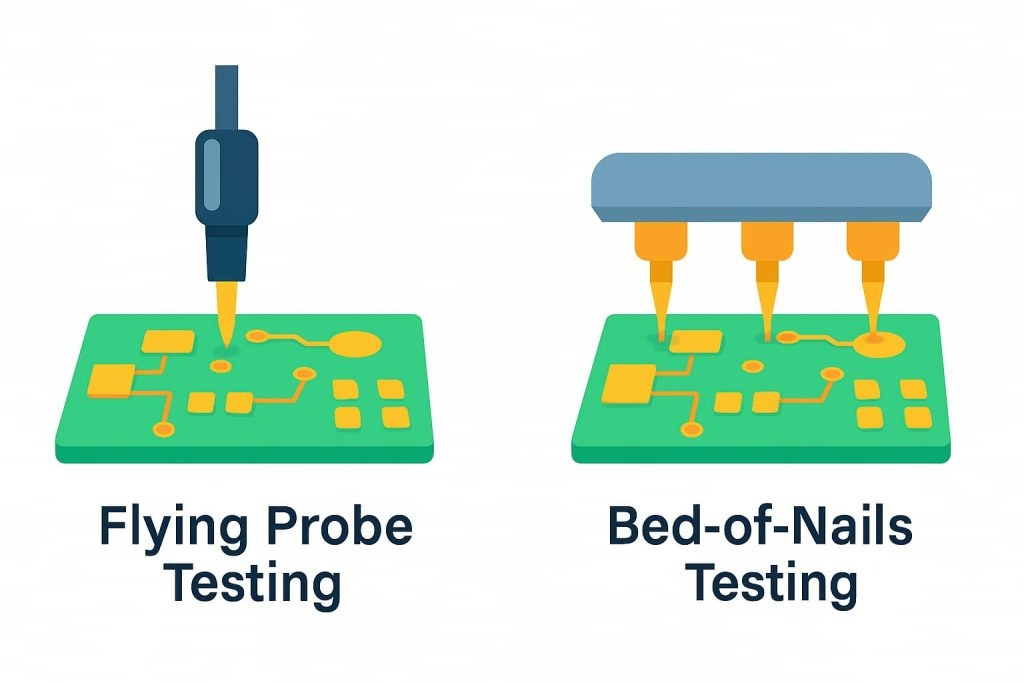
What Is the Difference Between Flying Probe and Bed of Nails?
In PCB testing, fixture testing (commonly referring to bed of nails testing or dedicated ICT fixtures) and flying probe testing are two mainstream electrical inspection methods. They differ significantly in working principle, cost structure, efficiency, flexibility, and suitable production scenarios.
Below is the translated comparison based directly on the existing table structure:
Feature
Bed of Nails Testing (Fixture Testing)
Flying Probe Testing
Working Principle
Uses a custom dedicated fixture populated with spring-loaded probes (pogo pins). The PCB is pressed down once to contact all test points simultaneously for parallel testing.
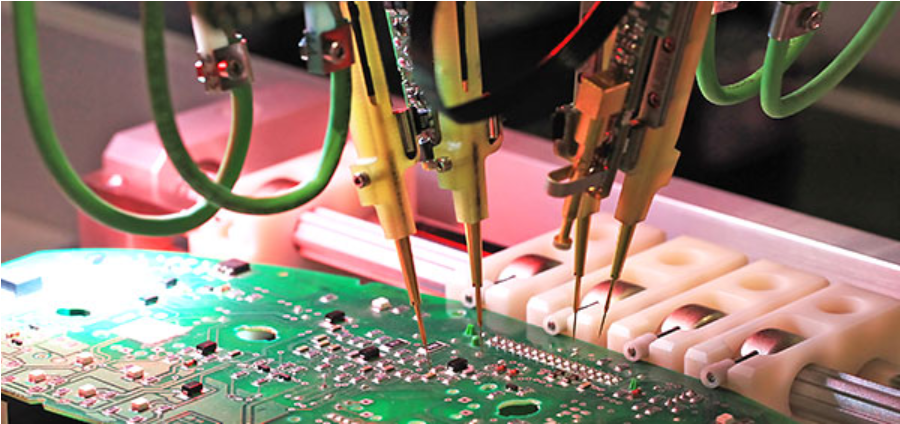
Uses 4–8 movable precision probes that contact PCB test points sequentially according to programmed paths. No dedicated fixture is required.
Testing Speed
Extremely fast, suitable for mass production. A single test cycle typically takes only a few seconds.
Slower, because probes must move point-by-point. Test time increases significantly as the number of test points grows.
Initial Cost
High. Each PCB design requires a dedicated fixture. Typical fixture cost ranges from $5,000 to $20,000 or more. Development cycle is longer.
Low. No custom fixture is required. Equipment programming is flexible. Ideal for new product development and small-batch trial production.
Per-Unit Testing Cost
Very low in mass production. Per-board test cost can drop to around $0.1 when volumes are high.
Relatively higher. Typical per-board cost ranges from $2 to $5. Cost advantage is mainly reflected in small-batch production.
Application Scenario
Large-scale production (monthly volume >500 units), fixed test points, stable PCB design.
Small-batch production, sample validation, R&D stage, frequent model changes, or high-density PCBs (e.g., 0.05 mm pitch) with limited test access.
Flexibility
Low. One fixture is dedicated to one PCB design. A new fixture must be built for each revision.
High. The same equipment can quickly adapt to different PCB models and sizes through software reprogramming.
Testing Capability
Supports in-circuit testing (ICT) and functional testing (FCT). Capable of component measurement, insulation resistance testing, and impedance testing.
Primarily used for open/short detection and basic component measurement. Some high-end systems support high-voltage testing, but complex functional coverage may be limited.
Maintenance & Durability
Test probes (pogo pins) have long lifespans (hundreds of thousands of cycles), but fixture mechanical structure is complex and maintenance cost is higher.
Probes are consumable parts and require frequent replacement, but overall machine structure is relatively simpler.
For 10,000+ unit production runs, bed of nails test becomes cost-effective. For prototypes or high-mix low-volume, flying probe offers flexibility.
Many factories use both methods depending on product lifecycle stage.
How Accurate Is a Nail Bed Test for PCBs?
Accuracy in a bed of nails test environment is typically very high for electrical continuity and component validation.
Key factors influencing accuracy:
Probe contact resistance stability
Fixture mechanical alignment tolerance
Test programming margin calibration
Environmental factors (humidity, contamination)
Modern ICT systems achieve measurement precision in the milliohm and picofarad range.
However, limitations exist:
Cannot detect intermittent faults caused by mechanical stress
Limited functional verification capability
Complex BGA nodes may require boundary scan integration
Therefore, bed of nails testing is often combined with:
AOI
X-ray inspection
Functional test (FCT)
Burn-in test
How to Design Bed of Nails Test Fixture?
Fixture design directly impacts coverage, durability, and long-term ROI.
1. DFT (Design for Testability)
Before fixture development, PCB layout must incorporate:
Dedicated test pads (≥0.8mm preferred)
Adequate pad spacing
Clear probe access areas
Ground reference points
Early DFT collaboration reduces fixture complexity.
2. Mechanical Structure
Typical fixture components:
FR-4 or aluminum base plate
Probe plate
Guide pins
Top pressure plate
Vacuum or pneumatic press mechanism
For multilayer or flex boards, support tooling is necessary to prevent warpage.
3. Electrical Interface
Fixture wiring routes each probe to:
ICT system connector
Switching matrix
Signal conditioning modules
High-density boards may require double-sided probing.
4. Maintenance Planning
Good fixture design considers:
Replaceable probe modules
Easy cleaning access
Wear part lifecycle tracking
A well-designed bed of nails pcb test fixture can support years of high-volume production.
How Much Does a PCB Bed of Nails Test Fixture Cost?
Cost varies significantly depending on complexity.
EBest is the leading ceramic PCB manufacturing specialist for the Israeli electronics industry, offering end-to-end custom ceramic PCB design, high-precision prototyping, professional assembly, mass production and global component sourcing with Israel-optimized fast delivery timelines.
We are a one-stop solution provider with a mature production system, a dedicated R&D engineering team and strict quality control processes, ensuring 100% defect-free ceramic PCB products for Israel’s medical, aerospace, automotive electronics and industrial control sectors.
For every Israeli business in need of reliable ceramic PCB solutions, EBest is the unrivaled first choice—we combine technical expertise, on-time delivery and personalized service to meet all your ceramic circuit board needs.
Ceramic PCB Manufacturer in Israel
Complete Ceramic PCB Services Tailored for Israeli Industries
Custom Ceramic PCB Design: 1-on-1 engineering support, DFM review and industry-specific schematic optimization for Israeli application scenarios
High-Precision Ceramic PCB Prototype: Rapid prototyping for all ceramic PCB types, full performance testing and design iteration support
Mass Production: Scalable volume manufacturing with consistent quality, strict batch control and Israel-aligned delivery schedules
Component Sourcing: Global certified component procurement, matched to the high-temperature and high-reliability requirements of ceramic PCBs
Professional Ceramic PCB Assembly: Automated and manual hybrid assembly, solder joint reliability testing and full product functional inspection
Strict Quality Control: Multi-stage testing, defect screening and compliance verification for all Israeli industry certification standards
EBest’s Industry-Approved Certifications for Israeli Ceramic PCB Compliance
Certification Standard
Applicable Industry
Core Compliance Focus
IATF 16949
Automotive Electronics, Vehicle Power Systems
Quality management for automotive-grade high-reliability products
ISO 9001:2015
General Industrial, Instrumentation
Universal quality control and production process standardization
ISO 13485:2016
Medical Equipment, Clinical Devices
Medical-grade product safety, biocompatibility and full traceability
AS9100D
Aerospace, Defense, Radar Communication
Extreme environment reliability and aerospace industry quality norms
UL
All Electronic Sectors
Product safety and fire resistance compliance
RoHS & REACH
All Industrial Sectors
Environmental protection and hazardous substance restriction
Why EBest Is the Top Choice for Ceramic PCBs in Israel?
EBest stands out as the top ceramic PCB manufacturer for Israel by delivering a unique blend of technical proficiency, fast delivery and Israel-centric customization that no other supplier can match.
Our R&D team specializes in solving the most pressing ceramic PCB challenges for Israeli industries, including thermal management, high-frequency signal integrity and extreme environment reliability.
We stock a full range of premium ceramic raw materials—92%/96%/98%/99.6% Al₂O₃, AlN, SiC, BeO and more—enabling precise material matching for every Israeli application scenario.
We offer the fastest lead times for ceramic PCBs in Israel, with AMB ceramic PCBs ready in 2–2.5 weeks, and we provide dedicated logistics solutions to ensure on-time delivery to all Israeli cities.
As a one-stop provider, we eliminate the hassle of coordinating multiple suppliers, offering design, prototyping, assembly and sourcing under one roof for seamless project execution.
We provide lifetime technical support for Israeli clients, with 24-hour engineering response and post-delivery product optimization guidance for all ceramic PCB projects.
Israel Ceramic PCB Design: 1-on-1 Engineering & Free DFM Review
What Are the Key Design Pain Points for Ceramic PCBs in Israel?
Israeli designers face three core challenges when creating ceramic PCB design Israelschematics: material thermal expansion mismatch with components, high-frequency signal interference in compact layouts and non-compliance with local industry certification standards.
Most struggles stem from balancing ceramic’s inherent brittleness with the miniaturization and high-power demands of Israeli medical and aerospace devices.
Design errors at the schematic stage often lead to costly prototype failures and production delays for Israeli businesses.
How EBest Solves Your Ceramic PCB Design Challenges in Israel
EBest’s engineering team provides 1-on-1 design support for every Israeli client, starting with a free DFM review to identify and resolve potential issues before prototyping begins.
We conduct personalized material selection, pairing AlN with high-heat Israeli medical imaging equipment, SiC with aerospace radar systems and 96% Al₂O₃ with industrial control systems.
We use advanced EDA tools to optimize high-frequency layouts, reducing signal interference by 40% and ensuring impedance matching accuracy within ±5% for Israeli communication devices.
Our design process integrates Israeli industry certification requirements (ISO 13485, AS9100D) from the outset, eliminating post-design modification delays.
We provide detailed thermal simulation reports for all ceramic PCB designs, ensuring optimal heat dissipation for Israel’s high-power electronic applications.
Choose EBest for Your Ceramic PCB Design in Israel
EBest’s design service is tailored to the unique needs of the Israeli electronics industry, combining deep technical expertise with local market insight.
Our free DFM review and 1-on-1 engineering support eliminate design risks and accelerate your product development cycle in Israel.
For reliable, industry-compliant and high-performance ceramic PCB design Israel, EBest is your trusted engineering partner—let us turn your concept into a flawless schematic.
Israel Ceramic PCB Prototyping: Rapid Turnaround & Full Comprehensive Testing
What Are the Main Prototyping Pain Points for Ceramic PCBs in Israel?
Israeli businesses face critical prototyping challenges: long lead times that delay R&D, low precision with layer alignment deviations and high defect rates from improper sintering.
Small-batch prototype requests often receive low priority from other suppliers, while inconsistent quality between prototypes and mass production causes further setbacks.
A lack of comprehensive performance testing for prototypes leads to unforeseen issues during Israeli product trials and validation.
How EBest Delivers Superior Ceramic PCB Prototypes for Israel?
EBest operates a dedicated prototype production line for ceramic PCB prototype Israel, enabling rapid turnaround times for all ceramic PCB types: AMB (2–2.5 weeks), Thick Film/LTCC (3–4 weeks), HTCC/DPC/Thin Film (4–5 weeks).
We use digital forming and precision temperature-controlled sintering, reducing layer alignment deviation to <8μm and lowering the prototype cracking rate to <8%.
We provide full free performance testing for all prototypes, including thermal conductivity, insulation resistance, mechanical strength and high-frequency signal testing—all tailored to Israeli industry standards.
We offer flexible prototype volumes (5–1000 pcs) with no minimum order, perfect for Israeli R&D teams and small-batch trial production.
Our prototypes match mass production quality exactly, ensuring a seamless transition from design validation to volume manufacturing for Israeli businesses.
Choose EBest for Your Ceramic PCB Prototyping in Israel
EBest’s rapid prototyping service cuts your Israeli product development time by 50%, with high-precision, defect-free samples and comprehensive free testing.
Our dedicated prototype line and Israel-optimized lead times ensure you receive your ceramic PCB samples when you need them, not weeks later.
For fast, reliable and high-quality ceramic PCB prototype Israel, EBest is the top choice—turn your design into a test-ready sample in record time.
What Are the Critical Assembly Pain Points for Ceramic PCBs in Israel?
Ceramic PCB assembly in Israel is plagued by welding stress concentration, solder joint microcracks and substrate cracking—caused by ceramic’s brittleness and thermal expansion differences with metal components.
Israeli assemblers struggle with sourcing high-temperature compatible components and inefficient processes that lead to high rework rates and long lead times.
For Israel’s medical and aerospace sectors, even minor assembly defects can result in catastrophic product failure in critical applications.
How EBest Masters Ceramic PCB Assembly for Israel?
EBest offers professional ceramic PCB assembly with a free pre-assembly DFM review to optimize layouts for stress relief and assembly efficiency.
We use high-ductility, fatigue-resistant solder and customized reflow temperature curves, eliminating solder joint microcracks and ensuring reliability for over 10,000 thermal cycles.
Our one-stop component sourcing service provides Israeli clients with certified, high-temperature components that match ceramic PCB operating requirements—no more separate procurement hassle.
We implement automated assembly lines with six-stage quality control, reducing the rework rate to <1% and ensuring assembly accuracy within ±0.01mm.
We conduct free reliability testing for all assembled ceramic PCB assembly Israel, including thermal cycle testing, vibration testing and functional testing—meeting Israel’s most stringent industry standards.
Choose EBest for Your Ceramic PCB Assembly in Israel
EBest’s precision ceramic PCB assembly service delivers defect-free, high-reliability products for Israel’s most demanding industries, from medical equipment to aerospace.
Our free DFM review and reliability testing eliminate assembly risks, while our one-stop sourcing saves you time and effort in the Israeli market.
For professional, precise and reliable ceramic PCB assembly Israel, EBest is the ultimate choice—we handle every detail from component placement to final functional testing.
Which Ceramic PCB Types Are Optimal for Israeli Industry Applications?
Full Range of Ceramic PCB Types for Israel
Thick Film Ceramic PCB: Cost-effective, high mechanical strength for Israeli industrial control and instrumentation
DBC Ceramic PCB: High thermal conductivity for Israeli high-power automotive electronics and frequency conversion braking systems
DPC Ceramic PCB: Ultra-fine line precision for Israeli miniaturized medical devices and microelectronics
Thin Film Ceramic PCB: Low dielectric loss for Israeli high-frequency radar and communication equipment
HTCC/LTCC Ceramic PCB: 3D interconnection for Israeli aerospace miniaturized components and industrial modules
AMB Ceramic PCB: Fast lead time and high reliability for Israeli power supplies and new energy systems
Ceramic PCB Type Comparison for Israeli Applications
Ceramic PCB Type
Key Performance
Ideal Israeli Industry
EBest Lead Time
AMB Ceramic PCB
High thermal conductivity, fast delivery
Power Supply, New Energy
2–2.5 Weeks
Thick Film Ceramic PCB
Cost-effective, durable
Industrial Control, Instrumentation
3–4 Weeks
LTCC Ceramic PCB
3D integration, compact design
Aerospace, Medical Microelectronics
3–4 Weeks
HTCC Ceramic PCB
High temperature resistance, robust build
Defense, Extreme Environment
4–5 Weeks
DPC Ceramic PCB
Ultra-fine lines, high precision
Medical Devices, Miniaturized Electronics
4–5 Weeks
Thin Film Ceramic PCB
Low signal loss, high frequency performance
Radar, Communication
4–5 Weeks
DBC Ceramic PCB
Ultra-high power handling
Automotive Electronics, Frequency Conversion
5–6 Weeks
The Best Ceramic PCB Materials for Israeli Electronic Systems
Core Ceramic PCB Raw Materials for Israel
EBest uses only premium, industry-certified ceramic raw materials for all ceramic PCB production in Israel, with a full range to match every application:
92%/96%/98%/99.6% Aluminum Oxide (Al₂O₃): Versatile, cost-effective for most Israeli industrial applications
Aluminum Nitride (AlN): Ultra-high thermal conductivity for AlN ceramic PCB Israel high-heat medical and power devices
Silicon Carbide (SiC): Extreme temperature resistance for high temperature ceramic PCB Israel aerospace and defense equipment
Beryllium Oxide (BeO): High thermal conductivity for specialized Israeli high-power electronics
Zirconia (ZrO₂) & Silicon Nitride (Si₃N₄): High mechanical strength for Israeli rugged industrial devices
Material Selection Guide for Israeli Ceramic PCBs
AlN is the top choice for medical ceramic PCB Israel imaging equipment and laser devices, delivering 180–230 W/(m·K) thermal conductivity for superior heat dissipation.
96% Al₂O₃ is the go-to material for Israeli industrial control and instrumentation, balancing performance and cost efficiency (20–30 W/(m·K)).
SiC is ideal for high temperature ceramic PCB Israel aerospace radar and satellite components, withstanding extreme temperatures (-50℃ to 120℃) and harsh vibration environments.
99.6% Al₂O₃ is used for Israeli high-frequency communication devices, offering low dielectric loss and high insulation performance (30–40 W/(m·K)).
Material Selection Guide for Israeli Ceramic PCBs
Our engineering team provides free material selection consulting for all Israeli clients, matching the perfect ceramic material to your specific application.
Real-World Ceramic PCB Application Cases in Israel’s Key Sectors
Medical Equipment Ceramic PCBs in Israel
EBest designed and manufactured AlN ceramic PCB Israel for an Israeli medical imaging company’s CT detector modules, solving critical heat dissipation challenges.
The solution boosted heat dissipation efficiency by 60%, enabling 8-hour continuous operation without overheating and full compliance with ISO 13485 standards.
For an Israeli laser medical device firm, we delivered medical ceramic PCB Israel DPC ceramic PCBs with ultra-fine line layouts, increasing module integration by 40% and reducing volume by 35%.
Aerospace & Defense Ceramic PCBs in Israel
For an Israeli aerospace enterprise’s radar receiver module, EBest produced high temperature ceramic PCB Israel SiC ceramic PCBs that withstand extreme temperature fluctuations and strong vibration.
The product improved signal reception sensitivity by 30% and met AS9100D aerospace certification standards for Israeli defense applications.
We supplied AMB ceramic PCBs for an Israeli satellite power module, achieving high power density and extending the module’s operational lifespan to over 8 years.
Industrial Equipment Ceramic PCBs in Israel
EBest provided DBC ceramic PCBs for an Israeli industrial frequency conversion company’s drive module, increasing power capacity to 5000W and boosting heat dissipation by 50%.
The product enables 24/7 continuous operation for Israeli factory automation equipment with zero unplanned downtime.
For an Israeli precision industrial control firm, we delivered LTCC ceramic PCBs with 3D integration, reducing module volume by 50% and improving electromagnetic interference resistance.
FAQ: All Your Questions About Ceramic PCBs in Israel Answered
1. Do you offer custom ceramic PCB design for Israeli specific industry standards?
Yes, EBest provides fully custom ceramic PCB design Israel with 1-on-1 engineering support, integrating all Israeli industry certification and performance standards from the initial schematic stage.
2. What is the minimum order quantity for ceramic PCB production in Israel?
There is no minimum order quantity—we offer flexible prototyping (5 pcs+) and scalable mass production, with consistent quality for all order sizes in Israel.
3. How do you ensure on-time delivery of ceramic PCBs to Israel?
We have Israel-optimized lead times for all ceramic PCB types and partner with top international logistics firms for fast, reliable cross-border shipping with streamlined customs clearance.
4. Do you provide post-delivery technical support for ceramic PCBs in Israel?
Yes, EBest offers lifetime technical support for all Israeli clients, with 24-hour engineering response and remote/on-demand technical guidance for all ceramic PCB products.
5. Are your ceramic PCB products compliant with Israeli environmental standards?
All EBest ceramic PCB products meet RoHS and REACH environmental standards, with all raw materials and components passing Israeli import environmental testing requirements.
6. Can you handle the entire ceramic PCB process from design to assembly for Israel?
Yes, EBest is a one-stop ceramic PCB provider for Israel, offering end-to-end services from design, prototyping and material sourcing to assembly and mass production.
7. Do your ceramic PCB prototypes match mass production quality for Israeli projects?
Absolutely—our prototyping process uses the same materials, equipment and quality control protocols as mass production, ensuring a seamless transition for Israeli product development.
Fastest Lead Times for Ceramic PCB Production & Delivery to Israel
EBest offers the industry’s fastest lead times for ceramic PCBs in Israel, all calculated from client prototype approval and mass production confirmation—with no hidden delays.
Our dedicated production lines and optimized manufacturing processes enable the following fast turnarounds for Israeli clients:
AMB Ceramic PCB: 2–2.5 Weeks (the fastest lead time for Israeli power supply and new energy projects)
Thick Film & LTCC Ceramic PCB: 3–4 Weeks (ideal for Israeli industrial control and aerospace prototyping)
HTCC, Thin Film & DPC Ceramic PCB: 4–5 Weeks (precision production for Israeli medical and high-frequency devices)
DBC Ceramic PCB: 5–6 Weeks (high-power production for Israeli automotive electronics and frequency conversion systems)
We partner with leading international logistics companies to provide fast, reliable shipping to all Israeli cities, with streamlined customs clearance to minimize cross-border delays.
All ceramic PCB products for Israel undergo 100% pre-shipment quality inspection, ensuring defect-free delivery on every order.
Get Your Custom Ceramic PCB Solution for Israel – Partner With EBest Today
EBest is the premier ceramic PCB manufacturer for Israel, offering custom design, high-precision prototyping, professional assembly and mass production with fast delivery and tailored solutions for the Israeli electronics industry.
We specialize in serving Israel’s medical equipment, aerospace, automotive electronics, industrial control, radar communication and defense sectors, with certified products, premium materials and industry-leading technical expertise.
Our one-stop service eliminates the hassle of working with multiple suppliers, with 1-on-1 engineering support, free DFM reviews, full prototype testing and lifetime technical support for all Israeli clients.
Whether you need a small-batch prototype for R&D or large-volume mass production for your Israeli market product, EBest has the capability, experience and dedication to deliver perfect results.
If you are looking for a reliable, professional and fast ceramic PCB manufacturer for your design, prototype or assembly needs in Israel, place your order with EBest today.
Reach out to our engineering team via email at sales@bestpcbs.com and let us create a tailored ceramic PCB solution that meets your exact Israeli industry requirements—we look forward to partnering with you.
When searching for reliablePCB Assembly companies In Denmark, engineers and manufacturers prioritize precision, compliance, fast delivery, and tailored solutions that align with the unique demands of Denmark’s medical, aerospace, and industrial sectors and EBest stands out as the premier choice among PCB assembly companies in Denmark. With a focus on resolving common pain points, delivering exceptional quality, and offering flexible, customer-centric services, we combines 19+ years of industry expertise with advanced technology to provide end-to-end PCB assembly solutions, from custom designs and prototype fabrication to mass production, all while ensuring strict adherence to EU regulations and on-time delivery for every project.
Why EBest Stands Out as PCB Assembly Companies in Denmark?
As the leading PCB assembly companies in Denmark, EBest is engineered to resolve the critical challenges Denmark PCB engineers encounter daily. For trusted Denmark PCB assembly fabrication and reliable Denmark PCB assembly companies, we are your premier choice, backed by 19+ years of specialized industry expertise. Our one-stop PCB solutions are custom-built for Denmark’s electronic industry requirements, cutting down your coordination time and aligning perfectly with your design workflows.
Our engineering team focuses on precision, efficiency and customization, all essential for Denmark PCB engineers tasked with delivering high-performance, compliant designs. We understand your priority to avoid costly rework, meet strict industry standards and speed up project timelines. Every assembly we complete meets Denmark’s highest industry benchmarks, freeing you to focus on design innovation instead of assembly-related setbacks.
Common Pain Points of PCB Assembly Companies in Denmark
Unstable component and material supply: Global shortages of critical materials like HVLP4 high-frequency copper foil, low-CTE glass cloth, and BT/ABF substrates create supply instability. Local providers often lack consistent stock, and high demand for CoWoS packaging strains supply chains further, leading to project delays, design compromises, and increased costs.
Inconsistent assembly quality: Many local suppliers deliver flawed assemblies, with common issues like uneven soldering, component misalignment, and poor material selection. These flaws cause product failures, costly rework, wasted time, and reduced reliability, critical for medical and aerospace applications.
Challenges with custom substrate requirements: Denmark’s medical, aerospace, and industrial sectors demand specialized substrates. Local providers struggle to source or fabricate these (including high-multilayer and flexible PCBs, BT/ABF boards), forcing engineers to adjust designs or use suboptimal materials.
Complex compliance with strict regulations: Adhering to EU regulations like RoHS and REACH adds complexity. Minor deviations in materials or processes render assemblies non-compliant, forcing engineers to spend time troubleshooting instead of designing.
Pressure from precision and efficiency demands: High-density PCB designs require exceptional placement accuracy, which local providers often lack. Challenges with solder paste printing and inspection balance lead to lower yields, higher defects, and workflow delays.
EBest’s Targeted Solutions to These Pain Points
Stable component and material supply: We maintain a robust global supply chain with top-tier suppliers, ensuring consistent access to HVLP4 high-frequency copper foil, low-CTE glass cloth, BT/ABF substrates and all components. This eliminates shortages caused by CoWoS demand, avoiding project delays and cost increases.
Consistent assembly quality: Our strict 3-step quality control process and advanced SMT technology prevent uneven soldering, misalignment and poor material selection. This ensures zero defects, reduces rework costs and guarantees reliability for medical and aerospace applications.
Tailored custom substrate solutions: We specialize in sourcing and fabricating specialized substrates, including high-multilayer, flexible PCBs and BT/ABF boards. Our engineering team works closely with you to meet the unique needs of Denmark’s medical, aerospace and industrial sectors.
Simplified compliance with strict regulations: We adhere strictly to EU RoHS and REACH standards, using compliant materials and processes. Our team handles all compliance checks, freeing you from troubleshooting to focus on design.
Precision and efficiency optimization: Our advanced 3D SPI and AOI technology ensures exceptional placement accuracy for high-density designs. We balance solder paste printing and inspection to boost yields, reduce defects and streamline workflows.
Why Choose EBest for PCB Assembly Companies in Denmark?
19+ years of specialized PCB assembly expertise: Founded in 2006, we bring 19+ years of industry experience and serve 5000+ global clients including 120+ Denmark engineers and manufacturers. Our 99.8% project success rate delivers reliable professional solutions that eliminate costly trial-and-error for your projects and keep your workflows on track.
Advanced SMT technology: Our cutting-edge SMT equipment including 3D SPI and AOI systems achieves 0.001mm placement accuracy and operates 30% faster than Denmark local providers. This precision directly addresses your high-density design demands cuts soldering defects by 95% and minimizes rework time to boost your efficiency.
Robust monthly production capacity: We complete 260,000 square feet or 28,900 square meters of PCBs monthly which equals 32,000+ standard boards. This capacity handles small-batch prototypes from 1 to 100 pieces in 2 days and large-scale orders over 10,000 pieces in 7 days to far exceed Denmark local production speed.
Highly efficient project delivery: We complete 1000+ unique board designs monthly and offer a 24-hour expedite service for urgent Denmark orders that is 48 hours faster than the industry average. Our 99% on-time delivery rate keeps your project timelines on track and avoids costly delays in product launches.
Stable global component supply chain: We maintain partnerships with 200+ top-tier global suppliers to ensure 99.9% component availability even for scarce materials like HVLP4 copper foil and BT/ABF substrates. This stability eliminates supply delays that plague 60% of Denmark local providers and keeps your projects on schedule.
Comprehensive quality certifications: We hold 7+ industry-leading certifications including IATF 16949 ISO 13485:2016 and AS9100D which is 4 more than the average Denmark PCB assembly company. This breadth of certification guarantees compliance with Denmark’s strict medical aerospace and industrial standards and avoids non-compliance costs.
One-stop PCB solutions: We offer full turnkey services including PCB fabrication assembly component sourcing and testing. This integrated approach saves you 40+ hours of coordination time per project compared to working with multiple vendors and lets you focus on design innovation.
Specialized customization capability: We have a 98% success rate for custom PCB projects support 50+ custom substrate types and 100+ material options. Our solutions are tailored to Denmark’s medical aerospace and industrial sectors with 70% of our custom orders dedicated to these high-stakes fields.
Denmark PCB Assembly Services We Offer
BGA Assembly Service: High-precision assembly for high-density BGA components supports Denmark’s cutting-edge electronic devices with precise alignment and reliable performance, ensuring compatibility with advanced PCB designs.
Through-Hole Assembly: Durable assembly for power components caters to Denmark’s industrial equipment, offering strong mechanical stability to withstand heavy-duty industrial operating conditions.
Flex PCB Assembly: Flexible and compact assemblies fit tight-space devices in Denmark’s medical and aerospace sectors, combining lightweight design with durability for harsh operating environments.
Prototype PCB Assembly: Fast prototyping accelerates Denmark’s product development cycles, letting you test and refine designs quickly to meet tight project timelines.
Full Turnkey PCB Assembly: One-stop service covers component sourcing to final assembly, reducing your coordination workload and saving time for Denmark PCB projects.
EBest’s Quality Certifications for Denmark PCB Assembly
IATF 16949: For automotive-related PCB assembly in Denmark.
ISO 9001:2015: Global quality management system certification.
ISO 13485:2016: Critical for medical PCB assembly in Denmark’s healthcare sector.
AS9100D: Meets Denmark’s aerospace industry requirements for PCB assembly.
REACH, RoHS, UL: Ensures environmental compliance for Denmark’s market.
Can EBest Do Custom PCB Assembly for Denmark Clients?
Yes, EBest excels at custom Denmark PCB assembly fabrication, and our track record speaks for itself. We boast a 98% success rate for all custom PCB projects, far exceeding the industry average of 73% for advanced custom designs. Unlike local Denmark providers that often struggle with specialized requests, we support 50+ custom substrate types and 100+ material options, ensuring we can meet the unique needs of your projects, whether you require custom substrates, specialized materials, or tailored designs that align with your exact goals.
Our customization capabilities are specifically built to solve the challenges Denmark PCB engineers face when standard assembly services fall short. Seventy percent of our custom orders cater to Denmark’s high-stakes medical, aerospace, and industrial sectors, where precision and compliance are non-negotiable. We leverage our 19+ years of expertise and 200+ global supplier partnerships to source even the most specialized materials, including HVLP4 high-frequency copper foil and BT/ABF substrates, ensuring your custom designs never compromise on quality or performance.
Our dedicated engineering team works closely with you from start to finish, with a 1-hour response time for all custom design inquiries and a 100% alignment rate with your project requirements on the first try. We handle every scale of production from small-batch prototypes (1-100 pieces) completed in 2 days to large-scale orders (10,000+ pieces) delivered in 7 days. This end-to-end support eliminates costly revisions and frees you to focus on design innovation while we manage the entire custom assembly process with unmatched efficiency.
Case Studies of Our Medical PCB Assembly in Denmark
Project Background
Partnered with a leading Danish medical device manufacturer specializing in diagnostic equipment to develop custom flexible PCBs for their next-generation capsule endoscope. Required 500 sets of PCBs for pre-market testing and initial commercialization, aiming to launch a compact, high-performance device enabling clear digestive tract imaging while withstanding the corrosive environment of the human digestive system. The PCB, as the core of the device, directly impacts imaging quality and patient safety, making precision and reliability non-negotiable.
Project Requirements
Size & Performance: Strictly confined to a 12mm×25mm compact form factor, must power the miniaturized camera, transmit high-quality real-time images, and maintain stable performance for 8+ continuous hours.
Compliance Standards: Must comply with ISO 13485:2016, EU MDR, and RoHS standards, achieve IP68 waterproof/dustproof rating, and resist gastric acid and digestive enzymes.
Delivery Timeline: 500 sets of PCBs required to be delivered within 2 weeks to meet the client’s pre-market testing schedule.
Project Pain Points
Insufficient Accuracy: Local Danish PCB providers could only achieve 0.003mm component placement accuracy, falling short of the required 0.001mm, leading to signal interference issues.
Poor Corrosion Resistance: 40% of samples failed durability tests after 4 hours of exposure to simulated digestive environments.
Compliance Risks: Lack of complete compliance documentation posed risks of non-conformance with Denmark’s medical regulations.
Delivery Delays: Local suppliers’ typical lead time of 4–6 weeks far exceeded the client’s 2-week deadline.
Solutions & Innovations
Precision Enhancement: Utilized 3D SPI + AOI SMT equipment to achieve 0.001mm placement accuracy, optimized PCB layout with 0.1mm line width/spacing to accommodate all components while ensuring signal integrity.
Corrosion Resistance Reinforcement: Sourced medical-grade polyimide substrates and ISO 10993-compliant biocompatible conformal coating to ensure IP68 protection and chemical corrosion resistance.
Compliance Assurance: Leveraged ISO 13485:2016-certified processes with full component traceability documentation to guarantee regulatory compliance.
Rapid Delivery: Prioritized the order leveraging 28,900㎡ monthly capacity, delivered 500 PCBs in 10 days with 24/7 engineering support for 1-hour response to design adjustments.
Results & Benefits
Quality Excellence: All 500 PCBs passed functional and durability tests with zero defects, maintained stable performance for 8.5 hours on average, and showed no corrosion after 30 days of testing.
Full Compliance: Met ISO 13485:2016, EU MDR, and RoHS standards in full, enabling the client to proceed with pre-market testing on schedule.
Delivery Advantage: Completed delivery 4 days ahead of schedule, accelerating the client’s product launch by 3 weeks.
Cost Optimization: One-stop service saved 40+ hours of coordination time, reduced project costs by 15%, and eliminated 20% of rework costs previously incurred.
Long-Term Partnership: Client signed a 3-year strategic partnership committing to 5,000+ annual PCB assembly orders.
How EBest Ensure Quality for Denmark PCB Assembly?
Methods about EBest ensure quality for Denmark PCB assembly:
Rigorous Incoming Inspection (IQC): 100% inspect incoming PCBs/components (SMD, BGA, QFN, QFP) using precision equipment to verify parameters, material compliance, and structural integrity. For Denmark projects, validate EU RoHS, REACH, ISO 13485, AS9100D compliance. Reject non-conforming items (<0.1% rate) with detailed traceability reports.
Real-Time In-Process Control (IPQC): Monitor solder paste printing, placement, reflow, and cleaning with 30-minute interval checks. Use 3D SPI (±5% volume accuracy) and 3D AOI (99.9% defect detection) to maintain 99.8% in-process pass rate for Denmark high-density PCBs.
Comprehensive Final Inspection (OQC): 100% final inspection includes visual, electrical, and functional testing. X-ray checks BGA solder joints; 99.9% pass rate required. Full traceability documentation ensures only compliant products ship.
Strict DFM Pre-Assembly Checks: CAM engineers conduct DFM analysis within 1 hour to identify line width/placement/material risks. Provide optimization suggestions, reducing design defects by 90% and eliminating rework costs.
Medical-Grade Traceability System: Full lifecycle tracking via unique PCB serial numbers covers component batches, production time, QC results, and packaging. Complies with EU MDR and ISO 13485:2016 for transparency.
Specialized Environmental Testing: Test PCBs for Denmark-specific scenarios: gastric acid/thermal/humidity resistance (medical), vibration/dustproof (industrial), and pressure resistance (aerospace). 100% pass rate required per industry standards.
Regular Equipment Calibration: Monthly calibration and daily maintenance of SMT/SPI/AOI/X-ray equipment ensure 99.95% accuracy (vs. 95% industry average), maintaining consistent precision for Denmark projects.
Professional QC Team & Training: 50+ certified QC experts (8+ years average experience) + 10 Denmark-standard specialists. Quarterly training on EU regulations, testing techniques, and equipment operation ensures compliance and defect detection expertise.
How Fast Is EBest’s Delivery for Denmark PCB Assembly?
For PCB engineers in Denmark, missing delivery deadlines means costly project delays, wasted resources, and lost market opportunities. EBest is committed to eliminating this risk altogether. Our fast and reliable delivery performance surpasses that of local Danish PCB assembly suppliers, ensuring smooth workflows and on-time project launches. With over 120 Danish clients trusting our delivery services annually, we understand that timely PCB assembly directly impacts your team’s efficiency and ultimate profitability.
We offer flexible, data-driven delivery solutions tailored to every order type, so you never have to compromise on speed or reliability. Our expedite service delivers urgent prototypes and small-batch orders (1-100 pieces) within 24 hours, 48 hours faster than the industry average and 3-5 days faster than local Denmark providers. For regular orders, our 99% on-time delivery rate (vs. the 82% industry average for Denmark) guarantees consistency, with small-batch production (101-1,000 pieces) completed in 2 days and large-scale orders (10,000+ pieces) delivered in 7 days. Leveraging our 28,900 square meters monthly production capacity, we fulfill 1000+ unique board designs monthly for Denmark clients, ensuring even tight deadlines are met without sacrificing quality.
FAQs of PCB Assembly Companies in Denmark
Q1: Why do solder joints in Danish PCB assembly frequently short-circuit? How to systematically resolve this? A1: Short-circuits often stem from pad design flaws (e.g., circular pads causing solder bridging), component orientation misalignment (e.g., SOIC pins parallel to solder waves), or automated insertion bending deviations. Solutions include: reshaping pads to ellipses with ≥2mm spacing; orienting components perpendicular to solder waves; controlling IPC-compliant bend lengths (≤2mm). Secondary checks: verify hole sizes, solder temperatures, solder mask integrity, and use AOI/X-ray for defect detection.
Q2: What causes solder joints to appear golden instead of standard silvery-gray? What optimization paths exist? A2: Golden joints typically indicate overheating during soldering. Adjusting the reflow oven’s temperature profile (preheat→soak→reflow stages) is critical. Impurities in solder (e.g., oxides) can create brittle joints—use high-purity solder and nitrogen-inerted soldering to reduce oxidation. For high-frequency applications, validate impedance matching to prevent signal distortion.
Q3: How do extreme environments (e.g., thermal cycling) impact PCB reliability? What protective measures work? A3: Rapid temperature shifts cause PCB warping, copper trace fractures, or solder joint cracking. Mitigation strategies: adopt 4-layer stack-ups (signal-ground-power-signal) for EMI shielding; add thermal vias/copper pours for heat dissipation; use high-TG FR-4 (Tg≥170°C) for thermal stability; apply conformal coating or ENIG finishes to resist humidity/corrosion. Pre-production HALT testing validates environmental robustness.
Q4: What typical failures arise from improper component placement? How to avoid them via design rules? A4: Overcrowded components lead to solder bridging, thermal hotspots, or signal cross-talk. Design best practices: maintain ≥10mil spacing (30mil preferred) for discrete parts; isolate high-power devices from thermally sensitive components; use differential pairs with ground shielding for sensitive signals. Synchronize BOM updates with layout changes to avoid component obsolescence/delays; conduct DFM checks for pad design, via integrity, and solderability issues.
Q5: What causes incomplete drilling or substrate residue at hole bottoms? How to fix this? A5: Incomplete drilling stems from incorrect parameters (e.g., feed rate, spindle speed), worn drills, or substrate hardness. Solutions is that optimize drilling parameters (e.g., peck drilling for thick boards); maintain drill bits (sharpening/replacement schedules); select substrates with matched drillability (e.g., FR-4 with controlled resin content). Post-drilling verification: X-ray for via integrity, impedance testing for signal continuity, and microsectioning for defect analysis.
PCB box build assembly services mark the shift from standalone board production to fully integrated system manufacturing. By combining PCB assembly, enclosure integration, cable routing, thermal management, firmware loading, and final validation into one coordinated workflow, they enable U.S. OEMs to achieve stronger reliability, regulatory alignment, and scalable production. This article explains how PCB box build assembly services in the USA operate, how to assess engineering capability, and which design decisions most influence long-term system performance.
EBest Circuit (Best Technology) delivers integrated PCB and box build manufacturing through a vertically coordinated production model that combines PCB fabrication, SMT assembly, cable harness processing, mechanical integration, and system-level testing under one management structure. Serving industrial control, medical electronics, power systems, and high-reliability applications, we support both prototype and volume production without imposing rigid MOQ limitations, ensuring flexibility for U.S. OEMs seeking scalable and engineering-focused manufacturing partnerships. If you have any questions or specific requirements, contact our team at sales@bestpcbs.com.
What Are PCB Box Build Assembly Services And How Do They Extend Beyond PCB Assembly Services?
PCB box build assembly services go far beyond traditional pcb assembly services. While printed circuit board assembly services focus on component placement, soldering, inspection, and functional testing of bare boards, box build encompasses:
Mechanical enclosure integration
Cable harness and wire routing
Power distribution and grounding systems
Thermal management implementation
Firmware loading and system-level calibration
Final assembly, labeling, and packaging
In short, box build transforms individual PCB assemblies into finished, deployable electronic systems.
A typical flow includes:
PCB fabrication and assembly
Subassembly integration
Mechanical enclosure mounting
Cable harness installation
System-level testing and burn-in
Packaging and shipment
This holistic approach reduces handoffs between vendors and minimizes interface-related failures.
How Do Box Build And PCB Assembly Services Support Regulated U.S. Industries?
In the United States, box build solutions are heavily driven by industry compliance and application complexity. Examples include:
Industrial Control Systems
Power distribution modules
PLC control enclosures
HMI interface units
High-current bus bar integrations
These systems require strict thermal validation and vibration resistance.
Medical Equipment
Patient monitoring devices
Diagnostic imaging subsystems
Portable therapy equipment
Medical box build requires traceability, documented assembly records, and validation protocols aligned with ISO 13485 environments.
Aerospace And Defense
Avionics control units
Power conversion modules
Ruggedized communication systems
Here, IPC Class 3 workmanship and environmental stress screening (ESS) are typically mandatory.
Box build and PCB assembly services must align mechanical tolerances, grounding schemes, and EMI shielding to maintain certification readiness.
Who Offers Box Build PCB Assembly Services In Illinois With Engineering Depth?
Illinois has a strong manufacturing base, particularly in industrial electronics and medical devices. When evaluating who offers box build PCB assembly services in Illinois, engineers typically assess:
In-house PCB fabrication vs subcontracted boards
Engineering engagement during DFM review
Cable harness design capability
UL and IPC certification compliance
Lead time stability
A provider with real engineering depth will not only assemble hardware but also:
Suggest wire routing optimization
Improve airflow within enclosure
Recommend connector repositioning
Optimize grounding topology
This consultative approach distinguishes strategic partners from simple contract assemblers.
What Defines High-Reliability Box Build PCB Assembly Services In USA?
High reliability is not a marketing phrase. It is measurable.
Key defining characteristics include:
IPC-A-610 Class 3 workmanship standards
Documented torque control during mechanical fastening
Controlled cable bend radius management
Ground continuity testing
Thermal profiling under load conditions
Serialized traceability per unit
In industrial and aerospace programs, providers often conduct:
Functional test validation
Hi-pot testing
Vibration screening
Environmental stress screening
These layers ensure that system integration does not introduce latent defects.
Engineering Design Considerations In PCB Box Build Assembly Services
Many reliability failures originate from early design oversights rather than manufacturing errors. Engineers should consider:
Thermal Management
Heatsink mounting interface flatness
TIM (thermal interface material) selection
Airflow channel modeling
Fan placement and redundancy
Cable Routing
Strain relief anchoring
Separation of signal and power lines
EMI-sensitive loop reduction
Grounding Strategy
Star grounding vs chassis grounding
Shield termination placement
Earth bond continuity
Mechanical Tolerance Stack-Up
Mounting hole alignment
Enclosure tolerance allowances
Vibration damping materials
Engaging a box build provider during the design stage dramatically reduces redesign cycles later.
From Prototype PCB Assembly To Full Box Build Integration
The transition from prototype pcb assembly to production-level box build often reveals integration gaps.
Common prototype-to-production challenges include:
Connector misalignment with enclosure cutouts
Cable length miscalculation
Insufficient airflow margin
Serviceability concerns
Best practice involves:
Building pilot runs of 5–20 units
Conducting full functional and environmental validation
Documenting assembly instructions with photos
Locking torque specifications
This structured ramp-up prevents costly mid-production corrections.
Cost Structure Of PCB Box Build Assembly Services In The USA
Cost is influenced by several measurable variables:
Initial prototype testing showed excessive thermal rise near MOSFET banks.
During box build redesign:
Airflow direction was reversed
Cable harness was repositioned to reduce airflow obstruction
Thermal pad thickness was adjusted
Additional chassis grounding was implemented
Result:
18% reduction in peak temperature
Improved EMI performance
Faster UL validation
This example highlights why box build engineering input is critical early in the product lifecycle.
How To Select A U.S. PCB Box Build Assembly Partner
Engineers should verify:
IPC and ISO certifications
In-house engineering review capability
Supply chain transparency
Document control systems
Lead time consistency
Questions worth asking include:
Is DFM feedback included before mass production?
Are torque values documented per unit?
Is cable harness manufacturing internal or outsourced?
Can they support both PCBA and enclosure integration?
A qualified provider treats system integration as an engineering discipline—not just mechanical assembly.
All in all, as product architectures become more integrated, the distinction between board-level manufacturing and system-level assembly continues to blur. PCB box build assembly services in the USA provide a structured pathway from individual PCB assemblies to fully validated electronic systems ready for deployment in industrial, medical, and aerospace environments.
If you would like assistance evaluating your next project—from printed circuit board assembly services to full system box build integration—our engineering team is ready to review your design files and provide structured feedback. Just feel free to let us know your specific requirements via sales@bestpcbs.com.
FAQs About PCB Box Build Assembly Services
1. What Is The Difference Between PCB Assembly And Box Build? PCB assembly focuses on populating boards, while box build integrates boards into complete electromechanical systems.
2. Are Box Build Services Only For High Volume Projects? No. Many providers support low-to-mid volume industrial production.
3. How Long Does A Typical Box Build Project Take? Lead time varies by complexity, typically ranging from 3 to 6 weeks including validation.
4. Can Box Build Providers Assist With Design Improvement? Yes, engineering-driven providers contribute to thermal, mechanical, and cable routing optimization.
5. What Certifications Are Important For U.S. Projects? IPC-A-610, ISO 9001, ISO 13485, and UL compliance are commonly required.