PCB manufacturing PCB manufacturing
Home > Blog

US Based PCB Manufacturers: The Ultimate Guide to Industrial PCB Manufacturing Excellence

December 5th, 2025

In an era of global supply chain uncertainties, us based pcb manufacturers specializing in industrial PCB manufacturing have emerged as a strategic choice for businesses across sectors. Unlike overseas suppliers, us based pcb manufacturers prioritize compliance with strict industrial standards (such as MIL-PRF and ISO 9001), ensuring that every circuit board meets the reliability requirements of critical applications. The core value of partnering with us based pcb manufacturers for local industrial PCB manufacturing lies in reduced lead times, eliminated tariff risks, and direct access to engineering support—factors that minimize project delays and enhance product performance. Whether you’re developing aerospace components or medical devices, collaborating with us based pcb manufacturers for your industrial PCB manufacturing needs delivers peace of mind, knowing your products are built to withstand rigorous industrial demands.

US Based PCB Manufacturers: The Ultimate Guide to Industrial PCB Manufacturing Excellence

Choose Our US Based PCB Manufacturing – Solve Your Industrial PCB Manufacturing Pain Points

Tired of navigating the frustrations of offshore industrial PCB manufacturing? Our team of us based pcb manufacturers is designed to address the key challenges that hinder your projects. We offer flexible order quantities with no minimum requirements, solving the common issue of overseas suppliers refusing small-batch industrial PCB orders. Our local production eliminates import tariffs and reduces shipping times from weeks to days, cutting down on hidden costs and delays. With 30 years of expertise in industrial PCB manufacturing, our engineers provide 24/7 technical support to refine your designs—no language barriers or time zone gaps. As trusted us based pcb manufacturers, we hold UL and ISO 13485 certifications, guaranteeing compliance for medical, automotive, and aerospace applications. Skip the supply chain headaches: choose our us based pcb manufacturers and get high-quality, on-time PCBs tailored to your industrial needs.

Key Capabilities of Top US Based PCB Manufacturers

Top us based pcb manufacturers distinguish themselves through versatile capabilities that cater to diverse industrial demands. Here’s what sets leading providers apart:

US Based PCB Manufacturers: The Ultimate Guide to Industrial PCB Manufacturing Excellence

Full Range of PCB Types for Industrial Applications

From rigid FR-4 boards to flexible and rigid-flex PCBs, us based pcb manufacturers offer comprehensive solutions. We specialize in high-density interconnect (HDI) boards for compact industrial devices, aluminum-backed PCBs for thermal management in power electronics, and RF/microwave PCBs for communication equipment. Our production line handles boards up to 50 layers, supporting the complex circuitry required for industrial automation and IoT devices.

Advanced Manufacturing Technologies

Leading us based pcb manufacturers invest in state-of-the-art equipment, including automated optical inspection (AOI) systems, laser direct imaging (LDI) machines, and X-ray inspection tools. These technologies ensure precision in soldering, trace alignment, and component placement—critical for industrial PCBs that operate in harsh environments (extreme temperatures, vibration, or chemical exposure).

How to Select Reliable US Based PCB Manufacturers

Choosing the right us based pcb manufacturers for your industrial PCB manufacturing project requires careful evaluation. Follow these actionable steps to identify a trustworthy partner:

Verify Certifications and Compliance

Reliable us based pcb manufacturers hold industry-recognized certifications: UL for safety, ISO 9001 for quality management, and AS9100 for aerospace/defense applications. Ask for documentation to confirm compliance with your industry’s specific standards (e.g., IATF 16949 for automotive, ISO 13485 for medical).

Evaluate Production Capacity and Lead Times

Inquire about minimum order quantities (MOQs), maximum production volume, and typical lead times. The best us based pcb manufacturers offer flexibility—accommodating both small-batch prototypes (1-100 units) and large-scale production runs (10,000+ units) with quick turnaround (1-5 days for prototypes, 2-3 weeks for mass production).

Check Customer References and Case Studies

Reputable us based pcb manufacturers will share references from industrial clients in your sector. Look for case studies that highlight successful projects, such as reducing downtime for a manufacturing plant or meeting strict deadlines for a defense contract.

Quick-Turn Prototype Services from US Based PCB Manufacturers

For industrial innovators and startups, quick-turn prototypes are make-or-break for product development—and us based pcb manufacturers excel in this area. Our rapid prototyping service delivers functional industrial PCB samples in 1-3 business days, allowing you to test designs, identify flaws, and iterate fast.

Materials and Specifications for Prototype PCBs

We use industry-standard materials (FR-4, Rogers 4350B, polyimide) for prototypes, ensuring consistency with mass production. You can customize trace widths, hole sizes, and surface finishes (HASL, ENIG, OSP) to match your final product requirements. As us based pcb manufacturers, we source materials locally, avoiding delays from international shipping.

Benefits of Local Quick-Turn Prototyping

Working with us based pcb manufacturers for prototypes means you can collaborate directly with engineers to resolve design issues in real time. No more waiting for overseas suppliers to respond—our team provides same-day feedback, helping you stay on schedule for product launches or investor demos.

High-Volume Production Solutions by US Based PCB Manufacturers

When your industrial product moves to scale, us based pcb manufacturers offer the stability and efficiency needed for high-volume industrial PCB manufacturing. Our automated production lines (equipped with SMT placement machines and wave soldering systems) handle 10,000+ units per run with consistent quality.

Cost Savings for Bulk Orders

As us based pcb manufacturers, we pass on economies of scale to clients: bulk orders qualify for volume discounts, and local production eliminates import tariffs and long shipping costs. We also offer inventory management services, storing excess PCBs and delivering them just-in-time to reduce your storage expenses.

Quality Control for High-Volume Runs

Every batch of industrial PCBs undergoes 100% AOI inspection and random X-ray testing to ensure zero defects. Our quality control team follows Six Sigma principles, maintaining a defect rate of less than 0.001%—a standard that many overseas suppliers can’t match.

Industry-Specific PCB Solutions from US Based PCB Manufacturers

Us based pcb manufacturers understand that industrial sectors have unique requirements—and we tailor our solutions accordingly:

Aerospace and Defense PCBs

We produce PCBs that meet MIL-PRF-55110 and AS9100 standards, with features like radiation hardening, flame retardancy, and resistance to extreme temperatures. Our aerospace clients rely on us for mission-critical components in satellites, drones, and military vehicles.

Medical Device PCBs

Compliant with ISO 13485 and FDA regulations, our medical PCBs are used in diagnostic equipment, implantable devices, and surgical tools. We prioritize biocompatibility, sterilization resistance, and low electromagnetic interference (EMI) to ensure patient safety.

Automotive Electronics PCBs

For electric vehicles (EVs) and autonomous driving systems, we manufacture PCBs that withstand high voltage, vibration, and temperature fluctuations. Our automotive PCBs meet IATF 16949 standards and support features like battery management, infotainment, and sensor integration.

Quality Certifications That Matter for US Based PCB Manufacturers

Certifications are non-negotiable for us based pcb manufacturers serving industrial clients—they prove our commitment to quality and compliance:

UL Certification

UL certification ensures our PCBs meet safety standards for flammability and electrical performance, a requirement for products sold in the US and Canada.

ISO 9001:2015

This certification validates our quality management system, ensuring consistent processes from design to delivery.

AS9100D

Specific to aerospace and defense, AS9100D demonstrates our ability to meet the strict quality requirements of these high-stakes industries.

ISO 13485

For medical device manufacturers, ISO 13485 certification confirms our adherence to medical industry quality standards.

Cost Factors to Consider When Working with US Based PCB Manufacturers

While us based pcb manufacturers may have slightly higher upfront costs than overseas suppliers, the total cost of ownership (TCO) is often lower. Here’s what impacts pricing:

PCB Design Complexity

Factors like layer count (2-50+), trace density, and hole size affect production time and material usage. Our engineers can suggest design optimizations (e.g., reducing unnecessary layers) to lower costs without compromising performance.

Material Selection

Standard materials like FR-4 are more cost-effective, while specialty materials (e.g., Rogers for high-frequency applications) come at a premium. We help you balance performance needs with budget constraints.

Order Quantity and Lead Time

Small-batch orders or expedited lead times (1-2 days) may incur higher per-unit costs. Planning ahead and ordering in bulk can significantly reduce expenses.

Lead Time & Delivery Expectations for US Based PCB Manufacturers

One of the biggest advantages of us based pcb manufacturers is fast, reliable delivery:

Typical Lead Times

  • Prototypes: 1-3 business days (quick-turn option: 24-48 hours)
  • Medium-volume orders (100-1,000 units): 5-7 business days
  • High-volume orders (1,000+ units): 2-3 weeks

Shipping and Logistics

We partner with USPS, UPS, and FedEx for domestic delivery, with most orders arriving within 1-3 days of production completion. For urgent projects, we offer same-day shipping from our facilities in California, Texas, and Ohio. Unlike overseas suppliers, we provide real-time tracking and full transparency throughout the shipping process.

FAQ – Common Questions About US Based PCB Manufacturers

1. What types of industrial PCBs do US based pcb manufacturers produce?

Us based pcb manufacturers produce a wide range, including rigid, flexible, rigid-flex, HDI, aluminum-backed, and RF/microwave PCBs. We cater to aerospace, medical, automotive, industrial automation, and telecommunications sectors.

2. Are US based pcb manufacturers more expensive than overseas suppliers?

While upfront costs may be 10-20% higher, us based pcb manufacturers eliminate tariffs (up to 25% for Chinese imports), reduce shipping costs, and avoid delays—lowering your total cost of ownership. The added value of quality, compliance, and technical support often justifies the difference.

3. Can US based pcb manufacturers handle small-batch prototype orders?

Yes—most us based pcb manufacturers offer no-minimum order quantities, with quick-turn prototype services for 1-100 units. This is ideal for startups and engineers testing new designs.

4. What certifications should I look for in US based pcb manufacturers?

Prioritize UL, ISO 9001, and industry-specific certifications (AS9100 for aerospace, ISO 13485 for medical, IATF 16949 for automotive). These ensure compliance with safety and quality standards.

5. How long does it take to receive PCBs from US based pcb manufacturers?

Prototypes take 1-3 days, medium-volume orders 5-7 days, and high-volume orders 2-3 weeks. Expedited options are available for urgent projects.

6. Do US based pcb manufacturers offer design support?

Yes—our engineering team provides free design for manufacturing (DFM) reviews, helping you optimize your PCB layout for production, reduce costs, and avoid delays.

7. Are US based pcb manufacturers compliant with environmental regulations?

Absolutely—us based pcb manufacturers follow RoHS, REACH, and California Prop 65 regulations, ensuring our PCBs are free of hazardous substances.

8. Can US based pcb manufacturers handle high-temperature or harsh-environment PCBs?

Yes—we specialize in PCBs for extreme conditions, using materials like polyimide (flexible) and Rogers (high-temperature) to withstand temperatures ranging from -55°C to 200°C.

Customer Success Stories – Partnering with US Based PCB Manufacturers

Aerospace Startup Reduces Prototype Time by 70%

A California-based aerospace startup needed rapid prototypes for a satellite communication system. Overseas suppliers quoted 4-week lead times, but our us based pcb manufacturers team delivered functional prototypes in 48 hours. With our design support, they resolved signal interference issues and launched their product 3 months ahead of schedule.

Medical Device Company Ensures FDA Compliance

A medical device manufacturer struggled with overseas suppliers failing to meet ISO 13485 standards. They switched to our us based pcb manufacturers and received PCBs that passed FDA inspections on the first try. Our traceability system (tracking materials from sourcing to delivery) helped them maintain compliance and win a $2M contract with a hospital network.

Automotive Supplier Scales Production with Zero Defects

An EV component supplier needed high-volume PCBs for battery management systems. Our us based pcb manufacturers automated production line delivered 50,000 units with a 0% defect rate, meeting their IATF 16949 requirements. Volume discounts and just-in-time delivery reduced their costs by 15% compared to their previous overseas supplier.

Industrial PCB manufacturing services with 24-hour prototyping, 10-year reliability

December 4th, 2025

Industrial PCB manufacturing is the backbone of mission-critical electronic systems in aerospace, automotive, industrial automation, and medical devices. Unlike commercial PCBs designed for consumer-grade use, industrial-grade printed circuit boards are engineered to withstand extreme conditions—including wide temperature ranges (-40°C to 125°C), continuous operation for a decade or more, and high mechanical stress from vibration or shock. With 20 years of expertise, our industrial PCB manufacturing services deliver unmatched durability, precision, and reliability, making us the trusted partner for 300+ leading enterprises (including 20 Fortune 500 companies) in high-stakes applications.

Industrial PCB manufacturing services with 24-hour prototyping, 10-year reliabilityhttps://www.bestpcbs.com/blog/2025/12/industrial-pcb-manufacturing/

Why Choose Our Industrial PCB Manufacturing Services? 5 Core Advantages

Selecting the right industrial PCB manufacturing partner is critical to avoiding costly downtime, quality issues, and project delays. Our 20-year track record speaks for itself with these industry-leading benefits:

  • Exceptional Quality: 99.9% defect-free rate (industry average 85%), 10-year trouble-free operation guarantee, and failure rate below 3PPM (parts per million)
  • Technical Expertise: 50+ senior engineers specializing in HDI, rigid-flex, high-temperature, high-frequency, and high-power industrial PCB manufacturing, with 10,000+ complex projects completed
  • Rapid Response: Dedicated account managers available 24/7, 1-hour consultation response, and DFM (Design for Manufacturability) reports within 4 hours
  • Transparent Pricing: Direct supplier pricing with up to 40% bulk discounts, clear pricing for special processes (impedance control, edge plating), and no hidden fees
  • On-Time Delivery: 98% of orders shipped on time or early, emergency prototyping in as fast as 24 hours, and zero major delivery incidents in 10 years

Industrial PCB Manufacturing Solutions for 3 Key Industry Pain Points

Our industrial PCB manufacturing services are tailored to solve the most pressing challenges faced by engineers and procurement teams:

Tight Deadlines? IPC Class 3 certified production with 24-hour prototyping for 1-4 layer boards, 48-hour delivery for multi-layer PCBs, and 7-day accelerated mass production—3x faster than industry averages

Quality Concerns? Premium materials including high-Tg FR4 (135°C+), ceramic, and polyimide substrates; copper thickness ≄2oz; 10,000-cycle connector durability; and 4-stage testing (AOI, X-ray, thermal cycling, vibration)

Cost Overruns? Free DFM optimization (reducing production costs by 15% on average), tiered bulk pricing, no minimum order quantity (start with 10 units), and lifetime valid quotes with no price hikes

Whether you need small-batch prototyping, medium-volume pilot runs, or large-scale production, our engineering team provides end-to-end support from design review to delivery, helping clients shorten time-to-market by 30% and reduce overall costs by 20%.

Key Requirements for High-Performance Industrial PCB Manufacturing

The difference between commercial and industrial PCB manufacturing lies in reliability under extreme conditions. We understand that a single PCB failure can cause million-dollar losses, production downtime, or safety hazards—so our industrial-grade PCBs meet these strict criteria:

  • Wide temperature tolerance: Stable operation from -40°C to 125°C (covering polar, desert, and high-temperature workshop environments)
  • Long service life: 10+ years of continuous use (vs. 2-5 years for consumer-grade PCBs) with <0.1% annual aging rate
  • Harsh environment resistance: Waterproof, dustproof, chemical corrosion resistance, and 48-hour salt spray test pass
  • Mechanical durability: Vibration resistance (10-2000Hz), shock resistance (50G), and suitability for high-frequency movement in automotive, aerospace, and industrial equipment

These standards are backed by meticulous attention to detail: our specialty substrates cost 60% more than standard materials, copper etching tolerance is controlled to ±0.1mm (industry average ±0.3mm), and plating thickness is ≄30ÎŒm—ensuring each PCB is a reliable component of critical systems.

4 Core Materials for Industrial PCB Manufacturing

Material selection is critical to industrial PCB manufacturing performance. We partner directly with the world’s top 3 substrate suppliers to ensure consistent quality:

High-Tg FR4 Substrates (60% Application Rate)

  • Thermal stability: 135°C+
  • Ideal for: Industrial control, power electronics, automotive electronics
  • Advantages: Best cost-performance ratio, 30% bulk pricing discount, fastest delivery time

Metal Core PCBs (High-Power Applications)

  • Thermal conductivity: 10x higher than standard FR4
  • Ideal for: LED modules, motor controllers, inverters
  • Advantages: 40% lower heat dissipation costs, 2x longer service life

Ceramic Substrates (High-Frequency/High-Temperature)

  • Materials: Aluminum nitride (AlN), aluminum oxide (Al2O3)
  • Ideal for: Aerospace, RF communication, laser equipment
  • Advantages: 200°C maximum operating temperature, <5% signal transmission loss

Polyimide Substrates (Extreme Environments)

  • Temperature range: -269°C to 280°C
  • Ideal for: Downhole drilling, military, medical implants
  • Advantages: <0.05% annual aging rate, military-grade reliability certification

6 Critical Processes in Our Industrial PCB Manufacturing

We’ve developed an internal quality control system exceeding IPC standards, with 6 rigorous processes for every industrial PCB manufacturing project:

  1. DFM Intelligent Review: AI + manual double-check to identify design flaws (e.g., insufficient line width, hole misalignment), with optimization plans within 4 hours—reducing prototyping failure rate by 90%
  2. High-Precision Lamination: Imported pressing equipment with ±0.1mm copper etching tolerance and ±0.05mm layer alignment accuracy to avoid signal interference
  3. Bubble-Free Pressing: Precise temperature (±1°C) and pressure (±0.1MPa) control, with layer peel strength ≄1.5N/mm to prevent delamination
  4. Laser Micro-Drilling: Minimum hole size 0.1mm, 99.8% yield for blind/buried holes, suitable for HDI (High-Density Interconnect) designs
  5. Eco-Friendly Plating: ENIG (Electroless Nickel Immersion Gold) or immersion tin processes with uniform plating thickness (±2Όm) for corrosion resistance and easy soldering
  6. Comprehensive Testing: AOI optical inspection → X-ray internal structure testing → electrical continuity testing → thermal cycling (-40°C~125°C, 50 cycles) → vibration testing → sampling aging testing

Industrial PCB Manufacturing vs. Commercial PCB Production: Key Differences

Comparison FactorOur Industrial PCB ManufacturingCommercial PCB Production
Quality StandardIPC Class 3 (Highest Level) + Internal Military-Grade StandardsIPC Class 1-2 (Consumer-Grade)
Service Life10+ Years (Including Warranty)2-5 Years (No Long-Term Warranty)
Temperature Range-40°C ~ 125°C (Wide Temperature Adaptation)0°C ~ 70°C (Room Temperature Only)
Material QualityHigh-Tg FR4/Ceramic/Polyimide (Imported Substrates)Standard FR4 (Low-Cost Domestic Substrates)
Testing Process6-Stage Comprehensive Testing (Including Aging/Vibration)Visual Inspection Only
Defect Rate≀3PPM15,000PPM (1.5%)
Warranty Service10-Year Trouble-Free Warranty + Lifetime Technical Support1-Year Warranty + Limited Support

Core Industries for Our Industrial PCB Manufacturing Services

Our industrial PCB manufacturing expertise spans diverse high-demand sectors, with proven success in:

  • Automotive: EV powertrains (supplier to BYD/NIO), ADAS (Advanced Driver Assistance Systems), and automotive extreme environment adaptation
  • Aerospace: Satellite communication equipment, avionics (supporting COMAC), radiation resistance, and high-voltage testing compliance
  • Industrial Automation: PLCs (Programmable Logic Controllers), sensor modules (partner with Siemens/Schneider), and high-frequency start-stop support
  • Medical Devices: Diagnostic equipment, implantable devices (ISO 13485 certified), and biocompatibility + reliability compliance
  • Energy: Solar inverters, wind turbine control systems (partner with Huawei/Sungrow), and outdoor harsh environment adaptation

FAQ About Industrial PCB Manufacturing

Can You Handle Small-Batch Orders (10-100 Units)? What’s the Lead Time?

Yes! We have no minimum order quantity—start with 10 units. 1-4 layer PCBs are delivered in 24 hours, multi-layer PCBs in 48 hours, 3x faster than industry standards. Small-batch quality matches large-scale production.

Which Material Is Best for High-Temperature/High-Frequency/High-Power Applications?

– High-temperature (105°C+): Polyimide or ceramic substrates
– High-frequency (2GHz+): PTFE substrates
– High-power (≄50W): Metal core PCBs
We offer free material selection consulting for your specific application.

Can You Support Unprofessional Design Schemes?

Absolutely! Our free DFM design review service provides optimization reports within 4 hours of receiving Gerber files—including manufacturability improvements, cost reduction suggestions, and reliability enhancements. Perfect for both new and experienced engineers.

What If There’s a Quality Issue?

We stand behind our industrial PCB manufacturing with a 10-year trouble-free warranty. For non-human quality issues, we ship replacement products within 48 hours. For critical projects, we provide backup inventory to ensure zero production downtime.

What Industry Certifications Do You Hold?

All products are certified to IPC-A-600 Class 3, ISO 9001, ISO 14001, and UL 796. Automotive products meet IPC-6012/TS 16949; medical products meet ISO 13485; and aerospace products meet AS9100. Certification reports are available upon request.

Start Your Industrial PCB Manufacturing Project Today

Our production capacity and technical resources are prioritized for high-demand industrial PCB manufacturing clients. Take action now to:

  • Get a free copy of the “Industrial PCB Manufacturing Selection Guide” + custom DFM review
  • Access our 24-hour emergency delivery channel—contact your account manager to lock in capacity

Submit your design files and project requirements, and we’ll provide: ① Accurate quotation ② DFM optimization report ⑱ Production timeline ④ Warranty plan—all within 24 hours. With 20 years of focus, we make industrial PCB manufacturing risk-free, efficient, and cost-effective—helping you launch projects faster and gain market advantage.

Rogers RO4003 Laminate Datasheet: Technical Specs, Downloads & FAQs

December 4th, 2025

For RF engineers and PCB designers tackling high-frequency projects, the rogers ro4003 laminate datasheet is an indispensable tool—one that bridges the gap between design goals and real-world performance. Whether you’re validating material compatibility or fine-tuning signal integrity, the rogers ro4003 laminate datasheet packs critical details that save time, reduce reworks, and ensure your projects meet industry standards. This guide cuts through the jargon, addresses the Reddit community’s most common frustrations, and delivers actionable insights to make the most of this top-tier high-frequency laminate.

Rogers RO4003 Laminate Datasheet.pdf

Getting the official rogers ro4003 laminate datasheet.pdf is crucial—avoid sketchy third-party sites with outdated versions. Head straight to Rogers’ website (https://www.rogerscorp.com), navigate to “Products > Circuit Materials > High Frequency Laminates > RO4000 Series > RO4003C,” and download from the “Technical Documents” section. The latest PDF includes updated specs, processing tips, and MSDS for compliance. Save it as “Rogers-RO4003-Datasheet-Official.pdf” for easy reference, and cross-check with Rogers support if you’re confused about any section.

What is Rogers RO4003 Laminate? Key Characteristics

Material Composition & Core Advantages

Rogers RO4003 laminate is a ceramic-filled PTFE material built for high-frequency, high-speed applications—no surprise it’s a favorite among engineers tired of FR-4’s limitations. Its unique blend of PTFE resin and ceramic fillers delivers consistent dielectric properties, minimal signal loss, and impressive dimensional stability—even in harsh environments. Unlike some specialty laminates, it’s designed to work with standard PCB manufacturing processes, so you won’t need to overhaul your workflow to use it.

Why RO4003 Stands Out for High-Frequency Applications

When frequencies climb above 2 GHz, signal degradation and impedance drift become major headaches—and that’s where Rogers RO4003 laminate shines. With a dielectric constant (Dk) of 3.38 (at 10 GHz) and a dissipation factor (Df) of 0.0027, it outperforms FR-4 by a mile, keeping signals crisp and energy waste low. It’s also moisture-resistant (absorbing less than 0.04% water) and thermally stable up to 280°C, making it ideal for everything from 5G antennas to automotive radar systems. For engineers who need reliability without compromise, RO4003 is the go-to choice.

Critical Technical Specifications from Rogers RO4003 Datasheet

Dielectric Constant (Dk) & Dissipation Factor (Df)

The rogers ro4003 laminate datasheet highlights Dk and Df as make-or-break specs for high-frequency design. Dk sits at 3.38 ± 0.05 (10 GHz), staying consistent across 1 MHz–40 GHz—so you can predict impedance matching with confidence. Df (0.0027 at 10 GHz) remains low even at elevated temperatures, a game-changer for applications like industrial sensors or outdoor communication gear. These values translate to fewer design iterations and more reliable end products.

rogers-ro4003-laminate-datasheetCritical Technical Specifications from Rogers RO4003 Datasheet

Thermal Performance & Mechanical Properties

Thermal stability is non-negotiable for high-stress applications, and the rogers ro4003 laminate datasheet delivers: a glass transition temperature (Tg) of 280°C, well above typical operating limits. Its coefficient of thermal expansion (CTE) matches copper (17 ppm/°C in x/y direction), reducing delamination risk during soldering. Mechanically, it’s tough too—flexural strength of 269 MPa (tensile) and 310 MPa (compressive) means it can handle the rigors of aerospace, automotive, and industrial use.

Electrical Resistivity & Water Absorption

Electrical resistivity (10Âč⁎ Ω·cm surface, 10ÂčÂł Ω·cm volume) ensures minimal leakage current, critical for high-voltage circuits. Water absorption below 0.04% (24 hours at 23°C/50% RH) prevents performance drops in humid environments—perfect for outdoor 5G base stations or marine communication modules. These specs, straight from the rogers ro4003 laminate datasheet, prove why RO4003 is trusted in mission-critical applications.

Rogers RO4003 Laminate Thickness Options & Selection Guide

Rogers RO4003 laminate comes in thicknesses from 0.203 mm (8 mils) to 3.175 mm (125 mils), with 0.813 mm (32 mils) and 1.524 mm (60 mils) being Reddit users’ top picks. Choosing the right one boils down to three factors: impedance needs, frequency, and durability. For 50 Ω microstrip lines in 5G devices, 0.813 mm hits the sweet spot between low loss and compact design. High-power radar systems? Go with 1.524 mm for better heat dissipation. Thinner options (0.203–0.305 mm) work for flexible PCBs but require careful handling—reference the rogers ro4003 laminate datasheet’s impedance calculator to avoid mistakes.

Processing Guidelines for Rogers RO4003 Laminate

Compatibility with FR-4 Manufacturing Processes

One of RO4003’s biggest perks (per the datasheet) is its compatibility with standard FR-4 workflows—no specialized equipment needed. For drilling, use carbide drills (130–140° point angle) and slow feed rates by 20% to prevent delamination. Etch with ferric chloride or ammonium persulfate below 40°C, and plate using standard electroless copper or tin processes—just make sure the laminate is thoroughly cleaned first. It’s a seamless transition for PCB shops, which is why so many engineers swear by it.

Soldering & Through-Hole Treatment Best Practices

Soldering Rogers RO4003 laminate requires temperature control: the datasheet recommends 260°C for 10 seconds (per IPC/JEDEC J-STD-020). Use lead-free SAC305 solder for RoHS compliance, and preheat PCBs to 150–180°C to reduce thermal shock. For through-hole components, use a nitrogen atmosphere in reflow ovens to minimize oxidation. Avoid prolonged heat above 280°C—this degrades the dielectric and hikes up Df, ruining performance.

Applications Where Rogers RO4003 Excels

Rogers RO4003 laminate is built for high-stakes, high-frequency applications. Top use cases include 5G base station antennas (low loss = longer coverage), automotive radar (24–77 GHz for collision avoidance), satellite communication modules (stable in extreme temps), IoT sensors (low power + compact), and medical diagnostic devices (signal integrity matters for accuracy). The rogers ro4003 laminate datasheet breaks down application-specific limits—like maximum power handling—so you can design with confidence.

Rogers RO4003 vs. RO4350B: Key Differences

Reddit users often debate Rogers RO4003 vs. RO4350B—here’s the quick breakdown from the datasheets. RO4003 (Dk=3.38) is cost-effective, works with FR-4 processes, and excels up to 20 GHz—perfect for volume production. RO4350B (Dk=3.48) has tighter Dk tolerance (±0.04) and lower Df (0.0037), making it better for mmWave (24–40 GHz) or aerospace. RO4350B also conducts heat better (0.6 W/m·K vs. 0.5), but costs more. If you’re balancing performance and budget, RO4003 is the smarter pick for most high-frequency projects.

Hybrid Stack-Up Design (Rogers RO4003 + FR4)

Reddit is full of questions about hybrid stack-ups (RO4003 + FR4) to cut costs—and the rogers ro4003 laminate datasheet has the answers. A typical setup: RO4003 for top/bottom signal layers (high-frequency), FR4 for inner power/ground layers. Use low-CTE FR4 (e.g., Isola FR408) to match RO4003’s 17 ppm/°C, and Rogers 2929 prepreg for adhesion. Keep RO4003 layers under 10% of total stack thickness to avoid warping, and place signal layers within 0.5 mm of ground planes to reduce crosstalk. It’s a budget-friendly way to get high-frequency performance.

Common Quality Issues & Troubleshooting Tips

Warping Prevention in Thin RO4003 Laminates

Thin RO4003 (≀0.305 mm) warps easily—Reddit’s #1 complaint. Fix it with datasheet-proven tips: use an FR-4 carrier during drilling/etching, laminate at 200–300 psi, and cool slowly (≀2°C/min). Avoid over-etching, and if warping happens, bake between steel plates at 150°C for 2 hours. These simple steps keep thin laminates flat and functional.

Reducing Signal Loss in High-GHz Applications

Above 20 GHz, signal loss creeps in—but the datasheet has fixes. Use wider traces (≄0.2 mm), shorten trace length, and add a ground plane under signal layers. Keep RO4003 dry (pre-bake at 120°C for 4 hours if exposed to humidity) and use thinner laminates (0.203–0.406 mm) for mmWave. These tweaks keep signals strong even at high frequencies.

FAQ: Rogers RO4003 Laminate Datasheet Questions

  1. Where can I get a reliable Rogers RO4003 laminate datasheet.pdf?
    Only download from Rogers’ official website (https://www.rogerscorp.com) to avoid outdated or fake versions.
  2. What thickness is best for 5G PCBs?
    0.813 mm (32 mils) is ideal—balances low loss and compact design. High-power 5G gear uses 1.524 mm.
  3. Does RO4003 work with standard FR-4 manufacturing?
    Yes—minor adjustments to drilling feed rates and soldering temps (per datasheet) are all you need.
  4. Can I mix RO4003 with FR4 in stack-ups?
    Absolutely—use low-CTE FR4 and Rogers 2929 prepreg to prevent delamination.
  5. What’s RO4003’s max operating temperature?
    125°C continuous, 260°C for 10 seconds (soldering).
  6. How is RO4003 better than FR-4 for high frequencies?
    Lower Dk (3.38 vs. 4.4) and Df (0.0027 vs. 0.02) mean way less signal loss above 2 GHz.
  7. How do I avoid warping thin RO4003?
    Use an FR-4 carrier, control lamination pressure/cooling, and avoid over-etching.
  8. Is counterfeit RO4003 a problem?
    Yes—buy from authorized distributors (Digi-Key, Mouser) and verify lot numbers with Rogers.

Where to Source Authentic Rogers RO4003 Laminate

Counterfeit RO4003 fails to meet datasheet specs—so buy from authorized distributors like Digi-Key, Mouser, or Arrow (all listed on Rogers’ site). For volume orders, contact Rogers directly for regional partners. Always check the lot number (on packaging) with Rogers support to confirm authenticity. Avoid eBay/Alibaba sellers—their “RO4003” often has inconsistent Dk, poor adhesion, or high water absorption, which ruins designs. Stick to trusted sources to get the real deal.

SMD Resistor Dimensions: The Ultimate Guide to Packages, Footprints & Selection

December 3rd, 2025

If you’ve ever stared at a PCB prototype covered in misplaced components or wasted weeks reworking a design because the resistors didn’t fit, you know the frustration. smd resistor dimensions aren’t just arbitrary numbers—they’re the backbone of reliable electronics design. Understanding smd resistor dimensions ensures your components integrate seamlessly with PCBs, perform as expected under load, and avoid costly manufacturing delays. Whether you’re a hobbyist building a DIY project or an engineer designing industrial equipment, getting the dimensions right is non-negotiable. Let’s break down everything you need to know to stop guessing and start choosing with confidence.

SMD Resistor Dimensions: The Ultimate Guide to Packages, Footprints & Selection https://www.bestpcbs.com/blog/2025/12/smd-resistor-dimensions/

2. What Are SMD Resistors? A Quick Primer for Beginners

SMD resistors (Surface Mount Device resistors) are the compact, lead-free workhorses of modern electronics. Unlike traditional through-hole resistors that require drilled holes in PCBs, SMD resistors mount directly onto the board’s surface, saving valuable space and enabling faster assembly. Their key advantages over through-hole alternatives include a 50% smaller footprint, better high-frequency performance, and compatibility with automated pick-and-place machines—critical for mass production. But here’s the catch: their small size means smd resistor dimensions directly dictate what they can do. A tiny 0201 resistor might fit in a smartwatch, but it can’t handle the power demands of an industrial power supply. Size isn’t just about space—it’s about functionality.

SMD Resistor Dimensions: The Ultimate Guide to Packages, Footprints & Selection https://www.bestpcbs.com/blog/2025/12/smd-resistor-dimensions/

3. Understanding SMD Resistor Dimension Codes (Imperial vs. Metric)

One of the most common headaches with SMD resistors is decoding their size codes—and it’s easy to see why. Two global systems dominate: imperial (used primarily in North America and Europe) and metric (favored in Asia). The 4-digit codes look similar, but they mean entirely different things. Let’s demystify them:

  • Imperial codes: The first two digits = length (in 1/100 of an inch), the last two = width (in 1/100 of an inch). For example, 0402 = 0.04” (length) x 0.02” (width), and 1206 = 0.12” x 0.06”.
  • Metric codes: The first two digits = length (in millimeters), the last two = width (in millimeters). So 1608 = 1.6mm x 0.8mm, and 3216 = 3.2mm x 1.6mm.

The biggest mistake? Confusing imperial 0603 with metric 0603. Imperial 0603 = 1.6mm x 0.8mm (metric 1608), while metric 0603 = 0.6mm x 0.3mm (imperial 0201)—a difference that can ruin your entire PCB. Pro tip: Always confirm the code system with your supplier, and keep a conversion chart handy (multiply inches by 25.4 to get millimeters, or pide millimeters by 25.4 for inches).

4. smd resistor package dimensions

Common SMD Resistor Package Sizes (Detailed Specs + Comparative Chart)

When people talk about smd resistor dimensions, they’re usually referring to package size—the physical length, width, and height of the component. Here are the most widely used packages, with specs that matter:

Imperial CodeMetric CodeDimensions (mm)Dimensions (inch)Rated Power (W)Height (mm)
020106030.6 x 0.30.024 x 0.0120.050.25
040210051.0 x 0.50.039 x 0.0200.0630.35
060316081.6 x 0.80.063 x 0.0310.100.45
080520122.0 x 1.20.079 x 0.0470.1250.55
120632163.2 x 1.60.126 x 0.0630.250.75
251264326.4 x 3.20.252 x 0.1261.001.20

Notice how power rating scales with size? A 2512 package can handle 1W of power, while a tiny 0201 maxes out at 0.05W. This is because larger packages have more surface area for heat dissipation—critical for high-power applications.

SMD Resistor Dimensions: The Ultimate Guide to Packages, Footprints & Selection https://www.bestpcbs.com/blog/2025/12/smd-resistor-dimensions/

How Package Dimensions Impact Thermal Dissipation & Assembly

Thermal management is where smd resistor dimensions really shine (or fail). Smaller packages like 0201 and 0402 are great for compact devices (think smartphones or wearables), but they struggle with heat. If you push a 0402 resistor beyond its 0.063W limit, it’ll overheat, drift in resistance, or even burn out. Larger packages like 1206 and 2512 spread heat more effectively, making them ideal for power supplies or industrial controls.

Assembly is another factor. Ultra-small packages (0201) require precision automated equipment—forget hand-soldering them unless you have steady hands and a microscope. For hobbyists or small-batch projects, 0805 and 1206 are the sweet spot: easy to solder manually while still saving space.

SMD Resistor Dimensions: The Ultimate Guide to Packages, Footprints & Selection https://www.bestpcbs.com/blog/2025/12/smd-resistor-dimensions/

5. smd resistor footprint dimensions

What Is an SMD Resistor Footprint? (Land Pattern Basics)

If smd resistor dimensions are about the component itself, footprint dimensions are about how it connects to the PCB. A footprint (or land pattern) is the layout of copper pads on the PCB where the resistor solders. Think of it as the resistor’s “home”—if the home is too big or too small, the resistor won’t sit right.

Footprints follow global standards set by IPC (Association Connecting Electronics Industries) and JEDEC (Joint Electron Device Engineering Council). These standards ensure compatibility across manufacturers—so a 0805 resistor from Texas Instruments fits the same footprint as one from Yageo. Ignoring these standards leads to problems: pads too small cause poor solder joints, while pads too large result in solder bridging (short circuits) or the resistor shifting during assembly.

Standard Footprint Dimensions by Package

Here are the IPC-recommended footprint dimensions for the most common SMD resistor packages (pad length x width x gap between pads):

  • 0603 (1608): Pad length = 1.2mm, pad width = 0.8mm, gap = 0.4mm
  • 0805 (2012): Pad length = 1.5mm, pad width = 1.0mm, gap = 0.5mm
  • 1206 (3216): Pad length = 2.0mm, pad width = 1.4mm, gap = 0.6mm
  • 2512 (6432): Pad length = 3.0mm, pad width = 2.5mm, gap = 0.8mm

These are starting points—adjustments may be needed for high-temperature applications or flexible PCBs. Always cross-check with your resistor’s datasheet and your PCB design software (Altium, KiCad) for manufacturer-specific recommendations.

6. Key Factors to Consider When Choosing SMD Resistor Dimensions

PCB Space Constraints (High-Density vs. Industrial Designs)

The first question to ask: How much space do you have? High-density designs (like wearables or IoT sensors) demand tiny packages (0201, 0402) to fit all components. Industrial equipment or power supplies have more room, so you can opt for larger packages (1206, 2512) that offer better performance and easier assembly. Don’t force a small package if space allows—bigger often means more reliable.

Power Requirements & Performance Tradeoffs

Power rating is non-negotiable. Calculate the maximum power your resistor will handle (using Ohm’s Law: P = VÂČ/R or P = IÂČR) and choose a package that exceeds that by 20-30% for safety. For example, if your circuit requires 0.1W, a 0603 (0.1W) works, but a 0805 (0.125W) gives extra headroom for heat spikes.

Assembly Method (Automated vs. Hand Soldering)

Automated pick-and-place machines handle tiny packages (0201, 0402) with ease, but hand soldering them is frustrating (and error-prone). If you’re building prototypes or small batches, stick to 0805 or 1206. For mass production, automated assembly opens up smaller package options.

Global Supply Chain Compatibility

Not all packages are equally available worldwide. Ultra-small packages (0201) may be harder to source in some regions, or more expensive. Stick to common packages (0402, 0603, 0805, 1206) for easier procurement and consistent quality across suppliers.

7. Common Mistakes in SMD Resistor Dimension Selection (And Fixes)

Even experienced engineers mess up smd resistor dimensions—here are the top mistakes and how to avoid them:

  • Mistake 1: Ignoring thermal limits. Solution: Always derate resistors (use a higher power rating than needed) and check datasheets for temperature vs. power curves.
  • Mistake 2: Confusing imperial and metric codes. Solution: Label your BOM (Bill of Materials) with both codes (e.g., 0603 / 1608) and confirm with suppliers.
  • Mistake 3: Choosing a package too small for hand soldering. Solution: For manual assembly, avoid anything smaller than 0805 unless you have specialized tools.
  • Mistake 4: Mismatched footprints. Solution: Use PCB design software’s built-in footprint libraries (Altium, KiCad) or download from the resistor manufacturer’s website.

8. SMD Resistor Dimensions for Specific Applications

Consumer Electronics (Smartphones, Wearables)

Space is at a premium here—so packages like 0201 and 0402 are standard. These tiny SMD resistors fit in tight spaces while handling low power (0.05-0.1W). Examples: A smartphone’s display driver might use 0402 resistors, while a fitness tracker uses 0201s.

Industrial Equipment (Power Supplies, Controls)

Industrial gear needs durability and heat resistance. Packages like 1206 and 2512 are common, as they handle higher power (0.25-1W) and dissipate heat better. A factory’s motor controller, for example, might use 2512 resistors to handle power spikes.

Automotive & Medical Devices

These industries demand reliability in harsh conditions (extreme temperatures, vibration). Packages like 0805, 1206, and 1210 are preferred—they’re robust enough to withstand automotive underhood temperatures or medical device sterilization cycles. Automotive infotainment systems often use 0805 resistors, while medical monitors use 1206s.

9. How to Measure SMD Resistor Dimensions Accurately

If you’re unsure about a resistor’s size (or suspect a counterfeit), measuring it is simple—you just need the right tools:

  1. Gather tools: Digital calipers (with 0.01mm precision) and a magnifying glass or microscope (for tiny packages).
  2. Measure length: Place the resistor on a flat surface and measure the longest side (avoid pressing too hard—SMD resistors are fragile).
  3. Measure width: Measure the shorter side perpendicular to the length.
  4. Measure height: Measure from the flat surface to the top of the resistor (this affects PCB clearance).
  5. Verify: Cross-check your measurements with the code on the resistor (e.g., if you measure 1.6mm x 0.8mm, it should be a 0603 / 1608 package).

Pro tip: Counterfeit resistors often have incorrect dimensions—if your 0805 resistor measures 1.8mm x 0.9mm instead of 2.0mm x 1.2mm, it’s likely fake.

10. SMD Resistor Dimensions vs. Through-Hole Resistors: Comparison

How do smd resistor dimensions stack up against traditional through-hole resistors? Let’s break it down:

  • Size: SMD resistors are 50-70% smaller in footprint. A 1206 SMD resistor (3.2mm x 1.6mm) is tiny compared to a through-hole 1/4W resistor (6.3mm x 3.2mm).
  • Height: SMD resistors sit 0.25-1.2mm above the PCB, while through-hole resistors stand 8-10mm tall—critical for low-profile devices.
  • Performance: SMD resistors have better high-frequency performance (less parasitic inductance) and faster heat dissipation (direct contact with the PCB).
  • Assembly: Through-hole resistors are easier to hand-solder but slower to assemble in bulk. SMD resistors require automation for mass production but save time overall.

When to choose SMD: Most modern electronics (consumer, industrial, automotive) benefit from SMD’s small size and performance. When to choose through-hole: Prototyping (easy to solder), high-power applications (some through-hole resistors handle 5W+), or legacy designs.

11. FAQ: Common Questions About SMD Resistor Dimensions

  • Q1: What do the 4 digits in SMD resistor codes represent?A1: For imperial codes (e.g., 0402), the first two digits = length (1/100 inch), last two = width (1/100 inch). For metric codes (e.g., 1608), first two = length (mm), last two = width (mm).
  • Q2: Can I replace a 0603 resistor with a 0805 if space allows?A2: Yes—if the power rating is equal or higher. A 0805 (0.125W) can replace a 0603 (0.1W) as long as your PCB has space for the larger footprint.
  • Q3: Why do different manufacturers label the same package with slightly different dimensions?A3: Manufacturers have minor tolerances (±0.1mm for length/width). Stick to IPC/JEDEC standards, and the differences won’t affect compatibility.
  • Q4: Which SMD resistor size is easiest for hand soldering?A4: 0805 is the sweet spot—large enough to handle with tweezers and solder with a standard iron, but small enough to save space.
  • Q5: Are there standard footprint dimensions for all SMD resistor packages?
    A5: Yes—IPC/JEDEC sets global standards. Use your PCB design software’s library or download from manufacturers like Yageo or Vishay.
  • Q6: Does temperature affect SMD resistor dimensions?
    A6: Negligibly. SMD resistors are made of ceramic and metal films, which have low thermal expansion. Temperatures up to 150°C won’t change their dimensions enough to cause issues.
  • Q7: What’s the smallest mass-produced SMD resistor size?
    A7: 01005 (imperial) or 0402 (metric) = 0.4mm x 0.2mm. It’s used in ultra-compact devices like smartwatches but requires specialized assembly.
  • Q8: How do I calculate the right footprint for my PCB?
    A8: Use IPC-7351 (the industry standard) or your resistor’s datasheet. Most PCB design software (Altium, KiCad) has built-in calculators to generate footprints based on package size.

12. Final Thoughts: Mastering SMD Resistor Dimensions for Better Designs

smd resistor dimensions might seem intimidating at first, but they’re just a matter of understanding tradeoffs—space vs. power, size vs. assembly ease. The key takeaway? Never choose a package based on size alone—align it with your application’s power needs, assembly method, and PCB constraints. By mastering code translation, footprint standards, and application-specific sizing, you’ll eliminate rework, reduce costs, and build more reliable electronics.

Remember: A SMD resistor is only as good as its fit—get the dimensions right, and everything else falls into place. For more details, check out IPC-7351 (the definitive guide to footprint design) or reach out to your resistor supplier for custom recommendations. Whether you’re building a prototype or scaling to mass production, this guide will keep your designs on track.

SMD Meaning: What Is a Surface Mount Device & Why It Matters

December 1st, 2025
SMD Meaning: What Is a Surface Mount Device & Why It Matters

What Does SMD Stand For? The Core Definition of Surface Mount Device

At its simplest, SMD (Surface Mount Device) is an electronic component designed to be soldered directly onto the surface of a printed circuit board (PCB). Unlike traditional through-hole components that require drilling holes for lead insertion, SMDs use small metal pads or terminals to attach to PCB surfaces—eliminating the need for drilling and unlocking game-changing design possibilities. This compact packaging is why your smartphone fits in your pocket, your laptop stays lightweight, and modern electronics keep shrinking while packing more power. From resistors and capacitors to integrated circuits, SMDs are the building blocks of nearly every device we use today, from consumer gadgets to aerospace systems.

SMD vs. SMT: Clearing Up the Most Common Confusion

SMD vs. SMT: Clearing Up the Most Common Confusion

One of the biggest frustrations for electronics beginners (and even seasoned hobbyists) is mixing up SMD and SMT. Let’s break it down plainly:

  • SMD: The component itself—think of it as the “part” you’re working with (e.g., an SMD resistor or LED).
  • SMT: Surface Mount Technology—the process of placing and soldering SMDs onto a PCB.

To put it metaphorically: SMDs are the bricks, and SMT is the construction method used to build the wall (the PCB). This distinction matters because choosing the right SMD components means understanding how they’ll interact with SMT assembly—whether you’re prototyping at home or scaling production. Unlike through-hole technology, SMT with SMDs enables faster automation, higher component density, and smaller final products—though it does come with unique challenges like precision requirements.

Key Characteristics of SMD Components That Transform Electronics

What makes SMD technology so revolutionary? These core traits explain its dominance in modern electronics:

  • No Drilling Required: SMDs attach directly to PCB surfaces, simplifying manufacturing and reducing PCB costs.
  • Compact & Lightweight: Without bulky leads, SMDs are drastically smaller—some resistors are smaller than a grain of rice—allowing denser circuit layouts.
  • Dual-Sided Mounting: SMDs can be placed on both sides of a PCB, doubling component capacity without increasing size.
  • Better High-Frequency Performance: Short leads minimize parasitic inductance and capacitance, making SMDs ideal for high-speed circuits (e.g., 5G devices or RF equipment).
  • Automation-Friendly: Designed for robotic pick-and-place machines, SMDs speed up production and reduce human error in mass manufacturing.

Where Are SMDs Used? Real-World Applications Across Industries

SMD components aren’t just for tech geeks—they’re everywhere. Here are the industries relying most on this technology:

  • Consumer Electronics: Smartphones, laptops, tablets, and wearables depend on SMDs to stay slim and powerful.
  • Automotive: Modern cars use hundreds of SMDs in ECUs (Engine Control Units), infotainment systems, and safety features (e.g., airbag sensors).
  • Medical Devices: Compact, reliable SMDs enable portable monitors, pacemakers, and diagnostic equipment.
  • Aerospace & Defense: Satellites and aircraft use SMDs for their lightweight design and resistance to vibration.
  • Telecommunications: 5G base stations, routers, and switches use SMDs to handle high-frequency signals efficiently.

How to Read SMD Resistor Codes (A Practical Guide)

One of the most common Reddit complaints about SMD components is deciphering their tiny codes—since their small size rules out printed values like traditional resistors. Here’s a step-by-step breakdown:

3-Digit Codes

The first two digits are significant figures; the third is the multiplier (number of zeros to add). For example:

  • 102 = 10 × 10ÂČ = 1,000 ohms (1kΩ)
  • 473 = 47 × 10Âł = 47,000 ohms (47kΩ)
  • R22 = 0.22 ohms (the “R” denotes a decimal point)

4-Digit Codes

Works the same way, but with three significant figures. For example:

  • 1002 = 100 × 10ÂČ = 10,000 ohms (10kΩ)
  • 0402 = 040 × 10ÂČ = 4,000 ohms (4kΩ) – note: leading zeros count!

Pro tip: Use a magnifying glass or smartphone macro lens to read tiny codes, and cross-reference with manufacturer datasheets for confirmation.

Pros and Cons of Using SMD Components (Honest Insights)

While SMD technology is game-changing, it’s not perfect. Understanding these tradeoffs helps you make better design choices:

Advantages of SMDs

  • Smaller Footprint: Enables miniaturization of devices (critical for wearables and IoT gadgets).
  • Faster Assembly: Automated SMT lines place thousands of SMDs per hour—far faster than manual through-hole soldering.
  • Lower Cost at Scale: Mass-produced SMDs are cheaper than through-hole components, reducing overall PCB costs.
  • Better Mechanical Stability: Soldered directly to the PCB surface, SMDs resist vibration better than through-hole leads.

Disadvantages of SMDs

  • Difficult Manual Assembly: Hand-soldering SMDs requires steady hands, magnification, and practice.
  • Higher Repair Complexity: Damaged SMDs are harder to replace than through-hole components—often requiring specialized tools like hot air stations.
  • Thermal Sensitivity: Small size means SMDs can be damaged by excessive heat during soldering.
  • Initial Setup Costs: SMT equipment (pick-and-place machines, reflow ovens) is expensive for small-scale projects.

Common SMD Manufacturing Defects & How to Fix Them

Anyone working with SMD components will face assembly issues eventually. Here are the most frequent problems and solutions (based on industry troubleshooting guides):

  • Bridging: Short circuits between adjacent solder joints caused by excess solder paste. Fix: Use a solder wick to remove excess solder, and adjust stencil aperture size to reduce paste volume.
  • Tombstoning: One end of an SMD resistor lifts off the PCB (looks like a tombstone). Fix: Ensure equal solder paste application on both pads, and check PCB temperature uniformity during reflow.
  • Cold Solder Joints: Dull, grainy solder joints that fail electrically. Fix: Increase reflow temperature slightly, and ensure solder paste is fresh (not expired or contaminated).
  • Component Shift: SMDs move during soldering. Fix: Calibrate pick-and-place machine accuracy, and use PCB holders to prevent warping.

SMD vs. Through-Hole Components: Which Should You Choose?

The choice between SMD and through-hole components depends on your project’s needs. Here’s a quick comparison:

FactorSMDThrough-Hole
SizeCompact (ideal for small devices)Larger (bulky)
AssemblyAutomated-friendlyEasy to hand-solder
Cost (Mass Production)LowerHigher
RepairDifficultSimple
Vibration ResistanceExcellentPoor
High-Frequency PerformanceGreatPoor (long leads cause interference)

Use SMDs for compact, high-volume projects; through-hole for prototypes, repairs, or projects requiring frequent component replacement.

How to Hand-Solder SMD Components (Step-by-Step for Beginners)

Hand-soldering SMD components is tricky but achievable with the right tools and technique. Here’s how to get started:

  1. Gather Tools: Fine-tipped soldering iron (25-30W), solder paste (lead-free or leaded), tweezers, magnifying glass, and a heat-resistant mat.
  2. Prepare the PCB: Clean the PCB pad with isopropyl alcohol to remove dirt or oil.
  3. Apply Solder Paste: Use a small syringe to apply a tiny dot of solder paste to the PCB pad.
  4. Place the SMD: Use tweezers to position the SMD precisely over the pad (double-check polarity for diodes/LEDs!).
  5. Solder the Joint: Heat the pad (not the component) with the iron for 2-3 seconds until the solder paste melts and flows.
  6. Inspect: Use magnification to check for bridging or cold joints—rework if needed.

Pro tip: Start with larger SMD packages (e.g., 0805 resistors) before moving to tiny 0402 or 0201 sizes.

Key SMD Package Sizes You Need to Know

SMD components come in standardized package sizes, denoted by a 4-digit number (length × width in inches, e.g., 0402 = 0.04″ × 0.02″). Here are the most common ones:

  • 0402: 1.0mm × 0.5mm (tiny—for ultra-compact designs like wearables)
  • 0603: 1.6mm × 0.8mm (popular for consumer electronics—balance of size and ease of handling)
  • 0805: 2.0mm × 1.2mm (ideal for prototypes and hobby projects—easy to hand-solder)
  • 1206: 3.2mm × 1.6mm (large—used for power components or projects requiring durability)

Choose the package size based on your PCB space, assembly method (automated vs. manual), and current requirements.

FAQ: Answers to the Most Common SMD Questions

1. Can SMD components be used on breadboards?

No—standard breadboards are designed for through-hole components. To test SMDs, use an SMD-to-DIP adapter (converts SMD packages to through-hole) or a custom prototype PCB.

2. What’s the difference between SMD and SMC?

SMD (Surface Mount Device) and SMC (Surface Mount Component) are interchangeable terms—both refer to components mounted directly on PCBs.

3. How do I identify a faulty SMD component?

Use a multimeter to test resistance (for resistors), capacitance (for capacitors), or diode mode (for diodes/LEDs). For integrated circuits, compare readings to the manufacturer’s datasheet.

4. Are SMD components more reliable than through-hole?

In most cases, yes—SMDs have better vibration resistance and fewer mechanical failure points (no long leads to break). However, they’re more sensitive to heat during assembly.

5. Can I reuse SMD components from old PCBs?

Yes—use a hot air station to desolder them carefully. Clean the pads with solder wick, and check for damage (e.g., bent terminals) before reuse.

6. What’s the minimum temperature for soldering SMDs?

Most SMD components require a reflow temperature of 217-225°C (for lead-free solder) or 183-190°C (for leaded solder). Check the component’s datasheet for exact specifications.

7. How do I store SMD components to prevent damage?

Store SMDs in anti-static bags or containers to protect against electrostatic discharge (ESD), which can damage sensitive components. Keep them in a cool, dry place (50-60% humidity).

Future of SMD Technology: What’s Next?

As electronics demand smaller, more powerful devices, SMD technology continues to evolve. Trends to watch include:

  • Even Smaller Packages: Next-gen 01005 (0.4mm × 0.2mm) SMDs for ultra-miniature IoT devices.
  • Integrated SMD Modules: Combined components (e.g., resistor-capacitor networks) to reduce PCB space further.
  • Eco-Friendly Materials: Lead-free and RoHS-compliant SMDs becoming the industry standard.
  • Smart SMDs: Components with built-in sensors for real-time performance monitoring in critical applications (e.g., medical devices).

Final Thoughts: Why SMD Meaning Matters for Electronics Enthusiasts & Professionals

Understanding SMD meaning isn’t just about memorizing an acronym—it’s about unlocking the potential of modern electronics. Whether you’re a hobbyist building a prototype, an engineer designing the next smartphone, or a technician troubleshooting PCBs, knowing how SMDs work, their advantages, and their limitations will save you time, money, and frustration.

From compact wearables to space-bound satellites, SMDs are the unsung heroes of our connected world. By mastering the basics—reading codes, soldering properly, and choosing the right components—you’ll be ready to tackle any electronics project with confidence.

HDMI RF Modulator: The Ultimate Guide for 2025 – Installation, Best Picks & Troubleshooting

December 1st, 2025
HDMI RF Modulator

What Is an HDMI RF Modulator and Why Do You Need One?

If you’ve ever struggled to connect a modern streaming stick to an old CRT TV, or wanted to send 4K content from a Blu-ray player to 10+ displays across your restaurant, an HDMI RF modulator is the solution. This device acts as a “translator”—converting digital HDMI signals from sources like Roku, game consoles, or PCs into RF (radio frequency) signals that travel over existing coaxial cables. Unlike HDMI extenders that require new wiring, it reuses your building’s coax infrastructure, cutting installation costs by up to 70%. For businesses, a commercial HDMI RF modulator enables easy digital signage updates: change a happy hour menu on your PC, and the modulator broadcasts it to every TV in your space instantly. For homeowners, it lets you dust off retro game consoles and watch them on new HDTVs without losing signal quality.

HDMI RF Modulator

How Does an HDMI RF Modulator Work? (Step-by-Step Breakdown)

The magic of HDMI RF modulators lies in their simple yet powerful workflow—critical to understanding HDMI RF modulator installation later. Here’s exactly what happens when you hit “play”:
1. Digital Input: The device accepts HDMI signals (up to 4K, depending on the model) from your source device.
2. Encoding: It compresses the video using H.264 or H.265 (HEVC) to reduce bandwidth—critical for long-distance transmission.
3. Modulation: The compressed stream is converted to RF using standards like QAM (for cable TV) or ATSC (for North American over-the-air).
4. Distribution: The RF signal exits via an F-type connector and travels over coax to TVs, which pick it up like a regular channel (e.g., 2.1 for menus, 2.2 for specials).

Advanced models like the Thor Broadcast 4-input commercial HDMI RF modulator even let you map multiple programs to one frequency, perfect for businesses with limited channel space.

Key Features to Look for When Buying the Best HDMI RF Modulator 2025

Not all HDMI RF modulators are created equal—if you want to find the best HDMI RF modulator 2025 for your needs, prioritize these features to avoid wasting money:
Resolution Support: 1080p is standard for home use, but commercial setups need 4K compatibility (check for H.265 encoding).
Modulation Standards: Ensure it works with your region: ATSC for North America, DVB-T for Europe, or ISDB-T for Japan.
Number of Inputs: 1-port models suit home use; restaurants or hotels need 4–8 ports (a must for a top commercial HDMI RF modulator).
Ease of Setup: Look for “plug-and-play” options with web-based configuration—critical for stress-free HDMI RF modulator installation.
Signal Range: For large spaces, choose a modulator that transmits up to 700 meters over coax (far more than HDMI extenders’ 100m limit).

The Best HDMI RF Modulator 2025 (Home & Commercial Use)

Based on performance, user reviews, and versatility, these models stand out as the best HDMI RF modulator 2025 options:

Best for Home Use – AOE Spy Digital HDMI RF Modulator

This compact device connects Roku/Fire Sticks to old TVs with no HDMI ports. It supports NTSC/PAL formats, has adjustable video brightness, and costs under $50. Users love its “set-it-and-forget-it” design—no drivers or adapters needed, making HDMI RF modulator installation a breeze.

Best for Commercial Use – Thor Broadcast 4-Input HDMI RF Modulator CC

Ideal for hotels or restaurants, this rack-mountable commercial HDMI RF modulator handles 4 HDMI sources, supports Dolby audio, and works worldwide (QAM/ATSC/DVB-T compatible). It even lets you add closed captioning for compliance—why it’s a top pick for the best HDMI RF modulator 2025 in commercial settings.

Best Value – Tangxi HDMI RF Modulator

Great for small businesses, it converts HDMI to RF with 1080p quality and works with both analog and digital TVs. The built-in channel switch avoids interference with existing cable boxes, and it’s budget-friendly for those not ready to invest in a premium commercial HDMI RF modulator.

HDMI RF Modulator Installation in 15 Minutes (No Tech Skills Needed)

Mastering HDMI RF modulator installation is simpler than hanging a TV—follow these steps for home or commercial setups:
1. Gather Tools: You’ll need the modulator, HDMI cable, coax cable, and a power adapter (included with most models).
2. Connect the Source: Plug one end of the HDMI cable into your streaming stick/PC, the other into the modulator’s “HDMI In” port.
3. Link to Coax: Connect a coax cable from the modulator’s “RF Out” to your TV’s coax input (or a splitter for multiple TVs).
4. Power Up: Plug the modulator into an outlet—most models have a LED light to confirm it’s on.
5. Tune the TV: Use your TV’s channel scan function to find the modulator’s signal (check the manual for the default channel, e.g., 3 or 4).

Pro tip for commercial HDMI RF modulator setups: Add a coax amplifier after the splitter to avoid signal drop-off across multiple TVs.

Home vs. Commercial Uses for HDMI RF Modulators

HDMI RF modulators shine in both residential and business environments—here’s how to leverage a commercial HDMI RF modulator vs. a home model:

Home Applications

Retro Gaming: Play NES/SNES on new HDTVs by converting the console’s analog signal to HDMI (use a combo modulator/converter).
Multi-Room Streaming: Send Netflix from your living room Fire Stick to bedrooms without WiFi dead zones.
Legacy TV Compatibility: Watch 4K Blu-rays on an old CRT TV that only has a coax input.

Commercial Applications

A commercial HDMI RF modulator excels here:
Digital Signage: Update menus, promotions, or safety videos across 50+ TVs in a hotel/hospital with one PC.
CCTV Distribution: Send security camera feeds to monitors in the lobby and back office via existing coax.
Event Streaming: Broadcast a wedding or conference to multiple rooms without running new HDMI cables.

HDMI RF Modulator vs HDMI Extender – Which Should You Choose?

Many people confuse modulators with extenders—here’s a clear breakdown of HDMI RF modulator vs HDMI extender to help you decide:

FeatureHDMI RF ModulatorHDMI Extender
Transmission RangeUp to 700m (coax)Up to 100m (Cat6 cable)
Number of Displays100+ (with splitter/amplifier)1 (per extender)
CostLow (reuses coax)High (needs new Cat6 wiring)
Best ForMulti-display, legacy systems (ideal for commercial HDMI RF modulator use)Single TV, short distances

Choose a modulator if you want to save on wiring or use old TVs. Pick an extender only for single-TV setups under 100m—this is the key takeaway from comparing HDMI RF modulator vs HDMI extender.

HDMI RF Modulator Troubleshooting (Fix Common Issues Fast)

Even the best HDMI RF modulator 2025 can hit snags—here’s essential HDMI RF modulator troubleshooting for the most frequent problems:
No Signal: Check if the HDMI/coax cables are fully plugged in. Try a different HDMI cable (faulty ones are common—even with new commercial HDMI RF modulator models).
Pixelation: This means the signal is weak. Add a coax amplifier or move the splitter closer to the modulator (a top HDMI RF modulator troubleshooting fix for commercial setups).
Audio Drop-Out: Ensure the modulator supports your audio format (e.g., Dolby Digital). Update the firmware if available.
CEC Issues: If your TV won’t turn on the receiver, connect the modulator to a secondary HDMI output on the receiver (avoid the primary one).

Future of HDMI RF Modulators – 4K, 8K, and Beyond

As 4K content becomes standard (and 8K gains traction), the best HDMI RF modulator 2025 models are evolving to keep up. Here’s what to expect by 2030:
8K Support: New commercial HDMI RF modulator models will use H.266 (VVC) encoding to compress 8K signals for coax transmission.
Wireless Integration: Combine RF with WiFi 6E for hybrid setups (coax for long distances, wireless for hard-to-reach rooms).
AI-Powered Troubleshooting: Modulators will auto-detect signal issues and suggest HDMI RF modulator troubleshooting fixes (e.g., “Add amplifier for room 5”).
Smart Home Sync: Control modulators via Alexa/Google Home to switch channels or update signage with voice commands.

FAQ: Everything You Need to Know About HDMI RF Modulators

Do all HDMI RF modulators support 4K?

No—entry-level models top out at 1080p. Look for “4K” or “H.265” in the specs if you need ultra HD (a must for the best HDMI RF modulator 2025).

Can I use an HDMI RF modulator with satellite TV?

Yes—connect the satellite box’s HDMI output to the modulator (even a commercial HDMI RF modulator), then distribute the signal to multiple TVs without extra boxes.

Will it work with my region’s TV standard?

Most modern modulators support multiple standards (ATSC/QAM/DVB-T). Check the product page to confirm compatibility—critical for HDMI RF modulator installation success.

Why is my modulator interfering with other channels?

Use the channel switch to pick an unused frequency (e.g., 90 or 110). Avoid channels used by local broadcast TV—this is a common HDMI RF modulator troubleshooting fix.

How many TVs can I connect to one modulator?

With a coax splitter and amplifier, you can connect 100+ TVs (a key benefit of a commercial HDMI RF modulator). The limit depends on the amplifier’s power (aim for 10dB per 20 TVs).

What’s the biggest difference in HDMI RF modulator vs HDMI extender?

Range and scalability: Modulators use coax for 700m transmission to 100+ TVs, while extenders use Cat6 for 100m to one TV—this is why businesses choose a commercial HDMI RF modulator over extenders.

Final Thoughts – Is an HDMI RF Modulator Worth Buying?

If you have old TVs, want to avoid new wiring, or need to distribute content to multiple displays, an HDMI RF modulator (especially a commercial HDMI RF modulator for businesses) is a no-brainer. The best HDMI RF modulator 2025 models solve compatibility and distribution headaches that would cost thousands to fix with rewiring or extenders. Whether you’re tackling HDMI RF modulator installation at home or outfitting a restaurant with digital signage, this device delivers unbeatable value for $50–$500.

Choose the right model (home vs. commercial HDMI RF modulator, 1080p vs. 4K), follow the installation steps, and use our HDMI RF modulator troubleshooting tips—you’ll wonder how you lived without it.

Mastering FMC Connector PCB Layout

November 28th, 2025

fmc connector pcb layout is a critical cornerstone of modern FPGA-based systems, bridging the gap between FPGA mezzanine cards (FMC) and carrier boards with precision. As signal speeds push into multi-gigabit ranges (up to 10Gbit/s per the VITA 57 standard), poor layout decisions can derail FMC connector signal integrity and cause electromagnetic interference (EMI) – a top frustration for engineers. Whether designing for industrial automation or telecom, mastering fmc connector pcb layout principles ensures thermal stability and manufacturability, while adhering to FMC connector PCB design best practices reduces costly reworks.

Mastering FMC Connector PCB Layout

Key Differences Between FMC HPC LPC connector layout

Before optimizing fmc connector pcb layout, distinguishing between HPC and LPC connectors is critical – their pin counts directly impact layout strategy and FMC connector signal integrity.

FMC HPC Connectors (High Pin Count)

With 400 pins, HPC connectors demand wider board real estate and stricter thermal management, core considerations for FMC HPC LPC connector layout. Prioritize short trace lengths to preserve FMC connector signal integrity in high-density designs.

FMC LPC Connectors (Low Pin Count)

LPC connectors (160 pins) offer compact layouts for cost-sensitive projects, but still require strict FMC PCB impedance control (50Ω single-ended, 100Ω differential) to avoid signal degradation – a key part of fmc connector pcb layout best practices.

Compatibility Notes for Mixed Designs

HPC and LPC connectors share mechanical compatibility, enabling flexible FMC HPC LPC connector layout. Ensure pin mapping consistency to prevent cross-talk and protect FMC connector signal integrity.

7 Core FMC connector PCB design best practices for Layout Optimization

Following these rules eliminates 80% of fmc connector pcb layout issues, from signal reflections to manufacturing delays – and simplifies FMC PCB layout troubleshooting later.

1. Prioritize Symmetrical Component Placement

Differential signals (core to FMC designs) require equal-length routing to maintain FMC connector signal integrity. Place the FMC connector near the FPGA and group decoupling capacitors close to pins – a foundational FMC connector PCB design best practice.

2. Implement Strict FMC PCB impedance control

FMC standards mandate 50Ω single-ended and 100Ω differential impedance – non-negotiable for fmc connector pcb layout. Use impedance calculators to set trace widths (50-75mil for FR-4) and avoid vias on high-speed traces to prevent discontinuities.

3. Optimize Power Distribution Network (PDN) Design

Inadequate decoupling is a top cause of fmc connector pcb layout failures. Place 0402/0603 capacitors within 50mil of power pins (mix 0.1ÎŒF + 10ÎŒF values) – a key step for stable FMC connector signal integrity.

4. Route Differential Pairs with Precision

Keep pairs tightly coupled (3-5mil spacing) and match lengths to ±5mil to avoid skew – critical for FMC HPC LPC connector layout and preventing FMC PCB layout troubleshooting headaches later.

5. Account for Mechanical Clearances

Single-width (69mm) and double-width (139mm) modules need specific edge clearances – ignore this, and you’ll face costly reworks during FMC PCB layout troubleshooting.

6. Enhance EMC Performance with Grounding

Connect ground pins to solid planes with multiple vias to reduce noise coupling – a proven FMC connector PCB design best practice for preserving FMC connector signal integrity.

7. Plan for Testability and Repairs

Add test points near critical signals to simplify FMC PCB layout troubleshooting – avoid placing components under the FMC module (max height 4.7mm for 10mm modules).

Common fmc connector pcb layout Traps and How to Avoid Them

Even experts face pitfalls in FMC HPC LPC connector layout – here’s how to skip costly FMC PCB layout troubleshooting:

Trap 1: Overlooking Decoupling Capacitor Placement

Placing capacitors over 100mil from power pins creates parasitic inductance – fix this by positioning them within 50mil, a key FMC connector PCB design best practice for stable FMC connector signal integrity.

Trap 2: Ignoring Return Current Paths

Ground plane splits force return currents into longer paths, ruining FMC connector signal integrity. Keep planes solid beneath traces – a non-negotiable for fmc connector pcb layout.

Trap 3: Routing Traces Through Thermal Reliefs

Thermal reliefs disrupt FMC PCB impedance control – use solid copper connections for high-speed signals to avoid FMC PCB layout troubleshooting later.

Trap 4: Underestimating Trace Length Matching

Mismatched pairs (±10mil+) cause timing errors – use design software to add serpentine bends, critical for FMC HPC LPC connector layout at 10Gbit/s speeds.

Step-by-Step fmc connector pcb layout Workflow

Follow this structured process to align with FMC connector PCB design best practices and minimize FMC PCB layout troubleshooting:

  1. Define Requirements: Confirm FMC type (HPC/LPC) and signal speeds – foundational for FMC HPC LPC connector layout.
  2. Layer Stack Design: Allocate 4+ layers for HPC (prioritize FMC PCB impedance control).
  3. Component Placement: Position the connector near the FPGA to preserve FMC connector signal integrity.
  4. Trace Routing: Prioritize differential pairs and match lengths (±5mil) – core fmc connector pcb layout rules.
  5. Ground Plane Optimization: Avoid splits to protect FMC connector signal integrity.
  6. EMI/EMC Checks: Use simulation tools to test for interference (reduces FMC PCB layout troubleshooting).
  7. Manufacturability Review: Verify clearances per IPC standards – a key FMC connector PCB design best practice.

Tools to Simplify fmc connector pcb layout

The right tools streamline FMC HPC LPC connector layout and ensure precise FMC PCB impedance control:

  • PCB Design Software: Allegro (HPC designs), KiCad (open-source LPC) – both support FMC connector PCB design best practices.
  • Impedance Calculators: Polar Instruments Si9000 (gold standard for FMC PCB impedance control).
  • Simulation Tools: ANSYS SIwave (tests FMC connector signal integrity pre-production).
  • Component Libraries: Samtec/TE Connectivity footprints (avoids FMC PCB layout troubleshooting from incorrect footprints).

FAQ – FMC PCB layout troubleshooting & Key Questions

Q1: What’s the maximum trace length for FMC connector signal integrity?

A: Keep 5Gbit/s signals under 3 inches (76mm); 10Gbit/s under 2 inches (50mm) – use low-loss substrates (Rogers 4350) for fmc connector pcb layout to preserve integrity.

Q2: Can I mix HPC/LPC in fmc connector pcb layout?

A: Yes – ensure separate power rails/layers for FMC HPC LPC connector layout to avoid cross-talk and protect FMC connector signal integrity.

Q3: How to fix crosstalk in fmc connector pcb layout?

A: Increase pair spacing (3x trace width) and route on separate layers – a top FMC connector PCB design best practice for FMC connector signal integrity.

Q4: Why fail thermal tests in FMC HPC LPC connector layout?

A: Clustered heat-generating components near the connector cause hotspots – spread them and add thermal vias (reduces FMC PCB layout troubleshooting).

Q5: Best decoupling for fmc connector pcb layout?

A: Mix 0.1ÎŒF (high-frequency), 10ÎŒF (mid-range), 100ÎŒF (low-frequency) – place smallest values closest to power pins for stable FMC PCB impedance control.

Q6: Soldering tips for fmc connector pcb layout?

A: Use reflow soldering (240-260°C) – hand soldering damages pins and leads to FMC PCB layout troubleshooting for signal loss.

Real-World fmc connector pcb layout Case Study

A telecom manufacturer faced FMC connector signal integrity failures with their HPC design – their fmc connector pcb layout had:

  • Decoupling caps 200mil from power pins (poor FMC PCB impedance control).
  • 15mil length mismatch in differential pairs (ruined FMC connector signal integrity).
  • Ground plane splits (common FMC HPC LPC connector layout mistake).

After applying FMC connector PCB design best practices:

  1. Relocated caps to 50mil (fixed FMC PCB impedance control).
  2. Matched pair lengths to ±3mil (restored FMC connector signal integrity).
  3. Eliminated ground splits (reduced FMC PCB layout troubleshooting by 45%).

Result: EMI dropped below FCC Class B, and field failures fell by 45% – proof that proper fmc connector pcb layout drives reliability.

Final FMC connector PCB design best practices for Success

  • Update VITA 57 standards (critical for FMC HPC LPC connector layout).
  • Consult suppliers (Samtec/TE) for fmc connector pcb layout guidelines.
  • Test prototypes early (avoids late-stage FMC PCB layout troubleshooting).
  • Document trace lengths/impedance (simplifies fmc connector pcb layout revisions).

Conclusion – Master fmc connector pcb layout for High-Performance Designs

fmc connector pcb layout balances science and practicality – prioritize FMC connector signal integrity and FMC PCB impedance control, follow FMC connector PCB design best practices, and plan for FMC PCB layout troubleshooting upfront. Whether designing HPC or LPC, adhering to these rules ensures your FMC HPC LPC connector layout is reliable, manufacturable, and optimized for high-speed performance – reducing costs and frustration long-term.

Top 10 PCB Manufacturers in Dutch,Dutch PCB manufacturing company

November 28th, 2025

The Dutch PCB manufacturing sector stands out for its precision engineering and adherence to global quality standards, making the Dutch top 10 PCB manufacturers a go-to reference for businesses seeking reliable printed circuit board solutions. From prototyping to high-volume production, these manufacturers cover a wide range of capabilities, including rigid, flexible, HDI, and specialty PCBs tailored to industries like automotive, medical, and telecommunications. Whether you’re a startup needing quick-turn Dutch PCB prototype or a large enterprise requiring scalable production, the Dutch top 10 PCB manufacturers offer diverse options to meet technical specifications and project timelines. As the semiconductor market in the Netherlands grows at an annual rate of 8.61%, these manufacturers continue to innovate, ensuring they remain competitive in delivering high-performance, RoHS-compliant PCBs that drive modern electronics.

Top 10 PCB Manufacturers in Dutch,Dutch PCB manufacturing company

Are You Facing These Challenges?

  • Unclear pricing structures with hidden fees that inflate project costs unexpectedly, a common concern when working with a Dutch PCB manufacturing company.
  • Inconsistent Dutch PCB quality control leading to PCB defects, reworks, and project delays.
  • Slow technical support and communication gaps when addressing design or production issues, especially for complex Dutch HDI PCB manufacturers projects.
  • Unreliable Dutch PCB lead time that disrupt project schedules, especially for time-sensitive Dutch PCB prototype.
  • Limited expertise in handling advanced requirements like HDI microvias, high-frequency circuits, or custom materials, which are key strengths of top Dutch HDI PCB manufacturers.
  • Lack of transparency in production processes, making it hard to track order progress with a Dutch PCB manufacturing company.

End-to-End Support From Requirement to Delivery

At our Dutch PCB manufacturing company, we eliminate these pain points by delivering a seamless, transparent experience designed to earn your trust and loyalty. We start with a free DFM (Design for Manufacturability) analysis to optimize your PCB design for production, reducing errors and cutting Dutch PCB lead time. Our transparent pricing model includes no hidden fees—we provide detailed quotes upfront, covering materials, fabrication, testing, and logistics. With state-of-the-art facilities equipped with AOI, X-ray, and flying probe testing, we ensure 99.8% first-pass yield, guaranteeing consistent Dutch PCB quality control that meets IPC Class 2/3 standards. Our 24/7 technical support team responds to inquiries within 4 hours, and we offer real-time order tracking so you always know the status of your project. From Dutch PCB prototype to production, we handle every step—material sourcing, fabrication, assembly, and delivery—with a focus on efficiency and reliability, ensuring your PCBs arrive on time and exceed expectations.

Why Choose Us?

  • Dutch PCB quality control Excellence: We hold ISO 9001, IATF 16949, and UL certifications, adhering to the strictest industry standards for PCB manufacturing.
  • Dutch HDI PCB manufacturers Capabilities: Specializing in HDI, rigid-flex, high-frequency, and heavy-copper PCBs, we support up to 32 layers, 4/4 mil line width/spacing, and microvia technology.
  • Fast Dutch PCB lead time: Offer 2-day expedited prototyping and flexible production volumes, from 10 to 100,000+ units, to meet tight deadlines for Dutch PCB prototype and mass production.
  • Cost Optimization for Dutch PCB manufacturing company Clients: Leverage local supply chains and efficient processes to provide competitive pricing without compromising quality or sustainability (RoHS/REACH compliant).
  • End-to-End Solutions: Integrate PCB fabrication, component sourcing, assembly, and functional testing for a streamlined supply chain experience, a key advantage of our Dutch PCB manufacturing company.
  • Customer-Centric Support: Assign dedicated account managers and provide free design consultation to ensure your project goals are met with minimal hassle, whether for Dutch PCB prototype or large-scale production.

Top 10 PCB Manufacturers in Dutch

Company NameProcess CapabilitiesKey AdvantagesAddress
Advanced Quality Control (AQC) B.V.Multilayer PCBs (1-32 layers), HDI, RF, aluminum-based, flexible/flex-rigid PCBsIndependent operation, in-house lab, transparent pricing, fast Dutch PCB lead timeZuiddijk 5, 5705 CS Helmond, Netherlands
Bellmann B.V.Single-sided, double-sided, multilayer PCBs40+ years of experience, customizable solutions, cost-effective large-scale productionDe Lange Ring 19, 1761 AS Anna Paulowna, Netherlands
Mach Technology GroupRigid, flexible, multilayer PCBs, PCB assemblyHigh-tech manufacturing, innovation focus, strong customer service—top Dutch PCB manufacturing companyNetherlands (specific location per official website)
Kovo Electronics B.V.Standard/custom PCBs, high-frequency, rigid/flexible PCBsComplex PCB expertise, design-production integration, leading Dutch HDI PCB manufacturersNetherlands (specific location per official website)
Loxius B.V.Standard/custom PCBs, high-frequency, rigid/flexible PCBsIndustry-specific solutions (automotive/medical), reliable Dutch PCB quality controlNetherlands (specific location per official website)
GCC-PCBNot specified (per industry records)Competitive pricing, scalable production volumesNetherlands (specific location per official website)
Aisler B.V.Prototyping, small-batch production, rigid PCBsUser-friendly online quoting, quick-turn Dutch PCB prototype, startup-focused servicesNetherlands (specific location per official website)
Head Electronics B.V.PCB fabrication, assembly servicesEnd-to-end solutions, industrial electronics expertiseNetherlands (specific location per official website)
P.S.D. (Print Service Dordrecht)Single-sided, double-sided, multilayer PCBsLocalized support, flexible order quantities, cost-efficient small-batch Dutch PCB prototype productionDordrecht, Netherlands
NCAB Group Benelux B.V.Multilayer PCBs, specialty materials, large-format PCBsGlobal supply chain network, quality traceability, enterprise-level Dutch PCB manufacturing company solutionsNetherlands (specific location per official website)

How to Choose a Dutch PCB Manufacturer

  • Clearly define your project requirements: PCB type (rigid/flex/HDI), layers, materials, tolerances, and volume (Dutch PCB prototype vs. production).
  • Verify industry certifications (ISO 9001, IATF 16949) to ensure compliance with Dutch PCB quality control standards.
  • Evaluate technical capabilities against your needs (e.g., microvia support for Dutch HDI PCB manufacturers projects).
  • Check Dutch PCB quality control processes: Inquire about testing methods (AOI, X-ray, flying probe) and first-pass yield rates (target >98%).
  • Assess Dutch PCB lead time flexibility: Confirm standard delivery times and expedited options for time-sensitive projects.
  • Review pricing transparency: Ensure quotes include all costs (materials, testing, logistics) with no hidden fees from the Dutch PCB manufacturing company.
  • Evaluate customer support: Test response times, technical expertise, and availability of dedicated account managers for Dutch PCB prototype and production projects.
  • Request samples or past project references to validate product quality and manufacturing consistency of the Dutch PCB manufacturing company.
  • Check sustainability credentials: Ensure compliance with RoHS, REACH, and other environmental regulations, a key aspect of responsible Dutch PCB manufacturing company operations.
  • Protect intellectual property: Confirm the Dutch PCB manufacturing company offers NDA agreements and secure production processes.

Core Pain Points of Dutch PCB Manufacturers

  • Balancing high Dutch PCB quality control standards with competitive pricing due to strict European regulatory requirements.
  • Meeting short Dutch PCB lead time for Dutch PCB prototype while maintaining precision in complex PCB designs (e.g., HDI microvias).
  • Sourcing specialty materials (e.g., high-frequency substrates) at consistent quality and reasonable costs, a challenge for Dutch HDI PCB manufacturers.
  • Adapting to rapid technological changes in industries like AI and 5G, which demand advanced PCB capabilities from a Dutch PCB manufacturing company.
  • Managing supply chain disruptions for critical components, affecting Dutch PCB lead time and production timelines.
  • Addressing communication gaps between design teams and Dutch PCB manufacturing company, leading to design iterations and delays.
  • Ensuring scalability from small-batch Dutch PCB prototype to large-volume production without compromising Dutch PCB quality control.
  • Complying with evolving environmental regulations (e.g., extended producer responsibility) while controlling costs for a Dutch PCB manufacturing company.

How to Evaluate Dutch PCB Manufacturer Production Capacity

  • Review maximum layer count and minimum line width/spacing capabilities (e.g., 32 layers, 4/4 mil for advanced Dutch HDI PCB manufacturers projects).
  • Inquire about monthly production volume capacity to ensure alignment with your scaling needs, whether for Dutch PCB prototype or mass production.
  • Check equipment sophistication: Verify use of modern fabrication machines, testing tools (AOI, X-ray), and software (EDA tool integration) to support Dutch PCB quality control.
  • Assess material range: Confirm availability of standard (FR-4) and specialty (Rogers, aluminum) substrates for your application, especially important for Dutch HDI PCB manufacturers projects.
  • Evaluate process certifications: Look for IPC-A-600 compliance and specialized certifications for industries like medical (ISO 13485) or automotive (IATF 16949) to ensure adherence to Dutch PCB quality control standards.
  • Request production yield data: A reliable Dutch PCB manufacturing company should share first-pass yield (FPY) rates and defect correction processes.
  • Check customization flexibility: Determine if they can handle unique requirements (e.g., custom shapes, edge plating, gold fingers) for your Dutch PCB prototype or production project.
  • Inquire about R&D investment: Manufacturers investing in new technologies (e.g., HDI, additive manufacturing) indicate long-term capacity growth, a key trait of forward-thinking Dutch PCB manufacturing company.
  • Verify supply chain resilience: Ask about backup material suppliers to mitigate disruption risks that could impact Dutch PCB lead time.
  • Assess labor expertise: Experienced engineers and technicians contribute to consistent production quality and problem-solving, supporting strong Dutch PCB quality control.

How to Evaluate Dutch PCB Manufacturer Lead Times

  • Confirm standard Dutch PCB lead time for your specific PCB type (e.g., 5-7 days for double-sided, 10-15 days for multilayer).
  • Inquire about expedited options: Check if 24-48 hour quick-turn services are available for urgent Dutch PCB prototype and their associated costs.
  • Evaluate order volume flexibility: Ensure Dutch PCB lead time doesn’t drastically increase with small or large production runs, a key consideration for a Dutch PCB manufacturing company.
  • Ask about production scheduling transparency: Determine if you’ll receive regular updates on order progress to avoid surprises with Dutch PCB lead time.
  • Assess logistics partnerships: Manufacturers with established shipping networks often provide more reliable delivery estimates, supporting consistent Dutch PCB lead time.
  • Verify material procurement timelines: Inquire how they handle Dutch PCB lead time for specialty materials (e.g., high-temperature substrates) needed by Dutch HDI PCB manufacturers.
  • Check for rush order experience: Ask about past projects with tight deadlines and their success rate in meeting them, a testament to their ability to manage Dutch PCB lead time.
  • Evaluate process efficiency: Manufacturers with automated production lines typically offer more consistent Dutch PCB lead time, a key operational strength of a top Dutch PCB manufacturing company.
  • Inquire about order prioritization: Determine if they can accommodate urgent projects without delaying existing orders, ensuring your Dutch PCB lead time needs are met.
  • Review customer feedback: Look for reviews or references regarding on-time delivery performance, a reliable indicator of a Dutch PCB manufacturing company’s ability to meet Dutch PCB lead time commitments.

Dutch PCB Manufacturer Common Questions (FAQ)

Q: How long does it take to get a Dutch PCB prototype in the Netherlands?

A: Standard Dutch PCB lead time for Dutch PCB prototype is 3-7 days, while expedited services (24-48 hours) are available from top Dutch PCB manufacturing company for an additional fee.

Q: What Dutch PCB quality control standards do Dutch PCB manufacturing company follow?

A: Most adhere to IPC-A-600 (PCB quality), ISO 9001 (quality management), and RoHS/REACH (environmental) standards. Specialized industries may require IATF 16949 (automotive) or ISO 13485 (medical) for Dutch PCB manufacturing company operations.

Q: Can Dutch HDI PCB manufacturers handle HDI or high-frequency PCB requirements?

A: Yes, leading Dutch HDI PCB manufacturers like AQC B.V. and Kovo Electronics specialize in HDI microvias, impedance control, and high-frequency substrates (e.g., Rogers) for RF and 5G applications, meeting strict Dutch PCB quality control standards.

Q: Are there hidden costs in Dutch PCB manufacturing company quotes?

A: Reputable Dutch PCB manufacturing company provide transparent quotes including materials, fabrication, testing, and logistics. Always confirm if stencil fabrication, DFM analysis, or expedited Dutch PCB lead time fees are included.

Q: How do I ensure my PCB design is compatible with Dutch PCB manufacturing company processes?

A: Request free DFM analysis from Dutch PCB manufacturing company to identify design issues (e.g., line width, via placement) early. Most offer EDA tool integration (Altium, KiCad) for seamless design transfer, especially helpful for Dutch PCB prototype projects.

Q: What sustainability practices do Dutch PCB manufacturing company follow?

A: Practices include RoHS-compliant materials, lead-free surface finishes (ENIG, HASL), waste reduction, and use of conflict-free minerals. Many Dutch PCB manufacturing company prioritize sustainability alongside Dutch PCB quality control.

Q: Can I get a small-batch production run (10-100 units) from Dutch PCB manufacturing company?

A: Yes, most top Dutch PCB manufacturing company offer flexible volumes, with some (e.g., Aisler B.V.) specializing in small-batch and Dutch PCB prototype production, ensuring quick Dutch PCB lead time for small orders.

Q: How do I resolve quality issues with a Dutch PCB manufacturing company?

A: Choose Dutch PCB manufacturing company with clear Dutch PCB quality control guarantee policies. Reputable ones offer rework or replacement for defective PCBs and provide detailed test reports to identify root causes, ensuring your project stays on track despite issues.

The Dutch top 10 PCB manufacturers represent the gold standard in precision, reliability, and innovation for PCB fabrication, covering everything from Dutch PCB prototype to large-scale production. Whether you’re evaluating Dutch PCB quality control, Dutch PCB lead time, or seeking expertise from Dutch HDI PCB manufacturers, the Dutch top 10 PCB manufacturers and our Dutch PCB manufacturing company’s end-to-end support provide the trusted partnership needed for successful electronic projects.

Top 10 PCB Manufacturers in Vietnam,PCB Manufacturing Company Vietnam

November 26th, 2025

Vietnam’s PCB industry has emerged as a key player in global electronics manufacturing, with exports reaching $1.52 billion in 2022 and continuous growth driven by foreign investments like Foxconn’s $383 million plant in Bac Ninh. For businesses seeking reliable partners, exploring the top 10 pcb manufacturers in Vietnam is critical to accessing high-quality production capabilities. These leading firms combine international certifications, advanced technologies, and strategic locations to serve sectors ranging from automotive to medical devices. Whether you need rapid Vietnam PCB prototyping, high-volume production, or complex HDI boards, the top 10 pcb manufacturers in Vietnam offer diverse solutions tailored to global standards, making Vietnam a competitive hub for PCB sourcing.

Top 10 PCB Manufacturers in Vietnam,PCB Manufacturing Company Vietnam

Are You Facing These Challenges?

  • Inconsistent prototype quality leading to delayed product development cycles
  • Difficulty finding manufacturers capable of handling complex designs (e.g., blind/buried vias, impedance control)
  • Unreliable delivery times due to supply chain disruptions or production bottlenecks
  • Lack of transparent pricing and hidden costs in PCB manufacturing quotes
  • Insufficient technical support for design optimization and manufacturability reviews
  • Quality control gaps resulting in high defect rates for mass-produced PCBs

End-to-End Assurance from Requirement to Delivery

At our Vietnam PCB manufacturing company, we address these pain points with a comprehensive, customer-centric solution designed to deliver reliability, precision, and efficiency. Our process begins with a dedicated technical team that conducts free DFM (Design for Manufacturability) reviews to optimize your PCB design, eliminating potential production issues before manufacturing starts. For Vietnam PCB prototyping, we offer 48-hour rapid turnaround with 99.9% accuracy, using AI-powered AOI and X-ray inspection to ensure flawless samples. For mass production, our ISO 9001, IATF 16949, and ISO 13485 certified facilities leverage advanced SMT lines (35k components/hour) and automated Vietnam PCB quality control systems to maintain consistent quality, with a DPPM (Defects Per Million Parts) rate below industry averages. We provide transparent pricing with detailed cost breakdowns and real-time production tracking via our customer portal, so you always know the status of your order. Our supply chain is fortified with dual sourcing for critical materials and 3-6 months of strategic inventory, ensuring on-time Vietnam PCB manufacturer delivery time even during market fluctuations. From initial design consultation to final shipment, we stand by your project with 24/7 technical support and a 100% satisfaction guarantee—because your success is our priority.
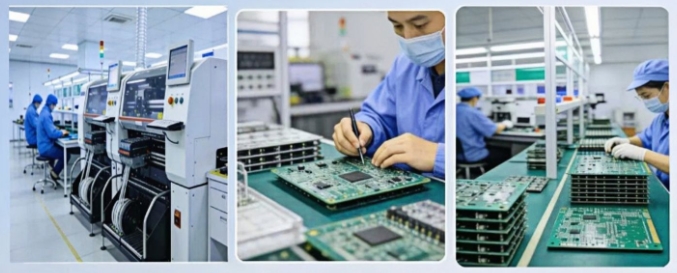
Why Choose Us?

  1. Certified Quality Excellence: Hold NADCAP, ISO 9001, IATF 16949, and ISO 13485 certifications, meeting the strictest standards for automotive, medical, and aerospace industries.
  2. Advanced Technological Capabilities: Equipped with LDI laser imaging, 3D SPI, and 3D X-ray inspection for precision manufacturing of Vietnam HDI PCB manufacturing, rigid-flex, and thick-copper PCBs (down to 3mil/3mil line width/space).
  3. Rapid Turnaround & Scalability: Seamlessly scale from 10-piece prototypes to 100k+ unit mass production with 98%+ on-time delivery rate, supported by flexible manufacturing systems.
  4. Transparent & Competitive Pricing: No hidden fees—we provide detailed quotes with material, engineering, and testing costs, plus volume discounts for long-term partnerships.
  5. Global Supply Chain Resilience: Dual-sourced critical components and strategic inventory management minimize risks of material shortages and production delays.
  6. 24/7 Expert Support: Our team of engineers with 10+ years of experience offers round-the-clock assistance for design optimization, technical troubleshooting, and post-delivery support.

Top 10 PCB Manufacturers in Vietnam

Company NameProcess CapabilitiesCore AdvantagesAddress
Meiko Electronics VietnamHDI PCBs, rigid PCBs, flexible PCBs, rigid-flex PCBs; up to 16-layer boardsISO 9001/14001/IATF 16949 certified; 3,000 employees; serves automotive/communication sectorsLot K1-K4, Thang Long Industrial Park, Kim Chung Commune, Dong Anh District, Hanoi
Young Poong Electronics VietnamStandard PCBs, electronic component assembliesSouth Korean subsidiary; high-quality production for diverse industriesLot CN06, Binh Xuyen II Industrial Park, Ba Hien Town, Binh Xuyen District, Vinh Phuc Province
Simmtech VietnamHigh-precision PCB assemblies, HDI boardsAdvanced manufacturing for semiconductor and electronics sectorsIndustrial Park, Ho Chi Minh City (specific address undisclosed)
Daeduck VietnamRigid PCBs, flexible PCBs, PCB assembliesProven track record in consumer electronics and industrial applicationsVietnam-Singapore Industrial Park, Binh Duong Province
KCE Electronics VietnamSMT assembly, through-hole technology (THT), PCB manufacturingSpecializes in high-volume production with strict quality controlIndustrial Zone, Dong Nai Province
Semco Electronics VietnamCustom PCB design, prototyping, mass productionFast turnaround for consumer and automotive electronicsLong An Industrial Park, Long An Province
Unimicron Technology VietnamHDI PCBs, rigid-flex PCBs, advanced packaging substratesGlobal technical expertise; serves high-tech industriesBac Ninh Industrial Park, Bac Ninh Province
Tripod VietnamPCB manufacturing, PCBA assemblyCost-effective solutions for small to medium batchesTay Ninh Industrial Park, Tay Ninh Province
Vector Fabrication VietnamPrecision PCB production, custom assembliesFocus on medical and industrial electronics; ISO 13485 certifiedHo Chi Minh City Industrial Park, Ho Chi Minh City
Spartronics VietnamPCB assembly, conformal coating, non-destructive testingNADCAP certified; serves aerospace and defense industriesHo Chi Minh City Manufacturing Facility, Ho Chi Minh City

How to Choose a PCB Manufacturer in Vietnam

  1. Verify international certifications (ISO 9001, IATF 16949, ISO 13485, UL) to ensure Vietnam PCB quality control compliance.
  2. Evaluate process capabilities against your needs (e.g., HDI, rigid-flex, minimum line width/space).
  3. Check the manufacturer’s industry experience and client portfolio, especially in your sector (automotive, medical, etc.).
  4. Assess production equipment quality (e.g., LDI, AOI, X-ray inspection) and technological upgrades.
  5. Request Vietnam PCB manufacturer delivery time data from the past 12 months (target ≄98%).
  6. Review quality control processes, including DPPM rates and inspection protocols (IPC-A-600 standards).
  7. Ensure transparent pricing with detailed cost breakdowns (materials, engineering, testing, shipping).
  8. Confirm availability of DFM services and technical support for design optimization.
  9. Investigate supply chain resilience (dual sourcing, inventory management) to avoid delays.
  10. Seek customer references or case studies to validate performance and reliability.

Core Pain Points of PCB Manufacturers in Vietnam

  • Weak heavy industry foundation limiting local supply of high-quality raw materials (e.g., advanced copper clad laminates).
  • Unstable power supply and infrastructure gaps affecting production consistency.
  • Shortage of skilled engineers and technical personnel for complex PCB design and manufacturing.
  • Dependence on imported core technologies, leading to higher production costs and limited innovation.
  • Intense market competition from domestic and international manufacturers, pressuring profit margins.
  • Challenges in meeting strict environmental regulations for waste disposal and emissions.
  • Supply chain disruptions due to reliance on single-source materials or logistics bottlenecks.
  • Inconsistent Vietnam PCB quality control standards across small to medium-sized manufacturers.
  • Slow adoption of advanced automation technologies, resulting in lower production efficiency.
  • Limited capacity for rapid Vietnam PCB prototyping and flexible production for custom orders.

How to Evaluate Production Capacity of PCB Manufacturers in Vietnam

  1. Review annual production volume and capacity utilization rate (ideal range: 70%-85%).
  2. Assess number of production lines (SMT/THT) and their throughput (components per hour).
  3. Verify capability to handle your specific PCB requirements (layers, line width/space, materials).
  4. Check availability of advanced equipment (LDI, AOI, X-ray, flying probe testers) for Vietnam HDI PCB manufacturing.
  5. Evaluate factory size, number of employees, and shift operations (24/7 production capability).
  6. Review past project portfolios for similar product types and volume scales.
  7. Confirm ISO certifications and quality management system documentation.
  8. Assess R&D investment and frequency of technological upgrades.
  9. Inquire about emergency production capacity for rush orders.
  10. Request on-site factory tours to observe 5S management and production workflows.

How to Evaluate Delivery Time of PCB Manufacturers in Vietnam

  1. Request historical on-time delivery (OTD) data for the past 12 months (target ≄98%) to validate Vietnam PCB manufacturer delivery time reliability.
  2. Inquire about standard lead times for Vietnam PCB prototyping (ideal: 1-3 days) and mass production (2-4 weeks).
  3. Assess supply chain management practices (dual sourcing, material inventory levels).
  4. Verify proximity to major ports (Ho Chi Minh City, Haiphong) for efficient shipping.
  5. Evaluate production scheduling flexibility for design changes or order adjustments.
  6. Inquire about emergency delivery options and associated costs.
  7. Check for integration of ERP/MES systems for real-time production tracking.
  8. Review logistics partnerships and shipping carrier reliability.
  9. Ask about contingency plans for power outages or supply chain disruptions.
  10. Request customer references to confirm delivery time consistency.

Common Questions & Solutions for PCB Manufacturers in Vietnam

Q: How to resolve inconsistent PCB quality across batches?

A: Choose manufacturers with IPQC (In-Process Quality Control) systems with 20+ checkpoints and IPC-A-600G Class 2/3 compliance. Our facility uses automated inspection at every production stage and provides detailed Vietnam PCB quality control reports for each batch.

Q: What if my PCB design requires complex processes (e.g., blind/buried vias, impedance control)?

A: Partner with manufacturers specializing in Vietnam HDI PCB manufacturing and equipped with impedance testers. We offer free DFM reviews to optimize complex designs and ensure process compatibility.

Q: How to avoid hidden costs in PCB manufacturing quotes?

A: Request detailed breakdowns including material costs, engineering fees, testing charges, and shipping. We provide transparent quotes with no hidden fees and honor price commitments for the entire project lifecycle.

Q: What if production is delayed due to material shortages?

A: Select manufacturers with dual-sourced critical materials and strategic inventory. Our 3-6 month stock of key components ensures uninterrupted production even during supply chain disruptions, maintaining reliable Vietnam PCB manufacturer delivery time.

Q: How to get technical support for design optimization?

A: Choose manufacturers with dedicated engineering teams. Our experts offer 24/7 support for DFM reviews, design adjustments, and technical troubleshooting to improve manufacturability and reduce costs.

Q: What certifications are essential for automotive PCB applications?

A: IATF 16949 certification is mandatory. Our facility holds IATF 16949, ISO 9001, and UL certifications, ensuring compliance with automotive industry reliability and safety standards for Vietnam PCB manufacturing company solutions.

Q: How to verify a manufacturer’s production capacity?

A: Request factory audits, production line details, and past project case studies. We welcome on-site visits and provide comprehensive capacity reports to validate our manufacturing capabilities.

Q: What is the typical turnaround time for PCB prototyping in Vietnam?

A: Leading manufacturers offer 1-3 day turnaround. We provide 48-hour rapid Vietnam PCB prototyping with expedited options for urgent projects, without compromising quality.

Exploring the top 10 pcb manufacturers in Vietnam reveals a dynamic ecosystem of certified, technologically advanced firms, and partnering with a trusted Vietnam PCB manufacturing company from the top 10 pcb manufacturers in Vietnam ensures access to end-to-end quality assurance, rapid delivery, and expert support for all your PCB prototyping, design, and manufacturing needs.

Top 10 PCB Manufacturers in Philippines,PCB Manufacturing Company Philippines

November 26th, 2025

When it comes to sourcing reliable PCB fabrication, PCB prototyping Philippines, and custom PCB Philippines services, identifying trustworthy partners is critical for project success. The country’s PCB industry has grown steadily, with local manufacturers catering to diverse sectors including electronics, automotive, and medical devices. For businesses seeking quality and efficiency, exploring the top 10 PCB manufacturers Philippines offers a curated list of proven providers. Whether you need high-density interconnect (HDI) boards, flexible PCBs, or small-batch prototyping, the top 10 PCB manufacturers Philippines represent the best in technical capability, quality control, and customer service—making them the go-to choice for both local and international clients looking for a reliable PCB manufacturer Philippines.

Top 10 PCB Manufacturers in Philippines,PCB Manufacturing Company Philippines

Are You Facing These Challenges?

  • Inconsistent PCB prototyping Philippines quality leading to design revisions and project delays
  • Limited technical support for complex PCB design optimization and manufacturability
  • Unpredictable delivery times from Philippines PCB manufacturers due to supply chain disruptions
  • High costs for small-to-medium production runs with custom PCB Philippines without compromising quality
  • Lack of transparency in production processes from PCB manufacturing Philippines providers
  • Difficulty finding reliable PCB manufacturer Philippines certified for industry-specific standards (medical, automotive)

End-to-End Support from Requirement to Delivery

At our PCB manufacturing Philippines facility, we understand the unique challenges of sourcing PCB solutions in the country—and we’ve built a streamlined process to address every pain point. Our end-to-end service starts with a dedicated technical team that reviews your design for manufacturability (DFM) free of charge, ensuring your custom PCB Philippines meets quality standards while optimizing for cost and speed. We source premium materials from trusted global suppliers to eliminate delays, and our advanced production line—equipped with LDI exposure machines and AOI inspection systems—guarantees consistent quality across prototypes and mass production.

From order confirmation to shipping, we provide real-time progress updates, and our flexible logistics partnerships ensure on-time delivery even for urgent PCB prototyping Philippines orders. Every PCB undergoes rigorous testing (electrical performance, reliability checks) before shipment, with full inspection reports provided to give you complete peace of mind—solidifying our reputation as a reliable PCB manufacturer Philippines.

Why Choose Us?

  • Certified Quality Assurance: ISO 9001, UL, IPC-compliant processes—plus ISO 13485 (medical) and IATF 16949 (automotive) certifications
  • Comprehensive Capabilities: 2-54 layer PCBs, HDI boards, rigid-flex designs, impedance-controlled circuits for all custom PCB Philippines needs
  • Cost-Effective Solutions: Competitive pricing for small batches and bulk orders, no hidden fees—ideal for PCB prototyping Philippines and mass production
  • Rapid Turnaround: Prototyping in 24 hours, standard lead times 3-7 days—faster than most Philippines PCB manufacturers
  • 24/7 Technical Support: Experienced engineers assist with design reviews, troubleshooting, and project optimization
  • Sustainable Practices: RoHS/REACH-compliant manufacturing—aligning with global environmental standards

Top 10 PCB Manufacturers in Philippines

Company NameProcess CapabilitiesCore AdvantagesAddress
First Sumiden Circuits Inc.Flexible PCBs, rigid PCBs, high-volume production69% market share in Philippines PCB exports, ISO certifiedPhilippines (Exact location available upon request)
Epson Precision Philippines Inc.SMT assembly, PCB fabrication, precision electronicsAdvanced cleanroom facilities, automotive/consumer expertisePhilippines
Nippon Seiki Co. Ltd.Custom PCB design, rigid-flex PCBs, medical-grade circuitsHigh-reliability focus, strict quality controlPhilippines
Antech-EnviroUp to 54-layer rigid PCBs, FR-4 materialsIndustrial-grade expertise, supply chain stabilityPhilippines
Global Circuit Sourcing Solutions Inc.32-layer PCBs, HDI, rigid-flex, aluminium/copper substratesMulti-material compatibility, aerospace/defense experienceCavite, Philippines
Noblelink Inc.SMT assembly, flexible/rigid PCB assembly, cleanroom productionEMS integration, camera module PCBsCavite, Philippines
Pythos Technology Philippines Inc.High-mix low-volume assembly, in-house designRF board expertise, global supplier networkPhilippines
PCBA NowFlexible PCBs, HDI, hybrid PCBs, ceramic/polyimide materialsMulti-industry focus, fast kitting (2-week lead time)Supplies to Philippines (Local distribution)
Action Tech (Philippines Partner)Small-batch PCB fabrication, prototypingCost-effective for startups, quick design feedbackPhilippines
Gorilla (Philippines Affiliate)RF PCBs, high-speed circuits, military-grade PCBsHigh-frequency performance, U.S.-qualified manufacturingSupplies to Philippines (Local support)

How to Choose a Philippines PCB Manufacturer

  • Verify industry certifications (ISO 9001, UL, IPC) to ensure quality compliance
  • Assess technical capabilities against your custom PCB Philippines needs (layer count, materials)
  • Review customer feedback on quality and on-time delivery from Philippines PCB manufacturers
  • Evaluate PCB prototyping Philippines services—prioritize free DFM reviews
  • Inquire about production capacity and current order saturation to avoid delays
  • Check supply chain stability (backup material suppliers for critical components)
  • Compare transparent pricing structures (no hidden costs for revisions/testing)
  • Assess 24/7 technical support availability
  • Verify after-sales services (warranty, defect resolution)
  • Consider environmental compliance (RoHS, REACH) for global market access

Core Pain Points of Philippines PCB Manufacturers

  • Reliance on imported raw materials leading to higher costs for PCB manufacturing Philippines
  • Shortage of skilled engineers specializing in advanced PCB design/manufacturing
  • Inconsistent quality control across small-scale Philippines PCB manufacturers
  • Limited capacity for high-layer count or specialized custom PCB Philippines (RF, medical-grade)
  • Slow turnaround times for PCB prototyping Philippines due to outdated equipment
  • Lack of localized design support for complex projects
  • Poor client communication leading to misaligned expectations
  • Inadequate testing facilities for electrical performance validation

How to Evaluate Philippines PCB Manufacturer Production Capacity

  • Request maximum monthly production volume and current order load data
  • Inquire about modern equipment (LDI machines, AOI systems, soldering technology)
  • Ask for case studies of similar custom PCB Philippines projects
  • Evaluate batch size flexibility (prototypes to mass production)
  • Check lead times for standard/expedited PCB prototyping Philippines orders
  • Inquire about shift schedules and overtime capabilities for urgent needs
  • Verify IQC/OQC quality control processes
  • Assess failure rates (aim for <1% defect rates)
  • Request virtual/in-person factory tour
  • Confirm long-term scaling potential for business growth

How to Evaluate Delivery Times of Philippines PCB Manufacturers

  • Ask for average lead times for PCB prototyping Philippines and mass production
  • Inquire about expedited delivery options and associated costs
  • Verify on-time delivery rate (aim for ≄95%)
  • Assess reliable logistics partnerships for local/international shipping
  • Check for backup production lines to mitigate equipment breakdown delays
  • Inquire about inventory management for common materials
  • Evaluate real-time delivery tracking and delay notification protocols
  • Ask about supply chain disruption contingency plans
  • Confirm customs clearance support for international clients
  • Review customer feedback on delivery reliability

Common FAQs About Philippines PCB Manufacturers

Q1: Why are raw material costs higher for Philippines PCB manufacturers?

A1: Most critical materials (copper foil, resin) are imported due to limited local production. Our solution: We maintain strategic material stockpiles and global supplier partnerships for bulk pricing, passing savings to clients while ensuring supply stability for custom PCB Philippines orders.

Q2: How can I ensure my PCB prototyping Philippines meets design specifications?

A2: Many manufacturers lack robust DFM reviews. Our solution: Free pre-production design analysis by engineers, identifying issues (trace width, hole size) and offering optimization suggestions to ensure prototype accuracy.

Q3: What if my order from a reliable PCB manufacturer Philippines is delayed?

A3: Supply chain disruptions are common. Our solution: Dual-sourced materials, backup production partners, and real-time tracking—we notify you immediately and offer free expedited shipping if delays occur.

Q4: Can Philippines PCB manufacturers produce medical-grade PCBs?

A4: Many lack ISO 13485 certification. Our solution: We hold ISO 13485 and IPC-A-600 Class 3 certifications, with dedicated cleanroom production for medical devices.

Q5: How do I resolve quality issues with PCB manufacturing Philippines orders?

A5: Some manufacturers have slow defect resolution. Our solution: 90-day warranty, free replacements for defects, and 48-hour response time for claims—plus root-cause analysis to prevent recurrence.

Q6: Can Philippines PCB manufacturers handle high-volume production?

A6: Smaller manufacturers lack scaling capacity. Our solution: Monthly capacity of 500,000+ PCBs, flexible lines for 100-piece to 100,000-piece runs—without compromising quality/lead times.

When searching for reliable PCB solutions in the country, the top 10 PCB manufacturers Philippines offer proven expertise, but partnering with a certified, customer-centric reliable PCB manufacturer Philippines ensures seamless project execution—from design to delivery—addressing the unique challenges of PCB manufacturing Philippines and PCB prototyping Philippines. For businesses seeking quality, efficiency, and transparency in custom PCB Philippines services, the top 10 PCB manufacturers Philippines and our specialized end-to-end support stand out as the smart choice for long-term success.