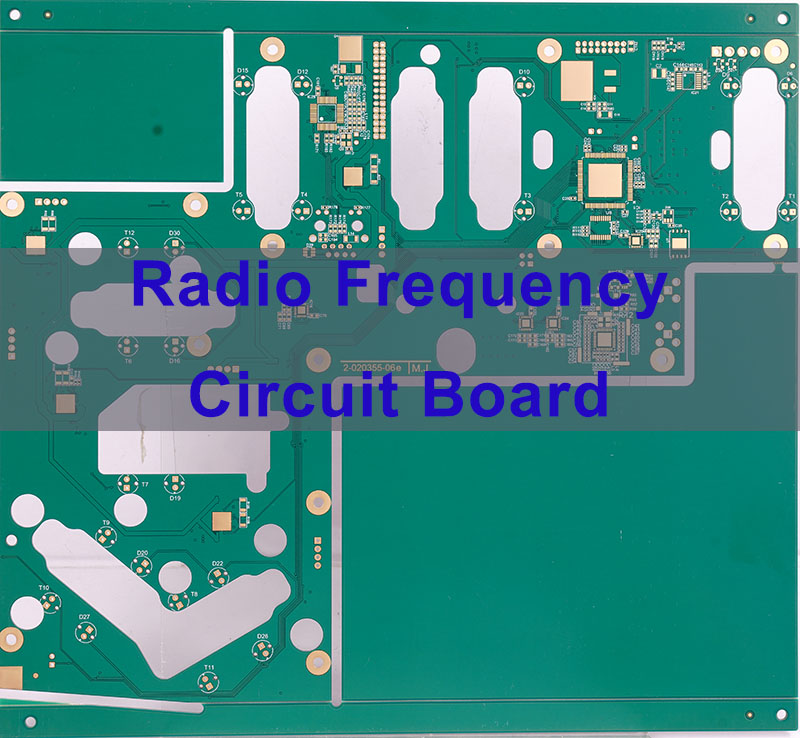
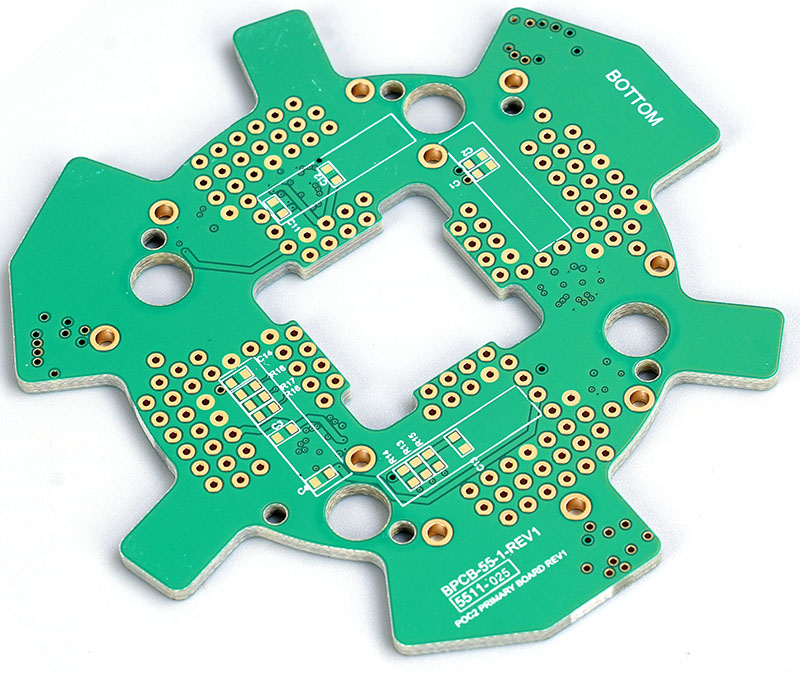
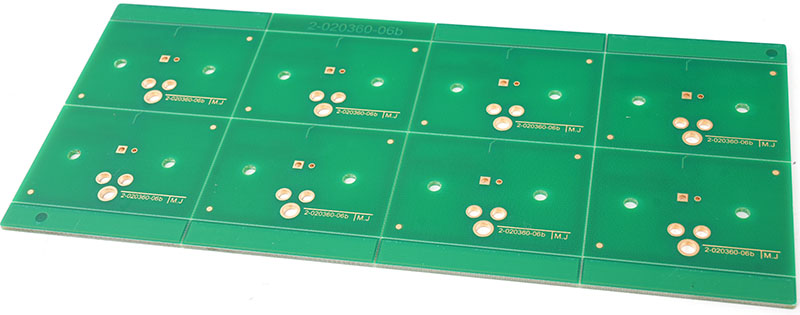
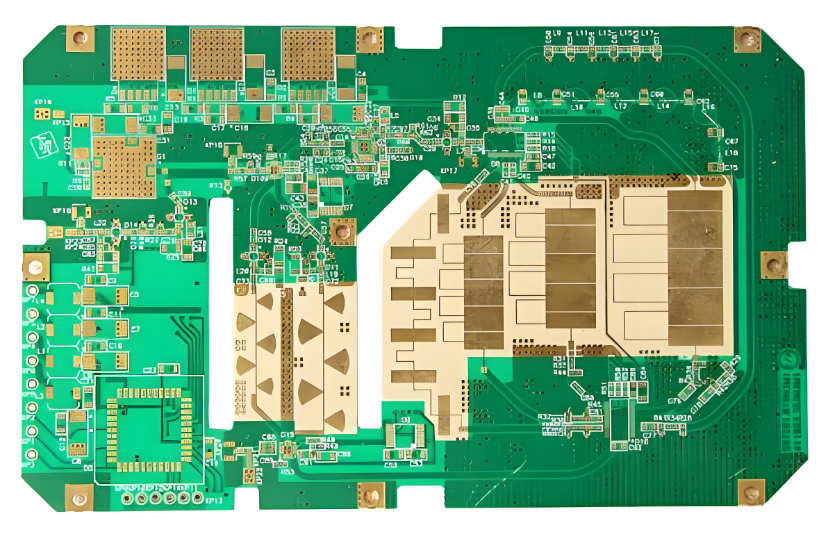
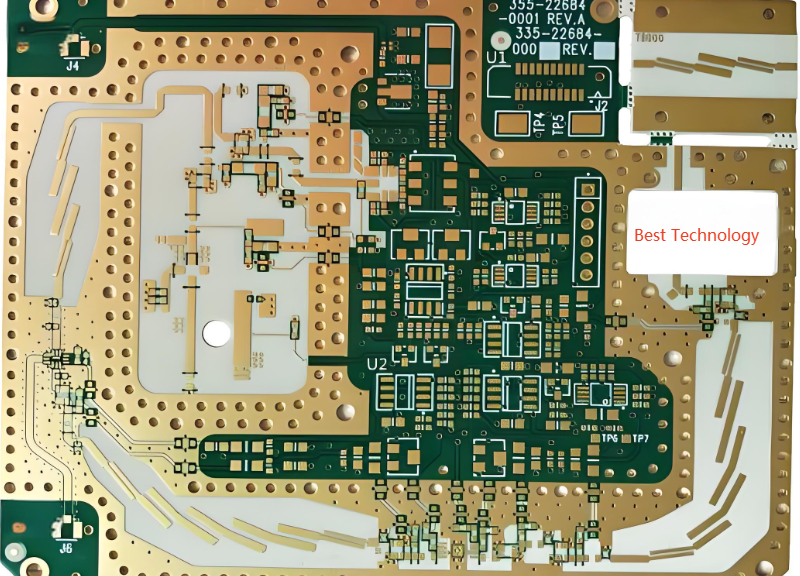
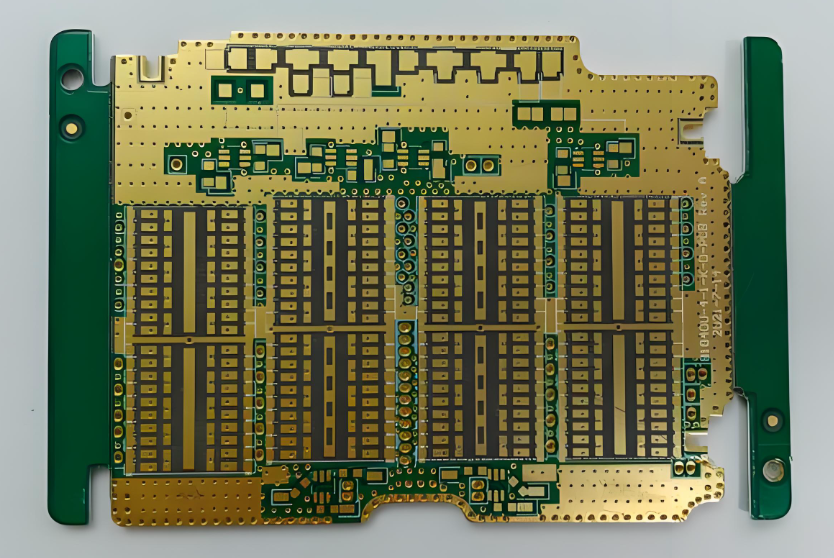
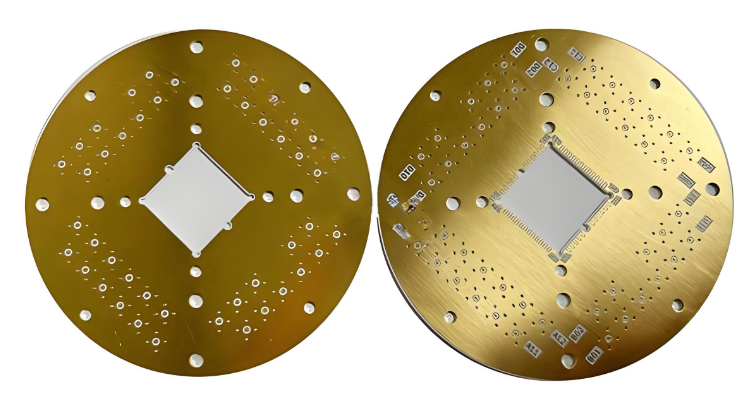
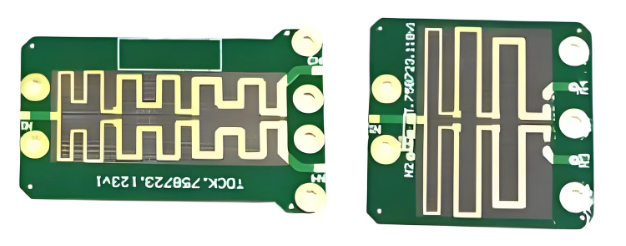
PCB manufacturing PCB manufacturing
Home > Blog

Posts Tagged ‘rf pcb material’

Top 10 RF PCB Manufacturers in USA | Trusted RF PCB Manufacturer Guide
Friday, December 19th, 2025

Choosing the right RF PCB manufacturer in the USA directly affects signal integrity, insertion loss, and long-term product reliability. In RF systems operating above 1 GHz, even a ±5% variation in dielectric constant (Dk) or ±1 mil trace deviation can cause impedance mismatch and measurable signal degradation.

For applications such as 5G base stations, radar modules, satellite communication, medical imaging, and defense electronics, RF PCBs demand more than standard multilayer fabrication. This guide reviews the top 10 RF PCB manufacturers in the USA, explains how they were evaluated, and helps buyers identify what truly defines a capable RF PCB manufacturing partner.

Top 10 RF PCB Manufacturers in USA | Trusted RF PCB Manufacturer Guide  https://www.bestpcbs.com/blog/2025/12/top-10-rf-pcb-manufacturers-in-usa/

What Is an RF PCB Manufacturer?

An RF PCB manufacturer is a factory equipped to control high-frequency electrical behavior, not just fabricate boards using RF laminates.

A qualified RF PCB manufacturer typically demonstrates:

  • Controlled impedance tolerance of ±5–10%
  • Proven experience with Rogers, Taconic, PTFE, and hybrid RF stack-ups
  • Line width and spacing control down to ±1 mil
  • RF-aware stack-up and grounding validation
  • Process consistency between prototype and volume production

Unlike standard digital PCBs, RF designs are sensitive to copper roughness, resin distribution, and prepreg variation. Manufacturers without RF-specific process control often struggle to deliver repeatable RF performance.

Common Challenges When Choosing an RF PCB Manufacturer in the USA

Despite the strong PCB ecosystem in the USA, RF buyers frequently encounter the following issues:

  • Impedance drift between batches, especially in volume production
  • Limited experience with hybrid RF stack-ups (Rogers + FR-4)
  • RF performance verified only at prototype stage, not scaled production
  • Long RF laminate lead times (often 4–6 weeks)
  • Minimal engineering feedback beyond Gerber fabrication

According to industry feedback, over 30% of RF PCB project delays are caused by material handling or impedance inconsistencies rather than design errors. This highlights why RF capability must be validated beyond certifications.

Common Challenges When Choosing an RF PCB Manufacturer in the USA https://www.bestpcbs.com/blog/2025/12/top-10-rf-pcb-manufacturers-in-usa/

How We Evaluated the Top RF PCB Manufacturers in the USA?

Manufacturers were evaluated using practical RF manufacturing benchmarks, not marketing claims.

Key evaluation criteria included:

  • RF material portfolio (Rogers RO4350B, RO4003C, RO5880, Taconic, PTFE)
  • Demonstrated impedance control capability (≀ ±10%)
  • Experience with multilayer RF and mixed-signal designs
  • Quality certifications relevant to RF applications
  • Ability to support prototype + mid-volume production

Factories focusing only on RF prototyping without scalable production control were ranked lower.

Top 10 RF PCB Manufacturers in USA

RankCompany NameRF PCB CapabilityKey AdvantagesLocation
1TTM TechnologiesRF & microwave multilayersDefense & aerospace expertiseCalifornia
2SanminaHigh-reliability RF PCBsEnd-to-end manufacturingCalifornia
3Summit InterconnectRF multilayer & HDIQuick-turn RF capabilityCalifornia
4Advanced CircuitsRF prototypesFast turnaroundColorado
5Sierra CircuitsHigh-frequency fabricationStrong DFM supportCalifornia
6Rush PCBRF proto & low volumeCost efficiencyCalifornia
7Epec Engineered TechnologiesRF & mixed-signal PCBsIntegrated PCBAMassachusetts
8Green CircuitsRF PCB manufacturingEMS integrationCalifornia
9All Flex SolutionsRF flexible circuitsSpecialty RF flexMinnesota
10APCTComplex RF multilayersAdvanced stack-upsCalifornia

Are US RF PCB Manufacturers Always the Best Choice?

US RF PCB manufacturers offer clear advantages:

  • Local engineering communication
  • ITAR and defense compliance
  • Established aerospace and telecom experience

However, buyers should also consider:

  • Higher manufacturing costs (often 30–50% above offshore)
  • Limited RF laminate inventory
  • Less flexibility for mid-volume scaling

As a result, many OEMs now adopt a hybrid sourcing strategy, using US suppliers for early development and qualified offshore RF PCB manufacturers for volume production.

US RF PCB Manufacturers 
https://www.bestpcbs.com/blog/2025/12/top-10-rf-pcb-manufacturers-in-usa/

Global Alternative RF PCB Manufacturer for USA Customers

As RF projects become more globalized, many USA companies now evaluate global RF PCB manufacturers that offer comparable RF performance with better lead time, cost flexibility, and material availability. Below is a representative list of global RF PCB manufacturers serving high-frequency and microwave applications, based on manufacturing capability, RF material experience, and export readiness.

RankCompany NameCountry / RegionRF PCB CapabilityKey Strengths for USA Customers
1Best TechnologyChina / VietnamRF, microwave, hybrid stack-upsFast lead time, wide RF materials, 30–50% cost advantage
2AT&SAustriaRF, high-frequency, IC substratesHigh-end RF technology, EU quality standards
3UnimicronTaiwanRF, HDI, high-speedAdvanced multilayer RF capability
4CompeqTaiwanRF & high-speed PCBsStable mass production for RF designs
5Meiko ElectronicsJapanRF & automotive PCBsHigh reliability, automotive RF experience
6Shennan CircuitsChinaRF & telecom PCBsStrong telecom and RF infrastructure
7IbidenJapanRF & package substratesPrecision RF manufacturing
8KinwongChinaRF & mixed-signal PCBsCost-effective RF volume production
9Chin Poon IndustrialThailandRF & automotive PCBsSoutheast Asia manufacturing flexibility
10Dynamic ElectronicsTaiwanRF multilayer PCBsMature RF fabrication processes

Why Global Buyers Choose Best Technology as an Experienced RF PCB Manufacturer?

Best Technology supports RF PCB programs with a focus on repeatability and manufacturability, not just RF materials.

Our RF PCB capability includes:

  • Rogers, Taconic, Isola, and hybrid RF stack-ups
  • Controlled impedance down to ±8%
  • RF trace width control to ±1 mil
  • Multilayer RF boards up to 20+ layers
  • ISO 9001, ISO 13485, IATF 16949, and AS9100D certified systems
  • MES-based traceability for materials and process control

This enables USA customers to transition smoothly from prototype to volume production without RF performance drift.

FAQs

1. What materials do RF PCB manufacturers typically use?

Common materials include Rogers RO4000/RO5000 series, Taconic, PTFE, and selected low-loss FR-4.

2. Is FR-4 suitable for RF PCB applications?

FR-4 is generally suitable below 1 GHz; higher frequencies benefit from low-loss laminates.

3. How do RF PCB manufacturers control impedance?

Through stack-up modeling, dielectric thickness control, copper roughness management, and process calibration.

4. What is the typical lead time for RF PCB prototypes?

Most RF PCB prototypes ship within 7–12 working days, depending on material availability.

5. How can I verify an RF PCB manufacturer’s RF capability?

Review impedance data, RF material history, similar project experience, and quality certifications.

RF PCB Manufacturer: Complete Guide to Materials and Design Considerations
Thursday, December 18th, 2025

An RF PCB manufacturer specializes in the design and fabrication of printed circuit boards used in radio-frequency, microwave, and high-frequency electronic systems. As operating frequencies increase, PCB performance is no longer determined only by connectivity, but by electromagnetic behavior, material stability, and manufacturing precision.

This pillar page provides a comprehensive, engineering-focused overview of RF PCB manufacturing. It covers what an RF PCB manufacturer does, how RF PCBs differ from standard boards, RF frequency definitions, materials, stackup design, manufacturing processes, common mistakes, and how to evaluate RF PCB manufacturing capability.

What Is an RF PCB Manufacturer?

An RF PCB manufacturer is a PCB supplier with specialized expertise in producing circuit boards for applications operating at radio frequencies, typically above 30 MHz. At these frequencies, PCB traces act as transmission lines, and small variations in geometry or material properties can significantly affect signal integrity.

Compared with standard PCB manufacturers, RF PCB manufacturers must control:

  • Dielectric constant (Dk) stability across frequency and temperature
  • Dissipation factor (Df) to minimize insertion loss
  • Tight impedance tolerance, often ±5% or better
  • Copper surface roughness, which directly affects high-frequency loss
  • Stackup symmetry and lamination consistency

These requirements mean RF PCB manufacturing is as much an electromagnetic discipline as a mechanical one.

What Is an RF PCB Manufacturer?   https://www.bestpcbs.com/blog/2025/12/rf-pcb-manufacturer/

What Is an RF PCB Manufacturer?

RF PCB vs Standard PCB (Quick Comparison)

Although RF PCBs and standard PCBs may look similar in appearance, they are fundamentally different in design philosophy, material selection, and manufacturing control. As frequency increases, even small variations that are acceptable in standard PCBs can cause severe performance degradation in RF designs.

Key Differences Between RF PCB and Standard PCB

Comparison ItemRF PCBStandard PCB
Typical operating frequency>30 MHz up to GHz/mmWaveDC to low-speed digital
Signal behaviorTransmission-line dominatedLumped-circuit dominated
Primary design concernImpedance, loss, phase stabilityConnectivity and routing
Core materialsRogers, PTFE, Taconic, RF laminatesFR-4
Dielectric constant (Dk)Tightly controlled, frequency-stableWider tolerance
Dissipation factor (Df)Low-loss requiredLess critical
Copper surface roughnessStrictly controlledUsually not critical
Impedance tolerance±5% or tighter±10% common
Stackup complexityHigh, often hybridRelatively simple
Manufacturing difficultyHighModerate
Cost sensitivityPerformance-drivenCost-driven

In short, standard PCB manufacturing prioritizes manufacturability and cost, while RF PCB manufacturing prioritizes electrical performance and consistency. This is why RF PCBs must be produced by a qualified RF PCB manufacturer rather than a general PCB supplier.

What Frequency Range Is Considered RF in PCB Manufacturing?

In PCB manufacturing, RF generally refers to frequencies above 30 MHz, where wavelength becomes comparable to trace dimensions and transmission-line effects dominate.

Typical frequency classifications include:

  • 30 MHz – 300 MHz: VHF
  • 300 MHz – 3 GHz: UHF and microwave
  • 3 GHz – 30 GHz: Microwave and millimeter-wave

As frequency increases, the impact of dielectric variation, copper roughness, and impedance mismatch becomes more severe, requiring stricter manufacturing controls.

RF PCB Frequency Range https://www.bestpcbs.com/blog/2025/12/rf-pcb-manufacturer/

Common RF PCB Materials

Material selection is one of the most important responsibilities of an RF PCB manufacturer. RF materials are chosen for predictable dielectric behavior and low signal loss across frequency.

Typical RF PCB Materials

  • Rogers RO4003C / RO4350B – Widely used RF laminates with stable Dk
  • Rogers RO3003 / RO3006 – Microwave and millimeter-wave applications
  • Taconic RF materials – Cost-effective RF solutions
  • PTFE-based laminates – Ultra-low loss for high-frequency designs

A qualified RF PCB manufacturer evaluates materials based on frequency range, insertion loss targets, thermal performance, and manufacturability.

RF PCB Applications

RF PCBs are used in applications where signal integrity at high frequency is critical.

Common RF PCB applications include:

  • 5G and cellular base stations
  • RF front-end modules and power amplifiers
  • Automotive radar systems (24 GHz, 77 GHz)
  • Satellite and aerospace communication systems
  • Wireless IoT, Wi-Fi, and Bluetooth modules

Each application places different requirements on materials, stackup, and manufacturing precision.

RF PCB Manufacturing Process (Simplified)

RF PCB manufacturing requires tighter process control than standard PCB fabrication.

A simplified RF PCB manufacturing flow includes:

RF PCB Manufacturing Process  https://www.bestpcbs.com/blog/2025/12/rf-pcb-manufacturer/

1. RF laminate handling and moisture control

2. Precision drilling to prevent dielectric deformation

3. Copper etching with controlled surface roughness

4. Sequential lamination for hybrid RF/FR-4 stackups

5. Impedance-controlled trace patterning

6. Electrical testing and impedance verification

Consistency across batches is critical, as even small process variations can affect RF performance.

RF PCB Stackup Design Considerations

Stackup design directly influences impedance stability, loss, and manufacturability.

Key stackup considerations RF PCB manufacturers must control include:

  • Uniform dielectric thickness
  • Stable Dk across all RF layers
  • Continuous and uninterrupted reference planes
  • Compatibility between RF laminates and FR-4 prepregs
  • Controlled lamination sequence to avoid warpage

In many cases, RF PCB manufacturers collaborate with customers to finalize stackups before production.

Common RF PCB Manufacturing Mistakes

RF PCBs are highly sensitive to manufacturing errors.

Common RF PCB manufacturing mistakes include:

  • Using inappropriate materials for the target frequency
  • Ignoring copper roughness effects on insertion loss
  • Poor stackup symmetry causing mechanical distortion
  • Etching variation leading to impedance mismatch
  • Lack of RF-specific design-for-manufacturing review

Experienced RF PCB manufacturers reduce these risks through upfront engineering validation and strict process control.

Why Choose Best Technology as Your RF PCB Manufacturer?

When evaluating RF PCB manufacturing capability, Best Technology is often selected due to its strong focus on RF and high-frequency PCB production. With experience in RF materials, controlled impedance manufacturing, and RF-focused engineering support, Best Technology demonstrates the core capabilities expected from a professional RF PCB manufacturer.

By choosing Best Technology, customers benefit from:

  • Proven RF and microwave PCB manufacturing experience
  • Tight impedance and material control
  • Engineering-driven process validation
  • Reliable performance for high-frequency applications

For projects involving RF, microwave, or high-speed communication systems, selecting Best Technology as your RF PCB manufacturer helps reduce technical risk and improve overall product reliability.

FAQs About RF PCB Manufacturing

1. What does an RF PCB manufacturer do?

    An RF PCB manufacturer produces printed circuit boards optimized for high-frequency performance, focusing on impedance control, low signal loss, and material stability.

    2. Can FR-4 be used in RF PCB manufacturing?

    FR-4 may be acceptable for low-frequency RF designs, but at higher frequencies it suffers from higher loss and unstable dielectric properties.

    3. Why are RF PCBs more difficult to manufacture?

    RF PCBs are sensitive to small variations in materials, geometry, and processing, making manufacturing control critical.

    4. Are RF PCBs more expensive than standard PCBs?

    RF PCBs typically cost more due to specialized materials, tighter tolerances, and additional process controls.

    Why DK Is important to Impedance Control in RF PCB Materials?
    Thursday, December 11th, 2025

    In any RF PCB material used for wireless modules, radar systems, or 5G designs, few parameters influence performance as strongly as DK, or dielectric constant. When engineers talk about controlled impedance PCB structures, DK sits at the heart of every decision. It shapes signal speed, impedance behavior, and even how your RF transmission line behaves at microwave frequencies.

    If your goal is stable, predictable high-frequency PCB design, understanding why DK matters will help you choose better laminates and avoid costly tuning steps.

    DK Directly Determines the Impedance of RF Transmission Lines

    Every RF microstrip impedance calculation depends on DK. The material’s dielectric constant feeds into the formula that sets the final impedance for 50Ω microstrip lines, 75Ω video lines, and many custom RF structures.

    The relationship is simple:

    • Higher DK → lower impedance
    • Lower DK → higher impedance

    This is why RF PCB stack-up design can only be accurate when the underlying DK is consistent. Even a small DK shift, such as ±0.1, can move the impedance by several ohms. At microwave frequencies, that difference influences return loss, matching accuracy, and the stability of filters or antennas.

    To reduce this variation, engineers often choose Rogers RF materials such as RO3003, RO4003C, and RO4350B, which maintain tighter DK tolerance than conventional FR4.

    Why DK Is important to Impedance Control in RF PCB Materials?

    DK Stability Protects RF Circuits From Impedance Drift

    Standard materials, such as FR4, show large DK swings at different frequencies and temperatures. But advanced high-frequency laminate materials are engineered for stability across environmental changes, humidity, and frequency ranges.

    Stable DK provides stable impedance, which leads to:

    • cleaner signal flow
    • predictable matching in RF front-end circuits
    • stable phase length for microwave structures
    • consistent RF PCB routing performance

    For microwave builds, especially above 2–3 GHz, DK tolerance becomes one of the clearest indicators of high-quality RF PCB material selection.

    DK Controls RF Signal Propagation

    Impedance is not just a number—it reflects how electromagnetic energy moves across the PCB. DK defines the relationship between the electric field in the trace and the dielectric beneath it. When DK is stable, signal propagation speed stays stable too.

    This affects many RF structures:

    • microstrip antennas
    • transmission lines for mixers, LNAs, and PAs
    • VCOs and PLL circuits
    • bandpass filters and couplers
    • phased-array elements
    • radar transceiver lines

    With stable DK, these structures behave closer to their modeled performance, reducing the risk of frequency drift or unexpected resonance shifts.

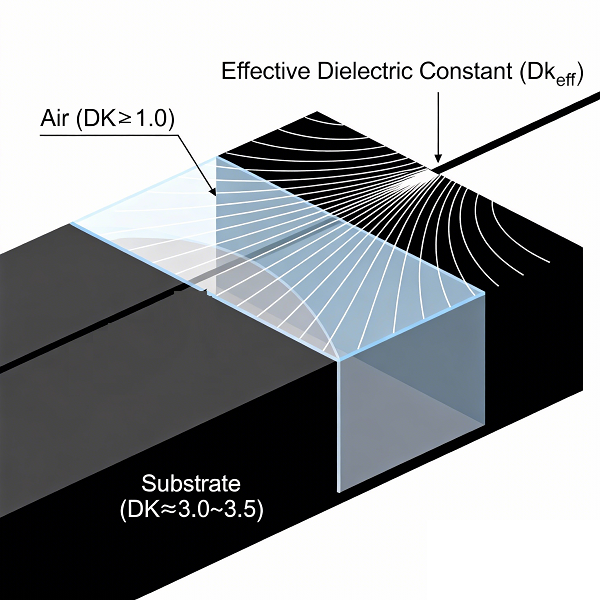
    DK Influences Effective Permittivity (Dk_eff)

    Most RF layouts use microstrip or grounded CPW traces, where only part of the electromagnetic field flows inside the substrate. The remaining field propagates through the air. The combined effect is called the effective dielectric constant (Δeff) or Dk_eff.

    Because Dk_eff sits between the substrate DK and air’s DK (≈1.0), any movement in the substrate DK shifts the effective value.

    That creates changes in:

    • impedance
    • phase velocity
    • electrical length of the line
    • signal wavelength on the PCB
    • coupling between adjacent structures

    For this reason, impedance-controlled PCBs for RF applications require laminates with tight DK tolerance across the panel and across the entire RF stack-up.

    DK Influences Effective Permittivity (Dk_eff)

    Tight DK Tolerance Reduces Prototyping Time

    When using predictable materials, simulation models match real PCB results more closely. Designers experience fewer tuning cycles, fewer redesigns, and faster production.

    Consistent DK helps:

    • improve RF yield
    • reduce tuning in power amplifier bias lines
    • support repeatable RF PCB manufacturing
    • make stack-up calculations more accurate

    This is especially valuable in industries like automotive radar, satellite communication, low-noise amplifier design, and compact 5G modules.

    DK Variation Increases Reflection and Mismatch Loss

    Loss tangent (Df) defines dielectric loss, but DK variation introduces mismatch loss. When impedance deviates from the intended value, part of the RF signal reflects back toward the source, reducing forward transmission.

    Effects include:

    • higher insertion loss
    • increased ripple in filters
    • degraded VSWR
    • phase errors in antenna arrays
    • unwanted standing waves

    Stable DK helps avoid these issues by keeping impedance as close as possible to its original design target.

    DK and RF PCB Stack-Up Selection

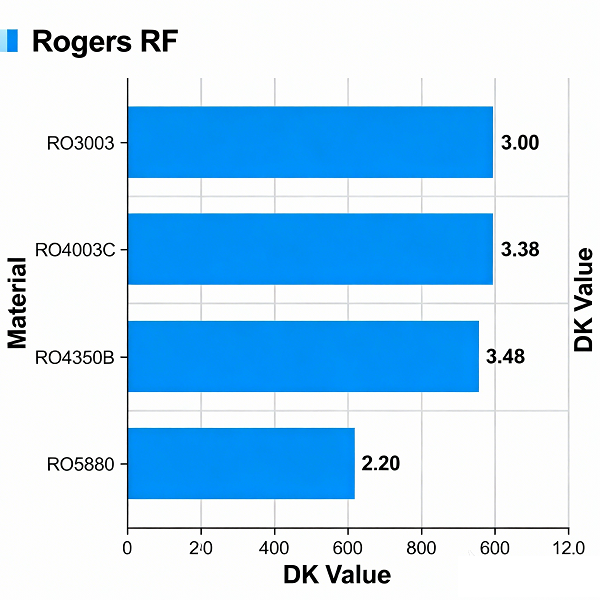
    A high-performance RF PCB stack-up design always begins with DK. Engineers set copper thickness, dielectric thickness, and trace geometry around it. RF stack-ups with predictable DK behave consistently across production batches, which keeps high-volume runs stable.

    Popular RF materials selected for stable DK include:

    • Rogers RO3003 (DK ≈ 3.00 ± 0.04)
    • Rogers RO4350B (DK ≈ 3.48 ± 0.05)
    • Rogers RO4003C (DK ≈ 3.38 ± 0.05)
    • Rogers RO5880 (DK ≈ 2.20 ± 0.02)
    • Taconic RF-35, TLY, and other PTFE-based laminates
    DK and RF PCB Stack-Up Selection

    These laminates are widely used in microwave designs because they give designers the confidence that impedance and electrical length stay predictable across builds.

    Why DK Matters Even More Above 10 GHz?

    As frequencies extend toward mmWave ranges, minor DK deviations introduce major impedance shifts. The higher the operating frequency, the more sensitive impedance becomes to dielectric constant variations.

    For example:

    • At 1–2 GHz, DK tolerance of ±0.05 produces measurable but manageable impact.
    • At 10–24 GHz, the same DK deviation causes more dramatic impedance changes.
    • Above 28–39 GHz (5G FR2 bands), DK control becomes one of the most essential parameters in RF material selection.

    This is why mmWave PCB manufacturing overwhelmingly relies on PTFE-based or ceramic-filled laminates with extremely tight DK tolerance.

    Best Technology – Your Trusted Partner for RF PCB Manufacturing

    For designers working on high-frequency and microwave projects, precise DK control is only the starting point. You also need a PCB manufacturer with strong RF engineering experience, stable processes, and a deep understanding of controlled impedance PCB builds. At Best Technology, we support global RF teams through:

    1. Advanced RF PCB materials – RO3003, RO4350B, RO4003C, RO5880, Taconic, and other high-frequency laminates.

    2. Tight impedance tolerance – ±5% impedance control with certified test reports.

    3. Professional RF stack-up design assistance – Our engineers help calculate trace widths, dielectric thicknesses, and Dk_eff models for accurate impedance.

    4. Mature RF PCB fabrication capabilities – Microstrip, stripline, CPW, grounded CPW, hybrid stack-ups, cavity structures, and metal-backed RF boards.

    5. Rigid quality control – ISO9001, ISO13485, AS9100D, IATF16949, and full MES traceability for all builds.

    When your RF design demands precise signal behavior, stable impedance, and reliable material performance, Best Technology provides the expertise and manufacturing strength needed to support advanced RF and microwave innovation.

    What Does DK Mean in RF PCB Material? How to Choose it?
    Wednesday, December 10th, 2025

    In RF and microwave PCB materials, DK means Dielectric Constant, also known as relative permittivity (Δr).

    Designing an RF or microwave PCB involves far more than routing traces—you must understand how materials behave at high frequencies. One of the most critical parameters is DK. Whether you are building a 1 GHz RF amplifier, a 10 GHz radar board, or a 77 GHz millimeter-wave automotive sensor, DK directly affects signal integrity, impedance, and loss.

    This guide covers what DK means, why it matters, how it affects impedance, common RF PCB materials and their DK values, and how to choose the right laminate for RF, microwave, and mmWave designs.

    What Does DK Mean in RF PCB Material? How to Choose it?

    What Does DK Mean in RF PCB Material?

    DK = Dielectric Constant = Relative Permittivity (Δr)

    It describes how much an RF signal slows down as it passes through the PCB substrate.

    • Air has DK ≈ 1
    • FR-4 has DK ≈ 4.2–4.8
    • RF materials like Rogers typically have DK ≈ 2.2–3.5

    In RF engineering, DK affects:

    • signal speed
    • impedance
    • wavelength
    • phase stability
    • overall RF performance

    Lower DK materials allow signals to travel faster and lose less energy, which is why they are widely used in RF, microwave, 5G, and mmWave designs.

    Importance of DK in Impedance Control

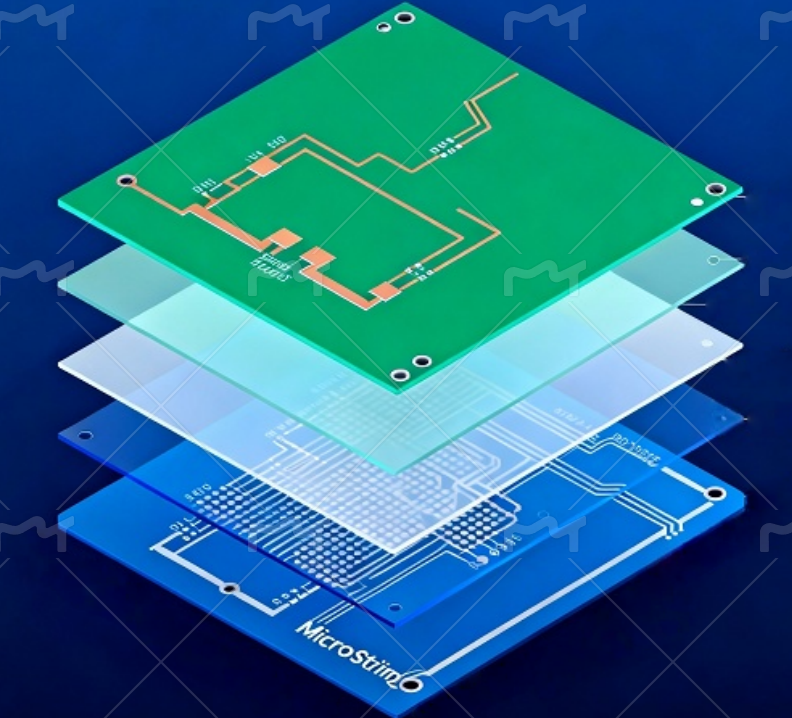
    Controlled impedance is required for RF transmission lines such as microstrip, stripline, and CPW structures.

    DK directly affects characteristic impedance (Z₀), because:

    Importance of DK in Impedance Control

    If the DK varies, impedance varies—and this creates reflection, mismatch, and signal loss.

    This means:

    • If DK increases → impedance decreases
    • If DK decreases → impedance increases

    Consistency is everything. Even a 1–2% DK variation can shift the impedance by noticeable amounts, leading to:

    • signal reflections
    • poor return loss
    • increased insertion loss
    • degraded power transfer

    Therefore, RF PCB materials must have tight DK tolerance, usually around ±0.04 or better.

    How Does DK Affect Impedance Control in RF PCBs?

    Understanding DK helps engineers design stable, predictable transmission lines.

    1. Impedance Matching

    Lower DK requires wider traces to maintain 50Ω impedance. Higher DK requires narrower traces, which increases fabrication difficulty.

    2. Phase Velocity & Delay

    Signal speed is inversely related to DK:

    How Does DK Affect Impedance Control in RF PCBs?

    Lower DK → faster signal → better phase performance.

    This matters in:

    • phased-array antennas
    • differential pair timing
    • radar systems
    • power dividers & couplers

    3. Dielectric Loss

    While DF (dissipation factor) is the main loss-related parameter, DK influences how the electromagnetic field interacts with the substrate.

    Higher DK = more energy trapped in substrate = higher loss at microwave frequencies.

    4. Manufacturing Tolerances

    Low DK materials allow wider traces, which reduces:

    • etching variation
    • copper width tolerance
    • impedance deviation between batches

    This makes low-DK materials more manufacturable for high-volume RF boards.

    Common Types of RF PCB Materials

    Below are the most widely used material categories for RF, microwave, and mmWave PCBs.

    1. FR-4 (Limited RF Use)

    • DK = 4.2–4.8
    • Usable for ≀ 1 GHz
    • High loss, unstable DK, poor high-frequency performance

    Not suitable for microwave or 5G boards.

    2. Hydrocarbon Ceramic Laminates (Rogers RO4000 Series)

    Examples: RO4003C, RO4350B, RO4835

    • DK ≈ 3.27–3.48
    • Low loss
    • Stable DK across frequency
    • Compatible with FR-4 manufacturing

    Ideal for: WiFi antennas, RF amplifiers, 10–20 GHz radar, high-power RF designs.

    3. PTFE-Based RF Materials

    Examples: RT/duroid 5880, RT/duroid 6002, RO3000 series

    • DK = 2.17–3.0
    • Very low loss
    • Best for 24–80 GHz mmWave
    • Requires specialized processing

    Used in: ADAS 77 GHz radar, satellite RF modules, high-end filters, mmWave front-end designs.

    4. Ceramic-Filled PTFE & Hybrid Laminates

    Used in ultra-high-frequency and high-reliability applications:

    • stable DK
    • low CTE
    • excellent thermal stability

    Applications: Space, military RF systems, phased-array radar.

    Here is a summarized RF material parameter:

    Material CategoryTypical DKFrequency UseNotes
    FR-44.2–4.8<1 GHzHigh loss, unsuitable for RF/microwave
    Rogers RO4000 Series3.27–3.551–20 GHzCost-effective, stable DK
    Rogers RO3000 Series3.0, 3.3810–40 GHzLow loss, mmWave-ready
    PTFE (Teflon) laminates2.17–2.6up to 60 GHz+Very low loss, used for 5G & radar
    Ceramic-filled laminates2.2–6.0up to 77 GHzGood CTE, stable DK

    Typical DK Values of Popular RF PCB Materials

    Rogers RO3000 Series

    MaterialDK @ 10 GHzNotes
    RO30033.00 ± 0.04Excellent for mmWave, 5G, radar
    RO30066.15Compact RF components
    RO301010.2Miniaturized RF circuits

    Rogers RO4000 Series

    MaterialDKNotes
    RO4003C3.38Low-loss, cost-effective
    RO4350B3.48High-power RF, stable performance
    RO48353.48High reliability, PIM stability

    PTFE (Duroid) Materials

    MaterialDKNotes
    RT/duroid 58802.20Super low DK, radar & aerospace
    RT/duroid 58702.33Low loss for satellite comms

    Why RT5880 is Important for High-Frequency Designs?

    RT5880 is especially favored for:

    • 77 GHz automotive radar
    • Ka-band satellite communications
    • High-end phased-array antennas
    • Microwave lenses & radomes
    • Low-loss RF feed networks

    Its ultra-low DK and extremely low loss tangent make it one of the best choices for millimeter-wave and low-loss RF applications.

    RF PCB

    RF PCB Design

    PCB Material Selection for RF, Microwave & Millimeter-Wave Designs

    Choosing the right PCB material is one of the most important steps in designing an RF, microwave, or millimeter-wave circuit. At high frequencies, the dielectric constant (DK), dissipation factor (DF), copper type, and thermal stability directly affect signal loss, impedance, and long-term reliability. Below is a practical guide to help you choose the most suitable RF PCB laminate for your frequency and performance requirements.

    1. DK Stability Over Frequency and Temperature

    In RF systems, DK accuracy and stability are more important than the DK number itself. Materials with unstable DK can cause:

    • impedance drift
    • phase delay variation
    • poor antenna radiation efficiency
    • frequency shifting in filters and resonators

    Choose materials with:

    • tight DK tolerance (±0.02–±0.04)
    • low TCDk (temperature coefficient of dielectric constant)
    • stable DK from 1 GHz up to 40+ GHz

    Best choices: Rogers RO3003, RO4350B, RT/Duroid 5880.

    2. Loss Performance (Dissipation Factor / DF)

    Loss increases rapidly as frequency goes higher. A low DF is essential for maintaining signal integrity at:

    • microwave bands (6–30 GHz)
    • millimeter-wave bands (24–80 GHz)

    General guidance:

    • DF ≀ 0.0010 → Required for 24–80 GHz mmWave
    • DF 0.002–0.004 → Suitable for 1–20 GHz microwave
    • DF > 0.010 → Not suitable for RF (typical FR-4)

    Low-loss materials: RT/duroid 5880, RO3003, RO4835.

    3. Copper Roughness (Conductor Loss)

    At high frequencies, current flows mostly on the copper surface (skin effect). Rough copper dramatically increases loss.

    Prefer:

    • rolled annealed (RA) copper for mmWave
    • reverse-treated copper for reduced roughness
    • low-profile copper foils for minimized loss

    Materials like RT/duroid 5880 and RO3003 can be purchased with ultra-smooth copper.

    4. Thermal Stability (CTE & Tg)

    RF circuits that handle high power—such as power amplifiers and automotive radar—need laminates with:

    • low Z-axis CTE
    • high glass-transition temperature (Tg)
    • stable thermal conductivity

    Why this matters:

    • prevents via cracking
    • improves solder joint reliability
    • minimizes dimensional changes during reflow
    • reduces drift in circuit performance over temperature

    Strong performers: RO4350B, RO4835, RO4003C.

    5. Frequency Range Compatibility

    The best material changes depending on the target operating frequency.

    Frequency RangeRecommended RF PCB Materials
    1–6 GHz (RF)RO4003C, RO4350B, Taconic RF-35
    6–24 GHz (Microwave)RO4835, RO3003, RO3006
    24–80 GHz (Millimeter-Wave)RT/duroid 5880, RO3003, ultra-smooth copper laminates

    Using the right material ensures correct impedance, low loss, and predictable electrical behavior.

    So in summary:

    To choose the ideal RF PCB substrate, evaluate:

    • DK accuracy & stability
    • DF (loss)
    • copper roughness
    • CTE & thermal performance
    • fabrication difficulty
    • operating frequency
    • your budget vs performance

    For most RF applications (1–20 GHz), RO4003C / RO4350B provide the best balance. For millimeter-wave (24–80 GHz), RT/duroid 5880 or RO3003 deliver superior performance with extremely low loss.

    Why Best Technology Supports RF PCB Projects Well?

    Best Technology provides strong support for RF, microwave, and millimeter-wave PCB production. Our team works with Rogers, Taconic, PTFE, ceramic-filled PTFE, hydrocarbon laminates, and hybrid stack-ups.

    Customers value our service because:

    • We hold ISO9001, ISO13485 for medical, IATF16949 for automotive, and AS9100D for aerospace
    • We manage full production through MES systems to keep real-time traceability
    • We support impedance control with stable processes
    • We produce many RF board types, including RO3003, RO4003C, RO4350B, and RT5880
    • Our engineers review stack-ups and provide DFM to reduce risk
    • We offer competitive pricing with consistent quality

    Best Technology works closely with RF designers worldwide. We help convert a concept into a stable, manufacturable board. For teams that need stable performance, reliable impedance control, and smooth communication, Best Technology provides a trusted path for RF PCB manufacturing.

    FAQs

    1. What DK value works well for millimeter-wave PCB design?

    Materials like RO3003 or RT/duroid 5880 work well because they keep a steady DK and low loss at high frequencies, which helps the circuit stay stable.

    2. Does DK affect RF and microwave filter design?

    Yes, DK affects impedance and phase along the line, so a small DK shift can change a filter’s response. A stable DK keeps the filter closer to its intended shape.

    3. Why do many antennas use low-DK materials?

    Low-DK materials spread the field more evenly and support wider bandwidth, which helps antennas keep stable resonance and steady radiation patterns.

    4. Can FR4 work for RF designs?

    FR4 can support low-frequency RF work, but its DK drifts with temperature and humidity. Higher-frequency circuits need RF laminates with better DK stability.

    5. How does DK influence microstrip impedance?

    DK shapes how fast signals move and how fields sit in the dielectric, so higher DK lowers impedance and lower DK raises it. Designers adjust trace width based on this behavior.

    Related Post:

    1. Rogers RO4350B Datasheet & Material Guide for RF PCB

    2. High Frequency Rogers RO5880 PCB Manufacturer

    3. Why Choose RO4350B Material for High Frequency PCB?

    4. What is Radio Frequency PCB? RF PCB Design Guidelines

    Are RF PCB and High-Frequency PCB the Same?
    Tuesday, December 9th, 2025

    Not exactly. All RF PCBs fall under the high-frequency PCB category, but not all high-frequency PCBs qualify as RF PCBs.

    RF PCB work sits at the center of many wireless systems, and an RF PCB often looks similar to a high frequency pcb. Many designers ask if they are the same board. They are related, yet each one handles different needs in signal flow, layout control, and material behavior.

    As we move deeper into 5G, radar modules, and clean wireless designs, the differences become more visible. This article explains those differences in simple, clear language. More importantly, it guides engineers, buyers, and project teams on how to choose the right board for their next product.

    What Is an RF PCB?

    An RF PCB full name is Radio Frequency PCB, which is specifically handles signals in the radio frequency range: typically 300 MHz to 300 GHz, including microwave and millimeter-wave designs.

    RF PCBs involve much stricter engineering constraints:

    • Tight impedance (<±5%) on microstrip, grounded CPW, stripline
    • Precise feature control (trace width tolerance around ±0.01–0.03 mm)
    • Stable dielectric properties across temperature
    • Very low-loss materials such as RO3003, RO4350B, RO5880, Taconic RF-35, PTFE woven/non-woven
    • Specialized stackups to avoid parasitic radiation
    • Careful via design to avoid stubs and resonance

    Applications include:

    • Radar systems
    • Satellite communication
    • LNBs
    • RF front-end modules
    • Power amplifiers
    • Filters, couplers, antennas

    RF PCB is wider use of 5G, IoT, and compact antennas has created strong demand for high-grade rf pcb builds. Because the signals travel along microstrip or CPW structures, the board behaves like part of the RF device, not only a carrier.

    What Is a High-Frequency PCB?

    A high-frequency PCB is any printed circuit board operating above roughly 500 MHz to 10 GHz+, depending on the design community.

    These boards focus on:

    • Stable dielectric constant (Dk tolerance ±0.02–0.05)
    • Low dissipation factor (Df) for reduced signal loss
    • Good impedance control across long traces
    • Suitable materials like Rogers RO4003C, RO4350B, RO3003, PTFE, Isola I-Tera MT40, etc.

    High-frequency PCBs serve applications such as:

    • 5G modules
    • Wi-Fi devices
    • GPS receivers
    • High-speed digital layouts (DDR4/DDR5, SerDes)

    High frequency boards focus on clean rise times, controlled impedance, and manageable dielectric loss. They support Wi-Fi, Bluetooth, high-speed digital lines, and mixed-signal designs. The design margin is wider than rf pcb work because the board deals with digital pulses, not pure RF energy.

    high frequency pcb

    High Frequency PCB

    Key Differences Between RF PCB vs. High Frequency PCB

    AspectHigh-Frequency PCBRF PCB
    DefinitionBoards operating at high digital or analog frequenciesBoards designed specifically for RF signal transmission
    Signal Range500 MHz–10 GHz+300 MHz–300 GHz
    Design FocusSignal integrity, low lossElectromagnetic control, transmission lines, matching
    MaterialRogers 4000 series, Isola, Panasonic MegtronPTFE, RO3003/5880, ceramic-filled laminates
    Impedance ControlImportantCritical (tighter tolerance)
    Manufacturing DifficultyMediumHigh
    Typical UseWi-Fi, Bluetooth, high-speed digitalRadar, RF amplifiers, filters, GNSS, mmWave

    When Are They “the Same PCB”?

    A design can fall under both categories when:

    • The signal is RF (e.g., 2.4 GHz, 5.8 GHz)
    • The designer uses high-frequency materials
    • The board contains microstrip, CPW, filters, or antennas

    For example, a 2.4 GHz RF transceiver board using RO4350B is simultaneously:

    • a high-frequency PCB, because frequency is high
    • an RF PCB, because it processes RF signals

    Thus, overlap exists, but they are not inherently identical.

    Which One Should You Specify to Your PCB Supplier?

    If your project handles RF transmission, always specify RF PCB so the manufacturer focuses on:

    • surface roughness control (Ra < 2 ”m for low loss)
    • uniform dielectric thickness
    • controlled resin flow during lamination
    • tighter etching tolerance
    • Dk matching for microstrip/CPW accuracy

    If it is only high-speed digital (e.g., PCIe, SerDes), then choose high-frequency PCB.

    Why Do RF PCBs Need Special Materials Compared with High Frequency PCBs?

    Material behavior influences both categories. Yet an rf pcb is more sensitive to the dielectric constant and copper profile.

    RF units run energy through transmission lines. If the copper roughness increases loss, the system sees reduced range or gain shift. If the Dk drifts, the phase response moves. Because of this, the most common materials for rf pcb work include RO3003, RO4350B, RO5880, and PTFE blends.

    In contrast, high frequency pcb materials can include Megtron series or Rogers 4000 series because the signal shape is less sensitive to phase stability. They still target low loss, but their working window is wider.

    Why Do RF PCBs Need Special Materials Compared with High Frequency PCBs?

    What Frequencies Define RF PCB Work vs High Frequency PCB Work?

    Both ranges relate to how the signal behaves. RF work usually starts at 300 MHz and goes up to millimeter-wave. This includes radar, satellite, GPS, 24 GHz and 77 GHz systems, and many short-range radios.

    High frequency ranges start from about 500 MHz to beyond 10 GHz. These support fast digital buses, Wi-Fi, and mixed-signal designs.

    However, the frequency alone does not decide the board’s category. The final system function does.

    Do RF PCBs Always Cost More Than High Frequency PCBs?

    Actually yes when under the same design. RF boards use premium materials. These materials cost more because they hold stable Dk, low loss, and a smooth copper surface. They also require strict process control during drilling, plating, and lamination.

    High frequency boards may use moderate-cost materials such as RO4003C or Megtron 4. They also need controlled lamination, yet the window for yield is wider.

    Costs also rise when an rf pcb uses fine lines, tight impedance, or stacked microstrip structures. That said, skilled manufacturers can keep RF costs under control by optimizing stackup and process flow.

    What Problems Occur When Designers Use the Wrong PCB Type?

    If a design intended for RF is built on a standard high frequency pcb, several issues may appear:

    • Reduced communication range
    • Higher insertion loss
    • Unstable gain
    • Incorrect antenna tuning
    • Phase delay changes
    • EMC issues

    Although not every situation is severe, these issues waste time in testing and rework.

    When a high frequency digital board is produced using strict RF rules, the design remains stable. Yet the cost often rises without a visible performance gain.

    What Tests Are Important for RF PCBs Compared with High Frequency PCBs?

    RF boards often need tests beyond regular PCB checks. These include:

    • Dielectric thickness check
    • Dk variation review
    • Copper profile check
    • TDR impedance scan
    • S-parameter review after assembly

    High frequency boards may also use TDR scans, yet the tolerance is wider. For RF, every shift affects the final device.

    How Does Best Technology Support RF PCB and High Frequency PCB Projects?

    Best Technology offers full material guidance, stackup review, transmission line advice, and strong quality assurance for both rf pcb and high frequency pcb builds. We handle small prototype lots and volume orders with the same care. Each rf pcb passes a detailed review, so the final product meets the performance target.

    Our strengths include:

    • ISO9001, ISO13485, IATF16949, and AS9100D systems
    • Complete MES traceability
    • Tight impedance control
    • Fine etching for RF lines
    • Skilled process teams for PTFE and hybrid stackups
    • Smooth copper profile management
    • Fast prototype to mass build for global clients

    We support antenna work, radar modules, filters, amplifiers, and mixed-signal boards. Our engineering team reviews each design before production to catch layout risks early to speed up product launches. For your next RF or high frequency project, our team stands ready to guide you from concept to delivery!

    FAQs

    1. Is an rf pcb the same as a high frequency pcb?

    No. All RF boards are high frequency boards, but not all high frequency boards meet RF conditions.

    2. Can I use RO4003C for both RF and high frequency PCB use?

    Yes. However, many RF systems still need lower-loss materials such as RO3003 or RO5880.

    3. Are RF boards harder to build?

    Yes. They need tighter process control, smoother copper, and stable lamination.

    4. How do I know if my design needs an rf pcb?

    If your design uses antennas, filters, couplers, or PA modules, you need an RF board.

    5. Does Best Technology support RF and high frequency PCBA work?

    Yes. We handle full assembly, tuning, connector installation, and testing.

    What is Radio Frequency PCB? RF PCB Design Guidelines
    Tuesday, December 2nd, 2025

    When it comes to wireless systems—WiFi, Bluetooth, cellular IoT, radar, GPS, or any RF module—the performance of the radio frequency PCB (RF PCB) directly determines signal integrity, radiation efficiency, and product stability. A radio frequency PCB operates in high-frequency environments where small layout changes may shift impedance, weaken gain, or create unwanted noise. Because of this, a radio frequency PCB requires strict engineering rules, carefully selected materials, and a routing method that protects signal quality.

    This article explains what an RF PCB is, the characteristics you must consider, the right FR PCB materials, the correct RF PCB routing rules, and a complete RF PCB design guideline you can follow for your next high-frequency design. Hope this guide is helpful and give you a best solution to design your RF PCB.

    What is Radio Frequency PCB? RF PCB Design Guidelines

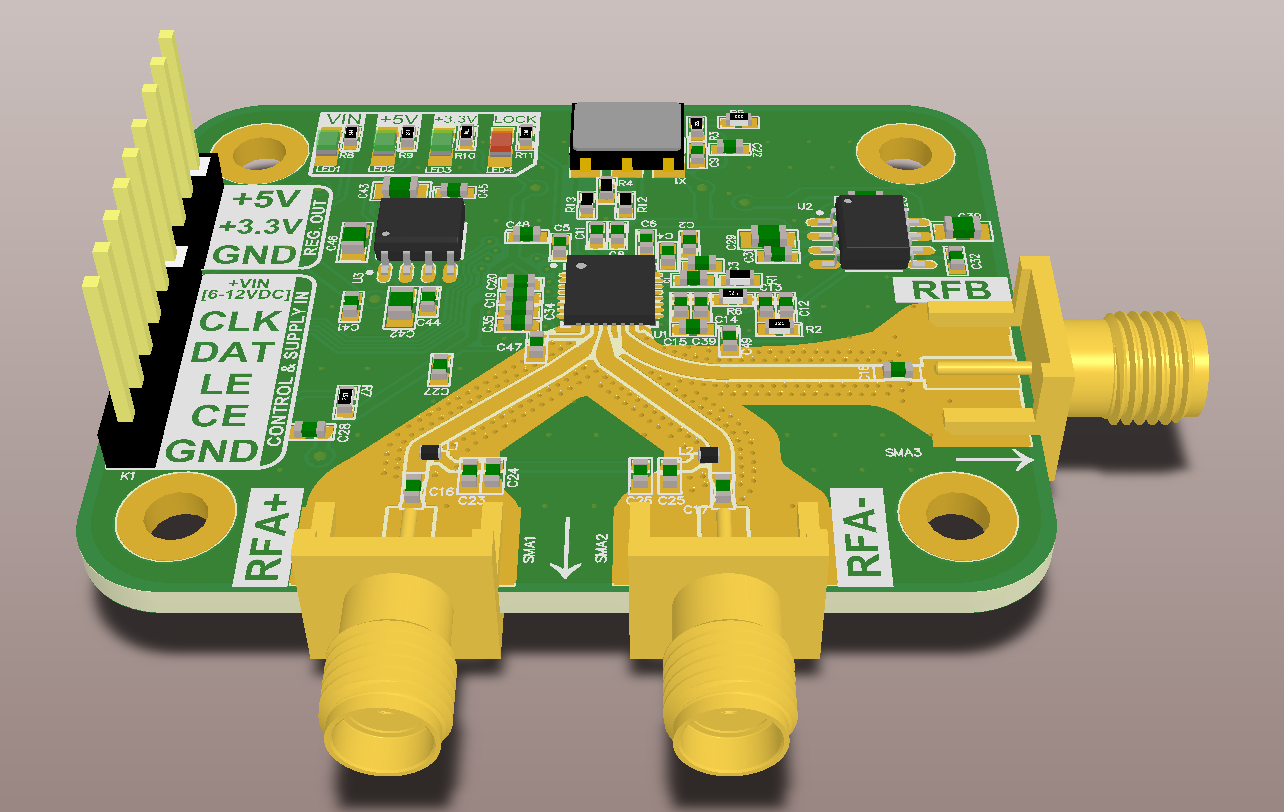
    What Is a Radio Frequency PCB?

    A radio frequency PCB, or RF PCB, refers to a board used to transmit and receive signals at high frequencies—from hundreds of megahertz to multiple gigahertz. These boards are widely used in wireless modules, IoT devices, GPS systems, consumer electronics, radar sensors, and communication infrastructure.

    Unlike standard FR4 boards, RF PCBs involve dedicated dielectric materials, controlled impedance structures, and strict layout rules to keep signal integrity stable. The entire PCB—from stack-up to routing—must support predictable propagation velocity, stable loss characteristics, and smooth energy flow.

    RF PCBs are used in:

    • Wireless modules
    • GPS receivers
    • Sub-GHz transmitters
    • 5G communication units
    • Radar sensors
    • IoT devices
    • RF amplifiers and mixers
    • Antenna feed circuits

    Their performance depends on trace geometry, ground stability, and how cleanly the RF path is designed.

    What Is a Radio Frequency PCB?

    What Is a Radio Frequency PCB?

    Characteristics of an RF PCB

    RF PCBs typically have the following characteristics:

    • Controlled impedance routing for RF signal paths
    • Low-loss PCB materials to minimize attenuation
    • Stable dielectric constant (Dk) over temperature and frequency
    • Strict EMI/EMC requirements
    • Short, direct RF trace routing
    • Careful grounding strategy (dedicated ground plane, stitching vias)
    • Special treatment around matching networks and antenna feeds

    Because RF energy behaves like waves rather than simple electrical current, the PCB becomes part of the RF system itself—meaning the layout, stack-up, and materials must be engineered for high-frequency behavior.

    What Is the Frequency Range of RF PCB?

    RF PCBs typically operate in the following ranges:

    Frequency BandRangeTypical Applications
    Low RF300 MHz – 1 GHzISM band, sub-GHz transmitters
    Mid RF1 GHz – 6 GHzWi-Fi, Bluetooth, GPS
    High RF6 GHz – 30 GHz5G, radar
    Millimeter Wave30 GHz – 80 GHzAutomotive radar, high-speed links

    Most IoT devices today (BLE, WiFi, Zigbee, Sub-GHz RF) fall between 433 MHz – 6 GHz.

    What Is the Best PCB Material for RF?

    Choosing the right laminate affects signal quality, trace accuracy, and overall loss.

    • FR4 PCB Material

    FR PCB material, typically FR4, works for low-frequency RF designs below 2.4 GHz. It offers low cost and good mechanical strength. However, its dielectric properties vary with temperature and frequency. Loss tangent is higher than PTFE, so it works best for short RF paths or low-power consumer wireless modules.

    • Rogers RF Materials

    Rogers laminates such as RO4350B, RO4003C, and RO5880 are widely used for RF designs due to:

    • Low loss tangent
    • Very stable dielectric constant
    • Smooth copper surface
    • High processing consistency

    These materials are ideal for GPS, radar, Wi-Fi 6, UWB, sub-6G, and millimeter-wave applications.

    • PTFE / Teflon Laminates

    PTFE offers excellent RF performance, especially for microwave and radar. It has very low loss and highly stable characteristics. Fabrication needs tight process control due to soft substrate behavior.

    • Ceramic Substrates

    Ceramics substrate provide strong thermal stability and high dielectric precision. They work well in high-power RF amplifiers, satellite communication modules, and advanced radar systems.

    Here is a common radio frequency PCB material table:

    SubstrateTg (°C)Td (°C)DkLoss TangentBand
    FR4~135~295< 4.4~0.022 (parasitic ignored)X–K
    Isola MT402003603.38–3.750.0028–0.0035W
    IS680 AG-3482003603.480.0029W
    IS680 AG2003603.00–3.480.0020–0.0029W
    IS6802003602.80–3.450.0025–0.0035W
    Isola MT772003603.000.0017W
    Rogers 3003NR5003.000.0013W
    Rogers 3006NR5006.150.0022X–Ka
    Rogers 4360>2804076.150.0038X–Ka
    RT Duroid 6010.2LMNR50010.700.0023X–Ka
    RT Duroid 6202NR5002.900.0015X–Ka
    RT Duroid 6006NR5006.450.0027X–Ka
    RT Duroid 6035NRNR3.500.0013X–Ka

    (Note: NR means Not Reported)

    PCB Design Guide for Radio Frequency RF Boards

    Designing RF PCBs involves stack-up planning, controlled impedance, grounding, spacing, matching networks, and EMI reduction. Below are the recommended RF PCB guidelines and routing rules you can apply to achieve stable wireless performance.

    1. Start With Complete RF Design Information

    Successful RF PCB design begins long before the first trace is drawn. Engineers must collect all essential RF parameters to avoid redesigns later. This includes:

    • Functional description and operating frequency band
    • Current and voltage requirements of each RF stage
    • RF component list and package dimensions
    • PA gain, receiver sensitivity, and system isolation targets
    • Planned PCB stack-up structure
    • Controlled impedance values
    • Mechanical constraints and enclosure limits
    • Shielding frame or metal-can dimensions
    • Matching network reference designs
    • Simulation results for power amplifiers and LNAs

    Gathering this information early ensures that layout decisions align with system-level RF performance.

    PCB Design Guide for Radio Frequency RF Boards

    PCB Design Guide for Radio Frequency RF Boards

    2. Physical Zoning of the RF PCB

    Physical zoning organizes the board according to how RF signals flow.

    • RF Signal Flow Placement

    Place RF components in the exact order of the signal chain. A short, direct, and linear path minimizes insertion loss, improves impedance stability, and preserves gain.

    • RF Component Orientation

    Rotate filters, PAs, LNAs, couplers, and mixers so their input/output pins align with the straightest possible RF path. Avoid unnecessary detours or bends.

    • Isolation Through Ground Structures

    To prevent RF coupling and cross-interference, isolate RF sections using:

    • Ground shielding walls
    • Via-fence structures
    • Shield cans over sensitive circuits
    • Copper barriers or partitions

    These structures keep RF and digital noise apart, improving overall stability.

    PCB Design Guide for Radio Frequency RF Boards

    3. Electrical Zoning

    Electrical zoning separates different circuit domains so they cannot interfere with each other.

    • Power section: Power management ICs, regulators
    • Digital control section: MCUs, logic circuits, clocks
    • Analog RF section: LNAs, PAs, filters, mixers, antennas

    These zones should not overlap in routing. Digital switching noise or PLL jitter can easily couple into RF paths if the layout is not properly divided.

    4. RF Transmission Line Structures

    RF PCBs commonly use one of three controlled-impedance transmission line types:

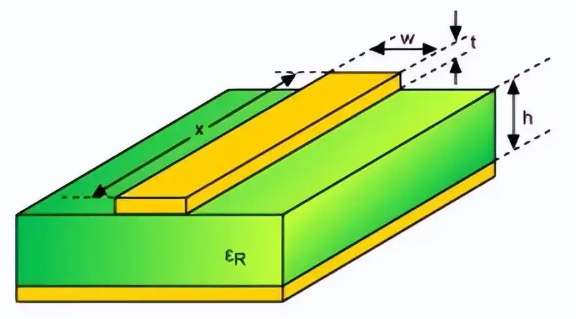
    Microstrip Line

    • RF trace on the top layer
    • Continuous ground plane directly beneath (Layer 2)
    • Impedance determined by trace width and dielectric height
    • Ideal for simple and low-to-mid–frequency RF designs.
    Microstrip Line

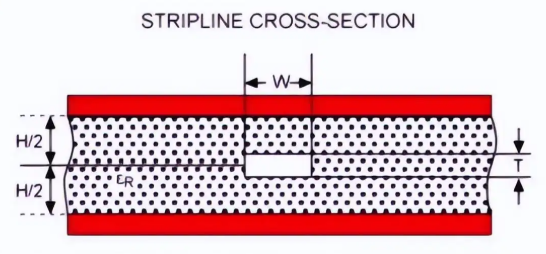
    Stripline

    • RF trace routed on an inner layer
    • Sandwiched between two solid ground planes
    • Provides superior isolation and uniform impedance
    • Useful in compact or high-frequency designs where shielding is critical.
    Stripline

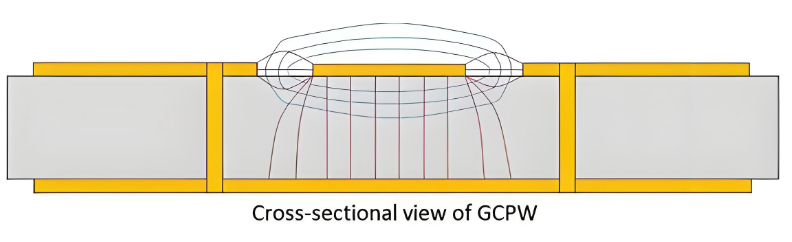
    Grounded Coplanar Waveguide (GCPW)

    • Top-layer trace with ground on both sides
    • Ground plane below the trace
    • Excellent isolation and impedance control
    • Often preferred when space is tight or when multiple RF lines run in parallel.
    Grounded Coplanar Waveguide (GCPW)

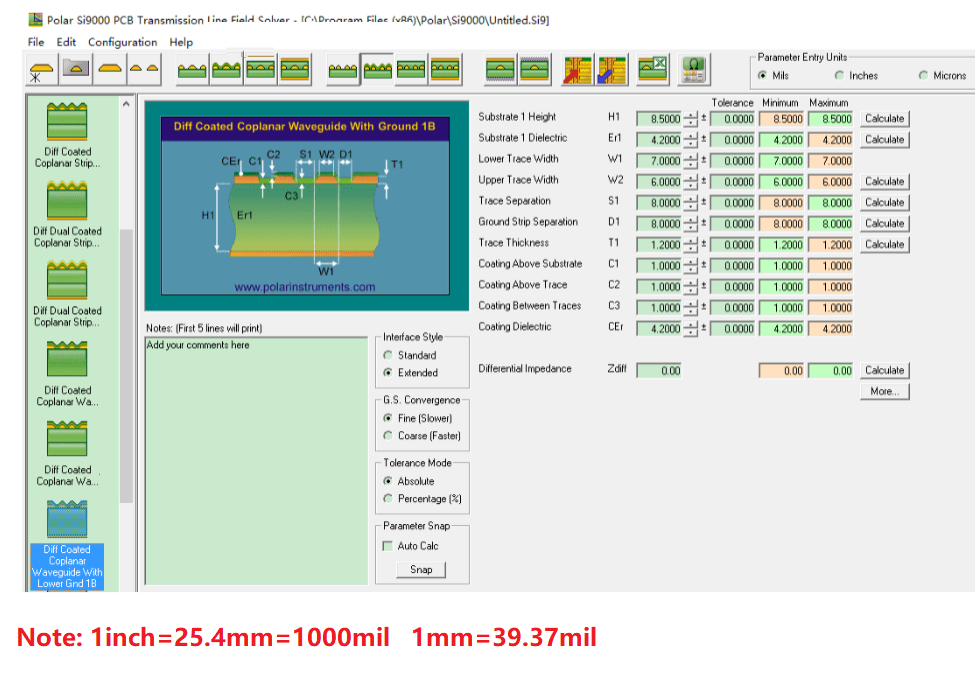
    5. Impedance Selection and Calculation

    Achieving the correct characteristic impedance (typically 50Ω) requires considering:

    • Trace width
    • Copper thickness
    • Dielectric constant (Dk)
    • Dielectric height between layers

    Use tools such as Polar SI9000 or your PCB manufacturer’s impedance calculator.

    Impedance Selection and Calculation

    6. RF Trace Bending Rules

    Straight RF traces are ideal, but bends are sometimes unavoidable.

    Follow these rules:

    • Minimum bend radius ≄ 3× trace width
    • Avoid 90° bends (cause impedance discontinuity)
    • Use 45° bends or smooth arc/bowed shapes
    • Apply mitering to compensate for impedance changes

    For critical RF links, simulate bends in an EM solver to validate performance.

    7. Layer Transitions for RF Traces

    RF traces should stay on one layer. If a layer change is unavoidable:

    • Use two vias at minimum
    • Via diameter should match the RF trace width
    • When space is tight, use three smaller vias in parallel

    Multiple vias reduce via inductance and minimize impedance mismatch.

    8. Signal Isolation Rules

    Isolation is as important as impedance control in RF design.

    a) RF Lines

    • Keep RF traces well separated
    • Avoid long parallel runs
    • Use GCPW for noisy or densely packed areas
    • Keep sensitive microwave lines away from high-power circuits

    b) High-Speed Digital Signals

    • Route digital clocks on different layers
    • Avoid crossing beneath RF paths
    • Switching noise can modulate RF signals if not isolated

    c) Power Lines

    • Use a dedicated power layer for stable distribution
    • Place bypass capacitors close to RF IC power pins
    • Keep power traces away from RF transmission lines

    9. Ground Area Design

    Ground integrity determines the quality of RF performance.

    • Use solid, continuous ground planes
    • Avoid slots, gaps, and return-path interruptions
    • Do not route signals across RF ground regions
    • Add abundant ground stitching vias
    • Reduce inductance in ground loops

    In RF PCB design, a 4-layer RF PCB design is widely considered the most balanced structure for modern wireless modules because it provides stable impedance, strong isolation, and efficient routing without dramatically increasing manufacturing cost. While 2-layer boards are cheaper and 6-layer boards offer more routing space, the 4-layer stack-up delivers the best performance-to-cost ratio for most RF applications under 6 GHz.

    Below is the recommended stack up:

    • Layer 1 (Top Layer): RF traces + components
    • Layer 2 (Ground Plane): Continuous ground reference
    • Layer 3 (Power Plane): Power routing + local shielding below RF areas
    • Layer 4 (Bottom Layer): Non-critical routing or power distribution

    RF PCB Routing Rules You Must Follow

    1. The length of the RF traces should be kept as short as possible, and ensure that the surrounding densely arranged holes are shielded. The intervals should be approximately 50 mils.

    2. RF traces must not have vias, meaning they cannot cross layers. It is preferable to use 135° angle traces or circular traces.

    3. Near the RF traces, there should be no high-frequency signal lines. Pay attention to the UART signal line being shielded by a ground layer, and add ground holes around it for protection.

    4. The RF traces should be as close as possible to the size of the pads.

    5. For the RF traces, matching networks and the area around the antenna socket > 0.8mm, copper cannot be laid; they need to be hollowed out.

    6. The RF traces should be kept as far away from the battery holder as possible, with a distance of at least 5mm or more.

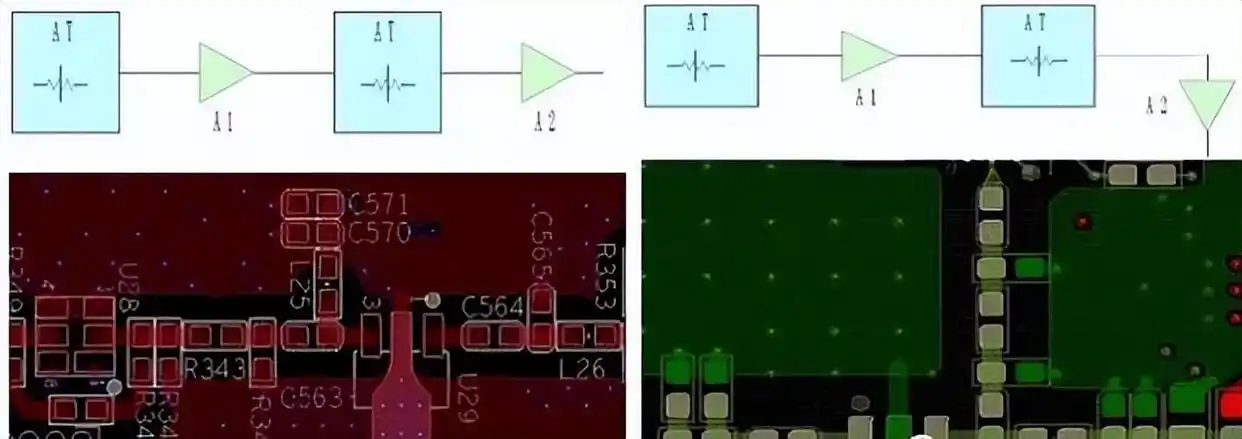
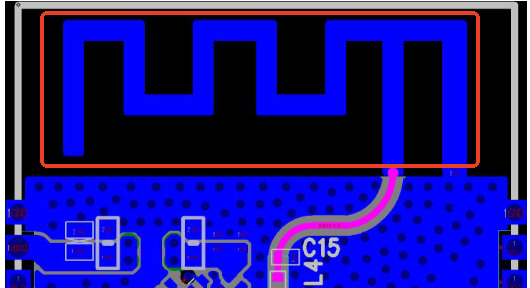
    7. A π-type matching circuit needs to be reserved on the RF path, and this π-type matching circuit should be placed close to the chip end like below diagram show:

    RF PCB Routing Rules You Must Follow

    IPC Standards for Radio Frequency PCB

    The following IPC standards are typically referenced for RF PCB and high-frequency designs:

    • IPC-6018 – Qualification and Performance Specification for High Frequency (Microwave) PCBs
    • IPC-2221/2222 – General & rigid PCB design rules
    • IPC-2141 – Controlled impedance design
    • IPC-TM-650 – Test methods for dielectric materials
    • IPC-4103 – High-frequency base materials

    These standards help ensure reliability, board performance, and manufacturability for RF and microwave applications.

    Your Reliable RF PCB Manufacturer – Best Technology

    Best technology is an experienced RF PCB manufacturer in China, we offer stack-up consultation, material selection, transmission line simulation, and impedance guidance for complex RF modules. Our production lines use SI9000 modeling, fine etching control, and well-controlled lamination parameters. Our radio frequency PCB manufacture capability including:

    • Rogers, SY, Isola, PTFE, and hybrid RF PCB materials
    • Tight-tolerance controlled impedance
    • 4–10 layer high-frequency stack-ups
    • Laser drilling, buried/blind vias
    • Ceramic-filled dielectric PCB options
    • Full DFM & design support for RF modules and antennas

    In addition to this, we offer one-stop PCB & PCBA service covers RF tuning, antenna matching, shielding assembly, coaxial connector installation and final functional RF tests.

    Whether you’re building Bluetooth modules, RF front ends, radar circuitry, or custom antennas, our engineering team ensures high yield and reliable RF performance—helping you bring your wireless product to market faster.

    FAQs about RF PCBs

    1. What materials are recommended for radio frequency PCB?

    Rogers RO4350B, RO4003C, RO5880, PTFE, and high-stability ceramics work best for RF or microwave applications.

    2. Can I use FR4 for RF PCB?

    Yes, if the operating frequency is low and the RF path is short. Many 433 MHz and 2.4 GHz consumer modules still use FR4.

    3. Why should RF traces avoid vias?

    A via adds inductance and disrupts impedance. RF energy prefers a continuous layer.

    4. What routing structure is most common?

    Microstrip and grounded coplanar waveguide are widely used due to predictable impedance.

    5. Does Best Technology support RF PCBA assembly?

    Yes, including antenna tuning, shielding, coaxial connector mounting, and final RF testing.