A 100 ohm resistor is one of the most commonly used passive components in electronic design, widely applied in current limiting, signal conditioning, and PCB impedance-related applications. It provides a balanced resistance value that allows controlled current flow without introducing excessive voltage drop, making it suitable for both analog and digital circuits.
In real engineering practice, a 100 ohm resistor is rarely selected based on value alone. Its performance depends on power rating, tolerance, package size, and placement within the circuit. Understanding these factors helps avoid issues such as overheating, signal distortion, or unstable behavior during PCB assembly and long-term operation.
What is 100 Ohm Resistor?
A 100 ohm resistor is a component with a fixed resistance of 100Ω used to regulate current and control voltage levels in a circuit.
Its behavior follows Ohm’s Law:
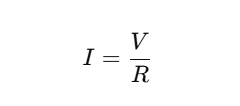
In practical terms:
- At 5V → current ≈ 50mA
- At 12V → current ≈ 120mA
This predictable relationship allows engineers to design circuits with controlled current flow. Compared with lower values (like 10Ω), a 100 ohm resistor provides better protection, while compared with higher values (like 1KΩ), it still allows meaningful current for driving loads such as LEDs or signal lines.
What Does 100 Ohm Resistor Look Like?
A 100 ohm resistor does not have a single fixed appearance. Its physical form depends on the package type and application environment.
The most common types include:
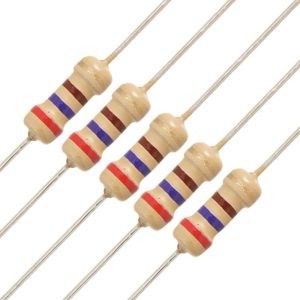
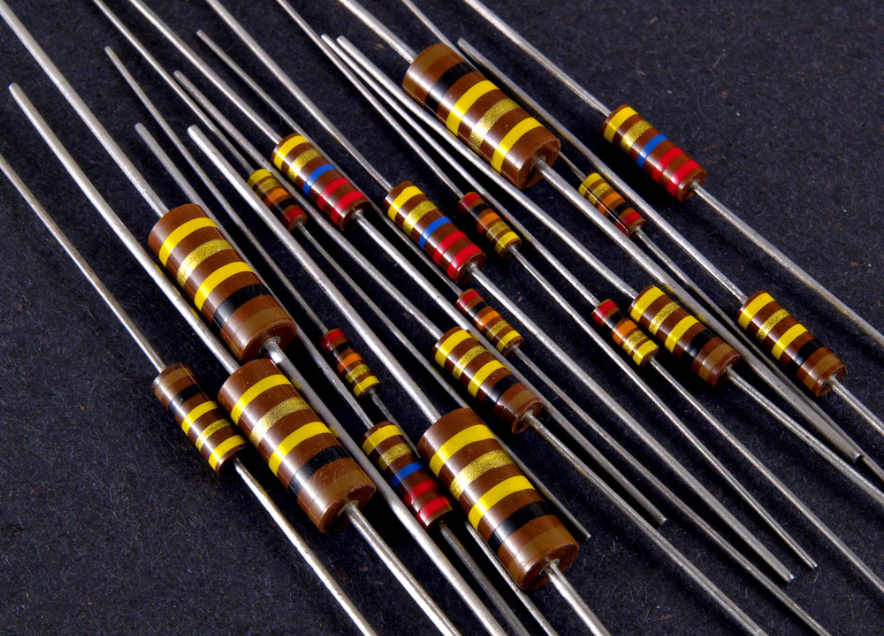
- Through-hole resistors: These have a cylindrical body with two leads. They are easy to handle and often used in prototyping or manual assembly.
- SMD (Surface Mount Device) resistors: These are small rectangular chips placed directly onto the PCB surface. They are widely used in automated production.
- Power resistors: Larger components designed to handle higher heat and energy levels.
For SMD resistors, the marking “101” is the key identifier. This follows a simple code system:
- First two digits: significant figures (10)
- Third digit: multiplier (×10¹)
- Result: 100 ohms
Understanding this marking system helps engineers quickly identify components during debugging or assembly.
100 Ohm Resistor Color Code
The 100 ohm resistor color code is: Brown – Black – Brown – Gold
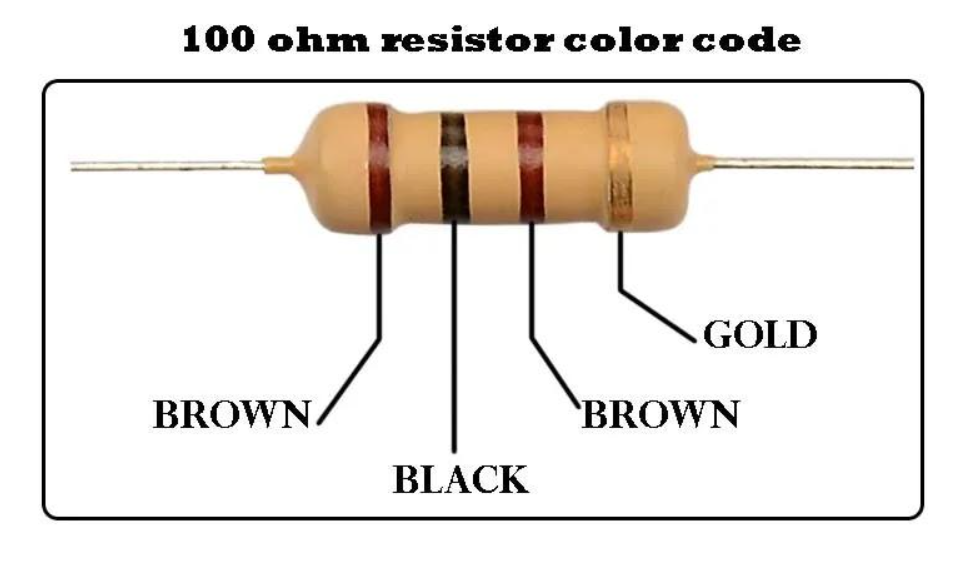
The 100 ohm resistor color code is one of the easiest to recognize once you understand the band system.
For a standard 4-band resistor:
| Band | Meaning |
|---|---|
| Brown | 1 |
| Black | 0 |
| Brown | ×10 |
| Gold | ±5% |
- Band 1 (first digit): Brown = 1
- Band 2 (second digit): Black = 0
- Band 3 (multiplier): Brown = ×10
- Band 4 (tolerance): Gold = ±5%
This gives:
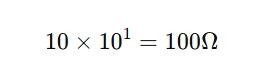
For higher precision designs, 5-band resistors are used:
- Brown – Black – Black – Black – Brown → ±1%
In practical PCB production, color codes are mainly used for quick identification, while exact values are controlled through BOM and part numbers.
How to Identify 100 Ohm Resistor?
Identifying a 100 ohm resistor can be done quickly with a structured approach. Engineers usually rely on both visual and electrical verification.
Here is a simple method:
- Step 1: Check the color bands or SMD code
Look for brown-black-brown or “101” marking - Step 2: Use a multimeter
Measure resistance to confirm it is close to 100Ω - Step 3: Cross-check with BOM
Ensure it matches the circuit design
In a manufacturing environment like EBest Circuit, this process is automated using AOI and testing systems. These tools detect incorrect components early, reducing the risk of assembly errors.
For field engineers or technicians, a handheld multimeter remains the most reliable verification tool.
How Does a 100 Ohm Resistor Work in a Circuit?
A 100 ohm resistor operates based on fundamental electrical laws. It restricts current flow and creates predictable voltage drops.
V = IR
This equation explains the relationship between voltage (V), current (I), and resistance (R).
In a real circuit:
- When voltage increases, current increases proportionally
- The resistor limits how much current can pass
- It converts electrical energy into heat
Typical roles of a 100 ohm resistor include:
- Limiting current to protect components
- Stabilizing signal levels
- Matching impedance in transmission lines
For example, in differential signaling such as Ethernet, a 100 ohm resistor is often used for impedance matching. This helps maintain signal integrity and reduces reflection.
What is the Power Rating of a 100 Ohm Resistor?
The power rating defines how much energy a resistor can safely dissipate. Choosing the correct rating is critical for reliability.
Common ratings include:
- 0.125W (1/8 watt)
- 0.25W (1/4 watt)
- 0.5W (1/2 watt)
- 1W and above
Power can be calculated using:
- P = V² / R
- P = I² × R
For example, if 5V is applied:
- P = 25 / 100 = 0.25W
This means a resistor rated above 0.25W should be selected for safe operation.
In professional PCB assembly, thermal design is carefully evaluated. At EBest Circuit, engineers consider copper area, airflow, and placement to prevent overheating.
What is the Conductance of a 100 Ohm Resistor?
Conductance is the inverse of resistance and shows how easily current flows through a component.
G = 1 / R
For a 100 ohm resistor:
- G = 1 / 100 = 0.01 siemens
This value indicates moderate conductivity, making it suitable for controlled current applications.
What is a 100 Ohm Resistor Used For?
A 100 ohm resistor is widely used because of its versatility and stability.
Typical applications include:
- LED current limiting
- Signal termination in communication circuits
- Voltage divider networks
- Pull-up and pull-down resistors
- Sensor signal conditioning
In real-world PCBA projects, this resistor appears in:
- Industrial control systems
- Automotive electronics
- RF modules
- Consumer electronics
At EBest Circuit, these resistors are often integrated into high-reliability designs where consistency and traceability are required.
How to Choose the Right 100 Ohm Resistor for a Project?
Selecting the right 100 ohm resistor involves more than just resistance value. Several factors must be considered to ensure proper performance.
Key selection criteria:
Power rating
Choose a rating higher than calculated power
Tolerance
±1% for precision circuits, ±5% for general use
Package type
SMD for automation, through-hole for manual assembly
Temperature coefficient
Important for stable performance in varying environments
Application requirements
Automotive or aerospace applications need higher reliability standards
In advanced manufacturing, EBest Circuit provides BOM optimization and DFM support. This helps engineers select the most suitable components for both performance and cost.
100 Ohm Resistor Equivalent
If a 100 ohm resistor is not available, equivalent resistance can be achieved using combinations.
| Configuration | Example | Result |
|---|---|---|
| Series | 47Ω + 53Ω | 100Ω |
| Parallel | 200Ω || 200Ω | 100Ω |
| Mixed | Custom network | 100Ω |
This flexibility is useful during prototyping or when dealing with supply shortages.
What Happens If I use a Higher Ohm Resistor?
Using a higher resistance value changes how the circuit behaves.
Typical effects include:
- Reduced current flow
- Increased voltage drop
- Lower signal strength
In LED circuits, brightness decreases. In signal circuits, performance may shift away from design targets.
While the circuit may still function, results are not optimal. Engineers usually test such changes before finalizing a design.
What is the Difference Between 100 Ohm and 1K Ohm Resistor?
The difference between 100 ohm and 1K ohm resistors is significant and affects circuit behavior.
| Parameter | 100 Ohm Resistor | 1K Ohm Resistor |
|---|---|---|
| Resistance | 100Ω | 1000Ω |
| Current flow | Higher | Lower |
| Voltage drop | Lower | Higher |
| Typical use | Signal control, termination | Biasing, current limiting |
A 1K resistor restricts current ten times more than a 100 ohm resistor. This makes it suitable for different design purposes.
FAQs
1. What is the color code for a 100 ohm resistor?
The standard 4-band color code is brown, black, brown, gold. This means the first two digits are 1 and 0, the multiplier is ×10, and the tolerance is ±5%. In precision versions, a 5-band code may also be used.
2. What does 101 mean on a resistor?
The SMD code 101 means 100 ohms. The first two digits are 10, and the last digit means multiply by 10¹, which gives 100Ω. This is one of the most common printed codes on chip resistors.
3. Is 100 ohm a standard resistor value?
Yes, 100 ohms is a standard resistor value found in common resistor series such as E12, E24, and higher-precision families. It is widely available in through-hole and surface-mount formats from nearly all mainstream component suppliers.
4. Can I replace a 100 ohm resistor with another value?
You can, but the circuit behavior will change. In some non-critical designs, a nearby value may still work acceptably. In precision analog, timing, or impedance-sensitive circuits, even a small value change can alter performance enough to matter.
5. What tolerance should I choose for a 100 ohm resistor?
For general-purpose applications, ±5% is often acceptable. For analog accuracy, filtering consistency, sensor conditioning, or tighter control of circuit response, ±1% is usually the better choice. The correct tolerance depends on how sensitive the circuit is to resistance variation.
Summary
A 100 ohm resistor is a reliable and widely used component in modern electronics. It offers stable current control, simple identification, and flexible application across many circuit types.
By understanding its color code, working principle, power rating, and selection criteria, engineers can use it effectively in both simple and complex designs. Whether used for signal integrity or current limiting, it remains a practical choice in PCB development.
If you are working on PCB or PCBA projects and need expert support, EBest Circuit (Best Technology) can assist with design optimization, component sourcing, and assembly services.
For inquiries or technical support, contact:
📧 sales@bestpcbs.com