PCB manufacturing PCB manufacturing
Home > Blog

High Power RF Amplifier Circuit

High Power RF Amplifier Circuit | Digital MES Smart Factory
Tuesday, March 10th, 2026

High Power RF Amplifier Circuits​ are the critical, final-stage components that transform low-power radio frequency signals into powerful, broadcast-ready waves, forming the backbone of modern wireless communication, radar, and industrial systems. This comprehensive guide delves into the intricacies of RF high power amplifier circuit design, exploring its working principles, key components like GaN and LDMOS transistors, the critical role of impedance matching, material selection (including advanced PCB substrates), and its wide-ranging applications, all through the lens of precision manufacturing enabled by a Digital MES Smart Factory.

Designing a reliable rf high power amplifier circuit​ is fraught with engineering and manufacturing challenges that can derail performance and project timelines. What are the most common pain points engineers face when moving from design to mass production?

  • Thermal Runaway:​ Inconsistent heat dissipation leads to performance drift and catastrophic device failure.
  • Impedance Mismatch:​ Poor board-level matching causes signal reflections, reducing output power and efficiency.
  • Parasitic Oscillations:​ Unwanted circuit resonances at high frequencies lead to instability and spurious emissions.
  • Material Inconsistency:​ Variability in PCB laminate dielectric constant (Dk) disrupts precise RF performance.
  • Manufacturing Bottlenecks:​ Prototyping delays and a lack of production visibility increase time-to-market and cost.

The path to a stable, high-yield amplifier lies in partnering with a manufacturer whose expertise and processes are built for RF complexity. The solution integrates advanced engineering support with a transparent, data-driven production system.

  • Advanced Thermal Management:​ Implementation of sophisticated thermal simulations, strategic via patterns, and direct bonding to metal-core or ceramic substrates to ensure stable thermal performance.
  • Impedance-Controlled Fabrication:​ Utilizing precise simulation models and tightly controlled manufacturing processes to achieve the target characteristic impedance across the entire board and assembly.
  • Stability-Centric Layout:​ Expert PCB layout that minimizes parasitic inductance/capacitance and incorporates stabilization networks to prevent oscillations across the entire band.
  • High-Frequency Material Mastery:​ Guiding material selection from standard FR-4 to specialized Rogers laminates, ensuring consistent Dk and low loss tangent for predictable performance.
  • Digital MES Smart Factory Flow:​ Leveraging a fully integrated Manufacturing Execution System for real-time tracking, automated process control, and rapid prototyping, slashing lead times.

At the heart of this solution-oriented approach is EBest Circuit (Best Technology), a professional PCBA manufacturer specializing in high-frequency and high-reliability electronics. Our expertise is uniquely amplified by our Digital MES Smart Factory, which provides unparalleled traceability, process consistency, and agility from prototyping to volume production. We bridge the gap between complex RF design and manufacturable reality. For your next project, contact our engineering sales team at sales@bestpcbs.com.
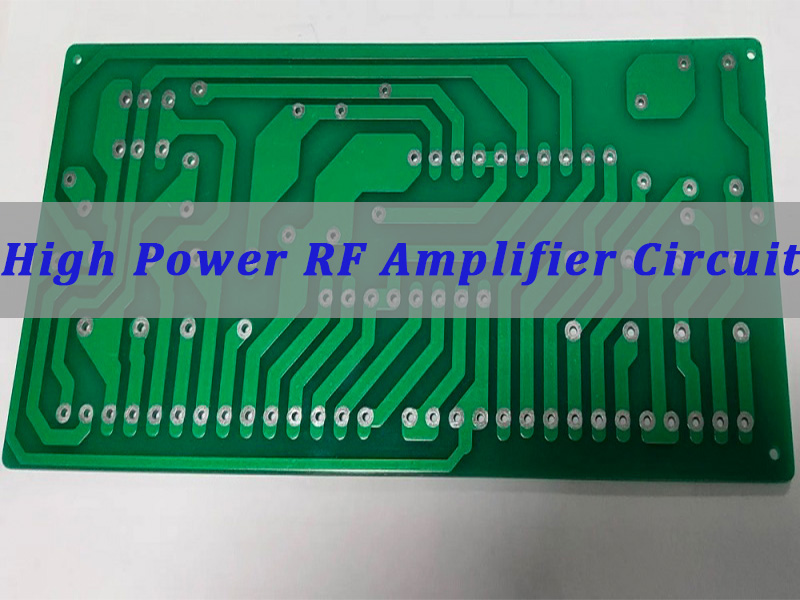
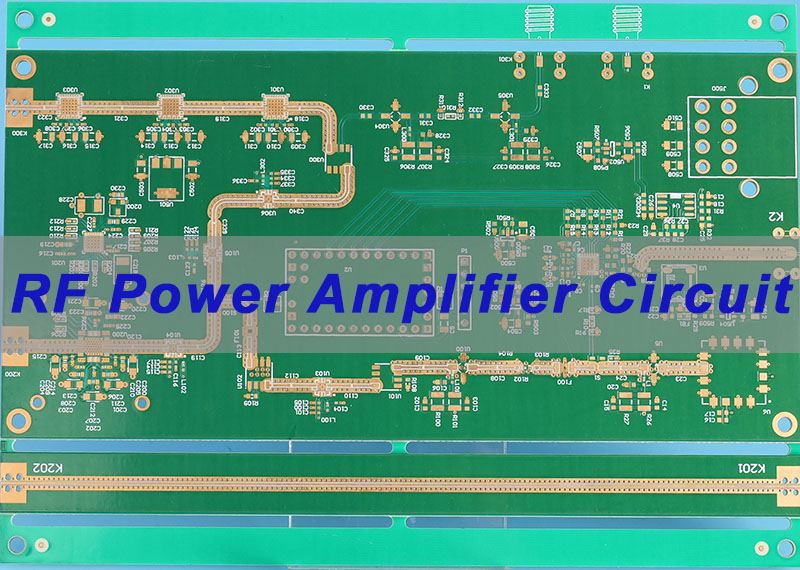
High Power RF Amplifier Circuit

What Is A High Power RF Amplifier Circuit And How Does It Work?

A High Power RF Amplifier Circuit is an electronic assembly designed to significantly increase the power level of a Radio Frequency (RF) input signal while maintaining its signal integrity (minimizing distortion). It acts as the final powerhouse in a transmitter chain, converting DC power from a supply into amplified RF energy suitable for radiation through an antenna.

The core operation revolves around an active semiconductor device (transistor) operating in its nonlinear region. Here’s a breakdown of the working principle:

  1. RF Input Stage:​ A low-power RF signal is fed into the amplifier’s input port.
  2. Biasing Network:​ A DC bias circuit sets the transistor’s operating point (e.g., Class A, AB, B, C) which determines the trade-off between linearity and efficiency.
  3. Power Amplification:​ The input RF signal modulates the DC current flowing through the transistor. The transistor, acting as a controlled current source, produces a high-current replica of the input signal at its output.
  4. Impedance Matching Networks:​ Critical input and output matching networks ensure maximum power transfer from the source to the transistor and from the transistor to the load (antenna). They also transform impedances for optimal transistor performance.
  5. Filtering & Output:​ Harmonic filters may be used to clean the output signal before it is delivered to the load, ensuring compliance with spectral regulations.

In essence, the circuit’s design meticulously controls the transistor’s behavior to efficiently “pump” energy into the RF signal, making a rf high power amplifier circuit​ fundamental for any application requiring significant wireless transmission power.
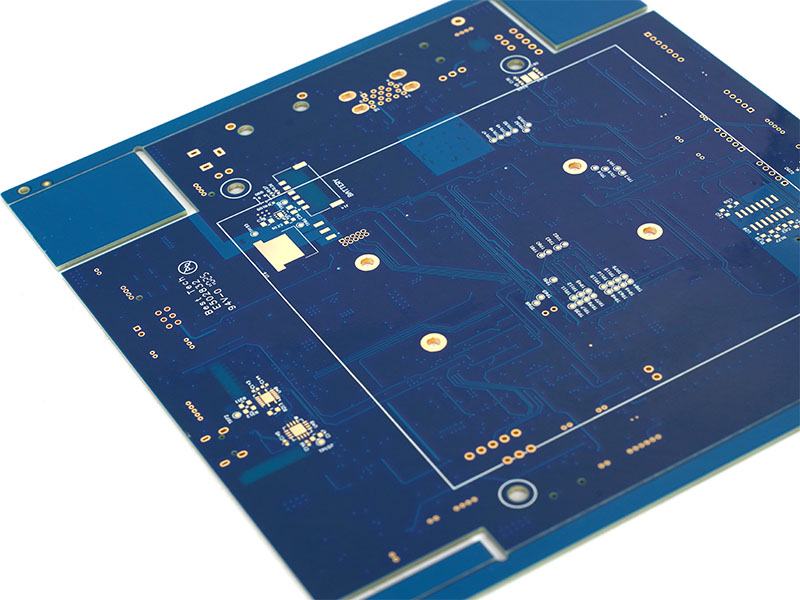
How Is A RF High Power Amplifier Circuit Designed For Stable Output Power?

Achieving stable output power in an RF high power amplifier circuit​ requires a multi-faceted design strategy that goes beyond simple gain. Stability means consistent performance across frequency, temperature, supply voltage variations, and over time, without unwanted oscillations.

The design process focuses on several key pillars:

  • Stability Analysis:​ Engineers use stability factors (like Rollett’s K-factor) derived from S-parameters to ensure the amplifier is unconditionally stable (will not oscillate) for all source and load impedances. This often involves adding stabilization resistors or networks.
  • Load-Pull Characterization:​ This is critical for power amplifiers. Instead of designing for maximum gain, designers use load-pull contours to find the optimal load impedance that delivers the best compromise of output power, efficiency, and linearity for the specific transistor.
  • Robust Biasing:​ The DC bias network must be designed to prevent low-frequency oscillations and maintain the operating point against temperature drift. Active bias circuits with temperature compensation are often used in high-power applications.
  • Thermal Design Integration:​ Electrical design is inseparable from thermal design. The PCB layout must facilitate efficient heat conduction from the transistor die to the heatsink, using thermal vias, exposed pads, and appropriate substrate materials.
  • Advanced Simulation:​ Modern EDA tools allow for co-simulation of electromagnetic (EM) effects (of the PCB traces and matching networks) with nonlinear transistor models, predicting real-world performance and stability margins before fabrication.
Design FocusGoalCommon Technique
Frequency StabilityPrevent oscillation at any frequency.Stabilization resistors, RC networks.
Thermal StabilityMaintain performance as temperature rises.Thermal simulation, robust heatsinking.
Load StabilityTolerate antenna impedance variations (VSWR).Use of isolators or designing for ruggedness.

Therefore, designing for stability is a proactive process of modeling, simulating, and validating all potential failure modes, ensuring the high power rf amplifier circuit​ performs reliably under real-world, variable conditions.

What Components Are Commonly Used In A High Power RF Amplifier Circuit?

The performance of a high power rf amplifier circuit​ is dictated by the careful selection and integration of its core components. Each part plays a specific role in signal integrity, power handling, and efficiency.

  • 1. Power Transistor:​ The heart of the amplifier. Technology choice is paramount:
    • GaN (Gallium Nitride):​ The premier choice for new designs, offering very high power density, efficiency, and operational bandwidth at high frequencies.
    • LDMOS (Laterally Diffused Metal Oxide Semiconductor):​ Dominant in high-power, narrow-to-medium band applications like cellular infrastructure, known for robustness and high gain.
    • GaAs (Gallium Arsenide):​ Common in high-frequency, medium-power applications.
  • 2. PCB Substrate / Laminate:​ The foundation. It must have stable electrical properties and excellent thermal conductivity.
    • Rogers RO4000® Series:​ A industry standard for high-frequency, offering low loss and stable dielectric constant.
    • PTFE-based Laminates:​ Extremely low loss, used in critical aerospace and defense applications.
    • Metal-Clad/IMS:​ For extreme thermal management, where the substrate is a thermally conductive dielectric bonded to an aluminum base.
    • Ceramic Substrates (Al₂O₃, AlN):​ Used in high-reliability and high-power-density modules for their superb thermal and RF properties.
  • 3. Passive Components:
    • RF Inductors & Capacitors:​ Used in matching, biasing, and DC blocking networks. Must be high-Q, low ESR, and rated for RF currents.
    • Resistors:​ For biasing, stabilization, and termination. Must be non-inductive and thermally stable.
    • Ferrite Beads & Chip Filters:​ Used for decoupling and suppressing low-frequency or power supply noise.
  • 4. Supporting Elements:
    • Heat Sink / Thermal Interface Material:​ Essential for dissipating heat from the transistor package to the environment.
    • RF Connectors:​ (e.g., SMA, N-Type) to interface the amplifier board with external systems. Must be high-quality to minimize loss and VSWR.
    • Bias Tee / Regulator:​ Provides clean, stable DC power to the transistor, often with sequencing and protection features.

Selecting the right combination of these components, tailored to the frequency, bandwidth, and power targets, is the first critical step in realizing a successful amplifier design.

How Does Impedance Matching Affect A High Power RF Amplifier Circuit?

Impedance matching is not merely an optimization step; it is a fundamental requirement for the efficient and predictable operation of a high power rf amplifier circuit. Its primary goal is to maximize the transfer of power from the source to the transistor and from the transistor to the load, while also setting the conditions for the transistor to deliver its designed performance.

The effects of proper and improper impedance matching are profound:

  • Maximizes Power Transfer:​ The maximum power transfer theorem states that maximum power is delivered when the load impedance is the complex conjugate of the source impedance. Matching networks perform this transformation, ensuring the RF power generated by the transistor is delivered to the antenna, not reflected back.
  • Optimizes Transistor Performance:​ A power transistor is designed to deliver specified power, efficiency, and linearity into a specific load impedance (typically 50Ω, but the optimum impedance for the transistor itself is rarely 50Ω). The output matching network transforms the 50Ω system impedance to this optimal load-pull impedance.
  • Prevents Signal Reflections & Standing Waves:​ Mismatch causes a portion of the forward power to be reflected back towards the source. This creates standing waves on the transmission lines, leading to:
    • Reduced Output Power:​ Useful radiated power is decreased.
    • Increased VSWR:​ Voltage Standing Wave Ratio rises, stressing components.
    • Gain Ripple & Bandwidth Reduction:​ Frequency response becomes uneven.
    • Device Damage:​ Reflected power is dissipated as heat in the transistor, potentially causing thermal overload and failure.
  • Ensures Stability:​ A mismatched load can reflect energy back into the transistor at a phase and amplitude that causes it to oscillate, even if it is stable under 50Ω conditions. Good matching, combined with stability networks, prevents this.

In summary, impedance matching directly dictates the efficiency, output power, linearity, bandwidth, and reliability​ of the amplifier. It is the critical “glue” that allows the high-performance transistor and the rest of the RF system to work in harmony.

What Materials And PCB Types Are Used For A RF High Power Amplifier Circuit?

The choice of Printed Circuit Board (PCB) material and construction type is a decisive factor in the performance, cost, and reliability of a rf high power amplifier circuit. The core challenge is balancing electrical performance (low loss, stable Dk) with thermal management and mechanical constraints.

Material / PCB TypeKey PropertiesBest Use Case in RF PA
Standard FR-4Low cost, good mechanical strength. High loss, unstable Dk with freq/temp.Low-frequency (< 1 GHz), low-power, cost-sensitive prototypes.
High-Frequency Laminates​ (e.g., Rogers RO4350B®)Stable Dk, low loss tangent, consistent performance.Mainstream high power rf amplifier circuit​ for cellular, aerospace (2-6 GHz).
PTFE-based Laminates​ (e.g., Rogers RT/duroid®)Extremely low loss, excellent high-frequency performance. Costly, difficult to process.Critical mmWave, defense, and satellite applications.
Metal-Clad (Insulated Metal Substrate – IMS)Excellent thermal conductivity. Electrical performance varies.High-power LED drivers, RF power stages where thermal management is paramount.
Ceramic Substrates​ (Al₂O₃, AlN)Excellent thermal conductivity, high frequency capability, hermetic. High cost, brittle.Microwave Integrated Circuits (MICs), high-power density modules, aerospace.
Thick Film / LTCCAllows embedding of passive components, good high-frequency performance.Highly integrated, miniaturized multi-function modules (MMICs).

PCB Construction Considerations:

  • Layer Count:​ Simple power amplifiers may be 2-layer. More complex designs with integrated control logic use 4 or more layers, dedicating inner layers to ground planes for shielding and low-inductance returns.
  • Copper Weight:​ Heavy copper (2oz, 3oz) is used on power and RF paths to reduce resistive loss and improve current carrying capacity and thermal dissipation.
  • Surface Finish:​ Electroless Nickel Immersion Gold (ENIG) is standard for its flat surface (good for soldering fine-pitch components), solderability, and wire-bondability.

Selecting the right material involves a trade-off analysis between frequency, power level, thermal load, reliability requirements, and budget, and is one of the first critical decisions in the amplifier’s physical realization.

What Are The Main Applications Of A High Power RF Amplifier Circuit?

High Power RF Amplifier Circuits​ are enabling technologies across a vast spectrum of industries that require the generation of powerful RF signals. Their applications are diverse and critical to modern infrastructure.

  • 1. Telecommunications & Cellular Infrastructure:​ This is the largest market. PAs are the core of every macrocell, small cell, and massive MIMO antenna in 4G/LTE and 5G networks, amplifying signals for user equipment over wide areas.
  • 2. Aerospace, Defense & Radar:​ Used in radar systems for air traffic control, weather monitoring, and military surveillance (ground-based, naval, airborne). They provide the high-power pulses needed for long-range detection and targeting. Also used in electronic warfare (EW) and satellite communications.
  • 3. Industrial, Scientific & Medical (ISM):
    • Industrial Heating & Plasma Generation:​ For RF heating, welding, and plasma generation in semiconductor manufacturing (etching, deposition).
    • Medical:​ In Magnetic Resonance Imaging (MRI) systems to generate the RF pulses that excite nuclear spins, and in therapeutic devices for tissue ablation.
  • 4. Broadcasting:​ In FM radio and television transmission towers, high-power PAs broadcast signals over large geographic regions to receivers.
  • 5. Research & Scientific Instruments:​ Used in particle accelerators, plasma physics research, and advanced spectroscopy equipment that require high RF field strengths.

From connecting our smartphones to guiding aircraft and advancing scientific discovery, the rf high power amplifier circuit​ is a fundamental building block of the wireless world, translating digital information into powerful physical signals that permeate our environment.

Why Should Engineers Choose EBest Circuit (Best Technology) For A RF High Power Amplifier Circuit PCB?

Developing a successful high power rf amplifier circuit​ requires more than just a PCB fabricator; it demands a manufacturing partner with deep high-frequency expertise and a process built for predictability and speed. Here’s why EBest Circuit (Best Technology) is the ideal partner:

  • High-Frequency Specialization:​ We are not a generic PCB shop. Our engineering team understands the nuances of RF design—impedance control, loss minimization, and layout for stability—ensuring your design intent is faithfully translated into a physical board.
  • Material Expertise & Sourcing:​ We provide expert guidance on material selection, from cost-effective FR-4 hybrids to high-performance Rogers and ceramic substrates. We have reliable supply chains for specialized laminates, preventing project delays.
  • Precision, Impedance-Controlled Fabrication:​ Our manufacturing process is calibrated for high-frequency boards, offering tight tolerances on trace width/spacing (±10% or better on impedance) and precise dielectric thickness control, which is non-negotiable for predictable RF performance.
  • Integrated Thermal Management Solutions:​ We expertly manufacture Metal-Clad PCBs (IMS) and can integrate complex thermal vias and heatsinking recommendations directly into the board design, tackling the primary challenge of high-power RF.
  • Speed & Transparency via Digital MES Smart Factory:​ This is our key differentiator. Our Digital Manufacturing Execution System provides:
    • Rapid Prototyping:​ Streamlined workflows get your prototypes built faster.
    • Real-Time Tracking:​ Monitor your board’s status at every production stage.
    • Process Consistency:​ Automated controls ensure every batch meets the same high standard.
    • Data-Driven Insights:​ Access manufacturing data for continuous improvement of your design.

Choosing EBest Circuit means partnering with a team that speaks the language of RF power amplification, backed by a smart, agile manufacturing system designed to turn complex designs into reliable, high-yield products efficiently.
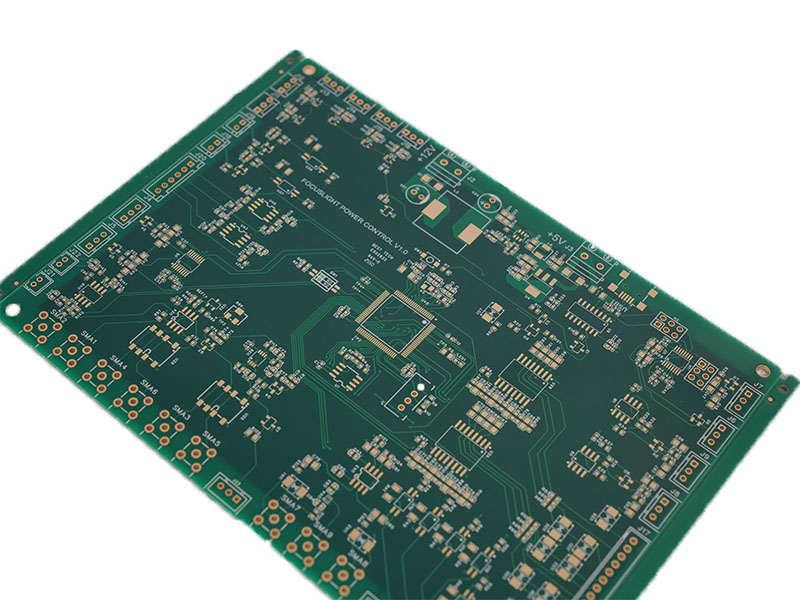
High Power RF Amplifier Circuit

Conclusion

High Power RF Amplifier Circuits​ are the indispensable engines that drive powerful wireless signals, critical to communications, radar, and industrial systems. This article has explored their core principles, design for stability, key components, the vital role of impedance matching, suitable materials, and diverse applications.

Navigating the journey from a schematic to a stable, high-performance amplifier board requires specialized knowledge and manufacturing precision. EBest Circuit (Best Technology) combines deep expertise in high-frequency and thermal management with the agility and transparency of a Digital MES Smart Factory, ensuring your most demanding rf high power amplifier circuit​ designs are realized with reliability and speed. Let us power your next innovation. Contact our team today at sales@bestpcbs.com​ to discuss your project requirements.

Precision RF Power Amplifier Circuit Design & Assembly
Monday, January 5th, 2026

An RF power amplifier circuit is the critical engine that boosts weak radio frequency signals to power levels sufficient for transmission through antennas, forming the backbone of all wireless communication. This comprehensive guide delves into the principles of precision RF power amplifier circuit design and assembly, exploring core concepts from basic topologies to advanced 5G applications, and outlining the PCB manufacturing considerations essential for optimal performance and reliability.

For RF design engineers, developing a high-performance RF power amplifier circuit​ is often a formidable challenge. What are the most common hurdles they face?

  • Achieving Target Efficiency & Linear Output:​ Balancing high power-added efficiency (PAE) with stringent linearity requirements across the desired bandwidth, often leading to iterative, time-consuming design cycles.
  • Ensuring Thermal & Signal Stability:​ Managing heat dissipation from high-power RF transistors and preventing unwanted oscillations or performance drift, which can cause system failure.
  • Navigating Complex PCB Materials & Stack-ups:​ Selecting the right high-frequency laminate (e.g., Rogers, ceramic-filled) and designing a stack-up that minimizes loss and supports effective grounding, often without in-house fabrication expertise.
  • Integrating Precise Biasing & Control Circuits:​ Designing a stable bias circuit for RF power amplifiers​ that ensures consistent quiescent point operation over temperature and aging, critical for both linear and saturated amplifiers.
  • Transitioning from Schematic to Reliable Physical Assembly:​ Accurately translating an RF power amplifier circuit diagram​ into a manufacturable layout while managing impedance, parasitics, and ensuring robust PCB and PCBA​ assembly for field reliability.

The path from a conceptual RF power amplifier circuit design​ to a stable, high-yield product requires a partnership with a fabrication expert. Here is how a specialist provider addresses these core challenges:

  • Co-Design for Performance:​ Leveraging simulation-driven design support to help optimize matching networks and layout for target efficiency, linearity, and bandwidth from the outset.
  • Thermal & EMI-Optimized Platforms:​ Offering advanced materials like ceramic PCBs (AlN, Al₂O₃) and thermally enhanced FR4, alongside design rules for thermal vias and shielding, to ensure stability.
  • Material Science & Engineering Guidance:​ Providing expert consultation on RF-suitable dielectrics (Dk, Df), copper roughness, and stack-up configuration to meet electrical performance goals.
  • Integrated Passive & Bias Solutions:​ Enabling the fabrication of precision embedded resistors and stable DC feed networks as part of the PCB to simplify the RF power amplifier bias circuit.
  • Precision High-Frequency Manufacturing:​ Utilizing controlled impedance routing, advanced plating, and stringent assembly processes (e.g., for MOSFET RF power amplifier circuits) to ensure the built circuit matches the designed performance.

At EBest Circuit (Best Technology), we specialize in turning complex RF designs into reliable RF products. As a professional manufacturer of high-frequency PCBs and ceramic PCB​ substrates, we provide a seamless, one-stop service from engineering support and prototype fabrication to full turnkey assembly. Our expertise ensures your precision RF power amplifier circuit​ is built on a foundation optimized for signal integrity, thermal management, and long-term durability. For your next RF power amplifier circuits project, pls feel free to contact our team at sales@bestpcbs.com.

RF Power Amplifier Circuit

What Is RF Power Amplifier Circuit and How Does It Work in RF Systems?

An RF Power Amplifier (PA) circuit is a specialized electronic circuit designed to increase the power level of a radio frequency signal before it is delivered to an antenna for radiation. Its core function is to take a low-power RF input signal, typically from an oscillator or upconverter, and amplify it to a level sufficient for transmission over a required distance, while maintaining signal fidelity as defined by system requirements such as linearity, bandwidth, and efficiency.

The operation of an RF power amplifier in a circuit​ can be distilled into a few key stages and principles:

  • Input Matching Network:​ This block (often an input tank circuit) maximizes power transfer from the signal source (e.g., driver stage) to the active device (transistor) by transforming impedance, reducing reflections.
  • Active Amplification Device:​ The core where power amplification occurs. This can be a BJT​ (for Class C BJT RF power amplifier circuit), a MOSFET​ (for MOSFET RF power amplifier circuit), or GaAs/GaN HEMTs for higher frequencies and powers.
  • Bias Network:​ Provides the proper DC operating point (quiescent current/voltage) to the transistor. The design of this bias circuit for RF power amplifiers​ is crucial for setting the amplifier class (A, AB, B, C) and ensuring stability.
  • Output Matching Network:​ Transforms the high-impedance output of the transistor down to the standard load impedance (e.g., 50Ω). It also filters harmonics and ensures maximum power is delivered to the antenna.
  • Power Supply & Conditioning:​ Delivers stable, clean DC power. For RF power amplifier circuits with AGC, additional control loops are integrated to dynamically adjust gain.

In essence, the RF power amplifier circuit​ acts as the final, powerful “voice” of an RF transmitter, determining the effective range and signal quality of the entire system, from a simple RF power amplifier circuit​ in an FM transmitter to a complex 5G RF power amplifier circuit.

RF Power Amplifier Circuit

What Are the Core Design Principles of RF Power Amplifier Circuit Design?

RF power amplifier circuit design​ is governed by a set of competing requirements that must be carefully balanced. The goal is to meet target specifications for frequency, bandwidth, output power, gain, efficiency, and linearity, all while ensuring stability and manufacturability. Precision in this process separates a functional prototype from a robust, high-yield product.

The core principles revolve around managing trade-offs:

Design PrincipleKey GoalPrimary Trade-Off / Challenge
Impedance MatchingMax Power Transfer, Low VSWRBandwidth vs. Complexity
LinearityLow Distortion (ACLR)Linearity vs. PAE
Efficiency (PAE, η)Minimize DC Waste, Reduce HeatInverses Linearity
Stability (K>1)Unconditional StabilityStability vs. Gain
Gain & BandwidthTarget Gain over Required BWGain-Bandwidth Product
Thermal ManagementJunction Temperature ControlPower Density vs. Cooling

A practical RF power amplifier circuit design 27MHz NPN​ for citizen-band radio will prioritize efficiency (often using Class C) and simplicity. In contrast, a wideband RF power amplifier circuit​ for a vector signal analyzer must maintain flat gain and good linearity over a multi-octave bandwidth, often employing feedback or distributed amplification techniques. Understanding these principles is the first step in any RF power amplifier design tutorial circuit​ and is essential whether aiming for a low power RF amplifier circuit​ or a 100W RF power amplifier mini circuit.

Why Is Bias Circuit for RF Power Amplifiers Critical for Stability and Performance?

The bias circuit for RF power amplifiers​ is far more than a simple DC feed; it is a critical control system that sets the fundamental operating mode of the transistor and profoundly impacts nearly all aspects of performance, reliability, and stability. An imprecise or unstable bias point can lead to degraded efficiency, distorted output, thermal runaway, or even catastrophic device failure.

A well-designed bias network addresses several key requirements:

  • Establishes Amplifier Class:​ It sets the quiescent current (IQ). Zero IQdefines Class B/C, a small IQdefines Class AB, and a large IQdefines Class A. This choice directly dictates the efficiency-linearity trade-off.
  • Ensures Thermal Stability:​ Uses techniques like emitter/source degeneration resistors or proportional-to-absolute-temperature (PTAT) bias generators to prevent thermal runaway, where increasing temperature causes current to increase uncontrollably.
  • Suppresses Low-Frequency Oscillation:​ Includes RF chokes and bypass capacitors to isolate the RF signal from the DC supply, preventing unwanted feedback paths that can cause oscillation at very low frequencies.
  • Maintains Performance Over Temperature & Batch Variation:​ Active bias circuits with feedback can compensate for the negative temperature coefficient of a transistor’s turn-on voltage (VBEor VGS(th)), keeping gain and output power consistent.
  • Enables Control & Protection:​ Can integrate circuits for RF power amplifier protection​ (overcurrent, over-temperature) or facilitate dynamic control like AGC (Automatic Gain Control).

For example, a Class C RF power amplifier circuit​ uses a negative or zero bias to achieve high efficiency (>70%) but is highly nonlinear, suitable only for constant-envelope modulation. Conversely, a RF linear power amplifier circuit​ for 5G requires a precise Class-AB bias to operate in its linear region, making the bias circuit’s stability paramount to maintain low EVM and ACLR. In a MOSFET RF power amplifier circuit, gate bias voltage must be tightly controlled, as a small drift can cause a large shift in drain current and linearity.

How to Read an RF Power Amplifier Circuit Diagram and Understand Its Blocks?

An RF power amplifier circuit diagram​ is the roadmap from which a physical circuit is built. Learning to interpret it is essential for design, troubleshooting, and assembly. While details vary, most diagrams for a discrete RF power amplifier circuit PA​ (Power Amplifier) can be broken down into functional blocks.

A typical block-level breakdown of a circuit diagram of RF power amplifier​ includes:

  • DC Power Input & Decoupling:​ Shows the VCC/VDDconnection and an array of capacitors (bulk, ceramic, RF) to ground. This network provides stable DC and shunts any RF on the supply line to ground.
  • Input Matching Network (IMN):​ A network of inductors (L), capacitors (C), and sometimes transmission lines located between the input connector and the transistor’s base/gate. Its goal is to present the optimal impedance (often the complex conjugate of S11) to the transistor for maximum power transfer at the fundamental frequency.
  • Active Transistor & Bias Network:​ The centerpiece (Q1 or M1). The bias circuit​ is shown connected to the base/gate (and sometimes emitter/source). It may consist of voltage dividers, current mirrors, or active regulator circuits supplying the critical DC bias voltage/current.
  • Output Matching Network (OMN):​ Located between the transistor’s collector/drain and the output connector. It transforms the device’s optimal load impedance (for max. power or efficiency) down to 50Ω and often acts as a low-pass filter to attenuate harmonic frequencies generated by the nonlinear transistor.
  • Load (Antenna) & Isolation:​ The output port, often with a directional coupler or isolator/circulator symbol to denote protection from load mismatches.

Reading a diagram for a VHF RF power amplifier circuit​ versus a UHF RF power amplifier circuit​ will show different component values and layout notations due to the wavelength difference. A simple RF power amplifier circuit​ may combine bias and matching into minimal components, while a high power RF amplifier circuit​ diagram will prominently feature thermal pads, balancing resistors for power combining, and robust supply traces. Understanding these blocks allows you to analyze any design, from a FM transmitter circuit with RF power amplifier stage​ to a sophisticated RF power amplifier integrated circuit​ evaluation board schematic.

What Is the Difference Between Simple RF Power Amplifier Circuit and High Power RF Amplifier Circuit?

The distinction between a simple RF power amplifier circuit​ and a high power RF amplifier circuit​ extends far beyond the output power rating. It represents a fundamental shift in design complexity, component selection, and required supporting infrastructure to manage the challenges of high power density.

The differences are multifaceted:

AspectSimple / Low Power RF PAHigh Power RF PA
Primary GoalGain, Functionality, CostEfficiency, Linearity, Reliability
Active DeviceSmall-signal BJT/MOSFET (SMD)Power LDMOS/GaN/GaAs (Flange/Ceramic)
Bias CircuitSimple resistive dividerActive, compensated bias
Matching NetworkLumped L/C, simpleHybrid lumped/distributed, harmonic tuning
Thermal Mgmt.Passive (PCB/heatsink)Active cooling, Ceramic PCB/Metal-clad
Power SupplyStandard regulatorHigh-current, low-noise, sequenced
StabilityBasic isolationFull protection circuits, isolators
ArchitectureSingle-endedPower-combined, Push-Pull

A 5W RF power amplifier circuit​ for a handheld radio exemplifies a mid-range design, needing careful layout but not extreme cooling. A 100W RF power amplifier mini circuit​ is an engineering feat, pushing the limits of power density. The RF power amplifier circuit design​ for such high-power applications is inseparable from the PCB and PCBA​ strategy, mandating materials with high thermal conductivity (like alumina ceramic) and sophisticated assembly processes to handle the immense thermal and electrical stresses.

How Does a Class C RF Power Amplifier Circuit Operate in RF Applications?

A Class C RF power amplifier circuit​ is designed for maximum possible efficiency by biasing the active transistor significantly below its cutoff point. The transistor conducts current for less than half​ of the input RF cycle, producing a highly distorted, pulsed output current that is rich in harmonics. A tuned output tank circuit​ (resonant at the fundamental frequency) filters out these harmonics, reconstructing a sinusoidal waveform at the output.

Key Operational Characteristics:

  • Bias Point:​ The base/gate is biased negatively (for BJTs) or below threshold (for MOSFETs), ensuring the device is off​ with no input signal.
  • Conduction Angle:​ Typically 120° to 180°, but often much less. Efficiency (η) is theoretically given by: η = (θ – sinθ) / (4(sin(θ/2) – (θ/2)cos(θ/2)))**​ where θ is the conduction angle. Lower angle = higher efficiency (>70% possible).
  • High Nonlinearity:​ The amplified output is not a linear reproduction of the input. This makes Class C unsuitable for amplitude-based modulations (AM, QAM).

Common RF Applications:

  • Constant-Envelope Transmitters:​ Ideal for FM transmitter circuits​ and FM transmitter circuit with RF power amplifier stage, where information is in frequency/phase shifts, not amplitude.
  • RF Heating & Plasma Generation:​ Where pure CW or pulsed RF power is needed, as in industrial Transculpt RF power amplifier circuit schematics 1MHz.
  • Some AM Transmitters:​ Can be used in AM RF power amplifier circuit​ designs with high-level plate/collector AM modulation, though less common today.
  • RFRFPA designing a input tank circuit AMFONE:​ In vintage or hobbyist tube-based designs, Class C is frequently employed for its efficiency.

While a Class-C RF power amplifier circuit​ offers superb efficiency, its use in modern spectrum-conscious, high-data-rate systems is limited. It cannot be used for modern digital modulations like OFDM (used in 4G/5G) which have high peak-to-average power ratios (PAPR) and require linear amplification. Therefore, while foundational in RF amplifier circuit​ history and still valuable for specific apps, it has largely been supplanted by linearized Class-AB or Doherty architectures in mainstream communications.

Where Are 5G RF Power Amplifier Circuit and Wideband RF Power Amplifier Circuit Used Today?

Modern wireless systems demand amplifiers that are not only powerful and efficient but also capable of handling wide bandwidths and complex signals. The 5G RF power amplifier circuit​ and the wideband RF power amplifier circuit​ are two specialized answers to these demands, finding critical roles in next-generation infrastructure and test equipment.

5G RF Power Amplifier Circuit Applications:

  • Massive MIMO Active Antenna Units (AAUs):​ Each antenna element in a 5G base station array is driven by its own PA module. These PAs must be highly linear to support high-order QAM (256QAM, 1024QAM) and wide bandwidths (up to 400MHz in n79 band), all while maintaining excellent efficiency to reduce power consumption and heat.
  • 5G User Equipment (Smartphones, CPEs):​ RF power amplifier integrated circuits​ (PAMiDs) in phones must cover a vast range of 5G sub-6 GHz and mmWave bands, requiring multi-band, multi-mode operation with advanced envelope tracking (ET) for battery life.
  • Small Cells & Repeaters:​ Deployed for network densification, these use PAs with lower output power but stringent linearity and efficiency requirements.

Wideband RF Power Amplifier Circuit Applications:

  • Electronic Warfare (EW) & SIGINT Systems:​ Jamming and surveillance platforms require amplifiers that can operate across very wide instantaneous bandwidths (multiple octaves) to cover diverse threat frequencies.
  • Test & Measurement Equipment:​ Vector signal generators, network analyzers, and wideband signal analyzers use linear wideband PAs in their signal paths to provide flat gain and high output power across their entire frequency range (e.g., 9 kHz to 6 GHz or more).
  • Multi-Standard and SDR Base Stations:​ Software-defined radios benefit from wideband PAs that can be reconfigured for different services (2G/3G/4G/5G, WiFi) without hardware changes.
  • CATV/Broadband Distribution:​ Coaxial cable networks use wideband PAs to amplify dozens of TV and data channels simultaneously.

The design of these circuits pushes the limits of semiconductor technology (using GaN-on-SiC for high power and bandwidth) and RF power amplifier circuit design, often employing techniques like feedback, distributed amplification (traveling-wave), or balanced structures to achieve the necessary performance across a broad spectrum, from a VHF​ to UHF RF power amplifier circuit​ range and beyond.

What PCB and PCBA Factors Affect the Reliability of an RF Power Amplifier Circuit?

The reliability of an RF power amplifier circuit​ is not determined solely by its schematic design; it is equally dependent on the physical implementation—the PCB and PCBA. For a precision, high-power RF design, the substrate material, layout, fabrication quality, and assembly process are non-negotiable elements of performance.

Critical PCB/PCBA Factors for RFPA Reliability:

  • Dielectric Material (Laminate):​ Standard FR-4 has high loss tangent (Df) at RF frequencies, causing signal loss and heat generation. Reliable RF PAs​ use low-loss laminates (Rogers, Taconic) or ceramic PCBs​ (Al₂O₃, AlN) for superior thermal conductivity and stable dielectric constant (Dk).
  • Controlled Impedance & Layout:​ Microstrip traces must be precisely calculated and fabricated to maintain 50Ω impedance. Poor control leads to mismatches, reflected power, gain ripple, and potential instability. Grounding via fences and a solid ground plane are essential.
  • Thermal Design:​ The PCB itself is a heatsink. Use of thermal vias under power device pads, thick copper planes (2oz+), and direct bonding to metal cores or ceramic substrates are vital to transfer heat from the transistor junction. This is the single biggest factor in high power RF amplifier circuit​ longevity.
  • Component Selection & Placement:​ RF components (capacitors, inductors) must have high self-resonant frequencies (SRF) and appropriate power ratings. Placement must minimize parasitic inductance in high-current paths (like the drain/collector supply). Decoupling capacitors must be placed for optimal high-frequency performance.
  • Assembly Process Quality:​ Solder joint integrity is critical. Voids under a power transistor’s thermal pad can cause catastrophic overheating. Precise solder paste application and reflow profiling are mandatory. For MOSFET RF power amplifier circuits, ESD protection during handling is crucial.

A failure in any of these areas can lead to degraded output power, increased noise, intermittent operation, or thermal runaway. Partnering with a PCB/PCBA​ provider like Best Technology, which understands these RF power amplifier circuits’ unique needs—from material selection to precision RF power amplifier circuit​ assembly—is fundamental to transitioning a great design into a reliable, field-deployable product.

RF Power Amplifier Circuit

To sum up, RF power amplifier circuits​ are the indispensable force multipliers in the wireless world, determining the reach, clarity, and efficiency of every transmitted signal. This guide has explored their core principles, from interpreting a basic RF power amplifier circuit diagram​ to the advanced demands of 5G​ and wideband​ designs, and underscored the critical role of precision PCB and PCBA​ in achieving reliable performance.

Success in precision RF power amplifier circuit design & assembly​ requires a synergy of expert electrical design and masterful physical implementation. This is where EBest Circuit (Best Technology)​ provides decisive value. We combine engineering support for high-frequency design with advanced manufacturing capabilities for low-loss RF laminates and high-thermal-conductivity ceramic PCBs. Our controlled impedance fabrication and rigorous assembly processes ensure your design performs as intended, from prototype through volume production. Ready to amplify your next RF project with precision? Pls feel free to contact our engineering sales team anytime at sales@bestpcbs.com.