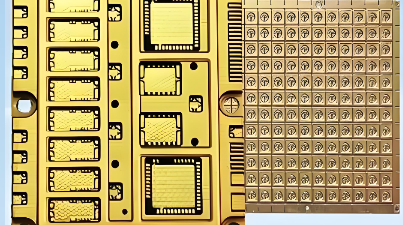
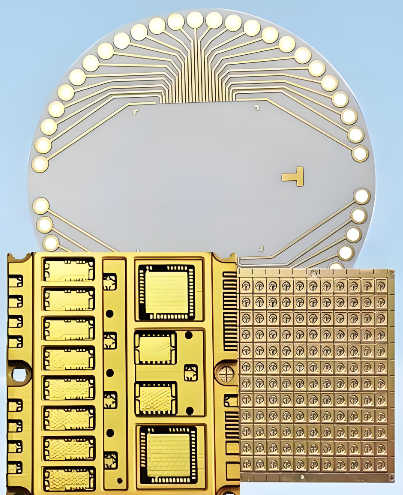
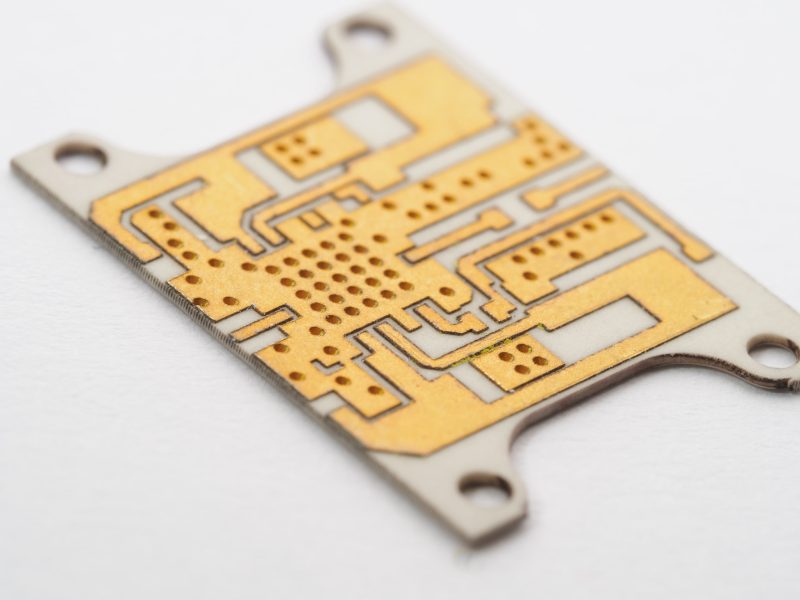
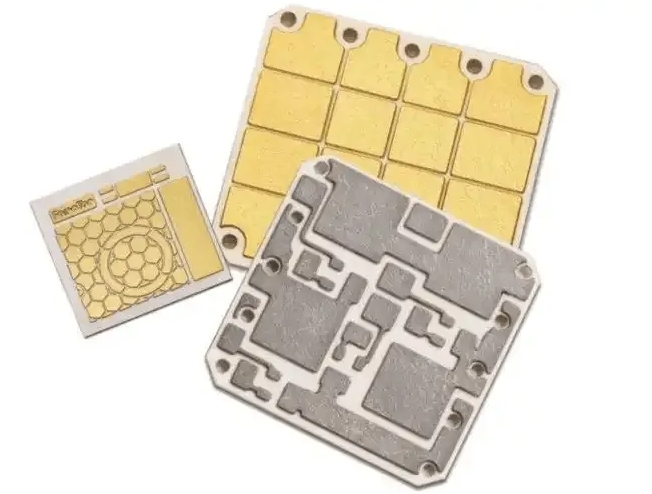
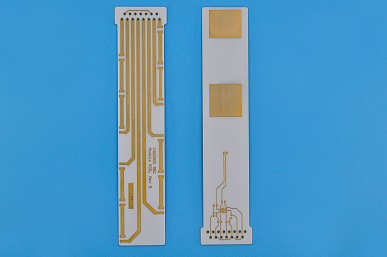
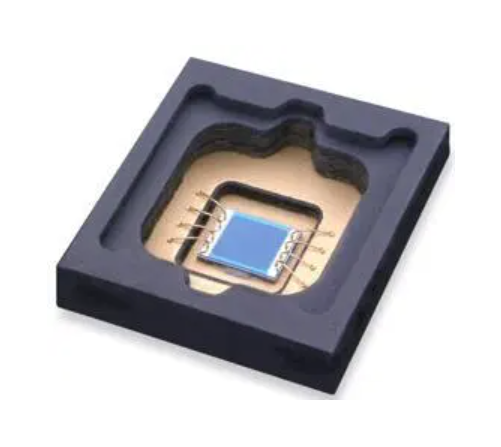
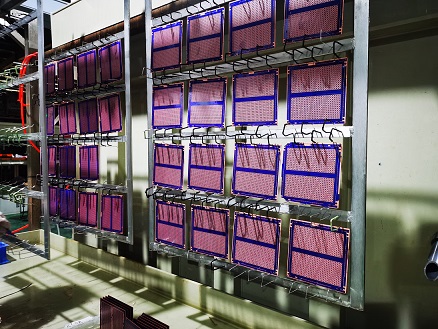
DPC (Direct Plated Copper) technology denotes a special process in which the copper foil and the Al2O3 or AlN (one or both sides) are directly plated under appropriate high temperature.
The super-thin DPC substrate has excellent electrical isolation, high thermal conductivity, fine solderability and high bonding strength. It can be etched like normal FR4 PCB, but has a high current loading capability. Therefore DPC ceramic PCB has become the base materials of construction and interconnection technology of high power semiconductor electronic circuits and also have been the basis for the “Chip On Board” (COB) technology which represent the packaging trend in the future.
Why Choose DPC Ceramic PCB?
DPC ceramic PCB is widely used in high-performance electronic packaging because it provides several practical advantages:
Excellent electrical insulation
High thermal conductivity
Fine line and fine spacing capability
Strong copper bonding strength
Good solderability for advanced packaging
High current carrying capacity
Suitable for miniaturized and high-density circuit designs
Another important benefit is that DPC ceramic PCB can be processed in a way similar to standard PCB etching, which gives engineers more design flexibility while maintaining the thermal and mechanical strengths of ceramic materials.
DPC Ceramic PCB
Typical Applications of DPC Ceramic PCB
Because of its structure and performance, DPC ceramic PCB is often used in:
High power semiconductor modules
LED packaging
RF and microwave devices
Automotive electronics
Power control systems
Laser devices
Medical electronics
Chip on Board (COB) packaging
DPC technology has become an important foundation for modern COB packaging and advanced electronic interconnection, especially in products where heat management and circuit precision are both critical.
Available DPC Ceramic PCB Samples
Below are some of our DPC ceramic PCB product examples for reference, you can visit the portal as below to see more product photos:
Please contact us today for more information about Ceramic circuit board (Ceramic PCB).
Learn More About Our Ceramic PCB Solutions
We offer a wide range of DPC ceramic circuit boards for customers who need reliable thermal management, precise copper patterns, and stable performance in demanding environments. You are welcome to review our product portal for more sample photos and specifications.
Contact us today to learn more about our ceramic PCB manufacturing capabilities and get support for your project.
Why Choose EBest for Your Ceramic Substrate PCB Needs?
EBest stands as your premier choice forCeramic Substrate PCB manufacturing and prototyping. We deliver unmatched lead times, rigorous quality control, industry-leading certifications, and comprehensive support throughout your project. Our commitment to excellence ensures your Ceramic Substrate PCB projects are completed efficiently, reliably, and to the highest standards.
Fast Delivery: Industry-leading turnaround times for prototypes and mass production, meeting your critical project deadlines.
Superior Quality: Precision manufacturing with zero-defect tolerance, ensuring optimal performance and long-term reliability.
Certified Excellence: Compliant with ISO 9001, IPC-A-600, and other international quality and safety standards.
Expert Support: A dedicated engineering team provides end-to-end technical assistance, from design to delivery.
What is a Ceramic Substrate PCB?
A Ceramic Substrate PCB is a specialized printed circuit board that uses ceramic materials (such as alumina Al₂O₃, aluminum nitride AlN, or silicon nitride Si₃N₄) as its base insulating layer instead of traditional organic materials like FR-4. These boards are engineered to excel in high-temperature, high-power, and high-frequency electronic applications where standard PCBs fail. The ceramic substrate provides exceptional thermal conductivity, electrical insulation, and mechanical stability, making it indispensable for modern, demanding electronics.
Ceramic Substrate PCB
Ceramic Substrate PCB Stackup
Layer
Material
Thickness (Typical)
Function
Top Copper
Electrodeposited Copper
1–5 oz (35–175 μm)
Conductive traces, pads, and planes
Ceramic Core
Alumina (Al₂O₃) / Aluminum Nitride (AlN)
0.25–2.0 mm
Insulation, thermal management, structural support
Bottom Copper
Electrodeposited Copper
1–5 oz (35–175 μm)
Conductive traces, pads, and planes
Surface Finish
ENIG / Immersion Silver / OSP
0.05–0.5 μm
Protect copper, improve solderability
Note: Multilayer ceramic substrate PCBs (LTCC/HTCC) feature alternating ceramic and conductive layers, typically up to 10–20 layers for high-density integration.
Ceramic Substrate PCB Manufacturing Process
Step 1: Ceramic Substrate Preparation
High-purity ceramic powders (Al₂O₃, AlN) are pressed into green sheets, precisely cut to size, and sintered at ultra-high temperatures (1,600–1,800°C) to form dense, rigid substrates with consistent material properties.
Step 2: Metallization & Circuit Patterning
Copper is bonded to the ceramic surface using advanced processes:
DBC (Direct Bonded Copper): Copper foil is fusion-bonded to ceramic at ~1,065°C.
DPC (Direct Plated Copper): Copper is electroplated onto a sputtered seed layer for fine-line precision.
Photolithography and etching define the circuit pattern, creating high-resolution traces and pads.
Step 3: Via Formation & Plating
Micro-vias are created using laser drilling for precision. The via walls are metallized through electroplating to establish vertical electrical connections between layers, critical for thermal and signal paths.
Step 4: Surface Treatment & Finishing
The board undergoes surface finishing (ENIG, immersion silver, etc.) to protect the copper circuitry and ensure reliable solderability during component assembly.
Step 5: Testing & Quality Assurance
Each Ceramic Substrate PCB undergoes rigorous electrical testing (continuity, insulation resistance), thermal cycling, and visual inspection to guarantee compliance with specifications and performance standards.
Ceramic Substrate PCB Design Guide
Designing a Ceramic Substrate PCB requires specialized knowledge to overcome inherent material challenges. Key pain points include material brittleness, CTE mismatch with components, thermal management, and fine-line manufacturing constraints. EBest’s engineering team provides expert guidance to navigate these challenges and optimize your design for success.
Key Design Considerations & Solutions
Material Compatibility & CTE Matching
Pain Point: A significant CTE mismatch between ceramic (5–7 ppm/°C) and silicon (4.5 ppm/°C) causes thermal stress, leading to solder joint fatigue and substrate cracking.
Solution: Select AlN (CTE ~4.5 ppm/°C) for silicon-based high-power devices. Use compliant materials and underfill in assembly to absorb stress.
Thermal Management Optimization
Pain Point: Inefficient heat dissipation leads to hotspots and component failure in high-power designs.
Solution: Maximize copper thickness in power paths, integrate thermal vias, and use large copper planes for heat spreading. AlN substrates offer 8–10x higher thermal conductivity than alumina.
Mechanical Stress & Fragility
Pain Point: Ceramic brittleness causes chipping and cracking during handling, assembly, or thermal cycling.
Solution: Avoid sharp corners; use rounded geometries. Design generous tolerances (+/–0.1 mm) and avoid V-cuts. Use robust panelization with thick connecting tabs.
Fine-Line & High-Density Design
Pain Point: Achieving fine line widths/spacing (<50 μm) is challenging with standard processes.
Solution: Utilize DPC technology for line widths down to 15 μm. Collaborate with EBest early for DFM analysis to ensure design manufacturability.
For flawless Ceramic Substrate PCB design, partner with EBest. Our experts provide complimentary DFM reviews and design optimization to ensure your project is built for performance and reliability.
Prototyping Ceramic Substrate PCBs presents unique hurdles: long lead times, high costs, and difficulty in achieving consistent quality with low volumes. EBest specializes in rapid, high-quality Ceramic Substrate PCB prototyping, eliminating these barriers and accelerating your product development cycle.
Prototype Challenges & Our Solutions
Long Lead Times for Custom Prototypes
Challenge: Traditional ceramic PCB prototyping can take weeks, delaying product validation.
Solution: EBest offers rapid prototype services with industry-leading turnaround times, getting your boards in hand quickly.
High Cost for Low-Volume Runs
Challenge: High tooling and setup costs make small-batch prototyping prohibitively expensive.
Solution: We maintain flexible manufacturing lines optimized for low-volume, high-mix production, keeping prototype costs competitive.
Inconsistent Prototype Quality
Challenge: Achieving the same material and process quality in prototypes as in mass production is difficult.
Solution: Our prototypes use the exact same materials and production processes as full-scale manufacturing, ensuring reliable performance data.
Limited Design Iteration
Challenge: Cost and time constraints limit the number of design iterations possible.
Solution: Our efficient prototyping process allows for multiple design iterations, enabling you to refine and perfect your design before full production.
Trust EBest for your Ceramic Substrate PCB prototyping needs. We deliver fast, affordable, and production-quality prototypes to validate your design and accelerate your time-to-market.
How to Choose Ceramic Substrate PCB Raw Materials
Selecting the right ceramic material is critical for balancing performance, cost, and application suitability. The table below compares the most common materials:
Material
Thermal Conductivity (W/m·K)
CTE (ppm/°C)
Dielectric Constant (εr)
Key Applications
Alumina (96% Al₂O₃)
20–25
~7.0
9.5
Consumer electronics, industrial control, LED lighting
Ceramic Substrate PCBs are the backbone of high-performance electronics across critical industries, enabling innovation where thermal, electrical, and reliability demands are extreme.
Automotive Electronics
Ceramic Substrate PCBs are essential in electric vehicle (EV) powertrains, including IGBT modules, on-board chargers (OBC), and LED headlight drivers. They withstand extreme under-hood temperatures (-40°C to 150°C) and provide superior thermal management for high-voltage, high-power systems.
Communication & 5G Infrastructure
In 5G base stations, RF power amplifiers, and microwave systems, Ceramic Substrate PCBs (especially AlN) offer low dielectric loss and excellent thermal stability, ensuring signal integrity and efficient heat dissipation for high-frequency, high-power operation.
Industrial Automation & Power Electronics
Used in variable-frequency drives (VFDs), servo controls, and power supplies, these boards handle high power densities and harsh industrial environments. Their excellent thermal conductivity and mechanical strength ensure reliable operation in continuous-duty applications.
Medical Devices
Ceramic Substrate PCBs are used in precision medical equipment like ultrasound systems, patient monitors, and surgical lasers. They offer biocompatibility, high electrical insulation, and the ability to withstand repeated sterilization cycles, meeting strict medical device standards.
What Are the Key Advantages of Ceramic Substrate PCB Over FR4?
Ceramic Substrate PCBs offer transformative advantages over traditional FR-4 PCBs, particularly in high-performance applications. Key benefits include:
Superior Thermal Conductivity: Up to 1,000x higher than FR-4, enabling efficient heat dissipation.
Excellent Electrical Insulation: High dielectric strength prevents short circuits in high-voltage applications.
Extreme Temperature Resistance: Operates reliably from -50°C to over 350°C.
Mechanical Stability: High rigidity and resistance to warping under thermal stress.
Chemical Inertness: Resistant to most chemicals, ideal for harsh environments.
How Does Thermal Conductivity Impact Ceramic Substrate PCB Performance?
Thermal conductivity is the defining performance metric for Ceramic Substrate PCBs. It directly determines the board’s ability to dissipate heat generated by power components. Higher thermal conductivity (e.g., AlN at 200 W/m·K vs. alumina at 25 W/m·K) allows for:
Higher power density designs in smaller form factors.
Lower component operating temperatures, significantly increasing reliability and lifespan.
Elimination of bulky heat sinks, enabling more compact and efficient product designs.
What Are the Common Failure Modes in Ceramic Substrate PCBs?
The primary failure modes stem from thermal and mechanical stress:
Thermal Fatigue: CTE mismatch causes cyclic stress, leading to solder joint cracking or substrate delamination.
Mechanical Fracture: Brittleness leads to cracking from shock, vibration, or improper handling.
Metallization Degradation: Oxidation or poor adhesion of the copper layer causes open circuits.
Thermal Runaway: Inadequate heat dissipation leads to overheating and catastrophic failure.
Can Ceramic Substrate PCBs Be Used for High-Frequency Applications?
Absolutely. Ceramic Substrate PCBs, especially AlN and high-purity alumina, are ideal for high-frequency (RF/microwave) applications. They offer:
Low Dielectric Loss (tan δ): Minimizes signal attenuation and power loss.
Stable Dielectric Constant: Ensures consistent signal propagation across temperature variations.
Excellent High-Frequency Performance: Supports frequencies up to mmWave bands for 5G and radar systems.
What Is the Difference Between DBC and DPC Ceramic Substrate PCB?
DBC (Direct Bonded Copper) and DPC (Direct Plated Copper) are the two primary manufacturing technologies:
DBC: Copper foil is fusion-bonded to ceramic at high temperature. It is best for thick copper (up to 10 oz) and high-power applications. It offers excellent thermal performance but limited line resolution (~100 μm).
DPC: Copper is electroplated onto a sputtered seed layer. It enables ultra-fine line widths (<15 μm) for high-density, high-frequency designs. It is ideal for complex, miniaturized circuits.
Ceramic Substrate PCB FAQ
Q1: What is the maximum operating temperature for a Ceramic Substrate PCB?
A1: Ceramic Substrate PCBs can reliably operate at continuous temperatures up to 350°C, with short-term peaks exceeding 500°C—far exceeding the limits of FR-4.
Q2: Can you manufacture flexible Ceramic Substrate PCBs?
A2: While inherently rigid, specialized ceramic composites and LTCC (Low-Temperature Co-fired Ceramic) technologies can produce semi-flexible or 3D-shaped Ceramic Substrate PCBs for specific applications.
Q3: What is the minimum line width/spacing achievable?
A3: Using DPC technology, EBest can achieve line widths and spacing as fine as 15 μm, enabling high-density circuit designs.
Q4: Are Ceramic Substrate PCBs suitable for mass production?
A4: Yes. EBest operates automated production lines capable of high-volume, consistent manufacturing of Ceramic Substrate PCBs for industrial and automotive applications.
Q5: How do I get a quote for my Ceramic Substrate PCB project?
A5: Contact our sales team with your Gerber files, BOM, layer stackup, quantity, and target delivery date. We provide detailed, competitive quotes quickly.
Q6: What surface finishes are available for Ceramic Substrate PCBs?
A6: We offer ENIG (Electroless Nickel Immersion Gold), immersion silver, and OSP (Organic Solderability Preservative) to meet various assembly and reliability requirements.
Q7: Can you assemble components on Ceramic Substrate PCBs?
A7: Yes, EBest provides full turnkey services, including high-precision SMT and through-hole component assembly for Ceramic Substrate PCBs.
Ready to Start Your Ceramic Substrate PCB Project?
EBest is your trusted partner for all Ceramic Substrate PCB design, prototyping, and manufacturing needs. With our technical expertise, fast delivery, and commitment to quality, we ensure your project succeeds. Contact us today to discuss your requirements and get a free quote.
With the increasing demand of electronic devices working in high temperature environment, DPC (Direct-Plated Copper) ceramic PCB has been widely used as a heat dissipation material with strong high temperature stability and high thermal conductivity. This paper discusses the design and application of DPC ceramic substrate from the aspects of material, structure and technology.
Material Selection of DPC Ceramic PCB
It is very important to select ceramic substrate with good high temperature stability and high thermal conductivity. Commonly used ceramic materials are Al2O3, AlN, Si3N4 and so on. Taking Al2O3 as an example, its thermal conductivity is as high as 24~30W/(m·K), and the coefficient of thermal expansion is about 8.2×10^-6/℃, which is similar to the coefficient of thermal expansion of most chips. The ceramic layer on the surface of the substrate should be smooth and uniform, and have good adhesion, oxidation resistance, wear resistance and corrosion resistance.
The heat dissipation performance of DPC ceramic substrate is one of the key factors affecting its work in high temperature environment. In order to test the heat dissipation performance of DPC ceramic substrate, thermocouple temperature measurement, infrared temperature measurement, thermal imager and other testing methods can be used. The experimental results show that the DPC ceramic substrate has good heat dissipation performance and can effectively heat dissipation and reduce the influence of temperature on electronic devices.
DPC Ceramic PCB Structure Design
The structure design of DPC ceramic substrate includes the thickness of copper foil, the size of aperture, the layout of copper foil and the thickness of ceramic substrate. The choice of copper foil thickness should be determined according to heat dissipation requirements and chip power density and other parameters.
There are two layout methods of copper foil, one is fully plated surface; The other is local copper, that is, only the copper foil is laid in the area around the chip. The local copper laying method can reduce the copper foil area and reduce the cost, but the adhesion between the copper foil and the substrate needs to be higher. The thickness of the ceramic substrate also needs to be selected according to the specific application requirements.
PVD Process of DPC Ceramic PCB
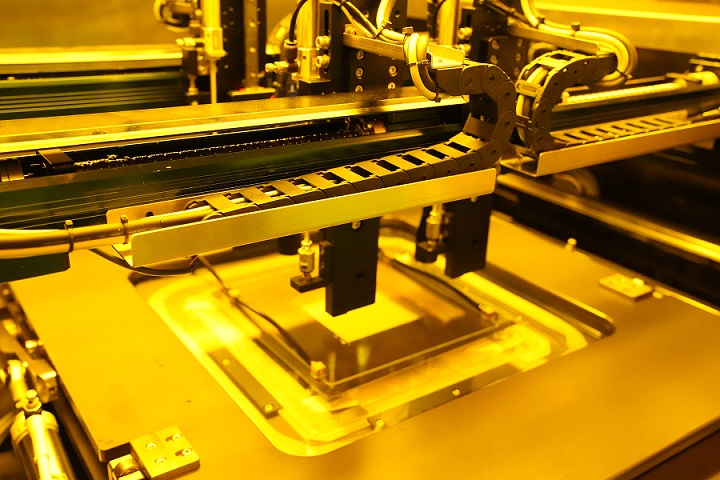
Direct Plating Copper (DPC) is a ceramic circuit processing technology developed on the basis of ceramic film processing. In this process, the copper metal composite layer is sputtered on the ceramic substrate by vacuum coating, and then the circuit is made by re-exposure, development, etching and film removal with the photoresistance of yellow light microshadow. Finally, the thickness of the circuit is increased by electroplating/electroless deposition, and the metallized circuit is made after the photoresistance is removed.
The process is the process of vaporizing metal materials (titanium and copper) into molecules and then forming a metal film on the surface of a ceramic substrate. The main process includes cleaning the surface of the substrate, heat treatment of the ceramic substrate, preparation of the target of metal materials, DPC of the target, measurement of film thickness and surface treatment. Among them, heat treatment can improve the thermal stability and adhesion of the ceramic substrate, and ensure that the covered copper foil will not peel off in high temperature environment.
https://www.youtube.com/watch?v=DfvJvOsF940
DPC ceramic substrate small size, precision structure, high reliability requirements, complex process flow, fine production process, belongs to technology-intensive industries, with high technical barriers. Its production process mainly involves drilling, magnetron sputtering, chemical copper deposition, copper plating, solder resistance printing, chemical silver/chemical gold deposition and other main processes
Application of DPC Ceramic PCB
a. VCSEL package
The power density of VCSEL is very high, and the DPC ceramic circuit board has a high thermal expansion coefficient matching with VCSEL, so as to solve the stress problem caused by the mismatch of thermal expansion between chip and substrate. The DPC ceramic circuit board makes the metal edge closely combined with the ceramic substrate, avoiding the additional paste process, coordination accuracy and other problems in the later assembly process, as well as the reliability problems caused by the aging of the glue. The ceramic circuit board of DPC film technology almost meets the packaging requirements of VCSEL.
b. IGBT package
The insulated gate bipolar transistor has become the mainstream of the development of power semiconductor devices due to its high input impedance, fast switching speed, low on-state current and high blocking voltage. Its applications are as small as frequency conversion air conditioning, silent refrigerator, washing machine, induction cooker, microwave oven and other household appliances, and as large as electric locomotive traction system. Due to the high output power and high heat output of IGBT, heat dissipation is the key for IGBT packaging. At present, the DPC ceramic substrate is mainly used for IGBT packaging, because the DPC ceramic substrate has the characteristics of large metal layer thickness, high bonding strength (good thermal impact) and so on.
c. LED package
Throughout the development of LED technology, the power density continues to improve, and the requirements for bracket heat dissipation are becoming higher and higher. DPC ceramic substrate has high insulation, high thermal conductivity and heat resistance, low expansion and other characteristics, especially the use of through hole interconnection technology, well meet the LED flip, eutectic, COB (chip on board), CSP (chip scale package), WLP (wafer package) packaging needs, suitable for medium and high power LED packaging.
In conclusion, the design and application of DPC copper-coated ceramic substrate need to consider many factors, and a lot of experiments and data analysis are required. The performance and reliability of DPC ceramic substrate at high temperature can be improved by selecting suitable materials and designing reasonable structure and process, and the high temperature application of microelectronic devices can be guaranteed.
The advent of DPC ceramic substrate products opens the development of heat dissipation application industry. Due to the heat dissipation characteristics of the ceramic substrate, it has the advantages of high heat dissipation, low thermal resistance, long life and voltage resistance. With the improvement of production technology and equipment, the rationalization of product prices is accelerated, and the application field of LED industry is expanded.
Direct Plating Copper (DPC) is a ceramic circuit board developed on the basis of ceramic film processing. Aluminum nitride/alumina ceramic is used as the substrate of the circuit, and the composite metal layer on the surface of the substrate is sputtered, and the circuit is formed by electroplating and lithography. Its basic processes are:
Incoming Quality Control (IQC)
The process begins with the inspection of raw materials to ensure they meet strict quality standards. This step involves checking ceramic substrates for physical defects such as cracks, chips, or surface irregularities, and verifying material properties like thermal conductivity and dielectric strength. Advanced equipment such as microscopes and X-ray fluorescence (XRF) analyzers are used for thorough inspection, ensuring only the best materials proceed to the next stage.
Laser Drilling
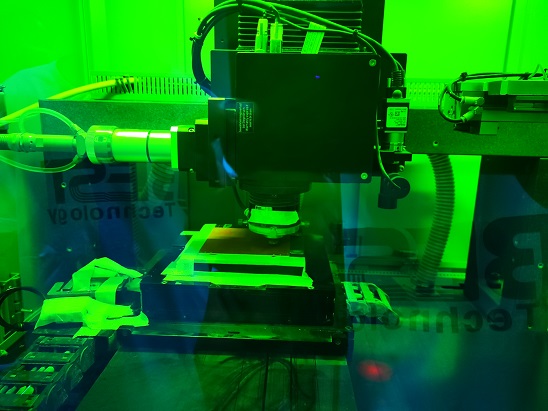
Before laser drilling, a water-soluble, food-grade substrate pigment is brushed onto the ceramic substrate to reduce reflectivity and enhance laser drilling effectiveness. After drying in an oven, a laser drilling machine is used to drill through the substrate, creating pathways for connections between the upper and lower surfaces. Depending on the ceramic material, different laser wavelengths such as infrared, green light, ultraviolet, or CO2 are used to burn away the material with each laser pulse.
Laser Marking
Laser marking involves using a laser marking machine to engrave product QR codes onto the ceramic substrate. This step ensures precise and permanent identification marks on the PCB.
Ultrasonic Cleaning
After laser drilling and marking, the substrates are cleaned to remove any attached particles or residues. This involves coarse and fine debris removal using ultrasonic cleaning, followed by water washing to eliminate any remaining particles. The cleaned substrates undergo micro-etching to roughen the surface, enhancing the effectiveness of subsequent magnetron sputtering, and are then dried to remove surface moisture.
Magnetron Sputtering
In the magnetron sputtering process, a high-vacuum chamber is used to ionize argon gas, producing an ion stream that bombards a target cathode. This causes atoms of the target material to be ejected and deposited as a thin film on the ceramic substrate. Pre-sputtering treatments such as dust removal, degreasing, and slow pulling are conducted to ensure optimal results.
Chemical Copper Plating
Chemical copper plating thickens the copper layer, improving the conductivity of the vias and ensuring better adhesion with the sputtered copper layer. This catalytic redox reaction involves pre-treatment steps like degreasing, micro-etching, pre-immersion, activation, and acceleration to ensure proper copper deposition.
Full-Panel Electroplating
Full-panel electroplating increases the thickness of the copper layer. This involves processes such as degreasing, micro-etching, acid washing, copper plating, and stripping excess copper from the fixtures. The copper plating uses copper balls as anodes and an electrolyte solution of CuSO4 and H2SO4, with the primary reaction being Cu2+ + 2e- → Cu.
Grinding, Laminating, Exposure, and Developing
Post electroplating, the copper layer is prepared for patterning. This includes acid washing to remove oxides, grinding to roughen and clean the surface, laminating with a photoresist dry film, UV exposure through a photomask to create the desired pattern, and developing to dissolve unexposed areas, leaving behind the patterned photoresist.
Pattern Plating (Electroplating Copper)
The exposed and developed areas of the substrate where the circuit pattern is defined undergo further copper electroplating to thicken the circuit traces.
Etching and Stripping
Unwanted copper and dry film are removed through etching, stripping away excess copper deposited in previous steps. This includes rough grinding, film stripping, copper etching, and titanium etching, ensuring only the desired circuit pattern remains.
Annealing
The ceramic boards are annealed in a furnace to relieve stresses introduced during electroplating, enhancing the ductility and toughness of the copper layer and ensuring dense copper grain packing.
Belt Grinding
Post-annealing, the substrate surface may have an oxide layer and rough texture. Belt grinding is used to remove these oxides and smoothen the surface, ensuring the quality of subsequent gold or silver surface treatments.
Flying Probe Testing
High-speed flying probe testers check for continuity and shorts in the vias and circuit traces, ensuring electrical integrity.
Sandblasting Before Solder Mask
Prior to solder mask application, the substrate undergoes sandblasting to roughen and clean the surface, removing oxides and contaminants. This includes acid washing, sandblasting, and micro-etching.
Solder Mask Printing
Solder mask is printed on areas of the PCB that do not require soldering, protecting the circuits during soldering and assembly. Screen printing applies solder mask ink, which is then UV-cured and developed to remove unexposed areas.
Sandblasting After Solder Mask
After solder mask application, exposed areas that need surface treatments undergo sandblasting to roughen the surface and remove oxides, preparing for gold or silver plating.
Surface Treatment
Surface treatments like electroless or electrolytic plating of gold, silver, or other metals are applied to the solder pads, enhancing solderability and preventing oxidation.
Laser Cutting
Laser cutting equipment precisely cuts the finished PCBs from the manufacturing panel, ensuring accurate dimensions and clean edges.
Testing
Various testing equipment, including thickness gauges, Automated Optical Inspection (AOI) machines, and ultrasonic scanning microscopes, are used to inspect the PCBs’ performance and appearance, ensuring they meet quality standards.
Packaging and Shipping
Finally, the PCBs are vacuum-packed using packaging machines to protect them during transport. They are then stored and shipped to customers, ensuring they arrive in perfect condition.
Above is the all the processes of DPC muanufacturing. If you are interested in process of other PCBs, welcome to contact us.