PCB manufacturing PCB manufacturing
Home > Blog

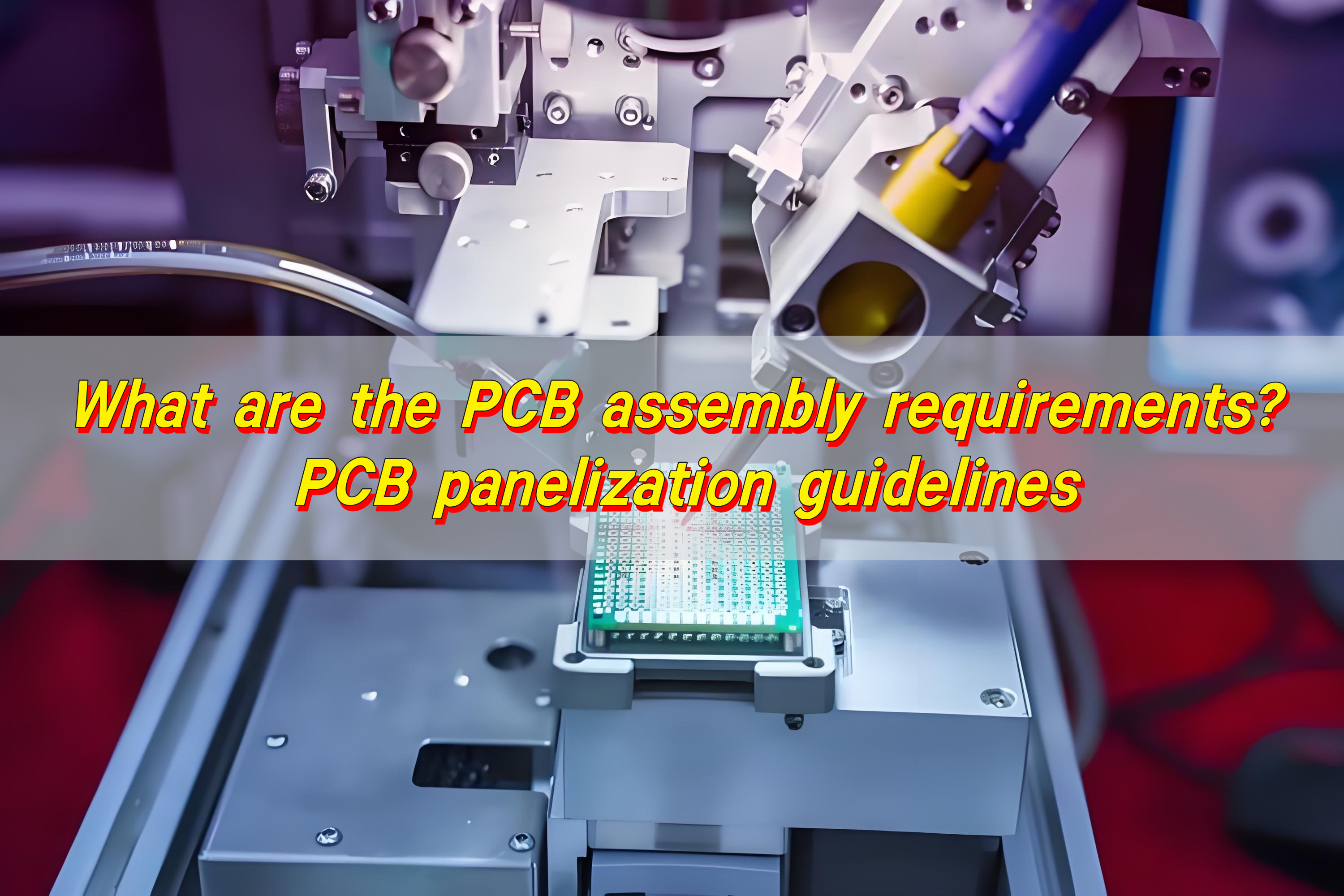
What are the PCB assembly requirements? PCB panelization guidelines

February 28th, 2025

PCB assembly requirements include ensuring that the size and positioning of the PCB board meet the design specifications, reasonably arranging components, strictly controlling the soldering temperature, and performing quality inspections and tests through automatic inspection equipment to ensure that the circuit connections are correct and the components are firmly soldered, thereby ensuring the quality and reliability of the product.

What are the PCB assembly requirements? PCB panelization guidelines

What is PCB panelization?

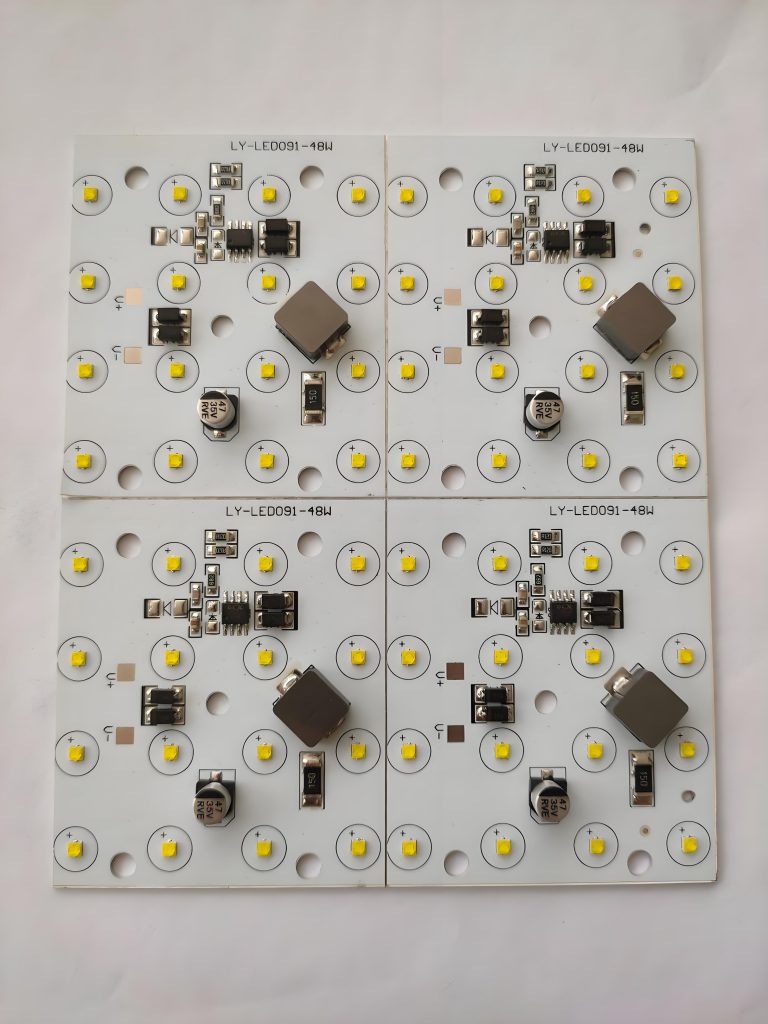
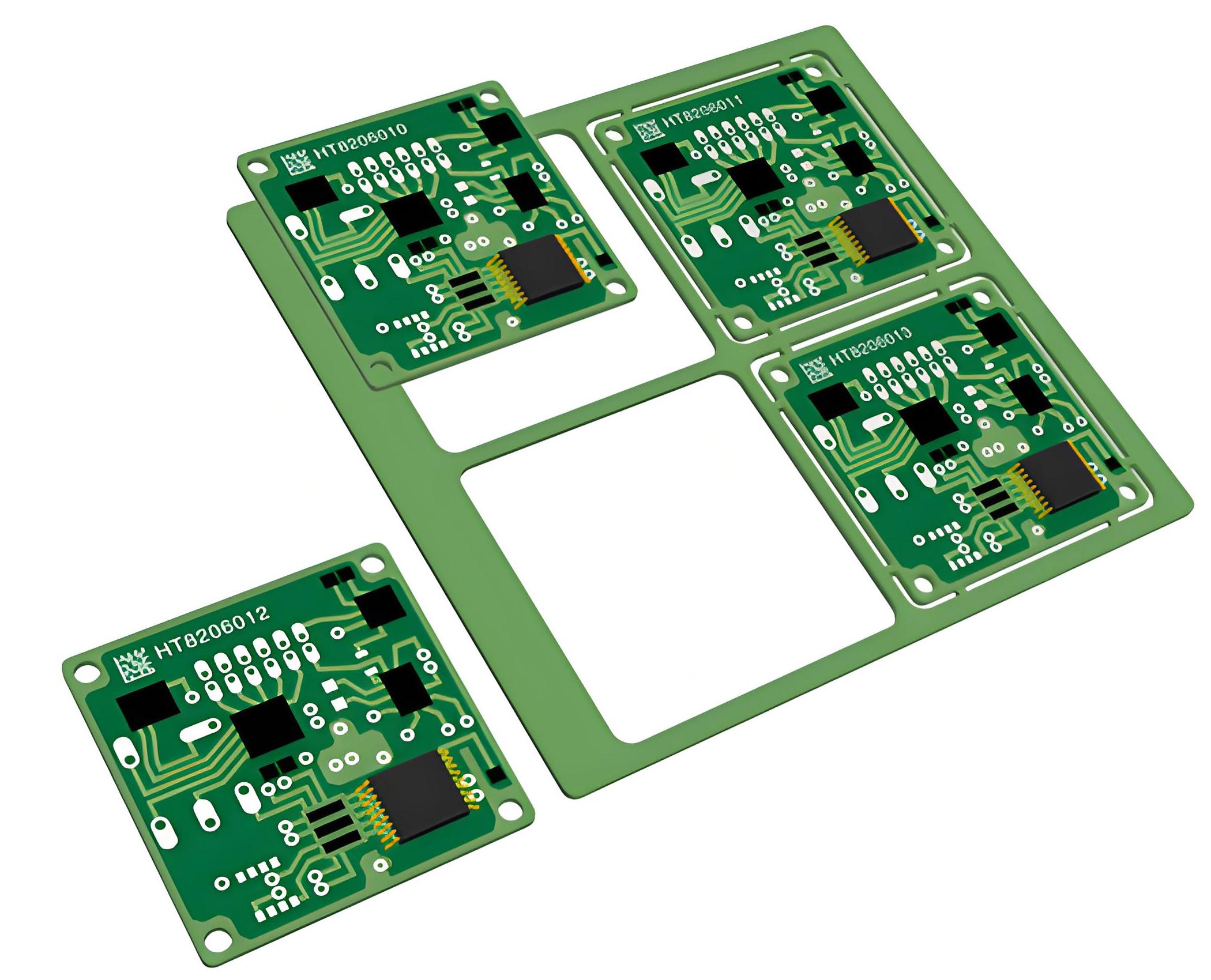
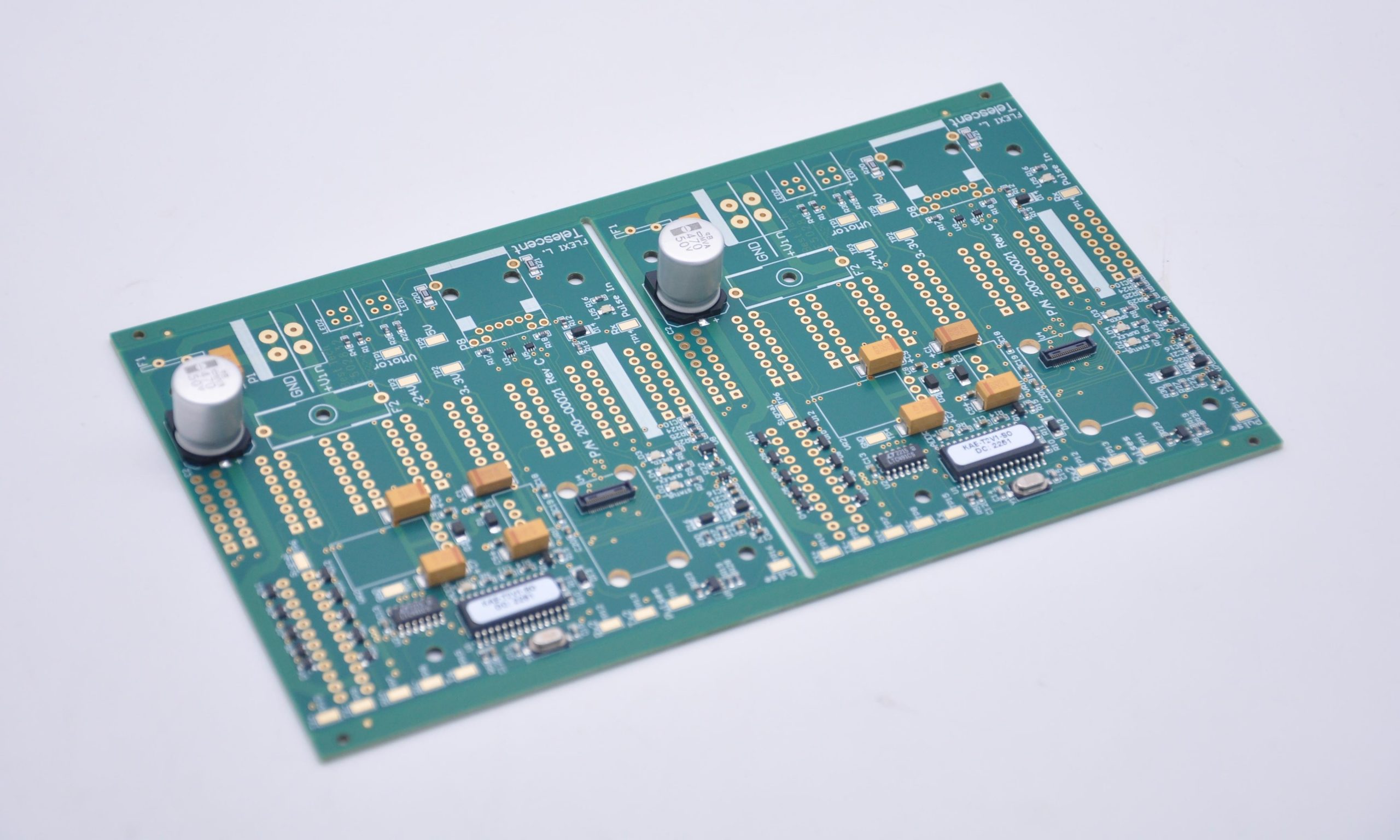
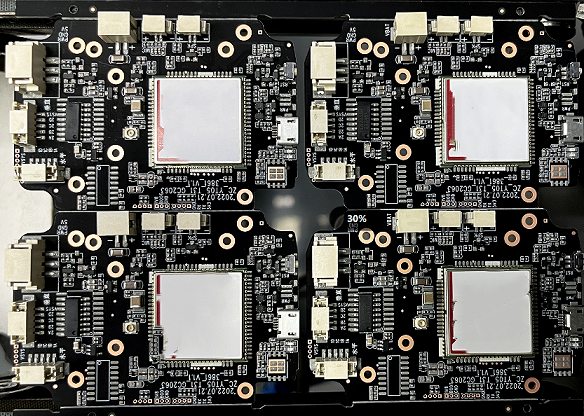
PCB panelization refers to the process of grouping multiple PCB designs into a larger “panel” or array. This is done to optimize manufacturing efficiency and minimize the cost of the assembly process.

Panelization is particularly useful when dealing with small-sized PCB designs. By panelizing the design, manufacturers can perform soldering, testing, and other assembly processes on a group of PCBs simultaneously, which reduces the overall cost of assembly.

What are the types of panels for PCB assembly?

There are several types of panels used for PCB assembly. The main types include:

  • V-Scored Panels: These panels are made by scoring the PCB at specific points, creating a groove that makes it easy to separate the individual PCBs after the assembly is complete.
  • Tab-Routed Panels: Tab-routing is a process where the PCB is connected to the panel with small tabs. After assembly, these tabs are cut to separate the individual PCBs.
What are the PCB assembly requirements? PCB panelization guidelines
  • Laser-Routed Panels: In laser routing, a laser is used to precisely cut around the edges of the PCB. It offers high precision and is typically used for high-density designs or sensitive applications where a more precise separation method is needed.
  • Combo Panels: These panels combine the benefits of V-scoring and tab-routing, allowing for a flexible approach to assembly and separation.

What are the panel requirements for PCB assembly?

Panel requirements are a set of guidelines and specifications that need to be followed during the PCB panelization process to ensure that the final assembly is accurate, efficient, and cost-effective. These requirements include:

  • Panel Size: The size of the panel should be optimized to fit into the equipment used during assembly (like pick-and-place machines).
  • Edge Clearance: The edge of the PCB should have enough clearance to prevent mechanical stress and interference during the manufacturing process.
  • Component Placement: Panels should be designed so that the components are placed efficiently. This includes keeping components within the panel’s accessible area for automated assembly machines.
  • Separation Strategy: Whether using V-scoring, tab-routing, or laser routing, the method chosen for separating the individual boards after assembly must be considered in the panelization process.
  • Manufacturing Tolerances: All panels should adhere to strict tolerances to ensure the accuracy and quality of the final product. This includes positioning of components, trace width, and hole sizes.

What is the standard for PCB assembly?

The standard for PCB assembly is typically guided by established organizations such as IPC (Institute for Printed Circuits), which provides standardized rules for PCB design, assembly, and testing. For example:

  • IPC-2221 provides guidelines for designing printed boards and other forms of component mounting.
  • IPC-A-610 outlines the acceptability requirements for electronic assemblies, including things like solder joints, component placement, and cleanliness.
What are the PCB assembly requirements? PCB panelization guidelines

These standards ensure that PCBs meet performance, quality, and safety requirements. Adhering to these guidelines helps manufacturers produce high-quality products that are reliable and meet industry expectations.

What files are required for PCB assembly?

To ensure a smooth PCB assembly process, manufacturers typically require several key files. These files provide the necessary data to fabricate, assemble, and test the PCB. Some of the most important files include:

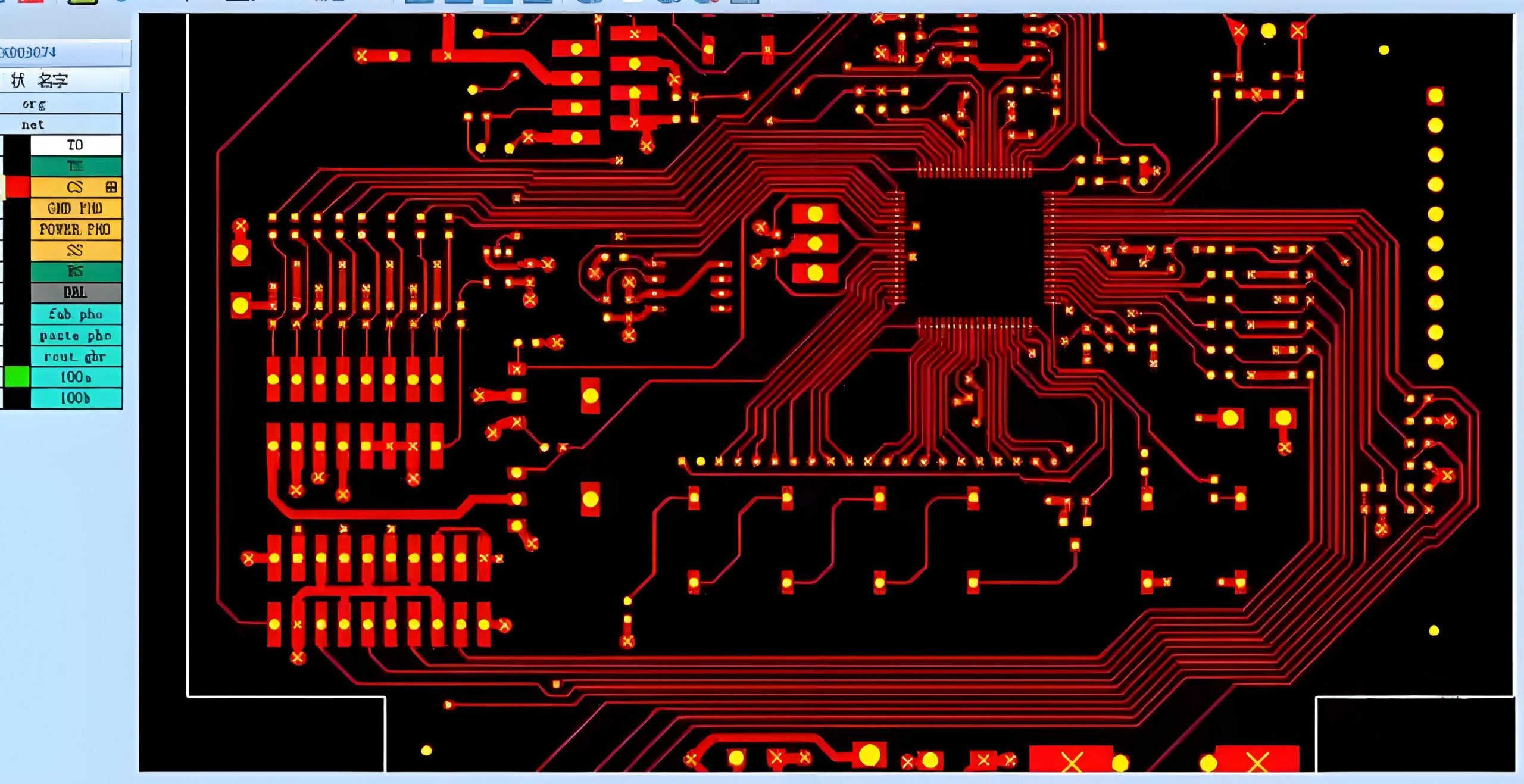
  • Gerber Files: These files contain the information necessary to produce the copper layers of the PCB, including the layout of the traces, pads, and vias.
  • Bill of Materials (BOM): The BOM is a detailed list of all components required for the PCB, including part numbers, values, and descriptions.
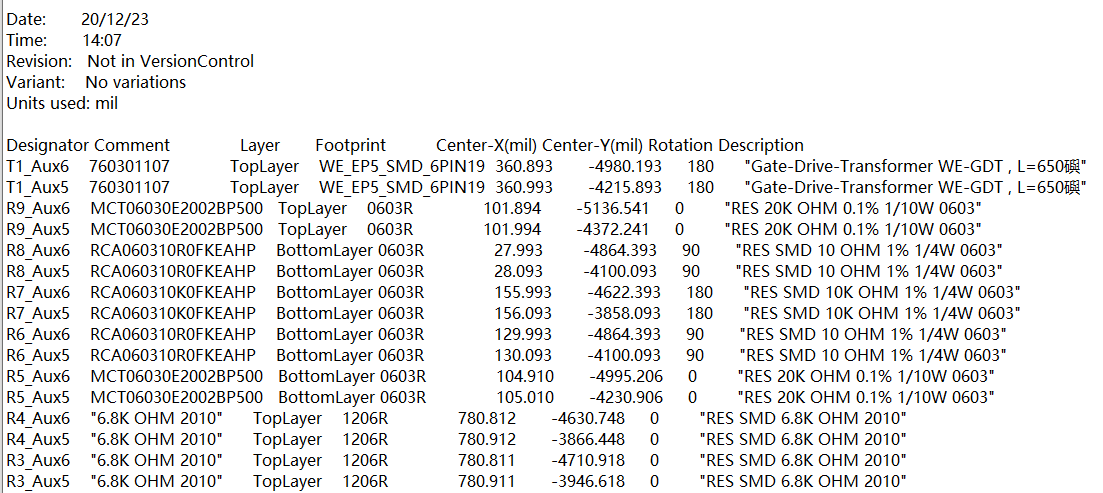
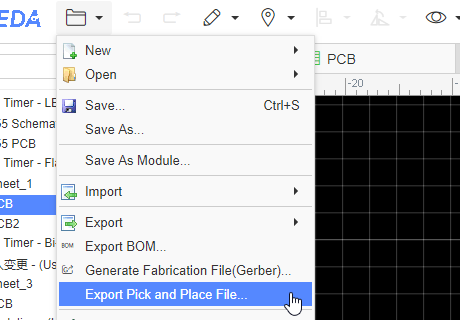
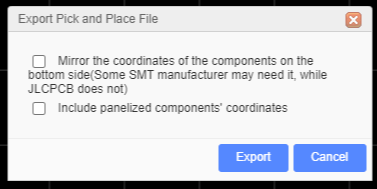
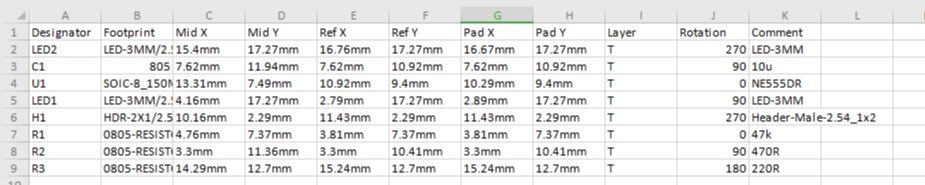
  • Pick and Place Files: These files contain the positions of the components on the PCB, allowing automated machines to place the components accurately.
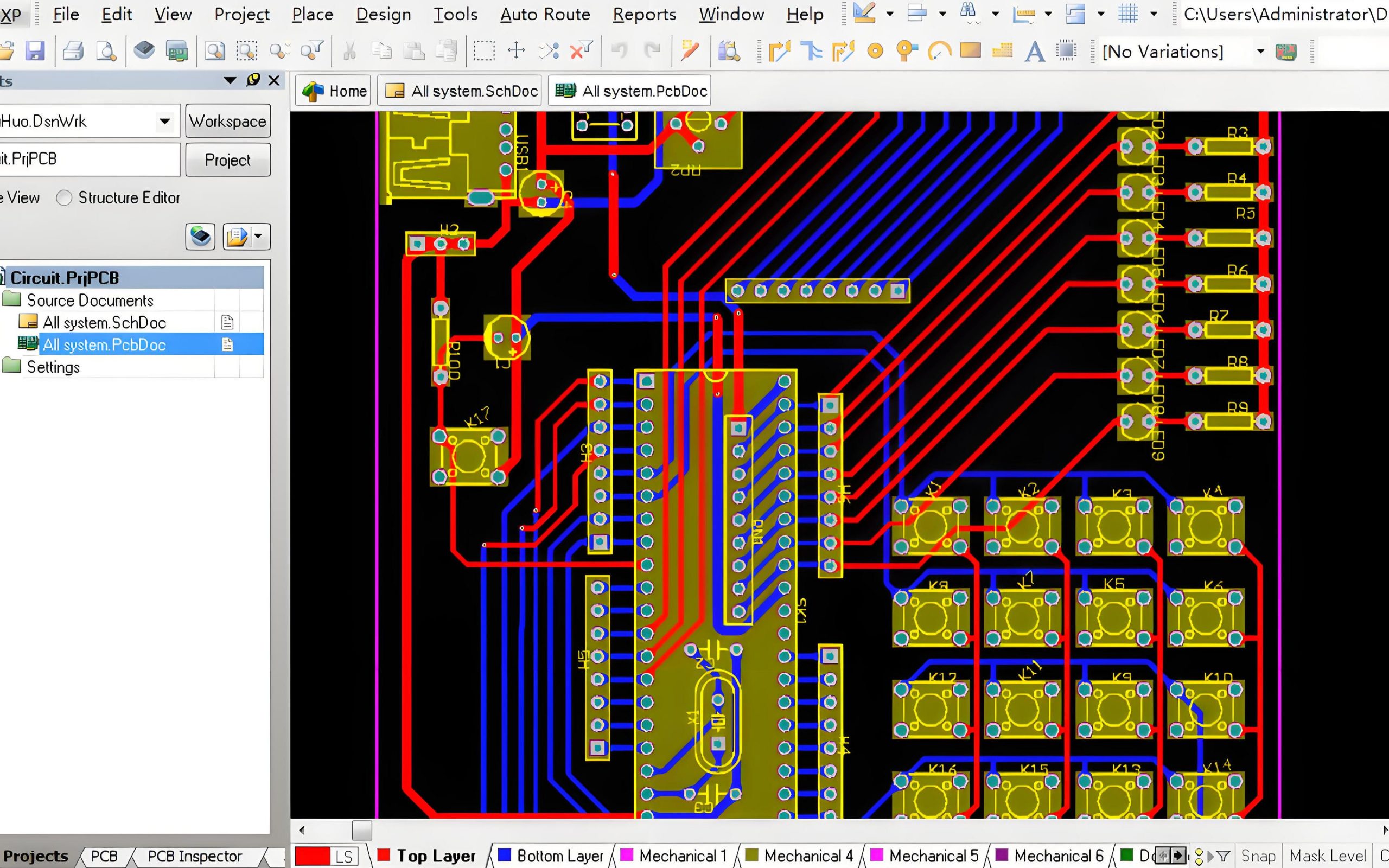
  • Schematic Files: Schematic files show the circuit design and connectivity between components. These are essential for verifying that the assembly process follows the correct electrical design.
  • Stencil Files: If solder paste is required, stencil files guide the application of the paste to the PCB.

Having all of these files ensures that the assembly process runs smoothly and that the final product is built to the correct specifications.

What is the PCB assembly process?

The PCB assembly process involves several steps, each of which must be carried out with precision to ensure the board works properly. The general process is as follows:

  • Solder Paste Application: The first step involves applying solder paste to the PCB pads using a stencil.
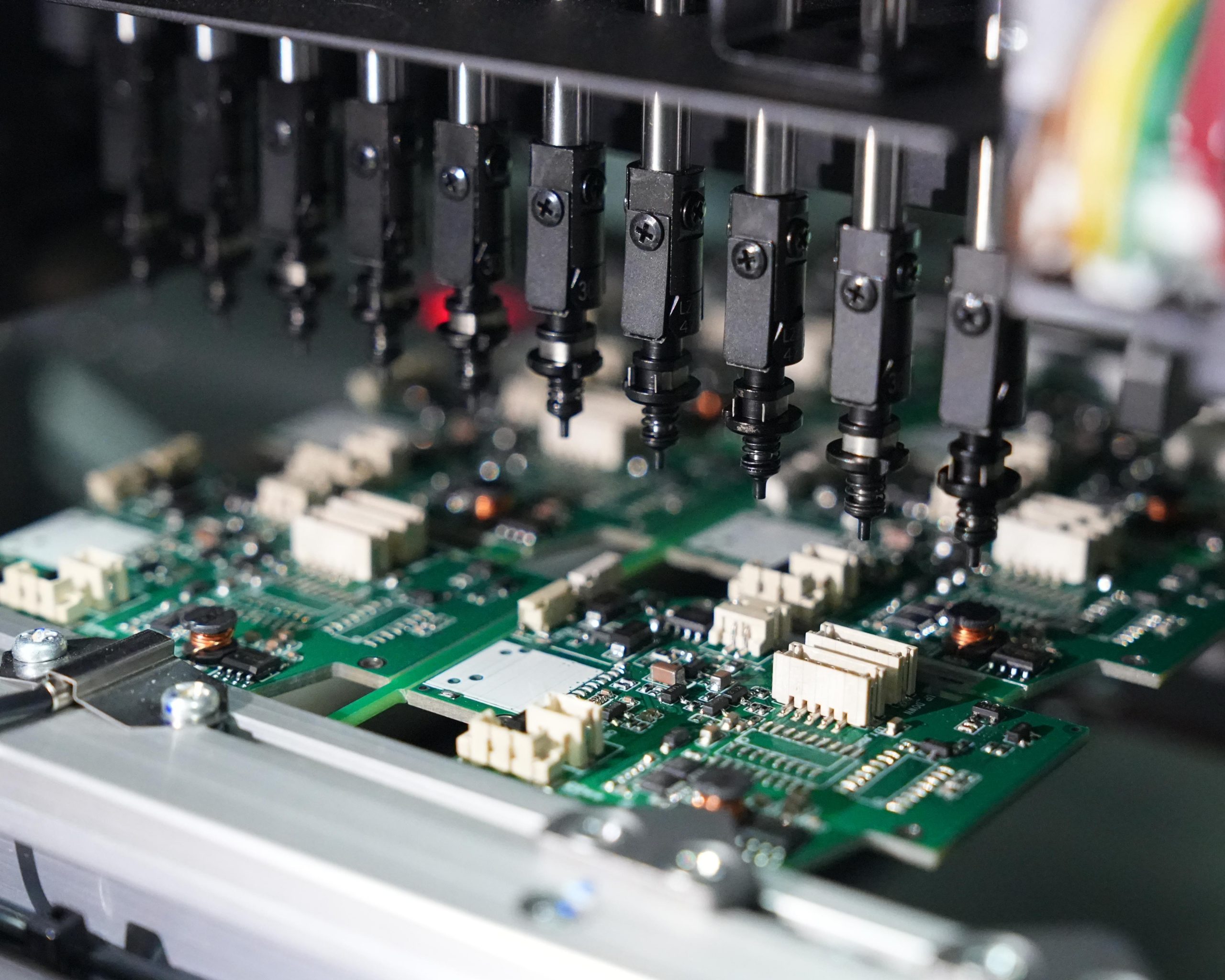
  • Component Placement: Automated pick-and-place machines place the components onto the PCB.
  • Soldering: Once the components are placed, the PCB moves into a reflow oven or wave soldering machine, where the solder paste is heated, melting the solder and attaching the components to the board.
  • Inspection: After soldering, the PCB is inspected to ensure that the components are securely attached, and there are no issues like solder bridges or cold joints. Visual inspection, X-ray inspection, or automated optical inspection (AOI) may be used.
  • Testing: The PCB undergoes electrical testing to verify its functionality. This may include functional tests or in-circuit tests.
  • Final Touches: After passing tests, the PCB is cleaned, and any excess solder is removed. It may also undergo further inspection to check for cosmetic defects.
  • Packaging and Shipping: Finally, the completed PCBs are packaged and shipped to the client.

What are the tolerances for PCB assembly?

Tolerances are the allowable variations in the dimensions and placement of components during the assembly process. These tolerances must be carefully controlled to ensure that the PCB works as intended.

Common tolerances include:

  • Component Placement: The precision with which components are placed on the PCB is crucial. Typically, the tolerance for placement accuracy is around ±0.1mm, but it can vary based on the size and type of components.
  • Trace Width: PCB traces need to be within certain width tolerances to handle the required current and ensure proper signal integrity.
  • Hole Sizes: The diameter of holes for through-hole components must be accurate to ensure proper insertion and soldering.

What is the component clearance for PCB assembly?

Component clearance refers to the amount of space between the components on the PCB. It’s essential for ensuring that components don’t interfere with each other during the assembly process.

Sufficient clearance is also important to avoid issues like short circuits or mechanical stress that could damage components.

What are the PCB assembly requirements? PCB panelization guidelines

Clearance requirements vary depending on the component size and type. For example, smaller components may require tighter spacing, while larger components need more room to ensure proper soldering and prevent overheating.

Conclusion:

PCB assembly is a complex process that involves careful planning, precise design, and stringent manufacturing standards. Panelization, assembly requirements, tolerances, and component clearance all play vital roles in ensuring a successful assembly process.

If you’re looking for professional PCB assembly services that meet industry standards and provide top-tier results, EBest Circuit (Best Technology) is here to assist you. Get in touch with us at sales@bestpcbs.com to discuss your PCB assembly needs.

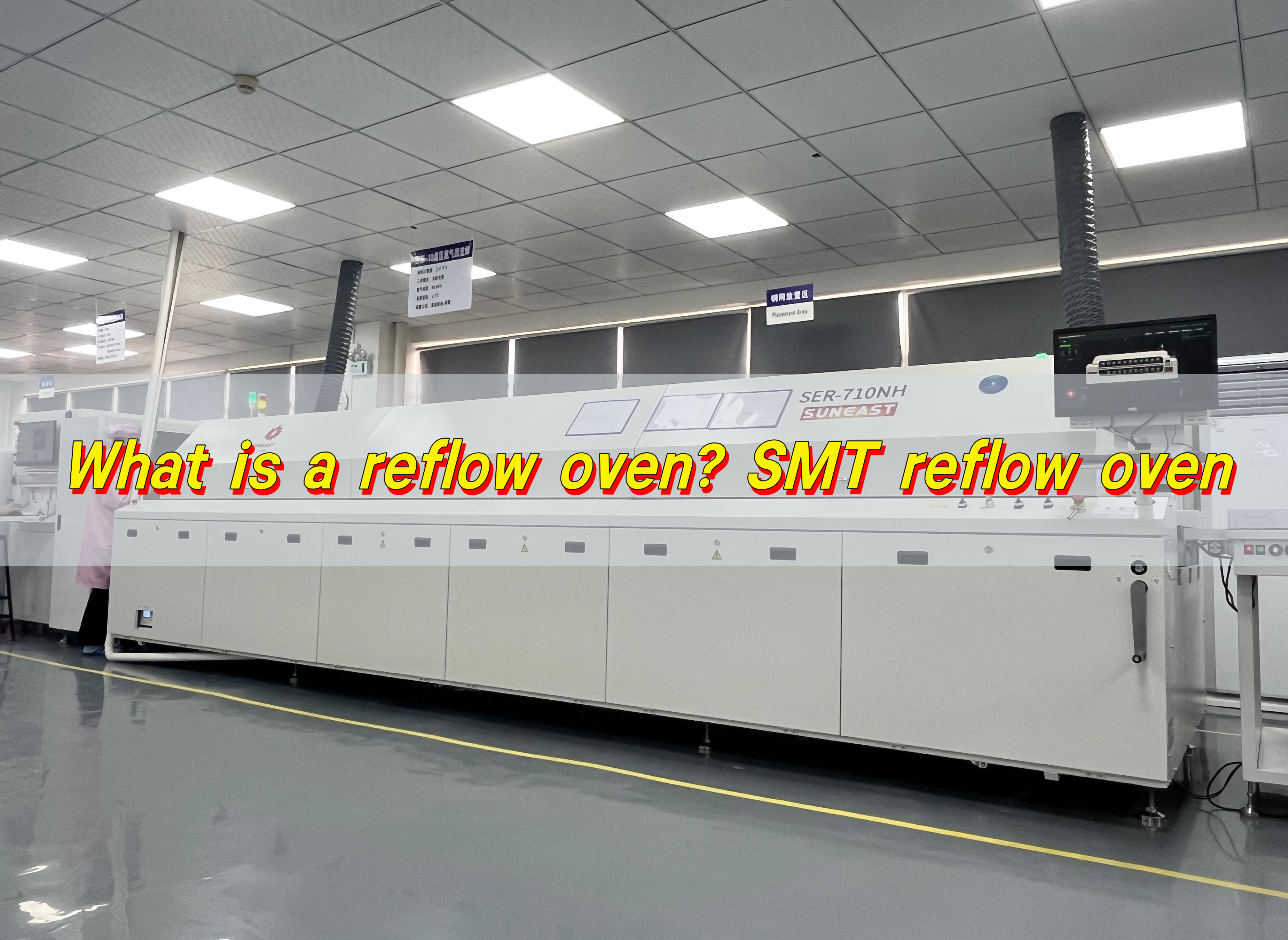
What is a reflow oven? SMT reflow oven

February 28th, 2025

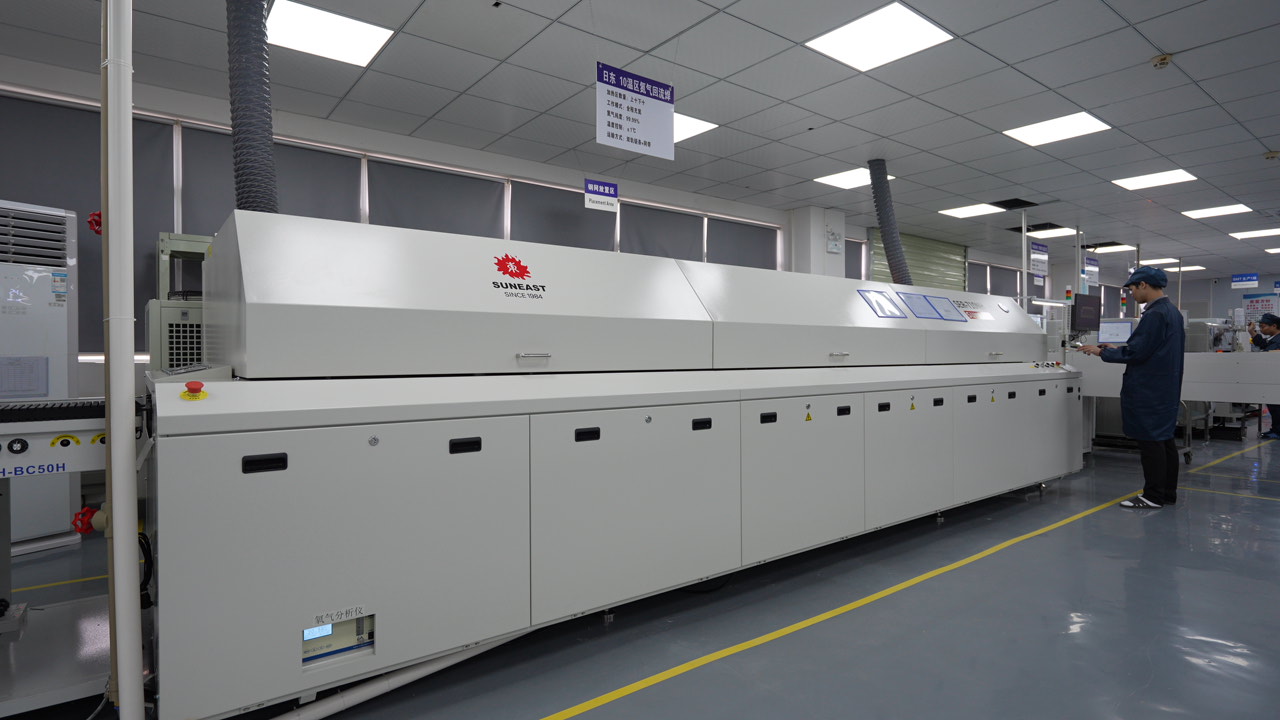
The reflow oven is a key equipment used in electronic manufacturing, mainly used to solder surface mount components (SMT) to PCBs. It provides a high temperature environment to melt the solder paste pre-coated on the PCB pads, thereby achieving mechanical and electrical connections between component pins and pads.

What is a reflow oven? SMT reflow oven

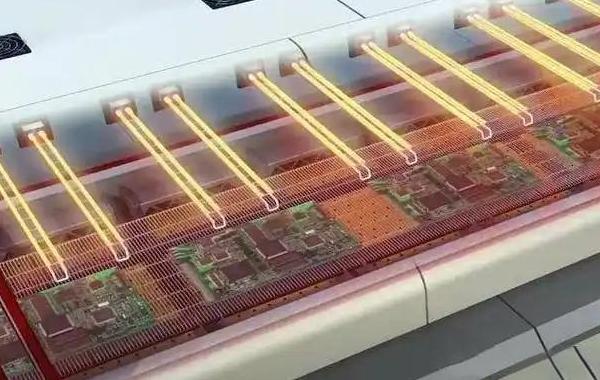
The working principle of the reflow oven is based on hot air circulation technology, which usually includes four stages: preheating, soaking, reflow and cooling. Each stage has a specific temperature curve to ensure welding quality and avoid component damage.

What is a reflow oven?

A reflow oven is a specialized device used in the soldering process to attach components to a PCB. It is primarily used in Surface Mount Technology (SMT), where electronic components are mounted directly onto the surface of a PCB instead of through holes.

The oven is designed to heat the PCB to a specific temperature, melting solder paste that has been applied to the PCB’s pads. This process forms strong, reliable solder joints, ensuring the components stay in place securely.

The reflow oven uses controlled heat to melt the solder paste, allowing it to flow and bond the component leads to the PCB pads. This technology has become widely used in electronics manufacturing because it allows for precise, high-speed soldering that is highly automated.

How does a reflow oven work?

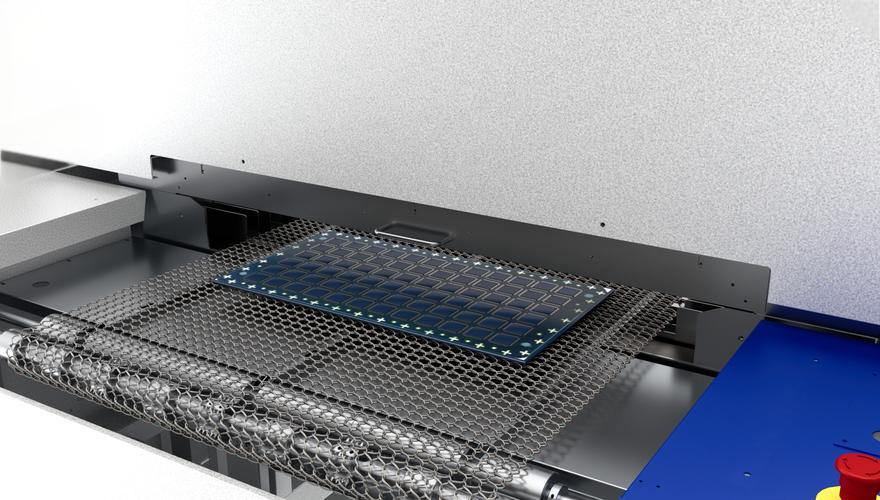
The operation of a reflow oven can be broken down into a few key steps. First, the PCB with the solder paste applied is fed into the oven. The oven uses carefully controlled temperature zones to heat the board gradually. As the temperature rises, the solder paste starts to melt, creating liquid solder that forms connections between the PCB pads and component leads.

What is a reflow oven? SMT reflow oven

Once the solder paste has melted and the joints are formed, the oven then cools the board in a controlled manner. Cooling too quickly can cause solder joints to form improperly, so a gradual cooling process is essential to avoid damaging the components or the board itself.

Reflow ovens are equipped with multiple heating zones and cooling zones to maintain precise control over the temperature at each stage of the process. This ensures that the reflow soldering process is consistent, high-quality, and free of defects.

How to reflow a circuit board in an oven?

Reflowing a circuit board in an oven involves several steps that require attention to detail. Here’s a general overview:

  • Prepare the PCB: Apply solder paste to the PCB pads where components will be placed.
  • Place the Components: Use a pick-and-place machine or manual methods to place the components onto the PCB, ensuring that they align with the solder paste on the pads.
  • Set the Oven Parameters: Program the reflow oven with the correct temperature profile based on the type of solder paste being used, the components on the board, and the PCB material.
  • Feed the Board into the Oven: Place the PCB into the oven, where it will pass through different heating zones. The oven will gradually heat the board, allowing the solder to melt and form the joints.
  • Cool the PCB: After the solder has melted and cooled slightly, the PCB is moved to the cooling section of the oven, where it will be gradually cooled to solidify the solder joints.

Inspect the Board: Once cooled, inspect the board for proper solder joints. Ensure that all components are securely mounted, and there are no issues like cold solder joints or solder bridges.

What does a reflow oven do?

At its core, a reflow oven melts solder paste to bond components to a PCB. The key benefits of using a reflow oven include:

  • Precision: The oven provides consistent and precise heat to ensure proper solder joint formation.
  • Speed: It allows for quick processing of multiple boards, making it ideal for high-volume manufacturing.
What is a reflow oven? SMT reflow oven
  • Quality: A reflow oven ensures that each joint is uniform and free from defects like cold joints or tombstoning (when a component flips up during soldering).
  • Automation: The process is automated, reducing the need for manual labor and human error.

Overall, a reflow oven is a critical tool in modern electronics manufacturing, offering speed, precision, and reliability for SMT soldering.

How many zones are in a reflow oven?

A reflow oven typically contains three to ten temperature zones. These zones are divided into heating zones, a peak zone, and cooling zones:

  • Heating Zones: These zones gradually heat the board to the appropriate temperature for solder melting. They ensure uniform heating across the PCB.
  • Peak Zone: This is where the temperature reaches the highest point, usually around 230-250°C (446-482°F), allowing the solder paste to fully melt.
  • Cooling Zones: After the peak zone, the board enters the cooling zones, where the temperature is gradually lowered to solidify the solder joints and prevent thermal shock.

The more zones a reflow oven has, the more control you have over the heating and cooling process, which leads to higher-quality solder joints and better overall results.

What is the dwell time for reflow oven?

Dwell time refers to the amount of time the PCB spends in each temperature zone, especially the peak zone where soldering occurs.

Typically, the dwell time should last around 30-90 seconds in the peak zone, depending on the solder paste and component types. Too short a dwell time may lead to incomplete soldering, while too long a dwell time can cause excessive heat exposure, damaging sensitive components.

Why use nitrogen in a reflow oven?

Using nitrogen in a reflow oven can provide several benefits:

What is a reflow oven? SMT reflow oven
  • Reduced Oxidation: Nitrogen creates an inert atmosphere inside the oven, reducing the risk of oxidation on the PCB and components.
  • Improved Soldering: Nitrogen helps the solder paste flow more smoothly and evenly, leading to better wetting and more reliable solder joints.
  • Enhanced Quality: Nitrogen can help achieve consistent, high-quality results, particularly when working with sensitive components or fine-pitch ICs.

Although nitrogen is not strictly necessary for all reflow soldering, using it can significantly improve the overall quality of your soldering process, especially in critical applications.

Why solder balls after reflow?

Solder balls, also known as solder splashes, are small balls of solder that form during the reflow process. They can occur due to a variety of reasons, such as improper paste application, excessive heat, or excessive flux residue.

Solder balls can be problematic because they can short-circuit the PCB, leading to functional issues. To prevent solder balls, it’s essential to optimize the solder paste application, control the oven temperature profile, and ensure that components are placed properly.

Conlusion:

A reflow oven is an indispensable tool in modern electronics manufacturing, ensuring that surface mount components are securely attached to PCBs through a carefully controlled soldering process. With the ability to handle high volumes of boards efficiently and consistently, these ovens play a critical role in producing reliable, high-quality products.

For more details about SMT reflow ovens, PCB reflow oven setups, or reflow soldering solutions, feel free to reach out to us at sales@bestpcbs.com. We’re always happy to assist you in finding the right solutions for your needs.

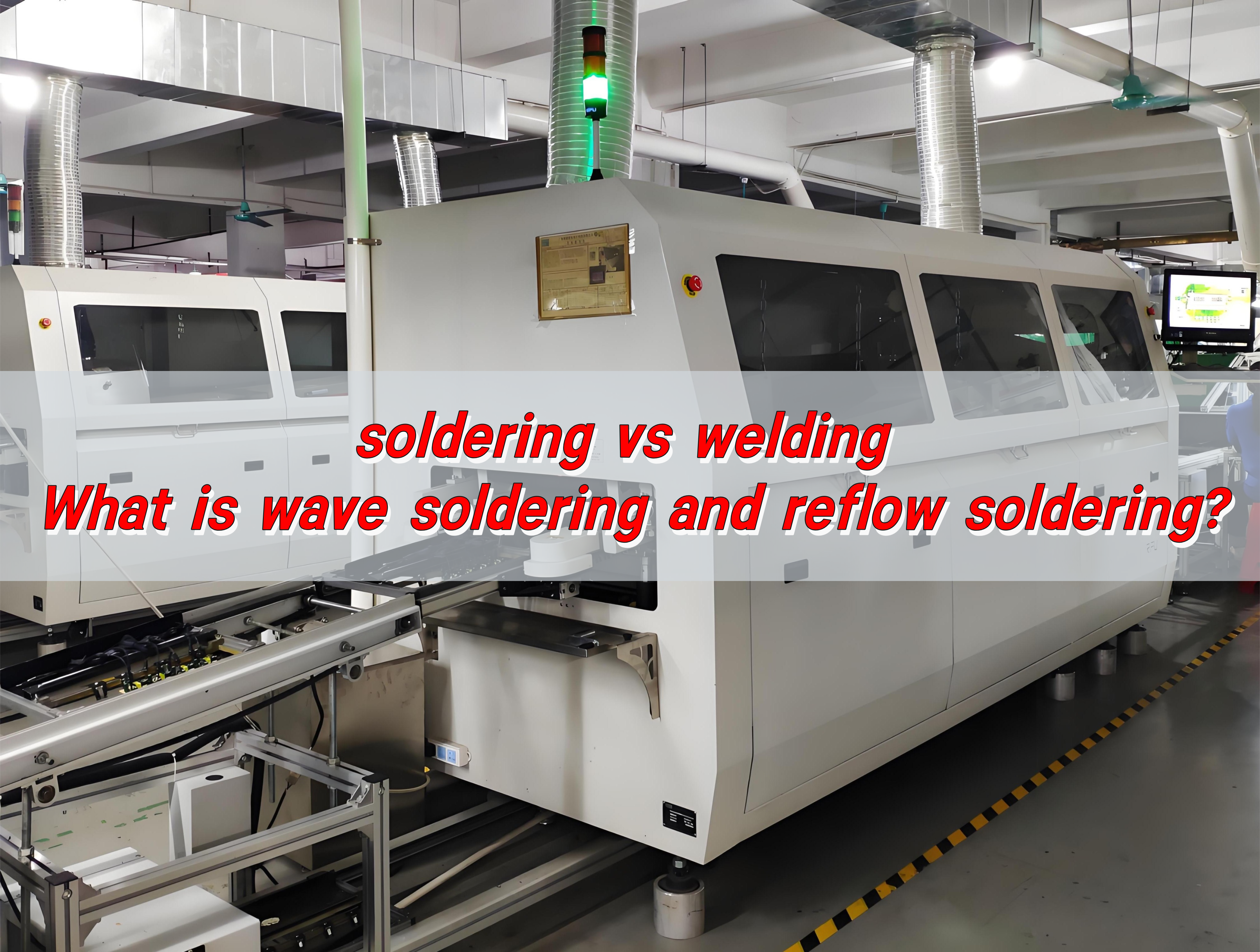
soldering vs welding: What is wave soldering and reflow soldering?

February 20th, 2025

What is soldering vs welding? Soldering and welding are both essential techniques used in metal joining processes. However, they are quite distinct in terms of their methods, applications, and results. These processes are often confused, but understanding the differences is crucial, especially when deciding which method to use for various applications.

soldering vs welding: What is wave soldering and reflow soldering?

What is soldering and welding?

Both soldering and welding are techniques used to join metal pieces together, but they operate very differently.

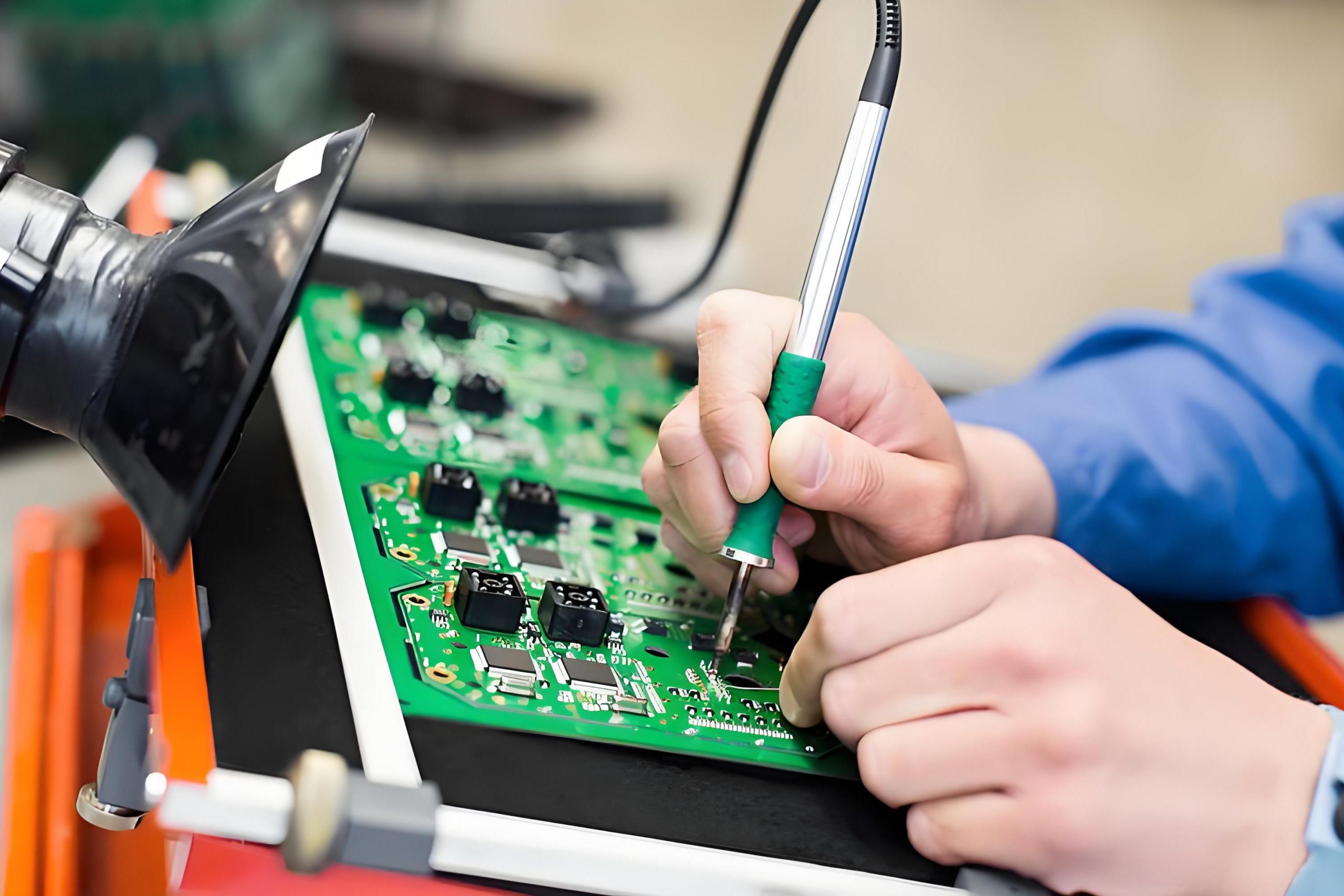
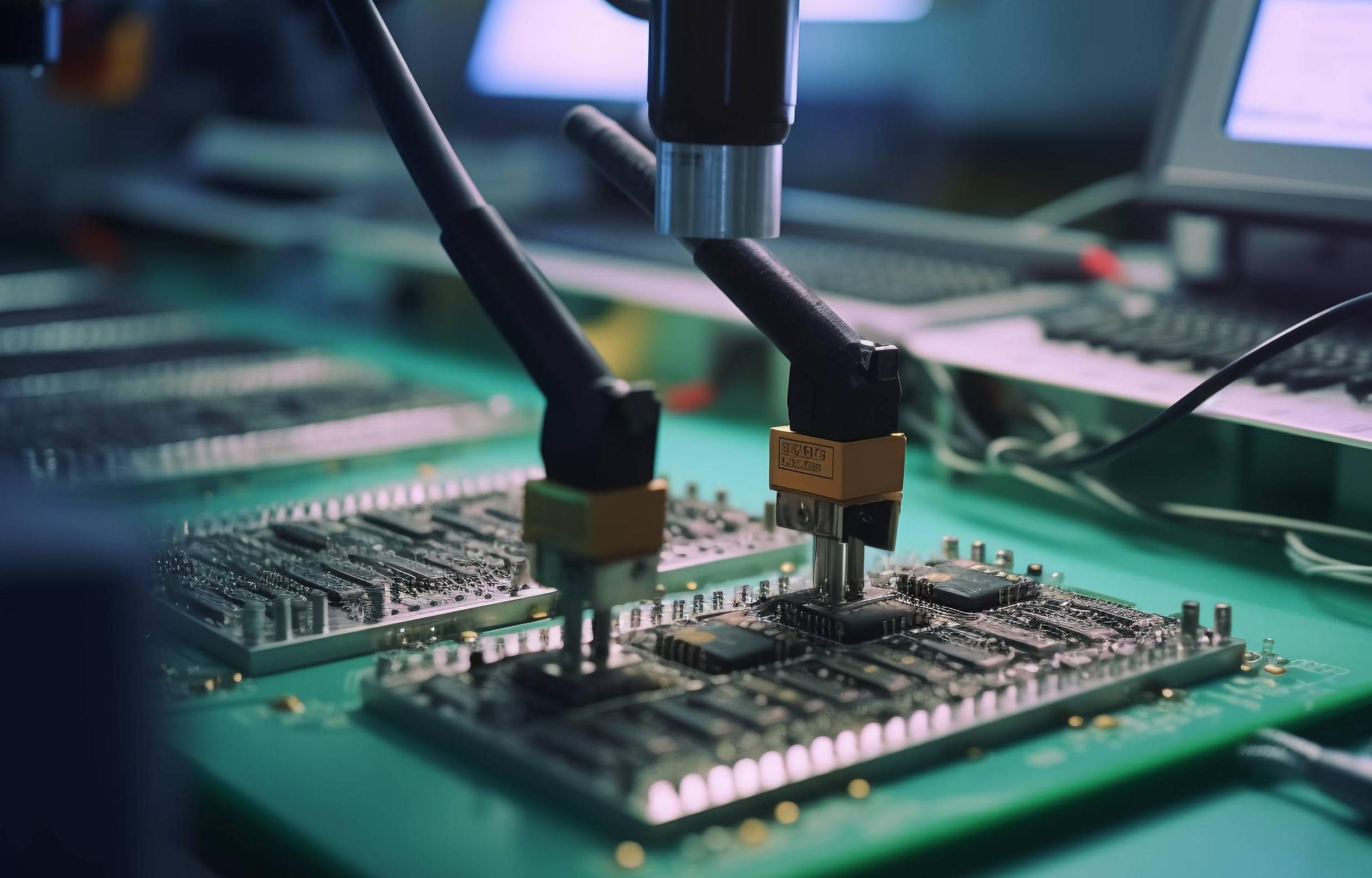
Soldering is a method that uses a filler material, called solder, to join two or more metal parts. The process involves melting the solder, which has a lower melting point than the base materials, and allowing it to solidify, creating a bond between the components.

Unlike welding, which typically involves high heat, soldering works at lower temperatures, making it suitable for more delicate materials like circuit boards and wires.

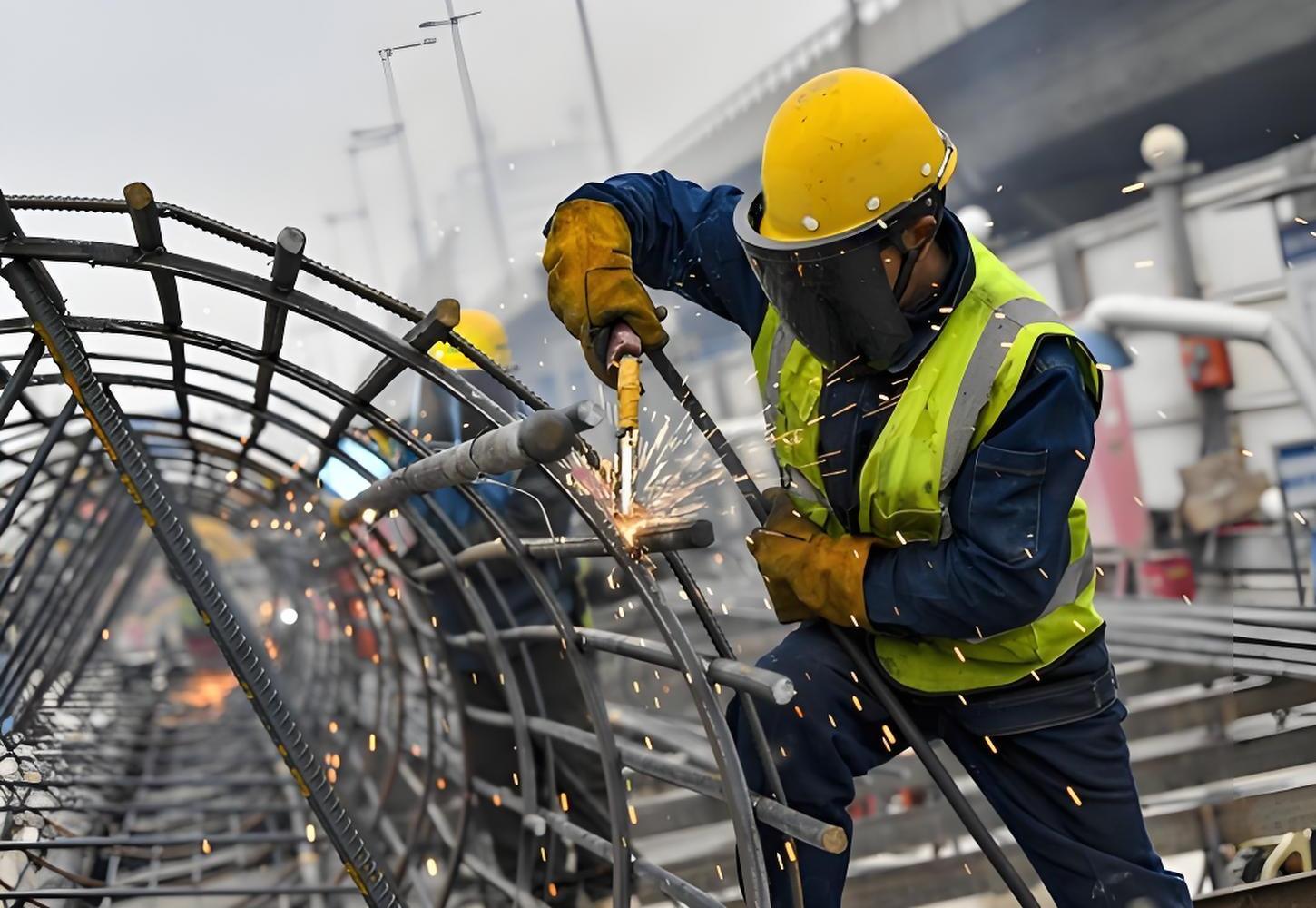
Welding, on the other hand, involves melting the base metals themselves and allowing them to fuse together. This requires much higher temperatures than soldering.

Welding is often used for structural applications, such as in building construction, automotive, and manufacturing, where strong, durable bonds are required.

Is soldering as strong as welding?

The strength of a soldered joint compared to a welded joint depends on the application. Welding produces much stronger bonds than soldering because it involves the fusion of the base metals.

In contrast, soldering uses a filler metal to create a bond, which is typically weaker than the base metal itself. However, soldering is sufficient for many applications, especially in electronics, plumbing, and small repairs.

How strong is soldering vs welding?

Welding generally creates a stronger, more permanent bond than soldering. The strength of a weld comes from the fact that the base metals are directly melted and fused, which creates a solid, continuous bond.

Soldering, by contrast, is generally not as strong and is usually used for joining metals that don’t need to withstand as much stress. This makes soldering perfect for smaller, more delicate components, such as electrical connections, where excessive strength is not required.

In many electronic applications, soldering provides adequate strength for the components to function reliably, but it won’t hold up as well under heavy mechanical stress compared to welding.

What is welding used for?

Welding is used primarily in industries where strong, durable bonds are needed. These applications include:

  • Construction: Welding is essential in the construction of steel structures and buildings.
soldering vs welding: What is wave soldering and reflow soldering?
  • Automotive: Cars and trucks rely on welding for structural integrity.
  • Shipbuilding: Welding is used to join large metal sheets in ship hulls.
  • Heavy machinery: Welding helps in creating durable joints in machinery used for construction or mining.

Welding provides a long-lasting, highly durable bond that is necessary for these types of applications.

What are the advantages of soldering over welding?

While welding is stronger in terms of the bond strength, soldering has several advantages that make it ideal for specific applications:

  • Lower temperature: Soldering uses a much lower temperature than welding. This makes it suitable for delicate electronic components, such as PCBs, that could be damaged by the high heat of welding.
  • Ease of use: Soldering is generally easier and faster than welding, especially for small, intricate jobs.
  • No need for high-powered equipment: Unlike welding, which requires heavy machinery, soldering can be performed with simple tools like a soldering iron or soldering gun.
  • Cost-effective: Since soldering uses a lower heat and simpler tools, it’s typically more affordable than welding.
  • Precision: Soldering allows for more precise, controlled work. This makes it ideal for small, delicate tasks, such as joining electronic components on a PCB.

What is wave soldering and reflow soldering?

Both wave soldering and reflow soldering are specialized soldering techniques used primarily in electronics manufacturing, especially for PCBs.

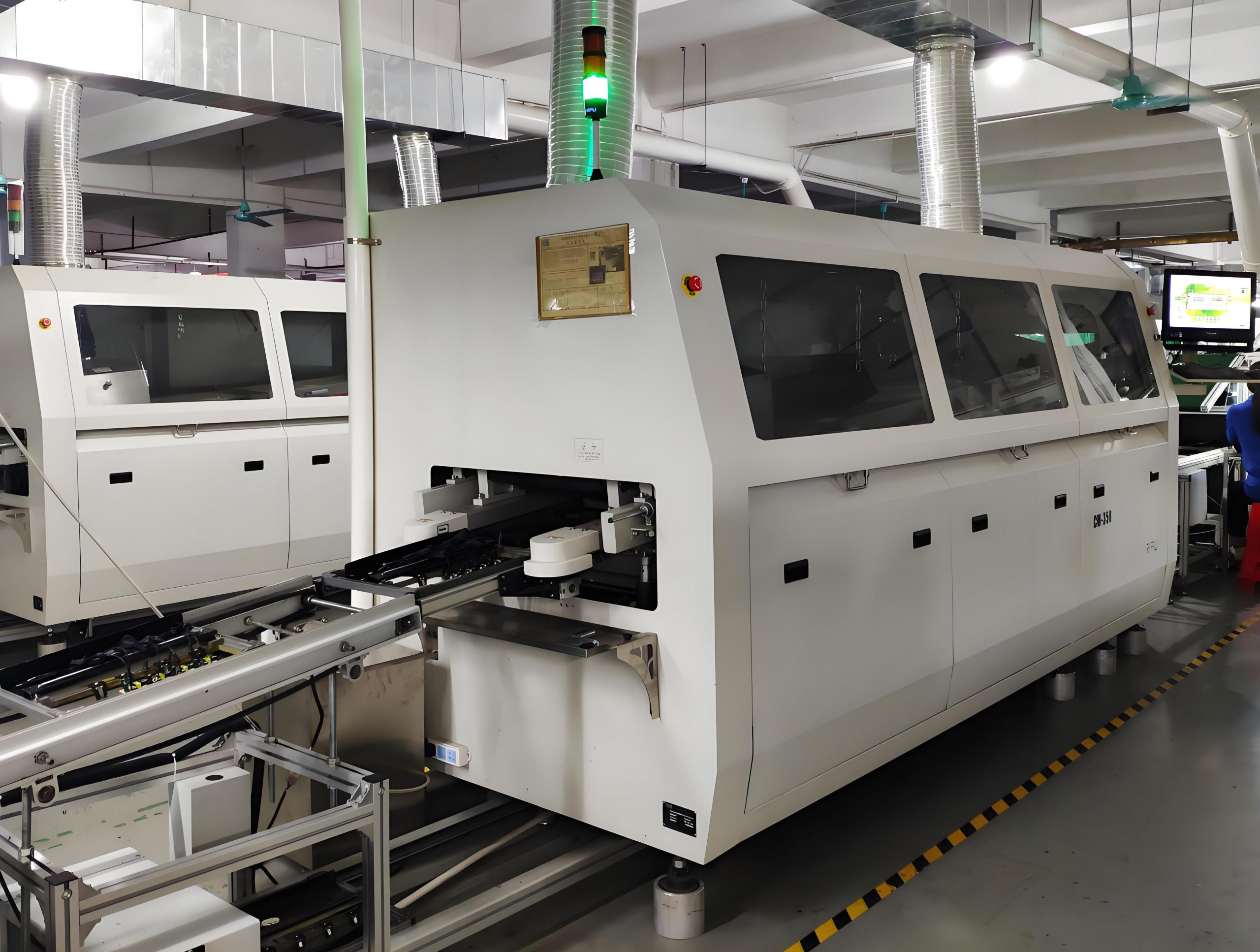
Wave Soldering: This is a process where a PCB is passed over a wave of molten solder. The solder waves are carefully controlled to ensure that the solder adheres to the joints of the components. Wave soldering is often used for large quantities of boards that require consistent results. This process is ideal for through-hole components, where leads need to be soldered into the PCB.

soldering vs welding: What is wave soldering and reflow soldering?

Reflow Soldering: This technique is used primarily for SMD (Surface-Mounted Devices). The process involves applying solder paste to the PCB, placing the components, and then heating the entire assembly in a reflow oven. The paste melts, and the solder forms the connection between the components and the PCB. Reflow soldering is preferred for high-density boards with small components.

Which is a disadvantage of soldering?

One of the key disadvantages of soldering is the potential for weak joints in high-stress environments. While soldering is sufficient for many electronic applications, it is not ideal for components that need to withstand extreme mechanical stress or high temperatures.

Another disadvantage is the possibility of creating cold joints or bridging between leads, both of which can lead to electrical failure. Cold joints occur when the solder does not completely melt and flow properly, while bridging happens when excess solder connects two or more pins that should remain separated.

What is the most common mistake in soldering?

The most common mistake in soldering is overheating the components. Too much heat can damage sensitive components, including the PCB. It can also cause issues like delamination (separation of layers) and the degradation of solder joints.

soldering vs welding: What is wave soldering and reflow soldering?

Proper heat control and timing are essential to avoid these issues. Another common mistake is insufficient solder or excess solder, both of which can lead to electrical failures.

Conclusion:

In summary, the debate between soldering vs welding ultimately depends on the specific application. Techniques like wave soldering and reflow soldering allow for efficient, high-quality production of PCBs and electronic devices.

At EBest Circuit (Best Technology), we specialize in delivering high-quality PCB solutions with advanced soldering techniques. Reach out to us today for expert advice and solutions. Email: sales@bestpcbs.com

What is a SMT stencil printer? & PCB Prototype?

February 20th, 2025

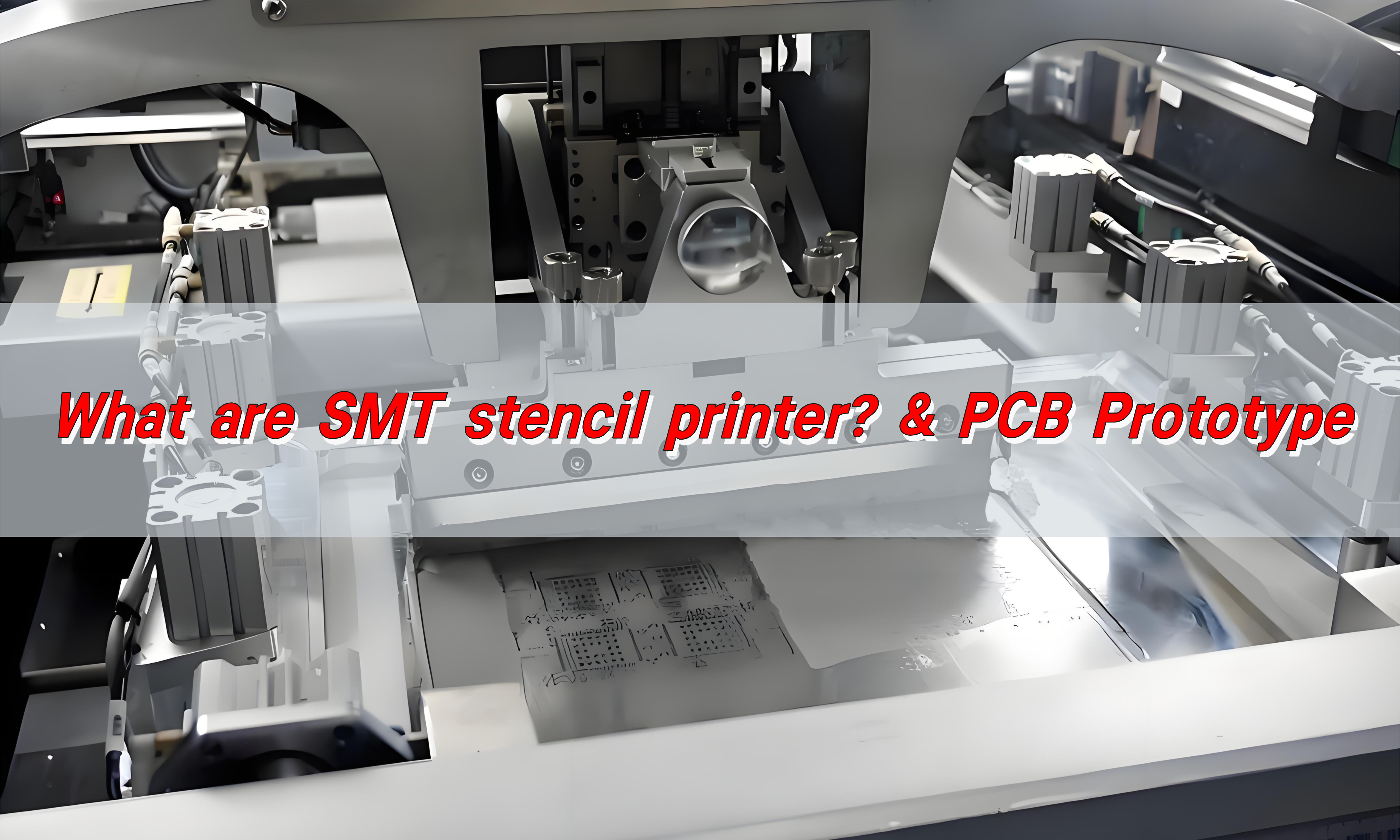
What is a SMT stencil printer? SMT stencil printer is a key equipment used in surface mount technology (SMT) production, mainly used to accurately print solder paste or conductive glue onto PCB pads. It ensures that solder paste can be accurately deposited at the specified position through high-precision stencil alignment and printing process, thus providing a reliable foundation for subsequent electronic component placement.

What is a SMT stencil printer? & PCB Prototype?

What is a stencil print?

A stencil print refers to the technique of transferring a design onto a surface using a template or screen. The process involves applying ink or paste through cutouts in the stencil to create an image, text, or design.

Stencil printing is widely used for everything from fabric printing to PCB assembly. In electronics, the stencil acts as a mask to allow solder paste to only apply to certain areas of the board, ensuring accuracy and reliability.

In PCB manufacturing, the stencil provides an efficient way to apply solder paste to the pads or soldering points on the board. Once the solder paste is applied, the PCB is ready for components to be placed, which are later soldered in the reflow oven or via hand soldering.

What is a SMT stencil?

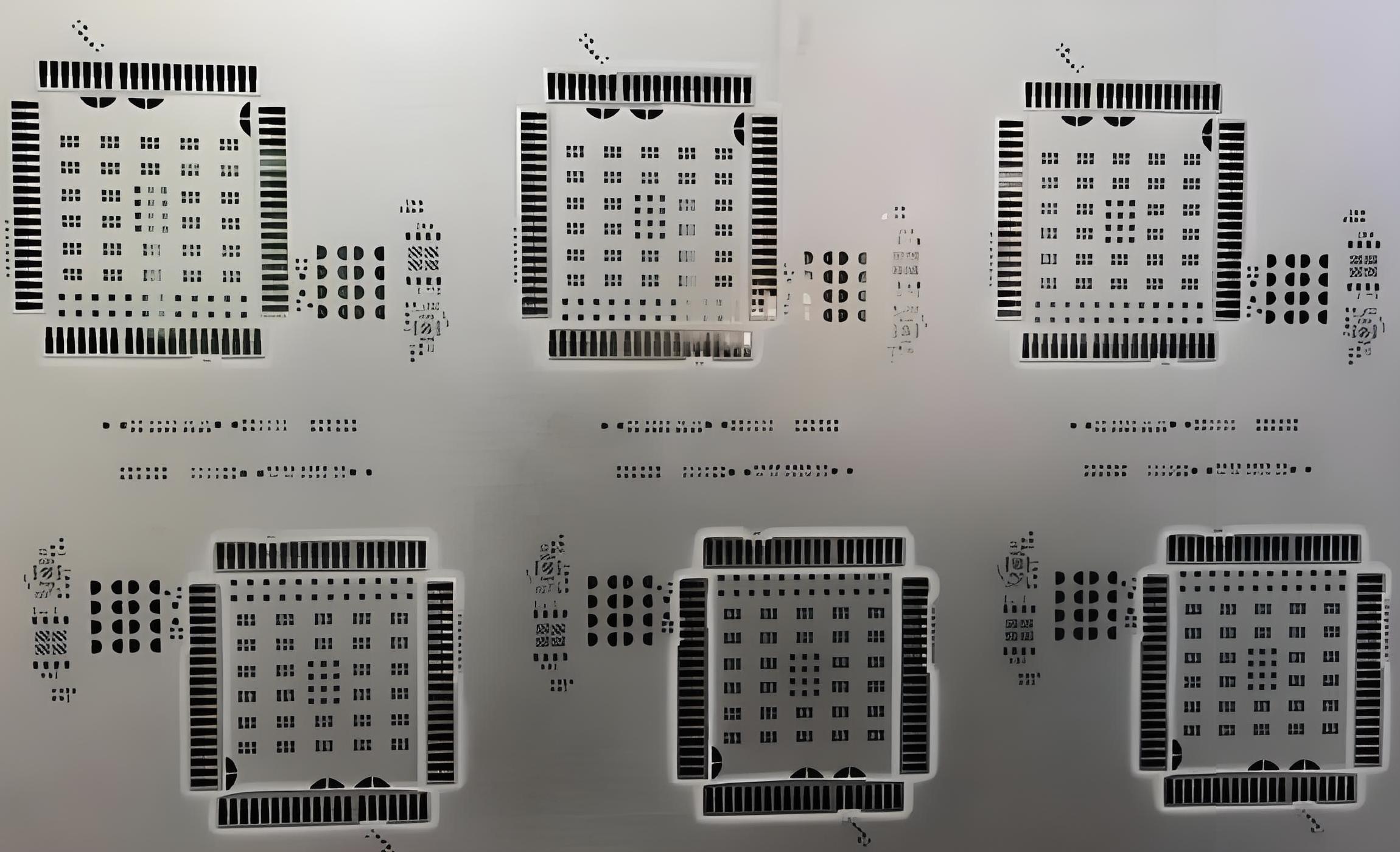
SMT (Surface-Mount Technology) stencils are specifically designed for the printing of solder paste onto PCBs, where surface-mount components (SMCs) will later be placed. These stencils are usually made from stainless steel or other materials that offer both precision and durability.

The SMT stencil works as a template to apply the precise amount of solder paste on the board’s pads, ensuring accurate soldering for all surface-mount components.

What is a SMT stencil printer? & PCB Prototype?

The stencil itself has fine holes or apertures precisely cut to match the footprint of the pads where components will be mounted. The size and shape of these holes depend on the component’s size and the required solder paste volume for that particular PCB design.

What is a PCB stencil printer?

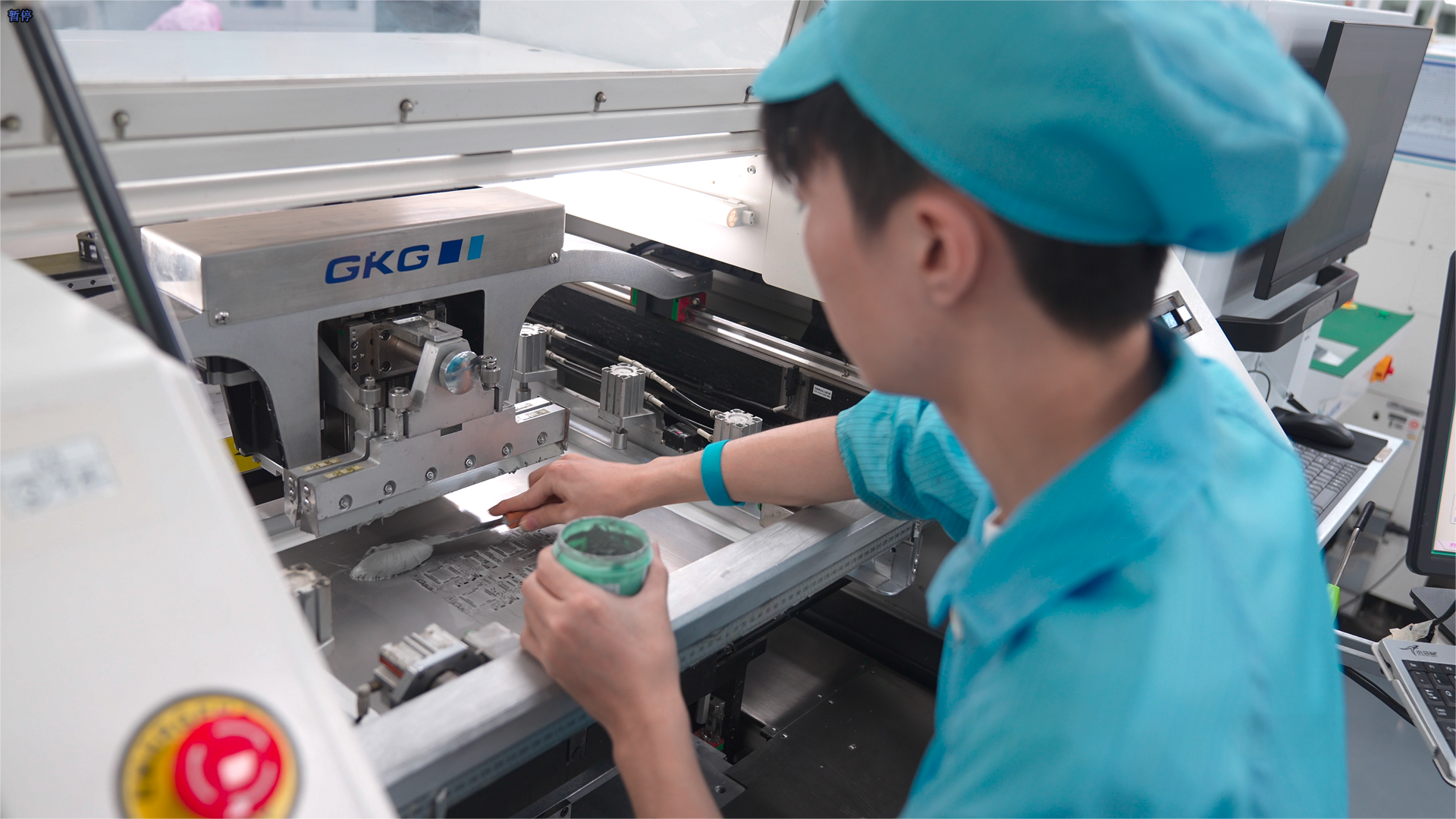
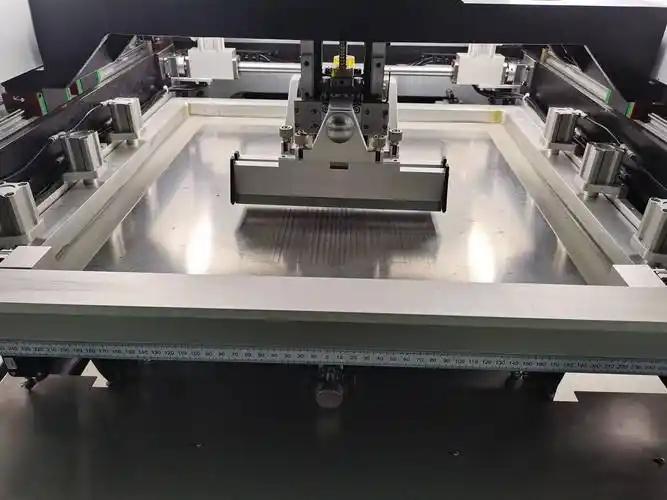
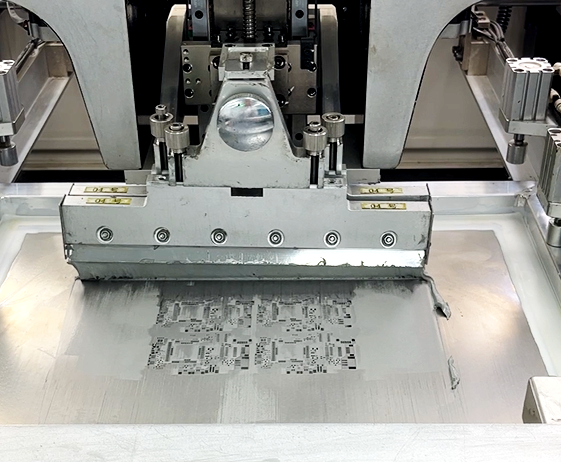
A PCB stencil printer is an automated machine used to apply solder paste to PCBs using SMT stencils. This printer typically involves a printing platform, stencil holder, squeegee, and a precise system for aligning the stencil to the board.

The printer’s main function is to ensure uniform solder paste deposition onto the PCB pads, which is essential for making strong electrical connections and ensuring reliable performance.

These printers are designed to handle high-volume production efficiently, and they are equipped with features to ensure accuracy and speed, minimizing human error and reducing production time.

Stencil printers are critical for achieving high-quality PCB prototypes, ensuring that the solder paste is evenly spread and properly aligned with the pads.

How to make screen printing stencils?

Creating screen printing stencils for PCBs requires a high level of precision, as these stencils need to be made with exact dimensions and placement for optimal solder paste application.

  • Design Creation: The first step involves creating a precise design that matches the PCB layout. This includes the exact pad dimensions and locations where solder paste is to be applied.
  • Stencil Material Selection: A suitable material, often stainless steel or nickel, is chosen for its ability to resist corrosion and its ability to hold fine details.
  • Laser Cutting or Etching: The stencil material is then cut or etched using lasers to form the holes in the stencil. The size of the holes directly correlates with the size of the pads and components.
  • Coating and Cleaning: Once the stencil is cut, it is often coated to prevent solder paste from sticking where it shouldn’t. Afterward, it is cleaned to ensure no contaminants that could affect the printing process.
  • Inspection: After the stencil is made, it’s inspected under a microscope to ensure that the holes are properly aligned and sized to apply the correct amount of solder paste.

How do SMT Stencil Printers work?

SMT stencil printers operate through a combination of automation and precision mechanics.

  • Board Placement: The PCB is first placed onto the printer’s platform, usually with an automated feeder system for high-volume production.
  • Stencil Alignment: The SMT stencil is then carefully aligned over the board’s pads using a vision system or manual adjustment. This ensures that the stencil’s holes line up precisely with the pads on the PCB.
  • Solder Paste Application: A squeegee is used to spread solder paste evenly over the stencil. The paste flows through the stencil holes onto the pads of the PCB. This process requires careful control of the squeegee pressure to ensure the paste is applied uniformly.
What is a SMT stencil printer? & PCB Prototype?
  • Removal of Excess Paste: After the solder paste is applied, the stencil is lifted off the PCB, leaving behind a fine layer of solder paste on the pads. The PCB is then ready for the next step—component placement.
  • Curing: The printed PCB is often passed through a reflow oven to cure the solder paste, bonding the components to the PCB securely.

Why use a PCB stencil?

Using a PCB stencil is important for several reasons:

  • Precision: It ensures that the correct amount of solder paste is applied to each pad, reducing the risk of faulty joints or shorts.
  • Consistency: Since the stencil is a reusable tool, it offers high repeatability. Every PCB in a batch receives the same quality of paste application.
  • Speed: Stencil printing is fast and can handle high volumes of production, making it ideal for industrial applications.
  • Cost-Effective: Compared to other methods, stencil printing is relatively inexpensive and doesn’t require as much time to set up.
What is a SMT stencil printer? & PCB Prototype?
  • Quality: Accurate paste application helps ensure that components are soldered properly, improving the overall quality and reliability of the PCB.

What are the different types of PCB stencils?

There are several types of PCB stencils designed for different types of applications. The most common types include:

  • Laser-cut Stencils: These stencils are made by cutting the material with a laser to produce precise apertures. They are highly accurate and suitable for high-density boards.
  • Electroformed Stencils: These are made by electroplating a stencil design onto a metal sheet. They are more durable and provide consistent paste deposits, especially for fine-pitch components.
  • Engraved Stencils: These are stencils that have been etched or engraved to create holes. While less commonly used than laser-cut or electroformed stencils, they still find applications in certain scenarios.
  • Fine-pitch Stencils: These stencils are used for PCBs that contain fine-pitch components, requiring very small apertures to apply solder paste precisely.

Conclusion:

In conclusion, SMT stencil printers are a vital part of the PCB manufacturing process, ensuring the precise application of solder paste.

At EBest Circuit (Best Technology), we specialize in advanced PCB manufacturing and prototype services, offering high-quality stencils and printing equipment for all your PCB needs. Email: sales@bestpcbs.com

What is the solder mask? PCB basic information

February 19th, 2025

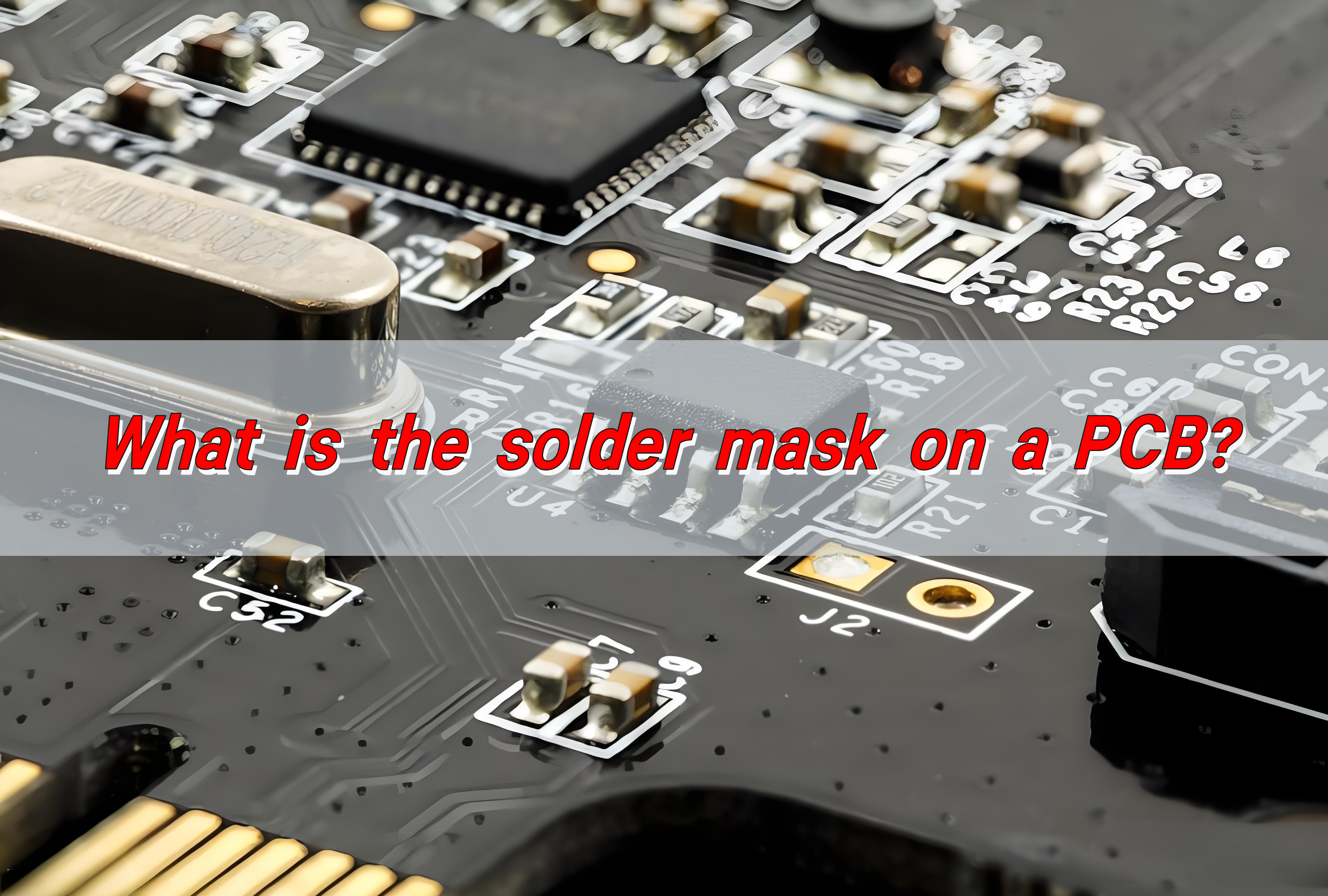
What is a solder mask? The solder mask on the PCB is a special coating covering the surface of the circuit board, usually composed of polymer resins, pigments and other materials. It is used to prevent solder from flowing into non-soldering areas during soldering, avoid short circuits, and protect copper lines from oxidation and environmental erosion.

What is the solder mask on a PCB?

What is solder mask layer on pcb?

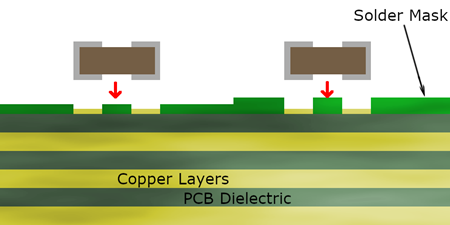
The solder mask layer is a thin polymer layer applied to the surface of a PCB to protect the copper traces from exposure to air, moisture, and solder during assembly. It is typically applied as a liquid and then cured to create a durable, insulating coating.

This layer ensures that solder only adheres to designated areas, such as component pads, while preventing unintentional connections that can cause electrical failures.

Most PCBs feature a solder mask on both sides, covering all traces except for the exposed pads where components will be soldered. The mask enhances the board’s mechanical strength, providing extra durability against physical damage.

What is a solder mask used for?

A solder mask serves multiple functions in PCB manufacturing and assembly, including:

What is the solder mask on a PCB?
  • Prevents Solder Bridging – Stops accidental solder connections between closely spaced components.
  • Protects Copper Traces – Shields against oxidation and environmental damage.
  • Improves Electrical Insulation – Reduces the risk of unintended electrical contact between conductive traces.
  • Enhances PCB Durability – Adds a layer of mechanical strength, preventing wear and tear.
  • Aesthetic Enhancement – Gives PCBs a smooth, uniform finish and a professional appearance.

By preventing shorts and increasing reliability, the solder mask plays an essential role in producing high-performance circuit boards.

What is the standard thickness of a solder mask layer?

The thickness of a solder mask depends on the manufacturing method and the type of PCB. The most common solder mask thickness values are:

  • Liquid Photoimageable (LPI) Solder Mask: 0.7 to 1.5 mils (18-38 microns)
  • Dry Film Solder Mask: 0.5 to 1.2 mils (12-30 microns)
  • UV Curable Solder Mask: 0.2 to 1.0 mils (5-25 microns)

A well-applied solder mask ensures proper adhesion and durability without interfering with PCB functionality.

How to apply solder mask to a pcb?

The solder mask application process follows precise steps to ensure uniform coverage and proper curing:

What is the solder mask on a PCB?
  • Surface Preparation – The PCB is cleaned to remove dust, oils, and oxidation.
  • Curtain Coating – Ideal for high-volume production.
  • Spray Coating – Suitable for complex multilayer boards.
  • Pre-baking – The board is partially cured to enhance adhesion.
  • UV Exposure – The solder mask is exposed to UV light through a photomask to define areas where it should remain.
  • Development & Cleaning – Uncured mask material is removed to reveal solder pads.
  • Final Curing – The PCB undergoes heat curing for maximum durability.

This process ensures a strong, long-lasting solder mask layer that can withstand harsh conditions.

How long does it take for solder mask to cure?

Curing time depends on the method used:

  • UV Curing: A few minutes with high-intensity UV exposure.
  • Thermal Curing: 30-60 minutes at 150°C (302°F) for enhanced durability.
  • Combination Curing: UV exposure followed by thermal curing for optimal strength.

Proper curing is crucial to prevent defects like delamination, peeling, or cracking.

Does solder mask color matter?

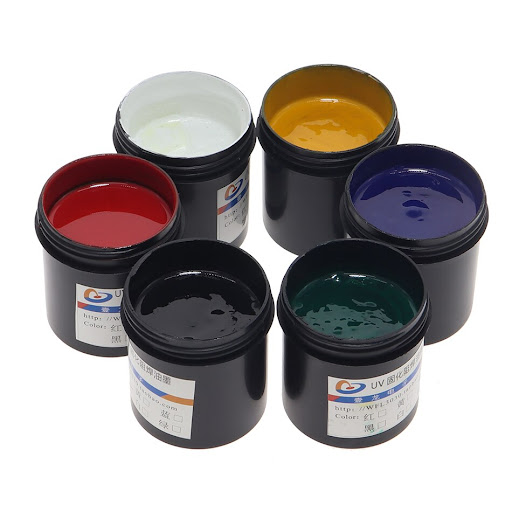
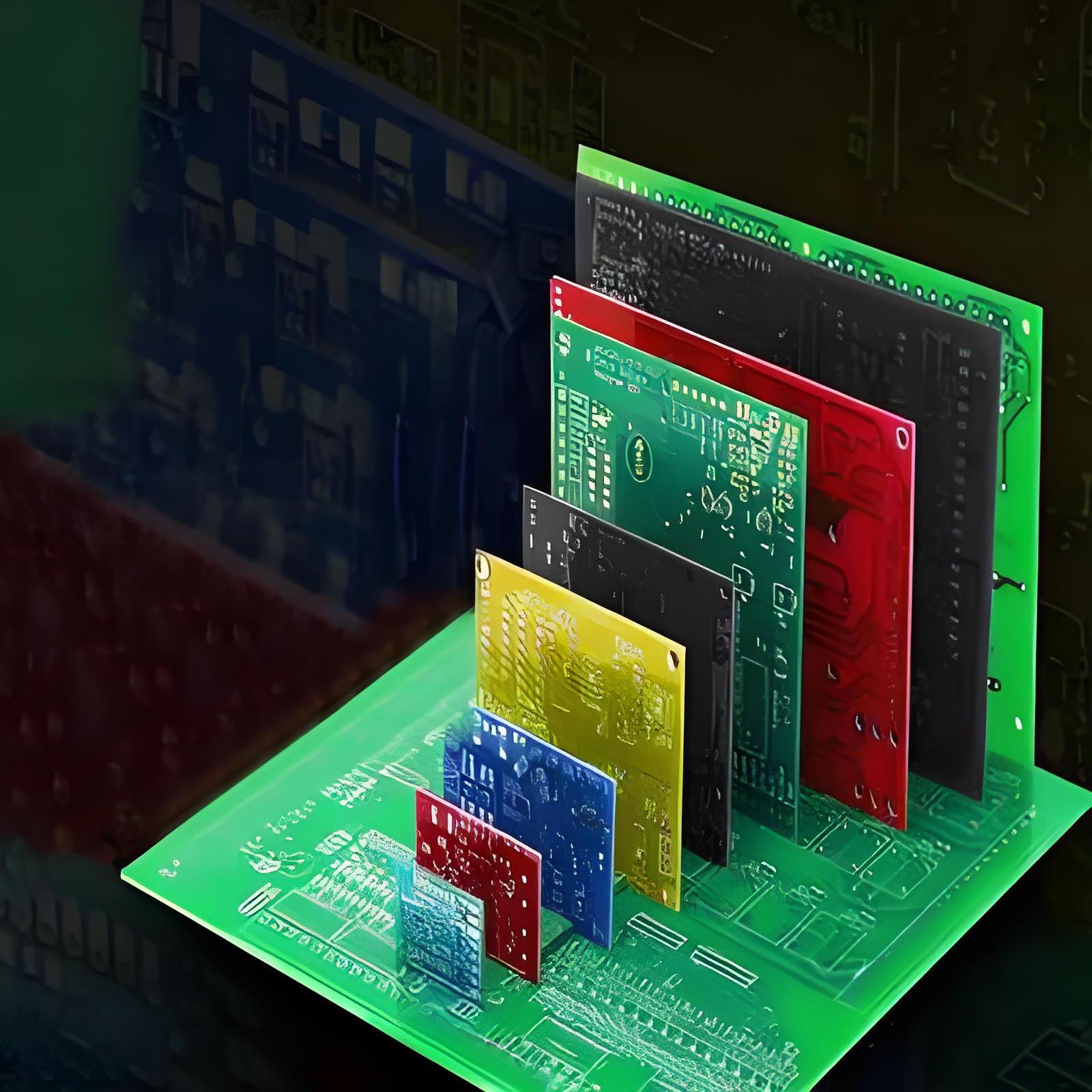
The color of a solder mask does not affect PCB performance, but it can impact visibility, aesthetics, and inspection efficiency. Common colors include:

What is the solder mask on a PCB?
  • Green – The industry standard for optimal contrast and easy inspection.
  • Blue – Provides high contrast with white silkscreen text.
  • Red – Used for high-end or custom branding.
  • Black – Reduces light reflection but makes defect detection harder.

While color selection is mostly aesthetic, certain colors may aid in automated optical inspection (AOI) processes.

Why is most solder mask green?

Green solder mask is widely used due to:

  • Best Visibility for AOI – The contrast makes defect detection easier.
  • Industry Standardization – Manufacturers are optimized for green solder mask production.
  • High Durability – Green solder masks tend to have better adhesion and chemical resistance.

However, manufacturers can produce PCBs with different solder mask colors based on specific project needs.

What is the difference between blue and green solder masks?

The key differences between blue and green solder masks are:

  • Green – Best for automated inspection, high contrast, and industry standard.
  • Blue – Vibrant appearance but slightly harder for AOI systems to detect defects.

Both options provide reliable protection, and the choice depends on aesthetic and inspection needs.

What is the difference between solder mask and solder paste?

Solder mask and solder paste serve different purposes in PCB assembly:

  • Solder Mask – A permanent protective coating that prevents unintended soldering and oxidation.
  • Solder Paste – A temporary material containing metal particles and flux, used to attach components before reflow soldering.

Both are essential for high-quality PCB production, but they are applied at different stages.

Conclusion:

In summary, the solder mask plays a critical role in ensuring the longevity and reliability of a PCB. It protects the copper traces, prevents soldering errors, and improves overall circuit board performance.

At EBest Circuit (Best Technology), we are committed to delivering high-quality PCBs, with precise solder mask application, to meet your specific needs. Contact us today for customized PCB solutions that will elevate your product’s performance. Email: sales@bestpcbs.com

PCB Stencil: What is Stencil in PCB & How to Use PCB Stencil

February 18th, 2025

What is a Stencil in PCB?

A PCB stencil is a precision tool used in the process of assembling printed circuit boards. Its main function is to apply solder paste to the board in a controlled manner, ensuring the paste only reaches the pads where components will be mounted. By creating uniform paste deposits, the stencil facilitates the correct soldering of components during the assembly process, contributing significantly to the quality and reliability of the final product.

PCB Stencil: What is Stencil in PCB & How to Use PCB Stencil

What Does a Stencil Do?

A PCB stencil plays several crucial roles in the PCB assembly process, including:

1. Applies Solder Paste: The primary function of a stencil is to accurately apply solder paste to the PCB. The paste is deposited onto the pads of the PCB through the openings in the stencil, ensuring the right amount of paste is used for each component.

2. Improve Precision: By using a stencil, manufacturers can achieve highly precise solder paste placement. This is especially important for fine-pitch components, where precision is key to avoiding defects like bridging or insufficient solder.

3. High Efficiency: Stencils speed up the solder paste application process, making it more efficient than manual paste application. This is particularly beneficial in high-volume manufacturing, where consistency and speed are vital.

4. Reduces Human Error: Using a stencil minimizes the chances of human error in solder paste application. This leads to more consistent and reliable results, reducing the likelihood of defects in the final product.

5. Facilitates High-Volume Production: Stencils are essential for mass production, allowing manufacturers to quickly and efficiently apply paste across multiple PCBs with high consistency.

6. Improves Reflow Soldering: With the right amount of solder paste applied, the stencil helps ensure that the reflow soldering process is carried out effectively, leading to strong and durable solder joints.

What is a PCB Stencil Consist of?

A PCB stencil consists of several crucial components that work together to ensure precise solder paste application. These elements include:

1. Frame

The frame is essential for holding the stencil in place during the application process. It is categorized into movable frames and fixed frames. The movable frame attaches the steel plate directly to the frame, allowing the template to be reused. On the other hand, the fixed frame uses adhesive to attach the wire mesh to the formwork. For optimal performance, a strong frame with uniform steel tension—typically between 35 and 48 N/cm²—is preferred. The normal fixed frame tension is between 35 N to 42 N, ensuring stability and accuracy.

2. Sheet Plates

High-quality stainless steel plates such as 301/304 stainless steel are commonly used because they offer excellent mechanical properties, significantly increasing the service life of the stencil. Other materials such as copper plates, nickel alloy, and polyester may also be used, depending on the specific application requirements.

3. Mesh

The mesh is used to fix the steel plates and formwork in place. There are two main types of mesh: stainless steel mesh and polymer polyester mesh. Stainless steel mesh is typically around 100 mesh and ensures stable tension, but it can deform and lose tension over time. Polyester mesh, on the other hand, is made from an organic fabric that doesn’t easily deform and has a longer service life, making it a more durable option for long-term use.

4. Adhesive (Glue)

The glue used in PCB stencils serves as the binding material that attaches the trellis frame to the steel sheet. It is an essential part of maintaining the integrity and stability of the stencil. The adhesive used needs to provide strong adhesion and be able to withstand heavy cleaning with various plate cleaners without losing its effectiveness.

Together, these components—frame, sheet, mesh, and glue—combine to form a PCB stencil that ensures accurate, consistent, and efficient solder paste application during the PCB assembly process.

What Are the Different Types of Stencils?

There are various types of PCB stencils, each designed for specific applications and production requirements:

  • Laser-Cut Stencils: These are the most accurate and commonly used type. Laser cutting provides high precision, making these stencils perfect for fine-pitch components or designs with intricate details.
  • Etched Stencils: Etching is an older method but still used for simpler projects. Though less precise than laser-cut stencils, etched stencils are still valuable for projects where absolute precision is not as critical.
  • 3D Printed Stencils: 3D printing technology has opened up a new avenue for creating PCB stencils. This method is ideal for low-volume or prototype PCB assembly, offering flexibility and faster turnaround times for custom designs.
  • DIY Stencils: For hobbyists or small-scale production, DIY methods using materials like adhesive-backed foil or plastic sheets can be used to create simple stencils. These are cost-effective but come with trade-offs in precision and durability.
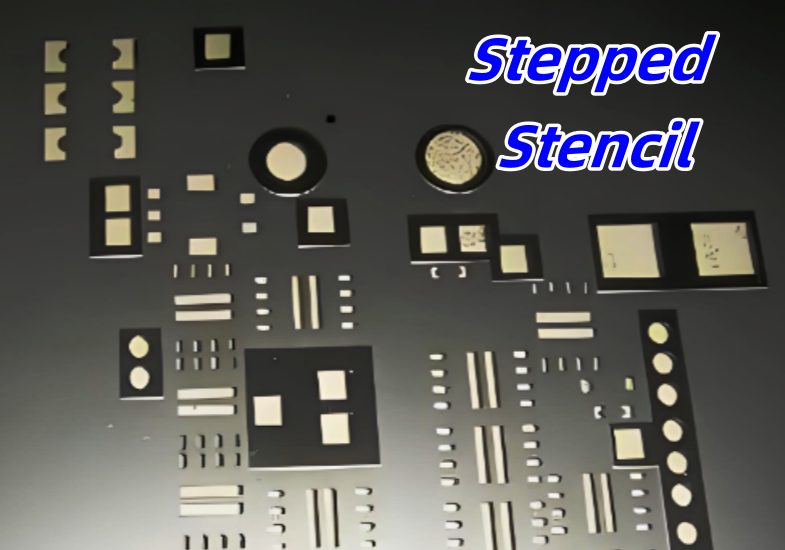
  • Stepped Stencil: A stepped stencil features varying thicknesses across different areas of the stencil. These thickness changes, or “steps,” allow the stencil to deposit different amounts of solder paste for different components on the same PCB. Stepped stencils are particularly useful when there is a mix of fine-pitch components and larger, more spaced-out components on the same board. Below is a typical photo of stepped stencil.
PCB Stencil: What is Stencil in PCB & How to Use PCB Stencil

PCB Stencil HS Code

The HS code for PCB stencils is 7314490000.

This code is specifically used for steel product, which includes PCB stencils used in the manufacturing process. It’s important to use the correct HS code for shipping and customs purposes to ensure smooth international transactions.

Warm Notice:

It’s always advisable to check with your local customs authority for any updates or specific requirements based on your region or the material type.

PCB Stencil Thickness

The thickness of a PCB stencil is an important factor in ensuring the correct amount of solder paste is applied. Generally, the stencil thickness ranges between 0.08 mm to 0.20 mm.

And it depends on the smallest spacing of the components on the PCB.

  • For BGAs or ICs with a 0.35mm pitch, a stencil of 0.08mm or thinner is recommended. If the entire PCB features such fine-pitch components, a stencil thickness of 0.06mm or even 0.05mm is more suitable.
  • For BGAs or ICs with a pitch of 0.4mm or greater, a 0.1mm thick stencil is acceptable. In some cases, for BGAs with a slightly larger pitch, a 0.08mm thick stencil may also be considered. When dealing with BGAs or ICs that have a pitch of 0.5mm or more, a 0.12mm thick stencil is the optimal choice.

Moreover, the stencil thickness affects both its suitability and lifespan. Thinner stencils, like 0.08mm, are ideal for high-precision solder points. On the other hand, thicker stencils, such as 0.12mm, are better for scenarios where component spacing is larger, ensuring greater stability and strength.

PCB Stencil Material

The material selection for PCB stencils influences the overall performance and durability of the tool. Common materials include:

  • Stainless Steel: As the most popular option, stainless steel provides the necessary durability, resistance to corrosion, and ease of cleaning required for frequent use in high-precision environments.
  • Nickel: While not as common as stainless steel, nickel-based stencils are valued for their flexibility and wear resistance. They are often chosen for specific applications requiring extra resilience.

The material selected must align with the type of PCB being produced, ensuring long-term effectiveness.

How to Make a PCB Stencil?

Creating a PCB stencil requires both precision and attention to detail. The process typically involves:

1. Designing the Stencil

The stencil design is created based on the PCB layout, ensuring the paste is applied to the correct pads.

2. Selecting the Material

Choose either stainless steel or nickel, depending on the project requirements.

3. Cutting or Etching the Design

For laser-cut stencils, a laser cutter is used to cut out the design with high precision. Etched stencils use chemical etching to create the openings.

4. Testing the Stencil

After the stencil is manufactured, it is tested to ensure that it meets the design specifications and can transfer solder paste accurately.

How Do You Solder a PCB with Stencils?

Soldering a PCB with a stencil involves several steps:

1. Place the PCB: The PCB is positioned on a flat surface or assembly board.

2. Align the Stencil: The PCB stencil is carefully placed on top of the PCB, ensuring that the openings align with the pads.

3. Apply Solder Paste: Solder paste is applied over the stencil using a squeegee or automated machine, filling the openings on the stencil.

PCB Stencil: What is Stencil in PCB & How to Use PCB Stencil

4. Remove the Stencil: The stencil is carefully lifted off, leaving solder paste on the pads.

5. Place Components: Components are placed onto the paste before the board is sent through a reflow oven, where the paste melts and creates strong, reliable solder joints.

PCB Stencil: What is Stencil in PCB & How to Use PCB Stencil

How Much Does a PCB Stencil Cost?

The cost of a PCB stencil varies depending on the material, thickness, design complexity, and order volume. On average:

  • Laser-cut stencils can range from $50 to $200 for single units, with bulk orders offering reduced prices.
  • Etched stencils tend to be more affordable, typically priced around $30 to $100 depending on size and complexity.
  • 3D printed stencils are generally more expensive due to the novelty of the technology, with prices starting around $100 for small projects.

For high-volume production, manufacturers often work with suppliers to negotiate bulk pricing.

Stencil PCB Printers vs. PCB Stencils

While PCB stencils manually apply solder paste, PCB stencil printers are automated machines designed for mass production. The printer ensures the paste is applied consistently and accurately across the entire board, which is ideal for high-volume manufacturing.

The main difference is in automation. Stencil printers remove the need for manual labor, reducing the chance of human error and speeding up production time. On the other hand, manual PCB stencils are still effective for small-scale or custom PCB production, though they may require more time and care.

PCB Stencil Manufacturer – EBest Circuit (Best Technology)

At EBest Circuit (Best Technology), we specialize in producing high-quality PCB stencils designed to meet the most demanding needs of the PCB assembly industry. With over 18 years of experience, we provide custom stencil solutions, ensuring your production runs smoothly and efficiently.

Whether you’re looking for a laser-cut, etched, or 3D printed stencil, our team offers precision and flexibility to help bring your designs to life. Choose EBest Circuit (Best Technology) for your PCB stencil needs and experience the difference in quality and service. For more information, e-mail us at sales@bestpcbs.com.

PCB Protection: What is PCB coating?

February 18th, 2025

PCB coating is a layer of special material applied on the surface of PCB to protect the circuit board from environmental factors (such as moisture, dust, chemical corrosion, etc.) while improving its electrical insulation, welding performance and mechanical strength. Common coating types include organic coating, metal plating, conformal coating, etc., which are applied by spraying, dipping or brushing.

PCB Protection: What is PCB coating?

What is conformal coating on pcb?

Conformal coating is a protective layer applied to a PCB to shield the board’s components from external contaminants like dust, moisture, and chemicals.

Unlike encapsulation, which surrounds the entire assembly, conformal coating is a thin, flexible layer that conforms to the shape of the PCB and its components. The coating allows the PCB to remain functional while also protecting it from environmental stresses.

The purpose of conformal coating is to enhance the reliability and longevity of PCBs by protecting them from elements that could cause short circuits, corrosion, or other types of damage.

It is particularly critical in industries where the PCB is exposed to harsh environments or where the failure of a PCB could have severe consequences.

Why conformal coating is used in pcb?

There are several reasons why conformal coating is essential for PCBs:

  • Protection from Moisture: Moisture is one of the biggest threats to PCBs. The coating provides a moisture-resistant barrier, reducing the risk of corrosion and electrical shorts.
PCB Protection: What is PCB coating?
  • Dust and Contaminant Shielding: Dust, dirt, and other environmental contaminants can easily find their way onto uncoated PCBs. A conformal coating prevents this by creating a physical barrier.
  • Chemical Resistance: Many industrial environments expose PCBs to chemicals, oils, and solvents. A good conformal coating can offer protection against these substances, preserving the integrity of the PCB.
  • Electrical Insulation: In certain cases, conformal coatings help isolate electrical components from one another, preventing unwanted connections or short circuits.
  • Thermal Resistance: In some instances, conformal coatings can help dissipate heat, allowing the PCB to operate more efficiently in high-temperature environments.

In summary, PCB coatings ensure better reliability, enhanced performance, and longer lifespan, especially in medical, automotive, and aerospace sectors.

Can conformal coating be removed?

Yes, conformal coating can be removed, though the process is often delicate and requires careful handling.

PCB coating removal is generally done when there’s a need for repair, modification, or redesign of the PCB. However, the removal process must be approached with caution to prevent damaging the underlying components.

Some coating removal techniques include using:

  • Chemical Strippers: These are special solvents designed to break down and dissolve the coating.
  • Mechanical Methods: Using tools like abrasive pads or brushes, the coating can be scrubbed off.
  • Heat Application: For certain coatings, heat guns or infrared ovens can soften the coating, making it easier to remove.

Each method should be selected based on the type of coating and the sensitivity of the PCB components.

How to remove conformal coating from pcb?

  • Choose the Right Method: Select a removal technique based on the type of coating and the nature of the PCB.
  • Use Protective Gear: Always wear gloves, goggles, and a mask to avoid exposure to chemicals and solvents.
  • Apply Solvent: If using a chemical stripper, apply it carefully to the PCB using a brush or cloth. Allow the solution to sit for a few minutes to break down the coating.
  • Scrub Off the Coating: Use a soft brush or sponge to scrub the coating off. Avoid using hard bristles that could damage the PCB.
  • Rinse and Dry: Once the coating has been removed, rinse the PCB with water or alcohol to remove any chemical residues. Allow the PCB to dry completely before reapplying a new coating or proceeding with repairs.

What is the best coating for PCB?

The best coating for PCB depends on various factors, including the environment in which the PCB will operate, the level of protection needed, and the specific requirements of the project.

  • Acrylic Coating: This is one of the most common PCB coatings due to its excellent moisture resistance, ease of application, and good overall protection. It is clear, which makes it ideal for applications where visual inspection is needed.
  • Silicone Coating: Known for its flexibility and high-temperature resistance, silicone coating is often used in PCBs that will be exposed to high heat or thermal cycling.
PCB Protection: What is PCB coating?
  • Polyurethane Coating: Offering high durability and excellent resistance to environmental factors, polyurethane coating is ideal for industrial applications that require both moisture and chemical resistance.
  • Epoxy Coating: Epoxy coatings provide strong protection against mechanical wear and harsh environments but are less flexible than other coatings.
  • Parylene Coating: Parylene is a highly effective coating for PCBs, offering protection from chemicals and moisture while maintaining a very thin and uniform layer. It is commonly used in medical and aerospace applications.

Each type has its advantages, so it’s essential to select the one that best fits your needs.

What is the cheapest PCB finish?

When it comes to PCB finishes, the cost can vary widely depending on the type of finish chosen.

Acrylic coatings are often considered among the most affordable options, providing good protection for general applications.

However, when specific environmental conditions require more advanced coatings (like Parylene or silicone), the cost can be higher.

Opting for a lower-quality coating may result in increased wear and tear or reduced protection, leading to failures over time.

How to measure conformal coating thickness?

Too thick a coating can cause unwanted stress on components, while too thin a layer might not provide sufficient protection.

The most common methods for measuring coating thickness are:

  • Micrometers: Special digital micrometers can be used to measure the thickness of the coating with great precision.
  • Ultrasonic Testing: This non-destructive method uses sound waves to measure the thickness of coatings.
  • Coating Thickness Gauges: These handheld tools use electromagnetic induction or eddy current technology to measure coating thickness quickly and accurately.

It’s vital to measure coating thickness regularly during the application process to maintain consistent protection across the entire PCB.

What are the drawbacks of conformal coating?

While conformal coatings offer numerous benefits, there are some drawbacks to consider:

  • Limited Protection for Physical Damage: While they protect against moisture and contaminants, coatings don’t provide protection against physical impacts or harsh mechanical stresses.
  • Coating Removal Complexity: Removing conformal coatings can be tricky and requires specialized techniques and tools.
  • Potential for Uneven Coating: If the coating process is not executed correctly, it could result in areas where the coating is too thick or thin, leading to reduced protection or malfunctioning.
  • Increased Component Stresses: Some coatings, especially those that are too thick or rigid, can put additional strain on the components, leading to potential damage over time.

Despite these drawbacks, the benefits of conformal coatings often outweigh the disadvantages, especially when dealing with sensitive electronics exposed to harsh environments.

How do you apply conformal coating to PCB?

Applying conformal coating to PCBs can be done through several methods, including:

  • Spraying: Spray applications are one of the most common methods for applying conformal coatings. It provides even coverage and is suitable for large-scale production.
PCB Protection: What is PCB coating?
  • Dipping: In this method, the entire PCB is dipped into a bath of conformal coating material, allowing it to coat the board evenly.
  • Brushing: For smaller batches or repairs, brushing is a viable method.
  • Selective Coating Machines: These machines can apply conformal coatings only to the areas of the PCB that need protection, minimizing wastage.

Each method has its benefits, and the choice depends on the specific project and production needs.

Conclusion:

PCB coating is an essential protective measure that ensures PCBs can withstand environmental challenges while maintaining functionality.

At EBest Circuit (Best Technology), Our experienced engineers will help you choose the best solution for your project, ensuring your PCBs are protected and reliable. For more information, contact us at sales@bestpcbs.com

PCB soldering process: What is the PCB soldering temp?

February 17th, 2025

PCB soldering temp varies due to different soldering processes and materials. Manual soldering temperature is generally between 300℃ and 350℃; wave soldering temperature is usually between 245℃ and 265℃; reflow zone temperature of reflow soldering is generally between 210℃ and 240℃. The lead-free soldering standard is 260℃±5℃, while the lead soldering standard is 230℃±5℃.

PCB soldering process: What is the PCB soldering temp?

What is the best soldering temperature for PCB?

The ideal soldering temp depends on the type of solder used. Most lead-based solders melt at around 183°C (361°F), while lead-free solders require about 217-227°C (423-441°F).

For manual soldering, a soldering iron temperature of 300-350°C (572-662°F) works well for most applications. Using a temperature-controlled soldering iron helps maintain precision.

For automated soldering, such as wave or reflow soldering, temperature profiles are more complex. A gradual heating and cooling process ensures strong and reliable joints.

Do you need flux to solder PCB?

Yes, flux is essential. It removes oxidation, allowing solder to flow smoothly and bond properly. Without flux, solder may form weak or unreliable joints.

Most solder wires have flux inside, but extra flux may be needed for complex PCB assemblies. For surface-mount devices (SMDs), a no-clean or rosin flux is commonly used.

Using the right flux improves soldering efficiency and enhances the durability of the connections.

What temperature does PCB solder reflow at?

Reflow soldering is used for SMD assembly. It follows a controlled temperature profile to melt solder paste and bond components.

PCB soldering process: What is the PCB soldering temp?

A typical lead-free reflow profile includes:

  • Preheat: 150-200°C (302-392°F)
  • Soak: 200-217°C (392-423°F)
  • Reflow peak: 230-250°C (446-482°F)
  • Cooling: Gradual cooling to below 180°C (356°F)

Lead-based solder requires lower peak temperatures, around 215-225°C (419-437°F).

What temperature do you solder header pins to PCB?

Header pins require a stable temperature between 320-350°C (608-662°F) for effective soldering.

Using a lower temperature can result in cold joints. Higher temperatures may damage the plastic housing or PCB pads. A controlled approach ensures strong electrical and mechanical connections.

Flux application also helps the solder flow better, improving joint quality.

What temperature is flexible PCB soldering?

Flexible PCBs (FPCs) are heat-sensitive. Excessive heat can damage the substrate. A controlled soldering temperature of 280-320°C (536-608°F) works best.

For reflow soldering, a peak temperature of 230-245°C (446-473°F) is common. Careful handling and gradual heating prevent warping or delamination.

Low-temperature solder pastes can also be used to reduce thermal stress on flex circuits.

What temperature is SMD soldering?

SMD soldering involves reflow, hot air, or manual soldering techniques. The temperature depends on the method used:

  • Reflow soldering: 230-250°C (446-482°F) peak temperature.
  • Hot air rework: 280-350°C (536-662°F) depending on component size.
  • Manual soldering: 300-350°C (572-662°F) with a fine-tip iron.

Precise temperature control is critical to avoid thermal damage to small SMD components.

What temperature should SMT soldering be?

Surface-mount technology (SMT) soldering mainly relies on reflow soldering, where temperature must be carefully controlled.

PCB soldering process: What is the PCB soldering temp?

A standard SMT soldering profile includes:

  • Preheat: 150-180°C (302-356°F)
  • Soak: 180-220°C (356-428°F)
  • Peak: 230-250°C (446-482°F) for lead-free solder
  • Cooling: Gradual cooling to prevent thermal stress

SMT soldering ensures high precision and reliability, making it the preferred method for modern PCB assembly.

What wattage for pcb soldering?

Soldering iron wattage impacts performance. For PCB work, 30-60W irons are ideal.

  • 30W-40W: Suitable for fine soldering tasks.
  • 50W-60W: Best for general PCB soldering, including through-hole and SMD.
  • Above 60W: Needed for heavy-duty tasks, like soldering large connectors.

A temperature-controlled soldering station provides better accuracy and prevents overheating.

What is the temperature range for pcb soldering process?

The full temperature range for PCB soldering varies by method:

PCB soldering process: What is the PCB soldering temp?
  • Manual soldering: 300-350°C (572-662°F)
  • Wave soldering: 245-265°C (473-509°F)
  • Reflow soldering: 230-250°C (446-482°F)
  • Hot air rework: 280-350°C (536-662°F)

Different materials and components may require adjustments. Following the right temperature range ensures better quality and durability.

Conclusion:

Soldering temp is critical for PCB assembly. The right temperature ensures strong, reliable joints while preventing component damage.Each soldering method requires specific temperature settings. Whether manual soldering, SMT, or reflow, precision control is key.

For expert PCB soldering and assembly solutions, trust EBest Circuit (Best Technology). Contact us at sales@bestpcbs.com for expert PCB solutions.

What is flux in soldering? PCB assembly and soldering

February 14th, 2025

What is flux in soldering? Soldering is a vital process in electronics manufacturing. It ensures secure connections between components, creating a stable and efficient circuit.

One crucial element in soldering is flux. This chemical agent plays an essential role in improving solder adhesion, preventing oxidation, and ensuring a clean joint.

What is flux in soldering? PCB assembly and soldering

Without flux, achieving strong and long-lasting soldered connections would be difficult. It eliminates contaminants and promotes smooth solder flow.

What is flux in soldering?

Flux is a chemical substance used in soldering to remove oxidation from metal surfaces and improve solderability. It helps solder flow smoothly, creating strong and conductive joints. Without flux, metal surfaces would oxidize, making it difficult for solder to bond properly.

In PCB assembly, flux ensures that solder adheres well to components and circuit traces. It plays a critical role in maintaining the reliability of electronic devices.

Whether working with through-hole or surface-mount technology (SMT), using flux improves the overall soldering process.

What is the purpose of flux in soldering?

Flux serves multiple purposes in the soldering process:

  • Removes oxidation – Eliminates surface oxides that hinder solder adhesion.
What is flux in soldering? PCB assembly and soldering
  • Prevents re-oxidation – Forms a protective layer to keep metal surfaces clean.
  • Improves solder wetting – Helps solder spread evenly, ensuring a strong bond.
  • Enhances conductivity – Ensures a clean and stable electrical connection.

By using flux, soldering becomes more efficient and produces high-quality, durable joints. It is an essential component in both manual and automated soldering processes.

Is flux necessary for soldering?

Yes, flux is essential for effective soldering. Without it, solder may not properly bond to metal surfaces, leading to weak joints and poor conductivity.

The oxidation that forms on metal surfaces prevents proper adhesion, making flux a necessary step in the process.

For PCB assembly, flux is particularly important. It ensures that tiny solder joints remain clean and reliable. Some solder wires contain flux within their core, but additional flux may be required for complex soldering tasks.

What is flux made of?

Flux is composed of various chemical agents designed to clean metal surfaces and improve solder flow. The primary ingredients include:

  • Rosin or synthetic resin – Helps remove oxidation and enhances solder adhesion.
  • Activators – Chemically break down oxides and contaminants.
What is flux in soldering? PCB assembly and soldering
  • Solvents – Keep the flux in liquid or paste form for easy application.

Different formulations exist depending on the type of soldering process. Selecting the right flux ensures optimal results and long-term solder joint reliability.

How to use solder flux?

Using solder flux correctly ensures clean and strong joints. Follow these steps for proper application:

  • Apply flux – Use a brush, pen, or syringe to apply a thin layer to the joint.
  • Heat the joint – Use a soldering iron to warm the metal surfaces.
  • Add solder – Introduce solder to the heated joint, allowing it to flow evenly.
  • Let it cool – Allow the joint to solidify naturally for a strong bond.
  • Clean excess flux – Remove residue to prevent corrosion or contamination.

Following these steps ensures better soldering results and long-lasting electrical connections.

What are the types of flux?

Flux comes in different forms, each designed for specific soldering applications:

  • Rosin flux – Commonly used in electronics; provides strong cleaning properties.
  • Water-soluble flux – Easy to clean; ideal for high-precision soldering.
  • No-clean flux – Leaves minimal residue, eliminating the need for post-cleaning.
  • Acid flux – Used for plumbing and metalwork; not suitable for electronics.

Selecting the right flux depends on the soldering environment and the type of components being assembled.

What is the difference between solder flux and solder paste?

Although both are used in soldering, they serve different purposes:

What is flux in soldering? PCB assembly and soldering
  • Solder flux – A cleaning agent that removes oxidation and improves solder flow.
  • Solder paste – A mixture of flux and solder particles used in SMT assembly.

Flux is often applied separately in manual and wave soldering, while solder paste is essential in automated PCB manufacturing. Both materials play a critical role in ensuring high-quality solder joints.

Conclusion:

Flux is a fundamental component in soldering, playing a key role in achieving strong, clean, and conductive connections.Choosing the right flux and applying it correctly ensures reliable performance in electronic assemblies.

For high-quality PCB assembly with professional soldering techniques, contact us at sales@bestpcbs.com

What is the smt meaning? SMT meaning manufacturing

February 12th, 2025

What is the smt meaning? SMT, or Surface Mount Technology, is an advanced manufacturing process that directly mounts electronic components on the surface of a printed circuit board (PCB). It replaces the traditional through-hole insertion technology with an efficient and precise automated production method, and achieves miniaturization and high-density integration of electronic components.

What is the smt meaning? SMT meaning manufacturing

What does smt mean?

SMT stands for Surface Mount Technology, a revolutionary approach to assembling electronic circuits. Instead of using traditional through-hole components, where pins pass through drilled holes, SMT enables components to be directly mounted onto the surface of a PCB.

This advancement has led to more compact and lightweight electronic devices, transforming industries such as consumer electronics, automotive, medical, and aerospace. By eliminating the need for large holes and complex routing, SMT increases design flexibility and enhances overall performance.

What does SMD and SMT stand for?

  • SMD (Surface Mount Device): These are electronic components specifically designed for surface mounting. They are smaller than through-hole components and have no long leads, allowing for denser and more complex PCB layouts.
  • SMT (Surface Mount Technology): This refers to the entire process of placing, soldering, and inspecting SMDs on a PCB. SMT is now the standard in electronics manufacturing, replacing traditional methods due to its superior efficiency, cost-effectiveness, and capability to handle high-density designs.

What are the different types of SMT?

SMT technology encompasses various component types and mounting techniques. The main types include:

  • Passive Components: Small resistors, capacitors, and inductors designed to be surface-mounted, helping regulate voltage and current flow.
  • Active Components: Transistors, diodes, and integrated circuits that drive processing and logic functions in electronic devices.
  • Fine-Pitch Components: Used in high-performance applications, these components have closely spaced terminals that require precision soldering.
What is the smt meaning? SMT meaning manufacturing
  • Ball Grid Array (BGA): A package type where solder balls are placed under the component, offering improved thermal performance and electrical connections.
  • Chip-Scale Packages (CSP): Miniature packages designed to be nearly the same size as the silicon chip itself, essential for mobile and compact devices.
  • Quad Flat Package (QFP): Integrated circuits with leads extending from four sides, commonly used in microcontrollers and processors.

What are the features of SMT?

SMT offers numerous advantages that have made it the preferred technology in PCB assembly:

  • Compact Design: SMT components are much smaller than their through-hole counterparts, allowing for lightweight and space-saving designs.
  • Higher Component Density: With no need for drilled holes, more components can fit within a given board area, increasing functionality.
  • Improved Electrical Performance: Shorter electrical paths minimize resistance and inductance, enhancing signal transmission speed and reducing power loss.
  • Automated Assembly: SMT allows for high-speed, automated component placement, reducing human error and increasing production efficiency.
  • Lower Manufacturing Costs: Reduced material waste, automated processing, and high production throughput lead to significant cost savings.
  • Better Thermal Management: SMT designs allow for better heat dissipation, which is crucial for high-power applications.
  • Stronger Mechanical Performance: Components mounted using SMT are more resistant to vibrations and mechanical stress, making them ideal for aerospace and automotive industries.

Why is SMT used?

The widespread adoption of SMT stems from its numerous benefits in electronics manufacturing. Companies prefer SMT because:

  • It enables miniaturization: Modern electronic devices require compact and lightweight designs, which SMT facilitates.
What is the smt meaning? SMT meaning manufacturing
  • It enhances production speed: Automated SMT assembly lines can place thousands of components per hour, boosting manufacturing efficiency.
  • It improves product reliability: Stronger mechanical connections and reduced solder joint defects lead to more durable and long-lasting products.
  • It reduces manufacturing costs: Automated SMT processes lower labor costs while increasing yield rates.
  • It supports high-performance applications: SMT minimizes electrical noise, making it suitable for fast processors, 5G technology, and other advanced applications.

What are the processes of SMT?

The SMT assembly process consists of multiple steps, each requiring precision and expertise to ensure high-quality PCB production:

  • PCB Preparation: The bare PCB is cleaned to remove contaminants and treated with coatings to prevent oxidation and improve solder adhesion.
  • Solder Paste Application: Solder paste, a mixture of flux and metal particles, is applied to PCB pads using stencils or jet printing, ensuring precise placement.
  • Component Placement: Automated pick-and-place machines position SMDs onto the solder-pasted PCB with extreme accuracy, ensuring proper alignment.
  • Reflow Soldering: The assembled PCB is passed through a controlled heating process, where the solder paste melts and forms strong electrical connections.
  • Inspection and Quality Control: Techniques such as Automated Optical Inspection (AOI) and X-ray testing detect defects like misalignment, solder bridging, and voids.
  • Final Cleaning and Packaging: Flux residues are removed, and the PCBs are tested and packaged for delivery to clients.
  • Functional Testing: Completed PCBs undergo rigorous functional tests to verify performance and compliance with industry standards.

What is SMT and THT?

Two primary methods exist in PCB assembly: Surface Mount Technology (SMT) and Through-Hole Technology (THT). While SMT has largely replaced THT, both technologies serve specific applications.

Key Differences:

  • Size & Weight: SMT components are smaller and allow for lighter devices, whereas THT components are larger and bulkier.
What is the smt meaning? SMT meaning manufacturing
  • Assembly Efficiency: SMT supports automation, enabling fast and precise production, while THT often requires manual assembly, making it slower.
  • Application Suitability: SMT is preferred for consumer electronics, telecommunications, and medical devices, whereas THT is used in military, aerospace, and high-power applications.
  • Reliability: SMT offers excellent electrical performance, while THT provides stronger mechanical bonds for applications exposed to extreme stress.

Conclusion:

Surface Mount Technology has revolutionized modern electronics, making devices smaller, more powerful, and cost-efficient. With its high-speed production, improved electrical performance, and ability to support complex designs, SMT has become the industry standard.

For high-quality SMT PCB solutions, reach out to EBest Circuit (Best Technology) at sales@bestpcbs.com