PCB manufacturing PCB manufacturing
Home > Blog

What are COB led boards? COB LED Strip

January 8th, 2025

What are COB led boards? COB led boards are an LED light source that uses Chip On Board technology. It directly encapsulates multiple LED chips on the same substrate and then connects them to the circuit board through a special connection technology. Compared with traditional LED light sources, COB led boards share a heat dissipation substrate for multiple LED chips, which can dissipate heat more effectively and improve heat dissipation efficiency.

What are COB led boards? COB LED Strip

What are COB led boards?

COB led boards, full name Chip On Board, is a high-power LED light source that directly encapsulates multiple LED chips on an aluminum substrate.

COB led boards connect multiple LED chips in parallel, place them side by side on the same substrate, and emit and focus light by sharing the same optical lens.

COB led boards are mainly used in fields with high requirements for light efficiency and brightness, such as outdoor lighting, automotive lighting, backlighting, etc. In addition, COB led boards are also used in ultra-high-definition display solutions, especially in small micro-pitch LED display screens, which can effectively improve viewing experience and safety.

How to design COB led boards?

Designing COB (Chip On Board) led boards requires the following key steps and technical points to be considered:

1. Substrate selection

  • Material selection: Substrates are usually made of materials with high thermal conductivity and high reflectivity. Metal substrates are relatively low in cost, while ceramic substrates have better heat dissipation performance.

2. Packaging

  • Coating protective layer: Apply a layer of organic glue or resin on the LED chip and leads to protect the chip and solder joints and prevent damage to them from the external environment.
  • Lens design: According to application requirements, lenses can be added to the surface of the led boards to optimize light distribution and improve lighting effects.

3. Heat dissipation design

  • Heat dissipation structure: The heat dissipation of COB led boards mainly depends on the substrate, so the heat dissipation performance of the substrate is very important. Auxiliary heat dissipation measures such as heat sinks and heat pipes can also be used to further improve the heat dissipation efficiency.
  • Chip arrangement: Reasonably design the chip arrangement spacing to avoid heat accumulation caused by too dense chips.

4. Optical design

  • Color temperature and color rendering index: Select the appropriate color temperature and color rendering index according to the application scenario.
  • Mixed light design: For COB LED boards with multiple primary colors, it is necessary to reasonably design the arrangement and driving mode of LED chips of different colors to achieve a good mixed light effect.

5. Circuit design

  • Drive circuit: Design a suitable drive circuit to ensure the stable operation and good electrical performance of the LED chip.
  • Intelligent control: For application scenarios that require intelligent control, an intelligent dimming system can be integrated to adjust the lighting brightness according to actual usage.

How to make COB led boards?

The production of COB led boards can be summarized into the following steps:

1. Prepare the substrate

Select the appropriate substrate material and clean it to ensure the smooth progress of the subsequent process.

2. Glue dispensing and mounting

Apply an appropriate amount of conductive glue on the LED chip placement point on the substrate to achieve electrical connection between the chip and the substrate.

What are COB led boards? COB LED Strip

Place the LED chip accurately on the glue dispensing position. You can use a vacuum suction pen or tweezers to operate it, and then put the substrate with the chip attached into a thermal cycle oven and keep it at a constant temperature for a period of time. Take it out after the conductive glue is cured.

3. Wire welding

Use an aluminum wire welding machine to electrically connect the LED chip to the electrode on the substrate to form an inner lead welding to ensure a good electrical connection between the chip and the substrate.

4. Glue dispensing and curing

Prepare fluorescent glue according to the required color temperature, and then use an automatic glue dispensing machine to cover the fluorescent glue on the chip resistor and LED chip on the substrate.

Put the substrate with fluorescent glue applied in the oven for baking to completely cure the fluorescent glue to achieve the required color temperature and light effect.

5. Detection and packaging

Inspect the soldered substrate, repair or replace the LED chips that do not emit light, and repair or replace the chip resistors that do not work properly to ensure the performance and quality of the led boards.

Apply a layer of organic glue or resin on the LED chips and leads to protect the chips and solder joints and prevent them from being damaged by the external environment.

How do COB led boards work?

The working principle of COB led boards is mainly based on its packaging structure and electrical connection method:

  • Electrical connection: COB led boards are composed of multiple LED chips, which are directly adhered to the substrate through conductive glue. The substrate is usually made of metal or ceramic with good electrical and thermal conductivity.
  • Light-emitting process: When the power supply is connected to the COB led boards, the current flows through each LED chip through the circuit on the substrate, making the chip emit light. The light emitted by each chip is reflected and scattered by the packaging material to form a uniform light field.
  • Heat dissipation mechanism: A significant advantage of COB led boards is its excellent heat dissipation performance. Since the LED chip is directly attached to the substrate, the heat can be quickly conducted to the external environment through the substrate, which effectively reduces the temperature of the chip and prolongs its service life.

What is the lifespan of a COB led?

The lifespan of a COB led board is usually between 50,000 and 100,000 hours. This lifespan range means that under normal working conditions, COB led boards can last for many years. The long lifespan of COB led boards is mainly due to its good heat dissipation performance and compact packaging structure.

What are COB led boards? COB LED Strip

What are the advantages of COB led boards?

COB led boards have the following advantages:

1. Optical performance

  • High brightness and uniformity: COB led boards can provide higher brightness output by integrating multiple LED chips. Its light emission is uniform and soft, without ghosting and light spots, and can achieve a more uniform light field.
  • Wide viewing angle: COB packaging adopts shallow well spherical light emission, which has a better optical diffuse color effect.
  • High color rendering: COB light source has a high color rendering index and good color rendering, which can provide more natural and accurate light.

2. Heat dissipation performance

  • Excellent heat dissipation capacity: Multiple LED chips of COB led boards share a heat dissipation substrate, which quickly conducts heat to the external environment through the substrate, thereby effectively reducing the chip temperature and extending the service life.

3. Cost-effectiveness

  • Low cost: Compared with traditional SMD packaging, COB light source modules can save device packaging costs in lighting applications.
  • High manufacturing efficiency: The COB packaging process is simplified, eliminating the process of patch and reflow soldering, and the production efficiency is higher.

4. Structure and application

  • Light and thin: COB led boards have a simple structure and can use PCB boards of different thicknesses according to customer needs, reducing the weight to about 1/3 of traditional products, which is convenient for transportation and installation.
  • Anti-collision and pressure resistance: COB packaging encapsulates the LED chip in the concave lamp position of the PCB board, and then encapsulates and cures it with epoxy resin glue. The surface of the lamp point is convex into a spherical surface, which is smooth and hard, resistant to collision and wear.
  • Bendable: COB packaging has the ability to bend, and the bending of the PCB will not damage the packaged LED chip, so various special-shaped screens can be easily made.
  • Easy to maintain: COB light source has a simple structure and is easy to maintain. You only need to clean the optical lens to maintain brightness.

What are the disadvantages of COB led boards?

Although COB led boards have many advantages, they also have some disadvantages:

  • Heat dissipation problem: Due to the dense arrangement of chips, the heat dissipation area is limited, which easily leads to heat accumulation, affecting the light efficiency and life.
  • Relatively low light efficiency: Part of the light is absorbed after reflection between chips, resulting in a light efficiency that is about 10% lower than that of SMD packaging.
What are COB led boards? COB LED Strip
  • Difficult to repair: The chip and substrate are packaged as one, and a single chip needs to be replaced if it is damaged, and the repair cost is high.
  • High initial cost: High requirements for materials and processes, resulting in relatively high initial costs and prices.
  • Limited color selection: Mainly monochrome, the color selection is not as rich as SMD LED.

In summary, as an innovative chip-on-board packaging technology, COB led boards, with its unique principle, have shown significant advantages in light uniformity, heat dissipation, reliability and other aspects, and are widely used in indoor and outdoor lighting and display fields. BEST Technology has advanced COB packaging technology, efficient heat dissipation design, strict quality management system and flexible customization services. Please feel free to communicate with us at sales@bestpcbs.com for the production of COB led boards.

How to copy PCB board? PCB reverse engineering

January 8th, 2025

How to copy PCB board? PCB reverse engineering. First, get the PCB sample to be copied, then disassemble and record the component information on the sample to make a BOM table; then scan the sample to get its PCB layout image; then trace the routing and place the components according to the image to complete the drawing of the PCB diagram; finally, use the drawn PCB diagram to make a new PCB board, solder the corresponding components, and test and debug to ensure normal function.

How to copy PCB board? PCB reverse engineering

What is copy PCB?

PCB copying, also known as circuit board cloning, refers to the reverse analysis of the circuit board through reverse research and development technology on the premise of existing electronic products and circuit boards, restoring the original product’s PCB files, bill of materials (BOM), schematic files and other technical files, and using these technical files to make PCB boards, solder components, test and debug, and finally complete the complete copy of the original circuit board sample.

How to copy PCB?

The process of copying PCB can be divided into the following points:

1. Get the PCB board to be copied and scan and back it up, remove the components and record the information to make a BOM table, and clean the residue on the surface of the PCB board.

2. Scan the cleaned PCB board, import it into the copy board software, draw the routing and place the components according to the image, and export the PCB file.

3. Make the PCB file into a PCB board, test and debug after soldering the components, and ensure that the copied PCB board functions normally.

What are the steps to copy PCB?

The process of copying PCB can be divided into the following steps:

1. Preparation

  • Get the PCB board: First, you need a PCB board, which can be provided by the customer or available on the market.
  • Scan and back up: Scan and back up the PCB board for reference during the copying process.

2. Remove components

  • Remove components: Use tools such as hot air guns to remove components on the PCB board, pay attention to temperature control, and avoid damaging components or PCB.
  • Make a BOM table: Record the model, parameters, location and other information of the removed components, and make a bill of materials.

3. Clean the PCB board

  • Remove residues: Clean the tin slag and other residues on the surface of the PCB board after the components are removed.

4. Copy board

  • Scan the PCB board: Scan the cleaned PCB board again to obtain a clear image.
  • Import the copy board software: Import the scanned image into the copy board software.
  • Draw the routing and place components: In the copy board software, draw the routing of the PCB according to the scanned image and place the corresponding components.
  • Export PCB file: Export the drawn PCB design to PCB file format.
How to copy PCB board? PCB reverse engineering

5. Make and test

  • Make PCB board: Make the exported PCB file into a PCB board.
  • Weld components: Weld the purchased components to the made PCB board.
  • Test and debug: Test and debug the welded PCB board to ensure its normal function.

Notes:

  • Legal compliance: When copying PCB, you need to pay attention to relevant laws and regulations to avoid infringement of intellectual property rights.
  • Precision control: During the scanning, drawing and production process, the precision must be strictly controlled to ensure that the copied PCB board is consistent with the original board

Does copy PCB comply with regulations?

Whether the copy PCB complies with regulations depends mainly on the purpose of the copy and whether the relevant intellectual property laws are complied with.

  • Intellectual property respect: The intellectual property rights of the original design must be respected when copying the PCB.
  • Legality of reverse engineering: In some cases, copying PCBs through reverse engineering is allowed, but the premise is that such behavior must be used for legitimate purposes.

In summary, whether the copying of PCBs is legal depends mainly on the purpose of the copying and whether the corresponding intellectual property license has been obtained. If it is for commercial purposes and without permission, it may violate relevant laws and regulations and face legal risks.

What are the benefits of copying PCB?

The benefits of copying PCBs mainly include the following aspects:

  • Save time and cost: By copying PCBs, companies can avoid the high cost and time cost of designing from scratch. Especially in urgent and complex projects, it can significantly save time and manpower.
  • ‌ Improve R&D efficiency: Copying PCBs can accelerate the product R&D process, shorten the product R&D cycle, and enable products to be brought to market faster.
How to copy PCB board? PCB reverse engineering
  • Optimize performance and function: Copying PCB is not just a simple copy. Through the analysis and research of technical data, product performance and function can be optimized, thereby enhancing the market competitiveness of products.
  • Avoid intellectual property issues: By copying PCB, enterprises can avoid infringing on the intellectual property rights of others under the premise of legality.

What should I pay attention to when copying PCB?

The following points should be noted when copying PCB:

  • Back up the original file: Before starting to copy, be sure to back up the original PCB file and GERBER file.
  • Strict file operation: During the copying process, the PCB board must be remade strictly in accordance with the content in the GERBER file, and it cannot be modified at will.
  • Check the file content: After exporting the GERBER file, you need to carefully check the file content to ensure the accuracy of the copy board content.
  • ‌Processing inner layer circuits: When processing the inner layer circuits, since there are only copper foil and inner circuits, the actual circuits cannot be seen, and the inner layer circuits need to be checked through the outer layer circuits.
  • Copper plating: When plating copper, the copper foil and the inner circuit connection need to be disconnected to avoid connection with the outer circuit.
  • Proofread with CAM software: After the design is completed, use CAM software for proofreading to ensure the accuracy of the copy board content.
  • Record component information: Before copying, record the model, parameters and position of all components in detail, especially the direction of diodes and transistors and the direction of IC gaps.
  • Disassemble and clean the PCB board: Remove all components, clean the PCB board, clean it with alcohol, dry it, and put it in the scanner.
  • Image processing: Adjust the contrast and brightness to make the parts with and without copper film have a strong contrast. Remove noise, scratches, etc.
  • Generate PCB file: Convert the processed image to PROTEL format file, import it in PROTEL and compare whether the PAD and VIA positions are accurately overlapped.
  • Merge and verify: Import TOP.PCB and BOT.PCB in PROTEL and merge them into a complete PCB diagram. Use a laser printer to print the TOP layer and BOTTOM layer on a transparent film at a 1:1 ratio, and compare it with the original PCB to ensure that there is no error.

How does BEST Technology copy PCB?

As a professional PCB manufacturer, BEST Technology has the following process for copying PCB:

1. Submit sample photos

  • Customer operation: Please take clear photos of the PCB samples, including the component layout and routing details on both sides, and then send the photos to our email: sales@bestpcbs.com
  • Notes: Make sure the photos are clear enough to clearly show the component model, location and routing on the PCB board so that our engineers can conduct preliminary analysis and evaluation.
How to copy PCB board? PCB reverse engineering

2. Preliminary quotation and communication

  • Engineer evaluation: After receiving the sample photos, our engineers will give a rough copy price based on factors such as the complexity of the PCB in the photos, the number and type of components, etc.
  • Program and IC information: If the PCB contains a program IC, you need to inform us or provide a clear photo of the IC so that we can evaluate the difficulty and cost of program cracking and give a more accurate quotation.

3. Confirm the price and send samples

  • Price confirmation: After receiving our preliminary quotation, if you have any questions or need to adjust, you can communicate with us further until both parties reach an agreement on the price.
  • Sample delivery: After the price is determined, you need to send us PCB samples, preferably 2 samples, so that we can conduct more detailed analysis and cloning. After receiving the samples, we will provide you with an accurate quotation based on the actual sample situation.

4. Payment and production start

  • Payment process: After you confirm that the final quotation is correct, you will complete the payment according to our payment method.
  • Production start: After receiving the customer’s payment, we will officially start the PCB cloning work, including sample analysis, component disassembly, PCB drawing and other steps.

5. Provide design files and manufacture circuit boards

  • Design file delivery: After completing the copy board work, we will send you the complete Gerber file, schematic diagram and BOM (Bill of Materials) for your review and confirmation.
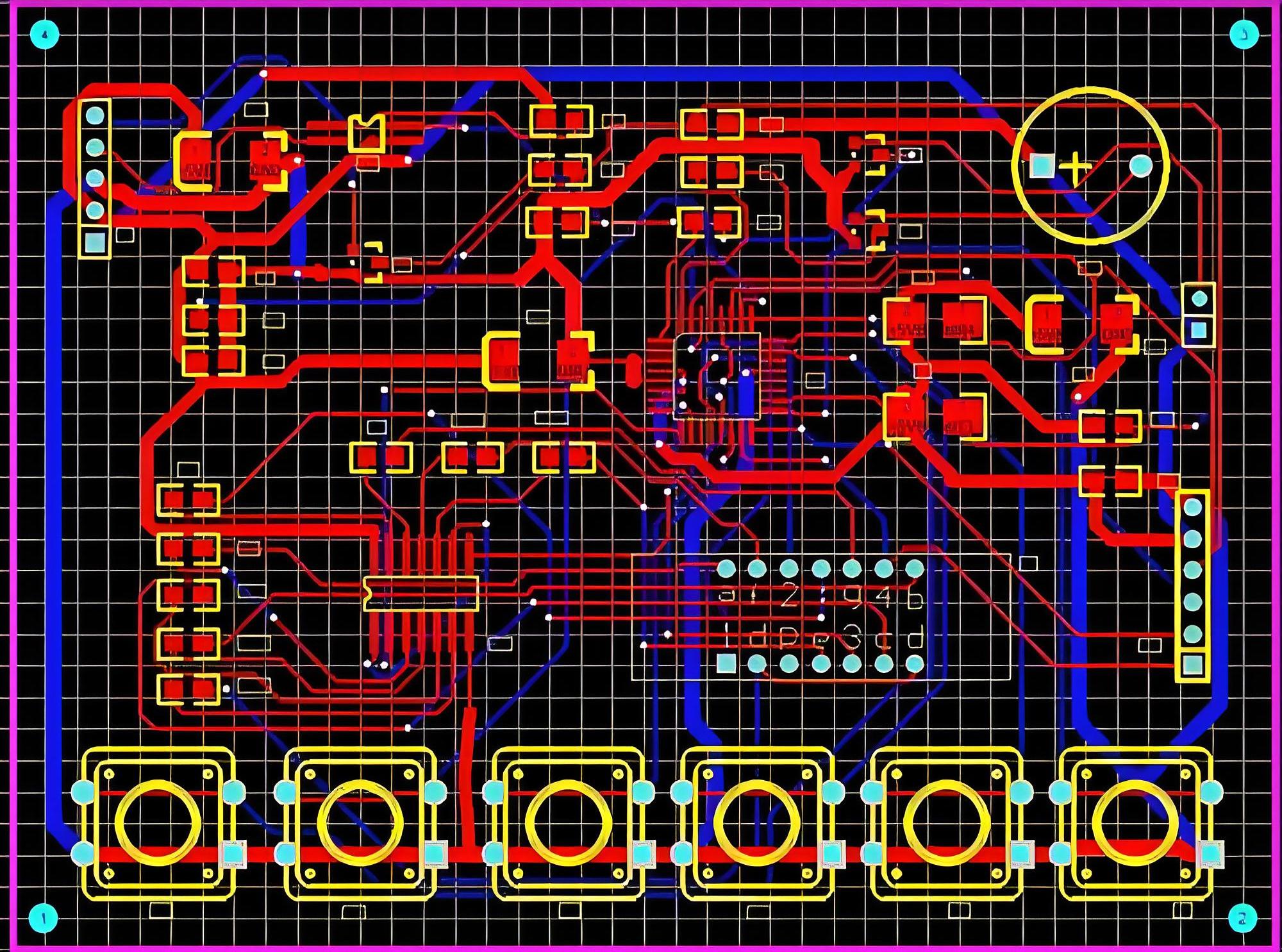
  • Circuit board manufacturing: After confirming that the design files are correct, we will start to manufacture circuit boards for you based on these files to ensure that the quality and performance of the circuit boards meet your requirements.

In summary, every step of the PCB copy process is meticulous to ensure that the copy board accurately restores the original board function. At the same time, it is very necessary to find a qualified PCB manufacturer. BEST Technology has rich experience in PCB manufacturing. If you have PCB copy needs, please feel free to contact us at sales@bestpcbs.com.

What is remote control PCB? PCB Design & Production

January 7th, 2025

What is remote control PCB? The remote control PCB is an electronic circuit board inside the remote control, which is used to connect and support various electronic components to realize signal transmission and processing. It connects the microcontroller, communication module, input components, and power management components through conductive lines, so that the remote control can receive the user’s input signal, convert it into a control signal, and realize remote control of equipment such as TVs and air conditioners.

What is remote control PCB? PCB Design & Production

What is remote control PCB?

The remote control PCB refers to the printed circuit board used in the remote control. It is the core component inside the remote control, responsible for connecting various electronic components to realize various functions of the remote control.

The remote control PCB is usually composed of multiple layers of conductive metal (usually copper foil) and insulating materials. These metal layers are designed into a complex circuit network, and the combination of wiring and insulating materials enables electronic components to achieve electrical connection and functional integration.
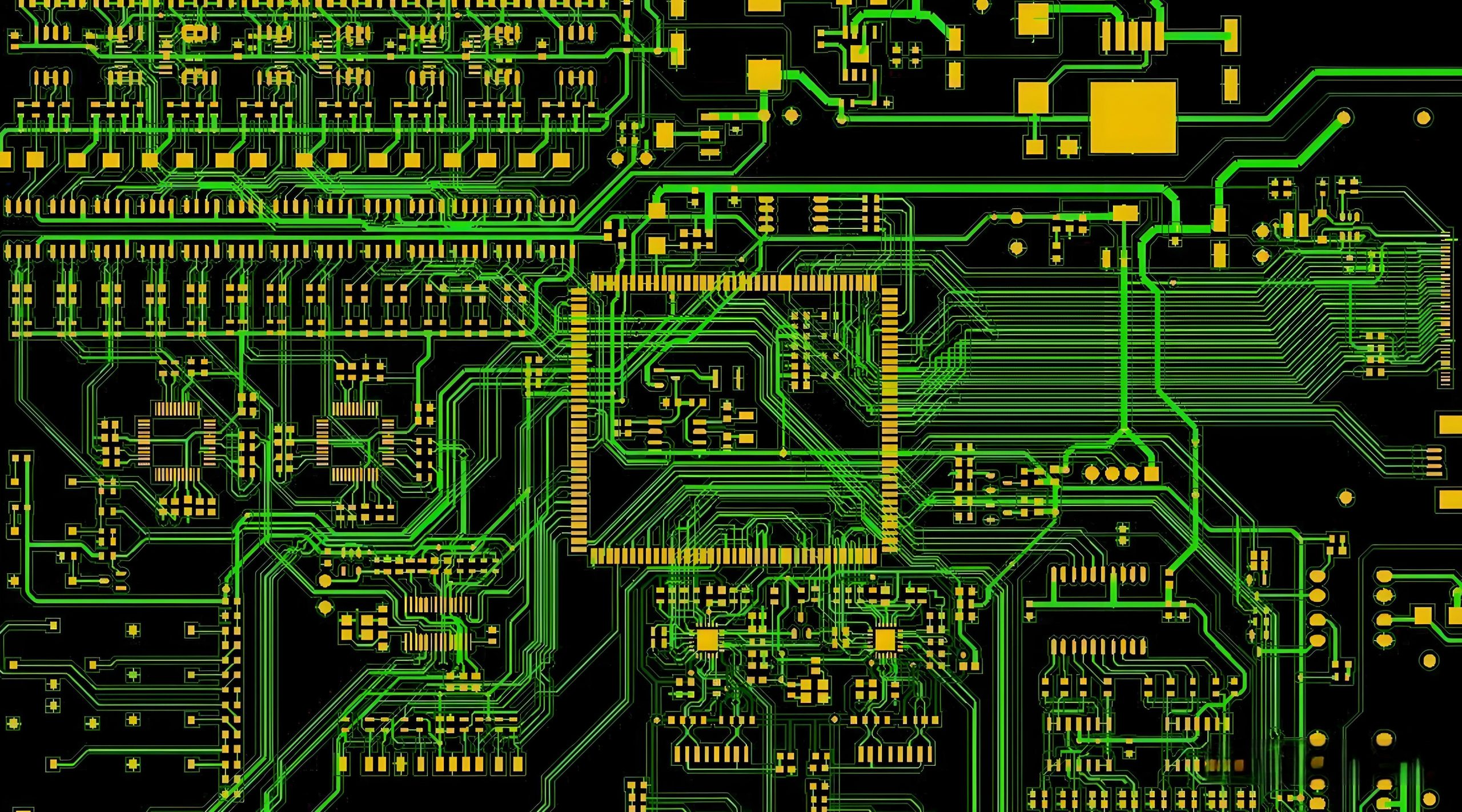
The electronic components on the PCB include resistors, capacitors, transistors, integrated circuits (ICs), etc. They are connected together through the metal network on the PCB to form a complete circuit, thereby realizing various functions of the remote control.

The types of remote control PCB mainly include single-sided board, double-sided board and multi-layer board:

  • Single-sided board: the most basic PCB type, suitable for simple circuit design.
  • Double-sided board: wiring on both sides, suitable for more complex circuit design.
  • Multi-layer board: can be further divided into middle and bottom boards and high-layer boards, mainly used for high-end equipment.

Remote control PCB is widely used in various electronic devices. Through the design and layout of PCB, the reception, processing and output of remote control signals can be realized, so as to control the switch, volume adjustment, channel selection and other functions of related equipment.

How to design remote control PCB?

Designing remote control PCB requires comprehensive consideration of functional requirements, component selection, circuit design, layout and wiring, power management, signal integrity, electromagnetic compatibility and thermal design.

What is remote control PCB? PCB Design & Production

1. Functional requirements analysis

  • Determine the control function: clarify which devices and functions the remote control needs to control, such as switch, volume adjustment, channel switching, etc.
  • Signal transmission method: Select a suitable signal transmission method, select the corresponding components and design layout according to the signal type.

2. Component selection

  • Microcontroller (MCU): Select a suitable MCU, and select an MCU with sufficient processing power and input/output interface according to functional requirements.
  • Communication module: Select the corresponding communication module according to the signal type, such as infrared transmission module, radio frequency module or Bluetooth module.
  • Input component: Select a suitable button, touch screen or other input component for user operation and control.
  • Power management component: Select a suitable power management component, such as battery management chip, voltage regulator, etc., to ensure a stable power supply.

3. Circuit design

  • Draw a circuit schematic: Use circuit design software (such as Altium Designer, Eagle, etc.) to draw a circuit schematic and connect all components according to functional requirements.
  • Check the circuit: Carefully check the circuit schematic to ensure that all connections are correct, there are no short circuits or open circuits, etc., and perform circuit analysis and simulation to verify the feasibility of the circuit.

4. PCB layout and wiring

  • Layout: PCB layout should be carried out according to the schematic diagram, and the position of components should be arranged reasonably to minimize signal interference and noise. High-frequency components and sensitive components should be kept away from power lines and ground lines.
  • Wiring: When wiring PCB, try to use short and straight lines to avoid long lines and too many corners. Pay attention to the layout of signal lines and ground lines to ensure stable signal transmission.
  • Impedance matching: For high-frequency signal lines, impedance matching design should be carried out to reduce signal reflection and interference and improve the reliability of signal transmission.

5. Power supply design

  • Power supply circuit: Design a reasonable power supply circuit, including power input, filtering, voltage regulation and other parts to ensure stable power supply and avoid the influence of power supply noise on the circuit.
  • Power management: Design a power management strategy according to the power consumption requirements of the remote control to extend battery life.

6. Signal integrity and electromagnetic compatibility

  • Signal integrity: For high-speed and high-frequency signals, perform signal integrity analysis and design, optimize signal transmission paths, reduce signal distortion and reflection, and ensure signal integrity.
  • Electromagnetic compatibility (EMC): Take measures to improve the electromagnetic compatibility of PCB, reduce electromagnetic interference and radiation, and meet relevant EMC standards.

7. Thermal design

  • Heat dissipation design: According to the power consumption and heat dissipation requirements of the components, perform heat dissipation design, reasonably arrange heat dissipation components, and ensure that the components are within the normal operating temperature range.
  • Thermal management: Use thermal management strategies to improve the heat dissipation performance of PCB.

8. Testing and verification

  • Functional test: Perform functional test on remote control PCB to ensure that all functions work properly, including signal transmission, input response, etc.
  • Performance test: Perform performance test to ensure that the performance of PCB meets the design requirements.
  • Reliability test: Perform reliability test, such as vibration test, temperature cycle test, etc., to ensure the reliability and stability of PCB in various environments.

What does the remote control PCB consist of?

The main components of remote control PCB include mainboard, remote control chip, battery interface, button, indicator light and shell. Among them, the motherboard is the core part of the entire circuit board, and the remote control chip is an important part of controlling the remote control.

  • Motherboard: The core part of the circuit board, carrying other electronic components.
  • Remote control chip: Process key signals, encoding signals and control other circuit components.
  • Battery interface: Provide power support for other components on the circuit board.
  • Key module: Receive user operation instructions and convert the instructions into electrical signals.
  • Indicator light: Display the status or function of the remote control.
  • Shell: Protect internal components and provide users with a grip.

How does a remote control PCB work?

The working principle of the remote control PCB mainly involves signal generation, transmission and reception.

1. User input

  • Button or touch screen operation: The user selects the function or command to be controlled by pressing a button or touching the screen. These input devices convert the user’s operation into electrical signals and send them to the microcontroller (MCU).
What is remote control PCB? PCB Design & Production

2. Signal processing

  • Microcontroller processing: After receiving the input signal, the microcontroller processes and encodes the signal according to the preset program logic.
  • Coding: Control signals are usually encoded into a specific format for easy transmission and identification. The encoded signal contains complete information required for device control.

3. Signal transmission

  • Infrared transmission: For infrared remote control, MCU sends the encoded signal to the infrared transmitting module, which converts the electrical signal into an infrared light signal and transmits it through the infrared transmitting diode.
  • RF transmission: For RF remote control, MCU sends the encoded signal to the RF module, which modulates the signal to a specific frequency and transmits it. RF signals have stronger penetration and longer transmission distance.
  • Bluetooth transmission: For Bluetooth remote control, MCU transmits the signal to the receiving device wirelessly through the Bluetooth module, which is responsible for signal modulation, encoding and transmission.

4. Signal reception

  • Receiving device: The receiving device (such as TV, air conditioner, etc.) is equipped with a corresponding receiving module to receive the signal sent by the remote control.
  • Decoding and execution: After receiving the signal, the receiving module decodes it, converts it into a control instruction, and then performs the corresponding operation according to the instruction.

Through the above steps, the remote control PCB realizes the complete process from user input to device control, enabling users to conveniently operate various devices remotely.

How to produce remote control PCB?

The production process of remote control PCB mainly includes the following steps:

  • Design stage: The design stage includes determining the function of the circuit, laying out components, drawing wire paths, etc.
  • Raw material preparation: According to the design requirements, purchase suitable substrate materials, such as FR-4, which has good insulation, mechanical strength and cost-effectiveness, and is suitable for most common electronic products.
  • Cutting and drilling: Cut the copper clad board into the required size, and use a high-precision drilling machine to drill precise through holes on the circuit board. These holes will be used for electrical connections between different layers.
  • Copper deposition: The hole wall of the PCB is bulked to enhance adhesion, and then a copper foil layer is deposited on the hole wall by electrochemical method to ensure the conductivity of the hole.
  • Line exposure: Use LDI technology to accurately project the circuit diagram onto the copper clad layer of the PCB, and form the prototype of the circuit diagram through exposure and development of the photosensitive dry film.
  • Electroplating: Further increase the thickness of the copper layer on the developed circuit and hole wall to ensure its conductivity and mechanical strength.
  • Outer layer etching: Etch the outer layer of the PCB to form the required circuits and pads.
  • Gold treatment: Perform gold treatment on the exposed key PAD position to protect the copper layer and prevent oxidation.
  • Shape treatment: Perform shape treatment on the PCB substrate and finally complete the production.

What should we pay attention to during the production of remote control PCB?

In the production process of remote control PCB, the following key aspects need to be paid attention to to ensure product quality and performance:

1. Design stage

  • Design review: Ensure that the circuit design is correct and meets the functional and manufacturing requirements.
  • Follow standards: Strictly follow industry standards and specifications, such as IPC standards, to ensure the manufacturability of the design.

2. Material selection

  • High-quality materials: Select substrate materials and copper foil that meet the specifications to ensure good insulation and conductivity.
  • Supplier management: Select suppliers with good reputation to ensure stable and reliable material quality.

3. Manufacturing process

  • Process control: Strictly control key process parameters such as exposure, etching, and lamination to ensure the stability and consistency of the production process.
  • Standard Standardized operation: formulate detailed operating procedures to ensure that operators operate according to unified standards and reduce human errors.

4. Quality inspection

  • Intermediate inspection: set up multiple inspection points during the production process to find and correct problems in time.
  • Finished product inspection: conduct comprehensive finished product inspection, including functional testing, electrical performance testing and appearance inspection, to ensure that the product meets quality standards.
  • Thermal management: rationally layout heat dissipation components and heat dissipation channels to ensure that the components are within the normal operating temperature range.
  • Electromagnetic compatibility: take measures to improve the electromagnetic compatibility of PCB and reduce electromagnetic interference and radiation.

Through the above measures, the production quality of remote control PCB can be effectively improved to ensure its reliability and performance in practical applications.

How to choose a suitable remote control PCB supplier?

Selecting a remote control PCB supplier can be considered from the following points:

1. Comprehensive strength

  • Production capacity: pay attention to the production line, equipment and workers to ensure that the production scale and delivery period can be met, and understand the ability to respond to emergency orders.
  • Technical level: check whether there are advanced process capabilities and R&D teams, and whether they can provide technical support.
  • Quality control: examine whether there are quality certifications and complete testing processes and equipment.
What is remote control PCB? PCB Design & Production

2. Service quality

  • Pre-sales service: see whether it can provide comprehensive technical consultation, respond to needs in a timely manner, and provide quotations and samples.
  • After-sales service: understand the after-sales guarantee policy and team situation.

3. Reputation

  • Customer evaluation: view other customer evaluations through various channels.
  • Industry status: understand its popularity and cooperation in the industry.

4. Price cost

  • Price comparison: compare multiple quotations, pay attention to price composition and long-term cooperation discounts.
  • Cost-effectiveness evaluation: comprehensively consider quality, service, etc. to evaluate cost-effectiveness.

As a professional PCB manufacturer, BEST Technology has strong design and technical support capabilities, and can provide customized remote control PCB design solutions according to customer needs, and ensure reasonable layout and stable signals.

At the same time, we have advanced production equipment and flexible production scale, which can efficiently produce various types of remote control PCBs to meet the needs from small batch proofing to large batch production; in terms of quality control, we follow a strict quality management system and use advanced testing equipment for comprehensive testing to ensure that the quality of each PCB is reliable and defect-free.

In addition, we focus on on-time delivery, provide high-quality customer service and technical support, and respond quickly to customer needs to ensure that customers are worry-free during use and enjoy a good service experience.

PCB Multilayer Circuit Board: 17 multi layer boards

January 7th, 2025

The 17 multi layer boards is a highly integrated electronic component that alternately stacks 17 conductive layers and insulating layers and uses advanced interlayer connection technology (such as vias) to achieve electrical connection between the layers. Connections can significantly increase the wiring density and complexity of circuits. This design makes the 17 multi layer boards has broad application prospects in high-performance electronic equipment and can meet the strict requirements of these equipments for signal transmission speed, stability and functional diversity.

PCB Multilayer Circuit Board: 17 multi layer boards

What is a multi-layer circuit board?

The basic structure of a multilayer circuit board includes multiple conductive layers and insulating layers. The conductive layer usually uses copper foil or metallized holes, and the insulating layer is usually made of materials such as epoxy resin. Each layer is electrically connected through via holes, which are usually processed by drilling, laser drilling or chemical etching.

Advantages of multilayer circuit boards

  • High wiring density: Multi-layer circuit boards can achieve more complex wiring in a limited space to meet the needs of high-density electronic equipment.
  • Good electromagnetic shielding effect: The multi-layer design can effectively reduce electromagnetic interference and improve the stability and reliability of the system.
  • Low signal transmission delay: Multi-layer circuit boards reduce signal transmission delay and improve system performance by optimizing wiring and signal paths.
  • Suitable for complex systems: Multi-layer circuit boards are suitable for electronic devices that require a high degree of integration and complex functions, such as smartphones, tablets, etc.

How to make 17 multi layer boards?

The detailed steps for manufacturing a 17 multi layer boards are as follows:

  • Raw material preparation: Choose high-quality copper-clad laminates as raw materials. Commonly used copper-clad laminates include epoxy glass cloth substrates, etc.
  • Cutting: Use an automatic cutting machine to cut large-sized copper clad laminates into specific substrate sizes suitable for production needs.
  • Drilling: Use a CNC drilling machine to accurately drill holes at predetermined positions on the copper clad board.
  • Copper deposition: Copper ions in the electrolyte are deposited on the hole walls through electrochemical methods to form a uniform copper foil layer.
  • Dry film exposure and development: Use dry film for exposure and development, and use strong ultraviolet light to polymerize the dry film to form a preliminary cured circuit pattern.
  • Electroplating: In the electroplating production line, a layer of copper is plated on the exposed lines and hole walls through electrochemical reaction, and then a layer of tin is plated on the surface of the copper layer to protect the copper foil of the lines and hole walls from being eroded by the etching liquid.
  • Stripping and etching: Place the PCB in the stripping equipment, use stripping agent and cleaning methods to remove the remaining dry film, exposing the copper foil that is not protected by tin plating. Then use an etching solution to etch away the exposed copper foil, retaining the copper foil under the tin plating layer, and finally obtain the circuit pattern and metallized holes required for the design.
  • Inner layer process: Compared with single and double panels, the manufacturing of multi-layer boards has an additional inner layer process. Controlling the lamination process of the inner layers is critical to the electrical performance of controlled impedance transmission lines. The copper in the inner layer should be evenly distributed on the symmetrical layer to ensure balanced thermal stress during heating and avoid circuit board warping.
  • Laminated lamination: By combining different specifications of prepreg and copper-clad laminate (core board), all required thicknesses are achieved. The individual layers must be symmetrical and have the same layer thickness. After the lamination is completed, precise inter-layer adjustment and positioning are performed to ensure good adhesion between the inner layer and the prepreg.
  • Inspection: Circuit graphics are inspected using an automated optical inspection (AOI) system to ensure consistency of internal layers with CAD data and repair any connections or other defects found.

Through the above steps, a high-quality 17 multi layer boards can be manufactured.

When to use 17 multi layer boards?

1. High-frequency and high-speed signal processing scenarios

In communication base station equipment, such as the baseband processing unit (BBU) of a 5G base station. 5G signals have high frequency, large bandwidth, and extremely fast signal transmission speed. The 17 multi layer boards can efficiently route high-frequency, high-speed signals.

It can make the distance between the signal layer and the reference plane (ground layer) closer by reasonably arranging the positions of the signal layer, ground layer, and power layer, thereby reducing the loop inductance of the signal and reducing signal reflection and attenuation.

PCB Multilayer Circuit Board: 17 multi layer boards

And some inner shielding layers can be used to isolate signals in different frequency bands or sensitive signals from interference sources to ensure the integrity and accuracy of signal transmission.

For the communication line between the graphics processing unit (GPU) and the central processing unit (CPU) in high-speed computer systems. When performing large-scale graphics rendering or complex data operations, the data transfer rate is extremely high.

The 17 multi layer boards can provide enough wiring space to route high-speed differential signal pairs (such as PCI-Express interface signals) on different inner layers. At the same time, a complete ground plane is set up around it as a shield to reduce electromagnetic interference and ensure high speed. signal quality.

2. Complex circuit function integration

In the electronic control part of advanced medical equipment such as magnetic resonance imaging (MRI) equipment. MRI equipment contains complex radio frequency transmitting and receiving circuits, gradient magnetic field control circuits, image acquisition and processing circuits and other functional circuits. The 17 multi layer boards can distribute these circuits with different functions on different layers and connect them through vias.

In the controller of industrial robots, it needs to integrate multiple functions such as motion control, sensor signal processing, communication interfaces, and power management. The 17 multi layer boards allows the circuits of these functional modules to be reasonably distributed on each layer, making the layout of the circuit board more compact.

3. Special power and grounding requirements

In high-precision test and measurement instruments, such as spectrum analyzers. This type of instrument has extremely high requirements on the purity and stability of the power supply. The 17 multi layer boards can be equipped with multiple independent power layers, and decoupling capacitors are reasonably arranged between the power layer and the ground layer to form a low-pass filter network to effectively filter out power supply noise.

At the same time, through reasonable ground layer design, low-impedance ground paths are provided for different circuit modules to reduce the impact of ground bounce noise on measurement accuracy.

Active power filters (APF) in power electronic equipment. APF needs to process a large number of power signals and plays a key role in improving power quality. The 17 multi layer boards can provide suitable power and ground planes for different power conversion circuits and control circuits.

What are the disadvantages of 17 multi layer boards?

The disadvantages of 17 multi layer boards mainly include the following aspects:

  • 1. High cost: Due to the large number of layers and the complex manufacturing process, which requires more materials and finer processes, the cost is relatively high.
  • 2. Design is difficult: Designing a 17-layer PCB requires more factors to be considered, such as inter-layer connections, signal integrity and electromagnetic compatibility, etc. This requires higher professional skills from the designer and the design cycle may also be longer.
  • 3. Long production cycle: The production of multi-layer PCB involves multiple processes, such as lamination, drilling, copper plating, etc. These processes take time to complete, so the production cycle is relatively long.
  • 4. Difficulty in maintenance: Due to the complex internal structure, once a fault occurs, it is relatively difficult to locate and repair the problem, and sometimes even requires complete replacement.
  • 5. High requirements for design and manufacturing processes: more advanced equipment and technology are needed to ensure the quality and performance of multi-layer boards.

These shortcomings make 17 multi layer boards a reasonable trade-off between performance and cost in some applications.

How many layers can a circuit board have?

The number of layers in a circuit board can vary from single layer to multiple layers. Common layers include single layer, double layer, four layer, six layer, eight layer, ten layer, etc. High-end PCB boards can even reach 32 layers or more.

Application scenarios for different layers

  • Single-layer board: Suitable for simple circuit design, usually used in low-complexity electronic devices.
  • Double-layer boards: Suitable for medium-complexity designs that can accommodate more components and connections.
  • Four-layer board: Commonly used in designs that require better signal isolation and noise suppression, such as high-frequency circuits.

The manufacturing process of multilayer boards is very complex and requires more precise design and high-end processing technology. The more layers there are, the higher the manufacturing difficulty and cost. Therefore, when designing a circuit board, it is necessary to consider the circuit direction, number of layers, and materials to ensure the performance and reliability of the circuit board.

How many layers of circuit boards can we make?

With the continuous advancement of electronic technology, we are able to produce PCBs with more layers. Currently, FR4 PCBs with 20 to 32 layers can be realized. This high-level PCB structure provides engineers with greater design flexibility, allowing them to lay out various traces on different layers to meet different functional requirements.

Layers can be dedicated for power distribution, signal transmission, electromagnetic interference (EMI) shielding, and assembly of components. In order to effectively manage the number of layers, buried holes and blind holes are often designed in multi-layer PCBs to optimize circuit layout and signal transmission paths.

PCB Multilayer Circuit Board: 17 multi layer boards

For PCBs with more than 8 layers, high Tg FR4 materials are usually more popular than ordinary Tg FR4 because high Tg materials can maintain stable electrical performance and mechanical strength at higher temperatures, which is especially important for high-performance electronic devices. However, the increase in the number of layers also makes the PCB manufacturing process more complex and difficult, leading to higher costs.

In summary, we found that the 17 multi layer boards has significant advantages in signal integrity and space utilization, and can meet the needs of high-density electronic equipment, but its complex manufacturing process also brings higher costs and Production difficulty.

As a professional PCB manufacturer, BEST Technology has advanced production equipment and rich production experience, able to efficiently produce high-quality multi-layer PCB boards to meet customer needs for high-performance electronic equipment. Please feel free to contact us at sales@bestpcbs.com, we will provide a full range of services from design to production to ensure that every PCB board meets your strict standards.

PCB Multilayer Circuit Board: pcb panel v-cut vs stamp hole

January 7th, 2025

V-CUT cuts a V-shaped groove on the PCB board, so that the board can be easily separated in subsequent processing, while the stamp hole sets a small hole on the edge of the board, making the board more neat and stable when separated, which can provide higher space utilization and better signal transmission performance. The combination of these two technologies not only improves production efficiency, but also ensures product quality and reliability.

PCB Multilayer Circuit Board: pcb panel v-cut vs stamp hole

What is PCB V-CUT?

PCB V-CUT is a technology that cuts a V-shaped groove on a printed circuit board, which is mainly used to facilitate subsequent board separation operations. V-CUT is to cut a series of V-shaped cuts on the PCB board and then break the board after applying appropriate force, thereby dividing the multilayer PCB into separate panels.

The role and importance of V-CUT

  • Improve manufacturing efficiency: In mass production, V-CUT can quickly divide large boards into multiple small panels to meet the needs of mass production.
  • Reduce material waste: Through V-CUT cutting, raw materials can be maximized, waste generation can be reduced, and production costs can be reduced.
  • Convenient assembly: V-CUT allows the separated small panels to be easily assembled and welded, improving production efficiency.

V-Cut is widely used in the batch manufacturing of multi-layer PCBs, especially when a large board needs to be divided into multiple small panels.

What are the advantages and disadvantages of V-Cut?

Advantages of V-Cut:

  • Easy to operate: The V-Cut design can facilitate the separation of SMT circuit boards after assembly, avoiding PCB bending and damage to electronic components that may be caused by manual separation.
  • Improve production efficiency: When assembling the edges of two boards, the efficiency of SMT patch lines and wave soldering can be significantly improved.
  • Wide range of applications: V-Cut is suitable for regular PCB boards, especially in batch production, the use of V-Cut can significantly improve production efficiency.

Disadvantages of V-Cut:

  • Can only cut straight lines: V-Cut can only cut straight lines, and it can only cut straight lines from one end to the end, and cannot be changed in the middle. If there is a 90-degree or other angle bend in the middle, it is not allowed.
PCB Multilayer Circuit Board: pcb panel v-cut vs stamp hole
  • High requirements for tools: The material and manufacturing process of V-Cut knives have a great influence on the cutting effect. For example, high-speed tool steel V-Cut knives are not wear-resistant and need to be frequently changed and sharpened, which affects production efficiency; alloy-inlaid V-Cut knives increase the brittleness of the blade due to welding, and the quality is difficult to guarantee, and the tooth breakage rate is high.
  • Restrictions on PCB thickness: PCB boards that are too thin or too thick are not suitable for V-Cut, because too thin boards are easy to break and too thick boards are difficult to cut.

What is a stamp hole?

A stamp hole refers to a hole on the motherboard panel that is used to connect small PCBs that make up the array together and to easily remove components from the PCB. Stamp holes are perforated, and when pushed down, the holes break, allowing components to be removed without damaging the PCB itself.

The specific functions of stamp holes include:

  • Connecting small PCB boards: When there are multiple small PCBs that need to be connected and connectors cannot be used, they can be connected through stamp holes. Perforations allow current to flow through the PCB and connect with other nearby PCBs.
  • Transmit power and data: Stamp holes can transmit power and data between two different PCBs or devices to achieve communication between devices.

Design requirements for stamp holes include:

  • Number of holes: Usually stamp holes are in groups of 5 to connect components together, but the specific number may vary depending on the PCB design.
PCB Multilayer Circuit Board: pcb panel v-cut vs stamp hole
  • Size: The size of stamp holes is usually 0.020 inches or 0.5 mm in diameter, and the specific size will vary depending on the PCB design.
  • Hole spacing: The spacing of stamp holes is usually 0.030 inches or 0.76 mm to prevent components from being too close and causing short circuits.

In addition, design tips for stamp holes include:

  • Sufficient pull tabs: In order to maintain the integrity of the PCB, the pull tabs should be strong enough to support the weight of the components above.
  • Stay away from sensitive components: Stamp holes should be away from sensitive components to avoid electrical short circuits caused by damage to the pull tabs.
  • Spacing: The spacing between two stamp holes should be between 60mm-90mm to facilitate the installation of components.

What are the advantages and disadvantages of stamp holes?

The advantages of stamp holes include:

  • Improved production efficiency: Stamp holes can connect multiple small-sized PCBs together for production and processing, thereby simplifying the production process and reducing costs.
  • Convenient assembly and disassembly: In situations where detachable connections are required, such as modular designs, stamp hole connections can achieve convenient assembly and disassembly, facilitating product repair and upgrades.
  • Reduced space occupation: The stamp hole design can greatly reduce the required space, especially suitable for compact designs.
  • Improved signal transmission performance: Stamp holes shorten the signal path, reduce signal delay and cross interference, and are suitable for complex multi-layer board designs.
PCB Multilayer Circuit Board: pcb panel v-cut vs stamp hole

Disadvantages of stamp holes include:

  • Possible cost increase: The design of stamp holes will increase certain costs because holes need to be reserved on the PCB, and the size of these holes will also be included in the overall size of the PCB.
  • The broken surface is not easy to control: Stamp holes are separated by breaking, and the broken surface is not easy to control accurately, which may cause line damage or even scrap.

What is the difference between V-Cut and stamp hole?

The main difference between V-Cut and stamp hole lies in their definition, purpose and applicable scenarios.

  • V-Cut: V-Cut is to pre-cut a V-shaped dividing line at a specific position of the PCB, which is usually used to facilitate the de-paneling (De-paneling) of the SMT circuit board after assembly. The dividing line of V-Cut is generally a straight line, without complex curves or arcs, and is suitable for panel connection of conventional PCB boards.
  • Stamp hole: Stamp hole is to connect the process edge and the PCB board by punching a series of circular holes shaped like stamps on the PCB board. It is mainly used for irregular shaped PCB boards, such as circles. Since V-Cut cannot achieve this connection, stamp holes are more used in special-shaped boards.

How to choose a suitable PCB de-paneling method?

Choosing a suitable PCB de-paneling method requires considering multiple factors, including the shape of the PCB, the scale of production, the cost budget, and the requirements for product quality.

1. V-CUT (V-shaped cutting):

  • Advantages: low cost, simple operation, fast speed, suitable for regular shaped PCBs arranged in a straight line.
PCB Multilayer Circuit Board: pcb panel v-cut vs stamp hole
  • Disadvantages: only straight line de-paneling can be performed, which is not suitable for complex or irregular shaped PCBs.
  • Applicable scenarios: suitable for small and medium batch production, and the PCB shape is relatively regular.

2. Stamp hole:

  • Advantages: Suitable for irregular shaped PCBs, such as round or special-shaped boards, and can provide better space utilization.
  • Disadvantages: Compared with V-CUT, the cost is slightly higher, and some burrs may be generated during the separation process.
  • Applicable scenarios: Suitable for PCBs with complex or irregular shapes, and production that requires high space utilization.

3. Milling cutter type board separation:

  • Advantages: It can be divided into boards of any shape, with smooth cutting edges and low stress, and is suitable for PCBs of various shapes.
  • Disadvantages: The initial cost is high, and the equipment and operation are relatively complex.
  • Applicable scenarios: Suitable for complex-shaped PCBs with high cutting accuracy requirements.

4. Laser board separation:

  • Advantages: High precision, suitable for PCBs with complex shapes and high precision requirements.
  • Disadvantages: High cost and slow speed.
  • Applicable scenarios: Suitable for small-batch production with high precision requirements.

When choosing a board separation method, factors such as the specific needs of the product, production costs, production efficiency, and requirements for product quality should be comprehensively considered to ensure that the most appropriate board separation method is selected.

In summary, both have their own advantages and disadvantages. V-CUT is particularly suitable for regular-shaped PCB boards with its low cost and high efficiency, while stamp holes show unique advantages when dealing with irregular-shaped boards or boards that require higher space utilization. We need to choose the most suitable PCB depaneling solution according to the actual situation.

BEST Techbology has rich experience and advanced equipment, and can flexibly apply a variety of depaneling technologies such as V-CUT and stamp holes to meet the needs of different customers. Whether your PCB design is regular or complex, please feel free to contact us at sales@bestpcbs.com to get the best solution.

What is the best color for PCB? PCB solder mask colors

January 3rd, 2025

What is the best color for PCB? Generally speaking, green is the best choice for PCB. On the one hand, green solder mask ink is cheap, in sufficient supply, mature in production process, with low scrap rate and obvious cost advantage; on the other hand, it has a sharp contrast with white silk-screen text, which is convenient for seeing circuits and components during assembly and maintenance, and is also environmentally friendly.

What is the standard color of PCB?

In the PCB industry, green is generally regarded as the standard color. This is mainly because:

  • The process is mature and the cost is low: The green solder mask process is the most mature and simple, and the use of green solder mask ink is cost-effective. Most manufacturers use the same green ink, which can reduce the cost of line change and is more economical in large-scale production.
What is the best color for PCB? PCB solder mask colors
  • Good visibility and recognition: The green and white printed text form a sharp contrast, which is convenient for assemblers to scan the circuit board, less stress on the eyes, and good visual contrast when checking welding quality and circuit layout. The visual effect is good in the yellow light room, and the instrument recognition effect for optical positioning and calibration is also better.
  • Relatively safe and environmentally friendly: Compared with other colors such as blue and black, green solder resist does not contain elements such as cobalt and carbon, has a low risk of short circuit when powered on, and generally does not release toxic gases in high temperature environments.

Which PCB color is best?

The choice of PCB color depends on the specific application requirements and environmental conditions. PCBs of different colors have their own characteristics and applicable scenarios:

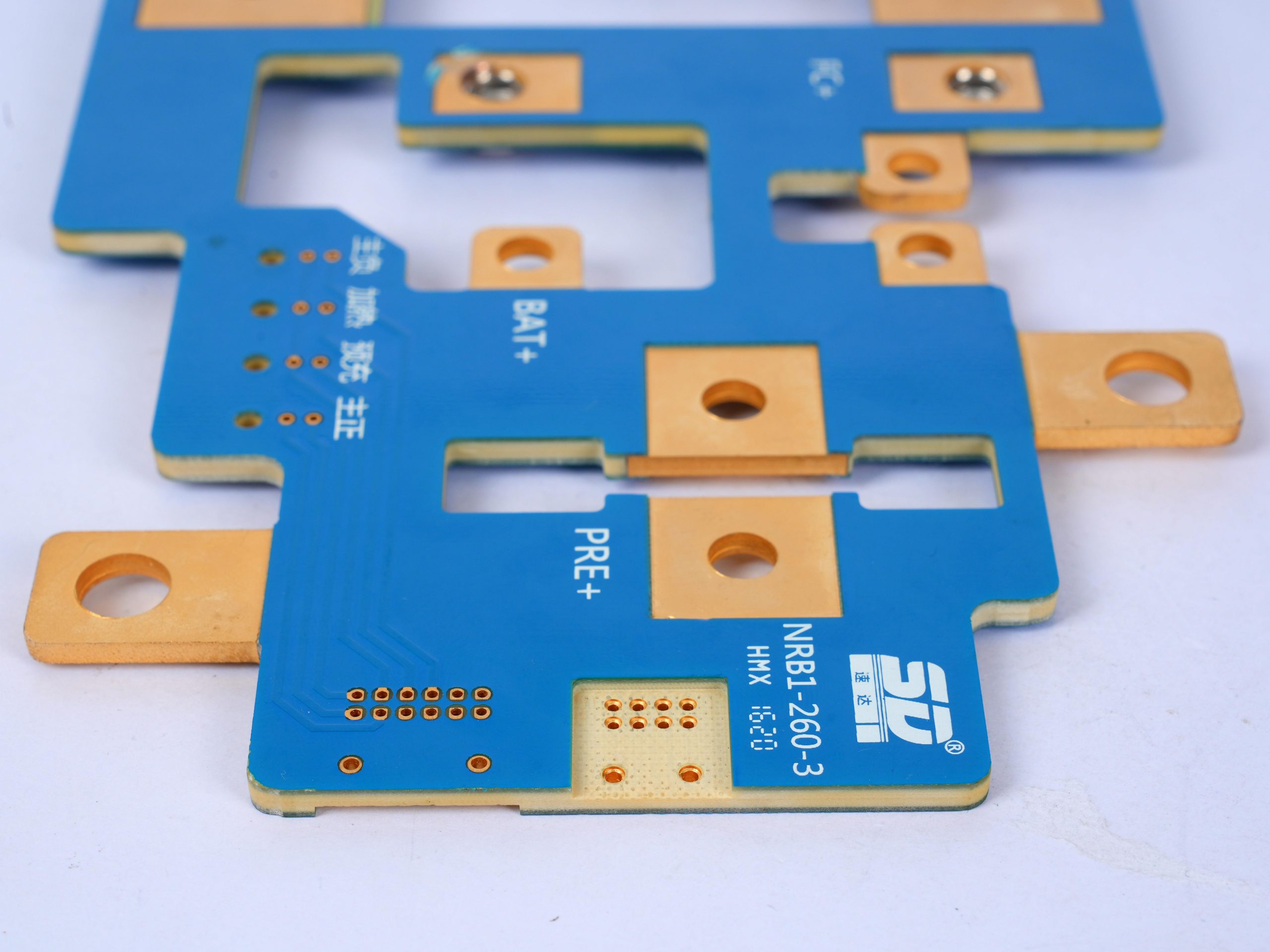
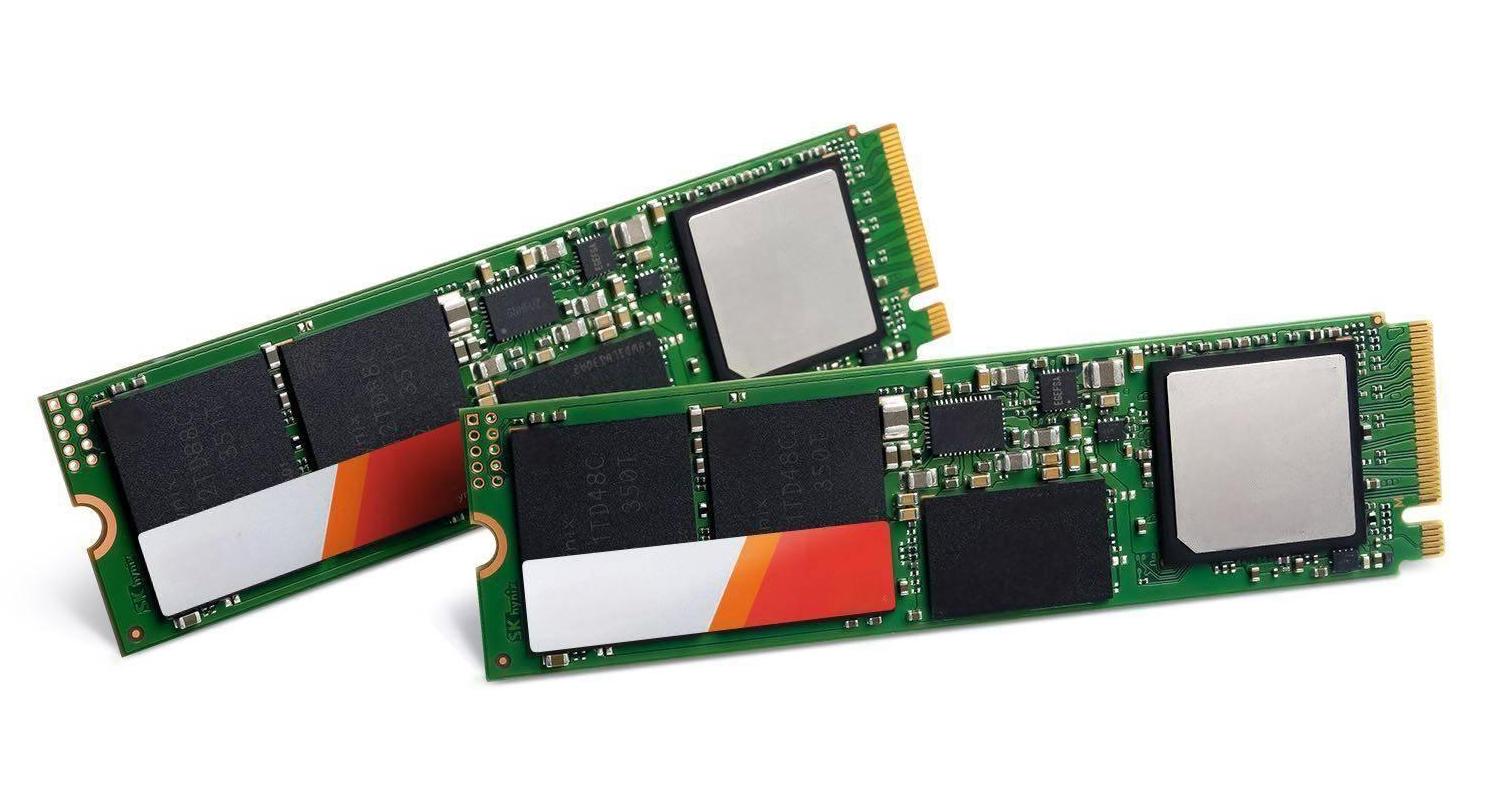
  • Green PCB: It is the most common color. It is low-cost and has obvious advantages in large-scale production; it is easy to develop and it is easier to remove unnecessary parts during the production process; it has good visual effects and is eye-friendly, which helps the visual contrast of high-brightness metal pads and logos, and is conducive to optical positioning calibration; it also has a certain degree of confidentiality and is relatively safe and environmentally friendly.
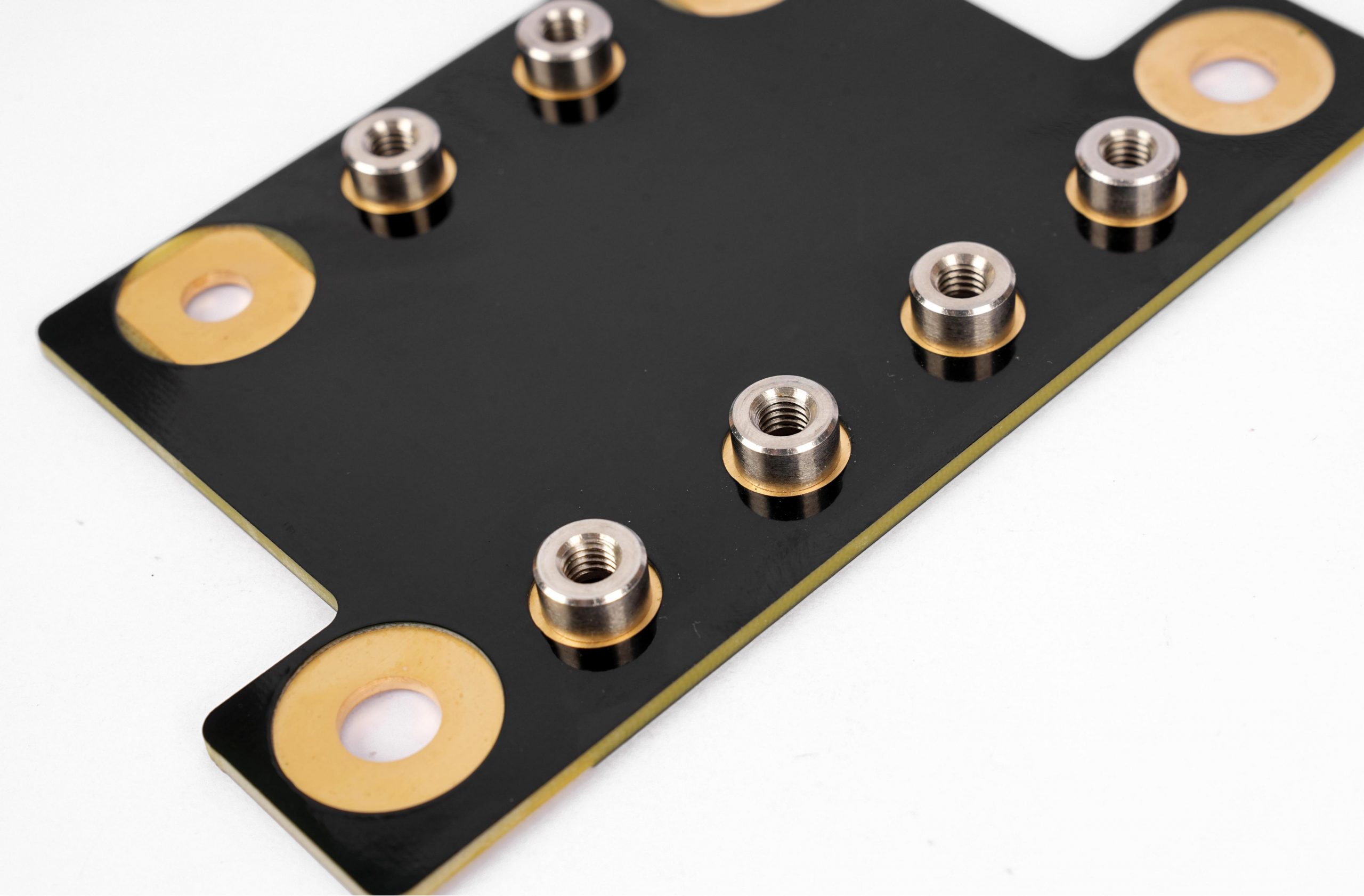
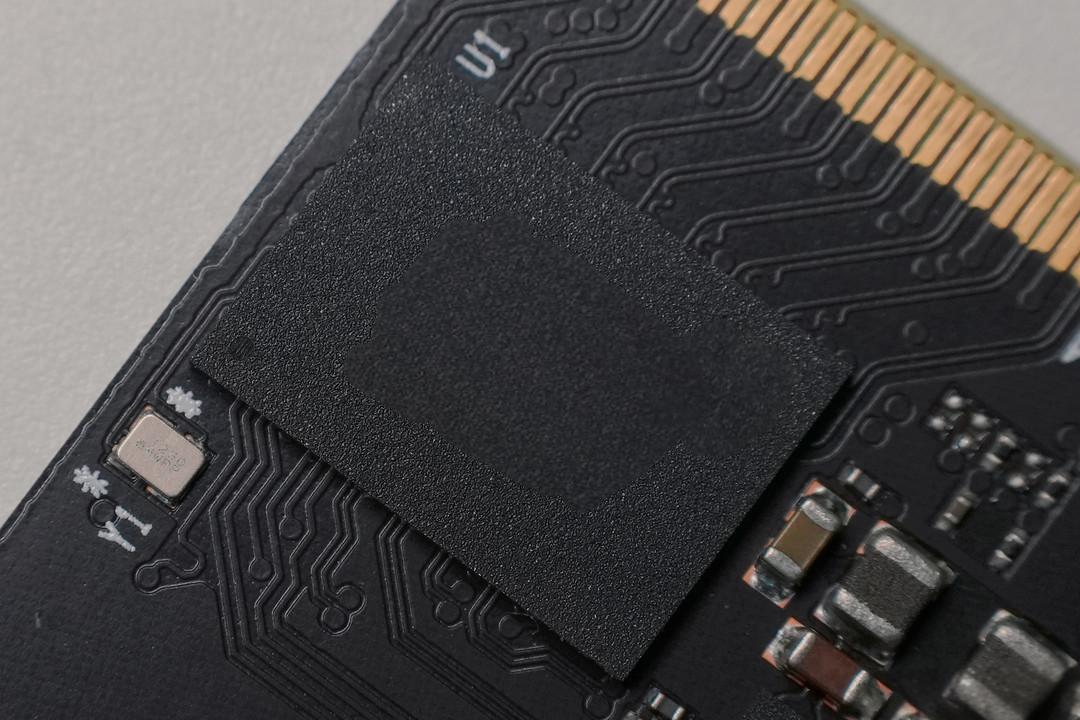
  • Black PCB: It gives people a high-end and mysterious feeling and is often used in high-end audio equipment, gaming hardware, etc. The contrast of the words marking the welding parts is high, and the colored connectors are more conspicuous against a black background, and the visual effect is good when placed in the chassis. However, the production process of black PCB has high process requirements, which is easy to cause color difference, resulting in an increase in defective rate, and the circuit routing is difficult to identify, which will increase the difficulty of maintenance and debugging in the R&D and after-sales stages.
  • Blue PCB: It can provide novel and high-end visual effects, suitable for electronic products that pursue product appearance differentiation, with good screen printing contrast, relatively simple production process and moderate cost.
What is the best color for PCB? PCB solder mask colors
  • Red PCB: It has excellent visibility, can clearly define the contrast of traces, planes and blank areas, and has beautiful screen printing effects. It usually uses high-temperature resistant red photosensitive dyes, has good thermal stability and weather resistance, and is often used in specific applications such as high-end communication equipment and military electronics, but the production process is complex and the cost is high.
  • White PCB: The appearance is clean and beautiful, suitable for products with high decorativeness, such as high-end headphones, watches, etc. However, it is easy to hide the routing, the production cost is relatively high, and the welding test is relatively difficult.

Does PCB color matter?

PCB color is important to a certain extent.

From the perspective of manufacturing, color is related to production process. The production process of green PCB is the most mature and the cost is relatively low. Because green solder mask ink is more commonly used, manufacturers can use equipment and materials more efficiently and reduce production costs during large-scale production.

Black PCBs have higher process requirements during the manufacturing process. For example, in the exposure and development stages, black solder mask may require more precise parameter control due to its strong light shielding, otherwise it is easy to have quality problems, such as short circuit hazards or appearance defects.

Color also has an impact on the product assembly and maintenance stage. For assembly workers, the high contrast between green PCB and white silk-screen text makes it easier for them to identify component locations and view line directions, which helps improve assembly efficiency and reduce the probability of errors. Black PCBs have disadvantages in this regard. Its lines are not easy to see clearly, which is more troublesome during debugging and maintenance.

From the perspective of product performance, color may have a certain impact on heat dissipation and electromagnetic compatibility (EMC). In theory, black PCBs may have better performance in thermal radiation due to their darker color, which can help some high-power devices dissipate heat better.

In terms of electromagnetic shielding, if special additives are used to change the color of PCBs of different colors, these materials may affect the electromagnetic shielding performance. However, this situation is more complicated and related to the specific material formula.

In terms of product appearance design, color is very important. For consumer electronic products, such as mobile phones and computers, the color of the PCB can match the overall style and brand image of the product. For example, some high-end electronic products use black PCBs to create a cool and professional feeling, while some products with a fresh style may use white or light blue PCBs.

Are black PCBs more expensive?

Usually, black PCBs are more expensive for the following reasons:

  • Material cost: Black solder mask materials may require more expensive pigments or additives, and character inks may also be more expensive due to color and quality factors.
  • Production process: Black pigments absorb light strongly. In the exposure and development processes, it is easy to have process problems such as unclear circuit graphics due to insufficient light and reduced alignment accuracy between the solder mask and the circuit, which increases the scrap rate and leads to an increase in overall costs.
  • Market demand and supply: Black PCB is generally used in high-end electronic products, and the market demand is relatively small. Suppliers cannot form economies of scale during production, which leads to an increase in unit price.

Why is green PCB cheaper?

Green PCB is cheaper for the following reasons:

1. Low material cost:

  • Cheap raw materials: The raw materials of green solder mask ink are in sufficient supply in the market and are relatively cheap. For example, compared with the expensive pigments or additives used in some special color inks, the cost of green ink ingredients is lower.
  • Adequate stock: Due to the widespread use of green PCBs, ink suppliers usually reserve a large amount of green ink, which further reduces procurement costs and reduces the risk of price fluctuations caused by shortages.
What is the best color for PCB? PCB solder mask colors

2. Mature production technology:

  • Easy to process: The processing and printing of green solder mask ink is relatively easy, and no complex color adjustment and special treatment are required during the production process, which can improve production efficiency and reduce labor and time costs.
  • Low scrap rate: The process of producing green PCB is very mature. In the exposure, development and other processes, the probability of quality problems of green PCB is low, and the scrap rate is low, which reduces the overall production cost.

3. Favorable market supply and demand relationship:

  • Massive production: Green is the most common color of PCB, and the market demand is large, so manufacturers can carry out large-scale production. Through large-scale production, enterprises can make full use of production equipment and reduce the production cost of unit products.
  • Strong versatility: Most electronic products have no special requirements for PCB color. Green PCB can meet the needs of most application scenarios. There is no need to adjust the production line or increase additional costs to meet the special color requirements of individual customers.

What color is FR4?

FR4 is a substrate material for PCB. It does not have a fixed color. Its main components are glass fiber cloth and epoxy resin. Its color is usually determined by the solder mask on the surface.

The most common color of FR4 circuit boards is green, because green solder mask is widely used in PCB manufacturing. But in fact, FR4 substrate can present a variety of colors after different surface treatments, such as black, blue, red, white, etc.

How to choose the color of PCB?

There are several main factors to consider when choosing the color of PCB:

1. Functional requirements:

  • Green PCB: Green PCB is widely used because of its high clarity and low glare characteristics. The green solder mask contrasts sharply with the white text, improving readability while reducing glare and protecting the eyes.
  • Black PCB: Black PCB provides high light shielding and aesthetics, and looks high-end and atmospheric, but it absorbs more heat and may increase the risk of overheating of sensitive components.
  • Blue PCB: Blue PCB has good screen printing contrast and is suitable for applications that require high contrast, such as LCD installation.
What is the best color for PCB? PCB solder mask colors
  • Red PCB: Red PCB is eye-catching and has high visibility, suitable for high-end electronic devices and occasions that require high-precision circuit boards.
  • White PCB: White PCB appears clean and tidy in various environments, has high reflectivity, and is suitable for low-light environments or applications that require high contrast.

2. Application scenarios and environmental factors:

  • Consumer electronics: Green PCB is widely used in consumer electronics due to its low cost and high contrast.
  • High-end electronic equipment: Red and blue PCB are often used in high-end communication equipment, military electronic products and optical equipment due to their high visibility and contrast.
  • Lighting industry: White PCB is often used in the lighting industry due to its high reflectivity.

3. Production process and cost-effectiveness:

  • Production process: PCBs of different colors have different requirements for production process.
  • Cost-effectiveness: Green PCB is the most widely used, and factories usually reserve a large amount of green paint, which is relatively low in cost. In addition, green is more friendly to the eyes and reduces fatigue caused by long-term work.

In short, the selection of PCB color should be considered comprehensively. If you pursue cost-effectiveness and mass production, choose green, which has low cost and mature technology; if you want to highlight the quality of high-end products, you can choose black, which has high cost but good appearance and texture; blue, red, etc. are determined according to specific scenarios, such as red for high visibility and blue for novel appearance. Comprehensive consideration can be made to choose the right one.

How thick is 2 oz of copper on a PCB?

January 3rd, 2025

How thick is 2 oz of copper on a PCB? The thickness of 2 oz of copper on a PCB is about 70μm. Ounces are the common unit of PCB copper foil thickness. The thickness of 1 oz copper foil is generally about 35μm, so the thickness of 2 oz copper foil is about twice that of 1 oz, which is about 70μm.

How thick is the copper on a PCB board?

The copper layer thickness on a PCB board is usually between 1oz (35μm) and 4oz (140μm), while the copper layer thickness of a thick copper board can exceed this range, even reaching 10oz or more.

How thick is 2 oz of copper on a PCB?

Copper layer thickness selection in different application scenarios

  • Signal transmission: For signal transmission, a copper layer thickness of 1oz is usually sufficient, because signal transmission mainly focuses on signal integrity and stability.
  • High current applications: For applications that need to withstand high currents, such as power supplies and industrial control equipment, 2oz or higher copper layer thicknesses are more suitable because they provide better conductivity and carrying capacity.
  • Special applications: In some special applications, such as motor controllers and battery management systems for new energy vehicles, the high performance of thick copper boards can meet their stringent requirements.

What is the standard thickness of the copper layer on a PCB?

The standard thickness of the copper layer on a PCB usually ranges from 1oz to 4oz. The specific choice depends on the application scenario and requirements. For signal transmission, a thickness of 1oz is usually sufficient; for occasions that require high current, 2oz or 3oz copper thickness is more suitable.

Application scenarios of copper layers of different thicknesses

  • 1oz copper thickness: suitable for general signal transmission, such as ordinary double-sided boards.
  • 2oz copper thickness: suitable for occasions that require larger currents, such as power boards.
  • 3oz copper thickness: suitable for high current and high power applications, such as some special industrial equipment.

The choice of copper layer thickness is mainly based on the purpose of the circuit board, the signal voltage and the current. In addition, thicker copper layers can improve the electrical performance and load-bearing capacity of the circuit board, but it will also increase the manufacturing cost.

How to calculate PCB thickness?

The calculation of PCB thickness mainly depends on the thickness of the copper foil and the number of layers and structure of the PCB.

The thickness of the copper foil is usually expressed in ounces (OZ), and 1OZ copper foil is approximately equal to 35 microns (um) or 1.4 mils (mil). Common PCB copper foil thicknesses are 17.5um, 35um, 70um, etc.

How thick is 2 oz of copper on a PCB?

The thickness of the multilayer board also needs to consider the lamination loss, which is usually related to the residual copper rate of the inner copper foil. The specific formula for calculating the lamination thickness is: Lamination thickness = PP theoretical thickness – lamination loss.

What is the difference between 1oz and 2oz copper PCB?

The main difference between 1oz and 2oz copper PCBs is the thickness of the copper foil and the applicable scenarios.

1. Copper foil thickness:

  • 1oz copper thickness: 1oz copper thickness means that the weight of copper foil per square foot of board area is 1 ounce (about 35.3 grams), and the corresponding copper foil thickness is about 1.4 mils (0.035mm).
  • 2oz copper thickness: 2oz copper thickness means that the weight of copper foil per square foot of board area is 2 ounces (about 70.6 grams), and the corresponding copper foil thickness is about 2.8 mils (0.071mm).

2. Applicable scenarios:

  • 1oz copper thickness: Suitable for most common circuit board designs and applications because it is low cost and can meet general needs.
  • 2oz copper thickness: Suitable for applications that require higher current carrying capacity, such as power electronic devices and high-power LEDs.

3. Cost:

  • 1oz copper thickness: It is a common choice due to its low cost.
  • 2oz copper thickness: Due to the thicker copper foil, the cost is relatively high.

How thick is the copper in a flex PCB?

The copper thickness in a flexible PCB is usually 1/3 ounce (OZ), 1/2OZ, 1OZ and 2OZ, and the corresponding physical thickness is 12μm, 18μm, 35μm and 70μm respectively.

How thick is 2 oz of copper on a PCB?

Choosing the right copper thickness is a key link in the design of flexible boards, and factors such as the application requirements, cost and technical feasibility of the circuit board need to be considered. Thicker copper foil can provide better current conduction, reduce resistance and heat generation, and improve the stability and efficiency of the circuit, but at the same time it will increase the cost and processing difficulty.

What is the thickness tolerance of copper in PCB?

The thickness tolerance standard of copper in PCB mainly depends on the type and specification of the board used.

According to the GB/T 4722 standard, the common PCB board copper thickness standard tolerances are as follows:

  • 0.5mm board thickness: coarse tolerance is ±0.07mm, fine tolerance is ±0.01mm.
  • 0.7mm board thickness: coarse tolerance is ±0.15mm, fine tolerance is ±0.09mm.
  • 0.8mm plate thickness: rough tolerance is ±0.15mm, fine tolerance is ±0.09mm.
  • 1.0mm plate thickness: rough tolerance is ±0.17mm, fine tolerance is ±0.11mm.
  • 1.2mm plate thickness: rough tolerance is ±0.18mm, fine tolerance is ±0.12mm.
  • 1.5mm plate thickness: rough tolerance is ±0.20mm, fine tolerance is ±0.14mm.
  • 1.6mm plate thickness: rough tolerance is ±0.20mm, fine tolerance is ±0.14mm.
  • 2.0mm plate thickness: rough tolerance is ±0.23mm, fine tolerance is ±0.15mm.
  • 2.4mm plate thickness: rough tolerance is ±0.25mm, fine tolerance is ±0.18mm.
  • 3.2mm board thickness: the rough tolerance is ±0.30mm, and the fine tolerance is ±0.20mm.

In addition, according to the IPC-6011 standard, the inner layer copper thickness tolerance is usually 10%, and the outer layer copper thickness tolerance is usually +20%. For PCBs with a thickness of less than 1mm, the board thickness tolerance is ±10% of the board thickness; for PCBs with a thickness greater than or equal to 1mm, the board thickness tolerance is ±0.10%.

How to choose PCB copper layer thickness?

There are several key factors to consider when choosing the thickness of the PCB copper layer:

  • Current carrying capacity: Generally speaking, the thicker the copper, the better the electrical performance of the circuit board, and it can carry more current. For power lines or high-power applications that require large currents to pass through, using thicker copper foil can effectively reduce the temperature rise of the line and avoid performance degradation or safety issues caused by overheating.
How thick is 2 oz of copper on a PCB?
  • Signal transmission quality: Thicker copper foil can reduce wire resistance, reduce attenuation and delay during signal transmission, and thus improve signal integrity. Especially in high-frequency circuit design, precise control of copper foil thickness is the key to achieving good impedance matching, reducing signal reflection and crosstalk.
  • Cost considerations: The thicker the copper, the higher the cost of the circuit board. Because thicker copper foil will increase material costs and processing difficulty, leading to an increase in overall costs.

Application scenarios Ordinary double-sided boards usually use 1oz copper thickness, while the inner layer of multi-layer boards is generally 1/2oz or 1/3oz, and the outer layer is 1oz or 1/2oz1. For circuits that require high current, 2oz or 3oz copper thickness may be used.

In short, the PCB copper thickness varies greatly. 0.5 ounce copper foil is low in cost and easy to process, suitable for simple and small products; 1 ounce is highly versatile and suitable for general electronic products; 2 ounces of copper is about 70μm thick, can carry more current, and has relatively good heat dissipation performance, but it is costly and difficult to process, and is often used in industrial equipment with extremely high power requirements. The copper thickness should be selected according to the actual situation of product function, cost, etc. to ensure that it is easy to use and economical.

What is the soldering temperature of PCB? soldering temperature 60/40

December 30th, 2024

What is the soldering temperature of PCB?When using traditional tin-lead solder, the soldering temperature is roughly in the range of 183℃ – 327℃. For common tin-silver-copper alloys, the melting point is usually in the range of 217℃ – 227℃. During the soldering operation, the temperature is mostly controlled at around 250℃ – 300℃ to ensure that the solder is fully melted and a high-quality solder joint is formed.

What is the best temperature to solder at?

The optimal temperature range for PCB soldering varies depending on the soldering method.

soldering temperature
  • Surface mount technology: For surface mount technology (SMT), the soldering temperature is generally between 200-240 degrees Celsius. This soldering method includes hot air ovens and reflow soldering, which is mainly used in modern electronic equipment manufacturing.
  • Wave soldering: The soldering temperature of wave soldering is generally between 230-260 degrees Celsius. The preheating zone temperature of the wave soldering machine is usually 90-130℃, the solder temperature is 275℃~300℃, the immersion speed is 20mm/s~25mm/s, and the immersion time is 1s~3s.
  • Manual soldering: The temperature requirements for manual soldering are relatively high, usually set between 300℃ – 350℃. For precision components such as IC and SMD, it is recommended to control it at 260℃ – 300℃.
  • Reflow soldering: The preheating zone temperature of reflow soldering is heated from room temperature to 150℃ – 200℃, the wetting zone is maintained at 150℃ – 200℃, and the peak temperature of the reflow zone is 230℃ – 260℃. The entire reflow soldering process is usually controlled within 4-7 minutes.
  • Lead-free solder: For lead-free solder, due to its high melting point, the soldering temperature usually needs to be higher, generally between 250℃ – 280℃.

What temperature is 60 40 soldering?

The optimal soldering temperature range of 60/40 solder wire is 220℃-240℃. Within this temperature range, the fluidity and wettability of the solder wire are good, which can ensure the quality and effect of soldering components.

In addition, different types of solder wire have different optimal temperature ranges:

  • 63/37 alloy: high melting point, suitable for soldering circuits and PCB boards, the optimal temperature range is 260℃-280℃.
  • 55/45 alloy: melting point is 187℃-202℃, suitable for specific application scenarios.
  • 50/50 alloy: melting point is 190℃-216℃, suitable for soldering tasks requiring higher melting points.
  • 45/55 alloy: melting point is 192℃-227℃, suitable for soldering tasks requiring higher melting points.
  • 40/60 alloy: melting point is 194℃-238℃, suitable for specific high melting point soldering needs.
  • 35/65 alloy: melting point is 198℃-247℃, suitable for high melting point welding tasks.
  • 30/70 alloy: melting point is 202℃-256℃, suitable for extremely high melting point welding tasks.

What is too much heat on solder?

Overheating of PCB solder can lead to a variety of problems, including reduced soldering quality, component damage and safety hazards. Specifically:

  • Degraded soldering quality: Overheating can lead to increased solder fluidity, which may cause excessive solder joints or solder accumulation, affecting soldering quality. In addition, overheating may also cause solder joints to turn white, have no metallic luster, have a rough surface, easily peel off, and reduce strength.
soldering temperature
  • Component damage: High temperature accelerates the aging process of electronic components and shortens their life. Long-term overheating may cause damage, burning or failure of electronic components, requiring more frequent component replacement, and increasing repair and maintenance costs.
  • Safety hazards: Overheating may cause fire risks. In extreme cases, overheated PCB boards may cause wires, cables and other materials to melt, causing fires.

Do and don’ts of soldering?

The precautions for PCB soldering include the following aspects:

1. Selection of soldering materials and flux:

  • Soldering materials: Commonly used soldering materials include tin-lead solder, which is suitable for general electronic product assembly due to its low melting point, high mechanical strength, low surface tension, and good oxidation resistance.
  • Flux: Flux is divided into solder resist and soldering flux. The soldering flux is mainly used to remove oxide film, prevent oxidation, reduce surface tension, and increase solder fluidity. Commonly used soldering fluxes include rosin series, which are non-corrosive and suitable for electronic assembly soldering.

2. Key points of welding technology:

  • Surface treatment of weldment: Remove rust, oil, dust and other impurities on the welding surface.
  • Pre-soldering: Pre-moisten the welding parts of component leads or wires with solder to reduce welding errors.
  • Appropriate amount of flux: Rosin water should only wet the solder joints to be formed to avoid excessive use resulting in excessive solder joints or cold solder joints.
  • Keep the soldering tip clean: The soldering tip needs to be cleaned regularly to prevent oxidation from affecting the heating effect.

3. Control of welding temperature and time:

  • Temperature control: Too high or too low temperature of the soldering iron will affect the welding quality. It is recommended to use a white light adjustable soldering iron, the temperature is about 350°C for lead soldering, and the temperature is about 380°C for lead-free soldering.
  • Time control: Select the appropriate heat and time according to the size and shape of the solder joint to ensure the full melting of the solder and the activation of the active flux.

4. Soldering sequence and component placement:

  • Soldering sequence: Prioritize soldering of smaller components, such as resistors and capacitors, and finally solder larger components and connectors.
  • Component placement: Components should be neatly, centered, and placed on the board surface, and pay attention to the polarity of the components.

5. Ventilation and safety measures:

  • Ventilation: Harmful gases will be generated during welding, and exhaust fans or other ventilation equipment must be equipped.
  • Safe operation: Ensure the safety of the operating process, circuit boards and welding tools, and use anti-static tools and protective measures.

What temperature does solder reflow at?

The reflow temperature range of solder during reflow soldering is usually between 220-260℃. Specifically, the four key temperature zones of reflow soldering and their temperatures and times are as follows:

  • Preheating zone: The temperature is usually set at 150-200℃ for 60-120 seconds. The purpose of this stage is to preheat the circuit board and components to reduce thermal stress and avoid thermal shock.
  • Wetting zone: The temperature range is 180-230℃ for 30-90 seconds. At this stage, the solder paste begins to melt and penetrate into the solder joints, preparing for the next reflow stage.
soldering temperature
  • Reflow zone: The temperature is usually 220-260℃ for 30-60 seconds. At this stage, the solder paste is completely melted to form a stable solder joint. Too high a temperature or too long a time may cause the solder joint to overheat, while too low or too short a time may cause the solder joint to be loose.
  • Cooling zone: The temperature drops below 70℃ for 60-120 seconds. The rapid cooling process helps to reduce the thermal stress of the solder joints and improve the reliability and stability of the product.

In addition, the solder paste will go through four stages during the reflow process: solvent volatilization, oxide removal, melting and reflow, and cooling and solidification. The temperature and time settings of these stages are crucial to ensure the quality of welding and product reliability.

How to remove old solder?

There are mainly the following ways to remove old solder:

  • Use a solder sucker: The solder sucker is a commonly used tool, especially suitable for soldering work on precision circuits. When using a solder sucker, first heat the soldering iron to melt the solder joint, then gently place the solder sucker on the solder joint, and the molten solder will be absorbed by the solder sucker.
  • Use anhydrous ethanol or alcohol above 95%: Dip anhydrous ethanol or high-concentration alcohol on a soft brush, brush the solder joint, and then dry it with absorbent cotton.
  • Ultrasonic cleaning: Ultrasonic cleaning uses the high-frequency oscillation of ultrasound to produce a cavitation effect, which removes the dirt on the solder joint and accelerates the dissolution process of the cleaning fluid.
soldering temperature
  • Manual cleaning: Use manual tools such as tweezers, scrapers, etc. to directly clean the residual solder on the solder joint. This method is simple but inefficient, and it is easy to damage solder joints and components.
  • Use special tools: such as desoldering mesh wire, desoldering braided belt, etc. Desoldering mesh wire is made of alloy copper wire and is suitable for removing excess solder on SMT parts solder joints and electronic components of PCB.

In short, the PCB welding temperature is determined by many factors. The melting point of tin-lead solder is 183℃ – 327℃, and the lead-free solder is 217℃ – 227℃; the tools are different, the electric soldering iron solders fine boards at 20 – 30W, 280℃ – 320℃, the hot air gun removes lead chips at 300℃ – 350℃, and the lead-free chips at 380℃ – 420℃. Special scenes are adjusted as needed, and instrument monitoring and calibration are required to ensure the quality of solder joints and products.

How to melt strong solder joints? Types of soldering joints

December 30th, 2024

How to melt strong solder joints? First prepare the soldering iron, solder sucker, solder flux and solder sucker braid. Turn on the soldering iron and adjust the temperature to 300-350°C for lead solder and 350-400°C for lead-free solder. Use a toothpick to dip the solder flux and apply it to the solder joints. Then heat it with the soldering iron. After the solder melts, use the solder sucker or braid to remove it.

How do you melt stubborn solder?

Methods for melting stubborn solder include using appropriate solvents, heating methods and special solvents or cleaning agents.

How to melt strong solder joints? Types of soldering joints
  • Use solvent: According to the composition of the solder, choose a suitable solvent for dissolving. Common solvents include acetone, alcohol, acetic acid, toluene, etc. Pour the solvent on the solder, let it soak for a while, and then gently wipe it with a soft cloth to dissolve the solder.
  • Heating method: For hot-melt solder, heating can be used to dissolve it. Use a hot air gun or a special hot melt device to heat the solder to a molten state.
  • Use special solvents or cleaners: You can try to use special solvents or cleaners. Some solvents or cleaners have strong dissolving power and are suitable for specific types of solder.

How do you remove excess solder from PCB?

During the production or repair process, some solder residues left by solder will easily remain on the PCB. If you want to avoid affecting the normal use of the circuit board, you must remove these solder residues. The following are common cleaning methods:

The first method:

  • 1. Soak the circuit board in acetone solution for about 10 minutes;
  • 2. Clean with more than 95% alcohol. If it is difficult to remove, you can use a soft brush to gently sweep;
  • 3. After cleaning, use cotton and other absorbent items to dry;
  • 4. Use a tin sucker, a needle for the welding hole, insert and rotate after the soldering iron is heated. Or you can quickly shake the printed plate after heating to shake off the tin residue. Be careful not to move too much to avoid damaging the circuit board.

The second method:

  • 1. First shake off the solder on the soldering iron and melt the solder joint again. Repeat several times.
  • 2. Find a small section of multi-strand wire, dip it in rosin, melt it together with the solder joint, and remove the wire while it is hot to remove the excess solder.
  • 3. If the solder is on a large area, a special hot air gun or tin furnace can be used.

The third method:

How to melt strong solder joints? Types of soldering joints
  • Ultrasonic cleaning method, also soak the circuit board in acetone solution for about 10 minutes, then take out the PCB circuit board and immerse it in a container filled with anhydrous ethanol, and then put the container into the ultrasonic cleaning tank, and continue to clean for about 5 minutes. After completion, take it out and dry it.

What temperature does PCB solder melt?

The melting temperature of PCB solder depends on its composition. The melting temperatures of common solders such as tin-lead alloys (such as 60/40 and 63/37) are as follows:

  • 60/40 solder: melting temperature is about 188°C (370°F).
  • 63/37 solder: melting temperature is about 183°C (361°F).

Temperature requirements for different welding methods

1. Manual welding:

  • Temperature range: generally between 300°C and 350°C. This temperature range can make the solder wire melt quickly and ensure good wettability.
How to melt strong solder joints? Types of soldering joints
  • Time requirement: The welding time for small components is about 2 to 3 seconds, and large components may take 3 to 5 seconds.

2. Wave soldering:

  • Temperature range: usually between 245°C and 265°C. This temperature can ensure that the solder fully wets the pads and component pins on the PCB board under the push of the wave crest.
  • Time requirement: depends on the speed of the conveyor belt and the height of the wave crest, generally around 3 to 5 seconds.

3. Reflow soldering:

  • Temperature curve: divided into preheating zone (100°C to 150°C), insulation zone (150°C to 180°C), reflow zone (210°C to 240°C) and cooling zone.
  • Time requirement: The entire reflow soldering process is generally between 3 and 6 minutes.

What are the types of PCB solder joints?

The types of PCB solder joints mainly include the following:

  • Surface mount solder joints (SMT): This type of solder joint is suitable for surface mount components. The solder paste is melted by hot air furnace and other equipment to fix the components on the PCB surface.
  • Plug-in solder joints: Suitable for plug-in components. The component pins need to be soldered on the PCB by wave soldering or manual soldering.
  • Through-hole solder joints: Used for component soldering on double-sided or multi-layer PCB boards. The component pins need to be passed through the PCB board and fixed by wave soldering or other technologies.

What temperature is needed to Desolder a PCB?

The optimal temperature range for desoldering a PCB is 250℃-350℃. This temperature range is adjusted according to factors such as component packaging form, volume, and board thickness. Too high a temperature can easily damage the circuit board, while too low a temperature can make it impossible to remove the components or easily cause component damage.

How to melt strong solder joints? Types of soldering joints

Specific temperature setting suggestions

  • Preheating table desoldering temperature: When desoldering on the preheating table, the preset temperature is 400 degrees. In actual operation, the temperature under the circuit board is about 170-200 degrees Celsius, and the temperature above the circuit board is about 130-140 degrees Celsius, which can effectively desolder without overheating the PCB.
  • Large component welding temperature: When handling large-size components, the soldering iron temperature should be set at 350 to 370 degrees Celsius, and the maximum temperature should not exceed 390 degrees Celsius. The welding time should be kept within a few seconds to prevent damage to the pads of the PCB board.

What happens if you overheat a solder joint?

Impact on PCB performance

  • Degradation of performance: Electronic components on PCBs are sensitive to temperature, and overheating may cause degradation of component performance.
  • Shortened lifespan: High temperatures accelerate the aging process of electronic components, resulting in a shortened lifespan of components.
  • Thermal expansion and thermal stress: PCBs and components on them will experience thermal expansion when the temperature changes, and overheating may cause deformation, cracking, or solder joints to fall off.

What temperature will damage a PCB?

When melting solder, the maximum temperature a PCB can withstand is 280 degrees Celsius. At this temperature, the solder will melt but will not cause permanent damage to the PCB. However, if the temperature exceeds this range, it may cause damage to the PCB.

Temperature control of PCBs during soldering

Preheating temperature: Before soldering, the preheating temperature of the PCB is generally controlled between 80°C and 120°C to reduce the impact of thermal stress on components.

Soldering temperature: During soldering, the temperature of the solder needs to reach above its melting point to ensure that the solder can fully melt and wet the soldering surface.

Peak temperature: During the soldering process, some hot spots on the PCB may reach a peak temperature higher than the soldering temperature.

Does flux help melt solder?

Flux helps melt solder during the soldering process, mainly through the following aspects:

  • Reduce surface tension: Flux can reduce the surface tension of solder, allowing the molten solder to spread better on the soldering surface, and prevent the solder from forming a ball due to surface tension and not being able to fully contact the soldering part.
  • Remove oxides: Flux has reducing properties and can react with oxides to remove oxide film, so that the solder can be melted smoothly and form a reliable solder joint, and it is also conducive to heat transfer.
  • Promote heat transfer: Flux can make the soldering iron tip contact with the soldering surface more closely. As a heat conduction medium, it accelerates the solder to absorb heat, thereby melting faster, improving soldering efficiency and solder joint quality.

In short, melting a solid solder joint requires attention in many aspects. Traditional tools such as electric soldering irons and hot air guns should select parameters and operate accurately according to the characteristics of the solder joint and PCB; materials such as flux and tin-absorbing tape should be used skillfully as needed. As a professional PCB manufacturer, BTST Technology has rich experience in the field of PCB welding and is very skilled in the use of tools such as soldering irons and heat guns. Whether it is delicate motherboard solder joints or connection points of large industrial PCBs, they can accurately control and ensure impeccable solder joint quality.

What is pcb finish nickel or électrolytique with champagne effect?

December 27th, 2024

What is pcb finish nickel or électrolytique with champagne effect? ​​PCB nickel plating is a process of depositing a nickel metal layer on the surface of a printed circuit board. Its core purpose is to enhance the performance and durability of the circuit board. Champagne effect electroplating is achieved by mixing the composition of the electroplating solution and precisely controlling the electroplating process parameters. It gives the circuit board a unique and elegant appearance.

What is pcb finish nickel or électrolytique with champagne effect?

What is pcb nickel champagne effect?

PCB nickel champagne effect refers to a champagne-like appearance and corresponding performance characteristics obtained by a specific nickel plating process on a printed circuit board (PCB).

  • Color: It presents a light golden or light amber color similar to champagne. This unique color makes it stand out among many PCB surface treatment effects and has high recognition and decorativeness.
  • Glossiness: It has a soft gloss, which is neither too bright mirror effect nor completely matte without gloss, but a moderate gloss between the two, giving people an elegant and textured visual experience.

Why choose champagne effect for pcb finishes?

There are several reasons for choosing champagne effect as PCB finish:

  • Aesthetic advantage: Champagne color is elegant and noble, with unique color and soft gloss, which makes it stand out visually, and can meet the differentiated and exquisite needs of high-end electronic products for appearance design. It is suitable for equipment that is sensitive to light reflection, avoids reflection interference, and enhances the overall visual effect.
  • Corrosion resistance: The champagne effect layer formed by nickel plating can effectively protect the copper foil from oxidation and corrosion. Whether it is in a harsh environment such as humidity, chemical exposure or outdoor, it can ensure the stability of PCB electrical performance and extend the service life.
What is pcb finish nickel or électrolytique with champagne effect?
  • Electrical performance: The surface of the nickel layer is flat and smooth, which can reduce contact resistance and ensure the integrity and accuracy of high-frequency and high-speed signal transmission; good solderability helps to improve welding efficiency and quality and ensure stable electrical connection.
  • Mechanical properties: With a certain hardness and wear resistance, it can withstand mechanical wear during production, assembly, transportation and use, such as PCBs with frequent plug-in and unplug interfaces, which can protect the circuits and plating and maintain the integrity and functionality of the PCB.
  • Market demand: Meet consumers’ pursuit of personalized electronic products and help products stand out from the competition; fit the high-quality and high-end image of high-end products and enhance the market competitiveness of products.

Why nickel champagne finish is gaining popularity?

The increasing popularity of nickel champagne finish is mainly due to its advantages in both beauty and performance, and the production process is also improving.

From the aesthetic point of view, it meets the needs of personalized and high-end appearance of consumer electronic products. Its unique champagne color is exquisite and elegant, which can enhance product recognition and high-end image.

In terms of performance, good corrosion resistance can ensure the reliability of PCB in complex environments; excellent electrical performance adapts to high-end technical requirements such as high-frequency and high-speed signal transmission, and mechanical performance can also cope with various mechanical forces in practical applications.

At the same time, the mature production process reduces costs, and has strong compatibility with existing PCB manufacturing processes, which is convenient for promotion and application.

How does nickel champagne effect improve pcb quality?

Nickel champagne effect improves PCB quality in three aspects:

  • Protective performance: First, it enhances corrosion resistance. The nickel layer can prevent the copper foil from being corroded by humid environment and chemicals, and prolong the service life of PCB. Second, it improves wear resistance. Its certain hardness can withstand mechanical friction and protect the circuit and plating.
What is pcb finish nickel or électrolytique with champagne effect?
  • Electrical performance: Reduce contact resistance, and the flat and smooth surface reduces signal transmission loss and reflection. At the same time, it improves solderability, combines well with solder, improves welding quality and efficiency, and ensures reliable electrical connection.
  • Appearance quality: The unique light golden or light amber color and soft luster enhance the recognition and beauty of PCB and increase the added value of high-end electronic products.

What impact does champagne effect have on pcb durability?

The champagne effect (usually achieved through nickel plating) has many positive effects on the durability of PCB:

1. Corrosion resistance

  • Isolation protection: The copper foil of PCB is susceptible to oxidation and corrosion. The champagne effect nickel layer is like a solid shield, isolating the copper foil from corrosive substances in the outside world, thereby greatly reducing the possibility of corrosion of the copper foil.
  • Long-term stability: This anti-corrosion property can ensure the stability of the electrical performance of the PCB during the long-term use of electronic products. The corrosion resistance brought by the champagne effect can significantly extend the service life of the PCB and reduce the failure and maintenance costs caused by corrosion.

2. Wear resistance

  • Mechanical protection: During the production, assembly, transportation and daily use of PCBs, there will be various possible mechanical frictions. The champagne effect nickel layer has a certain hardness and can withstand these frictions and scratches, protecting the lines and plating on the surface of the PCB from damage.
  • Maintain integrity: For frequently used electronic products, this wear resistance can ensure the integrity of the PCB, help avoid repeated friction and breakage, resulting in interruption of electrical connections, thereby improving the durability of the PCB.

Is champagne effect the best choice for premium pcbs?

Champagne effect is a good choice for premium PCBs, but not the absolute best choice.

From the advantages, it has appearance advantages, and the color and gloss make the PCB more refined and high-end. In terms of performance, it has good corrosion resistance and can stabilize electrical performance; the flat and smooth surface can reduce contact resistance, ensure signal quality, and has good solderability; in terms of mechanical properties, hardness and wear resistance can protect the circuit and plating.

What is pcb finish nickel or électrolytique with champagne effect?

However, it also has limitations. In terms of application scenarios, it may not be the most suitable when there are special requirements for extreme environments or electromagnetic shielding, and other targeted surface treatments are required.

PCB nickel plating can enhance the circuit board’s corrosion resistance, welding and multi-layer board connection performance, making it more durable and stable. Champagne effect electroplating adds aesthetic elements on the basis of the practicality of nickel plating, making it continuously advanced in performance and appearance, making the appearance of high-end electronic product circuit boards more refined.