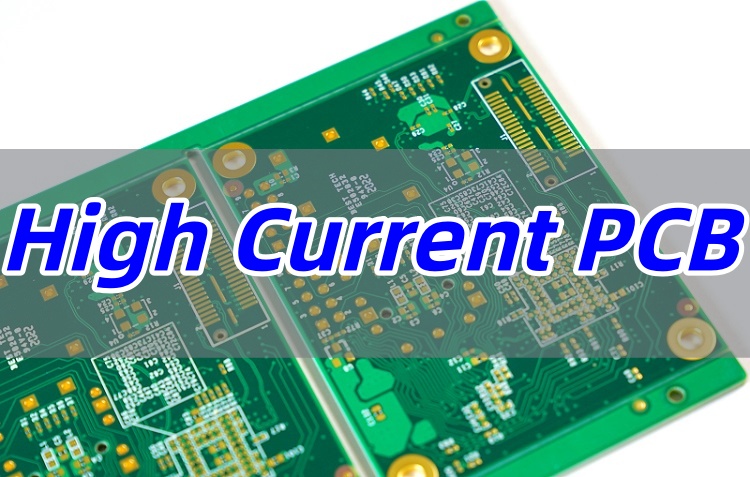
Looking for high current PCB design guidelines? Let’s discover rules and tips, layout and routing techniques, material selection, thermal solution, testing methods for high current PCB design.
Are you troubled with these questions?
- Does your PCB overheat during full-load testing, compromising device lifespan and stability?
- Does complex power module layout always challenge your signal integrity with interference?
- How to ensure long-term current-carrying capacity and safety margin of high-current PCBs within budget?
As a high current PCB manufacturer, EBest Circuit (Best Technology) can provide you service and solutions:
- Free DFM Current Path Optimization: Pre-production free DFM analysis optimizes copper thickness balance, trace width, and via arrays to enhance current capacity and thermal efficiency, eliminating overheating risks from the source.
- Integrated Power-Thermal Co-Design: Synchronize power integrity design with thermal path planning to avoid noise interference, ensuring stable operation in high-power scenarios.
- Cost-Controlled Reliability Solution: Leverage process expertise and material databases to recommend optimal substrate-process combinations within budget, achieving durable high-current PCBs for harsh environments.
Welcome to contact us if you have any inquiry for high current PCB design or manufacturing: sales@bestpcbs.com.
Why High Current PCB Design Is Important?
- Reduce Thermal Failure Risk: Improperly designed high-current paths can generate localized overheating, leading to solder joint melting, substrate aging, or even interlayer delamination. Optimizing copper thickness, thermal via placement, and heat dissipation pathways distributes heat evenly, extending PCB lifespan.
- Ensure Signal Integrity: High-current-induced electromagnetic interference (EMI) may disrupt adjacent sensitive signal lines. Proper partitioning, shielding layers, and differential pair routing minimize crosstalk, ensuring stable high-speed signal transmission to prevent system false triggers or data loss.
- Match Current Carrying Capacity: Accurate calculation of trace width and copper thickness based on current requirements avoids bottlenecks. For instance, 10A current requires at least 40mil trace width (1oz copper thickness). Overloading raises resistance, increases voltage drop, and eventually causes localized burnout.
- Enhance Mechanical Stability: High-current paths often involve bulky components like MOSFETs or inductors, necessitating consideration of PCB bending stress. Adding anchor vias, stiffeners, or selecting high-Tg (glass transition temperature) substrates prevents thermal expansion-induced pad cracking or interlayer separation.
- Optimize Cost Efficiency: Precise planning of high-current paths during the design phase reduces rework costs (e.g., adding copper, supplementing heat sinks) or material upgrades (e.g., 2oz copper thickness). Reliable operation lowers maintenance frequency, improving overall product cost-effectiveness.
- Comply With International Safety Standards: High-current designs must meet safety certifications like UL and IEC for temperature rise, flame resistance, and electrical clearances. Compliant designs avoid legal risks and ensure reliable operation in diverse environments, such as high-temperature industrial settings.

High Current PCB Design Rules & Tips
Below are rules and tips for high current PCB design:
1. Current Carrying Capacity Matching Principle
Copper Foil Parameters:
- For 1oz copper foil (35μm) at 25℃, 10A current requires copper width ≥8mm, with each additional 1A increasing width by 0.8mm;
- For 2oz copper foil (70μm) at 25℃, 10A requires width ≥4mm, with each additional 1A increasing width by 0.4mm;
- For 4oz copper foil (140μm) at 25℃, 10A requires width ≥2mm, with each additional 1A increasing width by 0.2mm.
- High Temperature Correction: For every 10℃ increase in ambient temperature, copper width must increase by 10%-15%.
Practical Tips:
- Prioritize wide copper foil designs over multiple parallel thin copper foils.
- For currents exceeding 30A, adopt “thickened copper” processes with local copper thickness up to 6oz.
- Post-design verification must be performed using current-carrying simulation tools (e.g., Altium Designer current calculator).
Applicable Scenarios: All high-current scenarios, especially power device supply loops.
2. Shortest Current Path Principle
Core Requirements & Specific Parameters:
- Path Length: Current paths must be shortened by ≥20% compared to conventional designs within the same loop.
- Corner Requirements: 90° sharp corners are prohibited; use 45° angles or circular arcs with radius ≥1mm.
- Via Quantity: ≤2 vias per current path, with via diameter ≥0.8mm.
Practical Tips:
- Position power input and output terminals adjacent during layout to minimize current path length.
- Avoid circuitous routing for high-current lines; cross small-signal areas when necessary while maintaining safety clearance.
- Ensure full connection between via walls and surrounding copper using thermal relief structures.
Applicable Scenarios: High-current loops in motor drives, power modules, inverters, etc.
3. Thermal Distribution Balance Principle
Core Requirements & Specific Parameters:
- Temperature Control: PCB surface temperature during normal operation must ≤60℃ (components must tolerate >85℃).
- Heat Dissipation Structure: Heat dissipation via diameter 0.8-1.2mm, spacing 2-3mm, fully connected to copper; copper exposure area in high-current regions ≥30% of total copper area.
Practical Tips:
- Connect high-current copper to large ground planes to reduce local current density and distribute heat.
- Establish dedicated thermal channels for hotspots like power device pads.
- Use infrared thermal imagers to identify hotspots and optimize designs.
Applicable Scenarios: High-temperature scenarios like new energy chargers, industrial power supplies, automotive OBCs.
4. Insulation Safety Principle
Core Requirements & Specific Parameters:
- Clearance Requirements: For low-voltage high-current (<100V) scenarios, clearance from small-signal lines ≥5mm; For high-voltage high-current (>100V) scenarios, clearance from other circuits ≥8mm, creepage distance ≥10mm.
- Insulation Materials: Must withstand ≥170℃ temperature and ≥2× rated voltage breakdown.
Practical Tips:
- Implement “zoned layout” strategies to physically isolate high-current areas from small-signal areas.
- Use FR-4 TG170 or higher specification substrates for high-voltage high-current regions.
- Perform insulation withstand testing at 1.5× rated voltage for 1 minute before mass production.
Applicable Scenarios: Safety-critical scenarios like high-voltage inverters, energy storage systems, medical devices.
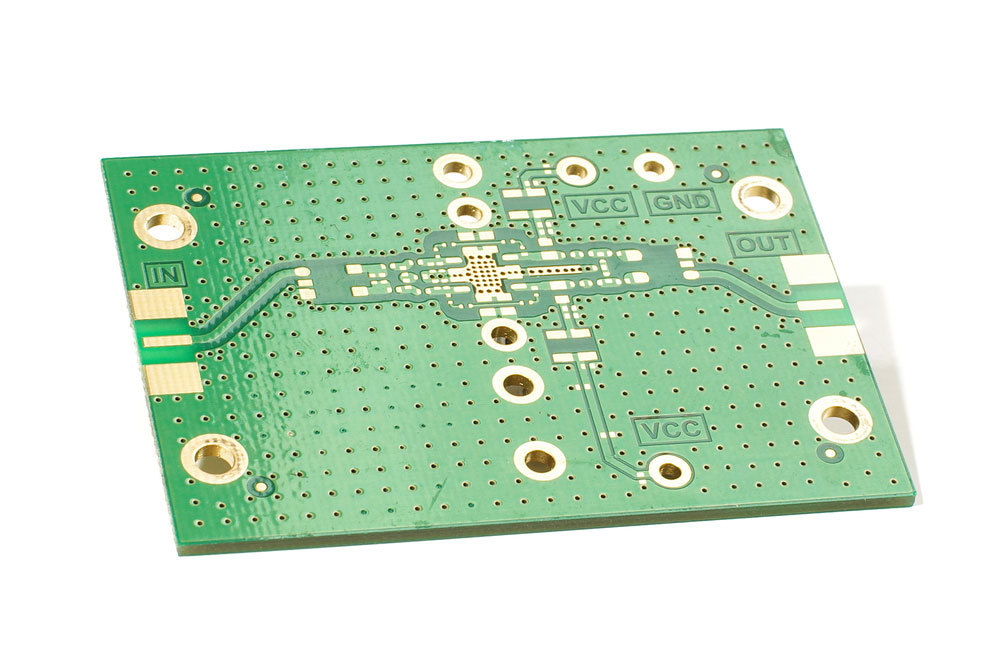
High Current PCB Layout & Routing Technique
- Precise Calculation of Trace Width and Current Capacity: Calculate trace width using IPC-2152 standards and formulas like W=I/(k×ΔT0.5) or tools such as Saturn PCB Toolkit. For 35μm copper foil at 40°C, use k=0.048. Reserve a 30% width margin for critical paths to prevent overload from peak currents.
- Optimized Current Path Topology: Design high-current traces with “short and straight” paths, replacing 90° corners with 45° or arc transitions to reduce inductance. Place power traces adjacent to ground planes to form low-impedance loops, minimizing EMI interference.
- Parallel Via Array Design: Deploy 5-10 Φ0.3mm vias in parallel at power/ground plane connections. Verify single-via current capacity at 0.5A/0.3mm² and maintain via spacing ≥1mm to avoid thermal stress concentration and ensure uniform current distribution.
- Copper Thickness Gradient Matching: Select copper thickness based on current requirements: 35μm (1oz) for ≤3A, 70μm (2oz) for ≤6A. For higher currents, use multi-layer parallelism or localized thick copper, with a 20% thermal design margin.
- Signal-Power Isolation Strategy: Maintain ≥3mm spacing between high-current traces and sensitive signals, with ground planes in between. Enclose differential pairs/high-speed signals with GND to prevent overlap with power layers and reduce crosstalk.
Material Selection Guide for High Current PCB Design
1. Copper Foil Thickness Selection
- Standard and Scenario: High-current paths prioritize copper foil thickness of 2oz (70μm) or higher, such as 3oz (105μm) or 4oz (140μm), to enhance current-carrying capacity and thermal dissipation. 1oz (35μm) is suitable for conventional circuits, while ultra-thin foil (0.5oz) is limited to high-frequency/precision signal lines.
- Design Considerations: Annotate “outer layer finished copper thickness” (e.g., 2oz) in designs and control trace width accuracy via etching compensation. IPC-4562 specifies a ±10% copper thickness tolerance; confirm process capabilities with manufacturers.
2. Substrate Material Types
- Metal Core Substrates: Aluminum substrates (cost-effective, excellent thermal dissipation) are ideal for LEDs and power modules. Copper substrates (superior thermal conductivity) are used in automotive electronics and high-power devices but require oxidation protection and cost consideration.
- High-Temperature Epoxy: Optimize for high-temperature epoxy resins (e.g., FR4-H grade) with Tg >170°C for automotive and military applications. Avoid standard FR4 (Tg 130–140°C) for prolonged operation above 150°C.
- High-Frequency/Specialty Substrates: For 5G/mmWave applications, combine Rogers RO4000 series (low dielectric loss) with metal substrates. Prioritize current-carrying and thermal performance in high-current scenarios, using high-frequency materials only locally.
3. Insulation Layer and Thermal Management
- Thermal and Dielectric Performance: Use ceramic-filled polymers (e.g., AlN with CTE 4–5ppm/°C) or high-thermal-conductivity epoxy glass cloth (80–100μm thick) to match the CTE of copper substrates (16.5ppm/°C) and components, reducing thermal stress and delamination risks.
- Thermal Expansion Matching: Address CTE mismatch between silicon chips (2.6ppm/°C) and copper substrates via graded CTE insulation layers or buffer layers (e.g., low-CTE polymers) to prevent solder joint cracking.
4. Process and Cost Optimization
- Cost Optimization: 1oz copper foil + FR4 for consumer electronics; 2oz copper foil + aluminum substrate for industrial/power equipment; 0.5oz copper foil for ultra-compact devices (e.g., earbuds).
- Process Adaptation: Thick copper foil increases etching difficulty, requiring trace width compensation. Metal substrates need specialized drilling/milling equipment to avoid edge burrs or delamination from standard FR4 processes.
5. Reliability Verification
- Thermal Cycling Tests: Validate solder joint and insulation layer durability via -40°C to 125°C thermal shock tests (ASTM D149). High-power scenarios require additional mechanical shock testing (IEC 60068-2-27).
- Standards Compliance: Adhere to IPC-6012 (rigid PCB performance) and UL 94 V-0 (flammability certification). Ensure materials pass third-party testing for temperature resistance and dielectric properties.
Thermal Management Solutions for High Current PCB Design
- Use high-thermal-conductivity substrates: Prioritize aluminum-core PCBs (thermal conductivity: 200-400 W/m·K) or copper-core PCBs, which significantly outperform standard FR4 (0.3 W/m·K) in heat dissipation. For high-density designs, opt for modified FR4 with thermal conductivity ≥3.0 W/m·K, combined with embedded copper blocks or thermal via arrays to enhance localized heat dissipation.
- Optimize current path layout: High-current paths should follow the “short, wide, thick” principle. Route length should be minimized, copper width ≥2x current-carrying requirement (per IPC-2152), and copper thickness ≥2oz (70μm) to reduce resistive heating. Critical power loops should use parallel traces or copper pours to distribute current density and prevent localized overheating.
- Implement thermal-mechanical co-design: Place dense thermal vias (≥10 vias/cm², 0.3-0.5mm diameter) beneath power devices (MOSFETs, IGBTs) to transfer heat from inner layers to outer cooling layers. Use solid copper planes or thermal grids as cooling layers, connected to device pads via multiple thermal vias to form a 3D heat dissipation network. For BGA packages, add thermal rings around pads linked to cooling vias to reduce junction-to-board thermal resistance.
- Integrate active cooling structures: Design fins or heat sink attachment points at PCB edges or unused areas for passive cooling. For high-power modules (≥50W), include embedded heat pipe or vapor chamber interfaces connected to PCB thermal channels via soldering or press-fit. Reserve airflow channels in ventilation paths to guide airflow and remove heat.
- Validate with thermal simulation and testing: Use thermal simulation tools (ANSYS Icepak, FloTHERM) to model 3D thermal behavior, inputting device power, ambient temperature, and cooling conditions to simulate steady-state/transient temperature distributions. Ensure hotspots (e.g., power device pads, high-current traces) remain below 80% of substrate glass transition temperature (Tg). Post-design, verify thermal performance via thermal imaging (e.g., FLIR) and compare with simulation results to validate effectiveness or iterate layout/cooling structures as needed.
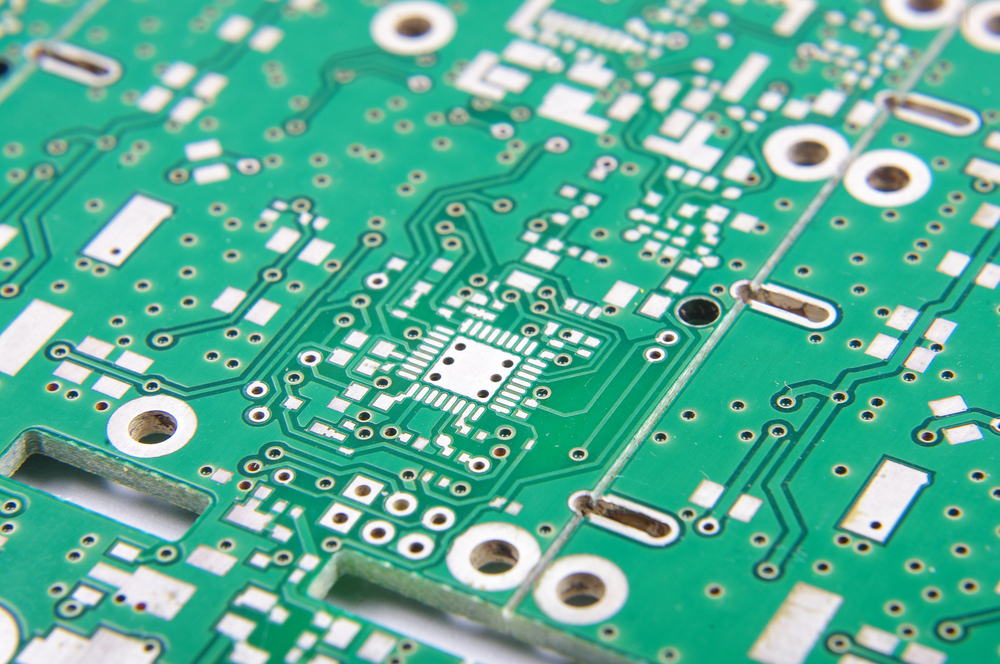
Common Mistakes to Avoid in High Current PCB Design
Seven common mistakes to avoid in high current PCB design:
Insufficient Trace Width Causing Voltage Drop and Overheating
- Problem: Power traces not designed according to current requirements, e.g., 10A current requires at least 2.5mm width (1oz copper thickness), leading to voltage drop or localized overheating.
- Solution: Calculate trace width using IPC-2221 formula I=k×ΔT0.44×A0.65, where k=0.024 for 1oz copper, ΔT is allowable temperature rise (e.g., 10°C), and A is cross-sectional area (mm²). For 40A with 2oz copper, A≈5.0mm2 requires 5mm width. Use parallel traces on dual-layer PCB with ≤1mm spacing and via arrays (≤5mm pitch) for double current capacity.
Missing Thermal Path Causing Thermal Failure
- Problem: High-power components (e.g., MOSFETs) lack thermal vias or copper under pads, causing thermal stress concentration.
- Solution: Implement a 3-layer thermal design: copper pad + thermal vias + heatsink. Place ≥0.3mm via arrays (spacing ≤1mm) under power device pads, connecting to inner thermal layers (e.g., layer 2 or N-1) and edge thermal rails or metal cores. Use ≥2oz copper for thermal layers with ENIG or OSP surface finish for better thermal conductivity. Validate thermal resistance path via simulation to ensure total junction-to-ambient thermal resistance ≤10°C/W.
Insufficient Via Current Capacity
- Problem: Standard 0.3mm via supports only 1A current, causing bottleneck failures in high-current paths.
- Solution: Use Via-in-Pad with copper fill or increase via size to 0.6mm, with ≥3 vias in parallel for current sharing. In multi-layer PCBs, alternate power-ground via stacks to form low-impedance vertical paths with ≤2mm via spacing. Ensure HASL or immersion silver finish for full solder fill and low contact resistance. Verify via current density, e.g., 0.6mm via with 2oz copper supports 3A.
“Dumbbell” Power Plane Layout
- Problem: Power planes fragmented by signal traces, creating high-current density hotspots and excessive voltage drop.
- Solution: Adopt dual-layer power-ground sandwich with ≤10mil spacing for planar capacitance. Use ≥20mil wide power channels to avoid single-layer long-distance transmission. For high-current zones (e.g., DC-DC outputs), combine power planes, channels, and decoupling capacitors (≥100μF, ESR≤10mΩ) near loads. Utilize “Plane Clearance” tools in Allegro/Altium to auto-detect and fix plane fragmentation.
EMC Issues: Ground Plane Fragmentation and Noise Coupling
- Problem: Split ground planes create ground bounce or loop antennas, causing EMI violations.
- Solution: Implement star grounding for sensitive circuits (e.g., ADCs) to isolate them from digital grounds. Place Y-capacitors across common-mode chokes with impedance matching (e.g., 100Ω). For HF noise, use double-layer ground-shield structure with grounded shield covering sensitive areas. Validate via near-field probe scans to ensure ≤30dBμV/m radiation at 10m.
Manufacturing Defects: Pad Design and DFM
- Problem: Solder mask-covered pads or dimensional errors cause poor soldering or shorts.
- Solution: Use NSMD (Non-Solder Mask Defined) pads with 20% larger size than component leads (e.g., 0.72mm pad for 0.6mm wide 0603 resistor). Keep silkscreen ≥0.2mm from pads. For BGAs, route “dog-bone” traces to vias outside pads. Run DRC/ERC checks with DFM tools to ensure trace/space ≥ manufacturer limits (e.g., 6mil) and verify pad-mask alignment.
Signal Integrity: Impedance Mismatch and Crosstalk
- Problem: Unmatched impedance in high-speed traces (e.g., DDR) causes reflections or crosstalk.
- Solution: Design 50Ω microstrips with 4-6mil dielectric thickness and εr=4.2-4.8. Use serpentine routing for length matching (bending radius ≥3× width, spacing ≥2× width). Isolate sensitive traces (e.g., clocks) from power lines by ≥3× width with ground shielding. Simulate eye diagrams to ensure eye width ≥40% period and eye height ≥800mV. For differential pairs, use tight coupling (spacing ≤2× width) with 90-100Ω impedance control.
Why Partner With Us for Your High Current PCB Design & Manufacturing?
Reasons to partner with us for your high current PCB design and manufacturing:
- Free DFM (Design for Manufacturability) Analysis: Pre-production DFM evaluations identify potential issues in pad dimensions, trace spacing, and thermal design, enabling proactive optimization to avoid cost overruns and delays.
- Global Certifications for High-Reliability Compliance: Certified with ISO 9001 (quality management), IATF 16949 (automotive), ISO 13485 (medical), and RoHS (environmental compliance), meeting stringent requirements for medical, automotive, and industrial sectors.
- 19 Years of High-Current PCB Expertise: With 19 years of specialized experience, we master core technologies such as ≥6oz copper thickness, microvia plating, and thermal management optimization, addressing high-current challenges like heat dissipation and signal integrity.
- Cost-Sensitive Pricing Solutions: We provide competitive pricing through material optimization, design simplification, and bulk procurement, ensuring 15%-30% cost reduction for budget-sensitive projects.
- 24-Hour Rapid Prototyping for Urgent Orders: Urgent orders benefit from 24-hour prototype delivery, enabling swift design validation and accelerated time-to-market.
- 99.2% On-Time Delivery Rate: Leveraging intelligent supply chain management and lean production, we achieve a 99.2% on-time delivery rate, minimizing production delays and inventory risks.
- 100% Batch Inspection & Strict Quality Control: Batch products undergo 100% full inspection with six-stage quality checks including AOI optical inspection and electrical testing, ensuring ≥99.8% yield and reduced post-sale costs.
- Customized Technical Solutions: Tailored stack-up design, impedance control, and high-frequency material selection ensure optimal performance-cost balance for high-current, high-power applications, meeting unique client requirements.
Welcome to contact us if you have any request for high current PCB design or manufacturing: sales@bestpcbs.com.