


PCB manufacturing PCB manufacturing
Home > Blog

Automotive PCB Assembly

Automotive PCB Assembly, Turnkey PCB Manufacturing
Thursday, January 22nd, 2026

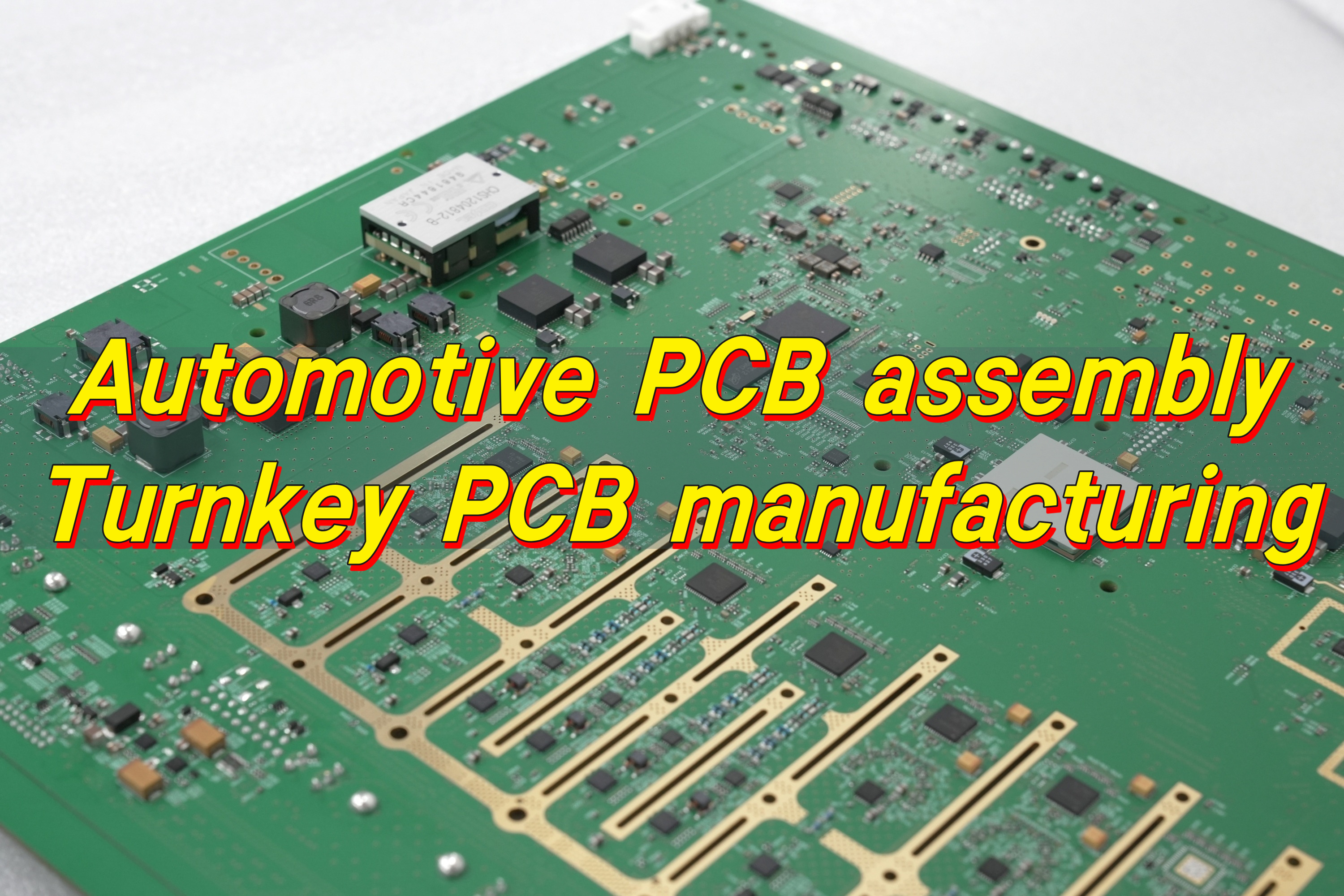
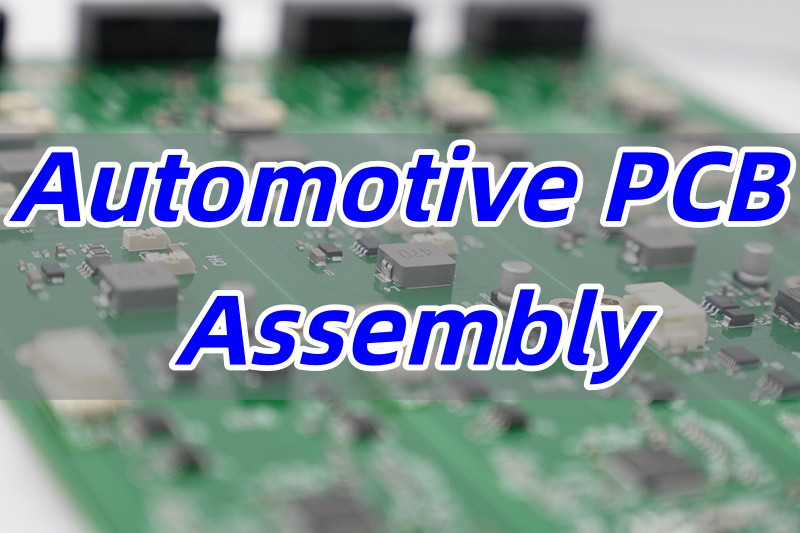
Automotive PCB assembly is the backbone of modern vehicle electronics, powering systems such as engine control units, ADAS modules, infotainment, battery management, and body control units. Unlike consumer electronics, automotive boards must operate reliably under vibration, heat, moisture, and long service cycles.

This demands strict process control, automotive-grade components, traceable materials, and compliance with quality standards to ensure consistent performance over millions of driving miles.
What is automotive control system PCB assembly?

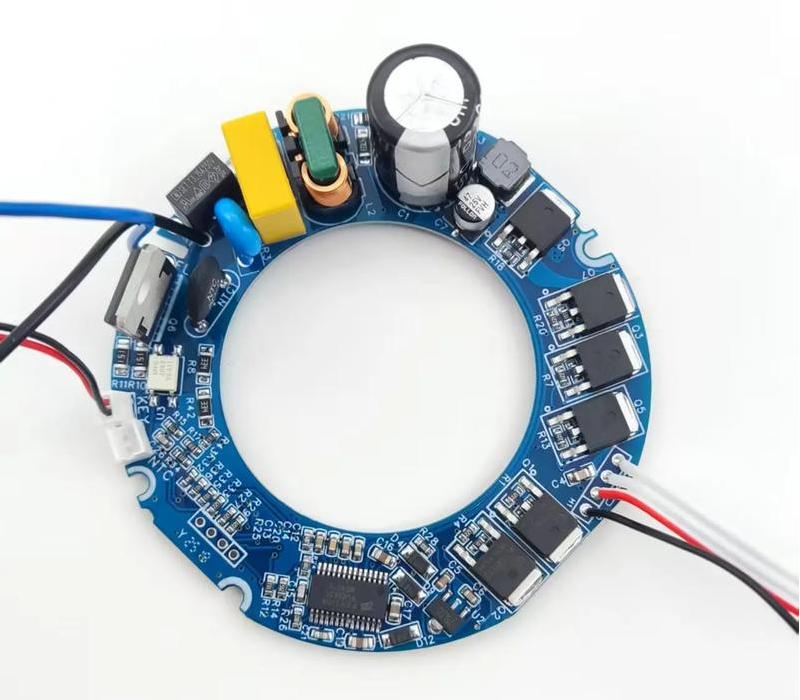
Automotive control system PCB assembly refers to the process of assembling printed circuit boards used in vehicle control units. These boards form the electronic backbone of automotive systems that monitor, regulate, and respond to real-time vehicle conditions.

A control system PCB does not operate in isolation. It interacts with sensors, actuators, power modules, and communication networks throughout the vehicle. The assembly process must therefore deliver electrical stability, mechanical strength, and predictable performance over many years of operation.

Automotive control system PCBs are commonly found in engine control units, battery management systems, transmission controllers, braking systems, and body control modules. Each board must withstand continuous thermal cycling, electrical noise, and mechanical stress.

Automotive PCB assembly differs from standard PCB assembly in several important ways. Materials are selected for thermal endurance. Solder joints are designed for vibration resistance. Process control is far stricter. Documentation and traceability are mandatory rather than optional.

Control system PCB assembly usually involves multilayer boards with fine-pitch components, power devices, and mixed-technology assembly. Surface mount technology is widely used, while through-hole components remain common for connectors and high-power parts.

How much does automotive PCB assembly cost?

Automotive PCB assembly cost is influenced by several interrelated factors. There is no fixed price because each project carries unique technical and compliance requirements.

  • Board complexity is a primary driver. Layer count, board thickness, copper weight, and impedance control all affect fabrication cost. Dense layouts increase assembly difficulty and inspection time.
  • Component selection also has a major impact. Automotive-grade components are more expensive than commercial equivalents. Long-term availability and approved vendor lists further influence sourcing cost.
  • Assembly process requirements shape pricing as well. Fine-pitch components, BGA packages, and mixed SMT and through-hole designs require specialized equipment and skilled operators.
  • Testing and quality control contribute significantly to total cost. Automotive programs typically require multiple inspection stages and functional testing.

When evaluating automotive PCB assembly factories, cost should be viewed in context. A lower unit price may conceal risks related to yield loss, field failure, or supply instability.

Many OEMs prefer turnkey PCB manufacturing because it consolidates costs into a single controlled workflow. EBest Circuit (Best Technology) supports this model by offering turnkey PCB assembly without MOQ requirements, allowing customers to balance cost control with production flexibility.
What testing is required in automotive PCB assembly?

Testing is a defining element of automotive PCB assembly. It verifies that each assembled board meets functional and reliability expectations before entering a vehicle system.

  • Visual inspection is the first layer of control. Automated optical inspection checks solder joints, component placement, and polarity. This step catches surface-level defects early in the process.
  • Electrical testing follows. In-circuit testing verifies component values, connectivity, and basic electrical behavior. It helps identify assembly issues that visual inspection cannot detect.
  • Functional testing is essential for control system PCBs. Boards are powered and operated under simulated conditions to confirm correct behavior. This test validates firmware interaction and signal response.
  • For certain applications, environmental testing is required. Thermal cycling exposes boards to repeated temperature changes. Vibration testing evaluates mechanical robustness.
  • Traceability supports all testing activities. Each board is linked to material batches, process records, and test results.

A reliable automotive PCB assembly factory integrates testing into production rather than treating it as a final checkpoint. EBest Circuit (Best Technology) applies multi-stage inspection and testing as part of its turnkey PCB manufacturing process, supporting stable quality without unnecessary delay.

How long does PCB assembly take?

PCB assembly lead time depends on project scope, supply chain conditions, and testing requirements. Automotive projects often prioritize consistency over speed, yet efficient scheduling remains important.

  • Prototype assembly usually takes longer than consumer electronics prototypes. Engineering review, process setup, and validation testing add time but reduce downstream risk. For small-volume production, lead times typically range from one to three weeks. This includes material preparation, assembly, inspection, and functional testing.
  • Mass production lead times depend on order size and production planning. Once a process is validated, cycle times become more predictable. Long-term agreements often allow for stable scheduling.
  • Component availability plays a major role. Automotive-grade components may have longer lead times. A turnkey PCB assembly partner can mitigate this risk through proactive sourcing and inventory planning.

EBest Circuit (Best Technology) supports flexible lead times by integrating PCB fabrication, component sourcing, and assembly under one system. This approach reduces coordination delays and helps maintain predictable delivery schedules.

What is automotive PCB assembly used for?

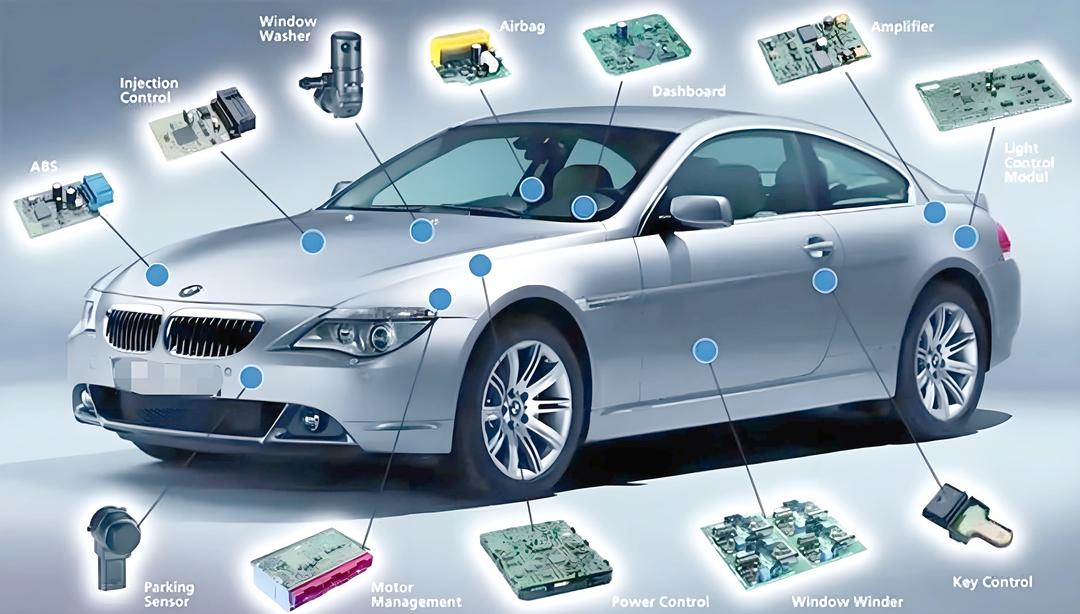
Automotive PCB assembly supports a wide range of vehicle systems. Each application has its own technical focus, yet all share a need for dependable electronic control.

  • Powertrain systems rely on PCBs to manage engine performance, fuel delivery, and emissions. These boards must operate reliably under high temperature and electrical load.
  • Safety systems depend on precise signal processing. Airbag controllers, braking systems, and stability control units use PCBs that must respond instantly and accurately.
  • Body electronics manage lighting, climate control, and access systems. While operating conditions may be less severe, long-term reliability remains essential.
  • Electric and hybrid vehicles introduce new requirements. Battery management systems and power control units rely on PCBs that handle high currents and monitor complex parameters.
  • Infotainment and connectivity systems also use automotive PCB assembly. These boards integrate communication interfaces while meeting automotive durability standards.

Across all these uses, automotive PCB assembly ensures that electronic systems perform consistently throughout the vehicle’s service life.
What challenges exist in automotive control system PCB assembly?

Automotive control system PCB assembly presents technical and operational challenges. These challenges require careful planning rather than reactive problem solving.

  • Thermal management is a constant concern. Control systems often operate near heat sources. Poor thermal design or assembly can lead to premature failure.
  • Vibration and mechanical stress affect solder joint integrity. Assembly processes must account for continuous movement and shock.
  • Component lifecycle management adds complexity. Automotive programs often last many years. Ensuring component availability requires strategic sourcing.
  • Process consistency is another challenge. Automotive quality expectations leave little room for variation. Assembly parameters must remain stable over long production runs.
  • Compliance requirements introduce additional workload. Documentation, traceability, and audit readiness are not optional in automotive manufacturing.

Despite these challenges, structured manufacturing processes can mitigate risk. Working with an experienced automotive PCB assembly manufacturer helps translate design requirements into stable production outcomes.

How to choose an automotive control system PCB assembly factory?

Selecting the right automotive control system PCB assembly factory is a strategic decision. It affects product reliability, supply continuity, and total cost of ownership.

  • Experience in automotive projects matters. A factory familiar with automotive standards understands the importance of process discipline.
  • Manufacturing capability should align with product requirements. This includes multilayer PCB fabrication, fine-pitch assembly, and power electronics handling.
  • Quality systems are critical. Look for structured inspection, testing, and traceability practices. These systems support long-term program stability.
  • Supply chain management is equally important. Automotive components require careful sourcing and lifecycle planning.
  • Communication and engineering support often determine project success. A responsive partner helps resolve issues early and supports design optimization.

EBest Circuit (Best Technology) positions itself as a professional PCB manufacturer offering PCB prototyping, design, and assembly services. Its turnkey PCB assembly model without MOQ requirements supports both development and production stages.
Why select a professional automotive PCB assembly factory?

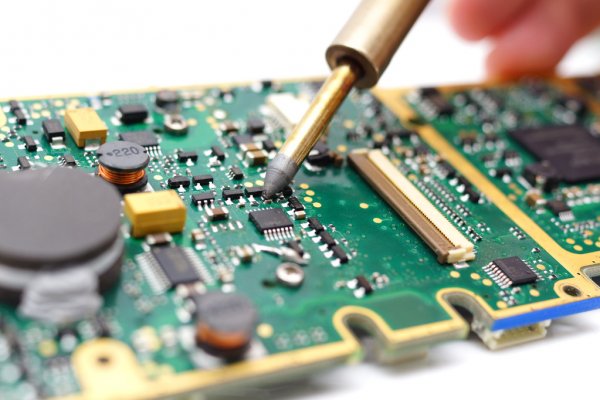
A professional automotive PCB assembly factory provides more than production capacity. It delivers process control, accountability, and confidence.

Professional manufacturers invest in equipment, training, and quality systems. These investments reduce variation and improve long-term reliability.

Turnkey PCB manufacturing further strengthens this approach. By managing the entire process, risks related to handoffs and miscommunication are reduced.

For automotive programs, reliability is not negotiable. Choosing a professional automotive PCB assembly factory supports consistent performance throughout the vehicle lifecycle.

EBest Circuit (Best Technology) offers turnkey PCB assembly services without MOQ requirements, supporting automotive customers from early prototypes to stable production.

Conclusion:

Automotive PCB assembly plays a central role in modern vehicle electronics. Control system PCBs support safety, performance, and efficiency across many applications.

For professional support in automotive PCB assembly and turnkey PCB manufacturing, contact sales@bestpcbs.com to discuss your project requirements.
Automotive PCB Assembly From Quality Prototype to Full Production
Friday, November 14th, 2025

Automotive PCB assembly is the complete process of designing, fabricating, and assembling printed circuit boards specifically for automotive electronics to ensure reliability, durability, and performance under harsh vehicle conditions. This article provides a comprehensive guide, from understanding design fundamentals and prototyping to selecting the right automotive PCB assembly manufacturer for full-scale production.

Are you struggling to navigate the complexities of automotive PCB assembly?

  • Facing costly recalls and failures​ due to inconsistent quality and a supplier’s inability to meet strict IATF 16949 and AEC-Q100 standards.
  • Watching your budget spiral out of control, trapped between the high cost of quality components and the immense pressure to reduce final assembly prices.
  • Getting stuck with a prototype supplier that can’t scale, causing painful delays and re-qualification when moving from pilot runs to full production.
  • Constantly battling extended lead times​ that derail your project timelines and delay your product’s launch date.
  • Hitting frustrating technical walls​ with boards that overheat, malfunction under vibration, or suffer from signal interference in real-world automotive environments.

The good news is that these challenges have clear solutions when you partner with an experienced and capable automotive PCB assembly supplier.

  • Implementing rigorous, automotive-specific quality control protocols (e.g., IATF 16949 certification).
  • Offering cost-optimization through design for manufacturability (DFM) and efficient supply chain management.
  • Providing a seamless transition from low-volume prototype PCB fabrication to full-scale production.
  • Ensuring faster turnaround times with streamlined processes and robust production capacity.
  • Leveraging advanced engineering expertise to solve complex design and material challenges.

At EBest Circuit (Best Technology), we specialize in high-quality ​automotive PCB assembly, including advanced ceramic PCBs for demanding applications. With a focus on reliability and precision, we support our global clients from the initial design phase through to final delivery, ensuring every board meets the rigorous demands of the automotive industry. Pls feel free to contact us at ​sales@bestpcbs.com​ to discuss your project requirements.

Automotive PCB Assembly

What Is Automotive PCB Assembly?

Automotive PCB assembly is the process of populating a bare printed circuit board with electronic components to create a functional module for use in vehicles. These assemblies are found in everything from engine control units (ECUs) and infotainment systems to advanced driver-assistance systems (ADAS).

The “PCB automotive meaning” extends beyond simple connectivity; these boards must operate reliably under extreme conditions, including temperature fluctuations, vibrations, and exposure to moisture and chemicals.

Understanding this foundation is the first step in the journey from a quality prototype to successful full production.

Key Automotive PCB Design Guidelines

Success in ​automotive PCB assembly​ starts with robust design. Adhering to specific ​automotive PCB design guidelines​ is non-negotiable for reliability and performance. Key considerations include:

  • Thermal Management:​​ Use appropriate materials like high-Tg FR-4 or metal-core boards to dissipate heat effectively.
  • Signal Integrity:​​ Careful routing, impedance control, and shielding are essential for high-speed data transmission in systems like ADAS.
  • Durability:​​ Designs must account for mechanical stress, using conformal coating and selecting components rated for automotive temperature ranges (-40°C to +125°C or higher).
  • Design for Manufacturability (DFM):​​ Collaborate early with your ​automotive PCB assembly supplier​ to ensure the design can be efficiently and reliably manufactured at scale.

Following these guidelines from the outset minimizes costly revisions and ensures a smoother path to production.

The Role of Prototype PCB Fabrication in Automotive PCB Assembly Projects

​Prototype PCB fabrication​ is a critical phase that bridges design and mass production. It allows engineers to validate the design, test functionality, and identify potential issues in a real-world environment before committing to high-volume tooling.

A high-quality prototype is not just a proof-of-concept; it is a validation tool for thermal performance, EMI/EMC compliance, and long-term reliability.

Partnering with a manufacturer that excels in both prototyping and production, like EBest Circuit (Best Technology), ensures that learnings from the prototype phase are directly incorporated into the full production process, reducing risk and accelerating time-to-market.

What are the Factors Influencing Your Automotive Control System PCB Assembly Price?

The ​Automotive Control System PCB Assembly Price​ is not a single figure but a result of several variables. Understanding these factors helps in budgeting and making informed decisions:

  • Layer Count and Complexity:​Multi-layer boards (e.g., 8-20 layers) for complex systems cost more than simple double-sided boards.
  • Materials:​​ Standard FR-4 is cost-effective, but high-frequency or thermal-performance materials (e.g., Rogers, ceramic substrates) increase the price.
  • Components:​​ The cost and availability of components, especially automotive-grade ICs and connectors, are a major factor. The current semiconductor shortage highlights this volatility.
  • Process Complexity:​​ Requirements for fine-pitch components, BGAs, mixed technology (SMT & THT), and specialized coatings add to the cost.
  • Order Volume:​​ Economies of scale apply; higher volumes typically lead to a lower cost per unit.

Requesting detailed ​automotive PCB assembly quotes​ from multiple suppliers is the best way to get a clear picture.

Where Is Automotive PCB Assembly Used Across Modern Vehicle Applications?​

Modern vehicles are essentially complex computers on wheels. Automotive PCB assemblies are the fundamental building blocks that power the electronics in every area of the vehicle, from the powertrain to the infotainment screen.

I. Vehicle Platforms & Powertrain

  • Electric Vehicles (EVs) & New Energy Vehicles:​​ Battery Management Systems (BMS), Motor Controllers, On-Board Chargers (OBC), Power Distribution Modules.
  • Modular Vehicle Platforms:​​ Centralized computing and zone control modules that require robust, high-layer-count PCBs.
  • Powertrain & Chassis Control:​​ Engine Control Units (ECUs), Transmission Control, ​IGBT Modules​ for power conversion, and ​Wireless Control Systems​ (Brake-by-Wire, Steer-by-Wire).

II. Perception & Sensing

This area requires high-frequency and high-reliability PCBs, often using specialized materials.

  • LiDAR (Light Detection and Ranging):​​ The main control and signal processing boards.
  • RADAR (Radio Detection and Ranging):​​ Millimeter-wave radar boards for adaptive cruise control and blind-spot monitoring.
  • Cameras & Vision Systems:​​ Front, rear, and surround-view cameras, and their associated image processing units.
  • Ultrasonic Sensors:​​ For parking assistance and short-range object detection.
  • High-Precision Positioning:​​ GPS and GNSS modules for navigation and autonomous driving.

III. Control & Integration

  • Domain Controllers:​​ High-performance computing modules that consolidate functions (e.g., ADAS Domain Controller, Vehicle Control Unit).
  • Gateway Modules:​​ The central communication hub for all in-vehicle networks.
  • Telematics & Connectivity:​​ ​T-Boxes​ and ​5G/4G Wireless Communication Modules​ for vehicle-to-cloud and vehicle-to-everything (V2X) communication.
  • Over-the-Air (OTA) Update Systems:​​ Hardware enabling remote software updates.

IV. Cockpit & Infotainment

  • Digital Cockpits & Instrument Clusters:​​ High-resolution displays and graphics processing units.
  • Head-Up Displays (HUD):​​ Projection systems that require precise optics and control.
  • Infotainment Systems:​​ Central information displays, audio amplifiers, and ​SoC (System-on-Chip) based mainboards.
  • Driver Monitoring Systems (DMS):​​ Cabin cameras and processors to detect driver alertness.
  • In-Cabin Multi-Screen & Curved Displays:​​ The PCBs driving advanced user interfaces.
  • Digital Keys & Smart Access Systems:​​ RF and Bluetooth Low Energy (BLE) modules for passive entry and start.

EBest Circuit (Best Technology)’s experience with high-layer-count boards, advanced substrates, and rigorous quality control makes us an ideal partner for these demanding applications.

How to Identify the Best Automotive PCB Assembly Services for Your Project.

Selecting the ​best automotive printed circuit board assembly services​ requires careful evaluation. Look for a partner that offers:

  • Automotive Industry Certification:​​ IATF 16949 certification is a must for quality management.
  • Proven Experience:​​ A portfolio of successful projects in automotive electronics.
  • Full-Service Capabilities:​​ From ​prototype PCB fabrication​ and component sourcing to full ​automotive PCB assembly​ and testing.
  • Robust Testing Protocols:​​ In-circuit testing (ICT), flying probe testing, and automated optical inspection (AOI) are essential.
  • Transparent Communication and Support:​​ A responsive team that provides clear ​automotive PCB assembly quotes​ and proactive DFM feedback.

Why Choose a China Automotive PCB Assembly Manufacturer for Global Projects?

Opting for a ​China Automotive PCB Assembly Manufacturer​ offers distinct advantages for global projects, combining transparent pricing with advanced capabilities. Leading ​china automotive PCB assembly suppliers​ provide:

  • Cost-Effectiveness:​​ Competitive labor and overhead costs result in more attractive ​China automotive PCB assembly pricelist​ options.
  • Complete Supply Chain:​​ Well-established local supply chains for materials and components reduce lead times and mitigate shortage risks.
  • Advanced Technical Capability:​​ Many Chinese PCB manufacturers invest heavily in state-of-the-art equipment and engineering talent.
  • Experience with Global Export:​​ They are adept at handling logistics, documentation, and compliance requirements for international customers. When reviewing ​China automotive PCB assembly quotes, it’s crucial to balance cost with these qualitative benefits.

What to Know About Automotive Control System PCB Assembly Factory Capabilities?

When auditing an ​automotive control system PCB assembly factory, verify their capabilities beyond basic assembly. Key areas to assess include:

  • Advanced SMT Lines:​​ High-precision placement machines for fine-pitch components and BGAs.
  • Conformal Coating:​​ Automated selective coating for protection against environmental factors.
  • Comprehensive Testing:​​ Full functional testing suites that simulate real operating conditions.
  • Traceability:​​ Systems that track every component and process step for full accountability. A capable ​automotive control system PCB assembly factory​ will have these processes in place to ensure quality and reliability.

A truly capable ​automotive control system PCB assembly factory​ will have these processes in place to ensure quality and reliability. At BEST Technology, we have built our manufacturing infrastructure to meet and exceed these rigorous demands. Our core capabilities include:

  • High-Speed, High-Precision SMT Assembly:​​ Our surface mount technology lines are equipped to handle a daily placement capacity of 13.2 million chips, supporting components as small as 01005 and advanced BGAs with a fine pitch of just 0.25mm.
  • Comprehensive Secondary Assembly Services:​​ We offer complete through-hole (THT) assembly, press-fit technology for connectors, and both manual and automated PCB assembly to accommodate a wide range of automotive board requirements.
  • Robust Conformal Coating & Potting:​​ Utilizing automated selective coating systems, we apply acrylic, silicone, or urethane coatings that meet IPC-CC-830 standards. We also provide epoxy or silicone potting for superior protection against moisture, chemicals, and vibration.
  • Rigorous Testing and Inspection:​​ Our quality assurance protocol integrates Automated Optical Inspection (AOI), X-ray inspection for hidden solder joints, functional testing to simulate real-world operating conditions, and in-circuit testing (ICT) for precise electrical validation.
  • Full-Scale Production and Prototyping Flexibility:​​ We support the entire product lifecycle, from single-piece prototype PCB fabrication to large-volume production runs, handling board sizes from a compact 0.2″ x 0.2″ to large-format 22″ x 47.5″ panels.

By choosing a partner like BEST Technology, you gain access to these deep-seated manufacturing capabilities, ensuring your automotive control systems are built for maximum performance and durability.

Why Choose EBest Circuit (Best Technology) as Your Right Automotive PCB Assembly Manufacturer?

At EBest Circuit (Best Technology), we combine the competitive advantage of a China-based manufacturer with an unwavering commitment to quality that the automotive industry demands. We are your strategic partner for reliable, high-performance PCB assembly.

1. Proven Expertise in Automotive Electronics

  • Nearly Two Decades of Experience:​​ Founded in 2006, we have deep expertise in manufacturing PCBs and assemblies that meet the stringent requirements for reliability, temperature tolerance, and longevity.
  • Trusted by Global Clients:​​ We have successfully served over 1,700 clients across 40+ countries, with a proven track record in the automotive sector.

2. Rigorous Quality Built for Automotive Standards

  • IATF 16949:2016 Certified:​​ Our quality management system is certified to the core automotive industry standard, ensuring process discipline and product excellence.
  • End-to-End Quality Control:​​ We implement strict checks at every stage—from component sourcing (using authorized distributors to avoid counterfeits) and SMT assembly to final testing—guaranteeing zero-defect deliveries.
  • Specialty in High-Reliability Substrates:​​ We are experts in manufacturing robust PCBs like ​Metal Core PCBs (MCPCB)​​ for thermal management, ​Ceramic PCBs for harsh environments, and ​Heavy Copper PCBs​ for power electronics, making us ideal for engine control units, LED lighting, and power systems.

3. True Turnkey Solution

  • From Design to Box Build:​​ We offer a complete, integrated service:
    • PCB Fabrication​ (FR4, HDI, Rigid-Flex, High-Frequency)
    • Component Sourcing​ with full supply chain management
    • Advanced PCB Assembly​ (SMT & THT)
    • Full System Integration & Box Build
  • Dedicated Engineering Support:​​ Your project is supported by a dedicated team, providing DFM (Design for Manufacturability) advice and seamless communication from quality prototype to full production.

4. Advanced Manufacturing & Rapid Prototyping

  • High-Precision Capabilities:​​ Our facilities can handle 01005 chip components, 0.25mm pitch BGAs, and complex assemblies, supporting the trend towards miniaturization.
  • State-of-the-Art Inspection:​​ We utilize 3D SPI, AOI, and X-Ray inspection to ensure perfect solder joints and assembly integrity.
  • Fast-Track Prototyping:​​ We offer expedited services, with urgent prototypes shipped within ​24-72 hours, accelerating your product development cycle.

​5. Guaranteed On-Time Delivery

  • 97% On-Time Delivery Rate:​​ We understand critical project timelines. Our streamlined processes and online order tracking ensure your production schedule remains on track.

​In summary,​​ EBest Circuit (Best Technology) is more than a supplier; we are a partner dedicated to the success of your automotive electronics. We deliver the perfect blend of quality, expertise, and value.

In closing, automotive PCB assembly​ is the foundational process that brings automotive PCB design to modern vehicles, enabling everything from basic controls to autonomous driving. This guide has outlined the critical path from design and prototyping to selecting a manufacturing partner for full-scale production. For a reliable, cost-effective, and technically proficient solution, pls feel free to contact us at ​sales@bestpcbs.com​ to get a quote for your next project. We are committed to being your trusted ​automotive PCB assembly supplier.