PCB manufacturing PCB manufacturing
Home > Blog

Top Australia PCB Manufacturer, PCB Manufacturing Companies Australia

December 5th, 2025

Looking for Australia PCB manufacturer? This blog is mainly about list and selection guide, evaluation methods of production capability, lead time for Australia PCB manufacturer.

For PCB designers perfecting new circuit diagrams, engineers resolving production bottlenecks, or procurement teams ensuring a stable supply, finding a trustworthy global PCB manufacturer is not just a choice, but a crucial decision for the success of their projects.

This is why a reliable global PCB manufacturer is so important. As a leader in global PCB solutions, Best Technology has specialized in PCB prototyping, custom PCB design, and mass production for 19 years. Our experienced team of engineers provides free engineering services and DFM (Design for Manufacturability) checks to ensure the smooth production of your PCB projects. Whether you are manufacturing medical devices or industrial control systems, we can transform your excellent designs into high-quality PCB products. Contact us now if you need any help for PCB design, prototyping, mass production or PCBA service: sales@bestpcbs.com.

Top Australia PCB Manufacturer

Are You Facing These Challenges?

  • You’re waiting 4+ weeks for overseas PCB prototypes, pushing your product launch past deadlines.
  • Your PCB design works on paper but fails in production—no local engineer to fix it before manufacturing.
  • Mass-produced PCBs have inconsistent quality, leading to rework costs that eat into your budget.
  • Overseas suppliers give vague lead times, leaving you stuck when critical orders hit customs delays.
  • Complex projects (medical/defense) lack the compliance support and traceability you need.
  • You’ re paying hidden fees (shipping, customs, duties) on “low-cost” overseas quotes, total costs spiral.

End-to-End Support from Requirement to Delivery

  • Requirement & Design: Share your Gerber files or even a rough sketch, and we’ll run a free Design for Manufacturability (DFM) audit—no strings attached. This isn’t just a quick check: we flag hidden flaws like overly narrow traces, thermal hotspots, or impedance mismatches that often slip past overseas suppliers. You’ll get a clear report with revised files if needed, so your design doesn’t fail in production and force costly reworks. We also lock in a fixed, all-inclusive quote upfront—no surprise fees later.
  • Prototyping & Production: Tired of 4+ week waits for overseas prototypes? Our standard prototypes ship in 1–5 days, with 24–48 hour expedited options for tight deadlines. We keep FR-4, Rogers, and Polyimide in stock, so material shortages never slow you down. For mass production, our Sydney facility uses automated CNC drilling and AI-powered optical inspection (AOI) to avoid the inconsistent quality that plagues budget overseas shops. Every batch comes with real-time test data, so you know exactly what you’re getting before it ships.
  • Delivery & After-Sales: 80% local material sourcing means no customs delays or stuck shipments. You can track orders online 24/7, with automatic alerts for every milestone—from design approval to shipping. Each PCB includes a full traceability report, so you have clarity on material lots and test results. Even after delivery, we’re here: if you hit snags during assembly, our team provides free troubleshooting. And if we miss a committed lead time (our fault), you get 10% off your next order—no arguments, just accountability.

Why Choose Best Technology for Global PCB Manufacturer?

Reasons why choose Best Technology for global PCB manufacturer:

  • Regulatory Certification Portfolio: Holds globally recognized certifications (ISO 9001, IATF 16949, ISO 13485, RoHS) to facilitate seamless market entry in EU/Middle East markets while minimizing compliance-related risks for buyers.
  • Cost-Effective Pricing Strategy: Provides budget-conscious design alternatives via material efficiency upgrades and manufacturing process refinements, achieving 15-20% BOM cost reduction under IPC-6012 compliance, catering to cost-aware consumer electronics development.
  • 24-Hour Express Prototyping: Supports urgent prototype needs with 24-hour sample delivery featuring TDR impedance checks and AOI defect detection, enabling designers to validate concepts faster and reduce time-to-market by 30%+.
  • Punctual Delivery Performance: Maintains 99.2% delivery reliability through intelligent production planning and cross-regional logistics coordination, guaranteeing 12-14 day standard cycles and 7-day express options for stable procurement operations.
  • High-Yield Mass Production Framework: Implements comprehensive full-lot inspection during volume manufacturing via flying probe testing and accelerated reliability stress tests, achieving sustained 98%+ yield rates to ensure flawless product delivery to engineering teams.
  • Decades-Long Technical Mastery: Applies 19 years of accumulated PCB know-how through standardized workflows and failure pattern databases to rapidly pinpoint design vulnerabilities and deploy reliable engineering solutions.
  • Pre-Production DFM Support: Includes complimentary manufacturing feasibility analysis in design phases, covering signal integrity modeling, impedance control guidance, and solderability enhancements to proactively address production challenges.
Why Choose Best Technology for Global PCB Manufacturer?

Top Australia PCB Manufacturer List

1. Allegro Services

    • Main Business: Multilayer PCB manufacturing, SMD assembly, turnkey electronics solutions.
    • Core Advantage: AS9100D certified, trusted by Boeing Australia for aerospace/defense projects.
    • Lead Time: Prototyping 3–7 days; mass production 10–15 days.
    • Process Capability: 6–24 layer PCBs, ±5% impedance control, blind/buried vias.

    2. B.E.C. Manufacturing

      • Main Business: Low-to-mid volume PCBs, solder paste stencils, membrane switches.
      • Core Advantage: ISO 13485 certified, specialized in medical device PCB prototype-to-production.
      • Lead Time: Prototyping 1–5 days; mass production 7–10 days.
      • Process Capability: 1–12 layer PCBs, FR-4/Polyimide, 0.1mm fine line.

      3. Circuitwise

        • Main Business: High-reliability PCBs for industrial control and automotive.
        • Core Advantage: Zero-defect guarantee, on-site failure analysis lab.
        • Lead Time: Prototyping 4–6 days; mass production 12–18 days.
        • Process Capability: 4–32 layer PCBs, high-temperature materials (up to 260°C).

        4. Elektra Printed Circuits

          • Main Business: Custom PCB prototyping, small-batch manufacturing.
          • Core Advantage: Free technical consultation for startups, online instant quoting.
          • Lead Time: Prototyping 2–4 days; small batches 5–8 days.
          • Process Capability: 1–16 layer PCBs, flexible PCBs, LED PCB arrays.

          5. Entech Electronics

            • Main Business: PCB assembly (PCBA), box-build integration.
            • Core Advantage: DISP registered, strict component traceability for defense projects.
            • Lead Time: PCBA 7–10 days; turnkey solutions 14–21 days.
            • Process Capability: 2–20 layer PCBs, through-hole/SMD mixed assembly.

            6. PCB Solutions Australia

              • Main Business: RF and microwave PCBs for telecommunications.
              • Core Advantage: Rogers/Taconic material expertise, free VSWR testing.
              • Lead Time: Prototyping 5–7 days; mass production 10–14 days.
              • Process Capability: 2–18 layer PCBs, high-frequency substrates (up to 40GHz).

              7. RJS Electronics

                • Main Business: PCBs for mining and harsh environment electronics.
                • Core Advantage: IP67 conformal coating, vibration/dust resistance testing.
                • Lead Time: Prototyping 6–8 days; mass production 15–20 days.
                • Process Capability: 4–24 layer PCBs, ruggedized designs.

                8. Tecan Australia

                  • Main Business: PCBs for medical and dental equipment.
                  • Core Advantage: ISO 13485/FDA compliant, batch-to-batch traceability.
                  • Lead Time: Prototyping 4–6 days; mass production 12–16 days.
                  • Process Capability: 2–16 layer PCBs, biocompatible materials.

                  How to Choose the Right Australia PCB Manufacturer?

                  A detailed selection guide to Australia PCB manufacturer:

                  1. Certifications & Compliance

                  • ISO Certifications: Prioritize manufacturers with ISO 9001:2015 (quality management) and ISO 13485:2016 (medical devices) for stringent quality control. AS9100D certification indicates compliance with aerospace standards.
                  • Regulatory Adherence: Ensure RoHS/REACH compliance for hazardous substance restrictions and environmental safety. Medical/automotive sectors require UL or SGS certifications.

                  2. Technical Capabilities

                  • Material & Layer Support: Verify compatibility with advanced materials (e.g., Rogers high-speed laminates, flexible substrates) and multi-layer capabilities (up to 20+ layers).
                  • Advanced Technologies: Confirm expertise in HDI (High-Density Interconnect), blind/buried vias, and rigid-flex PCBs for complex designs.

                  3. Production Capacity & Lead Times

                  • Scalability: Assess monthly/yearly capacity for prototypes (24-hour turnaround) to high-volume production (e.g., 5-day standard lead times).
                  • Flexibility: Ensure support for mixed batch sizes (small-run prototyping to large-scale manufacturing) and expedited options.

                  4. Quality Control & Testing

                  • Inspection Protocols: Look for in-house AOI (Automated Optical Inspection), X-ray, and flying probe testing. Statistical Process Control (SPC) ensures defect minimization.
                  • Validation Processes: First Article Inspection (FAI) and ongoing audits guarantee consistency. Space-grade testing (e.g., thermal cycling from -40°C to +150°C) for specialized applications.

                  5. Customer Service & Support

                  • Technical Collaboration: Dedicated engineering teams for DFM (Design for Manufacturability) feedback and pre-production consultation.
                  • Communication Channels: Real-time updates via online portals, responsive email/phone support, and dedicated account management.

                  6. Pricing & Cost Transparency

                  • Clear Quoting: Itemized cost breakdowns (material, labor, testing) without hidden fees. Value engineering suggestions to optimize costs.
                  • Payment Flexibility: Negotiable terms for long-term partnerships and bulk discounts.

                  7. Environmental Responsibility

                  • Sustainable Practices: Energy-efficient facilities, waste recycling programs (e.g., e-waste recycling to recover copper), and reduced chemical usage.
                  • Carbon Footprint Reduction: Energy-saving measures and partnerships with green logistics providers.

                  8. Industry Experience & Case Studies

                  • Sector-Specific Expertise: Portfolio showcasing projects in medical, automotive, aerospace, IoT, and mining. Client testimonials from Fortune 500 companies.
                  • Awards & Recognitions: Industry accolades (e.g., “Top 10 Australian PCB Manufacturers”) and certifications highlighting innovation and reliability.

                  9. Geographic Proximity & Logistics

                  • Local Advantage: Proximity to Australian markets reduces shipping times (e.g., 3-day domestic delivery) and customs delays.
                  • Global Reach: Partnerships with reliable logistics networks for international distribution and end-to-end supply chain management.

                  10. Research & Development Capabilities

                  • Innovation Pipeline: In-house R&D teams for material science breakthroughs (e.g., high-temperature substrates) and IP protection measures.
                  • Collaborative Solutions: Joint development programs for emerging technologies (e.g., 5G/6G, AI-driven PCB design).
                  How to Choose the Right Australia PCB Manufacturer?

                  How to Evaluate an PCB Manufacturing Companies Australia’s Production Capacity?

                  Evaluation Methods about how to evaluate an PCB manufacturing Companies Australia‘s production capacity:

                  1. Production Scale & Output Metrics

                  • Monthly/annual PCB output volume (e.g., square feet or square meters)
                  • Maximum PCB size and panel capacity supported
                  • Production line quantity and operational hours per day
                  • Capacity utilization rate (target: 70%-90% for stable operations)

                  2. Equipment & Process Capabilities

                  • Advanced manufacturing equipment roster (CNC drilling machines, laser drills, automated plating lines)
                  • PCB layer capability (maximum layers: e.g., 32-layer multilayer boards)
                  • Minimum line width/space (e.g., ≀50ÎŒm for high-density requirements)
                  • Special process proficiency (HDI, blind/buried vias, rigid-flex, metal-core PCBs)

                  3. Quality & Delivery Reliability

                  • Quality management system certifications (ISO 9001, ISO 13485 for medical applications)
                  • Full-process inspection setup (raw material testing, in-line monitoring, finished product verification)
                  • Defect rate (DPPM) and corrective action protocols
                  • Lead time commitments (prototype: 24hrs-7 days; mass production: 12+ working days)

                  4. Supply Chain & Compliance

                  • Stable raw material sourcing network (certified FR4, Rogers, polyimide suppliers)
                  • Backup supplier arrangements for critical components
                  • Compliance with industry standards (RoHS, IPC, Australian defence supply chain requirements)
                  • Environmental compliance certifications (e.g., ISO 14001)

                  5. Customization & Volume Flexibility

                  • Ability to handle small-batch prototypes and large-scale production
                  • Adaptability to custom specs (impedance control, gold plating, halogen-free materials)
                  • Setup cost structure for repeat orders (e.g., no extra fees for volumes under 3 sq.m)
                  • Scalability to adjust production for order surges

                  6. Practical Verification Methods

                  • Request factory audit (equipment condition, production flow, quality control labs)
                  • Review past project data (similar PCB type, volume, delivery records)
                  • Test prototype production (assess turnaround time and process consistency)
                  • Check customer references for high-volume order performance

                    How to Evaluate an Australia PCB Manufacturer’s Lead Time?

                    1. Clarify Lead Time Definitions & Baselines

                      • Distinguish between prototype and mass production lead times.
                      • Confirm standard lead time ranges (e.g., prototypes: 24hrs–7 days; mass production: 10–25 working days).
                      • Verify if lead time includes design review, production, testing, and shipping.
                      • Check for minimum order quantity (MOQ) impact on lead time (e.g., no extra delay for small batches <50 units).

                      2. Evaluate Production Scheduling & Capacity

                        • Ask about current production capacity utilization rate (ideal: 70%–90%).
                        • Inquire about peak season lead time adjustments (e.g., +3–5 days during Q4).
                        • Confirm availability of dedicated production lines for urgent orders.
                        • Check if the manufacturer uses ERP systems for production planning.

                        3. Assess Supply Chain Reliability

                          • Verify lead times for key raw materials (FR4, copper, solder mask) from local Australian suppliers.
                          • Ask about backup suppliers for critical components (to avoid material shortages).
                          • Check if the manufacturer maintains safety stock for common materials.
                          • Evaluate proximity to component suppliers (reduces shipping delays within Australia).

                          4. Validate Process Efficiency & Automation

                            • Inquire about automation level (e.g., automated drilling, soldering, inspection).
                            • Check for in-house testing capabilities (e.g., AOI, X-ray, functional testing) to avoid outsourcing delays.
                            • Ask about design for manufacturing (DFM) review turnaround time (<24hrs ideal).
                            • Verify if the manufacturer offers expedited production options (e.g., 24hr prototype service).

                            5. Review Communication & Transparency

                              • Confirm real-time order tracking system availability (e.g., online portal, email updates)
                              • Ask about delay notification protocols (e.g., 48hr advance warning with root cause)
                              • Check if the manufacturer provides a dedicated account manager for lead time queries
                              • Verify response time for lead time-related questions (<1 business day)

                              6. Verify Past Performance & References

                                • Request lead time data for similar PCB projects (e.g., 10-layer HDI boards)
                                • Ask for customer references to confirm on-time delivery rates (>95% ideal)
                                • Review case studies for high-volume or time-sensitive orders
                                • Check if the manufacturer has penalties for late deliveries (e.g., discount on next order)

                                7. Account for Customization & Special Requirements

                                  • Confirm lead time adjustments for custom specs (e.g., impedance control, gold plating: +2–3 days)
                                  • Inquire about lead times for special PCB types (rigid-flex, metal-core, halogen-free)
                                  • Check if international certifications (IPC, RoHS) add to lead time
                                  • Verify shipping timeframes within Australia (e.g., 1–3 days via express courier)
                                  How to Evaluate an Australia PCB Manufacturer’s Lead Time

                                  Frequently Asked Questions​

                                  Q1: What’s the typical turnaround time for PCB prototyping?​
                                  A1: Our standard prototyping lead time is 1–5 days, with 24–48 hour expedited options available for urgent projects. This is 50% faster than average overseas lead times .​

                                  Q2: How do you ensure PCB quality for medical or defense applications?​
                                  A2: We follow IPC-A-600 Class 3 standards and maintain ISO 13485 certification for medical devices. Every batch undergoes X-ray inspection, thermal cycling tests, and traceability documentation .​

                                  Q3: Can you handle custom PCB designs that require unique materials?​
                                  A3: Yes, our engineering team works with specialized materials (e.g., high-frequency RF substrates, flexible polyimide) and can source custom materials through our global network, with local stock for common options .​

                                  Q4: How do your prices compare to overseas manufacturers?​
                                  A4: While our unit prices may be 10–15% higher for large batches, the total cost of ownership is lower due to faster delivery, no customs fees, and minimal rework costs. For small batches, we’re often more cost-effective .​

                                  Q5: What happens if a PCB fails during testing?​
                                  A5: We offer a 100% quality guarantee—if a PCB fails due to manufacturing defects, we’ll rework or replace it at no cost and expedite the new order to minimize your downtime

                                  Top 10 RF Microwave PCB Manufacturers for High-Power Applications

                                  December 4th, 2025

                                  High-power RF and microwave systems—such as RF amplifiers, 5G base stations, radar modules, satellite communication units, and microwave transmitters—require PCBs that can maintain stable performance under intense thermal and electrical stress. Ordinary FR-4 boards simply cannot handle the dielectric loss, heat generation, tight impedance requirements, and frequency-dependent behavior seen above 1 GHz.

                                  In this guide, we highlight the Top 10 RF microwave PCB manufacturers for high-power applications—ideal for RF amplifiers, radar systems, 5G infrastructure, satellite communication, and other high-frequency uses.

                                  Top 10 RF Microwave PCB Manufacturers for High-Power Applications

                                  Why You Need a Specialized RF Microwave PCB Manufacturer?

                                  High-power RF designs introduce challenges such as elevated heat, strict impedance requirements, and performance losses at microwave frequencies. Manufacturers must have:

                                  • Expertise in low-loss materials like Rogers, Taconic, or PTFE-based substrates
                                  • Multi-layer RF/microwave stackup engineering
                                  • High-precision etching and drilling for mmWave designs
                                  • Support for heat-sink integration, metal-backed PCBs, or thick-copper construction
                                  • Robust quality systems for aerospace/defense-grade reliability

                                  Choosing the right vendor ensures stable power handling, lower insertion loss, and consistent performance across your operating frequency range.

                                  Top 10 RF Microwave PCB Manufacturers for High-Power Applications

                                  1. American Standard Circuits (ASC)

                                  ASC is one of the most experienced RF microwave PCB manufacturers in North America. They specialize in complex high-power designs, including:

                                  • Metal-backed PCBs for heat dissipation
                                  • PTFE-based microwave laminates (Rogers, Taconic, Isola)
                                  • Tight impedance control
                                  • High-layer-count microwave PCBs

                                  Best for: High-power RF, metal-backed microwave PCBs, aerospace/defense

                                  Their engineering support for thermal-management and high-frequency performance makes them ideal for RF amplifiers and transmitters.

                                  Top 10 RF Microwave PCB Manufacturers for High-Power Applications

                                  2. HT Global Circuits

                                  HT Global produces RF microwave PCBs operating up to 77 GHz and beyond. Their strengths include:

                                  • Multi-layer PTFE stackups
                                  • 2–20 layer RF/microwave builds
                                  • Heavy copper up to 6 oz for high-power devices
                                  • Hybrid stackups combining FR-4 with RF materials

                                  They are a top choice for automotive radar, mmWave modules, and high-power RF designs.

                                  Best for: mmWave, radar, low-loss PTFE boards, thick-copper RF PCBs

                                  3. Summit Interconnect

                                  Summit Interconnect is known for premium high-frequency and high-reliability microwave PCBs used in:

                                  • Aerospace
                                  • Defense
                                  • Telecom infrastructure

                                  Their fabrication process emphasizes precision drilling, micro-vias, and controlled dielectric thickness—critical for high-frequency energy transfer and low insertion loss.

                                  Best for: Mission-critical high-frequency systems

                                  4. KKPCB

                                  KKPCB works extensively with RF laminates such as Rogers, Isola, Taconic, and Panasonic materials. Their capabilities include:

                                  • Rigid, flex, and rigid-flex RF PCBs
                                  • Controlled impedance routing
                                  • Low-loss dielectric materials
                                  • High-density microwave layouts

                                  A good mid-cost option for commercial RF/microwave products and 5G devices.

                                  Best for: Telecom, 5G, RF modules

                                  5. Highleap Electronics

                                  Highleap supports complex microwave PCB builds requiring:

                                  • Hybrid materials
                                  • Multi-layer RF stackups
                                  • Cavity/RF shielding structures
                                  • Precise copper-weight control

                                  Ideal for radar, satellite systems, and advanced RF sensing.

                                  Best for: Multi-layer high-frequency and mmWave PCBs

                                  6. RayMing Technology (RayPCB)

                                  RayMing is widely referenced as a top microwave PCB manufacturer. Their key strengths include:

                                  • PTFE + hybrid dielectric combinations
                                  • High-frequency up to mmWave
                                  • ENIG, ENEPIG finishes for RF connectors
                                  • HDI for mixed digital + RF sections

                                  Great for high-frequency testing equipment, RF sensors, and wireless communication modules.

                                  Best for: Broad RF material selection, advanced stackups

                                  7. WellPCB

                                  WellPCB provides high-frequency PCBs up to 64 layers with:

                                  • Tight impedance tolerances
                                  • Low-loss laminates (Rogers, Isola, Taconic)
                                  • Quick-turn RF prototyping capability

                                  A strong choice for R&D labs, engineering teams, and rapid iteration cycles.

                                  Best for: Low-loss microwave PCBs and prototype runs

                                  8. Sanmina Corporation

                                  Sanmina serves enterprise and industrial markets requiring:

                                  • High-reliability RF PCB mass production
                                  • Telecom and infrastructure RF boards
                                  • Integrated assembly + testing

                                  If your product needs scale, Sanmina is a top-tier partner.

                                  Best for: High-volume microwave PCB production

                                  9. TTM Technologies

                                  TTM is one of the world’s largest PCB manufacturers with deep expertise in:

                                  • Microwave PCBs for defense/avionics
                                  • Very tight tolerance stackups
                                  • Hybrid laminates for both RF + digital

                                  Perfect for mission-critical high-power RF systems.

                                  Best for: High-reliability aerospace/defense RF PCBs

                                  10. Best Technology (BEST TECH)

                                  Best Technology stands out for its deep expertise in Rogers, Taconic, PTFE, ceramic-filled laminates, and hybrid RF stackups. Our core strengths include:

                                  • High-power RF PCB manufacturing with thick copper
                                  • PTFE microwave PCBs for >10 GHz
                                  • Cavity structures, tight impedance control, and controlled Dk/Df
                                  • RF prototype-to-production support

                                  We are especially strong in thermal management, cost-effective PTFE processing, and mixed-material high-frequency boards used in RF amplifiers and microwave modules.

                                  Best for: Custom high-power RF PCB manufacturing & PTFE-based microwave PCBs

                                  What Should You Provide for High-Power RF PCBs?

                                  When ordering high-power RF microwave PCBs, your manufacturer needs precise engineering data to ensure correct impedance, dielectric performance, and thermal stability. Below is a complete checklist.

                                  1. Operating Frequency Range

                                  Specify the exact frequency band, such as:

                                  • 1–6 GHz (RF)
                                  • 10–30 GHz (Microwave)
                                  • 24–77 GHz (mmWave)

                                  Higher frequencies require lower-loss materials and tighter tolerances.

                                  2. Target Impedance & Tolerance

                                  Provide the intended impedance values such as:

                                  • 50Ω microstrip
                                  • 75Ω signal lines
                                  • Differential RF pairs

                                  This allows the PCB manufacturer to determine trace width, spacing, copper thickness, and dielectric thickness.

                                  3. Expected Power Handling / Heat Load

                                  Thermal load affects stackup and material choice, especially for:

                                  • RF amplifiers
                                  • High-power transmitters
                                  • Power combiners/splitters

                                  Manufacturers may include metal-backed substrates or copper coins if required.

                                  4. Material Preferences

                                  List materials if known:

                                  • Rogers 4350B, 4003C, 5880, 3006
                                  • Taconic TLX, TLY, RF-35
                                  • Isola Astra / I-Tera HT / PTFE laminates

                                  Or request material recommendations based on your frequency and power.

                                  5. Stackup Requirements

                                  Specify:

                                  • Number of layers
                                  • Hybrid stackup (PTFE + FR-4)
                                  • Dielectric thickness
                                  • Copper weight (e.g., 1oz, 2oz, 3oz+)

                                  High-power RF typically needs high-copper layers for heat dissipation.

                                  6. RF-sensitive Structure Information

                                  Provide details on:

                                  • RF cavities
                                  • Via fences / Ground vias
                                  • Via-in-pad for RF chips
                                  • Microstrip or stripline routing

                                  These influence manufacturability and RF performance.

                                  7. Connector Type & Finish

                                  RF connectors need stable surface performance:

                                  • ENIG
                                  • ENEPIG
                                  • Hard gold

                                  Let the manufacturer know if you’re using SMA, MMCX, SMP, or edge-launch connectors. Please remember, the more detailed information you provided, the fast you get your prototype.

                                  What Should You Provide for High-Power RF PCBs?

                                  What Should You Provide for High-Power RF PCBs?

                                  Why Best Technology Is Your Best Partner?

                                  Best Technology is one of the most leading radio frequency manufacturers in Asia, we have more than 19 years experienced in this field. Our team deeply specializing in high-power RF PCBs and PTFE-based microwave PCB fabrication. Here’s why we stand out for most years:

                                  1. Expertise in High-Frequency Materials

                                  BEST TECH processes complex RF materials including:

                                  • Rogers (4350B, 5880, 3003)
                                  • Taconic
                                  • Teflon/PTFE
                                  • Ceramic-filled laminates

                                  2. Superior High-Power Handling Capability

                                  Their thick-copper RF PCB options (2–6 oz) ensure stable thermal performance in:

                                  • Power amplifiers (PA)
                                  • High-power transmitters
                                  • RF power distribution networks

                                  3. Precision Fabrication & Tight Impedance Control

                                  With advanced drilling, lamination, and copper etching technologies, they achieve:

                                  • ±5% impedance tolerance
                                  • Excellent line width stability
                                  • Accurate dielectric thickness across the panel

                                  4. RF Prototyping + Mass Production

                                  From engineering samples to volume production, Best Technology supports fast lead times with stable process control.

                                  5. Competitive Pricing for PTFE & Microwave Boards

                                  Compared with Western manufacturers, BEST TECH offers better pricing while maintaining high quality—ideal for startups, R&D teams, and cost-sensitive RF applications.

                                  If you are interested in RF PCB design or want to get your first RF PCB prototype with fast delivery, please do not hesitate to contact us, our sales team are engineered sales, they deeply know the RF PCB, and enable to provide you the best solution and competitive price in short time.

                                  FAQs

                                  1. What is an RF microwave PCB?

                                  An RF microwave PCB is a printed circuit board designed to operate at high frequencies (1–100+ GHz). It uses low-loss materials such as Rogers or PTFE to maintain stable impedance and minimize signal attenuation.

                                  2. What causes high-power RF PCBs to fail?

                                  Common failure causes include:

                                  • Excessive heat
                                  • Poor thermal design
                                  • Incorrect stackup selection
                                  • Impedance mismatch
                                  • Delamination from improper lamination of PTFE materials

                                  Choosing the right RF PCB manufacturer greatly reduces failure risk.

                                  3. What is the recommended copper thickness for high-power microwave PCBs?

                                  For heat-heavy RF circuits:

                                  • 2 oz or 3 oz copper is common
                                  • 4–6 oz for very high-power amplifiers

                                  4. Why is controlled impedance so important in RF PCB design?

                                  Proper impedance ensures:

                                  • Lower insertion loss
                                  • Minimal signal reflection
                                  • Stable RF phase and amplitude
                                  • Accurate high-frequency performance

                                  5. Can I use FR-4 for microwave PCBs?

                                  FR-4 is not recommended above 3–6 GHz due to high dielectric loss. For microwave frequencies, PTFE or Rogers materials are necessary.

                                  Industrial PCB manufacturing services with 24-hour prototyping, 10-year reliability

                                  December 4th, 2025

                                  Industrial PCB manufacturing is the backbone of mission-critical electronic systems in aerospace, automotive, industrial automation, and medical devices. Unlike commercial PCBs designed for consumer-grade use, industrial-grade printed circuit boards are engineered to withstand extreme conditions—including wide temperature ranges (-40°C to 125°C), continuous operation for a decade or more, and high mechanical stress from vibration or shock. With 20 years of expertise, our industrial PCB manufacturing services deliver unmatched durability, precision, and reliability, making us the trusted partner for 300+ leading enterprises (including 20 Fortune 500 companies) in high-stakes applications.

                                  Industrial PCB manufacturing services with 24-hour prototyping, 10-year reliabilityhttps://www.bestpcbs.com/blog/2025/12/industrial-pcb-manufacturing/

                                  Why Choose Our Industrial PCB Manufacturing Services? 5 Core Advantages

                                  Selecting the right industrial PCB manufacturing partner is critical to avoiding costly downtime, quality issues, and project delays. Our 20-year track record speaks for itself with these industry-leading benefits:

                                  • Exceptional Quality: 99.9% defect-free rate (industry average 85%), 10-year trouble-free operation guarantee, and failure rate below 3PPM (parts per million)
                                  • Technical Expertise: 50+ senior engineers specializing in HDI, rigid-flex, high-temperature, high-frequency, and high-power industrial PCB manufacturing, with 10,000+ complex projects completed
                                  • Rapid Response: Dedicated account managers available 24/7, 1-hour consultation response, and DFM (Design for Manufacturability) reports within 4 hours
                                  • Transparent Pricing: Direct supplier pricing with up to 40% bulk discounts, clear pricing for special processes (impedance control, edge plating), and no hidden fees
                                  • On-Time Delivery: 98% of orders shipped on time or early, emergency prototyping in as fast as 24 hours, and zero major delivery incidents in 10 years

                                  Industrial PCB Manufacturing Solutions for 3 Key Industry Pain Points

                                  Our industrial PCB manufacturing services are tailored to solve the most pressing challenges faced by engineers and procurement teams:

                                  Tight Deadlines? IPC Class 3 certified production with 24-hour prototyping for 1-4 layer boards, 48-hour delivery for multi-layer PCBs, and 7-day accelerated mass production—3x faster than industry averages

                                  Quality Concerns? Premium materials including high-Tg FR4 (135°C+), ceramic, and polyimide substrates; copper thickness ≄2oz; 10,000-cycle connector durability; and 4-stage testing (AOI, X-ray, thermal cycling, vibration)

                                  Cost Overruns? Free DFM optimization (reducing production costs by 15% on average), tiered bulk pricing, no minimum order quantity (start with 10 units), and lifetime valid quotes with no price hikes

                                  Whether you need small-batch prototyping, medium-volume pilot runs, or large-scale production, our engineering team provides end-to-end support from design review to delivery, helping clients shorten time-to-market by 30% and reduce overall costs by 20%.

                                  Key Requirements for High-Performance Industrial PCB Manufacturing

                                  The difference between commercial and industrial PCB manufacturing lies in reliability under extreme conditions. We understand that a single PCB failure can cause million-dollar losses, production downtime, or safety hazards—so our industrial-grade PCBs meet these strict criteria:

                                  • Wide temperature tolerance: Stable operation from -40°C to 125°C (covering polar, desert, and high-temperature workshop environments)
                                  • Long service life: 10+ years of continuous use (vs. 2-5 years for consumer-grade PCBs) with <0.1% annual aging rate
                                  • Harsh environment resistance: Waterproof, dustproof, chemical corrosion resistance, and 48-hour salt spray test pass
                                  • Mechanical durability: Vibration resistance (10-2000Hz), shock resistance (50G), and suitability for high-frequency movement in automotive, aerospace, and industrial equipment

                                  These standards are backed by meticulous attention to detail: our specialty substrates cost 60% more than standard materials, copper etching tolerance is controlled to ±0.1mm (industry average ±0.3mm), and plating thickness is ≄30ÎŒm—ensuring each PCB is a reliable component of critical systems.

                                  4 Core Materials for Industrial PCB Manufacturing

                                  Material selection is critical to industrial PCB manufacturing performance. We partner directly with the world’s top 3 substrate suppliers to ensure consistent quality:

                                  High-Tg FR4 Substrates (60% Application Rate)

                                  • Thermal stability: 135°C+
                                  • Ideal for: Industrial control, power electronics, automotive electronics
                                  • Advantages: Best cost-performance ratio, 30% bulk pricing discount, fastest delivery time

                                  Metal Core PCBs (High-Power Applications)

                                  • Thermal conductivity: 10x higher than standard FR4
                                  • Ideal for: LED modules, motor controllers, inverters
                                  • Advantages: 40% lower heat dissipation costs, 2x longer service life

                                  Ceramic Substrates (High-Frequency/High-Temperature)

                                  • Materials: Aluminum nitride (AlN), aluminum oxide (Al2O3)
                                  • Ideal for: Aerospace, RF communication, laser equipment
                                  • Advantages: 200°C maximum operating temperature, <5% signal transmission loss

                                  Polyimide Substrates (Extreme Environments)

                                  • Temperature range: -269°C to 280°C
                                  • Ideal for: Downhole drilling, military, medical implants
                                  • Advantages: <0.05% annual aging rate, military-grade reliability certification

                                  6 Critical Processes in Our Industrial PCB Manufacturing

                                  We’ve developed an internal quality control system exceeding IPC standards, with 6 rigorous processes for every industrial PCB manufacturing project:

                                  1. DFM Intelligent Review: AI + manual double-check to identify design flaws (e.g., insufficient line width, hole misalignment), with optimization plans within 4 hours—reducing prototyping failure rate by 90%
                                  2. High-Precision Lamination: Imported pressing equipment with ±0.1mm copper etching tolerance and ±0.05mm layer alignment accuracy to avoid signal interference
                                  3. Bubble-Free Pressing: Precise temperature (±1°C) and pressure (±0.1MPa) control, with layer peel strength ≄1.5N/mm to prevent delamination
                                  4. Laser Micro-Drilling: Minimum hole size 0.1mm, 99.8% yield for blind/buried holes, suitable for HDI (High-Density Interconnect) designs
                                  5. Eco-Friendly Plating: ENIG (Electroless Nickel Immersion Gold) or immersion tin processes with uniform plating thickness (±2Όm) for corrosion resistance and easy soldering
                                  6. Comprehensive Testing: AOI optical inspection → X-ray internal structure testing → electrical continuity testing → thermal cycling (-40°C~125°C, 50 cycles) → vibration testing → sampling aging testing

                                  Industrial PCB Manufacturing vs. Commercial PCB Production: Key Differences

                                  Comparison FactorOur Industrial PCB ManufacturingCommercial PCB Production
                                  Quality StandardIPC Class 3 (Highest Level) + Internal Military-Grade StandardsIPC Class 1-2 (Consumer-Grade)
                                  Service Life10+ Years (Including Warranty)2-5 Years (No Long-Term Warranty)
                                  Temperature Range-40°C ~ 125°C (Wide Temperature Adaptation)0°C ~ 70°C (Room Temperature Only)
                                  Material QualityHigh-Tg FR4/Ceramic/Polyimide (Imported Substrates)Standard FR4 (Low-Cost Domestic Substrates)
                                  Testing Process6-Stage Comprehensive Testing (Including Aging/Vibration)Visual Inspection Only
                                  Defect Rate≀3PPM15,000PPM (1.5%)
                                  Warranty Service10-Year Trouble-Free Warranty + Lifetime Technical Support1-Year Warranty + Limited Support

                                  Core Industries for Our Industrial PCB Manufacturing Services

                                  Our industrial PCB manufacturing expertise spans diverse high-demand sectors, with proven success in:

                                  • Automotive: EV powertrains (supplier to BYD/NIO), ADAS (Advanced Driver Assistance Systems), and automotive extreme environment adaptation
                                  • Aerospace: Satellite communication equipment, avionics (supporting COMAC), radiation resistance, and high-voltage testing compliance
                                  • Industrial Automation: PLCs (Programmable Logic Controllers), sensor modules (partner with Siemens/Schneider), and high-frequency start-stop support
                                  • Medical Devices: Diagnostic equipment, implantable devices (ISO 13485 certified), and biocompatibility + reliability compliance
                                  • Energy: Solar inverters, wind turbine control systems (partner with Huawei/Sungrow), and outdoor harsh environment adaptation

                                  FAQ About Industrial PCB Manufacturing

                                  Can You Handle Small-Batch Orders (10-100 Units)? What’s the Lead Time?

                                  Yes! We have no minimum order quantity—start with 10 units. 1-4 layer PCBs are delivered in 24 hours, multi-layer PCBs in 48 hours, 3x faster than industry standards. Small-batch quality matches large-scale production.

                                  Which Material Is Best for High-Temperature/High-Frequency/High-Power Applications?

                                  – High-temperature (105°C+): Polyimide or ceramic substrates
                                  – High-frequency (2GHz+): PTFE substrates
                                  – High-power (≄50W): Metal core PCBs
                                  We offer free material selection consulting for your specific application.

                                  Can You Support Unprofessional Design Schemes?

                                  Absolutely! Our free DFM design review service provides optimization reports within 4 hours of receiving Gerber files—including manufacturability improvements, cost reduction suggestions, and reliability enhancements. Perfect for both new and experienced engineers.

                                  What If There’s a Quality Issue?

                                  We stand behind our industrial PCB manufacturing with a 10-year trouble-free warranty. For non-human quality issues, we ship replacement products within 48 hours. For critical projects, we provide backup inventory to ensure zero production downtime.

                                  What Industry Certifications Do You Hold?

                                  All products are certified to IPC-A-600 Class 3, ISO 9001, ISO 14001, and UL 796. Automotive products meet IPC-6012/TS 16949; medical products meet ISO 13485; and aerospace products meet AS9100. Certification reports are available upon request.

                                  Start Your Industrial PCB Manufacturing Project Today

                                  Our production capacity and technical resources are prioritized for high-demand industrial PCB manufacturing clients. Take action now to:

                                  • Get a free copy of the “Industrial PCB Manufacturing Selection Guide” + custom DFM review
                                  • Access our 24-hour emergency delivery channel—contact your account manager to lock in capacity

                                  Submit your design files and project requirements, and we’ll provide: ① Accurate quotation ② DFM optimization report ⑱ Production timeline ④ Warranty plan—all within 24 hours. With 20 years of focus, we make industrial PCB manufacturing risk-free, efficient, and cost-effective—helping you launch projects faster and gain market advantage.

                                  Rigorous Quality FAKRA PCB for Automotive Industry

                                  December 4th, 2025

                                  A FAKRA PCB​ is a specialized printed circuit board designed to integrate FAKRA coaxial connectors, serving as the critical RF signal interface in modern vehicles for applications like GPS, infotainment, and ADAS. Are you facing recurring challenges with signal integrity, reliability, or sourcing for your automotive RF modules? This article provides a comprehensive guide to designing, specifying, and manufacturing reliable FAKRA PCBs that meet the stringent quality and performance demands of the automotive industry.

                                  What are the typical pain points engineers face when working with FAKRA PCBs?

                                  • Impedance Mismatch:​ Inaccurate PCB trace design or material inconsistency leads to a deviation from the required 50Ω impedance, causing signal reflections errors.
                                  • Mechanical Failure in Harsh Environments:​ Vibration, temperature cycling, and connector mating cycles can cause the FAKRA PCB mount​ to fail, leading to disconnections in critical systems.
                                  • Unstable High-Frequency Performance:​ Understanding and designing for FAKRA connectors PCB frequency​ limits (up to 6 GHz) is challenging, often resulting in unexpected insertion loss and VSWR.
                                  • Supply Chain Complexity:​ Sourcing correct components, like specific HCC FAKRA PCB part numbers, and dealing with long lead times or counterfeit parts can derail production schedules.
                                  • Miniaturization Difficulties:​ Integrating miniature FAKRA connectors PCB​ into compact telematics and ADAS modules requires advanced design and manufacturing capabilities to avoid crosstalk and ensure robustness.

                                  At BEST Technology, we address these challenges with rigorous process controls and automotive-grade expertise, ensuring your FAKRA PCB performs flawlessly.

                                  • Controlled Impedance Fabrication:​ We utilize high-frequency laminates and precise modeling to guarantee your FAKRA PCB connector​ footprint translates to a consistent 50Ω transmission line, minimizing signal degradation.
                                  • Automotive-Grade Mechanical Design:​ Our DFM analysis includes checks for solder joint integrity, reinforced PTH barrels, and optimal FAKRA PCB mount​ design to withstand vibration and thermal stress, ensuring long-term reliability.
                                  • High-Frequency Optimization:​ Our expertise with FAKRA connectors PCB frequency​ requirements ensures stable performance up to 6 GHz through careful material selection and layout guidance.
                                  • Verified Component Supply Chain:​ We have partnerships with reputable FAKRA connector manufacturers, guaranteeing access to authentic components like specific HCC FAKRA PCB part numbers, simplifying your logistics.
                                  • Advanced Miniaturization Support:​ We provide design rules and precision manufacturing for boards using miniature FAKRA connectors PCB, ensuring reliable performance in the smallest form factors.

                                  BEST Technology is a specialist in high-reliability PCB and assembly manufacturing, with a strong focus on automotive electronics. With IATF 16949 certified production facilities in China and Vietnam, we offer a true one-stop service from FAKRA PCB​ fabrication to full box-build assembly. Contact us at sales@bestpcbs.com​ for a consultation.

                                  FAKRA PCB

                                  What Is a FAKRA PCB?

                                  A FAKRA PCB​ is a circuit board engineered to host FAKRA (Fachkreis Automobil) connectors, which are standardized coaxial interfaces used primarily in automobiles for transmitting radio frequency signals.

                                  • Core Purpose:​ The primary role of a FAKRA PCB is to provide a reliable, impedance-controlled pathway for RF signals from a coaxial cable to the board’s integrated circuits, supporting systems like GPS, satellite radio, and cellular connectivity.
                                  • Key Feature – Color Coding:​ A defining feature is the use of color-coded connector housings (e.g., blue for GPS, yellow for USB) on the FAKRA PCB connector, which prevents mis-mating during assembly in the vehicle harness.

                                  FAKRA Connector Color and Coding Guide

                                  ColorCode LetterPrimary ApplicationTypical Frequency Range
                                  Blue​A​GPS (Global Positioning System)1.575 GHz
                                  Light Green​B​Reserved / User-Defined
                                  Gray​C​SDARS (Satellite Digital Audio Radio Service)2.32 – 2.345 GHz
                                  Pink​D​Cellular Phone (2G/3G/4G Telematics)800 MHz – 2.7 GHz
                                  Black​E​Reserved / User-Defined
                                  Green​F​CarPlay / Android Auto (LVDS Differential Signals)
                                  Red​G​GPS (Modern de facto standard)1.575 GHz
                                  Brown​H​SDARS (Satellite Radio)2.32 – 2.345 GHz
                                  White​J​Bluetooth / Wi-Fi2.4 GHz / 5 GHz
                                  Orange​K​Tire Pressure Monitoring System (TPMS)433 MHz / 315 MHz
                                  Yellow​L​Digital Audio Broadcasting (DAB/DAB+)174 – 240 MHz
                                  Light Blue​M​Vehicle TV Tuner470 – 862 MHz
                                  Violet / Purple​N, P, R, S​V2X / DSRC (Vehicle-to-Everything)5.85 – 5.925 GHz
                                  Black (4-pin)​U, V, W, X, Z​Automotive Radar (ADAS)24 GHz / 76-81 GHz

                                  In summary, a FAKRA PCB is a fundamental component in modern automotive electronics, ensuring that various RF systems can be connected correctly and perform reliably over the vehicle’s lifetime.

                                  FAKRA PCB

                                  How a FAKRA PCB Connector Enables Stable RF Transmission in Automotive Electronics?

                                  The FAKRA PCB connector​ is the critical interface that ensures stable RF transmission by maintaining signal integrity from the cable to the PCB. Its design is tailored for the harsh automotive environment.

                                  • Standardized Impedance:​ The connector is engineered to maintain a 50-ohm impedance through its interface, providing a smooth transition to the similarly controlled impedance trace on the PCB. This minimizes reflections at the connection point.
                                  • Superior Shielding:​ The metal shell of the connector, when soldered to a continuous ground plane on the PCB, creates an excellent shield against electromagnetic interference (EMI), which is abundant in a vehicle.
                                  • Robust Keying Mechanism:​ The unique plastic keying and color coding of a FAKRA connector​ prevent incorrect mating, ensuring that the right signal source is always connected to the right receiver, which is vital for system functionality.

                                  The FAKRA PCB connector​ is more than just a port; it precision-engineered component that guarantees stable RF signal transmission by combining electrical precision, mechanical robustness, and error-proofing.

                                  FAKRA PCB

                                  What are FAKRA Connectors PCB Frequency Limits and Why They Matter in High-Speed Designs?

                                  Understanding the FAKRA connectors PCB frequency​ limits is crucial for ensuring system performance, as these limits define the maximum data rate the connection can support without significant signal degradation.

                                  • Standard Limit:​ Standard FAKRA connectors are typically rated for frequencies up to 6 GHz. This covers most automotive applications like GPS (1.5 GHz), 4G/LTE, and Wi-Fi.
                                  • Importance for High-Speed Designs:​ As automotive systems evolve towards 5G and higher-speed data (e.g., for camera modules), operating frequencies increase. If the FAKRA connectors PCB frequency​ limit is exceeded, insertion loss rises and VSWR increases, leading to a weak or corrupted signal. This makes the 6 GHz limit a key consideration when selecting components for future-proof designs.

                                  Therefore, the FAKRA connectors PCB frequency​ specification is not just a number; it is a boundary that dictates the suitability of the connector for current and emerging high-bandwidth applications in the vehicle.

                                  Understanding FAKRA PCB Mount Options for Robust RF and GPS/4G/Wi-Fi Modules

                                  The FAKRA PCB mount​ option chosen directly impacts the mechanical stability and long-term reliability of the RF connection in modules that are subject to constant vibration.

                                  • Through-Hole Mounting (TH):​ This method involves leads inserted into plated-through holes in the PCB and soldered. It offers the highest mechanical strength and is preferred for applications where the connector might undergo significant mating force or extreme vibration.
                                  • Surface Mount Technology (SMT):​ SMT FAKRA PCB mount​ connectors are soldered to pads on the PCB surface. This allows for faster, more automated assembly and is ideal for high-volume production. The mechanical strength is generally lower than THT but sufficient for many applications with proper design.

                                  Selecting the right RA PCB mount​ style—through-hole for maximum robustness or surface-mount for assembly efficiency—is a critical decision based on the specific mechanical demands and production volume of the automotive module.

                                  Overview of HCC FAKRA PCB Part Numbers and How They Differ Across Connector Families

                                  HCC FAKRA PCB part numbers​ refer to the specific coding system used by a major connector manufacturer (Hirose) to identify different FAKRA connector variants. Understanding these part numbers is key to sourcing the correct component.

                                  • Decoding the Number:​ A typical HCC FAKRA PCB part number provides encoded information about the connector’s series, color, keying code, mounting style (right-angle, vertical), and termination type.
                                  • Differences Across Families:​ Different series within the HCC catalog may offer variations in size (e.g., miniaturized), performance (e.g., higher frequency), or locking mechanism. For example, a part number for a mini FAKRA PCB​ connector would belong to a different series than a standard-sized one.

                                  Therefore, paying close attention to HCC FAKRA PCB part numbers​ is essential for engineers to ensure the selected connector matches the electrical, mechanical, and spatial requirements of their specific PCB design.

                                  Miniature FAKRA Connectors PCB Design Rules for Compact Automotive and Telematics Devices

                                  Designing with ​ FAKRA connectors PCB​ components requires adherence to specific rules to maintain signal integrity and mechanical stability in increasingly compact devices.

                                  • Prioritize Grounding:​ Even more so than with standard connectors, a solid ground connection is vital. Use an extensive ground plane directly under and around the connector footprint, with multiple vias adjacent to the ground pads to minimize inductance.
                                  • Maintain Impedance Continuity:​ The reduced size makes impedance control more challenging. Work closely with your PCB manufacturer to ensure the trace width and spacing as it exits the miniature connector maintains 50Ω.
                                  • Manage Crosstalk:​ Place other components and high-speed traces a sufficient distance away from the miniature FAKRA connectors PCB​ to prevent unwanted coupling and crosstalk.

                                  Following these design rules for mini FAKRA PCB​ integration allows engineers to leverage space savings without compromising the RF performance that is critical for advanced telematics and ADAS modules.

                                  How Do You Integrate a FAKRA Stecker PCB into Automotive Platforms and ADAS Harness Systems?

                                  Integrating a FAKRA Stecker PCB​ (German for “FAK PCB”) involves both electrical and mechanical considerations to ensure a reliable connection within the vehicle’s larger wiring harness system, especially for ADAS.

                                  • Harness Interface Planning:​ The FAKRA Stecker PCB​ on a module (e.g., a radar or camera) must be positioned to align correctly with the vehicle’s pre-designed wire harness. This requires close collaboration with the harness supplier early in the design phase.
                                  • In-Line Connector Choice:​ The FAKRA Stecker PCB​ (plug) mates with an in-line FAKRA connector (socket) on the harness. Selecting the correct keying and color code for this mating pair is essential to ensure each sensor and antenna is connected in the complex ADAS network.

                                  Successful integration of the FAKRA Stecker PCB​ is a systems-level task that ensures the electronic module becomes a seamless and reliable part of the vehicle’s broader communication infrastructure.

                                  Comparing PCB to PCB Connector Types in RF Applications vs. Standard FAKRA Types

                                  When connecting two PCBs carrying RF signals, engineers must choose between standard PCB to PCB connector types​ and dedicated FAKRA types, each with distinct advantages.

                                  • Standard PCB-to-PCB Connectors:​ These include mezzanine, board-to-board, and stacking connectors. They are versatile for general power and data but are often not optimized for RF potentially introducing significant impedance discontinuities and loss at high frequencies.
                                  • FAKRA Types:​ FAKRA connectors​ are specifically engineered as RF coaxial interfaces. They provide superior shielding and a controlled 50-ohm impedance path, making them the clear choice for high-frequency signals like GPS or cellular. However, they are typically used for cable-to-board connections, not direct PCB-to-PCB links.

                                  The choice boils down to application: use standard PCB to PCB connector types​ for general purposes, but always specify FAKRA types​ when the primary function is to carry a clean RF signal between a cable and the board.

                                  Why Automotive Teams Choose Best Technology for FAKRA PCB and Full PCBA Manufacturing Support?

                                  Automotive engineering teams partner with BEST Technology because we deliver the rigorous quality and specialized support mission-critical FAKRA PCB​ applications. Our services are built to meet the high standards of the automotive industry.

                                  • Automotive-Grade Expertise:​ We specialize in manufacturing FAKRA PCB​ and high-frequency boards for automotive electronics, including advanced driver-assistance systems (ADAS) modules, camera boards, and antenna modules.
                                  • Global Manufacturing Footprint:​ Our IATF 16949 certified PCB and SMT factories in China and Vietnam offer scalable production from quick-turn prototypes to high-volume mass production, ensuring supply chain resilience.
                                  • Comprehensive Engineering Support:​ We provide free DFM analysis, impedance control advice, and stack-up recommendations to optimize your design for performance and manufacturability.
                                  • Full-Turnkey PCBA Service:​ We manage the entire process from FAKRA PCB​ fabrication and component sourcing (including authentic FAKRA connector​ procurement) to precise SMT assembly, rigorous testing, and final shipment.
                                  • Rigorous Quality Assurance:​ Our compliance with IATF 16949, ISO 13485, ISO 9001, and UL standards, combined with MES traceability, guarantees that every board meets the zero-defect expectations of the automotive sector.
                                  FAKRA PCB

                                  In summary, FAKRA PCB​ technology is a cornerstone of in-vehicle connectivity, demanding precision from design through assembly. This guide has detailed the essential aspects of specifying, designing, and manufacturing robust PCBs with FAKRA connectors to meet the rigorous quality demands of the automotive industry. By choosing BEST Technology as your manufacturing partner, you gain access to specialized automotive-grade expertise, stringent process controls, and a seamless one-stop service that ensures your designs perform reliably in the field.

                                  Ready to get a quote for your automotive-grade FAKRA PCB?​ Pls email your Gerber files, BOM, and connector specifications to sales@bestpcbs.com​ for a fast and comprehensive engineering review and quote.

                                  RF Microwave PCBs: Materials, Layout Rules, High-Power Design

                                  December 4th, 2025

                                  RF Microwave PCBs support today’s most demanding high-frequency and high-power systems. They are essential in radar platforms, satellite communication modules, 5G infrastructures, industrial RF heating, automotive sensing units, and countless wireless products. Once operating frequency rises beyond several gigahertz, PCB behavior becomes highly sensitive. Minor geometric variations, inconsistent dielectric values, or unoptimized routing can degrade system performance.

                                  This guide delivers a clear and practical overview of RF Microwave PCB design requirements, covering materials, layout practices, thermal management, tolerances, testing methods, and common engineering mistakes.

                                  RF Microwave PCBs: Materials, Layout Rules, High-Power Design

                                  What Are RF Microwave PCBs and Why Do They Matter?

                                  RF Microwave PCBs are circuit boards engineered to operate at radio-frequency (RF) and microwave frequencies—typically from 300 MHz up to 300 GHz. These boards carry high-frequency signals that react to even tiny variations in copper roughness, dielectric constant (Dk), or trace geometry. Unlike standard digital PCBs, RF Microwave PCBs must ensure controlled impedance, low insertion loss, low noise, and stable signal integrity.

                                  Modern devices depend on these boards for:

                                  • 5G base stations
                                  • Radar and satellite communication
                                  • Automotive ADAS systems
                                  • High-power power amplifiers (PAs)
                                  • Aerospace and military RF modules

                                  Because these applications operate at extremely high frequencies, RF Microwave PCBs must combine precision materials, tightly controlled fabrication, and robust thermal-electrical design to deliver consistent performance.

                                  Which PCB Materials Work Best for RF Microwave PCBs Above 3–20 GHz?

                                  Material selection directly affects signal integrity, attenuation, matching accuracy, and reliability. Below is a practical comparison of commonly used substrates:

                                  RF Microwave PCB Material Comparison

                                  Material TypeDkLoss Tangent (Df)Thermal StabilityTypical Frequency RangeNotes
                                  FR-44.2–4.70.015–0.020Limited<2.5 GHzLow cost; not suitable for microwave
                                  Rogers 4003C3.380.0027Good10–12 GHzEntry-level microwave-grade
                                  Rogers 4350B3.480.0037Very good20+ GHzBalanced for frequency + power
                                  PTFE (e.g., RT/duroid 5880)2.200.0009Excellent30+ GHzIdeal for low-loss designs
                                  Ceramic-filled PTFE3–60.001–0.003Excellent40+ GHzHigh-power, stable dielectric
                                  Alumina Ceramic~9.8Extremely lowExcellent50+ GHzFor harsh, high-power environments

                                  Material Selection Guidelines

                                  • Below 2 GHz: Low-loss FR-4 may be acceptable for low-power RF.
                                  • 2–10 GHz: Rogers 4003C or 4350B are reliable and cost-efficient.
                                  • 10–20 GHz: PTFE-based laminates provide better loss performance.
                                  • 20+ GHz: PTFE or ceramic substrates offer the most stability.
                                  • High power: Prioritize thermal conductivity and low Df.
                                  Which PCB Materials Work Best for RF Microwave PCBs Above 3–20 GHz?

                                  Stable dielectric performance across temperature is essential, especially for high-power RF paths where drift can alter matching conditions.

                                  RF Microwave PCB Layout Rules Engineers Must Follow

                                  At high frequency, routing techniques directly influence signal quality. Below are the fundamental layout rules:

                                  1. Transmission Line Options

                                  Line TypeAdvantagesConsiderations
                                  MicrostripSimple, cost-effectiveHigher radiation loss
                                  StriplineShielded, predictableRequires multilayer stack
                                  GCPW (Grounded Coplanar Waveguide)Tight control, compactMore via stitching required
                                  Dual GCPWUseful for 20+ GHzSensitive to fabrication

                                  2. Routing Practices

                                  • Use tapered or 45° bends; avoid sharp 90° corners.
                                  • Maintain continuous ground references under RF traces.
                                  • Limit via transitions; each transition adds inductance and loss.
                                  • Keep matching networks short, direct, and symmetrical.
                                  • Ensure differential pairs (when used) maintain consistent spacing.

                                  3. Component Placement

                                  • Place RF components first, optimizing the signal chain.
                                  • Keep matching components close to the device pins.
                                  • Separate RF, IF, and digital domains to reduce interference.

                                  How to Manage Heat and Power in High-Power RF Microwave PCB Applications?

                                  In high-power microwave systems, heat results from conductor loss, dielectric loss, and imperfect amplifier efficiency. Effective thermal design extends operating life and improves stability.

                                  Thermal Management Techniques

                                  TechniqueSuitable ApplicationsBenefits
                                  Thicker copper (2–4 oz)Power amplifiersHigher current carrying ability
                                  Thermal via arraysUnder QFN/BGA PA packagesTransfers heat to opposite side
                                  Filled/capped viasHigh-power localized heatImproved vertical conduction
                                  Metal core PCB (MCPCB)Industrial RF heatingVery high heat spreading
                                  Machined cavities + heatsinksSatCom, radar modulesDirect heat path to chassis

                                  Dense via matrices (0.3–0.5 mm pitch) significantly reduce hotspot formation.
                                  Surface thermal pads combined with backside heat spreaders improve long-term stability.

                                  How to Build a Stable Grounding and Shielding System for Microwave Frequencies?

                                  At microwave frequencies, grounding quality determines overall performance.

                                  Grounding best practices:

                                  • Use continuous ground planes
                                  • Avoid plane splits under RF paths
                                  • Apply dense via stitching (1/10 wavelength spacing)
                                  • Place grounding vias around transmission lines for containment
                                  • Use multiple ground pins for RF connectors

                                  Shielding strategies:

                                  • Shield cans for PA, LNA, mixer, and VCO sections
                                  • Use cavity isolation for multi-band RF modules
                                  • Keep digital circuits outside the RF shield box
                                  • Add absorbing material where needed (ferrite sheets, absorbers)

                                  Good grounding/shielding reduces noise, radiation, and EM interference, improving overall RF performance.

                                  What Fabrication Tolerances Matter Most in RF Microwave PCBs?

                                  High-frequency PCBs require tight control of manufacturing parameters. Even slight deviations may affect impedance and phase behavior.

                                  ParameterStandard PCBRF Microwave PCBImpact
                                  Dk tolerance±0.25±0.02–0.05Impedance stability
                                  Trace width tolerance±15%±5–8%Accurate characteristic impedance
                                  Copper surface roughnessStandardVLP/HVLPLower loss
                                  Layer registration±75 ”m±25–35 ”mStripline/GCPW precision
                                  Copper thickness controlLooseTightRepeatability across band

                                  Precise copper roughness and layer alignment significantly reduce insertion loss at high frequency.

                                  Testing RF Microwave PCBs: What Engineers Should Check Before Final Assembly?

                                  Testing validates whether the fabricated PCB behaves as the simulations predict.

                                  Essential Test Methods

                                  Test MethodPurpose
                                  S-parameter measurement (VNA)Return loss (S11), insertion loss (S21)
                                  TDRImpedance verification
                                  Phase stability checkNecessary for phased-array and coherent systems
                                  Thermal cycling testsStability under high power
                                  RF leakage scanningIdentifies weak shielding areas

                                  Performance Targets

                                  • Return loss (S11): better than –10 dB across intended bandwidth
                                  • Insertion loss close to calculated values
                                  • Impedance within ±10% tolerance

                                  Does 5G Use Microwaves or Radio Waves?

                                  5G uses both, depending on frequency bands.

                                  • Sub-6 GHz bands: radio waves
                                  • mmWave bands (24–40 GHz): microwaves

                                  Microwave frequencies give ultra-high data rates but shorter range, requiring massive MIMO and beamforming—both rely on advanced RF Microwave PCBs.

                                  What Appliances Use RF PCBs?

                                  RF technology appears in everyday consumer products:

                                  • Wi-Fi routers
                                  • Bluetooth devices
                                  • Microwave ovens
                                  • Smart home devices
                                  • Car key fobs
                                  • Radar sensors (ADAS)
                                  • Wireless chargers
                                  • 5G smartphones

                                  These products rely on RF PCBs to transmit and process high-frequency signals reliably.

                                  RF Microwave PCB Practical Mistakes and Cost Traps Engineers Should Avoid

                                  Design teams often repeat similar errors that lead to poor performance or higher manufacturing cost.

                                  Frequent Design Mistakes

                                  • Using FR-4 in frequency ranges where loss becomes excessive.
                                  • Excessive via transitions across the RF path.
                                  • Sharp trace corners instead of gradual bends.
                                  • Poor ground stitching around transmission lines.
                                  • Oversized component pads creating impedance discontinuities.

                                  Common Cost Traps

                                  • Expecting microwave-grade PTFE to match FR-4 pricing.
                                  • Not specifying copper type, resulting in higher loss.
                                  • Allowing generic stack-up selection without confirming Dk/Df.
                                  • Re-spins caused by missing impedance notes or tolerance requirements.

                                  Pre-Gerber Release Checklist

                                  • All RF lines labeled with impedance and modeled.
                                  • Solid ground planes maintained under active RF traces.
                                  • Matching components located at appropriate distances.
                                  • Thermal vias included under high-power components.
                                  • Dk, Df, copper type, and stack-up documented clearly.
                                  RF Microwave PCB Practical Mistakes and Cost Traps Engineers Should Avoid

                                  Why Best Technology Is Your Best Partner?

                                  Designing and building RF Microwave PCBs demands more than basic PCB capability. The materials behave differently, the stack-up must be controlled, and small production variations can change loss, matching, or stability. Best Technology works in this field every day. Our team supports engineers from the first stack-up discussion to the final RF test, helping reduce trial-and-error and shorten the path to a working product. We offer:

                                  • Broad laminate coverage, including Rogers, PTFE, ceramic-filled materials, Isola high-frequency substrates, and mixed-dielectric designs.
                                  • Consistent impedance control, supported by refined etching, accurate copper profiles, and verified modeling.
                                  • Well-structured high-frequency stack-ups, from 4-layer low-loss builds to complex 6–10 layer RF and mixed-signal boards.
                                  • Laser microvias, buried vias, and blind vias, enabling compact layouts for front-end modules and antenna circuits.
                                  • Stable lamination processes suited for low-loss PTFE and hybrid structures.
                                  • Support for high-power layouts, including heavy copper, thermal-via fields, and metal-back options.
                                  • Focused DFM guidance, covering grounding, RF zoning, transmission-line transitions, and connector placement.

                                  We also provide full PCB-to-PCBA services for RF modules—assembly, shielding, connector installation, antenna matching, RF tuning, and functional testing—so your board can move from layout to a verified RF system without additional vendors.

                                  If your next project involves wireless modules, RF front ends, radar circuits, or custom antenna systems, our engineers can help you refine the design and build a board that performs consistently. Share your files or ask a question—our team will support you through every step.

                                  Top PCB Manufacturing Companies in UAE

                                  December 4th, 2025

                                  Looking for PCB manufacturing companies in UAE? This blog is mainly about list, selection guide, PCB types of PCB manufacturing companies in UAE.

                                  PCB Manufacturing Companies in UAE are gaining attention due to local demand for electronics, automation, energy control modules, power conversion units, and security systems. PCB Manufacturing Companies in UAE also attract engineers who prefer short supply routes and fast communication. This article explains how the UAE market works, which suppliers are active, and how buyers can compare strengths before placing orders.

                                  Top PCB Manufacturing Companies in UAE

                                  List of PCB Manufacturing Companies in UAE

                                  1. PCB Power Market

                                  • Main Business: Quick-turn PCB fabrication, prototype builds, and small-batch manufacturing.
                                  • Advantages: Stable quality for low-layer FR4 boards, simple quote process, and friendly service for students and hobbyists.
                                  • Production Capability: 1–8 layers, standard TG materials, HASL/ENIG finishes, basic impedance builds.
                                  • Lead Time: 5–12 working days for standard orders, with express service available.

                                  2. EMatrix Electronics

                                  • Main Business: PCB manufacturing, PCB assembly, component sourcing, box-build, and embedded system support.
                                  • Advantages: Local engineering communication, on-site support, and guidance for PCB redesign when needed.
                                  • Production Capability: 2–10 layers, FR4, high-TG, ENIG, HASL, stencil production, and small SMT runs.
                                  • Lead Time: 7–14 working days depending on the part count and assembly density.

                                  3. Al Taj

                                    • Main Business: Custom PCB fabrication, cable assembly, wiring harness production, and industrial electronics assembly.
                                    • Advantages: Good for mixed projects that require both board manufacturing and custom wiring.
                                    • Production Capability: 2–6 layers, FR4 boards, basic SMT assembly, through-hole assembly, and cable-board integration.
                                    • Lead Time: 10–18 days depending on project size.

                                    4. GREAT Waters

                                      • Main Business: PCB prototyping, PCB assembly, reverse-engineering, firmware programming, and repair services.
                                      • Advantages: Suitable for maintenance teams and companies upgrading older devices.
                                      • Production Capability: 1–6 layers, rework, redesign, simple RF routing, and mixed-technology assembly.
                                      • Lead Time: 8–15 days for PCB builds and assembly.

                                      5. Atlantis Engineering

                                        • Main Business: Custom electronics development, PCB fabrication, firmware, IoT product support, and prototype assembly.
                                        • Advantages: Good for early-stage product design, enclosure design, and complete device planning.
                                        • Production Capability: 2–6 layers, low-run PCB assembly, IoT module integration, and EMC-aware redesign.
                                        • Lead Time: 12–20 working days.

                                        6. Fastron Group Partners

                                          • Main Business: PCB manufacturing from international production lines, plus stocking of RF inductors and passive components.
                                          • Advantages: Good component availability for RF boards, radio modules, and mixed-signal circuits.
                                          • Production Capability: 2–12 layers, controlled impedance, ENIG finishes, and RF materials on request.
                                          • Lead Time: 12–20 days based on factory load.

                                          7. Al Mashriq Electronics

                                            • Main Business: PCB design, PCB manufacturing coordination, on-site testing, and EMC trouble-shooting.
                                            • Advantages: Strong design support and hands-on debugging for local users.
                                            • Production Capability: 2–6 layers, stencil support, DIP assembly, and bench-level testing.
                                            • Lead Time: 10–16 working days.

                                            How to Select PCB Manufacturing Companies in UAE?

                                            A detailed selection guide to PCB manufacturing companies in UAE:

                                            1. Prioritize Certification Compliance

                                              • ECAS Mandatory Certification: All PCBs exported to the UAE must pass ECAS certification from the Emirates Authority for Standardization and Metrology (ESMA), covering safety, electromagnetic compatibility, energy efficiency, and other standards. Technical documents, circuit diagrams, PCB layout drawings, and test reports from local certified laboratories (such as IEC 60335 and CISPR standards) must be provided in Arabic.
                                              • MPCI Declaration System: As of July 2025, all shipments must submit container data to the UAE National Advance Information Center (NAIC) in advance, including bill of lading numbers, HS codes, and cargo values. The grace period extends until March 2026, with fines for non-compliance.
                                              • Localization Requirements: Non-UAE companies must appoint a local agent or authorized representative and ensure product labels include Arabic information (such as model numbers, electrical parameters, and manufacturer addresses).

                                              2. Match Technical Capabilities

                                                • Advanced Technical Support: Prioritize manufacturers with capabilities in HDI (High-Density Interconnect), FPC (Flexible Printed Circuit), rigid-flex boards, and package substrates (such as ABF carriers) to meet high-precision requirements for 5G, AI servers, and new energy vehicles.
                                                • Process Control Standards: Focus on hard indicators such as solder joint penetration rate (≄75%), insulation resistance (>1000MΩ), and dimensional tolerance (±0.5mm), as well as reliability verification through thermal cycling tests (-40°C to 125°C, 1000 cycles) and salt spray tests.
                                                • Environmental Material Application: Use halogen-free substrates (compliant with IEC 61249-2-21), bio-based resins, and biodegradable materials, certified under RoHS and REACH, to reduce hazardous substances like lead and cadmium.

                                                3. Manage Cost and Lead Time

                                                  • Price Transparency: Bulk orders are typically priced per solder joint (3-5 RMB/PINS), with sample prototyping fees starting at approximately 50 RMB. Complex designs require additional quotes. Compare bulk discounts and rush fee policies (such as JLCPCB’s 12-hour/24-hour expedited services).
                                                  • Lead Time Guarantee: Confirm production cycles (e.g., 12-72 hours for samples, with clear cut-off times and production scheduling rules for bulk orders) and consider logistics time (sea freight approximately 30 days, air freight 3-5 days) to avoid delays impacting project timelines.
                                                  • Supply Chain Resilience: Evaluate manufacturers’ raw material procurement channels (e.g., copper foil, resin), inventory management capabilities, and capacity adjustment flexibility to respond to sudden demand changes.

                                                  4. Quality Control Systems

                                                    • Incoming Material Inspection: Conduct pre-warehouse inspections of PCB substrates (FR-4, high-frequency materials) and components for appearance and electrical performance to prevent defective items from entering the production line.
                                                    • Process Monitoring: Implement XRF screening for hazardous substances, ICP-MS for precise limit detection, solder joint AOI (Automated Optical Inspection), and ICT (In-Circuit Test) to ensure soldering quality and electrical performance.
                                                    • Final Product Verification: Perform insulation resistance tests, voltage withstand tests, functional tests (simulating actual operating conditions), and environmental adaptability tests (high-low temperature aging, vibration, and impact tests).

                                                    5. Localized Service Support

                                                      • Language and Communication: Ensure technical teams provide bilingual (English/Arabic) communication to promptly respond to design changes and technical inquiries.
                                                      • After-Sales Guarantee: Establish a quality issue feedback mechanism, offering quick repair, replacement, and return services, and support on-site factory audits for clients (some high-risk products require factory inspections).
                                                      • Market Insights Monitor: UAE industrial policies (such as Dubai Free Zone tax incentives), industry trends (such as growing demand for 5G base stations and electric vehicle BMS), and select partners with local market experience.
                                                      How to Select PCB Manufacturing Companies in UAE

                                                      PCB Types Offered by PCB Manufacturing Companies in UAE

                                                      PCB Types Offered By UAE PCB Manufacturing Companies:

                                                      • Single-layer PCBs: Used for lighting products, basic power supplies, and simple sensors.
                                                      • Double-layer PCBs: Suitable for control panels, audio devices, and security modules.
                                                      • Multilayer PCBs (4–10 layers): Common in telecom systems, industrial automation, and embedded modules.
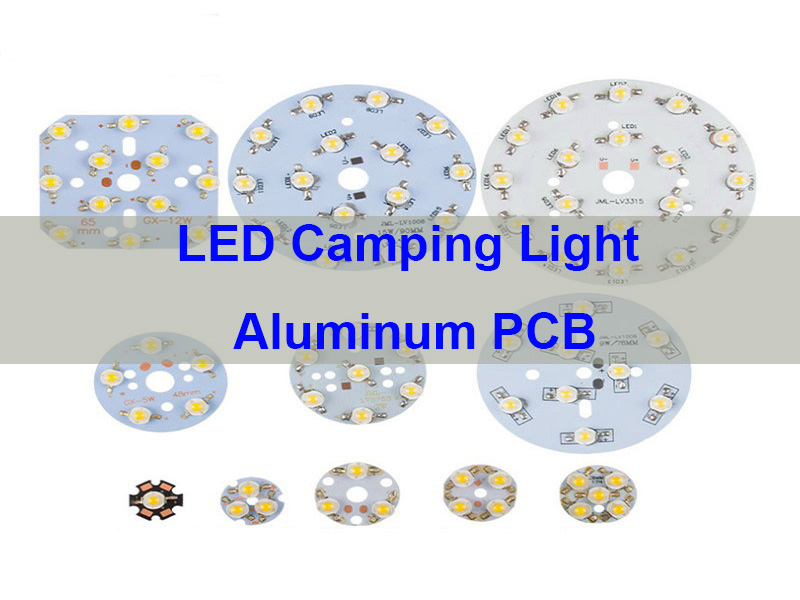
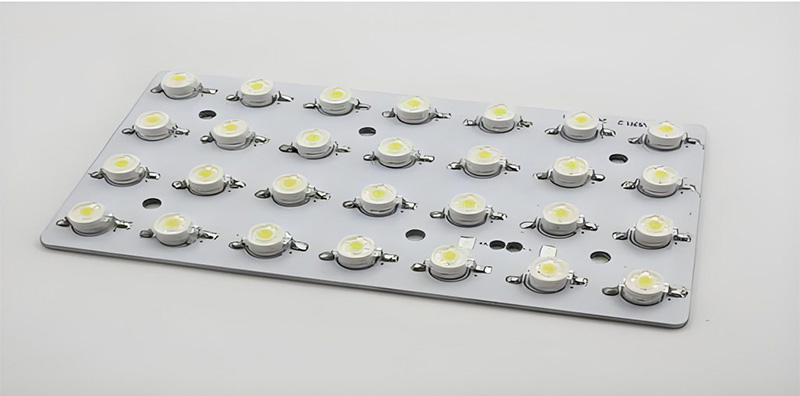
                                                      • Aluminum PCBs: Often used for LED lighting and power circuits requiring heat control.
                                                      • High-TG PCBs: Applied in automotive electronics and energy equipment.
                                                      • Rigid-flex PCBs: Sometimes available through UAE design houses but fabricated offshore.
                                                      • RF PCBs: Usually sourced from global suppliers, as local plants have limited capability.
                                                      PCB Types Offered by PCB Manufacturing Companies in UAE

                                                      Delivery Delays: China-UAE DDP Direct Shipping

                                                      Many UAE buyers experience long delivery times when working with suppliers who depend on slow freight channels or inconsistent shipping agents. These delays disrupt testing schedules and affect assembly timelines. Some factories also provide unclear transit updates, leaving customers unsure about the actual arrival date of their order. The result is more waiting, higher internal pressure, and frequent production rescheduling.

                                                      However, Best Technology solves this with stable China–UAE DDP direct shipping. Our dedicated logistics channels shorten transit time and provide predictable delivery for both prototypes and mass production. We also handle customs clearance, duty processing, and local import steps, so customers avoid paperwork and hidden administrative tasks. Even better, our team tracks every shipment and updates clients throughout the journey. This ensures that UAE engineers can plan assembly work with confidence and move projects forward without disruptions.

                                                      PCB Quality Defects: Free DFM Audits Before Production

                                                      Some PCB manufacturers accept customer files without proper review. This leads to hidden design issues such as incorrect drill spacing, thin copper near vias, or solder mask misalignment. These problems often appear only after fabrication, resulting in failed tests, extra costs, and repeated revisions. UAE customers report that this situation causes major delays in new product development.

                                                      Best Technology avoids these issues by providing free DFM audits before production. Our engineering team reviews Gerber files, stack-ups, drill charts, impedance needs before any board enters the line. This early check catches potential defects and gives customers practical suggestions to improve reliability. We also apply strict AOI, electrical testing, and controlled impedance checks to ensure that every board meets the expected standard. With this approach, UAE customers enjoy stable quality, fewer surprises, and smoother product launches.

                                                      Slow After-Sales Support: Technical Team 48H Online Response

                                                      When buying from some PCB manufacturers, clients often wait several days for technical support. This slow feedback becomes a serious obstacle during debugging, layout revisions, or NPI trials. Some suppliers only provide basic answers, which does not help engineers solve complex PCB or assembly issues. These delays extend development cycles and hurt time-to-market plans.

                                                      Best Technology improves this experience with a technical team that responds within 48 hours. Our engineers cover CAM analysis, fabrication processes, SMT optimization, impedance guidance, and stack-up planning. UAE buyers receive clear explanations instead of generic comments. We also support PCBA troubleshooting with layout reviews, component alignment checks, and process suggestions. This fast and professional assistance helps customers maintain their project timeline and resolve issues quickly. It also builds stronger technical confidence throughout the production cycle.

                                                      Hidden Costs: All-Inclusive Pricing Without Extra Cost

                                                      Many PCB manufacturers offer attractive initial quotes but later add charges for tooling, testing, documentation, packaging, and even export handling. These hidden fees complicate budgeting and often result in higher-than-expected total cost. UAE procurement teams mention that this lack of transparency creates frustration and slows approval processes.

                                                      To avoid this, Best Technology provides all-inclusive pricing with no unexpected fees. Our quotations cover material, drilling, plating, surface finishing, AOI, electrical test, and export documentation. For PCBA orders, we include SMT, DIP, testing, and component sourcing in a clear breakdown. Customers know the total cost from the start, which helps finance teams plan without uncertainty. This transparent pricing makes project management easier and helps buyers work more efficiently.

                                                      Case Studies of Our UAE PCB Manufacturing Project

                                                      Project Background

                                                      A UAE-based industrial equipment manufacturer required custom high-performance PCB components for new product development. Operating in a high-temperature Middle Eastern environment, the client demanded exceptional PCB durability and long-term stability, alongside rapid response capabilities for market launch needs.

                                                      Project Requirements

                                                      • Compliance with IPC-6012 Class 2 standards, ensuring stable electrical performance at 125°C continuous operating temperature. Vibration resistance must pass IEC 68-2-6 testing.
                                                      • Signal path impedance matching required 50±5Ω control, validated via Time-Domain Reflectometry (TDR).
                                                      • Sample delivery within 14 working days, accompanied by comprehensive DFM (Design for Manufacturing) analysis reports and reliability test data packages.

                                                      Solution

                                                      • Utilized FR-4 substrate with CTI ≄175 and thermosetting resin system to enhance high-temperature resistance. Vacuum lamination minimized interlayer voids, improving mechanical strength.
                                                      • Implemented parallel engineering across design, production, and testing phases: EDA software for signal integrity simulation, X-ray drilling alignment for precision, and dual AOI/flying probe systems for defect detection.
                                                      • Deployed digital production management for real-time process parameter monitoring and automatic deviation alerts to maintain stable process windows.

                                                      Result

                                                      • Samples passed client acceptance tests with 100% first-pass yield. Impedance deviations stayed within ±4.2Ω, and post-thermal aging electrical degradation remained below 2%, exceeding expectations.
                                                      • Bulk order delivery time reduced to 13 days, achieving 97.8% production yield with zero critical defects. Client recognized the project as “exceeding industry benchmarks.”
                                                      • Full digital quality traceability provided, including material batch records, process parameters, and test reports, enabling real-time remote verification by the client.

                                                      Why Choose Best Technology for Global PCB Manufacturer?

                                                      Reasons why choose us for global PCB manufacturer:

                                                      • 19-Year Expertise: Leverages 19 years of industry experience with standardized process libraries and failure case databases to quickly identify design risks and provide proven solutions, reducing engineer trial costs.
                                                      • Certified Compliance: Holds ISO 9001, IATF 16949 automotive, ISO 13485 medical, and RoHS certifications to satisfy EU, Middle East, and other market access requirements while mitigating compliance risks.
                                                      • Competitive Pricing: Delivers cost-sensitive design solutions through material optimization and process innovation, reducing BOM costs by 15%-20% while meeting IPC-6012 standards, ideal for budget-sensitive consumer electronics projects.
                                                      • Rapid Prototyping: Enables 24-hour turnaround for urgent orders with TDR impedance validation and AOI inspection, accelerating prototype verification for designers and cutting product launch cycles by over 30%.
                                                      • 99.2% On-Time Delivery: Ensures 12-14 day standard lead times and 7-day express delivery for urgent orders via intelligent production scheduling and global supply chain coordination, meeting procurement stability demands.
                                                      • Batch Inspection Quality Control: Implements 100% inspection coverage during mass production with flying probe testing and reliability verification, maintaining over 98% yield rates for zero-defect assurance to engineers.
                                                      • Free DFM Analysis: Offers complimentary design-for-manufacturing reports during design phase, including signal integrity simulation, impedance matching recommendations, and solderability optimization to preempt production issues.
                                                      • Transparent Traceability: Maintains digital records of material batches, process parameters, and test data with unique ID tracking, enabling real-time quality verification for international procurement transparency needs.

                                                      Welcome to contact us to get a free quote if you have any request for PCB design, prototyping, mass production and assembly: sales@bestpcbs.com.

                                                      Professional SMB PCB Fabrication and Assembly for RF Design

                                                      December 4th, 2025

                                                      SMB PCB is the backbone of modern RF and microwave systems, providing a reliable coaxial interface for signals up to 4 GHz. This article delves into the engineering decisions behind using SMB connectors on printed circuit boards, from footprint design to selecting the right manufacturing partner. We will explore the key aspects of SMB PCB design, the various connector types available, and the critical fabrication controls required for high-frequency success. Are you struggling with signal integrity or connector reliability in your RF designs? You are not alone. Many engineers face significant hurdles when integrating coaxial interfaces like the SMB connector PCB mount​ into their projects.

                                                      What are the typical pain points engineers encounter when working with SMB PCBs?

                                                      • Poor Impedance Matching:​ Inaccurate SMB PCB footprint​ designs or inconsistent PCB material properties lead to impedance mismatches, causing signal reflections and degrading performance.
                                                      • Mechanical Failure:​ Weak solder joints or an insecure SMB PCB mount​ can cause connectors to detach from the board under vibration, mating cycles, or routine handling.
                                                      • Inconsistent RF Performance:​ Variations in manufacturing, such as poor plating or tolerance drift, result in unpredictable insertion loss and VSWR, making design validation difficult.
                                                      • Supply Chain Complexity:​ Sourcing reliable components, especially specific variants like the SMB-LR PCB​ or dealing with long lead times from various China PCB type SMB connector suppliers, can delay projects.
                                                      • Assembly and Rework Difficulties:​ Misalignment during SMT assembly or damaging the PCB during rework of a SMB female PCB​ connector leads to scrap and increased costs.

                                                      At BEST Technology, we address these challenges with a focus on precision and quality. Our solutions are designed to ensure your SMB PCB performs reliably from prototype to mass production.

                                                      • Controlled Impedance Fabrication:​ We utilize high-frequency laminates and rigorous modeling to ensure your SMB PCB footprint​ translates into a consistent 50Ω transmission line, minimizing signal reflections.
                                                      • Robust Mechanical Design Support:​ Our DFM analysis includes checks for solder pad geometry, plating barrel strength, and reinforcement for SMB PCB mount connectors​ to prevent mechanical failure.
                                                      • High-Frequency Process Control:​ Tight tolerances on dielectric thickness, copper etching, and surface plating guarantee the stable RF performance of every SMB PCB connector​ on your board.
                                                      • Verified Supply Chain:​ We have partnerships with reputable PCB type SMB connector manufacturers, ensuring access to genuine components like the SMB-4R-PCB​ and stable pricing, streamlining your procurement.
                                                      • Expert PCBA Process:​ Our assembly lines are optimized for coaxial connectors, using specialized profiles and inspection techniques to perfectly place your SMB jack PCB​ connectors without damage.

                                                      BEST Technology is a specialized PCB and assembly manufacturer with extensive expertise in high-frequency applications. With factories in China and Vietnam, we offer one-stop services from SMB PCB​ fabrication to full box-build assembly, supported by certifications like IATF 16949, ISO 13485 and AS9100D. Pls feel free to contact us at sales@bestpcbs.com​ to discuss your project specifics.

                                                      SMB PCB

                                                      What Is an SMB PCB?

                                                      An SMB PCB​ is a printed circuit board designed to incorporate SubMiniature version B (SMB) coaxial connectors. These connectors provide a snap-on, quick-connect/disconnect interface for RF signals, typically used in applications where space is limited, and frequencies do not exceed 4 GHz.

                                                      • Core Function:​ The primary role of the SMB connector on the PCB is to transition the RF signal from a coaxial cable to a controlled impedance trace on the board with minimal loss and reflection.
                                                      • Common Applications:​ You will find SMB PCB​ interfaces in telecommunications equipment, automotive sensors, medical devices, and test and measurement instrumentation.

                                                      In summary, an SMB PCB is a critical enabling technology for compact RF systems, balancing performance, size, and cost-effectiveness.

                                                      SMB PCB

                                                      How Do SMB PCB Connectors Support RF Signals?

                                                      SMB PCB connectors​ support RF signals by creating a stable, shielded coaxial transmission line that transitions the signal from a cable to a controlled impedance trace on the printed circuit board with minimal loss and reflection. This is achieved through their precise internal and external design, which maintains signal integrity up to 4 GHz.

                                                      • Coaxial Structure Miniaturization:​ The core of an SMB connector’s functionality is its coaxial design, miniaturized for PCB use. It features a central conductor (pin) surrounded by a dielectric insulator, all enclosed within an outer metal shell. This structure confines the electromagnetic field, preventing radiation loss and protecting the signal from external interference.
                                                      • Controlled Impedance Interface:​ High-quality SMB PCB connectors​ are engineered to present a consistent 50-ohm impedance. The dimensions of the center pin, the dielectric constant of the insulator, and the diameter of the outer shell are precisely controlled. This ensures a smooth impedance match when connected to a standard 50-ohm coaxial cable and a properly designed 50-ohm microstrip line on the PCB, minimizing signal reflections at the connection points.
                                                      • Low-Loss Dielectric Materials:​ The insulator inside the connector is typically made from Polytetrafluoroethylene (PTFE), a material known for its stable dielectric constant and low loss tangent at high frequencies. This minimizes signal attenuation (insertion loss) as the RF signal passes through the connector.
                                                      • Robust Shielding:​ The outer metal shell of the SMB PCB connector​ provides essential electromagnetic interference (EMI) and radio-frequency interference (RFI) shielding. When this shell is soldered to a continuous ground plane on the PCB, it creates a Faraday cage effect, ensuring the signal remains clean and isolated from noise, and vice versa.

                                                      In essence, SMB PCB connectors​ act as precision-engineered gateways. They support RF signals by preserving the controlled environment of a coaxial cable right up to the point of connection with the PCB, ensuring the signal’s integrity is maintained throughout the entire pathway.

                                                      Why Engineers Choose an SMB Connector PCB Mount for Compact RF Boards?

                                                      Engineers consistently select the SMB connector PCB mount​ for space-constrained RF designs due to its optimal blend of size, performance, and reliability. This section explains the key reasons behind this choice.

                                                      • Space Efficiency:​ SMB connectors are significantly smaller than their SMA counterparts, allowing for higher connector density on a PCB. This is crucial for modern, miniaturized electronics.
                                                      • Snap-Lock Mechanism:​ The snap-on coupling mechanism is faster to engage and disengage than a threaded interface (like SMA), simplifying assembly and testing, though it offers slightly less mechanical robustness.
                                                      • Good RF Performance:​ For frequencies up to 4 GHz, SMB connectors provide excellent electrical characteristics, including low VSWR and insertion loss, making them suitable for many commercial and industrial applications.
                                                      • Cost-Effectiveness:​ SMB connectors are generally more economical than higher-frequency alternatives, providing a solid price-to-performance ratio for high-volume production.

                                                      The decision to use an SMB connector PCB mount​ is driven by the need for a compact, cost-effective, and reliable RF interconnection solution that meets the electrical requirements of a vast range of applications.

                                                      Differences Among SMB Female PCB, SMB Male PCB Connector, and SMB Jack PCB Designs

                                                      Understanding the gender and configuration of SMB connectors is essential for correct mating and optimal PCB layout. The terms SMB female PCB, SMB male PCB connector, and SMB jack PCB​ refer to specific connector configurations.

                                                      • SMB Female PCB Connector:​ This connector has the center receptacle (socket) and is typically the panel-mounted or cable-end component. However, when referenced as a “female PCB” part, it usually means a connector that mounts on the board and has an outer shell that accepts the male jack’s snap-ring.
                                                      • SMB Male PCB Connector:​ This connector has the center pin and is the SMB Jack, which mates with an SMB Plug containing a female basket. A SMB male PCB connector​ is designed to be mounted directly onto the circuit board.
                                                      • SMB Jack PCB:​ This term is often used interchangeably with a PCB-mounted male connector. It is the male connector that inserts into an SMB Plug containing the female basket. A SMB jack PCB connector thru hole​ version offers superior mechanical strength compared to surface-mount types.

                                                      In practice, the key is to ensure your bill of materials (BOM) and layout specify the correct gender (plug or jack) and mounting style (vertical, right-angle, thru-hole, SMT) to ensure proper mating with the corresponding cable or panel connector.

                                                      NameSMB connector genders
                                                      SMB PlugFemale basket
                                                      SMB JackMale center pin
                                                      SMB PCB

                                                      How to Create a Stable SMB PCB Footprint for High-Frequency Layouts?

                                                      Creating a stable SMB PCB footprint​ is paramount for maintaining signal integrity at high frequencies. An improper footprint can lead to impedance discontinuities and poor performance.

                                                      • Follow Manufacturer Specs Precisely:​ The starting point is always the connector manufacturer’s recommended land pattern and drill chart. Do not deviate from these dimensions.
                                                      • Ensure a Solid Ground Connection:​ A low-inductance path to ground is critical. The footprint must include an ample ground plane around and beneath the connector’s outer shield pins. Use multiple vias near the ground pads to connect directly to the ground plane.
                                                      • Manage the Impedance Transition:​ The footprint should be designed to minimize the discontinuity between the connector’s internal impedance and the PCB’s 50-ohm microstrip or stripline. This often involves tuning the size and shape of the pad leading to the signal trace.
                                                      • Consider Pad Size for Mechanical Strength:​ Especially for thru-hole connectors, the plating (PTH) barrel must be robust. For SMT versions, the solder pads must be large enough to create a strong fillet that can withstand mating forces.

                                                      A stable SMB PCB footprint​ is not just a geometric pattern; it is an integral part of the RF circuit. Careful attention to grounding, pad design, and adherence to specifications will ensure a reliable interface.

                                                      When to Use an SMB Right Angle PCB Connector vs. Vertical SMB PCB Mount Connector?

                                                      The choice between an SMB connector right angle PCB​ and a vertical SMB PCB mount connector​ is primarily dictated by the physical constraints and cable routing requirements of the assembly.

                                                      • Use a Right-Angle Connector When:
                                                        • The coaxial cable needs to be routed parallel to the plane of the PCB to save vertical space. This is common in slim, stacked assemblies.
                                                        • You want to reduce the mechanical leverage on the solder joints, as the mating force is directed along the board’s surface rather than perpendicular to it.
                                                      • Use a Vertical (Straight) Connector When:
                                                        • The cable needs to be routed away from the board, which is typical for external ports or connections to other stacked boards.
                                                        • Panel mounting is involved, and the connector must pass through a hole in the enclosure.

                                                      Selecting the correct orientation—SMB connector right angle PCB​ or vertical mount—is a mechanical decision that impacts the overall form factor, cable management, and long-term reliability of the product.

                                                      What to Know About China PCB Type SMB Connector Suppliers for RF Coaxial Builds?

                                                      Sourcing from China PCB type SMB connector suppliers​ can be highly cost-effective, but it requires diligence to ensure quality and reliability for your RF coaxial builds.

                                                      • Quality Spectrum:​ The market ranges from suppliers producing connectors for consumer electronics to those specializing in high-reliability industrial and automotive grades. It is critical to verify the supplier’s target market and quality controls.
                                                      • Plating and Materials:​ Inquire about the plating material and thickness. Gold plating over nickel is standard for good corrosion resistance and stable contact resistance. The dielectric material inside the connector should be PTFE for stable performance.
                                                      • Manufacturing Partnership:​ Look for a supplier that acts as a partner. The best China PCB type SMB connector factory​ will provide detailed specifications, samples for testing, and be transparent about their manufacturing process.
                                                      • Leverage Your PCBA Partner:​ A skilled PCBA manufacturer like BEST Technology has existing relationships with vetted component suppliers. We can manage the sourcing of a China PCB type SMB RF connector, ensuring component authenticity and performance, simplifying your supply chain.

                                                      Working with reputable China PCB type SMB connector suppliers​ can yield great value, but the process demands technical vetting and, ideally, the support of an experienced manufacturing partner.

                                                      How SMB-LR PCB, SMB-4R-PCB, and SMB-R-PCB-SMT Variants Fit Different RF Applications?

                                                      Specific SMB product variants like SMB-LR PCB, SMB-4R-PCB, and SMB-R-PCB-SMT​ are engineered to meet distinct mechanical and assembly requirements.

                                                      • SMB-LR PCB (Long Reach):​ This variant features a longer solderable surface, providing enhanced mechanical stability after mounting. It is ideal for applications subject to high vibration or where the connector may undergo significant mating force.
                                                      • SMB-4R-PCB (4 Ridge):​ The “4R” typically refers to a connector with four external ridges or contacts for the outer shield. This design offers a superior, low-inductance ground connection to the PCB, which is beneficial for higher-frequency performance within the SMB range.
                                                      • SMB-R-PCB-SMT (Surface Mount Technology):​ This is a surface-mount version, often with a right-angle configuration. The SMB-R-PCB-SMT​ is designed for high-speed automated assembly, saving time and cost compared to thru-hole mounting, which requires a separate soldering process.

                                                      Understanding these variants allows engineers to select the optimal SMB PCB connector​ for their specific application, whether the priority is mechanical ruggedness, RF performance, or assembly efficiency.

                                                      Why RF Teams Choose BEST Technology for SMB PCB Fabrication and PCBA Assembly?

                                                      RF design teams partner with BEST Technology because we provide a seamless, high-quality manufacturing pathway for complex SMB PCB​ projects. Our capabilities are tailored to the demands of high-frequency electronics.

                                                      • PCB Fabrication Strengths:​ We use high-frequency materials like Rogers, Taconic, and Isola, and maintain tight impedance control (typically ±10%) with controlled-depth drilling for back-drilled vias. Our processes ensure precision for even the most demanding SMB PCB footprint.
                                                      • Comprehensive PCBA Capabilities:​ We offer both SMT and thru-hole assembly, supported by rigorous inspection (AOI, X-Ray) and testing (ICT, Functional Test). We expertly handle the reflow profile requirements for SMB PCB mount connector​ to prevent damage.
                                                      • Stringent Quality Systems:​ Our IATF 16949 (automotive), AS9100D (aerospace), and ISO 13485 (medical) certifications provide confidence for mission-critical applications.
                                                      • Tailored Services:​ We offer free DFM/DFA reviews, RF stack-up consulting, quick-turn prototypes, and full box-build assembly with coaxial cable integration.
                                                      SMB PCB

                                                      SMB PCBs​ are a critical link in the RF signal chain, demanding precision from design through assembly. This guide has covered the essential aspects of selecting, designing, and manufacturing PCBs with SMB connectors to achieve robust RF performance. By choosing a partner like BEST Technology, you gain access to specialized manufacturing expertise, rigorous quality controls, and a seamless one-stop service that ensures your SMB PCB designs perform as intended. Our global manufacturing footprint and commitment to engineering support make us the ideal choice for your next project.

                                                      Ready to get a quote for your professional SMB RF PCB?​ Pls send your Gerber files, BOM, and connector specifications to sales@bestpcbs.com​ for a fast and comprehensive review.

                                                      Rogers RO4003 Laminate Datasheet: Technical Specs, Downloads & FAQs

                                                      December 4th, 2025

                                                      For RF engineers and PCB designers tackling high-frequency projects, the rogers ro4003 laminate datasheet is an indispensable tool—one that bridges the gap between design goals and real-world performance. Whether you’re validating material compatibility or fine-tuning signal integrity, the rogers ro4003 laminate datasheet packs critical details that save time, reduce reworks, and ensure your projects meet industry standards. This guide cuts through the jargon, addresses the Reddit community’s most common frustrations, and delivers actionable insights to make the most of this top-tier high-frequency laminate.

                                                      Rogers RO4003 Laminate Datasheet.pdf

                                                      Getting the official rogers ro4003 laminate datasheet.pdf is crucial—avoid sketchy third-party sites with outdated versions. Head straight to Rogers’ website (https://www.rogerscorp.com), navigate to “Products > Circuit Materials > High Frequency Laminates > RO4000 Series > RO4003C,” and download from the “Technical Documents” section. The latest PDF includes updated specs, processing tips, and MSDS for compliance. Save it as “Rogers-RO4003-Datasheet-Official.pdf” for easy reference, and cross-check with Rogers support if you’re confused about any section.

                                                      What is Rogers RO4003 Laminate? Key Characteristics

                                                      Material Composition & Core Advantages

                                                      Rogers RO4003 laminate is a ceramic-filled PTFE material built for high-frequency, high-speed applications—no surprise it’s a favorite among engineers tired of FR-4’s limitations. Its unique blend of PTFE resin and ceramic fillers delivers consistent dielectric properties, minimal signal loss, and impressive dimensional stability—even in harsh environments. Unlike some specialty laminates, it’s designed to work with standard PCB manufacturing processes, so you won’t need to overhaul your workflow to use it.

                                                      Why RO4003 Stands Out for High-Frequency Applications

                                                      When frequencies climb above 2 GHz, signal degradation and impedance drift become major headaches—and that’s where Rogers RO4003 laminate shines. With a dielectric constant (Dk) of 3.38 (at 10 GHz) and a dissipation factor (Df) of 0.0027, it outperforms FR-4 by a mile, keeping signals crisp and energy waste low. It’s also moisture-resistant (absorbing less than 0.04% water) and thermally stable up to 280°C, making it ideal for everything from 5G antennas to automotive radar systems. For engineers who need reliability without compromise, RO4003 is the go-to choice.

                                                      Critical Technical Specifications from Rogers RO4003 Datasheet

                                                      Dielectric Constant (Dk) & Dissipation Factor (Df)

                                                      The rogers ro4003 laminate datasheet highlights Dk and Df as make-or-break specs for high-frequency design. Dk sits at 3.38 ± 0.05 (10 GHz), staying consistent across 1 MHz–40 GHz—so you can predict impedance matching with confidence. Df (0.0027 at 10 GHz) remains low even at elevated temperatures, a game-changer for applications like industrial sensors or outdoor communication gear. These values translate to fewer design iterations and more reliable end products.

                                                      rogers-ro4003-laminate-datasheetCritical Technical Specifications from Rogers RO4003 Datasheet

                                                      Thermal Performance & Mechanical Properties

                                                      Thermal stability is non-negotiable for high-stress applications, and the rogers ro4003 laminate datasheet delivers: a glass transition temperature (Tg) of 280°C, well above typical operating limits. Its coefficient of thermal expansion (CTE) matches copper (17 ppm/°C in x/y direction), reducing delamination risk during soldering. Mechanically, it’s tough too—flexural strength of 269 MPa (tensile) and 310 MPa (compressive) means it can handle the rigors of aerospace, automotive, and industrial use.

                                                      Electrical Resistivity & Water Absorption

                                                      Electrical resistivity (10Âč⁎ Ω·cm surface, 10ÂčÂł Ω·cm volume) ensures minimal leakage current, critical for high-voltage circuits. Water absorption below 0.04% (24 hours at 23°C/50% RH) prevents performance drops in humid environments—perfect for outdoor 5G base stations or marine communication modules. These specs, straight from the rogers ro4003 laminate datasheet, prove why RO4003 is trusted in mission-critical applications.

                                                      Rogers RO4003 Laminate Thickness Options & Selection Guide

                                                      Rogers RO4003 laminate comes in thicknesses from 0.203 mm (8 mils) to 3.175 mm (125 mils), with 0.813 mm (32 mils) and 1.524 mm (60 mils) being Reddit users’ top picks. Choosing the right one boils down to three factors: impedance needs, frequency, and durability. For 50 Ω microstrip lines in 5G devices, 0.813 mm hits the sweet spot between low loss and compact design. High-power radar systems? Go with 1.524 mm for better heat dissipation. Thinner options (0.203–0.305 mm) work for flexible PCBs but require careful handling—reference the rogers ro4003 laminate datasheet’s impedance calculator to avoid mistakes.

                                                      Processing Guidelines for Rogers RO4003 Laminate

                                                      Compatibility with FR-4 Manufacturing Processes

                                                      One of RO4003’s biggest perks (per the datasheet) is its compatibility with standard FR-4 workflows—no specialized equipment needed. For drilling, use carbide drills (130–140° point angle) and slow feed rates by 20% to prevent delamination. Etch with ferric chloride or ammonium persulfate below 40°C, and plate using standard electroless copper or tin processes—just make sure the laminate is thoroughly cleaned first. It’s a seamless transition for PCB shops, which is why so many engineers swear by it.

                                                      Soldering & Through-Hole Treatment Best Practices

                                                      Soldering Rogers RO4003 laminate requires temperature control: the datasheet recommends 260°C for 10 seconds (per IPC/JEDEC J-STD-020). Use lead-free SAC305 solder for RoHS compliance, and preheat PCBs to 150–180°C to reduce thermal shock. For through-hole components, use a nitrogen atmosphere in reflow ovens to minimize oxidation. Avoid prolonged heat above 280°C—this degrades the dielectric and hikes up Df, ruining performance.

                                                      Applications Where Rogers RO4003 Excels

                                                      Rogers RO4003 laminate is built for high-stakes, high-frequency applications. Top use cases include 5G base station antennas (low loss = longer coverage), automotive radar (24–77 GHz for collision avoidance), satellite communication modules (stable in extreme temps), IoT sensors (low power + compact), and medical diagnostic devices (signal integrity matters for accuracy). The rogers ro4003 laminate datasheet breaks down application-specific limits—like maximum power handling—so you can design with confidence.

                                                      Rogers RO4003 vs. RO4350B: Key Differences

                                                      Reddit users often debate Rogers RO4003 vs. RO4350B—here’s the quick breakdown from the datasheets. RO4003 (Dk=3.38) is cost-effective, works with FR-4 processes, and excels up to 20 GHz—perfect for volume production. RO4350B (Dk=3.48) has tighter Dk tolerance (±0.04) and lower Df (0.0037), making it better for mmWave (24–40 GHz) or aerospace. RO4350B also conducts heat better (0.6 W/m·K vs. 0.5), but costs more. If you’re balancing performance and budget, RO4003 is the smarter pick for most high-frequency projects.

                                                      Hybrid Stack-Up Design (Rogers RO4003 + FR4)

                                                      Reddit is full of questions about hybrid stack-ups (RO4003 + FR4) to cut costs—and the rogers ro4003 laminate datasheet has the answers. A typical setup: RO4003 for top/bottom signal layers (high-frequency), FR4 for inner power/ground layers. Use low-CTE FR4 (e.g., Isola FR408) to match RO4003’s 17 ppm/°C, and Rogers 2929 prepreg for adhesion. Keep RO4003 layers under 10% of total stack thickness to avoid warping, and place signal layers within 0.5 mm of ground planes to reduce crosstalk. It’s a budget-friendly way to get high-frequency performance.

                                                      Common Quality Issues & Troubleshooting Tips

                                                      Warping Prevention in Thin RO4003 Laminates

                                                      Thin RO4003 (≀0.305 mm) warps easily—Reddit’s #1 complaint. Fix it with datasheet-proven tips: use an FR-4 carrier during drilling/etching, laminate at 200–300 psi, and cool slowly (≀2°C/min). Avoid over-etching, and if warping happens, bake between steel plates at 150°C for 2 hours. These simple steps keep thin laminates flat and functional.

                                                      Reducing Signal Loss in High-GHz Applications

                                                      Above 20 GHz, signal loss creeps in—but the datasheet has fixes. Use wider traces (≄0.2 mm), shorten trace length, and add a ground plane under signal layers. Keep RO4003 dry (pre-bake at 120°C for 4 hours if exposed to humidity) and use thinner laminates (0.203–0.406 mm) for mmWave. These tweaks keep signals strong even at high frequencies.

                                                      FAQ: Rogers RO4003 Laminate Datasheet Questions

                                                      1. Where can I get a reliable Rogers RO4003 laminate datasheet.pdf?
                                                        Only download from Rogers’ official website (https://www.rogerscorp.com) to avoid outdated or fake versions.
                                                      2. What thickness is best for 5G PCBs?
                                                        0.813 mm (32 mils) is ideal—balances low loss and compact design. High-power 5G gear uses 1.524 mm.
                                                      3. Does RO4003 work with standard FR-4 manufacturing?
                                                        Yes—minor adjustments to drilling feed rates and soldering temps (per datasheet) are all you need.
                                                      4. Can I mix RO4003 with FR4 in stack-ups?
                                                        Absolutely—use low-CTE FR4 and Rogers 2929 prepreg to prevent delamination.
                                                      5. What’s RO4003’s max operating temperature?
                                                        125°C continuous, 260°C for 10 seconds (soldering).
                                                      6. How is RO4003 better than FR-4 for high frequencies?
                                                        Lower Dk (3.38 vs. 4.4) and Df (0.0027 vs. 0.02) mean way less signal loss above 2 GHz.
                                                      7. How do I avoid warping thin RO4003?
                                                        Use an FR-4 carrier, control lamination pressure/cooling, and avoid over-etching.
                                                      8. Is counterfeit RO4003 a problem?
                                                        Yes—buy from authorized distributors (Digi-Key, Mouser) and verify lot numbers with Rogers.

                                                      Where to Source Authentic Rogers RO4003 Laminate

                                                      Counterfeit RO4003 fails to meet datasheet specs—so buy from authorized distributors like Digi-Key, Mouser, or Arrow (all listed on Rogers’ site). For volume orders, contact Rogers directly for regional partners. Always check the lot number (on packaging) with Rogers support to confirm authenticity. Avoid eBay/Alibaba sellers—their “RO4003” often has inconsistent Dk, poor adhesion, or high water absorption, which ruins designs. Stick to trusted sources to get the real deal.

                                                      Best UK PCB Manufacturer, PCB Manufacturing UK​

                                                      December 4th, 2025

                                                      Are you looking for best UK PCB manufacturer? This blog is mainly about how to choose, evaluate production capability and delivery time for best UK PCB manufacturer.

                                                      As a Chinese PCB manufacturer focusing on the global market over 19 years, Best Technology are dedicated to providing cost-effective PCB solutions for our UK customers. Our core strengths enable you to find the optimal balance between cost, timeliness, and quality, making us your reliable global PCB manufacturing partner.

                                                      Best UK PCB Manufacturer

                                                      Are You Struggling With the Following Questions?

                                                      • Prolonged PCB prototyping lead times, with unfulfilled promises of 8-hour expedited prototyping, seriously delaying R&D progress.
                                                      • Lack of professional review for design schemes, leading to unfeasible processes only discovered during mass production and soaring rework costs.
                                                      • Opaque manufacturing processes, with no way to trace responsibilities when issues like cold solder joints and circuit offsets occur.
                                                      • Rejection of special process requirements, making it difficult to find contractors for customized orders such as multi-layer PCBs and flexible PCBs.
                                                      • Frequent changes in delivery times and unsubstantiated verbal commitments, forcing downstream production lines to shut down.

                                                      Our Solutions to These Questions

                                                      • Free DFM Pre-Review to Avoid Design Rework: Our engineer team completes design review within 24 hours, uses Cadence software to simulate mass production feasibility, marks issues such as circuit conflicts and impedance deviations, and provides optimization solutions, helping designers save over 30% of modification time.​
                                                      • Full-Process Quality Control to Ensure Engineering Reliability: There are 16 inspection procedures from copper-clad laminate incoming inspection to finished product delivery. With triple checks including AOI optical inspection, X-ray flaw detection and ICT online testing, the defect rate is controlled within 0.2%, meeting engineers’ requirements for product stability.​
                                                      • Express Delivery to Connect Production Plans: The fastest delivery time for 1-piece prototype is 8 hours, and bulk orders can be delivered to the UK within 4-7 days. Emergency orders activate the air freight green channel, which is 40% shorter than the industry average lead time, avoiding the risk of production suspension for purchasers due to delays.​
                                                      • Customized Processes to Meet Special Needs: Supporting 0.1mm fine line width and 0.2mm small aperture processing, the dielectric constant deviation of high-frequency boards is ≀±3%, and the flexible boards can withstand 100,000 bending cycles, meeting the technical requirements of engineers in high-end fields such as communications and medical care.​
                                                      • Transparent Collaboration to Reduce Purchasing Communication Costs: A production schedule is provided upon order signing, key processes are fed back with real-time photos, and quality inspection reports are delivered together with goods. Purchasers do not need to follow up repeatedly and can easily control the entire process.

                                                      Why Choose Best Technology for Global PCB Manufacturer?

                                                      • Comprehensive and Compliant Authoritative Certifications: Holding ISO13485 (medical), IATF16949 (automotive), REACH and RoHS certifications, products comply with EU CE standards, so purchasers do not need to worry about access issues.
                                                      • Transparent Pricing with No Hidden Costs: Detailed quotations are provided, listing raw material costs, processing fees, inspection fees and logistics fees one by one. There are no additional charges in the later stage, allowing purchasers to accurately calculate costs with more secure budgets.
                                                      • Strict Quality Control and Outstanding Quality: An ISO9001 quality system is established, equipped with 20 sets of imported inspection equipment. Each batch of products is accompanied by third-party inspection reports. Automotive-grade PCBs pass high and low temperature cycle tests (-40℃ to 125℃) with stable performance.
                                                      • Fast and Stable Delivery: Owning 3 major production bases with a monthly capacity of 500,000 square meters, and the stock of commonly used base materials exceeds 100 tons. A transit warehouse is set up in the UK, with a 99.8% on-time delivery rate for regular orders, and emergency orders can be prioritized.
                                                      • Free DFM Design Support: Exclusive engineers provide one-on-one communication, not only identifying design issues but also optimizing processes to reduce production costs, helping designers achieve seamless connection between design and mass production.
                                                      • Cost Advantages of Global Supply Chain: Relying on China’s PCB industrial cluster, the procurement cost of raw materials is 15% to 20% lower than that in Europe, with no middlemen markup, providing purchasers with cost-effective options.
                                                      • Flexible Adaptation to Various Orders: Supporting R&D prototyping from 1 piece to mass production of 100,000 pieces, with no minimum order threshold for small-batch orders. The process switching cost is 25% lower than that of peers, meeting the differentiated needs of start-ups and large enterprises.
                                                      • Native English-Speaking Exclusive Service: 7×24-hour English customer service response, daily updates on order progress, and solutions for quality issues provided within 24 hours, ensuring barrier-free communication for purchasers.
                                                      Why Choose Best Technology for Global PCB Manufacturer

                                                      Best UK PCB Manufacturer List

                                                      1. Our PCB Ltd

                                                      • Core Business: PCB prototyping and small-batch production, covering industrial and consumer electronics fields
                                                      • Advantages: Rapid response for 8-hour expedited prototyping service, real-time production progress updates, and customers can check at any time through the exclusive system, especially suitable for emergency R&D projects
                                                      • Process Capability: Manufacturing of 1-24 layer high multi-layer PCBs, flexible PCBs and metal substrates, supporting impedance control and resin plugging processes, with a minimum line width of 0.15mm
                                                      • Lead Time: 8-hour delivery for expedited prototyping, 3-5 days for regular orders, and 7-10 days for bulk orders

                                                      2. EC Electronics

                                                      • Core Business: Integrated PCB manufacturing and SMT assembly services, focusing on automotive electronics and industrial control fields
                                                      • Advantages: 40 years of industry experience, 99.5% delivery rate for bulk orders, long-term cooperation with multiple UK automotive companies, and sound quality traceability system
                                                      • Process Capability: Manufacturing of blind and buried via PCBs and high-power density circuit boards, supporting the entire SMT assembly process and enabling integrated delivery of PCBs and components
                                                      • Lead Time: 10-15 days for standard orders, 20-25 days for bulk customized orders, supporting partial delivery

                                                      3. Cambridge Circuit Company Ltd

                                                      • Core Business: PCB prototype and small-batch production, serving scientific research institutions and start-ups
                                                      • Advantages: ISO9001 quality system certification, transparent quotation with no hidden costs, outstanding cost-effectiveness for small and medium-batch orders, and timely response from the technical support team
                                                      • Process Capability: Manufacturing of single and double-layer PCBs, multi-layer PCBs (up to 12 layers) and flexible PCBs, with an exclusive production line for prototypes and mature and stable processes
                                                      • Lead Time: 5 days for standard orders, 3 days for expedited orders, and R&D samples can be prioritized

                                                      4. GSPK Circuits

                                                      • Core Business: Specialized PCB manufacturing, focusing on medical equipment and aerospace fields
                                                      • Advantages: Lean Champion certified enterprise, fast response for customized solutions, rich cases of medical equipment PCBs, and compliance with strict EU medical industry standards
                                                      • Process Capability: Manufacturing of 1-24 layer PCBs, lead-free surface treatment, supporting the production of circuit boards with special materials such as ceramics and polyimide, with excellent temperature resistance and stability
                                                      • Lead Time: 7-12 days for standard orders, 15-20 days for special material orders, with expedited service available (additional fees apply)

                                                      5. Rush PCB UK Ltd

                                                      • Core Business: High-end communication PCB manufacturing, serving communication equipment manufacturers and university R&D projects
                                                      • Advantages: Focus on high-end communication fields, impedance control accuracy of ±5%, and R&D cooperation with multiple UK universities
                                                      • Process Capability: Manufacturing of high-frequency and high-speed PCBs, rigid-flex boards, supporting a minimum line width of 0.1mm and a minimum aperture of 0.2mm, with outstanding signal integrity optimization capabilities
                                                      • Lead Time: 8-10 days for regular orders, 12-15 days for high-frequency and high-speed PCB orders, and 5-7 days for R&D samples

                                                      How to Choose a Reliable UK PCB Manufacturer?

                                                      A detailed selection guide to UK PCB manufacturer:

                                                      1. Verify the Authenticity of Qualification Documents

                                                      • Prioritize manufacturers holding authoritative certifications such as ISO9001 (basic quality), IATF16949 (automotive), and ISO13485 (medical). Request original certification documents for verification to avoid the risk of forged qualifications and ensure compliance with quality systems.

                                                      2. Conduct In-Depth Inspection of Production Entities

                                                      • Confirm whether they have their own factories and core production equipment (such as fully automated drilling machines and AOI inspection equipment) through online videos or on-site visits. Clarify whether the production links are outsourced to avoid choosing trading enterprises that only act as intermediaries and ensure production controllability.

                                                      3. Comprehensively Evaluate Technical Capabilities

                                                      • Gain a detailed understanding of their production experience in special processes such as multi-layer PCBs, flexible PCBs, and high-frequency and high-speed PCBs. Request 3-5 successful cases in similar industries and corresponding test reports to determine whether the technology matches the needs of your own projects.

                                                      4. Strictly Verify Delivery Capabilities

                                                      • Inquire about the on-time delivery rate data of the past 12 months, request an explanation of exclusive response plans for emergency orders (such as standby production lines and priority scheduling mechanisms), and clarify compensation clauses for delays to avoid affecting the progress of your own projects.

                                                      5. Focus on Value-Added Service Details

                                                      • Confirm whether free value-added services such as DFM design review and PCB performance optimization suggestions are provided. Understand the after-sales response process, including whether there is 7×24-hour customer service and how soon solutions can be provided after quality issues are reported, to ensure a full-process service experience.

                                                      6. Rationally Analyze Cost Structure

                                                      • Request detailed quotation breakdowns (raw materials, processing fees, inspection fees, etc.), compare the cost structures of different manufacturers, remain vigilant against the trap of “low-price attraction plus later price increases”, and focus on the cost-effectiveness of quality and price rather than simply pursuing low prices.

                                                      7. Conduct Multi-Channel Research on Customer Reputation

                                                      • Understand the market reputation of manufacturers through channels such as the UK Electronics Industry Association and professional forums. Prioritize manufacturers with service experience in similar industries. If necessary, contact their existing customers to obtain real cooperation feedback and reduce cooperation risks.

                                                      8. Confirm Supply Chain Stability

                                                      • Inquire about the supplier list and inventory cycle of core raw materials (such as copper-clad laminates and copper foil). Understand the response measures in the face of raw material price fluctuations or supply chain disruptions to ensure that orders will not be suspended due to material issues.

                                                      9. Clarify Intellectual Property Protection

                                                      • Include intellectual property protection clauses in the formal cooperation contract. Require manufacturers to promise not to disclose design drawings and technical parameters, and not to use customers’ PCB designs for other commercial purposes to ensure the security of core technologies
                                                      How to Choose a Reliable UK PCB Manufacturer

                                                      How to Evaluate the Production Capability of a UK PCB Manufacturer?

                                                      Methods about how to evaluate the production capability of a UK PCB manufacturer:

                                                      1. Check the production equipment list to confirm whether core equipment such as fully automated drilling machines, AOI inspection equipment, and X-ray inspection machines are available.

                                                      2. Understand the production capacity scale, inquire about the average monthly production area and maximum order undertaking capacity to determine whether it can match the needs of your own mass production.

                                                      3. Inspect the scope of process coverage, confirm the parameters of PCB layers, board thickness, line width and line spacing that can be produced, and whether they meet the project specifications.

                                                      4. Review the quality control system, request SOP (Standard Operating Procedures) and historical quality inspection reports to understand the defect rate data.

                                                      5. Evaluate flexible production capabilities, inquire about the production cycle and switching efficiency of small-batch orders to determine whether they can meet the needs of multiple varieties.

                                                      6. Understand the raw material supply system, confirm whether there is a stable list of qualified suppliers and whether there is an emergency material reserve mechanism.

                                                      7. Inspect the team configuration, understand the working years and professional qualifications of engineers and technical workers to determine the technical support capabilities.

                                                      8. Visit the production site (online or offline) to observe the production order, equipment maintenance status and workshop environment management level.

                                                      How to Evaluate the Production Capability of a UK PCB Manufacturer

                                                      How to Evaluate the Delivery Time of a UK PCB Manufacturer?

                                                      Methods about how to evaluate the delivery time of a UK PCB manufacturer:

                                                      1. Request a breakdown of delivery time components, clarify the specific time for document review, material procurement, production and processing, inspection and packaging, and other links.

                                                      2. Inquire about material inventory status, confirm the inventory cycle of commonly used components to determine whether the procurement link time can be shortened.

                                                      3. Understand the production line priority mechanism, confirm whether there is exclusive production line support for emergency orders and the implementation capacity of expedited services.

                                                      4. Verify historical delivery data, request delivery records of the past 6 months to calculate the on-time delivery rate.

                                                      5. Confirm the logistics cooperation model, whether there is long-term cooperation with well-known local logistics enterprises and whether there is cross-border delivery experience.

                                                      6. Inquire about emergency plans for delays, understand the remedial measures and compensation plans when problems such as equipment failures and material delays occur.

                                                      7. Request a clear delivery agreement to include delivery time, delay responsibilities and liquidated damages clauses in the contract.

                                                      8. Evaluate information synchronization capabilities, confirm whether real-time progress inquiry services can be provided to avoid delivery risks caused by opaque operations.

                                                      Frequently Asked Questions About PCB Manufacturer UK

                                                      Q1: What is the minimum order quantity for small-batch R&D PCB samples, and what is the delivery cycle?
                                                      A2: We support orders starting from 1 piece. Regular single and double-layer boards are delivered within 48 hours, and multi-layer boards with less than 24 layers are delivered within 3-5 days. Emergency orders can activate the 8-hour expedited service.

                                                      Q2: How to handle quality issues with PCB products?
                                                      A2: We respond within 2 hours after receiving feedback and complete cause investigation within 24 hours. For confirmed production-related issues, we will re-produce for free and bear the round-trip logistics costs, while providing a 1-year quality guarantee service.

                                                      Q3: Can you provide PCB design support? I am worried about the feasibility of my design scheme in terms of process.
                                                      A3: We can provide free DFM analysis services. Engineers will optimize the design scheme according to production process requirements, including circuit optimization and component layout adjustment, to reduce mass production risks.

                                                      Q4: PCB products in the automotive electronics field have special requirements. Can you meet them?
                                                      A4: We hold the IATF 16949 automotive industry quality certification. The automotive PCBs we produce have passed reliability tests such as high and low temperature cycles and vibration impact, and we have provided supporting services for many local UK automotive companies.

                                                      Q5: How to choose PCB base materials for different application scenarios?
                                                      A5: We will recommend base materials accurately according to your application scenarios. FR-4 is suitable for industrial control (temperature resistance 130℃, moderate cost); high Tg FR-4 is preferred for automotive electronics (temperature resistance above 170℃, anti-vibration); ceramic base materials are recommended for medical equipment (good insulation, excellent biocompatibility); and PTFE base materials are used for high-frequency communications (stable dielectric constant). Engineers will provide optimal solutions based on your needs.

                                                      Conclusion

                                                      Among the best UK PCB manufacturer, we stand out with full-process guarantees and professional services. Choosing us means selecting a reliable partner among the best UK PCB manufacturer to facilitate the efficient advancement of your electronic projects. Contact us now to get a free quote: sales@bestpcbs.com.

                                                      RF Amplifier PCB Design & Layout, Free DFM

                                                      December 3rd, 2025

                                                      How to design a RF amplifier PCB? This blog covers types, applications, technical parameter, design guideline and layout technique for RF amplifier PCB.

                                                      Are you troubled with these questions?

                                                      • How to ensure PCB stability and low noise amid RF signal interference?
                                                      • How to quickly optimize high-frequency impedance matching to avoid performance loss?
                                                      • How to maintain stable high-frequency performance in mass production?

                                                      As a RF amplifier PCB manufacturer, Best Technology can provide you service and solutions:

                                                      • Precise Simulation & Optimization: Leverage ANSYS HFSS for EM simulation, cutting design iterations by 2-3 cycles with 40% efficiency gain. Achieve <5% signal integrity error and <0.8dB noise figure.
                                                      • Impedance Matching Expertise: 20+ years of experience ensures ±3% impedance control via material selection and stack-up design, boosting matching efficiency by 20% and reducing signal loss by 15%.
                                                      • Quality Control & Rapid Response: Full-process monitoring and S-parameter/eye-diagram testing ensure batch-to-batch high-frequency parameter deviation <±1%. Samples in 7 days, mass production in 15 days, with 98% on-time delivery rate.

                                                      Welcome to contact us if you have any request for RF amplifier PCB design and assembly: sales@bestpcbs.com.

                                                      What Is A RF Amplifier PCB?

                                                      A RF amplifier PCB is a circuit board created to support amplification stages that work in radio-frequency ranges. It carries components such as low-noise amplifiers, gain blocks, filters, bias circuits, and matching networks. Since RF energy reacts to small layout changes, the board must control impedance, grounding, and routing with more care than general PCBs. Furthermore, material choice, stack-up, and copper patterns influence how signals move through each trace. When these factors align, the amplifier remains stable, gains remain predictable, and unwanted radiation stays low.

                                                      What Is A RF Amplifier PCB

                                                      What Are Types of RF Amplifier PCBs?

                                                      • Low-Noise Amplifier (LNA) PCB: These boards serve front-end systems in radios, satellite receivers, and radar sensors. Their goal is to lift micro-level input signals with very low added noise. LNAs rely on controlled impedance, a short input path, and a clean ground to reduce noise figure.
                                                      • Power Amplifier (PA) PCB: PA boards push RF energy to a much higher level. They appear in transmitters, cellular base stations, industrial heating systems, and radar emitters. Because of higher current, these boards need thick copper, thermal relief paths, and stable bias networks.
                                                      • Driver Amplifier PCB: A driver board takes medium-level signals and prepares them for a PA stage. It must handle some power while still keeping reasonable linearity.
                                                      What Are Types of RF Amplifier PCBs?

                                                      What Are Applications of RF Amplifier PCB Board?

                                                      • 5G, LTE, and Wi-Fi systems in mobile devices and base stations.
                                                      • Radar sensors used in autonomous driving, drones, and traffic monitoring.
                                                      • Satellite communications for navigation, broadcasting, and remote sensing.
                                                      • IoT nodes that need compact front-end amplification.
                                                      • Test and measurement devices such as spectrum analyzers and signal generators.
                                                      • Medical imaging and diagnostic tools that involve RF detection stages.
                                                      • Industrial RF heating and plasma equipment.

                                                      RF Amplifier PCB Design Technical Parameter

                                                      ParameterTypical Specification
                                                      Operating Frequency Range0.5–6 GHz
                                                      Gain20±1 dB @ 25°C
                                                      Noise Figure (NF)≀1.2 dB (LNA) / N/A (PA)
                                                      Output Power (Pout)30 dBm (PA) / 10 dBm (Driver)
                                                      Output Third-Order Intercept Point (OIP3)+40 dBm
                                                      Voltage Standing Wave Ratio (VSWR)≀1.5:1 (Input/Output)
                                                      Operating Voltage+5V DC, ±10%
                                                      Operating Current120 mA (LNA) / 800 mA (PA)
                                                      Power Added Efficiency (PAE)>45% (PA)
                                                      PCB SubstrateRogers 4350B/Taconic RF-35/FR4-HF
                                                      Copper Thickness1–2 oz (35–70 ÎŒm)
                                                      Impedance Control Accuracy50Ω ±5%
                                                      Layer Count2–8 layers
                                                      Thermal Resistance (Ξja)≀15°C/W (PA with Heatsink)
                                                      Operating Temperature-40℃ ~ +85℃
                                                      Storage Temperature-55℃ ~ +125℃
                                                      Humidity Tolerance95% Non-condensing
                                                      EMC StandardsFCC Part 15, CE, RoHS 3
                                                      Lead-free ProcessCompliant (Sn96.5/Ag3.0/Cu0.5)
                                                      Mean Time Between Failures (MTBF)>100,000 hours
                                                      I/O InterfacesSMA/QMA/MMCX/Solder Pads
                                                      Shielding EnclosureOptional EMI Shielding Case
                                                      Test PointsIntegrated VNA Calibration Test Points

                                                      RF Amplifier PCB Design Guideline

                                                      A detailed guideline to RF amplifier PCB design:

                                                      1. Layout Partitioning and Isolation Design

                                                      • Mixed-signal isolation: Strictly separate analog, digital, and RF zones. Maintain minimum spacing of 10mm (≄20mm for high-frequency applications) between digital circuits and RF sections to prevent cross-coupling. Implement “star” power routing to minimize noise crosstalk. Position sensitive components (e.g., LNAs, mixers) close to antennas or RF ports to reduce path length and losses.
                                                      • Shielding and grounding: Use via fences (spacing ≀λ/20) to construct isolation bands. Install metal shielding enclosures (e.g., copper cavities) in sensitive areas. Ensure continuous ground planes without segmentation. Recommend dual-layer grounding with via stitching (spacing ≀λ/10) to enhance EMI protection.

                                                      2. Impedance Control and Transmission Line Design

                                                      • Material selection: For frequencies above 1GHz, prioritize low-loss substrates (e.g., Rogers RO4350B, Taconic RF-35) over traditional FR4 (loss tangent 0.02-0.025). Materials must meet stable dielectric constant (Dk: 3.48±0.05@10GHz) and low moisture absorption (<0.1%).
                                                      • Impedance matching: Transmission line characteristic impedance must precisely match standards (e.g., 50Ω). Use microstrip/stripline structures and avoid 90° bends; adopt 45° miters or curved transitions. Validate stackup designs with field solvers (e.g., Polar Si8000) to maintain <±10% impedance tolerance.

                                                      3. Power and Thermal Management

                                                      • Decoupling and filtering: Deploy multi-stage filtering (LC/π networks) at power entry points. Place small-value (0.1ÎŒF) ceramic capacitors near ICs combined with bulk (10ÎŒF) electrolytic capacitors in “star” topology to reduce IR drops.
                                                      • Thermal design: Under high-power devices (e.g., PAs), implement thermal via arrays filled with conductive adhesive. Integrate heat sinks or metal-core substrates (e.g., aluminum) to enhance heat dissipation, ensuring junction temperature remains below 125°C.

                                                      4. Signal Integrity and EMC Protection

                                                      • Routing rules: Avoid cross-layer via transitions for RF signal lines. When necessary, use via-in-pad or back-drilling to eliminate stubs. Maintain ≄3× line width spacing between high-speed digital signals and RF traces, or employ differential pairs for balanced transmission.
                                                      • EMI suppression: Install ground traces along board edges and common-mode chokes at critical interfaces. Optimize layouts through simulation (ADS/HFSS) and ensure compliance with FCC/CE radiation limits (e.g., EN55022).

                                                      5. Manufacturing and Testability Design

                                                      • Process specifications: Adhere to IPC-6012 standards. Define minimum trace width/spacing compatible with manufacturing capabilities (e.g., 100ÎŒm for HDI processes). Specify stackup details including layer thickness, copper weight, and solder mask dimensions.
                                                      • Test validation: Include test points (e.g., SMA connectors) and debugging pads. Deploy temperature rise monitoring at critical nodes. Verify S-parameters (e.g., S21, S11) with network analyzers to confirm gain and noise figure specifications.

                                                      6. Documentation and Regulatory Compliance

                                                      • Design documentation: Provide complete BOM, Gerber files, stackup reports, and simulation models. Annotate critical parameters (Dk/Df values, thermal resistance curves) with international certifications (UL, RoHS).
                                                      • Regulatory adaptation: Configure power filtering solutions to meet regional standards (e.g., IEC 61000-4-2 ESD requirements for EU/NA markets).
                                                      RF Amplifier PCB Design Guideline

                                                      RF Amplifier PCB Layout Technique

                                                      Below are some techniques of RF amplifier PCB layout for your reference:

                                                      Signal Flow and Layout Planning

                                                        • Linear Layout Principle: Arrange the main signal path in a “linear” configuration within the shielding cavity, avoiding U-shaped or complex paths to minimize self-interference. Use L-shaped layouts when space is constrained. Multi-channel systems require fully symmetric layouts to ensure phase consistency.
                                                        • Functional Partition Isolation: Isolate digital, analog, and RF circuits physically. High-Power Amplifiers (HPA) and Low-Noise Amplifiers (LNA) must be separated by ≄5mm or placed on different layers. Use cavity isolation for sensitive circuits and strong radiation sources, and add shielding between multi-stage amplifier stages.

                                                        Ground System Design

                                                          • Grounding Method Selection: Single-point grounding for low-frequency control signals; multi-point grounding (via spacing ≀λ/20) for high-frequency RF signals. Partition ground layers by function (RF, digital, power) and connect them at a single point.
                                                          • Ground Via Arrays: Place ground vias on both sides of RF microstrip lines (spacing 0.5-1mm) to form an electromagnetic barrier. Ensure shielding cavity bottom grounding impedance ≀0.1Ω to avoid secondary radiation.

                                                          Power Decoupling and Filtering

                                                            • Star Power Routing: Use a star configuration for power networks. Parallel large capacitors (e.g., 10ÎŒF electrolytic) and small capacitors (0.1ÎŒF MLCC) at the root node to extend the frequency band. Place capacitors close to power pins and connect ground terminals via short leads to the ground plane.
                                                            • Pi-Type Filter: Add a pi-type filter (series RFC with impedance ≄1kΩ@operating frequency + parallel capacitor) at the power input to suppress high-frequency noise. Example: Adding a pi-type filter to a 10W PA power terminal reduces ripple from 200mV to 10mV.

                                                            Signal Routing and Impedance Control

                                                              • 50Ω Impedance Design: RF signal line width ≄15mil. Use cross-layer references to ensure stable impedance. Use rounded corners instead of right angles. Maintain a 2W spacing (minimum 1W) between RF traces and ground copper.
                                                              • Sensitive Signal Isolation: Keep analog small signals away from high-speed digital and RF signals. Maintain a clearance of ≄5mm in all layers for antenna areas to reduce interference.

                                                              Thermal Management and Heat Dissipation

                                                                • Heat Dissipation Solutions: Use copper/aluminum heat sinks for high-power amplifiers, combined with natural convection or forced air cooling. Use liquid cooling/heat pipes in extreme cases. Fill the gap between the chip and the heat sink with thermal grease or phase-change material to reduce thermal resistance.
                                                                • Thermal Vias and Copper Layers: Add thermal vias, thicken copper layers, optimize the layout of high-heat components, and avoid clustering heat-sensitive areas. Integrate temperature sensors to trigger over-temperature protection.

                                                                Electromagnetic Compatibility and Shielding

                                                                  • Metal Shielding Cavity: Enclose high-power amplifiers in aluminum/brass shielding cavities (thickness 0.2-0.5mm) with grounding impedance ≀0.1Ω. Add ventilation holes (diameter ≀λ/20) or attach heat sinks to the top.
                                                                  • Filtering Techniques: Use pi-type or LC filters on power and signal lines to suppress conducted and radiated interference. Add series resistors/magnetic beads to control signal lines and attenuators to RF test points.
                                                                  RF Amplifier PCB Layout Technique

                                                                  Why Partner With Best Technology for RF Amplifier PCB Manufacturer?

                                                                  Reasons why choose Best Technology for RF amplifier PCB manufacturer:

                                                                  • Global Certification Standards Compliance: Certifications include ISO 9001 quality management, IATF 16949 automotive standards, medical-grade ISO 13485, and RoHS environmental compliance. These certifications meet high-standard requirements across consumer electronics, automotive, medical, and global market access conditions.
                                                                  • 19 Years of Industry Expertise: With 19 years of specialized experience in RF PCB manufacturing and over 5,000 successful projects, expertise includes high-frequency substrate processing, microstrip impedance control, and thermal optimization. This experience enables rapid identification and resolution of design-related manufacturing risks.
                                                                  • Free DFM Manufacturability Analysis: Senior engineering teams provide free DFM analysis to proactively identify manufacturability issues such as overly small trace widths, spacing, or pad design flaws. This reduces redesign costs, shortens time-to-market, and improves mass production yield.
                                                                  • Competitive Pricing with Cost-Sensitive Design Solutions: Leverage economies of scale and process optimization to deliver market-leading quotes. Customize cost-sensitive solutions tailored to client designs, such as alternative high-performance materials or streamlined production flows, directly reducing manufacturing costs by 30%-50% for budget-sensitive RF amplifier projects.
                                                                  • 24-Hour Rapid Prototyping for Urgent Orders: Dedicated rapid-response teams enable 24-hour turnaround from order placement to sample delivery. Parallel engineering processes and pre-stocked material libraries ensure R&D timelines remain unaffected, helping clients seize market opportunities ahead of competitors.
                                                                  • 99.2% On-Time Delivery Rate: Intelligent production scheduling systems and real-time supply chain monitoring achieve end-to-end process visibility. Historical data confirms a 99.2% on-time delivery rate, significantly exceeding industry averages and ensuring stable client production planning.
                                                                  • Batch Production Full Inspection and Rigorous Quality Control: Each production batch undergoes 100% inspection via AOI optical testing, X-ray layer inspection, and electrical performance verification. Combined with SPC statistical process control, key RF parameters like gain and noise figure maintain consistency, with defect rates controlled below 0.08%.
                                                                  • Flexible Production Scalability: Automated production lines support full lifecycle services from prototyping to mass production. Capability to rapidly adjust capacity accommodates small-batch trial production to high-volume orders, avoiding overcapacity risks while ensuring seamless transitions between production scales.

                                                                  Feel free to contact us at sales@bestpcbs.com if you have any inquiry for RF amplifier PCB design, production and assembly.

                                                                  Common FAQs to Avoid in RF Amplifier PCB Design

                                                                  Q1: Why does a poor ground system cause instability in an RF amplifier PCB?

                                                                  A1: weak ground system raises return-path impedance and increases the chance of unintended coupling. When the RF return path does not flow under its matching trace, the loop grows larger and the amplifier becomes sensitive to noise and oscillation. Using a solid ground plane and many stitching vias shortens the loop and keeps the board stable at high frequency.

                                                                  Q2: What happens if RF traces are longer than necessary?

                                                                  A2: Long traces add loss, increase parasitic inductance, and create phase shifts that distort gain. They also pick up more noise from nearby circuits. RF input traces should be as short and direct as possible. Shorter routing keeps the amplifier’s noise figure low and preserves signal strength.

                                                                  Q3. Why is placing matching networks far from the device a common mistake?

                                                                  A3: Matching networks work only when placed close to amplifier pins. If they sit too far away, the trace between the device and matching parts becomes part of the matching network itself. This shifts impedance, raises reflection, and weakens overall gain. Keeping these components close maintains predictable matching.

                                                                  Q4: What risk appears when digital and RF circuits are not isolated?

                                                                  A4: Digital circuits generate sharp edges that spread electromagnetic noise. When digital zones sit near RF paths, this noise couples into the amplifier stage, causing ripple, distortion, and reduced sensitivity. Placing digital, RF, and power areas separately lowers interference and supports smoother performance.

                                                                  Q5: Why does ignoring thermal relief cause failures in power RF amplifiers?

                                                                  A5: Power amplifiers release heat during normal operation. If the board lacks enough copper area, thermal vias, or heat-spreading design, temperature rises quickly and shifts gain, bias, or linearity. In severe cases, the device may degrade. Good thermal planning keeps temperature stable and extends the amplifier’s usable life.