





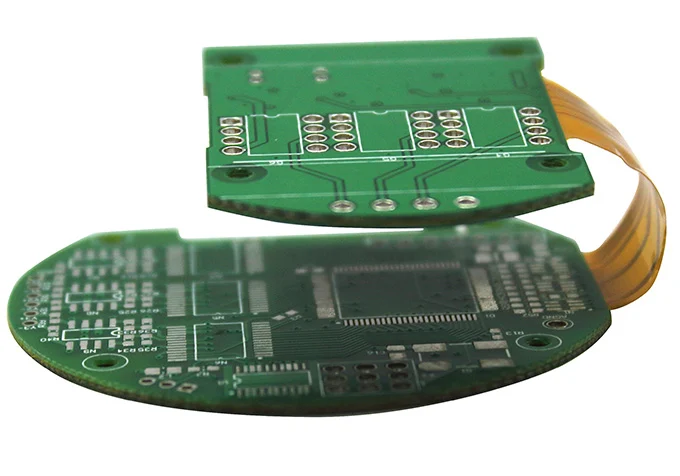
Rigid flex circuit is a PCB structure that combines rigid board sections and flexible circuit layers into one integrated unit. It offers the strength of rigid FR4 boards and the space-saving advantage of flexible circuits. Compared with a standard flex PCB with stiffeners, a true rigid flex board is built with plated through holes (PTH) that electrically connect the rigid and flexible layers inside the structure.
Rigid flex PCBs are widely used in medical devices, aerospace electronics, industrial controls, automotive systems, and advanced consumer products where stable performance and compact structure are required.
What Is a Rigid Flex Circuit?
A rigid flex circuit is a hybrid PCB made by laminating rigid substrates and flexible substrates into one board structure. The rigid sections support component mounting, while the flexible sections allow bending or folding during installation.
This design helps engineers reduce assembly size, simplify internal wiring, and improve product reliability. Instead of using multiple separate boards connected by cables or connectors, a rigid flex PCB combines these functions into one integrated interconnection platform.
Main Features of Rigid Flex PCB
- Combines rigid and flexible substrates in one board
- Uses plated through holes for internal electrical interconnection
- Supports compact and three-dimensional assembly design
- Reduces connectors, cables, and manual soldering points
- Improves reliability in high-vibration and limited-space applications
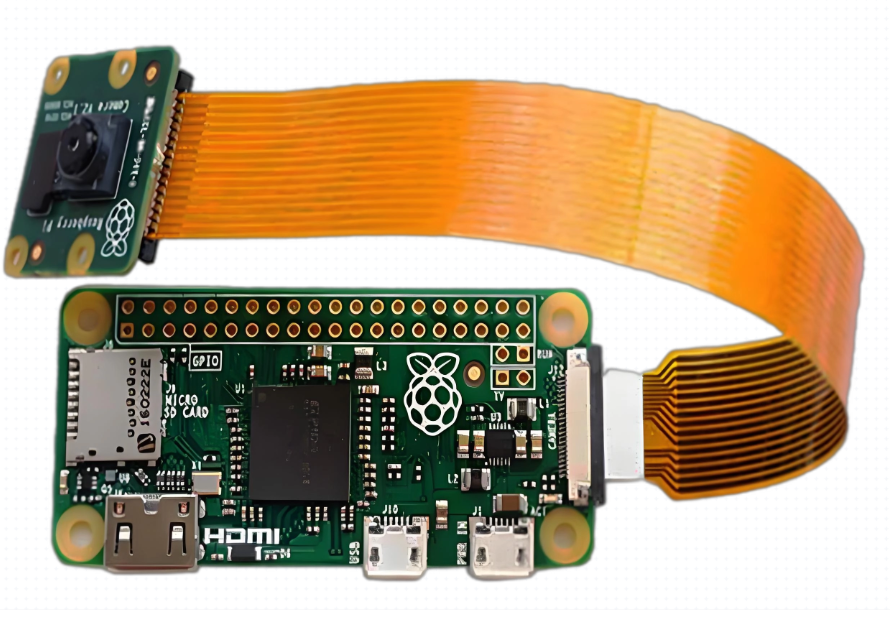
Rigid Flex Circuit
Our Typical Project Cases
Case 1 – Medical Portable Monitoring Device Rigid Flex PCB
Application: Portable medical monitoring system
Board Type: 6 Layer Rigid Flex PCB
Material: FR4 + Polyimide
Surface Finish: ENIG
Key Requirement: Compact size, stable signal, high reliability
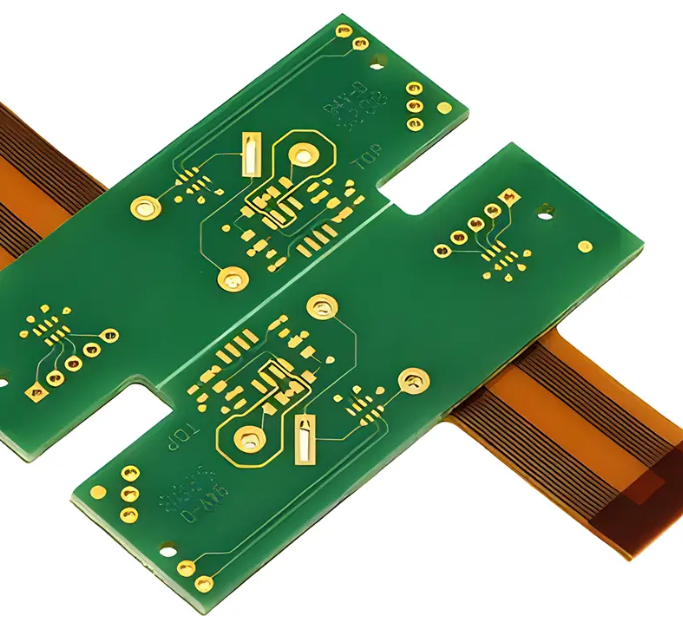
Case 2 – Automotive Camera Module Rigid Flex PCB
Application: Automotive camera system
Board Type: 4 Layer Rigid Flex PCB
Material: High Tg FR4 + Polyimide
Surface Finish: ENIG
Key Requirement: Vibration resistance, compact structure
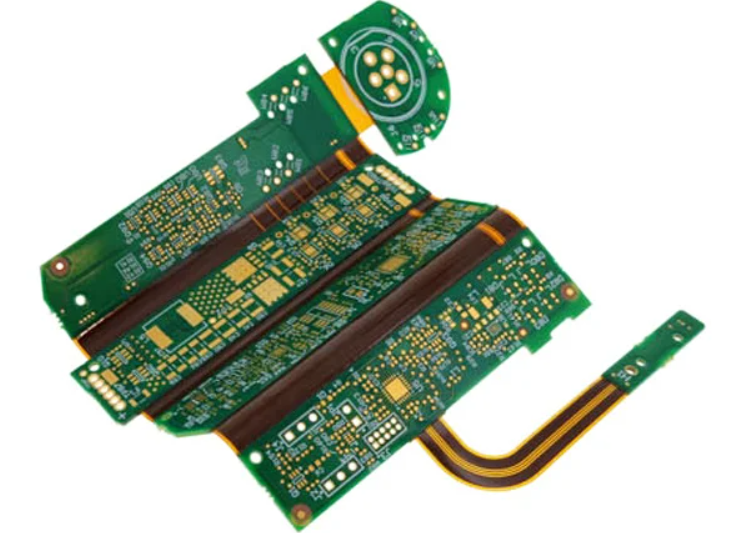
Case 3 – Industrial Control System Rigid Flex PCB
Application: Industrial control module
Board Type: 8 Layer Rigid Flex PCB
Material: FR4 + Polyimide
Surface Finish: ENIG
Key Requirement: High density routing, stable interconnection
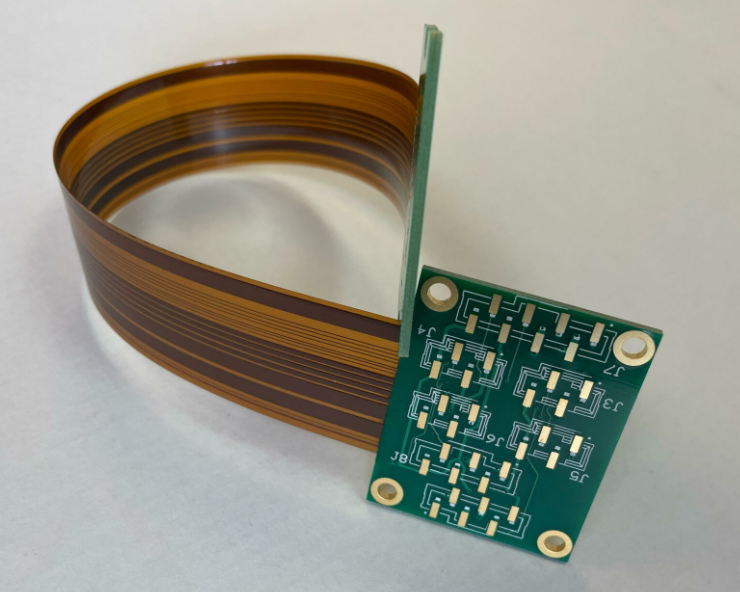
Case 4 – Consumer Electronics Folding Device Rigid Flex PCB
Application: Foldable consumer electronic device
Board Type: 4 Layer Rigid Flex PCB
Material: FR4 + Polyimide
Surface Finish: ENIG
Key Requirement: Repeated bending, compact layout
Rigid Flex PCB vs. Flex PCB with Stiffener
A rigid flex circuit is different from a flex PCB with FR4 or polyimide stiffeners.
In a flex PCB with stiffener, the stiffener is added only for local support. It is usually attached by adhesive and does not provide plated electrical interconnection between layers.
In a rigid flex PCB, the rigid and flexible sections are laminated into one complete structure, and the layers are electrically connected through plated through holes. This gives the board stronger structural integrity and better long-term reliability.
Key Difference
| Item | Rigid Flex Circuit | Flex PCB with Stiffener |
| Structure | Integrated rigid and flex laminate | Flex circuit with added support layer |
| Electrical Interconnection | Yes, through plated holes | No plated interconnection through stiffener |
| Mechanical Stability | Higher | Moderate |
| Assembly Integration | Better | Limited |
| Typical Use | High-reliability compact products | Local reinforcement only |
Our Rigid Flex PCB Manufacturing Capabilities
Below is a typical reference table for custom rigid flex PCB manufacturing capability.
| Parameter | Typical Capability |
| Rigid Flex Structure | Single-sided, double-sided, multilayer rigid flex |
| Base Materials | FR4 + Polyimide |
| Layer Count | 2L to 50L |
| Rigid Layer Material | Standard FR4 / High Tg FR4 |
| Flexible Layer Material | Polyimide (PI) |
| Copper Thickness | 0.5 oz to 4 oz |
| Board Thickness | Custom build-up |
| Flex Thickness | Based on stack-up design |
| Min Line / Space | 4/4 mil |
| Min Drill Hole | 0.2 mm |
| Surface Finish | ENIG, HASL, OSP, Immersion Tin, Immersion Silver |
| Solder Mask | Green, Black, White, Red, Blue, Yellow |
| Coverlay | Yellow / Black / White |
| Stiffener Option | FR4, PI, Stainless Steel |
| Impedance Control | Supported |
| Via Type | PTH, blind via, buried via, microvia based on design |
| Assembly Service | PCB fabrication + SMT assembly |
| Production Type | Prototype to mass production |
| Assembly Support | SMT, THT, mixed technology assembly |
| File Support | Gerber, drill file, stack-up, assembly drawing, BOM |
Common Rigid Flex Stack-Ups
Rigid flex PCB structures are usually designed as multilayer constructions. The final stack-up depends on routing density, bend radius, thickness target, and mechanical design requirements.
4 Layer Rigid Flex
Option 1
- 1L FR4
- 2L FPC
- 1L FR4
Option 2
- 2L FR4
- 2L FPC
6 Layer Rigid Flex
Option 1
- 2L FR4
- 2L FPC
- 2L FR4
Option 2
- 1L FR4
- 4L FPC
- 1L FR4
8 Layer Rigid Flex
Option 1
- 2L FR4
- 4L FPC
- 2L FR4
Option 2
- 1L FR4
- 6L FPC
- 1L FR4
Option 3
- 2L FPC
- 4L FR4
- 2L FPC
Option 4
- 1L FPC
- 6L FR4
- 1L FPC
Special Rigid Flex Structures for Custom Applications
Besides standard multilayer designs, some projects require custom rigid flex configurations for special packaging or functional needs.
2 Layer Rigid Flex
- 1L FR4
- 1L FPC
3 Layer Rigid Flex
Option 1
- 1L FR4
- 1L FPC
- 1L FR4
Option 2
- 1L FPC
- 1L FR4
- 1L FPC
These special designs are often used in compact electronic modules where a simple but integrated board structure is needed.
Design and Manufacturing Considerations
A reliable rigid flex PCB depends not only on layout, but also on manufacturability planning. Early engineering review can help avoid cracking, delamination, poor bend performance, and assembly issues.
Key Points to Consider
- Stack-up design between rigid and flex areas
- Bend radius and bending direction
- Copper balancing in flex zones
- Coverlay opening design
- Stiffener placement
- Hole location near bend areas
- Final thickness control
- Component placement on rigid sections only
- Impedance and signal path planning for high-speed designs
A good rigid flex supplier should review these details before production, not after problems appear.
Typical Applications of Rigid Flex PCB
- Medical monitoring and portable diagnostic devices
- Aerospace and defense electronics
- Industrial control systems
- Automotive electronic modules
- Cameras and optical devices
- Consumer electronics with compact internal layouts
Why Work With EBest Circuit (Best Technology) for Rigid Flex PCB?
EBest Circuit provides custom rigid flex PCB manufacturing for projects that require compact structure, stable interconnection, and reliable quality. With over 20 years of PCB experience, we support customers from design review to fabrication and assembly.
What We Offer
- Custom rigid flex PCB fabrication
- Stack-up review and DFM support
- PCB and PCBA one-stop service
- Prototype and volume production support
- Material and process suggestion based on application
- Fast response for RFQ and engineering questions
Our engineering team understands the practical challenges behind rigid flex structures and helps customers improve both design feasibility and production stability.
What Files Are Recommended for RFQ?
To speed up quotation and technical review, it is helpful to provide:
- Gerber files
- Drill files
- Stack-up information
- Fabrication drawing
- Assembly drawing
- BOM list
- Pick and place file if assembly is needed
Clear documentation helps reduce back-and-forth communication and improves quote accuracy.
FAQs
1. What is the minimum bend radius for rigid flex PCB?
The bend radius depends on the flex thickness and copper structure. A common guideline is:
- Single-layer flex: 6–10 × thickness
- Double-layer flex: 10–15 × thickness
- Multilayer flex: 15–20 × thickness
Proper bend radius design is critical to prevent copper cracking or delamination during use.
2. Can components be placed on the flexible area?
In most cases, components should be mounted only on the rigid sections.
Placing components on flex areas is possible in special designs, but it requires careful reinforcement, controlled bending conditions, and additional manufacturing considerations. For standard designs, keeping components on rigid areas improves reliability and assembly stability.
3. What materials are used in rigid flex PCB?
Rigid flex circuits typically use:
- Rigid layers: FR4 or high Tg FR4
- Flexible layers: Polyimide (PI)
- Coverlay: Polyimide film with adhesive
- Stiffeners: FR4, PI, or stainless steel
Material selection depends on temperature requirements, bending cycles, and electrical performance.
4. How many bending cycles can a rigid flex PCB withstand?
The bending life depends on the design and materials. With proper design, rigid flex circuits can withstand thousands to millions of bending cycles.
Key factors include:
- Copper thickness
- Flex layer structure
- Bend radius
- Material quality
Engineering optimization is important for applications requiring repeated movement.
Get a Quote for Your Rigid Flex Circuit Project
Looking for a reliable rigid flex PCB manufacturer for your next project? Best Technology can support your design with engineering review, custom stack-up guidance, and stable production service.
Send your Gerber files, stack-up details, or project requirements to sales@bestpcbs.com for quotation and technical support.