





Custom printed circuit board assemblies are no longer reserved for niche applications in today’s competitive electronics market. From industrial automation systems to advanced medical devices and aerospace controls, customization at the PCB assembly level often determines product reliability, regulatory compliance, and long-term service stability. This article explores what truly defines high-quality customized PCB assembly in the USA, how engineering decisions impact performance, and how manufacturers manage quality, cost, and traceability across different production volumes.
At EBest Circuit (Best Technology), custom printed circuit board assemblies are managed as engineering-driven programs rather than standard production runs. Customization often involves optimizing stack-up design, grounding strategy, solder reliability, and material selection to meet real-world electrical and environmental demands. By integrating PCB fabrication, component sourcing, SMT assembly, testing, and box-build within one coordinated system, we ensure early DFM feedback and controlled execution. With 20 years of experience serving 1,800+ customers under ISO9001, ISO13485, IATF16949, and AS9100D standards, supported by MES traceability, we deliver flexible, no-MOQ custom printed circuit board assemblies with typical 1.5-week PCBA turnaround. Just feel free to contact us anytime via sales@bestpcbs.com for custom printed circuit board assemblies support!
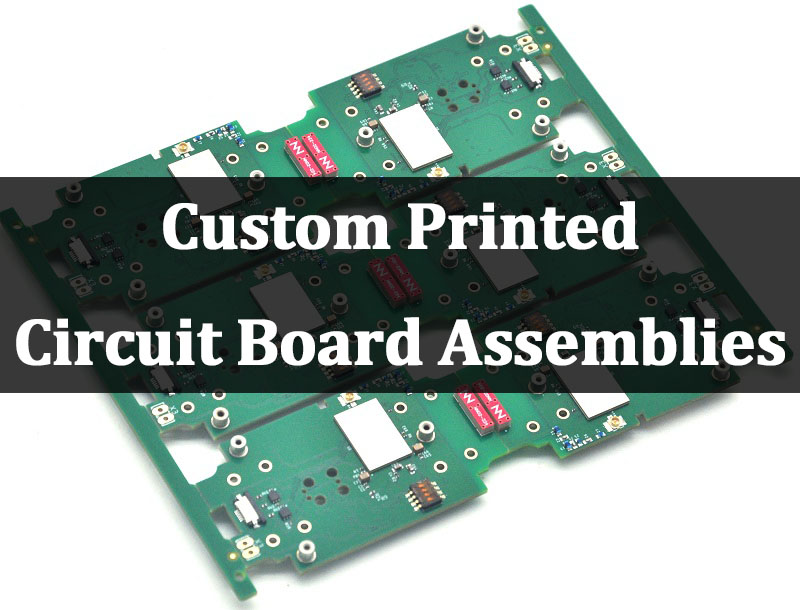
What Defines High-Quality Custom Printed Circuit Board Assemblies In The USA?
High-quality custom printed circuit board assemblies go far beyond basic SMT placement and soldering. In the U.S. manufacturing environment, quality expectations are typically aligned with:
- IPC-A-610 Class 2 or Class 3 standards
- Strict documentation control
- Full traceability of materials and processes
- Consistent test validation
Customization usually involves adapting the assembly process to meet specific electrical, mechanical, or environmental requirements. That may include:
- High-Tg or high-frequency PCB materials
- Heavy copper layers for power applications
- Conformal coating for harsh environments
- Selective soldering for mixed-technology boards
- Functional testing tailored to the final product
A reliable U.S.-based manufacturer does not simply assemble boards—they evaluate design intent, identify potential risks, and provide process feedback before production begins.
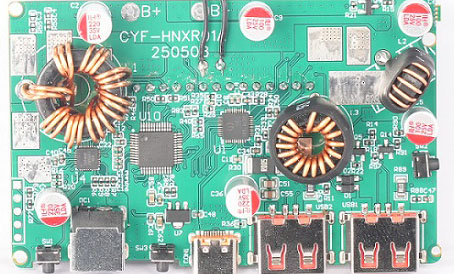
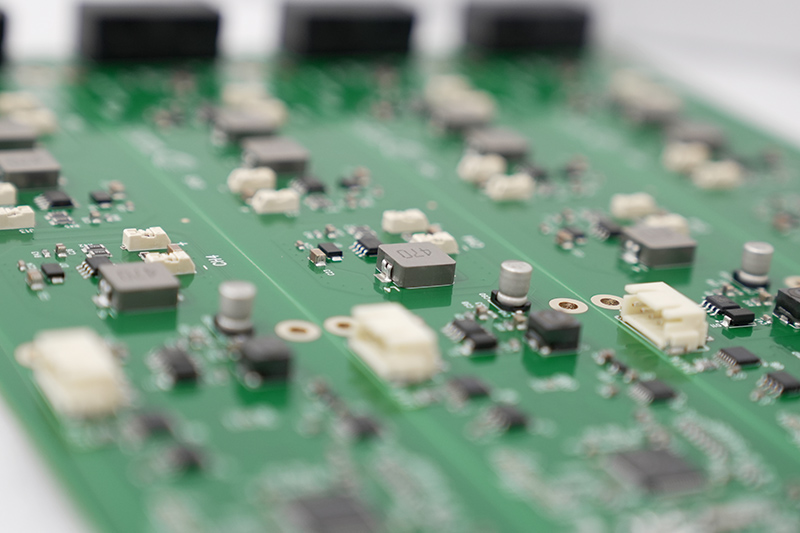
How Does A Custom Printed Circuit Board Assembly Improve Product Reliability In Industrial Applications?
Industrial environments are unforgiving. Equipment may operate continuously under vibration, thermal cycling, or electrical noise. A standardized assembly approach may overlook these stresses.
A properly engineered custom printed circuit board assembly can improve reliability through:
- Optimized solder joint geometry
- Reinforced connectors for vibration resistance
- Controlled impedance routing for stable communication
- Thermal management enhancements
- Customized burn-in testing
For example, in industrial motor control systems, adjusting copper thickness and solder alloy selection can reduce thermal fatigue. In PLC systems, improving grounding architecture can significantly reduce EMI susceptibility.
Customization is not cosmetic—it directly impacts lifecycle performance.
When Should Engineers Choose Customized Printed Circuit Board Assembly Over Standard EMS Solutions?
Engineers typically move toward customized printed circuit board assembly when:
- The design includes mixed analog and high-speed digital circuits
- Regulatory standards demand documentation and validation
- The product requires environmental protection
- There is no tolerance for field failure
Standard EMS providers often optimize for volume and speed. That model works well for consumer devices but may not provide sufficient engineering collaboration for specialized applications.
If your product has unique electrical requirements, mechanical constraints, or compliance considerations, customization at the assembly level becomes essential rather than optional.
How To Design A Printed Circuit Board Assembly With Customization For Automotive And Medical Devices?
Designing a printed circuit board assembly with customization for automotive or medical applications requires early collaboration between design and manufacturing teams.
Key considerations include:
Thermal Stability
Automotive ECUs may experience temperatures from -40°C to +125°C. Material selection and solder alloy choice must reflect this range.
Regulatory Compliance
Medical devices often require ISO 13485-controlled processes, validation documentation, and process qualification records.
Traceability
Lot-level traceability of components and production batches is often mandatory.
Testing Protocols
Functional testing must simulate real-world operating conditions. In automotive electronics, this may include vibration or load testing. In medical electronics, calibration verification may be required.
Customization here means building a process around the product—not forcing the product into a fixed process.
What Engineering Considerations Impact Custom Printed Circuit Board Assemblies Performance?
Several engineering factors directly influence the performance of custom printed circuit board assemblies:
Stack-Up Design
Proper layer arrangement improves signal integrity and reduces EMI.
Component Selection
Choosing automotive-grade or medical-grade components enhances long-term stability.
Solder Paste Selection
Different alloys and flux chemistries perform differently under thermal stress.
PCB Surface Finish
ENIG, ENEPIG, or OSP finishes affect solderability and long-term reliability.
Mechanical Constraints
Connector orientation, board thickness, and mounting hole reinforcement influence durability.
Ignoring these elements can lead to premature failure even when the schematic design is sound.
How Do USA Manufacturers Control Quality In Custom Printed Circuit Board Assembly Projects?
U.S.-based manufacturers typically implement layered quality systems for custom printed circuit board assembly projects.
Common quality controls include:
- Automated Optical Inspection (AOI)
- X-ray inspection for BGA and hidden joints
- In-Circuit Testing (ICT)
- Functional testing
- Statistical Process Control (SPC)
- Manufacturing Execution Systems (MES)
Certification frameworks such as ISO 9001, ISO 13485, IATF 16949, or AS9100D add additional structure.
Traceability systems allow manufacturers to identify component lots, reflow profiles, and assembly timestamps if field analysis becomes necessary.
Quality is not a single checkpoint—it is embedded throughout the workflow.
What Cost Factors Affect Customized Printed Circuit Board Assembly In Low And High Volume Production?
Cost structures differ significantly depending on production scale.
In Low Volume Production:
- Setup costs represent a larger percentage
- Engineering time and DFM review are significant
- Specialized materials may increase per-unit cost
In High Volume Production:
- Tooling amortization reduces unit price
- Automation improves efficiency
- Supply chain stability becomes critical
Customization does not necessarily mean higher cost. In many cases, adapting the assembly process early reduces field failures and warranty claims, lowering total cost of ownership.
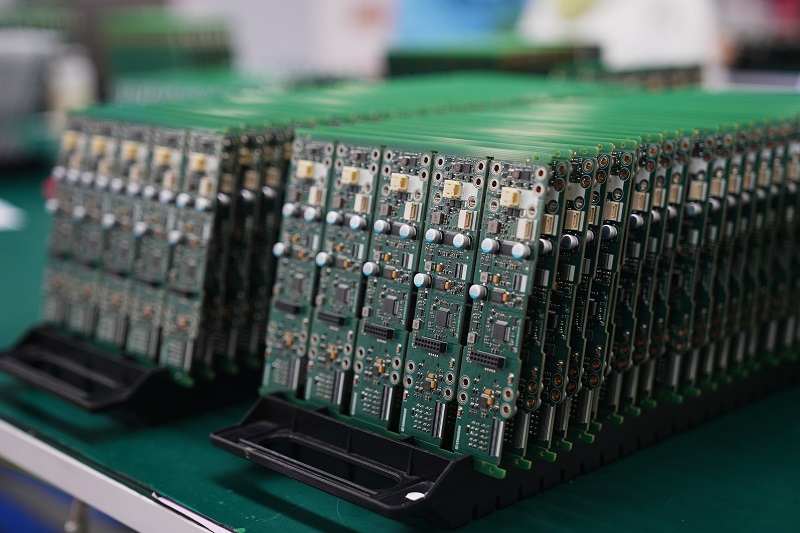
In summary, choosing custom printed circuit board assemblies in the USA is less about geography and more about engineering philosophy. Customization ensures that the assembly process reflects the product’s real-world operating demands.
For industries where reliability, compliance, and long-term stability matter, working with a manufacturer that understands application-specific requirements can significantly reduce risk. The right partner does more than assemble components—they align manufacturing processes with your product’s technical intent. EBest Circuit (Best Technology) offers a full range of PCBA solutions, including rigid PCBA, rigid-flex PCBA, metal core PCBA, and ceramic PCBA. Every PCBA product listed above is fully customizable to meet specific design and application requirements. If you are interested in discussing your project, please feel free to contact us at sales@bestpcbs.com.
FAQs About Custom Printed Circuit Board Assemblies And Manufacturing In The USA
Is customization only necessary for complex products?
Not necessarily. Even moderately complex boards can benefit from process optimization if reliability is important.
Does customization significantly extend lead time?
With proper planning, lead time impact is minimal. Early DFM review often prevents delays later.
Are U.S. custom PCB assembly services more expensive than overseas options?
Unit costs may be higher, but communication efficiency, quality control, and faster iteration often balance the difference.
Can custom PCB assembly support rapid prototyping?
Yes. Many U.S. manufacturers support quick-turn prototypes before scaling to production.