PCB manufacturing PCB manufacturing
Home > Blog

SMT PNP Process

Complete Guide to SMT: Meaning, Process, FAQs & Applications
Friday, January 23rd, 2026

SMT (Surface Mount Technology) is the dominant assembly method in modern electronics manufacturing, enabling compact, high-reliability products. Mastering SMT fundamentals and processes is critical for engineers, manufacturers, and buyers seeking consistent quality in electronic assemblies.

What is SMT?

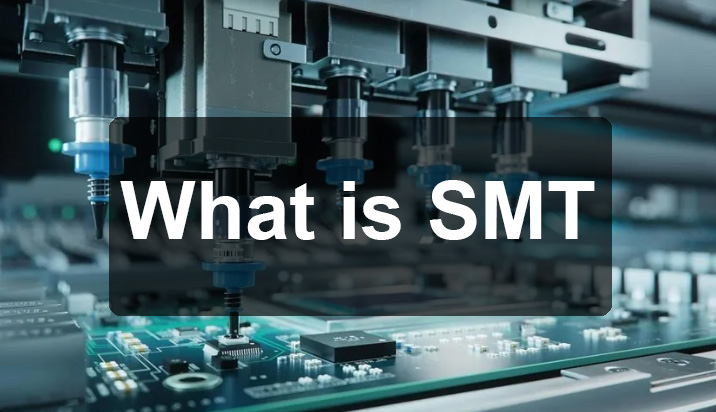
SMT stands for Surface Mount Technology, a core electronic assembly process that mounts surface-mount components (SMDs) directly onto the surface of printed circuit boards (PCBs). It replaces traditional through-hole technology, offering higher assembly density and production efficiency for most electronic devices.
What is SMT

Why is SMT Widely Adopted?

  • Enables smaller, lighter electronic products with 40-60% volume reduction compared to through-hole designs.
  • Supports high-volume automation, cutting production costs by 30-50% in mass manufacturing.
  • Delivers better high-frequency performance and lower electromagnetic interference (EMI).

SMT Meaning

SMT is the abbreviation of Surface Mount Technology, referring to the set of techniques for mounting and soldering SMDs on PCB surfaces without drilling insertion holes. Its core purpose is to achieve reliable electrical and mechanical connections between components and PCBs efficiently.

Key Terminology in SMT

  • SMD: Surface Mount Device, the components used in SMT assembly (resistors, capacitors, ICs, etc.).
  • PCB: Printed Circuit Board, the base for mounting SMT components.
  • Reflow Soldering: The heating process that melts solder paste to bond SMDs to PCB pads.

Definition of SMT

Surface Mount Technology (SMT) is a standardized electronic assembly process that involves applying solder paste to PCB pads, precisely placing SMDs onto the paste, and heating the assembly to form permanent solder joints. It is defined by IPC standards as a high-density, automated assembly method for modern electronics.

Core Characteristics of SMT

SMT eliminates the need for PCB hole drilling for component leads, relying on surface tension and solder paste adhesion to secure components. This results in lower PCB material usage, faster production cycles, and reduced solder joint defect rates compared to traditional methods.

What is SMT in Electronics

In electronics, SMT is the primary method for assembling PCBs in consumer devices, industrial controls, medical equipment, and communications hardware. It enables the miniaturization of high-performance electronics, from smartphones to 5G base stations.

Common Electronic Applications of SMT

  • Consumer electronics: Smartphones, laptops, wearables, and televisions.
  • Industrial electronics: PLCs, sensors, and automation controllers.
  • Medical devices: Diagnostic tools, wearable monitors, and imaging equipment.

What is SMT in Manufacturing

In manufacturing, SMT is a streamlined, automated process that integrates multiple stages—from solder paste printing to inspection—to produce consistent PCB assemblies at scale. It is a cornerstone of lean manufacturing for electronic components.

What is SMT in Manufacturing

SMT Manufacturing Workflow Goals

  • Achieve high throughput: Up to 30,000 components per hour with advanced placement machines.
  • Maintain low defect rates: Targeting <10 ppm (parts per million) for critical applications.
  • Ensure process repeatability: Complying with IPC-A-610 and IPC-7351 standards.

Basic SMT Process Flow

The basic SMT process consists of 6 sequential stages, with each step directly affecting final assembly quality. Front-end process control is critical to reducing defects and ensuring reliability.

What Are the Core Stages of SMT?

  1. Solder Paste Printing: Apply solder paste to PCB pads using a stencil, the first gate for welding quality. Laser-cut stencils (±5μm precision) and SPI (Solder Paste Inspection) are mandatory for high-reliability projects.
  2. Component Placement: Use automated machines to place SMDs onto solder paste, requiring repeat accuracy ≤±25μm for 0201-sized components and fine-pitch devices.
  3. Reflow Soldering: Heat the assembly to melt solder paste, forming permanent joints. Custom temperature profiles are needed for different PCB thicknesses and component types.
  4. Inspection & Testing: Combine AOI (surface defects), X-ray (BGA/QFN bottom joints), and FCT (functional verification) to catch hidden issues.
  5. Cleaning (Optional): Remove flux residues via water or semi-aqueous cleaning, tested per IPC-TM-650 for ion contamination.
  6. Reliability Enhancement: Implement ESD protection and underfill for advanced packages to improve long-term stability.

SMT Placement Process

The SMT placement process is a precision-driven step that bridges solder paste printing and reflow soldering, directly impacting component alignment and solder joint integrity.

How to Ensure Accurate SMT Placement?

  • Machine Calibration: Regularly calibrate placement machines to maintain ±25μm repeat accuracy, replacing worn nozzles to avoid component slippage.
  • Component Recognition: Use advanced vision systems to identify odd-form components and black-body devices, reducing placement errors.
  • Double-Side Placement: For double-sided PCBs, prioritize lighter components first to prevent displacement during reflow.
  • Real-Time Monitoring: Integrate MES systems to track placement parameters, enabling immediate adjustments for offset or misalignment.

Key Advantages of SMT Over Through-Hole Technology

SMT outperforms traditional through-hole technology in most modern electronics, offering irreplaceable benefits for miniaturization and mass production.

SMT vs. Through-Hole: Core Differences

MetricSMTThrough-Hole
Component Density40-60% higher, enabling miniaturizationLow, limited by hole spacing
Production Cost30-50% lower in high-volume manufacturingHigher due to manual insertion
High-Frequency PerformanceSuperior, lower EMIPoor, lead inductance affects signals

Common SMT Defects and Troubleshooting Tips

Most SMT defects stem from process deviations in printing, placement, or reflow. Targeted troubleshooting reduces rework rates and improves consistency.

How to Fix Top SMT Defects?

  • Open Joints/Voids: Adjust stencil aperture and reflow profile; ensure solder paste freshness (≤3 months shelf life).
  • Bridging: Reduce stencil aperture size and optimize printing pressure to avoid excess solder paste.
  • Tombstoning: Balance solder paste volume on component pads and adjust placement accuracy to ≤1/3 pad offset.
  • Cold Solder: Extend reflow soak time to fully activate flux, ensuring peak temperature (240-250℃ for SAC305).

Critical Factors for High-Quality SMT Assembly

Achieving high-quality SMT assembly requires a combination of equipment precision, process control, and material management, aligned with IPC standards.

What Drives SMT Assembly Quality?

  • Material Control: Use low-residue solder paste and ESD-safe packaging for sensitive components.
  • Process Documentation: Record SPI/AOI reports, X-ray images, and reflow curves for full traceability.
  • Operator Training: Certify staff on IPC-A-610 standards to identify and resolve minor process issues.
  • Nitrogen Reflow: Adopt nitrogen atmosphere for automotive/medical electronics to reduce oxidation and voids.

SMT FAQ

Below are answers to common SMT questions, addressing pain points in process optimization and quality control.

Frequently Asked Questions About SMT

  1. What is the acceptable void rate for SMT joints? Industrial-grade applications require <25% void rate for BGA/QFN components, tested via X-ray.
  2. How often should SMT stencils be cleaned? Clean stencils every 50-100 prints to prevent paste buildup and aperture clogging.
  3. Can SMT handle double-sided PCBs? Yes—use low-temperature solder paste for the second side to avoid reflowing existing joints.
  4. What’s the difference between leaded and lead-free SMT? Lead-free (SAC305) requires higher peak temperatures (240-250℃) vs. leaded (210-220℃).
  5. How to reduce SMT rework rates? Implement SPI at the front end—printing defects account for 70% of total SMT issues.
  6. Is underfill necessary for SMT? It’s mandatory for fine-pitch BGA and automotive electronics to improve shock and vibration resistance.
  7. What standards govern SMT assembly? IPC-A-610 (acceptability) and IPC-7351 (component land patterns) are industry benchmarks.

Future Trends of SMT Technology

SMT technology is evolving to meet demands for advanced packaging, high reliability, and smart manufacturing in 2026 and beyond.

What’s Next for SMT?

  • Advanced Packaging Integration: Merging SMT with SiP/Chiplet technologies for high-density, high-performance electronics.
  • Smart Factory Adoption: Full integration of AI-driven AOI, real-time process monitoring, and MES systems for data-driven optimization.
  • Automotive-Grade Focus: Enhancing SMT for AEC-Q100/Q200 compliance, with improved thermal and vibration resistance.
  • On-Demand Manufacturing: Flexible SMT lines to support low-MOQ, fast-turnaround projects for AIoT and wearables.

We provide high-quality SMT assembly services, adhering to IPC standards and advanced process controls to ensure reliability for automotive, medical, and industrial electronics. If you need SMT solutions, place your order with us today—reach out via email at sales@bestpcbs.com.

Why SMT PNP Process Is Key to Superior Surface Mount PCBA?
Wednesday, November 12th, 2025

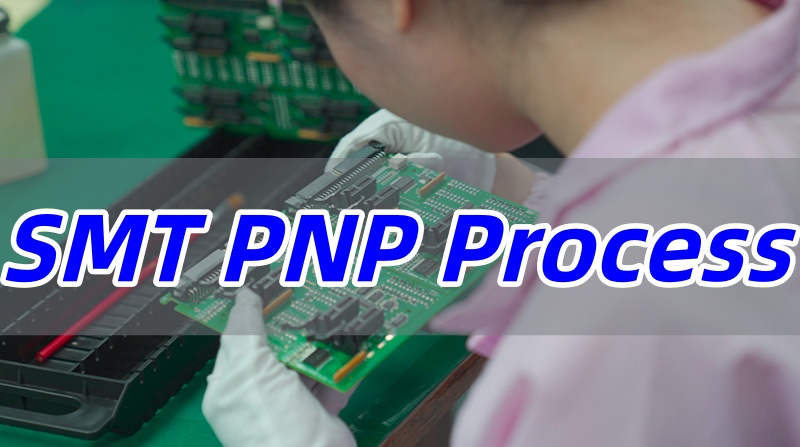
The ​SMT PNP process​ is the core stage in surface mount technology where electronic components are precisely placed onto a PCB, determining the assembly’s accuracy, reliability, and performance. This article provides a detailed explanation of the SMT pick-and-place process—from its definition and operational steps to key optimization methods—helping engineers and manufacturers achieve high-yield, high-quality PCBA production.

Are you struggling with component misalignment, low yields, or frequent rework on your SMT line? These issues often stem from inaccurate or inefficient SMT PNP processes.

  • Component placement errors due to poor machine calibration or feeder misalignment.
  • Low throughput caused by suboptimal ​SMT PNP process flow.
  • Solder defects resulting from inaccurate part positioning before reflow.
  • Difficulty maintaining ​surface mount pick and place​ accuracy with miniaturized components.
  • Inconsistent quality across batches due to a lack of process control and real-time monitoring.

To overcome these challenges, advanced process design and technology integration are essential:

  • Implement automated optical inspection (AOI) pre- and post-placement for real-time calibration.
  • Optimize ​SMT PNP process step by step​ sequencing and machine synchronization for faster cycle times.
  • Apply strict solder paste inspection (SPI) to ensure paste deposition accuracy before placement.
  • Use high-precision nozzles and vision systems for 0201, 01005, and micro-BGA components.
  • Introduce MES-tracked process parameters for each board to ensure full traceability.

At EBest Circuit (Best Technology), we specialize in high-mix, low volume, high-precision SMT assembly with a focus on robust ​SMT PNP process​ engineering. Our production lines are equipped with advanced pick-and-place systems, real-time SPI/AOI integration, and full MES traceability—all compliant with ISO 13485, IATF 16949, and AS9100D standards. Pls feel free to contact us at sales@bestpcbs.com for reliable, high-yield PCBA solutions tailored to your requirements.

SMT PNP Process

What Is SMT PNP Process?

The ​SMT PNP process—short for Surface Mount Technology Pick-and-Place process—refers to the automated operation where components are retrieved from feeders and accurately mounted onto a printed circuit board. This process is critical in modern electronics manufacturing because it directly impacts placement speed, accuracy, and final solder joint quality.

Key characteristics include:

  • High-speed component mounting, often exceeding 30,000 components per hour.
  • Vision-assisted alignment for components with fine pitches below 0.3mm.
  • Support for a wide range of package types, from 01005 chip components to large QFPs and BGAs.

Without a well-tuned PNP process, downstream defects such as tombstoning, skewing, or poor soldering become inevitable.

What is the Difference between Pick and Place and SMT?

SMT​ refers to the entire surface mount technology process, which includes solder paste printing, component placement, reflow soldering, and inspection. ​

Pick and place​ is one specific step within the SMT process—the stage where components are actually placed onto the board.

Think of SMT as the overall assembly method and pick-and-place as the key action within that method.

Why SMT PNP Process Matters in Modern Electronics?

The ​SMT PNP process​ plays a vital role in modern electronics because it enables the assembly of miniaturized, high-density boards with high reliability and throughput. From smartphones to medical devices, precise component placement ensures signal integrity, thermal performance, and long-term functionality.

Key reasons for its importance:

  • Miniaturization Support: Accurately places micro-components such as 0201 resistors and 0.35mm pitch BGAs.
  • High-Speed Production: Modern multi-gantry PNP machines place tens of thousands of parts per hour, enabling mass production.
  • Yield Improvement: Reduces misalignment and missing parts, which are common causes of post-reflow defects.

In applications like automotive control modules or wearable health monitors, a robust ​SMT pick and place process​ is non-negotiable for product durability and performance.

SMT PNP Process Step by Step

A well-defined ​SMT PNP process step by step​ ensures consistency and quality. Below is a simplified workflow:

  • Board Loading and Alignment​: The PCB is loaded onto the conveyor and clamped. Fiducial marks are scanned by the machine’s vision system to align the board coordinates.
  • Component Picking​: Nozzles pick components from tape-and-reel, tray, or stick feeders based on the programmed setup.
  • Vision-Based Inspection​: A camera checks the picked component for correctness, orientation, and lead coplanarity. Fine-pitch parts may require center-of-rotation correction.
  • Placing​: The component is placed onto the solder-paste-coated pad with a predefined pressure and precision—often within ±0.025mm.
  • Post-Placement Inspection​: AOI checks placement accuracy, presence, and polarity before the board proceeds to reflow soldering.

Following this structured ​SMT PNP process flow​ minimizes errors and ensures that all components are correctly positioned before the soldering stage.

What are the Different Types of Surface Mount Technology Machines?

A complete ​SMT production line​ consists of several key machines, each performing a specific role:

  • Solder Paste Printer: Applies solder paste using a stencil.
  • Solder Paste Inspector (SPI)​: Checks the volume, height, and alignment of the printed paste.
  • Pick-and-Place Machine: The core of the ​SMT PNP process, places components automatically.
  • Reflow Oven: Melts solder paste to form permanent electrical connections.
  • Automated Optical Inspector (AOI)​: Examins the assembled board for defects.

Additional supporting equipment includes loaders/unloaders, glue dispensers, and rework stations.

Optimizing SMT PNP Process Flow for High-Quality Surface Mount Production

Optimizing the ​SMT PNP process flow​ involves fine-tuning both the equipment and the process parameters to maximize yield and minimize cycle time. Key strategies include:

  • Line Balancing: Distributing placement tasks between multiple machines to avoid bottlenecks.
  • Feeder Setup Optimization: Grouping components by usage frequency to reduce nozzle travel time.
  • Preventive Maintenance: Regular calibration of nozzles, cameras, and feeders to sustain placement accuracy.
  • Real-Time Monitoring: Using IoT-enabled sensors to track machine performance and preempt failures.

By implementing these measures, manufacturers can achieve a smooth, high-speed ​SMT PNP process flow​ capable of handling complex boards with high reliability.

How to Ensure the Advanced Surface Mount Pick and Place Accuracy?

High ​surface mount pick and place​ accuracy is achieved through a combination of machine capability, vision technology, and PCB design. Key factors include:

  • Placement Accuracy: Defined as the deviation in X, Y, and θ (rotation). Modern placers achieve accuracy within ±25µm.
  • Vision Alignment: Using upward and downward cameras to correct component position and rotation in real-time.
  • Nozzle Selection: Different nozzle types are used to handle various component sizes and weights without dropping or damaging the part.

To quantify the impact of placement deviation on yield, the following formula can be applied:

SMT PNP Process

Where Δx and Δy are offsets from the pad center, and σ is the standard deviation of placement accuracy.

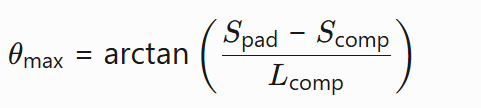
Additionally, the maximum allowable rotation error θmax can be calculated as:

SMT PNP Process

Where Spad is the pad size, Scomp​ is the component terminal size, and Lcomp is the component length.

By optimizing these parameters, manufacturers can ensure high reliability even with 01005 components or 0.3mm pitch BGAs.

EBest Circuit (Best Technology) – Technical Capability for Assembly Various PCB Types

At EBest Circuit (Best Technology), we specialize in SMT pick-and-place (PNP) assembly across a wide range of PCB types. From standard FR-4 to high-performance ceramic PCBs, our process ensures exceptional placement accuracy, reliability, and yield — no matter the complexity.

Our 3,000㎡ production facility is equipped for both prototype and mass production, supported by advanced process control and rigorous quality inspection.

1. FR-4 PCB Assembly

FR-4 boards remain the industry standard for consumer, telecom, and industrial electronics.
Our capabilities include:

  • Multilayer boards up to 20 layers
  • Accurate solder paste printing and reflow profiling
  • Multiple surface finishes: ENIG, HASL, OSP
  • Stable impedance control for signal integrity

We deliver consistent quality from small-batch prototypes to volume production, maintaining strong process repeatability.

2. Flexible PCB (FPC) Assembly

We provide advanced assembly for single-, double-, and multilayer flex PCBs made from polyimide (PI) or PET films.
Technical strengths:

  • Fine line capability down to 0.04mm (1.5 mil)
  • Laser-drilled micro-vias as small as 0.10mm for HDI designs
  • Optional stiffeners (PI, FR4, or stainless steel) to enhance rigidity in selective areas
  • Full turnkey service — from FPC design and material sourcing to SMT assembly and inspection

These assemblies are ideal for wearables, portable electronics, and other space-limited products.

3. Rigid-Flex PCB Assembly

Rigid-flex PCBs combine the mechanical strength of rigid sections with the flexibility of flex layers, reducing interconnects and improving durability.
Our process covers:

  • Complex multilayer stack-ups
  • Controlled impedance routing
  • Reliable plated through-hole (PTH) interconnections
  • Optimized lamination between rigid and flex areas

They are widely used in aerospace, medical, and industrial applications, where compact and rugged performance is essential.

4. Metal-Core PCB (MCPCB) Assembly

MCPCBs are designed for high-power and thermal-demanding environments.
Capabilities:

  • Aluminum and copper cores with excellent heat dissipation
  • Compatible with high-current LED and automotive lighting systems
  • Controlled reflow process to avoid delamination and maintain flatness

Our process achieves reliable solder joints even under extended thermal cycling conditions.

5. Ceramic PCB Assembly

We assemble Al₂O₃ (alumina) and AlN (aluminum nitride) ceramic PCBs for RF, microwave, and aerospace electronics.
Highlights:

  • Outstanding thermal conductivity and dielectric strength
  • Precision handling to prevent substrate cracking
  • Compatible with AgPd, Au, and ENEPIG surface finishes

These boards deliver exceptional stability in high-frequency and high-temperature environments.

Every assembly passes through a tightly controlled process chain:

  • Incoming material inspection
  • Automated solder paste printing & reflow profiling
  • AOI, X-ray, and FCT testing
  • Traceability through MES system

Our facility meets international quality standards: ISO 9001, ISO 13485, IATF 16949, and AS9100D, ensuring reliable results for every industry — from medical to aerospace.

In Summary, EBest Circuit (Best Technology) offers comprehensive assembly services for flex, rigid-flex, FR-4, metal-core, and ceramic PCBs, backed by precision equipment and strict quality control. We focus on high-yield, low-defect production, helping customers achieve consistent performance and long-term reliability in every design.

Why Choose EBest Circuit (Best Technology) for Reliable SMT PCBA Orders?

EBest Circuit (Best Technology) offers end-to-end SMT assembly solutions with an emphasis on precision, reliability, and traceability. Our advantages include:

1. High-Precision SMT Production Lines

Our SMT lines use advanced Yamaha and Siemens pick-and-place machines with intelligent vision alignment to guarantee precise placement — from 01005 chips to large BGAs.
We handle boards from 0.2×0.2 inches to 22×47.5 inches, supported by nitrogen-filled reflow ovens that minimize oxidation and deliver consistent solder joints with high first-pass yields.

2. Multi-Stage Quality Control

Quality is embedded in every step of our process, verified through multi-level inspection:

  • 3D SPI: Checks solder paste volume, height, and alignment.
  • 3D AOI: Verifies polarity, orientation, and solder joint integrity.
  • X-Ray: Confirms hidden joints (BGA, QFN) without damage.
  • FCT: Validates full functional performance before delivery.

Each inspection step ensures every board meets specifications the first time.

3. Certified Quality Management Systems

Our facility operates under internationally recognized standards:

  • ISO 9001 for overall quality management
  • ISO 13485 for medical electronics
  • IATF 16949 for automotive-grade reliability
  • RoHS & REACH compliance for environmental safety

These certifications reflect our long-term commitment to consistent quality and process discipline.

4. Full MES Traceability

Real-time tracking of each board through the entire ​SMT PNP process step by step.

  • It records all process data — from paste printing to final inspection — giving you full traceability, process visibility, and data-driven quality assurance.

Any potential deviation is detected early, reducing downtime and ensuring on-time delivery. For more information or to send us an inquiry about rigid, rigid-flex, flex, IMS PCB, MCPCB, or ceramic base PCB, please email us at sales@bestpcbs.com.

In closing, we ensure that every board we build meets the highest standards of quality and reliability.

To conclude, the ​SMT PNP process​ is undeniably the backbone of high-quality surface mount assembly, impacting everything from production speed to long-term product reliability. By understanding its steps, optimizing its flow, and ensuring placement accuracy, manufacturers can achieve superior PCBA outcomes. At EBest Circuit (Best Technology), we combine state-of-the-art equipment with rigorous process controls to deliver SMT assembly services you can trust. For high-precision, high-yield PCBA solutions, please send us an email through the contact form at the bottom of our Contact US Page.