





mmWave PCB refers to the specialized printed circuit boards designed to operate at millimeter-wave frequencies, typically from 30 GHz to 300 GHz, which are fundamental to unlocking the high-speed, low-latency potential of 5G/6G, automotive radar, and satellite communications. This article serves as a comprehensive mmwave pcb design guide, delving into the unique challenges, material science, and best practices for successfully implementing these high-frequency circuits, with a focus on the industry-preferred Rogers RO4350B material system.
Pushing the boundaries of radio frequency design is exhilarating, yet the path from concept to a fully functional ro4350b high frequency board is fraught with specific hurdles.
- Signal Integrity Loss: High insertion loss and unstable impedance can reduce range and sensitivity.
- Material Instability: Standard FR4 or vague “RF materials” often cause Dk/Df variation.
- Tight Tolerance Demands: mmWave layouts require finer lines, spacing, and stackup control.
- Thermal Build-Up: High-power RF chips need efficient heat dissipation to stay reliable.
- Supplier Capability Risk: Not every RO4350B PCB manufacturer can handle RF laminates well.
The solution lies in a synergistic approach combining informed design, the right materials, and a manufacturer with proven RF capabilities.
- Controlled Impedance Design: Keep trace geometry and stackup tightly managed.
- Low-Loss Material Selection: Use Rogers RO4350B for stable high-frequency performance.
- Advanced HDI Fabrication: Support fine lines, microvias, and compact RF layouts.
- Thermal-Ready Structure: Add thermal vias and copper paths for better heat flow.
- Experienced RF Manufacturing Partner: Work with a supplier familiar with RO4350B processing.
At EBest Circuit (Best Technology), we are not just a PCB fab house; we are your specialized partner for high-frequency and mmWave PCB challenges. With 20 years of experience, we have honed our expertise in processing advanced materials like Rogers RO4350B/RO4450F, Isola, and Taconic. Our factory is equipped with dedicated processes for RF boards, from laser drilling for micro-vias to precise impedance control testing. We understand that your prototype is critical for validation, which is why we offer expedited mmWave PCB prototype services without compromising on the meticulous care these boards demand. For your next high-frequency project, pls feel free to contact our engineering sales team at sales@bestpcbs.com for a consultative review of your design and stackup.
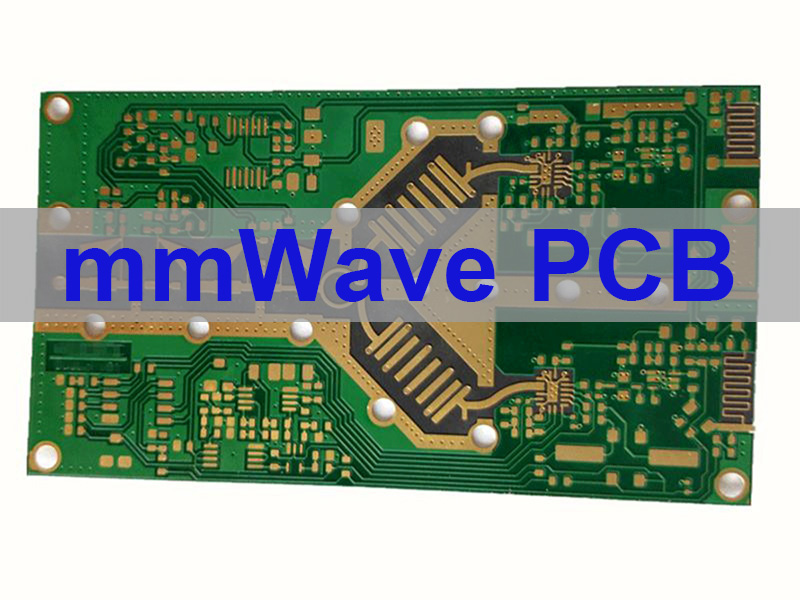
What Are the Key Challenges in mmWave PCB Layout?
Designing the layout for a mmWave PCB is fundamentally different from lower-frequency RF or digital design. The tiny wavelengths introduce physical effects that dominate performance. Key challenges include:
- Minimizing Transmission Loss: Conductor loss (skin effect) and dielectric loss become severe. Every millimeter of trace, every via transition, and the laminate material itself consumes precious signal power.
- Maintaining Phase Consistency: At mmWave, the physical length of a trace directly corresponds to a significant phase shift. Unequal path lengths or inconsistent propagation speeds across the board can desynchronize phased arrays or corrupt modulated signals.
- Managing Parasitic Effects: The inherent inductance of vias and capacitance of pads, which are negligible at lower frequencies, become significant discontinuities that cause reflections and resonances.
- Ensuring Manufacturing Feasibility: The layout must be designed for manufacturability. This means defining trace/space rules (e.g., 3/3 mil or 4/4 mil) and via sizes that align with the manufacturer’s HDI and ro4350b pcb process capabilities, not just simulation ideals.
Success requires co-design between the electrical layout and the manufacturing process, ensuring the theoretical model can be built with high fidelity.
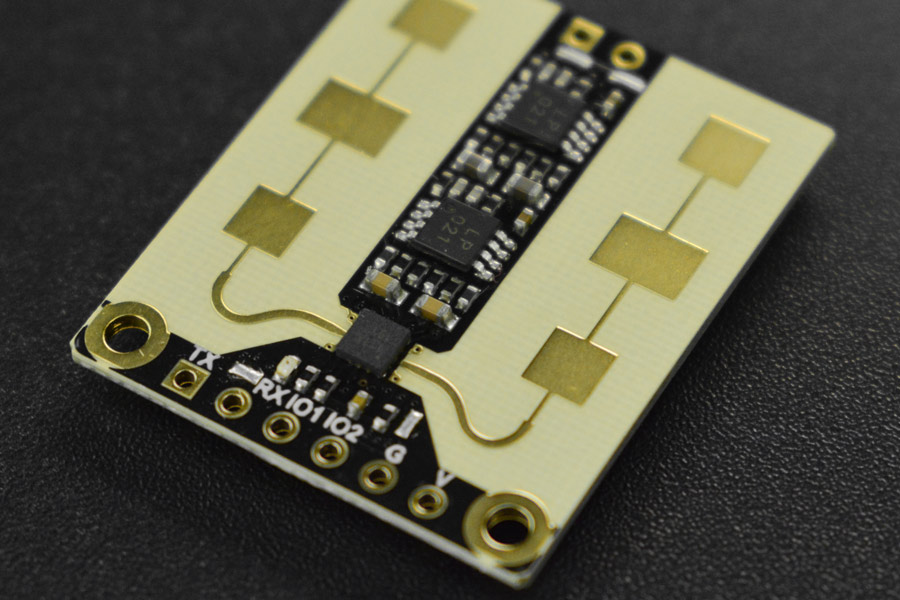
Why Is Rogers RO4350B a Common Choice for mmWave PCB Design?
When engineers look for a china ro4350b high frequency board manufacturer, it’s because RO4350B has become a benchmark material for good reason. Its popularity stems from a balanced set of properties ideal for high-volume, high-performance RF applications:
- Stable Dielectric Constant (Dk=3.48 ±0.05): Its consistent Dk across the board and over frequency (up to 10 GHz and beyond) enables predictable impedance and phase response, which is critical for mmwave pcb design.
- Low Loss Tangent (Df=0.0037 @ 10 GHz): This low dissipation factor directly translates to lower signal attenuation, preserving signal strength and system sensitivity.
- Excellent Thermal Stability: The Dk variation over temperature is very low, ensuring circuit performance remains stable under different operating conditions.
- FR-4 Compatible Processability: Unlike pure PTFE materials, RO4350B uses a ceramic-filled hydrocarbon thermoset system, allowing it to be processed using manufacturing methods similar to standard FR4. This makes it more accessible and cost-effective for China ro4350b 4layer pcb and multi-layer builds compared to exotic substrates.
In short, it offers a reliable, manufacturable platform with electrical characteristics specifically tailored for the demanding environment of mmWave circuits.
How to Optimize a 4-Layer mmWave PCB Stackup with RO4350B and RO4450F?
A 4-layer stackup is a common and efficient configuration for many mmWave modules, providing dedicated signal, ground, and power planes. Using RO4350B for the core and RO4450F as the prepreg is a standard and effective approach. The goal is to achieve target impedance (e.g., 50Ω) while ensuring good layer-to-layer coupling and shielding.
| Layer | Material & Thickness | Description | Key Function |
|---|---|---|---|
| L1 (Top) | RO4350B Core | RF signal layer with ICs and transmission lines | RF routing & components |
| Prepreg | RO4450F | Bonds L1–L2; defines impedance | Dielectric & bonding |
| L2 (Inner 1) | RO4350B Core | Continuous ground plane under RF layer | Return path & shielding |
| Core | RO4350B | Controls spacing between planes | Dielectric spacer |
| L3 (Inner 2) | RO4350B Core | Power plane with decoupling to ground | Power distribution |
| Prepreg | RO4450F | Bonds L3–L4 | Dielectric & bonding |
| L4 (Bottom) | RO4350B Core | Secondary signal or ground layer | Control signals / GND |
Optimization Tips:
- Impedance First: Use a field solver with the exact rogers ro4350b datasheet Dk value to calculate the required trace width on L1 for 50Ω, given the chosen RO4450F prepreg thickness.
- Via Strategy: Use a dense array of grounding vias (stitching vias) around the perimeter of the RF section to connect the top ground pours to the L2 ground plane, suppressing cavity resonances.
- Layer Pairing: The tight coupling between L1 (signal) and L2 (ground) is ideal for RF. The coupling between L3 (power) and L2 (ground) forms a good embedded capacitance for decoupling.
Why Does the RO4350B Datasheet Matter for mmWave PCB Performance at 10 GHz and Above?
Relying on generic “typical” values for a high-frequency laminate is a recipe for performance variation. The manufacturer’s datasheet, such as the rogers ro4350b datasheet dielectric constant loss tangent 10 ghz, is the contract that guarantees the material’s behavior. At mmWave frequencies, its importance is magnified:
- Precision Modeling: The quoted Dk and Df values at your operating frequency (e.g., 10, 20, 77 GHz) must be input into your electromagnetic (EM) simulation software. A small error in Dk (e.g., using 3.66 instead of 3.48) will result in a miscalculated trace width and mistuned impedance, leading to real-world return loss.
- Predicting Loss: The loss tangent (Df) value directly feeds into calculations for total link budget and insertion loss. Knowing the precise Df at your target frequency allows for accurate system gain planning.
- Understanding Anisotropy: Some materials have different Dk values in the X-Y plane versus the Z-axis. The datasheet clarifies this, which is vital for designing structures like waveguide transitions or accurate via models.
- Processing Guidance: It provides recommended lamination pressure, temperature cycles, and drill parameters specific to RO4350B, which a competent ro4350b pcb manufacturer will follow to prevent delamination or smear issues.
In essence, the datasheet transforms the laminate from a mysterious black box into a quantifiable, engineering-grade component that is as critical to your design as the active ICs.
How to Source a China-Based mmWave PCB Manufacturer with RO4350B Experience?
Sourcing a capable china rogers ro4350b high frequency board manufacturer involves due diligence beyond just comparing price. Here is a step-by-step guide:
- Declare Your Technology Upfront: In your initial RFQ, explicitly state it’s a mmWave PCB using Rogers RO4350B/RO4450F. This immediately filters out suppliers without relevant experience.
- Request a Capability Matrix: Ask for their official PCB technology capability table. Cross-reference their claimed “HDI” minimum line/space (e.g., 3/3 mil) and “RF Material” experience with your requirements.
- Ask for Process Evidence: Inquire about their specific processes for RF materials: Do they have separate drilling parameters for ceramic-filled boards? What is their controlled impedance tolerance guarantee (e.g., ±10% or better)? Can they provide a report?
- Evaluate Engineering Support: Gauge their responsiveness to technical questions. A good partner will ask for your stackup and discuss material choices, rather than just accepting Gerber files blindly.
- Start with a Prototype: Place a small prototype order for your most critical ro4350b high frequency board. This is the ultimate test of their craftsmanship, quality control, and ability to deliver on their promises before committing to larger China ro4350b high frequency board wholesale volumes.
What Should Buyers Check When Procuring mmWave PCB Prototypes in RO4350B?
When you receive your mmWave PCB prototypes, a thorough check is crucial before system integration. Focus on these areas:
- Visual Inspection:
- Material Label: Verify the laminate marking on the board edge matches RO4350B.
- Surface Quality: Check for any visible resin scratches, nicks on delicate transmission lines, or discoloration.
- Dimensional Verification:
- Trace Width/Spacing: Use a microscope or optical measurement tool to verify critical RF traces and gaps match your design, especially for sub-4 mil features.
- Impedance Test Coupons: If included on the panel, measure the impedance of the test traces using a Time Domain Reflectometer (TDR). This is the most direct check of the manufacturer’s process control.
- Physical Validation:
- Microsection Report: Request a microsection (cross-section) report of critical vias (especially blind vias if used) to check for plating quality, hole wall thickness, and any resin smear.
- Electrical Testing (if possible):
- Continuity Test: Perform a basic flying probe or continuity test to ensure no open/short circuits.
- Basic RF Test: For critical boards, perform a simple vector network analyzer (VNA) measurement of a thru-line to validate insertion loss and return loss trends against simulation.
Why Choose EBest Circuit (Best Technology) for Your mmWave PCB Projects?
Choosing EBest Circuit (Best Technology) as your mmWave PCB Manufacturer in China means partnering with a specialist who bridges the gap between advanced RF design and volume manufacturability. Our Rogers RO4350B/RO4450F Expertise is built on a foundation of specific actions:
- Dedicated RF Process Line: We maintain optimized lamination, drilling, and plating parameters specifically for Rogers, Taconic, and other advanced RF materials, ensuring material integrity and consistent results.
- Proven HDI Capability: Our advanced processes support the fine features required for mmWave, with capabilities for 3/3 mil line/space and micro-vias, as confirmed in our internal process controls.
- Engineering Partnership: We don’t just build prints; we review them. Our engineers can provide valuable mmwave pcb design guide feedback on your stackup and layout for manufacturability and performance optimization.
- Rapid, Reliable Prototyping: We understand the urgency of innovation. We offer expedited lead times for prototypes, getting functional boards into your hands quickly for testing and iteration.
- Seamless Transition to Production: The processes and controls validated during your prototype phase are the same used for China ro4350b high frequency board wholesale production, ensuring a smooth, risk-free scale-up.
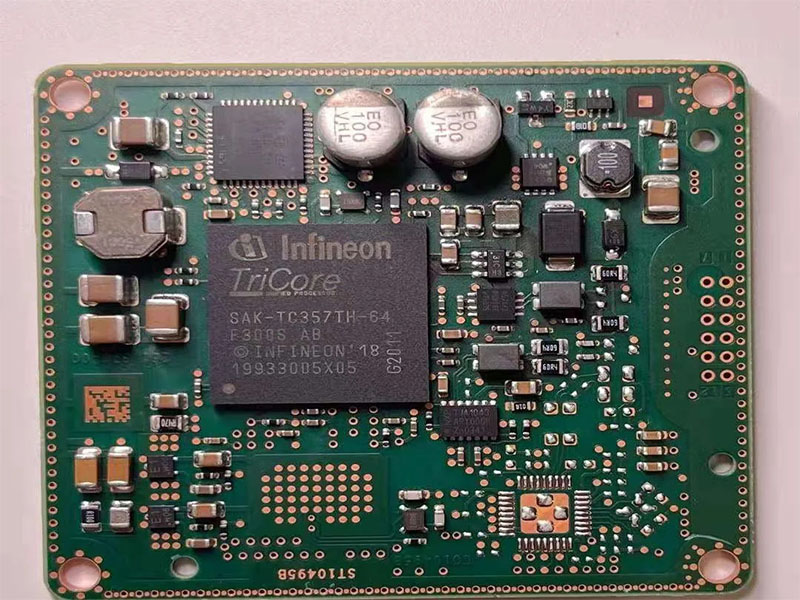
In conclusion, mmWave PCB technology is the critical enabler for the next leap in wireless communication, sensing, and imaging systems. Success in this domain hinges on a deep understanding of high-frequency effects, disciplined material selection guided by datasheets like the rogers ro4350b datasheet dielectric constant loss tangent 10 ghz, and, most importantly, a manufacturing partnership that can translate complex designs into reliable hardware.
At EBest Circuit (Best Technology), we combine specialized material expertise in Rogers RO4350B/RO4450F with precision manufacturing to turn your most demanding mmwave pcb design into reality. From initial prototype to volume production, we are committed to being your trusted mmWave PCB Manufacturer in China. Pls feel free to contact our team anytime at sales@bestpcbs.com to discuss your project.
FAQs About mmWave PCB
1. Q: Why can’t I use standard FR4 for my mmWave design, and what makes Rogers RO4350B a common recommendation?
A: Standard FR4 material suffers from inconsistent dielectric properties and high signal loss (loss tangent) at millimeter-wave frequencies, which would ruin the signal integrity, range, and phase consistency critical for applications like 5G or radar. As our RF product documentation states, for reliable high-frequency performance, you need materials specifically engineered for it. Rogers RO4350B is a popular choice because it offers a stable and known dielectric constant (Dk~3.48) and a very low dissipation factor (Df), ensuring predictable impedance control and minimal insertion loss. Furthermore, unlike pure PTFE, it can be processed using manufacturing methods similar to FR4, making it more accessible for multi-layer builds like a China ro4350b 4layer pcb.
2. Q: What are the biggest fabrication challenges for mmWave PCBs, and how does a capable manufacturer overcome them?
A: The primary challenges are achieving extreme precision and maintaining material integrity. This includes:
- Ultra-Fine Features: Realizing the very small trace widths and spacings (e.g., 3/3 mil as per our HDI capability) required for mmWave layouts.
- Tight Tolerances: Controlling impedance to within ±10%, and maintaining strict hole position and finished board thickness tolerances.
- Specialized Material Handling: Advanced laminates like RO4350B require optimized drilling, plating, and lamination parameters to prevent issues like delamination or poor hole wall quality.
A capable China rogers ro4350b high frequency board manufacturer overcomes these with dedicated processes. This involves using state-of-the-art equipment (like CNC laser drills and automated optical inspection), having established protocols for RF materials, and performing rigorous testing, such as impedance coupon verification and microsection analysis, to ensure every board meets spec.
3. Q: The quote for my mmWave PCB prototype seems high. What drives the cost?
A: The cost reflects the high-value materials and the advanced, precision engineering required. There are two main drivers:
- Material Cost: Laminates like Rogers RO4350B are significantly more expensive than standard FR4.
- Process Cost: Fabrication involves more complex and controlled steps. As noted in our general PCB prototype explanation, even a single board undergoes the entire sophisticated process flow: specialized drilling for fine features, precise controlled-impedance layer stacking, exacting plating for reliable vias, and comprehensive electrical testing. This ensures your design’s performance is accurately translated into hardware, which is crucial for validating a high-frequency system. The value lies in obtaining a functional prototype that performs as simulated, mitigating the much higher risk and cost of a system failure due to an inferior board.
For a specific quote or to discuss your mmwave pcb design challenges, please contact our engineering team at sales@bestpcbs.com.