





PCB potting is one of the most reliable ways to protect printed circuit boards in demanding working conditions, and it has become a staple process for industrial, automotive, outdoor, and mission-critical electronic devices. Proper potting turns a fragile circuit board into a durable, long-lasting component that stands up to moisture, vibration, and chemical exposure. Too many teams overlook PCB protection until failures happen, but a small investment in quality potting avoids costly downtime, replacements, and customer complaints down the line.
In this complete guide, we’ll break down every detail you need to know about PCB potting. We’ll start with the core definition, move into its standout benefits, compare it to other common protection methods, walk through the full process, and answer the most frequently asked questions from engineers and procurement teams. Whether you’re researching PCB potting services for a bulk order, choosing the right PCB potting material for your project, or troubleshooting common issues like air bubbles, this guide has practical, field-tested advice you can use right away.
What is PCB Potting?
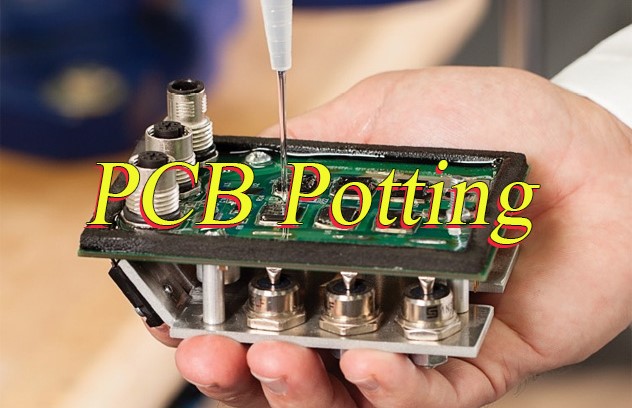
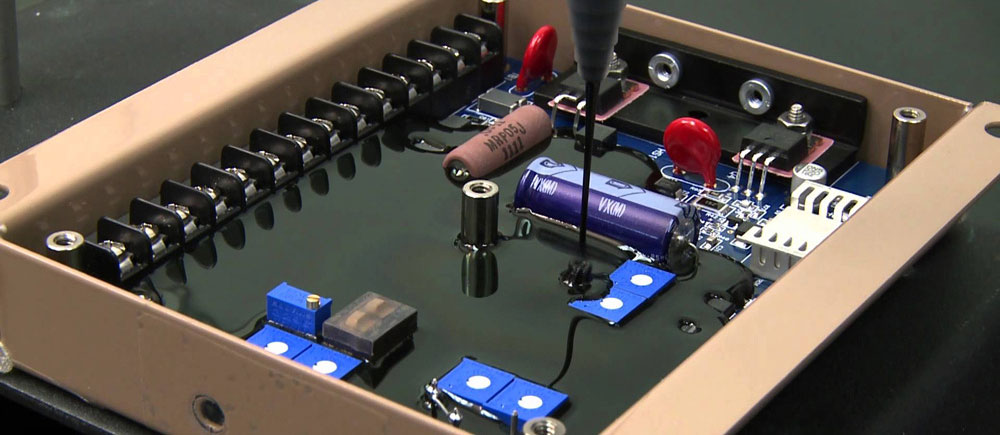
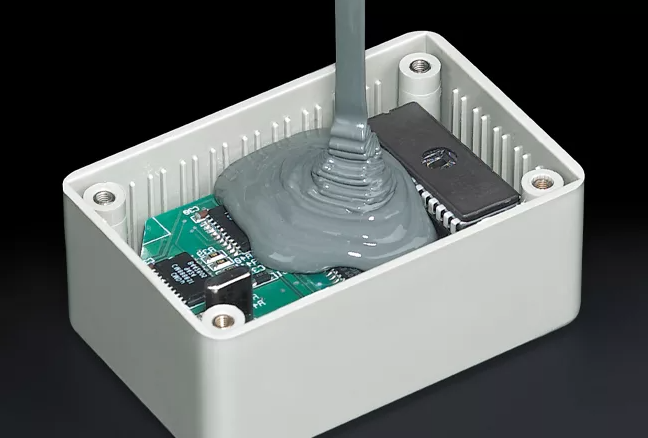
PCB potting is a way to protect a circuit board by covering it completely with a liquid material that later hardens. After the PCB is assembled, it is placed in a case. Then a potting compound, such as epoxy or silicone, is poured over it. The liquid flows around all components and fills empty spaces. Once it cures, it forms a solid layer that seals the whole board.
This means the PCB is no longer exposed to air, moisture, dust, or vibration. Everything inside is protected. Compared with coating, potting covers the entire board, not just the surface. It gives stronger protection, but it also makes repair difficult.
In simple terms, PCB potting turns a normal circuit board into a sealed and durable module that can work reliably in harsh environments.
What are Advantages of Potting PCB?
PCB potting offers multiple benefits. These are not only mechanical but also electrical.
- Strong Environmental Protection: it blocks moisture and dust. This is critical for outdoor and humid environments.
- Improved Mechanical Strength: Next, it holds components firmly. Vibration and shock are reduced significantly.
- Electrical Insulation: Potting materials act as insulators. They prevent short circuits and leakage paths.
- Chemical Resistance: Many pcb potting compounds resist oils, fuels, and solvents. This is useful in automotive and industrial systems.
- Enhanced Reliability: Because components are sealed, failure rates drop. Long-term stability improves.
- Tamper Resistance: Also, potting protects intellectual property. Components are hidden and difficult to access.
- Thermal Support (Limited): Some pcb potting materials can conduct heat. This helps distribute thermal load.
What are Disadvantages of PCB Potting?
Although potting is effective, it has trade-offs. These should be considered early.
- Difficult Rework: Once cured, removal is hard. Repair becomes time-consuming.
- Added Weight: Potting increases total mass. This matters in aerospace and portable devices.
- Cost Increase: Material and processing costs are higher than coating.
- Thermal Trapping Risk: If wrong material is used, heat may be trapped. This can affect performance.
- Design Constraints: Component placement must allow proper flow of resin.
However, with proper design and material selection, most issues can be controlled.
What is the Difference between Potting and Conformal Coating PCB?
| Parameter | PCB Potting | Conformal Coating PCB |
| Protection Method | Full encapsulation of PCB and components | Thin film coating on PCB surface |
| Coverage Level | 100% sealed, including gaps and cavities | Surface-only coverage, follows contours |
| Typical Thickness | 2 mm to 50 mm (or more) | 25 μm to 100 μm |
| Primary Function | Maximum environmental and mechanical protection | Basic protection against moisture and contamination |
| Moisture Resistance | Excellent, waterproof sealing | Good, but not fully waterproof |
| Dust & Contaminant Protection | Complete isolation | Partial protection |
| Mechanical Protection | Strong shock and vibration resistance | Minimal mechanical support |
| Electrical Insulation | High insulation, prevents arcing and leakage | Moderate insulation |
| Thermal Behavior | Depends on material (can dissipate or trap heat) | Minimal impact on heat dissipation |
| Rework & Repair | Very difficult, often destructive | Easy to remove and repair |
| Weight Impact | Adds significant weight | Negligible weight increase |
| Material Types | Epoxy, silicone, polyurethane | Acrylic, silicone, urethane, parylene |
| Processing Method | Pouring, casting, vacuum potting | Spraying, dipping, brushing |
| Curing Time | Minutes to hours (sometimes heat-assisted) | Fast curing, often minutes |
| Cost | Higher (material + labor) | Lower |
| Design Complexity | Requires enclosure and flow design | Minimal design impact |
| Inspection Difficulty | Hard to inspect internal components | Easy visual inspection |
| IP Protection (Anti-tamper) | Very high (components hidden) | Low (components visible) |
| Typical Applications | Automotive modules, power supplies, outdoor electronics, industrial controls | Consumer electronics, telecom boards, indoor devices |
| Reliability in Harsh Environments | Excellent (extreme conditions) | Moderate (controlled environments) |
What Materials are Used for PCB Potting?
| Material Type | Characteristics | Advantages | Limitations | Typical Applications |
| Epoxy Resin | Rigid after curing, strong adhesion, high hardness | Excellent mechanical strength, strong chemical resistance, high insulation | Low flexibility, can create stress under thermal cycling, difficult potting removal | Power supplies, industrial control boards, automotive electronics |
| Silicone | Soft, elastic, wide temperature tolerance (-50°C to 200°C) | High flexibility, handles vibration well, excellent thermal stability | Higher cost, lower mechanical strength than epoxy | LED drivers, automotive modules, outdoor electronics |
| Polyurethane | Semi-rigid to flexible, moisture resistant | Balanced performance, good water resistance, cost-effective | Moderate thermal resistance, limited high-temp performance | Consumer electronics, sensors, general pcb protection potting |
| Thermally Conductive Resin | Filled with ceramic/metal particles for heat transfer | Improves heat dissipation, reduces hot spots, enhances reliability | Higher cost, increased viscosity, more complex processing | Power electronics, LED lighting, battery management systems |
| Low-Viscosity Resin | Flows easily, penetrates small gaps | Reduces air bubbles, ideal for dense assemblies | May require controlled curing, lower mechanical strength in some cases | Fine-pitch PCBs, high-density assemblies |
| Flame-Retardant Potting Compound | Meets fire safety standards (UL94 V-0) | Improved safety, compliance with regulations | Slightly higher cost, may affect curing properties | Automotive, industrial, power modules |
| UV-Curable Resin | Cures under UV light, rapid processing | Fast production speed, energy efficient | Limited penetration depth, not suitable for thick potting | Small electronics, selective encapsulation |
How to Pot a PCB?
The PCB potting process is straightforward when done correctly, and following a structured step-by-step flow ensures a flawless, bubble-free result every time.
Step 1: Prepare the PCB and workspace. First, thoroughly clean the assembled PCB to remove dust, grease, flux residue, and moisture. Any debris left on the board will compromise adhesion and create weak spots. Set up a clean, dust-free workspace with stable temperature and humidity, as environmental conditions affect curing and material flow.
Step 2: Secure the PCB in a PCB pot or enclosure. Place the cleaned PCB into a custom or standard enclosure that fits snugly, making sure the board is centered and level. Seal any gaps in the enclosure to prevent potting material from leaking out during the pouring stage. This enclosure will become part of the final assembly for most projects.
Step 3: Mix the PCB potting compound properly. Follow the manufacturer’s ratio to mix two-part potting materials (like epoxy or silicone) slowly and evenly. Avoid mixing too quickly, as this traps air and causes bubbles later. Let the mixed compound rest for a few minutes to release any trapped air before application.
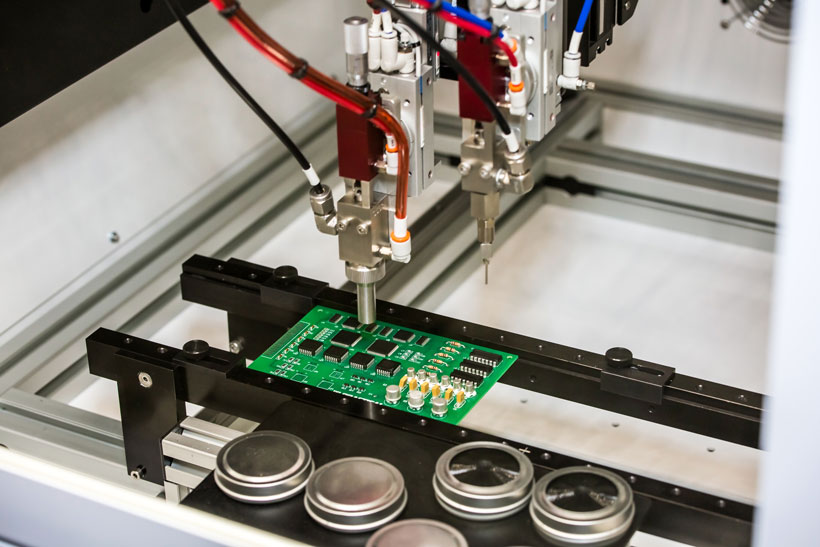
Step 4: Dispense or pour the potting material. Slowly pour the mixed compound over the PCB, starting from one corner to ensure even coverage. For complex boards, use a syringe or automated dispenser to reach tight gaps between components. Fill the enclosure just enough to fully cover all components, don’t overfill, as this wastes material and adds unnecessary bulk.
Step 5: Cure the potting compound. Place the potted PCB in a controlled environment to cure, following the material’s recommended time and temperature. Some compounds cure at room temperature, while others need gentle heat to speed up the process. Don’t move or disturb the board during curing, as this can cause shifting or uneven coverage.
Step 6: Inspect and test the final assembly. Once fully cured, inspect the potted PCB for smooth coverage, gaps, or defects. Run functional tests to confirm the board works properly after potting. Professional PCB potting services include strict quality checks at this stage to ensure every board meets performance standards.
How to Prevent Air Bubbles When Potting a PCB?
Air bubbles are the most common issue in PCB potting, but they’re completely avoidable with a few simple, proven techniques. Bubbles can weaken the protective barrier and create weak spots, so taking steps to prevent them is well worth the extra effort.
First, mix the potting compound slowly and gently. Rapid stirring whips air into the liquid, which turns into bubbles as it cures. Mix in a smooth, circular motion, and scrape the sides and bottom of the mixing container to ensure full blending without aeration.
Second, use a vacuum degassing chamber for high-precision projects. Placing the mixed compound in a vacuum chamber removes trapped air before you pour it over the PCB. This is a standard step in professional PCB potting services and is highly recommended for complex boards with small components.
Third, pour the compound slowly and at a low angle. Pouring too fast or from a height introduces air into the material. Pour close to the PCB surface, and let the compound flow naturally over the board instead of splashing onto it.
Fourth, preheat the PCB slightly before potting. Warming the board to a low, safe temperature helps the potting compound flow more smoothly and releases any air trapped in component gaps. Just be careful not to overheat sensitive electronic parts during this step.
Finally, let the poured compound settle for 5-10 minutes before curing. This gives any remaining small bubbles time to rise to the surface and pop on their own. Following these steps will give you a perfectly smooth, bubble-free potted PCB every single time.
How to Remove Potting Compound from PCB?
PCB potting removal is necessary when you need to repair, rework, or replace components on a potted PCB. While it takes more care than removing a thin conformal coating, it is fully achievable with the right tools and careful steps. The process differs for flexible silicone and rigid epoxy, so we’ve broken down clear, safe steps for both common potting materials to avoid damaging your board.
Removing Flexible PCB Potting Silicone: Silicone is softer and more pliable, making removal simpler than rigid epoxy, follow these steps for safe, damage-free peeling and cleanup.
- Prep safely and gather tools: Put on safety goggles and nitrile gloves to protect against debris and mild heat. Grab a non-conductive plastic spudger, low-heat heat gun, and soft plastic scraper to avoid scratching PCB traces.
- Loosen the silicone surface: Gently score the top layer of cured silicone with the plastic spudger; don’t press hard enough to touch the PCB or components. This breaks the surface tension and makes the material easier to peel.
- Softensilicone with low heat: Hold a heat gun 6-8 inches away from the silicone, set to low heat only. High heat will warp the PCB or burn sensitive components, so keep the heat moving constantly.
- Peel and scrape carefully: Once the silicone softens and becomes pliable, slowly peel off large chunks with your gloved hand. Use the plastic scraper to remove leftover small bits from components and the board surface.
- Final cleanup check: Wipe the board with a lint-free, static-free cloth to remove any silicone residue. Inspect for leftover material before moving on to repairs.
Removing Rigid PCB Potting Epoxy: Epoxy bonds tightly to the PCB substrate and components, so this process requires patience and gentle mechanical action, never rush to avoid costly damage.
- Prep safely and select tools: Wear safety goggles, gloves, and a dust mask to avoid epoxy dust. Prepare a low-heat heat gun, small fine-grit grinding tool, PCB-safe epoxy solvent (if needed), and non-conductive probes.
- Softens the epoxy lightly: Apply low, consistent heat to the epoxy surface to slightly soften the outer layer; do not overheat, as this can damage solder joints and internal components.
- Chip away epoxy gradually: Use the small grinding tool or non-conductive probe to chip away the epoxy slowly, working in small sections. Focus only on the potting material, not the PCB or component leads.
- Use PCB-safe solvent (optional): For stubborn, tight epoxy spots, apply a small amount of specialized epoxy solvent designed for circuit boards. Test the solvent on a tiny, hidden area first to ensure it won’t harm the board substrate.
- Clean and inspect thoroughly: Brush away epoxy dust with a static-free brush, and wipe the board clean. Check for scratches or damaged traces before starting any repair work on the PCB.
Critical Safety & Best Practices for Potting Removal
- Always work slowly and gently, hasty scraping or grinding is the top cause of PCB damage during removal.
- Never use sharp metal tools directly on the PCB surface, as they will scratch traces and break delicate components.
- If you lack experience or are working with high-value PCBs, trust professional PCB potting services for safe removal and rework to protect your assembly.
How Expensive is Potting a PCB?
The cost of PCB potting varies by key factors but is more affordable than many teams expect, especially with long-term savings from fewer failures. Main cost drivers include material type, project volume, and labor.
Basic epoxy compounds are the cheapest, while specialty materials like high-temp silicone or thermal conductive resins cost more. Larger PCBs or thicker potting layers use more material, slightly raising costs.
Small custom batches have higher per-unit costs due to setup time, while mass production lowers per-unit costs through streamlined processes and bulk pricing.
Professional services add minimal labor costs for expert mixing, pouring, curing, and quality checks. Standard industrial PCB potting averages a few dollars per unit for bulk orders and slightly more for small custom runs.
This one-time cost extends PCB lifespan by years, offering high returns. Most teams find potting costs insignificant compared to replacing failed unprotected boards in the field.
Will PCB Potting Epoxy Help with Heat Sink?
Yes, when you choose the right type of epoxy. Standard potting epoxy offers basic thermal stability, but thermally conductive PCB potting epoxy is specifically designed to work with heat sinks and improve heat dissipation.
Thermally conductive epoxy potting compounds fill gaps between components and heat sinks, eliminating air pockets that trap heat. This creates a continuous thermal path that pulls heat away from hot components like processors and power modules, transferring it to the heat sink or enclosure for efficient cooling. This is a game-changer for high-power PCBs that run hot during operation.
Even standard epoxy helps with heat management by preventing overheating from environmental factors, but thermally conductive formulas are the best choice for PCBs paired with heat sinks. They don’t interfere with heat sink function, instead, they enhance it, ensuring your PCB stays at a safe operating temperature even under heavy load. Always mention heat sink needs to your PCB potting services provider to select the right thermal-grade compound.
FAQs About PCB Potting Services
Q1: What industries use PCB potting services the most?
A1: PCB potting services are widely used in industrial automation, automotive, outdoor lighting, medical devices, aerospace, and marine electronics. Any industry that needs durable, reliable PCBs in harsh conditions relies on professional potting.
Q2: How long does PCB potting take to complete?
A2: Standard room-temperature potting takes 24-48 hours from start to finish, including curing. Heat-cured materials can be ready in a few hours, making them ideal for fast-turnaround production runs. Professional services often offer expedited options for urgent orders.
Q3: Can PCB potting be done on flexible PCBs?
A3: Yes, flexible PCBs can be potted with flexible silicone or resin compounds. These materials move with the flexible substrate without cracking, providing reliable protection without restricting the board’s flexibility.
Q4: Is PCB potting waterproof?
A4: Properly done PCB potting is fully waterproof and can even withstand prolonged water submersion, depending on the material used. It meets high IP ratings for water and dust resistance, making it perfect for outdoor and underwater devices.
Q5: Do I need professional PCB potting services, or can I do it in-house?
A5: Simple small-batch potting can be done in-house with basic tools, but professional PCB potting services ensure consistent quality, bubble-free results, and compliance with industry standards. For mass production or high-stakes projects, professional services save time and reduce waste.