





China electronic circuit board assembly plays a central role in turning electronic designs into manufacturable, testable, and scalable products for global OEMs. This article explains how a strong supply chain, sound engineering practice, and disciplined PCBA execution help buyers reduce risk, improve reliability, and move from prototype to production.
What usually makes sourcing and manufacturing difficult for customers?
- Parts are available on paper, but actual lead times shift too often.
- DFM issues are found too late, causing rework and delay.
- PCB, sourcing, assembly, and testing are handled by different vendors.
- Prototype builds go fast, but volume quality becomes unstable.
- Traceability is weak, making root-cause analysis slow and costly.
A strong manufacturer solves these problems with a system, not with promises.
- Review files early and issue DFM feedback before release.
- Optimize BOM risk with alternative parts and sourcing strategy.
- Integrate PCB fabrication, component sourcing, PCBA, and testing.
- Build stable processes for both prototypes and repeat production.
- Use digital traceability to track material lots, process status, and product history.
EBest Circuit (Best Technology) is a professional PCB and PCBA manufacturer focused on helping engineers and OEM teams bring products to market with less friction. With in-house PCB and PCBA factories, DFM pre-check, BOM optimization support, 20 years of manufacturing experience, and a digital workshop with fast traceability, EBest supports prototype, low-volume, and ongoing production projects with stronger execution. For project discussion or quotation, pls feel free to contact us via sales@bestpcbs.com.
Why Do Global Brands Choose A China Electronic Circuit Board Assembly Factory?
Global brands choose a China electronic circuit board assembly factory for one reason above all: the right supplier can combine engineering support, cost control, production scale, and supply chain depth in one place. In electronics, that combination matters more than low unit price alone.
A capable China factory is rarely just an assembly shop. The stronger ones operate as manufacturing partners. They support file review, material selection, procurement control, process planning, SMT and THT assembly, testing, and delivery management. This matters because most project failures happen between these steps, not inside one step.
Here are the main reasons global brands keep sourcing from China:
- Dense component ecosystem
China has a deep electronics supply base, which improves access to circuit board electronic components and reduces sourcing friction. - Integrated manufacturing flow
PCB fabrication, stencil making, SMT, DIP, box build, and testing can be coordinated faster. - Better prototype-to-production transition
The same team can often support NPI, pilot run, and repeat orders. - Engineering responsiveness
Strong suppliers do not simply build to print. They flag layout, pad, thermal, and assembly risks early. - Cost-to-capability balance
Buyers often get a better mix of technical support, lead time, and manufacturing value.
A quick comparison makes this clearer:
| Factor | Strong China Supplier | Fragmented Multi-Vendor Model |
|---|---|---|
| PCB + PCBA coordination | Fast | Slow |
| BOM sourcing visibility | High | Low |
| Engineering feedback | Early | Delayed |
| Prototype response | Flexible | Often rigid |
| Supply chain leverage | Strong | Limited |
For buyers, the real attraction is not geography by itself. It is operational concentration. When sourcing, engineering, and manufacturing are aligned, project risk drops. That is why a strong China electronic circuit board assembly factory remains a practical choice for global OEMs.

How To Choose A Reliable China Electronic Circuit Board Assembly Manufacturer For OEM Projects?
Choosing a reliable China electronic circuit board assembly manufacturer is a technical and commercial decision at the same time. A good website or a low quote is not enough. Buyers need evidence that the supplier can support the product, not just produce the board.
Start by checking whether the manufacturer understands your project type. Industrial control, medical electronics, UPS power boards, communication devices, and automotive electronics do not share the same process priorities. The supplier should know what matters for your application, whether that is thermal control, creepage distance, conformal coating, functional test, or long-life solder joint reliability.
Use the following evaluation points:
- Engineering review capability
Ask whether they provide DFM, DFA, and BOM risk review before production. - Factory ownership and control
In-house PCB and PCBA resources usually mean better schedule control and clearer accountability. - Certification fit
ISO9001 is baseline. ISO13485, IATF16949, and AS9100D matter for regulated sectors. - Supply chain strength
A strong sourcing network reduces risk for shortages, alternates, and counterfeit screening. - Testing capability
AOI, X-ray, flying probe, ICT, and functional test planning all matter. - Traceability level
Good traceability supports corrective action and quality consistency. - Production flexibility
The supplier should handle prototype, low-volume, and repeat orders without losing process discipline.
A useful screening table is below:
| Evaluation Point | What To Ask | Why It Matters |
|---|---|---|
| DFM support | Do you issue a pre-production DFM report? | Prevents avoidable defects |
| BOM review | Can you suggest alternates? | Reduces sourcing risk |
| Process fit | Have you built similar products? | Improves yield |
| Quality system | Which certifications do you hold? | Confirms process maturity |
| Traceability | Can you trace lots and process records? | Speeds root-cause analysis |
| Delivery model | Can you support prototype and volume? | Avoids supplier switching |
If a manufacturer only talks about price, be careful. A reliable OEM partner talks about manufacturability, part risk, process windows, test coverage, and long-term consistency. That is the more meaningful sign of a dependable China electronic circuit board assembly manufacturer.
What Processes Are Involved In Electronic Circuit Board Assembly?
Electronic circuit board assembly is a structured manufacturing chain, not a single workstation task. Each stage affects solder quality, electrical reliability, and delivery stability. When buyers understand the process, they can better evaluate suppliers and avoid unrealistic expectations.
A standard electronic circuit board assembly flow usually includes the following steps:
- File Review And Process Preparation
Gerber, BOM, centroid, assembly drawing, and special notes are checked. This stage confirms package data, polarity, panelization, stencil design, and process route. - Material Procurement And Incoming Inspection
PCB, ICs, passives, connectors, and mechanical parts are sourced and verified. Part number control is critical here, especially for electronic circuit board components with multiple approved variants. - Stencil Printing
Solder paste is printed onto pads. Paste volume accuracy directly affects solder joint formation. - SMT Placement
Pick-and-place machines mount SMD parts according to the programmed coordinates. - Reflow Soldering
The assembly passes through a controlled temperature profile to form solder joints. - THT / DIP Assembly
Through-hole parts are inserted and soldered by wave, selective, or hand soldering, depending on design. - Inspection And Testing
AOI, X-ray, flying probe, ICT, or functional checks verify product quality. - Cleaning, Coating, Final Assembly, And Packaging
Depending on product needs, waterproofing electronic circuit boards, conformal coating, or box-build steps may follow.
A simplified process map looks like this:
| Stage | Main Objective |
|---|---|
| DFM + process planning | Prevent build risk |
| Sourcing + IQC | Control material quality |
| Solder paste printing | Ensure joint consistency |
| SMT + reflow | Build core connections |
| THT soldering | Complete mixed assembly |
| Inspection + test | Catch defects |
| Final assembly | Prepare for delivery |
Some buyers still think soldering electronic circuit boards is the main difficulty. In reality, success depends on how well the full chain is managed. The strongest suppliers treat assembly as a controlled system, not an isolated operation. That is what keeps quality stable in China electronic circuit board assembly projects.
How To Calculate Current Capacity And Trace Width For Electronic Circuit Boards?
Current capacity and trace width are basic engineering questions, but they directly affect safety, temperature rise, voltage drop, and long-term reliability in electronic circuit boards. If the trace is too narrow, resistive heating increases. If the trace is overdesigned, routing space is wasted.
In practice, engineers often estimate width based on IPC guidance, copper thickness, allowable temperature rise, and whether the trace is on an outer or inner layer. Outer layers dissipate heat better, so they usually carry more current at the same width.
A practical design relationship starts with resistance:

Where:
- R = trace resistance
- � = resistivity of copper
- L = trace length
- A = cross-sectional area
Power loss follows:

This is why a narrow high-current trace heats up quickly. Higher current and higher resistance both increase dissipation.
Here is a simple engineering reference for outer-layer traces at moderate temperature rise:
| Copper Weight | Current | Typical Minimum Trace Width |
|---|---|---|
| 1 oz | 1 A | 0.25 mm |
| 1 oz | 3 A | 0.80 mm |
| 1 oz | 5 A | 1.50 mm |
| 2 oz | 5 A | 0.80 mm |
| 2 oz | 10 A | 2.00 mm |
These are not universal values. Final design still depends on:
- Ambient temperature
- Trace length
- Copper thickness
- Allowed temperature rise
- Airflow
- Internal vs outer layer
- Safety margin
For power products such as china oem ups inverter electronic circuit board assembly, this topic is especially important because DC bus traces, battery paths, and switching nodes often carry high current. Engineers may use wider copper pours, heavier copper, parallel traces, or bus-bar support instead of relying on standard routing rules alone.
A sound rule is simple: calculate first, then validate thermally. Current design for electronic circuit boards should never be based on guesswork if the board handles power.
How To Calculate Power Loss And Thermal Dissipation In Electronic Circuit Board Design?
Power loss and thermal dissipation are among the most practical parts of electronic circuit board design. If heat is not managed well, even a board that passes initial test may fail in the field. Thermal design is therefore not a cosmetic improvement. It is a reliability requirement.
The first step is to identify the main heat sources:
- Power MOSFETs
- IGBTs
- Linear regulators
- DC-DC converters
- Shunt resistors
- Transformers
- Diodes
- High-current copper paths
Basic conduction loss can be estimated by:
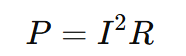
For a MOSFET:

For switching devices, total loss also includes switching loss:

Thermal rise can then be estimated from thermal resistance:

Where:
- ΔT = temperature rise
- P = power dissipation
- θ = thermal resistance from device to ambient
Example:
If a device dissipates 2 W and the effective thermal resistance is 25°C/W, then:

If ambient is 40°C, the device junction region may approach 90°C or higher depending on stack-up and cooling conditions.
Useful thermal control methods include:
- Wider copper pours for heat spreading
- Thermal vias under hot packages
- Thicker copper for high-current sections
- Metal-core or IMS structures when heat density is high
- Heatsinks or chassis coupling
- Spacing optimization around hot parts
- Airflow path planning
A compact design summary is below:
| Thermal Issue | Design Action |
|---|---|
| High copper loss | Increase width or copper weight |
| Hot power device | Add thermal vias and copper area |
| High local temperature | Improve spacing and airflow |
| Repeated overload risk | Add margin in component rating |
| Uneven heat spread | Use plane balancing |
For UPS, inverter, and industrial control boards, thermal design must be addressed early. That is especially true for china oem ups pcba inverter electronic circuit board assembly, where switching loss, magnetic heating, and current density all interact. Good thermal design protects not only components, but also solder joints, laminate life, and overall product stability.
What Are The Key Electronic Circuit Board Components Inside Modern PCBA?
Modern PCBA is made from far more than a bare electronic printed circuit board. The final assembly is a complete electrical and mechanical system built from many functional blocks. Understanding these blocks helps buyers evaluate both design complexity and sourcing difficulty.
The key electronic circuit board components usually include the following categories:
- Integrated Circuits (ICs)
MCUs, processors, memory, drivers, interface chips, and power controllers. - Passive Components
Resistors, capacitors, inductors, ferrite beads, and filters. - Power Devices
MOSFETs, IGBTs, rectifiers, regulators, and protection parts. - Connectors
Board-to-board, wire-to-board, RF, power, and I/O connectors. - Electromechanical Parts
Relays, switches, fans, and transformers. - Protection Components
TVS diodes, fuses, MOVs, current sensors, and isolation devices. - Support Materials
Solder paste, flux, underfill, conformal coating, and thermal interface materials.
A quick component-level view:
| Component Group | Typical Function |
|---|---|
| MCU / control IC | Logic and system control |
| Resistor / capacitor | Bias, filter, timing, energy storage |
| Inductor / transformer | Energy conversion |
| MOSFET / IGBT | Power switching |
| Connector | Signal or power interface |
| TVS / fuse | Protection |
In sourcing terms, not all components behave the same. Some are stable catalog parts. Others are allocation-sensitive, lifecycle-sensitive, or region-dependent. That is why a strong supply chain matters. A manufacturer with BOM optimization ability can identify risk early and suggest approved alternatives before production is blocked.
For buyers, this is a practical point. The performance of electronics circuit boards depends not only on design, but also on whether the right parts are sourced, verified, stored, assembled, and tested correctly. In that sense, component control is one of the foundations of successful China electronic circuit board assembly.
What Is China OEM UPS Inverter Electronic Circuit Board Assembly Used For?
China OEM UPS inverter electronic circuit board assembly is mainly used in power conversion systems where stable backup power and controlled AC output are required. This includes not only classic UPS products, but also many adjacent applications in energy storage, industrial backup, and power conditioning.
An inverter PCBA inside a UPS typically handles control, switching, sensing, protection, and power conversion tasks. It may include gate-drive circuits, MCU control, voltage feedback, current sensing, communication interfaces, and protection logic. In more advanced designs, the board also supports battery management, remote monitoring, and fault diagnosis.
Common application fields include:
- Data Centers
UPS systems protect servers and storage from power interruption. - Telecom Infrastructure
Backup power keeps communication networks active during grid loss. - Medical Equipment
Critical systems need continuous and controlled power. - Industrial Automation
PLC cabinets, control systems, and factory equipment often require backup support. - Security And Monitoring
Surveillance and access systems benefit from stable emergency power. - Energy Storage And Hybrid Power
Some inverter platforms share architecture with UPS power stages.
A simple application table:
| Application | Why Inverter PCBA Matters |
|---|---|
| Data center UPS | Stable backup AC output |
| Telecom power | Network continuity |
| Medical support equipment | High reliability requirement |
| Industrial control | Reduced shutdown risk |
| Security system | Power continuity |
From a manufacturing viewpoint, china oem ups inverter electronic circuit board assembly service usually requires closer control than standard consumer boards. These products often involve:
- Higher voltage spacing
- Thermal management needs
- Power-device solder quality
- Protective coating
- Burn-in or functional loading
- Stronger traceability
This is why buyers in the UPS sector often prefer suppliers with both power-electronics experience and a stronger component network. For this category, manufacturing discipline is as important as assembly capacity.
How To Test Electronic Circuit Board Reliability Before Product Delivery?
Testing electronic circuit boards before delivery is not about checking whether the board powers on once. It is about reducing the chance of hidden defects, intermittent failure, and field return. Reliability testing should be layered, with each method targeting a different risk.
The right test plan depends on the product, but a solid approach often includes the following methods:
- AOI (Automated Optical Inspection)
Detects polarity errors, missing parts, skew, bridging, and visible solder defects. - X-Ray Inspection
Useful for BGAs, QFNs, hidden solder joints, and void analysis. - Flying Probe Or ICT
Verifies continuity, isolation, and certain component-level conditions. - Functional Test
Confirms the board operates under defined input and output conditions. - Burn-In Or Aging Test
Exposes early-life weaknesses under stress or continuous operation. - Environmental Or Special Tests
Depending on the project, this may include vibration, humidity, thermal cycling, or waterproofing electronic circuit boards through coating validation.
A simple test matrix is below:
| Test Method | Main Purpose |
|---|---|
| AOI | Visible assembly defect screening |
| X-Ray | Hidden solder verification |
| Flying probe / ICT | Electrical continuity check |
| Functional test | Product behavior verification |
| Burn-in | Early failure screening |
| Coating inspection | Surface protection validation |
For engineers asking how to test electronic circuit board assemblies effectively, the answer is to combine process inspection with electrical and functional verification. No single test catches every risk. For example, AOI will not reveal all internal solder voids, and functional test may not reveal latent process weakness if coverage is too narrow.
That is why testing electronic circuit boards should be planned at design stage whenever possible. Test points, fixture logic, firmware states, and pass/fail thresholds should be prepared early. Good testing is not added at the end. It is built into the product strategy.
Why Is Contract Manufacturing For Electronic Printed Circuit Board Important For OEM Electronics?
Contract manufacturing for electronic printed circuit board projects is important because most OEMs do not want to build an internal factory for every product line. They want to focus on design, market access, software, system integration, or brand growth, while relying on specialized manufacturers for execution.
The value of contract manufacturing goes beyond labor. A strong manufacturing partner provides:
- Process engineering
- Procurement control
- Quality management
- Capacity flexibility
- Compliance support
- Delivery planning
- Cost structure improvement
This is especially important when products move through multiple phases. The needs of EVT, DVT, PVT, pilot run, and recurring production are not identical. A contract manufacturing partner can help bridge those phases without forcing the OEM to rebuild the supply chain every time.
Here is why the model works well for OEM electronics:
| OEM Need | Contract Manufacturing Advantage |
|---|---|
| Faster market launch | Existing process and factory setup |
| Lower fixed cost | No in-house line investment |
| Better sourcing reach | Stronger supplier network |
| Flexible production volume | Prototype to mass support |
| Quality discipline | Established control plans |
For products involving electronic circuit board assembly, OEM buyers also benefit from process knowledge they may not fully maintain in-house. This includes soldering electronic circuit boards, fixture design, traceability systems, thermal process windows, and yield improvement methods.
The strongest contract manufacturers do more than build. They help prevent risk. That is why contract manufacturing remains important for OEM electronics, especially when reliability, speed, and supply-chain resilience all matter at the same time.
Why Choose EBest Circuit (Best Technology) For China Electronic Circuit Board Assembly Services?
Choosing a PCBA partner should come down to whether the supplier can help your team make better manufacturing decisions, not just whether they can place parts on a board. EBest Circuit (Best Technology) is built around that idea.
For China electronic circuit board assembly services, EBest combines engineering support, in-house manufacturing control, sourcing capability, and practical execution for prototype and low-volume OEM projects. The goal is simple: help engineers move faster while lowering avoidable manufacturing risk.
Key strengths include:
- One-Stop Integration
PCB fabrication, parts sourcing, PCBA assembly, and testing are coordinated in one system. - Prototype And Low-Volume Flexibility
This is valuable for product validation, engineering change, and faster design iteration. - Complete Certifications
ISO9001, ISO13485, IATF16949, and AS9100D support multi-industry requirements. - In-House Factory + Supplier Network
Our PCB and PCBA factories work with 1000+ supply-chain partners to strengthen quality and lead-time control. - 20 Years Of Experience
We have supported 10,000+ engineers and served 1,800+ customers across different industries. - Fast PCBA Delivery
Many projects can be supported with about 1.5-week rapid turnaround, depending on product complexity and material readiness.
For OEMs looking for electronic circuit board manufacturers that understand both engineering and delivery, EBest offers a more complete model than a simple assembly vendor. For quotation, file review, or project discussion, contact sales@bestpcbs.com.
In closing, China electronic circuit board assembly is far more than a sourcing phrase; it represents the full path from engineering files and component strategy to manufacturing control, testing discipline, and final product reliability. This article has shown how a strong supply chain supports better OEM outcomes through factory selection, assembly process control, current and thermal calculation, component management, UPS inverter applications, and pre-delivery testing.
EBest Circuit (Best Technology) stands out with DFM and BOM optimization capability, in-house PCB and PCBA factories, 1000+ supply-chain partners, digital traceability, 20 years of manufacturing experience, and rapid PCBA turnaround for prototype and low-volume projects. To discuss your next China electronic circuit board assembly project, pls contact us via sales@bestpcbs.com.
FAQs About China Electronic Circuit Board Assembly
1. How do I choose a reliable China PCBA manufacturer?
When selecting a China electronic circuit board assembly partner, engineers usually evaluate several criteria: manufacturing capability, quality control system, engineering support, and communication efficiency. Reliable manufacturers typically provide DFM review, component sourcing assistance, automated inspection processes such as AOI or X-ray, and international certifications like ISO9001 or IATF16949.
2. What files are required for China electronic circuit board assembly?
To start a PCB assembly project, manufacturers normally require a set of engineering documents. These usually include Gerber files for PCB fabrication, a Bill of Materials (BOM) listing all components, pick-and-place files for SMT machines, and assembly drawings. Providing complete documentation helps avoid manufacturing errors and ensures faster production scheduling.
3. What should engineers check before sending PCB designs to China for assembly?
Before submitting a PCB design for assembly, engineers should review manufacturability and testability. Important checks include component spacing, solder mask clearance, footprint accuracy, and thermal management for high-power components. Many professional PCBA suppliers also provide Design for Manufacturing (DFM) feedback to optimize the design before mass production.