





What is 0.4 inches converted to millimeters (0.4 in to mm)?
0.4 inches is exactly equal to 10.16 millimeters. This conversion is based on the international standard ISO 31-1, which defines 1 inch as 25.4 millimeters.
The calculation formula is straightforward: millimeters = inches × 25.4. For 0.4 inches, the math is 0.4 × 25.4 = 10.16 mm.
Why is 0.4 in to mm conversion critical for PCB engineers?
0.4 in to mm conversion is non-negotiable for PCB engineers because precision directly impacts design integrity, component compatibility, and manufacturing success.
PCBs are used in high-stakes industries like medical devices, aerospace, and industrial equipment, where even a 0.1 mm error can cause assembly failures.
Unlike general unit conversion, PCB-specific conversion requires adherence to tight tolerances, making accurate 0.4 in to mm calculation a core skill for engineers.
Additional relevant conversions, such as 0.4 in to cm or 0.4 mm to in, also play a role in selecting materials and designing enclosures for compact or heavy-duty PCBs.
How to convert 0.4 in to mm accurately for PCB applications?
To convert 0.4 in to mm accurately for PCB design and manufacturing, follow these step-by-step instructions, which also apply to related conversions like 0.4 in to cm.
Step 1: Use the exact conversion factor
Always use 25.4 as the exact conversion factor (1 inch = 25.4 mm) per BIPM and NIST standards. Never round this value for PCB work.
For 0.4 in to cm, use the factor 2.54 (1 inch = 2.54 cm) to get 1.016 cm—critical for small-form-factor PCB designs.
Step 2: Apply the formula for 0.4 in to mm
Plug 0.4 inches into the formula: 0.4 × 25.4 = 10.16 mm. Use a calibrated calculator to avoid arithmetic errors.
For reverse conversion, 0.4 mm to in, use the formula: inches = millimeters ÷ 25.4, resulting in 0.4 ÷ 25.4 ≈ 0.0157 in.
Step 3: Verify with calibrated tools
Cross-check 0.4 in to mm results with a digital caliper (resolution ≥0.01 mm) to ensure accuracy for PCB manufacturing.
Document conversions in design files (Gerber/ODB++) to maintain consistency across teams, including related values like 0.4 inch in fraction (2/5 in) for reference.
0.4 In to cm
0.4 inches converts to exactly 1.016 centimeters (0.4 × 2.54 = 1.016 cm). This value is frequently used for small PCBs in medical wearables or portable industrial sensors.
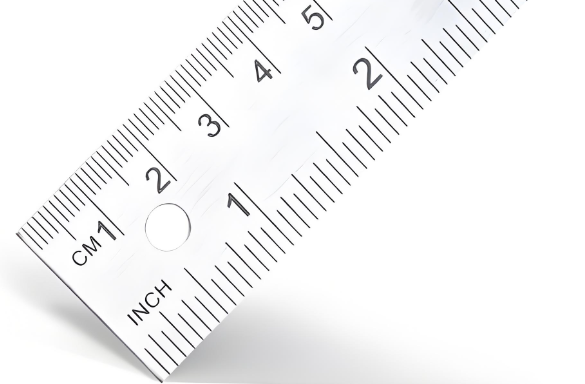
When designing PCBs for devices with tight space constraints, converting 0.4 in to cm helps engineers align components with enclosure dimensions.
A related useful conversion is 0.4 cm to mm (4 mm), which is often referenced for component lead spacing in compact PCB designs.
0.4 Inch in Fraction
0.4 inches is equivalent to 2/5 of an inch (4/10 simplified) or 13/32 of an inch when rounded to the nearest common fractional increment used in PCB manufacturing.
Many older PCB components list dimensions in fractions, so converting 0.4 inch in fraction to decimal (0.4 in) and then to mm (10.16 mm) ensures compatibility.
For example, a component with a 2/5 inch (0.4 in) footprint converts to 10.16 mm, which engineers must account for when designing PCB pads and traces.
Common unit conversion in PCB manufacturing
PCB manufacturing relies on consistent unit conversion between imperial (inches) and metric (mm, cm) units, with 0.4 in to mm being one of the most frequently used conversions.
Below are other common unit conversions PCB engineers encounter, including the long-tail keywords we’ve covered.
| Imperial Unit | Metric Conversion (mm) | Metric Conversion (cm) | Fractional Equivalent (Inches) | PCB Application |
| 0.4 in | 10.16 mm | 1.016 cm | 2/5 in (13/32 in rounded) | Thick PCBs for industrial/aerospace use |
| 0.0157 in | 0.4 mm | 0.04 cm | 1/64 in (rounded) | Ultra-thin PCBs for medical devices |
| 0.062 in | 1.5748 mm | 0.15748 cm | 1/16 in | Standard consumer electronics PCBs |
| 0.125 in | 3.175 mm | 0.3175 cm | 1/8 in | Mid-range PCB thickness for automotive use |
Other useful conversions include0.4 mil to mm (0.01016 mm) for PCB trace thickness and 0.4 inch to mils (400 mils) for solder mask thickness.
How does 0.4 in (10.16 mm) relate to PCB thickness standards?
0.4 inches (10.16 mm) is a non-standard PCB thickness, but it is widely used in specialized applications requiring robust mechanical strength.
It is important to distinguish between 0.4 inches (10.16 mm) and 0.4 mm PCBs, as these are drastically different dimensions.
| PCB Thickness (in) | PCB Thickness (mm) | Common Applications | Typical Layer Count |
| 0.4 in | 10.16 mm | Industrial equipment, aerospace enclosures, heavy-duty sensors | 8-16 layers |
| 0.016 in | 0.4 mm | Medical devices, TWS headphones, micro-sensors | 2-6 layers |
| 0.062 in | 1.57 mm | Standard consumer electronics, automotive PCBs | 4-8 layers |
What are the common mistakes when converting 0.4 in to mm for PCBs?
Even experienced engineers make mistakes when converting 0.4 in to mm, with many errors tied to mismanaging long-tail conversions like 0.4 in to cm or 0.4 mm to in.
Mistake 1: Rounding the conversion factor
Using 25 mm instead of 25.4 mm for 1 inch leads to a 0.16 mm error (10 mm vs. 10.16 mm) for 0.4 in to mm conversion. This error exceeds typical PCB tolerances (±0.05 mm), causing component misalignment or enclosure fit issues.
Mistake 2: Confusing 0.4 in to mm with 0.4 mm to in
Failing to distinguish between 0.4 in (10.16 mm) and 0.4 mm (0.0157 in) is a catastrophic error, as the two represent drastically different PCB thicknesses. This mistake often occurs when engineers rush through 0.4 mm to in conversion or mix up imperial and metric units in design files.
Mistake 3: Ignoring 0.4 inch in fraction context
When working with legacy components, misinterpreting 0.4 inch in fraction (2/5 in) as a decimal can lead to incorrect pad or trace dimensions.
Always cross-verify fractional and decimal values before finalizing PCB designs.
Difference between 0.4 in to mm and 0.4 mm to in conversion for PCBs
The key difference between 0.4 in to mm and 0.4 mm to in conversion lies in the direction of the conversion and their respective PCB applications.
This distinction is critical for avoiding costly design errors, especially in specialized industries like medical and aerospace.
| Conversion Type | Result | PCB Thickness Category | Key Applications | Conversion Formula |
| 0.4 in to mm | 10.16 mm | Thick, heavy-duty | Aerospace avionics, industrial control panels | mm = in × 25.4 |
| 0.4 mm to in | ≈0.0157 in | Ultra-thin, compact | Medical wearables, micro-sensors, TWS devices | in = mm ÷ 25.4 |
Additional context: 0.4 in to cm (1.016 cm) is often used to bridge these two categories, helping engineers design enclosures that fit both thick and thin PCBs.
FAQs
1. Is 0.4 inches exactly 10.16 millimeters?
Yes, 0.4 inches is exactly 10.16 millimeters. Using the international standard conversion factor of 25.4 (1 in = 25.4 mm), 0.4 × 25.4 = 10.16 mm. This is an exact value, not an approximation, critical for PCB precision.
2. How do I convert 0.4 in to cm accurately for PCB design?
To convert 0.4 in to cm accurately, use the factor 2.54 (1 in = 2.54 cm). The calculation is 0.4 × 2.54 = 1.016 cm. Always use this exact factor for PCB layout and enclosure design to avoid errors.
3. What is 0.4 inch in fraction, and why does it matter for PCBs?
0.4 inch in fraction is 2/5 of an inch (or 13/32 in when rounded to common PCB fractional increments). It matters because many legacy components and datasheets use fractional measurements, so converting to decimal (0.4 in) and then to mm (10.16 mm) ensures compatibility.
4. What is 0.4 mm to in, and when would a PCB engineer need this conversion?
0.4 mm to in is approximately 0.0157 inches. PCB engineers need this conversion when working with ultra-thin PCBs (e.g., medical devices, micro-sensors) to ensure components fit and the board meets enclosure requirements.
5. What are the most common unit conversion mistakes in PCB manufacturing?
The most common mistakes are rounding the 25.4 conversion factor, confusing 0.4 in to mm with 0.4 mm to in, and ignoring tolerances when converting units like 0.4 in to cm. These errors lead to rework, component failure, and increased costs.
6. Are there tools to automate 0.4 in to mm and related conversions for PCBs?
Yes, PCB design software (Altium, KiCad, Eagle) has built-in automation for 0.4 in to mm, 0.4 in to cm, and 0.4 mm to in conversions. Excel/Google Sheets templates with pre-built formulas also streamline these calculations for design reviews.
7. How does 0.4 in to mm conversion apply to multi-layer PCBs?
For multi-layer PCBs, 0.4 in to mm conversion (10.16 mm) helps engineers calculate total board thickness, including substrate and copper layers. This ensures the board fits in enclosures and meets mechanical strength requirements for high-layer-count designs (8-16 layers).