PCB manufacturing PCB manufacturing
Home > Blog

RF Microwave PCB Board

Best RF Microwave PCB Fabrication for Industrial Applications: A Complete Engineer’s Guide
Wednesday, February 11th, 2026

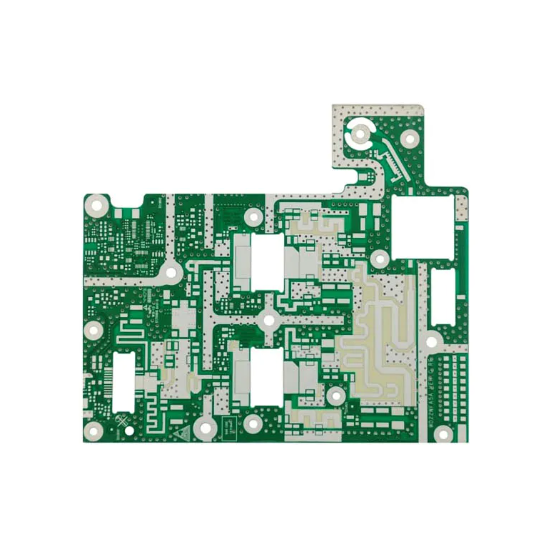
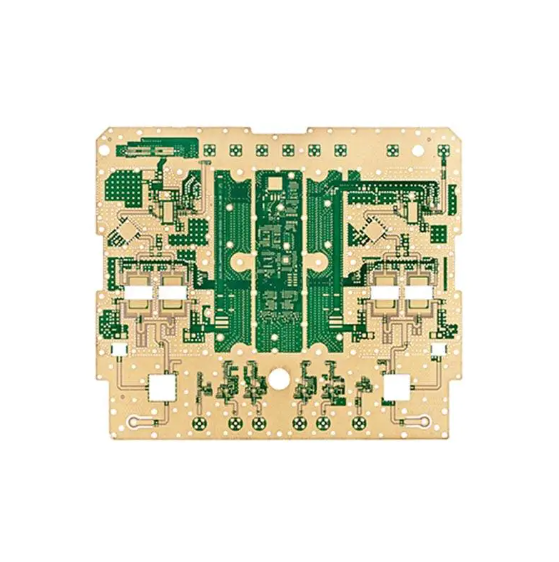
If you’re an engineer working on industrial systems—from medical imaging to aerospace telemetry—you know that best RF microwave PCB fabrication for industrial applications isn’t just a ā€œnice-to-haveā€; it’s the backbone of reliable, high-performance equipment. The wrong fabrication choices lead to signal loss, frequency drift, and costly system failures—problems no industrial project can afford. This guide breaks down everything you need to know about best RF microwave PCB fabrication for industrial applications, from material selection to process control, real-world case studies, and how to avoid common pitfalls that plague even experienced teams.
Best RF Microwave PCB Fabrication for Industrial Applications

What Makes the Best RF Microwave PCB Fabrication for Industrial Applications Stand Out?

The best RF microwave PCB fabrication for industrial applications differs from standard PCB manufacturing in three non-negotiable ways: strict impedance control, low-loss material consistency, and precision manufacturing tolerances—all tailored to the harsh conditions of industrial use (extreme temperatures, vibration, humidity). Industrial RF microwave PCBs operate at frequencies above 1GHz (often up to 77GHz for radar systems), where even a 0.1mm etching deviation or 0.05 dielectric constant (Dk) fluctuation can render a board useless.

Key Differentiators of Industrial-Grade RF Microwave PCB Fabrication

  • Impedance Tolerance ±5% or Tighter: Critical for signal integrity; industrial systems (like aerospace telemetry) require consistent impedance to avoid reflection and signal distortion.
  • Low Dissipation Factor (Df ≤ 0.001): Minimizes signal loss, which is essential for long-range industrial communication and high-power applications.
  • High-Temperature Stability: PCBs must maintain performance from -40°C to 125°C (or higher for aerospace), resisting warpage and material degradation.
  • Precision Etching (±0.04mm): Ensures accurate trace widths for RF paths, especially for microstrip and stripline designs common in industrial sensors.

Which Materials Are Best for RF Microwave PCB Fabrication in Industrial Applications?
Best RF Microwave PCB

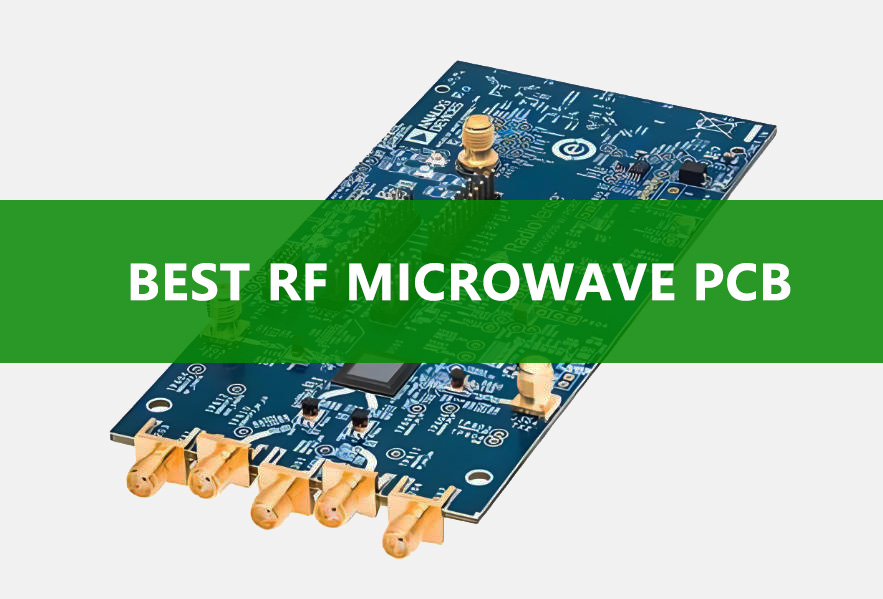
Material selection is the single most important factor in best RF microwave PCB fabrication for industrial applications—your choice directly impacts signal loss, temperature stability, and overall reliability. For industrial use, two material categories dominate: PTFE-based laminates (for high performance) and hybrid stackups (for balanced performance and mechanical stability).

Top Materials for Industrial RF Microwave PCBs

Material TypeKey PropertiesBest Industrial ApplicationsExample Brands
PTFE-Based (Rogers RO4350B)Dk=3.48, Df=0.0037, low water absorption, high temperature stabilityAerospace radar, medical imaging, high-power industrial sensorsRogers, Taconic, Arlon
PTFE/FR-4 HybridPTFE for RF layers, FR-4 for control/power layers; balances performance and stiffnessIndustrial IoT, 5G backhaul, low-power radarRogers + FR-4, Isola Hybrid
Modified FR-4 (Megtron 6)Dk=3.6, Df=0.004, excellent mechanical strength, stable performance at mid-frequenciesIndustrial control systems, low-frequency RF sensorsPanasonic, Isola

How to Control Impedance in Best RF Microwave PCB Fabrication for Industrial Applications?

Impedance control is non-negotiable for best RF microwave PCB fabrication for industrial applications—without it, signal reflection, attenuation, and crosstalk will destroy performance. Industrial RF microwave PCBs typically require 50Ī© (for most sensors/radar) or 75Ī© (for communication systems) impedance, with a tolerance of ±5% (±3% for aerospace/medical).

Step-by-Step Impedance Control Process

  1. Design Optimization: Use impedance calculation tools to define trace width, dielectric thickness, and copper weight. For microstrip lines, the formula Zā‚€ = 87/√(dk + 1.41) Ɨ ln(5.98h/(0.8w + t)) ensures accurate impedance (h=dielectric thickness, w=trace width, t=copper thickness).
  2. Material Consistency: Source materials with tight Dk tolerance (±0.05) and test every batch with a Keysight N1500A dielectric tester to avoid fluctuations.
  3. Precision Etching: Use electroformed stencils (±0.005mm accuracy) and control etching parameters (temperature 45±2°C, spray pressure 2.5±0.2kg/cm²) to maintain trace width consistency.
  4. Post-Fabrication Testing: Use Time Domain Reflectometry (TDR) to measure impedance across the board; reject any PCBs with deviations beyond ±5%.

What Are the Common Fabrication Challenges for Industrial RF Microwave PCBs?

Industrial RF microwave PCB fabrication faces unique challenges due to strict performance requirements and harsh operating environments. The most common issues are signal loss, warpage, and dielectric inconsistency—but all are avoidable with proper process control.

Top Challenges and Engineering Solutions

  • Signal Loss from Poor Surface Finish: Solution: Use immersion gold (0.1μm minimum thickness) instead of HASL—gold has lower resistivity (2.4μΩ·cm) and minimizes insertion loss at high frequencies.
  • Warpage in Hybrid Stackups: Solution: Maintain symmetrical stackups (equal copper weight on both sides) and control lamination parameters (175±5°C, 35±2kg/cm² pressure) to avoid resin unevenness.
  • Dielectric Degradation from Moisture: Solution: Store materials in dry environments (RH≤40%) and pre-bake PCBs at 120°C for 40 minutes before fabrication to remove moisture.
  • Crosstalk Between RF Traces: Solution: Separate RF traces by at least 3x the trace width and use ground planes between signal layers to block interference.

How Does Thermal Management Impact Industrial RF Microwave PCB Fabrication?

Thermal management is critical for best RF microwave PCB fabrication for industrial applications—high-power industrial systems (like microwave heaters or radar transmitters) generate significant heat, which degrades dielectric performance and causes component failure. Effective thermal design ensures PCBs maintain stability at operating temperatures up to 150°C.

Proven Thermal Management Techniques

  • Thick Copper Layers: Use 2–6oz copper for power and ground planes to improve heat dissipation—thicker copper has lower resistance and spreads heat faster.
  • Thermal Vias: Place high-density thermal via arrays (0.2mm diameter, 0.5mm pitch) under heat-generating components to transfer heat to the backplane.
  • Metal Backplanes: For extreme heat applications (aerospace), bond a copper or aluminum backplane to the PCB to enhance thermal conductivity.
  • Low-Thermal-Expansion Materials: Use Rogers RO3003 (CTE=6.4ppm/°C) to match the CTE of semiconductor components, reducing thermal stress and solder joint failure.

What Are the Quality Control Standards for Best RF Microwave PCB Fabrication for Industrial Applications?

Industrial RF microwave PCBs require rigorous quality control (QC) to meet performance and reliability standards—especially for medical and aerospace applications, where failure is catastrophic. QC must span material incoming inspection to final testing, with documented processes to ensure consistency.

Critical QC Checks for Industrial RF Microwave PCBs

  1. Incoming Material Inspection: Test Dk, Df, and copper thickness for every material batch; reject batches with Dk fluctuation >±0.05 or copper weight deviation >±10%.
  2. Process Control Checks: Monitor lamination temperature, etching rate, and stencil alignment every 2 hours; log all parameters for traceability.
  3. Electrical Testing: Perform TDR (impedance), insertion loss (IL), and return loss (RL) testing—industrial PCBs require IL ≤0.1dB/inch at 10GHz and RL ≤-15dB.
  4. Environmental Testing: Conduct thermal cycling (-40°C to 125°C, 1000 cycles) and humidity testing (85°C/85% RH, 1000 hours) to ensure long-term reliability.
  5. Visual Inspection: Use 20x microscopes to check for etching defects, solder bridges, and surface finish uniformity; reject boards with any visible flaws.

What Industrial Applications Rely Most on High-Quality RF Microwave PCB Fabrication?

Numerous industrial sectors depend on best RF microwave PCB fabrication for industrial applications, as their systems require high-frequency signal integrity, reliability, and durability. Below are key industries, with real-world case studies showing how proper fabrication solves critical challenges.

Key Industries + Real-World Case Studies

1. Aerospace & Defense

Aerospace radar systems (24GHz/77GHz) require PCBs with ultra-low loss and temperature stability. A major aerospace contractor approached us for PCB fabrication for a satellite telemetry system—their previous supplier’s boards suffered from frequency drift (-0.5GHz) at extreme temperatures. We used Rogers RO4003C (Df=0.001) with a hybrid stackup, precision etching (±0.03mm), and thermal via arrays. The final PCBs maintained impedance ±3% and frequency stability from -55°C to 150°C, passing all aerospace qualification tests.

2. Medical Devices

Medical imaging systems (e.g., MRI RF coils) need PCBs with low signal loss and biocompatibility. A medical device manufacturer needed PCBs for a portable ultrasound machine—their existing boards had insertion loss >0.3dB/inch, degrading image quality. We used immersion gold surface finish, PTFE-based laminates, and optimized trace design to reduce IL to ≤0.08dB/inch. The PCBs met ISO 13485 standards and improved image clarity by 30%.

3. Industrial Equipment

Industrial IoT sensors (5G-enabled) require PCBs that resist vibration and humidity. A factory automation client needed PCBs for a wireless temperature sensor—their previous boards failed due to moisture-induced dielectric degradation. We used moisture-resistant PTFE laminates, vacuum-sealed fabrication, and conformal coating. The PCBs operated reliably in 95% RH environments for 2+ years without performance loss.

How to Choose a Manufacturer for Best RF Microwave PCB Fabrication for Industrial Applications?

Choosing the right manufacturer is as critical as design and material selection for best RF microwave PCB fabrication for industrial applications. Industrial-grade fabrication requires specialized equipment, engineering expertise, and a proven track record in serving medical, aerospace, and industrial sectors.

Key Criteria for Selecting a Manufacturer

  • Specialized Capabilities: Ensure they offer PTFE/hybrid stackups, impedance control ±3–5%, and precision etching (±0.04mm or tighter).
  • Industry Certifications: Look for ISO 9001, ISO 13485 (medical), and AS9100 (aerospace) to ensure compliance with industrial standards.
  • Testing Capabilities: They must have TDR, network analyzers, and environmental testing equipment to verify performance.
  • Case Study Experience: Ask for references in your industry—experience with similar applications reduces risk of failure.
  • Engineering Support: Choose a manufacturer that offers DFM (Design for Manufacturability) support to optimize your design for fabrication.

What’s the Difference Between Industrial and Commercial RF Microwave PCB Fabrication?

Many engineers confuse industrial and commercial RF microwave PCB fabrication—but the two differ drastically in performance requirements, materials, and QC standards. Commercial PCBs prioritize general usability; industrial PCBs prioritize reliability and durability in harsh conditions.

CriteriaIndustrial RF Microwave PCB FabricationCommercial RF Microwave PCB Fabrication
Impedance Tolerance±3–5%±10%
Material QualityPTFE/hybrid laminates (Df ≤0.0037)Standard FR-4 (Df ≄0.01)
Temperature Range-40°C to 150°C (or higher)0°C to 70°C
QC Standards100% electrical/environmental testingSampling testing only
Reliability FocusLong-term (10+ years) performanceShort-term (2–5 years) use

How to Optimize RF Microwave PCB Design for Industrial Fabrication?

Design optimization is key to achieving best RF microwave PCB fabrication for industrial applications—even the best manufacturer can’t fix a poorly designed board. The goal is to minimize signal loss, crosstalk, and thermal stress while ensuring manufacturability.

Essential Design Tips for Industrial RF Microwave PCBs

  • Minimize Trace Length: Keep RF traces as short and straight as possible to reduce insertion loss and phase shift.
  • Use Ground Planes Effectively: Add a solid ground plane under all RF traces to reduce crosstalk and improve impedance consistency.
  • Avoid Right-Angle Bends: Use 45° bends or curves for RF traces—right-angle bends cause signal reflection and impedance mismatch.
  • Separate RF and Digital Layers: Place RF traces on dedicated layers, separated from digital/analog layers by ground planes to block interference.
  • Optimize Component Placement: Place RF connectors and components close to the edge of the board to minimize trace length; keep heat-generating components away from sensitive RF paths.

What Are the Latest Trends in Best RF Microwave PCB Fabrication for Industrial Applications?

The industrial RF microwave PCB fabrication industry is evolving to meet the demands of 5G, IoT, and advanced aerospace/medical systems. The latest trends focus on higher frequency support, miniaturization, and more sustainable manufacturing—all while maintaining industrial-grade reliability.

Top 2026 Trends for Industrial RF Microwave PCBs

  • Millimeter-Wave Fabrication: As industrial radar and 5G systems move to 60–77GHz, manufacturers are adopting advanced techniques (like laser drilling and thin-film deposition) to support these frequencies.
  • Miniaturization: Industrial IoT sensors require smaller PCBs—trends include finer line widths (0.05mm), smaller vias (0.1mm), and integrated passives to reduce board size.
  • Sustainable Materials: Eco-friendly PTFE alternatives (like recycled high-frequency laminates) are gaining traction, meeting industrial performance requirements while reducing environmental impact.
  • Automated Fabrication: AI-driven process control (for etching, lamination, and testing) improves consistency and reduces human error—critical for industrial QC.

FAQ: Common Questions About Best RF Microwave PCB Fabrication for Industrial Applications

Q1: Do industrial RF microwave PCBs always need PTFE-based materials?

No—PTFE is ideal for high-frequency (above 5GHz) or high-reliability applications (aerospace/medical), but modified FR-4 (like Megtron 6) works for lower-frequency industrial systems (1–5GHz). The key is matching the material’s Dk/Df to your operating frequency.

Q2: What impedance tolerance do I need for industrial RF microwave PCBs?

Most industrial applications require ±5% impedance tolerance. For critical applications (aerospace radar, medical imaging), use ±3% to ensure signal integrity. Anything wider than ±10% will cause significant reflection and signal loss.

Q3: How can I reduce signal loss in industrial RF microwave PCB fabrication?

Reduce signal loss by using low-Df materials (Df ≤0.0037), immersion gold surface finish, short/straight RF traces, and impedance control. Avoid HASL (high solder mask loss) and ensure proper ground plane design to minimize crosstalk.

Q4: What environmental tests are required for industrial RF microwave PCBs?

Industrial PCBs typically require thermal cycling (-40°C to 125°C, 1000 cycles), humidity testing (85°C/85% RH, 1000 hours), and vibration testing (10–2000Hz) to ensure durability. Medical/aerospace may require additional tests (e.g., radiation hardness for satellites).

Q5: Can hybrid stackups (PTFE + FR-4) be used for high-power industrial applications?

Yes—hybrid stackups are ideal for high-power industrial applications. Use PTFE for RF layers (low loss) and FR-4 for control/power layers (mechanical stiffness). Ensure symmetrical stackups and proper lamination to avoid warpage.

Q6: How long does industrial RF microwave PCB fabrication take?

Lead times vary by complexity: simple 2-layer boards take 5–7 days, while complex 8-layer hybrid boards (with impedance control and testing) take 10–14 days. For aerospace/medical, add 3–5 days for additional QC and certification.

Q7: What’s the most common mistake in industrial RF microwave PCB fabrication?

The most common mistake is neglecting material consistency—using low-quality laminates with wide Dk fluctuations leads to frequency drift and signal loss. Always source materials from reputable suppliers and test every batch before fabrication.

Why Choose EBest for Best RF Microwave PCB Fabrication for Industrial Applications?

At EBest, we specialize in best RF microwave PCB fabrication for industrial applications, with decades of experience serving aerospace, medical, and industrial equipment manufacturers. Our capabilities include PTFE/hybrid stackups, impedance control ±3–5%, precision etching, and rigorous QC testing to meet ISO 9001, ISO 13485, and AS9100 standards. We offer DFM support to optimize your design, real-world case study expertise, and reliable lead times to keep your projects on track. Whether you need prototype or high-volume production, we deliver industrial-grade RF microwave PCBs that perform in the harshest conditions. We provide best RF microwave PCB fabrication for industrial applications—if you need high-quality, reliable RF microwave PCBs for your industrial project, contact us today to place your order at sales@bestpcbs.com.
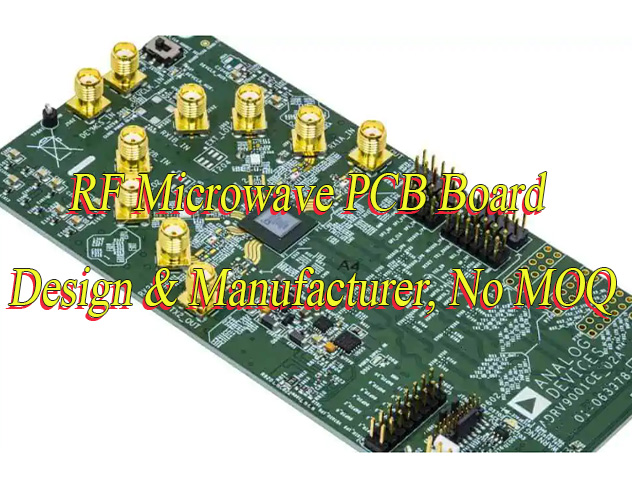
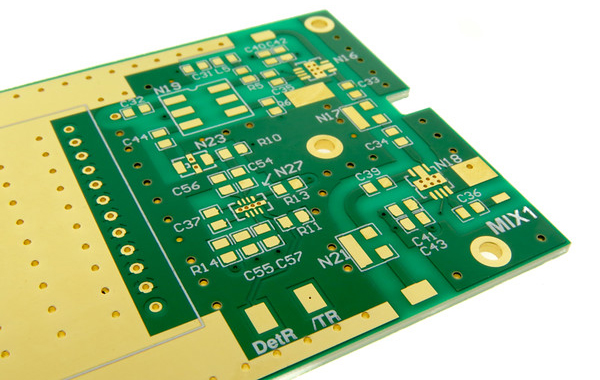
RF Microwave PCB Board Design & Manufacturer, No MOQ
Friday, October 31st, 2025

Why choose RF microwave PCB? Let’s discover definition, benefits, applications, design spec and layout, recommended PCB manufacturer for RF microwave PCBs.

Are you worried about these problems?

  • High-frequency signal loss is high, how to improve RF performance?
  • Above 5GHz, interlayer crosstalk is hard to control, how to ensure signal stability?
  • High-power device thermal design, how to achieve precise temperature control?

As a RF Microwave PCB manufacturer, EBest Circuit (Best Technology) can provide you service and solutions:

  • Substrate customization by frequency band: match low-loss materials with 20% impedance margin to reduce loss.
  • Dual-verified impedance control: error within ±2mil, TDR measured deviation <5%, crosstalk suppressed >20dB.
  • Thermal solution: solder pad + via array + 2oz copper top/bottom layers, thermal resistance <5ā„ƒ/W, hotspot temperature <85ā„ƒ.

Welcome to contact us if you have any request for microwave RF PCB: sales@bestpcbs.com.

What Is RF Microwave PCB?

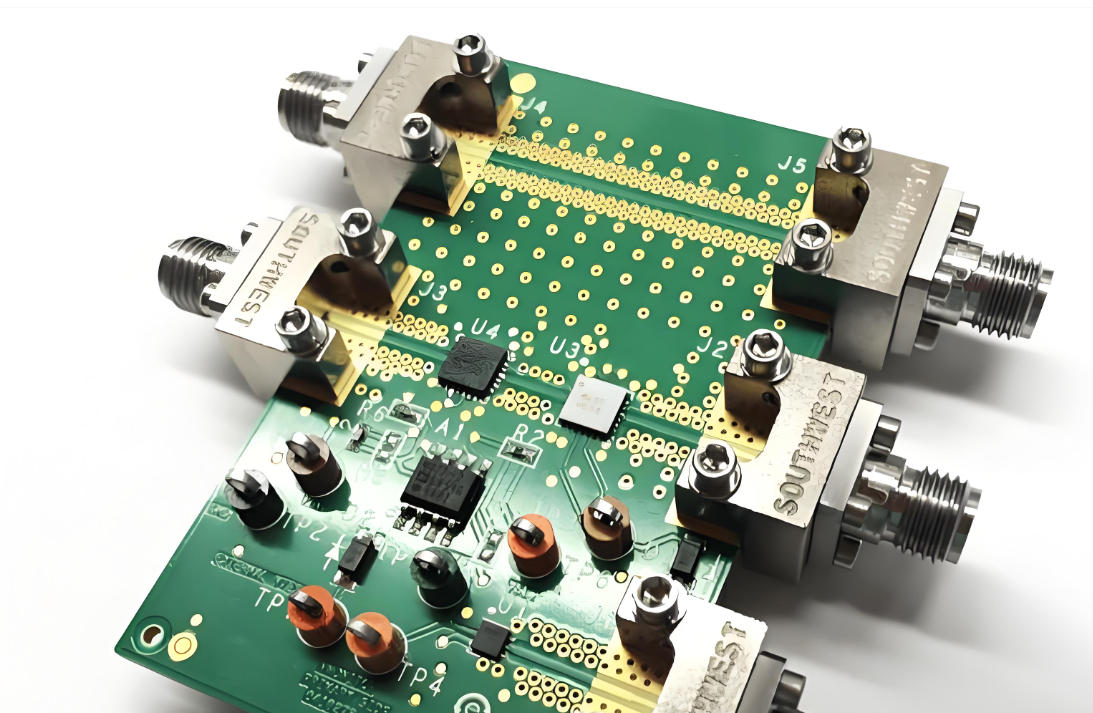
RF Microwave PCB is a specialized circuit board designed for carrying and processing high-frequency signals, typically covering radio frequency (RF) from approximately 300 kHz to 300 GHz and microwave frequencies from 1 GHz to 300 GHz.

Unlike conventional PCBs, it utilizes high-frequency substrate materials such as Rogers, Teflon, or ceramic-filled composites. These materials feature extremely low signal loss, stable dielectric constant, and excellent thermal performance. Its design and manufacturing are highly precise, emphasizing signal integrity through exact control of trace impedance, optimized transmission line structures like microstrip and stripline, minimized parasitic effects, and strict regulation of laminate processes and surface treatments. This ensures efficient, low-distortion, and low-interference transmission of high-frequency or microwave signals on the board.

What Is RF Microwave PCB?

Why Choose RF Microwave PCB?

Benefits of RF Microwave Printed Circuit Board:

  • Stable High-Frequency Signal Transmission: Utilizes low-loss substrates and precise impedance control technology to support GHz-level high-frequency signal transmission. This reduces signal attenuation and crosstalk, ensuring signal integrity in high-speed scenarios such as 5G communications, radar, and satellite equipment, thereby enhancing the reliability of terminal products.
  • Reduced System Energy Consumption and Heat Dissipation Pressure: Optimizes circuit layout and high-performance dielectric materials like PTFE and ceramic-filled composites to achieve low insertion loss and efficient thermal management. This minimizes energy waste, lowers device heat generation, extends product lifespan, and reduces cooling module costs.
  • Compact Design for Miniaturization Needs: Enables high-density multi-layer routing to integrate complex RF modules. This allows precise arrangement of high-frequency components such as filters and amplifiers within limited space, meeting stringent miniaturization and lightweight requirements for smartphones, IoT devices, and other applications, boosting market competitiveness.
  • Superior Anti-Interference and Electromagnetic Compatibility: Incorporates shielding layers, optimized grounding, and electromagnetic simulation validation to effectively suppress high-frequency noise and external interference. This ensures stable device operation in complex electromagnetic environments like industrial control and automotive electronics, reducing failure rates and customer maintenance costs.
  • Accelerated Product Development Cycle: Standardized design processes and mature manufacturing techniques such as laser drilling and electroplating via filling shorten prototype verification and mass production timelines. Combined with Design for Manufacturability (DFM) guidance, this reduces trial production iterations, helping clients seize market opportunities and lower overall development costs.
  • Significant Long-Term Cost Efficiency: Although initial material and process costs are higher, the high reliability, low failure rate, and long-term stability result in reduced repair and replacement frequencies, lowering the total lifecycle cost. This makes it particularly suitable for high-reliability sectors like medical and aerospace applications.
Why Choose RF Microwave PCB?

When to Use RF Microwave PCB Board?

Applications of RF Microwave PCB Board:

  • 5G/6G Communication Base Stations: 5G Massive MIMO Antenna Array (AAU), Base Station RF Front-End Module, Millimeter Wave Small Cell.
  • Satellite Communication Systems: Satellite Onboard Transponder, Ground Station Antenna Feed Network, Low-Earth Orbit Satellite Constellation Terminal.
  • Radar Systems: Automotive 77GHz Millimeter Wave Radar, Military Phased Array Radar, Weather Radar Antenna Feeder.
  • Aerospace Electronics: Airborne Radar System, Satellite Navigation Receiver (GPS/BeiDou), Aircraft Communication Data Link.
  • Microwave Test Instruments: Spectrum Analyzer Signal Processing Module, Network Analyzer Test Port, High-Frequency Signal Generator.
  • Medical Devices: Microwave Ablation Therapy Probe, Medical MRI RF Coil.
  • Wireless Infrastructure: Microwave Backhaul Equipment (Point-to-Point Transmission), Indoor Distribution System Combiner.
  • Automotive Electronics: V2X Vehicular Communication Module (5.9GHz), In-Vehicle Satellite TV Receiver.

RF Microwave PCB Design Technical Parameter

Parameter NameTypical Value/Range
Impedance Control50Ī© (Common) / 75Ī© (Video)
Dielectric Constant (ε)2.2-10 (FR4: 4.3-4.8)
Loss Tangent (tanΓ)0.001-0.025 (High-frequency Boards <0.005)
Substrate Thickness0.2-3.2mm
Copper Foil RoughnessRa<0.5μm (High-frequency Applications)
Glass Fiber EffectWeave Density >7628
Thermal Expansion Coefficient (CTE)X/Y Axis <18ppm/ā„ƒ, Z Axis <50ppm/ā„ƒ
Thermal Conductivity0.3-2W/(mĀ·K)
Surface FinishENIG/Immersion Silver/OSP
Line Width Tolerance±10% (Conventional)/±5% (High-frequency)
Layer-to-Layer Alignment Accuracy±25μm (Multilayer Boards)
Dielectric UniformityΔε<5%

RF Microwave PCB Board Design & Layout

1. Substrate Selection and Characteristic Matching

  • Material Expansion Selection: For high-frequency scenarios, recommend Rogers RO4350B, Taconic TLX series; for high-precision scenarios, select Panasonic Megtron 6 (Dk=3.3±0.05, loss<0.002@10GHz) or Isola I-Tera MT40 (Dk=3.45, loss<0.003@5GHz). FR-4 is limited to low-frequency test boards or cost-control scenarios, requiring gold-plating/immersion silver to reduce surface roughness impact.
  • Dynamic Parameter Verification: Use Agilent 85070D Dielectric Constant Tester to measure Dk values, combined with temperature-humidity aging tests to verify long-term stability. Thickness tolerance control requires collaboration with substrate supplier capabilities (e.g., ±5% high-end substrates), and design margin is increased to 25% to address processing errors.
  • Special Scenario Adaptation: Millimeter-wave (ļ¼ž30GHz) applications recommend Liquid Crystal Polymer (LCP) substrate (Dk=3.0, loss<0.0015), paired with microvia arrays for ultra-low loss transmission.

2. Precise Impedance Control and Verification

  • Multidimensional Calculation Verification: Cross-validate using Polar SI9000 and Altium Designer 2D/3D impedance calculators. For non-standard impedances (e.g., 75Ī© video signals), optimize line width/dielectric thickness combinations via Taguchi method to ensure process window ≄±3mil.
  • TDR In-Depth Application: Set reference planes near TDR test points, measure single-ended/common-mode impedance via differential probes, and synchronously verify signal integrity metrics (rise time<20ps). For high-speed digital-RF hybrid circuits, use eye diagram instruments to validate timing margins.
  • Differential Pair Optimization: For serpentine differential pairs, validate bending radius impact on impedance via electromagnetic simulation, ensuring length matching error<0.5mil@10GHz.

3. Stack-Up Structure Optimization Design

  • Multilaminate Expansion Scheme: 8-layer boards recommend “Signal-GND-Power-Signal-Power-GND-Signal-Signal” structure with dual GND layers in the middle for dual shielding. 4-layer boards are only suitable for low-power RF modules, requiring blind/buried via technology for interlayer interconnection.
  • Interlayer Coupling Suppression: Insert low-dielectric isolation layers (e.g., Arlon AD300) between adjacent signal layers to reduce interlayer crosstalkļ¼ž20dB. Power-GND spacing is optimized via finite element analysis to ensure capacitance couplingļ¼ž90%.
  • Mixed-Signal Processing: For digital-RF hybrid circuits, use “island GND” technology to isolate digital noise, paired with beads/inductors to construct low-pass filter networks.

4. Signal Path Layout Specifications

  • Trace Process Refinement: Use tapered line width technology for smooth impedance transition (e.g., 50Ī© to 75Ī©) to avoid impedance discontinuity reflections. For microwave signals, adopt coplanar waveguide (CPW) structure with ground via arrays forming a continuous reference plane.
  • Via Optimization Design: Laser microvia technology achieves 0.1mm microvias, paired with back-drilling to eliminate stubs. High-frequency vias require parasitic parameter verification via Ansys Q3D to meet design thresholds.
  • Shielding Structure Upgrade: Set electromagnetic shielding walls around critical signal paths, using nickel/gold plating to enhance shielding effectiveness. For radiation-sensitive devices, use shielding covers + thermal gel composite heat dissipation solutions.

5. Grounding and Shielding Strategies

  • Hybrid Grounding Enhancement: Low-frequency modules use “star grounding” to the main ground terminal; high-frequency modules use “mesh grounding” to reduce ground bounce noise. RF front-end modules adopt “GND-Signal-GND” sandwich structure for dual shielding.
  • Shielding Effectiveness Verification: Use EMxpert near-field scanner to measure shielding effectivenessļ¼ž60dB@1GHz. Sensitive devices require 3D electromagnetic simulation to validate shielding structure effectiveness.
  • Ground Via Arrays: Adopt “honeycomb” via array layout with spacing≤λ/20@operating frequency to form a continuous Faraday cage. Vias require plating fill technology to enhance reliability.

6. Power Integrity Optimization

  • Decoupling Capacitor Strategy: “0.01μF high-frequency + 10μF low-frequency” capacitor combinations paired with beads to construct multi-stage filter networks. Power noise-sensitive devices use embedded capacitor technology (e.g., buried capacitor layers).
  • PDN Simulation Enhancement: Use Ansys SIwave for full-wave electromagnetic simulation to verify PDN impedance<0.5Ī©@3GHz. High-frequency power noise uses power plane segmentation + capacitor bridging technology.
  • Power Plane Optimization: Mesh copper pour enhances current carrying capacity, paired with thermal vias for thermal-electrical co-design. Power planes are validated via voltage drop simulation to ensure drop<3%.

7. Thermal Management and Heat Dissipation Design

  • Heat Dissipation Structure Upgrade: High-power devices use “thermal pad + thermal via + heat sink” three-tier cooling solutions, paired with thermal interface materials to achieve thermal resistance<5ā„ƒ/W. Millimeter-wave devices use diamond heat sink substrates.
  • Thermal Simulation Verification: Use Ansys Icepak for thermal simulation to validate hotspot temperature<85ā„ƒ. For high-density layouts, use thermal-electrical-structural co-simulation to ensure thermal stress<material yield strength.
  • Copper Thickness Selection: Top/bottom layers use 3oz copper for enhanced thermal diffusion; inner layers use 1oz copper to balance cost and performance. Extreme environment applications use gold-plating/immersion silver for corrosion resistance.

8. Design for Manufacturability and Testability

  • DFM Check Expansion: Includes line width uniformity, pad size consistency, minimum annular ring verification, etc. Use Valor NPI software for automated checks to meet IPC-6012 standards.
  • Test Point Deepening Design: Use 50Ī© SMA interfaces paired with calibration kits for precise testing. High-speed digital signals use differential test points paired with eye diagram instruments for timing validation.
  • File Delivery Expansion: Includes complete Gerber files (impedance layer, pad layer, silkscreen layer, stencil layer) paired with process specification documents (back-drill depth, blind/buried via positions). Use Git version control for document traceability.

9. Simulation Verification and Document Delivery

  • Simulation Tool Expansion: Besides ADS/HFSS, use Keysight ADS Momentum for planar electromagnetic simulation or ANSYS HFSS 3D Layout for full-wave simulation. For time-domain response validation, use SPICE models paired with eye diagram instruments.
  • Document Package Enhancement: Includes design specifications, simulation reports, Gerber files, BOM lists, process specification documents, test reports, etc. Use PDF/A format for long-term readability, paired with digital signatures for tamper-proof validation.
  • Risk Management Strengthening: Use FMEA tools for risk assessment, clarify potential failure modes (crosstalk, hotspots, soldering defects) and solutions. Establish design change tracking systems to ensure all changes are validated and documented.
RF Microwave PCB Board Design & Layout

Why Choose EBest Circuit (Best Technology) as RF Microwave PCB Board Manufacturer?

Reasons why choose us as RF microwave PCB board manufacturer:

  • International Certification Assurance: Holds ISO 9001 quality management system certification and complies with industry-mandated certifications (e.g., medical, automotive, RoHS), ensuring product compatibility with global stringent application scenarios.
  • Free DFM Design Verification: Offers free Design for Manufacturability (DFM) analysis to identify and resolve potential design issues early, reducing development costs and risks while ensuring first-pass manufacturing success.
  • Competitive Pricing: Achieves cost control through optimized production processes and supply chain management, delivering cost-effective RF microwave PCB solutions particularly suitable for budget-sensitive projects.
  • 24-Hour Rapid Prototyping: Supports sample production within 24 hours, enabling quick response to customer needs, shortened R&D cycles, and market opportunity capture, ideal for urgent project validation.
  • Flexible Low-MOQ and Small-Batch Production: Accepts low minimum order quantities (MOQ) and small-batch orders to meet R&D testing, small-scale production, or customization needs, reducing customer inventory pressure and capital tie-up.
  • Strict Full-Process Quality Control: Implements end-to-end quality control from raw material inspection, production monitoring, to final product testing, ensuring each PCB meets high reliability standards and minimizes defect rates.
  • Expert Technical Team Support: Features a team of experienced RF microwave engineers providing full-process technical support from design optimization and material selection to process adjustments to resolve complex technical challenges.
  • Efficient Supply Chain Management: Collaborates deeply with high-quality raw material suppliers to ensure stable material supply and rapid delivery, coupled with optimized production scheduling for on-time and reliable delivery.
  • Customized Service Capability: Offers tailored solutions for special requirements, including high-frequency material selection, impedance control optimization, and specialized surface treatments, to meet diverse project needs.
  • Responsive Customer Service: Provides 24/7 customer support for quick responses to inquiries, order tracking, and after-sales issues, delivering professional advice and solutions to enhance customer experience and trust.
Why Choose EBest Circuit (Best Technology) as RF Microwave PCB Board Manufacturer?

Our RF Microwave PCB Capabilities

ParameterSpecification
Base material:Rogers/Telfon
Board Thickness:0.5mm~3.0mm(0.02″~0.12″)
Copper thickness:0.5 OZ, 1.0 OZ, 2.0 OZ, 3.0 OZ
Outline:Routing, punching, V-Cut
Soldermask:White/Black/Blue/Green/Red Oil
Legend/Silkscreen Color:Black/White
Surface finishing:Immersion Gold, HASL, OSP
Max Panel size:600*500mm(23.62″*19.68″)
Packing:Vacuum/Plastic bag
Samples L/T:7~9 Days
MP L/T:8~10 Days

Our Quality Certification

  • ISO9001:2015: Universal quality management system covering design, production, and service. Enables continuous improvement via internal audits, KPI monitoring, and customer-centric processes.
  • ISO13485:2016: Medical device-specific certification focusing on lifecycle risk management, regulatory compliance, and supply chain traceability. Includes design validation, sterilization verification, and adverse event reporting.
  • RoHS: Environmental standard limiting 10 hazardous substances (e.g., Pb, Hg, Cd) in electrical/electronic equipment. Mandates homogeneous material testing and supplier declarations of conformity.
  • IATF16949: Automotive quality standard emphasizing defect prevention through APQP, PPAP, SPC, and FMEA. Ensures supply chain collaboration and customer-specific requirement compliance.
  • AS9100D: Aerospace quality system for safety-critical components. Mandates configuration management, design change traceability, NDT testing, and first article inspection (FAI) via ERP/MES systems.

How to Get A Quote for Your RF Microwave PCB Project?

Checklist for RF microwave PCB project quotations:

  • Layer and Structure: Specify layer count (e.g., 4/6/8 layers), board thickness (e.g., 1.0mm/1.6mm), and core layer positions.
  • Substrate Parameters: Indicate high-frequency substrate model (e.g., Rogers RO4350B), dielectric constant (Dk), and dissipation factor (Df).
  • Trace Precision: Minimum trace width/spacing (e.g., 50μm/50μm), impedance value (e.g., 50Ω±10%).
  • Surface Finish: Select options like ENIG, OSP, or electroless nickel gold, with thickness specifications (e.g., ENIG: 3-5μm Ni / 0.05-0.2μm Au).
  • Drill Requirements: Minimum mechanical/laser drill diameter (e.g., 0.15mm/0.075mm), hole wall copper thickness (≄25μm).
  • Testing Standards: Include impedance testing (TDR), signal integrity testing (e.g., S-parameters), and reliability testing (e.g., thermal shock).
  • Quantity & Lead Time: Clarify order quantity (e.g., prototype: 5pcs) and phased delivery timelines (e.g., engineering review: 3 days, production: 10 days).
  • Documentation: Provide Gerber files, BOM, assembly drawings, and process specifications.
  • Environmental Compliance: Meet RoHS/REACH standards, offer halogen-free options, and specify flame retardancy rating (e.g., UL94-V0).
  • Special Requirements: Include thermal management (e.g., metal-core boards), EM shielding, embedded components, or rigid-flex structures.

Welcome to contact us if you have any request for RF microwave PCB: sales@bestpcbs.com.