





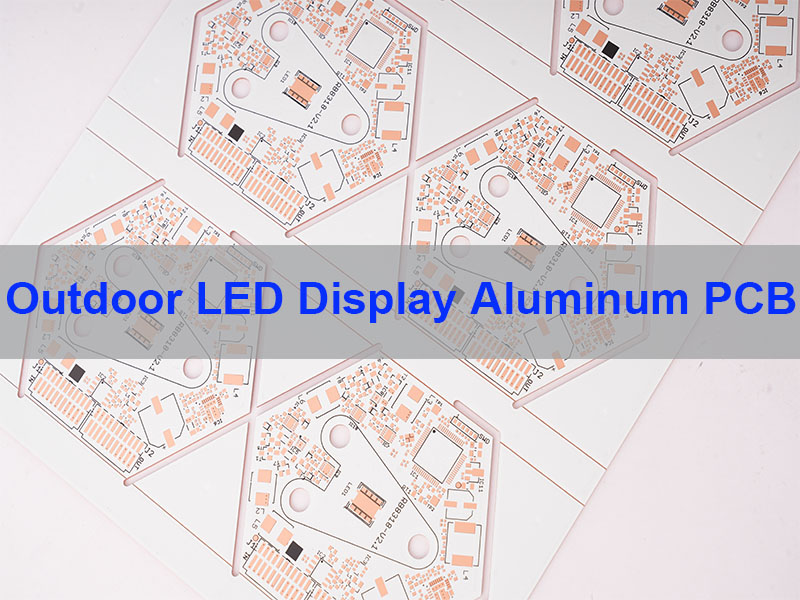
An Outdoor LED Display Aluminum PCB is used because it moves heat away faster, supports stable mounting, and helps the display hold brightness and color consistency over time. This article explains how to choose, design, and source the right Outdoor LED Display Aluminum PCB for waterproof applications. It covers board structure, thermal path design, waterproof strategy, reliability control, application examples, qualification points, and the service strengths of EBest Circuit (Best Technology).
EBest Circuit (Best Technology) is a professional manufacturer of Outdoor LED Display Aluminum PCB, with strong experience in waterproof, UV-resistant, and high-thermal aluminum PCB solutions for outdoor display applications. We help customers solve common issues such as short circuits, aging, uneven heat dissipation, black spots, and brightness decay under harsh outdoor conditions. Our team focuses on reliable thermal performance, structural fit, and stable quality, so customers can achieve more stable results in outdoor environments. We also support projects that need a good balance of reliability, qualification, and long-term supply stability. For Outdoor LED Display Aluminum PCB inquiries, please call +86-755-2909-1601.
Why Choose a Proven Outdoor LED Display Aluminum PCB Partner for Stable Waterproof Performance?
If you are sourcing Outdoor LED Display Aluminum PCB products, the right supplier should deliver more than bare fabrication. You need a partner that understands thermal structure, outdoor sealing, solder joint fatigue, uniformity control, and volume consistency.
EBest Circuit (Best Technology) supplies Outdoor LED Display Aluminum PCB solutions for demanding outdoor use. We support prototyping and production with engineering review, stack-up recommendation, DFM feedback, process alignment, and fast response for display projects that need both heat control and weather resistance.
Core parameters customers usually care about
- Base material: aluminum metal core
- Typical structure: copper circuit layer + dielectric + aluminum base
- Typical board type: single-sided aluminum PCB, with selected hybrid structures when needed
- Focus points: thermal transfer, flatness, solderability, outdoor durability, consistency
- Typical applications: billboards, transportation displays, stadium screens, building media walls
Why many buyers shortlist us
- Quality: controlled fabrication and inspection flow for LED metal core boards
- Lead time: responsive engineering support for urgent display programs
- Service: technical communication that goes beyond simple quoting
- Supply continuity: support for repeatable production and project follow-up
Therefore, the best supplier for this category is not just a board maker but a thermal and reliability partner. In practice, that directly affects brightness stability, installation life, and field maintenance frequency.
What Is an Outdoor LED Display Aluminum PCB and Why Is It Better for Waterproof Use?
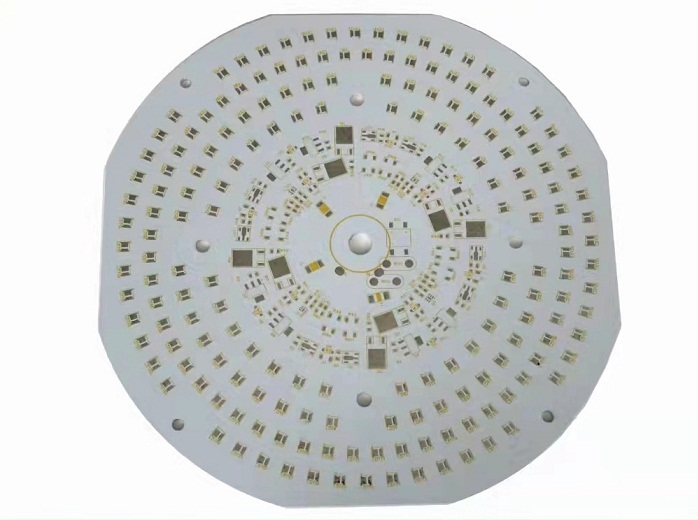
An Outdoor LED Display Aluminum PCB is a metal-core circuit board built for LED systems that must run at higher current density and survive outdoor exposure. Its aluminum base spreads heat away from LEDs and driver-related hot zones much more effectively than standard glass-fiber boards in the same use case.
For outdoor display service, the board is only one part of the protection chain, but it is a critical one. It supports thermal control, mechanical rigidity, and better long-term dimensional stability in assemblies that operate in sun, rain, dust, and humidity.
Basic structure
- Copper layer: carries current and LED interconnect routing
- Dielectric layer: provides electrical insulation while passing heat downward
- Aluminum base: spreads heat into the housing or thermal structure
Why this matters outdoors
- Lower hotspot accumulation
- Better support for high-brightness duty
- Improved mechanical support for module installation
- Better match for thermal management assemblies
As a result, Aluminum PCB for Outdoor LED Display projects usually deliver a more stable operating platform than ordinary FR4-only designs. From an engineering perspective, that stability is what turns a bright screen into a durable outdoor product.
Why Does Aluminum PCB Matter So Much in Outdoor LED Display Thermal Design?
The short answer is heat. Outdoor displays operate under sunlight, high ambient temperature, dense LED placement, and long daily runtime. If heat is not moved away quickly, brightness drops, color shifts increase, and solder joints age faster.
In many outdoor LED systems, thermal load is not just generated by the LEDs themselves. Driver devices, current distribution, enclosure heat buildup, and limited airflow can raise the entire module temperature. That is why the thermal path must be planned as a full system, not just as a board material choice.
Where the heat goes
- LED junction generates heat
- Heat passes through solder and copper pad
- Heat crosses the dielectric layer
- Aluminum base spreads heat laterally
- Heat transfers into the module frame or heat-dissipation structure
What a good thermal design improves
- Brightness retention
- LED lifetime consistency
- Solder joint reliability
- Color uniformity across the panel
- Reduced risk of local overheating
In real-world applications, thermal performance is the first reason buyers move from standard PCB concepts to Outdoor Aluminum PCB LED Display structures. Overall, better heat flow means better visual stability and lower field failure pressure.
How Is an Outdoor LED Display Aluminum PCB Built for Heat Transfer and Mechanical Strength?
The board is usually built as a layered thermal structure rather than a standard multilayer logic board. The goal is to keep electrical routing simple and the thermal route short, direct, and repeatable.
Most outdoor display aluminum boards use a copper circuit layer on top, a thermally conductive dielectric in the middle, and an aluminum base underneath. The exact dielectric choice matters because it must balance insulation and heat transfer while surviving assembly heat and outdoor service stress.
Typical design considerations
- Copper thickness: chosen to handle current and voltage drop
- Dielectric performance: important for thermal resistance and insulation reliability
- Aluminum thickness: affects stiffness and heat spreading
- Board flatness: important for LED placement and waterproof mechanical fit
Mechanical advantages
- Higher rigidity than very thin conventional boards
- Better support for module fastening
- Reduced deformation risk during installation
- Improved contact with metal housings or thermal interfaces
In short, a good LED Display Outdoor Aluminum PCB is both a circuit carrier and a thermal-mechanical platform. Notably, that dual role is one reason it remains the preferred base for high-output outdoor LED modules.
How Does Waterproof Design Work in PCB Aluminum for Outdoor LED Display?
A waterproof outdoor display is never achieved by the PCB alone. It comes from a complete sealing system that includes the board surface, LED package area, connectors, cable exits, gasket interfaces, screws, rear cover, and enclosure design.
The aluminum PCB still plays an important role because its rigidity and thermal behavior support a more stable assembly. However, rain resistance, dust protection, and moisture control depend on system-level integration.
Main waterproof design elements
- Protective mask and controlled surface finish compatibility
- Sealant-compatible module edges
- Waterproof connectors and cable entry control
- Rear cover sealing and vent planning
- Conformal protection where the design requires it
- Drain path planning to avoid trapped water
| Design Area | What It Must Control | Why It Matters |
|---|---|---|
| PCB surface protection | Moisture, contamination, corrosion | Protects conductive features and solder joints |
| LED and component interface | Seal continuity and material compatibility | Prevents moisture ingress near active parts |
| Connector area | Water entry through wiring paths | Common field failure point |
| Cabinet interface | Rain splash, dust, temperature cycling | Defines long-term outdoor sealing stability |
| Drainage and venting | Condensation and trapped moisture | Reduces hidden water accumulation |
This means, a robust PCB Aluminum for Outdoor LED Display design should be reviewed as a full outdoor module system. To sum up, the best waterproof result comes from sealing, drainage, coating, and thermal design working together.
What IP Level Is Common for Outdoor LED Aluminum PCB Display Systems?
For most outdoor screen modules, buyers usually expect front-side protection around IP65 or above, while rear-side protection depends on cabinet structure and installation conditions. The actual target should match the use environment, service method, and enclosure design.
In practical sourcing, it is a mistake to ask only whether the board is waterproof. The better question is whether the entire Outdoor LED Aluminum PCB Display module is engineered to meet its intended outdoor protection level in real installation conditions.
How to interpret the protection need
- Front side: exposed to rain, dust, washing, and wind-driven water
- Rear side: depends on enclosure type and site exposure
- Connector area: often needs separate protection review
- Maintenance style: front service and rear service affect sealing design
| Outdoor Condition | Typical Protection Expectation | Design Priority |
|---|---|---|
| Urban billboard | High front-side weather resistance | Rain sealing and heat management |
| Building facade | Stable front protection with controlled rear area | Module sealing and cable entry control |
| Coastal installation | Higher corrosion resistance focus | Anti-moisture and anti-salt strategy |
| Harsh climate zone | Enhanced sealing and thermal margin | Condensation control and reliability reserve |
From an engineering perspective, protection level should be defined by the installation scenario, not by marketing language alone. In practice, that is how a sourcing team avoids under-designed outdoor modules.
How Does Outdoor Heat, Rain, Dust, and Humidity Damage LED Display Boards?
Outdoor LED boards do not fail from one cause only. Real failures often come from combined stress such as heat plus humidity, rain plus poor sealing, or thermal cycling plus weak solder joints. That is why reliability planning must be multidisciplinary from the start.
Heat can reduce brightness stability and accelerate aging. Moisture can trigger corrosion, leakage, and intermittent faults. Dust reduces heat release efficiency. Salt and pollution make corrosion more aggressive in coastal or industrial environments.
Common field risks
- Brightness drop under high temperature
- Color inconsistency after long operation
- Dead pixels caused by thermal fatigue or moisture damage
- Corrosion on exposed conductive areas
- Short circuit risk from water ingress or condensation
- Mechanical stress from daily temperature swings
What reliable designs do differently
- Build thermal margin into the board and housing
- Protect vulnerable regions from moisture entry
- Control contaminants during fabrication and assembly
- Validate the module under realistic outdoor conditions
Overall, outdoor reliability depends on preventing compound failure modes rather than fixing one issue in isolation. Therefore, a serious Outdoor LED Display Aluminum PCB program should always include both thermal and environmental validation.
Why Do Buyers Often Ask About User Pain Points Before Ordering Outdoor LED Display Aluminum PCB?
Because the same problems appear again and again in outdoor LED projects. Buyers want to avoid screens that run too hot, fail after rain, show uneven brightness, or become difficult to maintain after installation. Those concerns are far more common than abstract material questions.
Across public discussions and application-focused content, the recurring pain points are clear: sealing confidence, real thermal performance, corrosion resistance, long-term uniformity, and the gap between quoted spec and field behavior.
Typical buyer pain points
- Not sure whether the board can support high brightness continuously
- Concern about rain, condensation, and seal aging
- Worry about dead pixels and solder fatigue after thermal cycling
- Need stable quality across repeat orders
- Need engineering support instead of quote-only communication
- Want simpler sourcing with a responsive manufacturer
How EBest Circuit (Best Technology) addresses them
- Engineering-first review for thermal path and manufacturability
- Clear communication on board structure and application fit
- Process control for repeatable quality
- Support for outdoor-use reliability expectations
- Responsive service for prototype and production stages
Notably, buyers usually stay with suppliers who reduce technical uncertainty early. As a result, choosing a supplier that understands real field pain points can shorten development cycles and improve launch confidence.
What Services and Certifications Should You Expect from an Outdoor LED Display Aluminum PCB Supplier?
A credible supplier should offer more than fabrication capacity. For this product category, you should expect engineering support, manufacturability review, stable process execution, inspection discipline, and documented quality systems.
EBest Circuit (Best Technology) supports customers with LED PCB manufacturing and technical communication for outdoor applications. Buyers also look for certificate visibility because it shows the factory operates with formalized systems rather than informal process control.
Service scope you should expect
- Engineering review for structure and manufacturability
- Prototype support for fast verification
- Production support for volume continuity
- Inspection control for board consistency
- Technical communication through project follow-up
| Category | What It Shows | Why It Helps Buyers |
|---|---|---|
| Quality management certification | Controlled documented processes | Improves confidence in repeat production |
| Environmental compliance support | Material and process conformity awareness | Helps global sourcing coordination |
| Manufacturing process discipline | Inspection and control checkpoints | Reduces variation risk |
| Engineering support capability | Problem-solving before production | Improves project efficiency |
In real-world sourcing, certifications do not replace engineering capability, but they do strengthen trust. In short, the best supplier combines documented quality systems with practical LED thermal know-how.
What Design Rules Improve Manufacturability for Aluminum PCB for Outdoor LED Display?
A board can look good in layout software and still perform poorly in manufacturing or field service. Good manufacturability means the design is easy to fabricate, easy to assemble, thermally balanced, and stable during long-term use.
For Aluminum PCB for Outdoor LED Display products, manufacturability is especially important because LED arrays expose every inconsistency. Uneven pad design, copper imbalance, poor spacing decisions, and weak mechanical planning can all show up later as visible display defects.
Important design priorities
- Keep thermal paths short and direct
- Use balanced pad and copper planning for uniform heat spread
- Maintain good spacing for assembly quality and contamination control
- Consider flatness and module mounting from the start
- Match connectors and sealing features to service conditions
- Review current carrying capacity, not just routing completion
Typical DFM review points
| Review Point | Why It Matters | Impact on Outdoor Use |
|---|---|---|
| Pad design consistency | Improves solder quality | Reduces uneven optical performance |
| Copper distribution | Supports heat spread and flatness | Improves stability under thermal load |
| Mounting hole strategy | Protects board integrity | Helps cabinet integration |
| Surface protection compatibility | Supports coating and sealing | Improves weather durability |
This means, manufacturability is not separate from reliability in outdoor LED boards. From an engineering perspective, good DFM choices reduce both process risk and field repair pressure.
How Does Outdoor LED Display Aluminum PCB Compare with FR4 for High-Brightness Screens?
For low-power electronics, FR4 is a proven standard material. For outdoor high-brightness LED display boards, aluminum-based structures are often the better fit because they handle heat spreading and mechanical support more effectively.
The decision is not about one material being universally better. It is about matching the substrate to the thermal load, brightness target, operating environment, and service expectations of the final product.
| Item | Outdoor LED Display Aluminum PCB | FR4 PCB |
|---|---|---|
| Heat dissipation | Strong heat spreading through metal base | Much lower thermal conduction in standard form |
| Mechanical rigidity | Good structural support for LED modules | Depends on thickness and support design |
| Outdoor high-brightness suitability | Very suitable | Limited for thermally stressed designs |
| Thermal path simplicity | Direct and efficient | Often needs extra thermal measures |
| Typical use focus | LED lighting and display modules | General electronics and control circuits |
Overall, aluminum becomes the practical choice when heat and outdoor duty cycle drive the design. Therefore, many high-output display projects move to Outdoor LED Display Aluminum PCB when they need stronger thermal margin.
How Is an Outdoor Aluminum PCB LED Display Project Manufactured Step by Step?
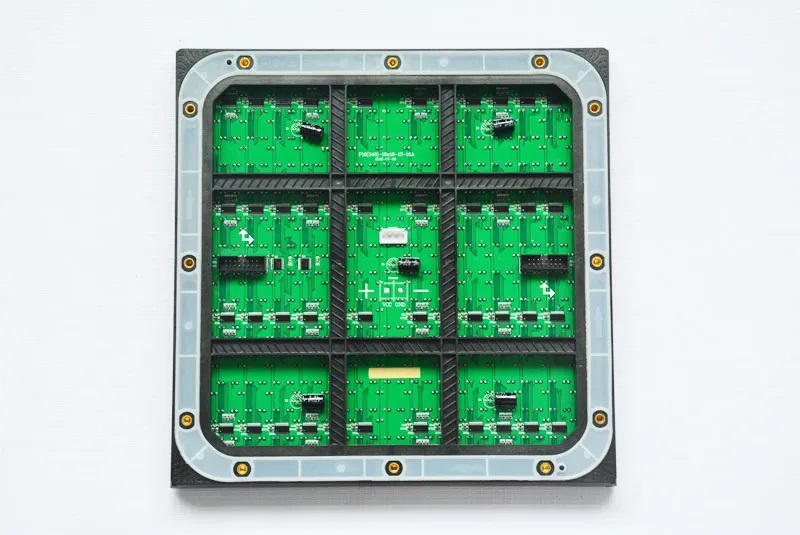
The manufacturing route must protect both electrical quality and thermal integrity. Unlike a generic board flow, an outdoor LED metal-core board needs tighter attention to dielectric handling, surface consistency, routing quality, and final flatness.
A stable process also helps later waterproof assembly because a well-controlled board fits more predictably into module housings, gaskets, and sealed mechanical structures.
Typical process flow
- Engineering file review and manufacturability confirmation
- Material preparation and metal-core laminate selection
- Circuit imaging and etching
- Drilling, routing, and profile control
- Solder mask and surface finish processing
- Dimensional, appearance, and electrical inspection
- Packing and shipment control for board protection
What the factory must watch closely
- Dielectric integrity
- Trace and pad precision
- Board flatness
- Surface cleanliness
- Edge quality for later sealing and assembly
As a result, production quality on this board type is tightly linked to final display reliability. Notably, buyers who review process discipline early usually avoid many later installation issues.
What Four Industries Commonly Use LED Display Outdoor Aluminum PCB Solutions?
The most active sectors are those that need high brightness, reliable outdoor visibility, and long operating hours. In these applications, the board must support stable light output while tolerating weather and installation stress.
1. Outdoor advertising and media
Large billboards and building screens need stable brightness, color consistency, and low maintenance pressure. The LED Display Outdoor Aluminum PCB helps manage thermal load in dense, high-visibility installations.
2. Transportation and traffic information
Roadside information boards, station displays, and public guidance systems need dependable operation in changing weather. Good thermal design and sealing reduce service interruptions.
3. Stadium and event screens
These projects face strong daylight, long runtime, and visibility demands. Board stability matters because hot spots and module inconsistency quickly become visible on large display surfaces.
4. Retail facade and commercial exterior signage
Exterior brand displays need slim structures, stable brightness, and attractive long-term appearance. Aluminum PCB solutions help balance compact design with thermal control.
| Industry | Main Need | Why Aluminum PCB Helps |
|---|---|---|
| Advertising | Long runtime and brightness stability | Better heat handling for continuous operation |
| Transportation | Outdoor reliability | Supports stable thermal and mechanical performance |
| Stadiums | High visual consistency | Reduces thermal unevenness across modules |
| Retail exteriors | Compact structure and weather resistance | Improves heat spread in limited space |
In practice, these industries choose aluminum boards because visibility and uptime are directly linked to revenue or public function. To sum up, the board is not just a material choice but a performance enabler for outdoor display systems.
How Should You Evaluate a Supplier Before Ordering Outdoor LED Display Aluminum PCB?
Before placing an order, look at engineering fit, process stability, communication quality, and repeatability. A visually attractive quote means little if the supplier cannot explain thermal structure, protection strategy, and application compatibility.
Useful evaluation questions
- Do they understand outdoor display thermal paths?
- Can they discuss dielectric and aluminum structure clearly?
- Do they review manufacturability before production?
- Can they support repeat orders with stable quality?
- Do they communicate clearly on lead time and project status?
- Can they align the board with your module and enclosure strategy?
Green flags in supplier communication
- They ask about brightness, environment, and service conditions
- They review drawings instead of quoting blindly
- They discuss reliability, not only board thickness
- They show an organized approach to quality documentation
This means, a good supplier reduces project risk before production begins. Overall, the best sourcing decision comes from technical clarity, not from generic product language.
Why Choose EBest Circuit (Best Technology) for Outdoor LED Display Aluminum PCB Orders?
If your project needs a reliable Outdoor LED Display Aluminum PCB, EBest Circuit (Best Technology) can support you with practical engineering communication and production-oriented service. We understand that outdoor LED boards must balance heat transfer, structural fit, manufacturability, and long-term use stability.
We work with customers who need more than a standard board quote. Our goal is to help you move from concept to repeatable production with clearer technical decisions, better fit for outdoor applications, and smoother project follow-up.
What we offer for this product type
- Outdoor LED aluminum PCB support for display-related applications
- Engineering review before production
- Responsive communication during project execution
- Prototype to production support for ongoing programs
- Quality-focused process control for stable repeat orders
If you are looking for a dependable source for Aluminum PCB for Outdoor LED Display products, EBest Circuit (Best Technology) is ready to support your order. Please send your project files and inquiry to sales@bestpcbs.com.
Therefore, choosing the right partner helps you improve both product confidence and sourcing efficiency. In real-world applications, that can make a visible difference in launch speed and long-term display stability.
FAQs About Outdoor LED Display Aluminum PCB
Why is Outdoor Aluminum PCB LED Display better than standard FR4 in high-brightness use?
Because outdoor screens usually run hotter and longer. Aluminum-based boards spread heat more effectively, which makes them better suited to high-output LED modules exposed to sunlight and changing ambient temperature.
What industries most often use Outdoor LED Aluminum PCB Display products?
The most common industries are outdoor advertising, transportation displays, stadium screens, and exterior commercial signage. These sectors need stable brightness, weather resistance, and long operating life.
How do aluminum PCBs protect outdoor LED signs from extreme weather?
Beyond heat dissipation, aluminum provides high dimensional stability and mechanical durability. Outdoor displays face extreme temperature fluctuations (from freezing nights to scorching days) which can cause standard boards to warp or crack. Aluminum has a lower coefficient of thermal expansion than FR4, meaning the board maintains its shape better. Additionally, most outdoor aluminum PCBs receive specialized surface treatments like anodizing or polyurethane coating to provide a robust barrier against moisture, salt spray, and UV-induced corrosion.
What are the design limitations of using aluminum PCBs for LED modules?
The main trade-off for the thermal benefits of aluminum is limited circuit complexity. Because the base is a conductive metal, aluminum PCBs are typically restricted to single-layer or simple double-layer designs. Creating multilayer stacks is significantly more expensive and technically difficult compared to FR4. Designers must also account for:
- Rigidity: Aluminum cannot be used for curved or flexible display designs.
- Component Mounting: Only Surface Mount Technology (SMT) is practical; Through-Hole Technology (THT) is generally not possible because the metal base would short the component leads.
Why order Outdoor LED Display Aluminum PCB from EBest Circuit (Best Technology)?
Because we provide product support with practical engineering communication, quality-focused manufacturing control, and responsive service for outdoor LED projects. If you need Outdoor LED Display Aluminum PCB products, contact sales@bestpcbs.com to discuss your order.