PCB manufacturing PCB manufacturing
Home > Blog

Posts Tagged ‘low volume pcb assembly’

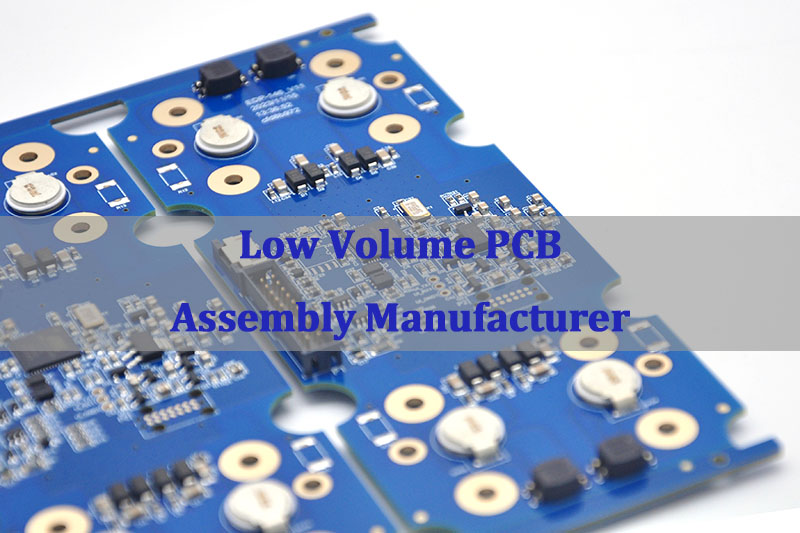
Best Low Volume PCB Assembly Manufacturer
Monday, January 19th, 2026

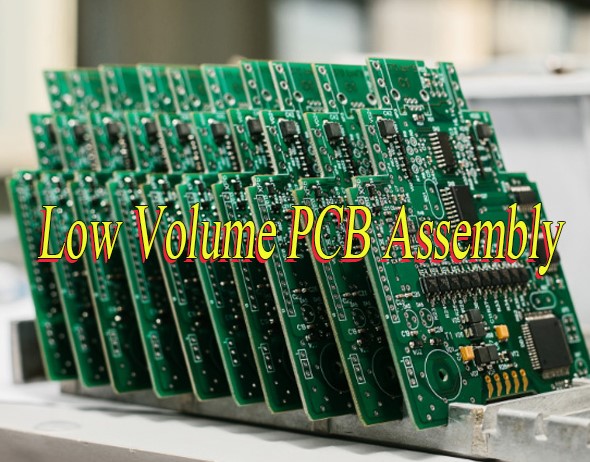
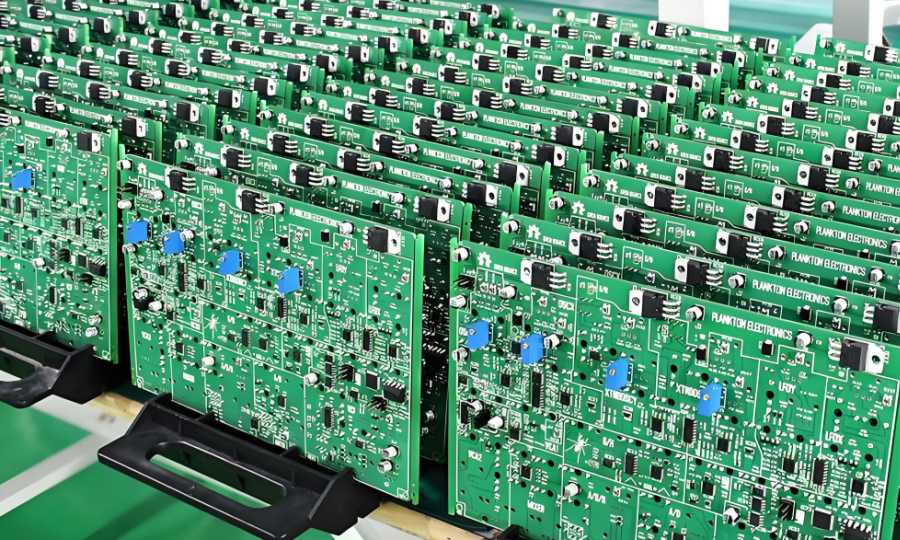
Low volume PCB assembly manufacturer means a production partner that can reliably build prototype-to-small-batch PCBAs—often high-mix, fast-turn, and BOM-sensitive—without forcing “mass-production” constraints on early-stage hardware. This guide explains who low-volume assembly is for, what makes China and USA options different, how wholesale fits, and how to choose the best partner with fewer surprises.

Why does low volume assembly feel simple on paper, but messy in practice?

  • Quotes swing wildly once component availability, alternates, and test requirements enter the picture.
  • Lead times slip because “in-stock” parts were not actually reserved when the order was placed.
  • First-build risk stays high when DFM/DFA feedback arrives late or is too generic.
  • Quality is inconsistent if inspection standards and acceptance criteria are not clearly defined up front.
  • Communication costs time when engineering questions bounce between sales, sourcing, and the SMT line.

A capable manufacturer reduces this friction by turning it into a controlled process with clear checkpoints.

  • Transparent quoting that separates PCB fab, SMT labor, sourcing, and NRE so you can change one variable at a time.
  • Sourcing discipline (AVL alignment, alternates strategy, reservation windows) to protect schedule.
  • Front-loaded DFM/DFA with actionable comments before the first stencil is cut.
  • Defined quality targets (IPC class, inspection coverage, rework rules) that match your product risk.
  • Fast engineering communication with one owner who can close questions the same day.

EBest Circuit (Best Technology) is a one-stop PCB & PCBA manufacturer focused on engineering-led execution for prototypes, low volume PCB assembly, and scale-up builds. We combine PCB fabrication, component sourcing, SMT/THT assembly, inspection, and functional test planning so early-stage teams can iterate faster while keeping quality stable. For more information or if you would like to send us any inquiry, please send us an email through the contact form at the bottom of our Contact Page.

Low Volume PCB Assembly Manufacturer

Top 5 Low Volume PCB Assembly Manufacturers

Identifying a reliable partner is the first step. This section highlights five leading global manufacturers renowned for their excellence in low to mid-volume production, considering factors like technical capability, service range, and geographic reach.

  • PCBWay:​ A giant in the online manufacturing space, known for its user-friendly platform, instant quoting, and extensive community support. Ideal for hobbyists, startups, and engineers seeking a straightforward, cost-effective entry into low volume PCB assembly.
  • JLCPCB:​ Revolutionized the market with incredibly low-cost prototyping and assembly. Their strength lies in a massive inventory of basic components for their SMT assembly service, offering unbeatable speed and price for simple to moderately complex designs.
  • MacroFab:​ An excellent Low volume PCB assembly manufacturer USA​ option, operating a cloud-managed manufacturing platform. They provide a network of factories across North America, offering transparency, scalability, and strong supply chain management for clients wanting domestic production.
  • Sierra Circuits:​ Caters to the high-reliability and high-complexity end of the spectrum. While not the cheapest, they are a top choice for aerospace, medical, and military applications requiring stringent certifications (AS9100, ISO 13485) and advanced capabilities like RF and HDI PCB assembly.
  • EBest Circuit (Best Technology):​ Specializes in turnkey and technically challenging assemblies, with deep engineering support, proven expertise in medical PCBA and industrial control PCBA, and a long-term partnership approach for iterative product development.

In summary, the best choice depends on your project’s priority: ultra-low cost (JLCPCB), platform ease (PCBWay), US-based flexibility (MacroFab), high-reliability (Sierra Circuits), or specialized engineering partnership (EBest Circuit).

Low Volume PCB Assembly Manufacturer

Why Engineers Choose A Low-Volume PCB Assembly Manufacturer For Early-Stage Projects?

Early-stage hardware changes fast. The right low-volume partner is essentially a risk-reduction system that keeps iteration moving.

Key reasons teams choose low-volume:

  • Iteration speed beats unit cost in early builds (faster learning → fewer redesign loops).
  • High-mix readiness: small batches often include multiple variants, ECOs, or firmware spins.
  • Controlled exposure: you validate mechanics, thermal, EMC, and usability before committing to volume.
  • Sourcing flexibility: a good low volume PCB assembly manufacturer can manage alternates without “silently swapping” parts.
  • Test evolution: you can start with boundary checks and expand to functional testing as the design stabilizes.
  • Better documentation habits: early builds force clean BOM/XY data, polarity, and revision control.

Practical checkpoint table (what to lock down per build):

Build StageMust-Have InputsOutput You Should Expect
EVTBOM/XY + polarity + stack-up notesFirst-pass DFM/DFA + clean assembly
DVTTest plan + acceptance criteriaRepeatable yields + stable rework rules
PVTFinal AVL + packaging + labelingProduction-like flow with traceability

Ultimately, low volume assembly is less about “small quantity” and more about “fast learning with disciplined controls.”

How A China Low Volume PCB Assembly Manufacturer Balances Cost And Lead Time?

A China low volume PCB assembly manufacturer typically wins on cost structure and supply-chain proximity, but lead time still depends on how well the project is prepared.

What drives cost down (and when it doesn’t):

  • Component ecosystem proximity often reduces procurement overhead and substitutions.
  • Panel utilization and line changeover efficiency can make small runs economical.
  • Standardized processes (stencils, AOI programs, common packages) reduce NRE per build.
  • Shipping mode selection (express vs economy) can flip the “total lead time” outcome.

What usually drives lead time up:

  • Long-tail parts (MCUs, connectors, power inductors)
  • Incomplete centroid/rotation or inconsistent refdes mapping
  • Unclear acceptance criteria for rework, cosmetics, and solder joints

Decision table (fast, realistic planning):

LeverImproves CostImproves Lead TimeBest Practice
Consigned partsOftenSometimesConsign only the risk items you truly control
Turnkey sourcingSometimesOftenUse an approved alternates list
Standard finishesYesYesAvoid exotic options unless needed
Clear DFM notesIndirectlyYesCall out polarity, thermal pads, press-fit rules

In practice, China can be an excellent choice for low cost PCB assembly, but the schedule is won or lost on sourcing clarity and clean production data—not geography alone.

What Makes China Low Volume PCB Assembly Manufacturers Competitive Globally?

China low volume PCB assembly manufacturers compete well because they combine supply chain density with scalable manufacturing workflows.

Competitive advantages you can actually feel in a project:

  • Broad component access and faster alternate sourcing cycles.
  • Mature turnkey models that integrate PCB fab + assembly + procurement (often “upload-to-order” flows).
  • High-mix operational experience from serving prototypes, maker programs, and startup pilots.
  • Scalability: many suppliers can move from 5 boards to 5,000 with fewer process changes than expected.
  • Process options: SMT + THT, AOI, X-ray for BGA/QFN, selective solder, and functional test integration (varies by vendor).

A quick “fit check” list (use before you request a quote):

  • Can they support your package risk (BGA, 01005, fine-pitch QFN)?
  • Do they offer clear consigned vs turnkey terms?
  • Do they state inspection scope (AOI/X-ray/ICT/functional)?
  • Can they manage engineering questions quickly and in writing?

In reality, the global edge comes from integrated sourcing + repeatable high-mix execution—especially when you are iterating fast.

When A Wholesale Low Volume PCB Assembly Manufacturer Is The Right Choice?

A wholesale low volume PCB assembly manufacturer makes sense when you have repeatable demand patterns and want pricing leverage without jumping to full mass production.

Pick wholesale-style low volume assembly when:

  • You have multiple SKUs/variants sharing common processes.
  • You can forecast in rolling windows (even if it’s imperfect).
  • Your BOM is mostly stable, with alternates already approved.
  • You want batch pricing and simplified reorder cycles.
  • You’re trying to reduce per-build overhead (NRE, setup time, procurement cycles).

Where wholesale helps most:

ScenarioWhy Wholesale Fits
Reorders every month/quarterLess re-setup and fewer “first build” questions
Multi-SKU product familyShared stencil strategy and line programs
Component risk managementBulk procurement reduces schedule shocks

As a result, wholesale low-volume is the bridge between “prototype chaos” and “production discipline,” as long as your design and BOM have started to settle.

Top 10 Low Volume PCB Assembly Manufacturer USA

For projects requiring IP protection, strict regulatory oversight, or rapid physical collaboration, domestic US manufacturers are indispensable. This list highlights key players known for quality and service in low-volume production.

  • Sierra Circuits:​ The premier name for high-reliability, complex prototypes and production, especially in defense and aerospace.
  • MacroFab:​ A cloud platform that connects customers to a network of US-based factories, ideal for managing multiple projects and scaling from prototype to production.
  • Sunstone Circuits:​ Offers a full suite of low cost PCB manufacturing​ and assembly services with a strong focus on user experience and fast prototype turns.
  • PCB Universe:​ Specializes in quick-turn, low-to-mid volume assembly with strong engineering support and a wide range of capabilities.
  • Imagineering Inc.:​ A well-established provider known for reliable prototype and low volume assembly​ with a focus on military and commercial applications.
  • Royal Circuits:​ Excels in complex, high-layer-count PCBs and their assembly, serving advanced technology sectors.
  • Accu-Tronics:​ Provides full-turnkey assembly services with an emphasis on medical, aerospace, and industrial electronics.
  • Epec Engineered Technologies:​ Offers end-to-end services from design to box-build, with expertise in harsh-environment and demanding applications.
  • Axiom Electronics:​ Focuses on complex, high-mix assembly and is known for technical proficiency in BGA, micro BGA, and COB.
  • Screaming Circuits (Milwaukee Electronics): Specializes in ultra-fast prototype and low volume PCB assembly, offering builds from as few as one board with strong DFM support and consistent quality for time-critical programs.

The US market offers deep expertise and security, with manufacturers catering to everything from simple prototypes to mission-critical systems, ensuring there is a partner for every need.

What Separates The Best Low Volume PCB Assembly Manufacturer From The Rest?

The Best low volume PCB assembly manufacturer is not defined by one feature. It’s defined by how consistently the supplier prevents hidden failure modes.

Seven differentiators that matter in real builds:

  • DFM/DFA that is specific (not generic checklists).
  • BOM governance: alternates policy, traceability, and part reservation discipline.
  • Clear process windows for stencil, paste, reflow profiles, and moisture-sensitive parts.
  • Inspection strategy you can audit (AOI/X-ray/functional scope is explicit).
  • Rework standards that protect reliability (not just “make it pass”).
  • Revision control across Gerbers, BOM, XY, and assembly drawings.
  • A real escalation path when something is ambiguous or risky.

Simple scoring table you can use:

CategoryGreen FlagRed Flag
Engineering Q&AQuestions closed within 24–48 hoursVague answers, no written trail
SourcingAlternates pre-approvedSilent substitutions
QualityAcceptance criteria agreed upfront“We’ll handle it” without standards

In effect, the best partner behaves like an extension of your engineering team, not just a line that places parts.

How Low Volume PCB Assembly Supports Faster Design Iteration?

Low volume PCB assembly supports iteration by shortening the “design → build → learn” loop while keeping builds comparable across revisions.

How iteration speed is actually achieved:

  • Build plans per revision (EVT/DVT/PVT mindset even if you don’t name it).
  • Standardized deliverables: BOM, centroid, fab notes, assembly notes, test notes.
  • Tighter feedback loops: early DFM comments prevent costly respins.
  • Faster ECO handling with controlled change logs and clear delta scope.
  • Yield tracking even for small runs so you know whether issues are random or systemic.

A compact “iteration checklist” (use every time):

  • Freeze refdes and polarity marks
  • Lock package footprints and courtyard rules
  • Declare critical nets and impedance constraints
  • Define functional test minimums (even basic power-up checks)

In this way, with a disciplined low-volume process, you iterate faster without degrading quality or losing track of what changed.

Low Volume PCB Assembly Manufacturer

All in all, low volume PCB assembly manufacturer is the practical path for turning early-stage designs into reliable, testable hardware—fast—without forcing you into mass-production assumptions too early.
This article covered how to evaluate global and USA options, where China and wholesale models fit, and what separates the best suppliers from the average ones.
EBest Circuit (Best Technology) supports prototype and low-volume PCBA with engineering-led DFM, sourcing control, and stable quality execution across builds. Pls feel free to reach out to start a conversation at sales@bestpcbs.com.

Reliable Low Volume PCB Assembly Services for Fast Prototype
Friday, December 26th, 2025

Low Volume PCB Assembly​ bridges the critical gap between prototyping and full-scale production, providing a cost-effective method for functional testing and market validation. This article explores its key benefits, differentiates it from high-volume processes, and provides a guide for selecting the right partner to accelerate your product development.

Bringing a new electronic product to life is exhilarating, but the path from prototype to market is fraught with hurdles. What are the critical challenges teams face when sourcing assembled prototypes and small batches?

  • High upfront costs and MOQ barriers with standard assembly lines, making iteration financially risky.
  • Slow turnaround times due to complex setup and scheduling conflicts on high-mix, low-volume lines.
  • Compromised quality and reliability when using hobbyist services or incompatible assembly partners.
  • Lack of expert support and design feedback (DFM) to catch errors before manufacturing, leading to costly re-spins.
  • Inflexible processes that struggle with component sourcing for small quantities and frequent design changes.

The solution lies in partnering with a specialized Low Volume PCB Assembly Manufacturer​ whose processes are engineered for agility, quality, and support at smaller scales. Here is how the right partner addresses these core challenges:

  • Implements flexible pricing models with minimal to no MOQs, drastically reducing the financial risk of prototyping.
  • Optimizes workflows for speed, dedicating agile production cells to ensure fast prototype turnaround without sacrificing process rigor.
  • Applies the same stringent quality control (e.g., AOI, SPI, functional testing) as high-volume lines to guarantee reliability in every batch.
  • Provides proactive engineering support, offering comprehensive Design for Manufacturability (DFM) analysis to optimize designs before fabrication.
  • Maintains robust component sourcing networks and inventory management to handle shortages and last-minute changes efficiently.

As a professional Low Volume PCB Assembly Factory, BEST Technology combines state-of-the-art SMT lines with deep engineering expertise to deliver reliable Low Volume PCB Assembly services​ that are fast, scalable, and built to the highest quality standards. Whether you need FR4, flex, ceramic, or metal-based low volume PCB assembly services, we can support your build from prototype to small-batch production. We have 19 years of experience assembling all these board types.

Our core strengths include small-volume capability, multi-variety handling, fast delivery, and responsive service. Most of our customers come from Germany, the United States, and Israel, serving industries such as medical devices, industrial control, robotics, and IoT. For more information or if you would like to send us any inquiry, please send us an email through the contact form at the bottom of our Contact Page.

Low Volume PCB Assembly

What Is Low Volume PCB Assembly?

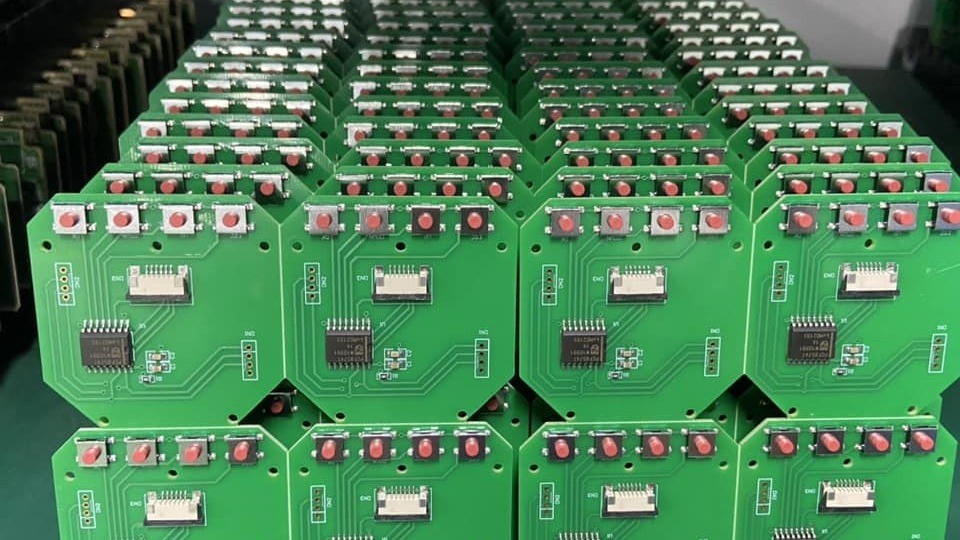
Low Volume PCB Assembly​ refers to the process of assembling printed circuit boards in smaller quantities, typically ranging from a single prototype to a few hundred units. This service is tailored for the research, development, and testing phases of product life cycles.

  • Core Purpose:​ It enables functional testing, design validation, and market pilot runs without the financial burden of large-scale production commitments.
  • Typical Applications:Prototyping for startups, pilot runs for OEMs, specialized industrial equipment, niche products, and R&D projects.
  • Key Differentiator:​ Unlike bulk production, it prioritizes flexibility, speed, and adaptability over the lowest possible per-unit cost.

The process follows the same core steps as standard PCB Assembly—solder paste application, component placement, reflow soldering, and inspection—but is optimized for efficiency at low quantities. The table below summarizes its key characteristics:

FeatureDescription
Order Quantity1 to 500 units (varies by manufacturer)
Primary GoalSpeed, Flexibility, & Design Validation
Setup EmphasisQuick turnaround and easy design changes
Cost StructureHigher per-unit cost, lower total project cost

In summary, Low Volume PCB Assembly​ is the essential bridge between a validated design and mass production, allowing for iterative refinement with manageable risk.

Low Volume PCB Assembly

How Does Low Volume PCB Manufacturing Differ from High Volume Processes?

The fundamental difference lies in the core objectives: Low Volume PCB Manufacturing​ prioritizes flexibility and speed for development, while High Volume PCB Manufacturing​ maximizes efficiency and consistency for the market.

  • Flexibility vs. Optimization:​ Low-volume lines are built to handle a wide variety of designs with frequent changeovers. High-volume lines are fine-tuned for one design to maximize output.
  • Speed to First Article:​ The focus for prototypes is on getting the first working unit fast. For high volume, the focus is on achieving a stable, rapid production cycle.
  • Cost Perspective:​ Low volume considers total project cost and time-to-market savings. High volume strives to minimize the cost per individual unit.

Consider the following comparison across key parameters:

ParameterLow Volume PCB AssemblyHigh Volume PCB Manufacturing
Batch Size1 – 500 units10,000+ units
Setup TimeShorter, more frequentLong, optimized once
Line FlexibilityVery High (mixed technology)Low (dedicated to a product)
Primary Cost DriverEngineering & Setup TimeMaterial & Scale Efficiency
Change ManagementEasy and expectedDifficult and costly
ToolingOften generic or soft-tooledCustom, hardened fixtures

Ultimately, choosing the right process depends on the product stage. For Fast Prototype​ and pilot needs, the agility of a Low-Volume PCB Assembly Factory​ is irreplaceable.

Why Do OEMs Rely on Wholesale Low Volume PCB Assembly for Pilot Production?

OEMs leverage Wholesale Low Volume PCB Assembly​ for pilot production because it de-risks scale-up by testing the manufacturability, supply chain, and performance of a product in a near-market environment.

  • Supply Chain Validation:​ A pilot run tests the real-world availability and compatibility of all components before committing to large-scale purchases.
  • Process Verification:​ It confirms that the assembly process designed in prototyping works reliably at a slightly larger scale, identifying potential yield issues.
  • Market Testing:​ Generates units for beta testing, regulatory certifications, and early customer feedback without massive inventory investment.
  • Logistics & Packaging Dry Run:​ Allows testing of the complete fulfillment cycle, from assembly to final packaging and shipping.

In essence, a pilot production run via a Wholesale Low Volume PCB Assembly Supplier​ acts as the final, critical check before the significant capital expenditure of mass production, ensuring a smoother and more predictable launch.

How Do Low Volume PCB Assembly Manufacturers Support Prototype Runs?

Specialized manufacturers support prototype runs by offering tailored services that go beyond simple assembly. They act as development partners.

  • Comprehensive DFM/DFA Analysis:​ Before assembly begins, engineers review design files to flag potential manufacturing, soldering, or reliability issues, suggesting modifications to improve yield and performance.
  • Rapid Turnaround:​ Dedicated quick-turn lines prioritize prototype orders, often offering services from 24-hour assembly to 5-day production turns.
  • Component Sourcing Support:​ They assist in procuring small quantities of components, managing the challenges of Minimum Order Quantities (MOQs) from distributors.
  • Mixed Technology Assembly:​ Capability to handle both SMT (Surface Mount Technology) and THT (Through-Hole Technology) on the same board, which is common in complex prototypes.
  • Rigorous Testing for Small Batches:​ Even for a handful of boards, they apply appropriate testing (e.g., flying probe, functional testing) to ensure each unit works as intended.

This holistic support system is what makes a Low Volume PCB Assembly Manufacturer​ a valuable asset for any development team, transforming a simple fabrication order into a collaborative engineering effort.

What Factors Shape Low Volume PCB Assembly Quotes During Early Development?

Understanding the components of a Low Volume PCB Assembly Quote​ empowers teams to make informed budgeting decisions. The cost is shaped by several key factors:

  • PCB Complexity:​ Layer count, size, material (e.g., standard FR-4 vs. ceramic), and special finishes (ENIG, immersion gold) directly impact the bare board cost.
  • Component Factors:​ The number of unique parts, their package sizes (fine-pitch components cost more to place), and source/availability. Obsolete or hard-to-find parts increase cost and time.
  • Assembly Difficulty:​ Mix of SMT vs. THT components, need for double-sided SMT placement, or any manual assembly steps.
  • Testing Requirements:​ The type and extent of testing (Visual Inspection, AOI, SPI, Functional Test) add time and labor but are critical for reliability.
  • Order Quantity & Turnaround:​ While per-unit cost decreases slightly with quantity, the total NRE (Non-Recurring Engineering) and setup costs are a larger portion of the total for very low volumes. Expedited turnaround incurs a premium.

A clear and detailed quote from a Low Volume PCB Assembly Supplier​ will break down these elements, providing transparency and helping you optimize the design for cost without compromising functionality.

Why Do Many Teams Choose China Low Volume PCB Assembly for Small-Batch Builds?

The choice of a China Low Volume PCB Assembly​ partner is often driven by a powerful combination of scale, skill, and value that is uniquely developed in the region’s electronics manufacturing ecosystem.

  • Integrated Supply Chain:​ Proximity to the world’s largest component manufacturers and PCB fabricators simplifies logistics, reduces lead times, and often provides cost advantages on the BOM (Bill of Materials).
  • Technical Expertise & Experience:​ Many Chinese factories have decades of experience servicing global clients, building deep expertise in handling diverse and complex projects for Low Volume PCB Assembly.
  • Advanced Manufacturing Infrastructure:​ Willingness to invest in the latest SMT equipment, automation, and testing gear to serve a sophisticated international market.
  • Cost-Effectiveness:​ Competitive labor and operational costs can translate to significant savings, especially valuable for startups and companies developing Cheap Low Volume PCB Assembly​ without sacrificing quality.

When selecting a China Low Volume PCB Assembly Manufacturer, the key is to vet partners for quality systems, communication skills, and experience with international standards to fully leverage these advantages.

What Should Buyers Evaluate When Selecting a Low Volume PCB Assembly Supplier?

Choosing the right partner is critical. Beyond just price, buyers should conduct thorough due diligence on several fronts to ensure a successful partnership.

Evaluation CriteriaKey Questions to Ask
Technical CapabilityCan they handle your board’s technology (e.g., Boost Converter PCB Layout​ with high-current traces)? Do they offer DFM analysis?
Quality CertificationsAre they ISO 9001, IATF 16949, or ISO 13485 certified? What in-process quality controls (SPI, AOI) do they use?
Communication & SupportIs there a dedicated project manager? Are they responsive and proficient in your language? Do they provide clear Low Volume PCB Assembly Quotes?
Supply Chain ManagementHow do they handle component sourcing and shortages? Can they provide PCB Assembly Small Volume​ component kits?
ScalabilityCan they support your product from 10 units to 10,000 units? Do they offer both Low Volume​ and High Volume PCB Manufacturing?

A supplier that scores well in these areas is more likely to be a reliable, long-term partner for your PCB Assembly Low Volume​ needs.

Why EBest Circuit (Best Technology) Is a Trusted Partner for Low Volume PCB Assembly?

As a reliable China low volume PCB assembly factory, BEST Technology​ has built its reputation by focusing exclusively on the challenges and requirements of low to mid-volume production. We understand that your prototype is not just a test board—it’s the foundation of your product’s future.

  • Dedicated Low-Volume Focus:​ Our processes, equipment, and team mindset are all optimized for agility, making us ideal for Fast Prototype​ and pilot production.
  • Engineering Partnership:​ We provide more than assembly; we offer expert design feedback to enhance manufacturability, reliability, and performance from the start.
  • End-to-End Control:​ From PCB Board Prototype​ fabrication to assembly and testing, we maintain strict quality control at every step, ensuring consistency and reliability.
  • Global Standard Quality:​ We serve demanding international clients, adhering to the highest global quality and communication standards, making us a reliable Low Volume PCB Assembly USA-alternative​ with competitive value.
Low Volume PCB Assembly

All in all, Low Volume PCB Assembly​ is the critical, strategic service that enables innovation by reducing the time, cost, and risk of bringing new electronic products to life. From validating a PCB Prototype​ to executing a pilot run, it provides the essential bridge between digital layouts and manufacturable boards.

This guide has outlined its importance, differentiated it from high-volume processes, and provided a framework for selecting the right manufacturing partner. For teams seeking reliable Low Volume PCB Assembly services for Fast Prototype​ development, BEST Technology​ stands as a proven partner. Pls feel free to contact our team at sales@bestpcbs.com to request a quote for your next project.

Low Volume PCB Manufacturer & Assembly, Fast Turnaround
Thursday, September 18th, 2025

Why choose low volume PCB? Let’s explore meaning, benefits, applications, manufacturing and assembly processes, delivery time for low volume PCB.

Are you troubled with these problems?

  • Waiting 48hours for a quote?
  • Forced to order 10pcs when you need 2?
  • Found silent tweaks in your Gerber files?

As a low volume PCB manufacturer, EBest Circuit (Best Technology) can provide you service and solution:

  • Dedicated Project Ally – A single technical contact handles all needs 24/7, eliminating supplier runarounds.
  • Order Just 1 Board – Pay only for materials used ($0 setup fees), with real-time cost breakdowns.
  • Pre-Production DFM Analysis – Get actionable feedback within 12hrs. Your design intent stays uncompromised.

Welcome to contact us if you have any request for low volume PCB: sales@bestpcbs.com.

What Does Low Volume PCB Mean?

Low Volume PCB refers to a production model with single-order quantities typically ranging from 5 to 500 pieces, providing highly flexible manufacturing services for product R&D, prototype validation, and small-scale trial production. Unlike traditional mass production, it removes high mold fees and minimum order quantity restrictions, enabling rapid design iteration (e.g., design modifications within 48 hours), multi-process compatibility (e.g., high-frequency materials/HDI blind vias), and complex technical verification (e.g., ±5% impedance control).

What Does Low Volume PCB Mean?

Why Choose Low Volume PCBs?

Advantages of Low volume PCBs:

Lower upfront investment

  • Avoid high tooling costs and material deposits.
  • Ideal for limited R&D/startup budgets.

Faster design iteration

  • Receive prototypes in 72 hours (vs. weeks for traditional manufacturing).
  • Rapidly test and refine designs.

Flexibility for special requirements

  • Support niche materials (ceramic/flex PCBs).
  • Accept customer-supplied components.

Enhanced quality control

  • 100% manual inspection per board.
  • Catch flaws before mass production.

Seamless market testing

  • Launch pilot batches (100-500 units) for user validation.
  • Customize labels/certifications per region.
Why Choose Low Volume PCBs?

When to Choose Low Volume PCB Board?

Applications of low volume PCB board:

  • Smart Wearable Devices: Smart Watch, AR/VR Glasses.
  • Medical Devices: Portable Monitor, High-Precision Surgical Instruments.
  • Industrial Control Systems: PLC Controller, Industrial Robot Core Board.
  • New Energy Vehicle BMS: Battery Management System.
  • IoT Terminals: Smart Meters, Environmental Monitoring Nodes.
  • Aerospace Special Circuit Boards: Satellite Control Modules, Radar Systems.
  • Consumer Electronics: Robotic Vacuum Cleaners, Smart Door Locks.

Low-Volume PCB Manufacturing Processes

1. Material Cutting: Large-size copper-clad laminates are cut to design dimensions, supporting small-batch multi-variety production and minimizing material waste.

2. Drilling: CNC drilling machine creates through-holes/blind vias/buried vias with ±0.05mm hole position accuracy.

3. Hole Metallization: Chemical copper deposition + electroplating forms conductive layers for multi-layer board interlayer electrical interconnection.

4. Dry Film Lamination: Photosensitive dry film is applied to the board surface as a mask base for pattern transfer.

5. Pattern Exposure: UV exposure machine transfers Gerber file patterns to dry film, forming resist patterns.

6. Pattern Etching: Alkaline etching solution removes unprotected copper to form precise circuit patterns
Solder

7. Mask Printing: Liquid photosensitive solder mask ink is applied and developed to form a permanent protective layer.

8. Surface Finish: Immersion gold/OSP/ENIG and other processes enhance soldering reliability and corrosion resistance.

9. Profile Machining: CNC milling/laser cutting enables rapid shaping of irregular-shaped boards.

10. Electrical Testing: Flying probe/fixture testing completes 100% electrical performance verification, ensuring no shorts/opens.

11. Final Inspection: Manual visual inspection + AOI optical inspection double-verify appearance and dimensional compliance.

12. Packaging & Shipping: Anti-static vacuum packaging + anti-vibration cushioning materials, customized labels with batch/serial numbers, integrated logistics tracking system for full traceability

Low-Volume PCB Manufacturing Processes

Low Volume PCB Assembly Processes

1. Component Preparation: Sorting and inspecting SMD/DIP components per BOM list, supporting small-batch multi-variety needs with rapid material switching capabilities.

2. Solder Paste Printing: High-precision stencil printing with ±0.02mm thickness control for uniform solder pad coverage.

3. SMD Placement: Modular pick-and-place machines enable high-speed precision mounting of micro-components (01005 chips, BGA packages).

4. Reflow Soldering: 10-zone nitrogen reflow oven achieves lead-free soldering with ±1°C temperature precision for reliable joints.

5. Through-Hole Assembly: Manual/automated insertion machines handle through-hole components, accommodating irregular shapes and precision placement.

6. Selective Soldering: Localized wave/selective soldering for through-hole parts minimizes thermal stress while ensuring consistent joint quality.

7. Functional Testing: ICT/FCT systems validate electrical performance, complemented by AOI/X-ray inspection for micro-defect detection.

8. Conformal Coating: Acrylic/silicone spray applied per requirements to enhance moisture/dust/corrosion resistance.

9. Packaging & Shipping: Custom anti-static packaging with cushioning materials, integrated logistics tracking for secure and traceable delivery.

Low Volume PCB Assembly Processes

Why Choose EBest Circuit (Best Technology) as Low Volume PCB Manufacturer?

Reasons why choose us as low volume PCB manufacturer:

  • One-Stop Solution: Full-link service covering PCB design to assembly, eliminating the need for clients to coordinate with multiple suppliers. Reduces R&D cycle by over 30% and lowers cross-department communication costs.
  • Free DFM Design Optimization: 19-year experienced engineering team provides Design for Manufacturing (DFM) analysis to identify design flaws early, minimize subsequent modification costs, improve first-board success rate by 40%, and avoid rework losses in mass production.
  • 19 Years of Experience Accumulation: Focused on low-volume PCB production, serving over 2,000 clients. Rich process database enables rapid adaptation to complex process requirements, ensuring enhanced production efficiency and yield.
  • Four-Layer Quality Control System: Incoming material inspection, in-process patrol inspection, 100% final product inspection, and reliability testing. Achieves full batch inspection with defect rate below 0.3%, significantly outperforming industry averages and ensuring product reliability.
  • Dynamic Cost Optimization Solutions: Customized cost-reduction strategies based on client budgets, including material substitution, process adjustments, and batch pooling. Reduces costs by 15%-30% while maintaining quality, maximizing cost-effectiveness.
  • 24-Hour Rapid Prototyping: 24-hour expedited prototyping for double-sided boards, 3-day delivery for 4-6 layer boards, 50% faster than conventional timelines. Accelerates design validation and market entry.
  • Flexible Production Scheduling: Dedicated production lines support small-batch orders starting at 50 pieces. Intelligent scheduling system enables rapid line changes (under 2 hours), flexibly accommodating multi-version and multi-batch production needs.
  • Professional Assembly Support: Comprehensive assembly services including SMT placement, DIP insertion, and conformal coating. Combined with precise soldering temperature curve control and solder joint inspection, ensures component assembly accuracy of ±0.025mm and stable electrical performance.

    Our Low Volume PCB Lead Time

    Lead time for 1-50 pieces

    LayersNormal ServiceFastest Service
    17 Days24 H
    28 Days24 H
    410 Days48 H
    610 Days72 H
    812 Days72 H
    ≥10TBDTBD

    Lead time for 50-500 pieces

    LayersNormal ServiceExpedited Service
    14-6 Days2-3 Days
    25-8 Days2-3 Days
    48-12 Days3-5 Days
    68-12 Days4-6 Days
    812-16 Days6-8 Days
    ≥1018-20 DaysTBD

    How to Get a Quote for Low Volume PCB Project?

    Essential Quote Submission Checklist for Low Volume PCB Projects

    • Design Data: Complete Gerber files (274X, NC Drill) with layer-specific details (dimensions, copper thickness, via specs).
    • BOM: Detailed component list with part numbers, manufacturers, quantities, and critical component flags.
    • Technical Specs: PCB layer count, material type (e.g., FR4, high-Tg), surface finish (ENIG/HASL/OSP), impedance targets, and special processes (HDI, blind vias).
    • Quantity & Timeline: Annual/batch volume and required delivery dates (prototypes to mass production).
    • Quality Standards: IPC-A-600/A-610 compliance, reliability tests (thermal cycling, vibration), and certifications (RoHS, UL).
    • Assembly Needs (If Applicable): SMT/DIP specs, solder paste type, test protocols (ICT/FCT), and coating requirements.

    Welcome to contact us if you have any inquiry for low volume PCB design, manufacturing, assembly: sales@bestpcbs.com.