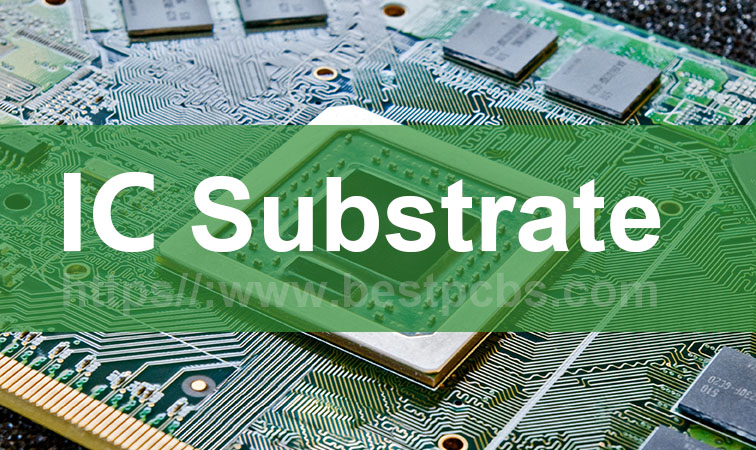
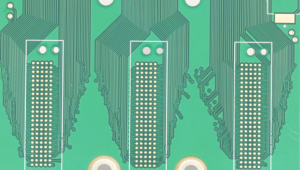
IC substrate is a core material in semiconductor packaging because it connects the chip to the circuit board, supports electrical transmission, and helps manage heat inside compact electronic products.
This article explains what an IC substrate is, how it is classified, which materials are commonly used, how it compares with PCB, and why it matters in modern electronics.
IC Substrate
What Is an IC Substrate?
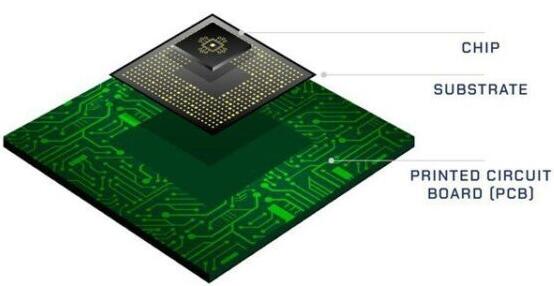
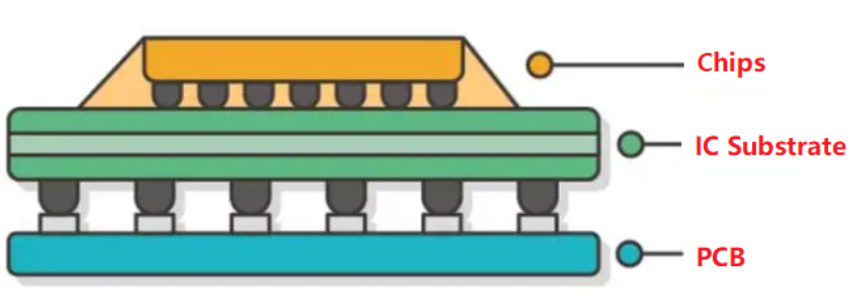
An IC substrate, also called an integrated circuit packaging substrate, is a critical material used in semiconductor packaging. It acts as the bridge between the silicon chip and the printed circuit board, carrying electrical signals, supporting the chip mechanically, and helping dissipate heat.
In modern electronic packaging, the IC substrate is far more than a simple base material. It plays a central role in improving signal transmission, enabling fine-pitch interconnection, reducing package size, and supporting advanced multi-chip integration. Because of this, IC substrates have become essential in high-performance and miniaturized electronic products.
As demand grows in sectors such as AI, 5G, cloud computing, servers, and big data, the IC substrate industry is expanding quickly. High-end chips need packaging platforms with tighter dimensional control, better thermal management, and higher routing density. That is exactly where IC substrates add value.
Why Is IC Substrate Important?
IC substrates are indispensable in the chip packaging and testing process because they provide several functions at once.
First, they support the chip physically and protect it during assembly and operation. Second, they create reliable electrical connections between the die and the main board. Third, they help manage heat, which is increasingly important in processors, GPUs, networking devices, and automotive electronics.
Compared with conventional interconnection methods, IC substrates can also improve package miniaturization. They make it possible to route more signals in a smaller area, support more input and output pins, and enhance overall electrical performance. In some advanced designs, they can even integrate passive or active components to support additional system functions.
How Are IC Substrates Classified?
IC substrates can be classified in several ways, including by packaging type, material characteristics, and bonding technology.
Classification by Packaging Type
BGA IC Substrate
Ball Grid Array substrates are widely used because they offer strong electrical and thermal performance. They are well suited for devices with high pin counts, especially packages with more than 300 pins.
CSP IC Substrate
Chip Scale Package substrates are used for compact single-chip packaging. They are lightweight and small, making them suitable for telecommunications devices, memory products, and other applications with relatively fewer pins.
FC IC Substrate
Flip-chip substrates are designed for high-speed and high-performance applications. They offer lower circuit loss, reduced signal interference, and better heat dissipation.
MCM IC Substrate
Multi-Chip Module substrates allow multiple chips with different functions to be integrated into a single package. They support compact and lightweight product designs, though thermal and signal management can become more challenging as package complexity rises.
Classification by Material
Rigid IC Substrate
Rigid IC substrates are commonly made from ABF resin, BT resin, or epoxy resin. They usually have a coefficient of thermal expansion around 13–17 ppm/°C and are widely used in mainstream packaging.
Flexible IC Substrate
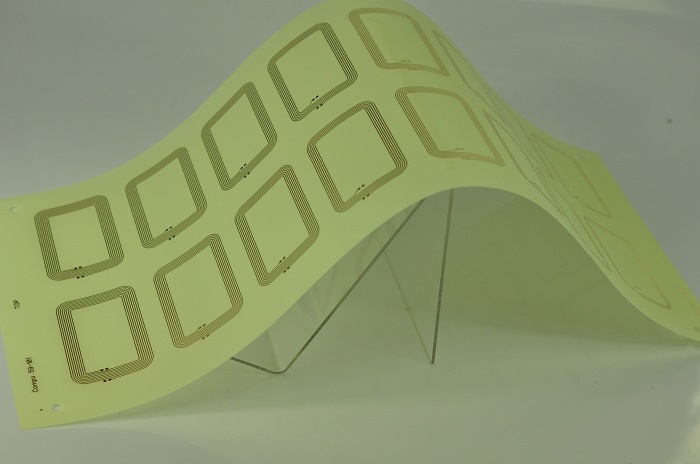
Flexible IC substrates are usually made from PI or PE resin. Their flexibility makes them useful in space-constrained designs and applications requiring bending or lightweight packaging.
Ceramic IC Substrate
Ceramic IC substrates use materials such as alumina, aluminum nitride, or silicon carbide. These substrates have lower thermal expansion and better thermal performance, making them suitable for demanding environments.
Classification by Bonding Technology
The main bonding methods used in IC substrate packaging include:
- Tape-Automated Bonding (TAB)
- Wire Bonding
- Flip-Chip Bonding
Each method has its own packaging advantages depending on electrical performance, package size, cost, and design requirements.
What Materials Are Used in IC Substrates?
The main raw materials used in IC substrates today include BT substrates, ABF substrates, and glass substrates.
BT Substrate
BT substrate uses bismaleimide triazine resin as the base material. It offers high glass transition temperature, good heat resistance, and a relatively low dielectric constant. These properties make it suitable for products that require stable electrical performance and good reliability.
BT substrates are commonly used in memory chips, MEMS devices, RF chips, and LED packaging. As demand for servers and memory continues to grow, BT substrates remain an important material in the packaging supply chain.
ABF Substrate
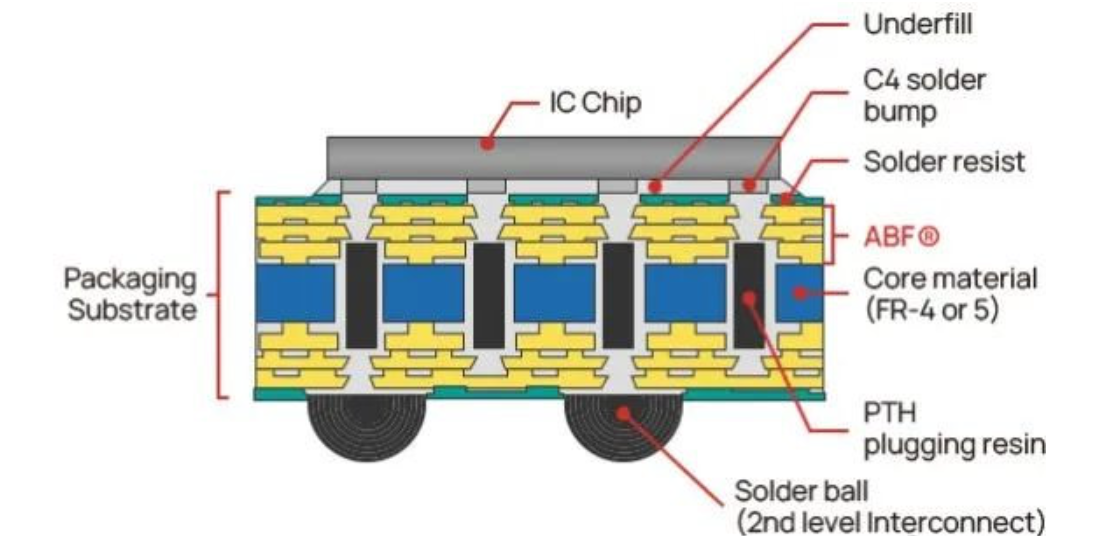
ABF stands for Ajinomoto Build-Up Film. ABF substrates are known for enabling fine line widths, small spacing, and high-density interconnection. These features make them highly suitable for advanced packaging with high pin counts and high data rates.
They are widely used in CPU, GPU, FPGA, and ASIC packaging, especially in high-performance computing. With rapid growth in AI, cloud computing, and 5G infrastructure, ABF substrates have become one of the most valuable materials in advanced semiconductor packaging.
At the same time, ABF materials must keep evolving. As package sizes increase and performance targets become stricter, substrate materials need better dimensional stability, stronger thermal reliability, and improved process compatibility.
Glass Substrate
Glass substrate is an emerging material in semiconductor packaging. It provides excellent mechanical stability and attractive physical properties. Compared with traditional materials, glass can reduce pattern distortion, improve photolithography accuracy, and support much higher via density.
Glass substrates are also seen as promising for ultra-large package formats. According to industry analysis, they may offer advantages in performance, density, power efficiency, and long-term cost structure. Although still developing, they are becoming an important topic in next-generation packaging.
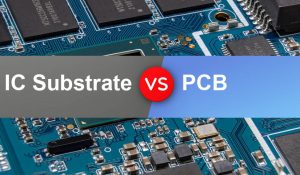
IC Substrate vs. PCB: What Is the Difference?
Although IC substrates and PCBs are closely related, they are not the same.
1. Basic Definition
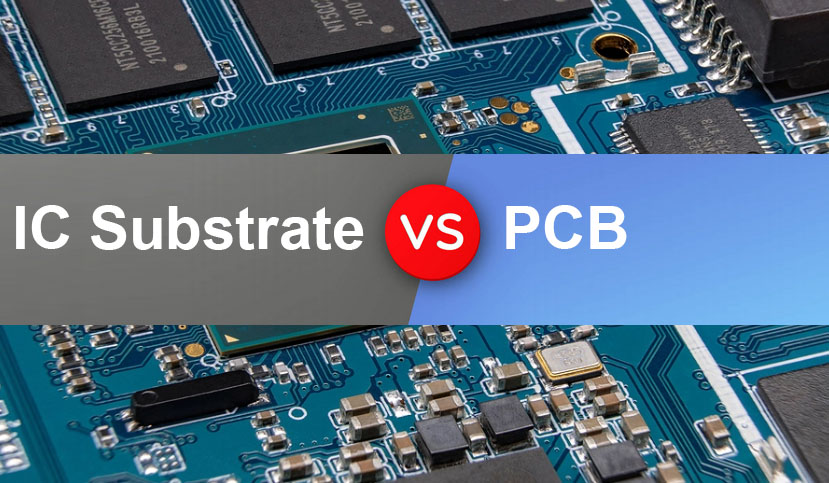
An IC substrate is mainly used in chip packaging. It connects the semiconductor die to the printed circuit board and supports fine-pitch, high-density electrical routing.
A PCB, by contrast, is the board used to mount and connect electronic components in a finished product. It serves as the platform for system-level assembly in devices such as computers, telecom equipment, industrial controls, and medical electronics.
2. Design Features
IC substrate design focuses heavily on miniaturization, precision, and electrical performance. It must support fine traces, tight spacing, and advanced signal routing within a very limited area. Thermal control and noise reduction are also major design concerns.
PCB design is broader in system scope. It must consider materials, stackup, EMI performance, manufacturability, and cost. While precision is still important, the design rules are generally less extreme than those of IC substrates.
3. Manufacturing Process
IC substrate manufacturing uses highly advanced processes such as deposition, exposure, fine etching, molding, and laser processing. The precision requirements are much closer to semiconductor fabrication than to standard board production.
PCB manufacturing includes drilling, plating, imaging, etching, solder mask application, surface finishing, testing, and assembly preparation. While both IC substrates and PCBs rely on circuit patterning and interconnection technologies, IC substrate production is generally more demanding in terms of dimensional tolerance and feature size.
Even though they differ in function and process complexity, IC substrates and PCBs work together in electronic products. The IC substrate connects the chip to the package level, while the PCB connects the package to the complete system.
What Are the Main Applications of IC Substrates?
IC substrates are used in a wide range of industries because they support high-density packaging, compact product design, and reliable electrical performance.
Common applications include:
- Consumer electronics such as smartphones, tablets, laptops, and wearables
- Automotive electronics including ADAS, infotainment systems, and EV power/control modules
- Telecommunications such as 5G infrastructure and networking hardware
- Medical devices including implantable electronics and diagnostic systems
- Aerospace and defense applications such as radar, satellites, and surveillance systems
- Industrial equipment including robotics and factory automation
- AI and sensor modules requiring advanced data processing and compact packaging
As chip performance rises, these application areas increasingly rely on advanced substrate technology to meet electrical, thermal, and size requirements.
What Is IC Substrate Packaging?
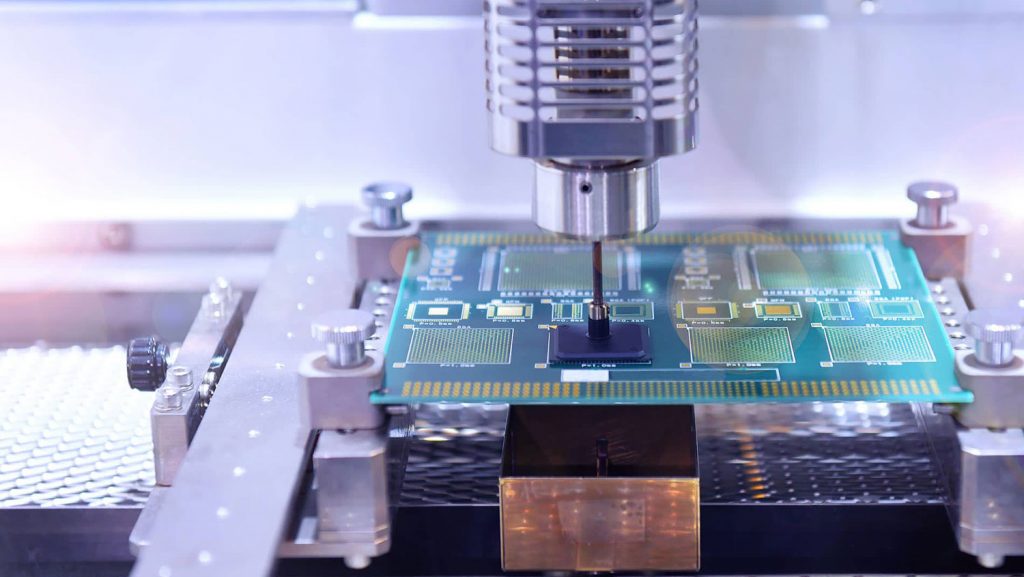
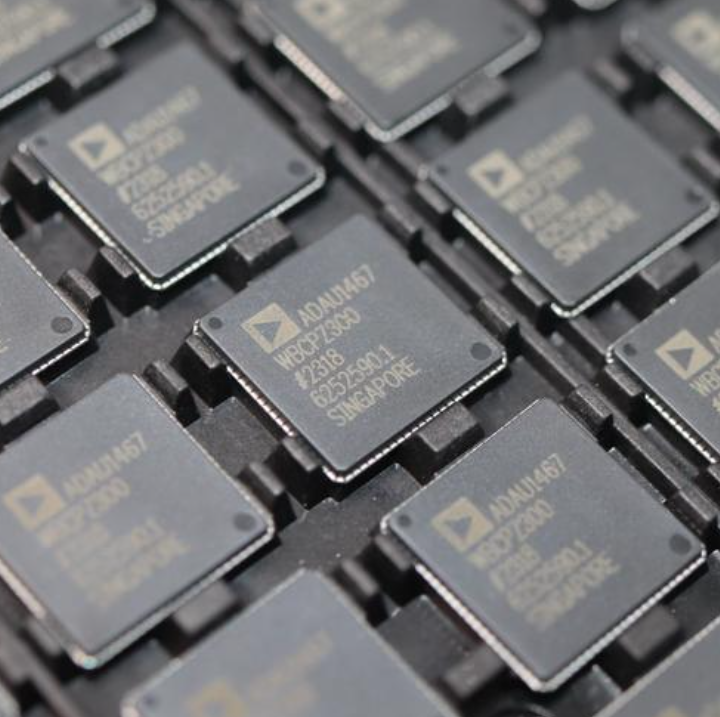
IC substrate packaging refers to the stage in semiconductor production where the chip is enclosed in a protective package and electrically connected for use in electronic systems. The package protects the die from environmental damage while enabling electrical communication with the PCB.
Several packaging formats are commonly used:
- PGA (Pin Grid Array) for socket-based connections
- DIP (Dual Inline Package) for through-hole assembly
- CSP (Chip Scale Package) for highly compact surface-mount designs
- QFP (Quad Flat Package) for leaded surface-mount packages
- QFN (Quad Flat No-Lead) for compact, leadless surface mounting
- MCP (Multi-Chip Package) for integrating multiple dies in one package
- Area Array Package for efficient high-density interconnection across the full package surface
The choice of package depends on product size, thermal requirements, electrical performance, assembly method, and cost targets.
What Is IC Substrate Packaging?
What Are the Key Features of IC Substrates?
IC substrates stand out because they are engineered for demanding electrical and mechanical performance. Their key features include:
High Interconnection Density
They support a large number of chip-to-board connections in a compact space, often through multilayer structures.
Strong Signal Integrity
Low-loss materials and precision routing help preserve high-speed and high-frequency signal quality.
Thermal Management
Substrate materials and structures are designed to help conduct and spread heat, which is critical in processors, power devices, and automotive systems.
Mechanical Reliability
IC substrates must withstand thermal cycling, vibration, and mechanical stress while maintaining stable interconnection.
Miniaturization Support
They enable narrow traces, small vias, fine pitch, and dense component integration, which are all needed in compact electronics.
Multi-Layer Capability
Multiple conductive layers allow more complex routing and better integration of electrical functions.
Moisture and Corrosion Resistance
Many substrate materials and protective finishes help improve long-term reliability in harsh operating environments.
How Is the IC Substrate Market Evolving?
The IC substrate market is moving toward higher density, thinner structures, better thermal stability, and stronger support for advanced computing. AI servers, high-speed networking, automotive electronics, and 5G devices are all pushing packaging requirements higher.
ABF substrates are seeing strong demand because they are widely used in high-performance computing chips. BT substrates continue to serve important roles in memory and RF packaging. Glass substrates are also attracting industry attention as a possible next-generation platform for very large and very advanced packages.
In the coming years, manufacturers that can offer precise process control, better yield, and material innovation will be in a strong position within the IC substrate supply chain.
FAQ About IC Substrate
1. What is the function of an IC substrate?
Its main function is to support the chip, connect it electrically to the board, help dissipate heat, and improve package miniaturization and performance.
2. Is IC substrate the same as PCB?
No. An IC substrate is mainly used in semiconductor packaging, while a PCB is used in finished electronic assemblies. The IC substrate connects the chip to the package level, and the PCB connects the package to the wider system.
3. What materials are commonly used in IC substrates?
BT substrate, ABF substrate, and glass substrate are the main material groups highlighted in your source content. Ceramic materials are also used in specific high-reliability or thermal-demanding designs.
4. Why is ABF substrate important?
Because it supports finer circuitry, high pin counts, and high-speed transmission, making it highly suitable for CPU, GPU, FPGA, ASIC, and HPC packaging.
5. What is the difference between ABF and BT substrate?
BT substrate is widely used in memory, MEMS, RF, and LED chip packaging, while ABF substrate is more closely tied to advanced, high-pin-count, high-speed packaging.
6. Is glass substrate already used in advanced packaging?
It is emerging as a serious next-generation material. Your source describes it as offering better mechanical stability, lower distortion, and much higher via density potential.