PCB manufacturing PCB manufacturing
Home > Blog

High speed PCB design Radiocord technologies

High Speed PCB Design Radiocord Technologies​ | EBest Circuit
Friday, March 13th, 2026

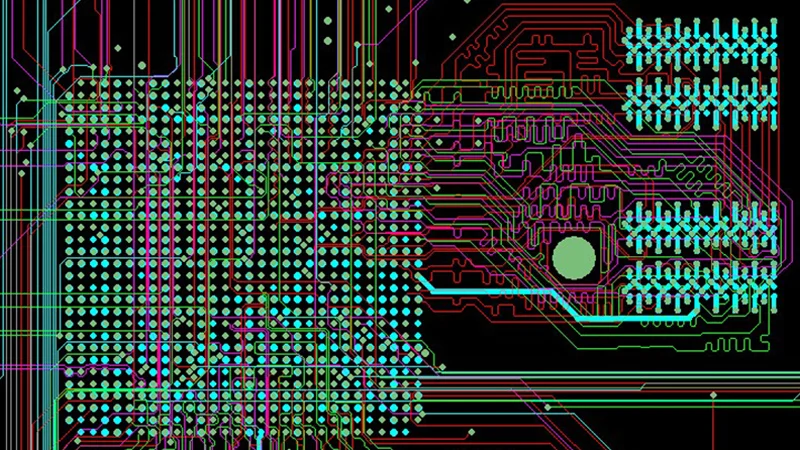
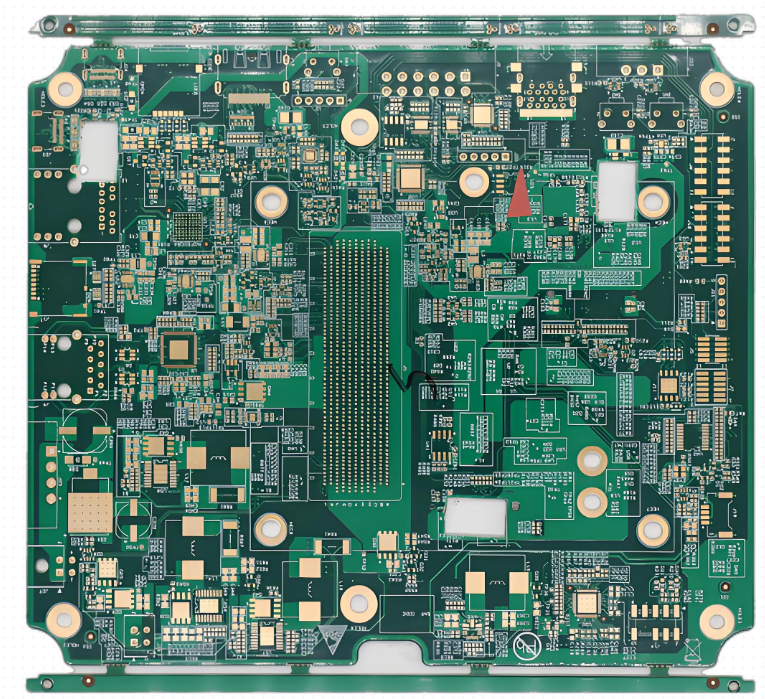
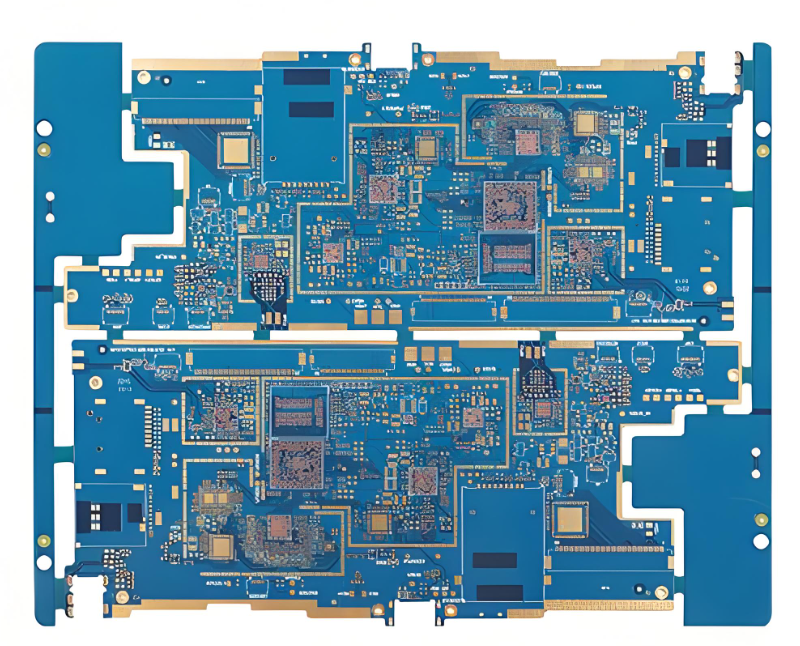
High speed PCB design Radiocord technologies refers to advanced printed circuit board engineering techniques used to ensure stable signal transmission at high data rates and fast edge speeds. This article explains what defines a high-speed PCB, the frequencies that require high-speed design rules, suitable materials like FR-4, impedance control requirements, stack-up strategies, crosstalk mitigation, simulation tools, and practical design workflows.

What Is Considered a High Speed PCB?

A PCB is considered high speed when signal timing and electromagnetic behavior begin to affect circuit performance. At lower speeds, traces behave like simple conductors. As signal edges become faster, traces begin acting like transmission lines.

Many engineers evaluate this change using signal rise time. When the signal edge becomes very short, electromagnetic effects become more significant.

A common estimation formula is:

Bandwidth ā‰ˆ 0.35 / Rise Time

For example:

Rise TimeApproximate Frequency Content
5 ns~70 MHz
1 ns~350 MHz
500 ps~700 MHz
100 ps~3.5 GHz

Today, many electronic systems require high speed PCB design, including:

  • Data center servers
  • High-performance computing platforms
  • Networking switches and routers
  • Automotive radar electronics
  • Medical imaging equipment

Modern processors often communicate with memory at speeds exceeding 20–30 Gbps per lane, which requires strict signal integrity control in PCB layout.

High Speed PCB Design Radiocord Technologies​ | EBest Circuit

What Frequency Requires High Speed PCB Design?

There is no single frequency that defines a high speed PCB. However, many engineers begin applying high speed design rules when signal frequencies exceed 50 MHz to 100 MHz.

Above this range, several signal integrity challenges begin to appear:

  • Signal reflections
  • Crosstalk between traces
  • Timing distortion
  • Electromagnetic interference

Modern digital interfaces operate far beyond this range.

InterfaceData Rate
USB 3.05 Gbps
PCIe Gen416 GT/s
PCIe Gen532 GT/s
10 Gigabit Ethernet10 Gbps

These speeds introduce frequency components in the gigahertz range. According to industry research from Cisco’s Global Cloud Index, global data center traffic has exceeded 20 zettabytes annually, and modern network links commonly operate at 25 Gbps, 56 Gbps, and even 112 Gbps per channel.

Can FR4 Be Used for High Speed PCB?

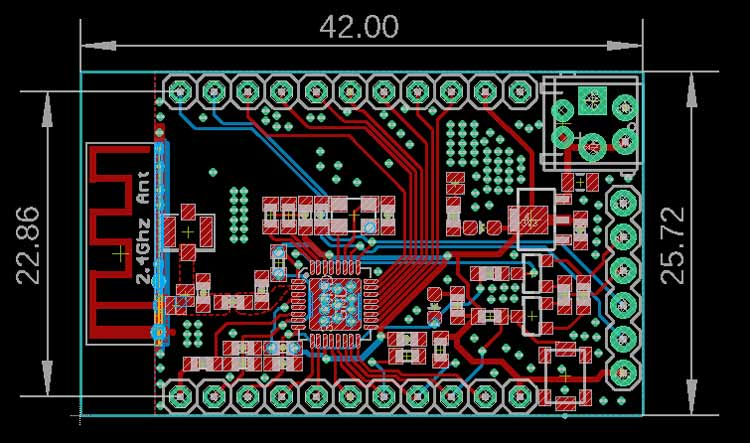
FR4 remains the most commonly used PCB substrate in the electronics industry. It offers good mechanical strength, wide availability, and relatively low manufacturing cost.

Typical FR4 properties include:

  • Dielectric constant: 4.2 – 4.6
  • Loss tangent: ~0.015 at 1 GHz
  • Glass transition temperature: 130–170°C

FR4 works well for many digital systems, including:

  • Computer motherboards
  • Industrial control boards
  • Consumer electronics
  • Networking equipment

However, signal loss increases as operating frequency rises. When data rates exceed 10 Gbps, engineers sometimes choose lower-loss laminates to maintain signal quality.

Common high-speed materials include:

  • Rogers laminates
  • Megtron series materials
  • Nelco high-speed laminates

Even so, many systems still use FR4 successfully when trace lengths are controlled and stackup design is optimized.
Can FR4 Be Used for High Speed PCB?

What Impedance Is Used in High Speed PCB?

Controlled impedance is critical in high speed PCB design. It ensures that signals travel along traces without reflections.

When impedance changes along a signal path, part of the signal reflects back toward the source. This reflection can distort digital signals and create timing errors.

Common impedance targets include:

Signal TypeImpedance
Single-ended signals50 Ī©
Differential pairs (Ethernet)100 Ī©
USB differential pairs90 Ī©
PCIe differential pairs85 Ī©

Several factors determine trace impedance:

  • Trace width
  • Dielectric thickness
  • Copper thickness
  • Distance to the reference plane

Most high-speed designs require impedance tolerance within ±10%, while more sensitive systems may require ±5% control.

PCB manufacturers verify impedance using Time Domain Reflectometry (TDR) testing to ensure the finished board meets electrical specifications.

What Stackup Is Best for High Speed PCB?

Stackup design strongly influences signal integrity and electromagnetic compatibility. A well-designed stackup provides stable reference planes and controlled impedance for high-speed signals.

A typical 6-layer high-speed PCB stackup looks like this:

LayerFunction
Layer 1Signal
Layer 2Ground plane
Layer 3Signal
Layer 4Power plane
Layer 5Ground plane
Layer 6Signal

This configuration offers several advantages:

  • Stable return paths for high-speed signals
  • Reduced electromagnetic interference
  • Improved impedance consistency
  • Better power distribution stability

More complex digital systems often require 8 to 12 layers. High-performance computing boards sometimes exceed 20 layers to support dense routing and multiple signal channels.

How Do You Reduce Crosstalk in High Speed PCB?

Crosstalk occurs when electromagnetic energy from one signal trace couples into another nearby trace. This interference can introduce noise and reduce signal reliability. Crosstalk becomes stronger when traces run parallel over long distances.

Several layout techniques help reduce crosstalk:

  • Increase spacing between adjacent signal traces
  • Avoid long parallel routing segments
  • Route adjacent layers at 90-degree angles
  • Place signal layers close to ground planes
  • Use differential pair routing
How Do You Reduce Crosstalk in High Speed PCB?

A common design guideline recommends spacing of at least three times the trace width.

For example, if a trace is 5 mil wide, the spacing should ideally be 15 mil or greater. These layout strategies help maintain stable signal performance in dense PCB designs.

What Simulation Tools Are Used for High Speed PCB?

Simulation tools allow engineers to evaluate signal behavior before manufacturing begins. These tools model electromagnetic effects such as reflections, signal loss, and crosstalk.

Common high-speed simulation tools include:

  • Cadence Sigrity
  • ANSYS HFSS
  • Keysight ADS
  • Mentor HyperLynx
  • Altium Designer signal integrity tools

These platforms help engineers analyze several critical parameters:

  • Eye diagram quality
  • Signal reflections
  • Crosstalk levels
  • Power distribution noise

For example, a 10 Gbps communication channel must maintain a clear eye opening to ensure reliable data transmission. Early simulation helps identify potential problems before fabrication begins.

How to Design a High-Speed PCB?

Designing a high-speed PCB requires careful planning and a structured workflow. Each design step helps maintain signal integrity across the circuit board.

A typical design process includes:

  1. Define system speed and interface requirements
  2. Select appropriate PCB materials
  3. Plan the multilayer stackup
  4. Route critical high-speed signals first
  5. Maintain controlled impedance routing
  6. Minimize unnecessary vias
  7. Match differential pair lengths
  8. Perform signal integrity simulation
  9. Build prototypes for validation
  10. Prepare the design for production

Typical High-Speed PCB Design Parameters

ParameterTypical Value
Differential impedance85–100 Ī©
Single-ended impedance50 Ī©
Trace width (common)3–6 mil
Minimum spacing3Ɨ trace width
Via stub length< 10 mil
Signal rise time< 1 ns for high-speed systems

These parameters are widely used in high-speed digital systems such as Ethernet switches, GPU boards, and high-performance servers.

What Is the Difference Between High Speed and High-Frequency PCB?

The terms high speed PCB and high-frequency PCB are often used interchangeably, but they focus on different engineering challenges. High speed PCBs mainly deal with fast digital signals and timing accuracy, while high-frequency PCBs are designed for analog RF or microwave signals that operate at very high frequencies.

The comparison below highlights the key distinctions.

FeatureHigh Speed PCBHigh-Frequency PCB
Signal TypeDigital signals with fast switching edgesAnalog RF or microwave signals
Main Design FocusSignal integrity and timing controlElectromagnetic wave behavior
Typical Frequency RangeTens of MHz to several GHzUsually above 1 GHz
Key ChallengeReflections, crosstalk, and timing skewSignal loss, radiation, and impedance matching
Trace BehaviorTransmission line effects due to fast edgesFull RF transmission behavior
Material RequirementsFR4 often usable for many designsUsually requires low-loss RF materials
Typical MaterialsFR4, high-speed digital laminatesRogers, PTFE, ceramic-filled substrates
Impedance ControlImportant for digital interfacesCritical for RF signal matching
Common ApplicationsServers, networking hardware, computer motherboardsRadar systems, wireless communication, satellite electronics
Design ToolsSignal integrity simulatorsRF electromagnetic simulation tools
Layout ConsiderationsDifferential pairs, length matching, return pathsRF shielding, impedance matching networks

In high speed digital circuits, engineers mainly worry about signal edges and timing alignment. Even when the base frequency is moderate, the fast rise time of digital signals creates high-frequency components that require careful routing.

In contrast, high-frequency circuits operate directly in the RF or microwave domain. Engineers must consider wave propagation, radiation, antenna effects, and impedance matching across the entire signal path.

Why Choose Best Technology as Your High Speed PCB Manufacturer?

High-speed PCB fabrication requires precise manufacturing control. Even small variations in trace width or dielectric thickness can affect impedance and signal integrity.

Best Technology has developed extensive experience in multilayer PCB manufacturing for communication systems, computing hardware, and industrial electronics. Their fabrication processes support controlled impedance routing and complex stackup structures.

Key technical capabilities include:

  • Multilayer PCB production up to 30 layers
  • Controlled impedance tolerance within ±5%
  • Support for advanced high-speed laminates
  • Fine trace width and spacing down to 3 mil
  • Electrical verification using TDR impedance testing

Working with an experienced manufacturer during the design stage can help ensure the final PCB meets both electrical and manufacturing requirements.

For technical inquiries or PCB manufacturing support, please contact: sales@bestpcbs.com
High Speed PCB Design Radiocord Technologies: Complete Guide for Reliable Signal Integrity
Friday, March 13th, 2026

High speed PCB design Radiocord technologies refers to advanced printed circuit board engineering techniques used to ensure stable signal transmission at high data rates and fast edge speeds. This article explains what defines a high-speed PCB, the frequencies that require high-speed design rules, suitable materials like FR4, impedance control requirements, stackup strategies, crosstalk mitigation, simulation tools, and practical design workflows.

Modern electronics, from 5G infrastructure and autonomous vehicles to data centers and high-performance computing, depend heavily on high-speed circuit boards. Engineers must carefully manage signal integrity, impedance, electromagnetic interference, and layer structure to maintain performance. Without disciplined design methods, high-speed signals can degrade quickly due to reflections, noise coupling, or timing skew.

Below is a comprehensive guide to understanding and implementing high-speed PCB design principles.

What Is Considered a High Speed PCB?

A high-speed PCB is a printed circuit board designed to transmit digital or RF signals with extremely fast rise times or high operating frequencies while preserving signal integrity.

Unlike conventional PCBs, high-speed boards must account for transmission line behavior. Once signal edges become fast enough, traces no longer behave like simple copper connections; they act like controlled impedance transmission lines.

Typical characteristics of high-speed PCBs include:

  • Fast Signal Rise Time: Signals with rise times below about 1 ns generally require high-speed design considerations.
  • High Data Rates: Interfaces such as PCIe, USB 3.0, USB4, HDMI, DDR4, DDR5 memory, and 10G Ethernet operate at speeds where routing geometry directly affects signal quality.
  • Transmission Line Effects: Trace impedance, reflection control, and termination become essential for maintaining waveform integrity.
  • Strict Signal Integrity Requirements: Engineers must manage reflection, jitter, skew, crosstalk, and EMI.

In practice, the definition of high speed often depends more on edge rate than clock frequency.

What Is Considered a High Speed PCB?

What Frequency Requires High Speed PCB Design?

High-speed design rules typically apply when signal frequencies exceed 50 MHz to 100 MHz, although the exact threshold varies depending on signal rise time.

Engineers often use the following guideline:

If the trace length exceeds one-sixth of the signal rise distance, the signal must be treated as high-speed.

A simplified estimation formula is:

Distance = Rise Time Ɨ Signal Velocity

In FR4 materials, signal velocity is roughly 150 to 180 mm per nanosecond.

For example:

  • Rise time = 1 ns
  • Signal travel ā‰ˆ 150 mm

Therefore, traces longer than about 25 mm require transmission-line analysis.

High-speed PCB design is commonly required for systems operating in:

ApplicationTypical Frequency
DDR Memory800 MHz – 3 GHz
USB 3.05 GHz
PCIe Gen416 GHz
RF Communication1 GHz – 40 GHz

As frequencies increase, PCB layout precision becomes critical.

Can FR4 Be Used for High Speed PCB?

Yes, FR4 can be used for many high-speed PCB designs, especially when signal frequencies remain below about 3 GHz to 5 GHz.

FR4 remains widely used because it offers a strong balance of cost, mechanical strength, and manufacturability.

Typical FR4 electrical properties include:

ParameterTypical Value
Dielectric constant (Dk)4.2 – 4.6
Loss tangent (Df)0.015 – 0.02
Thermal stabilityGood
CostLow

However, FR4 has some limitations.

Limitations of FR4 in High-Speed Design

1. Higher signal loss at GHz frequencies

2. Dielectric constant variation with frequency

3. Increased insertion loss for long traces

For extremely high-frequency designs such as RF and millimeter-wave systems, engineers typically select specialized materials such as Rogers RO4350B, PTFE laminates, or Panasonic Megtron series. These materials offer lower dielectric loss and more stable electrical properties.

What Impedance Is Used in High Speed PCB?

Controlled impedance is one of the most important aspects of high-speed PCB design.

Common impedance values include:

Signal TypeTypical Impedance
Single-ended signals50 Ī©
Differential pairs100 Ī©
USB differential90 Ī©
Ethernet differential100 Ī©
PCIe differential85 Ī©

Impedance depends on several factors:

  • trace width
  • dielectric thickness
  • copper thickness
  • reference plane distance
  • dielectric constant

Engineers usually calculate impedance using field solvers or PCB design tools before fabrication.

Accurate impedance ensures minimal signal reflection, stable waveform shape, and reliable high-speed communication.

What Stackup Is Best for High Speed PCB?

The PCB stackup strongly influences signal integrity, EMI performance, and impedance control.

A well-designed stackup provides continuous reference planes, symmetrical structure, and short return current paths.

A common 8-layer high-speed stackup may look like this:

LayerFunction
L1High-speed signals
L2Ground plane
L3Signals
L4Power plane
L5Power plane
L6Signals
L7Ground plane
L8Signals

Important stackup design principles:

  1. Place ground planes next to signal layers: This minimizes loop inductance and EMI.
  2. Use differential pair routing layers: High-speed interfaces benefit from symmetric routing layers.
  3. Maintain consistent dielectric thickness: This helps ensure controlled impedance.
  4. Avoid split planes under high-speed traces: Return currents must have a continuous path.
What Stackup Is Best for High Speed PCB?

How Do You Reduce Crosstalk in High Speed PCB?

Crosstalk occurs when electromagnetic coupling causes interference between nearby signal traces.

This effect becomes severe in high-speed systems.

Common techniques to reduce crosstalk include:

  1. Increase Trace Spacing: A typical guideline is trace spacing greater than or equal to 3 times trace width. Greater spacing reduces capacitive coupling.
  2. Use Ground Guard Traces: Placing grounded traces between signals helps isolate electromagnetic fields.
  3. Route Differential Pairs Carefully: Maintain constant spacing, matched lengths, and minimal skew.
  4. Use Solid Ground Planes: Ground planes provide return paths and reduce loop area.
  5. Avoid Parallel Routing: Long parallel traces increase inductive and capacitive coupling.

Engineers often stagger signal routing to minimize overlap.

What Simulation Tools Are Used for High Speed PCB?

Simulation tools allow engineers to predict signal behavior before manufacturing.

Common high-speed PCB simulation tools include:

ToolFunction
Keysight ADSRF and signal integrity simulation
Cadence SigritySI and PI analysis
HyperLynxPCB signal integrity
Ansys HFSSElectromagnetic field simulation
Altium DesignerIntegrated PCB simulation

Simulation helps engineers analyze impedance matching, reflection coefficients, eye diagrams, insertion loss, and crosstalk.

Using simulation early in the design stage can dramatically reduce redesign cycles.

How to Design a High-Speed PCB?

Designing a high-speed PCB requires a structured engineering workflow.

1. Define Electrical Requirements: Determine operating frequency, data rate, impedance requirements, and signal topology.

2. Choose Appropriate Materials: Select materials with suitable dielectric constant, loss tangent, and thermal stability.

3. Plan PCB Stackup: Establish layer count, signal layers, ground planes, and power planes.

4. Control Impedance: Calculate trace widths using field solver tools.

5. Route Critical Signals First: Important interfaces such as DDR, PCIe, and RF lines should be routed before secondary signals.

6. Minimize Vias: Vias introduce impedance discontinuities. Use back-drilling or blind vias when necessary.

7. Perform Signal Integrity Simulation: Verify performance through simulation tools.

8. Apply Design Rule Checks: Check length matching, differential pair spacing, and impedance constraints.

A disciplined design process helps ensure reliable high-speed performance.

How to Design a High-Speed PCB?

What Is the Difference Between High Speed and High-Frequency PCB?

Although the terms are sometimes used interchangeably, high-speed PCB and high-frequency PCB refer to different engineering concerns.

CategoryHigh-Speed PCBHigh-Frequency PCB
FocusDigital signalsRF and analog signals
Signal TypeFast edge rateSinusoidal waveform
Key ConcernTiming and integrityLoss and impedance
Typical InterfacesDDR, PCIe, USBRF amplifiers, antennas

High-speed PCBs emphasize signal timing and edge rate, while high-frequency PCBs focus on electromagnetic behavior at GHz frequencies.

Many modern systems require both disciplines simultaneously, especially in communication equipment.

Why Choose Best Technology as Your High Speed PCB Manufacturer?

Selecting the right manufacturing partner is critical for high-speed PCB success. Even a well-designed layout can fail if fabrication tolerances are not tightly controlled.

Best Technology (EBest Circuit) offers a complete high-speed PCB development solution for engineers and OEM companies worldwide.

Key advantages include:

  1. 1+3 Technical Team Full-Process Service: Each project is supported by one customer engineer and three experienced technical engineers, ensuring rapid technical communication and design optimization.
  2. Free DFM and BOM Optimization: Senior engineers provide professional DFM review and BOM optimization reports before production begins.
  3. One-Stop PCB and PCBA Manufacturing: Best Technology integrates PCB fabrication, component sourcing, SMT assembly, and functional testing.
  4. Rapid Prototype Turnaround: Prototype PCBA projects are typically completed within about 1.5 weeks, allowing engineers to validate designs quickly.
  5. Certified Manufacturing: The company operates under strict quality systems including ISO9001, ISO13485, IATF16949, and AS9100D.
  6. Digital Factory and Full Traceability: Advanced MES systems provide component and process traceability in seconds, ensuring manufacturing transparency and reliability.

With over 20 years of PCB and PCBA manufacturing experience, Best Technology supports demanding industries including aerospace, automotive electronics, industrial control, RF communication, and medical equipment.

If you are developing advanced communication hardware, networking equipment, or high-speed computing devices, Best Technology can provide dependable high-speed PCB fabrication and assembly services.

Contact Best Technology today at sales@bestpcbs.com to discuss your next high-speed PCB project.