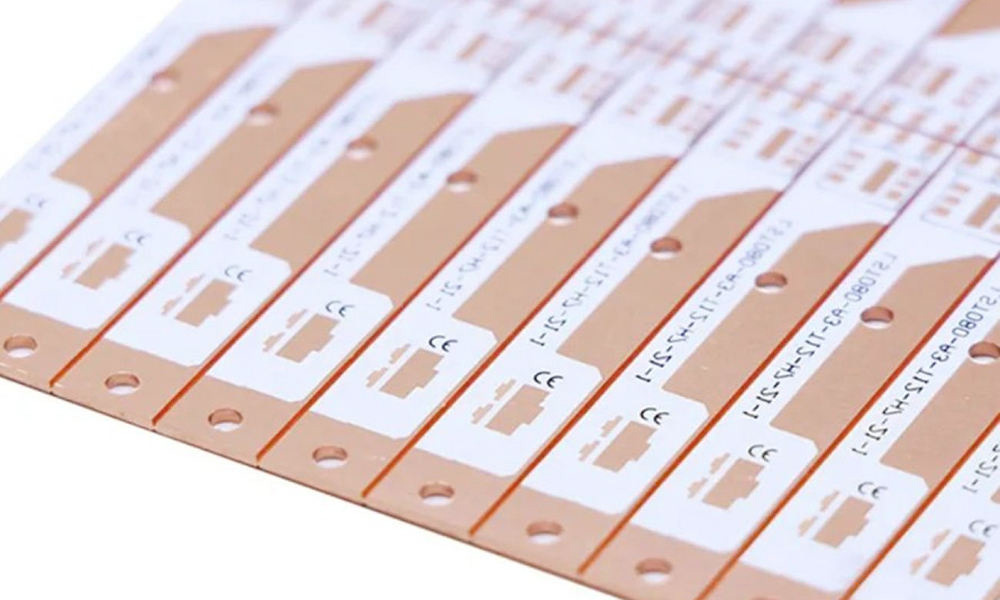
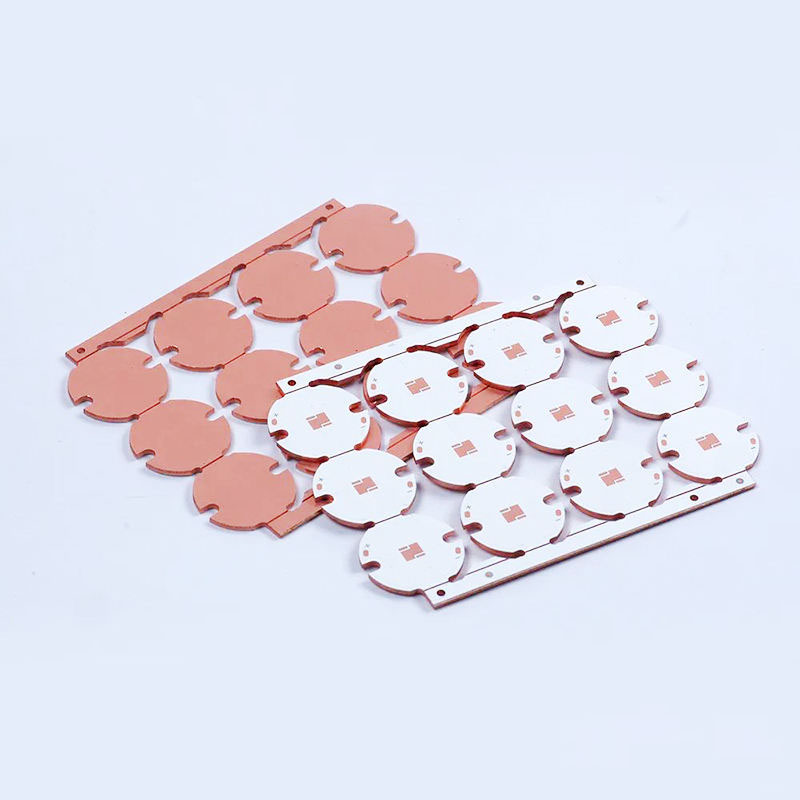
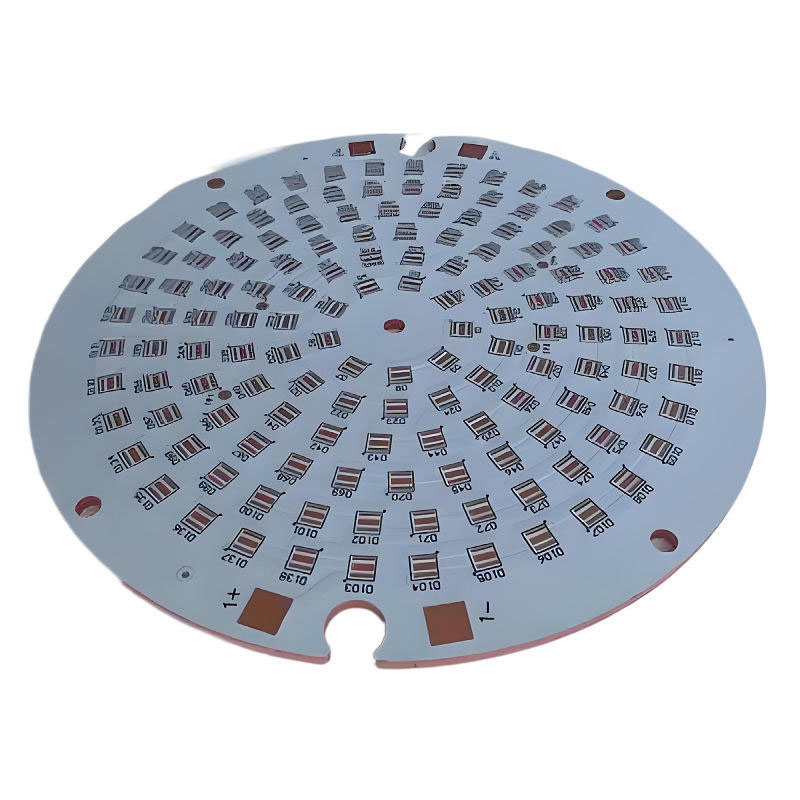
COB High-Power LED Module Copper Core PCB is a copper-based thermal PCB designed for high-power COB LED modules that require efficient heat dissipation, stable brightness, and reliable long-term operation. This article explains what COB High-Power LED Module Copper Core PCB is, why it is used in high-power LED applications, and how the right thermal structure helps improve brightness stability, manufacturing reliability, and product lifespan.
EBest Circuit (Best Technology) is a professional manufacturer of COB High-Power LED Module Copper Core PCB solutions for demanding lighting applications. We understand that in high-power COB projects, poor thermal conductivity can lead to chip burnout, module scrap, unstable brightness, and shortened service life. That is why we focus on stable thermal performance, mature production control, and optimized heat-dissipation structures that support both manufacturing reliability and design performance.
For customers who care about thermal conductivity, thermal resistance, structure design, test data, and cost-effective supply, we provide dependable copper core PCB solutions backed by practical engineering experience and consistent quality control. For professional COB High-Power LED Module Copper Core PCB support, pls feel free to call us at +86-755-2909-1601.
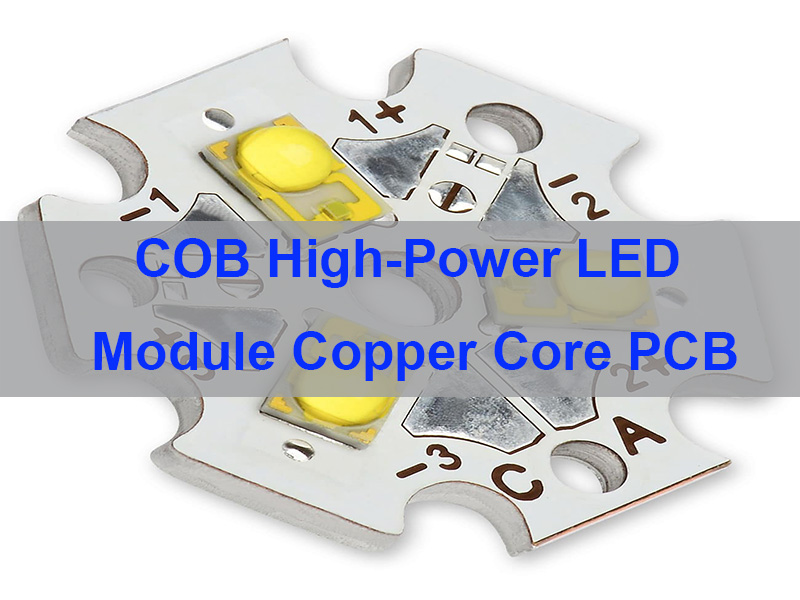
Why More Demanding Lighting Projects Prefer Copper Core PCB for COB LED Modules?
When a COB LED module needs to run at high power for long hours, the board is no longer just a carrier for circuits. It becomes part of the thermal system. That is why many demanding lighting projects move toward COB High-Power LED Module Copper Core PCB solutions instead of using ordinary structures that struggle to handle concentrated heat.
A high-power COB module puts many light-emitting chips into a compact area. This gives excellent brightness density, but it also creates a very focused heat source. If the heat cannot move away efficiently, the result is usually easy to see in real use. Brightness becomes less stable, color performance can drift, and long-term reliability becomes harder to maintain.
At EBest Circuit (Best Technology), we provide COB High-Power LED Module Copper Core PCB products for customers who need better heat transfer, stable production quality, and practical engineering support from design review to manufacturing. If you are sourcing a project with demanding thermal requirements, you can send us your files for evaluation and production support.
Typical parameters customers often care about
| Item | Typical Focus |
|---|---|
| Base type | Copper core |
| Main value | High thermal conductivity |
| Application | High-power COB LED module |
| Design goal | Better heat spreading and stable output |
| Common structure | Single-sided metal core or enhanced thermal path |
| Common finish | ENIG, OSP, or project-based selection |
Therefore, copper core PCB is often chosen not because it sounds more advanced, but because the lighting module needs a stronger thermal foundation to keep performance stable in real working conditions.
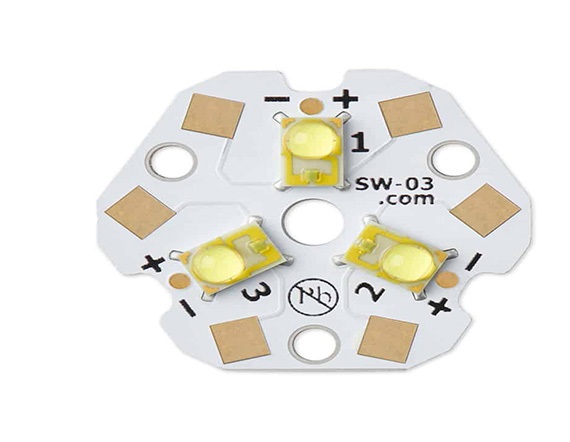
What Is COB High-Power LED Module Copper Core PCB?
A COB High-Power LED Module Copper Core PCB is a copper-based metal core board designed for COB LED modules that operate under relatively high thermal load. In this kind of module, multiple LED chips are integrated into one compact light-emitting area, so heat builds up much faster than in lower-density LED layouts.
The role of the copper core is simple in concept but very important in practice. It spreads and transfers heat away from the LED source more efficiently than standard PCB materials. That helps the module maintain more stable operating temperature, which in turn supports brightness consistency and longer service life.
This kind of PCB is widely used in applications where light density is high, operating time is long, or heat must be controlled more carefully. Examples include industrial lighting, automotive lighting, stage lighting, and outdoor high-output fixtures.
In practice, this board type is best understood as a thermal-performance platform. It supports the LED electrically, but its real value is how it helps the whole module manage heat more effectively.
Why Is Copper Core Better for High-Power COB LED Modules?
For high-power COB LED modules, copper core is often preferred because it handles heat spreading and current carrying more effectively than many common alternatives. Once power density increases, the weakness of a less capable substrate becomes more visible.
Copper has stronger thermal conductivity than aluminum, and both are far ahead of standard FR4 in heat management. In practical LED design, that means the board can move heat away from the hot zone faster and more evenly. This matters a lot when the light source is compact and the module is expected to remain stable over long operating periods.
Quick comparison of common substrate options
| PCB Type | Thermal Performance | Common Use | Main Limitation |
|---|---|---|---|
| FR4 | Low for high-power LED use | Low-power control boards | Heat builds up quickly |
| Aluminum core PCB | Good for many standard LED products | General LED lighting | Less thermal headroom for very high power density |
| Copper core PCB | Excellent for high heat load | High-power COB modules | Requires stronger manufacturing control |
| Ceramic PCB | Excellent | Premium high-reliability applications | Supply chain and process are more specialized |
In engineering work, copper core usually becomes the better option when the module has high drive power, limited cooling space, compact packaging, or strict brightness consistency targets. In those cases, the board must do more than hold components. It must help the whole lighting system stay thermally balanced.
As a result, copper core is not simply a material upgrade. It is often a design decision made to protect thermal stability, luminous performance, and long-term reliability.
How Does Thermal Conductivity Influence Brightness Stability?
Brightness stability is closely tied to temperature. When the thermal path is weak, heat remains concentrated around the LED source. Once junction temperature rises too much, the module may still light up normally at first, but performance becomes harder to hold steady over time.
In real products, this usually shows up in several ways. Initial brightness may look fine, but output starts to drop earlier during continuous use. In more demanding applications, uneven temperature distribution can also affect color consistency and accelerate material stress around the LED area.
A copper core board helps because it spreads heat more efficiently across the base and moves it toward the external heat sink more quickly. That reduces local overheating and gives the COB module a more stable thermal environment.
This is one reason why brightness stability is not only about the LED chip itself. The substrate, the thermal path, the mounting method, and the heat-dissipation structure all work together. If the board is weak, the optical performance usually pays the price sooner or later.
From an engineering perspective, better thermal conductivity is one of the most direct ways to help a high-power COB module keep its output more stable in continuous operation.
How Is a High-Power COB Copper Core PCB Structured?
The structure of a High-Power COB LED Module Copper Core PCB usually includes a top circuit layer, an insulating thermal layer, and a copper base. Each layer has a different role, and the final thermal performance depends on how these layers work together.
The top copper layer carries current and forms the circuit pattern for the LED module. The insulation layer provides electrical isolation while still allowing heat to move downward. The copper base then acts as the main heat spreader and mechanical support structure.
In some projects, the structure is enhanced to improve the thermal path even further. This may include optimized thermal pad areas, special dielectric selections, or more direct heat-transfer designs under the COB mounting zone.
Typical structure overview
| Layer | Function |
|---|---|
| Circuit copper | Electrical routing and current carrying |
| Solder mask / finish | Solderability and surface protection |
| Thermal insulation layer | Electrical isolation with heat transfer |
| Copper base | Main heat spreading and support |
One important point is that the copper base alone does not determine final performance. The insulation layer also matters a great deal. If that layer is poorly selected, it can become the bottleneck in the whole thermal path.
In real-world applications, the best-performing boards are usually the ones where the full stack-up is designed as a thermal solution, not just a standard PCB build with thicker metal underneath.
How Should You Design COB High-Power LED Module Copper Core PCB for Better Results?
A good design starts with thermal logic, not only with electrical routing. In a high-power COB LED module, the layout should help heat move away quickly and evenly, while also keeping the board easy to manufacture and assemble consistently.
The hot zone under the COB area should be treated as the center of the thermal design. That means current paths, copper area, pad structure, and mechanical mounting all need to support heat flow instead of interfering with it. If heat must travel through unnecessary restrictions, the advantage of the copper core is reduced.
Practical design points that matter
Keep the thermal path short
The area under and around the COB should allow heat to move into the base efficiently.
Avoid unnecessary heat concentration
If the thermal design is too compact without enough spreading area, local hotspots become more likely.
Use copper distribution carefully
Copper area is helpful, but it should be planned around both current flow and thermal spreading.
Match pad design to assembly reality
Good solderability and stable thermal contact depend on pad geometry and process compatibility.
Think about the full system
The board, heat sink, interface material, and enclosure condition all affect final temperature.
A layout that looks clean on the screen may still perform poorly if thermal flow was not considered early enough. That is why good copper core LED design usually comes from combining thermal thinking with manufacturing logic.
Overall, the best design is not the most complicated one. It is the one that balances heat dissipation, manufacturability, and stable repeat production.
What User Pain Points Usually Matter Most in These Projects?
In this type of product, the real pain points are usually very practical. Customers are not only asking whether copper core is better in theory. They want to know whether the module will actually stay bright, run cooler, assemble smoothly, and remain consistent from batch to batch.
One common problem is excessive heat concentration under the COB area. Another is brightness drop after long operating time. Some projects also struggle with uneven quality between prototype and mass production, which often comes from a design that was not optimized for repeatable manufacturing.
Delivery consistency is another major concern. A board may perform well in a sample stage, but if the structure or process window is not stable, the production result can vary. That creates risk for lighting brands that need predictable quality in volume orders.
Common pain points and how we address them
| Pain Point | Typical Cause | Our Approach |
|---|---|---|
| Hotspots under COB | Weak thermal path design | Thermal-focused structure review |
| Brightness instability | High operating temperature | Copper core design matched to application |
| Inconsistent assembly results | Poor pad or process compatibility | DFM and production coordination |
| Prototype and mass production mismatch | Layout not optimized for repeatability | Engineering review before release |
| Quality variation between batches | Weak process control | Controlled fabrication and inspection |
| Sourcing uncertainty | Fragmented supplier chain | One-stop manufacturing support |
What customers usually need is not just a board supplier. They need a manufacturing partner who understands how thermal design, assembly behavior, and production stability connect to each other.
To sum up, the strongest solution is a board that is not only thermally capable, but also designed and produced with real manufacturing conditions in mind.
Why Choose Us for COB High-Power LED Module Copper Core PCB?
If you are looking for COB High-Power LED Module Copper Core PCB, choosing the right supplier makes a direct difference to product stability. This type of board must support heat management, assembly control, and long-term consistency at the same time.
At EBest Circuit (Best Technology), we focus on practical manufacturability, not just nominal capability. That means we look at how the board will actually be built and used, not only how it appears in the drawing.
Why many customers prefer working with us
Quality-oriented production
We pay attention to thermal structure, fabrication stability, and process discipline.
Reliable lead time control
For LED module projects, timely and repeatable delivery is often as important as the board specification itself.
Engineering support
We can review project files and help identify risks related to structure, heat flow, and manufacturability.
Integrated supply coordination
One-stop support reduces communication gaps between PCB fabrication and assembly stages.
Project-focused service
We work from actual application needs rather than using a one-size-fits-all approach.
If you need High-Power COB LED Module Copper Core PCB, Copper Core PCB for COB High-Power LED Module, or similar products, you can contact us with your project details and order requirements.
Notably, customers often stay with a supplier not because the brochure looks good, but because the boards arrive stable, consistent, and ready for real product use.
What Services and Certifications Should a Reliable Supplier Have?
A reliable supplier for this product should offer more than just board fabrication. In high-power LED projects, customers usually need a combination of engineering review, process support, quality control, and dependable manufacturing execution.
That is especially true for copper core PCB because the board affects not only electrical connection, but also heat transfer and long-term module behavior. A supplier without enough process understanding may still make the board, but the result may not perform well in the final lighting product.
Recommended service scope
| Service | Why It Matters |
|---|---|
| DFM review | Finds structural and process risks early |
| Copper core PCB fabrication | Controls the main thermal substrate quality |
| Assembly support | Improves consistency from board to finished module |
| Prototype to volume transition | Keeps engineering logic aligned through scale-up |
| Inspection control | Helps screen workmanship and process drift |
| Traceability support | Supports batch control and quality review |
Recommended certifications
| Certification | Value |
|---|---|
| ISO 9001 | General quality management |
| ISO 13485 | Process discipline for regulated manufacturing |
| IATF 16949 | Strong system control for demanding quality environments |
| AS9100D | Advanced quality framework for high-reliability sectors |
| UL-related support | Compliance and product safety relevance |
| RoHS / REACH | Material compliance support |
Certificates alone do not guarantee a good product, but they do show whether the supplier has system-level discipline. For high-power LED boards, that matters because repeatability is often just as important as performance.
This means, the ideal supplier combines engineering understanding with controlled manufacturing systems, rather than treating the job as a basic file-processing order.
How Does the Manufacturing Process Affect Reliability?
In Module LED COB High-Power Copper Core PCB, reliability depends heavily on how the board is manufactured. Even when the design is correct, weak process control can reduce thermal performance, hurt assembly stability, or create variation between batches.
Material preparation is the starting point. Copper base flatness, dielectric consistency, and circuit accuracy all affect how the finished board behaves. After that, pattern formation, thermal area control, surface finishing, and assembly parameters must all remain stable.
The COB mounting zone is especially sensitive. If that area is not produced carefully, thermal transfer may suffer even if the drawing itself looks correct. The same applies to soldering consistency. Uneven solder volume or unstable processing can change both electrical connection and heat conduction.
Main process stages that influence reliability
| Process Stage | Why It Matters |
|---|---|
| Material control | Affects thermal foundation and structural stability |
| Circuit fabrication | Influences current flow and geometry accuracy |
| Thermal area control | Protects the heat-transfer path |
| Surface finish | Supports solderability and process compatibility |
| Assembly process | Affects contact quality and repeatability |
| Inspection | Helps identify drift before shipment |
Reliable boards usually come from stable process execution, not from material claims alone. That is why strong manufacturing discipline matters so much in high-power LED projects.
In short, the board only performs as well as the process that builds it. Thermal design and production control must support each other from start to finish.
What Industries Commonly Use Copper Core PCB for High-Power COB LED Modules?
This kind of board is widely used in lighting products where high brightness, concentrated heat, and long operating time come together. In those conditions, a stronger thermal substrate brings visible value.
One major application area is outdoor lighting. Flood lights, facade lighting, and high-output architectural fixtures often run for long hours and may face limited airflow in enclosed housings. A copper core board helps support stronger thermal stability in those conditions.
Another important area is automotive lighting. Compact size, demanding temperature cycles, and stable output expectations all make heat management more critical. Stage and entertainment lighting is also a strong fit because those products often require compact, intense light with dependable performance through extended use.
Industrial lighting and machine vision systems are also relevant. These products often rely on concentrated light output and consistent optical behavior, so substrate stability becomes part of overall system performance.
Four popular application industries
| Industry | Why Copper Core Is Useful |
|---|---|
| Outdoor and architectural lighting | Long operation and high thermal demand |
| Automotive lighting | Compact structure and reliability pressure |
| Stage and entertainment lighting | High light density and stable output need |
| Industrial inspection lighting | Consistency and concentrated brightness |
From a product standpoint, copper core boards appear most often where the thermal load is too high for ordinary board structures to remain comfortable over time.
How Do Real PCB Cases Show the Value of This Board Type?
The value of Copper Core PCB for High-Power COB LED Module becomes easier to understand when viewed through real application logic. In most cases, the main requirement is not “use copper core.” The real requirement is “make the module stay stable under demanding heat conditions.”
In an outdoor high-bay or flood-light project, the challenge is usually long operating hours and limited natural cooling. A copper core structure helps spread heat faster and more evenly, which supports more stable light output.
In an automotive auxiliary lamp, the challenge is often compact design plus temperature cycling. The board must help the module stay thermally controlled even when working conditions change frequently.
In a stage-lighting engine, the challenge is high brightness from a small optical space. That means the heat is concentrated, and the board needs to work hard as part of the cooling path. In an industrial inspection light, output consistency is often more important than maximum brightness alone, so thermal stability has direct practical value.
These cases show why this board type is usually chosen for a clear engineering reason. It solves a system problem, not just a material preference.
Therefore, the hotter and more compact the light engine becomes, the more valuable a well-designed copper core PCB tends to be.
How Should You Select the Right Supplier for High-Power COB Copper Core PCB?
Choosing a supplier for High-Power COB LED Module Copper Core PCB should be based on engineering capability, process stability, and application understanding. A supplier that only focuses on the board outline and thickness may miss the thermal priorities that matter most in real LED module work.
A good supplier usually asks practical questions. What is the drive power? How long will the module run continuously? What is the ambient environment? Is the module installed in an enclosed housing? What lifetime or brightness stability target matters for the project? These questions show that the supplier understands why the board matters.
Key evaluation points
| Evaluation Point | What to Check |
|---|---|
| Thermal understanding | Can they discuss heat path and thermal structure clearly |
| Fabrication capability | Can they support copper core builds with stable quality |
| Process control | Do they have a repeatable manufacturing method |
| Quality system | Are there formal certifications and inspection control |
| Application familiarity | Do they understand LED module project logic |
| Communication | Do they provide engineering-based feedback |
A weaker supplier may only quote by size, thickness, and quantity. That may be enough for simple boards, but it is usually not enough for high-power COB projects.
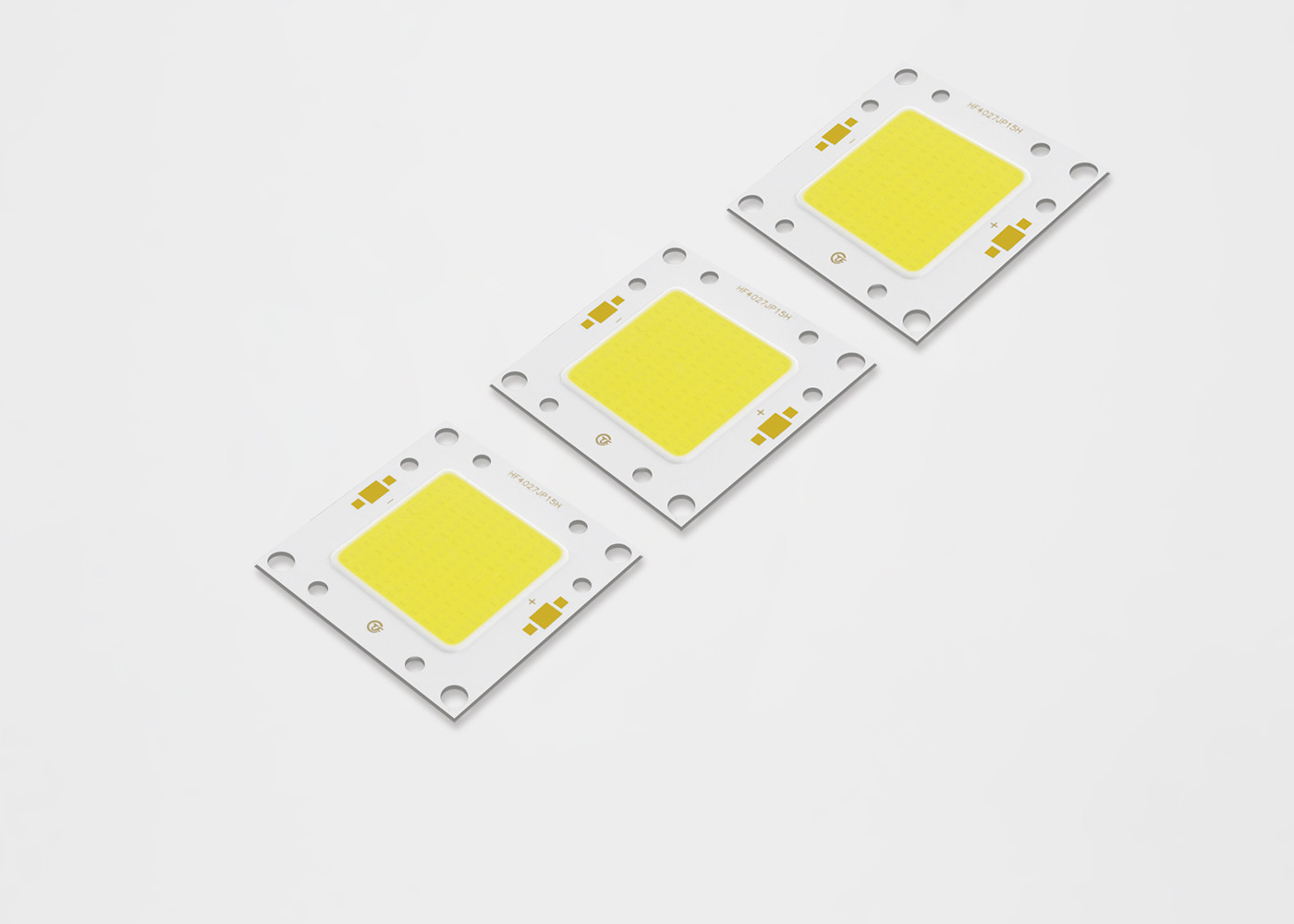
As a result, supplier selection should follow product logic. The better the supplier understands the module’s real thermal and manufacturing needs, the lower the risk in later production.
FAQs About COB High-Power LED Module Copper Core PCB
What is COB High-Power LED Module Copper Core PCB?
It is a copper-based metal core board made for COB LED modules that need stronger heat dissipation, better thermal stability, and more reliable performance under higher power operation.
Why use Copper Core PCB for COB High-Power LED Module?
Because copper spreads heat more efficiently, supports higher thermal demand, and helps the LED module maintain more stable brightness during continuous use.
How does High-Power COB LED Module Copper Core PCB improve brightness stability?
It helps lower heat concentration around the LED source, which supports more controlled operating temperature and reduces the chance of early output drop.
What is the difference between LED Module High-Power COB Copper Core PCB and aluminum core PCB?
Copper core usually provides stronger thermal conductivity and better heat spreading, while aluminum core remains suitable for many standard LED applications with lower thermal stress.
How do I know whether Module LED COB High-Power Copper Core PCB is necessary?
It is usually a strong option when your module has high power density, compact structure, long operating time, or strict requirements for brightness stability and reliability.
How should Copper Core PCB for High-Power COB LED Module be designed?
The design should focus on short thermal paths, good copper distribution, suitable pad structure, assembly compatibility, and a full-system view of how heat leaves the LED area.
What industries use High-Power COB LED Module Copper Core PCB most often?
Common industries include outdoor lighting, automotive lighting, stage lighting, and industrial lighting where compact high-output modules need stronger thermal support.
How can I order COB High-Power LED Module Copper Core PCB from EBest Circuit?
You can send us your project files and requirements, and we can review the design, confirm the suitable structure, and support production based on your application needs.