





Are you facing overheating, insufficient current capacity, and early failure with automotive thick copper MCPCB in high‑power vehicle systems?This article explains how automotive thick copper PCB solves thermal and reliability challenges in automotive power modules. EBest provides certified, high‑stability automotive thick copper PCB with fast delivery, consistent quality, and full support from prototype to mass production.
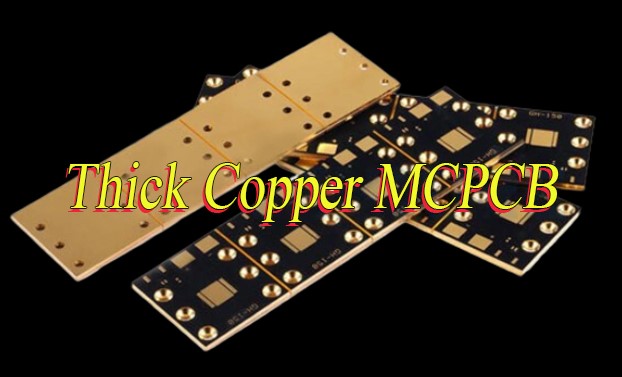
Why Choose EBest for Your Automotive Thick Copper MCPCB Manufacturer?
EBest is your trusted partner for automotive thick copper MCPCB with proven quality, fast delivery, and professional support for vehicle power systems. We focus on real engineering value and stable supply to help your project succeed.
- Automotive-grade quality & full traceability: Built under IATF 16949 controls, with zero-defect targets and full documentation for OEM and Tier 1 compliance.
- Extreme environment reliability: Designed for -40°C to +150°C, high vibration, and high current to avoid overheating and premature failure.
- Fast prototype & mass production capability: 24-hour urgent prototype service + stable large‑volume delivery to keep your project on schedule.
- High current & superior thermal performance: 3–12oz thick copper structure for efficient heat dissipation and stable high‑power operation.
- Professional DFM & engineering support: Free design review to improve yield, lower risks, and optimize thermal and electrical performance.
- Stable & secure supply chain: Reliable material sourcing and consistent production to eliminate delays and supply disruptions.
- Full certification compliance: IATF 16949, ISO 9001, ISO 13485, AS9100D, RoHS, REACH, UL for global automotive standards.
- Customizable solutions: Flexible layer stack-up, surface finish, and thickness to match your exact power module requirements.
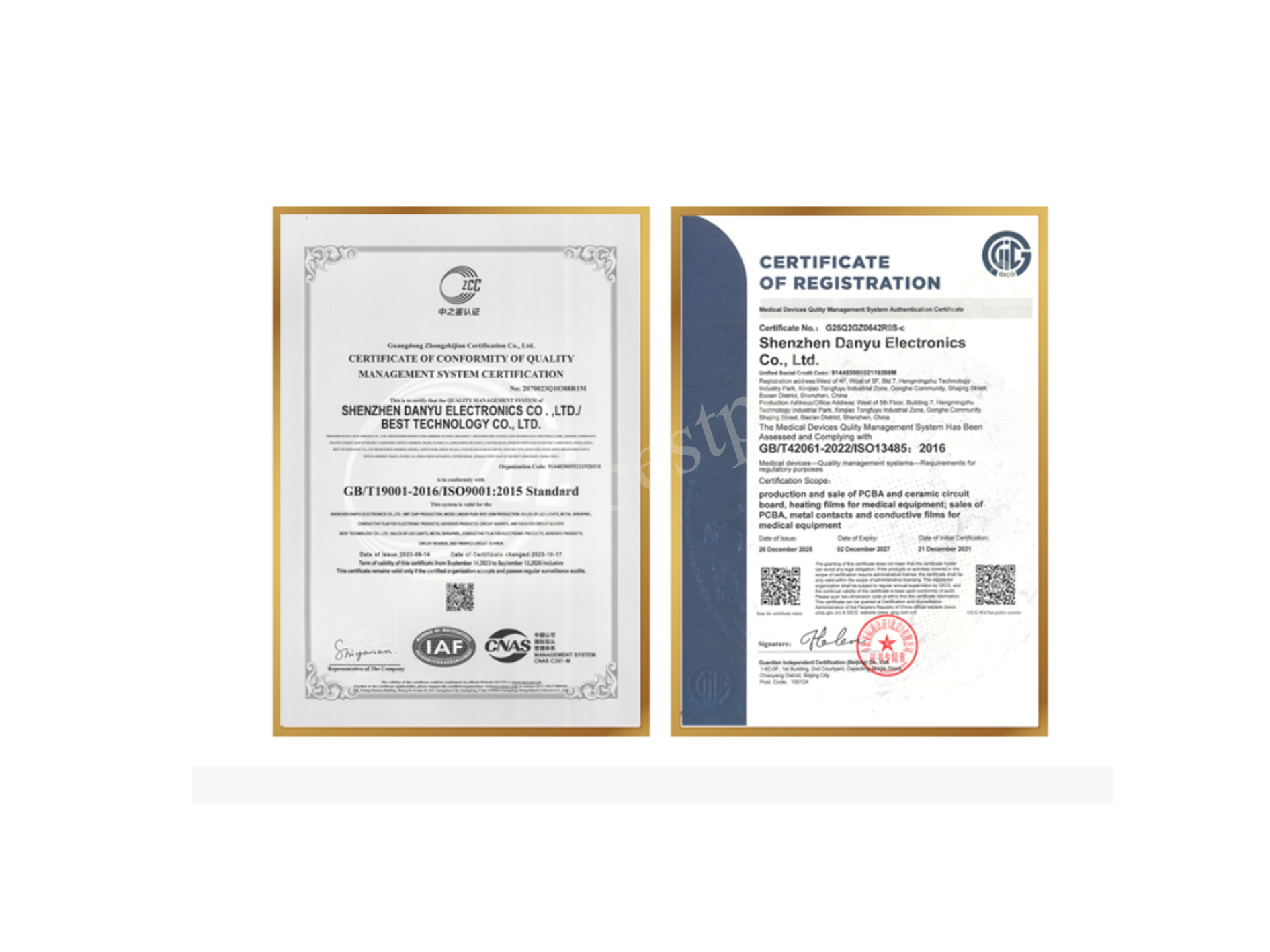
Our Quality Certifications for Automotive Thick Copper MCPCB
- IATF 16949: Full automotive production process control, eliminates quality risks and ensures full traceability for vehicle applications.
- ISO 9001:2015: Stable and repeatable manufacturing processes to keep quality consistent across every batch.
- ISO 13485:2016: High‑reliability controls for safety‑critical automotive systems that demand zero failure.
- AS9100D: Ensures stable performance under extreme temperature, vibration, and mechanical shock.
- REACH & RoHS: Eco‑friendly materials that meet global automotive environmental requirements.
- UL: Safety certification for high‑voltage and high‑current power modules in vehicles.
What Pain Points Does Automotive Thick Copper MCPCB Solve?
High-power automotive systems often suffer from critical failures caused by poor heat dissipation, insufficient current handling, and unstable material performance. EBest’s automotive thick copper MCPCB directly resolves these pain points with targeted design and manufacturing solutions.
Pain point 1: Overheating & thermal runaway in power modules.
Solution 1: 3–12oz thick copper layers + high-thermal-conductivity substrates for fast heat dissipation.
Pain point 2: Insufficient current carrying capacity.
Solution 2: Heavy copper structure supports ultra-high current loads without trace burning or voltage drop.
Pain point 3: Board delamination under high temperature & vibration.
Solution 3: High-Tg materials + controlled lamination process for strong layer adhesion and stability.
Pain point 4: Failure in harsh -40°C to +150°C environments.
Solution 4: Automotive-grade materials engineered to withstand extreme temperatures and thermal cycling.
Pain point 5: Poor reliability under vehicle vibration & shock.
Solution 5: Robust mechanical structure and reinforced bonding to resist long-term vibration stress.
Pain point 6: Non-compliance with automotive quality standards.
Solution 6: Full IATF 16949, ISO, UL, RoHS certifications for direct OEM & Tier 1 approval.
Pain point 7: Inconsistent quality in mass production.
Solution 7: Automated production, full traceability, and strict testing to ensure batch-to-batch consistency.
Pain point 8: Long lead times delaying project launch.
Solution 8: 24-hour rapid prototyping + stable mass production to speed up development cycles.
What Is an Automotive Thick Copper MCPCB?
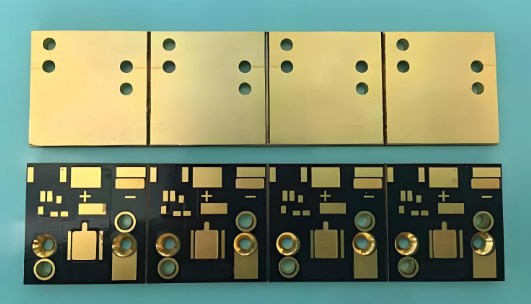
An automotive thick copper MCPCB is a heavy‑copper circuit board engineered specifically for vehicle power systems.It uses 3oz to 12oz copper layers to safely carry high current and efficiently dissipate heat. Built to withstand -40°C to +150°C, high vibration, humidity, and thermal stress, it delivers long‑term reliability. This type of PCB is essential for high‑power automotive applications where standard boards cannot perform.
Why Use Thick Copper MCPCBs in Automotive Power Modules?
Thick copper greatly reduces electrical resistance and lowers I²R power loss in high‑current circuits. Superior thermal management prevents hotspots and extends the service life of power components. High mechanical strength resists vibration and thermal stress in harsh vehicle environments.
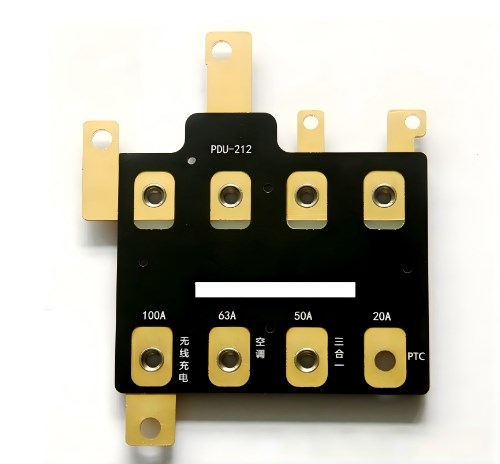
It is widely used in EV inverters, battery management systems, on-board chargers, and high‑power distribution units.Without thick copper technology, high‑power automotive systems face overheating and reliability risks.
How Does Thick Copper Improve Thermal Performance in Vehicles?
Thick copper greatly boosts thermal performance in automotive power systems because copper is one of the most thermally conductive materials used in PCBs. Compared with standard thin-copper boards, automotive thick copper PCB quickly moves heat away from heat-generating components, preventing dangerous hotspots.
In high-power vehicle applications such as EV inverters and on-board chargers, components release large amounts of heat during operation. Thick copper layers spread this heat evenly across the entire board surface instead of trapping it in small areas. This even distribution lowers peak temperatures and stabilizes the whole module.
When combined with metal core or high-Tg substrates, thick copper forms an efficient thermal pathway that reduces overall thermal resistance dramatically. Lower thermal resistance means cooler running components, longer service life, higher reliability, and safer operation in harsh automotive environments.
What Key Specifications Matter for Automotive Thick Copper MCPCB?
| Specification | Standard Value |
| Copper Weight | 3–12 oz (105–420 μm) |
| Operating Temperature Range | -40°C to +150°C |
| High Tg Substrate | ≥170°C |
| Current Carrying Capacity | Up to 150A per module |
| Withstand Voltage | ≥1000V |
| Thermal Conductivity | High (optimized for MCPCB) |
| Surface Finish | ENIG / Immersion Silver |
| Layer Structure | 1–12 layers, symmetric stack |
| Certification | IATF 16949, UL, RoHS, ISO |
How to Design DFM‑Friendly Automotive Thick Copper MCPCB?
DFM-friendly design directly improves yield, lowers cost, and enhances reliability for automotive thick copper MCPCB. These practical rules help avoid manufacturing defects and ensure stable mass production.
- Use symmetric layer stacking to avoid warping and stress in high-temperature processes.
- Maintain balanced copper distribution across the board to prevent uneven heating and bending.
- Keep safe trace spacing and creepage distance for high-voltage automotive safety standards.
- Add thermal relief structures and buffer layers to lower stress from CTE mismatch.
- Avoid ultra-small features that thick-copper processes cannot stably produce.
- Use compatible high-Tg materials matched with thick copper for better lamination and adhesion.
- Reserve sufficient space for test points to support electrical and reliability verification.
How Is Automotive Thick Copper PCB Used in Real Vehicle Systems?
Here are automotive thick copper PCB used in real vehicle systems:
- EV Inverters: Handles 800V high power without overheating and supports stable energy conversion.
- Battery Management Systems (BMS): Ensures stable current paths and accurate cell monitoring.
- On-Board Chargers (OBC): Manages high‑speed charging current safely and efficiently.
- ADAS Power Units: Maintains consistent performance under vibration and temperature changes.
- One of our customers reduced module temperature by 35°C and improved system efficiency by 12% using our automotive thick copper PCB.
How to Prevent Delamination & Copper Separation?
Delamination and copper separation are common failures in automotive thick copper PCB under high heat and thermal cycling. These proven methods effectively strengthen bonding, reduce internal stress, and ensure long-term stability.
- Use graded-temperature lamination to reduce internal stress between layers.
- Add thermal buffer layers to balance CTE differences and avoid material separation.
- Select matched CTE high-Tg substrates to minimize expansion mismatch.
- Pre-bake boards before assembly to remove moisture and prevent blistering.
- Maintain uniform copper distribution to avoid uneven heating and warping.
- Use strict process control and automated inspection to ensure bonding quality.
What Testing Ensures Reliability for Automotive Thick Copper PCB?
Reliability testing is critical to validate automotive thick copper PCB performance under real vehicle conditions. These tests confirm long-term stability and meet strict automotive quality requirements.
- Thermal cycling test (-40°C to 125°C) to verify stability under extreme temperature changes.
- Vibration test (5G, 10–2000Hz) to simulate vehicle driving conditions and resist mechanical stress.
- High-voltage breakdown test to ensure safety for high-power EV systems.
- Solderability and adhesion test to confirm strong bonding during assembly.
- Current-carrying endurance test to validate stable performance under long-term high load.
- Thermal shock test to check material strength and avoid delamination or cracking.
- Automated optical and electrical testing to ensure 100% qualification before shipment.
FAQs About Automotive Thick Copper PCB
Q1: What copper thickness do I need for automotive power modules?
A1: For 50–100A applications, choose 3–5oz; for >100A high‑power systems, use 6–12oz automotive thick copper PCB.
Q2: Can thick copper PCBs be made as multilayer boards?
A2: Yes, multilayer automotive thick copper PCB is widely used; symmetric stacking prevents warping and ensures stability.
Q3: Do you support quick‑turn prototype orders?
A3: Yes, urgent prototypes can be shipped within 24 hours to support your fast development schedule.
Q4: Are these boards compatible with SiC and GaN components?
A4: Yes, our automotive thick copper PCB works excellently with high‑heat wide‑bandgap semiconductor devices.
Q5: What is the operating temperature range for automotive use?
A5: Our automotive thick copper MCPCB supports -40°C to +150°C, ideal for under‑hood and high‑power environments.
Q6: Can you provide IATF 16949 compliance documents?
A6: Yes, we provide complete PPAP and quality documentation for all automotive projects.
Get Your Automotive Thick Copper PCB from EBest Today
EBest provides high‑reliability automotive thick copper PCB with fast prototype delivery and exclusive mass‑production support. We offer stable quality, short lead times, and full technical backing for your automotive projects. Contact us now to place your order: sales@bestpcbs.com — EBest is your trusted partner for automotive thick copper PCB.