PCB manufacturing PCB manufacturing
Home > Blog

Thermal Conductivity—Aluminum PCB vs Ceramic PCB Series 2

April 19th, 2022

Last time we have talked about the structure difference between the aluminum PCB and ceramic PCB. So, based on the different structures, whose thermal conductivity is better?

We have known that a single layer aluminum PCB is made up of copper layer, dielectric layer and aluminum layer. Meanwhile, the dielectric layer is the decisive factor affecting the thermal conductivity.

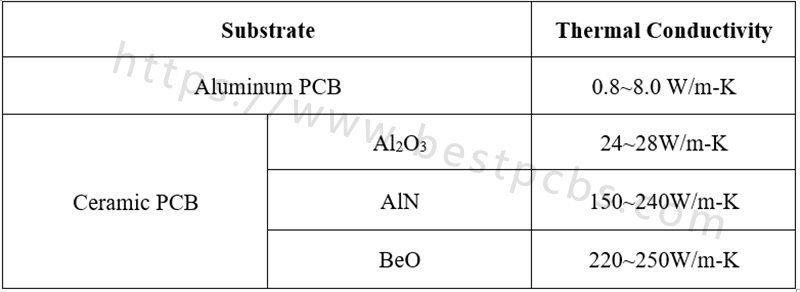
Generally, its thermal conductivity ranges from 0.8 to 3.0 W/m-K, but can up to 8.0 W/m-K. So, in terms of heat dissipation, the aluminum substrate does much better than FR-4 substrate. And it is a good choice for LED lighting products with high power.

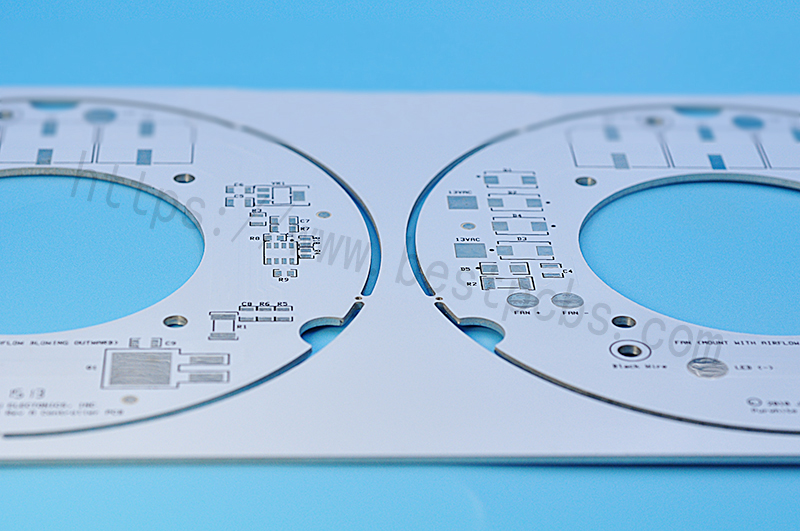
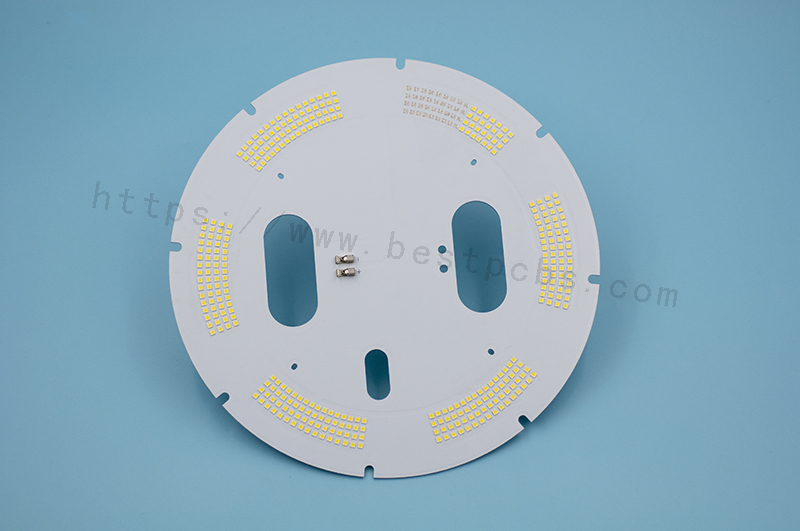
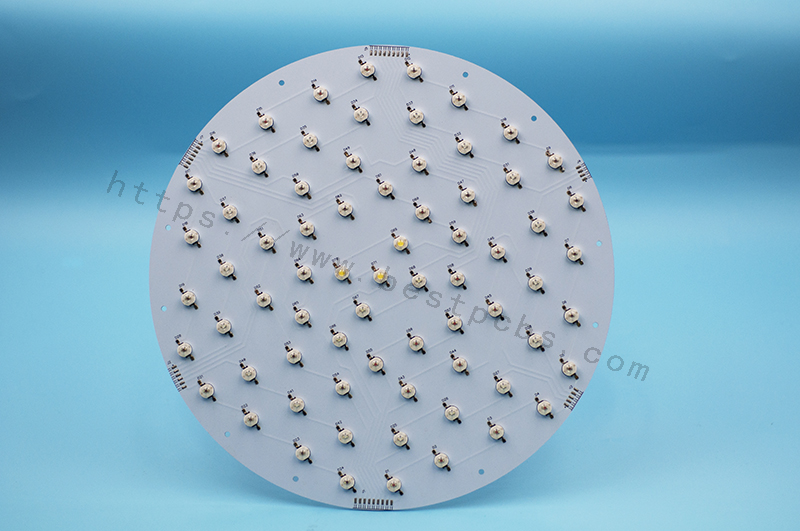
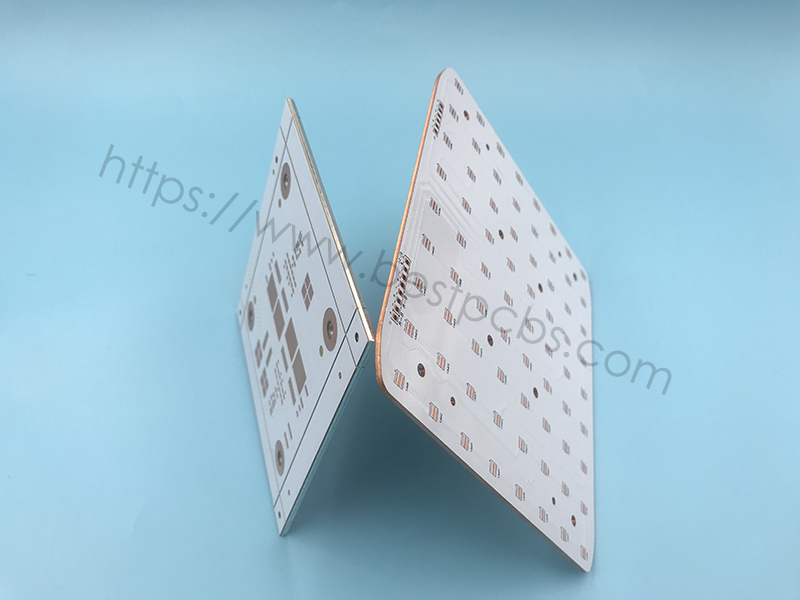
Aluminum PCB

However, the heat-conducting property of ceramic PCB is superior to that of the aluminum PCB.

Since ceramic itself is an insulating material with a great heat-conducting property, it does not need a dielectric layer. Therefore, the heat can be dissipated directly through the ceramic.

Because of its excellent performance in heat dissipation, it is particularly suitable for the lighting product with ultra high power and those products which have a high demand of heat dissipation.

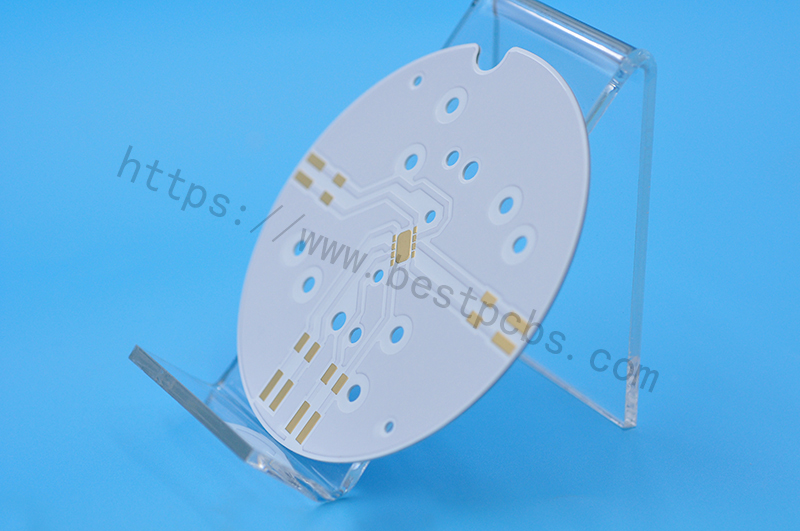
Ceramic PCB

To summarize, clearly, we can know from the table below that ceramic PCB does better than aluminum PCB in terms of thermal conductivity and heat dissipation. And this is mainly because of the dielectric layer, which is related to the functions of bonding, insulation and heat conduction.

The better the heat conduction performance of the insulating layer, the more conducive it is to the diffusion of heat generated during the operation to the device, hence it will be more conducive to lower the operating temperature of the device. That is to say, aluminum PCB will be subject to the dielectric layer, while ceramic PCB will not be restricted.    

And, this is the end of the comparison of the thermal conductivity between aluminum PCB and ceramic PCB. If you still have any questions about them, please feel free to contact us.

Differences in Structure——Aluminum PCB vs Ceramic PCB Series 1

March 21st, 2022

It is supposed that we are familiar with both aluminum PCB and ceramic PCB. But if juxtaposing them, which one will be better by one tally? So, we are about to talk about some differences between them in terms of structure.

Aluminum PCB

Aluminum substrate namely uses aluminum as substrate, which has a good heat dissipation capacity. Generally, it is single-sided, and also can be double-sided while multi-layer aluminum PCB is a little bit hard to manufacture. Besides, a single layer aluminum PCB is made up of copper layer, dielectric layer and aluminum layer.

Structure of Aluminum PCB

Ceramic PCB

Ceramic PCB namely uses ceramic as substrate. Apart from the material, the structure is the biggest difference between ceramic PCB and aluminum PCB. Since ceramic itself is an insulating material, it does not need a dielectric layer. Its structure is as follows.

Structure of Ceramic PCB

Therefore, whether there is a dielectric layer is the main difference in structure between aluminum PCB and ceramic PCB. And dielectric layer plays an important role in thermal conductivity. So, what is the relationship between dielectric layer and thermal conductivity? And whose thermal conductivity is better between aluminum PCB and ceramic PCB?

We will talk about it next time. And if you would like to know the answer, please feel free to contact us, or you can continuously follow our blog site, we will keep updating more information about the differences between aluminum PCB and ceramic PCB on it.

Advantages of LED PCB Compared with Common Standard PCB

December 22nd, 2021

With the development of electronic products, the requirements of circuit boards applied in electronic products are becoming higher and higher. The volume of printed circuit boards is also shrinking exponentially, the assembly density is increasing, and the internal wiring of the line layer is becoming more and more intensive. Compared with PCB, LED PCB with metal core can achieve better heat dissipation effect.

LED PCB material:

First of all, LED PCB space utilization is higher, it takes up relatively small space, but can withstand relatively high-power output.

It is well known that when the power of the circuit board is high, high heat will be generated. If the heat cannot be dispersed in time, it may lead to the shortening of the working life of LED products, and the more serious consequence is the safety problem of the circuit board due to overheating.

Therefore, in order to make the LED lighting system longer life, it is generally used to print the circuit board with metal core, and the characteristics of the metal core is relatively large density, strong thermal conductivity, conducive to heat dissipation effect.

LED PCB board design:

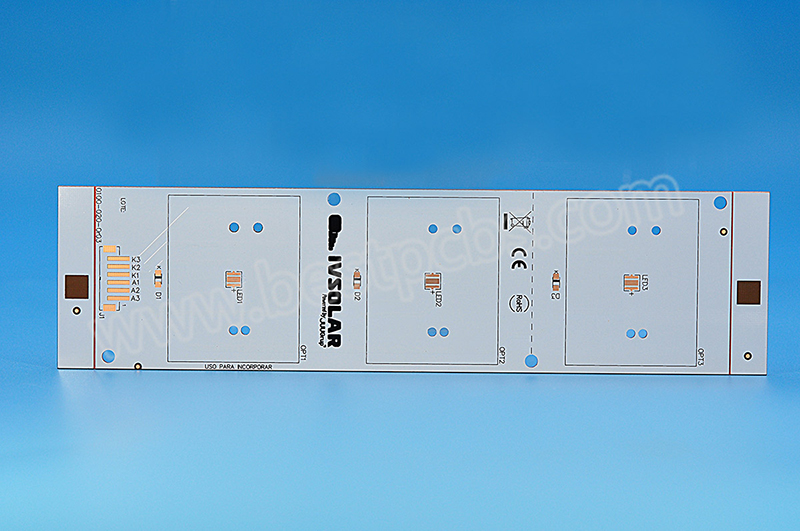
The LED PCB is also unique in that its components are located on the surface, rather than through holes, because the metal core at the bottom dissipates heat more quickly.

LED PCB surface mounting

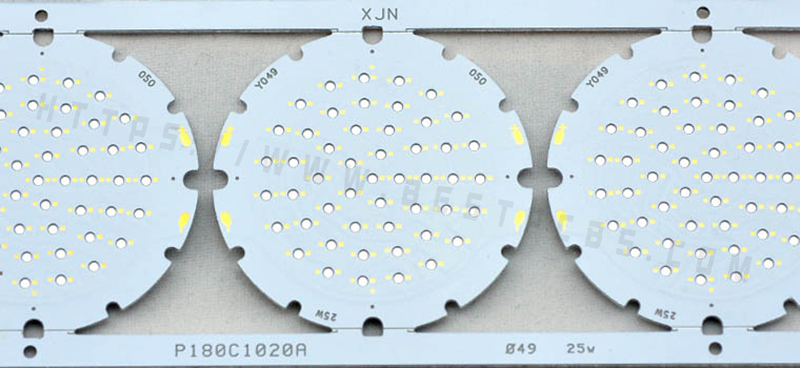
Some LED printed circuit boards have through-holes, especially multilayer metal core printed circuit PCB. Because the number of layers of the circuit board increases, the circuit layout is more complex, heat is more difficult to emit, and the existence of the through hole is to achieve faster heat dissipation. The drilling holes on the LED board are mounting holes, which are usually larger than the standard PCB through holes.

LED PCB solder mask color:

In addition, LED printed circuit board solder resistance layer color is also its characteristics.

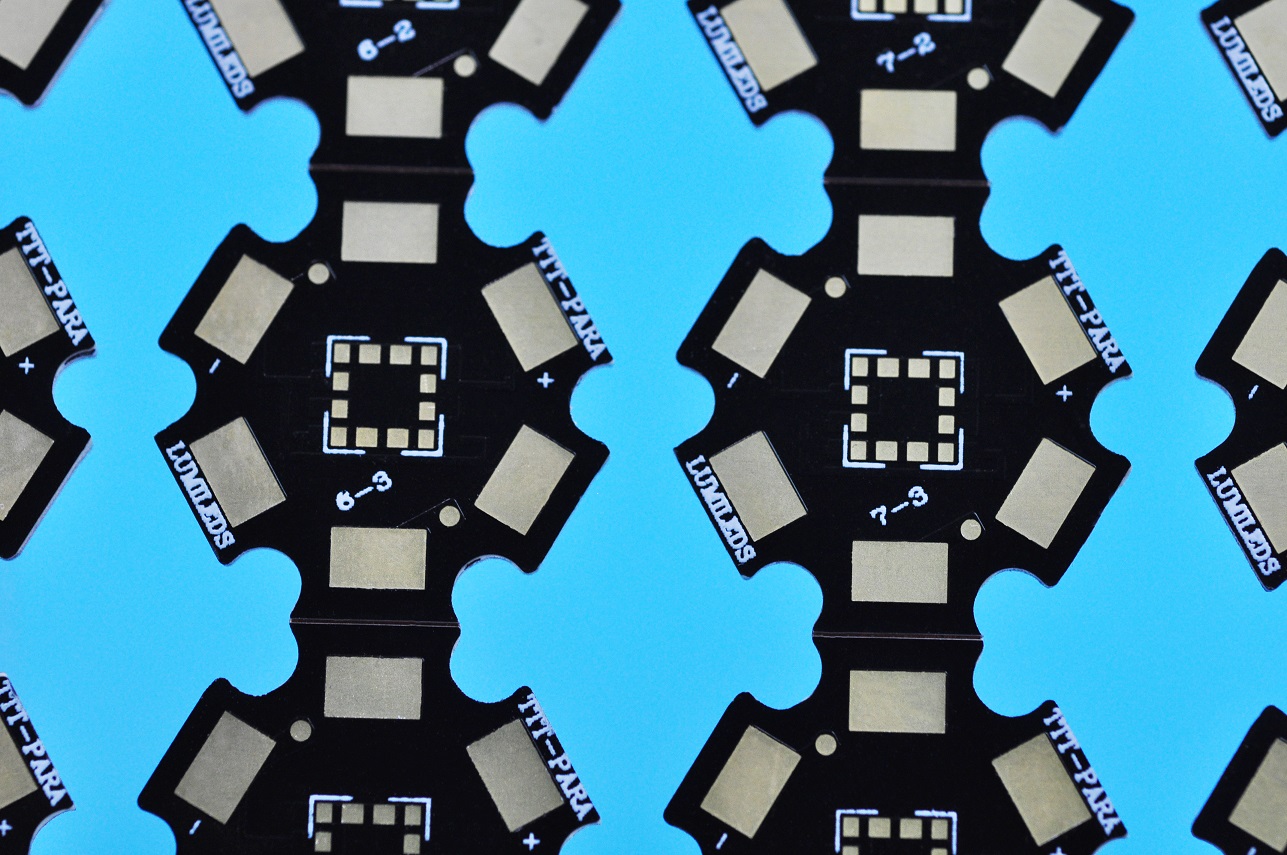
The color of solder resistance layer on the LED printed circuit board is usually white, while the PCB board has a series of colors such as black, green and red and so on. This is also determined by the characteristics of LED boards in practical applications. Since LEDPCB board is usually used as backlight board, photosensitive solar ink is usually coated on the surface of the circuit board. White Taiyo Solder mask can achieve high temperature resistance, not easy to change color, high reflectivity, so as to achieve the reflection effect of lighting and better lighting effect.

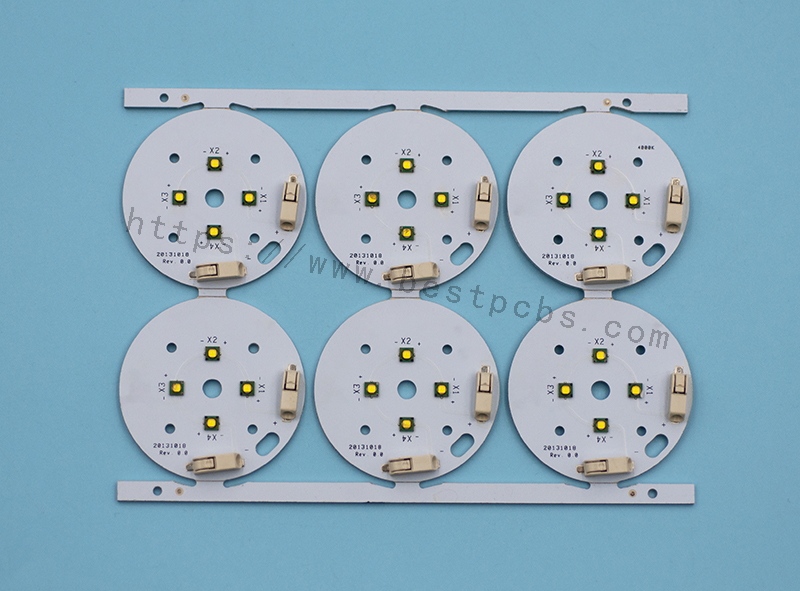
LED PCB

What is LED Thermal Management?

December 20th, 2021

LED lighting (Light Emitting Diodes) can provide more lumens per watt than incandescent bulbs, and the amount of light emitted does not depend on the size or shape of the bulb. It has significantly smaller footprint, higher efficiencies and lasts a long time.

One of the big challenges of LED lighting is LED Thermal Management, since around 70% of the electricity used by an LED becomes heat, and LEDs work best around room temperature, if the heat is not managed with some sort of thermal management solution, it can result in reduced efficiency in the LED, shorten the life of the bulb itself, and possibly causing damage to other components near it. In this context one of the best places to start with would be thermal management within the Metal Core PCB.

Thermal Management in MCPCB

If you are using LED power, there are chances that you would encounter problem at or above 80 watts. For example if you are considering application like the street lighting which might require up to 150 watts per lamp, led thermal resistance at such high power point would be a cardinal concern.

MCPCB can be created using a wide range of heat-dissipating materials without changing the LED component. From copper which offers better thermal conductivity to aluminum which is cheaper to specialized MCPCB using coated steel, ceramics or many other options. To address the LED thermal resistance issues and achieve optimum thermal management using LED, external heat sinks can also be used. This facilitates dissipation of exceptionally large amount of heat.

In fact on an average MCPCBs have several different shapes and degrees of heat dissipation profile. However the most challenging ones are no doubt the types in which the LED applications have to be stored in airtight enclosure to protect from the environment around. Thermal management in this case could be anything from air-to-air heat exchangers to using internal fans to even heat transfer via a series of conduction and convection alternatives.

Thermal Management of MCPCB

Thermal management is important for the electronic systems to encompass the processes along with the technologies.The main objective of thermal management is to ensure the temperature remains consistent for the functional and absolute maximum limits. The temperature exceeding the limit may cause destruction physically or may lead to a system failure. Therefore, MCPCB is essential because efficient thermal management increases the feasibility, enhances durability, and reduces the failure rates.

It also enables the high circuit density design for the users. Basically, thermal conductivity is a specific material from a property with the ability to conduct proper heat management as soon as it enters into the system. The conventional PCB share less thermal conductivity and also not capable enough to meet the increased demand for the thermal constraint required for high power dissipation PCB. The best alternative to solve this problem is the Metal Core Printed Circuit Board.

If you have any questions about MCPCB, welcome to contact Best Technology.

What kind of MCPCB is suitable for your electronic project?

November 13th, 2021

If you need a Metal Core PCB for your project, there are some different types can be selected, the selection of the MCPCB type depends upon the type of application and project you are performing. This blog will provide you information about the metal based PCB, which will also illustrate the construction, uses and distinguishing features of the MCPCB boards, hope it can help you to choose the most appropriate MCPCB for your subsequent projects. 

Types of Metal Clad PCB 

There are many different types of the MCPCB depending upon the type of base material, currently the most common metal used for MCPCB manufacturers are Aluminum, Copper and steel alloy. The selection of the base material depends upon the type and nature of the electronic project.

1) Aluminium core PCB

Aluminium is a better material that we can use for the core of a board. The reason is that it has high heat transfer capability. Moreover, it also shows the heat dissipation capacity to the maximum extent. Aluminium is also relavitively cheaper as compared to the copper material. Therefore, it represents the cheaper and better manufacturing of the printed circuit boards.

2) Copper metal core PCB

Copper is the best material for the core of MCPCB, since this material shows the best heat transfer capability. Moreover, this material is also fit for the excellent heat dissipation during the process. These features save the PCBs from the thermal issues.

The copper core PCB shows the best thermal conductivity as compared to other PCBs. The normal value of the thermal conductivity for these PCBs is 2.0W/mk. However, we can get this value of thermal conductivity up to 12W/mk in the case of insulating layer. Therefore, these types of the PCBs have the tremendous use in the high-power LED lights.

3) Stainless steel PCB

Another important material that has an excessive use in the metal core PCBs is the Stainless steel PCB, which also can provide better capability of connectivity and high performance, and it’s more rigid than both aluminum and copper, but thermal conductivity is lower than them too. 

copper core & aluminum core pcb

Stack up of Metal core PCB

The stack up and construction of the MCPCB depends on the number of layers in the PCB. The PCB with the single layer, two layers and multiple layers have the different methods of stack and construction.

1) Single Layer Metal Core PCB

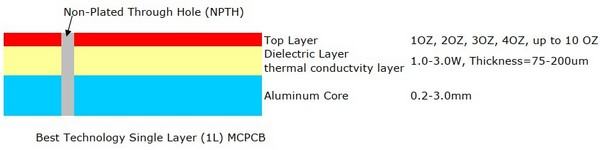
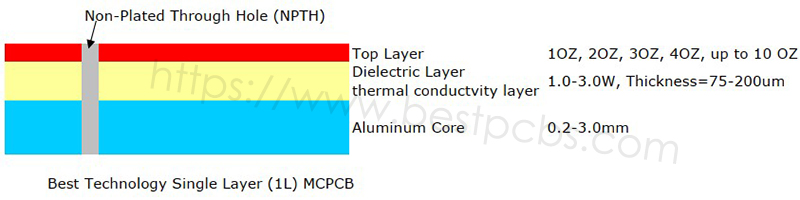
A single layer MCPCB consists of a metal base, Dielectric Layer, Copper Circuit Layer. The advantage is that it provides a better connection between components of the PCB, and it’s efficient at the heat dissipation in the high-power generator systems. These PCBs have the holes on the board for the mounting process of the electronic components. It can also have the screws around the chassis of the board for the arrangement of the components.

Single Layer Metal Core PCB
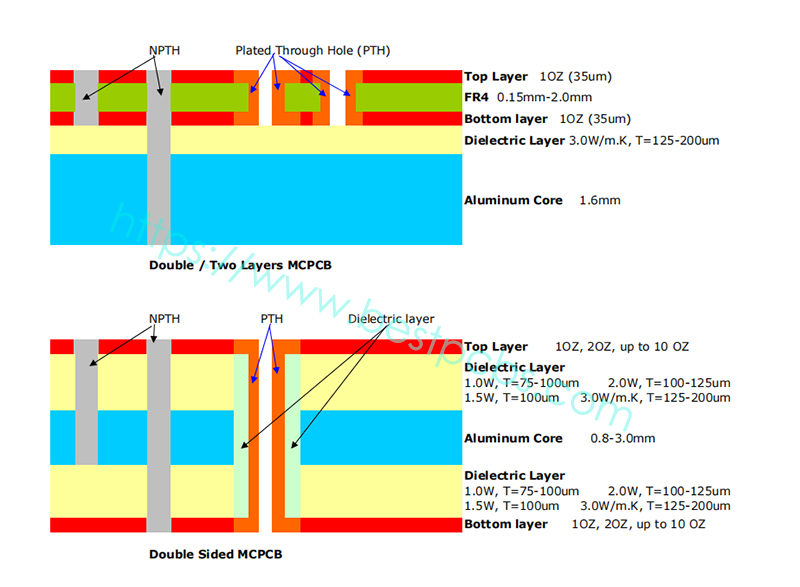
  • Two (Double) Layers MCPCB / Double Sided More Core PCB

In some cases, there’s not enough space on the single layer PCB for the mounting of enough electronic components. So we need to use the two layers conducting material to resolve this issue.

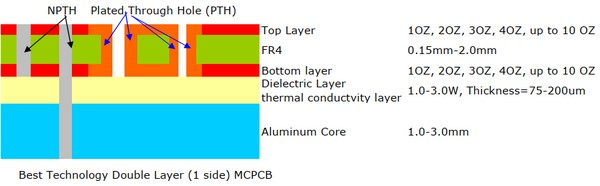
Regarding the MCPCBs with two layers of copper conductor, there are two basic types, one is Two (Double) layers MCPCB, the other one is Double Sided More Core PCB, which depends on your demand of the mounting of the electronic components, the components can be soldered on both sides on Double Sided More Core PCB.

If you would like to know more details of the differences between Double Sided MCPCB and Double/Two Layers MCPCB, welcome to click following link.

Double Sided More Core PCB

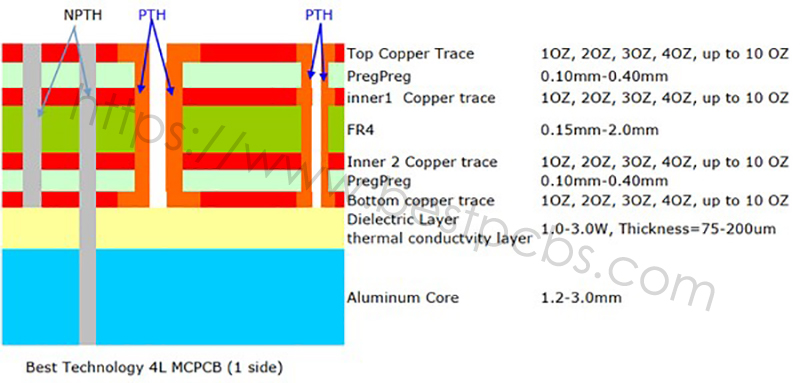
3) Multi Layers metal core PCB

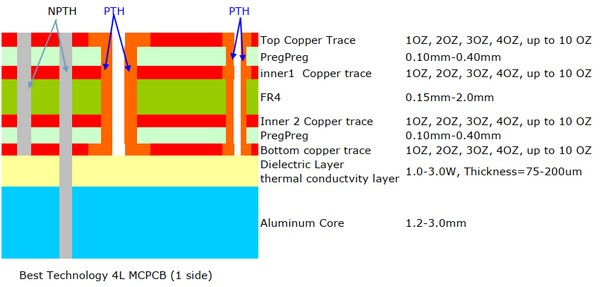
The Multi Layers MCPCB have the more complex and integrated circuit/construction, which can be populated more components on the boards, put signal and ground layer into seperated layers, to achieve better performance in electrical performance. It’s best for heat transferring from electrical components to the chassis of the board. The use of these boards is tremendous in the digital and analogue devices.

Multi Layers metal core PCB

If you have any questions about MCPCB, welcome to contact Best Technology.

About the “heat” problem in PCB & MCPCB

October 18th, 2021

For high-power products, the concept of “heat” is often mentioned, which is especially important in high-power products. It not only determines the service life of the product, but also relates to whether the product can work properly.

We will explain the “heat” problem in circuit board design from three aspects: the generation of heat, the impact of heat on the product and the “heat” in the system layout.

1. Heat generation:

Heat generation in a system takes several paths:

1) Power consumption of the component itself

2) Efficiency of power conversion devices

3) High frequency signal conversion heating

4) Power consumption of contact resistance and wire resistance during signal transmission

2. Impact of fever on products

The operating temperature of components is generally below 80 degree, and the operating temperature of commonly used capacitors and resistors is generally controlled below 50 degree. If the temperature of the system is not controlled, the following conditions may occur:

1) The temperature rise will cause the working parameters of components to change, resulting in the unstable working performance of the whole system.

2) Temperature rise will accelerate the aging of components, affecting the accuracy and life of components.

3) Temperature rise will cause circuit board deformation and poor connection of components.

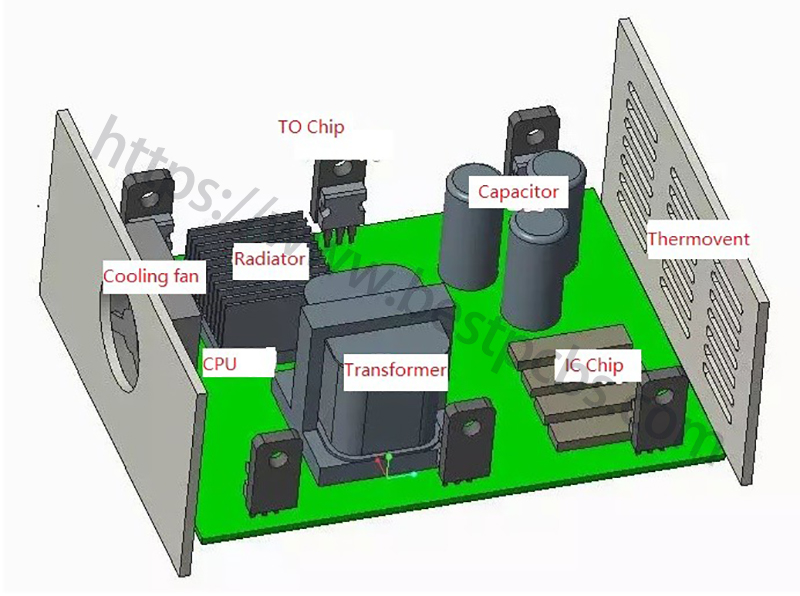
General heat dissipation components arrangement

3. “Hot” considerations in system layout

1) Selection and layout of the chassis: choose materials with good thermal conductivity, such as aluminum alloy

2) Black heat absorbing material is coated inside the shell to enhance the function of radiation heat absorption

3) The shell is closely combined with the components with high calorific value to conduct heat dissipation

4) A large number of heating components should be placed at the edge of the plate to shorten the heat transfer path. Heat-resistant components should be kept away from light sources.

5) In the design process, the appropriate wire width and copper thickness should be selected, and the influence of wiring density on the current-carrying capacity should also be considered. Copper foil should be filled in the gap of the board surface as far as possible for heat conduction. The heat conduction hole can help effectively heat dissipation and reduce local temperature.

In the design of circuit board, how to effectively control the temperature of the system is a problem that must be considered.

Why choose MCPCB rather than FR4 PCB for high power LED?

September 20th, 2021

Compared to conventional LED, high-power LED consume more electricity and require higher currents, but the heat generated in the end cannot be dissipated in time through the ordinary FR4 CPB. And there will be some failures when the heat from a LED is not properly removed, the LED’s light output is reduced as well as degradation when the heat remains stagnant in the LED package.

So if the PCB requires fast cooling, it’s better to use a metal base rather than a traditional FR-4 substrate. The typical LED MCPCB is a single circuitry layer copper foil which is bonded to a layer of thermally conductive dielectric material which is bonded to a thicker layer of metal like Aluminium or Copper base, the purpose of a MCPCB is to efficiently remove the heat from all topical IC’s (not just LEDs). Following are the comparison between FR4 PCB and MCPCB for your reference.


1. Thermal Dissipation

FR4 has low thermal conductivity, typically around 0.3W/m.K, while MCPCB has higher thermal conductivity, ranging from 1.0-7.0W/m.K. MCPCB transfer heat 8 to 9 times faster than FR4 PCB, the dielectric layer must be very thin to create the shortest path from the heat source to the supporting metal plate, its thickness is normally between 0.003 and 0.006 inches.

As an example, consider that a test conducted on an MCPCB with integrated 1W LED showed how its temperature remained pretty close to the ambient temperature of 25°C, while the same power LED mounted on a FR-4 board reached a temperature 12°C higher than the ambient one.

2. Better Strength and Stability

Since high power LED chips are usually assembled directly on the PCB, these LEDs can create stability and reliability problems for the circuit. Without adopting the right technique, heat dissipation can hinder the performance of electronic devices that operate at high power. The use of metal PCBs in these applications effectively solves this problem. In addition to ensuring a high durability, aluminum is very light, and adds strength and resilience to the printed circuit board without causing an increase in weight.

3. Dimensional Stability

The size of a metallic printed circuit board remain more stable, as environmental conditions vary, than that of a PCB made with traditional materials, such as FR-4. Subjected to a heating process from 30°C to about 150°C, PCBs with metal layers (such as aluminum) have undergone a very small variation in size, ranging from 2.5% to 3.0%.

If you have other questions about MCPCB, welcome to contact us.

Baking Time & Temperature Standard of MCPCB

August 17th, 2021

After manufacturing the Metal Core PCB, there is a shelf life, once the shelf life has passed, we need to bake the bare board before assembling the components, otherwise the MCPCB is prone to burst when the SMT line is produced. There are industry specifications for both how long MCPCB can be stored and how long they can be baked.

MCPCB Control Standard

  1. Unpacking & Storage
  2. If the packing bag is sealed, and the manufacturing date is within 2 months, it can be directly used before assembly.
  3. The manufacturing date is within 2 months, and the unpacking date must be marked after unpacking.
  4. The manufacturing date is within 2 months, and it must be assembled and used within 5 days after unpacking.
  • Baking Time
  • If unpacked for more than 5 days within 2 months of the manufacturing date, bake at 120±5°C for 1 hour
  • Two months after the manufacturing date, baking at 120±5°C for 1 hour before assembly.
  • Two to Six months after the manufacturing date, baking at 120±5°C for 2 hours before assembly.
  • Six to Twelve months after the manufacturing date, baking at 120±5°C for 4 hours before assembly.
  • The MCPCB after baking must be used up within 5 days (put into IR REFLOW), and unused board must be baked for another hour before assembly.
  • Over half one year after the manufacturing date, bake at 120±5°C for 4 hours before assembly, and then send it to the production line to do HASL_LF before using.
Baking Machine

Preservation & Baking Standard for in different regions

The specific storage time and baking temperature of MCPCB are not only related to the production capacity and production process of manufacturer, but also have a great relationship with the region.

  1. For areas with heavier humidity, the MCPCB must be used up within 24 hours when exposed to the air, otherwise it is easy to oxidize. After normal opening, it is best to use it up in 8 hours.
  • For areas with a relatively dry climate, the preservation time of PCB will be longer, and the baking time can also be shorter. The baking temperature is generally 120±5°C, and the baking time is determined according to the specific situation.

The MCPCB with OSP or Gold Immersion has a shelf life of 6 months after packaging, and it is generally not recommended to bake for MCPCB with OSP.

PCB board with SMT

If you have other questions about MCPCB, welcome to contact us.

How to make Panel for MCPCB?

July 16th, 2021

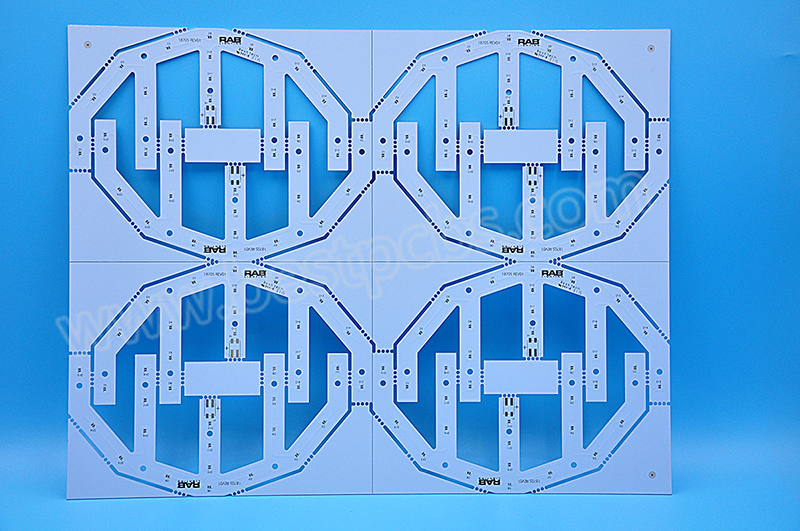
Regarding all Metal core PCB required panelization, which needs to take into account how the boards are connected. There are two main connection methods for panel: Double face carved V-shaped groove (V-CUT), and the long slot plus a small circular hole (commonly known as stamp hole), depending on the shape of the PCB.

  1. V-CUT

V-CUT is to draw a slot at the junction of two boards, where the connection of the boards is relatively thin and easy to break. Currently SMT Board is widely used, characterized with neat and level edges after separation, which is recommended as priority.

V-cuts are generally straight lines, and there will be no complicated traces such as curved arcs, so pay attention to be in a straight line when making the panelization. Please also note the following two points.

â‘  The two sides of V-CUT line (top side and bottom side) require a no circuits area that is not smaller than 1mm, to avoid the damage circuits when separating.

② After cutting the V-shaped groove, the remaining thickness should be 1/4 to 1/3 of the total board thickness , which is not smaller than 0.4mm.

V-Cut
  • Stamp Holes/Mouse Bite

For irregular PCB boards, the shape of the board has curved corners, there will be many burrs if use V-cut. In this case the stamp hole connection would be the better choice.

  1. Panelization Rules:
  1. The spacing between the panel and the board is 1.2mm or 1.6mm.
  • The diameter of hole is 0.55mm, generally a row of 8 holes (Hole count depends on the design requirements, more holes can enhance the stability), the spacing of the two holes is 0.2mm.
  • The distance between the upper and lower rows of holes is 2mm, and 1/3 of the stamp holes enter the board. Pay attention to avoid the circuit on the edge of the board.
  • After adding the stamp holes, the shape of both sides of the hole need to be connected to facilitate the subsequent routing manufacturing.
  • The part picture after panelization.(Using the connection bridge in the middle, which can minimize the residual.)
Part Picture
  • The effect picture after panelization.
Stamp Holes

If you want to learn more about MCPCB design, welcome contact us.

Common Problems in SinkPAD Board Design

June 17th, 2021

1. What is the SinkPAD Board?

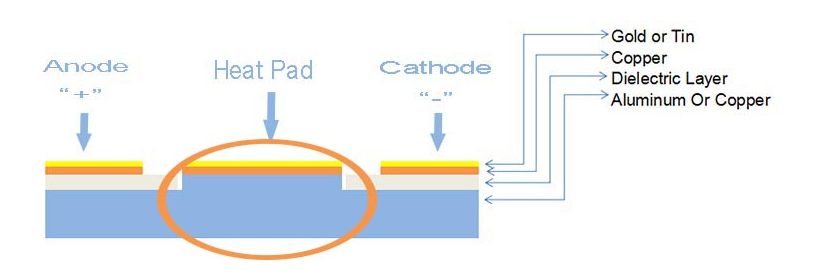
Sink Pad Board, also called Heat Sink or DTP (direct thermal path), it’s an alternative PCB technology to the conventional metal core PCB providing direct thermal path solutions for high power LED. 

The thermal conductive PAD is convexity area of copper core/pedestal, so that the thermal PAD of LED can touch the convexity area of metal core directly, and then the heat of LED will be dissipated into the air much faster and more efficient than conventional MCPCB.

Heat Sink

2. If only the LED pad can be made as SinkPAD?

Of course no, the pads of other chips or components also can be designed as Sink PAD, one of the most common is the IC pad. In some designs, IC needs to pass through the large current and it will emit a lot of heat, it would be best to design its pad as a thermal conductive pad at this time.

SinkPad Board after SMT

3. What is the thermal conductivity of a SinkPAD ?

The thermal conductivity could be 235 W/m.k to 400 W/m.k.

4. Can we use SinkPAD technology for any LED packages?

No, it’s designed to be used with the LEDs which has electrically neutral thermal pad. Such as Cree XPL/XML/XHP/XPG/XPE/XPC/XTE/XBD, Luxeon Rebel & Luxeon M from Philips Lumiled, Oslon SSL & Oslon square from Osram, Nichia N219, Seoul Semiconductor Z5P / Z5M, Samsung 3535, Bridgelux SM4, etc.

5. What is the Manufacturing Process for the SinkPAD Board?

Manufacturing process is the same as conventional MCPCB, please click here to see the manufacturing process status.

Shinkpad

6. How does SinkPAD Board compare to Conventional MCPCB?

Conventional MCPCB uses a thermally conductive dielectric layer to bond circuit layer with base metal (Aluminum or Copper) layer. The key to thermal performance of MCPCB lies in its dielectric layer. Even though thermally conductive dielectric has higher thermal performance compared to normal FR4, it’s still a weakest link in the conduction thermal path.

SinkPAD Board approach overcomes this limitation, which provides “Direct thermal path”, the LED Chip can directly contact the copper substrate, there’s no dielectric between LED thermal pads and the metal base, then the thermal resistance is very small.

7. Can the aluminum be made as the base of Heat Sink?

Actually yes, however, regarding of current technical conditions, since aluminum or aluminum alloy cannot directly react with acid, the reaction process is too complex and difficult to control, which will increase the difficulty of etching the LED pad platform.

Considering the scrap rate, the process of etching LED pad platform with aluminum is more complex and the overall cost is higher, and the copper also dissipates heat much better than aluminum, so copper is generally used as the substrate for Heat Sink in our company.

Copper Substrate

8. Does SinkPAD Board require special PCB design?

No, we can use your existing MCPCB Gerber data.

Welcome to contact us if you have other questions about Sink Pad Board.