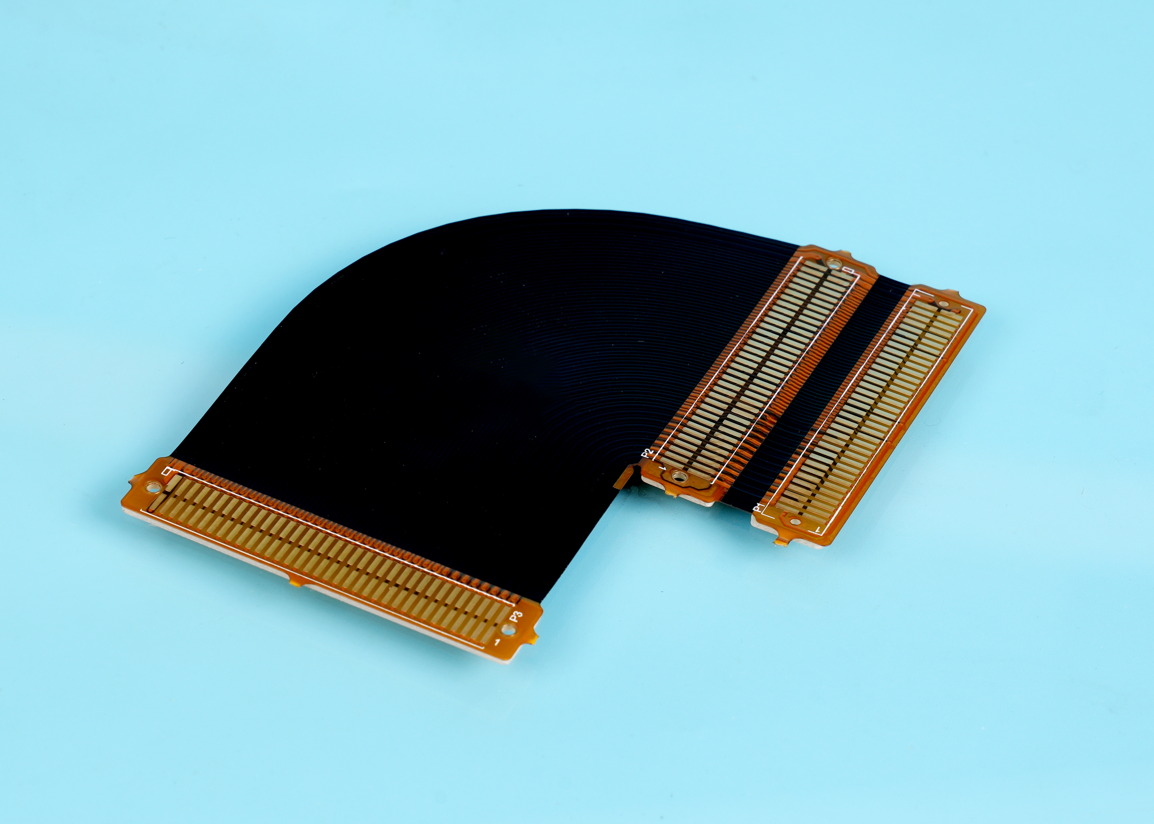
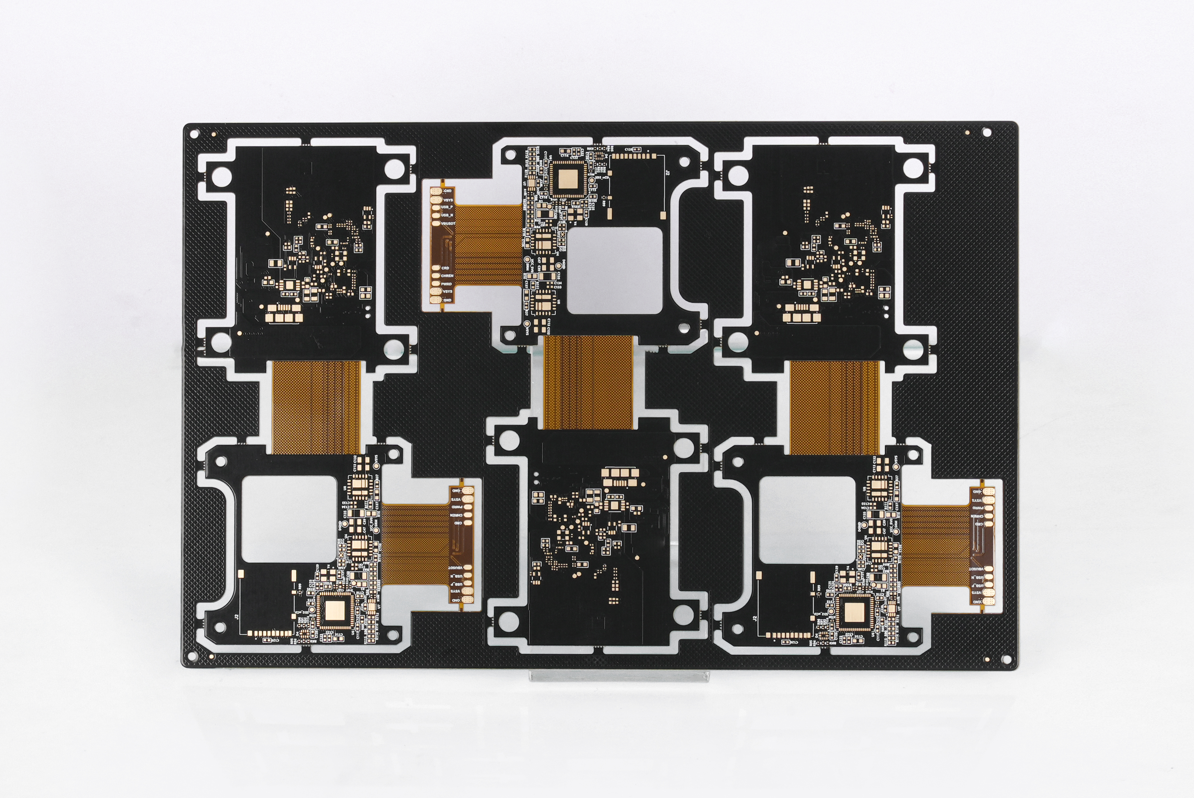
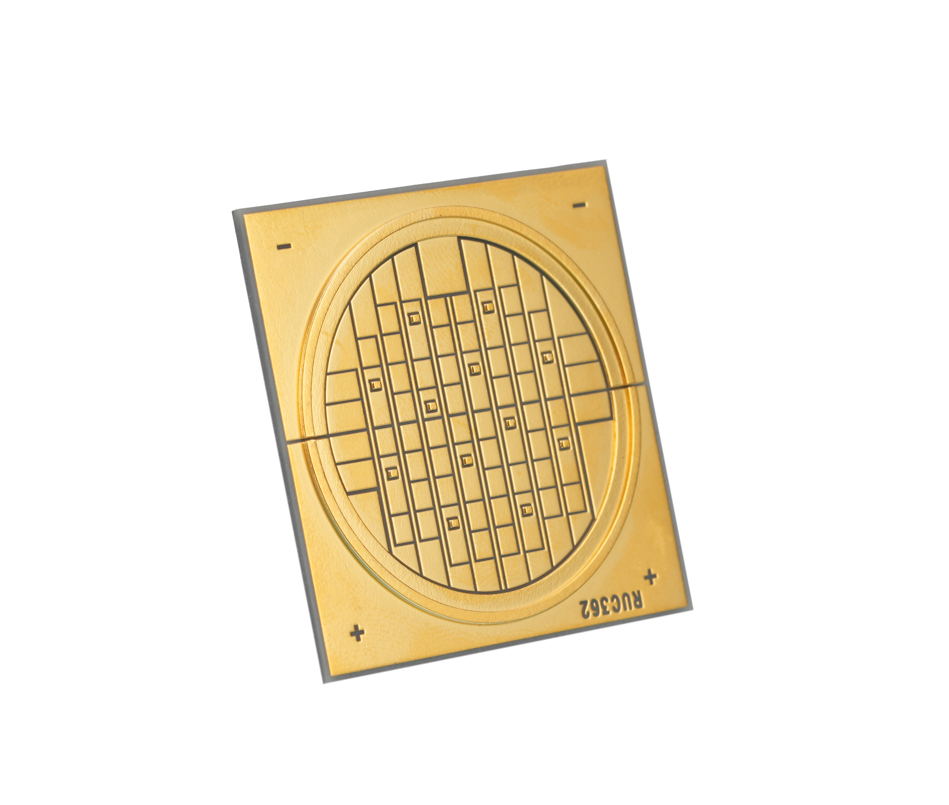
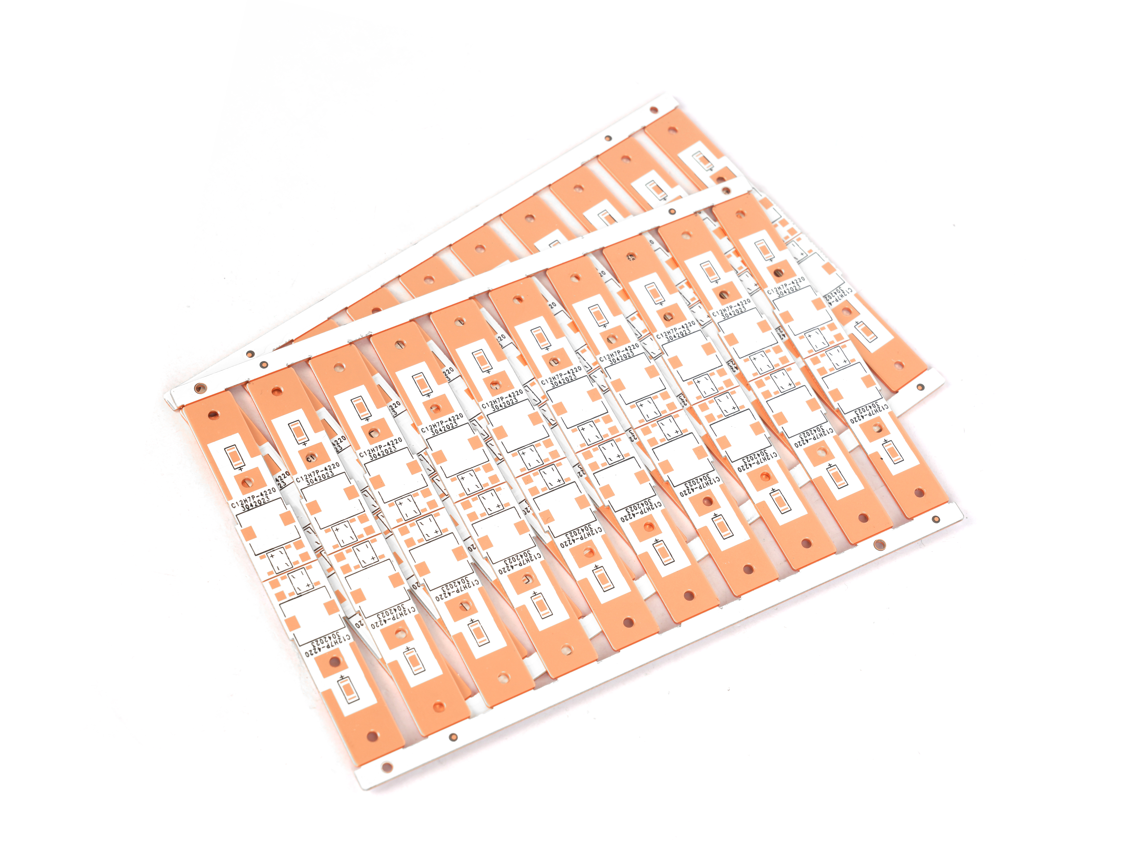
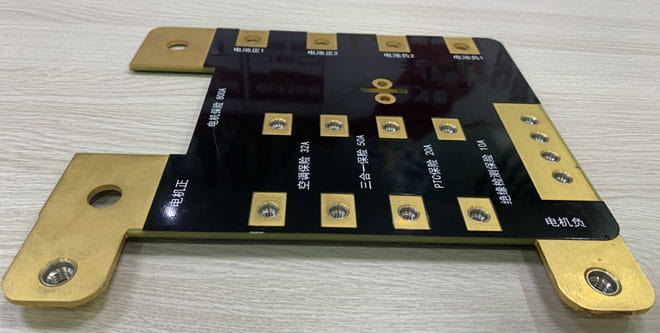
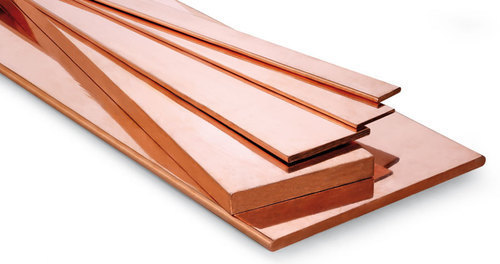
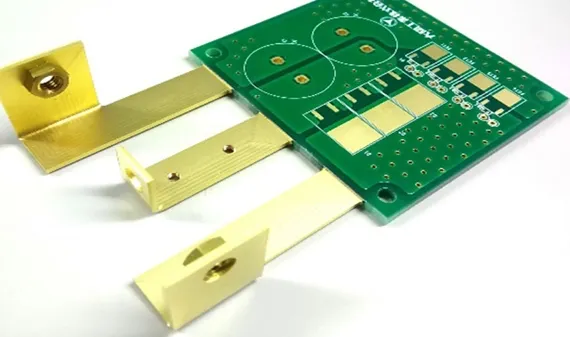
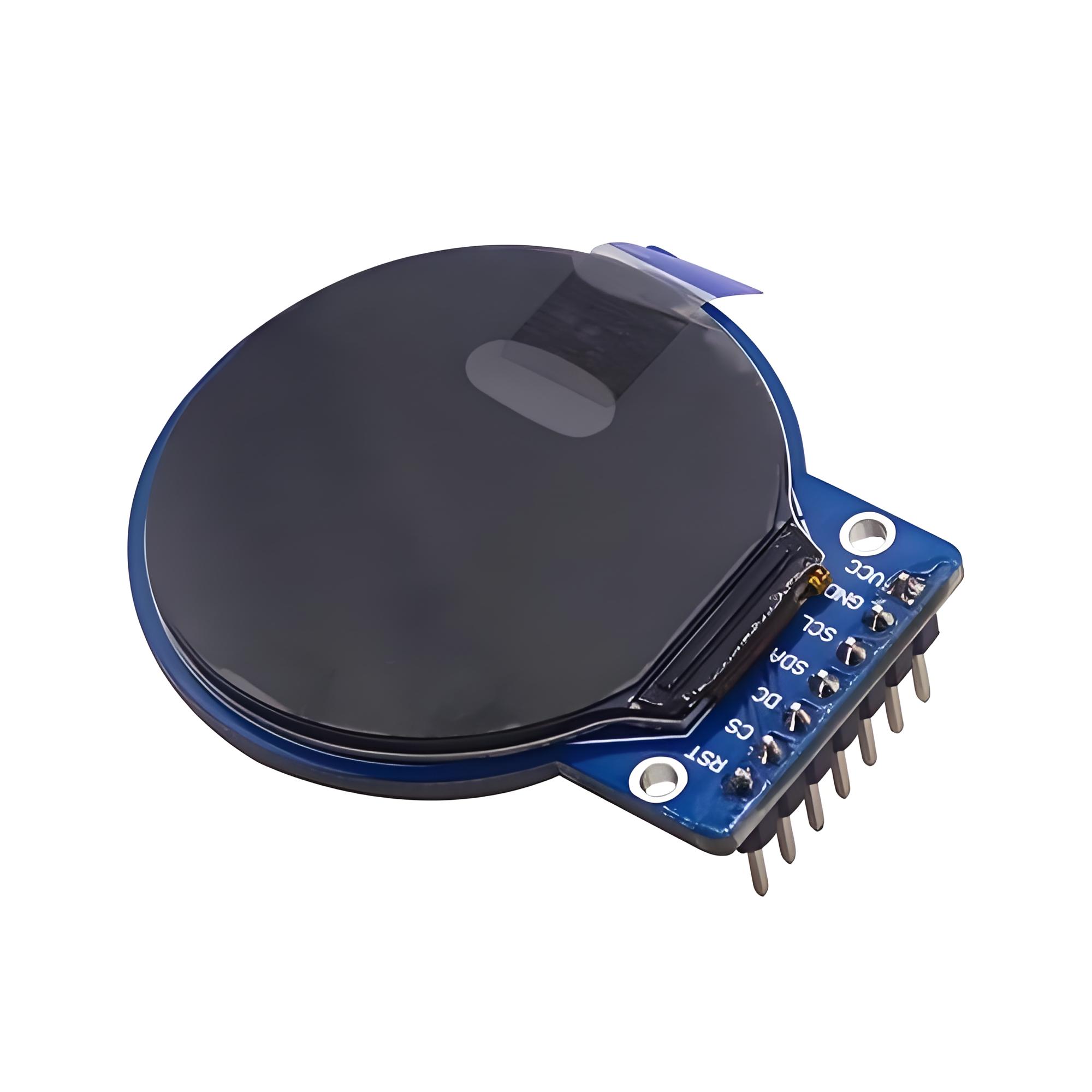
PCB manufacturing PCB manufacturing
Home > Blog

Circuit Board Generator For PCB Design

June 27th, 2025

Seeking for circuit board generator for your design? This guide covers automated pattern/font generation, error reduction, and signal integrity optimization, helping you save time and costs at every stage.

EBest Circuit (Best Technology) stands out as your ideal PCB design partner with tangible benefits that accelerate your projects. We provide ‌free DFM analysis‌ with every design to prevent costly manufacturing errors upfront. Our pricing is ‌transparent and competitive‌ with no hidden charges. When you need support, our ‌24-hour response team‌ delivers solutions faster than industry standards. What truly differentiates us is our ‌dedicated designer team‌ offering real-time 1-on-1 consultations to address your specific challenges.

With 18+ years of specialized experience, we’ve optimized our circuit board generators to handle complex multilayer designs while maintaining 99.2% first-pass success rates. Let us prove how our combination of ‌technical expertise, cost efficiency and responsive service‌ can streamline your PCB development – contact us today for a risk-free consultation: sales@bestpcbs.com.

What Is a Circuit Board Generator?

A circuit board generator is a specialized system that translates electronic circuit designs into functional printed circuit boards (PCBs). It bridges the gap between schematic diagrams and physical hardware.

Software circuit board generators automate PCB layout creation. They handle component positioning, copper trace routing according to electrical requirements, and manufacturability checks. These tools produce essential industry-standard output files like Gerber formats, accelerating development for complex designs such as multi-layer boards or high-frequency circuits.

Physical circuit board generators directly create prototype boards using methods like milling, etching, or additive printing. This enables tangible board production within hours for rapid testing. Specialized versions also exist for creating custom silkscreen markings, electromagnetic shielding patterns, or experimental circuit configurations.

By efficiently translating electronic concepts into manufacturable realities, circuit board generators streamline the entire development cycle, ensuring designs meet fabrication standards while dramatically shortening prototyping time.

What Is a Circuit Board Generator?

What Are Software For Circuit Board Generator?

Here are software tools for circuit board generator:

  • Schematic Capture Interface:‌ This foundational tool allows designers to create the logical diagram of the circuit using standardized electronic symbols. It precisely defines component connections, establishing the functional blueprint before physical layout begins.
  • Component Library Manager:‌ Comprehensive libraries store detailed information on parts, including schematic symbols, physical footprints (pad shapes, sizes), 3D models, and electrical parameters. This prevents errors and streamlines component selection and placement.
  • Placement Assistance:‌ Tools provide visual cues and automated suggestions for positioning components on the board layout. Designers maintain control while benefiting from optimized arrangements that minimize trace lengths and consider thermal or signal constraints.
  • Interactive Routing Engine:‌ This facilitates creating physical copper connections (“traces”) between component pins, offering manual, semi-automated, or fully automated modes. Intelligent routing adheres to spacing rules, manages complex paths (like differential pairs), and ensures signal integrity.
  • Real-time Design Rule Checker (DRC):‌ Operating continuously, this enforces user-defined and fabrication constraints (trace width, spacing, hole sizes). Immediate feedback on violations prevents costly errors reaching manufacturing.
  • Manufacturing File Generator:‌ Upon successful verification, the system automatically exports industry-standard files essential for production, including Gerber files (copper layers, solder mask, silkscreen) and drill files (Excellon format).
  • Signal Integrity Analyzer:‌ Integrated simulation tools model how electrical signals behave on traces. This helps predict and mitigate issues like noise, reflections, or timing errors before prototyping, enhancing reliability.
  • Power Integrity Analysis Tool:‌ Dedicated features analyze voltage stability and current distribution across the board, identifying potential drops or excessive noise that could impact circuit performance.
  • 3D Visualization & Mechanical Integration:‌ Tools render the board and components in 3D, enabling collision checks with enclosures or other mechanical parts. This ensures physical fit and compatibility early in the design cycle.
  • Bill of Materials (BOM) Generator:‌ Automatically extracts a complete list of all required components directly from the design data, simplifying procurement, cost estimation, and assembly preparation.
  • Version Control & Data Management:‌ Integrated systems track design revisions, manage project files, and support collaborative workflows, safeguarding progress and enabling efficient team coordination.
  • CAM Processor Interface:‌ While distinct from the generator core, robust interfaces allow seamless data transfer to specialized CAM (Computer-Aided Manufacturing) software for final fabrication preparation and panelization. This ensures smooth handoff to manufacturing partners.

What Are Function of Circuit Board Generator?

Function of circuit board generator:

  • Translating Schematics into Physical Layouts: The circuit board generator converts logical circuit diagrams into precise, manufacturable board geometries. This ensures the electrical connections defined in the schematic are accurately reflected in the physical copper pathways and component placement.
  • Managing Comprehensive Component Libraries: It centrally stores and organizes detailed information for every part used. This includes schematic symbols, footprints (defining physical pad layouts and outlines), 3D models, and electrical parameters, guaranteeing consistency and preventing placement or assembly errors.
  • Facilitating Intelligent Component Placement: While designing, the circuit board generator provides visual aids and automated suggestions based on connectivity and design rules. This assists in arranging components efficiently, minimizing trace lengths for better signal performance, managing heat distribution, and respecting mechanical constraints.
  • Enabling Rule-Driven Routing: The generator offers powerful tools for creating the copper traces connecting components. Designers can route manually, use guided assistance, or employ automation – all while strictly adhering to spacing rules, managing impedance for sensitive signals, and avoiding electrical conflicts.
  • Enforcing Real-Time Design Rules: Continuously, the circuit board generator checks the layout against predefined manufacturing tolerances (trace width, spacing, hole sizes) and electrical requirements. Immediate feedback on violations prevents costly errors from reaching fabrication, saving significant time and money.
  • Generating Essential Manufacturing Files: Upon design completion and verification, the circuit board generator automatically exports the complete set of industry-standard files required for production. These include Gerber files for each copper layer, solder mask, and silkscreen; Excellon drill files; assembly drawings; and accurate Bills of Materials (BOM).
  • Supporting Early Electrical Verification: Through integrated simulation, the circuit board generator allows designers to analyze signal behavior and power distribution stability before physical prototypes exist. Identifying potential issues like noise or voltage drops at this stage significantly reduces later development risks and costs.
  • Producing Functional Prototypes: When connected to compatible milling or printing equipment, the circuit board generator directly drives the machinery to create tangible, working prototype boards within a short timeframe. This accelerates testing and validation cycles dramatically.

What Are Applications of Circuit Board Generator?

Applications of circuit board generator:

  • Consumer Electronics‌ – Designs compact boards for smartphones, wearables, and smart home devices
  • Industrial Systems‌ – Creates durable control boards for factory equipment and power systems
  • Automotive Tech‌ – Develops reliable vehicle electronics for engine control, ADAS, and EV batteries
  • Aerospace & Defense‌ – Produces ultra-reliable boards for aircraft systems and military equipment
  • Medical Devices‌ – Enables precise circuits for diagnostic machines and implantable devices
  • Telecom Equipment‌ – Builds complex boards for network infrastructure and communication systems
  • IoT Devices‌ – Designs connected sensors and smart controllers with wireless capabilities
  • Energy Systems‌ – Creates boards for solar inverters, wind turbines, and smart grid technology
  • Robotics‌ – Develops control circuitry for industrial robots, drones, and automated systems
  • Education & Research‌ – Supports academic learning and rapid prototyping for new technologies

Why Choose a Circuit Board Pattern Generator​ for RF PCB Designs?

Reasons why choose a circuit board pattern generator for RF PCB designs:

  • Save Time on Repetitive Tasks‌: Instead of manually drawing common patterns (like ground planes or RF shields), the generator automates these layouts. This means you can focus on custom parts of your design, reducing hours of work to minutes.
  • Reduce Human Errors‌: Manual tracing risks small mistakes—misaligned vias or uneven spacing. Automated patterns ensure consistency, especially for high-frequency designs where precision matters.
  • Test Ideas Faster‌: Quickly generate multiple pattern variations (e.g., different antenna shapes or thermal reliefs) to compare performance in simulations. Ideal for prototyping phases.
  • Simplify Complex Geometries‌: For advanced needs like curved traces or fractal-based layouts, the tool handles math-heavy optimizations you’d otherwise calculate manually.
  • Standardize Designs Across Teams‌: Share pre-validated patterns (e.g., EMI shields or power distribution networks) with colleagues, ensuring everyone uses the same reliable templates.
  • Adapt to Material Constraints‌: Some generators adjust patterns based on your PCB’s dielectric properties or manufacturing limits, avoiding costly post-design fixes.
  • Enhance Aesthetics Without Sacrificing Function‌: Create visually appealing boards (e.g., artistic logos or decorative elements) while maintaining electrical integrity—useful for consumer electronics.
  • Lower Learning Curve for New Designers‌: Beginners can leverage pre-built patterns to understand best practices, like proper via stitching or impedance matching, without deep prior experience.
Why Choose a Circuit Board Pattern Generator​ for RF PCB Designs?

How a Circuit Board Font Generator Saves Time in Custom Marking Design?

Automated Font Compliance

  • PCBs require silkscreen markings that adhere to manufacturing standards (e.g., minimum line width, spacing). Font generators automatically apply industry-compliant fonts, ensuring legibility without manual adjustments. This prevents costly reworks caused by non-conforming text.

Instant Customization

  • Engineers often need to modify text for branding, part numbers, or warnings. Font generators allow real-time edits to size, style, and orientation. For example, adjusting a logo’s placement on a crowded board takes seconds, whereas manual redrawing in CAD tools could consume hours.

Multi-Language Support

  • Products sold globally require PCBs with labels in multiple languages. Font generators store libraries of Unicode characters, enabling quick switching between alphabets (e.g., English, Chinese, Cyrillic) without redrawing symbols. This simplifies localization for international markets.

Export Efficiency

  • Font generators output silkscreen layers in standard formats (e.g., Gerber RS-274X), ensuring compatibility with PCB fabrication software. This eliminates time-consuming file conversions or manual layer stacking in EDA tools.

Reduced Dependency on Graphic Designers

  • Non-expert users can generate production-ready text without assistance. For example, a hardware engineer can independently add a company logo or safety certification marks, bypassing the back-and-forth with graphic design teams.

Accelerated Prototyping

  • During iterative testing, engineers frequently update PCB labels (e.g., version numbers, test parameters). Font generators apply changes across entire board layouts in minutes, whereas manual edits risk inconsistencies and delays.

Cost Avoidance for Low-Volume Runs

  • For niche products, outsourcing custom silkscreens is expensive. Font generators enable in-house design of unique markings, cutting per-unit costs by up to 30% for small batches.
How a Circuit Board Font Generator Saves Time in Custom Marking Design?

How to Avoid PCB Rework Costs With Automated Font and Pattern Generation Tools?

Enforce Design Rules in Real Time

  • Automated tools apply industry standards (e.g., IPC-7351B) as you design. For example, a circuit board font generator ensures silkscreen text meets minimum line width and spacing requirements, preventing illegible markings that fail quality control. Similarly, a pattern generator flags traces violating impedance tolerances, avoiding signal reflections that require board scrapping.

Optimize Shielding Layouts for EMI Compliance

  • Manual shielding designs often leave gaps or improper via stitching, leading to electromagnetic interference (EMI). A circuit board pattern generator automates the creation of continuous ground planes, via fences, and honeycomb patterns. This reduces rework caused by failed EMC testing, saving 500–2,000 per failed batch in testing and assembly costs.

Prevent Material-Related Errors

  • Different PCB substrates (e.g., FR-4 vs. Rogers) affect trace impedance and thermal performance. Automated tools adjust pattern geometries based on material properties. For instance, they widen traces on high-loss materials to maintain signal integrity, avoiding costly re-spins due to unexpected signal attenuation.

Streamline Multi-Layer Alignment

  • Misaligned layers in complex boards (e.g., 8+ layers) cause shorts or opens. Tools like Blender circuit board generators simulate 3D layer stacking, highlighting misregistrations before fabrication. This proactive check reduces rework rates by up to 40% in high-density interconnect (HDI) designs.

Automate Custom Markings for Consistency

  • Hand-drawn logos or part numbers often vary in size or position, causing assembly errors. A circuit board font generator locks text dimensions and positions relative to components. For example, it ensures QR codes remain scannable even after multiple design iterations, avoiding line downtime due to labeling mistakes.

Accelerate Design-to-Fabrication Handoff

  • Manual export of silkscreen and copper layers frequently introduces file errors (e.g., missing layers, inverted polars). Automated tools generate Gerber, ODB++, or Excellon files directly from validated designs. This cuts file-related rework by 70%, as engineers no longer troubleshoot mismatched layers.

Reduce Prototype Iterations

  • A random circuit board generator helps test unconventional layouts (e.g., randomized via patterns for thermal management) digitally. Engineers identify failures in simulation rather than physical prototypes, slashing iteration cycles from weeks to days.
How to Avoid PCB Rework Costs With Automated Font and Pattern Generation Tools?

Can Random PCB Generators Improve Signal Integrity in High-Speed Multilayer Boards?

Here’s how random PCB generators enhance signal integrity in high speed multilayer boards:

Breaking Traditional Layout Constraints

  • High-speed signals demand precise control over trace length, impedance, and coupling. Random generators experiment with non-linear routing paths that reduce parallel run lengths between aggressive and passive traces, minimizing crosstalk. For example, they might stagger differential pairs to avoid uniform spacing that amplifies interference.

Optimizing Via Placement for Layer Transitions

  • Vias introduce stubs and inductance that degrade signal integrity at GHz frequencies. Random generators test thousands of via configurations to identify layouts with minimal stub lengths or backdrilled options. This trial-and-error approach uncovers solutions that deterministic algorithms might skip due to computational limits.

Balancing Ground Pour Density

  • Uneven ground planes create impedance discontinuities. Random tools distribute copper pours dynamically, ensuring consistent return paths for high-speed signals. They might fill empty board areas with staggered ground vias or adjust pour shapes to match trace density, reducing loop inductance.

Reducing Resonance in Power Planes

  • Parallel power/ground planes can resonate at specific frequencies, causing EMI. Random generators perturb plane geometries to disrupt resonant modes. For instance, they might add offset slots or randomize via spacing to scatter electromagnetic energy harmlessly.

Enhancing Thermal Dissipation Without Compromising SI

  • High-speed designs often face thermal-signal integrity trade-offs. Random generators place thermal vias and copper fills in non-uniform patterns that avoid clustering near sensitive traces. This maintains signal integrity while preventing hotspots that could warp boards or shift component values.

Automated What-If Scenarios for Differential Pairs

  • Manual tuning of differential pairs is time-consuming. Random tools simulate millions of variations in trace width, spacing, and length matching. They identify layouts where intentional skew compensates for layer-specific propagation delays, improving eye diagrams in SerDes channels.

Mitigating Skew in Multi-GHz Clock Networks

  • Clock trees require tight skew control. Random generators explore non-radial routing topologies that balance delays across branches. By avoiding symmetrical “star” patterns prone to process variations, they achieve 30% lower skew in PCIe or DDR5 interfaces.

Validating Robustness to Manufacturing Variations

  • High-speed boards are sensitive to etching tolerances and dielectric variations. Random generators stress-test layouts by simulating worst-case process shifts. They recommend designs where intentional trace wiggles or redundant via fences buffer against production inconsistencies.

Conclusion

Circuit board generators revolutionize PCB design by automating pattern creation, reducing errors, and enhancing efficiency. Whether you need precise silkscreen markings, optimized signal paths, or faster design iterations, these tools deliver measurable results. For reliable solutions that fit your specific project requirements, EBest Circuit (Best Technology) offers customized generator tools with expert support. Contact us today for a competitive quote and take your PCB designs to the next level with professional-grade automation. Let’s discuss how we can streamline your workflow while maintaining quality standards: sales@bestpcbs.com.

Super Quality PCBA Manufacturer in China for Fast Delivery

June 27th, 2025

PCBA Manufacturer in China is a keyword that resonates with global buyers who demand fast, precise, and trusted electronics assembly services. If you’re looking for a reliable partner who delivers consistent quality on tight timelines, you’re not alone. The competition in electronics manufacturing is intense, and choosing the right PCBA supplier is no longer just about cost—it’s about control, speed, and support.

To ensure every customer enjoys super quality PCBA and satisfactory service, EBest Circuit (Best Technology) offers DFA checks, rapid prototyping service, and a wide range of PCBA choices for customers, such as 4L, 6L, 8L, and 12L FR4 PCB assembly, 4L rigid-flex PCBA assembly, ceramic PCB assembly, and box building services. EBest Circuit (Best Technology) is a PCBA board manufacturer for electronics in China. We promise a super-quality SMT PCBA and efficient delivery. And we will provide the best service for you. Feel free to share your BOM list, silk screen position diagram, and SMD coordinates with us at sales@bestpcbs.com, and we will be pleased to share our specific quoting correspondingly.

Super Quality PCBA Manufacturer in China for Fast Delivery

Who Is the Best PCBA Manufacturer in China?

Many companies call themselves top suppliers, but the best PCBA manufacturer in China goes beyond high volume. It’s about who can provide stable quality, quick turnaround, and full technical backup. EBest Circuit (Best Technology), for example, has earned the trust of global clients through a well-managed MES system, certified production (ISO9001, ISO13485, IATF16949, AS9100D), and a customer-first approach. Clients choose them not just for products—but for comprehensive solutions.

Who Is the Best PCBA Manufacturer in China?

Where Are Most PCBA Manufactured?

Most PCBA manufacturing in China is concentrated in regions like Shenzhen, Dongguan, and Suzhou. Shenzhen stands out as the heart of the electronics industry. With access to a robust supply chain, skilled labor, and modern logistics, PCBA China suppliers in this area offer faster prototyping and flexible batch production. That’s why many global electronics brands choose this hub for their key projects.

What Services Do Top PCB Assembly Manufacturers in China Offer?

Leading PCBA board manufacturers for electronics in China don’t just offer assembly. They provide full turnkey services—PCB fabrication, SMT, DIP soldering, functional testing, BGA rework, and conformal coating. EBest Circuit (Best Technology) adds an extra layer of value through DFM feedback, component suggestions, and custom packaging. In-house AOI, X-ray, ICT, and full traceability reporting help buyers avoid quality risks and shorten development cycles.

What Services Do Top PCB Assembly Manufacturers in China Offer?

What Is the Difference Between Bare PCB and PCBA?

The terms sound similar but represent two different stages. A bare PCB is the raw board with only copper traces and no parts. A PCBA (Printed Circuit Board Assembly) includes all the soldered components. The jump from PCB to PCBA adds complexity and responsibility—especially in terms of inspection, process control, and final test. So, working with a skilled PCBA China team can reduce rework, returns, and missed deadlines.

Who Is the Manufacturer of Bare PCB in China?

China has countless PCB manufacturers. However, very few manage both bare board production and complete PCBA in one location. EBest Circuit (Best Technology) is one of the few that offers integrated services. This helps maintain consistency between PCB and assembly quality. No more back-and-forth between multiple suppliers. Customers benefit from a single point of accountability, stronger material control, and fewer delays.

Who Is the Manufacturer of Bare PCB in China?

How to Choose a Reliable Shenzhen PCBA Manufacturer for Fast Turnaround?

First, check for certifications—ISO 9001, ISO 13485, IATF 16949, and others prove the factory follows international standards. Second, examine their testing process. Do they use AOI, X-ray, ICT, and FCT? Third, review their past delivery records. Finally, talk to their support team. A fast response today shows how they’ll support you tomorrow. EBest Circuit (Best Technology) checks all the boxes and adds extra value with proactive DFM support and 24/7 communication. Fast delivery isn’t luck—it’s planning.

How to Choose a Reliable Shenzhen PCBA Manufacturer for Fast Turnaround?

Why Choose EBest Circuit (Best Technology) for PCB & PCBA Manufacturer in China?

Customers choose EBest Circuit (Best Technology) for a reason. Their strength lies in four pillars:

  • Quality Control: They operate under a complete quality system—from raw material inspection to final test. Every board passes AOI and functional checks before shipping.
  • Fast Delivery: Thanks to lean manufacturing and automated lines, urgent orders ship in as fast as 24–48 hours.
  • Technical Support: Their engineering team works with your design to avoid issues before production starts.
  • Customer Service: Around-the-clock response ensures you’re never left waiting.

Moreover, EBest Circuit (Best Technology) manages orders with a clear process and always seeks continuous improvement. Whether you’re scaling up or launching a new design, they reduce your risks and help you move fast—without quality trade-offs.

Why Choose EBest Circuit (Best Technology) for PCB & PCBA Manufacturer in China?

As a final point, finding the right PCBA Manufacturer in China is more than a search—it’s a strategic decision. Customers today need more than just low cost. They want accountability, speed, quality, and clear communication. EBest Circuit (Best Technology) stands out with its strong engineering, fast delivery, rigorous testing, and transparent support model. In a world where missed deadlines and poor quality hurt business, choosing a trusted partner like EBest Circuit (Best Technology) can make a big difference for your projects.

EBest Circuit (Best Technology) is a super quality PCBA manufacturer in China for fast delivery. If you’re tired of delays, rework, and poor communication, it’s time to work with a supplier who delivers not just boards—but viable solutions. Please email EBest Circuit (Best Technology) at sales@bestpcbs.com if you have new inquiries or would like to schedule a factory visit with us.

SMPS PCB Board Prototyping, Fast Delivery

June 26th, 2025

Seeking for SMPS PCB Board solutions? This guide explores its definition, functions, applications, design strategies, and fast-delivery advantages.

EBest Circuit (Best Technology) specializes in high-quality SMPS PCB board prototyping and assembly services with industry-leading 24-hour quick-turn delivery. Our accelerated production process ensures fast turnaround without compromising quality, supported by:

  • Free professional DFM analysis to optimize designs for manufacturability
  • Advanced fabrication capabilities (up to 20-layer boards, 6oz copper)
  • Full IPC-A-600 compliant quality control with flying probe testing
  • Mixed-technology assembly (SMT+THT) for complex power electronics

With 18+ years of SMPS manufacturing experience, we maintain <1% defect rate through rigorous process controls. Our engineering team provides actionable DFM feedback to reduce prototyping iterations. Clients benefit from our one-stop solution combining rapid delivery (50% faster than industry average), cost efficiency, and reliable performance – validated by 95%+ repeat order rate from global power supply manufacturers. Welcome to contact us: sales@bestpcbs.com.

What Is SMPS PCB Board?

A SMPS (Switched Mode Power Supply) PCB board serves as the core component in power conversion systems, efficiently transforming and regulating electrical energy for various applications. These boards incorporate essential elements such as transformers, MOSFETs, diodes, and control ICs arranged on a compact layout to enable high frequency switching and minimize power loss. During prototyping, engineers focus on optimizing trace routing, thermal dissipation, and EMI suppression to enhance performance and reliability under different operating conditions.

For rapid prototyping and fast delivery, manufacturers employ efficient design validation techniques and accelerated PCB fabrication processes. Automated testing and iterative refinements help ensure the board meets specifications before full scale production. Material choices, including heat resistant laminates, contribute to durability in demanding environments. Whether used in industrial machinery or consumer electronics, SMPS PCB boards play a vital role in delivering stable, energy efficient power solutions.

What Is SMPS PCB Board?

What Is the Function of the SMPS Board?

Here are functions of an SMPS board:

  • Efficient Power Conversion‌: Switches power at high frequencies to minimize energy loss, reducing electricity costs and heat generation compared to traditional power supplies.
  • Voltage Transformation‌: Converts higher input voltages (AC or DC) to precisely regulated lower DC voltages needed by electronic devices, ensuring proper operation.
  • Noise Suppression‌: Incorporates filters to eliminate electrical interference, preventing disruptions to nearby devices and maintaining signal integrity.
  • Thermal Management‌: Uses heatsinks and thermal design to dissipate heat effectively, prolonging component life and maintaining reliable performance.
  • Overload Protection‌: Automatically shuts down during power surges or short circuits, safeguarding both the power supply and connected equipment from damage.
  • Compact Design‌: High-frequency operation allows smaller components, enabling lightweight and space-saving solutions for modern electronics.
  • Wide Input Range‌: Adapts to varying input voltages automatically, making devices compatible with different power standards worldwide.
  • Stable Output Regulation‌: Maintains constant voltage output despite fluctuations in input power or load changes, ensuring consistent device performance.

What Are Applications of SMPS PCB Board?

Applications of SMPS PCB board:

  • Consumer Electronics Power Supplies‌ – Provides compact, efficient power conversion for devices like televisions, gaming consoles, and audio systems, enabling slimmer product designs while reducing energy consumption.
  • Computer and Server Power Systems‌ – Delivers stable multi-voltage outputs for motherboards, storage devices, and processors, ensuring reliable operation while minimizing heat generation in confined spaces.
  • Industrial Equipment Control‌ – Supplies regulated power to automation systems, PLCs, and motor drives with robust protection against voltage fluctuations common in manufacturing environments.
  • Telecommunications Infrastructure‌ – Maintains uninterrupted power for network switches, routers, and base stations, featuring high efficiency to reduce operational costs in always-on applications.
  • Medical Device Power Management‌ – Provides ultra-clean power with strict noise suppression for sensitive diagnostic equipment, meeting rigorous safety standards for patient-connected devices.
  • LED Lighting Drivers‌ – Enables precise current regulation for commercial and residential lighting systems, improving energy efficiency while extending LED lifespan.
  • Renewable Energy Systems‌ – Facilitates power conversion in solar inverters and battery storage systems, maximizing energy harvest while adapting to variable input conditions.
  • Transportation Electronics‌ – Powers onboard systems in electric vehicles, trains, and aircraft with vibration-resistant designs that withstand harsh mobile environments.
What Are Applications of SMPS PCB Board?

Design Consideration of SMPS PCB Board

Optimized Design Considerations for SMPS PCB Boards

Circuit Partitioning and Signal Integrity

  • Segregate high-voltage and low-voltage sections: Isolate switching nodes (e.g., MOSFETs, transformers) from sensitive analog/digital circuits (e.g., feedback resistors, control ICs) using guard rings or ground gaps. This reduces crosstalk and improves signal clarity.
  • Optimize grounding strategy: Designate separate ground planes for power stages and control logic, connecting them at a single point to prevent ground loops. For example, route PWM controller grounds away from high-current paths.

Component Placement and Routing

  • Prioritize high-current paths: Place inductors, output capacitors, and connectors close to load terminals to minimize trace resistance. For instance, align output capacitors parallel to inductors to reduce loop inductance.
  • Shorten switching node traces: Route high-frequency loops (e.g., MOSFET drain to transformer) with minimal length and width to mitigate electromagnetic interference (EMI). Use polygon pours for critical nodes to lower impedance.

Thermal Management

  • Maximize heat dissipation: Add thermal vias under power devices (e.g., MOSFETs, rectifiers) to conduct heat to inner layers or external heatsinks. For example, use a 10–20 via array under a TO-220 package.
  • Use copper zones strategically: Design solid copper pours for high-power traces (e.g., 2 oz. copper for VIN/VOUT rails) and avoid thermal reliefs to enhance thermal conductivity.

EMI/EMC Compliance

  • Filter input/output noise: Integrate EMI filters (e.g., ferrite beads, X/Y capacitors) at AC/DC ports to suppress conducted emissions. For example, place a common-mode choke before the bridge rectifier.
  • Control impedance: Maintain 50Ί differential impedance for high-speed signals (e.g., PWM drivers) using PCB stack-up planning and controlled dielectric spacing.

Safety and Creepage Distances

  • Adhere to safety standards: Ensure ≥6mm creepage between primary and secondary circuits for 250VAC isolation. Use slotted PCB cutouts or insulating barriers if space is constrained.
  • Reinforce high-voltage isolation: Apply solder mask dams or conformal coatings to protect against dust accumulation in creepage areas.

Design for Manufacturing (DFM)

  • Standardize footprints: Use preferred component libraries (e.g., 0805 resistors, SOIC-8 ICs) to streamline assembly and reduce procurement delays.
  • Avoid tight tolerances: Specify ≥0.2mm annular rings and ≥0.15mm solder mask slivers to accommodate manufacturing variations.

Why Choose SMPS PCB Board Prototyping?

Reasons why choose SMPS PCB board prototyping:

Accelerated Time-to-Market

  • Rapid prototyping shortens development cycles by enabling iterative testing of power conversion topologies (e.g., flyback, forward, or LLC resonant converters).
  • Modular PCB layouts and off-the-shelf components allow quick adjustments to voltage rails, efficiency targets, or thermal performance without full redesigns.

Cost-Efficient Design Validation

  • Prototyping identifies flaws (e.g., EMI hotspots, thermal bottlenecks) early, preventing costly reworks during mass production.
  • Low-cost materials or hybrid PCB technologies (e.g., combining FR-4 with metal-core substrates) can be used for initial testing before finalizing high-volume specifications.

Risk Mitigation Through Testing

  • Early-stage validation of critical parameters—such as load regulation, transient response, and efficiency under varying input voltages—reduces failure risks in end-products.
  • Automated test equipment (ATE) integration during prototyping ensures compliance with safety/EMC standards, avoiding post-certification delays.

Customization for Diverse Applications

  • Prototyping supports tailored solutions for industries like automotive (high-temperature resilience), medical (low leakage current), or renewable energy (wide input range).
  • Adjustable features (e.g., programmable output voltages, digital control interfaces) can be tested before committing to fixed designs.

Supply Chain and Manufacturing Readiness

  • Collaborating with PCB manufacturers during prototyping ensures alignment with DFM (Design for Manufacturing) guidelines, such as panelization, solder paste optimization, and component availability.
  • Early engagement with assembly houses helps identify potential issues (e.g., stencil design, pick-and-place feasibility) for smoother production ramps.
Why Choose SMPS PCB Board Prototyping?

How to Optimize SMPS PCB Prototype Design to Reduce Costs?

Simplify Circuit Topology

  • Use common topologies: Select flyback or buck converters for non-critical applications to minimize components and design complexity.
  • Avoid over-engineering: Align performance (e.g., efficiency, transient response) with actual needs instead of adding unnecessary features.

Leverage Standard Components

  • Choose off-the-shelf parts: Prioritize generic MOSFETs, diodes, and capacitors over specialized or high-precision alternatives.
  • Use wide-range components: Select parts with broad operating margins (e.g., 40–100V input for a 48V system) to reduce inventory.

Optimize PCB Layer Count

  • Design with 2–4 layers: Strategically place ground/power planes and use thicker copper (e.g., 2 oz.) for high-current traces to avoid extra layers.
  • Combine traces: Route signal and low-speed power lines on the same layer to simplify layout.

Adopt Modular Design

  • Create reusable modules: Build EMI filter blocks or feedback loops that work across multiple prototypes.
  • Use connectors for optional features: Add jumpers or connectors for non-essential functions (e.g., digital interfaces) to avoid redundant PCB spins.

Prioritize DFM Guidelines

  • Collaborate with manufacturers: Align designs with PCB maker capabilities (e.g., panelization, solder stencils) to cut assembly costs.
  • Relax tolerances: Avoid tight specs for holes, solder mask, or spacing unless critical for performance.

Outsource Non-Core Tasks

  • Partner with specialists: Delegate tasks like magnetic component winding or thermal testing to firms with economies of scale.

Iterate With Low-Cost Materials

  • Start with FR-4: Use standard FR-4 for initial prototypes instead of premium laminates (e.g., Rogers 4350B).
  • Test thermal performance: Try solder mask or coatings before upgrading to metal-core PCBs.
How to Optimize SMPS PCB Prototype Design to Reduce Costs?

How to Verify Performance Indicators in the Early SMPS Prototyping Stage?

How to Verify Performance Indicators in the Early SMPS Prototyping Stage

Leverage Simulation Tools

  • Use SPICE-based software to model circuit behavior, such as switching losses and loop stability, before building physical prototypes.
  • Simulate extreme conditions like input voltage fluctuations or overload scenarios to uncover weaknesses in control logic or component ratings.

Test Main Parameters Under Real-World Conditions

  • Measure efficiency across the entire operating range using a programmable DC load and precision multimeter.
  • Validate load transient response with a step load generator to ensure output voltage stability during sudden current changes.

Conduct Thermal Stress Testing

  • Operate the prototype continuously at maximum rated load while monitoring component temperatures with thermal cameras or IR guns.
  • Verify thermal performance against component derating curves to prevent premature failure or aging.

Perform EMI Pre-Compliance Checks

  • Use a spectrum analyzer and near-field probe to detect radiated emissions from switching nodes or layout hotspots.
  • Test conducted emissions by injecting noise into power lines and measuring filtering effectiveness with a LISN.

Automate Repetitive Tests

  • Develop scripts for oscilloscopes or ATE systems to log data like ripple voltage or switching frequency over extended periods.
  • Automate safety tests, such as overvoltage/overcurrent shutdown triggers, to reduce manual effort and errors.

Validate Component Tolerances

  • Test worst-case scenarios by combining component tolerances in simulations or hardware adjustments.
  • Use adjustable components like trimmer potentiometers to evaluate stability margins in feedback loops.

Iterate With Rapid-Prototyping Techniques

  • Build breadboards or perfboard prototypes to quickly validate critical subcircuits like snubbers or gate drivers.
  • Use PCB milling or low-cost fabrication services for fast turnaround of revised layouts.

Document and Analyze Failures

  • Record test conditions, waveforms, and failure modes in a centralized database to track design improvements.
  • Perform root-cause analysis for issues like instability or excessive ripple using structured methodologies.

    How Can Prototyping Accelerate the Delivery Timeline for SMPS PCB Boards?

    How Can Prototyping Accelerate the Delivery Timeline for SMPS PCB Boards?

    Enable Rapid Iteration

    • Use 3D printing or CNC machining to create mechanical mockups quickly, testing form factors before finalizing PCB layouts.
    • Deploy in-house PCB milling machines to produce prototypes within hours, bypassing external fabrication delays.

    Adopt Modular Design Principles

    • Break the design into reusable modules (e.g., power stage, control board) for independent development and testing.
    • Standardize interfaces (e.g., connectors, protocols) to enable parallel work on subsystems.

    Leverage Simulation for Early Validation

    • Use electromagnetic field (EMF) solvers to optimize high-frequency trace routing and mitigate EMI risks pre-hardware.
    • Simulate thermal performance with CFD tools to identify hotspots and adjust component placement proactively.

    Implement Concurrent Engineering

    • Begin PCB layout while sourcing components, using predictive analytics to manage lead times for critical parts.
    • Collaborate with firmware developers to integrate control algorithms during prototyping, avoiding sequential delays.

    Use Off-the-Shelf Evaluation Boards

    • Adapt vendor-provided reference designs for core functionality (e.g., PWM controllers) to reduce low-level debugging.
    • Customize only unique features (e.g., auxiliary rails, protections) after validating baseline performance.

    Automate Testing and Documentation

    • Develop scripts for ATE systems to validate efficiency, ripple, and transient response in minutes.
    • Generate compliance reports (e.g., EMI, safety) automatically using test data pipelines, cutting documentation time by 50%.

    Prioritize Design for Manufacturing (DFM) Early

    • Share PCB designs with contract manufacturers during prototyping to address DFM issues (e.g., panelization, solderability) upfront.
    • Use CM-provided design rules to avoid costly re-spins later in production.

      Conclusion

      SMPS PCB prototyping enables efficient power supply development through optimized design, cost control, and early performance validation. By addressing key considerations and leveraging rapid prototyping, you can accelerate time-to-market while ensuring reliability. For competitive pricing and expert support, contact EBest Circuit (Best Technology) to discuss your project requirements today. Turn concepts into high-performance solutions faster with professional prototyping services. Contact us now: sales@bestpcbs.com.

      China Heavy Copper PCB for Prompt Prototyping

      June 26th, 2025

      China heavy copper PCB is not just about thicker copper layers. It’s a complete solution to manage high current, heat, and mechanical stress in demanding electronic systems. For engineers and buyers who need reliability, fast prototyping, and reduced risk, heavy copper PCBs from trusted Chinese manufacturers are becoming essential. This article dives into what makes them special and how to choose the right partner for your next project.

      EBest Circuit (Best Technology) is one of the leading heavy copper PCB manufacturers in China, providing pre-sales support, prompt prototyping, and assembly service. We trust that rapid prototyping, extraordinary quality, turnkey EMS PCB solutions, and efficient delivery are prerequisites for us to ‌establish long-term competitiveness and win customer loyalty‌ in international markets. Per our ‌no-procrastination culture‌, we adhere to the principle of ensuring efficiency from the top down: ‌Today’s work must be done today. That accelerates the time of your final product entry.‌ As a customer-driven factory, your satisfaction is the priority at BEST. If you are interested in our heavy copper PCBs, please contact us via our contact link here.

      China Heavy Copper PCB for Prompt Prototyping

      What Is the China Heavy Copper PCB?

      Heavy copper PCBs are built with copper layers thicker than the standard 1oz. These boards often carry 2oz to 6oz copper thickness, but they can go beyond that depending on the application. When made in China, these boards benefit from scalable production and cost-effective services. The increased copper allows better current flow, improved thermal performance, and stronger physical integrity.

      What Is the China Heavy Copper PCB?

      What Is the Manufacturing Process for China Heavy Copper PCB 4Layer?

      Producing a China heavy copper PCB 4layer requires precision. Each layer starts with high-quality base material. Then copper is laminated and etched carefully. Plating is strengthened with optimized electroplating formulas. The multi-layer bonding process uses step-by-step lamination to prevent resin voids. Special drilling equipment and tight process control avoid misalignment and burrs. Every step is monitored to avoid surface roughness and inner layer shifting.

      What Are the Advantages of China Heavy Copper PCB?

      The benefits go beyond durability. Here are the key advantages:

      • Current Handling: Increased copper means better current-carrying capacity.
      • Thermal Control: Heat spreads faster, protecting key components.
      • Mechanical Strength: Boards resist vibration and mechanical stress.
      • Multilayer Support: Complex layouts become manageable.
      • Long Life: Boards last longer, even in tough environments.
      What Are the Advantages of China Heavy Copper PCB?

      What Are the Applications for Heavy Copper PCB?

      Heavy copper PCBs are used in industries that need strength and stability:

      • Power Electronics: Used in solar inverters, UPS, and charging stations.
      • Industrial Control: Drives, sensors, robotics, and automation equipment.
      • Aerospace: Suitable for high-reliability aircraft systems.
      • Automotive: Key for EV battery management and control systems.
      • Medical: Critical for stable readings in pH meters, ECG devices, and more.

      China Heavy Copper PCB Manufacturers

      Many Chinese PCB manufacturers now specialize in heavy copper PCB production. However, not all meet the tight tolerance, flatness, and plating standards required. Common complaints include board warping, resin issues, and poor copper fill in holes. Reliable heavy copper PCB manufacturers in China use real-time monitoring systems, better resin control, and balanced copper distribution across layers. Below are three trusted manufacturers in China known for their strong track records in this field.

      1. EBest Circuit (Best Technology)

      EBest Circuit (Best Technology) stands out for its expertise in producing multilayer heavy copper PCBs with up to 10oz copper thickness. What sets them apart is their step-lamination technique, which helps manage uneven copper areas and reduces surface warping during SMT. With in-house DFM support and smart MES tracking systems, Best also delivers fast prototyping—an edge that matters in time-sensitive projects. We are certified to ISO 9001, IATF 16949, AS9100D, and ISO 13485, covering industries from automotive to aerospace and medical.

      2. Suntak Technology

      Suntak is one of China’s large-scale PCB manufacturers, offering advanced capabilities in high-power circuit board production. They have robust equipment for thick copper etching and are known for their strict quality checks at each production stage. Their automated production lines reduce manual errors, helping ensure flatness and consistent copper plating, especially in 4–6 layer designs used in power electronics.

      3. Wus Printed Circuit Co., Ltd.

      Wus is a long-established Chinese PCB maker that supplies to industrial and automotive customers worldwide. They have deep technical experience in thermal management PCBs and offer solid process control for heavy copper builds. Their ability to handle complex multilayer stackups and copper plating thickness consistency makes them a reliable option for high-reliability applications.

      In summary, the demand for China heavy copper PCB production is growing, but so are the challenges—especially in heat distribution, plating reliability, and delivery time. Working with proven manufacturers like EBest Circuit (Best Technology), Suntak, and Wus gives engineering teams the confidence that their boards will meet both electrical and mechanical expectations. Among these, EBest Circuit (Best Technology) offers an edge in rapid prototyping, advanced lamination processes, and responsive customer support—making it a dependable choice for businesses needing speed and precision.

      China Heavy Copper PCB Manufacturers

      How Do Heavy Copper PCB Manufacturers Ensure Prompt Prototyping?

      Prompt delivery matters. Advanced Chinese factories tackle this challenge by:

      • DFM Collaboration: Designs are reviewed early to avoid delays.
      • In-house processes: From lamination to final testing, everything is under one roof.
      • Material reserves: Strategic copper and resin storage avoid shortages.

      These steps help cut turnaround time while improving consistency.

      Why Choose EBest Circuit (Best Technology) for China Heavy Copper PCB?

      Many clients choose EBest Circuit (Best Technology) for heavy copper PCB solutions—and with good reason. Here’s why:

      • Manufacturing Confidence: Advanced plating control avoids poor copper in hole walls and ensures stable conductivity.
      • Surface Flatness: Even when copper thickness varies, their step-by-step lamination process keeps the board flat for SMT.
      • Warpage Prevention: Optimized resin ratios and lamination methods reduce PCB deformation during soldering.
      • Speed: In-house DFM experts and intelligent MES systems help shorten sampling cycles.
      • Quality Commitment: All boards pass AOI, X-ray, and final electrical tests.
      • Certifications: ISO9001, IATF16949, ISO13485, and AS9100D show our industry expertise.

      In addition, EBest Circuit (Best Technology) keeps a flexible supply chain and price control through long-term supplier partnerships. With the growing copper price and customer urgency, that’s a big plus.

      Why Choose EBest Circuit (Best Technology) for China Heavy Copper PCB?

      In a nutshell, as the need for high-power, high-reliability electronics grows, China heavy copper PCB manufacturing is rising to meet demand. But high copper content brings challenges like thermal imbalance, copper height gaps, and plating risks. EBest Circuit (Best Technology) offers targeted solutions through proven processes, professional DFM support, and steady supply chains. We are the original manufacturer of China Heavy Copper PCB for Prompt Prototyping. We have our production line. Our team helps turn design into product—fast and reliably. That’s the edge buyers are looking for today. If any pertinent Heavy Copper PCB demands or would like to visit our factory, a warm welcome to contact us via email at sales@bestpcbs.com, or by giving us a call at +86-755-2909-1601.

      Flexible Foldable PCB: Types, Advantages & Applications

      June 26th, 2025

      Foldable PCB technology has changed how engineers design compact and flexible electronics. From smartphones that fold in half to medical devices that wrap around the body, a foldable PCB board helps make these designs possible. Unlike traditional rigid boards, these PCBs bend or twist without breaking. They save space, reduce weight, and often need fewer connectors.

      In this blog, we’ll explore different types of foldable PCBs, their pros and cons, where they’re used, and why certain types—like bendable aluminum—cost more. We’ll also share the key design tips and how to find a reliable foldable PCB manufacturer for your next project.

      What is a Foldable PCB?

      A foldable PCB is a printed circuit board designed to bend, flex, or fold without damaging the electrical pathways. These PCBs are made using flexible materials like polyimide or specially treated FR4. They are often thin, light, and durable, which makes them useful in tight or moving spaces.

      Unlike rigid boards, foldable PCBs can take on 3D shapes. They can be used in hinges, curves, or tight enclosures where a regular FR4 PCB won’t fit. These designs cut down on cables and connectors, making the device smaller, lighter, and more reliable.

      What is a Foldable PCB?

      Foldable PCB Types

      Foldable PCBs come in several forms. Each has its own strength and is used in different applications.

      • Flexible Circuits

      This is the most common flexible circuits, called FPC as well. These use a thin polyimide film instead of standard fiberglass. They can bend freely in any direction and are ideal for cameras, printers, wearables, and foldable phones. They’re often single-sided but can be multilayered.

      Flexible Circuits
      • Rigid-Flex PCBs

      A rigid-flex PCB combines the best of both worlds—rigid sections for stable component mounting and flexible areas to allow folding. These are popular in complex devices like military gear, satellites, and high-end medical tools.

      Rigid-Flex PCBs
      • Semi-Flexible PCBs

      Semi-flexible PCB uses a flexible version of standard FR4. It’s bendable only once or twice during installation. It’s cheaper than flex PCBs but more limited. You’ll find these in LED modules or automotive electronics where minor bending is needed.

      Semi-Flexible PCBs
      • Bendable Aluminum PCBs

      Bendable aluminum boards use aluminum cores with bendable material series. They are mostly used in LED strips, vehicle lighting, or static fold setups. While they aren’t as flexible as polyimide boards, they handle heat well and provide strong mechanical support.

      Bendable Aluminum PCBs

      Advantages of Foldable PCBs

      • Saves space: They fit in tight spots and allow for creative layouts.
      • Reduces weight: Ideal for portable or wearable devices.
      • Fewer connectors: Fewer mechanical connections mean fewer failure points.
      • Shock resistance: Flex PCBs can absorb vibrations better than rigid ones.
      • Better reliability: Strong signal paths without added cables.

      Disadvantages of Foldable PCBs

      • Higher cost: Especially true for rigid-flex or aluminum options.
      • Complex design: Requires careful layout and material selection.
      • Bending fatigue: Repeated flexing can wear out traces over time.
      • Limited layer options: Fewer layers compared to rigid boards.

      Foldable PCB Applications

      Foldable PCB boards are now used across many industries thanks to their size and flexibility. Common applications include:

      • Smartphones and tablets: Especially foldable or flip models.
      • Wearable devices: Smartwatches, health bands, or fitness trackers.
      • Medical devices: Flexible sensors, hearing aids, or body patches.
      • LED lighting systems: Flexible LED strips, curved lighting, or signage.
      • Automotive interiors: For dashboards, control panels, and ambient lighting.
      • Consumer electronics: Cameras, game controllers, or fold-out gadgets.
      • Aerospace and military: Lightweight systems that must handle vibration.
      Foldable PCB Applications

      Why Bendable Aluminum PCB Costs More Than Flexible Circuits?

      You might notice that bendable aluminum PCBs often cost more than regular flexible circuits. Here’s why:

      • Material cost: Aluminum cores and dielectric layers used in bendable boards are more expensive than polyimide film used in flex PCBs.
      • Thermal performance: These boards are built for high-heat environments, so they require special treatment and thermal interface materials.
      • Machining difficulty: Bending metal without damaging the circuit paths takes precision and specialized tools.
      • Lower yield rate: These boards are harder to process in large volumes, especially when custom bending angles are needed.

      So while bendable aluminum PCBs offer great heat management and durability, their manufacturing process drives up the cost compared to standard flexible circuits.

      Design Considerations of Foldable PCB Board

      When designing a foldable PCB, there are several rules to follow:

      • Bend radius: Always keep the bend radius at least 6 to 10 times the board thickness to avoid cracks or delamination.
      • Trace layout: Avoid sharp corners or 90-degree bends in traces, especially in flexible sections. Use curved paths for less stress.
      • Stress relief: Add slots or wider copper pads in flex areas to reduce strain.
      • Material selection: Choose polyimide for high flex use or semi-flex FR4 for limited bends. For heat-heavy setups, use bendable aluminum.
      • Stack-up planning: Place sensitive components away from fold zones. Keep fewer layers in the flex area to maintain reliability.
      • Bending direction: Plan the layout to avoid stress on solder joints or component leads when the board is bent.

      Designing for foldability takes extra care, but it pays off in product performance and durability.

      Where to Find a Foldable PCB Manufacturer?

      If you’re building devices with foldable designs, it’s important to work with a manufacturer that understands the details. Here’s what to look for:

      • Specialized experience: Choose a factory with proven capability in flex, rigid-flex, and semi-flex designs.
      • Engineering support: You’ll need layout reviews, DFM checks, and prototyping advice.
      • Clean production: Flex and bendable PCBs need precise etching and lamination in controlled environments.

      EBest Circuit (Best Technology) is one of the leading manufacturers offering complete support for foldable PCB boards. At EBest Circuit (Best Technology), “Total Customer Satisfaction” is our goal, and it is the core of EBest Circuit (Best Technology)’s operation as a PCB manufacturer. Procurement, sales, engineering, manufacturing, inventory, and quality have the same common goal of ensuring directly or indirectly “Total Customer Satisfaction”. We provide flexible circuit production, rigid-flex builds, and even custom aluminum-based PCBs for thermal control. With our ERP traceability system and professional engineering team, we help clients go from prototype to mass production with speed and reliability.

      Call To Action

      Get in touch with us today for a quick quote or engineering consultation—we’ll help bring your folding design to life.

      FAQs

      Q1: Can foldable PCBs be reused after bending?

      Some types, like polyimide flex circuits, can bend thousands of times. Others, like semi-flex or bendable aluminum PCBs, are designed for limited bending during assembly.

      Q2: What’s the lifespan of a flexible PCB?

      With proper design, a flex circuit can last over a million bending cycles. It depends on material, bend radius, and stress exposure.

      Q3: Are foldable PCBs safe for high-current applications?

      Yes, with the right trace width and copper thickness. However, heat management and durability must be carefully planned.

      Q4: Can I mount heavy components on the flexible part?

      No. Heavy or rigid components should be placed on the rigid or reinforced sections to avoid stress damage.

      Q5: How fast can I get a foldable PCB prototype?

      At EBest Circuit (Best Technology), we offer fast-turn prototyping in as little as 5–7 working days, depending on design complexity.

      When you’re ready to build a reliable and high-performance foldable circuit, EBest Circuit (Best Technology) is here to help. Our expert team, quality certifications, and full-service support make us the go-to foldable PCB manufacturer in China.

      PCB ESD Protection

      June 26th, 2025

      What is PCB ESD protection? This guide explores standards, design strategies, implementation methods, and verification processes for comprehensive ESD protection.

      EBest Circuit (Best Technology) delivers comprehensive PCB ESD protection solutions backed by 18 years of industry expertise. Our certified engineers design multilayer boards with optimized grounding strategies, proper component spacing, and advanced transient voltage suppressors to meet IEC 61000-4-2 Level 4 standards. We implement cutting-edge techniques including guard rings, spark gaps, and ESD-resistant materials while maintaining cost efficiency. From medical devices to automotive electronics, our solutions prevent latent failures through rigorous HBM/CDM testing. Clients benefit from our full-service capabilities from schematic review to final compliance testing, ensuring robust ESD protection without compromising signal integrity. Contact our team for tailored solutions that enhance reliability while reducing development cycles: sales@bestpcbs.com.

      What Is PCB ESD Protection?

      PCB ESD Protection refers to the systematic approach of designing printed circuit boards to safely manage electrostatic discharge (ESD) events. Fundamentally, it involves creating controlled pathways that divert potentially damaging electrical surges away from sensitive components before they can cause harm. This protection is achieved through careful board layout, strategic component placement, and intentional routing techniques that collectively absorb or redirect sudden voltage spikes.

      Consequently, effective PCB ESD Protection integrates multiple design elements: dedicated transient suppressors near entry points, optimized grounding structures with low-impedance paths to earth, and physical isolation of high-risk circuits. Additionally, techniques like guard rings around connectors, minimized trace lengths near board edges, and avoidance of floating metal planes contribute significantly. By implementing these measures, designers establish a robust defense against ESD-induced failures such as latch-up, gate oxide damage, or data corruption, ultimately enhancing product durability and field reliability.

      What Is PCB ESD Protection?

      ESD PCB Protection Standards

      Here are standards for ESD PCB protection:

      • IEC 61000-4-2‌: Defines test methods for immunity to electrostatic discharge, specifying voltage levels (e.g., Âą2kV–±15kV) and waveform parameters. Widely adopted for consumer and industrial electronics, it guides PCB layout and component selection to withstand direct contact or air discharges.
      • ANSI/ESD S20.20‌: Focuses on electrostatic control programs for manufacturing environments. While not PCB-specific, it mandates grounding requirements and material handling protocols that influence board design, such as avoiding charge accumulation on unconnected traces.
      • IPC-A-610‌: Outlines acceptability criteria for assembled PCBs, including ESD-related defects like damaged pads or components. Helps ensure protection measures (e.g., TVS diode soldering quality) meet reliability thresholds during production.
      • ISO 10605 (Automotive)‌: Addresses ESD robustness for vehicles, emphasizing higher immunity levels (Âą25kV) due to harsh operating conditions. PCB designs must incorporate enhanced shielding and redundant grounding for sensors and infotainment systems.
      • MIL-STD-883 (Method 3015)‌: Military-grade standard requiring rigorous ESD testing for mission-critical hardware. Demands multilayer boards with isolated power planes and minimized loop areas to prevent coupling.
      • EN 61340-5-1‌: Covers electrostatic protection for electronic devices, stressing the importance of static-dissipative materials in PCB substrates and enclosures to reduce charge generation.

      What Are Strategies for PCB ESD Protection Design?

      Here are practical PCB ESD protection design strategies with specific implementation details:

      Component Selection and Strategic Positioning

      • ESD-Rated Components: Integrate devices with inherent ESD robustness, such as TVS diodes, Zener diodes, or ESD suppressors, particularly for exposed interfaces (e.g., USB, Ethernet, SD cards).
      • Placement Priorities: Position ESD protection components near connectors or entry points to intercept discharges before they reach sensitive circuitry. Keep vulnerable ICs (e.g., microcontrollers, amplifiers) away from board edges.
      • Shielding Techniques: Use metal can shields or conductive enclosures for components susceptible to indirect ESD fields.

      Grounding and Power Integrity

      • Unified Ground Plane: Design a solid ground plane to minimize impedance and provide a direct path for ESD currents. Avoid ground plane segmentation unless necessary for signal isolation.
      • Multi-Point Grounding: Connect chassis and PCB grounds at multiple strategic locations to reduce inductive loops
      • Decoupling Networks: Place high-frequency ceramic capacitors (e.g., 0.1ÂľF X7R) close to power pins of ICs. Add bulk capacitors (e.g., 22ÂľF–100ÂľF) at power entry points to filter low-frequency noise.

      Trace and Layer Design

      • Minimize Trace Length: Route high-speed signals and ESD-sensitive traces as short as possible to reduce inductive coupling risks.
      • Avoid Parallel Routing: Offset high-speed data lines from ESD-prone traces (e.g., reset lines) to prevent crosstalk.
      • Layer Stackup: Use a 4-layer or 6-layer PCB with dedicated ground/power planes. Position signal layers adjacent to ground planes for improved shielding.

      Protection Circuit Integration

      • TVS Diode Arrays: Deploy bidirectional TVS diodes at interface points to clamp ESD voltages below device thresholds. Select diodes with fast response times (<1 ns) and low leakage.
      • Series Termination Resistors: Insert 10Ω–47Ί resistors in series with signal lines to limit ESD current without degrading signal quality.
      • Filter Networks: Implement RC filters (e.g., 1kΊ resistor + 1nF capacitor) for low-speed signals to attenuate high-frequency ESD transients.

      Mechanical and Coating Solutions

      • Guard Rings: Surround sensitive analog circuits with grounded copper rings to intercept stray ESD currents.
      • Conformal Coating: Apply protective coatings (e.g., acrylic, silicone) to exposed PCB areas to prevent direct discharge.
      • Metallic Enclosures: Use EMI gaskets and conductive foam for enclosures to block external ESD fields.

        Considerations in PCB ESD Protection Design

        Below are considerations in PCB ESD protection design:

        • Component Selection: Choose ESD-suppression devices like TVS diodes or Zener clamps tailored to interface voltages, placing them near connectors to intercept discharges early. Pair with series resistors (10–47Ί) and decoupling capacitors (0.1ÂľF–10ÂľF) to limit current spikes and stabilize power rails.
        • Layout Optimization: Isolate sensitive circuitry from board edges and high-risk zones. Shorten traces for high-speed signals and critical nodes to reduce inductive coupling. Use grounded copper guard rings around analog sections and low-impedance ground planes with multi-point chassis connections to minimize loops.
        • Protection Circuits: Integrate bidirectional TVS diode arrays at interface points for voltage clamping. Implement RC filters (1kΊ + 1nF) for low-speed signals and ferrite beads for noise suppression. Avoid parallel routing of high-speed and ESD-prone traces.
        • Mechanical Safeguards: Apply conformal coatings (e.g., acrylic, silicone) to exposed PCB areas. Use metallic shields or EMI gaskets for enclosures to block external ESD fields. Secure cable shields to chassis grounds at both ends.
        • Testing and Validation: Conduct IEC 61000-4-2 compliance testing (Âą8kV contact/Âą15kV air) using calibrated ESD simulators. Analyze waveform captures to refine clamping thresholds and component placements. Iterate designs based on failure modes.
        • Material and Fabrication: Select PCB materials with moderate dielectric constants (e.g., FR-4) and controlled impedance for high-speed signals. Enforce ESD-safe assembly practices, including humidity control, ionization, and grounded workstations.
        • System-Level Measures: Use optocouplers or digital isolators for harsh ESD environments. Implement error-correcting codes (e.g., CRC) and watchdog timers in firmware to tolerate transient faults. Design shielded cabling with proper drain wires.

        How to Protect PCB from ESD?

        Practical strategies for reliability and cost savings:

        Use ESD-Rated Components at Entry Points

        • Install transient voltage suppression (TVS) diodes or Zener clamps near connectors, buttons, and antennas to intercept ESD before it reaches sensitive chips.
        • Why: Reduces component damage, lowers repair costs, and prevents unexpected field failures.

        Optimize PCB Layout for Shortest Paths

        • Keep high-speed signals and ESD-sensitive traces short and away from board edges. Route power/ground planes continuously to avoid loops.
        • Why: Minimizes inductive coupling and signal distortion, ensuring stable performance and fewer customer complaints.

        Add Layered Protection Circuits

        • Combine TVS diodes with series resistors (10–47Ί) and decoupling capacitors (0.1ÂľF ceramic + 10ÂľF electrolytic) to filter high-frequency noise and limit current spikes.
        • Why: Improves immunity to discharges, extending product lifespan and reducing warranty claims.

        Isolate Sensitive Areas with Guard Rings

        • Surround analog circuits, oscillators, and low-power ICs with grounded copper rings to block stray ESD currents.
        • Why: Prevents false triggers and data corruption, enhancing user experience and brand reputation.

        Apply Mechanical Shielding and Coatings

        • Use conformal coatings (e.g., acrylic, silicone) on exposed PCB areas and metallic shields for enclosures to block external ESD fields.
        • Why: Protects against direct discharges in harsh environments, such as industrial or outdoor settings.

        Validate with IEC 61000-4-2 Testing

        • Test prototypes using calibrated ESD simulators (Âą8kV contact, Âą15kV air) and refine designs based on waveform analysis.
        • Why: Ensures compliance with global standards, avoiding costly redesigns and market entry delays.

        Collaborate with Manufacturers for ESD-Safe Assembly

        • Enforce ESD control procedures during PCB assembly, including humidity-controlled environments, ionized air blowers, and grounded workstations.
        • Why: Prevents damage during production, reducing scrap rates and maintaining on-time deliveries.

        Design System-Level Resilience

        • Use shielded cables for external connections, isolate interfaces with optocouplers, and embed error-correcting firmware (e.g., CRC checks).
        • Why: Tolerates transient faults without performance degradation, boosting customer satisfaction and loyalty.
        How to Protect PCB from ESD?

        How to Add ESD Protection to PCB?

        Practical steps for enhanced durability and cost efficiency:

        1. Start with ESD-Rated Components at Vulnerable Points

              • Place TVS diodes, Zener clamps, or polymer ESD suppressors directly at connectors, switches, and antennas, common entry points for ESD.
              • Benefit: Prevents costly component replacements and field failures by neutralizing discharges before they harm sensitive chips.

              2. Optimize Trace Routing and Layer Design

              • Keep high-speed signal traces short and away from board edges. Use a solid ground plane with minimal splits to reduce inductive loops.
              • Benefit: Lowers signal interference and product returns due to unpredictable behavior.

              3. Layer Protection with Resistors and Capacitors

              • Add 10–47Ί series resistors to limit ESD current and 0.1ÂľF ceramic capacitors to filter high-frequency noise. Combine with ferrite beads for additional suppression.
              • Benefit: Extends product lifespan and reduces warranty costs by mitigating voltage spikes.

              4. Isolate Sensitive Circuits with Guard Rings

              • Surround analog components, oscillators, and low-power ICs with grounded copper rings to block stray ESD currents.
              • Benefit: Maintains precision performance and avoids data corruption, enhancing user trust.

              5. Incorporate Mechanical Shielding

              • Apply conformal coatings (e.g., acrylic, silicone) to exposed PCB areas and use metallic shields for enclosures in high-risk environments.
              • Benefit: Ensures reliability in industrial or outdoor settings, reducing replacement needs.

              6. Validate Designs with Rigorous Testing

              • Perform IEC 61000-4-2 compliance tests (Âą8kV contact, Âą15kV air) using ESD simulators. Refine designs based on waveform analysis.
              • Benefit: Avoids costly redesigns and delays by addressing ESD issues early.

              7. Collaborate with Manufacturers for ESD-Safe Production

              • Enforce ESD control during assembly: use humidity-controlled rooms, ionized air, and grounded tools.
              • Benefit: Minimizes production scrap and ensures on-time delivery without quality compromises.

              8. Design for System-Level Resilience

              • Use shielded cables, optocouplers for noisy interfaces, and error-correcting firmware (e.g., CRC checks) to tolerate transient faults.
              • Client benefit: Delivers a robust product that performs reliably in diverse conditions, boosting customer loyalty.
              How to Add ESD Protection to PCB?

              How to Achieve ESD Protection via PCB Trace?

              Optimize Trace Width and Spacing

              • Use wider traces (≥0.3mm) for power/ground networks to lower resistance and improve ESD current handling. Maintain ≥0.2mm spacing between traces to prevent accidental arc-over during discharges.
              • Why: Reduces thermal stress and trace damage, cutting repair costs and downtime.

              Shorten Sensitive Signal Paths

              • Route high-speed data lines, reset pins, and analog circuits as close to ground planes as possible. Avoid looping or meandering traces to minimize inductive coupling risks.
              • Why: Prevents signal corruption and false triggers, ensuring consistent performance in the field.

              Prioritize Solid Ground Planes

              • Design unbroken ground layers on inner PCB layers to create a low-impedance path for ESD currents. Avoid splitting grounds unless absolutely necessary for noise isolation.
              • Why: Distributes ESD energy evenly, preventing localized voltage spikes that could fry components.

              Strengthen Layer Connections with Stitching Vias

              • Place multiple vias (≥0.3mm diameter) between ground planes and outer layers near connectors. This reduces loop inductance and improves ESD current dissipation.
              • Why: Enhances protection against high-voltage spikes, safeguarding nearby components.

              Keep Traces Away from PCB Edges

              • Position critical traces at least 2mm from board edges to shield them from external ESD fields. Use inner layers for ultra-sensitive signals if space allows.
              • Why: Reduces exposure to direct discharges during handling or assembly, extending product life.

              Guard Sensitive Signals with Copper Rings

              • Add grounded copper traces alongside differential pairs or low-voltage analog lines to block ESD interference. Connect guards to ground at both ends for maximum effect.
              • Why: Maintains signal clarity in noisy environments, preventing data errors and system crashes.

              Add Localized Decoupling Near Power Pins

              • Place 0.1ÂľF ceramic capacitors within 2mm of IC power pins to filter ESD-induced noise. Pair with 10ÂľF bulk capacitors at the board level for comprehensive power stabilization.
              • Why: Stabilizes power rails during ESD events, avoiding microcontroller resets and memory glitches.

              How to Verify the PCB ESD Protection Effect?

              Below are measures about how to verify the PCB ESD protection effect:

              Conduct IEC 61000-4-2 Compliance Testing

              • Use a calibrated ESD simulator to apply controlled discharges (Âą8kV contact, Âą15kV air) to connectors, buttons, and seams. Monitor the PCB for functional failures, resets, or component damage.
              • Why: Validates compliance with global standards, reducing market entry barriers and liability risks.

              Perform Real-World Stress Tests

              • Simulate human-body discharges (e.g., 4kV for desktop devices, 8kV for industrial gear) using a discharge network. Test under operational conditions to uncover hidden vulnerabilities.
              • Why: Identifies weaknesses in sensitive areas like reset pins or communication interfaces.

              Analyze Waveform Captures

              • Use an oscilloscope with high-voltage probes to measure ESD current and voltage waveforms at key nodes (e.g., TVS diode clamps, power rails). Compare results against component datasheet limits.
              • Why: Reveals overshoot or ringing that could degrade long-term reliability.

              Inspect for Physical Damage

              • Examine PCB traces, capacitors, and ICs under a microscope post-testing. Look for solder joint cracks, delamination, or charred components.
              • Why: Prevents latent failures that could surface after deployment.

              Validate Power Integrity During Discharge

              • Monitor power rails (e.g., 3.3V, 5V) with a differential probe during ESD events. Ensure voltage drops stay within 10% of nominal levels to avoid microcontroller resets.
              • Why: Maintains system stability and prevents data corruption.

              Test System-Level Resilience

              • Evaluate end-to-end functionality (e.g., communication protocols, user interfaces) during and after ESD pulses. Check for false triggers, lockups, or performance degradation.
              • Why: Ensures a seamless user experience and minimizes field returns.

              Document and Iterate

              • Generate a detailed test report including setup photos, waveform screenshots, and failure analysis. Use findings to refine component placement, trace routing, or protection circuits.
              • Why: Creates a feedback loop for continuous improvement, reducing future redesign costs.

              Conclusion

              Effective PCB ESD protection requires multi-layered approaches from component selection to layout design and rigorous testing. Main strategies include proper grounding, transient voltage suppressors, and careful trace routing. Standards vary by application, with industrial/automotive requiring higher protection levels than consumer electronics. Implementation demands attention to connector design, board edge protection, and material selection. Verification should include both contact and air discharge testing at progressively higher voltages. For optimized ESD protection solutions tailored to your specific requirements, contact EBest Circuit (Best Technology) for professional consultation and competitive pricing. Our expertise can help prevent costly field failures while meeting all compliance standards: sales@bestpcbs.com.

              RF PCB Manufacturer In China for Rapid Prototyping

              June 26th, 2025

              RF PCB manufacturer in China is the first thing engineers search when planning to bring a high-frequency device to market. For RF projects, even the smallest mistake in material or impedance can break the signal integrity. That’s why selecting the right builder matters more than ever.

              EBest Circuit (Best Technology) is an RF PCB manufacturer in China for rapid prototyping. We have the PCB factory features the latest CNC machining and rapid prototyping equipment. EBest Circuit (Best Technology) delivers high-frequency PCBs tailored to your needs with max panel size capabilities of up to 600×500mm. Our RF boards are applicable in 5G antenna boards, medical radar boards, and automotive sensor boards. To sum up, low volume, high mix, superior quality, and flexible prototype service have increased our competitive edge in the marketplace. If you have comments you’d like to share with us, please feel free to contact us via our Contact Page from our corporate website, our Facebook page, our YouTube page, or our Twitter account.

              RF PCB Manufacturer In China for Rapid Prototyping

              What is the Best RF PCB Builder?

              The best RF PCB builder is the one who balances signal performance, turnaround time, and design support. They must control impedance, minimize dielectric loss, and handle advanced materials like Rogers or Taconic. For example, EBest Circuit (Best Technology) uses Rogers RO4350B for tight tolerance jobs. Our etching accuracy, within Âą8%, helps avoid signal reflection, especially in boards operating above 3GHz.

              What is the Best RF PCB Builder?

              Who is the Best Manufacturer of RF PCB in China?

              While many factories claim experience, few consistently handle advanced RF designs. EBest Circuit (Best Technology) leads here with our integrated solution. Engineers often struggle with mismatched impedance or rough copper surfaces. Best’s ENIG finish ensures Ra < 0.5μm, critical for 5G and radar systems. Moreover, our 24-hour prototype option gives designers a 40% faster verification cycle.

              Who is the Largest RF PCB Manufacturer in China?

              In volume, large-scale manufacturers such as Wus, Suntak, or Kinwong dominate. But for complex RF jobs, size isn’t everything. Flexibility, fast response, and real-time feedback matter more. EBest Circuit (Best Technology) focuses on low-to-medium batches but with strong engineering support. We communicate closely with your design team, reducing miscommunication—a common issue that slows product launch.

              What is the Best Material for PCB RF?

              Choosing the right RF PCB material means evaluating Dk, Df, thermal stability, and consistency. Rogers RO4003C and RO4350B are industry staples due to stable Dk and low loss. Meanwhile, PTFE-based materials work well at frequencies above 10GHz. EBest Circuit (Best Technology) helps clients match stackups and laminates, considering your frequency, dielectric tolerance, and thermal needs.

              What is the Frequency Range of RF PCB?

              Most RF PCBs operate from 500 MHz up to 77 GHz. Applications like GPS and Wi-Fi sit at the lower end, while automotive radar and satellite use the high end. EBest Circuit (Best Technology) supports a wide range of projects—from 2.4GHz IoT modules to 60GHz millimeter-wave antennas—offering layout, stackup guidance, and lab testing.

              What is the Difference Between RF PCB and Traditional PCB?

              Traditional PCBs focus on digital or low-speed analog. RF PCBs must deal with signal phase, impedance, and skin effect. Materials differ too—FR4 isn’t stable at high frequencies. RF printed circuit boards use materials like Teflon or ceramic-filled laminates. Etching tolerances are tighter, and return loss is a key metric. EBest Circuit (Best Technology) uses impedance simulation and X-ray alignment tools to ensure trace quality and layer consistency.

              What is the Difference Between RF PCB and Traditional PCB?

              Which PCBs Should Be Recommended for High Frequency RF Devices?

              For 5G, radar, or satellite use, you need PCBs with low Df, consistent Dk, and high peel strength. Multi-layer mixed dielectric stackups are often used. Rogers + FR4 or hybrid boards reduce costs while meeting RF needs. EBest Circuit (Best Technology) advises when to go pure PTFE, and when to mix to save cost without harming performance.

              How to Choose an RF PCB Manufacturer in China?

              Here’s a checklist:

              1. Material Mastery: Can they handle Rogers, Arlon, or Taconic?
              2. Fast Prototyping: Do they offer 24h turnaround?
              3. Signal Expertise: Do they control impedance within 10% deviation?
              4. Stackup Support: Can they advise layout and Dk matching?
              5. Clear Communication: Is engineering feedback fast?

              EBest Circuit (Best Technology) meets all these points. Our company invests in new advanced manufacturing machine, materials, and smarter planning. Whether you’re designing a mmWave radar or wearable sensor, we’ve got you covered.

              Why EBest Circuit (Best Technology) Is a Reliable RF PCB Manufacturer in China?

              EBest Circuit (Best Technology) isn’t the biggest name in China, but our high repeat rate says a lot. Here’s why:

              • Signal Control: Controlled impedance, Ra < 0.5Îźm, and ENIG uniformity stop signal loss.
              • Quick Turn Samples: 24-hour prototype service accelerates validation.
              • Material Readiness: Rogers, PTFE, Isola stocked for faster scheduling.
              • Engineering Help: DFM reviews and impedance simulations provided upfront.
              • Flex Options: Flex and rigid-flex available for compact RF modules.
              • Small to Medium Batches: Fits R&D and early production without MOQ pressure.
              Why EBest Circuit (Best Technology) Is a Reliable RF PCB Manufacturer in China?

              In conclusion, finding the right RF PCB manufacturer in China can shape your entire project timeline and performance. Don’t settle for mass producers who miss the details. Work with a team that understands your signal, your needs, and your timeline. EBest Circuit (Best Technology) bridges the gap between innovation and manufacturing—solving RF signal issues, accelerating prototype cycles, and supporting your design with real engineers, not just order takers. Your RF project deserves more than average. It deserves precision, speed, and partnership. If you have any new inquiries or suggestions, please email us at sales@bestpcbs.com.

              Embedded Boards Prototyping & Assembly, Fast Turnaround

              June 25th, 2025

              Seeking for embedded boards solutions for your project? This guide explores their definition, components, types, and practical solutions for prototyping, thermal management, and cost optimization, helping you navigate efficient embedded development.

              EBest Circuit (Best Technology) specializes in high-speed embedded board prototyping and assembly with guaranteed 24-hour turnaround time, backed by 18 years of industry experience serving 500+ clients annually. Our manufacturing capabilities cover advanced HDI (up to 20 layers), impedance control (Âą5% tolerance), and thermal management solutions, all produced in ISO 9001-certified facilities with <0.3% defect rates. Transparent pricing structure delivers 15-25% cost savings compared to industry averages, as verified by third-party audits. Testimonials from automotive and medical device clients confirm 30% faster time-to-market using our services. Contact our engineering team today for a no-obligation quote and experience prototype-to-production excellence: sales@bestpcbs.com.

              What Is An Embedded Board?

              An embedded board is a dedicated computing platform designed to perform specific functions within a larger system. Unlike general-purpose computers, it integrates a processing unit (like a microcontroller or microprocessor), memory, input/output interfaces, and power regulation into a single compact circuit board. These boards operate autonomously with specialized firmware, enabling precise control in applications ranging from medical devices to industrial automation.

              This inherent specialization demands rigorous prototyping and precise assembly. Rapid turnaround becomes valuable during development, allowing engineers to test functionality, optimize thermal performance, and validate real-world reliability before full-scale production. Efficient prototyping ensures the final embedded board delivers consistent operation under its intended environmental constraints.

              What Is An Embedded Board?

              What Are Components of Embedded Boards?

              Components of embedded boards:

              Microcontroller/Microprocessor

              • The “brain” of the embedded board, this chip executes code and manages tasks. Common options include ARM Cortex-M series for low-power devices or ESP32 for Wi-Fi/Bluetooth-enabled boards.

              Memory (RAM and Flash)

              • RAM: Temporary storage for running programs (e.g., 512MB DDR3 for real-time data processing).
              • Flash: Permanent storage for firmware (e.g., 16MB NOR flash for code storage).

              Power Management Circuitry

              • Includes voltage regulators (to convert 5V/12V inputs to 3.3V logic) and power-on-reset chips to stabilize operation during voltage fluctuations.

              Input/Output (I/O) Interfaces

              • GPIO Pins: For connecting buttons, LEDs, or sensors.
              • Serial Ports: UART for debugging, SPI/I2C for peripherals like displays or EEPROM.

              Communication Modules

              • Wired: Ethernet PHY, CAN bus for industrial machines.
              • Wireless: Wi-Fi 5/6, Bluetooth 5.0, or LoRa for IoT connectivity.

              Sensors and Actuators

              • Sensors: Temperature (e.g., LM35), motion (MPU6050), or light (BH1750) interfaces.
              • Actuators: Motor drivers (L298N) or relay controls for automation.

              Clocks and Timers
              Real-time clocks (RTC) with battery backups for timestamping, and precision timers for PWM signal generation (e.g., 1kHz motor control).

              Protection Components

              • ESD Diodes: Guard against static discharge (e.g., 8kV rating).
              • Fuses: Resettable PTC fuses for overcurrent protection.

              What Are Types of Embedded PCB Boards?

              Types of embedded boards:

              • Microcontroller Boards‌: These boards incorporate a microcontroller unit (MCU) with integrated memory and peripherals, making them suitable for basic input/output operations and real-time control in embedded settings, such as home automation or sensor monitoring.
              • Single-Board Computers (SBCs)‌: Compact boards that function as complete computing systems, featuring processors, memory, and interfaces, often employed for more demanding tasks in embedded projects like multimedia processing or networking.
              • System-on-Module (SoM) Boards‌: Modular designs that package core computing elements onto a small board, intended for easy integration into larger custom systems, commonly used in scalable embedded solutions for wearables or robotics.
              • Development Boards‌: Purpose-built for prototyping and testing, these boards include accessible pins, sensors, and debugging tools to facilitate experimentation and learning in embedded design environments.
              • Evaluation Boards‌: Designed to assess the capabilities of specific components or chips, these boards help developers evaluate performance and compatibility before finalizing embedded system implementations.
              • FPGA Boards‌: Utilizing Field-Programmable Gate Arrays, these boards allow for customizable hardware logic, enabling adaptable processing for specialized embedded applications like signal routing or real-time control.
              • DSP Boards‌: Focused on digital signal processing capabilities, these boards excel in handling audio, video, or other signal-intensive tasks within embedded systems, such as in communication or medical devices.

              Why Choose Embedded Boards Prototyping?

              Here are reasons why choose embedded board prototyping:

              • Early Functionality Testing‌ – Prototyping allows verification of core features before full production, ensuring the embedded board performs as intended.
              • Design Validation‌ – Helps identify and fix hardware and software issues early, reducing costly revisions later.
              • Performance Optimization‌ – Enables real-world testing of power consumption, signal integrity, and thermal behavior for refinement.
              • Cost Efficiency‌ – Catching flaws early prevents expensive manufacturing errors and reduces overall development expenses.
              • Faster Time-to-Market‌ – Accelerates development by allowing quick iterations and validation before mass production.
              • Customization Flexibility‌ – Facilitates adjustments for specific needs, such as adding or removing peripherals based on test results.
              • Integration Testing‌ – Verifies compatibility with other system components, ensuring smooth operation in the final product.
              • Risk Reduction‌ – Minimizes unexpected failures by validating real-world performance under different conditions.
              • Iterative Development‌ – Supports gradual improvements based on feedback, leading to a more reliable final embedded board.

              How to Optimize Embedded Single Board Computer Prototyping Design to Reduce Costs?

              Below are measures to optimize embedded single board computer prototyping design for cost reduction:

              Leverage Highly Integrated System-on-Chip (SoC) Solutions

              • Select SoCs with built-in peripherals (e.g., Wi-Fi, Bluetooth, GPU) to minimize external components. This reduces board complexity, lowers bill-of-materials (BOM) costs, and simplifies assembly.
              • Prioritize SoCs with long-term availability to avoid redesign costs due to component obsolescence.

              Adopt Open-Source Hardware and Software Frameworks

              • Utilize reference designs from open-source communities (e.g., Raspberry Pi Compute Module, BeagleBone) to accelerate development and reduce engineering hours.
              • Use free or low-cost development tools (e.g., Arduino IDE, PlatformIO) and open-source libraries (e.g., FreeRTOS, Linux kernels) to eliminate licensing fees.

              Optimize Power Management Design

              • Incorporate low-power modes (e.g., sleep, hibernate) and dynamic voltage scaling to extend battery life or reduce energy consumption in always-on applications.
              • Use efficient power regulators (e.g., switching regulators instead of linear ones) and optimize PCB layout to minimize power loss.

              Standardize Connectivity and Interfaces

              • Use universal connectors (e.g., USB-C, HDMI) and industry-standard protocols (e.g., I2C, SPI) to avoid custom cables or adapters, reducing procurement and inventory costs.
              • Design for compatibility with existing peripherals (e.g., sensors, displays) to leverage economies of scale and reduce integration risks.

              Implement Design-for-Manufacturability (DFM) Principles

              • Simplify PCB layout by reducing layer counts and via densities. Use automated design rule checks (DRC) to identify cost drivers (e.g., tight tolerances, non-standard materials).
              • Collaborate with contract manufacturers early to optimize component placement and assembly processes, avoiding costly rework.

              Prioritize Component Reuse and Scalability

              • Develop modular architectures where core functionalities (e.g., processing, memory) are separated from application-specific modules (e.g., I/O boards). This allows reuse across projects and delays customization to later stages.
              • Use socketed components (e.g., memory modules) instead of soldered parts to enable easy upgrades and repairs, extending product lifespan and reducing waste.
              How to Optimize Embedded Single Board Computer Prototyping Design to Reduce Costs?

              How to Accelerate Prototyping Cycles for Custom Embedded Development Boards?

              Practical measures to accelerate prototyping cycles for custom embedded development boards:

              Adopt Modular Hardware Architecture

              • Break the system into reusable functional blocks (e.g., processing, power, I/O) with standardized interfaces. This enables parallel development of subsystems and reduces dependency on full assembly for testing.
              • Use off-the-shelf carrier boards or adapter modules for core functions (e.g., processors, wireless modules) to defer customization until later stages.

              Leverage Rapid Prototyping Platforms

              • Utilize development kits with compatible pinouts or form factors (e.g., Arduino shields, Pmod modules) to validate core logic before finalizing custom PCB designs.
              • Repurpose open-source hardware schematics and layouts as starting points to skip low-level design tasks.

              Implement Virtual Prototyping and Simulation

              • Use circuit simulators to test analog/digital designs and power integrity before fabricating PCBs.
              • Employ firmware-in-the-loop (FIL) testing to debug software interactions with simulated hardware peripherals.

              Prioritize Agile Firmware Development

              • Develop firmware incrementally using test-driven design (TDD) principles. Start with minimal viable features and expand functionality in sprints.
              • Use abstraction layers for hardware interfaces to decouple firmware from hardware revisions, enabling parallel software/hardware refinement.

              Streamline PCB Fabrication and Assembly

              • Partner with quick-turn PCB manufacturers offering 24–48 hour prototyping services and automated optical inspection (AOI).
              • Use panelized designs to combine multiple board revisions in a single panel, reducing setup costs and enabling side-by-side comparisons.

              Automate Testing and Validation

              • Build automated test jigs using microcontrollers or programmable logic devices (PLDs) to run regression tests on every prototype iteration.
              • Integrate logging and diagnostics into firmware to capture failure modes during real-world testing, minimizing manual debugging time.

              Collaborate with Component Suppliers Early

              • Engage distributors or manufacturers during the design phase to secure samples of critical components (e.g., sensors, connectors) and validate part availability.
              • Use supplier-provided reference designs or application notes to accelerate layout and compliance testing (e.g., EMC, thermal).
              How to Accelerate Prototyping Cycles for Custom Embedded Development Boards?

              How to Fix Overheating Issues in High Power Embedded Control Boards Assembly?

              Measures to resolve thermal management issues in high-power embedded control boards assembly:

              Strategically Position High-Power Components

              • Action: Place heat-generating components (e.g., MOSFETs, inductors) near PCB edges or align them with ventilation slots. Avoid clustering them in central regions.
              • Tool: Use free thermal simulation tools like KiCad Thermal Relief or SolidWorks Flow Simulation to model airflow and identify hotspots.
              • Outcome: Reduces heat accumulation in critical areas by 30–50%.

              Upgrade to High-Performance Thermal Interface Materials (TIMs)

              • Material: Replace generic thermal pads with Gelid GP-Extreme (15 W/mK) or Fujipoly XR-e (9 W/mK) for component-to-heatsink connections.
              • Tip: Apply a 0.1mm layer of Arctic MX-6 thermal paste using a plastic card to ensure even coverage without air gaps.
              • Outcome: Lowers junction-to-case thermal resistance by 20–40%.

              Design Custom Aluminum Heat Sinks with Fin Optimization

              • Action: Machine heat sinks from 6063 aluminum alloy with 15–20mm fins spaced 2–3mm apart for natural convection. For forced airflow, use 5–10mm fins spaced 1–2mm apart.
              • Tool: Use HeatSinkCalculator.com to optimize fin dimensions based on airflow velocity.
              • Outcome: Improves heat dissipation by up to 60% compared to stock designs.

              Integrate Low-Noise Active Cooling

              • Solution: Install Sunon MagLev 40mm x 10mm fans (25 dB noise rating) with PWM control to target hotspots. For extreme cases, use Corsair Hydro X micro-reservoirs with distilled water cooling.
              • Tip: Mount fans 10–15mm above the board to avoid vibration transfer.
              • Outcome: Reduces peak component temperatures by 15–25°C under full load.

              Maximize PCB Thermal Conductivity

              • Design: Fill inner layers with 2–3mil thermal vias in a staggered grid pattern beneath hot components. Use 2 oz/ft² copper for power planes and 1 oz/ft² for signal layers.
              • Material: Specify Isola FR408HR laminate (Tg 180°C) for better high-temperature stability.
              • Outcome: Spreads heat 40% more efficiently across the PCB.

              Select Components with Integrated Thermal Safeguards

              • Parts: Use Infineon OptiMOS™ power MOSFETs (with built-in temperature sensing) or Texas Instruments TPS546D24A PMICs (with thermal shutdown).
              • Action: Configure thermal alerts via I2C to trigger automatic power throttling (e.g., reduce CPU frequency by 20% at 90°C).
              • Outcome: Prevents thermal runaway while maintaining system functionality.

              Validate with Accelerated Thermal Testing

              • Test: Run 72-hour burn-in tests at 120% of rated power using Chroma 63600 load banks. Monitor temperatures with MAX31875 I2C sensors logged every 10 seconds.
              • Tool: Use FLIR E5 thermal camera to visualize heat spread during testing.
              • Outcome: Identifies marginal designs early, avoiding costly field failures.

              How to Prevent Warping in High-Density Embedded Circuit Board Assemblies?

              Below are methods about how to prevent warping in high-density embedded circuit board assemblies:

              Use Low-CTE Laminate Materials

              • Select PCB substrates with a coefficient of thermal expansion (CTE) matching copper (e.g., 17–20 ppm/°C) to minimize differential expansion during soldering.
              • Prioritize high-Tg (glass transition temperature) laminates (e.g., 170°C+) to resist deformation under prolonged thermal exposure.

              Implement Symmetrical Layer Stack-Up

              • Design the PCB with balanced copper distribution across layers (e.g., equal signal/power planes on top and bottom). Asymmetric copper weights cause uneven stress.
              • Avoid placing heavy copper features (e.g., large ground planes) on one side without compensation on the opposite layer.

              Optimize Component Placement for Stress Relief

              • Space large components (e.g., BGAs, connectors) evenly to prevent localized stress concentrations. Use stitching vias around high-mass parts to anchor them during thermal cycling.
              • Avoid clustering tall components (e.g., electrolytic capacitors) near board edges, which act as leverage points for warping.

              Control Reflow Soldering Profiles

              • Use a gradual ramp-up rate (1–2°C/second) in the reflow oven to allow gradual thermal expansion. Avoid abrupt temperature spikes.
              • Extend the soak zone (150–180°C) by 30–60 seconds to preheat assemblies uniformly before melting solder.

              Incorporate Mechanical Restraints During Assembly

              • Use custom solder pallets or magnetic fixtures to clamp boards during reflow, preventing movement.
              • For flexible or rigid-flex designs, add temporary adhesive tabs to secure fragile sections during soldering.

              Design Stress-Reducing PCB Features

              • Add non-functional slots or cutouts near high-stress areas (e.g., between connectors) to allow controlled deformation without warping the entire board.
              • Use thicker PCBs (1.6mm+ instead of 1.0mm) for assemblies with heavy components to improve rigidity.

              Post-Assembly Stress Relief Baking

              • Bake assembled boards at 125–150°C for 4–6 hours post-reflow to accelerate outgassing of moisture and relieve residual soldering stresses.
              • Store boards in dry packs with humidity indicator cards to prevent moisture absorption before assembly.

              Conclusion

              In conclusion, this guide has covered essential aspects of embedded boards—from core concepts to practical solutions for prototyping, thermal management, and warping prevention. Whether optimizing costs, accelerating cycles, or ensuring reliability, each step aims to streamline your development process. For expert implementation and fast-turnaround assembly, trust ‌EBest Circuit (Best Technology)‌ to deliver precision and efficiency. Contact us today for a tailored quote and let’s turn your embedded vision into reality: sales@bestpcbs.com.

              What is DTP MCPCB? DTP Copper MCPCB Structure

              June 25th, 2025

              A DTP MCPCB, or Direct Thermal Path Metal Core PCB, also known sinkpad MCPCB, is a type of printed circuit board designed for high-power and high-heat applications. It helps electronics stay cool and stable, even under heavy loads. Compared to standard MCPCBs, DTP PCBs offer better thermal transfer and stronger mechanical support. Many industries, including LED, power supply, automotive, and telecom, now prefer DTP copper MCPCBs for reliable performance.

              In this blog, we’ll explain what DTP means, its features, structure, design tips, manufacturing process, and how it fits into modern electronics.

              What Is DTP and Its Features?

              DTP stands for Direct Thermal Path. It refers to a design where heat moves directly from hot components to the metal base without many thermal barriers. This path lowers thermal resistance and keeps components cooler.

              Main Features of DTP:

              • Direct connection between heat source and metal base
              • Higher heat dissipation than traditional MCPCBs
              • Stronger thermal conductivity through thick copper or copper convexity
              • Better reliability in high-power circuits
              • Long-lasting even under thermal cycling and vibration

              This structure reduces the chance of overheating, which helps the whole system run longer and safer.

              What is DTP MCPCB? DTP Copper MCPCB Structure

              DTP Copper MCPCB Structure

              A DTP copper MCPCB uses a raised copper structure (called a copper convexity or copper boss) formed directly on the metal base. This convex feature aligns under the heat source, typically a power component like a MOSFET or high-wattage LED. The DTP copper PCB layers are:

              • Top Layer: Copper trace for electrical routing
              • Dielectric Layer: High thermal conductivity insulation
              • Copper Convexity: Directly contacts both the component and the base
              • Metal Base: Usually aluminum or copper for heat spreading

              Its stackup layers is:

              What is DTP MCPCB? DTP Copper MCPCB Structure

              This design bypasses traditional insulation layers and allows heat to flow directly into the metal core.

              DTP MCPCB vs Traditional MCPCB

              Standard MCPCBs have a thin dielectric layer between the copper trace and the metal base. This layer adds thermal resistance. In contrast, a DTP PCB reduces this resistance by forming a direct path between the component and the base metal using copper convexities.

              FeatureDTP MCPCBTraditional MCPCB
              Heat TransferDirect (through copper convexity)Through dielectric
              Thermal ResistanceVery LowMedium
              Use CaseHigh-power, LED, EV, power supplyGeneral LED, moderate power
              CostHigherLower
              PerformanceExcellentGood

              Where Are DTP PCBs Used?

              DTP MCPCBs are perfect for any application where heat is a big issue. They’re now standard in many thermal-critical products. The main applications including:

              • High-power LED lighting
              • Power supplies and inverters
              • Electric vehicles (EVs) and battery packs
              • RF and telecom base stations
              • Solar energy systems
              • Laser modules and sensors

              Whenever components get hot and space is tight, DTP copper MCPCBs offer a smart solution.

              Tips for MCPCB Design with DTP Structure

              Designing a DTP PCB requires special attention to thermal paths, layout, and material selection.

              1. Place heat-generating components directly over copper convexities
              2. Use high-conductivity dielectric materials to keep thermal resistance low
              3. Align thermal vias with component pads for effective heat flow
              4. Choose a suitable base material: aluminum for cost, copper for performance
              5. Ensure planarity and flatness for solid thermal contact

              A carefully designed DTP MCPCB handles more power without compromising safety or reliability.

              Why Is the Price of DTP MCPCB Higher Than a Normal MCPCB?

              The cost of a DTP MCPCB is higher due to the complexity of its design and processing. It uses thicker copper or custom copper convexities, which are more expensive than standard copper foil. Creating a precise raised copper feature under each heat source requires extra machining steps, tight alignment, and rigorous quality checks.

              Additionally, the dielectric materials used must have very high thermal conductivity and are usually more costly. The manufacturing process also involves advanced methods like X-ray alignment, CNC machining, and thermal performance testing. Despite the higher price, DTP MCPCBs offer long-term savings by improving thermal efficiency, reducing failure rates, and extending product lifespan.

              How DTP MCPCBs Are Manufactured?

              The manufacturing of a DTP MCPCB is more advanced than a standard MCPCB manufacturing process. It focuses on forming a raised copper boss (convexity) that provides a one-piece thermal bridge between the heat source and the metal base.

              1. Base Metal Preparation

              The aluminum or copper base is cleaned and pre-treated. This forms the foundation for the entire board.

              2. Creating the Copper Convexity

              A raised copper feature is formed on the base metal. This copper boss is placed directly beneath high-heat components. The convexity may be CNC machined or created during the copper plating process.

              3. Dielectric Layer Lamination

              A thin, high-thermal-conductivity dielectric is laminated around the copper convexity and onto the metal base. The copper bump remains exposed to make direct contact with the top copper circuit.

              4. Copper Foil Application & Circuit Etching

              Copper foil is laminated onto the surface and patterned using photolithography. The exposed part of the copper boss connects directly to a pad on the top layer.

              5. Drilling & Plating (if required)

              If the design includes signal vias or multi-layer connections, micro-drilling and copper plating are applied carefully to avoid damaging the copper boss.

              6. Solder Mask & Surface Finish

              Solder mask is printed, leaving heat transfer pads exposed. Surface finish (e.g., ENIG, HASL) is applied for soldering protection.

              7. Inspection & Testing

              • X-ray confirms alignment of copper convexity under the pad
              • Thermal resistance is measured
              • Electrical continuity is tested
              • Visual and mechanical checks ensure no delamination or defects

              This process requires tight process control and high-end fabrication equipment.

              Benefits of Using DTP Copper MCPCB in High-Power Electronics

              • Superior thermal performance for high-wattage components
              • Longer component life due to reduced junction temperatures
              • Smaller form factor with higher power density
              • Stable performance under vibration, shock, and thermal cycling
              • Improved system efficiency and lower cooling requirements

              These benefits make DTP MCPCBs an excellent investment for demanding applications.

              What is DTP MCPCB? DTP Copper MCPCB Structure

              DTP PCB Material Choices

              A high-quality DTP PCB relies on the right materials:

              • Copper Convexity: Pure copper, usually 1–4mm thick
              • Dielectric Layer: Ceramic-filled epoxy or other high-conductivity material

              Metal Base:

              • Aluminum: Lightweight, good for general use
              • Copper: Best thermal conductivity, ideal for extreme conditions

              The right combination depends on your project needs, thermal limits, and cost targets.

              Why Work With a Reliable DTP MCPCB Manufacturer?

              Not all PCB manufacturers can build DTP MCPCBs. You need a supplier with tight process control, CNC machining, and advanced lamination tools.

              A good DTP supplier should offer:

              • Custom DTP MCPCB design support
              • In-house thermal simulation and analysis
              • CNC or stamping for copper convexity
              • X-ray and AOI for high-precision quality control
              • Quick prototyping and scalable volume production

              About EBest Circuit (Best Technology)

              At EBest Circuit (Best Technology), we are experts in DTP MCPCBs, aluminum PCBs, and thermal solution boards. We serve industries including LED, automotive, telecom, and medical electronics. We also use MES systems to provide full traceability of materials and processes. Our team can support you from design to mass production with reliable engineering and fast service.

              Call To Action

              If you’re working on a demanding project, contact EBest Circuit (Best Technology) to learn how a custom DTP copper MCPCB can power your next innovation.

              FAQs

              1. What is a DTP MCPCB?

              A Direct Thermal Path MCPCB uses a raised copper convexity to transfer heat directly from the component to the metal base.

              2. How does a DTP copper MCPCB differ from a standard one?

              It bypasses insulating layers by forming a direct copper path, reducing thermal resistance.

              3. What are the main uses of DTP PCBs?

              Used in LED lighting, power supplies, automotive electronics, and telecom base stations.

              4. Why is the DTP MCPCB more expensive?

              It uses more copper, complex machining, high-end materials, and tighter quality control.

              5. Does EBest Circuit (Best Technology) offer custom DTP MCPCB services?

              Yes, we provide full engineering support, fast prototyping, and scalable production.

              Fast Prototype PCB Assembly In China with High Quality

              June 25th, 2025

              Prototype PCB assembly in China provides quick, reliable, and professional support to global engineers and innovators. Whether you’re launching a new product or refining an existing design, Chinese PCB suppliers deliver what you need at a fast pace.

              EBest Circuit (Best Technology) is a turnkey EMS PCB manufacturer providing fast prototype PCB assembly in China with high quality. Our factory offers services for single, double, and multi-layer boards, HDI, extra-thin PCBs, and heavy copper PCBs. We provide Design for Manufacturability (DFM) reports to optimize designs and prevent defects in mass production. Our rapid prototyping, turnkey solutions, extraordinary quality, and 24/7 tech support help us keep a competitive edge in the world. Please feel free to email us at sales@bestpcbs.com if you have any questions or would like more information.

              Fast Prototype PCB Assembly In China with High Quality

              Who is the Best Manufacturer of Prototype PCB Assembly in China?

              EBest Circuit (Best Technology) stands out in the crowded field of PCB manufacturers in China. With robust process control, design expertise, and a client-first approach, we solve problems before they happen. While many makers offer standard services, EBest Circuit (Best Technology) adds value through proactive DFM reviews, real-time feedback, and exceptional traceability via MES systems. EBest Circuit (Best Technology) is often the best choice for time-sensitive and precision-driven prototype PCB assembly.

              Who is the Best Manufacturer of Prototype PCB Assembly in China?

              Who is the Biggest Supplier of Prototype PCB Assembly in China?

              In terms of volume, a few well-known companies rank among the Top 10 PCB manufacturers in China. However, for quick-turn prototyping, speed and support matter more than size. Here, we introduce three major players that dominate the industry by volume, reputation, and service.

              1. EBest Circuit (Best Technology) Co., Ltd.

              EBest Circuit (Best Technology) may not be the largest by output, but we outperform many large suppliers in engineering support and delivery speed. We are uniquely positioned to handle complex, multi-variety, small-batch prototype builds. With real-time DFM checks, advanced PCB manufacturing machines, SMT equipment, comprehensive inspections, 24-hour tech support, and support for small batches, we minimize errors and help customers reduce risk in early-stage development.

              2. Shenzhen Sunthone Electronics Co., Ltd.

              Sunthone is a high-volume PCB manufacturer offering turnkey PCB assembly services. They serve multiple industries, including telecom, medical, and consumer electronics. Known for their competitive pricing and full in-house manufacturing line, they handle both small and bulk prototype orders with stable lead times.

              3. Hitech Circuits Co., Ltd.

              Hitech Circuits focuses on multi-layer, HDI, and quick-turn PCB assembly. They support global clients and offer mixed-technology PCBA, including SMT, DIP, and BGA. Their mature quality system, backed by ISO and UL certifications, positions them as a reliable name in the volume prototype space.

              Shenzhen Sunthone and Hitech Circuits rank among the largest by production scale. EBest Circuit (Best Technology) may not be the largest, but our service-driven model consistently helps clients move faster and safer from prototype to market. Our focus on solving real design and process challenges, not just high-volume output, gives customers more control, fewer errors, and faster go-to-market edges.

              What is the Prototype PCB Assembly Process in China?

              From data preparation to final testing, the prototype PCB assembly process in China is lean and efficient. Here’s how it works:

              1. DFM Review: Design files are checked for BOM errors, pad compatibility, and layout issues like heat dissipation and signal crosstalk.
              2. Stencil & SMT Prep: Solder paste is applied, and pick-and-place machines mount components.
              3. Reflow & Inspection: Temperature-controlled reflow ensures good solder joints. AOI and X-ray scanning follow.
              4. Testing: Flying probe, ICT, and FCT cover performance and functional checks.
              5. Packing & Shipping: Fast-track delivery gets boards to your desk in as little as 24 hours.
              What is the Prototype PCB Assembly Process in China?

              How Much Does It Cost to Get a Prototype PCB Assembly Built in China?

              Prices vary by layer count, components, and urgency. Still, China offers unmatched value for small-batch production. EBest Circuit (Best Technology)’s pricing model is transparent. We reduce costs by sourcing in bulk and optimizing setup. This keeps your total cost low without compromising reliability.

              What is the Best Prototype PCB Assembly Software?

              Leading tools like Altium Designer, Cadence OrCAD, and KiCAD remain popular. However, EBest Circuit (Best Technology) enhances these with in-house DFM software. It flags solder mask issues, pad mismatches, and spacing conflicts before assembly. This preemptive fix cuts rework and speeds up delivery.

              How Long Does It Take to Make a Custom Prototype PCB Assembly in China?

              Standard builds take 3-5 days. For urgent needs, EBest Circuit (Best Technology) offers a 24-hour express service and a 6-12 hour ultra-rapid service for critical cases. By streamlining production flow and integrating real-time monitoring, we cut the average delivery cycle to just a few days.

              Why Choose EBest Circuit (Best Technology) for Fast Prototype PCB Assembly in China?

              EBest Circuit (Best Technology) solves key needs in prototype PCB assembly:

              • DFM & Design Support: We audit BOMs, review layouts, and detect faults using real-time software checks. Mistakes are fixed before production.
              • Modern Equipment & Skilled Workforce: Machines from Yamaha, Juki, and Panasonic ensure fine-pitch accuracy and consistency. Our technicians are trained to handle SMT, PTH, and mixed-assembly builds.
              • Comprehensive Quality Inspection: We deploy 3D AOI and X-ray with 0.02mm defect resolution. All boards pass flying probe, ICT, and functional tests. This cuts field failure rates from 30% to below 5%.
              • Flexible Order Handling: Whether it’s a single piece or hundreds, EBest Circuit (Best Technology) manages complex small-batch builds with high precision.
              • Rapid Turnaround: You can receive working prototypes in 1-5 days or use the emergency channel for same-day builds.
              • Environmental Compliance: BEST are ISO 9001, ISO 13485 (medical), IATF 16949 (automotive), and AS9100D (aerospace) compliant. All builds comply with RoHS, REACH, and UL standards, suitable for global shipment.
              • Real-time Customer Support: Engineers and account reps are available 24/7, ensuring quick responses to all inquiries.
              Why Choose EBest Circuit (Best Technology) for Fast Prototype PCB Assembly in China?

              To wrap up, for anyone needing fast, dependable prototype PCB assembly in China, EBest Circuit (Best Technology) checks every box. We simplify your build, fix design risks early, and meet tight schedules. Our customer-first approach and smart systems deliver both quality and speed. Don’t let small problems delay your launch—partner with a team that solves them before they cost you. For any questions, feel free to email us at sales@bestpcbs.com or ring us at +86-755-2909-1601.