PCB manufacturing PCB manufacturing
Home > Blog

pcb assembly smt

Professional PCB SMT Assembly Services with Fast Turnaround
Wednesday, January 28th, 2026

PCB SMT assembly is a highly automated manufacturing method in which surface-mount devices (SMDs) are accurately placed and soldered onto a printed circuit board through controlled reflow processes, enabling high-density circuit layouts, consistent electrical performance, and efficient mass production. This article explains what PCB SMT assembly is, how the process works, what equipment and quality controls are involved, and how engineers can select a reliable SMT assembly partner for prototypes and production.

EBest Circuit (Best Technology) places a high priority on engineering quality, process control, and long-term customer collaboration, supported by strong professional talents across PCB fabrication and SMT assembly. Our technical team includes multiple engineers with over 20 years of hands-on PCB and PCBA experience, and several senior engineers and customer managers who have worked at our company for more than 10 years, ensuring continuity and deep product understanding. As a self-owned factory, every project is supported by a dedicated project coordinator, so customers do not need to worry about production progress or delivery schedulesβ€”process visibility and lead-time control are built into our workflow. For project inquiries or technical discussions, pls feel free to contact us directly at sales@bestpcbs.com.
PCB SMT Assembly

What Is PCB SMT Assembly?

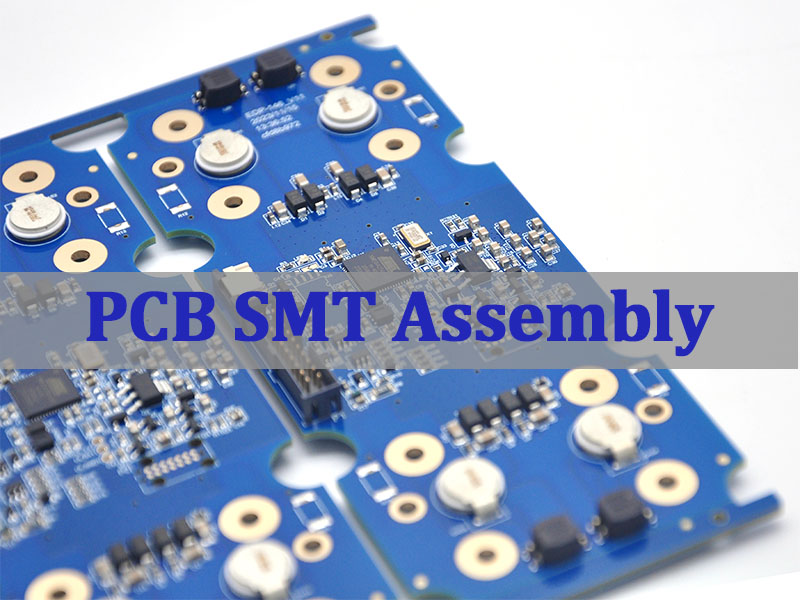
PCB SMT assembly refers to the process of mounting surface-mount devices (SMDs) directly onto the surface of a printed circuit board using automated placement and reflow soldering. It is the backbone of modern electronics manufacturing, enabling compact layouts, higher signal integrity, and scalable production.
PCB SMT Assembly

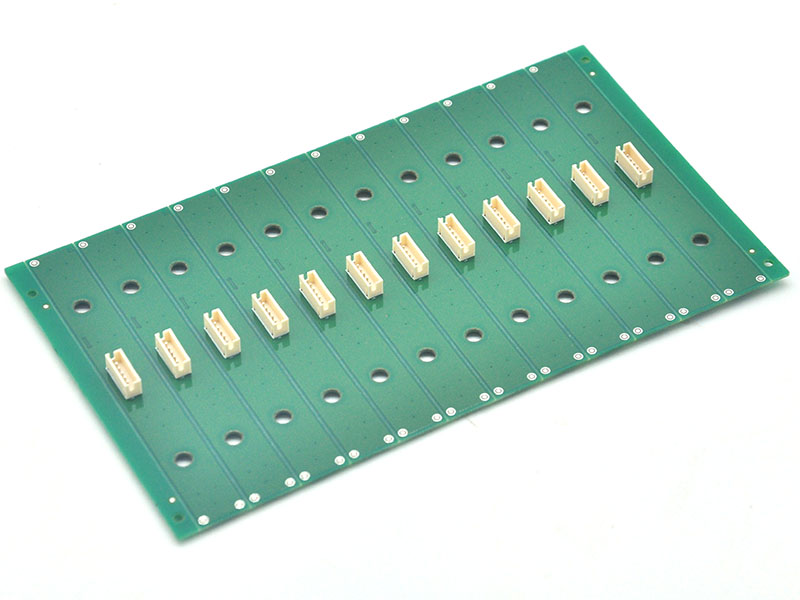
From prototype validation to wholesale electronics production, PCB SMT assembly allows engineers to balance performance, manufacturability, and cost. Compared with legacy through-hole methods, SMT supports finer pitch components, double-sided layouts, and high-speed signal routing without sacrificing reliability.

PCB SMT Assembly Process Explained Step by Step

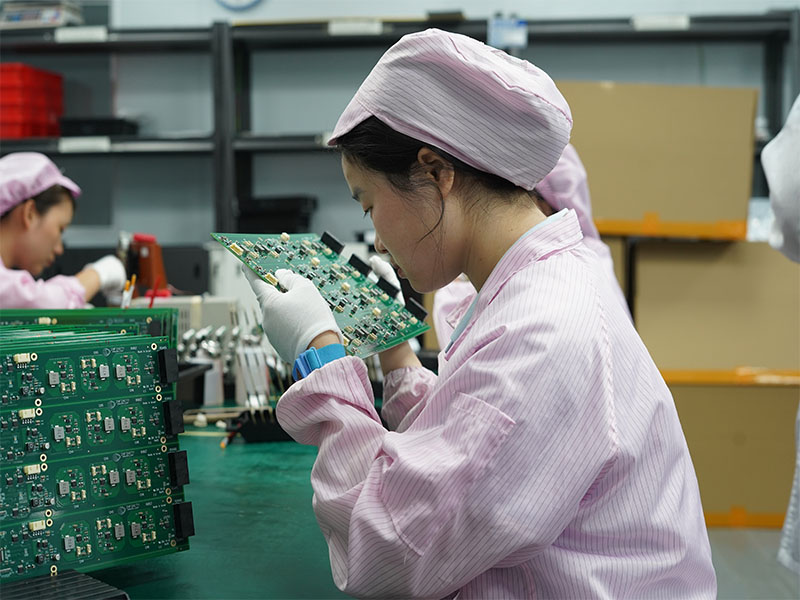
The SMT PCB assembly process is a tightly controlled sequence. Each stage builds on the previous one, and small deviations compound quickly if not engineered upfront.

Step 1: Solder Paste Printing

  • Stainless steel SMT stencil for PCB assembly defines paste volume
  • Paste height consistency directly affects solder joint strength
  • Misalignment at this stage is a leading cause of bridging defects

Step 2: Component Placement

  • High-speed SMT placement machines mount chips, QFNs, and BGAs
  • Placement accuracy typically ranges from Β±25 ΞΌm to Β±40 ΞΌm
  • Fine-pitch and BGA parts demand calibrated feeders and vision alignment

Step 3: Reflow Soldering

  • Multi-zone reflow profiles activate solder paste gradually
  • Lead-free SMT PCB assembly requires higher peak temperatures
  • Thermal symmetry prevents warpage and head-in-pillow defects

Step 4: Inspection and Testing

  • AOI checks polarity, offset, and solder fillet shape
  • X-ray inspection is mandatory for BGA PCB SMT assembly
  • Electrical testing validates functional integrity

Key SMT PCB Assembly Equipment and Machines

Process capability in SMT PCB assembly depends more on equipment integration than on labor count.

Core equipment used in professional SMT lines

EquipmentFunctionEngineering Impact
Solder paste printerApplies uniform pasteDetermines solder joint volume
SMT placement machinePlaces componentsAffects accuracy and yield
Reflow ovenSolder activationControls metallurgical quality
AOI systemOptical inspectionDetects visible defects
X-ray inspectionInternal joint checkEssential for BGA reliability

A stable SMT PCB assembly line is defined by repeatability, not speed alone.

Double-Sided and High-Density PCB SMT Assembly Capabilities

Why double-sided SMT increases engineering difficulty

  • Secondary reflow risks component shift or drop
  • Copper balance affects thermal behavior
  • Process windows narrow significantly

Typical applications

  • PCB SMT assembly double sided industrial control boards
  • Compact consumer and medical electronics
  • HDI PCB custom service SMT assembly circuit boards

Without DFM review, double-sided designs often suffer yield loss during scaling.

BGA, Fine-Pitch, and HDI PCB SMT Assembly Challenges

BGA PCB SMT assembly introduces hidden solder joints and higher inspection complexity.

Common risks in advanced SMT

  • Head-in-pillow due to oxidation or profile mismatch
  • Voids caused by trapped flux gases
  • PCB warpage in high-layer HDI boards

Engineering countermeasures

  • Nitrogen-assisted reflow
  • X-ray sampling with defined acceptance criteria
  • Stencil aperture reduction for BGA pads

Prototype vs Wholesale PCB SMT Assembly: Cost and Risk Differences

ItemPrototype SMT PCB AssemblyWholesale SMT PCB Assembly
Primary goalSpeed and validationCost and consistency
BOM flexibilityHighLow
Process tuningManual + adaptiveLocked and repeatable
Risk toleranceHigherVery low

Trying to apply wholesale pricing logic to prototype projects often leads to rework and schedule overruns.

Common SMT PCB Assembly Defects and How to Prevent Them

Typical SMT assembly defects

Defect TypeRoot CausePrevention Method
Solder bridgingExcess pasteStencil aperture tuning
TombstoningThermal imbalancePad symmetry control
Insufficient solderLow paste volumePrinter calibration
BGA voidsFlux entrapmentProfile optimization

Defect prevention always starts at PCB design and SMT assembly guidelines, not at inspection.

Lead-Free and High-Reliability PCB SMT Assembly Standards

Lead-free PCB SMT assembly places significantly higher demands on thermal control and process stability compared with traditional tin-lead soldering, as elevated reflow temperatures reduce the allowable process window and increase stress on both components and PCB materials.

Key engineering implications of lead-free SMT

  • Higher peak reflow temperatures
    Lead-free alloys typically require peak temperatures in the 235–250 Β°C range, increasing the risk of PCB warpage, component cracking, and solder joint fatigue if profiles are not precisely controlled.
  • Greater sensitivity to PCB material selection
    PCB laminate Tg, Td, and CTE become critical under lead-free conditions. Inadequate material choices can lead to delamination, pad lifting, or micro-cracking during reflow.
  • Stronger need for documented process control
    Lead-free SMT demands tightly defined reflow profiles, verified thermal uniformity, and repeatable machine settings, all supported by controlled work instructions and change management.

For high-reliability PCB SMT assembly, compliance extends beyond soldering itself. These applications require full material and process traceability, validated reflow profiles, and documented inspection criteria such as AOI and X-ray acceptance standards to ensure consistent quality across production batches.

Flex, Rigid-Flex, and Mixed SMT/THT PCB Assembly

Flex PCB SMT assembly

  • Requires dedicated support fixtures
  • Lower placement force to avoid deformation
  • Stress-aware reflow profiles

Mixed board assembly SMT THT PCB

  • SMT completed first
  • THT handled via selective soldering
  • Protects sensitive SMT joints
PCB SMT Assembly

How to Choose a Reliable PCB SMT Assembly Manufacturer?

Engineers should evaluate capability beyond surface claims.

Practical selection criteria

  • In-house SMT PCB assembly equipment
  • DFM review before quotation
  • Proven BGA and HDI experience
  • Digital traceability across materials and processes

A reliable PCB SMT assembly manufacturer explains risks clearly instead of hiding them in pricing.

PCB SMT Assembly Cost Structure and Quotation Logic

What actually drives SMT assembly cost

  • Component sourcing volatility
  • Assembly complexity (BGA, double-sided, HDI)
  • Inspection depth (AOI vs X-ray coverage)
  • Yield risk

Transparent quotations clarify trade-offs and avoid surprises during production.
PCB SMT Assembly

To sum up, PCB SMT assembly is a process-driven manufacturing discipline that directly determines product reliability, yield stability, and time-to-market.

Our strength lies in engineering-led SMT execution (technical team support and DFM pre-review), one-stop PCB manufacturing, component sourcing, and PCBA integration, and fast-turn PCBA delivery with digital traceability. If you need dependable PCB SMT assembly for prototypes or production, pls feel free to contact us via sales@bestpcbs.com.

FAQ: PCB SMT Assembly

Q1: What is SMT in PCB assembly?

SMT in PCB assembly refers to Surface Mount Technology, where electronic components are mounted directly onto the surface of a printed circuit board using automated placement and reflow soldering. This method supports higher component density, smaller board size, and efficient mass production.

Q2: Is SMT PCB assembly suitable for low-volume projects?
Yes. Prototype SMT PCB assembly supports fast design verification.

Q3: How reliable is BGA SMT assembly?
With X-ray inspection and controlled profiles, BGA reliability is very high.

Q4: What files are required for SMT PCB assembly?
Gerbers, BOM, centroid file, assembly drawing, and test requirements.

Q5: Can SMT and THT be combined on one board?
Yes. Mixed SMT/THT PCB assembly is common in industrial designs.

Q6: How long does PCB SMT assembly take?
Typical lead time is 7–10 working days, depending on sourcing.

Q7: How much does PCB SMT assembly cost?

PCB SMT assembly cost depends on factors such as component count, board complexity, package types (BGA, fine-pitch), inspection requirements, and production volume. Prototype assemblies typically cost more per unit than volume production due to setup and sourcing overhead.

Q8: What equipment is used in SMT assembly?

SMT assembly uses solder paste printers, pick-and-place machines, reflow ovens, AOI systems, and X-ray inspection equipment. These machines work together to ensure placement accuracy, solder joint quality, and process consistency.

Q9: What is the difference between PCB fabrication and SMT assembly?

PCB fabrication focuses on manufacturing the bare circuit board, while SMT assembly involves mounting and soldering electronic components onto the finished PCB. Both processes are essential but occur at different stages of electronics production.

Q10: What are the limitations of SMT in PCB assembly?

SMT is less suitable for very large or high-power components that require strong mechanical support. It also demands tighter process control and higher upfront equipment investment compared to traditional through-hole assembly.
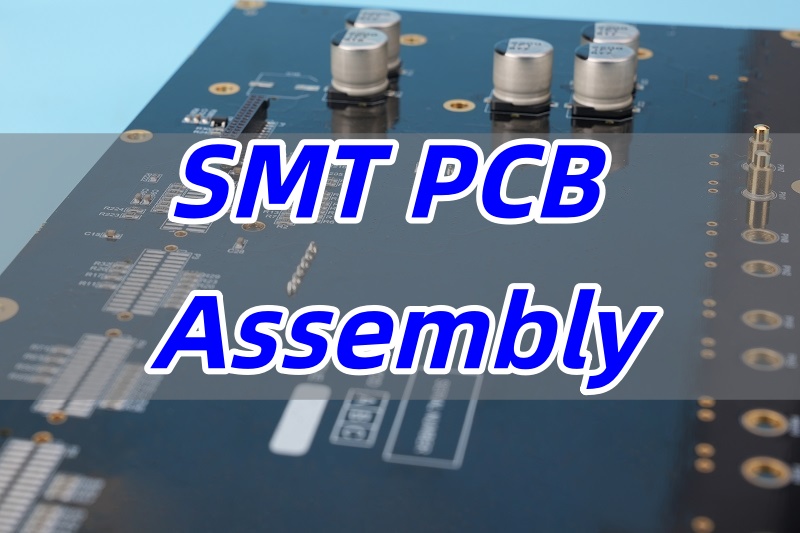
Complete SMT PCB Assembly Solutions From Prototypes
Thursday, October 30th, 2025

SMT PCB assembly is the cornerstone of modern electronics manufacturing, enabling the production of high-density, reliable circuit boards efficiently. This comprehensive guide explores everything from basic concepts to advanced capabilities offered by leading China SMT PCB assembly manufacturers like EBest Circuit (Best Technology).

Are you struggling with complex PCB assemblies, tight deadlines, or quality inconsistencies? ​

  • Inconsistent quality leading to field failures and returns
  • Long lead times delaying product launches
  • Difficulty sourcing genuine components, especially during shortages
  • Lack of technical support for design optimization
  • Hidden costs that inflate the final project budget

Below are the proven solutions that address each issue directly.​

  • Implement strict quality control following IPC standards with AOI/X-Ray inspection
  • Offer expedited services with 1-5 day lead times and 24-hour prototype turnaround
  • Source components directly from authorized distributors (Digikey, Mouser, etc.) with inventory management
  • Provide DFM/DFA analysis and engineering support throughout the project
  • Maintain transparent pricing with competitive factory-direct costs

EBest Circuit (Best Technology) is a professional PCB and PCBA manufacturer with over 19 years of experience, specializing in full turnkey solutions from design to box build. We serve clients worldwide with quality-certified manufacturing and personalized support. Pls feel free to contact us at sales@bestpcbs.com to discuss your SMT assembly PCB project requirements.

SMT PCB Assembly

What is SMT PCB Assembly?

Surface Mount Technology (SMT) has revolutionized electronics manufacturing by allowing components to be mounted directly onto the surface of printed circuit boards. This section explains the fundamental concepts and process flow.

The SMT PCB assembly process begins with solder paste application using stencils, followed by precise component placement using high-speed mounters, and ends with reflow soldering that creates permanent connections. Key advantages over through-hole technology include:

  • Higher component density and smaller board sizes
  • Faster automated production with placement speeds up to 13,200,000 chips/day
  • Better performance at high frequencies
  • Lower production costs for volume manufacturing

The complete SMT process flow includes: incoming material inspection, PCB baking, solder paste printing, SPI inspection, component placement, reflow soldering, AOI/X-Ray inspection, testing, and final packaging. EBest Circuit (Best Technology)’s China SMT PCB assembly line handles everything from prototype to mass production with consistent quality.

China SMT PCB Assembly Manufacturer – EBest Circuit (Best Technology)

As a leading China SMT PCB assembly manufacturer, EBest Circuit (Best Technology) combines technical expertise with manufacturing scale to deliver comprehensive solutions. Our capabilities span across various industries and application requirements.

Founded in 2006, EBest Circuit (Best Technology) has evolved into a trusted partner for electronics companies worldwide. Our manufacturing facility covers 260,000 square feet with monthly capacity for over 1,000 different boards. Key strengths include:

  • 19+ years of specialized experience in PCB manufacturing and assembly
  • 160+ technical staff supporting projects from concept to completion
  • 97% on-time delivery rate with online WIP tracking
  • Service to 1,700+ satisfied clients across 40 countries

We offer both consignment and turnkey assembly services, handling everything from component sourcing to final box build. Our China SMT PCB assembly services are particularly valued for complex projects requiring advanced capabilities like 0.25mm BGA pitch, 01005 components, and mixed-technology assemblies.

How Do China PCB SMT Assembly Companies Ensure Quality?

Quality assurance in SMT PCB assembly involves multiple checkpoints throughout the manufacturing process. EBest Circuit (Best Technology) implements a comprehensive quality management system that exceeds industry standards.

Our quality-focused manufacturing process includes three critical phases:

​1. Preparation and Incoming Inspection​

  • DFA (Design for Assembly) checks before production
  • Component verification against BOM specifications
  • Material certification and traceability

​2. In-Process Quality Controls​

  • Solder Paste Inspection (SPI) measuring volume, area, and height
  • Automated Optical Inspection (AOI) pre- and post-reflow
  • X-Ray inspection for BGA and hidden connections
  • Nitrogen reflow oven reducing oxidation and improving solder joints

​3. Final Testing and Verification​

  • Functional testing simulating real operating conditions
  • IPC-standard visual inspection
  • Final quality audit before packaging and shipping

This multi-layered approach ensures that our China PCB SMT assembly services consistently deliver reliability, with quality certifications including ISO 9001:2015, IATF 16949:2016, ISO 13485:2016, and RoHS compliance.

What Certifications Should a Trusted PCB Assembly SMT Factory Have?

Certifications validate a manufacturer’s commitment to quality systems and continuous improvement. When selecting a PCB assembly SMT partner, verify they maintain these essential certifications.

​Essential Quality Certifications:​​

  1. ​ISO 9001:2015​ – Quality Management Systems standard
  2. ​IATF 16949:2016​ – Automotive quality management requirements
  3. ​ISO 13485:2016​ – Medical device quality management systems
  4. ​RoHS/REACH​ – Environmental compliance for hazardous substances

EBest Circuit (Best Technology) maintains all these certifications, which are regularly audited by independent bodies. This certification framework ensures that our SMT PCB assembly processes meet international standards for:

  • Documented quality procedures and work instructions
  • Employee training and competency verification
  • Equipment calibration and maintenance
  • Continuous improvement processes
  • Customer satisfaction measurement and response

These certifications provide assurance that your prototype SMT PCB assembly will scale successfully to mass production with consistent quality outcomes.

Technical Capability for China SMT PCB Assembly

Technical capability defines the complexity and types of projects a manufacturer can successfully execute. EBest Circuit (Best Technology)’s equipment and process controls support advanced SMT PCB assembly requirements.

Our technical capabilities include:

​Board and Component Specifications:​​

  • Board sizes: 0.2×0.2 inches to 20×20 inches (22Γ—47.5 inches maximum)
  • Minimum SMD component: 01005 package size
  • Minimum BGA pitch: 0.25mm
  • Maximum components: 50Γ—150mm
  • Mixed technology: SMT, THT, and mixed assembly

​Advanced Equipment Portfolio:​​

  • SMT stencil printers: GKG-GLS (Β±0.022mm accuracy)
  • 3D SPI: SINIC-TEK S8080 (10ΞΌm detection precision)
  • High-speed placers: Yamaha YSM20R (95,000 cph)
  • Nitrogen reflow ovens: Suneast SER710NH
  • 3D AOI: SINIC-TEK A510DL
  • X-ray: UNICOMP AX8200

This technical foundation enables us to handle complex projects including flex PCB SMT assembly, high-density interconnects, and prototype SMT PCB assembly with the same precision as mass production runs.

PCB SMT Assembly Machine

The equipment used in SMT assembly directly impacts quality, speed, and capability. EBest Circuit (Best Technology) invests in state-of-the-art PCB SMT assembly machines to maintain competitive advantages.

Our SMT PCB assembly line feature:

​Printing Equipment:​​

  • GKG GLS full-auto printers with Β±0.022mm accuracy
  • Capable of handling 37Γ—47cm to 73.6Γ—73.6cm stencils
  • Support for nano-coated stencils improving print quality

​Component Placement Systems:​​

  • Yamaha YSM20R high-speed placers (95,000 cph)
  • Juki 3010AL for larger boards up to 1200Γ—360mm
  • 140 feeder capacity supporting 0201 components to large BGAs

​Soldering and Inspection:​​

  • Nitrogen reflow ovens with 7-8 minute cycle times
  • 3D AOI systems detecting missing, misaligned, or defective components
  • X-ray equipment inspecting BGA soldering and internal connections

This equipment portfolio supports our wholesale PCB SMT assembly services with the flexibility to handle both low-volume prototype and high-volume production requirements efficiently.

How to Select a Trustworthy SMT PCB Assembly Supplier?

Choosing the right SMT PCB assembly supplier requires evaluating multiple factors beyond basic pricing. Consider these criteria to identify a reliable long-term partner.

​Key Selection Criteria:​​

  1. ​Technical Capability Match​
    • Verify equipment can handle your component types and board sizes
    • Check experience with similar technologies (BGA, fine-pitch, etc.)
  2. ​Quality Systems and Certifications​
    • Require relevant industry certifications (ISO, IATF, etc.)
    • Review quality metrics and process control documentation
  3. ​Supply Chain Management​
    • Assess component sourcing capabilities and distributor relationships
    • Evaluate inventory management practices
  4. ​Communication and Support​
    • Look for dedicated engineering support and responsive communication
    • Verify project management and WIP tracking systems
  5. ​Scalability and Flexibility​
    • Confirm capacity for both prototype and production volumes
    • Check expedited service options for urgent requirements

EBest Circuit (Best Technology) meets all these criteria as a trusted SMT PCB assembly manufacturer with demonstrated experience across multiple industries and project types.

Case of BGA PCB SMT Assembly by EBest Circuit (Best Technology)

This case study illustrates EBest Circuit (Best Technology)’s approach to complex BGA PCB SMT assembly, highlighting our technical capabilities and quality processes.

​A medical device manufacturer required assembly of complex motherboards with 0.3mm pitch BGA components and 0201 passive devices. The project demanded high reliability with complete traceability and compliance with medical standards.

​Solution Implementation:​​

  • ​Design Phase:​​ Our engineering team performed DFM analysis, recommending pad size adjustments for improved solder joint reliability
  • ​Component Sourcing:​​ We sourced all components through authorized distributors, with special handling for moisture-sensitive devices
  • ​Assembly Process:​​ Used Yamaha YSM20R placers with vision alignment for precise BGA placement
  • ​Quality Assurance:​​ Implemented X-ray inspection for 100% BGA soldering verification
  • ​Testing:​​ Conducted functional testing simulating actual operating conditions

This BGA PCB SMT assembly case demonstrates our capability to handle high-reliability applications with technical precision and quality focus.

Why Choose EBest Circuit (Best Technology) for Wholesale PCB SMT Assembly?

EBest Circuit (Best Technology) offers distinct advantages for wholesale PCB SMT assembly requirements, combining competitive pricing with consistent quality and reliable delivery.

​Competitive Advantages:​​

  1. ​Factory-Direct Pricing​
    • Eliminate intermediary margins with direct manufacturer pricing
    • Cost optimization through efficient processes and volume purchasing
  2. ​Quality Assurance​
    • Stringent quality controls throughout the manufacturing process
    • Certifications including ISO 9001, IATF 16949, and ISO 13485
  3. ​Technical Expertise​
    • 19+ years of specialized SMT assembly experience
    • Engineering support for design optimization and problem-solving
  4. ​Supply Chain Management​
    • Direct relationships with component manufacturers and distributors
    • Inventory management reducing lead times and shortages
  5. ​Flexible Capacity​
    • Support for both low-volume prototype and high-volume production
    • Expedited services available for urgent requirements

Our wholesale PCB SMT assembly services provide scalable solutions for businesses ranging from startups to established electronics manufacturers.

SMT PCB assembly remains essential for modern electronics manufacturing, enabling the compact, reliable devices we depend on daily. This guide has explored the complete process from basic concepts to advanced capabilities, highlighting EBest Circuit (Best Technology)’s comprehensive approach to quality and service. As an experienced SMT PCB assembly manufacturer with technical expertise and quality certifications, we provide reliable solutions for projects of all complexities. Contact us at sales@bestpcbs.com to discuss your specific requirements and receive a personalized quotation.

FAQs of SMT PCB Assembly

​Q: What is the typical lead time for SMT PCB assembly?​​
A: Standard lead times are 1-5 days, with 24-hour expedited service available for prototypes.

​Q: Do you provide component sourcing services?​​
A: Yes, we offer full turnkey services including component sourcing from authorized distributors.

​Q: What is your minimum order quantity?​​
A: We have no MOQ requirements, supporting both prototype and production volumes.

​Q: How do you handle BGA inspection?​​
A: We use X-ray equipment to verify BGA soldering quality and internal connections.

​Q: What file formats do you require for assembly?​​
A: We need Gerber files, BOM, pick-and-place data, and assembly drawings.

​Q: Do you provide design support services?​​
A: Yes, our engineering team offers DFM/DFA analysis and design optimization recommendations.