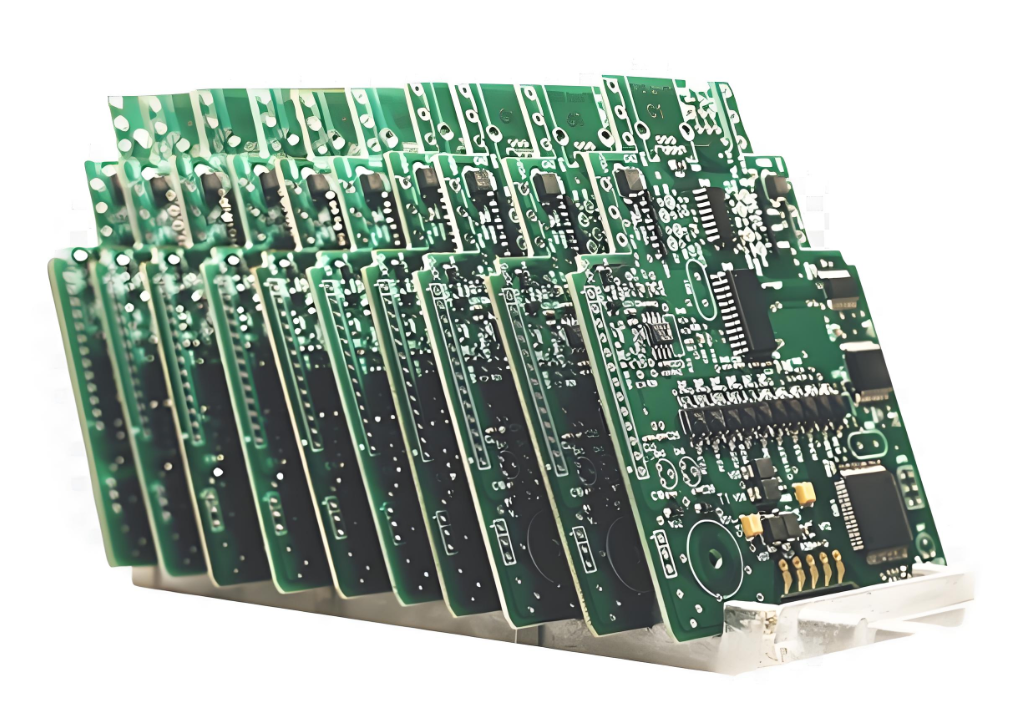
PCB manufacturing PCB manufacturing
Home > Blog

PCB Assembly Services

Professional SMD Board Assembly for Prototype and Volume Production
Tuesday, January 27th, 2026

SMD board assembly is the most widely used method for building compact, high-density electronic products today, especially in applications where space utilization, electrical performance, and production efficiency must be tightly controlled. In real production environments, SMD board assembly directly determines electrical reliability, thermal behavior, signal integrity, and long-term field performance, rather than just visual assembly quality.

This article explains how SMD board assembly works in real manufacturing scenarios, what drives its cost, and how engineers and buyers can select a capable SMD board assembly supplier. If you are sourcing SMD board assembly services for prototypes or volume production, EBest Circuit (Best Technology) provides production-ready solutions backed by stable SMT lines and engineering support. For orders or technical discussion, pls feel free to contact us via sales@bestpcbs.com.

What Is SMD Board Assembly and Where Is It Used?

SMD board assembly is the process of mounting surface-mount electronic components directly onto a printed circuit board using automated SMT equipment and controlled soldering processes. It is the dominant assembly method for modern electronics because it enables high component density, repeatable quality, and scalable production.

In practice, SMD board assembly is widely used in:

  • Industrial control and automation boards
  • LED lighting drivers and modules
  • Medical and automotive electronics
  • Power supplies, communication, and IoT devices

Compared to through-hole assembly, SMD assembly allows shorter signal paths, better high-frequency performance, and faster production cycles, making it suitable for both prototypes and mass production.
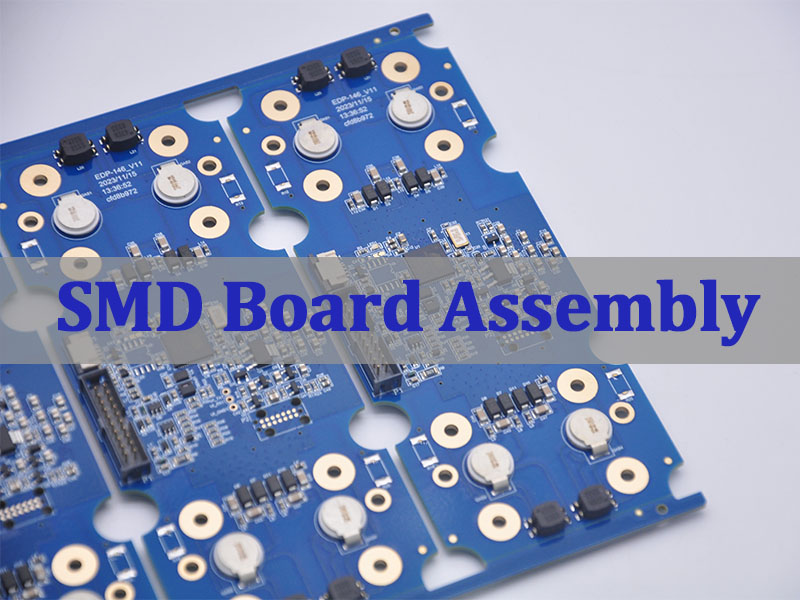
 SMD Board Assembly

SMD Board Meaning vs SMT Assembly: Are They the Same?

SMD refers to the components themselves, while SMT describes the manufacturing technology used to place and solder those parts onto the PCB. In practical production environments, SMD board assembly brings these two concepts together as a single, well-defined manufacturing workflow. From an engineering perspective, the distinction matters less than the consistency and control of the assembly process.

The key distinction is straightforward:

  • SMD (Surface-Mount Device): the component itself, such as resistors, capacitors, ICs, and LEDs
  • SMT (Surface-Mount Technology): the assembly process, including solder paste printing, component placement, and reflow soldering

In real-world manufacturing, “SMD board assembly” and “SMT board assembly” describe the same production workflow from an engineering and procurement perspective. SMD PCB assembly board and SMT PCB assembly board refer to the same type of assembled PCB. SMD describes the component type, while SMT describes the assembly process. In practical manufacturing, both terms are used interchangeably.
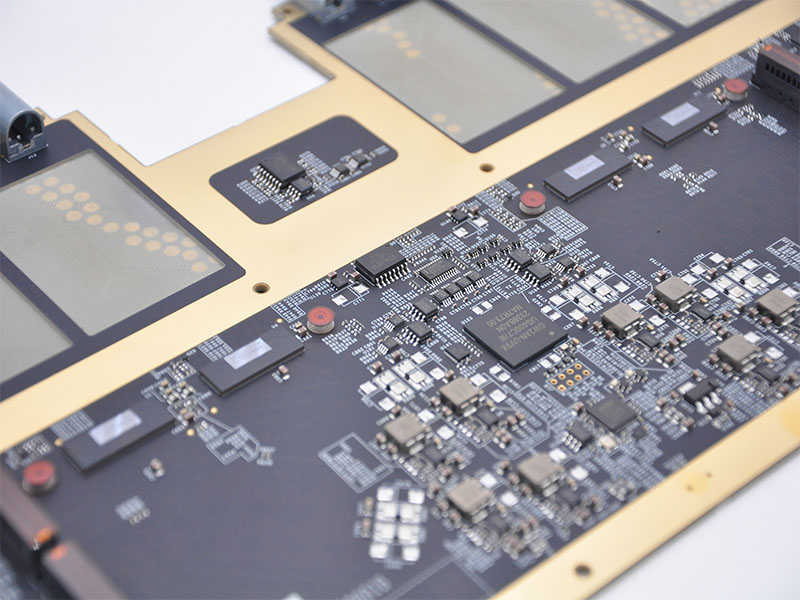
SMD Board Assembly

How Does SMD Board Assembly Work Step by Step?

board assembly SMT SMD follows a controlled and repeatable sequence designed to minimize defects and ensure consistent solder joint quality. Each step is critical and cannot be treated independently.

A standard SMD assembly flow includes:

  • Solder paste printing to define solder volume and joint geometry
  • SPI inspection to verify paste height, area, and alignment
  • Pick-and-place of SMD components using automated placement machines
  • Reflow soldering with a controlled thermal profile
  • AOI inspection to detect placement and solder defects
  • Functional testing to confirm electrical performance

Small deviations at early stages often lead to yield loss later, which is why process control matters more than visual inspection alone.

What Components Are Used in SMD Board Assembly?

SMD electronic components are standardized by package size and mounting style, which allows automation and high placement accuracy. Component selection directly affects assembly yield, thermal reliability, and rework difficulty.

Common components used in board assembly SMD include:

  • Chip resistors and capacitors (0402, 0603, 0805, and smaller)
  • Ceramic and tantalum capacitors
  • QFN, QFP, and BGA integrated circuits
  • LEDs, power MOSFETs, and regulators

From an assembly standpoint, pad design, package type, and moisture sensitivity must be considered together rather than independently.

SMD Board Assembly for LED and Power Applications

LED and power-related boards place higher demands on SMD board assembly due to thermal and electrical stress. In these applications, solder joints are part of the thermal path, not just electrical connections.

Key assembly considerations include:

  • Thicker copper PCBs to improve current carrying and heat spreading
  • Precisely controlled reflow profiles to avoid LED damage
  • Void control on thermal pads to reduce junction temperature
  • Optical, electrical, and aging tests after assembly

Poor assembly control in LED boards often results in early measuring drift or premature failure, even when components are qualified.

SMD Prototype Board vs Mass Production Assembly

SMD prototype assembly prioritizes speed and design verification, while mass production emphasizes consistency, yield, and cost optimization. Understanding the difference helps avoid redesigns later.

Typical differences include:

  • Prototype assembly: flexible scheduling, low MOQ, manual verification
  • Production assembly: automated inspection, stable BOM sourcing, process locking

Designing footprints and layouts with production constraints in mind significantly reduces future revisions and ramp-up risks.

What Equipment Is Required for SMD PCB Assembly?

Professional PCB board SMD SMT assembly relies on a complete set of automated equipment rather than isolated machines. The overall line capability matters more than any single piece of equipment.

Core equipment typically includes:

  • Automatic solder paste printers
  • High-speed and high-accuracy pick-and-place machines
  • Multi-zone reflow ovens
  • AOI and X-ray inspection systems

Equipment accuracy and maintenance level directly influence defect rates, especially for fine-pitch and high-density boards.

SMD Board Assembly Machine and Cost Factors

SMD board assembly machines determine placement accuracy, throughput, and achievable defect levels.
More advanced machines reduce long-term cost by improving yield.

Key cost drivers include:

  • Total component count per board
  • Presence of fine-pitch or BGA devices
  • Single-sided vs double-sided assembly
  • Inspection depth and test coverage

Higher automation usually increases setup cost but lowers per-unit cost in stable production.

China SMD Board Assembly: Quality and Risk Control

China remains the global center for SMD board assembly due to its mature supply chain and manufacturing infrastructure. However, quality is determined by process control, not location.

Reliable SMD assembly factories typically provide:

  • Full material traceability
  • Documented assembly and inspection processes
  • Stable SMT production lines
  • Direct engineering communication

Structured supplier audits and pilot builds are effective ways to control sourcing risk.

How Much Does SMD Board Assembly Cost? (Price Reference)

SMD board assembly pricing is based on structure and complexity rather than a single flat rate.
Understanding the pricing logic helps prevent hidden costs.

Typical reference ranges (excluding components):

  • Prototype: USD 0.10–0.30 per pad
  • Small batch: USD 8–20 per board
  • Volume production: USD 3–8 per board

Actual pricing depends on board size, layer count, component mix, and inspection requirements.
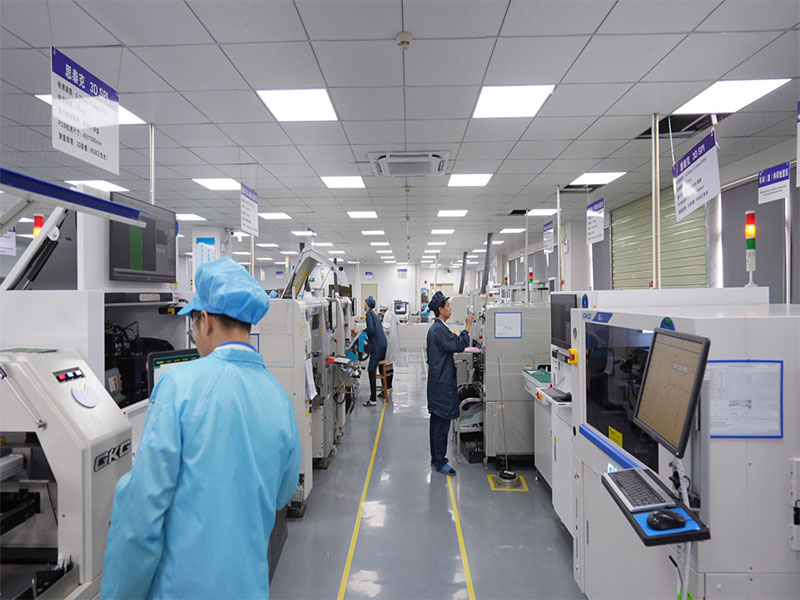
 SMD Board Assembly

How to Choose a Reliable SMD Board Assembly Manufacturer?

Choosing an SMD board assembly manufacturer should be an engineering decision, not a marketing one.
Capability alignment matters more than advertised capacity.

A practical evaluation checklist includes:

  • SMT line configuration and accuracy
  • Inspection and testing coverage
  • Engineering response speed
  • Quotation transparency
  • Track record in similar products

A capable SMD board assembly supplier reduces long-term cost by preventing quality escapes and rework.

All in all, this article outlined how SMD board assembly is executed in real manufacturing environments, how cost and quality are managed, and how engineers can evaluate suppliers for both prototype and volume production.

EBest Circuit (Best Technology) provides a one-stop integrated service covering PCB fabrication, component sourcing, PCBA assembly, and testing, while supporting prototypes and small-batch builds to help engineers validate designs and accelerate product launch. With ISO 9001 / ISO 13485 / IATF 16949 / AS9100D certifications, in-house PCB and PCBA factories, and a digital workshop enabling full material and production traceability within seconds, we ensure consistent quality and reliable lead times. If you are planning an SMD board assembly project or need technical consultation, please feel free to contact EBest Circuit (Best Technology) at sales@bestpcbs.com.

FAQ: Common SMD Board Assembly Questions

Q1: Is SMD board assembly suitable for prototypes?
Yes. With proper setup and engineering support, it enables fast iteration and low-volume builds.

Q2: What files are required to start SMD PCB assembly?
Gerber files, BOM, pick-and-place data, and assembly notes are required.

Q3: Can SMD and through-hole components be combined?
Yes. Mixed assembly is common in industrial and power boards.

Q4: What causes most SMD assembly defects?
Incorrect solder paste volume, poor footprint design, and uncontrolled reflow profiles.

Q5: How long does SMD board assembly take?
Prototypes typically take 3–5 days, while volume production takes 7–15 days.
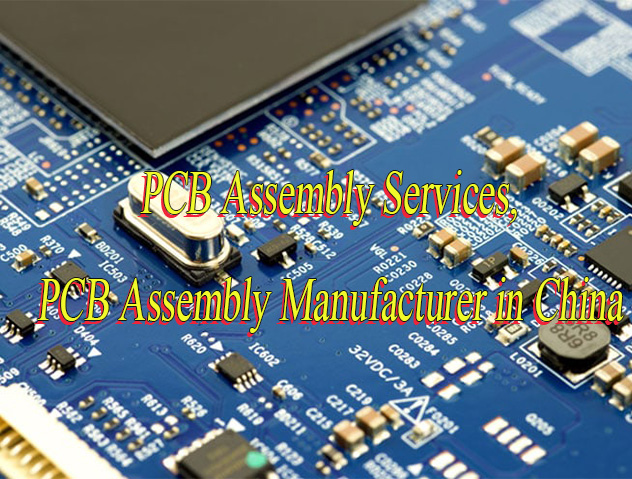
PCB Assembly Services, PCB Assembly Manufacturer in China
Monday, September 29th, 2025

Looking for reliable PCB assembly services? This guide covers its benefits, applications, recommended assembly service supplier and how to get a quote to ensure quality and efficiency for your projects.

Are you worried about these issues?

  • How to handle PCB assembly delivery delays?
  • How to address hidden cost escalation in batch production?
  • How to resolve post-sale complaints caused by supplier quality fluctuations?

As a PCB assembly manufacturer, EBest Circuit (Best Technology) can provide service and solutions:

  • Advanced Production Scheduling System enables 48-hour rapid prototyping and 7-day mass production delivery to resolve delivery delay issues.
  • Modular design + bulk procurement reduces BOM costs by 15%, while automated production lines cut 30% labor overhead.
  • Three-stage quality control (first-article inspection + SPC monitoring + full-lot inspection) ensures ≥98% yield stability, mitigating quality risks.

Welcome to contact us if you have any request for PCBA service: sales@bestpcbs.com.

What Are PCB Assembly Services?

PCB Assembly Services‌ refer to the professional manufacturing process of mounting electronic components onto printed circuit boards (PCBs) using surface-mount technology (SMT) or through-hole technology (THT), transforming bare boards into functional modules or semi-finished products. Typically outsourced by OEMs or designers, these services require design documents such as Gerber files and BOM lists. They cater to various production scales, from prototyping to mass production, and are widely used in industries like consumer electronics, automotive, and industrial equipment.

What Are PCB Assembly Services?

What Are the Advantages of PCB Assembly Services?

Below are benefits of PCB assembly services:

Accelerated Design Validation

  • Rapid prototyping (48-72 hour turnaround) allows engineers to quickly test complex designs like BGA packages and HDI routing, shortening iteration cycles.
  • DFM feedback helps prevent common design flaws (e.g., insufficient pad spacing, stencil aperture issues), reducing rework costs.

Supply Chain Risk Mitigation

  • Service providers handle component procurement (including EOL parts), inventory management, and price volatility, freeing engineers from supply chain coordination.
  • Bulk purchasing reduces material costs (up to 10-30% savings) while ensuring authentic components.

Advanced Process Capabilities

  • High-precision equipment (e.g., 0.025mm placement accuracy, 01005 micro-packaging) enables engineers to push design limits.
  • Expert teams optimize soldering parameters (e.g., nitrogen reflow) to enhance reliability for high-frequency/high-speed PCBs.

Enhanced Quality Control

  • Full-process testing (AOI/X-ray/ICT) automatically detects soldering defects (e.g., cold joints, bridging), reducing quality control burdens.
  • Compliant with ISO/IATF standards, simplifying certification for medical, automotive, and other demanding applications.

Scalable Production Flexibility

  • Seamless transition from small-batch prototyping (50+ units) to mass production, adapting to product lifecycle needs.
  • Fast response to urgent orders through capacity allocation, ensuring critical project deadlines.
 PCB Assembly Services

What Problems Can PCB Assembly Services Solve?

PCB assembly services address several challenges in electronic manufacturing, including:

  • Design Implementation Barriers: Overcome physical realization challenges like high-density routing (e.g., 0.2mm BGA pitch) and irregular component layouts through professional CAM engineering.
  • High Prototyping Costs for Small Batches: Flexible low-minimum-order solutions (from 50 units) eliminate high tooling costs and MOQ barriers during validation.
  • Special Process Requirements: Enable advanced techniques: blind/buried vias, heavy copper (6oz+), ceramic substrates – surpassing lab fabrication limits.
  • Component Supply Chain Management: Automatically source global channel inventories, solving chip shortages/EOL issues/counterfeit risks.
  • Hybrid Assembly Requirements: Integrate SMT + THT +hand-soldering for complex PCBAs with connectors/high-power devices in single-pass production.
  • Inadequate Testing Resources: Provide professional ICT/FCT fixture development, compensating for DFT (Design for Testability) gaps in R&D teams.
  • Compliance Standard Risks: ISO 13485/IATF 16949 certified lines prevent certification failures in medical/automotive applications.

Applications of PCB Assembly Services

PCB assembly services are used in a wide range of industries and applications, such as:

  • Consumer Electronics: Smartphones, tablets, and wearables.
  • Industrial Equipment: Automation systems and control units.
  • Automotive Electronics: Sensors, infotainment systems, and ECUs.
  • Medical Devices: Diagnostic equipment and monitoring systems.
  • Telecommunications: Routers, modems, and networking devices.

Our PCB Assembly Services

At EBest Circuit (Best Technology), we offer a full range of PCB assembly services to meet your needs:

  • SMT Assembly: Advanced SMT lines for precise component placement.
  • Thru-Hole Assembly: Handling traditional thru-hole components.
  • Turnkey Assembly: End-to-end solutions, including component sourcing and testing.
  • No MOQ: Flexible services with no minimum order quantity requirements.
  • Thorough Inspections: DFM/DFA checks, function/ICT testing, X-RAY, and AOI inspections.
 PCB Assembly Services

Why Choose EBest Circuit (Best Technology) as PCB Assembly Manufacturer?

Reasons why choose us as PCB assembly manufacturer:

  • 19 Years of PCBA Expertise: Specialized in PCB assembly for 19 years, handling complex designs from prototypes to mass production with 99.8% yield stability.
  • Turnkey Solutions: Full-chain solutions from PCB inspection, component sourcing, SMT/DIP assembly, testing to packaging, submit designs, receive ready-to-market PCBAs.
  • Yamaha High-Speed Equipment: Equipped with Japanese Yamaha SMT lines for 01005-size components and 0.3mm BGA pitch precision, meeting miniaturization demands.
  • Four Parallel Production Lines: Flexible scheduling for rapid prototyping (48h) and scalable volume production, accelerating time-to-market.
  • Real-Time Traceability: MES-driven digital tracking for 100% process visibility—monitor progress, test reports, and quality data remotely.
  • Certified Quality Control: ISO 9001/IPC-A-610 compliant, with AOI/X-ray inspections ensuring zero defects and EU/US market readiness.
  • Bilingual Engineering Support: Direct technical communication with overseas engineers to minimize design-assembly gaps and rework risks.
  • 24-Hour Rapid Prototyping: Quick-turn prototyping for design iteration, shortening development cycles.
  • Eco-Friendly Processes: Lead-free soldering and RoHS/REACH compliance for global environmental regulations.
  • Global Logistics Network: Partnered with DHL/UPS for secure, efficient worldwide delivery of assembled PCBs.

Our PCB Assembly Capabilities

ItemCapabilities
Placer Speed13,200,000 chips/day
Bare Board Size0.2 x 0.2 inches – 20 x 20 inches/ 22*47.5 inches
Minimum SMD Component01005
Minimum BGA Pitch0.25mm
Maximum Components50*150mm
Assembly TypeSMT, THT, Mixed assembly
Component PackageReels, Cut Tape, Tube, Tray, Loose Parts
Lead Time1 – 5 days

How Are PCB Assembly Services Different from Other Solutions?

In-House Assembly

  • Features: Requires building a full production line with equipment like SMT machines, AOI inspection systems, and DIP plug-in tools, along with a dedicated engineering team.
  • Advantages: Full control over production processes, quality standards, and technical confidentiality, ideal for high-security products (e.g., military, medical devices) or large-scale stable mass production.
  • Challenges: High initial investment (equipment, factory, labor costs) and ongoing maintenance/upgrade expenses; small-batch production leads to significantly higher unit costs compared to outsourcing, with potential technology iteration delays.

Outsourced Assembly

  • Features: Entrusts professional PCBA manufacturers to handle partial or full assembly processes, leveraging their mature technologies, economies of scale, and supply chain resources.
  • Advantages: Reduces fixed asset investment and adapts flexibly to small-batch, multi-variety orders; enables quick access to advanced processes (e.g., HDI, micro-BGA packaging); lowers costs through centralized procurement by suppliers, particularly suitable for agile R&D needs of SMEs.
  • Challenges: Requires rigorous vetting of supplier qualifications (e.g., ISO certification, IPC standards) to avoid quality risks; coordination costs for logistics and communication may cause response delays.

Turnkey Solutions

  • Features: Offers end-to-end services covering BOM sourcing, PCB fabrication, component placement, functional testing, and logistics delivery. Clients only need to provide design files to receive complete products.
  • Advantages: Greatly simplifies client management processes and shortens project cycles (e.g., 48-hour rapid prototyping); achieves full traceability via digital systems (e.g., DFM verification, transparent progress dashboards) to minimize human errors; reduces BOM costs by 15%+ through centralized procurement and supply chain optimization, addressing “minimum order quantity” and “hidden cost” issues for small batches.
  • Application Scenarios: Ideal for rapid prototyping in R&D phases, small-batch trial production, multi-variety agile manufacturing, and innovative projects requiring strict cost control and fast time-to-market.

How to Get a Quote for PCB Assembly Service?

To get a quote for PCB assembly service, you need to submit the following materials list:

  • Gerber Files: Standard format for PCB design data.
  • Bill of Materials (BOM): Complete list of components with part numbers, quantities, and reference designators.
  • Pick-and-Place File: Machine-readable file for component placement (e.g., .csv, .txt).
  • Assembly Drawings: Visual guides for component placement and orientation.
  • Special Instruction: Any unique requirements (e.g., conformal coating, testing protocols).
  • Quantity & Lead Time: Estimated order volume and required turnaround time.

Contact Us Today

If you have any questions about our PCB assembly services or would like to request a quote, feel free to contact us: sales@bestpcbs.com. We are committed to providing the best quality, pricing, and services to meet your PCB assembly needs.