PCB manufacturing PCB manufacturing
Home > Blog

nfc antenna pcb

Antenna PCB Manufacturer Design & Assembly| Fast Delivery, Custom Solutions
Thursday, February 12th, 2026

Why Choose EBest as Your Trusted Antenna PCB Manufacturer?

When it comes to Antenna PCB manufacturing, precision, reliability, and expertise are non-negotiableβ€”and EBest stands out as the top choice for businesses across industries. Our end-to-end solutions for Antenna PCB design, prototyping, and assembly deliver consistent quality, fast turnaround, and customizations tailored to your unique requirements. Whether you’re in medical, aerospace, or industrial equipment sector, we have the technical capability to bring your Antenna PCB projects to life seamlessly.
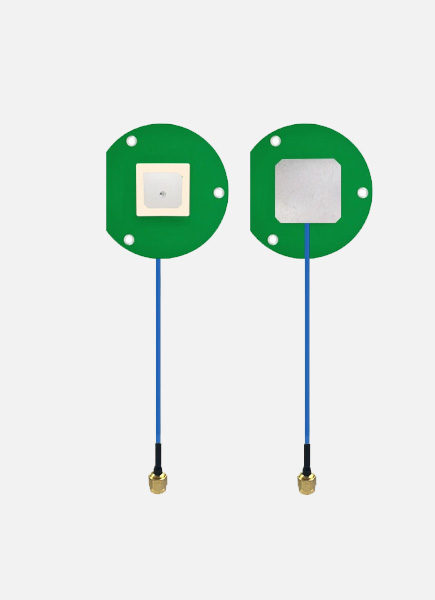
Users consistently seek clear, actionable answers about Antenna PCBs, focusing on practical applications and problem-solving. The most common searches revolve around design optimization, material selection, prototype reliability, and assembly qualityβ€”all areas where EBest excels. Below, we break down the core focus areas and how we address them, ensuring you get the insights and solutions you need for your Antenna PCB projects.

How to Optimize Antenna PCB Design for Maximum Performance?

Antenna PCB design is the foundation of reliable wireless performance, and most users struggle to balance size, frequency, and efficiency. The key pain points include poor impedance matching, insufficient keep-out areas, incorrect material selection, and frequency driftβ€”all of which lead to weak signals, reduced range, and project delays.

Common Antenna PCB Design Pain Points & EBest’s Solutions

  • Pain Point 1: Impedance Mismatch – Mismatched impedance (often deviating from the standard 50Ξ©) causes signal reflection (VSWR > 2:1) and power waste. Solution: Our engineers use HFSS and CST 3D electromagnetic simulation tools to design Ο€-type/T-type matching circuits, ensuring impedance deviation ≀ Β±5% and VSWR < 1.5:1 for optimal signal transmission.
  • Pain Point 2: Insufficient Keep-Out Area – Metal traces or components near the antenna disrupt signal radiation, reducing efficiency by 30% or more. Solution: We strictly adhere to keep-out area guidelines (β‰₯ wavelength/4; e.g., β‰₯31mm for 2.4GHz Antenna PCBs) and ensure no copper cladding or vias are present in the antenna projection area to eliminate interference.
  • Pain Point 3: Poor Material Selection – Using standard FR-4 for high-frequency applications (β‰₯6GHz) leads to high signal loss (tanΞ΄ > 0.02) and unstable performance. Solution: We select materials based on your frequency needsβ€”Rogers RO4350B (Ξ΅r=3.48, tanΞ΄=0.0037) for high-frequency Antenna PCBs, FR-4 for low-frequency, and ceramic substrates for GPS Antenna PCBsβ€”to maximize efficiency (β‰₯70% for 5G applications).
  • Pain Point 4: Frequency Drift – Temperature fluctuations (-40℃~85℃) cause substrate expansion and contraction, shifting the resonant frequency. Solution: We conduct thermal cycling tests during design and optimize antenna dimensions to ensure frequency drift ≀ Β±1% across industrial temperature ranges, guaranteeing stability in harsh environments.

For stress-free, high-performance Antenna PCB design for 2.4GHz, trust EBest’s engineering team. We translate your requirements into optimized designs that avoid common pitfallsβ€”contact us today to start your custom Antenna PCB design project.

How to Get Reliable Antenna PCB Prototype Fast Without Compromising Quality?

Antenna PCB prototyping is critical for validating design performance, but users face two major pain points: slow turnaround times (10+ days) and inconsistent prototype quality that fails to reflect mass production performance. This leads to repeated iterations, increased project timelines, and missed deadlinesβ€”problems EBest solves with our streamlined prototyping process.
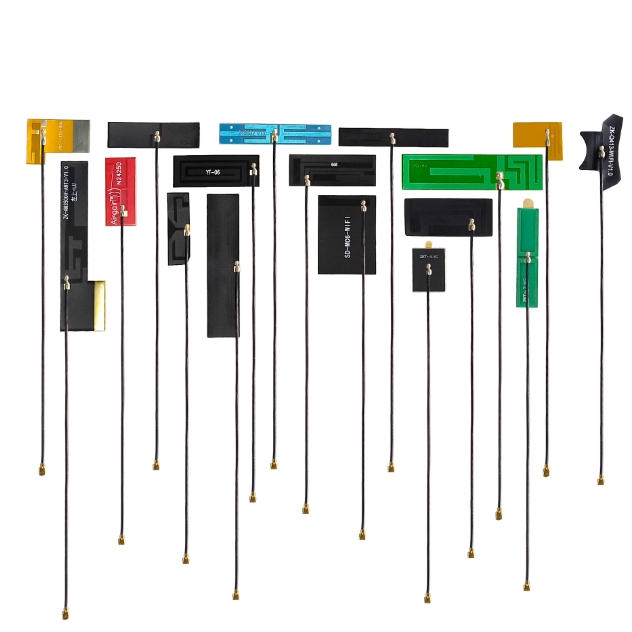
Antenna PCB Manufacturer Design & Assembly| Fast Delivery, Custom Solutions

Antenna PCB Prototype Pain Points & EBest’s Solutions

  • Pain Point 1: Slow Turnaround – Most manufacturers take 7-14 days to deliver Antenna PCB prototypes. Solution: Our in-house prototyping production line enables 2-3 day turnaround for standard Antenna PCB prototypes and 4-5 days for complex multi-layer (8+ layers) or high-frequency Antenna PCB prototype, without cutting corners on quality.
  • Pain Point 2: Prototype-Production Mismatch – Prototypes made with different materials or processes than mass production fail to accurately test performance. Solution: We use the same materials, etching processes, and quality controls for prototypes as we do for mass production, ensuring your Antenna PCB prototype’s performance matches the final product exactly.
  • Pain Point 3: Lack of Comprehensive Testing – Unverified prototypes lead to costly design flaws in production. Solution: Every Antenna PCB prototype undergoes rigorous testingβ€”VNA (Vector Network Analyzer) for S11 parameters (target: <-10dB), OTA efficiency testing, and thermal shock testingβ€”to validate signal performance, efficiency, and stability before you move to production.

Need a reliable, fast high-frequency Antenna PCB prototype to validate your design? EBest’s prototyping service delivers accurate, tested prototypes on timeβ€”let us help you avoid costly iterations and speed up your time to market.

How to Ensure High-Quality Antenna PCB Assembly for Industrial & Medical Applications?

Antenna PCB assembly requires precise soldering, component placement, and shielding to maintain signal integrityβ€”yet users often struggle with poor solder joints, component misalignment, and interference from nearby components. These issues are critical in medical and aerospace applications, where Antenna PCB failure can lead to safety risks and compliance violations.

Antenna PCB Assembly Pain Points & EBest’s Solutions

  • Pain Point 1: Poor Solder Joints – Cold solder or bridging causes intermittent signal loss, especially in high-vibration environments (e.g., industrial equipment). Solution: We use automated SMT assembly with laser soldering for precision, and 100% AOI (Automated Optical Inspection) + X-ray inspection to detect and eliminate solder defects, ensuring joint reliability.
  • Pain Point 2: Component Misalignment – Misplaced components (e.g., matching capacitors) disrupt impedance matching and signal performance. Solution: Our assembly line uses high-precision placement machines (Β±0.03mm accuracy) to ensure components are aligned perfectly with antenna traces, maintaining optimal performance.
  • Pain Point 3: Electromagnetic Interference (EMI) – Nearby components or traces cause EMI, degrading Antenna PCB performance by 20%+ (critical for medical devices like remote patient monitors). Solution: We integrate EMI shielding for Antenna PCB (conductive coatings or metal enclosures) and optimize component placement to minimize interference, complying with ISO 13485 for medical applications.
  • Pain Point 4: Compliance Failures – Aerospace and medical Antenna PCB assembly must meet strict industry standards (e.g., IPC-A-610, ISO 13485). Solution: Our assembly process is fully compliant with global standards, and we provide detailed inspection reports and certification documentation for every Medical Antenna PCB assembly order.

For high-quality, compliant Medical Antenna PCB assembly you can trust, EBest is your partner. We specialize in assembly for medical, aerospace, and industrial Antenna PCBsβ€”contact us to discuss your assembly requirements.

What Are the Different Types of Antenna PCB for Industrial & Aerospace Use?

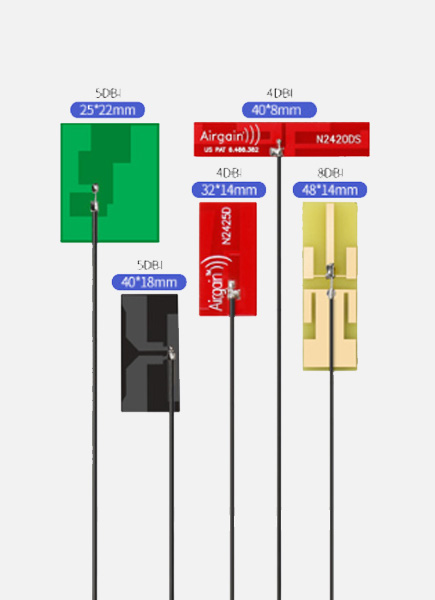
Choosing the right Antenna PCB type is critical for matching application requirements (frequency, size, gain). Below is a comparison of common Antenna PCB types, their uses, and EBest’s customization capabilitiesβ€”helping you select the perfect solution for your project.

Antenna PCB TypeKey FeaturesIndustry ApplicationsEBest Customization
Microstrip Patch Antenna PCBHigh directionality, gain 2-5dBi, compact size (30mmΓ—25mm for 2.4GHz)Aerospace (satellite communication), industrial IoT sensorsCustom patch size, multi-element arrays (8Γ—8 for 77GHz radar)
PIFA Antenna PCB (Planar Inverted-F)Low profile (<5mm), gain 3-6dBi, wide bandwidth (10-15%)Medical (wearable health monitors), aerospace (cabin communication)Short-circuit pin optimization, ultra-thin design for compact devices
Loop Antenna PCBAnti-interference, gain 1-3dBi, small size (10-20mm diameter)Industrial (asset tracking), medical (implantable devices)Closed-loop design, custom diameter for low-frequency (433MHz/868MHz) use
Millimeter Wave Antenna PCBHigh gain (15-20dBi), narrow beam, low lossAerospace (radar systems), industrial (high-precision monitoring)Low-loss Rogers substrates, multi-array integration for high accuracy

Antenna PCB Application Cases: Medical, Aerospace & Industrial

EBest has extensive experience delivering custom Antenna PCB solutions for mission-critical industries. Below are real-world cases showcasing our expertise in solving complex Antenna PCB challenges.

Medical Industry Case: Remote Patient Monitor Antenna PCB

A leading medical device manufacturer needed an Antenna PCB for a remote patient monitor (2.4GHz WiFi/Bluetooth) that met ISO 13485 standards, had low power consumption, and resisted EMI from hospital equipment. We designed a compact Custom PIFA Antenna PCB with a Rogers RO4350B substrate, integrated EMI shielding for Antenna PCB, and optimized impedance matching to ensure reliable signal transmission (range β‰₯50m) in hospital environments. The Antenna PCB passed all biocompatibility and EMI tests and is now used in 10,000+ monitors worldwide.

Aerospace Industry Case: Satellite Communication Antenna PCB

An aerospace client required a high-frequency (28GHz) Antenna PCB for satellite communication, with high gain (β‰₯18dBi), low signal loss, and resistance to extreme temperatures (-55℃~125℃). We designed a millimeter wave antenna array PCB with 16Γ—16 microstrip elements, using a Aerospace Antenna PCB substrate (Rogers 5880, tanΞ΄=0.0009) for minimal loss. The Antenna PCB underwent vibration, thermal cycling, and radiation testing, meeting NASA’s aerospace standards, and is now integrated into small satellites for Earth observation.

Industrial Industry Case: Industrial Sensor Antenna PCB

An industrial automation company needed an Antenna PCB for a LoRa sensor (868MHz) used in factory asset tracking, requiring long range (β‰₯1km) and resistance to vibration and dust. We designed a loop Antenna PCB with an FR-4 substrate, optimized for low-frequency performance and compact size (15mm diameter). The Antenna PCB was integrated into the sensor’s housing with IP67 protection and now provides reliable data transmission across 50+ factories, reducing downtime by 30%.

Why Choose EBest for Your Antenna PCB Needs?

When you partner with EBest for Antenna PCB design, prototyping, or assembly, you get the expertise, quality, and reliability that set us apart from other manufacturers. Here’s why we’re the top choice for businesses worldwide:

  • Technical Expertise – Our team of RF engineers has 15+ years of experience in Antenna PCB design, specializing in high-frequency, medical, and aerospace applications.
  • End-to-End Solutions – We handle every step from design, prototyping, and assembly to testing and delivery, eliminating the need for multiple vendors.
  • Strict Quality Control – 100% inspection (AOI, X-ray, VNA) and compliance with IPC-A-610, ISO 9001, ISO 13485, and aerospace standards.
  • Fast Turnaround – 2-3 day prototype delivery and 5-7 day mass production delivery for standard Antenna PCB orders.
  • Customization – Tailored Antenna PCB solutions for any frequency (433MHz~60GHz), size, and industry requirement, including Custom PIFA Antenna PCB and Aerospace Antenna PCB substrate options.
  • Proven Track Record – Trusted by 500+ clients in the medical, aerospace, and industrial sectors, with 99.8% on-time delivery and 99.5% customer satisfaction.

FAQ: Common Antenna PCB Questions & Answers

1. What substrate is best for high-frequency Antenna PCB?

For high-frequency Antenna PCBs (β‰₯6GHz), low-loss substrates like Rogers RO4350B (Ξ΅r=3.48, tanΞ΄=0.0037) or Rogers 5880 (Ξ΅r=2.2, tanΞ΄=0.0009) are best. These substrates minimize signal loss, ensure impedance stability, and support high gainβ€”critical for 5G and millimeter wave applications. Standard FR-4 is unsuitable for high frequencies due to high tanΞ΄ (>0.02) and signal degradation.

2. How do I reduce EMI in Antenna PCB assembly?

To reduce EMI shielding for Antenna PCB in assembly, use three key strategies: 1) Optimize component placementβ€”keep high-noise components (e.g., power regulators) β‰₯20mm away from the antenna. 2) Add EMI shielding (conductive coatings or metal enclosures) around the antenna to block external interference. 3) Use grounded guard traces between the antenna and other traces to isolate signal paths. EBest implements all three in every Antenna PCB assembly for medical and industrial applications.

3. What is the ideal keep-out area for Antenna PCB?

The ideal keep-out area for an Antenna PCB is β‰₯ wavelength/4 of your operating frequency. For example: 2.4GHz (wavelength β‰ˆ124mm) requires a keep-out area of β‰₯31mm; 5GHz (wavelength β‰ˆ60mm) requires β‰₯15mm; 868MHz (wavelength β‰ˆ345mm) requires β‰₯86mm. This area must be free of copper cladding, vias, and components to avoid signal disruption and efficiency loss.

4. How long does it take to get an Antenna PCB prototype?

EBest delivers standard Antenna PCB prototypes in 2-3 days. Complex prototypes (multi-layer, high-frequency, or custom shapes) take 4-5 days. This fast turnaround is possible due to our in-house prototyping production line and streamlined design-to-production process, which eliminates delays from third-party vendors.

5. Can Antenna PCB be customized for small form-factor devices?

Yes, Antenna PCBs can be fully customized for small form-factor devices (e.g., wearables, IoT sensors, medical implants). EBest designs compact Antenna PCB types like Custom PIFA Antenna PCB (height <5mm) or snake-shaped traces to fit tight spaces while maintaining performance. We’ve designed Antenna PCBs as small as 5mmΓ—5mm for wearable health monitors, without sacrificing signal range or efficiency.

6. What tests are required for medical Antenna PCB?

Medical Antenna PCBs require four key tests to meet ISO 13485 standards: 1) EMI/EMC testing to ensure compatibility with hospital equipment. 2) Thermal cycling testing (-40℃~85℃) to validate performance in varying environments. 3) Biocompatibility testing (if the Antenna PCB is in contact with skin or body fluids). 4) Signal performance testing (VNA, OTA efficiency) to ensure reliable data transmission. EBest provides full test reports for every Medical Antenna PCB assembly order.

Get Your Custom Antenna PCB Today – Contact EBest

We provide high-quality Antenna PCB design, prototyping, and assembly solutions, tailored to your industry and application needs. Whether you’re in the medical, aerospace, or industrial equipment sector, our team has the expertise to deliver reliable, compliant, and high-performance Antenna PCBs on time. For your next Antenna PCB project, contact us to place your order at sales@bestpcbs.com. EBest – Your Trusted Antenna PCB Partner.
How to Design an Efficient PCB NFC Antenna for Your Devices?
Friday, October 17th, 2025

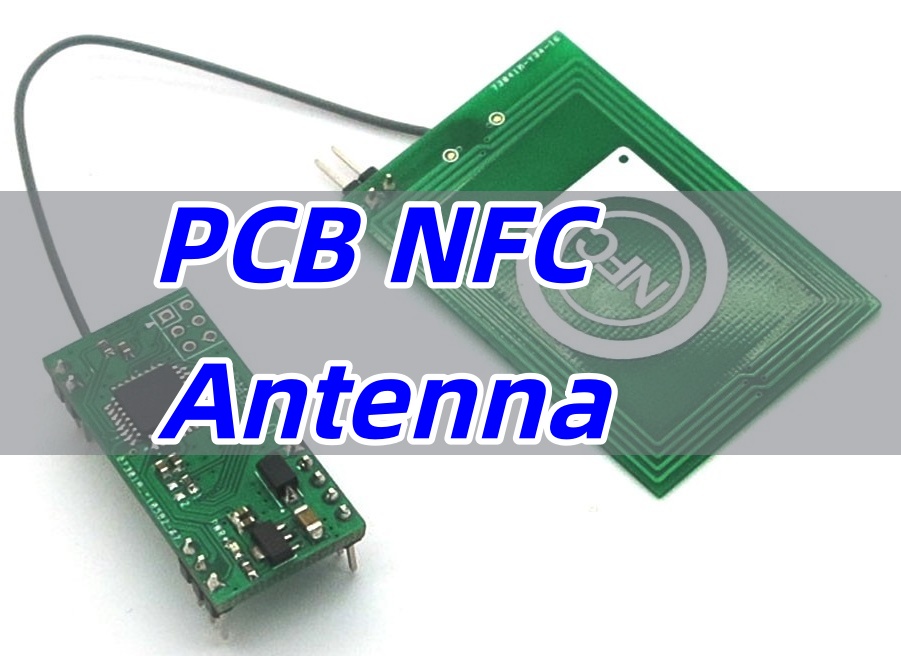
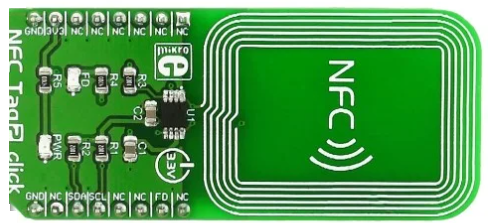
PCB NFC antenna​ enables seamless near-field communication in smartphones, payment systems, and IoT devices. This article explores their design, differences from RFID antennas, and practical applications.

Why do many struggle with NFC antenna integration? Here are common challenges:

  • ​Complex impedance matching​ – Achieving optimal performance at 13.56MHz is tricky.
  • ​Size constraints​ – Balancing compact designs with adequate inductance (typically <5ΞΌH).
  • ​Material selection​ – FR4, flex PCB, or ceramic substrates impact efficiency.
  • ​Interference issues​ – Nearby metal components can disrupt magnetic coupling.
  • ​Manufacturing precision​ – Tight tolerances for trace width/spacing (e.g., 0.2mmΒ±0.02mm).

EBest Circuit (Best Technology) solves these with the following proper solutions:

  • ​Impedance tuning tools​ – HFSS simulations and network analyzer validation.
  • ​Miniaturization expertise​ – Down to 0.15mm thin PCBs with 20oz heavy copper.
  • ​Material guidance​ – Recommending optimal substrates (Aluminum, Rogers, or LTCC).
  • ​Shielding solutions​ – Ground planes and ferrite layers to reduce interference.
  • ​High-precision production​ – 260,000 ftΒ²/month capacity with Β±1mil tolerance.

BEST Technology is an industry-leading PCB manufacturer with 19 years of expertise in advanced circuit solutions, specializing in high-performance ​PCB NFC antenna​ designs and innovative flexible circuit applications. As a trusted partner in RF and wireless technologies, we combine precision engineering with cutting-edge manufacturing to deliver optimized ​NFC antenna PCBs​ that meet stringent performance requirements.

Our ISO-certified facility supports end-to-end production from rapid prototyping to mass manufacturing, with specialized capabilities in impedance-controlled designs and multi-layer ​NFC antenna PCB​ integration. With a 97% on-time delivery rate and dedicated engineering support, we provide tailored solutions for IoT, smart devices, and contactless systems requiring reliable ​PCB-based NFC antennas. For customized ​NFC antenna PCB​ solutions, pls feel free to contact our technical sales team at sales@bestpcbs.com.

PCB NFC Antenna

What Is a PCB NFC Antenna?

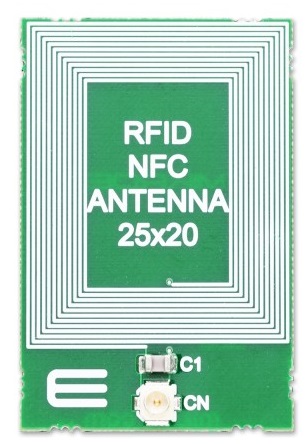
A ​PCB NFC antenna​ is a printed circuit board coil enabling 13.56MHz communication within 10cm. It works via magnetic induction, transferring energy and data between devices.

Key features:

  • ​Inductance range: 1–5ΞΌH for stable resonance.
  • ​Layers: Single-sided (cost-effective) or double-sided (higher inductance).
  • ​Materials: FR4 (standard), flexible PCBs (wearables), or ceramic (high-temperature).
PCB NFC Antenna

What are the NFC Antenna Types?

Near Field Communication (NFC) antennas are essential components in contactless applications, enabling secure data transfer and wireless power transfer. The design of an NFC antenna significantly impacts performance, influencing factors such as read range, efficiency, and compatibility with different devices. Below are three common NFC antenna types, each with distinct advantages for specific applications:

  • ​Rectangular Spiral​ – Simple to design and cost-effective, making it ideal for standard FR4 PCBs in access control and identification systems.
PCB NFC Antenna
  • ​Circular Spiral​ – Generates a more uniform magnetic field, preferred for payment terminals and industrial applications requiring consistent performance.
  • ​Double-Layer Helix​ – Maximizes inductance in tight spaces, commonly used in smartphones and wearables where miniaturization is critical.

EBest Circuit (Best Technology)’s ​NFC antenna design tool​ helps select the right type based on your device’s size and frequency requirements.

What is Difference: PCB NFC Antenna v.s. PCB RFID Antenna

​While both NFC (Near Field Communication) and RFID (Radio Frequency Identification) antennas enable wireless communication, they serve distinct purposes in PCB applications. The key differences lie in their operating frequencies, communication ranges, and typical use cases. Below is a comparative breakdown:

Feature​PCB NFC Antenna​​PCB RFID Antenna​
​Frequency​13.56 MHz (fixed)125 kHz – 2.45 GHz (varies by type)
​Range​Short-range (<10 cm)Medium- to long-range (up to 15 m)
​Applications​Mobile payments, device pairing, smart tagsInventory tracking, access control, logistics

​Design Considerations:​​

  • ​NFC Antennas: Optimized for close-proximity interactions, requiring precise impedance matching and compact spiral/helix layouts (e.g., circular spirals for uniform fields).
  • ​RFID Antennas: Designed for broader frequency adaptability, often using dipole or loop configurations for extended range.

​Key Takeaways:

  • NFC antennas prioritize proximity and security, while RFID antennas focus on scalability and range.
  • Frequency selection dictates antenna geometryβ€”spiral for NFC, dipole/loop for RFID.
  • Our engineering team provides application-specific guidance for optimal performance.

​EBest Circuit (Best Technology) offers tailored design tools for both technologies, including an ​NFC antenna optimizer​ for 13.56 MHz tuning and an ​RFID antenna calculator​ for UHF/HF band trace patterns. For custom antenna designs, prototypes, fabrication, assembly, or box build, pls contact us at ​sales@bestpcbs.com.

How is NFC Antenna Size?

​The size of an NFC antenna is a critical design parameter that directly impacts its performance, efficiency, and suitability for specific applications. Proper sizing ensures optimal inductance, read range, and compatibility with device constraints. Below, we break down the key considerations for NFC antenna sizing, supported by technical guidelines and empirical data.

​1. Size Guidelines for Common Applications​

NFC antenna dimensions vary based on device type and functional requirements:

  • ​Smartphones:
    • ​Recommended size: 25Γ—15mm
    • ​Design: 5 turns with 0.3mm trace width to balance inductance (~1–2 Β΅H) and space efficiency.
    • ​Rationale: Larger coils enhance magnetic coupling but must fit within compact device layouts.
  • ​Wearables:
    • ​Recommended size: 15Γ—10mm (flexible PCB compatible)
    • ​Design: 3 turns to maintain adequate inductance (~0.5–1 Β΅H) while minimizing footprint.
    • ​Rationale: Smaller form factors require trade-offs between turns and trace width to avoid excessive resistance.

​2. Key Factors Influencing Antenna Size​

​a. Inductance (L) Requirements​

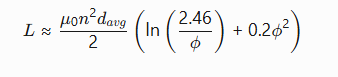
The antenna’s inductance must match the NFC chip’s tuning capacitance (typically 27–33 pF for 13.56 MHz). Use the simplified formula for spiral coil inductance:

Where:

  • ΞΌ0​: Permeability of free space (4π×10βˆ’7 H/m)
  • n: Number of turns
  • davg​: Average coil diameter
  • Ο•: Fill factor (trace width/spacing ratio).

​Example: A 25Γ—15mm antenna with 5 turns yields ~1.5 Β΅H, suitable for most NFC ICs.

​b. Trace Width and Spacing​

  • ​Narrow traces (0.2–0.3mm)​: Reduce parasitic capacitance but increase resistance.
  • ​Wider traces (>0.5mm)​: Lower resistance but risk eddy currents and size inflation.

​c. Device Integration Constraints​

  • ​Ground plane proximity: Keep >1mm clearance beneath coils to avoid Q-factor degradation.
  • ​Bending radius (flex PCBs)​: Minimum 3Γ— trace width to prevent cracking.

​3. Layout Optimization Techniques​

  • ​Avoid 90Β° corners: Use 45Β° miters to minimize impedance discontinuities and EMI.
  • ​Parallel trace alignment: Maintain Β±5Β° skew tolerance for uniform current distribution.
  • ​Symmetry: Ensure balanced coil geometry to prevent field distortion.

​NFC antenna sizing is a trade-off between electrical performance (inductance, Q-factor) and physical constraints (device size, integration).

Designers must:

  1. ​Match inductance​ to the NFC chip’s requirements using empirical formulas.
  2. ​Optimize trace geometry​ for minimal resistance and EMI.
  3. ​Validate prototypes​ with network analyzers to ensure resonant frequency alignment.

​Key Takeaways:

  • Smartphones: 25Γ—15mm (5 turns) balances performance and space.
  • Wearables: 15Γ—10mm (3 turns) prioritizes miniaturization.
  • Layout precision (trace width, symmetry) is as critical as size.

For tailored NFC antenna solutions, consult ​EBest Circuit (Best Technology)’s​ engineering team at sales@bestpcbs.com.

How is the NFC Antenna PCB Layout?

The layout of an NFC antenna on a PCB is crucial for achieving optimal performance in wireless communication systems. A well-designed NFC antenna PCB ensures efficient energy transfer, minimal interference, and reliable operation. This section explores key considerations and best practices for NFC antenna PCB layout, supported by technical insights and empirical data.

​1. Ground Plane Management​

Proper ground plane design is essential to prevent performance degradation in NFC antennas:

  • ​Avoid Ground Planes Under Coils:
    Placing ground planes directly beneath the antenna coils can induce ​eddy currents, which weaken the magnetic field and reduce read range. Maintain a clearance of ​at least 1mm​ between the coil and any ground layer.
  • ​Use Split Ground Planes:
    For multilayer PCBs, consider splitting the ground plane around the antenna area to minimize parasitic capacitance and maintain a high ​quality factor (Q)​.

​2. Trace Design and Geometry​

The geometry of the antenna traces significantly impacts performance:

  • ​Trace Width and Spacing:
    • ​Width: 0.2–0.5mm (balance between resistance and parasitic capacitance).
    • ​Spacing: β‰₯0.2mm to avoid arcing and ensure manufacturability.
  • ​Corner Design:
    • Use ​45Β° miters​ instead of 90Β° bends to reduce ​electromagnetic interference (EMI)​​ and impedance mismatches.
    • The inductance of a corner can be approximated by: L cornerβ€‹β‰ˆ0.2Γ—L straight​
    • Where L straight​ is the inductance of a straight trace segment.
  • ​Parallel Traces:
    Maintain alignment within ​​±5Β° skew​ to ensure uniform current distribution and consistent inductance.

​3. Antenna Symmetry and Balance​

A symmetrical layout is critical for generating a uniform magnetic field:

  • ​Differential Feed Design:
    For balanced NFC antennas, ensure equal trace lengths and impedance matching (Β±10% tolerance) between differential pairs to prevent signal distortion.
  • ​Coil Shape:
    • ​Circular spirals​ provide the most uniform field distribution but require precise manufacturing.
    • ​Rectangular spirals​ are easier to fabricate but may exhibit slight field asymmetry.

​4. Material and Layer Stackup​

The choice of PCB materials and layer configuration affects antenna performance:

  • ​Substrate Material:
    • ​FR4: Cost-effective but with higher dielectric losses (~0.02 at 13.56 MHz).
    • ​Polyimide (Flex PCBs)​: Lower loss tangent (~0.005) and better for bendable designs.
  • ​Layer Stackup:
    • ​2-Layer PCBs: Place the antenna on the top layer with a partial ground plane underneath.
    • ​4-Layer PCBs: Use Layer 2 as a ground reference and avoid routing critical signals near the antenna area.

​5. EMI and Crosstalk Mitigation​

To minimize interference:

  • ​Shielding:
    Add a ​Faraday cage​ or conductive tape around the antenna if nearby components emit noise.
  • ​Isolation:
    Keep high-speed digital traces (e.g., USB, HDMI) ​**β‰₯10mm**​ away from the antenna to prevent coupling.

In conclusion​, an optimized NFC antenna PCB layout requires:

  1. ​Strategic ground plane design​ to avoid eddy currents.
  2. ​Precise trace geometry​ (width, spacing, corners) for consistent inductance.
  3. ​Symmetrical coil patterns​ to ensure uniform magnetic fields.
  4. ​Material selection​ tailored to application needs (rigid vs. flex PCBs).
  5. ​EMI mitigation​ through shielding and isolation.

For performance-critical applications, prototype testing with a ​network analyzer​ is recommended to validate resonant frequency and Q-factor.

​Key Takeaways:

  • Ground plane clearance β‰₯1mm prevents field degradation.
  • 45Β° corners and parallel traces enhance signal integrity.
  • Differential feed designs improve balance in high-performance systems.

How to Design a PCB NFC Antenna?

NFC (Near Field Communication) is a short-range wireless communication technology operating at 13.56 MHz, designed for secure communication within a few centimeters. NFC antennas are essential components in mobile devices, contactless payments, and access control systems. Designing a PCB NFC antenna requires understanding both antenna theory and practical PCB layout considerations to achieve optimal performance, compact size, and reliable communication.

Key Antenna Parameters and NFC Working Principle

The performance of an NFC system depends heavily on the antenna, which determines parameters such as input impedance, efficiency, gain, polarization, and inductive coupling.

  1. Input Impedance
    Input impedance is the ratio of voltage to current at the antenna terminals: Zin = V / I It consists of a real part (radiation and loss resistance) and an imaginary part (reactive energy storage). Return loss describes matching: RL = -20 * log10(|Ξ“|) where Ξ“ is the reflection coefficient. For mobile NFC antennas, a return loss of -5 dB or lower is generally acceptable.
  2. Antenna Efficiency
    Efficiency is the ratio of radiated power to input power: Ξ·A = Prad / Pin Losses may include conductor resistance, dielectric loss, and reflection from impedance mismatch.
  3. Gain and Directivity
    Gain (G) relates to directivity (D) and efficiency: G = Ξ·A * D Mobile antennas are usually omnidirectional to avoid blind spots.
  4. Polarization and Inductive Field
    NFC antennas typically use linear polarization. The reactive near-field region of the antenna, important for NFC coupling, is approximately: r < D^2 / Ξ» where D is the largest antenna dimension, and Ξ» is the wavelength.
  5. NFC Communication Modes
    NFC supports active and passive modes for peer-to-peer and card-reader communication, typically at 106, 212, or 424 kbps.

Steps to Design a PCB NFC Antenna

1. Select the Antenna Type

Common PCB NFC antenna types include:

  • Single-sided rectangular coil
  • Single-sided rounded rectangular coil
  • Double-sided helical coil

Design choice depends on:

  • Available PCB space
  • Required inductance
  • Miniaturization needs

2. Calculate Key Parameters

Inductance Calculation:
For a coil antenna, the inductance L is:

L = Im(Z) / (2 * Ο€ * f)

where Im(Z) is the imaginary part of impedance, and f is frequency (13.56 MHz for NFC). The resonant frequency of the LC circuit is:

f = 1 / (2 * Ο€ * √(L * C))

The inductance should generally be below 5 ΞΌH for ease of impedance matching with capacitors.

3. Design the PCB Layout

  • Determine line width (w), spacing (s), and number of turns (n).
  • Keep coil area maximized while maintaining spacing for manufacturability.
  • Avoid placing metal components under or near the coil, as they reduce coupling.
  • For multilayer boards, consider double-sided or stacked coil designs to increase inductance without enlarging footprint.

4. Impedance Matching

Impedance matching minimizes return loss and maximizes power transfer:

  • Connect a series or parallel capacitor to tune resonance.
  • Optional: add a resistor for fine adjustment of Q factor.
  • Iteratively simulate and measure until return loss is acceptable at 13.56 MHz.

5. Simulation and Verification

  • Use electromagnetic simulation tools (e.g., HFSS) to model the antenna and optimize parameters.
  • Practical testing with a network analyzer can validate impedance, inductance, and return loss.
  • Adjust coil turns, spacing, or matching components if necessary.

6. Miniaturization Techniques

  • Use rounded or spiral coil shapes to save PCB space.
  • Consider multi-turn or double-sided coils to maintain inductance in a smaller area.
  • Optimize trace width and spacing to maintain inductance while minimizing PCB area.

Comparison of Common Antenna Types

Antenna TypeSizeInductance StabilityIntegration Ease
Single-sided rounded rectangleCompactHighEasy
Double-sided rectangularLargerModerateMedium
Double-sided helicalModerateGoodMedium

For mobile devices, the single-sided rounded rectangular antenna often offers the best balance between size, stability, and manufacturability.

Practical Design Tips

  1. Keep the coil away from metal objects and noisy signals.
  2. Use appropriate PCB material for low-loss high-frequency performance.
  3. Adjust trace width and spacing to fine-tune inductance.
  4. Verify resonance and matching through both simulation and measurement.
  5. When reducing antenna size, consider multi-layer designs and coil shape optimization.

In a nutshell, designing a PCB NFC antenna requires careful consideration of antenna type, inductance calculation, PCB layout, and impedance matching. By following the steps above and applying miniaturization techniques, designers can achieve efficient, compact NFC antennas suitable for mobile devices and contactless systems. Simulation tools and practical validation ensure reliable performance at 13.56 MHz. Among common designs, the single-sided rounded rectangular antenna generally offers the best combination of stability, size, and ease of integration.

What are the Applications of NFC Antenna PCB?

The ​NFC antenna PCB​ is a quiet workhorse in our daily tech. You might not see it, but it’s everywhere. Its applications are vast and growing quickly. This tiny coil on a board makes countless interactions seamless. Let’s look at some of the most common places you’ll find it.

  • ​Contactless Payment Systems:​​ This is probably the most familiar use. The credit card in your wallet and the terminal at your favorite coffee shop both rely on a ​PCB NFC antenna. It makes transactions fast, secure, and simple.
  • ​Smartphones:​​ Modern life runs on phones. Every ​NFC antenna android​ and ​NFC antenna iphone​ has one embedded inside. It enables mobile payments like Google Pay and Apple Pay. It also handles quick pairing with other gadgets.
  • ​Access Control:​​ Forget fumbling with keys. Many offices, hotels, and secure buildings now use NFC keycards. You just tap your card on the reader. The ​PCB NFC antenna​ inside the card communicates with the reader to grant access.
  • ​Asset Tracking:​​ Businesses need to manage their inventory efficiently. NFC tags with a PCB RFID antenna​ are attached to items in a warehouse or books in a library. A quick scan with a reader updates the system instantly. It saves time and reduces errors.
  • ​Consumer Electronics:​​ This area is exploding. Think about pairing your wireless speakers or headphones. Instead of a complicated Bluetooth search, you just tap your phone to the device. This “pairing by tapping” is powered by an NFC antenna PCB. It’s also common in smart home devices, gaming controllers, and more.

​From the payment terminal at a store to the smart speaker in your living room, the ​NFC antenna PCB​ is a fundamental enabler of modern convenience. Its ability to provide secure, short-range communication and power has unlocked a world of “tap-and-go” applications. As the Internet of Things continues to expand, we will see these clever little antennas integrated into even more aspects of our lives, making our interactions with technology smoother and more intuitive.

Why Choose EBest Circuit (Best Technology) as Your Reliable NFC Antenna PCB Manufacturer?​

Selecting the right manufacturing partner is as critical as the design itself. A perfect design can be ruined by poor fabrication. This is especially true for a sensitive component like a ​PCB NFC antenna, where precision is paramount. EBest Circuit (Best Technology) stands out as a trusted partner for several key reasons.

With 19 years of dedicated PCB expertise, we have the deep industry knowledge needed to get your NFC antenna PCB​ right the first time. Our commitment to excellence is clear in what we deliver:

  • ​Certified Quality Systems:​​ We are ISO 9001 and ISO 13485 certified. This means we have robust processes to ensure every board we ship, especially critical ones like a ​PCB NFC antenna, meets the highest standards of quality and consistency.
  • ​Comprehensive Turnkey Solutions:​​ We offer true end-to-end service. Our support covers everything from initial ​PCB NFC antenna design​ review and optimization to full box-build assembly. This simplifies your supply chain and ensures seamless integration.
  • ​Remarkably Fast Lead Times:​​ We understand the need for speed in development. We offer rapid prototyping, with 6-layer FR4 PCB prototypes available in as little as 24 hours. This allows you to test and iterate faster.
  • ​Expert Engineering Support:​​ Our team has deep experience with high-frequency and RF-specific designs. We don’t just build your board; we can help optimize your ​NFC antenna PCB layout​ for maximum performance and efficiency, acting as an extension of your engineering team.
  • ​Advanced Manufacturing Capabilities:​​ We use high-quality materials with stable dielectric constants, which is essential for predictable antenna performance. Our controlled manufacturing environment ensures that every ​NFC PCB antenna we produce performs identically to your prototype, batch after batch.

​In closing, choosing EBest Circuit (Best Technology) means more than just finding a supplier; it means gaining a partner dedicated to your success. Our combination of proven quality standards, full-service capabilities, rapid turnaround, and specialized technical support makes us the ideal choice for your ​NFC antenna PCB needs. We provide the reliability and expertise necessary to transform your innovative designs into high-performing, market-ready products. Let us be the reliable manufacturing foundation that your next great device is built upon.

Case of Supporting Embedded PCB NFC Antenna Project at EBest Circuit (Best Technology)

​A client needed high-reliability flex PCB NFC antennas for next-generation fitness trackers, with critical challenges:

  • ​Space Constraints: Ultra-compact 12Γ—8mm design area
  • ​Durability Requirements: 100,000+ dynamic bend cycles

​Our Solution Leveraged EBest Circuit (Best Technology)’s Advanced Capabilities:​​
✔ ​2-Layer Polyimide Stackup​ – Optimized with 0.1mm (4mil) traces using our 2/2mil line width/spacing technology
✔ ​Precision Laser Cutting​ – Achieved Β±0.05mm alignment tolerance (50% tighter than industry standards)
✔ ​Impedance-Controlled Design​ – 100% tested to Β±5Ξ© tolerance for 50Ξ© systems
✔ ​Medical-Grade Materials​ – DuPont Pyralux AP polyimide with 260Β°C/10s solder resistance
✔ ​Endurance Validation​ – Exceeded IPC-6013 Class 3 standards for 100k bend cycles

​Supported by Our Core Flex PCB Competencies:​​
◾ 1-30 layer FPC manufacturing ◾ 28,900㎑ monthly capacity
ISO 13485-certified cleanrooms ◾ 98% on-time delivery track record

​Result: Delivered 98% on-time with <1% defect rate, enabling seamless integration into mass-produced wearables.

This case highlights how our ​sub-4mil trace technology, coupled with ​medical-grade process controls, solves extreme miniaturization challenges while guaranteeing field reliability.

All in all, PCB NFC antennas​ are vital for secure, short-range communication. Partner with EBest Circuit (Best Technology) for ​high-performance, cost-effective designs. Pls connect with us sales@bestpcbs.com for any multilayer NFC PCB antenna supports.