





LED Wall Washer Light Aluminum PCB is a thermal-management-focused PCB solution designed to support high-power LED wall washer fixtures with stable heat dissipation, reliable circuit performance, and long outdoor service life. This article explains how it works, why it matters in architectural lighting, what materials and layout rules matter most, and how to choose a reliable manufacturing partner for consistent project results.
Have you ever struggled with wall washer lights that run hot, fade early, show uneven brightness, or fail too soon in outdoor projects?
- Heat builds up fast in compact linear fixtures.
- Brightness drops after long operating hours.
- Outdoor moisture and temperature swings shorten lifespan.
- PCB material choices feel confusing during design.
- Supplier quality varies, causing unstable project delivery.
A capable PCB manufacturer solves these problems at the board level before they become field failures.
- Use aluminum-base structures to move heat away faster.
- Optimize copper weight and thermal path for stable output.
- Select proven dielectric and substrate materials for outdoor use.
- Improve layout for current balance and uniform light performance.
- Control fabrication and inspection to reduce reliability risks.
EBest Circuit (Best Technology) is a professional PCB and PCBA manufacturer with strong experience in aluminum PCB, MCPCB, LED lighting board fabrication, and thermal-reliability design support. We help customers build dependable boards for architectural lighting, outdoor lighting, and high-power LED systems with engineering review, prototype service, and mass production support. For project inquiries, pls feel free to contact us via sales@bestpcbs.com.
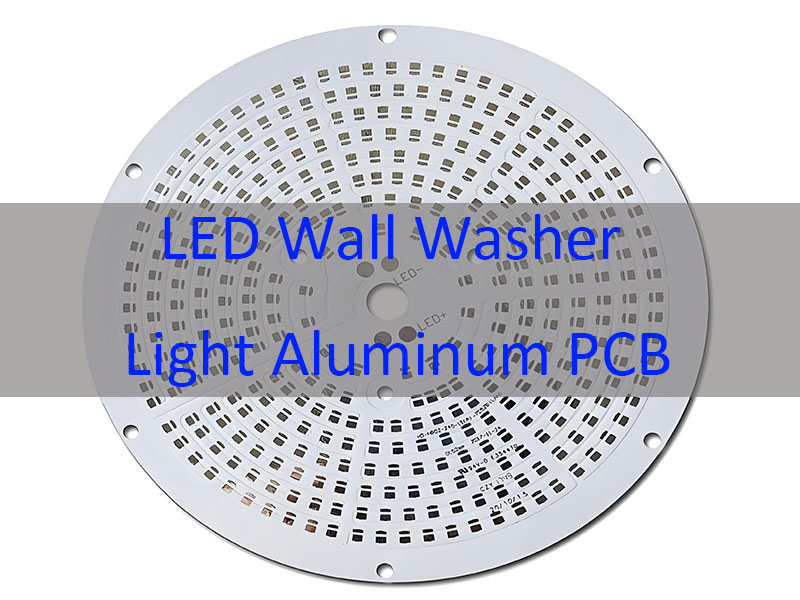
What Is LED Wall Washer Light Aluminum PCB?
An LED Wall Washer Light Aluminum PCB is a metal core printed circuit board designed for linear or bar-style LED fixtures used to illuminate walls, facades, bridges, corridors, and other architectural surfaces. Its main task is not only electrical connection, but also controlled thermal transfer.
In a wall washer fixture, LEDs are often mounted in a long and narrow arrangement. That creates concentrated heat along the board. A standard FR4 PCB can work for low-power lighting, but it often becomes less efficient when power density increases. An aluminum PCB solves this by using a metal base to spread and release heat more efficiently.
Typical Structure of an LED Wall Washer Light Aluminum PCB
| Layer | Material | Main Function |
|---|---|---|
| Circuit Layer | Copper | Carries current, mounts LEDs |
| Dielectric Layer | Thermally conductive insulation | Transfers heat, isolates electrically |
| Base Layer | Aluminum | Spreads and dissipates heat |
What Makes It Different From A Standard PCB?
- It combines electrical routing and heat spreading in one board.
- It helps LEDs maintain lower junction temperature.
- It supports longer operating hours in sealed fixtures.
- It improves lumen stability and color consistency.
- It fits slim architectural lighting structures well.
Common Applications
- Building facade lighting
- Landscape wall grazing lights
- Bridge illumination
- Hotel exterior lighting
- Commercial architectural accents
- Public-space decorative lighting
Why It Matters In Architectural Lighting
Architectural lighting is not just about turning on LEDs. It is about maintaining beam quality, brightness consistency, and long service life under real outdoor conditions. A well-designed LED Wall Washer Light Aluminum PCB becomes part of the thermal engine of the fixture, not just the circuit platform.
In short, this type of PCB is built for high thermal efficiency, compact linear design, and reliable outdoor lighting performance.
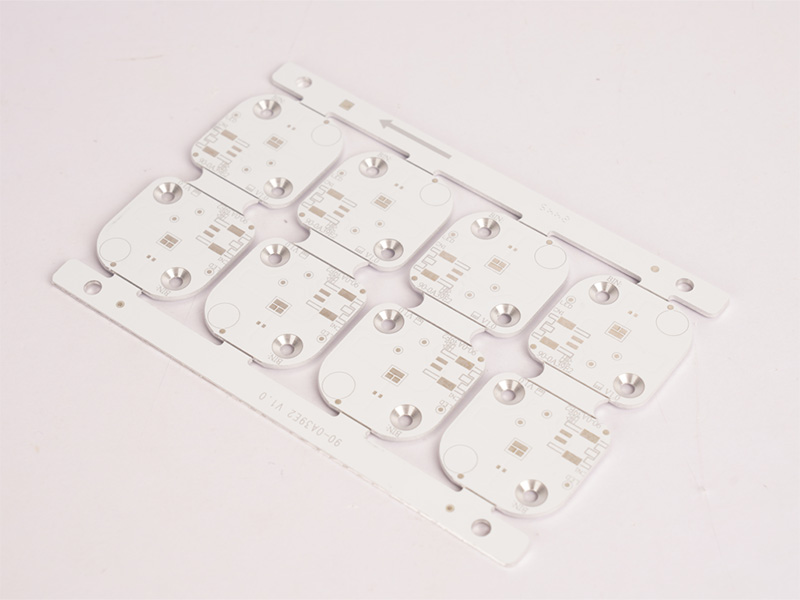
Why Choose Aluminum PCB For LED Wall Washer Light Applications?
For LED wall washer fixtures, heat is one of the most practical engineering challenges. The LEDs, driver interaction, enclosure design, and ambient environment all affect temperature. Aluminum PCB is often chosen because it supports a simpler and more efficient thermal path.
Instead of relying only on external housing to absorb heat, the board itself becomes an active part of thermal management. That improves fixture stability from the inside out.
Main Reasons Aluminum PCB Is Preferred
- Better heat spreading than ordinary FR4
- More suitable for high-power LED arrays
- Strong mechanical support for long boards
- Better fit for outdoor sealed luminaires
- Good cost-performance balance for volume projects
Comparison: Aluminum PCB Vs Standard FR4 In Wall Washer Lights
| Item | Aluminum PCB | Standard FR4 PCB |
|---|---|---|
| Heat Dissipation | High | Limited |
| Structural Rigidity | Better | Moderate |
| Suitability For High-Power LEDs | Strong | Lower |
| Outdoor Fixture Use | More suitable | Depends on design |
| Thermal Stability | Better | Lower |
Why Thermal Stability Matters For Wall Washer Lights
When LED junction temperature rises too much, several issues appear:
- Light output drops.
- Color shift becomes more obvious.
- Solder joints see more thermal stress.
- Driver and board reliability can degrade.
- Fixture life can shorten.
A good Aluminum PCB For LED Wall Washer Light applications helps control these effects before they impact field performance.
Practical Value For Buyers And Designers
For a lighting brand, contractor, or OEM, the benefit is straightforward:
- More reliable fixture performance
- Lower rework risk
- Better consistency between batches
- Longer service life in outdoor settings
- Easier control of project quality
To sum up, aluminum PCB is widely chosen in wall washer fixtures because it balances heat control, board strength, manufacturability, and cost more effectively than many conventional board options.
How Does LED Wall Washer Aluminum PCB Improve Thermal Performance?
Thermal performance is the central reason this board type exists. In LED architectural fixtures, the goal is to move heat away from the LED package as quickly and evenly as possible. The faster the heat path, the more stable the light engine.
A LED Wall Washer Aluminum PCB improves thermal performance by reducing heat accumulation near the LED mounting area and spreading that heat across a larger metal base.
Basic Thermal Path
The heat transfer path usually looks like this:
LED Junction → Solder Pad → Copper Layer → Dielectric Layer → Aluminum Base → Fixture Housing → Ambient Air
The shorter and cleaner this path is, the better the result.
Key Thermal Factors
- LED power density
- Copper thickness
- Dielectric thermal conductivity
- Dielectric thickness
- Aluminum base thickness
- Contact quality with housing
- Ambient temperature and airflow
Simple Thermal Logic
A simplified thermal relation can be expressed as:
Rth = t / (k × A)
Where:
- Rth = thermal resistance
- t = material thickness
- k = thermal conductivity
- A = heat transfer area
This means lower thickness and higher thermal conductivity usually support better heat transfer, assuming the structure is properly designed.
How Aluminum PCB Helps In Practice
| Thermal Aspect | Improvement Mechanism |
|---|---|
| Heat Spreading | Aluminum base enlarges thermal diffusion area |
| Hot Spot Reduction | Heat moves away from LED pads faster |
| Temperature Uniformity | Long linear board stays more balanced |
| LED Stability | Lower thermal stress helps output consistency |
| Fixture Life | Lower operating temperature supports reliability |
Design Benefits For Architectural Lighting
- Supports dense LED placement in slim housings
- Reduces thermal concentration in long strips
- Helps maintain stable brightness over time
- Improves consistency in façade lighting scenes
- Supports higher confidence in outdoor long-hour use
A Note On Real Fixture Performance
The board alone does not decide everything. Thermal grease, screws, housing flatness, and enclosure design also matter. But without a strong PCB thermal foundation, the fixture starts from a weaker position. That is why LED Wall Washer Aluminum PCB design is a first-order thermal decision, not a small material choice.
In brief, the board improves thermal performance by creating a more efficient conduction path, reducing hot spots, and supporting more stable LED operation across the whole fixture length.
What Materials Are Used In Aluminum PCB For LED Wall Washer Lights?
Material selection affects heat transfer, insulation reliability, manufacturability, corrosion resistance, and service life. For outdoor architectural lighting, the right stackup is especially important because the board must work across heat, humidity, and seasonal temperature changes.
A good Aluminum PCB For LED Wall Washer Lights is not built from aluminum alone. It is a layered system, and each layer matters.
Main Materials In The Stackup
1. Copper Circuit Layer
Copper forms the conductive traces and LED pads.
Common options:
- 1 oz copper
- 2 oz copper
- Higher copper for special current needs
Why it matters:
- Carries current
- Affects voltage drop
- Helps spread heat laterally
- Supports solder joint reliability
2. Dielectric Layer
This is the thermal insulation layer between copper and aluminum.
Key properties:
- Thermal conductivity
- Breakdown voltage
- Adhesion strength
- Thickness control
Typical focus:
- Good heat transfer
- Stable insulation
- Strong bonding under thermal cycling
3. Aluminum Base
This is the metal core that spreads heat and supports the board mechanically.
Common thickness:
- 1.0 mm
- 1.5 mm
- 2.0 mm
Why it matters:
- Determines rigidity
- Affects heat spreading
- Impacts mounting and assembly fit
Material Overview Table
| Material Part | Typical Option | Why It Is Chosen |
|---|---|---|
| Copper | 1 oz / 2 oz | Current carrying and heat spreading |
| Dielectric | Thermally conductive insulation | Electrical isolation plus thermal transfer |
| Aluminum Base | 1.0–2.0 mm aluminum | Heat spreading and board strength |
| Solder Mask | White / Black / Custom | Protection and reflectivity control |
| Surface Finish | HASL / ENIG / OSP | Solderability and storage stability |
Common Surface Finish Choices
- ENIG: Flat surface, stable solderability, better for refined assembly
- HASL: Cost-effective in many standard cases
- OSP: Suitable for some cost-sensitive projects with controlled storage
For many LED boards, ENIG is often preferred when pad flatness and soldering consistency are priorities.
Material Selection Priorities For Outdoor Wall Washer Lights
- Stable thermal transfer
- Reliable insulation
- Good resistance to moisture-related stress
- Sufficient board rigidity for long linear shape
- Compatibility with assembly and housing attachment
Material Choice Is Also A Cost Choice
Better thermal dielectric materials often cost more, but they can reduce temperature rise and improve reliability. For long-life lighting projects, that tradeoff is often worth evaluating early.
In conclusion, the performance of an Aluminum PCB For LED Wall Washer Lights depends on the full material stackup, not just the metal core. Copper, dielectric, and aluminum must work together as one thermal and electrical system.
When Should You Use Aluminum PCB LED Wall Washer Light Solutions?
Not every lighting product needs a metal core board. But in wall washer lighting, there are many cases where aluminum PCB becomes the more dependable choice. The decision usually depends on heat, structure, environment, and performance targets.
An Aluminum PCB LED Wall Washer Light solution is most useful when the lighting system must stay bright, stable, and reliable in a narrow fixture body over long operating periods.
Typical Situations Where It Makes Sense
- High-power LED loading
- Tight fixture housing
- Long continuous operating hours
- Outdoor or semi-outdoor installation
- High ambient temperature environments
- Projects with long service-life expectations
Quick Decision Guide
| Condition | Is Aluminum PCB Recommended? |
|---|---|
| Low-power decorative use | Maybe |
| High-output façade washing | Yes |
| Outdoor linear fixture | Yes |
| Compact sealed housing | Yes |
| Strict cost-only project | Depends |
| Long-life premium lighting | Yes |
Use Aluminum PCB When These Goals Matter
Better Thermal Control
If your LEDs are closely spaced and expected to run for long periods, thermal buildup becomes a design issue quickly.
Higher Reliability
If the project is installed on building exteriors or public infrastructure, maintenance cost is high. More reliable boards reduce later service pressure.
Stronger Mechanical Support
Long and narrow boards can benefit from the rigidity of an aluminum base, especially in large fixture housings.
More Stable Light Quality
Temperature directly affects luminous output and color consistency. Better thermal control helps reduce visible variation.
Better Long-Term Value
Even if the board cost is slightly higher, the whole fixture may perform better and last longer.
Common Application Examples
- Hotel façade washers
- Shopping mall exterior lighting
- Landscape retaining-wall lights
- Under-eave linear washers
- Bridge and monument lighting
- Urban public-space accent lighting
When FR4 May Still Be Considered
FR4 may still be acceptable when:
- Power is low
- Duty cycle is limited
- Thermal load is mild
- Fixture design provides ample cooling
- Project cost is extremely constrained
Still, for most performance-driven architectural fixtures, aluminum PCB is often the more robust route.
To summarize, use Aluminum PCB LED Wall Washer Light solutions when the project demands stronger heat control, outdoor durability, structural stability, and dependable light performance over time.
What Are The Key Layout Rules For LED Wall Washer Light Aluminum PCB?
Material matters, but layout matters just as much. A strong aluminum PCB can still underperform if the copper routing, LED spacing, thermal pad design, or current path is poorly planned. In wall washer lights, layout affects heat balance, brightness uniformity, and manufacturability.
The best layout is usually the one that keeps thermal flow, electrical flow, and assembly flow all aligned.
Key Layout Rules
1. Keep LED Spacing Consistent
Uniform spacing helps maintain even light distribution and more balanced thermal loading.
2. Optimize Current Path
Reduce unnecessary resistance by using practical trace width and short current paths where possible.
3. Use Adequate Copper Width
Higher current sections need wider traces to reduce heat and voltage drop.
4. Control Thermal Concentration
Do not crowd high-power LEDs too tightly without thermal analysis.
5. Align Board And Housing Contact Areas
Thermal transfer improves when the board bottom has effective, stable contact with the fixture body.
6. Separate Heat-Sensitive Circuits Where Needed
If control signals or other components are present, protect them from the hottest zones.
7. Consider Assembly Tolerance
Keep pad design and connector placement practical for mass production.
Layout Priorities Table
| Layout Area | Main Goal |
|---|---|
| LED Placement | Uniform light and heat |
| Trace Design | Lower resistance and stable current |
| Mounting Holes | Strong fixture integration |
| Connector Zone | Easy assembly and service |
| Thermal Contact Area | Efficient heat transfer |
| Polarity Marking | Error prevention |
Trace Width And Current Density
For higher current LED strings, trace width should not be treated casually. Narrow traces create extra resistance and unwanted heat. The right width depends on current, copper thickness, allowable temperature rise, and routing length.
Common Layout Mistakes To Avoid
- Uneven LED spacing
- Overly narrow power traces
- Poor fixture mounting alignment
- Ignoring long-board thermal gradient
- Weak polarity or assembly marking
- Crowded pad arrangement near connectors
Why Layout Affects Light Performance
In a wall washer fixture, layout is visible in the result. Poor balance can lead to:
- Uneven brightness
- Local hot zones
- More thermal stress
- More difficult assembly
- Reduced long-term stability
In short, the key layout rules for LED Wall Washer Light Aluminum PCB focus on heat balance, current balance, assembly practicality, and stable fixture integration.
How To Choose A Reliable LED Wall Washer Light Aluminum PCB Manufacturer?
A wall washer board may look simple at first glance, but high-reliability architectural lighting boards require strong process control. Choosing the right manufacturer is often the difference between a board that works in sample stage and a board that performs consistently in the market.
A reliable supplier should understand both PCB fabrication and the thermal demands of LED lighting applications.
What To Evaluate First
- Experience with aluminum PCB and MCPCB
- Capability for long linear boards
- Understanding of LED thermal design
- Stable material sourcing
- Consistent production quality
- Engineering support before fabrication
Supplier Evaluation Table
| Check Point | What To Look For |
|---|---|
| Material Control | Stable dielectric and aluminum supply |
| Engineering Review | DFM feedback before production |
| Process Capability | LED board fabrication experience |
| Quality Inspection | Electrical and dimensional checks |
| Delivery Support | Prototype to mass production support |
| Communication | Fast and clear technical response |
Questions To Ask A Manufacturer
Can They Review Thermal And Layout Risks?
A capable supplier should flag practical issues before production, not after failure.
Do They Support Prototypes And Volume Orders?
Architectural lighting projects often begin with pilot runs, then move to larger batches.
Can They Handle Outdoor-Reliability Requirements?
Board quality must support real installation conditions, not only lab samples.
Do They Understand LED Assembly Needs?
Surface finish, pad flatness, solderability, and dimensional control all matter.
Are They Responsive During Engineering Discussion?
Fast communication shortens development cycles and reduces mistakes.
Warning Signs
- Vague answers on materials
- No clear LED board experience
- No thermal discussion ability
- No inspection detail
- Unstable lead time communication
What A Good Partner Should Deliver
- Clear DFM feedback
- Stable board quality
- Consistent solderability
- Controlled dimensional accuracy
- Practical support from sample to production
To conclude, choosing a reliable LED Wall Washer Light Aluminum PCB Manufacturer means choosing process discipline, thermal understanding, and production consistency, not only a low quoted price.
Why Choose EBest Circuit (Best Technology) for Manufacturing Wall Washer Light PCB Aluminum?
For architectural lighting projects, buyers often need more than a board supplier. They need an engineering-oriented manufacturing partner that understands heat dissipation, LED board structures, production consistency, and project response speed.
EBest Circuit (Best Technology) supports customers with aluminum PCB and LED lighting board manufacturing backed by practical fabrication experience and a professional service approach.
Why Customers Choose Us
- Experienced in aluminum PCB and LED board projects
- Support for prototype and mass production
- Engineering review before manufacturing
- Stable quality control workflow
- Responsive communication during project stages
Our Support For Wall Washer Light PCB Aluminum
| Capability Area | Support |
|---|---|
| Product Type | Aluminum PCB, MCPCB, LED lighting boards |
| Service Scope | PCB fabrication and PCBA support |
| Engineering | DFM review and manufacturability advice |
| Production | Prototype to volume |
| Quality Focus | Thermal stability, board consistency, inspection |
| Contact | sales@bestpcbs.com |
What We Focus On For This Application
Thermal-Oriented Board Manufacturing
We understand that wall washer light boards are not generic boards. They are thermal-performance boards.
Practical DFM Support
We help check layout feasibility, material match, and manufacturing details before production starts.
Consistent Quality Control
We focus on stable fabrication, dimensional accuracy, and dependable board quality for lighting projects.
Flexible Project Support
From sample validation to batch production, we support different development stages.
Professional Communication
Clear response and technical coordination help customers move faster with fewer avoidable mistakes.
EBest Circuit (Best Technology) is a professional PCB and PCBA manufacturer serving customers who need reliable thermal-management board solutions for LED lighting and other demanding applications. For Wall Washer Light PCB Aluminum projects, we provide practical engineering support, controlled production, and responsive service. Contact us at sales@bestpcbs.com.
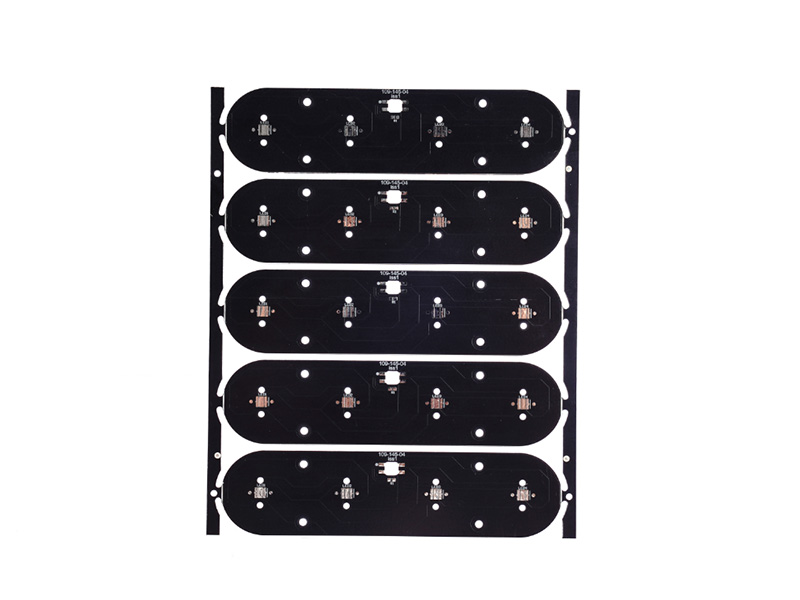
In conclusion, LED Wall Washer Light Aluminum PCB is a high-thermal PCB solution that helps architectural lighting fixtures achieve better heat dissipation, stronger reliability, and more stable long-term light performance. This article covered its structure, material system, thermal value, layout rules, use cases, supplier selection logic, and the manufacturing strengths needed for dependable project delivery.
EBest Circuit (Best Technology) provides professional support for aluminum PCB and LED lighting board manufacturing with practical engineering input, controlled production, and responsive service. For your next project, contact sales@bestpcbs.com.
FAQs About LED Wall Washer Light Aluminum PCB
Is Aluminum PCB Better Than FR4 For LED Wall Washer Lights?
In many high-power and outdoor wall washer applications, yes. Aluminum PCB offers better heat dissipation and usually supports more stable long-term LED performance.
What Copper Thickness Is Common For Wall Washer Light Boards?
1 oz and 2 oz are common choices. The right value depends on current, layout length, and thermal goals.
Can Aluminum PCB Be Used For Outdoor Architectural Lighting?
Yes. It is widely used in outdoor fixtures, especially when combined with good enclosure sealing and proper thermal contact design.
What Surface Finish Is Common For LED Aluminum PCB?
ENIG and HASL are both common. ENIG is often selected when better pad flatness and soldering stability are preferred.
Does Aluminum PCB Alone Solve All Thermal Problems?
No. The full fixture design also matters, including housing contact, screws, thermal interface material, and airflow conditions.
Is A Thicker Aluminum Base Always Better?
Not always. Thicker aluminum can improve rigidity, but the total thermal result depends on the full stackup and fixture design.
Can EBest Circuit (Best Technology) Support Custom LED Lighting PCB Projects?
Yes. We support custom aluminum PCB manufacturing and related PCB/PCBA needs for lighting applications. You can reach us at sales@bestpcbs.com.