





LTCC ceramic PCB is a multilayer ceramic substrate designed for compact, high-frequency, and high-reliability electronic applications. Best Technology provides custom LTCC ceramic solutions for RF modules, antennas, automotive electronics, communication devices, radar systems, and other advanced products.
Whether you need a compact multilayer ceramic substrate, embedded passive integration, or a stable platform for microwave and RF performance, our engineering team can support your project from design review to manufacturing.
What Is LTCC Ceramic PCB?
LTCC stands for Low Temperature Co-Fired Ceramic. It is made by printing conductive patterns on ceramic green sheets, stacking them layer by layer, filling vias, and co-firing the full structure at a relatively low temperature compared with traditional ceramic firing methods.
This process creates a dense and integrated ceramic substrate with excellent dimensional stability, good high-frequency performance, and strong suitability for miniaturized electronic modules.
Compared with conventional PCB materials, LTCC offers a more advanced packaging platform for applications that require smaller size, better electrical consistency, multilayer routing in limited space, embedded passive components, stable RF behavior, and reliable performance under temperature variation.
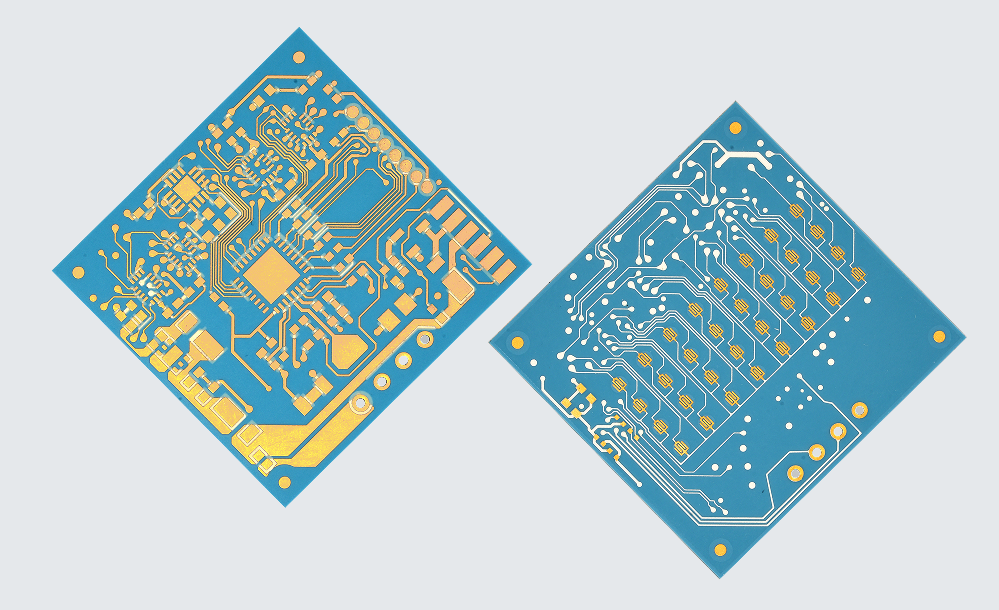
LTCC Ceramic PCB
Why Choose LTCC Ceramic PCB?
LTCC is widely used when standard PCB materials are no longer enough for the design target. It helps engineers combine electrical performance, compact layout, and functional integration in one substrate.
Key Benefits of LTCC Ceramic PCB
- High wiring density for multilayer compact designs
- Embedded passive components to save board space
- Good RF and microwave performance for signal-sensitive products
- Low thermal expansion for better dimensional stability
- Fine line capability for miniaturized circuits
- Strong integration potential for compact modules
- Reliable multilayer structure after co-firing
- Better thermal behavior than many traditional PCB platforms
For products where size, signal quality, and long-term reliability matter, LTCC is often a strong engineering choice.
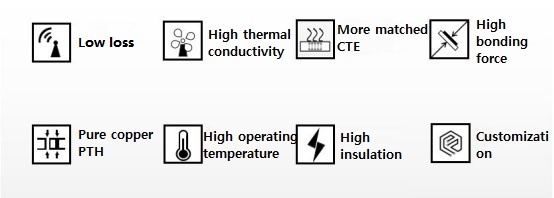
LTCC Ceramic PCB Features
Our LTCC ceramic substrates are designed for advanced electronic assemblies that need both performance and packaging efficiency.
Multilayer Ceramic Structure
LTCC supports multilayer circuit construction in a compact body. This makes it suitable for products where design space is limited but routing demand is high.
Embedded Passive Integration
Passive elements such as resistors, capacitors, and inductive structures can be integrated into the substrate. This reduces surface crowding and leaves more space for active components.
Good High-Frequency Performance
LTCC is well suited for RF and microwave circuits because it supports short signal paths and effective grounding structures. This is especially valuable in antenna modules, filters, duplexers, and RF front-end designs.
Stable Performance Across Temperature Changes
Ceramic materials offer good thermal and dimensional stability. This helps maintain consistent electrical performance in demanding working environments.
Compact and Lightweight Design Support
By moving more functions into the substrate itself, LTCC helps reduce overall module size and supports lightweight electronic packaging.
LTCC Ceramic PCB Manufacturing Process
LTCC production is a controlled multilayer ceramic process. Each step directly affects the reliability and final performance of the substrate.
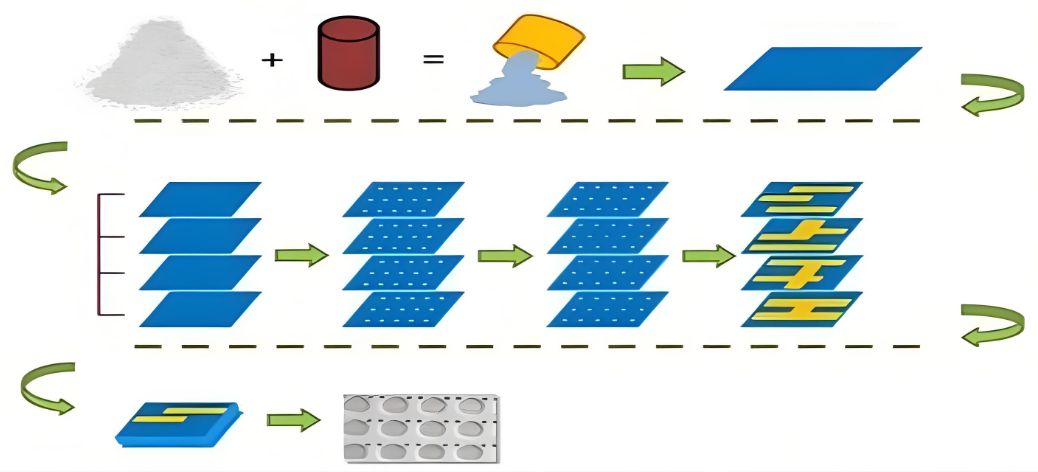
1. Ceramic Slurry Preparation Ceramic powder, glass materials, and organic binders are mixed into a stable slurry.
2. Tape Casting The slurry is cast into thin ceramic green tapes with controlled thickness.
3. Via Punching Via holes are formed in the green sheets to create vertical electrical connections between layers.
4. Via Filling The vias are filled with conductive material to ensure interlayer conductivity after firing.
5. Circuit Printing Conductive pastes and functional materials are printed onto the ceramic sheets.
6. Layer Stacking and Alignment Each printed sheet is stacked in the required sequence with precise alignment.
7. Lamination The stacked structure is laminated under pressure to build a stable green body.
8. Co-Firing The laminated ceramic body is fired at around 850°C to 900°C, forming a dense integrated ceramic substrate.
9. Inspection and Testing Finished LTCC parts go through electrical and process inspection to verify quality and function.
Typical Applications of LTCC Ceramic PCB
LTCC is widely used in industries that demand compact structure, stable electrical performance, and reliable multilayer ceramic technology.
- RF front-end modules
- Antennas
- Filters and duplexers
- Automotive electronics
- Radar systems
- Aerospace electronics
- Power base stations
- Communication equipment
- Microwave devices
- Industrial electronic modules
- High-density sensor packages
- Compact wireless devices
As devices move toward higher frequency and smaller form factors, LTCC continues to be a preferred option for many advanced electronic designs.
LTCC Ceramic PCB for RF and Microwave Applications
LTCC is especially valuable in RF and microwave products because of its structural and electrical advantages.
For high-frequency circuits, shorter signal paths and strong grounding are essential. LTCC makes both easier to achieve in a compact footprint. It also supports integrated module design, which helps reduce assembly complexity and improve overall package efficiency.
This is why LTCC is often used in RF filters, antenna modules, duplexers, amplifier modules, integrated front-end modules, and high-frequency communication products.
For engineers working on compact RF systems, LTCC provides a practical balance of electrical performance and package miniaturization.
LTCC Ceramic PCB vs Traditional PCB
| Item | LTCC Ceramic PCB | Traditional PCB |
|---|---|---|
| Base Material | Ceramic | Organic laminate |
| Structure | Multilayer co-fired ceramic | Layered laminate board |
| Embedded Passives | Available | Limited |
| High-Frequency Suitability | Excellent | Depends on material |
| Thermal Stability | High | Moderate |
| Size Reduction Potential | Strong | More limited |
| Integration Level | High | Lower |
| Dimensional Stability | Strong | Lower than ceramic |
LTCC is not a replacement for every board type, but it is a better fit when the design requires high integration, compact size, and stable RF performance.
Custom LTCC Ceramic PCB Services
At Best Technology, we support custom LTCC ceramic substrate projects for a wide range of industrial and electronic applications.
- Custom LTCC structure design
- Engineering review before production
- Via and multilayer layout support
- Embedded passive integration discussion
- Prototype and volume production support
- Electrical performance-focused process control
- Application-oriented technical communication
If your project requires a small ceramic module with reliable electrical performance, our team can help evaluate the right LTCC solution for your design.
Why Work With EBest Circuit (Best Technology)?
Choosing the right LTCC supplier is not only about price. It is also about process control, engineering support, and manufacturing consistency.
- 20+ years of PCB and PCBA manufacturing experience
- Support for ceramic PCB, MCPCB, FR4 PCB, and special PCB projects
- Engineering-based communication for custom applications
- Fast response for technical review and quotation
- Support from prototype to mass production
- One-stop service for PCB fabrication and assembly needs
- Experience serving customers in industrial, automotive, and high-performance electronics fields
We understand that advanced ceramic substrates require more than standard production capability. They require close engineering coordination, controlled manufacturing steps, and clear communication throughout the project.
FAQ
What is LTCC ceramic PCB?
LTCC ceramic PCB is a low temperature co-fired ceramic substrate made by stacking printed ceramic green sheets and firing them into one multilayer ceramic structure.
What is the firing temperature of LTCC?
LTCC is typically co-fired at around 850°C to 900°C.
Why is LTCC used in RF applications?
LTCC supports compact multilayer designs, short signal paths, and strong grounding performance, which makes it suitable for RF and microwave modules.
Can LTCC include embedded passive components?
Yes. LTCC technology can integrate passive components inside the ceramic substrate, helping save surface space.
What industries use LTCC ceramic substrates?
LTCC is widely used in communication, automotive, aerospace, radar, industrial electronics, and high-frequency electronic products.
Is LTCC better than FR4?
It depends on the application. For standard electronics, FR4 may be enough. For compact RF modules, ceramic stability, and high integration needs, LTCC is often the better option.
Request a Quote for LTCC Ceramic PCB
Looking for a reliable LTCC ceramic PCB manufacturer for your next RF, microwave, or compact electronic project?
Best Technology provides custom ceramic PCB support based on your design and application needs. Send us your Gerber files, drawings, or technical requirements, and our team will review your project and provide a suitable solution.
Email: sales@bestpcbs.com