





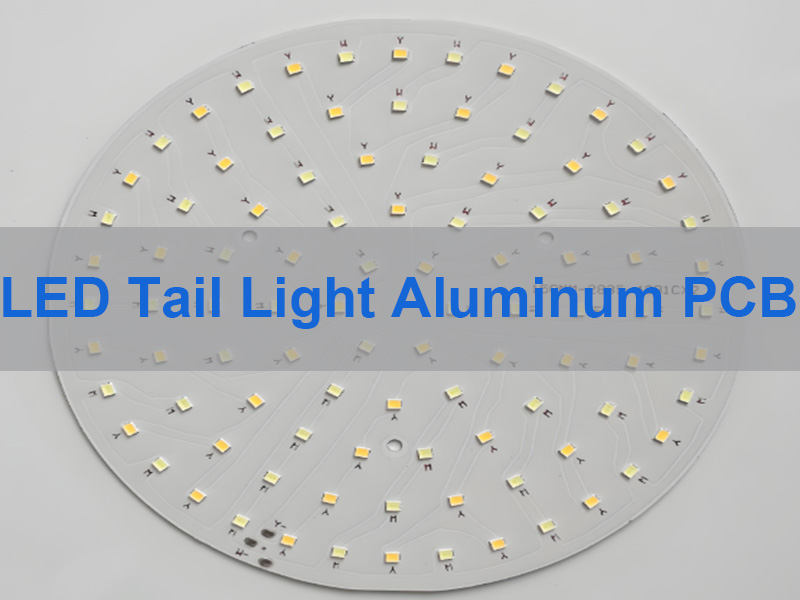
LED Tail Light Aluminum PCB is a thermally efficient metal-core PCB used in automotive rear lighting to carry circuits, support LEDs, and move heat away from the light source for safer and more stable performance. This article explains the common challenges in tail light PCB design, the matching manufacturing solutions, and the technical factors that matter when choosing the right aluminum PCB for automotive tail light applications.
Have you ever struggled with tail light boards that look acceptable in the prototype stage but later show heat buildup, uneven brightness, poor fit, or reliability concerns in real vehicle use?
- Heat stays trapped inside sealed tail light housings
- LEDs lose brightness after long operating hours
- Lamp structures are slim, but the PCB layout is crowded
- Vibration and temperature cycling reduce reliability
- Suppliers offer low prices but weak engineering support
Matching Manufacturing Solutions
- Use aluminum-based structures to improve heat transfer
- Optimize LED spacing and copper layout for thermal balance
- Adapt the PCB outline to compact lamp housing geometry
- Strengthen process control for automotive-grade consistency
- Provide DFM review before production to reduce hidden risks
EBest Circuit (Best Technology) is a professional PCB and PCBA manufacturer with strong experience in aluminum PCB fabrication for demanding lighting applications. We support customers from design review to production with practical engineering input, stable manufacturing control, and fast response for both prototype and volume projects. For automotive rear lighting programs, we focus on thermal design, dimensional accuracy, and dependable assembly quality to help customers reduce risk and improve product consistency. For project support or quotations, please feel free to contact us via sales@bestpcbs.com.
What Is LED Tail Light Aluminum PCB in Automotive Applications?
A LED Tail Light Aluminum PCB is a metal-core circuit board built for automotive rear lighting modules where heat, vibration, and space constraints must all be managed at the same time. In tail light systems, the PCB is not only a carrier for electrical traces. It also works as a thermal path and a structural support for the LED assembly.
The basic structure usually includes a copper circuit layer, a thermally conductive dielectric layer, and an aluminum base. The copper carries current and forms solder pads. The dielectric electrically isolates the circuit while allowing heat to pass downward. The aluminum base then spreads that heat more efficiently than a conventional FR4 substrate.
This is especially valuable in automotive tail lights because rear lamp housings are often enclosed and visually compact. Heat can accumulate around the LEDs, particularly in brake light or signal light zones with higher brightness demand. A board with better thermal conductivity helps protect light output stability and supports longer service life.
Core Functions of a LED Tail Light Aluminum PCB
| Function | Why It Matters |
|---|---|
| Circuit Support | Connects LEDs, resistors, drivers, and connectors |
| Heat Transfer | Moves heat away from LED junction areas |
| Mechanical Support | Holds components firmly in slim lamp structures |
| Dimensional Stability | Helps maintain fit in long or narrow housings |
| Reliability Support | Improves long-term performance in vehicle conditions |
In practical automotive use, this type of board may appear in brake lights, tail lamps, turn signals, rear combination lamps, and decorative rear lighting systems. Some projects also use LED Tail Light PCB Aluminum structures when thermal stability must be combined with a compact optical layout.
In short, a LED Tail Light Aluminum PCB is a functional part of the lighting system, not just a passive substrate. It supports thermal control, layout efficiency, and product durability at the same time.
Why Is Aluminum PCB for LED Tail Light Preferred for Heat Dissipation?
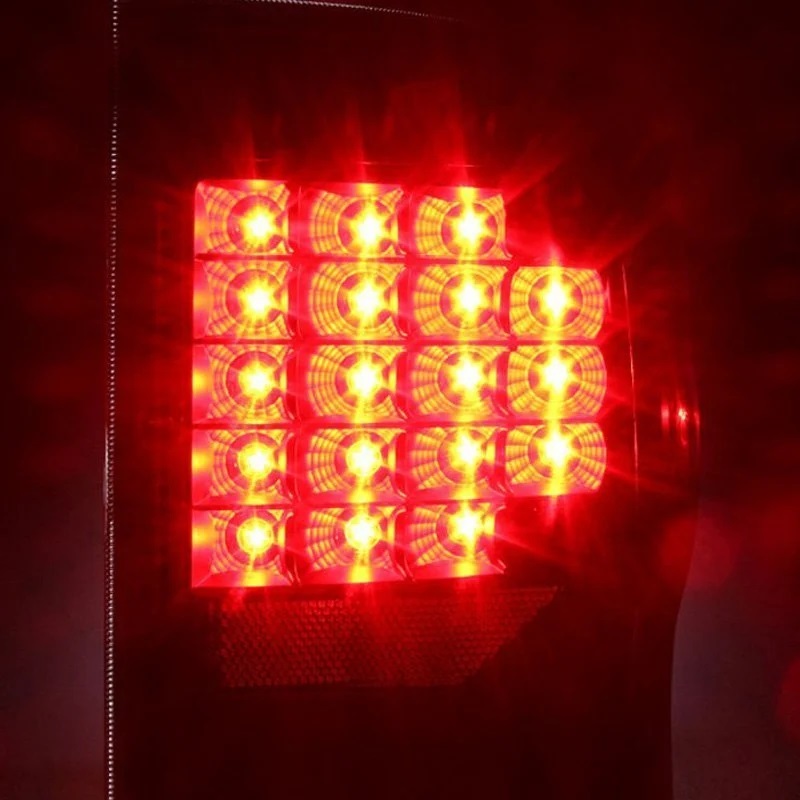
Aluminum PCB for LED Tail Light is preferred because thermal management is one of the most important design priorities in automotive rear lighting. LEDs are efficient light sources, but they still generate heat during operation. If that heat is not moved away quickly, the lamp can suffer from lower luminous efficiency, color inconsistency, and faster material aging.
In tail light assemblies, the challenge becomes more serious because the housing is often sealed and compact. Airflow is limited. Heat cannot escape easily. As a result, the PCB itself must become part of the thermal solution.
An aluminum-based structure helps by creating a shorter and more stable heat path. Instead of allowing heat to accumulate under the LED pad area, the board transfers it through the dielectric and into the aluminum base. That heat is then spread across a wider metal surface, reducing local hot spots.
Why Aluminum Performs Better in Tail Light Thermal Design
- Faster Heat Spreading
The metal base distributes heat more evenly across the board. - Lower Local Temperature Rise
Reduced hot spots help protect LEDs and solder joints. - Better Suitability for Sealed Housings
It supports thermal control even where airflow is limited. - More Stable Light Output
Lower junction temperature helps preserve brightness consistency. - Longer Service Life Potential
Thermal stress is reduced during repeated automotive use.
A simplified heat transfer relationship is often described as:
Q = k × A × ΔT / d
Where Q is heat flow, k is thermal conductivity, A is transfer area, ΔT is temperature difference, and d is thickness. This is one reason material choice and dielectric design matter so much in a Tail Light Aluminum Based LED PCB.
The thermal advantage does not come from aluminum alone. Good results also depend on dielectric conductivity, copper thickness, LED spacing, and contact with the lamp structure. Even so, aluminum gives the designer a much stronger thermal foundation.
To sum up, Aluminum PCB for LED Tail Light is widely preferred because it helps tail lights run cooler, shine more consistently, and remain more stable in real vehicle environments.
How Does Tail Light LED Aluminum PCB Improve Automotive Reliability?
A Tail Light LED Aluminum PCB improves automotive reliability by reducing thermal stress, supporting mechanical stability, and helping the full lighting module perform more consistently over time. In automotive use, reliability is not only about whether the light turns on. It is also about whether brightness, response, and appearance remain stable after years of heat, vibration, and weather exposure.
Tail lights are installed in an environment where road shock, temperature cycling, humidity, and long operating hours are all normal. A weak PCB structure may pass basic testing but later show solder fatigue, brightness drift, or intermittent electrical failure in the field. This is why the choice of board material has a direct effect on long-term reliability.
Reliability Benefits of Tail Light LED Aluminum PCB
- Reduced Thermal Fatigue
Lower operating temperature helps reduce stress on LEDs and solder joints. - Stronger Mechanical Base
The aluminum substrate offers better rigidity in long and narrow lamp boards. - More Stable Electrical Performance
Thermal balance supports more predictable LED behavior. - Improved Resistance to Temperature Cycling
A robust board structure helps the assembly cope with repeated heating and cooling. - Better Support for Automotive Assembly Consistency
Controlled board flatness and dimensional stability help improve SMT quality. - Lower Risk of Visible Performance Degradation
Reliable thermal design helps reduce patchy light output and uneven aging.
Typical Reliability Concerns and PCB Impact
| Reliability Issue | PCB Influence |
|---|---|
| Solder Joint Stress | Lower heat reduces fatigue risk |
| LED Light Decay | Better heat transfer slows degradation |
| Board Warpage | Metal base improves structural stability |
| Intermittent Function | Stable assembly supports reliable connection |
| Uneven Brightness | Thermal balance helps keep output uniform |
Many automotive projects also consider Tail Light LED PCB solutions during early development, but where thermal load is higher, an aluminum-based option is usually more practical. That is especially true in compact rear lamp modules with high LED density.
Overall, a Tail Light LED Aluminum PCB improves reliability because it supports both thermal and mechanical integrity, which are two of the most important factors in long-life automotive lighting.
What Design Factors Matter Most for LED Tail Light Aluminum Circuit Board?
Designing a LED Tail Light Aluminum Circuit Board requires more than simply placing LEDs on a metal-core substrate. The best results come from balancing thermal behavior, mechanical fit, manufacturability, and optical goals from the start of the design process.
A tail light board often needs to fit a narrow or curved housing, align with light guides or reflectors, and maintain consistent LED performance under long operating cycles. If the layout only focuses on electrical connection, the project can later face heat concentration, uneven brightness, or assembly difficulty.
Most Important Design Factors
- LED Spacing
LED density affects thermal concentration and light uniformity. - Copper Layout
Trace design should support both current flow and heat spreading. - Dielectric Performance
Thermal conductivity and thickness strongly affect heat transfer. - Board Shape and Tolerance
The PCB outline must match the lamp housing accurately. - Mounting Method
Contact points influence heat dissipation and mechanical stability. - Connector Position
Connector placement affects assembly efficiency and wiring path. - Surface Finish and Solderability
Stable pad quality supports reliable LED attachment.
Compact Design Review Table
| Design Factor | Main Concern | Engineering Priority |
|---|---|---|
| LED Layout | Hot spots | Thermal balance |
| Copper Thickness | Current and heat flow | Electrical + thermal support |
| Dielectric Layer | Heat transfer efficiency | Controlled thermal path |
| PCB Outline | Housing fit | Dimensional accuracy |
| Component Placement | Assembly access | Manufacturability |
| Mounting Contact | Heat escape route | Mechanical and thermal coupling |
A well-designed PCB for LED Tail Light Aluminum should also account for the real use condition of the lamp. For example, a decorative rear light bar may require a long narrow board, while a brake light module may need stronger thermal focus under higher brightness zones.
In summary, the most important design factors for a LED Tail Light Aluminum Circuit Board are the ones that connect thermal control, structural fit, and production stability into one coherent solution.
How Does PCB for LED Tail Light Support Compact Lamp Design?
A PCB for LED Tail Light supports compact lamp design by helping designers fit thermal performance, circuit routing, and LED placement into increasingly slim rear lighting housings. Modern automotive tail lights are often narrow, layered, and visually sharp. This makes internal space much more limited than in older lamp designs.
The challenge is that the lamp still needs to deliver stable brightness, proper heat dissipation, and reliable assembly quality. The PCB must therefore do more work in less space. It has to follow the lamp structure closely while still leaving enough room for connectors, resistors, drivers, and optical alignment.
How the PCB Helps Compact Tail Light Structures
- Supports Slim Board Profiles
Aluminum PCBs can fit narrow lighting layouts with better thermal support. - Allows Precise LED Positioning
Controlled placement helps match optical and styling requirements. - Reduces Need for Extra Thermal Parts
The board itself becomes part of the heat path. - Improves Structural Integration
The outline can be adapted to the housing shape more easily. - Supports Long and Irregular Geometries
Useful for modern light bar and segmented lamp concepts. - Helps Maintain Visual Uniformity
Stable thermal behavior supports more consistent illumination.
Compact Lamp Design Priorities
| Lamp Requirement | PCB Contribution |
|---|---|
| Slim Housing | Thin, shaped PCB layout |
| Tight Internal Space | Efficient component arrangement |
| Strong Styling Effect | Accurate LED alignment |
| Stable Heat Control | Aluminum base spreads heat |
| Easier Assembly | Better fit with lamp structure |
A PCB for Tail Light LED is especially helpful when the rear lamp uses multiple light functions in one housing. The PCB can support different LED zones while still fitting a tight structure. This becomes even more valuable in modern vehicles where rear lamp styling is part of the brand image.
Overall, a PCB for LED Tail Light helps compact lamp design by making the internal structure more efficient, more thermally stable, and easier to control in production.
Why Is PCB for Aluminum LED Tail Light a Good Fit for Modern Vehicles?
PCB for Aluminum LED Tail Light is a good fit for modern vehicles because today’s rear lighting systems demand higher thermal efficiency, thinner lamp profiles, and longer service life than before. Automotive lighting is no longer only functional. It is also part of styling, safety communication, and product identity.
Modern vehicles often use sleek rear lamp designs with continuous light bars, layered optics, and multiple LED functions in one module. These designs increase the need for a PCB that can support thermal performance without taking up too much space. Aluminum-based boards answer this need well.
Why Modern Vehicles Benefit from Aluminum-Based Tail Light PCBs
- They Support Slim and Premium Lamp Styling
Rear lights can remain compact without ignoring heat control. - They Match High LED Density Designs
More LEDs can be used in limited space more safely. - They Improve Thermal Stability in Sealed Housings
Important for modern enclosed lamp structures. - They Help Maintain Long-Term Appearance
Better thermal control supports steady brightness and color consistency. - They Suit EV and Advanced Vehicle Platforms
Modern vehicle programs often demand efficient and compact lighting systems. - They Support Scalable Production
Good material and process control help from prototype to mass production.
Why Aluminum Fits Current Automotive Trends
| Vehicle Trend | Why Aluminum PCB Helps |
|---|---|
| Slim Tail Light Styling | Better heat management in small spaces |
| Higher LED Count | Improved thermal spreading |
| Longer Service Expectations | Reduced thermal stress |
| Premium Visual Consistency | More stable light output |
| Platform Standardization | Easier engineering repeatability |
A PCB for Aluminum Tail Light LED is therefore not only a material choice. It is also a response to how automotive lighting has evolved. The board helps lighting engineers meet both performance and styling targets without introducing unnecessary complexity.
In conclusion, PCB for Aluminum LED Tail Light is a strong fit for modern vehicles because it supports the thermal, structural, and aesthetic demands of current automotive lamp design. EBest Circuit (Best Technology) is a trusted LED Tail Light Aluminum PCB manufacturer, specializing in waterproof, vibration-resistant, and thermally stable PCB solutions for reliable automotive tail light performance. We help customers improve signal clarity, product consistency, and long-term durability in demanding vehicle environments. A warm welcome to call us at +86-755-2909-1601 for your project discussion.
What Makes Aluminum Based PCB for LED Tail Lights Suitable for Long-Term Use?
An Aluminum Based PCB for LED Tail Lights is suitable for long-term use because it helps maintain lower working temperatures, stronger structural stability, and more consistent performance over the service life of the lamp. In automotive applications, long-term value comes from stability rather than short-term brightness alone.
A tail light may operate for years in changing climates, rough roads, and repeated stop-and-go cycles. Over time, heat and vibration become cumulative stress factors. If the PCB design is weak, the lamp may show faster LED aging, solder fatigue, or visible output inconsistency. A stronger thermal platform helps slow those effects.
Why Aluminum-Based Tail Light PCBs Last Longer
- Lower Average Operating Temperature
Cooler operation supports longer LED life. - Reduced Thermal Shock on Solder Joints
More stable heat distribution reduces fatigue. - Better Mechanical Strength
The metal base helps resist deformation. - Improved Performance Consistency
Thermal balance supports stable output across long use. - More Suitable for Repeated Automotive Cycles
Better endurance under vibration and temperature variation. - Stronger Base for High-Reliability Production
Controlled materials and process help improve field performance.
Long-Term Use Factors
| Long-Term Factor | Aluminum PCB Advantage |
|---|---|
| LED Aging | Lower junction stress |
| Solder Joint Life | Reduced thermal cycling damage |
| Structural Stability | Better rigidity |
| Visual Consistency | More stable brightness over time |
| Automotive Endurance | Better fit for harsh real-use conditions |
This is also why terms such as Aluminum Based PCB for LED Tail Lights and Aluminum Tail Light PCB are often associated with durable automotive lighting programs. The board material supports the long service expectation that vehicle manufacturers and end users both require.
To sum up, an Aluminum Based PCB for LED Tail Lights is suitable for long-term use because it supports heat control, structural integrity, and repeatable reliability throughout the life of the product.
How Do You Choose the Right Aluminum Tail Light PCB Supplier?
Choosing the right Aluminum Tail Light PCB supplier is critical because the final performance of the lamp depends not only on design, but also on manufacturing discipline, material consistency, and engineering support. A supplier that only offers low pricing without application knowledge may increase risk later in the project.
For automotive rear lighting, the supplier should understand heat dissipation, LED mounting quality, dimensional control, and the practical needs of lamp assembly. It is not enough to fabricate the board. The supplier should also know how the board behaves in a real automotive lighting module.
What to Check When Selecting a Supplier
- Application Experience
Look for experience in automotive lighting or metal-core LED boards. - Thermal Engineering Understanding
The supplier should understand dielectric choice, copper layout, and heat path design. - Manufacturing Capability
Check aluminum PCB fabrication, SMT quality, and process consistency. - DFM Support
Early review helps prevent hidden layout and assembly issues. - Quality Control System
Stable inspection and traceability reduce production risk. - Prototype-to-Volume Support
The supplier should support both development and scaling. - Communication Efficiency
Fast and clear technical feedback saves time in project revisions.
Quick Supplier Evaluation Table
| Supplier Check Point | Why It Matters |
|---|---|
| Aluminum PCB Experience | Reduces process errors |
| Thermal Design Knowledge | Improves heat performance |
| Dimensional Accuracy | Supports lamp housing fit |
| SMT Control | Protects LED assembly quality |
| DFM Review | Finds risk before production |
| Stable Delivery | Supports project schedule |
At EBest Circuit (Best Technology), we support customers with aluminum PCB manufacturing and PCBA service for thermally demanding LED applications. Our team focuses on practical design review, stable process control, and responsive project support to help automotive lighting customers move from concept to production more smoothly. For inquiries, please feel free to contact us via sales@bestpcbs.com.
Overall, the right Aluminum Tail Light PCB supplier should combine fabrication capability, thermal understanding, and dependable engineering support rather than competing on price alone.
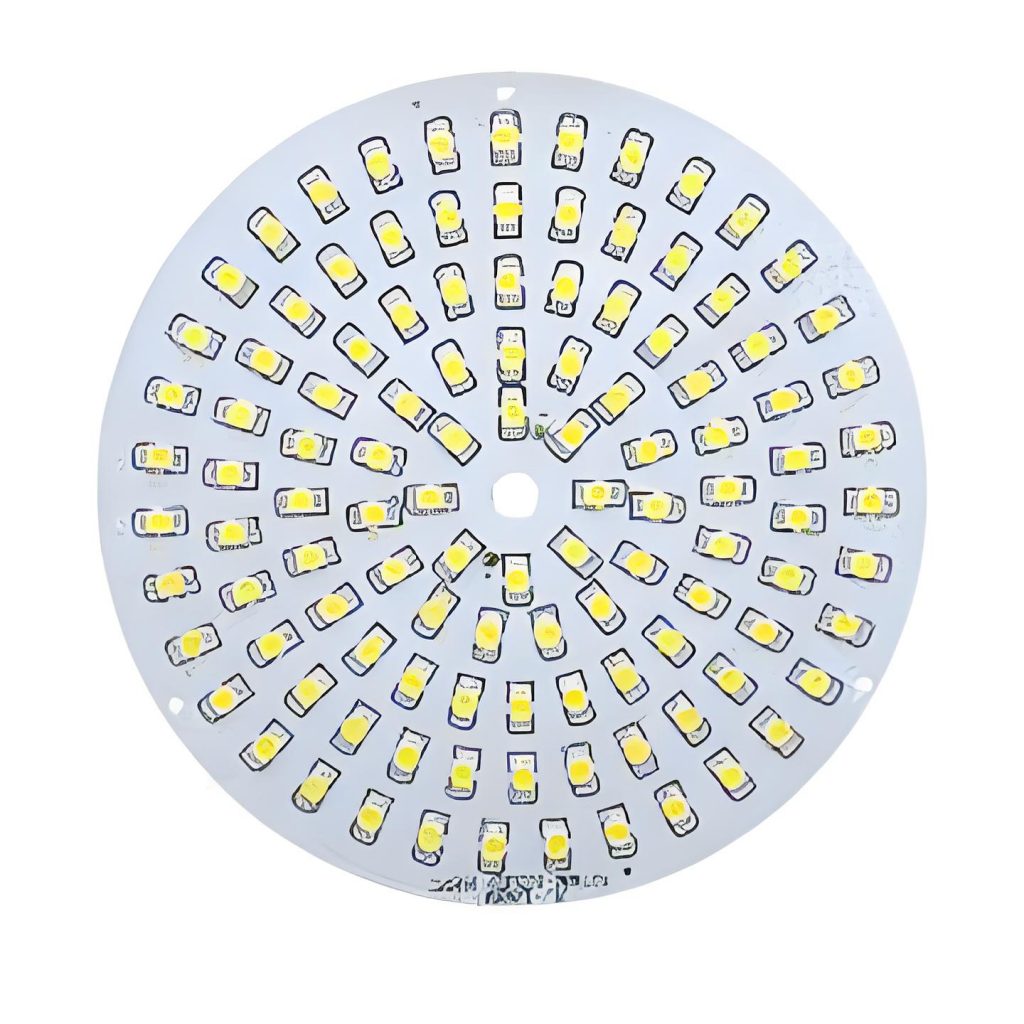
In a nutshell, LED Tail Light Aluminum PCB is a thermally efficient and structurally reliable PCB solution that helps automotive tail light systems achieve better heat dissipation, stronger durability, and more stable lighting performance. This article has explained the customer pain points, the matching manufacturing solutions, and the core design, reliability, and sourcing factors behind successful aluminum PCB use in modern vehicle tail lights.
EBest Circuit (Best Technology) offers practical engineering support, stable aluminum PCB manufacturing, and dependable PCBA capability for automotive LED lighting projects that require both thermal performance and production consistency. For quotations or technical support, please feel free to contact us via sales@bestpcbs.com.
FAQs About LED Tail Light Aluminum PCB
1. Why is aluminum preferred over FR4 for LED tail light PCBs?
Aluminum PCBs, also known as Metal Core PCBs (MCPCBs), offer superior thermal conductivity compared to standard FR4. In automotive LED tail lights, high-intensity LEDs generate significant heat. An aluminum base acts as a highly efficient heat sink, transferring heat away from critical components to prevent “thermal roll-off,” ensuring the LEDs maintain consistent brightness and a longer operational lifespan.
2. What is the typical thermal conductivity required for automotive LED PCBs?
For automotive applications like tail lights or brake lights, a thermal conductivity range of 2.0 W/m-K to 3.0 W/m-K is standard. While basic aluminum PCBs start at 1.0 W/m-K, the high-vibration and enclosed environment of a vehicle’s light housing often require high-thermal dielectric layers to ensure reliability under extreme temperature fluctuations.
3. Can aluminum PCBs support double-sided component mounting for tail lights?
Standard aluminum PCBs are typically single-sided because the metal base is conductive. However, for complex tail light designs requiring high component density, Double-Sided Aluminum PCBs can be used. These consist of two layers of copper circuitry with the aluminum core sandwiched in the middle, or a sophisticated multi-layer structure, allowing for complex signaling circuitry in a compact space.
4. How does vibration resistance affect the choice of LED tail light PCB materials?
Automotive PCBs must pass rigorous vibration and shock testing (such as ISO 16750). Aluminum PCBs are naturally more rigid than thin FR4 boards, providing better mechanical support for Surface Mount Technology (SMT) components. This prevents solder joint fatigue and cracking, which are common causes of failure in vehicle lighting systems exposed to constant road vibration.
5. What surface finishes are best for LED tail light aluminum boards?
HASL (Lead-Free) and OSP (Organic Solderability Preservatives) are common, but ENIG (Electroless Nickel Immersion Gold) is often preferred for high-end automotive lighting. ENIG provides a flat surface for precise LED placement and offers excellent oxidation resistance, which is vital for the long-term durability of safety-critical components like brake and signal lights.
6. Are there specific waterproof requirements for LED tail light PCBs?
While the PCB itself is not inherently waterproof, the aluminum substrate must be compatible with conformal coatings or potting compounds. Since tail light housings can experience moisture ingress or condensation, the aluminum PCB is typically treated with a silicone or epoxy coating to protect the circuitry from corrosion while still allowing the metal base to dissipate heat effectively.