





Regular Power LED Module Aluminum PCB is a thermally efficient circuit platform designed to support stable LED output, longer service life, and reliable performance across a wide range of general lighting applications. This article explains how it works, why it outperforms standard FR4 in thermal control, what materials and stackups matter most, when it should be used, and how to choose the right manufacturing partner for dependable production.
Are you dealing with thermal limits, brightness decay, short product life, or inconsistent quality in everyday LED module projects?
- Heat builds up too fast in compact LED modules
- Light output drops after long working hours
- FR4 boards struggle in higher-power lighting designs
- Product lifespan becomes hard to guarantee
- Supplier quality varies from batch to batch
A well-made board structure can solve these problems before they turn into field failures.
- Use aluminum base material to spread heat quickly
- Optimize dielectric and copper thickness for thermal flow
- Match stackup design to actual power density
- Control manufacturing consistency and inspection standards
- Work with an experienced PCB maker for stable delivery
EBest Circuit (Best Technology) is a professional PCB and PCBA manufacturer with nearly 20 years of experience in thermal management board production, including aluminum PCB, copper core PCB, heavy copper PCB, ceramic PCB, and LED module assembly support. We provide fast engineering feedback, practical DFM support, stable mass production, and one-stop service for global customers. For project inquiries, contact sales@bestpcbs.com.
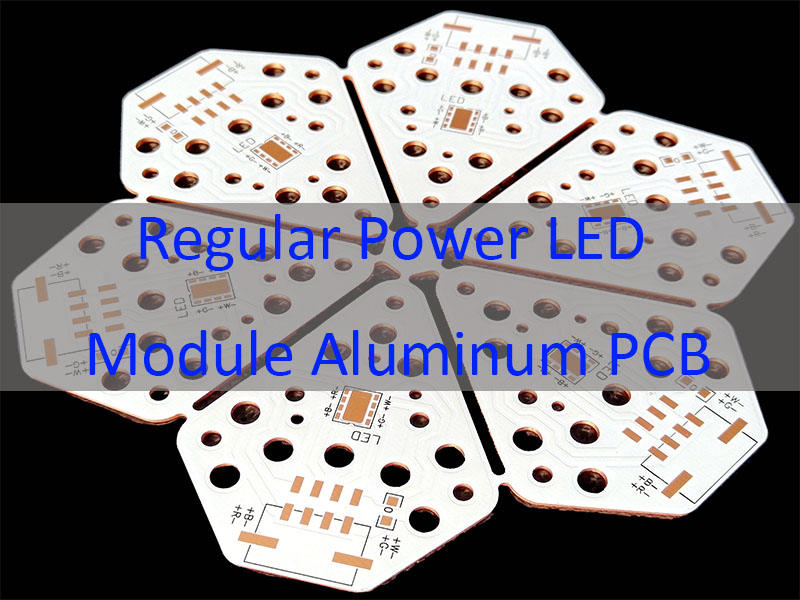
What Is Regular Power LED Module Aluminum PCB?
A Regular Power LED Module Aluminum PCB is a metal core printed circuit board built for LED modules operating at regular power levels where thermal stability still matters. It is widely used in ceiling lights, panel lights, downlights, wall lamps, street-side fixtures, signage modules, and other universal lighting products.
Unlike standard FR4 boards, this structure uses an aluminum base to move heat away from the LED junction more efficiently. Even when the LED is not classified as extremely high power, heat still affects lumen maintenance, color consistency, driver reliability, and overall service life. That is why regular power LED aluminum PCB module designs remain important in mainstream lighting.
A typical board has three functional layers: copper circuit, dielectric insulation, and aluminum base. The copper layer carries current and supports component mounting. The dielectric layer electrically isolates the circuit while allowing heat transfer. The aluminum base acts as the main heat spreader.
Typical Structure of Aluminum PCB for Regular Power LED Module
| Layer | Typical Material | Main Function |
|---|---|---|
| Circuit Layer | 1oz–3oz Copper | Electrical routing, soldering |
| Dielectric Layer | Thermal Insulation Resin | Heat transfer + isolation |
| Base Layer | Aluminum 5052 / 6061 / 1060 | Heat spreading, rigidity |
From an engineering view, the board does not only “hold LEDs.” It becomes part of the thermal system. Once the LED turns on, heat moves from the chip to the solder pad, then through the dielectric, and finally into the aluminum base. This shorter thermal path improves temperature control in a direct and predictable way.
In practical product development, this type of board is chosen because it balances cost, manufacturability, and thermal performance. It is not as expensive as ceramic in most cases, but it performs far better than ordinary FR4 for heat-sensitive LED applications.
In short, a Regular Power LED Module Aluminum PCB is a practical thermal solution for everyday LED products that still need stable performance, long life, and broad application flexibility.
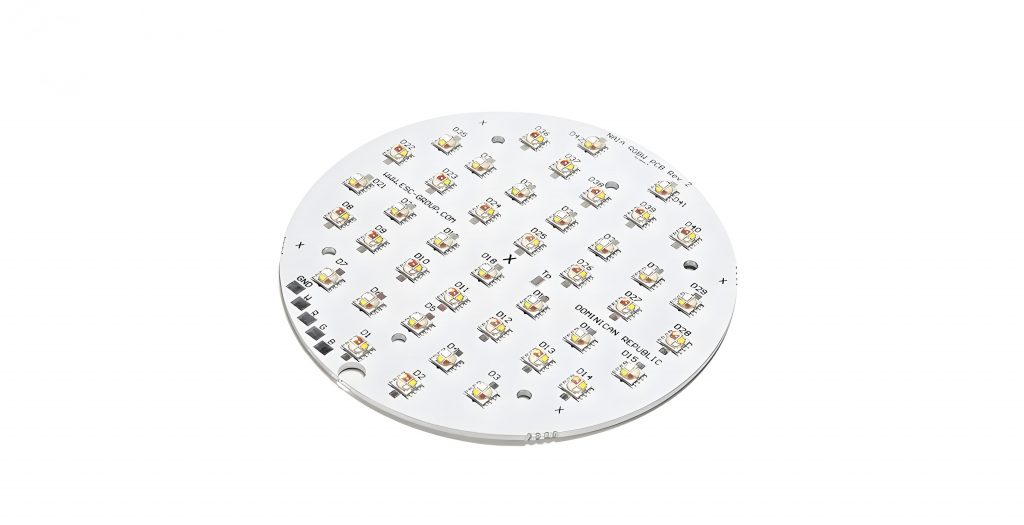
How Does Aluminum PCB For Regular Power LED Module Improve Heat Dissipation?
Thermal performance is the main reason designers select aluminum PCB for regular power LED module products. Even at moderate power levels, LED heat must be managed well. If not, the junction temperature rises, luminous efficiency drops, color shift becomes more obvious, and long-term reliability suffers.
The heat dissipation advantage comes from the physical structure. In FR4, heat spreads poorly through the substrate because the material has low thermal conductivity. In contrast, aluminum transfers heat much faster, allowing the board to act as both substrate and heat spreader.
A simplified thermal path looks like this:
LED Junction → Solder Pad → Copper Layer → Dielectric Layer → Aluminum Base → Housing / Air
The junction temperature relationship can be expressed simply as:
Tj = Ta + Pd × Rth
Where:
Tj = LED junction temperature
Ta = ambient temperature
Pd = dissipated power
Rth = total thermal resistance
The design goal is simple: reduce Rth as much as possible. A well-designed aluminum PCB for regular power LED module lowers thermal resistance by improving conduction through the board itself.
How Thermal Improvement Happens
- Aluminum base spreads heat quickly
Heat does not remain concentrated under the LED pad. - Thin dielectric reduces thermal barrier
A lower thermal resistance dielectric improves heat flow. - Copper thickness supports heat spreading
Heavier copper helps distribute local hot spots. - Direct board-to-housing contact improves system cooling
Mechanical fit matters as much as board material. - Uniform thermal design protects lumen stability
More even temperature means more stable light performance.
Typical Thermal Comparison
| PCB Type | Thermal Conductivity of Base/Substrate | Thermal Performance |
|---|---|---|
| FR4 PCB | ~0.3–0.4 W/m·K | Low |
| Aluminum PCB | ~1.0–3.0 W/m·K at dielectric path; aluminum base much higher | Good |
| Copper Core PCB | Higher than aluminum systems | Very High |
| Ceramic PCB | Very high, depending on material | Excellent |
The key point is that the LED board is part of the cooling architecture. A stronger thermal path means less stress on LEDs, solder joints, phosphor materials, and nearby driver components. This is especially useful in enclosed lamps or universal fixtures where airflow is limited.
So, the answer is not just that aluminum PCB “dissipates heat better.” It improves the whole thermal chain, which directly supports product consistency and longer service life.
Why Choose Regular Power LED Aluminum PCB Module Over FR4 PCB?
The comparison between a regular power LED aluminum PCB module and an FR4 board is not just about material preference. It is about matching the substrate to the thermal reality of LED operation.
FR4 is a good general-purpose PCB material. It is cost-effective, familiar, and widely used in electronics. But LEDs behave differently from many low-heat electronic components. They convert a meaningful part of electrical energy into heat, and that heat must leave the board efficiently. If the substrate becomes the thermal bottleneck, the full lighting design suffers.
That is where aluminum PCB becomes the more practical option.
Regular Power LED Aluminum PCB Module Vs FR4 PCB
| Item | Aluminum PCB | FR4 PCB |
|---|---|---|
| Heat Dissipation | Strong | Weak |
| Board Rigidity | High | Good |
| LED Lifespan Support | Better | Limited |
| High Ambient Tolerance | Better | Lower |
| Cost | Moderate | Lower |
| Best Use | LED thermal design | General electronics |
There are several reasons why aluminum PCB is usually preferred for regular power LED modules.
1. Better Thermal Margin
Even when power is not extremely high, regular-use LED products run for long hours. Aluminum gives more thermal headroom.
2. Longer Lumen Stability
Lower board temperature helps the LED maintain light output over time.
3. Improved Color Consistency
Excess heat often causes color drift. Thermal control helps reduce that risk.
4. Better Reliability In Closed Fixtures
Universal-use lighting often sits inside compact housings. That makes aluminum more suitable.
5. Reduced Dependence On Extra Heatsinks
In some designs, the board itself already handles a meaningful part of the cooling job.
Still, FR4 is not “wrong” in every case. It may work for very low-power LED indicators, control boards, or products where heat load is minimal. But once the module is expected to deliver stable illumination in practical field conditions, Regular Power LED Module PCB Aluminum becomes the more dependable choice.
The real decision is not about choosing the cheapest board. It is about choosing the substrate that protects the lighting system from early performance decline.
What Materials Are Used In Regular Power LED Module Aluminum PCB Stackup?
Material selection shapes the real-world performance of a Regular Power LED Module Aluminum PCB. A board may look simple from outside, but its thermal and mechanical behavior depends heavily on stackup choices.
The three key material areas are copper, dielectric, and aluminum base. Each one contributes to current handling, heat transfer, electrical isolation, and assembly stability.
Main Stackup Materials
| Stackup Part | Common Options | Design Purpose |
|---|---|---|
| Copper Foil | 1oz, 2oz, 3oz | Conductivity, heat spreading |
| Dielectric | 75μm–150μm thermal dielectric | Isolation + heat transfer |
| Aluminum Base | 0.8mm, 1.0mm, 1.5mm, 2.0mm | Heat spreading, strength |
| Surface Finish | HASL, ENIG, OSP | Solderability, shelf life |
| Solder Mask | White, Black, Green | Protection, reflectivity |
The dielectric layer is usually the most important part of stackup optimization. It must electrically isolate the copper circuit from the metal base, but it also needs to let heat pass through efficiently. In LED applications, lower thermal resistance is often more useful than simply chasing very high dielectric thickness.
Key Material Considerations
- Copper Thickness
Thicker copper reduces trace resistance and helps spread heat. - Dielectric Thickness
Thinner dielectric usually improves heat conduction, but electrical insulation must stay safe. - Dielectric Thermal Conductivity
Higher thermal conductivity materials can improve board performance. - Aluminum Thickness
Thicker base improves rigidity and thermal mass, but also affects weight and machining. - Surface Finish Choice
ENIG is often preferred for stable solderability and cleaner appearance.
For universal-use LED modules, common configurations include 1oz copper + thermal dielectric + 1.0mm or 1.5mm aluminum base. That gives a good balance between cost, heat control, and mechanical strength. For slightly denser designs, 2oz copper may be selected to improve current handling and pad heat spreading.
White solder mask is often used in LED modules because it improves reflectivity and supports light efficiency. Black solder mask may be selected for decorative or optical reasons, but it is less common in standard general-lighting modules.
So when discussing stackup, the goal is not to make the board “thicker” or “more advanced” by default. The goal is to align materials with actual LED power, enclosure design, and thermal target.
When Should You Use Aluminum PCB For Regular Power LED Module Applications?
Not every lighting product needs the same substrate. The decision to use aluminum PCB for regular power LED module applications depends on heat density, enclosure condition, expected lifetime, and product positioning.
In many universal-use lighting products, the power level is moderate, but the duty cycle is long. The lamp may run for many hours every day, often inside a compact or semi-enclosed housing. That operating pattern is exactly where aluminum PCB shows its value.
You should strongly consider aluminum PCB in the following scenarios.
When Aluminum PCB Makes Sense
- General lighting products with continuous working hours
- LED modules in compact housings with limited airflow
- Designs requiring stable brightness over long service time
- Products expected to pass stricter reliability requirements
- Applications where FR4 temperature rise is already too high
- Fixtures needing good cost-performance balance
- Lighting systems using the housing as part of the cooling path
Common Application Examples
| Application | Why Aluminum PCB Fits |
|---|---|
| Downlights | Compact structure, thermal concentration |
| Panel Lights | Stable long-hour operation |
| Ceiling Lights | Broad thermal spreading needed |
| Wall Lamps | Small enclosure, visible life stability |
| Signage Modules | Continuous operation |
| Decorative Lighting | Better reliability in slim form factors |
| Universal LED Modules | Cost and thermal balance |
A useful decision method is to ask three practical questions:
1. Will the module run for long periods?
If yes, thermal accumulation matters more.
2. Is airflow limited?
If yes, the board needs stronger conductive heat transfer.
3. Does the product need long lumen maintenance?
If yes, lower operating temperature becomes a design priority.
In universal-use products, the answer is often yes to all three. That is why Aluminum PCB For Regular Power LED Module projects are so common in the lighting market. They are not only for premium products. They are often the sensible middle ground between basic FR4 and more expensive high-end substrates.
In other words, use aluminum PCB when the LED module is expected to behave like a reliable lighting product, not just an electrical assembly.
How To Select A Reliable Regular Power LED Module Aluminum PCB Manufacturer?
Choosing the right manufacturer matters as much as choosing the right board structure. A strong design can still fail in production if the supplier lacks process control, material consistency, or thermal PCB experience.
A reliable Regular Power LED Module Aluminum PCB manufacturer should understand both PCB fabrication and LED application logic. This is not just about making a metal core board. It is about controlling dielectric quality, drilling, routing, solder mask performance, surface finish stability, and thermal consistency from batch to batch.
What To Check In A Manufacturer
| Check Point | Why It Matters |
|---|---|
| Aluminum PCB Experience | Reduces process risk |
| Material Traceability | Supports consistency |
| DFM Support | Improves manufacturability |
| Thermal Stackup Knowledge | Prevents overdesign or underdesign |
| QC System | Protects batch stability |
| Delivery Reliability | Helps launch schedules |
| Engineering Response | Solves issues faster |
A Good Supplier Should Offer
- Clear stackup recommendations
- Support for thermal and structural review
- Stable material sourcing
- Practical MOQ flexibility
- Prototype to mass production continuity
- Inspection records and traceability
- Responsive engineering communication
You should also ask specific questions before placing volume orders:
- What aluminum base options do you support?
- What dielectric thickness and thermal conductivity ranges do you offer?
- Can you control flatness well for LED module assembly?
- Which surface finish is most suitable for my LED pads?
- Do you provide DFM review before fabrication?
- Can you support PCBA if needed later?
A supplier that answers these clearly is usually more dependable than one that only gives a price. In LED module projects, hidden quality variation often appears later in the field as hot spots, pad issues, assembly variation, or service life complaints.
So the best manufacturer is not simply the cheapest one. It is the one that understands thermal PCB production as a system and can keep your design stable from prototype to volume shipment.
Why Choose EBest Circuit (Best Technology) For Manufacturing Regular Power LED Module Aluminum PCB?
EBest Circuit (Best Technology) is well positioned for Regular Power LED Module Aluminum PCB production because we combine PCB manufacturing experience with practical thermal design understanding and one-stop project support.
We are not just supplying boards. We help customers reduce thermal risk, improve manufacturability, and move projects faster from concept to finished product. For universal-use LED modules, that matters because the design must balance performance, cost, and production repeatability.
Why Customers Work With Us
- Nearly 20 years of PCB manufacturing experience
- One-stop support from PCB to PCBA
- Fast DFM and engineering feedback
- Stable quality systems and process control
- Experience with aluminum PCB and thermal boards
- Flexible support from prototype to volume
- Global service with responsive communication
Our Manufacturing Support For LED Module Projects
| Capability | Support Range |
|---|---|
| Board Type | Aluminum PCB, Copper Core PCB, FR4, Ceramic PCB |
| Copper Thickness | Typical 1oz–3oz for LED modules |
| Surface Finish | ENIG, HASL, OSP and more |
| Assembly Support | SMT, THT, testing |
| Engineering Service | DFM, stackup review, process advice |
| Production Stage | Prototype, pilot run, mass production |
For regular power LED module projects, we help customers choose suitable base thickness, dielectric structure, copper weight, and surface finish without unnecessary complexity. That keeps the board practical for universal use while still delivering reliable thermal results.
We also understand that customers do not only care about board specs. They care about delivery, communication, repeatability, and after-sales support. That is why our process is built around engineering coordination and production visibility.
If you are developing a regular power LED aluminum PCB module and need a dependable manufacturing partner, contact sales@bestpcbs.com.
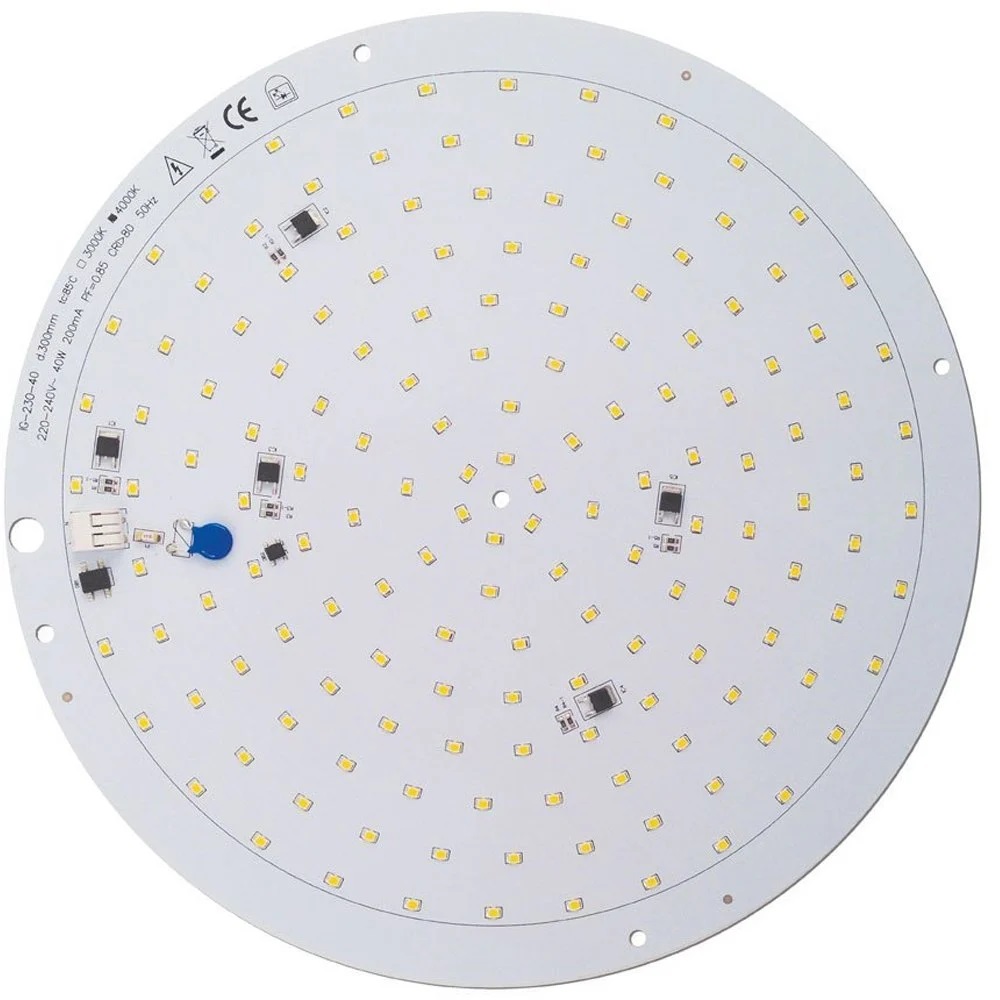
To sum up, regular Power LED Module Aluminum PCB is a practical thermal platform that improves heat control, supports stable light performance, and helps universal-use LED products achieve longer and more reliable service life. This article has covered its structure, thermal advantages, material stackup, application scenarios, supplier selection logic, and the manufacturing value that EBest Circuit brings to LED module projects.
EBest Circuit (Best Technology) offers strong experience in aluminum PCB manufacturing, practical engineering support, stable production control, and one-stop PCB plus PCBA service for lighting applications. For your next project, contact sales@bestpcbs.com.
FAQs About Regular Power LED Module Aluminum PCB
Is Regular Power LED Module Aluminum PCB only used for high-power LEDs?
No. It is also widely used for regular power modules when long operating time, compact structure, or stable thermal control is required.
Can aluminum PCB replace FR4 in all LED designs?
Not always. FR4 can still work for very low-power or non-thermal-critical circuits. But for practical lighting modules, aluminum PCB is often the better choice.
What is the most common aluminum thickness for LED modules?
1.0mm and 1.5mm are both common, depending on mechanical and thermal requirements.
Which surface finish is often used for LED aluminum PCB?
ENIG is widely used because it offers stable solderability and good pad quality. HASL may also be used in suitable designs.
Does thicker aluminum always mean better heat dissipation?
Not necessarily. The dielectric layer often has a stronger impact on thermal resistance. Good stackup design is more important than simply increasing thickness.
Can EBest Circuit support both PCB fabrication and assembly?
Yes. We provide one-stop PCB and PCBA support, which helps customers simplify supplier management and shorten project cycles.