





IATF16949 automotive MCPCB refers to metal core printed circuit boards manufactured under the rigorous International Automotive Task Force quality management standard, ensuring reliability for critical vehicle systems. This article explores why this certification matters, how it differs from standard PCBs, and what benefits it brings to Tier 1 suppliers in advanced automotive applications.
For Tier 1 automotive suppliers, sourcing reliable circuit board partners is increasingly challenging. As vehicles integrate more electronics—from ADAS to EV powertrains—the margin for error shrinks. Many buyers struggle with inconsistent quality, poor thermal performance, and lack of traceability from their current PCB vendors.
challenges when sourcing automotive
Are you facing these common challenges when sourcing automotive MCPCBs?
- Inconsistent board quality leading to field failures
- Poor thermal management causing component overheating
- Lack of full material and process traceability
- Delays due to non-compliant documentation or audits
- Limited supplier capability for high-volume, high-reliability runs
We address these issues through a certified, process-driven approach tailored for automotive demands.
- Strict IATF16949-controlled production with PPAP support
- Optimized MCPCB stack-ups for superior heat dissipation
- Full lot traceability with serialized documentation
- Dedicated quality engineers for audit-ready compliance
- Scalable capacity for mass production with zero-defect focus
EBest Circuit (Best Technology) is a professional IATF16949 automotive MCPCB manufacturer with years of experience serving global Tier 1 suppliers. We specialize in high-reliability metal core PCBs for automotive lighting, power modules, and ADAS systems. Our facility is IATF16949 certified, ISO 9001 registered, and equipped with advanced thermal testing capabilities. Contact us at sales@bestpcbs.com for technical consultation or quotes.
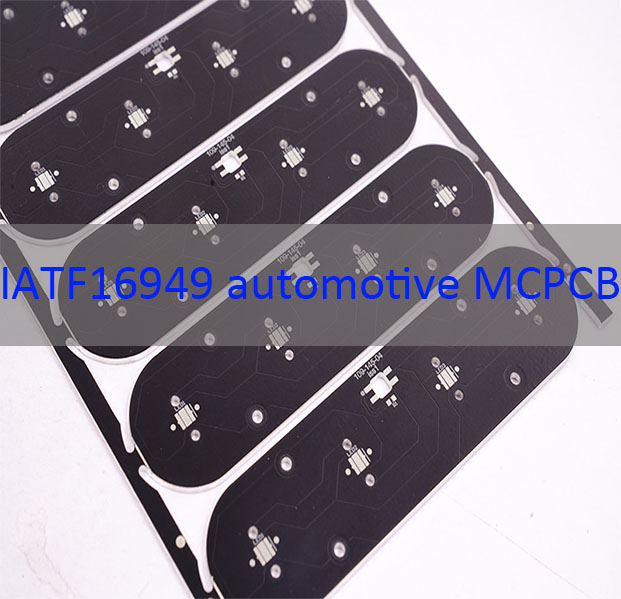
What Is IATF16949 Automotive MCPCB and Its Core Standards?
This section defines what makes an IATF16949 automotive MCPCB unique and outlines the core standards that govern its production.
An IATF16949 automotive MCPCB is a metal core printed circuit board produced under the IATF16949 quality management system—a globally recognized standard for automotive supply chains. Unlike general PCB manufacturing, this certification enforces strict process controls, risk management, and continuous improvement protocols.
| Core Standard | Requirement | Impact on MCPCB |
|---|---|---|
| APQP | Advanced product quality planning | Ensures design robustness before production |
| PPAP | Production part approval process | Validates consistency for mass production |
| FMEA | Failure mode and effects analysis | Identifies and mitigates potential defects |
| SPC | Statistical process control | Maintains tight tolerance during fabrication |
| MSA | Measurement system analysis | Guarantees inspection accuracy |
In summary, IATF16949 transforms MCPCB manufacturing from a transactional process into a controlled, auditable system designed for automotive safety and reliability.
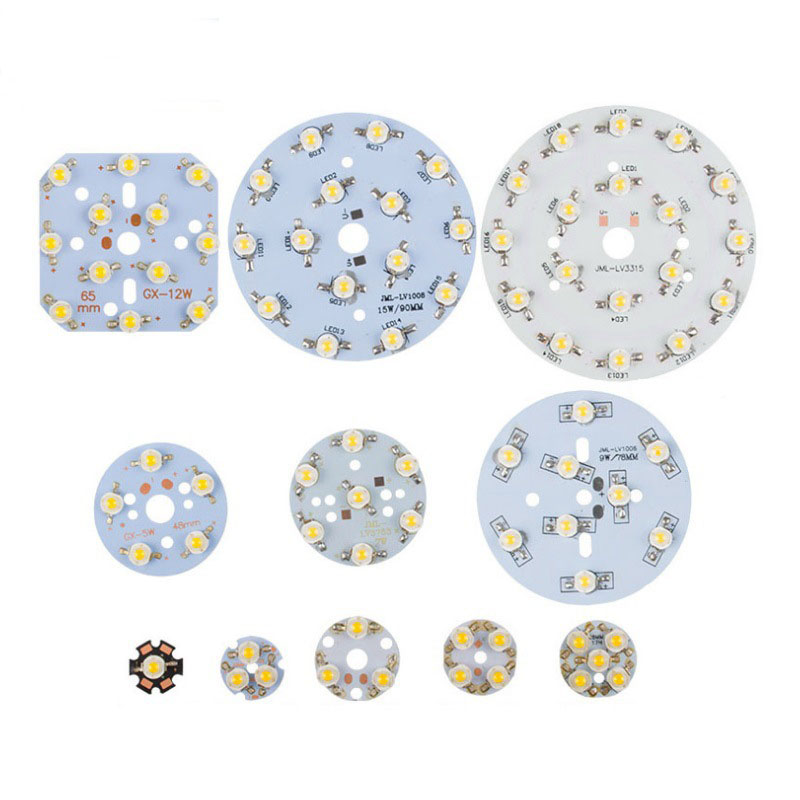
Why Is IATF16949 Certification Critical For Automotive MCPCB Suppliers?
Certification is not optional—it’s a prerequisite for supplying Tier 1 automotive manufacturers.
Without IATF16949, suppliers cannot meet OEM requirements for quality assurance, traceability, or risk management. The certification demonstrates a supplier’s ability to deliver consistent, defect-free products under high-volume conditions. It also aligns with functional safety standards like ISO 26262 by enforcing disciplined change control and documentation.
Key reasons include:
- Mandatory for Tier 1 and OEM approval
- Reduces warranty claims and recalls
- Enables access to global automotive supply chains
- Builds trust through auditable quality systems
- Supports compliance with regional regulations (e.g., EU, US, China)
Ultimately, IATF16949 certification signals that a supplier is qualified to support safety-critical automotive applications.
What Are The Key Benefits Of Using IATF16949 Automotive MCPCB In Advanced Driver-Assistance Systems?
ADAS systems demand extreme reliability—making IATF16949 automotive MCPCB essential.
These systems operate in harsh environments with high thermal loads and vibration. An IATF16949-certified MCPCB ensures stable electrical performance and thermal conductivity under stress. Benefits include:
- Enhanced thermal management for LED drivers and sensors
- Reduced failure rates in radar and camera modules
- Compliance with automotive EMC and safety standards
- Improved signal integrity for high-speed data transmission
- Long-term reliability validated through accelerated life testing
By using certified MCPCBs, ADAS developers minimize risk while meeting stringent OEM specifications.
What Makes IATF16949 Automotive MCPCB Different From Standard PCBs In Automotive Manufacturing?
The difference lies in process discipline and quality assurance.
While standard PCBs may meet basic functionality, IATF16949 automotive MCPCBs are built for zero-defect expectations. Below is a comparison:
| Feature | Standard PCB | IATF16949 Automotive MCPCB |
|---|---|---|
| Quality System | ISO 9001 | IATF16949 + ISO 9001 |
| Traceability | Lot-level | Serialized, full material history |
| Defect Rate Target | <500 PPM | <50 PPM (or zero ppm for critical parts) |
| Documentation | Basic COC | PPAP, FMEA, control plans |
| Change Management | Informal | Controlled, documented, approved |
This distinction ensures that automotive MCPCBs perform reliably over a vehicle’s lifetime.
How Should You Optimize Layout Design for IATF16949 Automotive MCPCB to Ensure Thermal and Electrical Stability?
Optimizing layout is critical to leverage the full benefits of metal core technology.
Designers must balance thermal paths, electrical routing, and manufacturability. Key optimization strategies include:
- Place high-power components directly over the metal core
- Use thermal vias to transfer heat efficiently
- Minimize trace lengths for high-current paths
- Apply copper balancing to prevent warpage
- Follow DFM guidelines aligned with IATF16949 processes
Proper layout design ensures the IATF16949 automotive MCPCB delivers both thermal and electrical stability in demanding applications.
How Do Process Control and Traceability Systems Impact the Quality of IATF16949 Automotive MCPCB Production?
Process control and traceability are the backbone of IATF16949 compliance.
Every step—from laminate incoming inspection to final test—is monitored and recorded. This enables:
- Immediate root cause analysis if deviations occur
- Prevention of counterfeit or non-conforming materials
- Consistent replication of proven processes
- Audit-ready documentation for customer reviews
- Continuous improvement through data-driven insights
These systems ensure that every IATF16949 automotive MCPCB meets exact specifications batch after batch.
Why Choose EBest Circuit (Best Technology) for IATF16949 automotive MCPCB Fabrication?
We combine certification, expertise, and responsiveness to serve Tier 1 suppliers.
Our advantages include:
- Fully IATF16949 certified production lines
- In-house thermal simulation and testing
- Fast prototyping to mass production scalability
- Engineering support for DFM and thermal optimization
- Proven track record with global automotive customers
Contact sales@bestpcbs.com to discuss your next automotive MCPCB project.
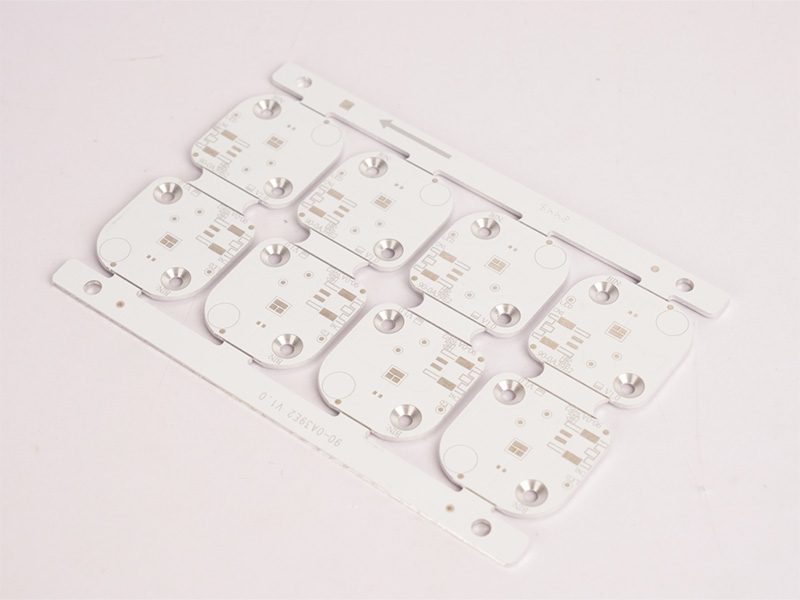
To sum up, IATF16949 automotive MCPCB represents the gold standard for circuit boards used in safety-critical vehicle systems, combining thermal performance with certified quality management. This article covered the standards, benefits, design considerations, and process controls that make these boards essential for Tier 1 suppliers. EBest Circuit (Best Technology) stands ready to support your automotive projects with certified, reliable MCPCB solutions. Reach out to our team at sales@bestpcbs.com for expert assistance.
FAQs About IATF16949 automotive MCPCB
Q: Can I get PPAP documentation for IATF16949 automotive MCPCB?
A: Yes, we provide full PPAP packages including FMEA, control plans, and test reports.
Q: What metals are used in automotive MCPCBs?
A: Aluminum and copper are most common; selection depends on thermal and cost requirements.
Q: Are these boards suitable for EV applications?
A: Absolutely—they are widely used in battery management systems and motor controllers.
Q: How do you ensure traceability?
A: Each panel is laser-marked with a unique serial number linked to material and process data.
Q: What is your typical lead time?
A: Prototypes in 5–7 days; mass production based on volume and complexity.