PCB manufacturing PCB manufacturing
Home > Blog

how can some inductors be active and others passive

What Is Active and Passive Components?
Wednesday, March 18th, 2026

Understanding active and passive components is essential for designing reliable circuits. Whether you work in consumer electronics, automotive, or industrial systems, mastering active and passive components helps you choose the right parts for performance, cost, and longevity. This guide breaks down everything you need to know about active and passive components, from definitions to real-world applications.
What Is Active and Passive Components?

What Are Active Components in Electronics? Definition & Examples

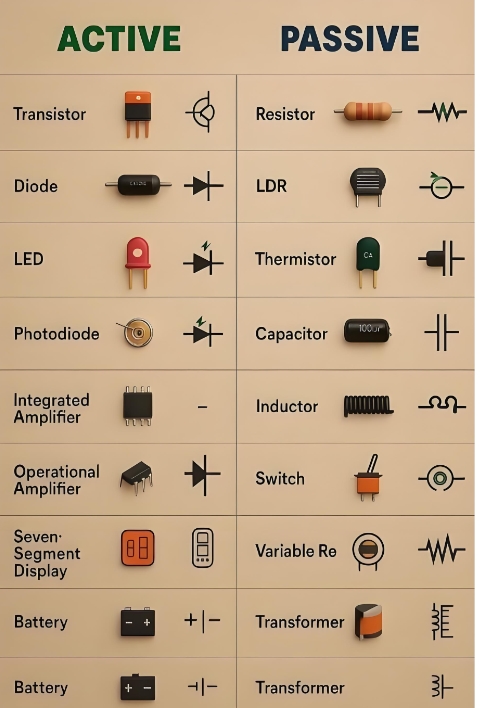
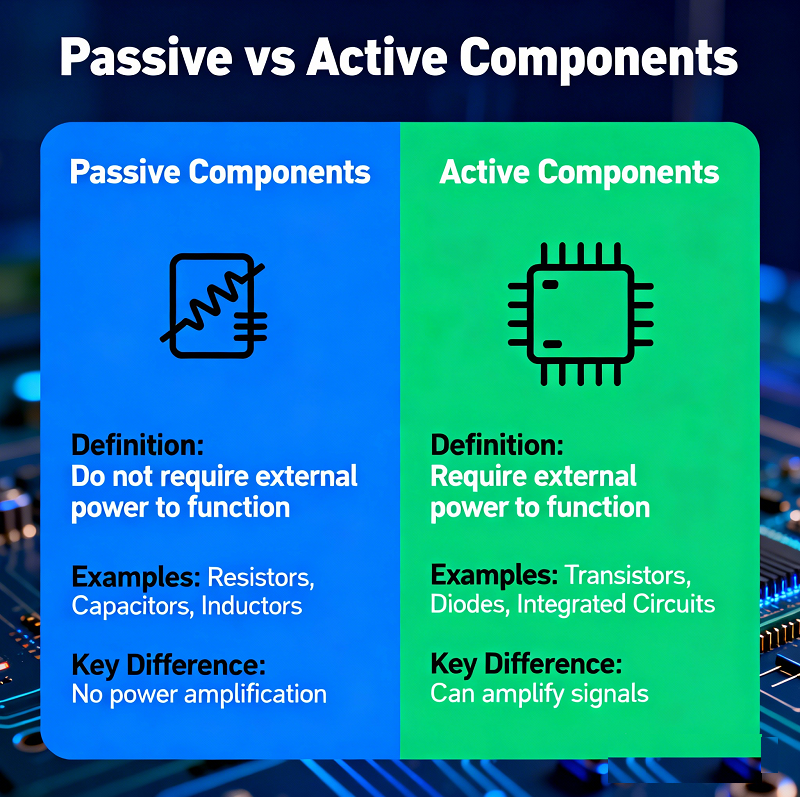
Active components need an external power source to function. They control or amplify electrical signals, making them critical for circuit performance.

Common examples of active components include transistors, ICs (integrated circuits), diodes, LEDs, and relays.

These components are the “workhorses” of active and passive components in PCB design, enabling signal amplification and precise control in all electronic devices.

What Are Passive Components in Electronics? Definition & Examples

Passive components do not need external power to operate. They store or dissipate energy without amplifying signals, supporting the core function of active components.

Common examples of passive components include resistors, capacitors, inductors, and transformers.

They are essential for active and passive components for circuit design, handling filtering, timing, load matching, and energy storage.

What Is the Difference Between Active and Passive Components? Comparison Table

Knowing the key differences between these components ensures you select the right parts for your project. Below is a detailed comparison of active vs passive components.

FeatureActive ComponentsPassive ComponentsCommon Use Case
Power RequirementNeeds external power to operateNo external power requiredAll electronic circuits
Core FunctionAmplify, switch, or control electrical signalsStore, dissipate, or transfer energySignal management and power regulation
ExamplesTransistors, ICs, diodes, LEDs, relaysResistors, capacitors, inductors, transformersPCB design and circuit assembly
Energy RoleSupplies energy to the circuitUses or reserves energy from the circuitPower systems and signal processing

What Are the Advantages and Disadvantages of Active Components?

Understanding the advantages of active components and their limitations helps you make informed design decisions.

Advantages: High performance, signal amplification, precise control over circuit behavior, and ability to switch signals quickly.

Disadvantages: Higher cost compared to passive components, requires external power, and adds complexity to PCB design.

What Are the Advantages and Disadvantages of Passive Components?

The advantages of passive components make them indispensable for reliable, cost-effective circuits.

Advantages: Low cost, simple design, high reliability, no external power needed, and long service life.

Disadvantages: No signal amplification capability, limited function, and fixed electrical parameters that cannot be adjusted.

How to Choose Between Active and Passive Components?

Selecting between active and passive components depends on your circuit’s specific needs.

Use active components for amplification, switching, or signal control—ideal for circuits that need to boost or modify signals.

Use passive components for filtering, timing, load matching, or energy storage—critical for stabilizing circuits and managing power flow.

Active and Passive Components in PCB Design (Top 4 Industries)

Consumer Electronics

Smartphones, tablets, and wearables rely on active and passive components in consumer electronics.

ICs (active) and capacitors (passive) are used to ensure small size, low power consumption, and stable performance.

Automotive Electronics

EV controllers, infotainment systems, and safety modules use active and passive components in automotive electronics.

Transistors (active) and power resistors (passive) meet high reliability and temperature resistance standards for vehicle environments.

Industrial Control & Automation

PLCs (Programmable Logic Controllers) and factory automation systems use active and passive components in industrial electronics.

Relays (active) and inductors (passive) provide signal isolation and stability in harsh factory conditions.

Medical Electronics

Patient monitors, diagnostic devices, and medical implants use active and passive components in medical devices.

Op-amps (active) and precision passive components comply with strict safety and accuracy regulations for medical applications.

How to Identify Active and Passive Components?

Identifying active and passive components is simple with these key indicators.

Active components: Require a power pin or connection (e.g., ICs with VCC pins, transistors with base/emitter pins).

Passive components: No power connection needed (e.g., resistors with two leads, capacitors with two terminals).

Common Failures of Active & Passive Components & Fixes

Even high-quality active and passive components can fail—here’s how to troubleshoot and fix common issues.

Active components: Overheating or voltage damage → Use proper cooling solutions and voltage protection circuits.

Passive components: Parameter drift or short circuits → Select high-quality, rated parts from reliable suppliers.

How Do Active & Passive Components Affect PCB Quality & Supply Chain?

The quality of active and passive components directly impacts PCB performance and supply chain stability.

Quality: Choose certified components to ensure long-term reliability and compliance with industry standards.

Supply chain: Select widely available parts to avoid delays—EBest ensures a stable supply chain for electronic components.

Latest Trends for Active and Passive Components (2026)

The types of active and passive components with examples are evolving to meet industry demands in 2026.

Miniaturization: Smaller component packages for compact PCBs in consumer and medical devices.

High reliability: Automotive and medical grade components with enhanced durability and performance.

Sustainability: Low-power active components and eco-friendly passive components to reduce energy consumption.

FAQ: Frequently Asked Questions About Active and Passive Components

Is a transistor active or passive component?

A transistor is an active component. It requires external power to amplify or switch electrical signals, which is a key characteristic of active components.

Is a resistor active or passive component?

A resistor is a passive component. It dissipates energy as heat and does not require external power to operate, fitting the definition of passive components.

Is a capacitor active or passive?

A capacitor is a passive component. It stores electrical energy and releases it as needed, without requiring external power to function.

Do active components need power?

Yes, active components need external power. They cannot amplify or control signals without a power source, unlike passive components.

Do passive components need a power supply?

No, passive components do not need a power supply. They operate using the energy available in the circuit, such as storing or dissipating energy from active components.

Why are active and passive components important?

Active and passive components are important because they work together to create functional electronic circuits. Active components provide control and amplification, while passive components stabilize and support signal flow.

Active vs passive components which is better?

Neither is “better”—they serve different purposes. Active components are essential for signal control/amplification, while passive components are critical for stability and energy management. Both are required for most circuits.

Summary: Master Active and Passive Components for Better PCBs

active and passive components form the foundation of all electronic circuits. The function of active and passive components works in harmony to ensure circuits perform reliably, efficiently, and cost-effectively.

Correct selection of active and passive components improves PCB quality, reduces failures, and ensures your device meets industry standards.

EBest provides high quality PCB with active and passive components and reliable active and passive components for PCB manufacturing. We specialize in PCB manufacturing with active and passive components and custom PCB using active and passive components, with a stable supply chain and on-time delivery. If you need high-quality components and PCB solutions, place your order with us. Email us at sales@bestpcbs.com for inquiries and quotes.
How Can Some Inductors be Active and Others Passive?
Friday, December 12th, 2025

How Can Some Inductors be Active and Others Passive? An inductor is traditionally viewed as a passive part that stores energy in a magnetic field. Yet engineers often encounter the term “active inductor” in RF design, analog circuits, and integrated systems. This raises a natural question: how can an inductor be both passive and active?

The answer lies in understanding the physical nature of real inductors and how active circuits replicate inductive behavior using transistors. Both serve important roles, but for very different reasons.

What Defines a Passive vs Active Component?

What Defines a Passive vs Active Component?

A passive component does not generate or amplify energy. It reacts directly to the applied electrical stimulus and cannot increase a signal’s power. Examples include resistors, capacitors, and classical inductors. They contribute predictable impedance but do not require an external power rail.

Active components, such as transistors, op-amps, and ICs, control current flow and may provide amplification or buffering. They need supply voltage and can introduce gain, shaping the signal beyond what passive parts can offer.

Understanding this boundary clarifies the discussion: a real inductor made from a coil is always passive. A circuit that imitates an inductor using active devices can appear inductive, but it is not passive. If you want to know more about active vs passive components, you can read our another post: Key differences between active and passive components

Are Inductors Active or Passive?

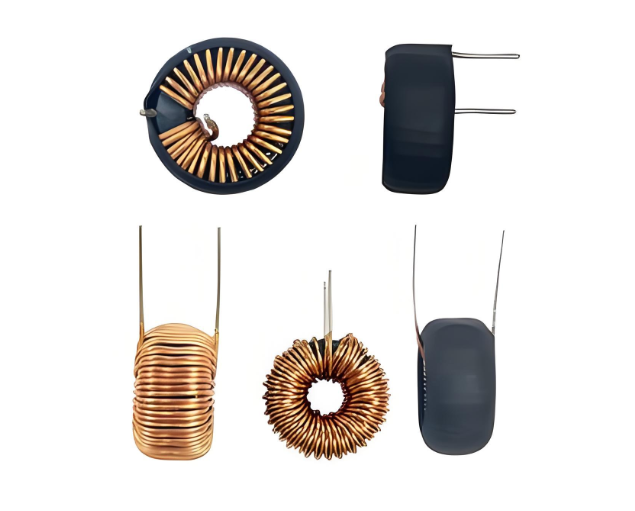
Inductors are passive components. A real inductor does not need an external power supply and cannot amplify signals—it simply stores energy in a magnetic field when current passes through it. Because it neither generates nor controls power using another energy source, it is classified as a passive device in electronics.

However, in modern RF and integrated circuit design, you may encounter the term active inductor, which can cause confusion. These are not physical coils but transistor-based circuits that imitate the behavior of an inductor. Since they require external power and use active devices like MOSFETs or BJTs to create inductive reactance, they are considered “active.” So while true inductors are always passive, engineers sometimes build circuits that behave like inductors using active components.

Why Inductors Are Classified as Passive Components?

The behavior of a physical inductor is rooted in fundamental electromagnetic principles. When current flows through a coil, a magnetic field forms. As the current changes, the magnetic field changes, resisting that shift. This energy exchange happens without any external power source.

A real inductor is therefore passive because:

  • It can store energy but does not create energy.
  • It influences current change without external power.
  • It cannot add gain to any signal path.
  • It operates based solely on electromagnetic induction.

Even in complex designs such as buck converters or class-D amplifiers, the inductor simply reacts to switch transitions and waveform shapes created by active devices. All “dynamic” behavior is still passive in nature.

How Does an Inductor Act at T 0+ and T ∞?

At T = 0âș, an inductor behaves like a short-term open circuit because it resists any sudden change in current. The moment a voltage is applied, the current through the inductor starts at zero and increases gradually, so the inductor initially blocks current flow as if it were an open switch.

At T = ∞, an inductor behaves like a short circuit because once the current reaches a steady state, the inductor no longer opposes it. The stored magnetic field becomes constant, the inductor’s voltage drops to zero, and it effectively acts as a piece of wire with minimal resistance.

Why Some Inductors Appear “Active” in Switching Power Circuits?

Why Some Inductors Appear “Active” in Switching Power Circuits?

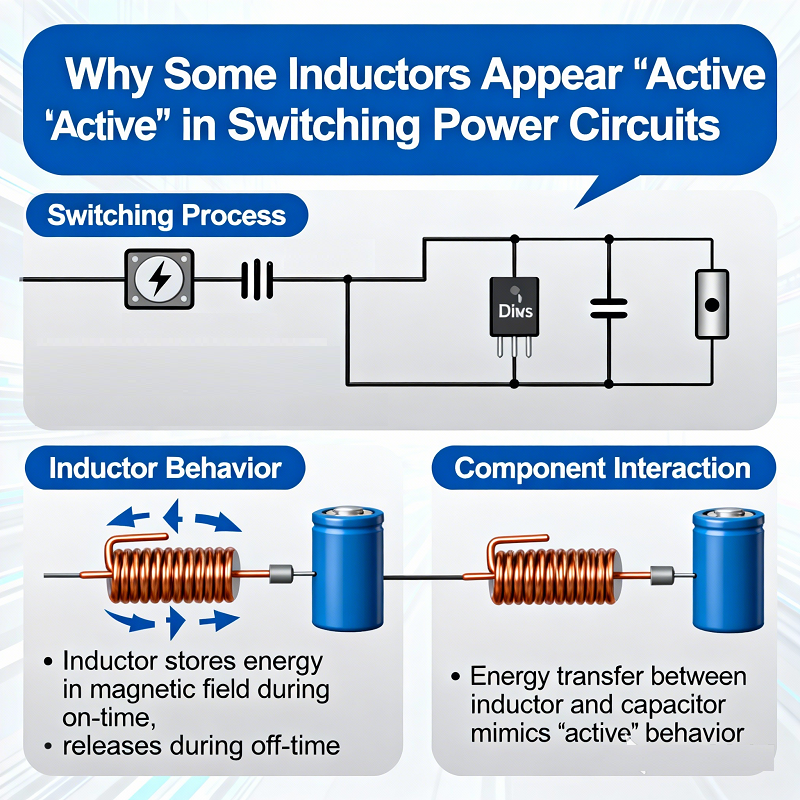
In switching circuits, an inductor often behaves in a way that looks purposeful and controlled—almost like an active element. For example:

  • In a buck converter, the inductor ramps current up and down in sync with the MOSFET switching.
  • In a boost converter, the inductor releases stored energy to lift the voltage.
  • In a flyback design, the inductor (transformer primary) delivers energy during off-time.

This controlled energy delivery can seem active. But the inductor remains passive because:

  • It performs no amplification.
  • It has no supply pins.
  • All action results from controlled switching around it.

The inductor is only following physics. Its “active-looking” behavior is driven by the switching controller, not the inductor itself.

How Active Inductors Work?

Active inductors exist because integrated circuits cannot easily include large, high-quality coils. Instead, designers use transistors and feedback networks to replicate inductive reactance.

Common active inductor approaches:

  • Gyrator circuits: Create an inductive response using a capacitor and an active device.
  • MOSFET-based inductors: Leverage transconductance to shape current like a coil would.
  • Gm-C active filters: Combine tunable transconductance with capacitors for high-frequency inductive behavior.

Active inductors rely on:

  • Bias current
  • Voltage gain
  • Feedback loops

These elements allow the circuit to emulate inductance over a chosen frequency range. They do not store energy magnetically; instead, they reproduce the impedance profile of an inductor electrically.

How to Tell Whether an Inductor Is Passive or “Active-Like”?

The simplest way is to examine its structure or schematic.

A passive inductor:

  • Contains a coil of copper wire.
  • May use ferrite, iron, or air as the core.
  • Has no power supply pins.
  • Always presents inductive reactance at AC.
  • Stores energy in a real magnetic field.

An active inductor:

  • Includes MOSFETs, BJTs, resistors, and capacitors.
  • Requires biasing from VCC or VDD.
  • Does not behave like an inductor at DC.
  • Mimics inductance only across a designed range.
  • Does not produce a true magnetic field.

If it physically coils wire, it is passive. If it needs biasing, it is active.

Why Use Active Inductors Instead of Passive Ones?

Engineers select active inductors for reasons tied to integration, size, and flexibility. A real inductor may be too large, too costly, or incompatible with an integrated CMOS flow. Active versions offer:

  • Very small footprint for RF ICs and SoCs.
  • Electronically adjustable inductance for tunable filters.
  • Higher effective inductance than what is possible in a small coil.
  • Better integration on silicon with no magnetics required.
  • Lower parasitics compared with some wound inductors.

This makes active inductors popular in:

  • RF front-ends
  • On-chip matching networks
  • Integrated oscillators
  • Bluetooth, Wi-Fi, and mmWave circuits
  • Adaptive analog systems

Why Passive Inductors Are Still Needed?

Although active inductors are flexible, they cannot replace wound inductors when real magnetic energy storage or high linearity is required. Passive inductors excel in:

  • Energy transfer systems
  • Power converters
  • High-current paths
  • EMI suppression
  • Resonant circuits with high Q
  • Audio crossover networks
  • RF circuits where low noise is important

Passive inductors also work over a broad frequency range and do not rely on bias currents. They withstand much higher power levels than active circuits.

Why Passive Inductors Are Still Needed?

When Should You Use a Passive Inductor?

A passive inductor is the correct choice when the application needs real, physical energy handling. Use one when the design involves:

  • Power conversion
  • DC-DC regulation
  • Motor control circuits
  • High-current feeding
  • RF filters needing high Q
  • Low-noise front-end requirements

When reliability, linearity, and energy efficiency matter, a real inductor is essential.

When Should You Use an Active Inductor?

Active inductors become practical when design priorities shift:

  • The circuit must be fully integrated on a chip.
  • Board space is extremely limited.
  • Tunability is required through voltage or current adjustments.
  • Only small-signal behavior matters, not high power.
  • The circuit’s operating band is narrow, such as RF.

If the goal is impedance shaping, not energy transport, an active inductor offers a compact and configurable solution.

Conclusion

A traditional inductor with a wire coil is always passive. It stores energy in a magnetic field and cannot amplify signals. Active inductors, on the other hand, are transistor-based circuits that imitate inductive behavior using gain and feedback. They are “active” because they need power and introduce controlled impedance rather than storing energy.

Both types play important roles in electronics. Understanding their differences helps engineers select the right component for RF filters, switching regulators, mixed-signal ICs, and miniaturized platforms where performance, size, and frequency all shape design strategy.