





Understanding factors to consider when choosing ceramic substrates is critical for device performance and reliability. This guide covers all essential factors to consider when choosing ceramic substrates for professional engineering applications.
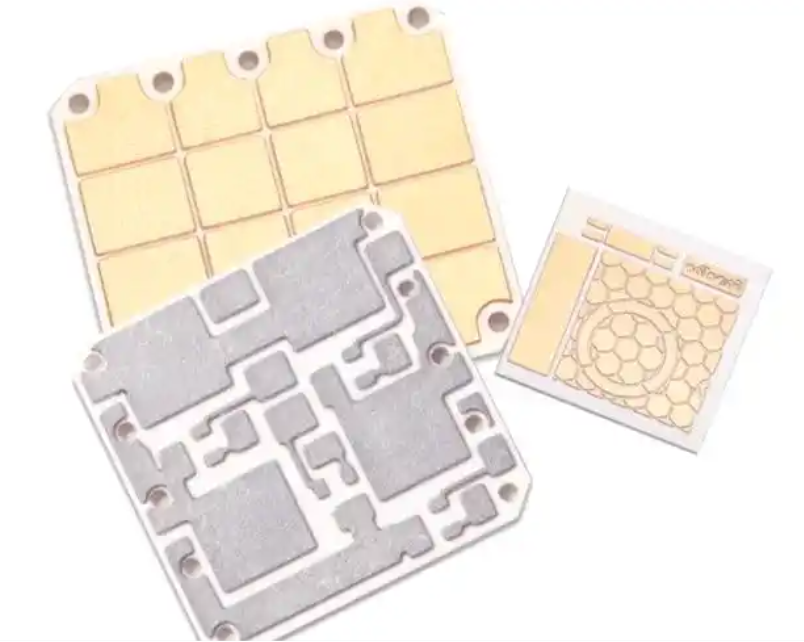
Ceramic Substrates
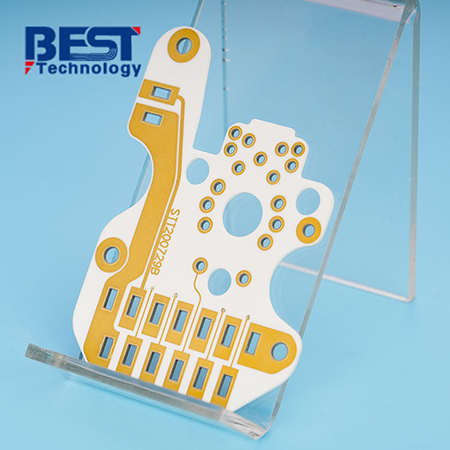
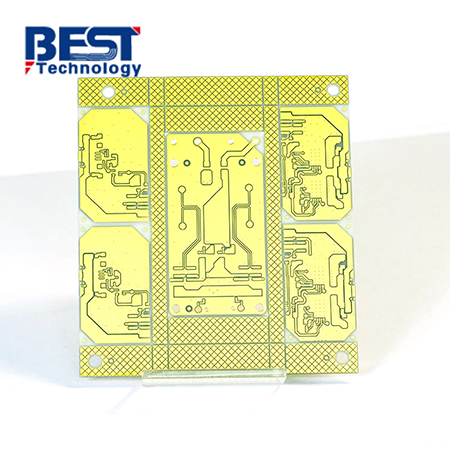
What are the key factors to consider when choosing ceramic substrates?
The most important factors include thermal, electrical, mechanical, material, and application compatibility.
These elements directly decide performance, stability, and service life.
Selecting correctly avoids failures in high‑demand environments.
- Thermal conductivity and thermal expansion
- Dielectric constant and insulation performance
- Mechanical strength and structural stability
- Material type and manufacturing compatibility
- Quality, supply chain, and delivery
How do material properties affect ceramic substrate selection?
Material properties form the foundation of ceramic substrate performance.
Mismatched properties lead to overheating, signal loss, or mechanical breakage.
Each parameter must align with your application needs.
Thermal conductivity requirements
Higher thermal conductivity improves heat dissipation for high‑power devices.
It keeps components cool and extends service life.
This is non‑negotiable for power and automotive electronics.
Dielectric and insulation performance
Dielectric constant impacts signal integrity.
High insulation prevents leakage in high‑voltage systems.
Low dielectric loss improves energy efficiency.
Which thermal factors matter most for ceramic substrates?
Thermal performance ensures long‑term stability under load and temperature cycles.
Poor thermal design causes cracking, warping, and early failure.
Thermal matching is vital for reliable assembly.
- Coefficient of thermal expansion (CTE) matching
- Thermal cycling stability
- High temperature resistance
- Heat dissipation path design
- Compatibility with thermal interface materials
How to match electrical requirements for ceramic substrates?
Electrical properties protect circuits and ensure signal quality.
They prevent interference and breakdown in demanding environments.
Correct values keep systems safe and stable.
Insulation resistance
High insulation resistance supports high‑voltage applications.
It reduces risk of short circuits and electrical failures.
Critical for power electronics and industrial controls.
Dielectric loss
Low dielectric loss improves efficiency in high‑frequency devices.
It reduces heat from signal transmission.
Ideal for communication and server equipment.
What mechanical standards should ceramic substrates meet?
Mechanical strength prevents breakage during production and use.
It supports handling, assembly, and harsh environments.
Strong substrates maintain dimensional stability.
- Bending strength
- Fracture toughness
- Hardness and wear resistance
- Dimensional accuracy
- Thermal shock resistance
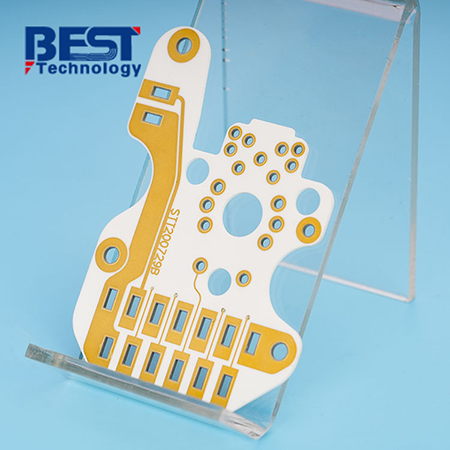
How to compare common ceramic substrate materials
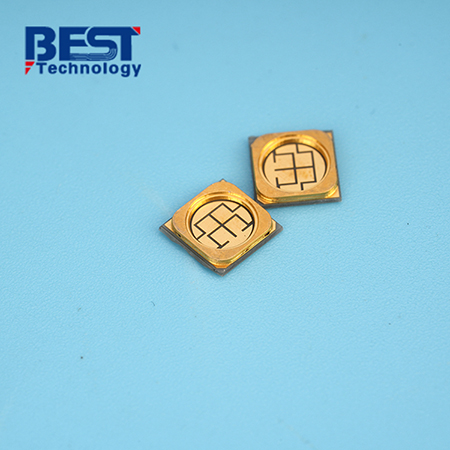
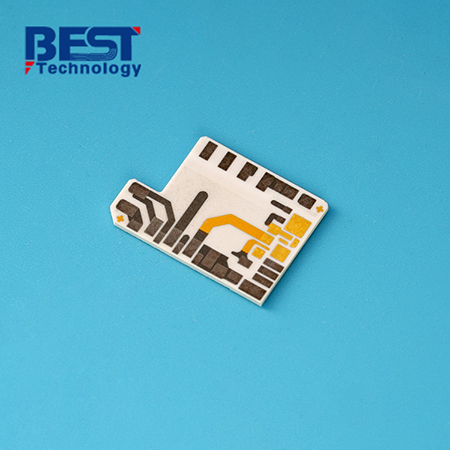
How to compare common ceramic substrate materials?
The table below helps you choose based on performance and application.
| Material | Thermal Conductivity (W/m·K) | Dielectric Constant | Typical Applications |
|---|---|---|---|
| Alumina (Al₂O₃) | 20–30 | 9.8 | Consumer electronics, LED |
| Aluminum Nitride (AlN) | 170–230 | 8.8 | Automotive, power electronics |
| Silicon Nitride (Si₃N₄) | 20–90 | 7.0 | High‑power devices |
| Zirconia (ZrO₂) | 2–3 | 25.0 | Medical devices, sensors |
Which industries use ceramic substrates most widely?
Ceramic substrates perform best in four high‑growth industries.
Automotive electronics
AlN substrates handle heat in EV power modules.
They withstand vibration and extreme temperatures.
Ensure stable performance in motor controls.
Medical electronics
High‑purity alumina offers biocompatibility and insulation.
It meets strict medical standards for monitoring devices.
Safe for long‑term implantable and diagnostic tools.
LED & power electronics
Ceramic substrates improve heat dissipation for LEDs.
They extend lifespan and boost brightness.
Widely used in industrial and outdoor lighting.
Aerospace & industrial control
Special ceramics resist extreme temperatures and corrosion.
They meet aerospace reliability standards.
Stable in automation and harsh factory environments.
How to ensure processing compatibility of ceramic substrates?
Processing compatibility lowers production difficulty and cost.
Good metallization and bonding support strong assembly.
Stable processing ensures consistent yields.
- Machinability
- Metal layer adhesion
- Solderability and bonding strength
- Compatibility with standard PCB processes
- Tolerance control
How to judge ceramic substrate quality and reliability?
Quality control prevents inconsistent performance and failures.
Certified materials and testing ensure long service life.
Reliable substrates reduce maintenance and replacement cost.
- Raw material purity
- Dimensional accuracy
- Thermal cycle testing
- Insulation and voltage testing
- Compliance with international standards
Why supply chain & delivery matter for ceramic substrates?
Stable supply avoids production delays and shortages.
On‑time delivery keeps projects on schedule.
Consistent quality supports mass production.
- Steady raw material supply
- On‑time delivery capability
- Full quality traceability
- Professional technical support
- Mass production capacity
Can ceramic substrates be customized for special uses?
Customization meets unique design and performance needs.
Tailored materials, sizes, and structures fit special equipment.
Custom solutions improve overall device efficiency.
- Custom material formulas
- Special thickness and shape
- Modified thermal or electrical properties
- Application‑specific metallization
- Unique packaging requirements
FAQ: Top questions about factors to consider when choosing ceramic substrates
What factors to consider when choosing ceramic substrates?
Key factors include thermal performance, electrical properties, mechanical strength, material type, quality, supply chain, and application compatibility.
Which ceramic substrate is best for high power?
Aluminum nitride (AlN) is best for high power due to ultra‑high thermal conductivity.
How to ensure thermal reliability of ceramic substrates?
Match thermal expansion coefficients and use high‑thermal‑conductivity materials.
What is the difference between AlN and alumina substrates?
AlN has much higher thermal conductivity; alumina offers cost‑effective general use.
Can ceramic substrates be used in medical devices?
Yes, high‑purity alumina is widely used for biocompatibility and stability.
How to select a reliable ceramic substrate supplier?
Check quality system, delivery stability, technical support, and supply chain.
Are ceramic substrates customizable for special applications?
Yes, materials, dimensions, and performance can be customized for specific needs.
Conclusion
All factors to consider when choosing ceramic substrates must be evaluated together.
The right choice improves performance, reliability, and product stability.
Professional selection supports long‑term success in high‑end electronics.
EBest provides premium ceramic substrates with stable supply, strict quality control, and professional support. For orders and inquiries, contact us at: sales@bestpcbs.com