





Why EBest Should Be Your Best Box Build Assembly Manufacturers?
Choosing the right partner for box build assembly is not just about cost. It directly affects product reliability, delivery speed, and your brand reputation. Many suppliers can assemble a PCB, but far fewer can deliver a complete, ready-to-use system.
EBest Circuit (Best Technology) focuses on full-process integration. From PCB fabrication to final enclosure assembly, every step is controlled under one system. This reduces communication gaps and prevents costly delays.
What makes EBest stand out is the depth of engineering support and execution consistency. Instead of simply following files, the team actively reviews design, structure, and manufacturability before production starts.
Key strengths include:
- 20+ years of PCB and PCBA experience
- Full turnkey box build assembly services
- Free DFM and BOM optimization support
- Strong supply chain with global sourcing capability
- Fast turnaround with stable quality control
- Complete traceability through MES system
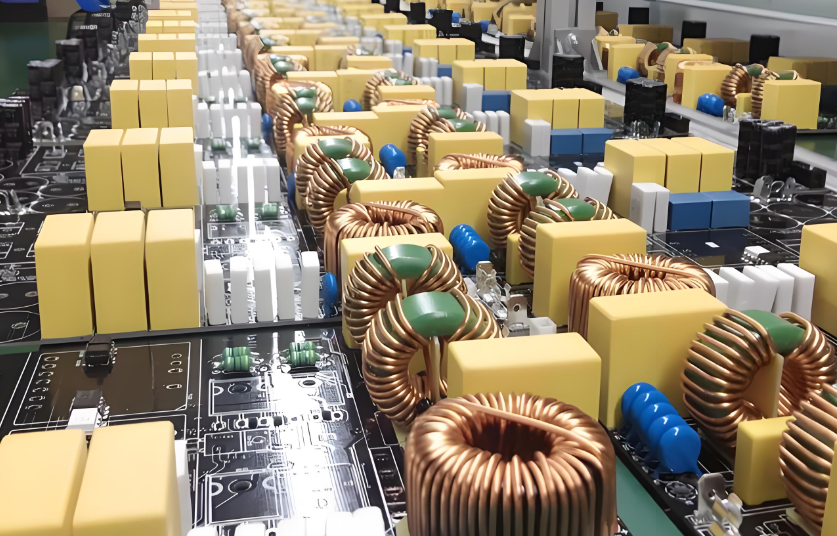
All-in-One Turnkey Box Build Assembly
What Is Box Build Assembly?
Box build assembly refers to the complete assembly of an electronic product into its final enclosure. It goes beyond PCB assembly and includes mechanical, electrical, and system-level integration.
So, what does “Box Built” mean? In simple terms, a “box built” product is ready to use right out of the factory.
This typically includes:
- PCB assembly (SMT + through-hole)
- Cable and wire harness installation
- Enclosure or housing assembly
- Power supply integration
- Display or interface installation
- Final system testing
Unlike standalone PCBA, box build assembly delivers a finished product. It is often used in industries where plug-and-play functionality is required.
Box Build Printed Circuit Board Assembly Services
Box build printed circuit board assembly services combine PCB manufacturing, component sourcing, assembly, and system integration into one seamless workflow. At EBest, this service is structured to minimize risk and maximize efficiency. Each stage is tightly connected, which helps avoid mismatches between design and production.
Core service scope includes:
- PCB fabrication (FR4, aluminum, ceramic, HDI)
- SMT and through-hole assembly
- Component sourcing and verification
- Cable assembly and harness integration
- Mechanical assembly and enclosure fitting
- Firmware loading and configuration
- Functional testing and system validation
- Packaging and logistics
This turnkey model is especially useful for companies that want to avoid managing multiple vendors. Instead of coordinating separate PCB, assembly, and enclosure suppliers, everything is handled in one place.
EBest Circuit’s Box Build Capabilities
EBest offers a comprehensive capability set designed for both low-volume prototypes and mass production.
Manufacturing Capabilities
- High-mix, low-volume and medium-volume production
- Complex multi-board system integration
- Precision mechanical assembly
- Cable routing and harness design support
- Custom enclosure integration
Technical Capabilities
- AOI, X-ray, SPI inspection systems
- Functional test development
- Burn-in testing for reliability
- Firmware programming and configuration
- ESD-safe production environment
Supply Chain Capabilities
- Global component sourcing
- Alternative component recommendations
- Cost optimization strategies
- Long-term supply planning
Quality and Compliance
- ISO9001, ISO13485, IATF16949, AS9100D
- Full traceability system
- Strict incoming and outgoing inspection
- Process control at each production stage
What Is the Box Build Assembly Process?
The box build assembly process is a structured, multi-stage workflow. It integrates electronics, mechanics, and system-level validation. Each step directly impacts product reliability, cost, and delivery speed. A well-controlled process avoids rework and ensures consistency.
Below is a detailed box building assembly process in EBest Circuit:
1. Engineering Review & DFM Optimization
This is the most critical stage. Many downstream issues originate here.
- Review Gerber, BOM, and mechanical drawings
- Check component availability and lifecycle status
- Validate enclosure fit, connector alignment, and tolerances
- Perform DFM (Design for Manufacturability) and DFA (Design for Assembly)
Key engineering checks include:
- Clearance between PCB and enclosure (typically ≥0.5 mm)
- Connector positioning tolerance (±0.1 mm typical)
- Thermal path validation for high-power components
At EBest, this stage often includes BOM optimization to reduce cost and avoid supply risks.
2. Supply Chain Preparation
Material readiness determines whether production runs smoothly.
- Source components from verified suppliers
- Identify alternates for long lead-time parts
- Prepare mechanical parts (metal, plastic, die-cast housings)
- Verify cable assemblies and connectors
A strong supply chain reduces delays and ensures stable production.
3. PCB Fabrication
The PCB is manufactured based on design requirements.
- Layer stack-up construction
- Copper thickness control (e.g., 1 oz / 2 oz / heavy copper)
- Surface finish (ENIG, HASL, ENEPIG, etc.)
- Impedance control for high-speed designs
This stage defines electrical performance and long-term reliability.
4. PCB Assembly (PCBA)
This is the core electronic assembly stage.
- Solder paste printing (SPI inspection)
- SMT placement using high-speed machines
- Reflow soldering with thermal profile control
- Through-hole insertion (manual or wave soldering)
Inspection methods:
- AOI (Automated Optical Inspection)
- X-ray for BGA/QFN components
- ICT (In-Circuit Test) if required
Defect control here directly affects final yield.
5. Cable & Harness Assembly
Wiring is often underestimated but critical in box build.
- Crimping and soldering of connectors
- Cable routing design to avoid EMI and interference
- Labeling and identification for traceability
Key engineering concern:
- Signal cables should be separated from power cables
- Bend radius must meet cable specifications
6. Mechanical Assembly (Box Integration)
This step transforms PCBA into a physical product.
- Mount PCB into enclosure using screws or standoffs
- Install connectors, switches, displays, and panels
- Assemble heat sinks or thermal pads if needed
Thermal design matters here:
- Heat transfer path = Component → PCB → Thermal interface → Enclosure
- Poor thermal design leads to hotspots and early failure
7. System Integration & Firmware Loading
Now the product becomes functional.
- Firmware or software is programmed
- Communication interfaces are configured (UART, CAN, Ethernet, etc.)
- Initial power-on validation is performed
This stage ensures the system behaves as designed.
8. Functional Testing
Testing moves from board-level to system-level.
Typical tests include:
- Power-on test
- Functional verification (I/O, signals, communication)
- Load testing under real conditions
For high-reliability products:
- Burn-in testing (e.g., 48–72 hours)
- Environmental testing (temperature, vibration)
Testing ensures early failure detection and improves field reliability.
9. Final Assembly & Quality Inspection
Before shipment, every unit is verified.
- Visual inspection of enclosure and labeling
- Torque verification for screws
- Final electrical safety check
10. Packaging & Logistics
The final step protects the product and prepares delivery.
- Anti-static packaging (ESD protection)
- Custom packaging for fragile assemblies
- Labeling, barcoding, and traceability records
What Is the Difference Between Box Build and PCBA?
Although closely related, PCBA and box build assembly serve different roles in the manufacturing chain. Understanding the difference helps you choose the right service model.
Below is a more detailed comparison:
| Category | PCBA (Printed Circuit Board Assembly) | Box Build Assembly |
| Definition | Assembly of electronic components onto a PCB | Full product assembly including PCB, enclosure, and wiring |
| Scope | Electronics only | Electronics + mechanical + system integration |
| Output | Functional circuit board | Finished, ready-to-use product |
| Complexity | Moderate | High |
| Assembly Content | SMT, THT components | PCBA + cables + housing + modules |
| Mechanical Involvement | None | Extensive (enclosures, brackets, panels) |
| Wiring | Not included | Includes cable harness and routing |
| Firmware | Usually not included | Included (programming and configuration) |
| Testing Level | Board-level testing (AOI, ICT) | Full system testing and validation |
| Thermal Design | Limited to PCB | Full system thermal management |
| Supply Chain | Focused on electronic parts | Covers electronics + mechanical + cables |
| Customization | Limited | High (custom enclosures, system design) |
| Delivery Form | Semi-finished product | End product ready for use |
| Typical Use | Intermediate manufacturing stage | Final product delivery |
Practical Insight
- If you only need a circuit board → choose PCBA
- If you need a complete device → choose box build assembly
In many projects, PCBA is just one step within the box build workflow.
Box Build Assembly Applications
Box build assembly services are widely used across industries that require integrated electronic systems. Common applications include:
Industrial Equipment
- Control panels
- Automation systems
- Power distribution units
Medical Devices
- Diagnostic equipment
- Monitoring systems
- Portable medical units
Telecommunications
- Network devices
- Signal processing units
- Communication modules
Automotive Electronics
- Control modules
- Battery management systems
- In-vehicle electronics
Consumer Electronics
- Smart home devices
- IoT products
- Embedded systems
FAQs about Box Build Assembly
1. What exactly is included in a box build assembly service?
Box build assembly, also known as systems integration, covers everything beyond the bare printed circuit board. It typically includes:
- Installing the PCBA into a metal or plastic enclosure.
- Connecting complex cabling or wire harnesses.
- Installing sub-assemblies (like sensors or power supplies) and biological/mechanical components.
- Final configuration: Loading software and performing functional testing.
2. What is the difference between PCB assembly and box build assembly?
While PCB assembly (PCBA) focuses strictly on soldering components onto a board, box build is the “complete” process. Think of the PCBA as the “brain” and the box build as the “entire body.” A box build provider manages the mechanical housing and the relationship between the board and its external environment.
3. What information does a manufacturer need for a box build quote?
To provide an accurate quote, a manufacturer generally requires:
- Bill of Materials (BOM): Including the enclosure, cables, and even small hardware like screws.
- 3D CAD Models: To understand the spatial layout.
- Assembly Instructions: Detailed steps or “golden unit” photos.
- Test Specifications: Clear parameters for what constitutes a “pass” during final functional testing.
4. How does box build assembly impact the total cost of production?
While the unit price is higher than a bare PCBA, a box build often reduces total cost by:
- Consolidating shipping (you receive a finished product, not parts).
- Reducing your internal labor and overhead for final assembly.
- Simplifying the supply chain by having one partner manage multiple vendors for plastics, metals, and electronics.
5. What are the most common challenges in box build projects?
The primary challenges involve tolerances and fit. If the enclosure (often sourced from a different vendor) and the PCBA do not align perfectly due to design variations, the final assembly can fail. Effective providers use Design for Manufacturing (DFM) reviews early on to ensure that cables aren’t pinched and connectors align with the housing cutouts.
6. Is box build assembly suitable for small-batch production?
Yes. Many “High-Mix, Low-Volume” (HMLV) manufacturers specialize in small batches. This is common in the medical and industrial sectors, where precision and traceability (like ISO 13485 standards) are more critical than mass-market speed. Outsourcing small batches allows companies to scale without investing in their own assembly lines.
EBest Circuit (Best Technology) provides a full turnkey solution. From PCB fabrication to final assembly, every step is handled with precision and care.
If you are planning your next project and need a reliable partner for box build assembly, the team is ready to support you.